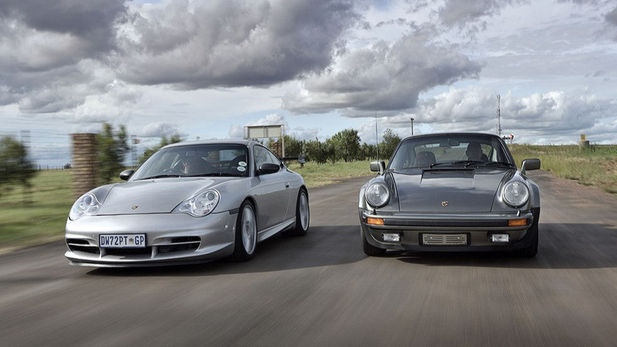
There are various modern-classic Porsche 911 variants to consider at around the R1.6- to R1.8-million mark. We compare 2 tantalising options: the 930 Turbo and 996 GT3.
IMAGES: Michael Schmucker
If you are reading this article, it is more than likely that you also get rather hot under the collar when someone expresses the opinion that “all 911s are the same”. It is often doubly irksome when the persons who make this nonsensical statement claim to be so-called “motoring enthusiasts”.
That’s because the variety of 911s produced during the past 60 years is unlike those of any other series-production sportscars. Distinctive body shapes, with vastly different engines/transmission combinations, constitute a long and storied lineage of cars that offer an immense array of driving experiences.
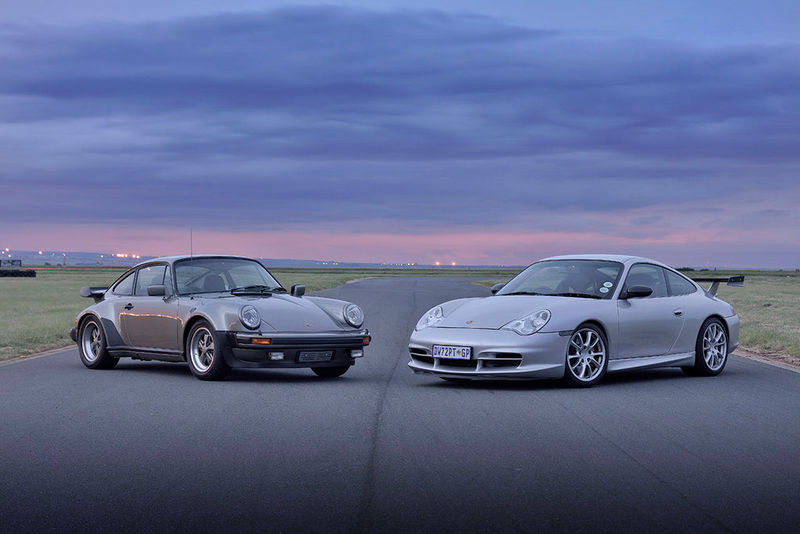
Depending on your budget, there is an abundance of 911s to choose from in the classifieds and from specialists when you take mileage, condition and age into account. This is proven by these two 911s we’ve lined up around 70 km outside Johannesburg.
From around the R1.5 million mark, you can purchase a high-mileage 1st-generation turbocharged 911 in the shape of the wide-arched 3.3-litre flat-6-powered 930-series 911 Turbo.
Keep in mind, at this price point the car will need some level of attention. This is the bottom end in the current market conditions for these cars as their asking prices rise to over double this figure, depending on the factors mentioned above, as well as history, provenance or if any special models are considered.
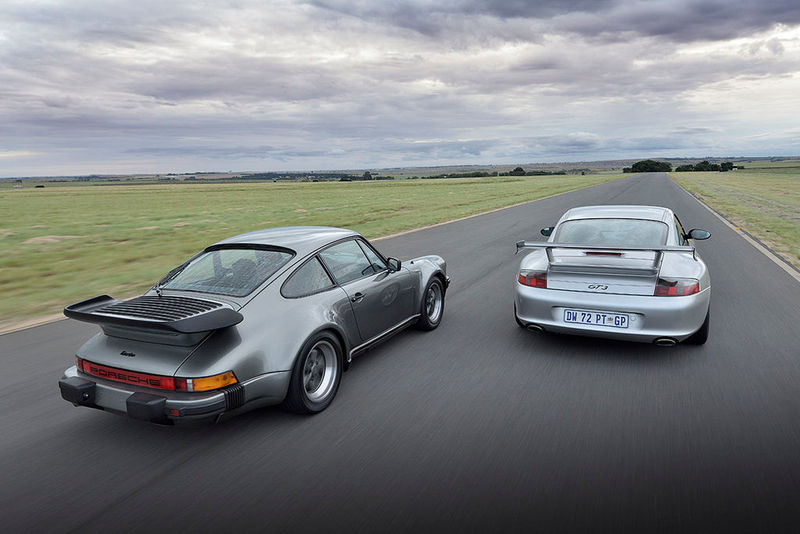
But, on the opposite end of 911 scale in terms of the driving experience, one of Porsche’s early water-cooled road racers, in the shape of the 996 GT3 Mk II can be sourced. However, in this instance, you can choose one of the best examples on the market… Which of these rather iconic 911 models should be considered most strongly for your next vehicular acquisition?
Details of the Porsche 911 (930) Turbo
When this specific 1979 911 (930) Turbo was acquired by its owner at the time of our drive, it needed a decent restoration. Although it might have looked in good nick judging by a casual walk-around inspection, the car was stripped, repainted, received a new interior and its engine was rebuilt.
It was during the latter revision that 911 SC cams were fitted – a welcome upgrade.
Specifications
- Model: 1979 Porsche 911 (930) Turbo
- Engine: 3.3-litre, flat-6 turbopetrol
- Power: 221 kW at 5 500 rpm
- Torque: 412 Nm between 4 000 rpm
- Transmission: 4-speed manual, RWD
- Weight: 1 335 kg
- 0-100 kph: 5.4 sec (claimed)
- Top speed: 260 kph
Even the tartan inserts on the seats were imported from Germany. These seats with the black side bolsters are perfectly in tune with the 1970s and complement the altogether neat interior.
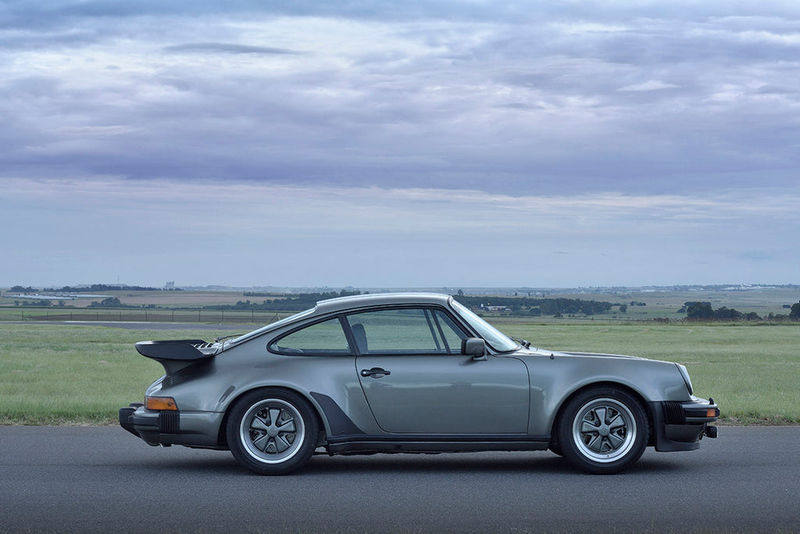
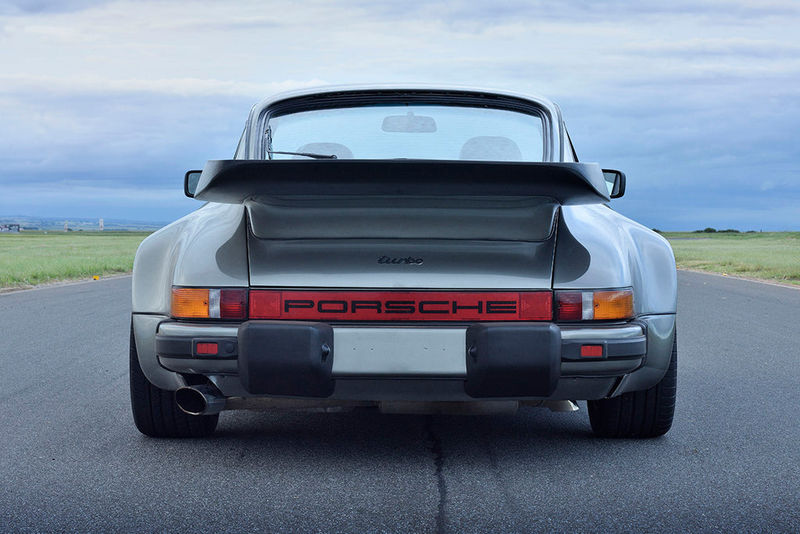
This 930 Turbo was originally delivered in Hamburg, Germany, and featured options such as the right-side mirror (261), aircon (559) and, importantly, colour code 99, which is this beautiful platinum metallic.
When I open the engine cover, the squeaky clean flat-6 engine with the necessary stickers demonstrates that the motor has been reconditioned.
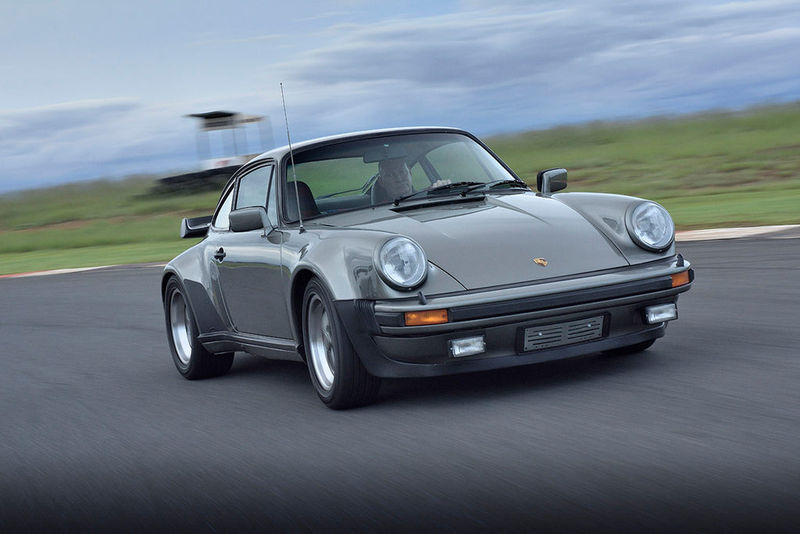
The metallic finish suits the car perfectly and the colour-coded Fuchs rims add further aesthetic allure to this rare machine. It is stylish, but the performance on offer and the link with Porsche’s race cars at the time is clear for all to see.
Next to the 930 Turbo, the 996 GT3 Mk II appears clearly related to its older stablemate, but it is an entirely different machine. The visual differences are immediately apparent: the 996’s shape is soapy smooth, but as its owner rightly remarks: “The added aero does make the car pop and stand out”.
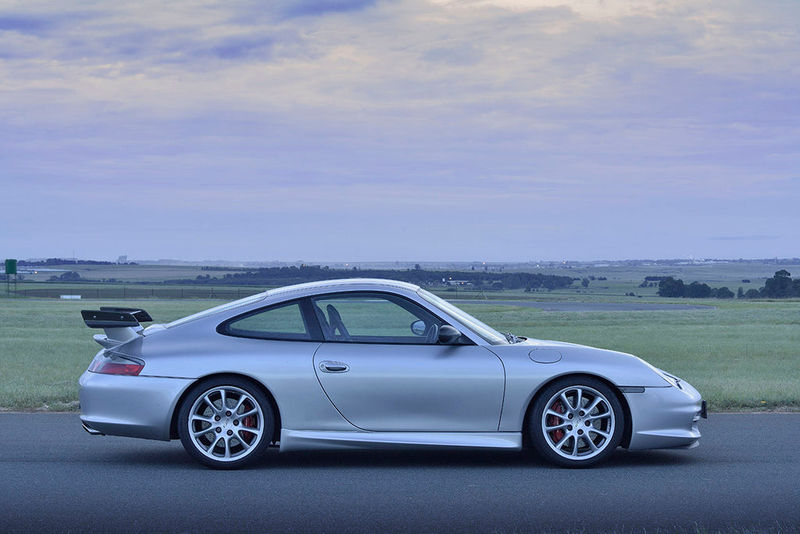
And that is certainly the case. According to the owner at the time, this 996 GT3 was originally ordered with the 996 RS’s rear carbon-fibre wing and side mirrors. A peek through the car’s official documents reveals an “Aerokit Cup” annotation, which doesn’t have a code, but states the word “coordinate” next to it. These two features simply add to the focused stance of the silver (paint code X1X1) GT3.
On the road, it is a pure joy to view the Turbo from behind, but the experience is most pleasurable when the 930 delivers a burst of full-throttle acceleration and the forced induction motor emits a barrage of whistling noises.
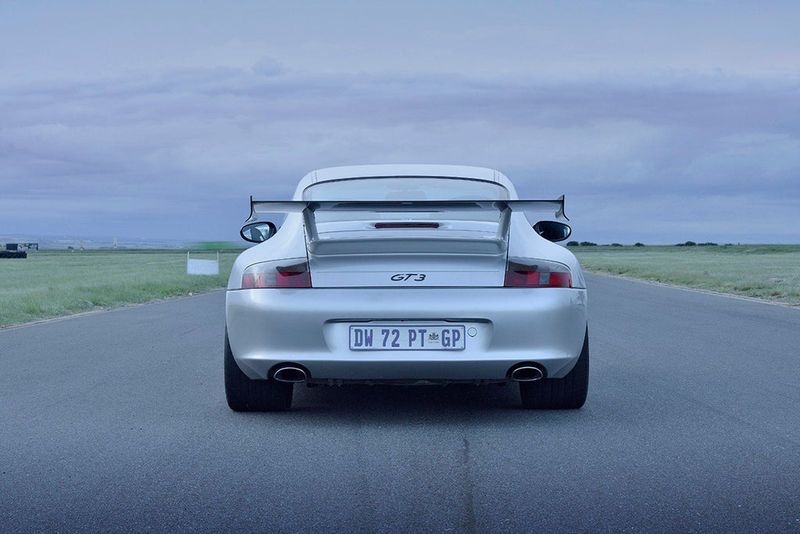
The GT3, by contrast, produces a more mechanical, sonorous and intense sound from below the carbon-fibre rear wing. For a moment, I’m thankful that I can experience the sound from the photography car. However, it is soon time to experience each car from behind their respective tillers.
Behind the wheel of the 911 (930) Turbo
As I get behind the (starkly minimalist, by modern standards) steering wheel of the Porsche 911 (930) Turbo for the first time, I’m reminded of how comfortable this car is inside. The seats are fairly cushy, while the damping is also not as stiff as other sportier 911s, like the GT3, for example.
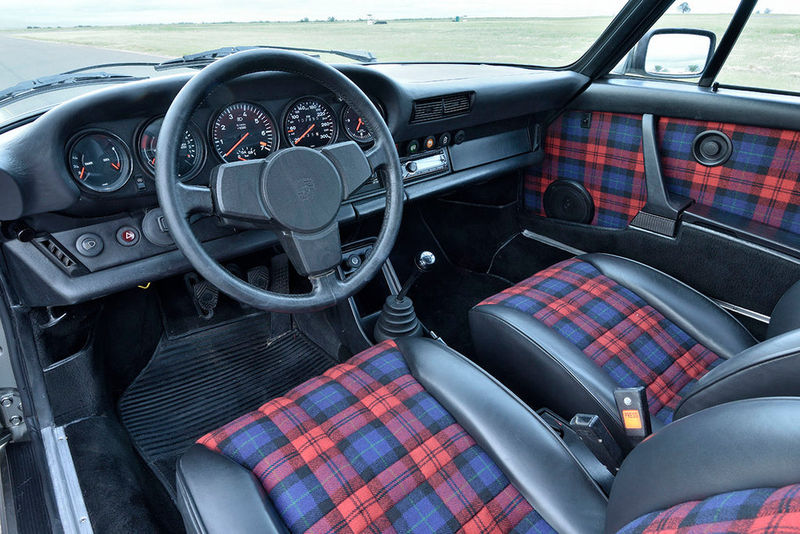
Equipped with only 4 gears, the driving experience is much more relaxed than in the 6-speed, howling 3.6-litre engine that revs to 8 200 rpm. This fact adds to the 911 Turbo’s long-distance mile-crunching capability. The gears are long, but make no mistake, there is still plenty of excitement to be had.
During the first 3 500 rpm you might question the car’s ability, but as you approach 4 000 rpm, the turbo is well on its way to delivering the rush it was designed for, and the needle swings vigorously around the rev counter. I decided to change up just after 6 000 rpm (after all, the engine had recently been rebuilt), but the owner reminds me that he often revs the motor to the redline, which is around 6 800 rpm.
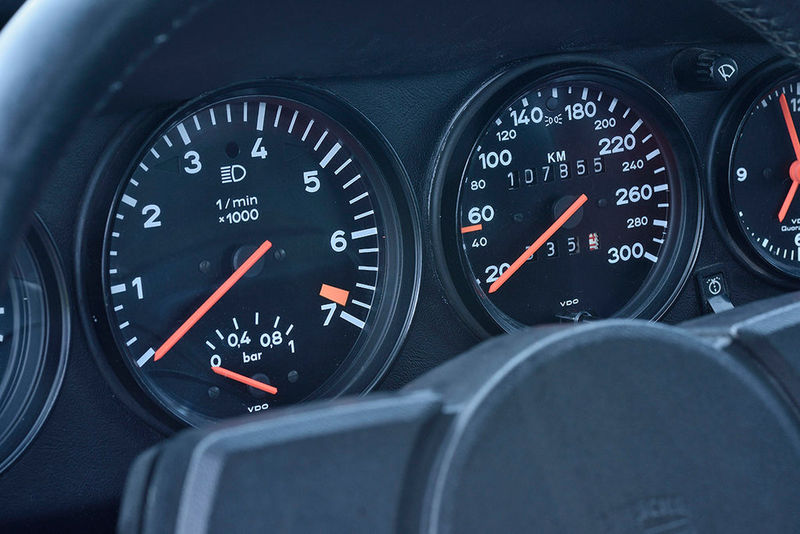
It is a driving experience to which you will need to become accustomed; when you keep a constant throttle, even above 4 000 rpm, and then put your foot down, the boost needs to build for a moment before you receive that rush of torque and the Turbo’s narrow body is pushed to the next corner.
The steering wheel is, as expected, very lively, and such a strong reminder about the feedback of early 911s. The power delivery isn’t as progressive as those of modern turbocharged cars, but that is one of several characteristics that enable the 911 (930) Turbo to deliver such an invigorating driving experience, even by today’s standards. The transmission does a good job; I never had any difficulty finding a gear.
Time to give the 966 GT3 a whirl…
Upon sliding into this 2004 996 GT3 Mk II’s driver’s seat, the 911’s 3-decade metamorphosis is evident. Compared with the 930 Turbo, the Mezger-design engine has an 8 200 rpm redline, the gearbox has 6 gears and the proper bucket seats hug me all the way to my shoulders… and I’m 1.87 metres tall!
This model also doesn’t feature the CD holders behind the gear lever, which means there is more focus on the short lever on the transmission tunnel. A look over my shoulder reveals there are no rear seats.
Specifications
- Model: Porsche 911 (996.2) GT3
- Engine: 3.6-litre, flat-6 petrol
- Power: 284 kW at 7 400 rpm
- Torque: 385 Nm at 5 000 rpm
- Transmission: 6-speed manual, RWD
- Weight: 1 380 kg
- 0-100 kph: 4.5 sec (claimed)
- Top speed: 306 kph
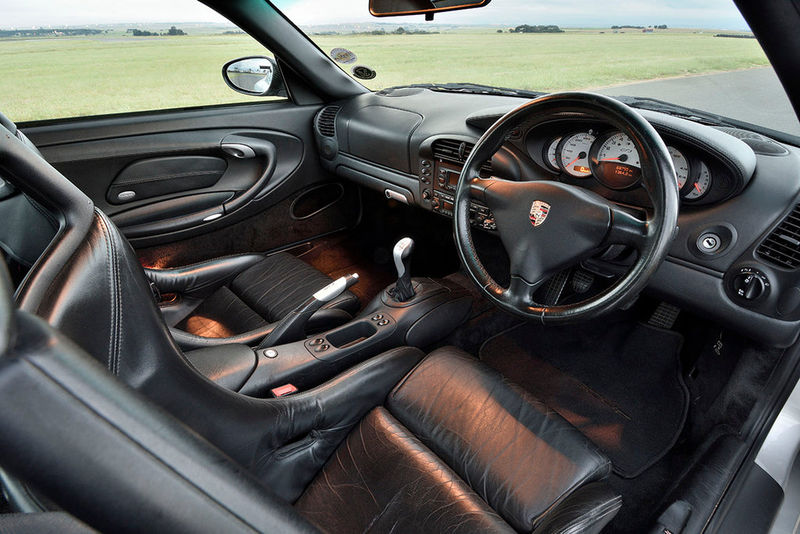
I immediately feel more ensconced in the car compared with the 930 Turbo, more dialled-in to what it is capable of. I have even more confidence in driving the car harder than I did when I positioned myself behind the 1979 car’s ‘wheel.
As I turn the key, a comparatively harder, more mechanical sound erupts from the 3.6-litre flat-6 and its exhaust tips, even just at idle speed.
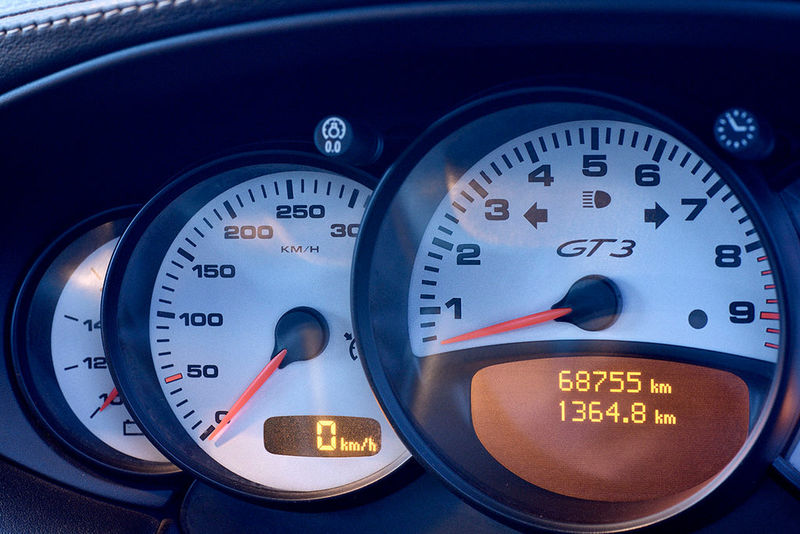
The transmission has a perfect short throw through each gear, a feature that beckons me to change gears more than is necessary. Surely, I’m not the only one who has felt so compelled when behind the wheel of these cars? I sense there is no delay from the engine when you touch the throttle pedal.
Even at 2-, 3- or 4 000 rpm, there is enough torque to push this 1 380 kg car irrepressibly forward. But, this engine was never designed to potter around at these low engine speeds. After all, this engine’s roots can be traced back to Porsche’s Le Mans-winning GT1 – it has been written about numerous times.

I put my foot down and relish the rev needle surging intently just beyond 8 000 rpm. A clean shift into the next gear and, with my foot back on the throttle again, the clear metallic soundtrack continues. It is better to start your gear change 2- to 300 rpm before the redline, otherwise you will run into the limiter.
The first part of the brake-pedal travel is soft, which works out fine, because as the centre pedal starts to become firmer, it aligns with the accelerator pedal (should you wish to heel-and-toe). Even if you prefer to simply blip the throttle before a down change, the engine response is truly something to experience.
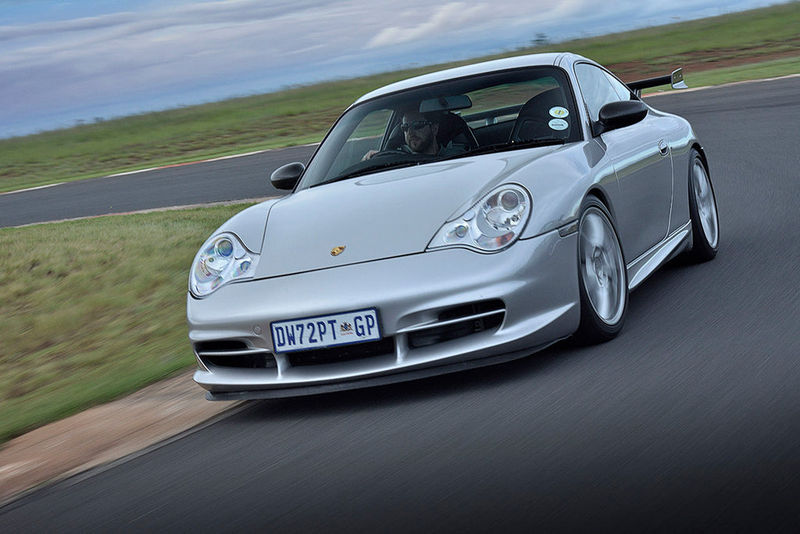
There is less body movement compared with the 930 Turbo, and the steering is extremely direct, while providing feedback by the bucket load. There are no electronic stability systems to bank on to save you from the ravages of physics, but grip levels are high, while the limited-slip differential can be trusted.
The result is that it takes a while to realise that you should apply the throttle earlier upon corner exit than you might have thought. It goes without saying that the 996 GT3’s grip levels are lower than those of contemporary 911 variants, but that is one of the highlights of these earlier GT3s. Things don’t happen as quickly in the newer cars, but you can have more fun at lower speeds… and more often.
It is an exhilarating drive, and every moment I have I want to plant the throttle, even if it is only for a second or 2 to experience the engine and how light the 996 GT3 feels on its, um, wheels.
Summary
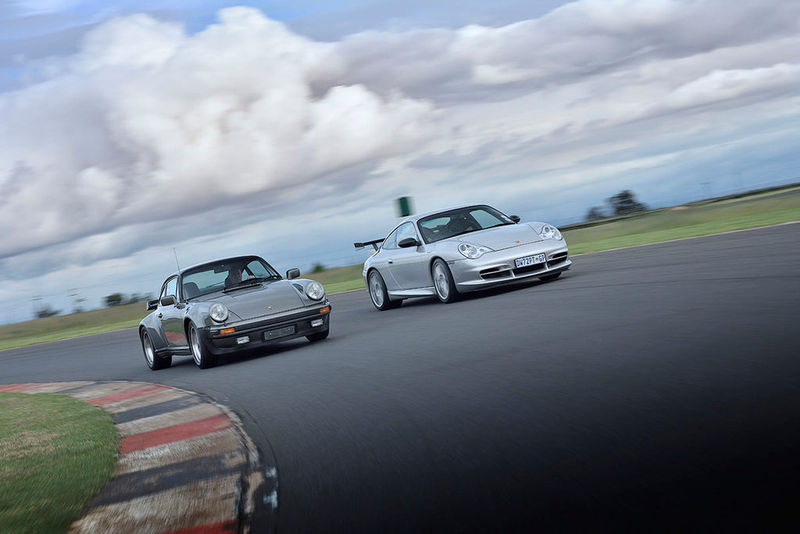
For covering longer distances at considerable speed, I can see the appeal of a Porsche 911 (930) Turbo. It is a car in which you can travel in comfort for hours. The luxury and comfort factors go out the window with the 996 GT3, except if your requirements for comfort are vastly different to those of most people.
At the same time, the 996 GT3 will excite at every possible opportunity. It is a car that does not mind being driven hard and it will possibly put more smiles on your face through a mountain pass than the Porsche 911 (930) Turbo. Needless to say, variety is truly the spice of life, and that applies equally as much to the diversity of the Porsche 911 range.
Search for a Porsche 911 listed for sale on Cars.co.za
Find exclusive car-themed merchandise at the SentiMETAL Shop
Related content:
Porsche 911 (997) GTS vs GT3: Classic Comparison
Porsche 911 (993) GT2: Classic Drive
Porsche 356 vs Porsche 912: Classic Comparison
Porsche 911 Targa ‘Edition 50 Years’ (2022) Launch Review
Porsche 911 GT3 (2022) Launch Review
Porsche 911 GTS (2021) Launch Review