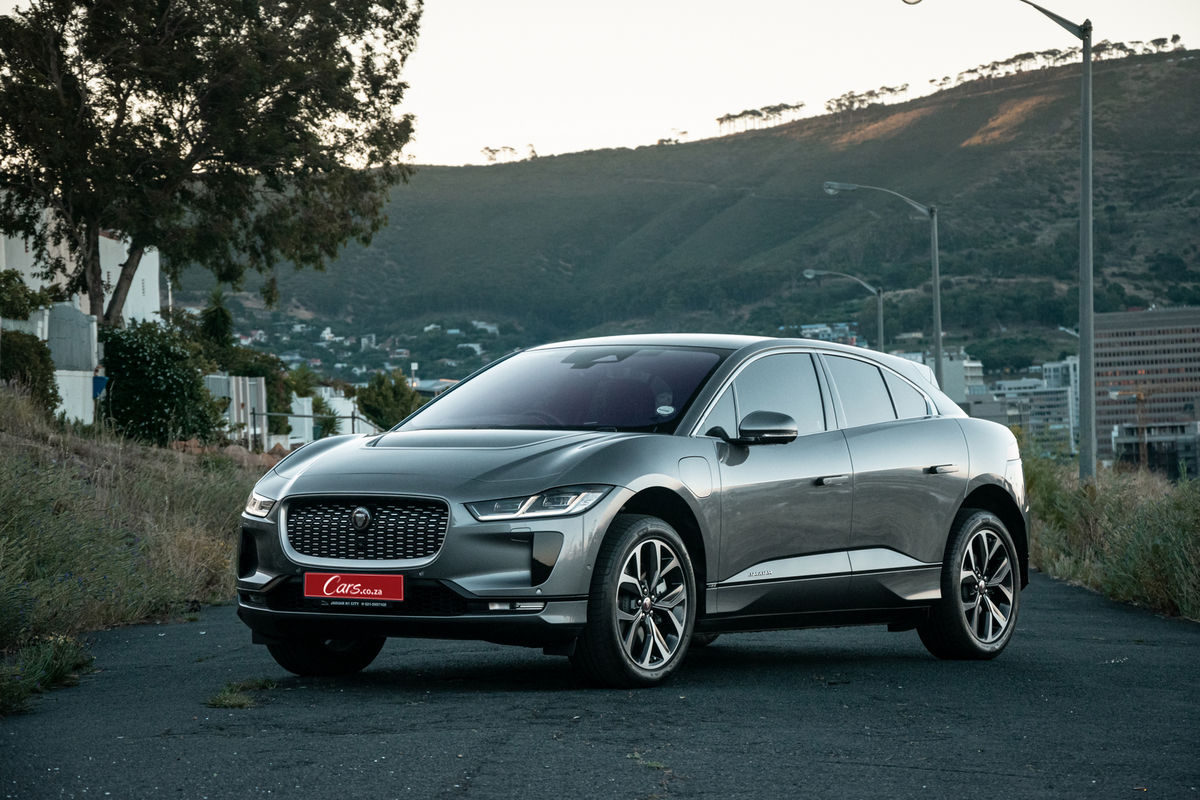
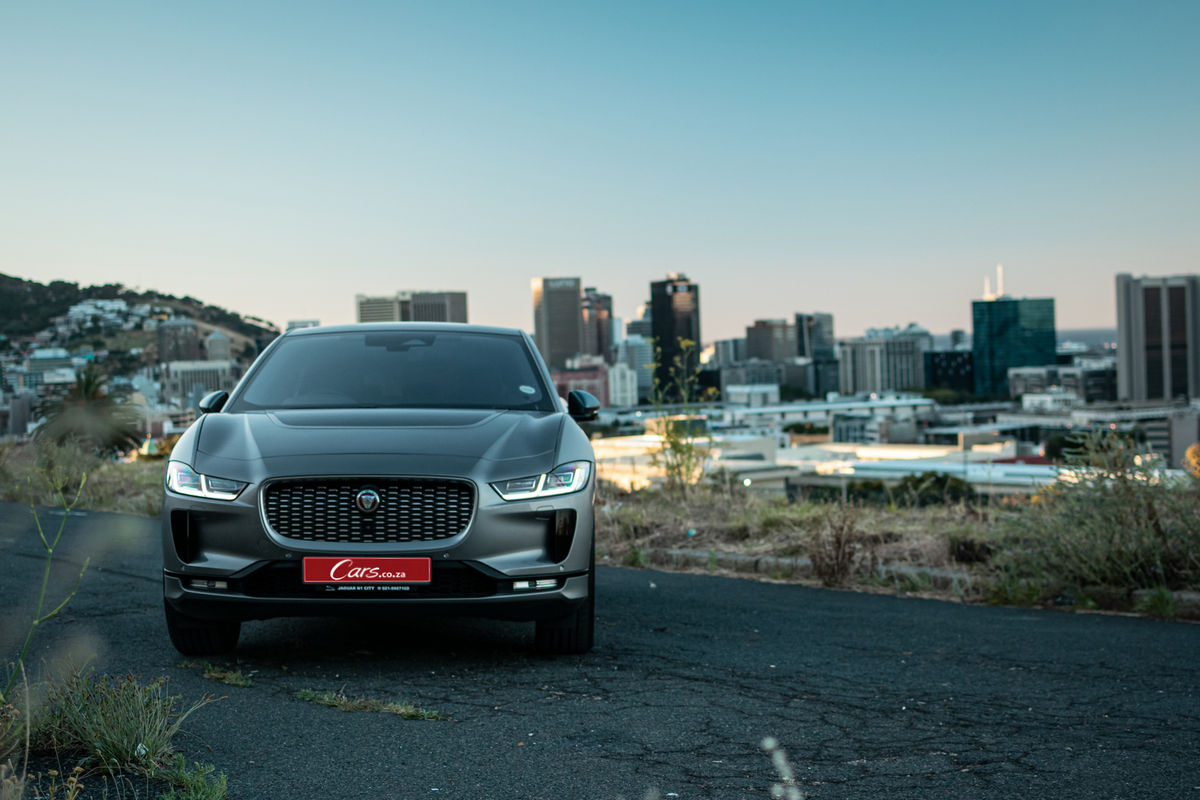
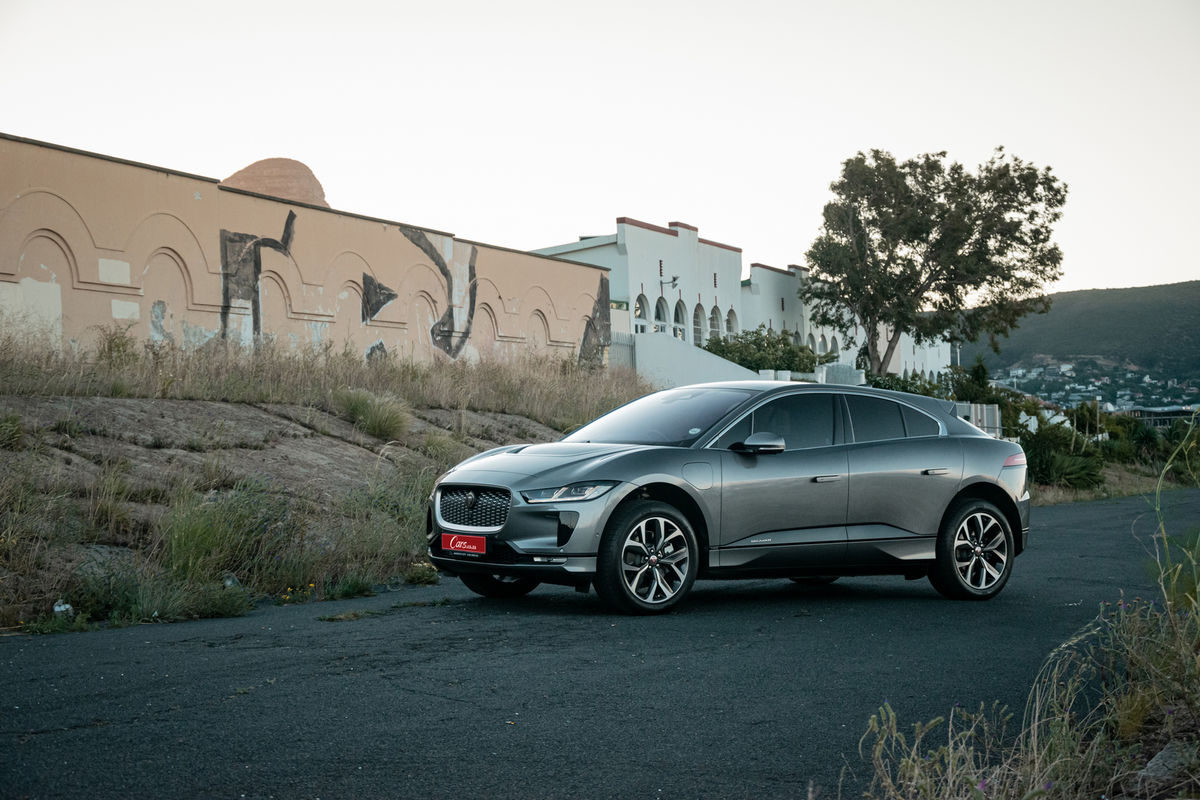
Given its high asking price and South Africans’ (shall we say) hesitance to take up EVs, Jaguar’s I-Pace is a rare sight on our roads. A few months ago, the British marque launched an updated version, but unless you’re already an I-Pace owner, you are unlikely to notice the changes…
We like: Potent performance, improved charging performance, updated infotainment, ride quality, real-world range
We don’t like: Lack of luggage space (with spare wheel fitted), charging port only on left side of the car
Fast Facts
- Model tested: Jaguar I-Pace E400 AWD S Black
- Price: R1 999 900 (December 2021, no options)
- Engine: 2 x electric motors
- Power/Torque: 294 kW/696 Nm
- Transmission: Single-Speed Direct Drive
- Battery: 90 kWh
- Range: 470 km (claimed)
- 0-100kph: 4.8 seconds (claimed)
- Top speed: 200 kph (limited)
- Load capacity: 656–1 453 litres (claimed)
Serious about buying?
Some Jaguar dealerships regularly offer great deals. See our New Car Specials here!
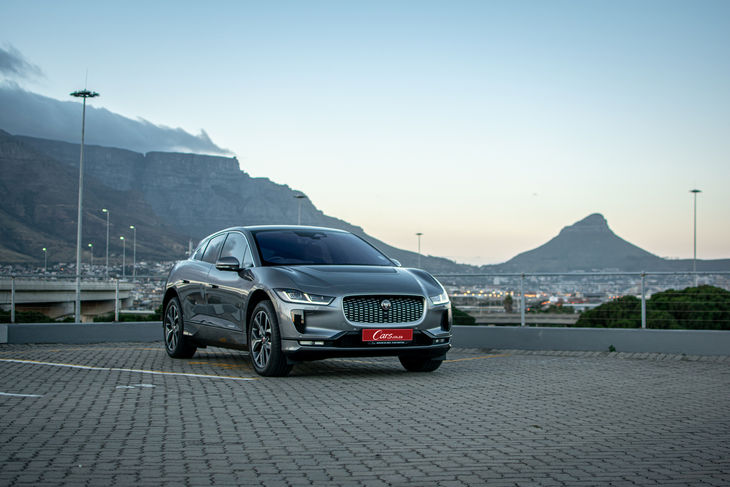
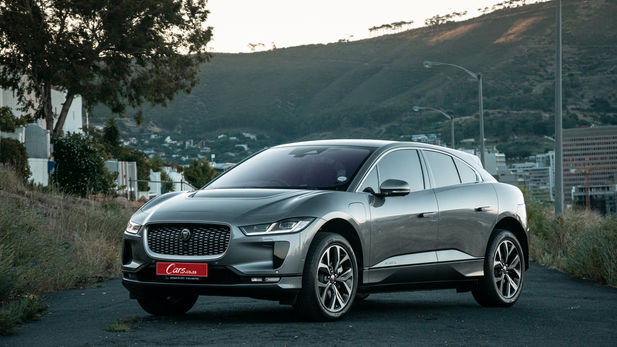
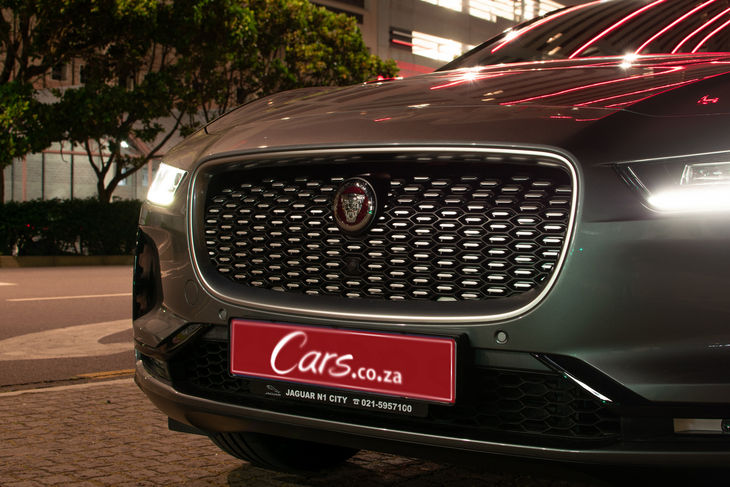
The only way to distinguish between the early and updated I-Pace (from the outside) is by the latter’s revised grille.
What’s new on the Jaguar I-Pace?
Launched in South Africa late in 2018, the Jaguar I-Pace has been somewhat of a trailblazer for battery electric vehicles (BEVs) in the Republic – if largely due to the absence of all-electric alternatives in the luxury medium-SUV category… That’s set to change soon – both BMW (iX) and Audi (e-tron and e-tron Sportback) have lined up similarly sized dedicated battery-electric vehicles for the local market.
So, to make sure that the 2019 World Car of the Year-winning Jaguar remains at the forefront of what is shaping up to become a fierce battle in the marketplace – and soon, Jaguar Land Rover (JLR) has made some changes to the I-Pace. From an aesthetic point of view, there aren’t any major updates (note the slightly altered grille), but the BEV’s infotainment system has been renewed, it now charges faster, plus improved driver assistance technologies have been introduced. Essentially, they’re subtle but significant tweaks to make sure the Jaguar stays at the cutting edge of the, umm, cutting edge.
Use the Cars.co.za Compare Tool to see how the Jaguar I-PACE stacks up against its rivals
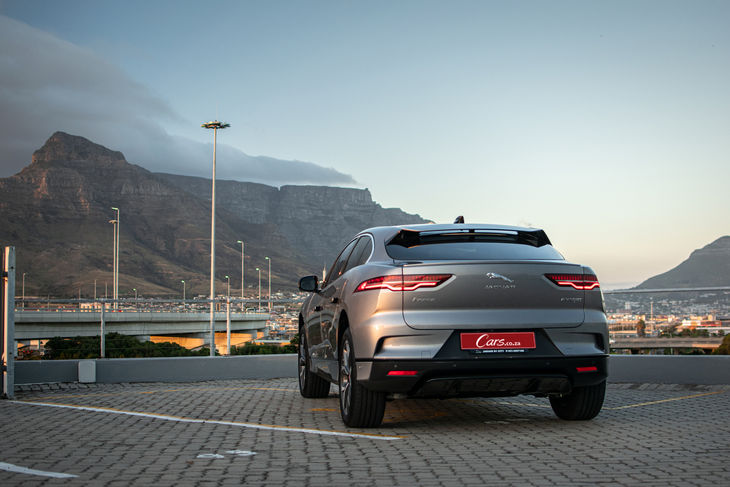
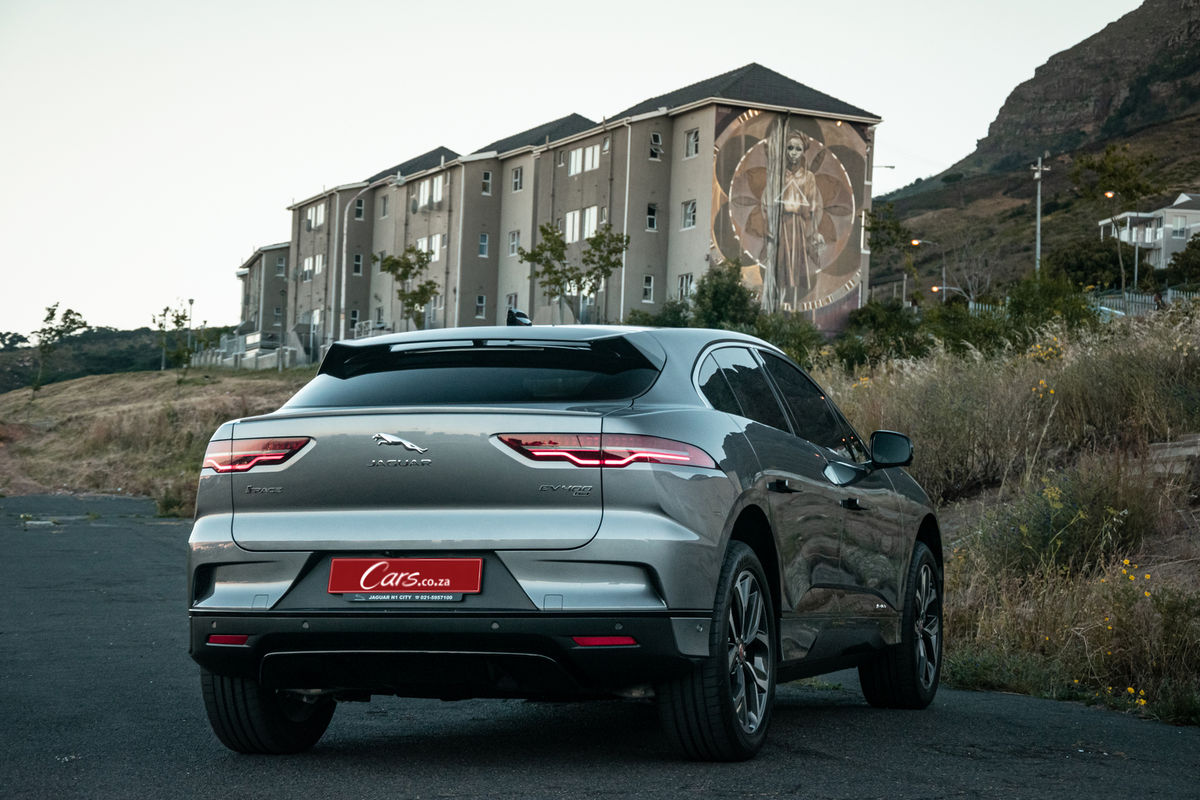
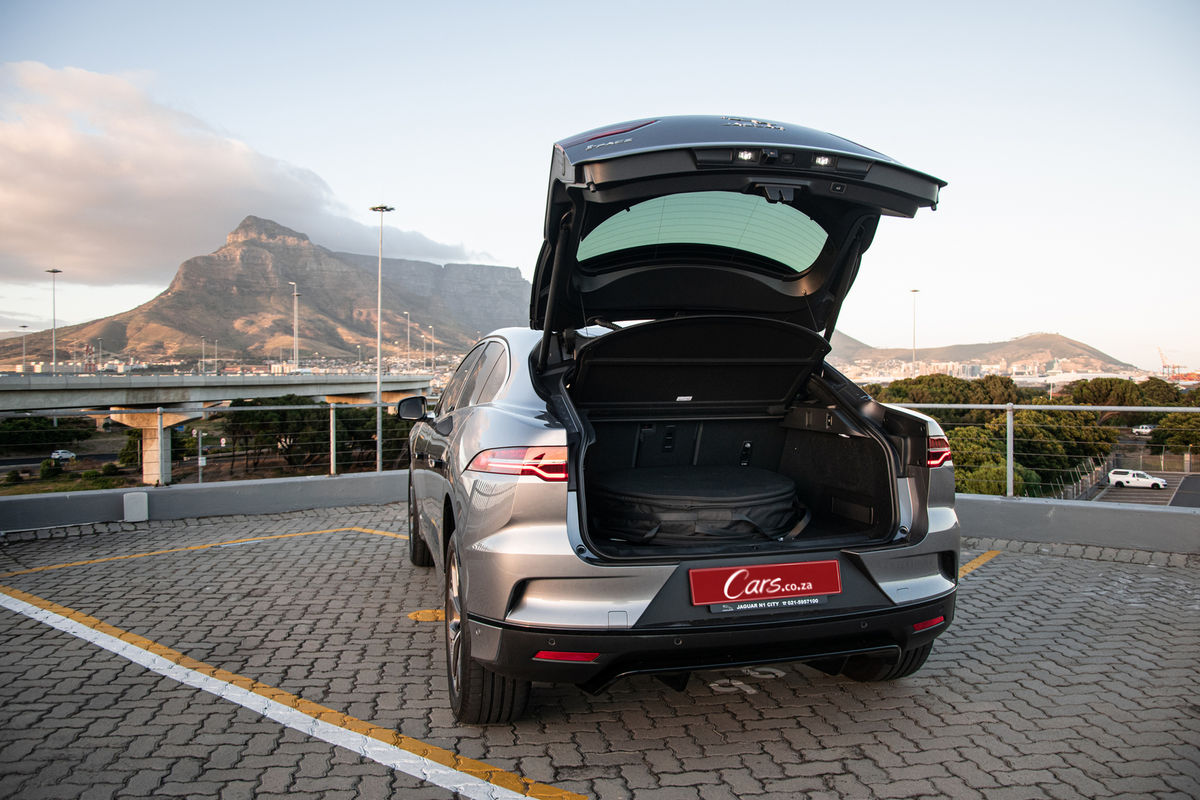
The I-Pace’s rear aspect is very crossover like; it’s a trend that continues with BEVs such as the Kia EV6 and Hyundai Ionic 5.
How the Jaguar I-Pace fares in terms of…
Design & Packaging
Since there aren’t any noteworthy exterior styling tweaks to speak of, the main talking point here is probably that Jaguar now offers only one variant of the I-Pace in South Africa; the Conventry-based brand calls this derivative the “Limited Edition” on its commercial website, but our specification-providing service Duoporta refers to it as the “S Black”.
Whatever you may prefer to call it, the I-Pace has an undeniably eye-catching design, particularly because it seems to straddle genres. It looks too swoopy and low to be a traditional SUV, yet it’s a high-riding vehicle and its tailgate certainly has a little “edge” to it. Think Audi’s “Sportback” design language and you’re probably on the right track. By pure chance, we had a pre-launch example of Audi’s new e-tron Sportback on test at the same time, and most of the team members felt the Audi was by far the more “muscular”-looking car, but the Jaguar has a more distinctive look and is arguably more elegant.
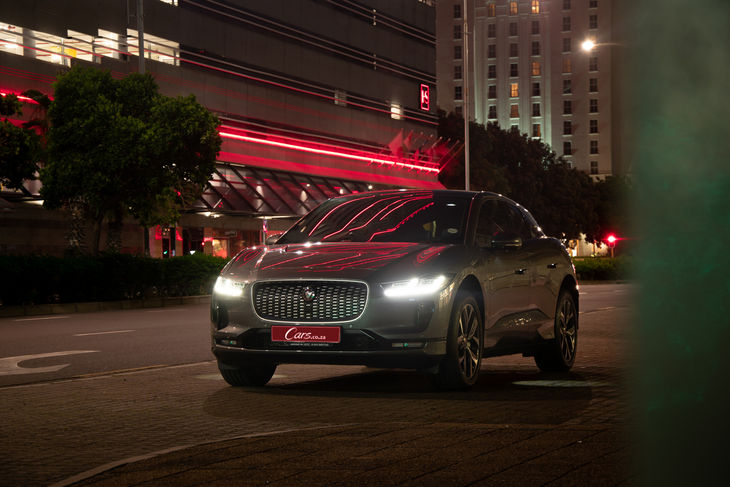
The I-Pace is shorter, but wider and lower, than its Audi and BMW rivals.
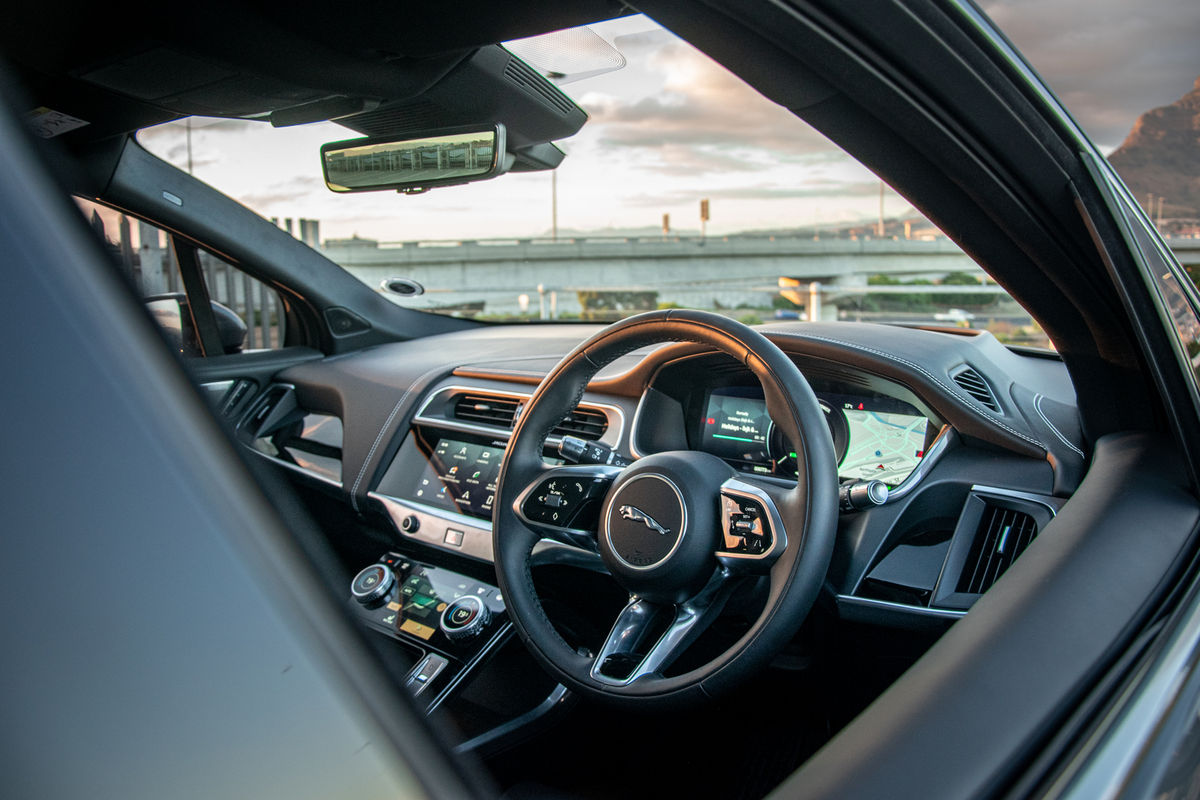
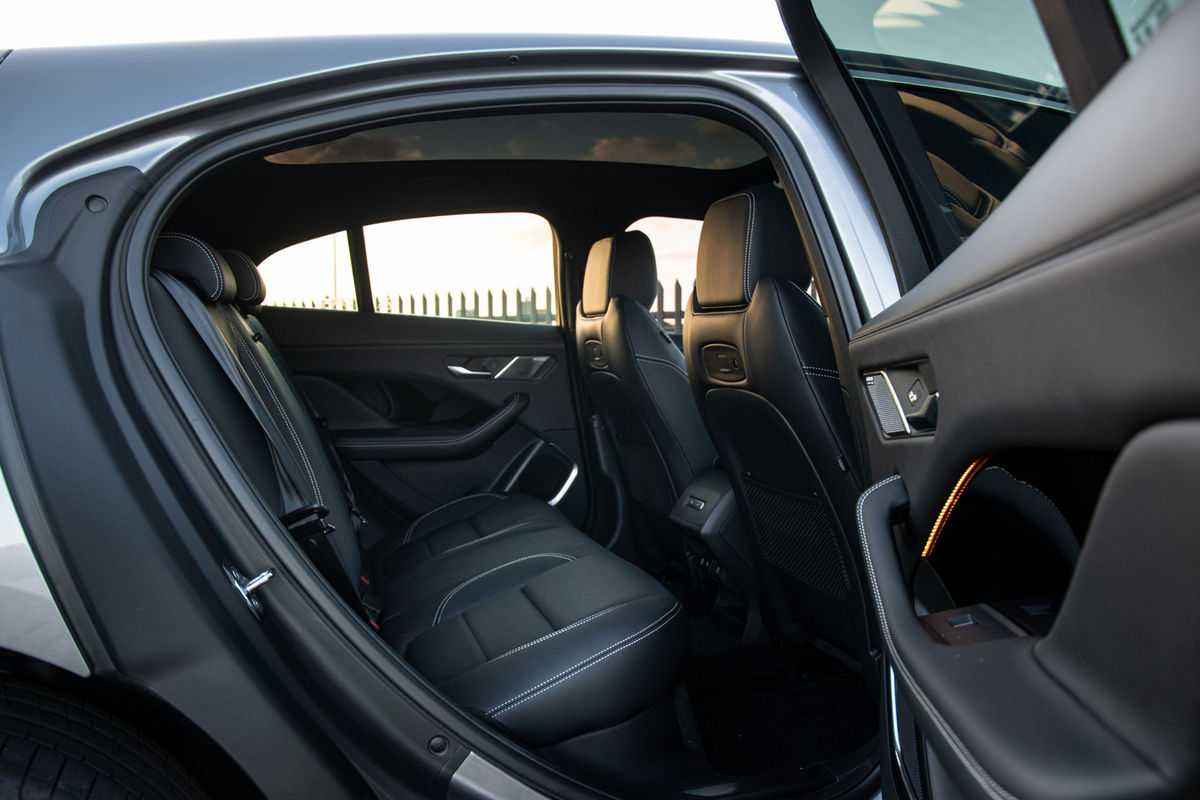
Interestingly, the I-Pace is a fair bit shorter than the e-tron and iX, but wider and lower than its German rivals, which lends it a more hunkered-down appearance by comparison. That doesn’t mean it’s cramped inside, however – its BEV packaging, which positions the battery pack more efficiently than in ICE-based vehicles, certainly helps, plus the Jaguar’s wheelbase is actually longer than the Audi’s and just shy of the BMW’s. This means rear legroom is good. For the driver, the severe slope of the windscreen and the design of the fascia endows the I-Pace with a much sportier “feel” from behind the ‘wheel.
One of our main concerns with the I-Pace concerns its load bay. When you open the tailgate, you’ll find a bulky (albeit neatly wrapped) full-size spare wheel strapped down to the boot floor, which obviously impinges on packing space. Of course, you can remove the spare wheel (a back-straining exercise), but then you’re left with no spare… and the I-Pace can’t ride on Run-Flat tyres, due to its hefty weight.
The Jaguar’s swoopier styling also reduces overall practicality to some degree (compared with its Audi and BMW rivals), as its cabin offers significantly less packing space with the rear seats folded down.
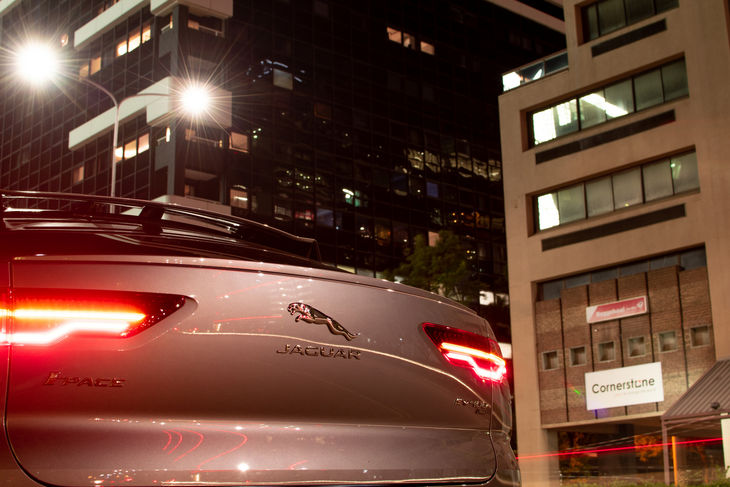
Although the I-Pace cuts a fine figure, its load bay’s practicality is limited due to the fitment of a full-size spare wheel.
Performance & Efficiency
Right, so considering that its claimed 0-to-100 kph time is a mere 4.8 seconds, it’s obvious that the I-Pace is fast. It’s also worth remembering that this is a 2.2-tonne SUV! One soon becomes accustomed to one-pedal driving, particularly when the Jaguar’s regenerative braking is set to its most intensive setting (for maximum energy harvesting when coasting). What takes longer to get used to, however, is the glut of instantaneous torque (and acceleration) that’s at your disposal when you need to execute overtaking manoeuvres. In fact, you have to be wary that you don’t end up driving into cars in front of you!
More importantly, perhaps, is the I-Pace’s range, efficiency and charging speed. Jaguar claims an optimal range of around 470 km and, based on our experience during the test period, we don’t doubt the claim, though range anxiety obviously sets in pretty quickly once the remaining range dips below, say, 100 km.
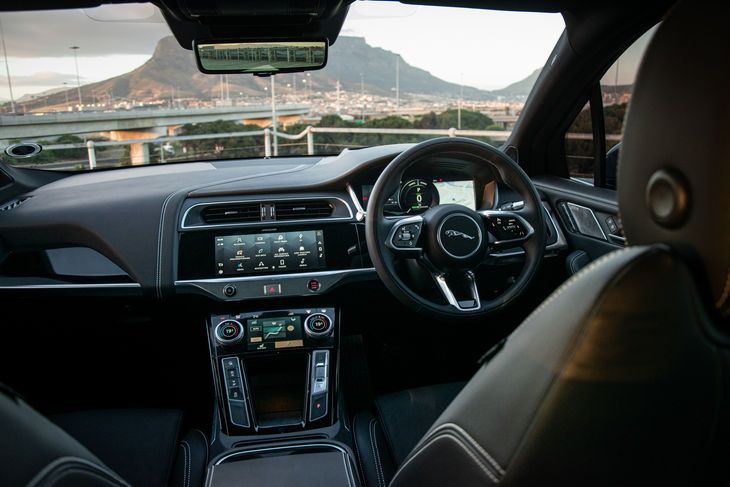
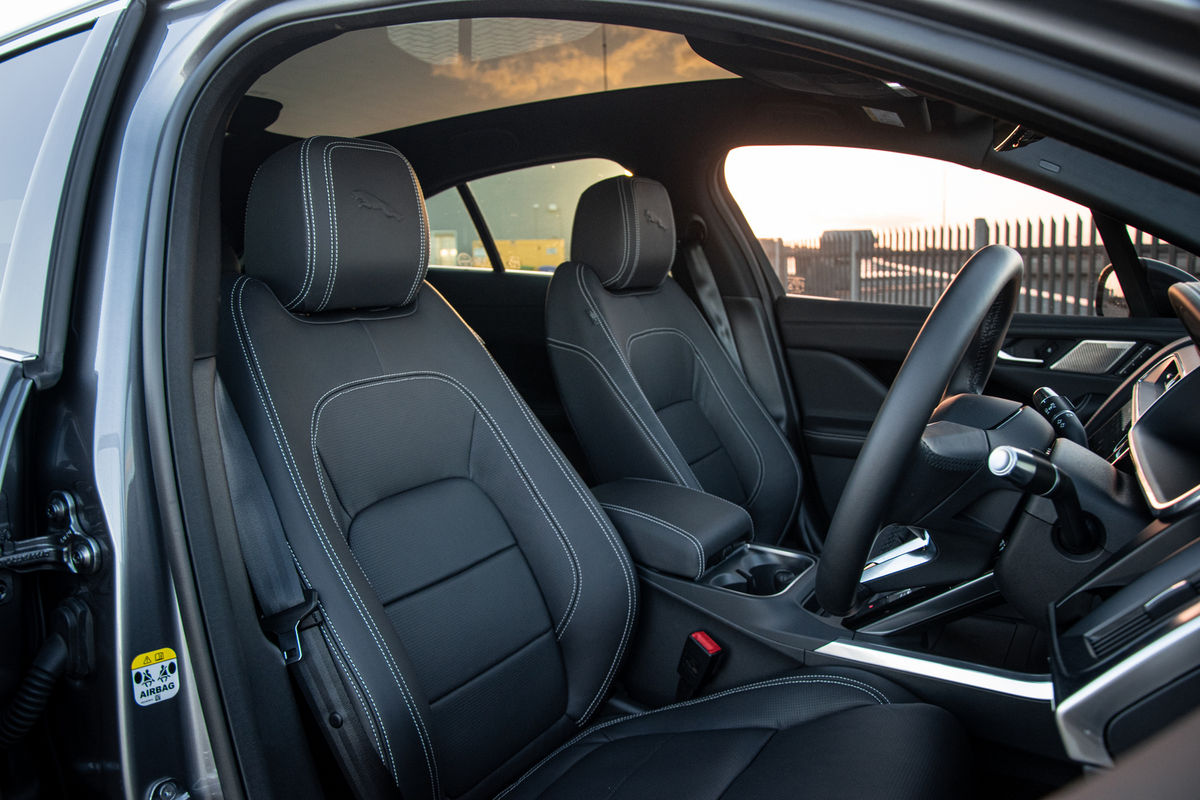
The I-Pace’s cabin is awash with tech, yet the fascia design and driving position are sporty in typical Jaguar fashion.
The EV-charging network in South Africa is growing steadily, and we made use of a Jaguar-branded Gridcars station at Willowbridge Mall in Cape Town. The experience highlighted a few aspects of EV ownership (both good and bad). Firstly, had both spots had been taken, we would’ve been in a bit of bother… but there are already apps available that make it possible to avoid such a scenario. With 27% left on the range meter, we plugged in the I-Pace and went shopping. We came back about 2 and a half hours later to find the car fully charged (it was a 55-kW charger).
This was indeed impressive, but less impressive was the fact that there is only one charge port on the car (on the left), so you may find yourself wrestling with a fairly hefty cable to get to the “other side” of the car, when it’s not possible to park nose-first to the right of the charging station, for example. By comparison, Audi’s e-tron models have charge ports on both sides.
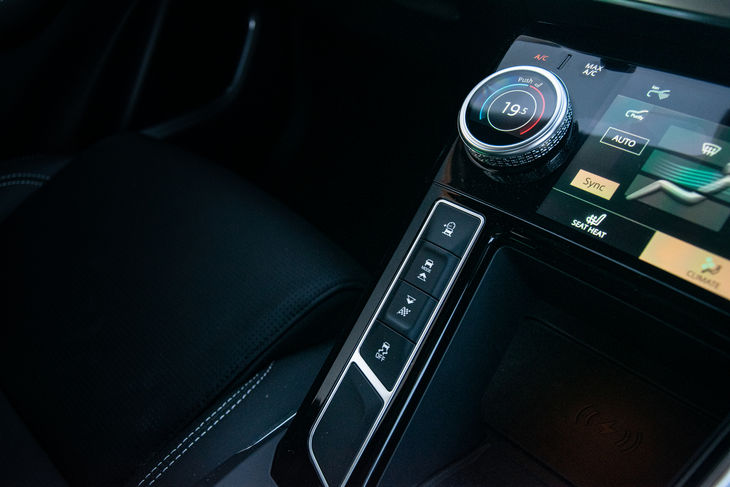
Drivers can use the 2nd and 3rd buttons on the upright to adjust the brake-regeneration and drive modes respectively.
All that said, in all likelihood, most I-Pace owners will own or rent a house with a garage equipped with a 3-phase power outlet. This new updated I-Pace comes with an onboard 11-kW charger as standard, so owners with a 3-phase electricity supply at home can now fully charge their vehicles in only 8.6 hours (when using an 11-kW wall box).
If you only have access to single-phase electricity, you can continue using 7-kW wall boxes and fully recharge the Jaguar in 12.75 hours (which adds approximately 35 km per charging hour). Remember, you’re unlikely to run the battery down to zero every day, so you’d probably only be topping up at night-time.
The I-Pace has a supple ride quality on most road surfaces, at most speeds.
Ride & Handling
Riding on optional 20-inch wheels shod with tyres that have significant (relatively thick) “sidewalls”, the I-Pace delivers a supple ride on most road surfaces, at most speeds. A passive coil-sprung suspension is standard, but for an additional R17 300, you can specify Active (adaptive) Suspension, which, in turn, adds Adaptive Dynamics.
While you can’t ever get away from the fact that this is a bulky, heavy machine, the I-Pace handles and steers well; it always instils a sense of security and control. Once you’ve mastered the art of one-pedal driving, you can get into quite a nice rhythm of fast driving with this big quasi-SUV.
The steering has pleasing weighting to it and, as per usual, the JLR engineers have nailed that thing driving enthusiasts adore so much: “control harmonisation”. What we mean by that is that the amount of effort required to elicit a response from the steering, brakes or engine is “harmonised”, so, generally in line with exactly what you were expecting. It’s a triumph.
Perhaps parking should not fall into the Ride and Handling section, but it’s worth noting that you can get a self-park function for the I-Pace, at an extra charge of R18 300.
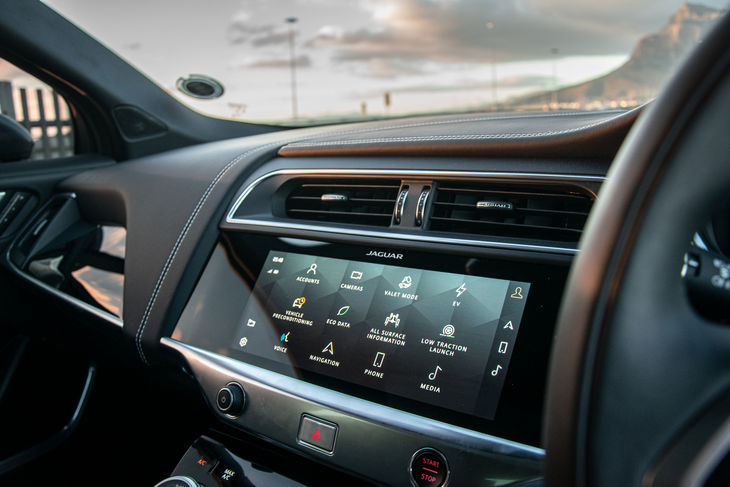
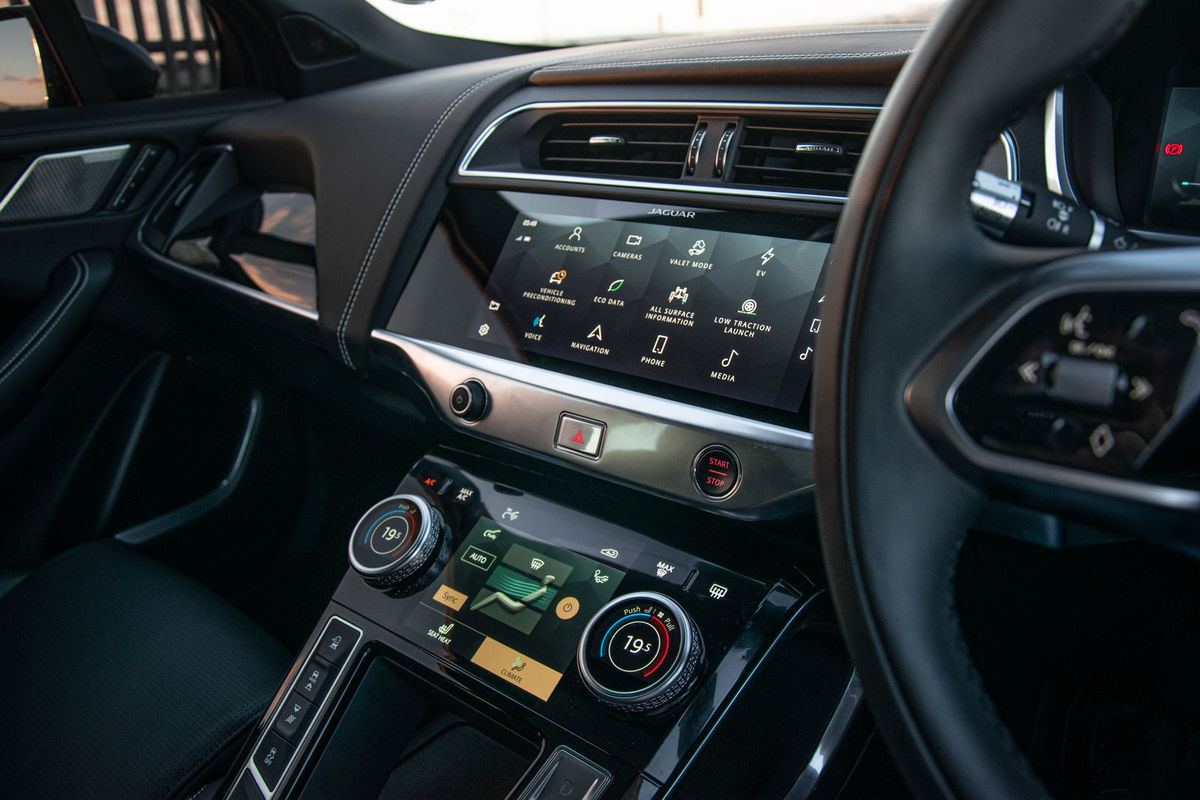
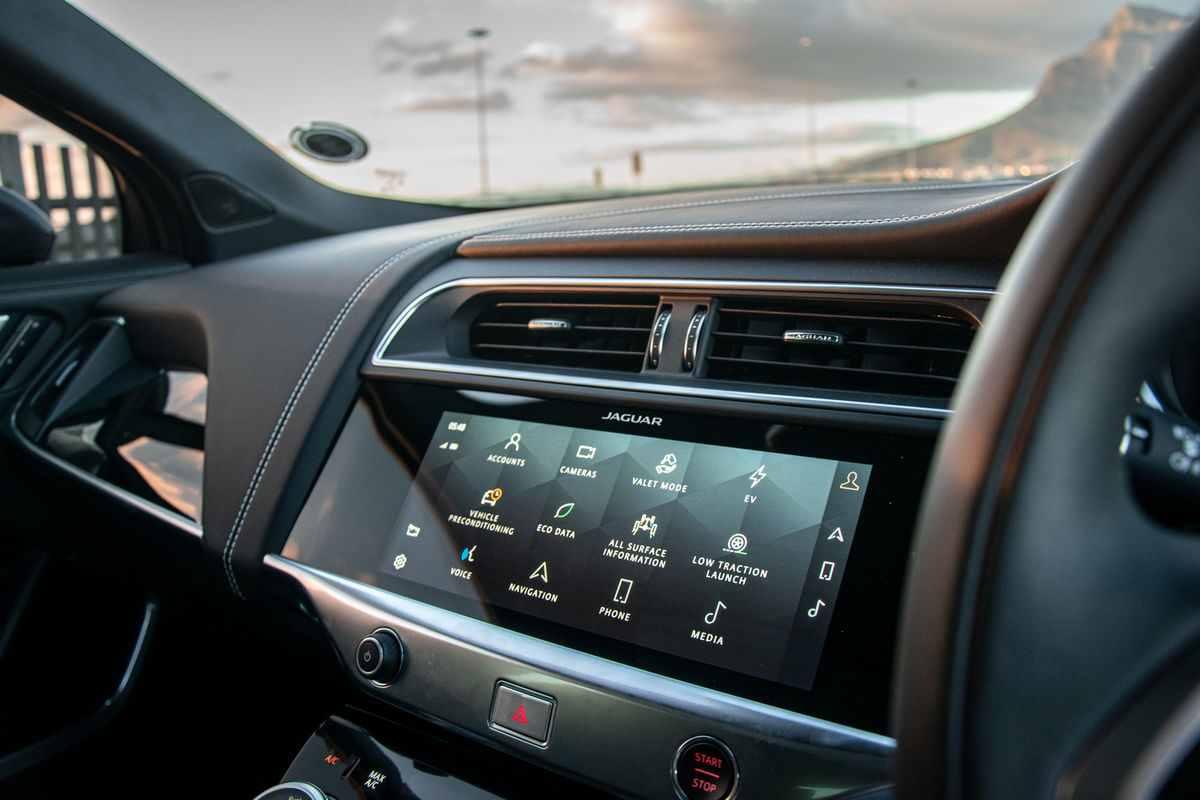
Jaguar’s new Pivi Pro system is easier to use and faster-reacting than older-generation infotainment systems.
Comfort & Safety features
Right, so this is where Jaguar has rung quite a number of changes. The updated I-Pace comes with the marque’s so-called new Pivi Pro infotainment system. It features a very crisp, high-definition 12.3-inch instrument cluster, as well as 10- and 5-inch upper and lower digital touchscreens/panels, replete with haptic feedback. It’s a very easy-to-use system, with logical menus and, what’s more, there are a number of practical improvements… For example, it has its own backup battery to ensure that the navigation function’s initialisation is pretty much immediate.
The standard features list is fairly comprehensive, as you’d hope (considering the car costs R2 million), but nevertheless, there are still some add-on options you can choose from. Having to pay R2 000 extra to be availed with a wireless charging pad for your smartphone, however, is just cheeky.
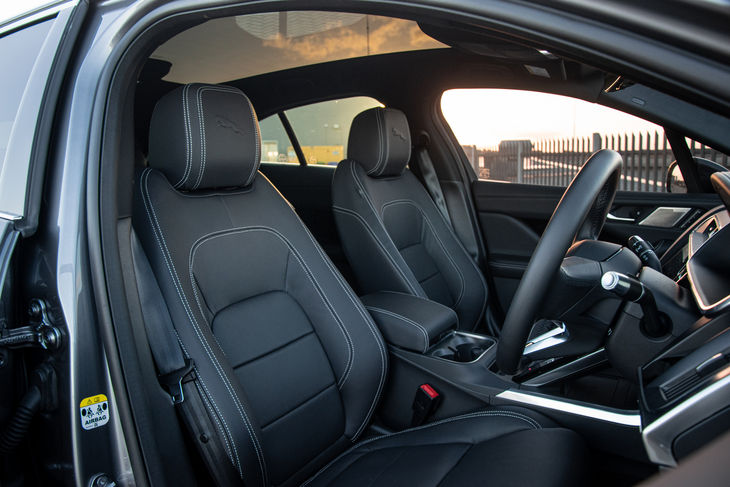
The I-Pace’s shapely front seats offer a good balance between comfort and support.
What you do get as standard is dual-zone climate control, a heated steering wheel, head-up display (HUD), voice control, Apple CarPlay/Android Auto connectivity, adaptive cruise control with steering assist, rear cross-traffic alert, a powered tailgate and much more.
Another nice touch is the new 3D Surround Camera system (R15 000 extra), which gives you a handy high-definition 360-degree view of the vehicle. The I-Pace can now also be ordered with the ClearSight rear-view camera that substitutes the traditional rear-view mirror, although you can flick back to the normal mirror view should you find the camera’s aspect distracting. The ClearSight is a R8 700 option.
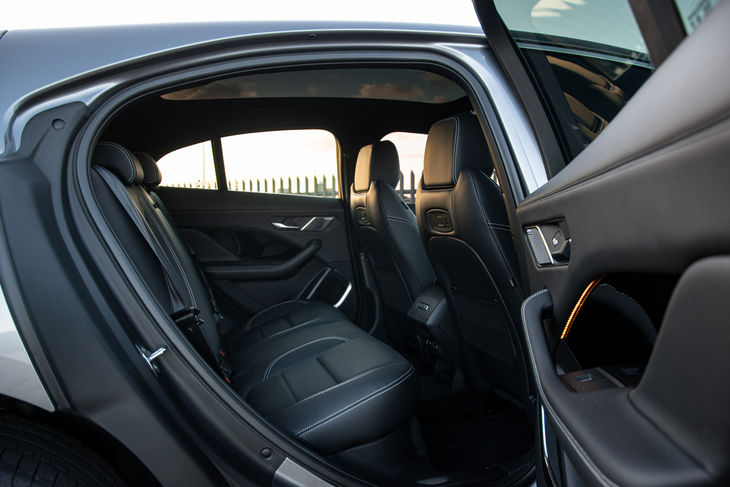
Don’t be fooled by the I-Pace’s somewhat stubby appearance; leg legroom is quite generous.
Price and after-sales support
The Jaguar I-Pace is available in 1 trim level only and is priced at R1 999 900 (December 2021). There are, however, a variety of options to choose from (see some of those under Comfort & Safety features). Included in the price is an 8-year/160 000 km battery warranty and the standard Jaguar Care plan, which includes a 5-year/100 000 km (whichever comes first) warranty and servicing cover.
Verdict
While the changes that Jaguar Land Rover have applied to the I-Pace are subtle (also including advanced cabin-air filtration and enhanced software-over-the-air update functionality), the Coventry-based brand’s BEV remains an interesting option for early-adopters, even in the face of new competition from other premium (German) brands. Its most serious new rival appears to be the e-tron Sportback, which is also a sporty-looking battery-electric SUV. Even though the Jaguar is the older product of the two, it still competes (even trounces, in some respects), its new German rival. So, in summary, the I-Pace is still in the running, and very strongly so. Plus, with the addition of some new competitors, consumers now, finally, have that ultimate of luxuries in this segment… a wealth of choice.
See also: New Electric Cars for SA in 2022
Related content:
Audi e-tron Prices in SA, Orders Open
Hannes Oosthuizen

With the ultimate goal of spending his life writing about cars, Hannes studied journalism at the University of Stellenbosch. A brief stint as a sports editor for Paarl Post followed, before he joined CAR magazine in 2001. He eventually became the (youngest-ever) editor of CAR in 2011, a position he occupied for two years. During his career at CAR he became a member of the WCOTY (World Car of the Year) panel, wrote a book (Cranked Up: Confessions of a Petrolhead) and was named by the Mail & Guardian as one of the Top 200 South Africans to take to lunch in its 2008 Youth Day supplement, and by The Media magazine as one of the most influential media professionals under 40 (2012). He left CAR in 2013 to experience the \other\" side of the industry