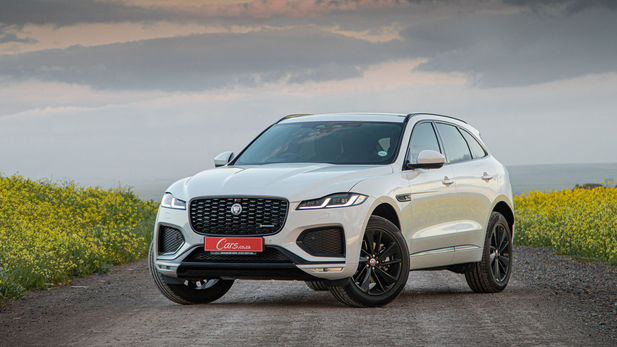
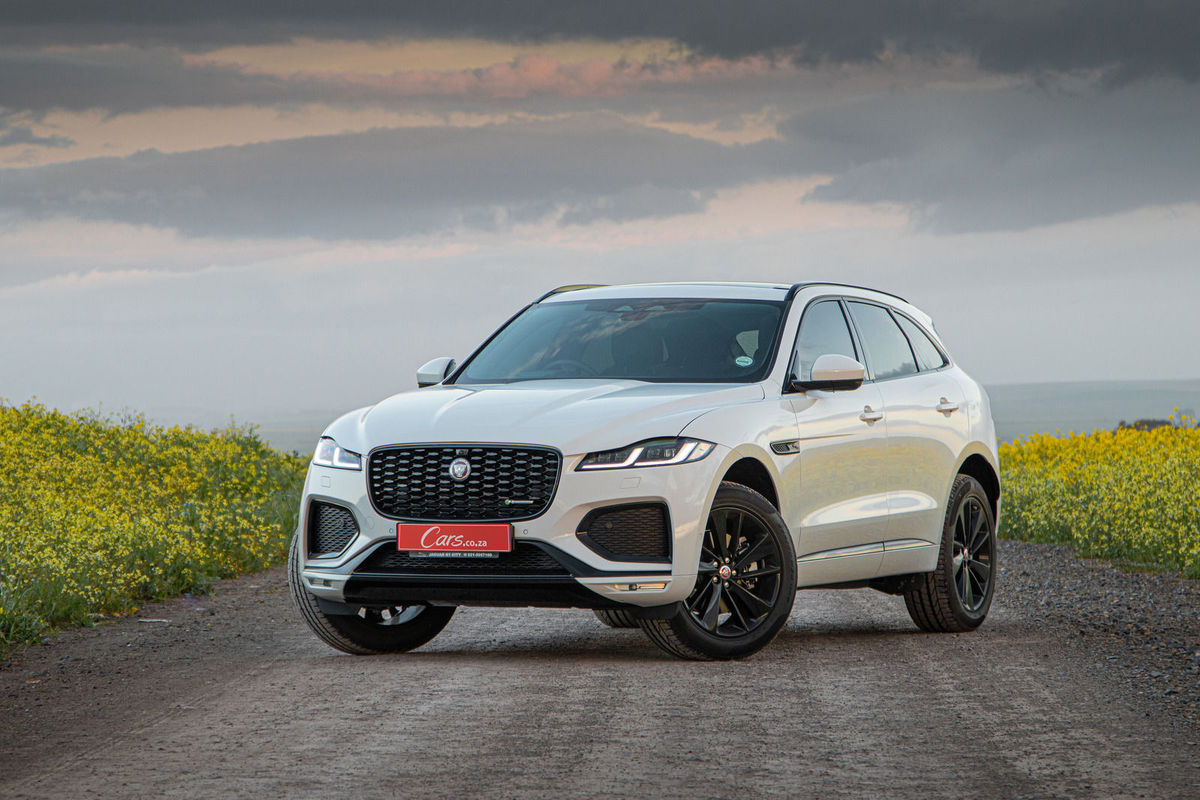
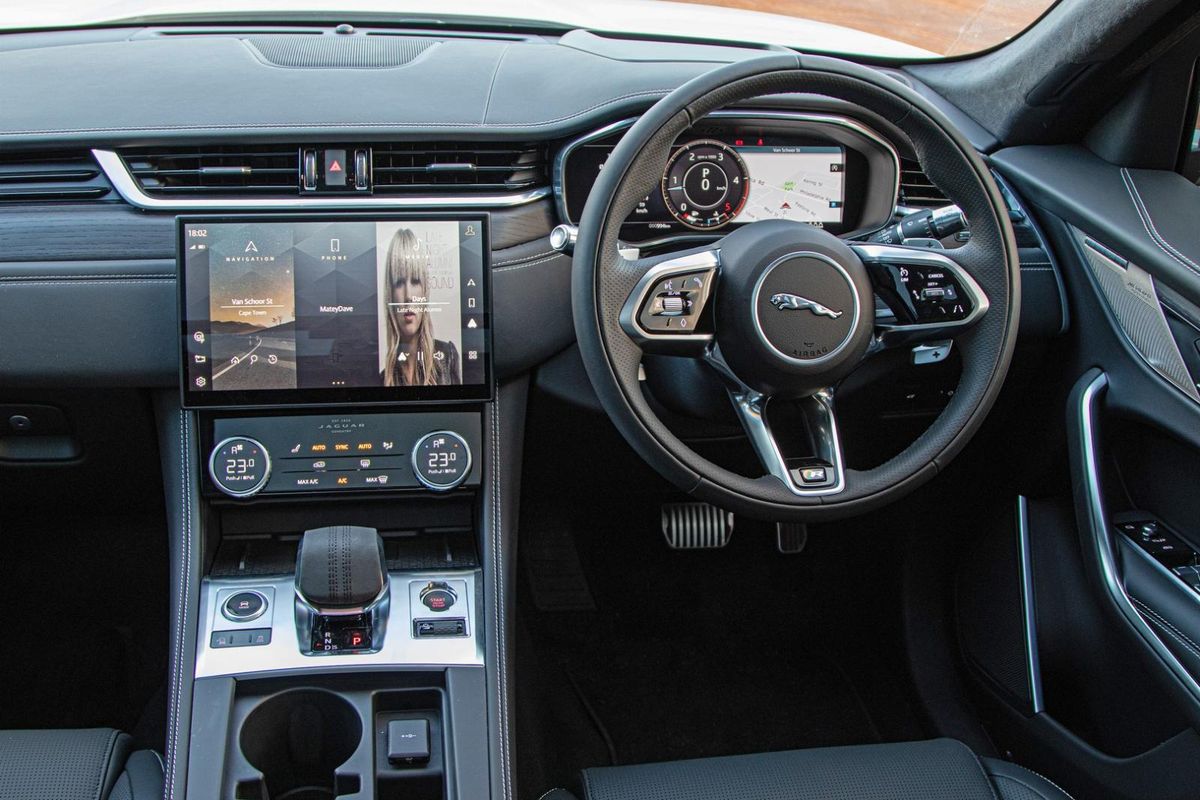
The updated F-Pace is probably the last fossil-fuelled Jaguar model to paw its way out of the brand’s Solihull factory, but what sort of send-off has it been given? We sampled a 2.0-litre turbodiesel derivative of Jaguar’s best-selling SUV to see if it’s still good to drive.
We like: Revamped interior with luxurious materials, spacious and practical, composed ride, exterior design.
We don’t like: Engine lacks performance that the price suggests it should have. R1-million base price.
Fast Facts:
- Model tested: Jaguar F-Pace D200 R-Dynamic HSE
- Price: R1 273 700 (October 2021)
- Price as tested: R1 426 018
- Engine: 2.0-litre turbodiesel
- Power/Torque: 150 kW and 430 Nm
- Transmission: 8-speed automatic
- Fuel efficiency: 5.2 L/100 km (claimed)
- 0-100 kph: 8.0 sec (claimed)
- Top speed: 210 kph
- Load capacity: 613-1 440 litres
Serious about buying?
Some Jaguar Land Rover dealerships regularly offer great deals. See our Car Specials here!
What’s new on the F-Pace?
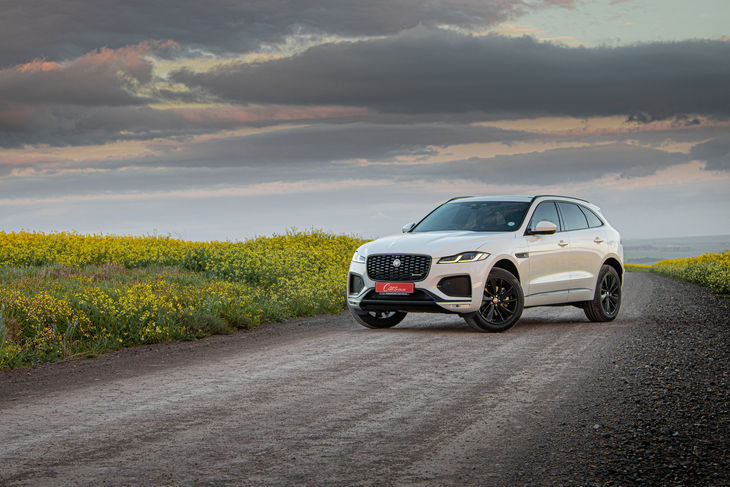
The exterior has been subtly updated while the interior has been revamped entirely.
Since its introduction in 2016, the F-Pace has gone on to become Jaguar’s best-selling model around the globe. The 2021-spec model incorporates subtle exterior design changes, but its interior has received a major overhaul – it now features a new cabin layout and a bigger, faster-reacting infotainment system.
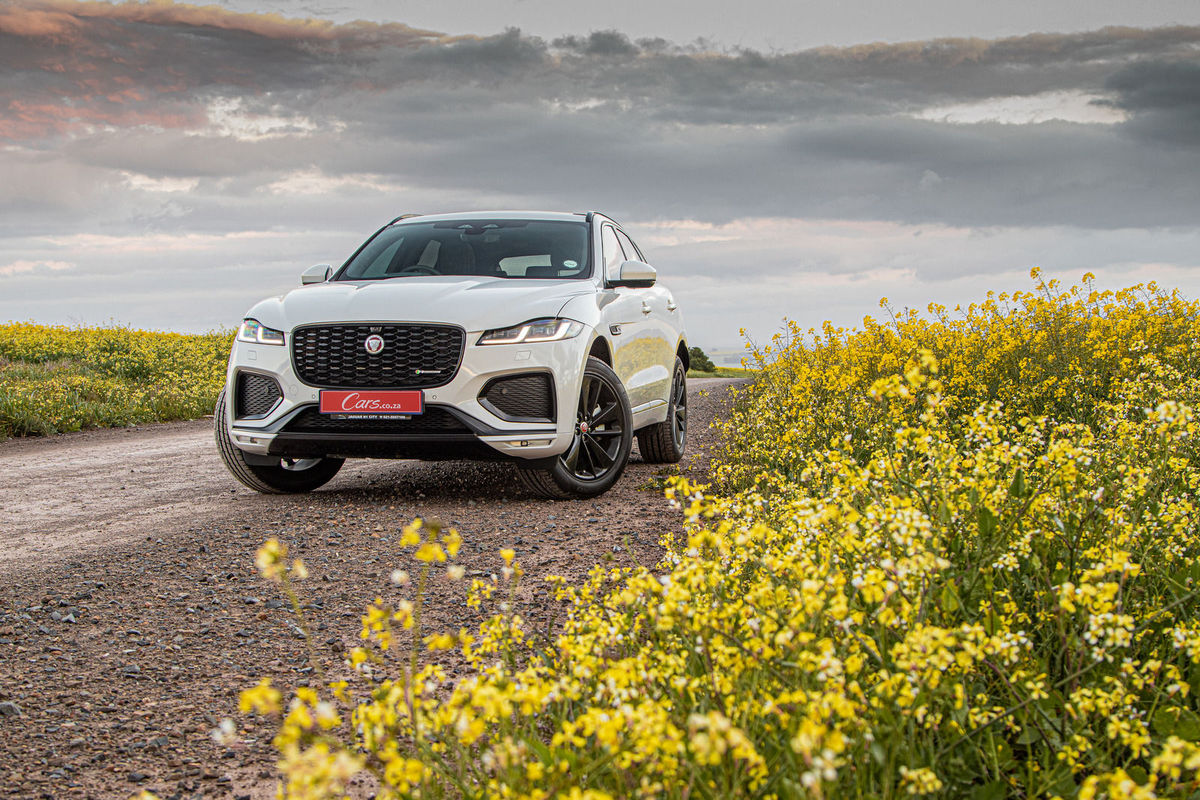
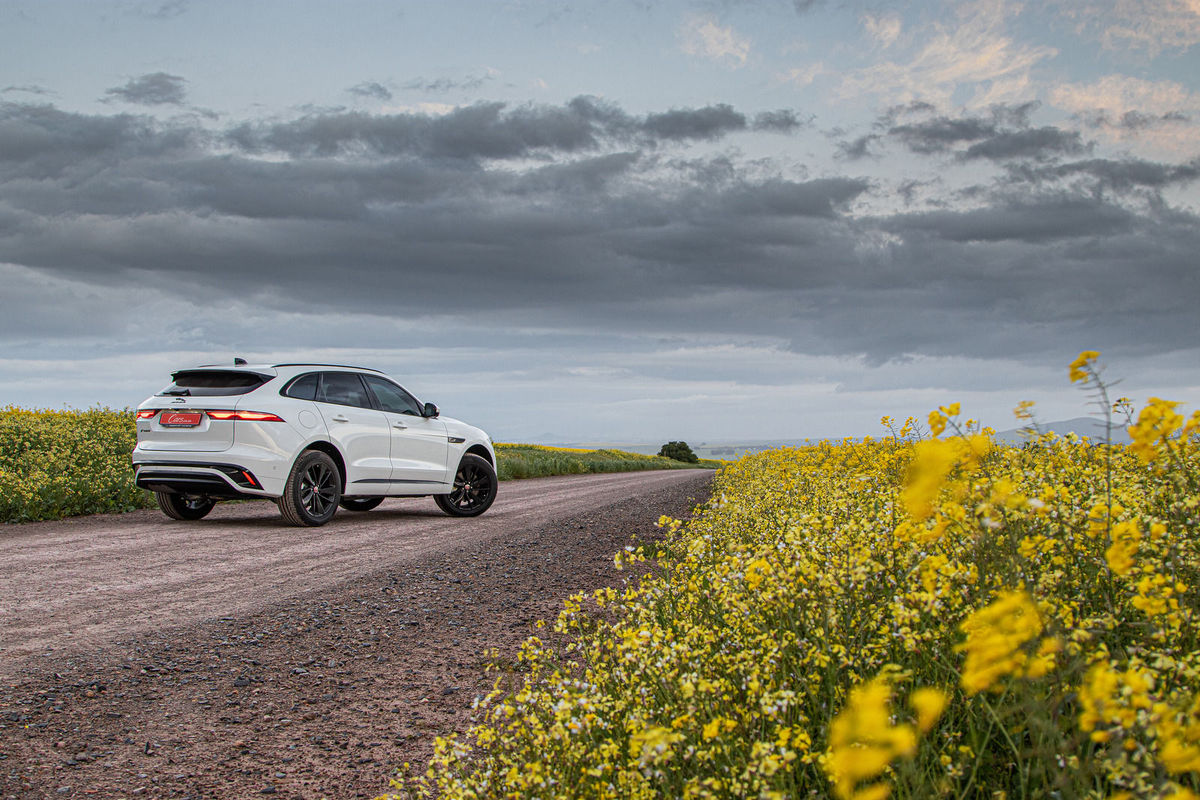
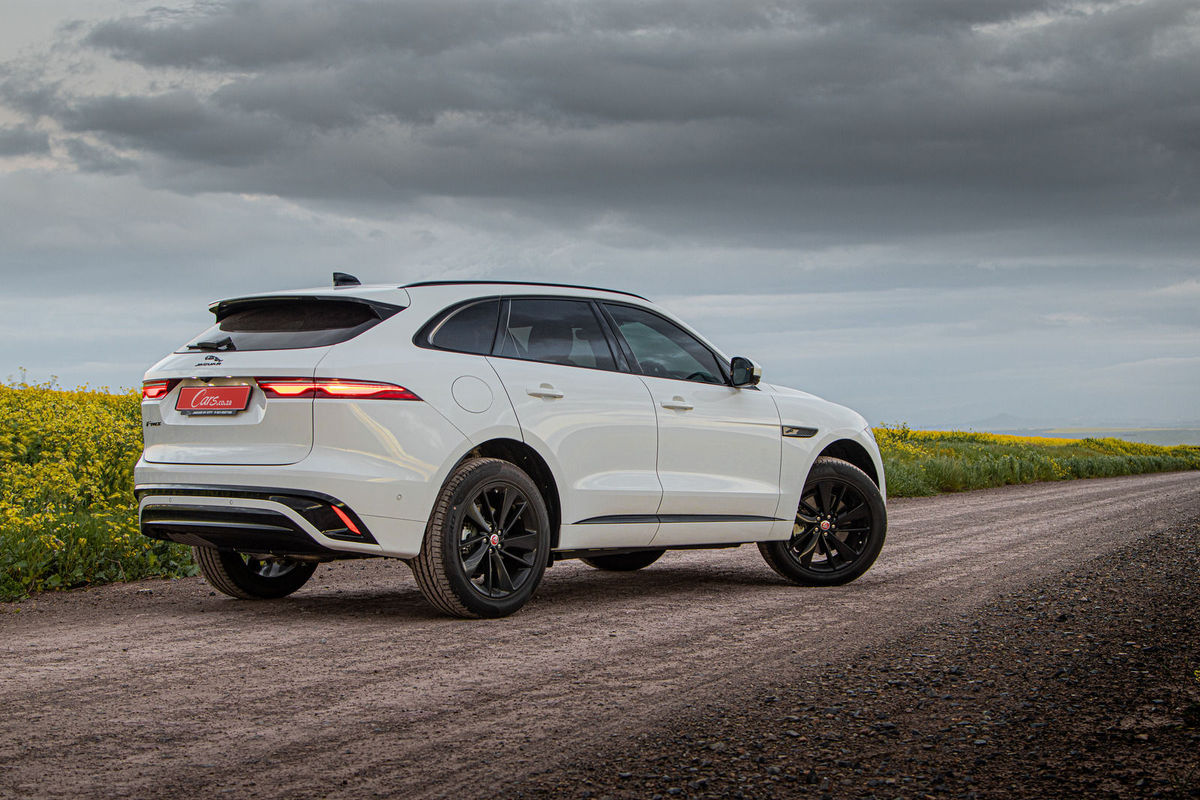
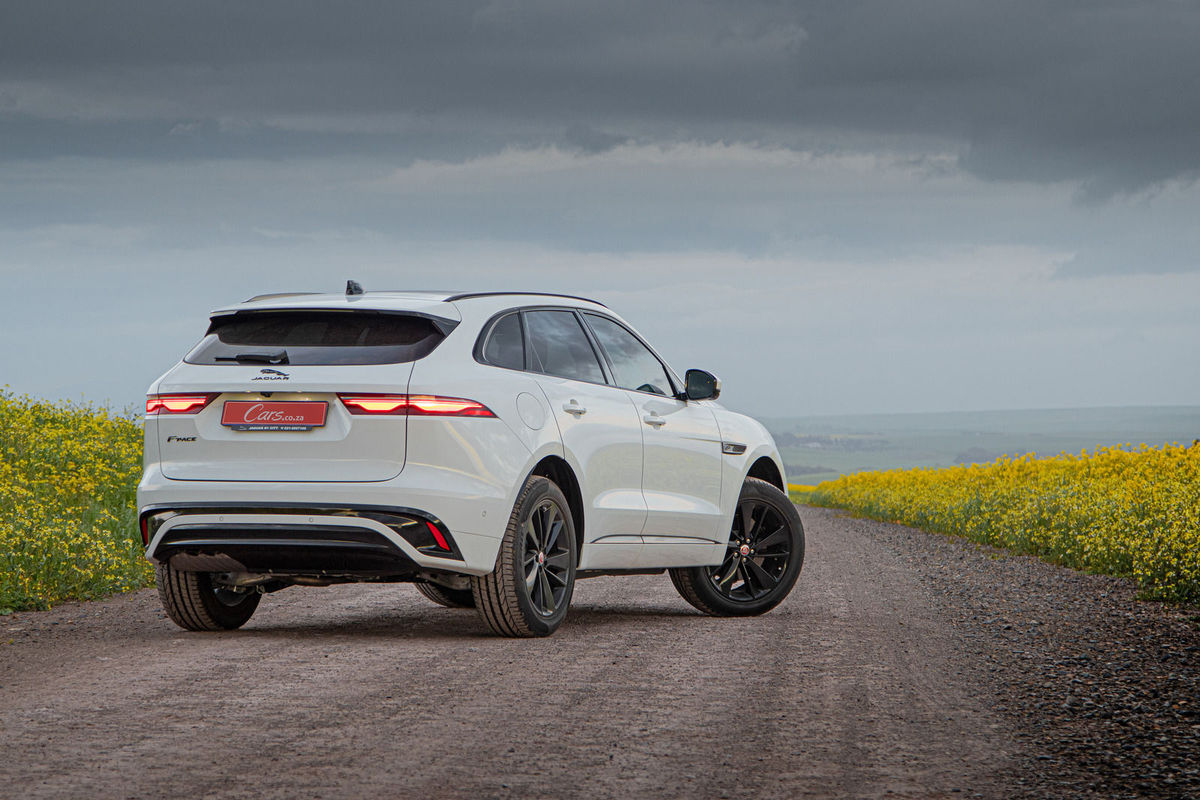
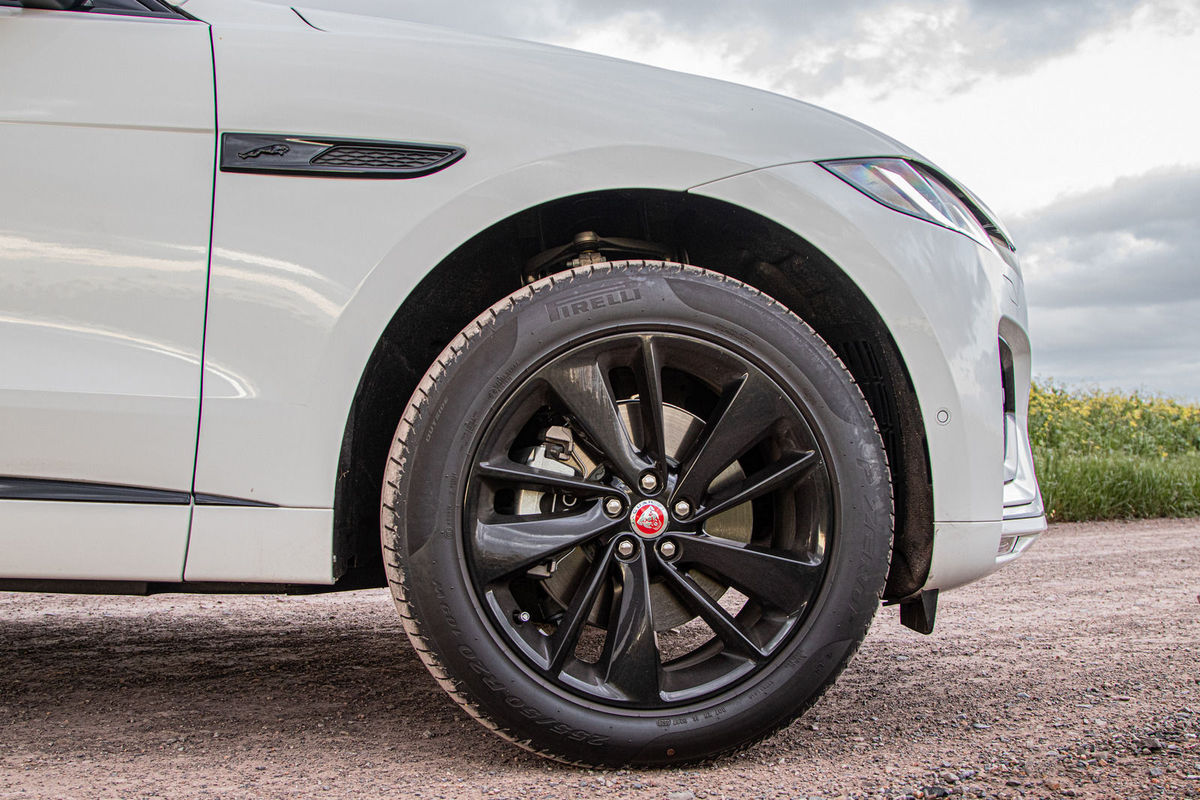
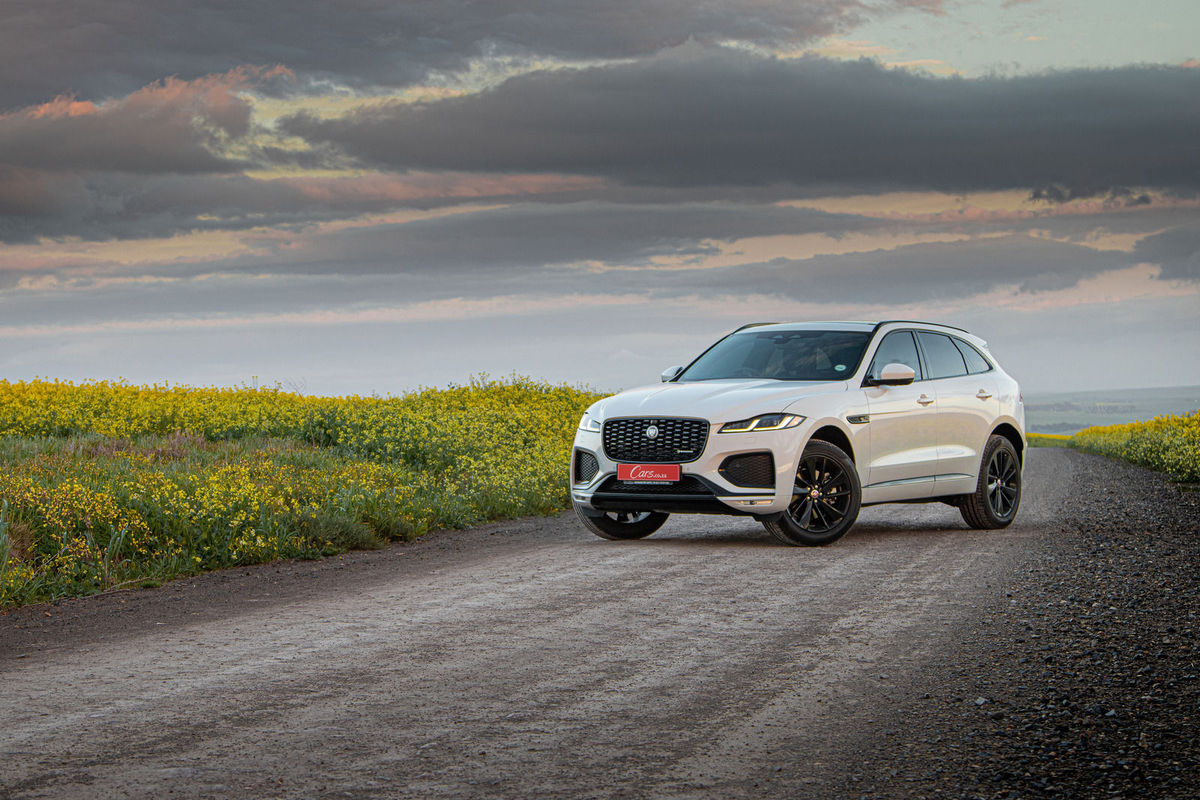
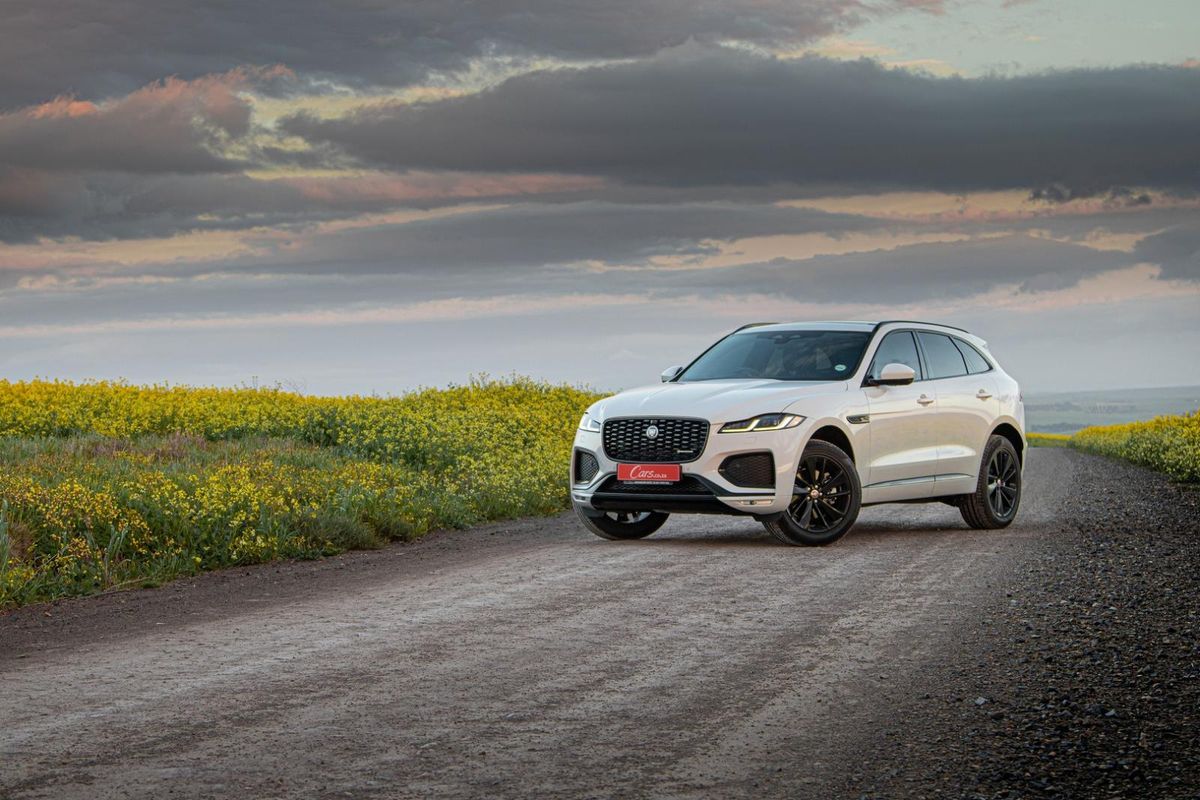
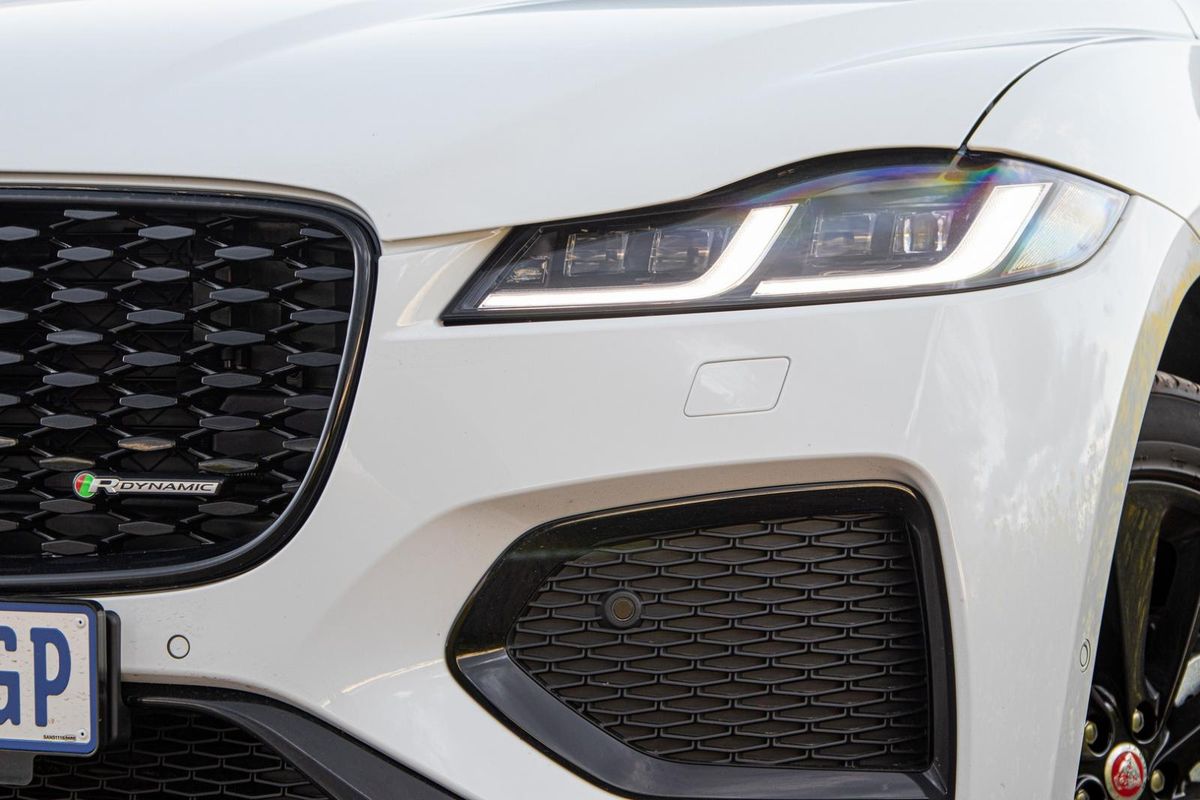
Our test unit came specified with the optional new Black exterior pack, which includes gloss black finishes to the bumpers, grille and badging. It ramps of the Jaguar’s kerb- and road presence appreciably and the gloss black elements are complemented by matching 20-inch alloy wheels. I have to admit, the test unit’s black and white contrast looks quite attractive on the new model, especially at night, when the new “J-shaped” LED lighting elements project an imposing glare down the road.
What’s the F-Pace new interior like?
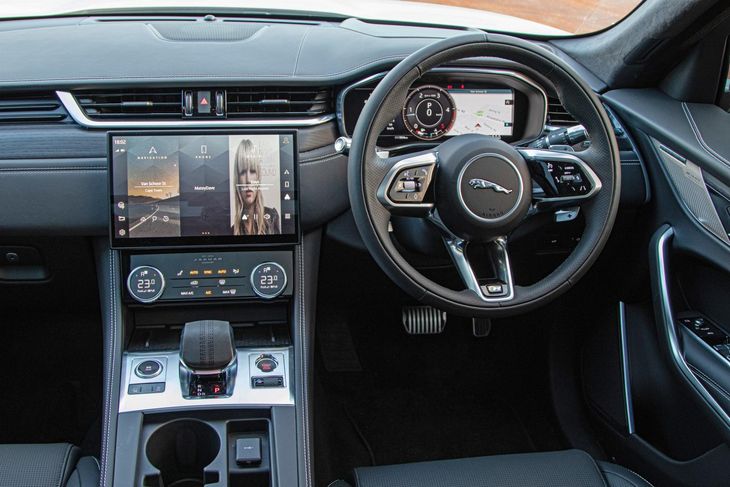
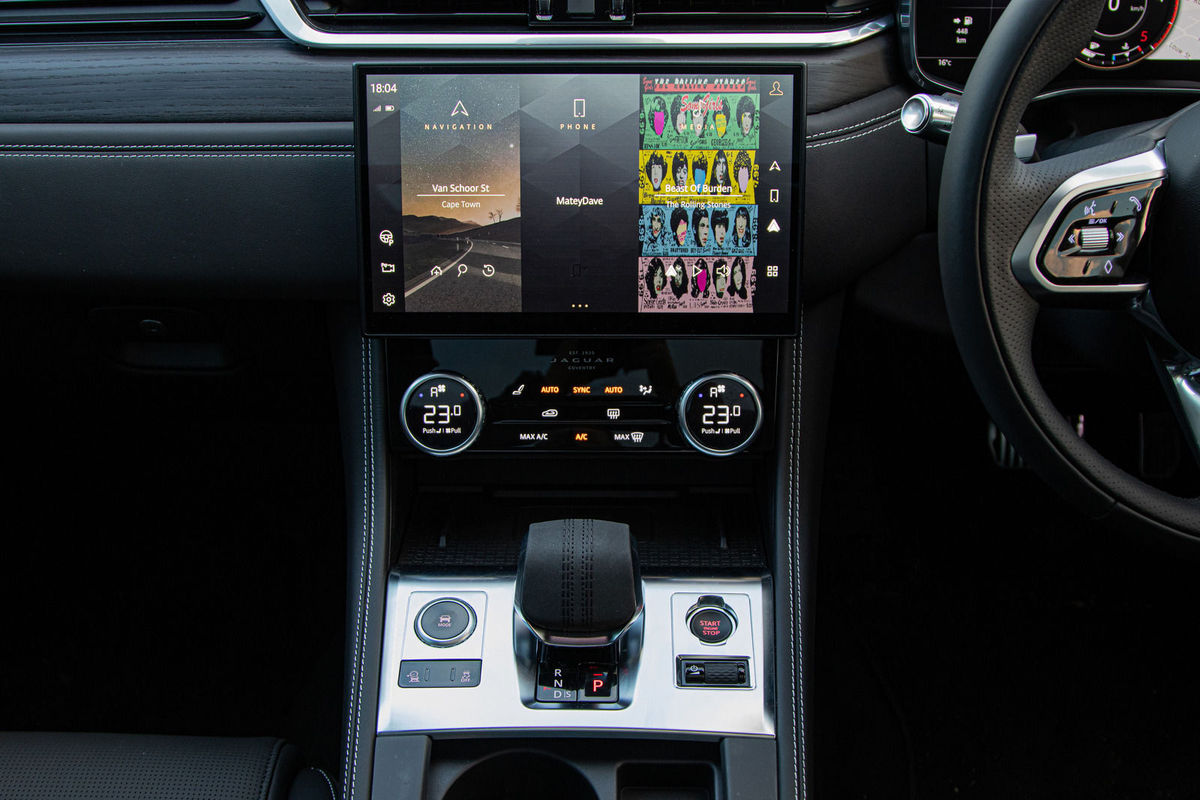
The new infotainment system and stubby transmission lever are new for the facelift.
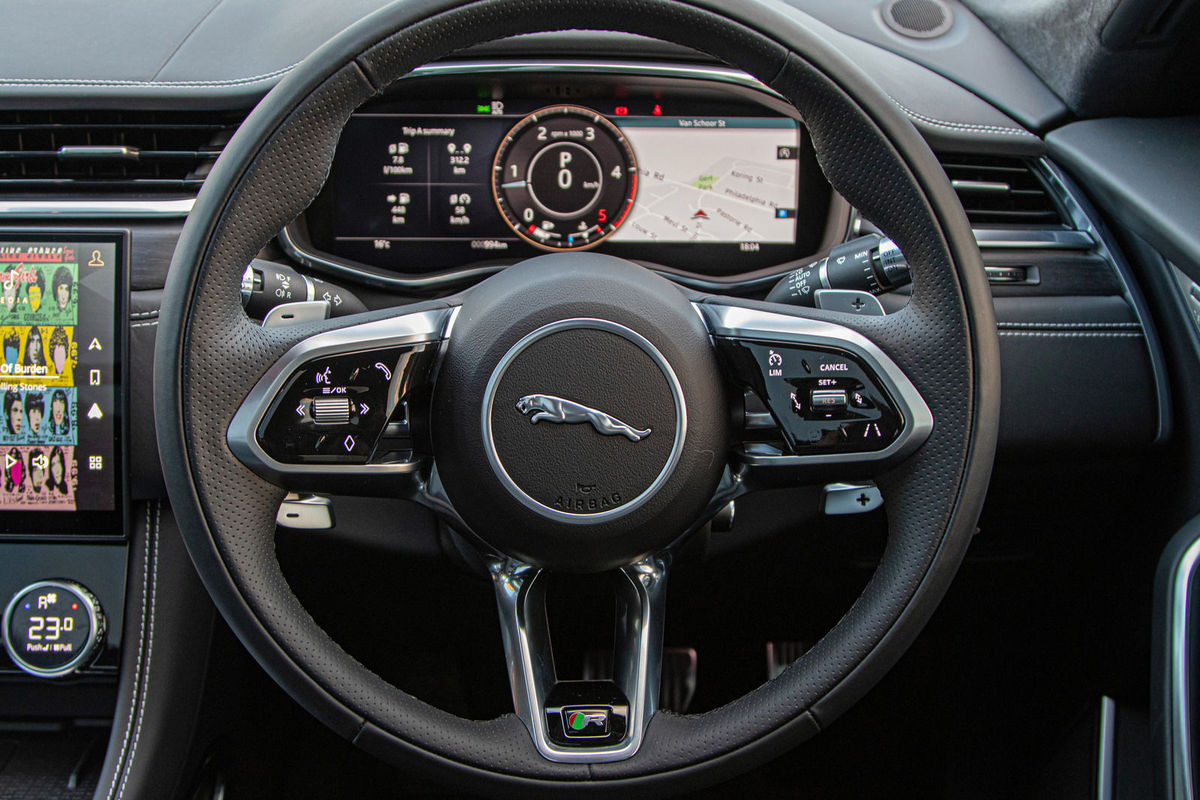
New vehicles have become scarily expensive over the past 18 months, but the quality of interior materials (especially in premium vehicles) hasn’t really improved. In fact, manufacturers have tended to gloss materials up to make them look more expensive than they really are! You’ll find more faux carbon fibre, fake aluminium trim and gloss-black plastic masquerading as the real thing than authentic material. Jaguar Land Rover and Volvo have not been as guilty of this as the German brands and, as a result, the new F-Pace’s interior really does instil a sense of luxury with thick leather seats, tightly quilted hide (on the dashboard and door panels), as well as a perforated leather-trimmed steering wheel. Our test unit had the extended leather option, which is a R15 300 option that we’d recommend.
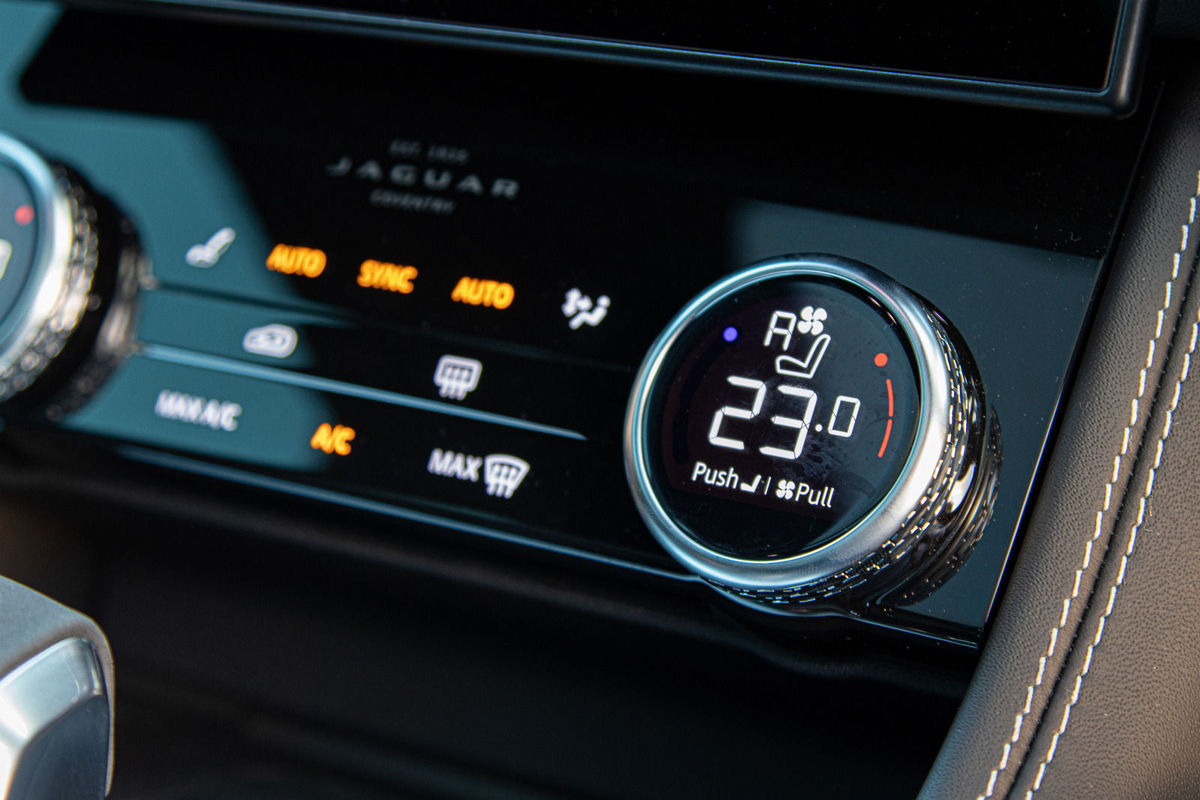
The updated F-Pace’s interior is not devoid of plastic, of course – the buttons for the ventilation modes, seat heating and demister are gloss black plastic, while the climate control dials have a chromed-look finish. The steering wheel controls lack a nice tactile “push click” feel; you need to prod squishy plastic panels on the spokes to activate functions. They’re certainly fashionable, but not very satisfying to use.
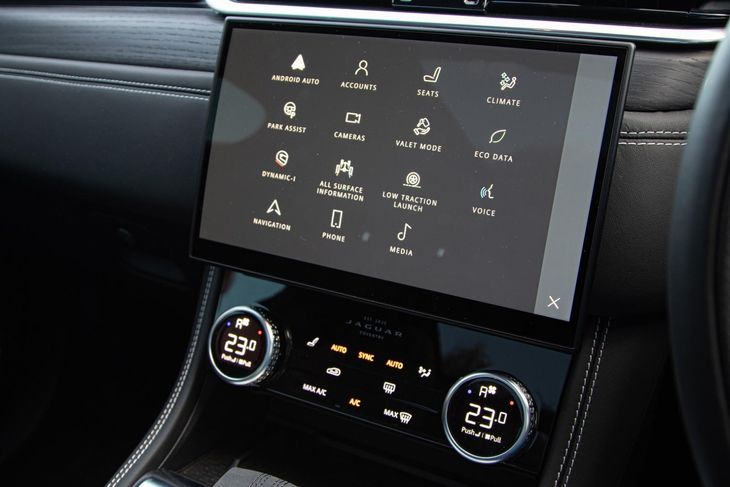
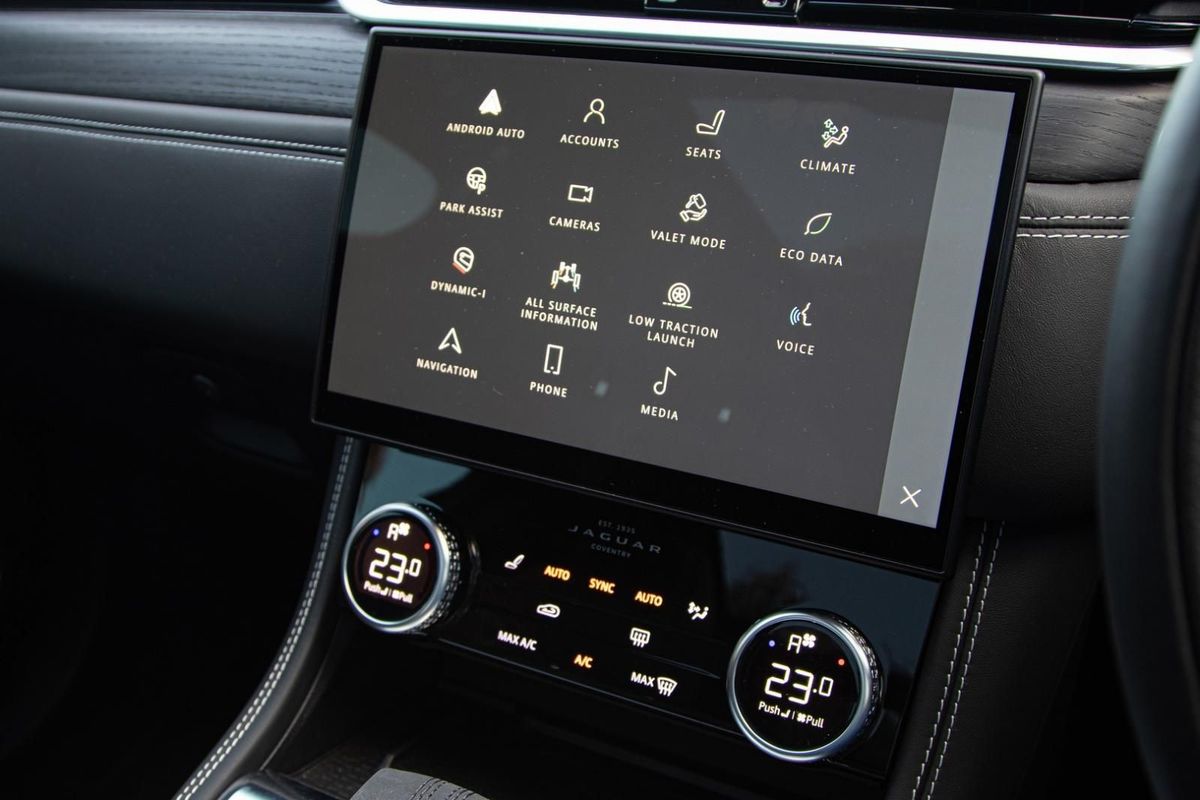
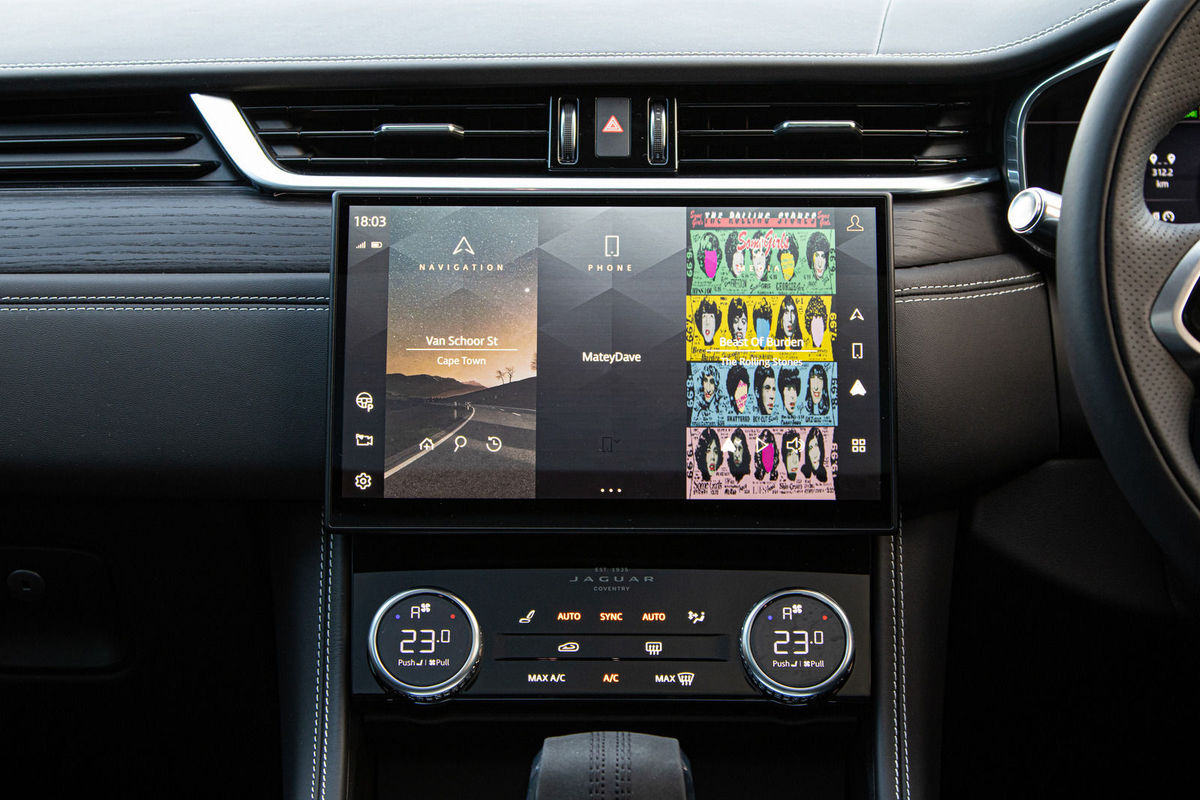
The Pivi Pro system requires a bit of familiarisation. Set some time aside to discover all the features available.
A sizeable (11.4-inch) Pivi Pro infotainment system dominates the fascia. It’s made from curved glass, so its user experience is akin to that of a high-end tablet. The system reacts to inputs much quicker than before and is now fully compatible with Android Auto and Apple Carplay. The F-Pace also has over-the-air functionality, so it won’t need to visit a dealer’s workshop to receive software updates… it will download and install them from the internet (via a wifi connection, for example).
Pivi Pro represents a notable upgrade over the previous infotainment system (we learned to appreciate it on the updated E-Pace), but it has so much functionality crammed into its submenus that you may run the Jaguar’s battery flat while you sit in the car and attempt to figure it all out! Take some time to set up favourite features – they’re much easier to use than regularly sifting through multiple menus.
Practicality wise, the F-Pace is claimed to have a bigger load bay than rivals such as the BMW X3 and Mercedes-Benz GLC. There’s also a bit more cargo space when the rear seats are folded down.
Is the D200 engine good enough?
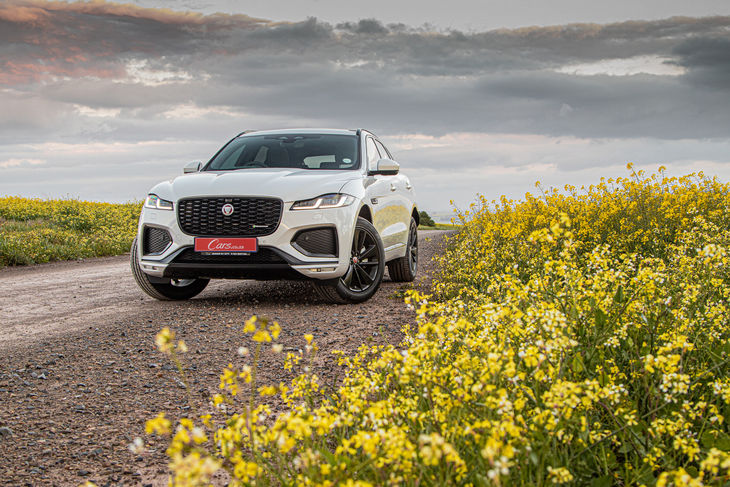
The larger engines suit the exceptional dynamics of the SUV.
Jaguar has committed to a fossil-fuel-free future from 2025, so we can’t really expect much in the way of performance development from the current range of internal combustion engines. The D200’s 2.0-litre turbodiesel engine produces 150 kW and 430 Nm of torque; the motor proves economical and pleasingly smooth in combination with the 8-speed automatic transmission. So, the Jaguar’s performance is perfectly okay for commuting, but this is a R1.2 million SUV. An owner of a Toyota Hilux that costs half that price will tell you their bakkie produces the same power output and more torque (500 Nm).
The bigger engines have always suited the F-Pace; our personal favourite is the D300. Its 3.0-litre 6-cylinder turbodiesel motor’s power/torque advantage over its 4-cylinder stablemate (71 kW/220 Nm) is considerable. The D300 AWD R-Dynamic HSE commands a R115k premium over this D200 derivative – its direct counterpart. The mid-spec D300 R-Dynamic SE, however, is only R31k dearer…
To be fair, it’s only when you’ve loaded the D200 with people and things that you’ll notice its leisurely acceleration. Consumers expect more than sufficient engine grunt from a luxury vehicle, but overtaking manoeuvres just take a little bit longer to execute in this Jaguar. The thing is, you’re not really better off in any of its rivals: the equivalent (Audi) Q5, X3 and GLC have similar power outputs and less torque.
What’s the new F-Pace like to drive?
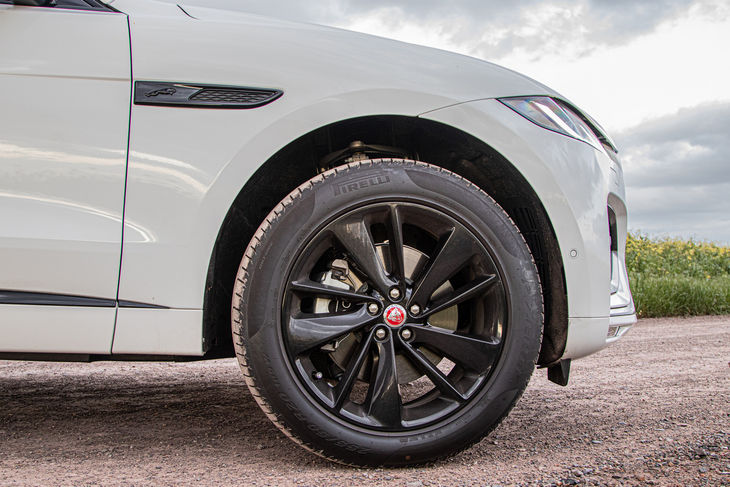
Adaptive dynamics on most F-Pace derivatives benefit the Jaguar’s ride quality on all surfaces.
The F-Pace retains the sharp, sure-footed handling attributes that have made it one of the most satisfying models to drive in its segment. It’s a very neutral car to drive fast, which means that even if you turn into corners a little too quickly, the Jaguar won’t do anything untoward – it remains poised and easily controllable. The standard all-wheel-drive shuffles power up and down the drivetrain to maintain the best possible traction, which, of course, aids stability. Body control is exceptional for an SUV of this size; in terms of agility, the F-Pace’s handling does not pale in comparison to that of the Porsche Macan.
Adaptive suspension is a standard feature on most F-Pace derivatives and it’s a key contributor to the F-Pace’s dynamic strength. Steering feel is reassuringly weighted (something we’ve always found to be a strength of Jaguar models) and the pedal responsiveness is brisk, although, in the lower-powered D200, there is a tendency to overreact to throttle inputs when Dynamic (Sport) mode is engaged.
Price and after-sales support
The facelifted F-Pace was introduced in August 2021 and is sold with a 5-year/100 000 km warranty and a 5-year/100 000 km service plan. Full price list here
Verdict
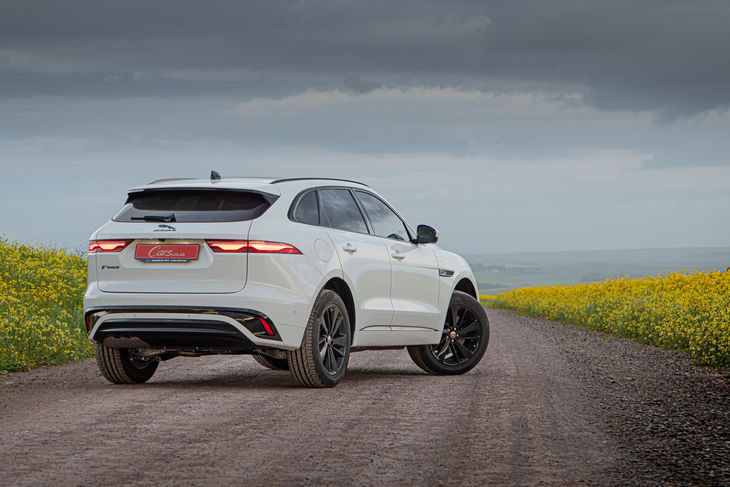
Dynamically the F-Pace is impressive, but it’s a pricey proposition.
The update of the F-Pace has come at a good time, because the Jaguar’s revamped interior really elevates the luxurious feel of the cabin beyond those of its direct competitors. The new infotainment system and its interface are easier to use, faster-reacting and the former now features both Android Auto and Apple Carplay compatibility.
In terms of dynamism, the British marque’s executive SUV remains one of the better-handling offerings in its category, but its suspension- and steering setups don’t lean so far towards sporty handling that the Jaguar’s a trifle too pointy and tightly-sprung to be comfortable in day-to-day driving. The adaptive suspension added to the facelift (for certain derivatives) helps it to ride plaintly in most conditions.
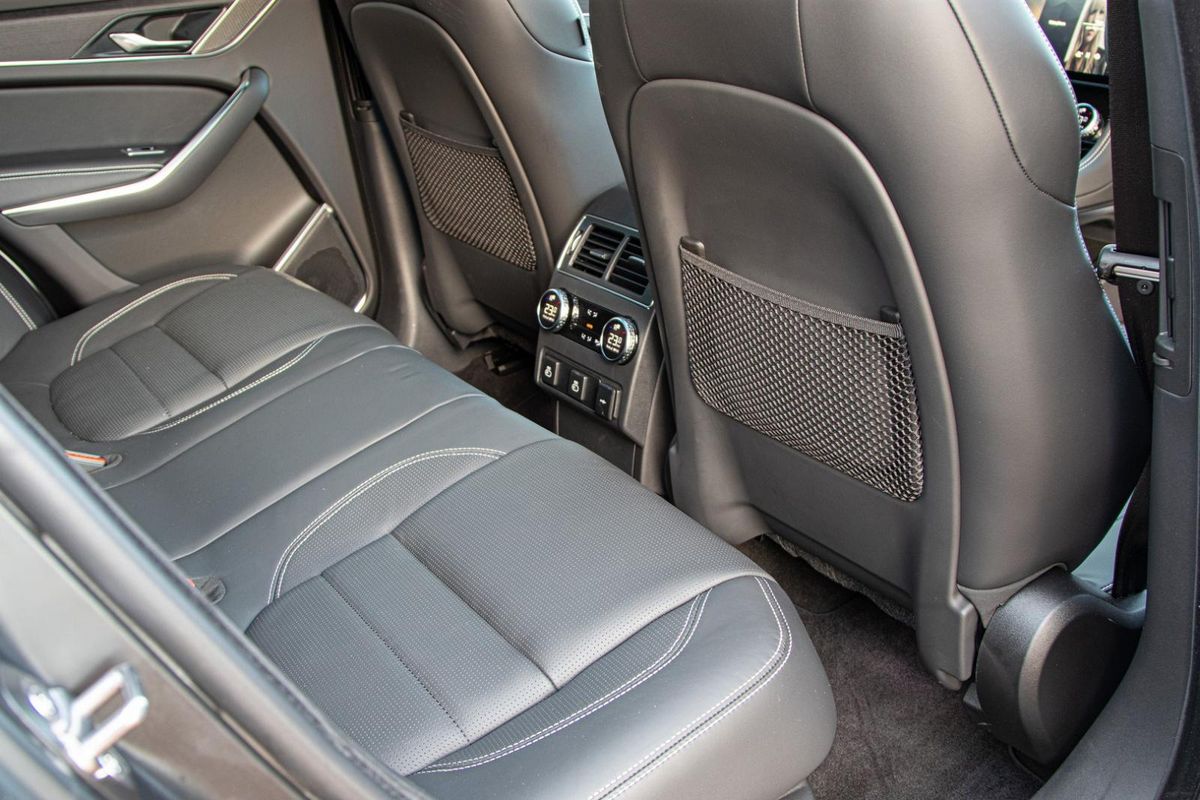
Practicality wise, it meets all the expectations of a luxury SUV of this size with a sizeable load bay, plenty of rear head- and legroom and as many connectivity points as you could ever want to spec.
To reiterate, vehicle prices have increased substantially during the past 18 months and F-Pace premiums sit right at the top end of its segment. Jaguar SA has added more standard equipment, but as you can see from our fully-loaded D200’s R1.4-million price tag, it’s expensive. That said, if quality and an engaging driving experience are higher on your priority list than price, the F-Pace may suit you well.
Ashley Oldfield

Ashley has been riding or driving some sort of motorised vehicle since his 4th birthday when he got a Yamaha PW50. Equipped with years of racing experience, Ashley took up journalism and became a writer for some of South Africa’s best motoring magazines and online publications. He is SA’s first (and only) GT Academy winner having raced professionally overseas. He now serves as the Content Manager at Cars.co.za, putting his wealth of racing and driving experience to good use.