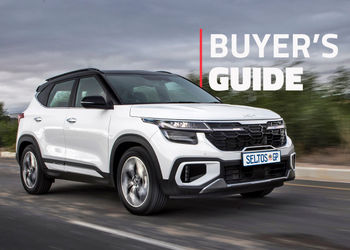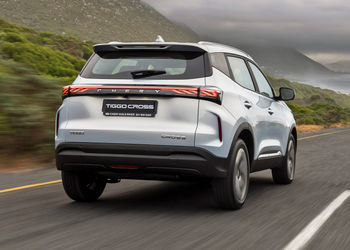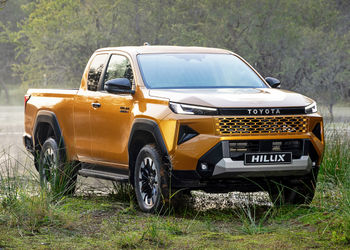
If youre thinking of buying a new car, there may be no better time than the present. The effect of the Rands slide against the major currencies in the world will likely soon be reflected in rising new car prices.
During the past 12 months the US Dollar has appreciated against the Rand by about 21% a significant jump to say the least. Why is the US Dollar of particular importance? Because a very substantial number of vehicles sold locally are paid for in that currency these include the Korean brands as well as the Chinese in addition to some others. That said, the Rand has slipped against most of the major currencies, so the pressure to price up will not be restricted to only Dollar-priced products.
What will be the possible impact?
To put the impact into some perspective, consider this. In the period mid-2012 to around early-2014 the Rand to Dollar rate changed from around R7,90 to R11 for $1. Without a degree of natural hedging that comes as a result of a strong export programme, the importers were hit hardest. The price of a Kia Rio 1,4 Sedan rose from R159 995 to R193 995 from June 2012 to October 2014. Another Korean model, the Hyundai Elantra 1,6 Premium, saw its price escalate by 19,4% in the same period (R199 900 to R247 900). One of the worst hit was the Foton Thunda Single-Cab 2,2V that went from R109 950 to R139 950.
By comparison, the locally made Toyota Fortuner 2,5 D-4Ds price rose by 10% during the same period. The price of the Ford Ranger Single-Cab 2,2 TDCI Base increased by only 8%.
So rest assured, given a 21% currency devaluation in a year, price increases are inevitable. Very soon, too.
According to Kia Motors South Africas Marketing Director, David Sieff, those paying for their imports in Dollars are worst affected right now. He predicts, however, that those paying in Euros will soon start feeling the heat as well.
But first some good news
The cars already in the country are paid for. And, some industry insiders predict that particularly the importers will aggressively incentivise these vehicles in the short term to get cash out of the current inventory. One such industry insider, Mazda South Africas Managing Director David Hughes, puts it bluntly; Its never been a better time to buy and avoid the price rise, he says. So, keep a close eye on the Cars.co.za New Car Special page in particular Ford Motor Company of Southern Africas CEO and president, Jeffrey Nemeth, agrees with Hughes Its a buyers market, he says.
Cars arriving in the country during the last four months of the year will however come at much higher landed cost. Whether these rising costs are immediately passed onto consumers through price increases or not depends greatly on the individual strategies of the companies concerned. Insiders say that car prices are already moving up, but that the impact has not yet been felt due to all the incentives in the market.
Volkswagen South Africas Matt Gennrich, General Manager Group Communications, for one, doesnt expect panic increases simply because the market is so fiercely competitive. Pricing too high, too fast, he says, will simply result in being uncompetitive. For a brand such as Volkswagen, which has a strong export programme (50% of its production will be exported this year) there is a degree of protection, but even so normal quarterly price increases of between 2,0% and 5,0% seem inevitable. Remember, Volkswagen South Africa remains a net importer, as it imports the entire Audi line-up, VW Commercial vehicles and all Volkswagen passenger vehicles except for Polo and Polo Vivo.
According to Fords Nemeth, however, the Blue Oval is both blessed and cursed by its significant recent successes, whether it has a strong export programme or not. Nemeth says that demand for Fords products is such that it does not currently sit with a lot of stock in the country. New stock will therefore be ordered and consequently price increases look inevitable. There is currently a lot of pressure to price (up) from a profitability point of view, he says. Like Volkswagen, he predicts similar increases of 2-5%, with some models edging towards the top end of that range. The biggest price step, he says, is likely to happen in January/February.
For full importers such as Hyundai, Kia, Jaguar/Land Rover etc. the picture looks considerably bleaker. To remain price competitive the bulk of the cost increase cant simply be passed on to the consumer. This means savings will have to be made elsewhere. Those could range from fixed costs (rent, salaries etc.) to marketing spend. Additionally, these importers may have to rely on assistance from their respective overseas motherships or alter specifications on certain models to be more price competitive. But the bulk of the importers will have to pass on significantly larger price increases. According to Kias David Sieff the industry average price increase could be between 4,0% and 8,0% for the rest of the year
Furthermore some experienced industry insiders predict that one or two of the smaller, unprotected players may be forced to pack up and ship out
Could the Rand bounce back?
In short, the answer is unlikely. Global predictions are that the Rand to US Dollar will stay at around R13,50-R13,80. Most local car companies have business plans built around a weakening Rand. There are also other factors at play when it comes to car affordability. Some good news is that the US Reserve Bank has not upped its interest rate, which would further strengthen the Dollar… but this may still happen. The South African Reserve Bank also decided to stay put for now, but has warned that it wouldnt hesitate to move the interest rate if the inflation outlook deteriorated. Chinas growth forecast also plays an important role, and doesnt look all that rosy at present either. Whatever happens, history has shown that when it comes to car prices the old saying that what goes up must come down doesnt necessarily apply…
So negotiate hard and buy now if you must.