
Before the Range Rover Sport, these vehicles werent really even called cars. Range Rovers were simply amazing 4x4s with the most luxury you could get in an offroad vehicle, which made them the darlings of people who liked to drive into the city now and again.
But since the advent of the Range Rover Sport in 2005, weve had to change the way we think and feel about the brand. This was a car, mind you, that had amazing performance despite its bulk and offroad ability. That ability could take it deep into the Andes mountains or the Sahara desert if you didnt mind scuffing those fancy aluminium alloys, or shredding one of the expensive low-profile tyres.
Range Rover has continued to trend towards ‘car-ness’ with its Evoque, a massive hit for it worldwide, and of course the full-sized Rangie continues to be the last world in luxury-orientated off-road travel with terrain mastery that defies its suave on-road presence.
Popular vehicle
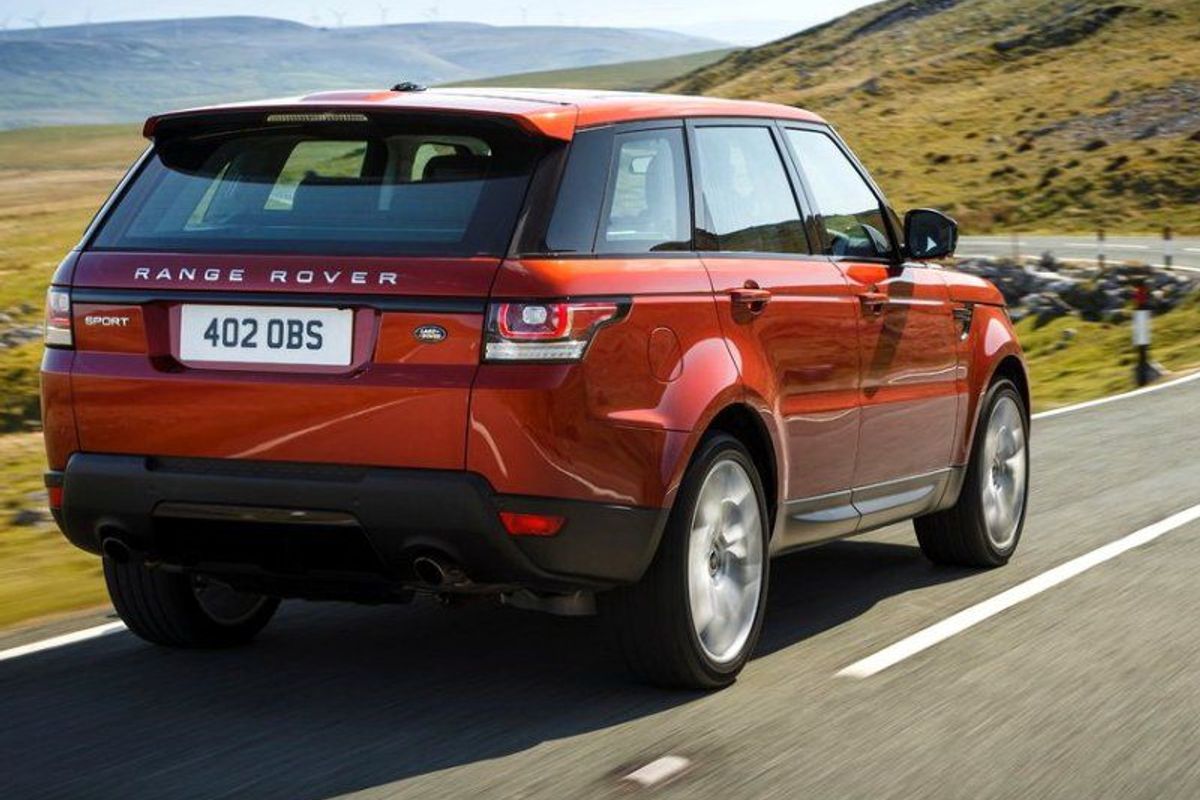
Now we have the second-generation Range Rover Sport, launched here late 2013. The success of Range Rovers re-invention of itself as a car for all reasons and seasons can be realised by the sales figures of the previous-gen Sport. Since 2005, sales of that model soared above the 350 000 mark indicating an average of some 40 000 a year for a car that, at current South African prices, sells at between R850 000 and R1.3-million. Those kind of sales figures for a super-expensive car generate plenty of cash for development and Land Rover, the parent company, has not been shy to invest huge amounts in the development of new models.
The latest Sport follows the new full-sized Range Rover in using an all-aluminium chassis. And if you thought the previous Sport was impressive which it was wait until you experience what a weight loss of some 420 kg does for the overall dynamic ability of such a large vehicle.
The redesign has seen the nose change, the windscreen lean back further, and the overhangs shorten for a modern Sport that is completely in keeping with modern Range Rover. The Range Rover Sport is still one humungous chunk of metal lightweight or not and when driving it you should be aware that it’s still in the region of between 2 100 and 2 200 kg.
Engine choices
To motivate that mass, you can choose between a supercharged 3.0-litre V6 petrol delivering 250 kW, a turbodieselof 215 kW strength, or the magnificent 375 kW Supercharged V8 flagship.
Although the diesel and supercharged v6 engines are very good, there is no denying that ultimate feeling you get when you toss the key into the console, punch the starter button, and that new improved all-powerful V8 rumbles to life. I believe V8 engines could well be used in the treatment of psychological disturbance. There is a resonance peculiar to a V8s exhaust that is incredibly soothing to the soul, particularly on light-to-medium acceleration. It’s such a pleasant sound.
Range Rover Sport acceleration
You launch the Range Rover Sport off the line and in under 5.5 seconds you are doing 100 km/h, shaking your head all the while as you remind yourself this vehicle weighs over two tons! That feeling extends to the way this mammoth deals with changes in direction, as well as braking. The cornering of the car has been enhanced not only by its air suspension, but a new rear electronic limited slip diff which makes it handle like a sportscar.
Ride, handling and 4×4 ability
Progress in either flat-out or cruise mode is remarkably smooth, due in no small part to the very impressive eight-speed automatic gearbox fitted. In fact, with the Range Rover Sport you can choose two completely different transmission options when ordering the car. The one gives you the choice of a low-range (off-road) transfer case, while the other is an urban-orientated single speed transfer case.
Whilst both models come with Land Rovers second-generation Terrain Response system, I reckon few people will take the Sport to Botswana or Zambia for very serious 4x4ing. Nevertheless, if you need it, on all models there is some 260 mm wheel travel at the front and 272 mm at the rear, class-leading figures, to enable you to cope with just about any obstacle in your way.
Summary and conclusion
I wasnt overly enthusiastic about the level of trim in some aspects of the interior in the Range Rover Sport. I found the materials used and the overall design not quite as sophisticated as one would expect from a vehicle costing in the million-buck region. Also, the new cabin design made ingress to the drivers pew a bit of a chore as I kept bumping my head on that sloping A-Pillar.
But overall, its a huge improvement in this second-gen car which was already excellent, with fuel consumption now down in my personal experience from around the 22 litre/100 km level to 18 litres/100 in the city and as good as 14.5-litres per 100 at highway speeds. What an amazing car.
Range Rover Sport Price in South Africa
- R 1,325,823 for the Range Rover Sport 5.0 V8 HSE Dynamic.
Range Rover Sport (2014) Quick Specs
| Engine | 5.0-litre V8 supercharged petrol |
| Power | 375 kW |
| Torque | 625 Nm |
| Transmission | Eight-speed automatic |
| Wheels | 21-inch alloys |
| 0-100km/h | 5.3 seconds (claimed) |
| Fuel economy | 13.8 l/100km (claimed) |
We like:
. Exceptional performance for a two ton vehicle
. Sounds incredible when you accelerate
. Is a serious offroad 4×4
. Stylish
We dislike:
. Some interior flaws
. Supercharged petrol engine drinks fuel
. 21-inch low-profile tyres aren’t suited to serious offroading
Also consider:
Cars.co.za

Providing you with the latest motoring news, new car releases and the simplest way to buy and sell cars.