
When it launched the original Soul in 2009, Kia was one of the first to step into a compact crossover niche that has since exploded in popularity. In flagship specification, the quirkily styled Soul appears a pricey proposition, but is there more to it than meets the eye?
We like: Standard features, build quality, deep boot, character
We don’t like: “Hunting” transmission, cabin is quite short, steep price
Alternatives:
- For better economy: There are very few diesel automatic compact crossovers around, but the Nissan Qashqai’s 1,6-litre turbodiesel has a better claimed fuel economy.
- For more space: There are a number of more spacious crossovers available for similar money, but not many that offer the combination of an economical diesel engine and a self-shifting transmission. The Nissan Qashqai 1.6 dCi Acenta is arguably its deadliest rival, but it may lack the individuality that a potential Kia Soul buyer will be looking for.
- For better value: The similarly priced Nissan Qashqai 1.6 dCi Acenta looks like great value – it’s a bigger, more spacious vehicle with similar specification and power, yet it’s also more refined and rides better. Plus, you get a six-year warranty as opposed to a five-year one and a longer service plan, too (in years). If the Qashqai is too mainstream, you could look at the cheaper Mazda CX-3, but you’d have to settle for a thirstier petrol engine.
Practicality and style
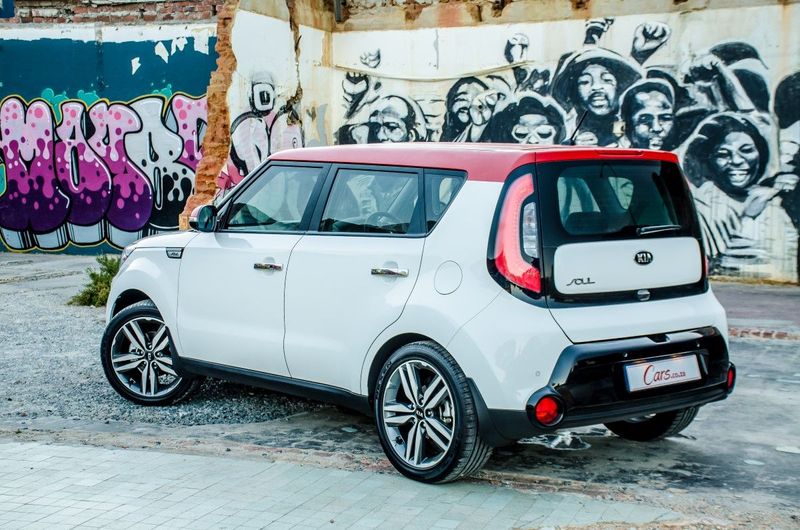
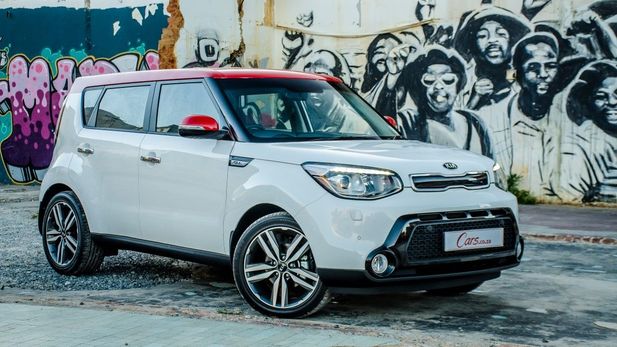
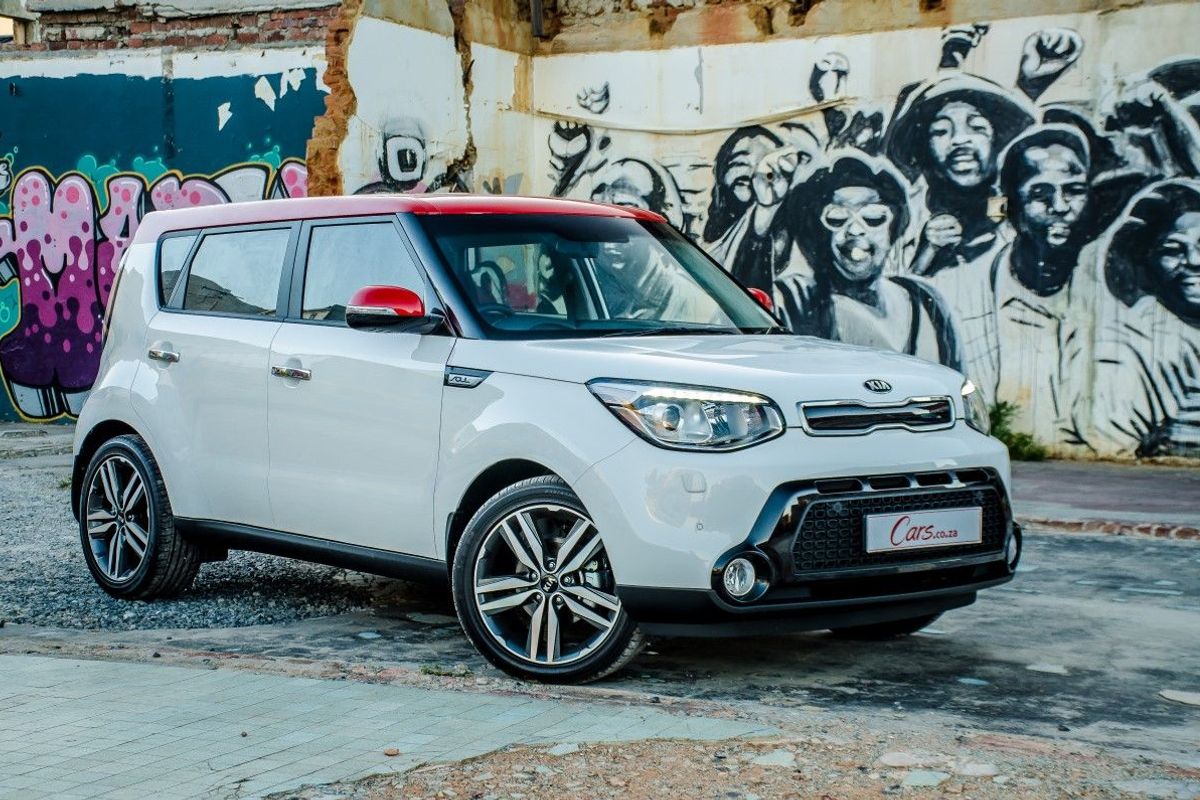
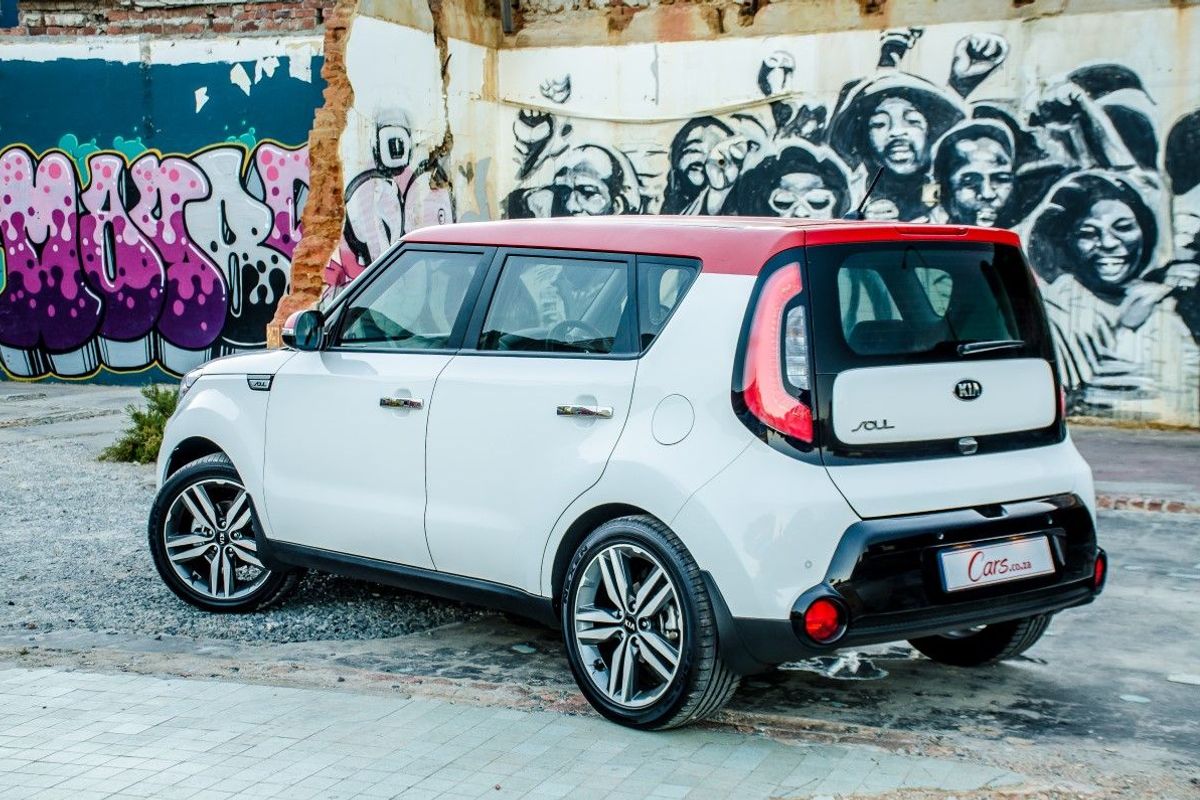
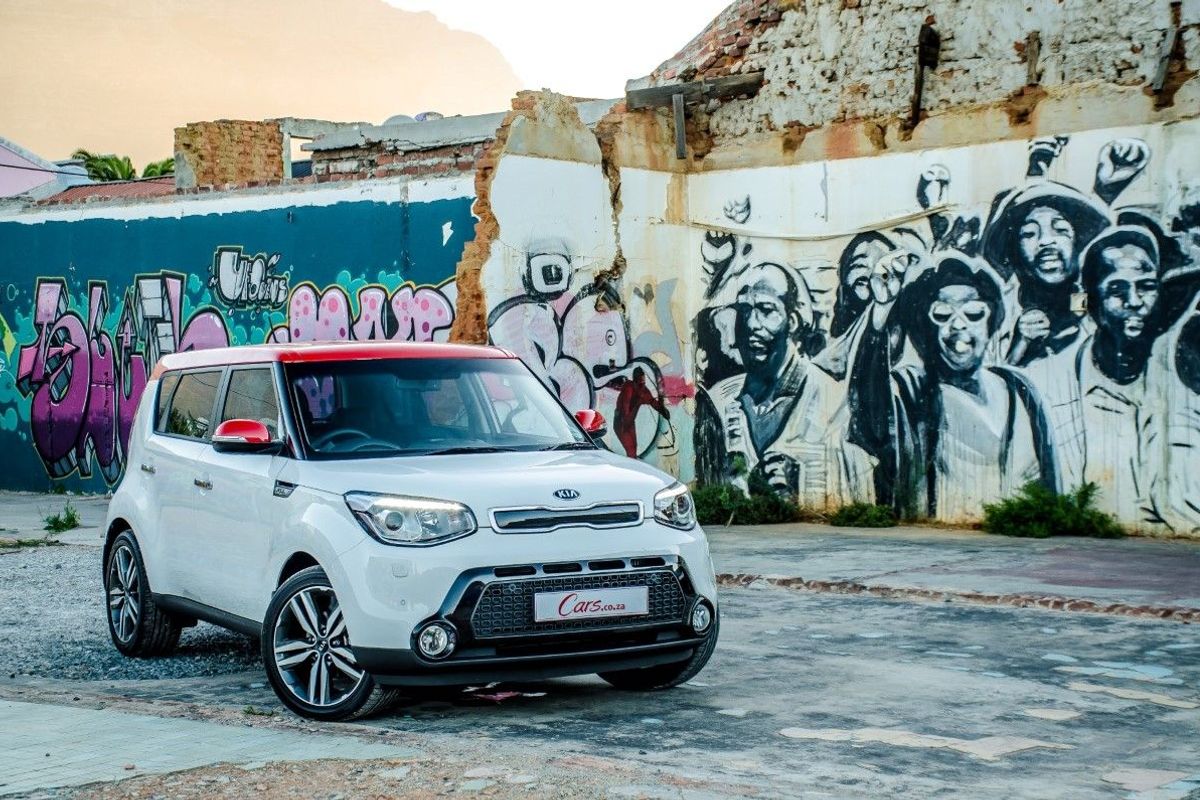
With its large 18-inch wheels and two-tone colour scheme, the Soul stands out in a crowd.
The Kia Soul is positioned as a practical compact crossover that eschews the practical-but-boring looks of most of its rivals and purports to offer near-Mini-like levels of individuality and character. To be frank, if you’re looking for the most car for your money, you won’t find it here (at least not in 1.6 CRDi Smart DCT guise), but there are enough buyers out there for who a car is more than just a source of personal transport.The Kia Soul was evidently designed to satisfy the needs for both practicality and style, a combination that very few vehicles (at this price level) can deliver.
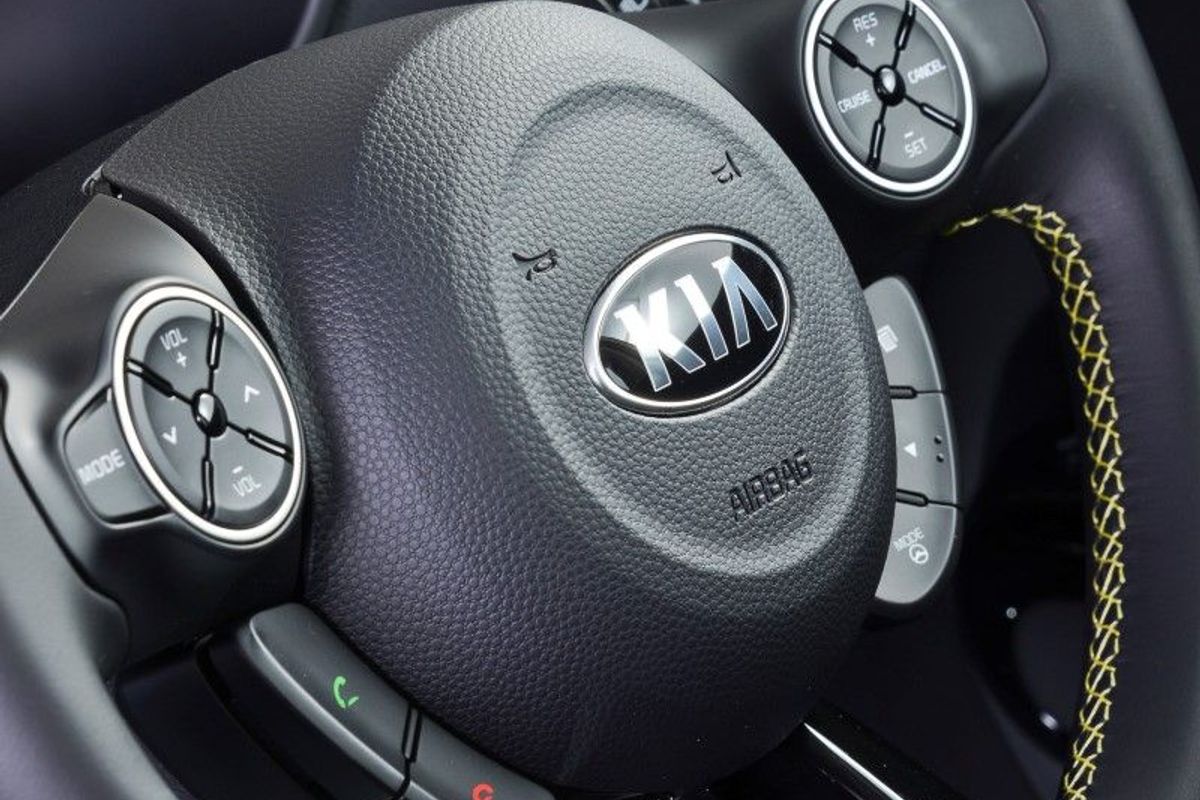
In flagship 1.6 CRDi Smart DCT guise a few other factors come into play, too… Firstly, there’s the standard specification that includes such nice-to-haves as leather upholstery, front and rear park sensors, cruise control and much more. But, most importantly for the purpose of this test, this model uses the brand’s new seven-speed dual-clutch transmission.
Why the dual clutch?
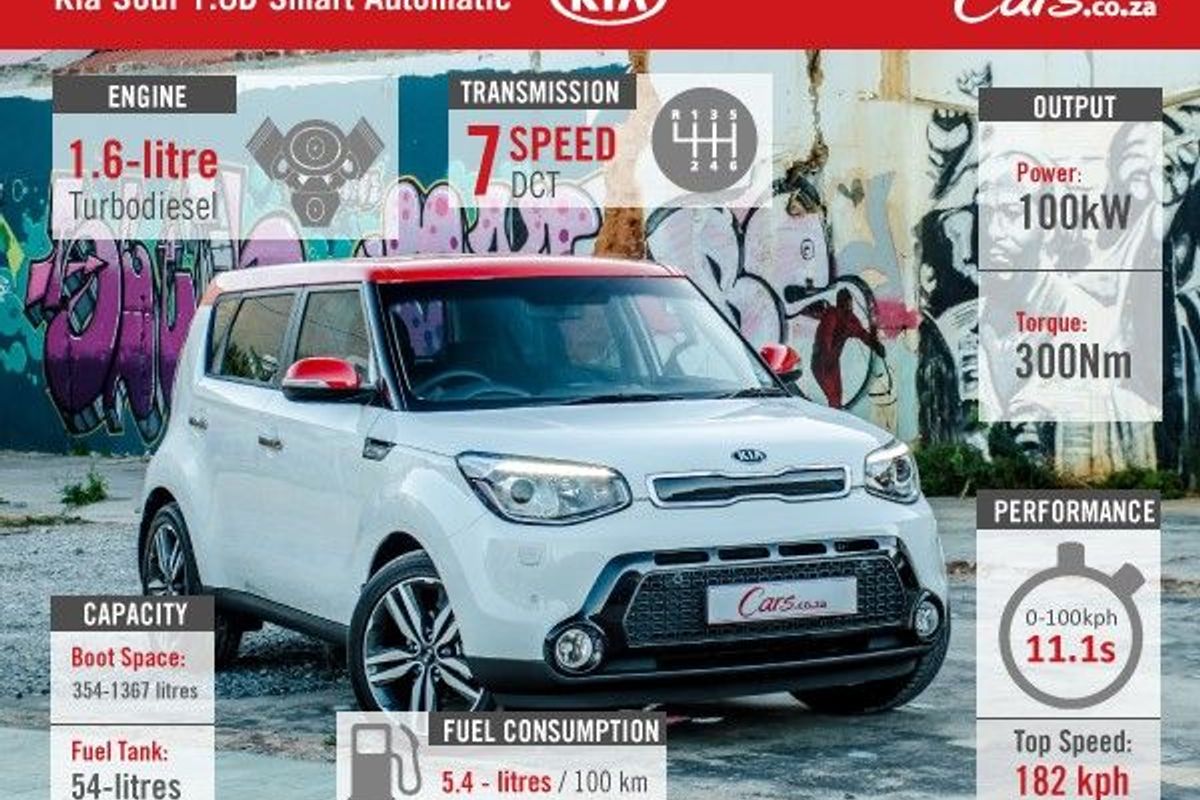
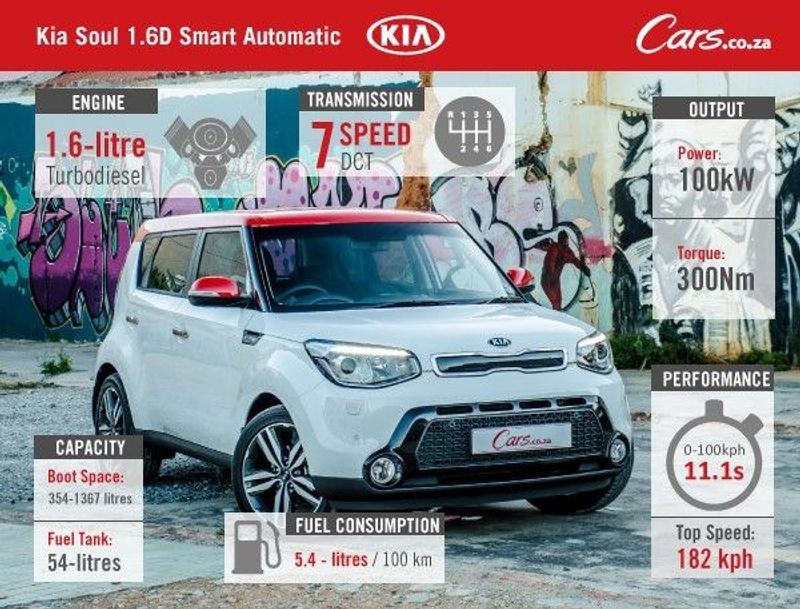
In this segment dual-clutch transmissions are rare – they’re usually reserved for pricier and sportier vehicles. So why has Kia fitted it to the more practically-packaged Soul? It is claimed to return a better fuel consumption figure than a conventional automatic, can handle more torque (up to 300 Nm) and is said to offer a more variable driving experience when the different drive modes are selected. The in-gear acceleration has improved by a significant margin as well – the model is now claimed to complete the 0-100 kph dash in 11.1 seconds, as opposed to the lethargic six-speed automatic model's 12.2 seconds.
How does it fare in…
Practicality?
The Soul is a very compact vehicle with squared-off edges, especially at the rear. Its overall length is 4 140 mm, which is significantly shorter than a Nissan Qashqai (its dimensions are more compact than those of the Fiat 500X, for example). Its wheelbase, however, is exactly the same as the Fiat’s but, again, quite a lot shorter than the Qashqai’s. So, the Kia's very compact and (supposed to be) very practical… two characteristics that don't usually go together.
And yet, in our experience, the Soul is remarkably well-suited to cater to the needs of a young family of four. Open up that near-vertical tailgate and you'll find a luggage area that makes up for what it lacks in length with depth. In fact, it proved to be rather good at swallowing up a lot of things, lending credibility to Kia’s claim of a total capacity of 354 litres, which is pretty impressive for a vehicle in this segment of the market. From a passenger point of view the news is also pretty good: There is sufficient rear legroom and certainly no shortage of headroom.
The only area where the Soul really loses out is in terms of overall practicality and utility. If you need to transport fairly long objects quite often, the comparatively short cabin (with the rear seats folded down) will be a drawback. Still, there’s a lot of volume to play with….
Performance and economy?
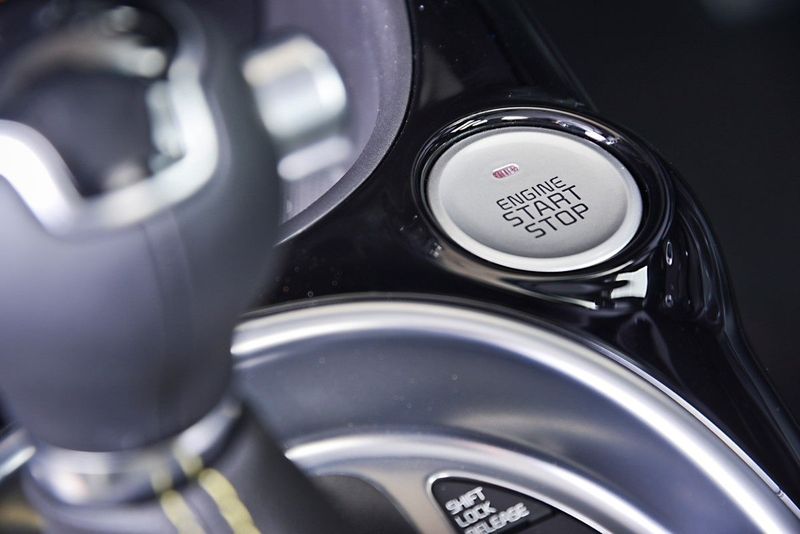
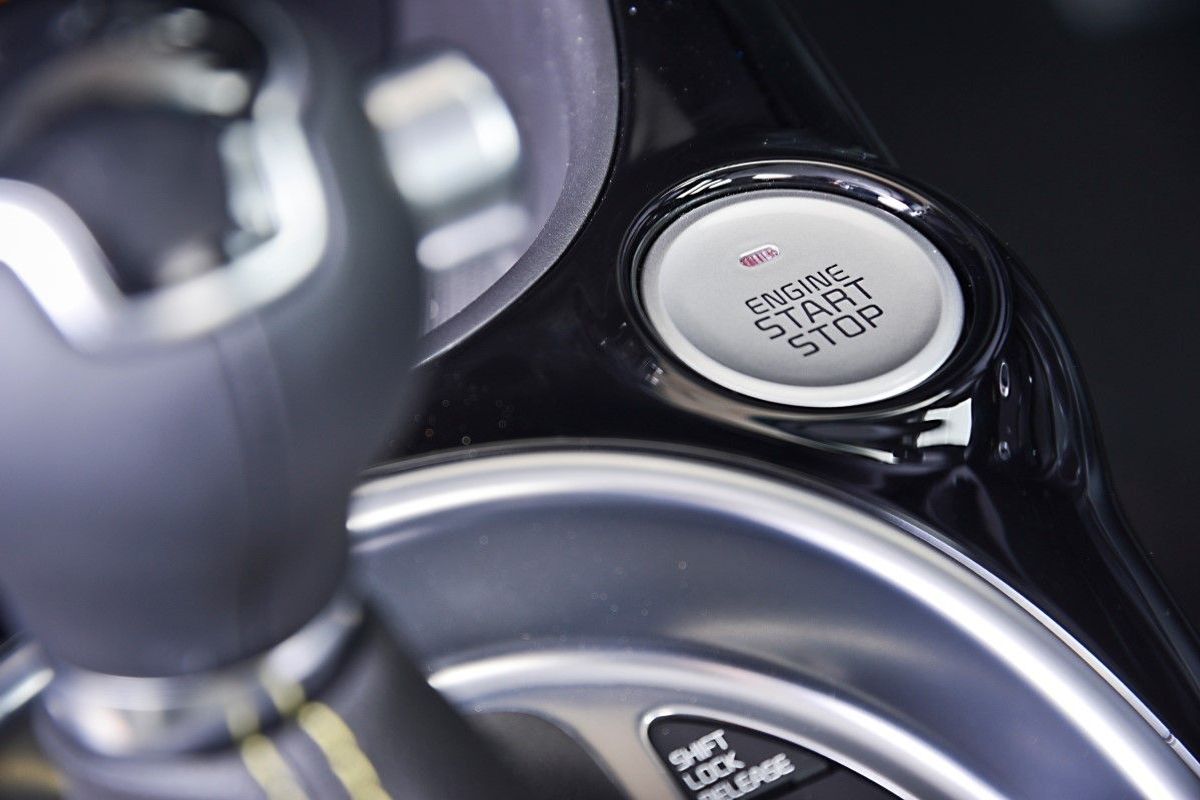
Push-button starting is part of the flagship "Smart" specification.
Due to the fitment of the new transmission, the 1,6-litre turbodiesel engine’s outputs have been boosted to 100 kW and 300 Nm respectively. As we found in our first test of the six-speed automatic model, the engine feels pretty impressive, with a strong surge of power when the throttle is planted. It may not be the most refined unit of its type, but undoubtedly the new seven-speed dual-clutch transmission makes better use of its talents. That said, it could be a little more “relaxed” when left to its own devices – it tends to hunt a bit too much. Also, maximum torque might be available from 1 900 to 2 750 rpm on paper, but in reality "the power band" feels narrower than that. Bizarrely, this makes the Soul feel quite sporty as the transmission fires through the ratios in quick succession, each accompanied by a short, but strong, surge of power.
In terms of fuel economy, there are improvements too. The previous model returned a rather poor 6.2 L/100 km, but Kia claims the new model will achieve a much better 5.4 L/100 km. Our consumption during the test period hovered around the 6.3L/100 km mark, which is good in real-world driving conditions.
Cabin features and quality?
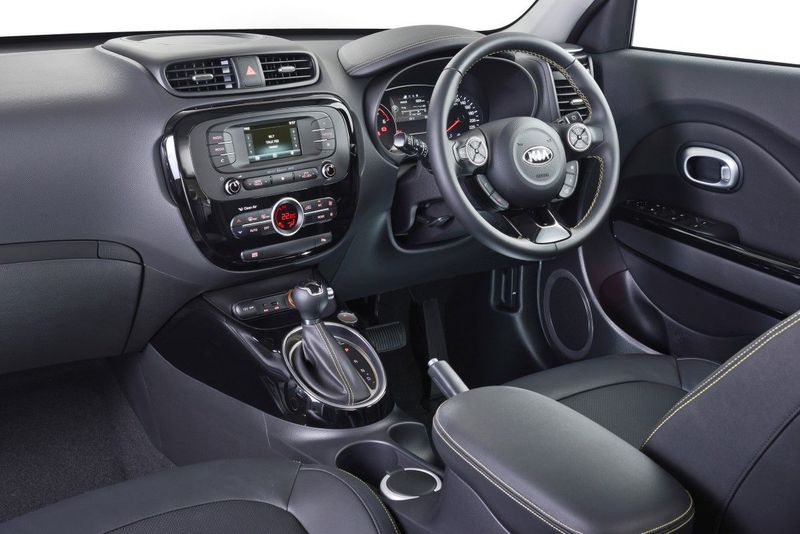
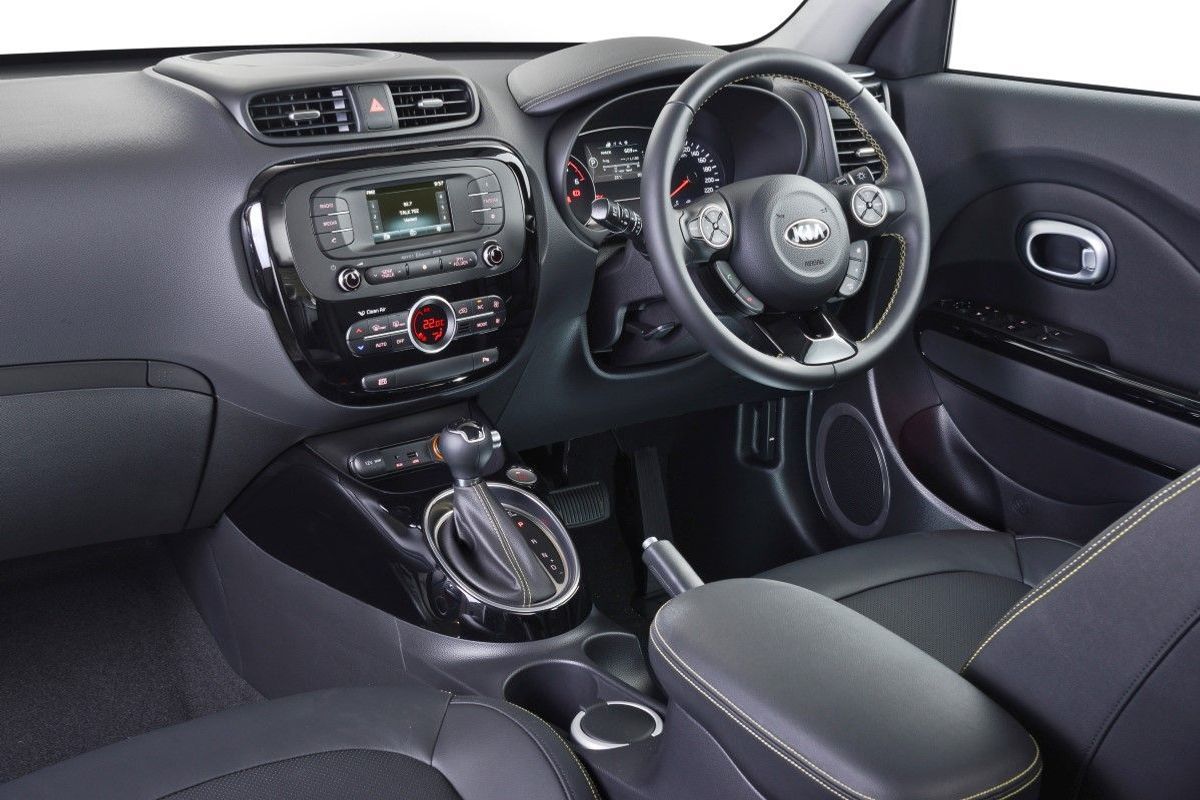
Build quality is very good and the features count generous. Small touchscreen a minor irritation.
As the flagship model in the range, this Soul comes with a very comprehensive standard specification package. We’ve already mentioned the leather upholstery, cruise control and front and rear parking sensors, but you even get an electrically adjustable driver’s seat, a chilled glove box, reverse-view camera and an audio system with Bluetooth, USB/Aux etc connectivity, among many other items.
In the end, however, all of these features would not help much if the basic underpinnings were unrefined and the cabin design was poor. Thankfully, neither apply to the Soul. We’re impressed with the overall quality on offer here, and there are some nice touches to remind you that you’ve bought something quite quirky – such as light-emitting trim around the speakers that can be set to several different colours and pulse to the beat of what the audio system's playing.
Ride and handling
But it’s not just all about the fancy dress with the Kia… previous Soul derivatives have been criticised for their overly firm suspension, but this model seems to ride with appreciably more pliancy. Even though those striking 18-inch wheels are shod with low-profile rubber, the ride remained impressively comfortable on most surfaces during our test period, only being flummoxed by really badly pockmarked tar.
It boasts a ride height of 150 mm, which is ever-so-slightly more than most compact hatchbacks, so don’t expect to go climbing up steep pavements, but the little bit of extra elevation is nevertheless welcome from a driver visibility and ease-of-parking point of view.
As before – and as is the case with most Kias – the steering feels relatively lifeless and overly assisted. But for the target consumer, this is hardly going to be a major source of concern. If anything, the steering makes the Soul easier to manoeuvre in the city.
Verdict
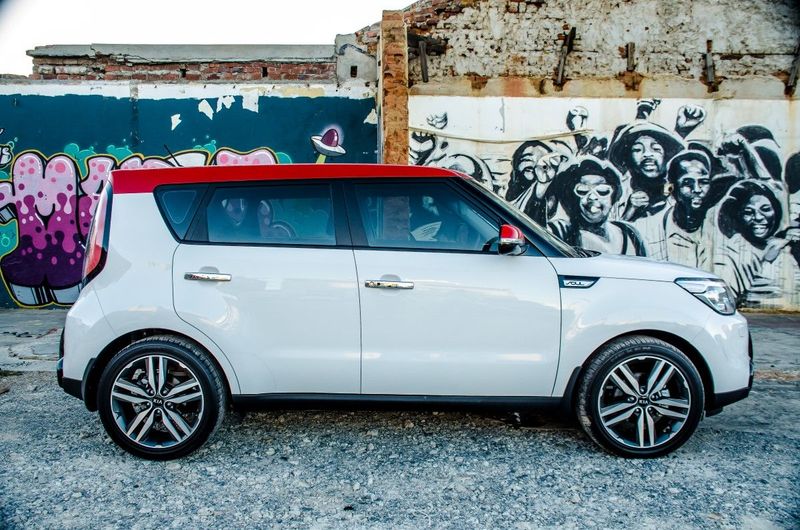
Soul is compact, but there's surprisingly generous space in the cabin and the luggage compartment, in particular.
Like most vehicles that were ostensibly designed to appeal to buyers for subjective reasons such as styling and “character”, it is difficult to give the Kia Soul a double thumbs-up, because such products (by their very nature) polarise opinions and are compromised in some way or another. The Soul, however, has a number of very desirable traits.
It is lighter than the similarly priced Qashqai 1.6 dCi Acenta and, by virtue of its new transmission, feels perkier to drive than the Nissan. If offers numerous features in a very well-made cabin that's pleasing to look at and touch. And there’s more space in the luggage bay than you’d think. If ultimate load space is not your greatest concern, there’s enough here to merit consideration. Ultimately, pricing may be this particular Soul derivative's biggest problem, though.
Pricing
The Kia Soul 1.6 CRDi Smart DCT retails for R408 995. The price includes a five-years/150 000 km warranty and four-years/90 000 km service plan. It requires servicing every 15 000 km.
Interested in buying a new/used Kia Soul? Search for one on Cars.co.za
Hannes Oosthuizen

With the ultimate goal of spending his life writing about cars, Hannes studied journalism at the University of Stellenbosch. A brief stint as a sports editor for Paarl Post followed, before he joined CAR magazine in 2001. He eventually became the (youngest-ever) editor of CAR in 2011, a position he occupied for two years. During his career at CAR he became a member of the WCOTY (World Car of the Year) panel, wrote a book (Cranked Up: Confessions of a Petrolhead) and was named by the Mail & Guardian as one of the Top 200 South Africans to take to lunch in its 2008 Youth Day supplement, and by The Media magazine as one of the most influential media professionals under 40 (2012). He left CAR in 2013 to experience the \other\" side of the industry