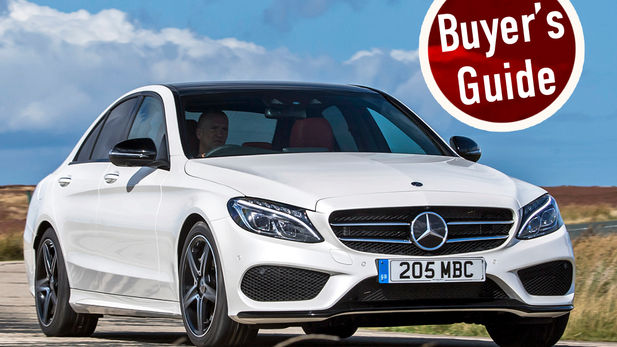
Eyeing a previous-gen, 2nd-hand Mercedes-Benz C-Class sedan? Here’s everything you need to know, from which W205 variants were available in SA to what you should look out for and how much you can expect to pay…
While previous iterations of the C-Class saloon played the role of entry point to the world of Mercedes-Benz sedan ownership, all of that changed with the W205 generation. Yes, as the swoopily styled 4-door CLA had gone into production in 2013, the Stuttgart-based firm had the opportunity to “grow” its C-Class.
And grow the 4th-generation C-Class sedan most certainly did. At 4 686 mm from bow to stern, the W205 measured a considerable 95 mm longer than its predecessor, while the wheelbase increased a full 80 mm to 2 840 mm. In addition, the vehicle’s width grew some 40 mm. Space on the rear bench was thus improved, as was luggage space, which ranged from 335 litres in the plug-in hybrid version to around 480 litres.
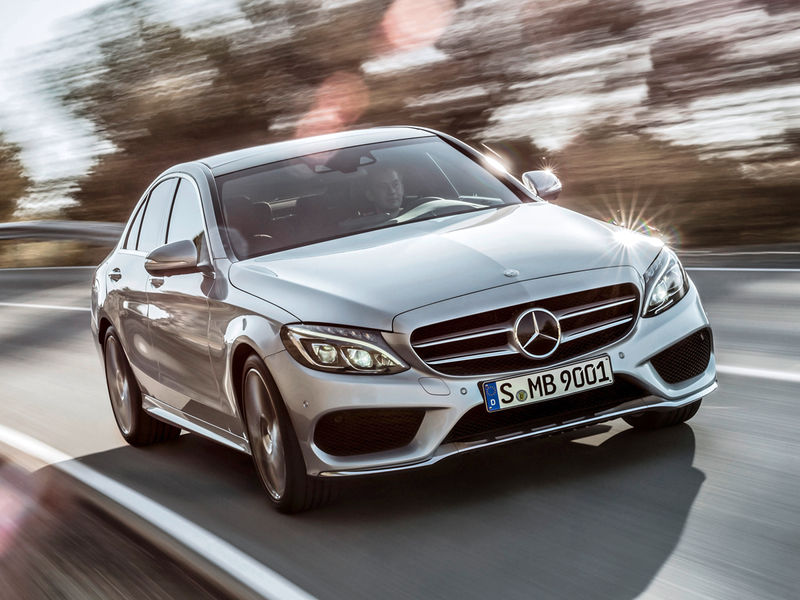
Owing to the switch to the then-freshly minted Modular Rear Architecture (MRA) platform, the Mk4 C-Class was also significantly lighter than the more compact W204 that came before it, benefitting from the extensive use of aluminium. That helped make the base models more efficient and the AMG-fettled performance flagships even more rapid.
Furthermore, the Stuttgart-based firm’s designers opted to lend the compact executive sedan more than a hint of S-Class styling, both inside and out. This model also took a significant step forward in terms of technology (most obvious with the facelifted version, which sported a new electronic architecture), gaining all sorts of on-board gadgets.
Though the broader C-Class line-up also included estate, coupé and cabriolet body styles, here we’ll concentrate on the strong-selling sedan, which was produced by Mercedes-Benz South Africa at its East London plant in the Eastern Cape.
Mercedes-Benz C-Class Sedan (W205) model line-up
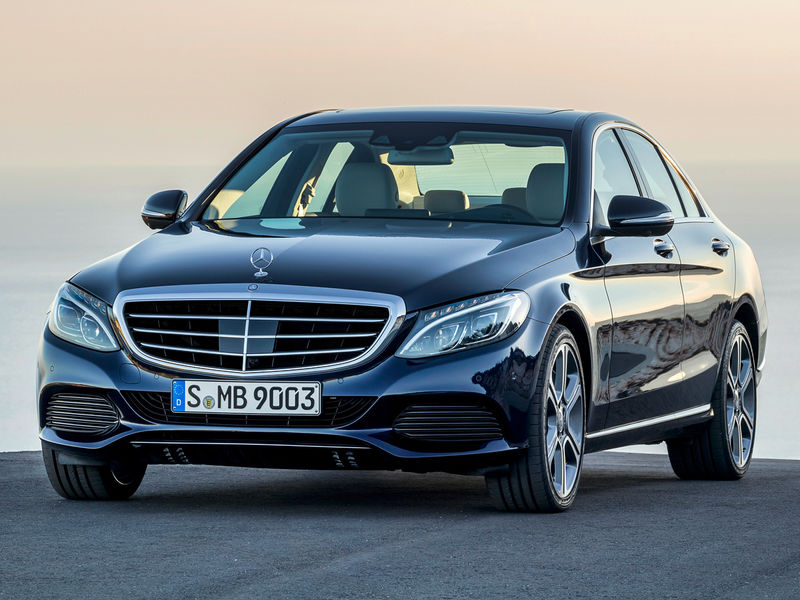
The 4th version of the C-Class sedan was officially revealed in December 2013, though enjoyed its world premiere at the 2014 North American International Auto Show in Detroit a month later. Soon thereafter, local order books opened, before the saloon finally hit the market in South Africa in June 2014. It was offered with the choice of 2 front-end designs: one with a prominent Mercedes-Benz star and one with a classic grille and a smaller star on the bonnet (the 2nd reserved for the Exclusive trim level).
Initially, the local range comprised 4 turbocharged 4-cylinder derivatives: a single diesel and 3 petrols. The oil-burning model shipped standard with a 7-speed automatic transmission, which was optional on the petrol variants (these models otherwise came with a 6-speed manual gearbox). The following powertrain variants were offered at launch:
- C180: 1.6-litre, 4-cylinder turbopetrol (115 kW/250 Nm)
- C200: 2.0-litre, 4-cylinder turbopetrol (135 kW/300 Nm)
- C250: 2.0-litre, 4-cylinder turbopetrol (155 kW/350 Nm)
- C220 BlueTec: 2.1-litre, 4-cylinder turbodiesel (125 kW/400 Nm)
The local C-Class sedan range expanded in the latter half of 2014 with the arrival of a 2nd, more potent oil-burning option. The C250 BlueTec used the same 2.1-litre 4-pot as the C220 BlueTec, though here it was tuned to deliver 150 kW and 500 Nm.
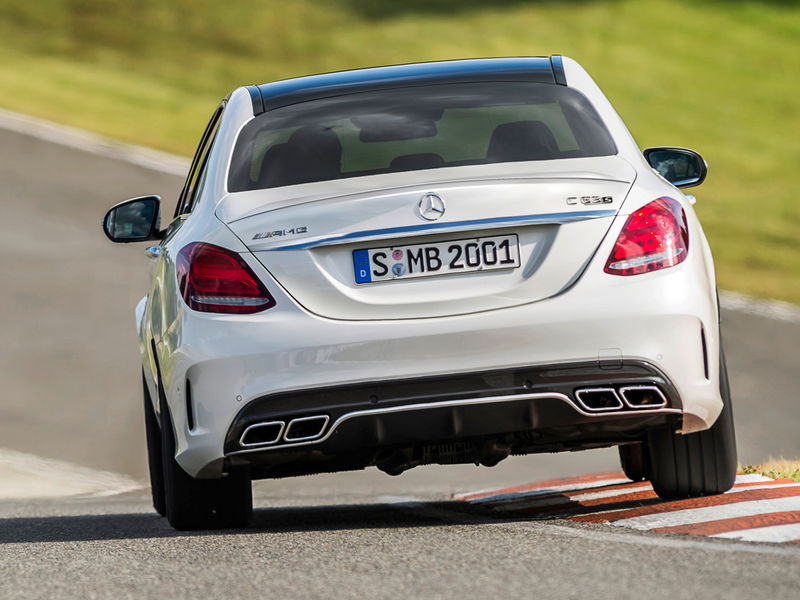
In the 1st half of the following year, the Mercedes-AMG C63 and C63 S saloon models touched down, each boasting a twin-turbo 4.0-litre V8 petrol heart, replacing the naturally aspirated 6.2-litre 8-cylinder unit employed by the preceding versions. The new engine generated 350 kW/650 Nm in standard guise, while pumping out 375 kW and 700 Nm in “S” specification. A 7-speed automatic transmission shipped standard, sending all of that oomph exclusively to the rear axle.
Around the middle of 2015, the petrol-powered C300 joined the local line-up. Previously, this badge indicated a 3.0-litre V6 engine, but here Mercedes-Benz switched to a turbocharged 2.0-litre, 4-cylinder unit worth 180 kW and 370 Nm. About a year later, the all-paw Mercedes-AMG C43 sedan made its local debut, slotting in below the 63-badged models with a 270 kW/520 Nm turbocharged 3.0-litre V6 engine that drove all 4 wheels through a 9-speed automatic cog-swapper. Interestingly, our market didn’t ever receive the similarly configured C450 AMG that came earlier in this generation.
Mercedes-Benz SA also introduced a plug-in hybrid version of the C-Class saloon, badged as the C350e, towards the mid-point of 2016. Manufactured alongside the cooking models in East London, the C350e combined a 155 kW/350 Nm turbocharged 2.0-litre petrol engine with a 60 kW/340 Nm electric motor, a 6.2 kWh lithium-ion battery pack and a 7-speed automatic transmission. With a claimed pure electric range of 31 km, the company said the C350e was capable of consuming just 2.1 litres per 100 km, though could also reach 100 kph from standstill in 5.9 seconds.
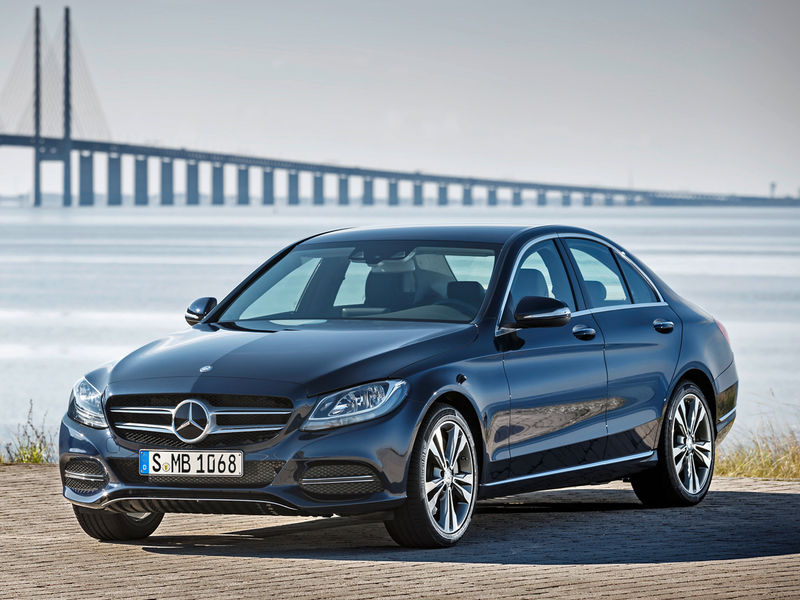
By September 2017, the C-Class sedan was available locally in Edition C guise, which fused the AMG Sports exterior design with the Avantgarde interior equipment line. The Edition C configuration could be ordered with any of the 4-cylinder powertrains, bar the 350e PHEV.
At the start of 2018, the 1st locally produced C63 rolled off the production line in East London (though its V8 heart was still built in Affalterbach), after the company had already produced a number of C43 units for both the local market and export. In order to produce these Mercedes-AMG models in South Africa, the company had invested an additional R200-million in its manufacturing facility.
C-Class sedan gains 2018 facelift and fresh engines
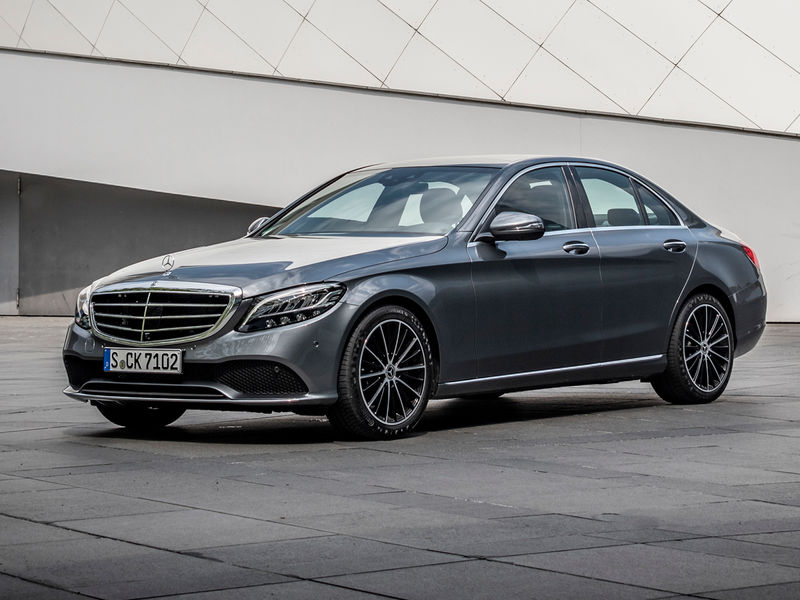
In July 2018, with the front-driven A-Class Sedan very much on the way as a new base 3-box option, the facelifted C-Class saloon hit the market in South Africa. It featured mildly revised exterior styling, a new electronic architecture (facilitating the addition of various driver assistance systems from the S-Class) and a thoroughly upgraded cabin, including a fresh infotainment system and somewhat divisive touch-sensitive controls on the new steering wheel.
But perhaps the most noteworthy of the many significant changes happened beneath the bonnets of certain variants. The C200, for instance, became a mild hybrid, switching to a 135 kW/280 Nm turbocharged 1.5-litre engine supplemented by a 48 V system with an integrated starter-generator that produced an additional 10 kW and 160 Nm under acceleration. The C300’s new turbocharged 2.0-litre mill boasted peak outputs of 190 kW and 370 Nm, while the C220 BlueTec became the C220d, exchanging its gruff old 2.1-litre unit for a far smoother 143 kW/400 Nm 2.0-litre turbodiesel unit in the process.
Finally, the C43’s V6 scored an extra 17 kW for a maximum figure of 287 kW. Interestingly, the manual gearbox was discontinued from the C-Class portfolio at this time, with a 9-speed automatic transmission thus becoming standard across the range.
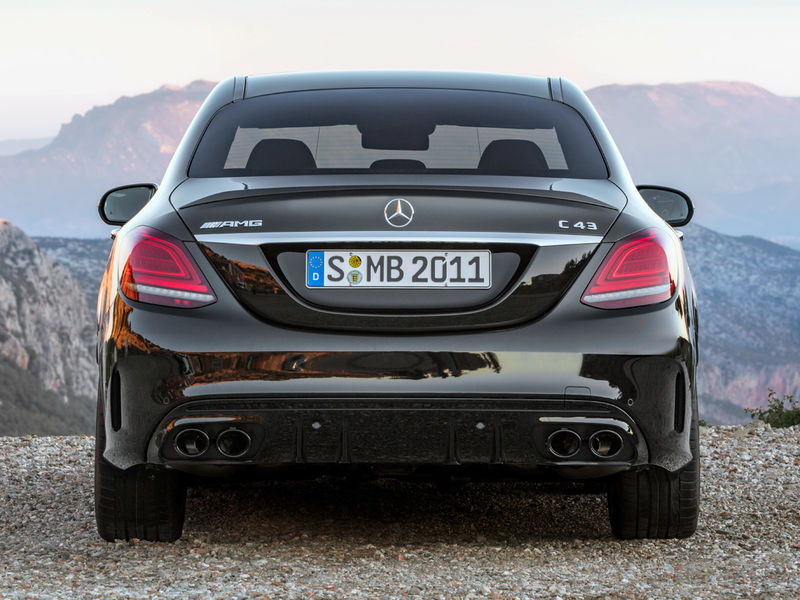
In mid-March 2019, the 500 000th W205 C-Class – a C200 painted in Obsidian Black and destined for the United Kingdom – rolled off the local production line. Just 2 months later, the refreshed C63 launched in South Africa, now available only in full-fat “S” form and sporting the new Panamericana grille. Though the V8’s outputs were unchanged, the updated model shipped standard with a faster-shifting 9-speed MCT automatic gearbox as well as a new 9-stage traction control system.
Production of the W205 in East London came to an end in May 2021, before the factory began producing the W206 the following month.
Product strengths
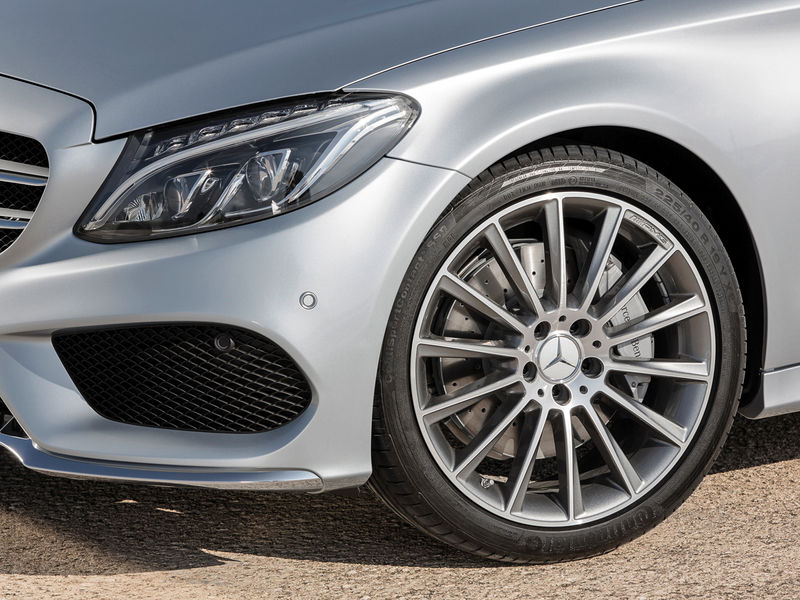
Ride comfort: Non-performance versions of the C-Class sedan have long prioritised ride comfort over pin-sharp dynamics. That was again the case with this 4th-generation model, which was more cruiser than corner carver (despite the somewhat comfort-robbing runflat tyres). Still, be aware models specified with the AMG package featured larger alloy wheels and firmer sports suspension, adding an admittedly minor degree of crashiness to the ride and increasing road noise.
The W205 was also the 1st vehicle in its segment to be offered with air suspension on both axles. Though certainly tempting, we’d argue this was an unnecessary option when it came to lower-spec steel-sprung models with their smaller wheels. Buyers of used vehicles should also be a little wary of air suspension as such a system would be costly to repair or replace when the inevitable day comes.
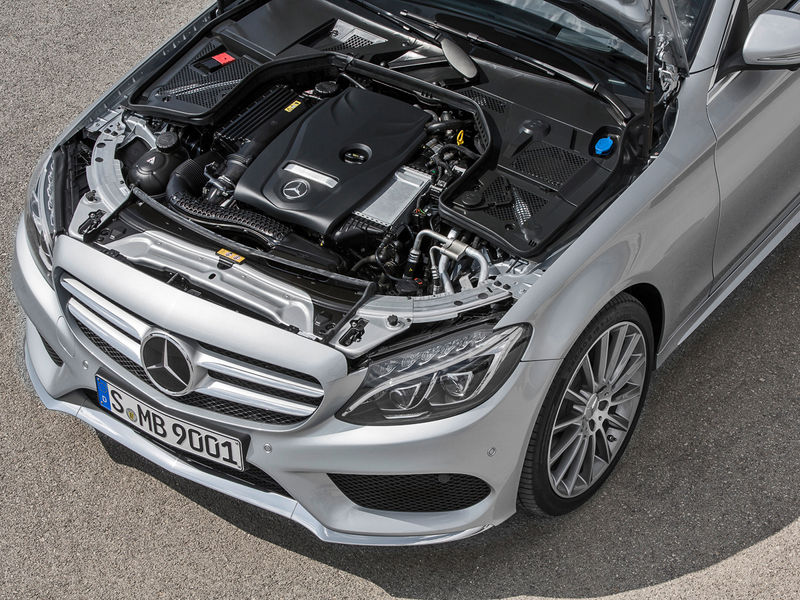
Breadth of powertrain line-up: Over its 7-year run on the local market, the W205 range certainly wasn’t lacking variety in the engine department (unlike the current W206, which features only 4-cylinder units), even if all engines were turbocharged. The powertrain portfolio ranged from frugal petrol- and diesel-flavoured 4-pots to a plug-in hybrid, a mild hybrid, a V6 and that stonking V8. Of course, the latter 2 are particularly significant in that they likely represent the final instances of 6- and 8-cylinder power for AMG-badged C-Class models, further boosting their desirability on the used market.
Lengthy maintenance cover: All models in the Mk4 C-Class sedan range came standard with Mercedes-Benz’s 6-year/100 000 km PremiumDrive contract. It’s also worth noting buyers had the option to extend this maintenance plan up to 8 years or 180 000 km. Since W205 production ended as recently as mid-2021, facelifted models should still have at least half of their cover firmly in place, which is great news for those shopping on the used market.
Standard safety equipment: Tested in 2014, the C-Class sedan was awarded a full 5-star safety rating from Euro NCAP, scoring particularly highly for adult and child protection (with results of 92% and 84%, respectively). In South Africa, even the pre-facelift model was crammed full of safety kit as standard, including Collision Prevention Assist Plus, the Attention Assist system, adaptive brakes (with a brake-drying function for wet-weather driving), a brake-wear indicator display, stability control, tyre-pressure monitoring and 6 airbags. Of course, plenty more advanced driver-assistance features were available as either individual options or as part of a broader package.
Product weaknesses
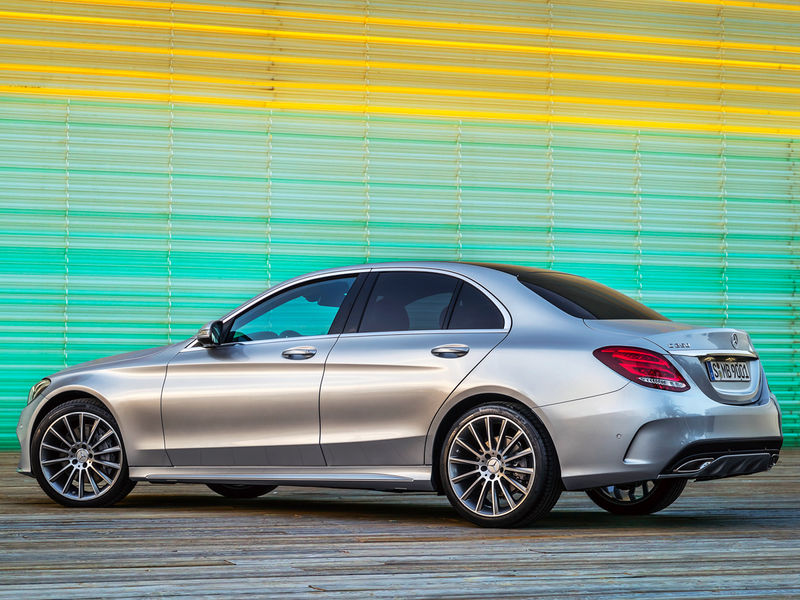
There’s not much data on the long-term reliability of the newer engines introduced with the W205 facelift, though even the earlier motors appear to be fairly dependable (when maintained properly, of course).
Indeed, the only truly widespread issue we found related to the pre-facelift C300’s engine, which sometimes throws a P052E error, meaning the crankcase pressure sensor has detected an incorrect degree of pressure. Though this seems to be a common complaint in overseas markets such as the United States, we interestingly found very little evidence of the issue in SA. Still, there are some other potentials problems we’ll outline below.
Electronic gremlins: W205 models had the potential to suffer from a range of issues with the electronics. We’ve heard of unresponsive infotainment screens and frozen navigation systems, though software updates may help in this regard. Other complaints include CD-drive problems, keyless entry issues and touchpad failures, along with early-to-fail LEDs in the door handles.
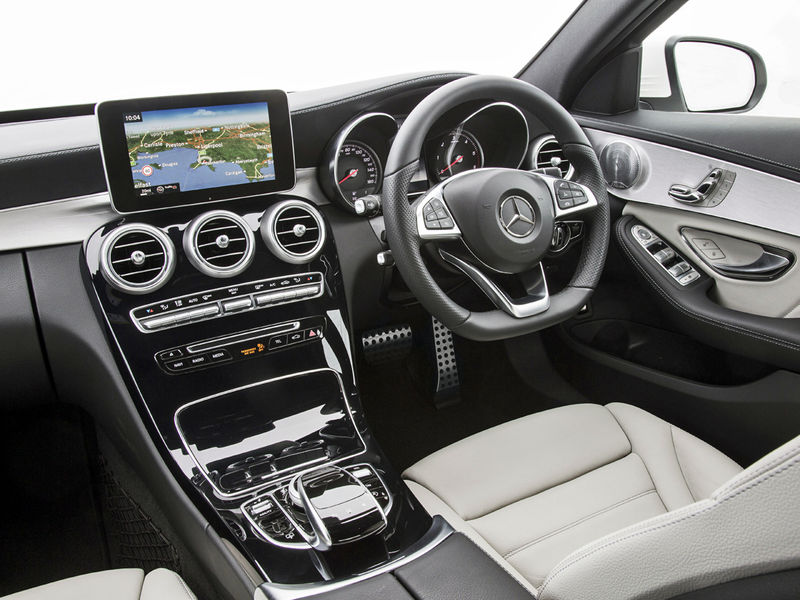
Creaking cabin trim: Despite a seemingly decent level of build quality, many W205 units suffered from creaking cabin trim, which isn’t something buyers of this sort of vehicle would expect. From what we can tell, this was most evident on pre-facelift models, though even the later versions were prone to presenting the odd squeak. Before setting off on a test drive, give the plastic trim on areas such as the centre console a firm prod and note any unfortunate noises. Seals around the doors and the sunroof were also culprits in this regard.
Steering mechanism recall: In 2014, a number of W205 units already on the road in South Africa were part of a worldwide recall relating to a potentially incorrectly installed steering-column coupling lock. Affected vehicles exhibited a strange noise when the steering wheel was rotated and could even resist turning, potentially leading to a loss of control. While most vehicles would have been corrected, it’s worth listening carefully for any odd noises during test drives.
What to pay?
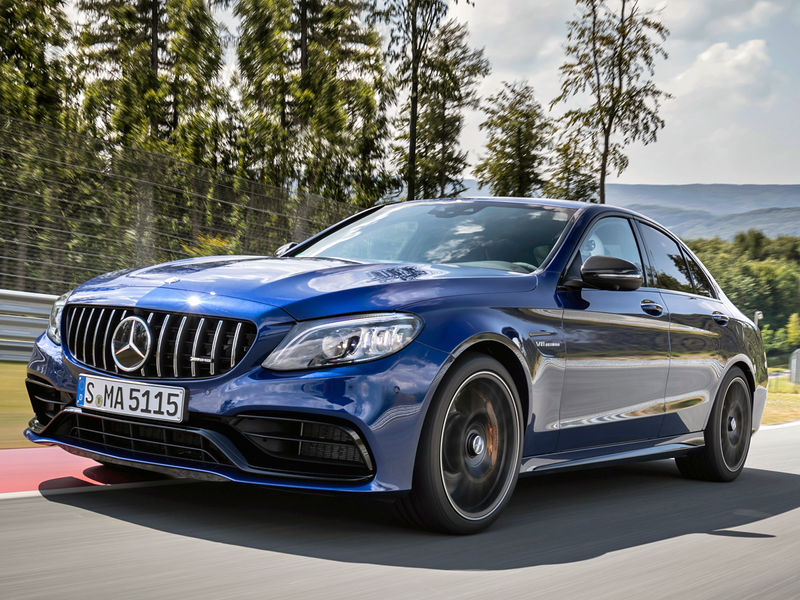
Pay close attention to any potential buy’s maintenance records – there should be no reason to settle for a vehicle with anything less than a full service history – and make sure the car in question still has a valid PremiumDrive contract. In addition, keep in mind the specified model line (standard, Exclusive, Avantgarde or AMG) as well as any chosen options will have an impact on value.
At the time of writing, nearly 85% of all W205 sedans listed on Cars.co.za were of the petrol variety, while 97% employed an automatic transmission. Unsurprisingly, the base C180 was the most widespread engine derivative, accounting for 46% of all listings, followed by the C200 with 25%. The least common variant was the C350e plug-in hybrid, with just a single example on offer. Fascinatingly, there were more C63 units listed than C43 units.
Indicated mileage varied from just 3 000 km through to 310 000 km (the latter achieved by a 2015 C220 BlueTec). In addition, we found a further 8 examples with more than 200 000 km on the odometer.
- Below R300 000: As you might expect, all of the admittedly limited options below this mark were pre-facelift vehicles. Tread carefully here, particularly as the early model-year examples would be heading out of their respective motorplans (with some already expired). We also found a few C180s wearing aftermarket Panamericana-style grilles, which we’d strongly suggest avoiding.
- From R300 000 to R450 000: There was a fair selection in this price bracket, though interestingly only up to the 2019 model year. The C180 and C200 dominated even more here, though this was also where we unearthed the single C350e available.
- From R450 000 to R800 000: This is where most would likely be shopping as it’s between these pricing bookends we found the bulk of W205 sedan stock, covering the full spectrum of powertrain options. It’s interesting to note the vehicles with the highest mileage in this section were all pre-facelift C43 and C63 models.
- Above R800 000: Buyers in the market for low-mileage, later model-year AMG derivatives would likely have to push their search beyond this price barrier. Limit yourself to a facelifted C43 and you’d be looking at more than R900 000, while netting a likewise-refreshed C63 S would mean swallowing 7-figure list prices. Indeed, we found a couple of 2020 C63 S models going for R1.9-million apiece.
Pick of the range?
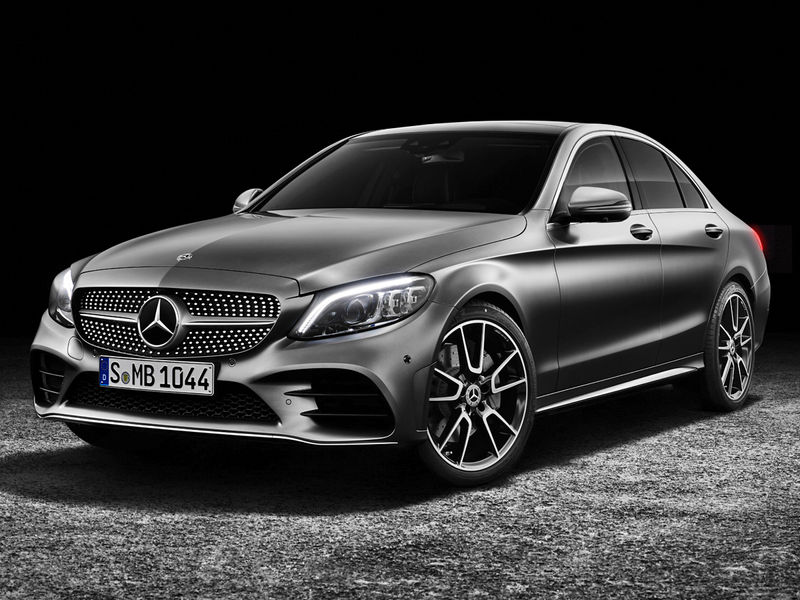
So, which one should you buy? Well, as we so often point out, that depends largely on your requirements and budget. Still, when considering only the cooking variants, we’d put forward the C220d as the pick of the bunch since its OM654 turbodiesel engine is both sufficiently punchy and pleasingly frugal (and also works neatly with the 9-speed automatic transmission).
The 2.0-litre turbodiesel unit – which incidentally these days does duty in the W206 range, albeit now with mild-hybrid additions – is furthermore considerably smoother and more refined than the 2.1-litre oil-burner that preceded it in the C220 BlueTec. Avoid the undeniably alluring AMG Line package (or, more specifically, the larger wheels and sports suspension that came with it) should you wish to maximise ride comfort.

Opting for a C220d would obviously restrict you to a facelifted model, though we’d view that narrowing of focus as overwhelmingly positive – in all but price, that is. After all, the W205’s mid-cycle update brought significant under-the-skin changes and afforded Mercedes-Benz the opportunity to iron out any minor issues. Buying a later model-year example furthermore brings the benefits of an active maintenance plan.
What about the performance models? Well, the C43 and C63 are remarkably different beasts, each appealing to a distinct buyer. Whereas the V6-powered C43 is relatively understated in its exterior design yet still brutally quick (and utterly surefooted, owning to its 4Matic system), the rear-wheel-drive, V8-driven flagship is a downright hooligan that can quite frankly be a bit of a handful. Still, the latter boasts a stonking V8, which is an engine configuration that was central to the AMG sub-brand until a short while ago. Either way, we’d again suggest concentrating on facelifted models.
Verdict
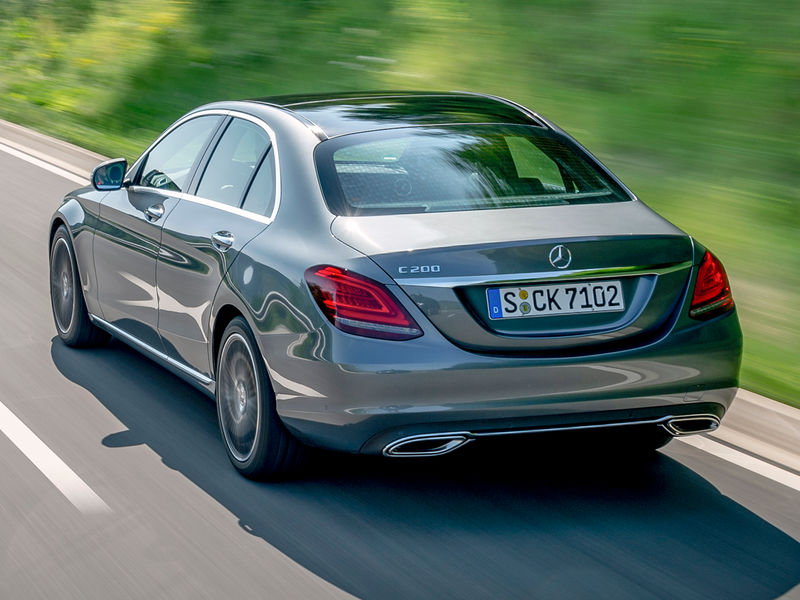
The W205 from Stuttgart was a wildly popular choice among buyers of compact executive sedans in South Africa, and that means there’s an abundance of stock on the used market today.
Of course, there are a few alternatives in the premium space also worthy of your consideration. The likewise rear-driven BMW 3 Series – in both F30 LCI form and pre-facelift G20 guise – would appeal to buyers who place high importance on handling, with the 340i/M340i and M3 taking on the C43 and C63, respectively.
The front-wheel-drive Audi A4 (B9), meanwhile, is for those who rank cabin build quality over all else. In this line-up, the S4 would compete with the C43, while the RS4 Avant would technically line up against the M3, even with its estate body style and all-wheel drive.
Outside of the Teutonic Trio, somewhat left-field picks in this segment include the under-appreciated XE30-generation Lexus IS as well as another pair of driver’s cars in the shape of the Jaguar XE and Alfa Romeo Giulia (including the sublime Quadrifoglio Verde). Unfortunately, the 3rd-generation Volvo S60 didn’t ever make it to local shores, so the Swede is off the table.
Still, for many South African buyers at least, there’s little in this corner of the market capable of beating the C-Class on pure badge cachet. Thankfully, there’s plenty of substance behind the style, which makes the W205 sedan an especially compelling choice, particularly in facelifted form.
Looking for a Mercedes-Benz C-Class to buy?
Find one on Cars.co.za HERE.
Ryan Bubear

Having written about everything from sport and politics to crime, Ryan eventually settled on motoring. For well over 15 years, he's been penning articles – both online and in print – about the broader automotive industry, though he's particularly fascinated by vehicle-sales statistics. A freelance writer and editor, Ryan has owned a 1971 Austin Mini Mk3 for 20-plus years.