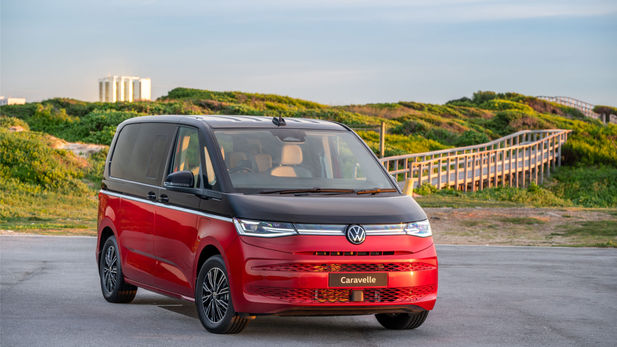
The new Volkswagen Caravelle eHybrid 4Motion retails for R1.8m, making it a product that speaks directly to South Africa’s elite. Does this luxury PHEV bus have what it takes to rival the likes of the Mercedes-Benz V-Class?
Let’s talk about the elephant in the room: the new Volkswagen Caravelle eHybrid (the brand’s name for its plug-in hybrid system) is expensive. In fact, to be able to afford repayments on this vehicle, a family would need to gross approximately R150 000 per month as a minimum. In South Africa, that salary belongs to the fortunate 1% of workers.
While there are VW Transporter models at a significantly lower price point, the eHybrid clearly targets those buyers who’d also consider premium 7-seater SUVs like the Land Rover Defender 130 and BMW X7. We’re firmly in the luxury space here…
Read more: Volkswagen Caravelle 1.5 eHybrid (2026) Price & Specs
Where does the VW Caravelle eHybrid 4Motion fit in?
Despite its lofty price tag, this new Volkswagen Caravelle eHybrid is still approximately R500 000 cheaper than the Mercedes-Benz V300d and the EQV. Conversely, it’s R450 000 more expensive than the top-of-the-range Volkswagen Transporter and Mercedes-Benz Vito Tourer. A quirky rival is the GAC M8 Master PHEV, which retails for R1.5m. Read more about how it compares to the VW here.
As a result of this in-between pricing strategy but luxury positioning, we reckon Caravelle buyers will consider the V300d and EQV as rivals instead of the cheaper alternatives. The question is, would that buyer prefer to save half a million Rand and purchase the Volkswagen, or rather bite the R2.3m bullet and purchase the ultra-luxury Mercedes-Benz models? (For reference, both the BMW X7 and Land Rover Defender 130 start at around R2.0m…)
Read more: Comparing VW’s new Caravelle eHybrid PHEV with its only real rival…
What does the Caravelle offer?
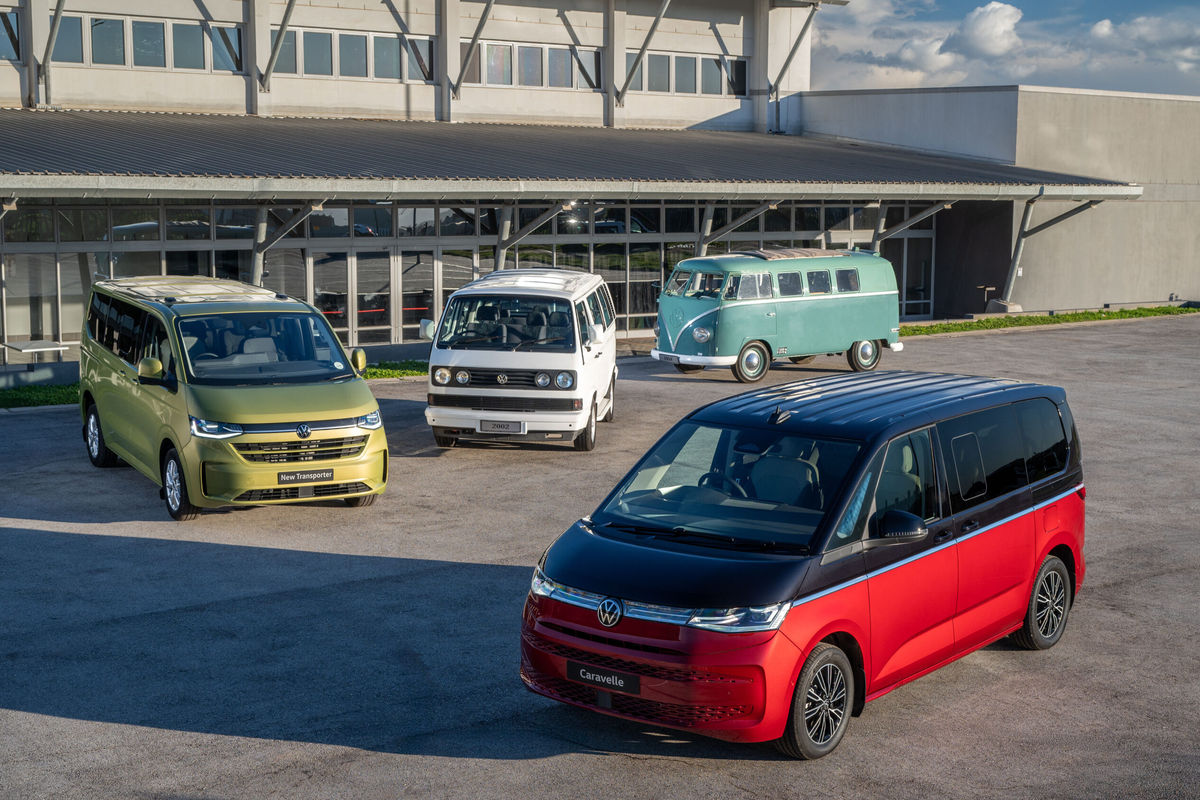
Unlike the current Volkswagen Transporter, which shares many components with the Ford Transit Custom, the Caravelle was wholly developed by Volkswagen and sits on the passenger-car MQB Evo platform. It uses a 1.5 TSI engine up front which produces 130 kW/250 Nm, as well as a 19.7kWh battery pack sited in the middle, with an electric e-motor on each axle. The front axle e-motor is integrated with the DSG gearbox.
As a result, you have 180 kW/350 Nm of combined power and an AWD system that uses electrification to put its power down. The Caravelle is front-wheel driven for the most part, with the rear wheels (which are controlled by the rear e-motor) coming to the rescue when more grip is needed, hence the 4Motion suffix.
In Sport mode, the vehicle permanently uses AWD and, if the battery is depleted, the 1.5 TSI will act as a generator for the electric motors, ensuring that the AWD system is always active. However, Volkswagen’s representatives made it clear that, while the 4Motion system is suited for light off-roading, the Caravelle is not the kind of vehicle that you’d use to go up Sani Pass. Forget those memories of the Syncro…
The EV range is approximately 85-95 km and you can drive up to 130 kph in EV mode, which will make city commuting a pleasure. The Caravelle supports AC charging of up to 11 kW and DC charging at up to 40 kW. For long weekends away, you also can tow up to 1 570 kg, so your Venter trailer will be in good company, but your (big) boat will need to stay at home.
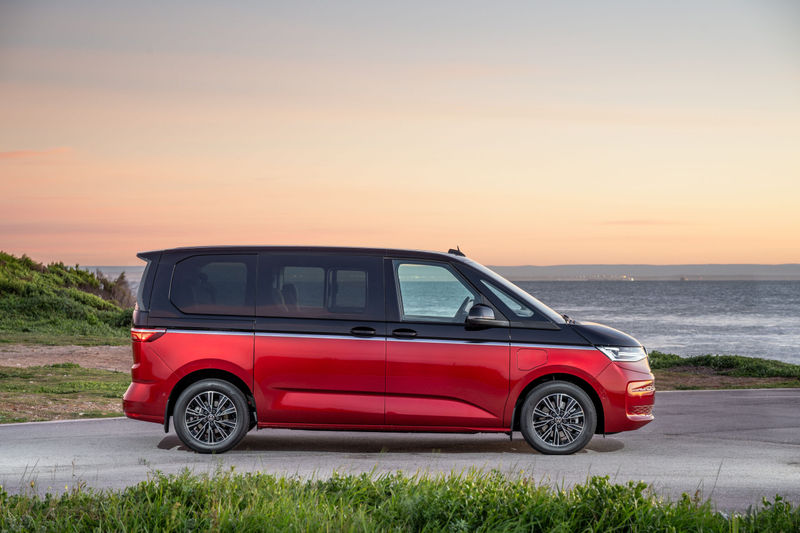
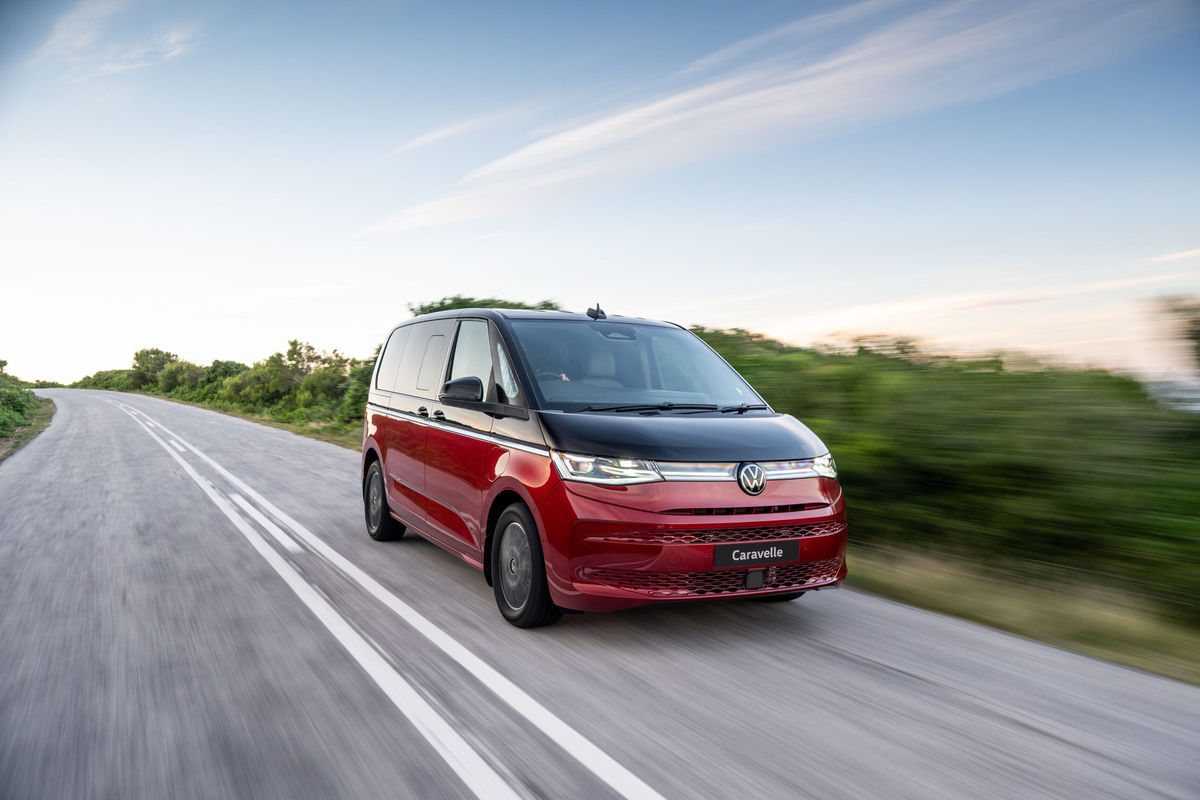
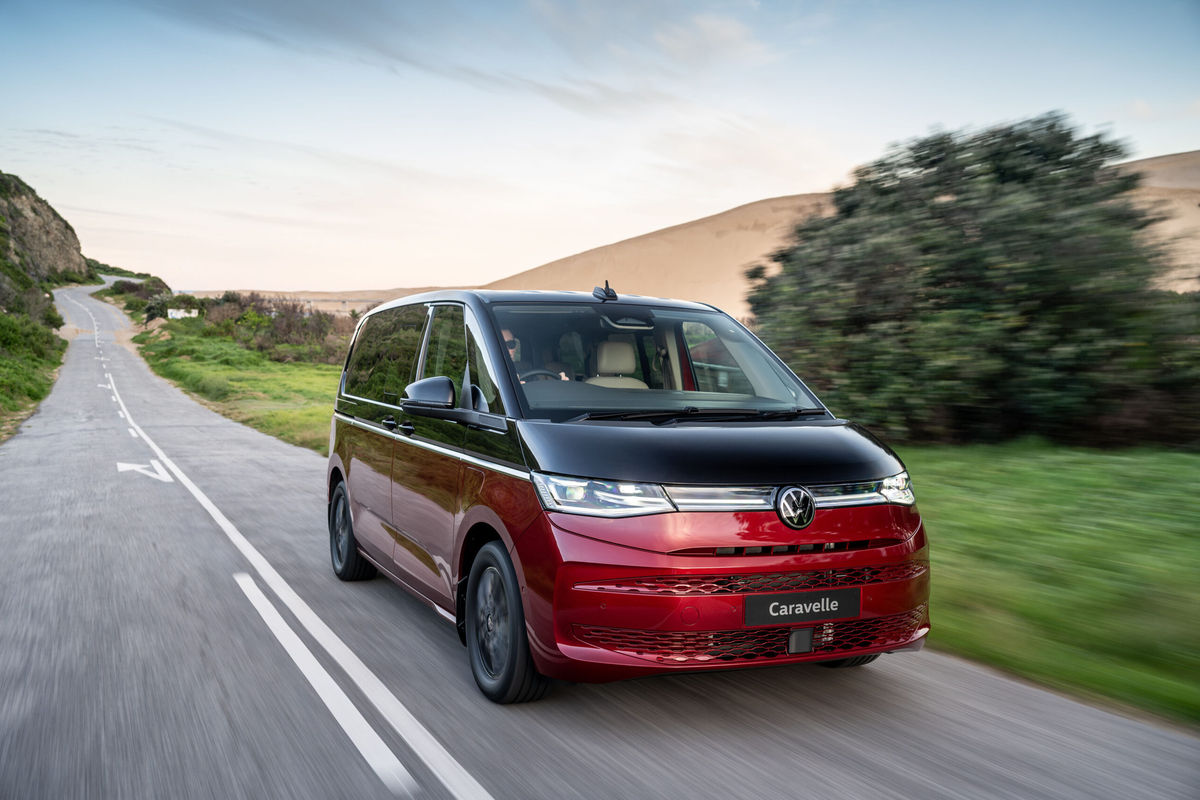
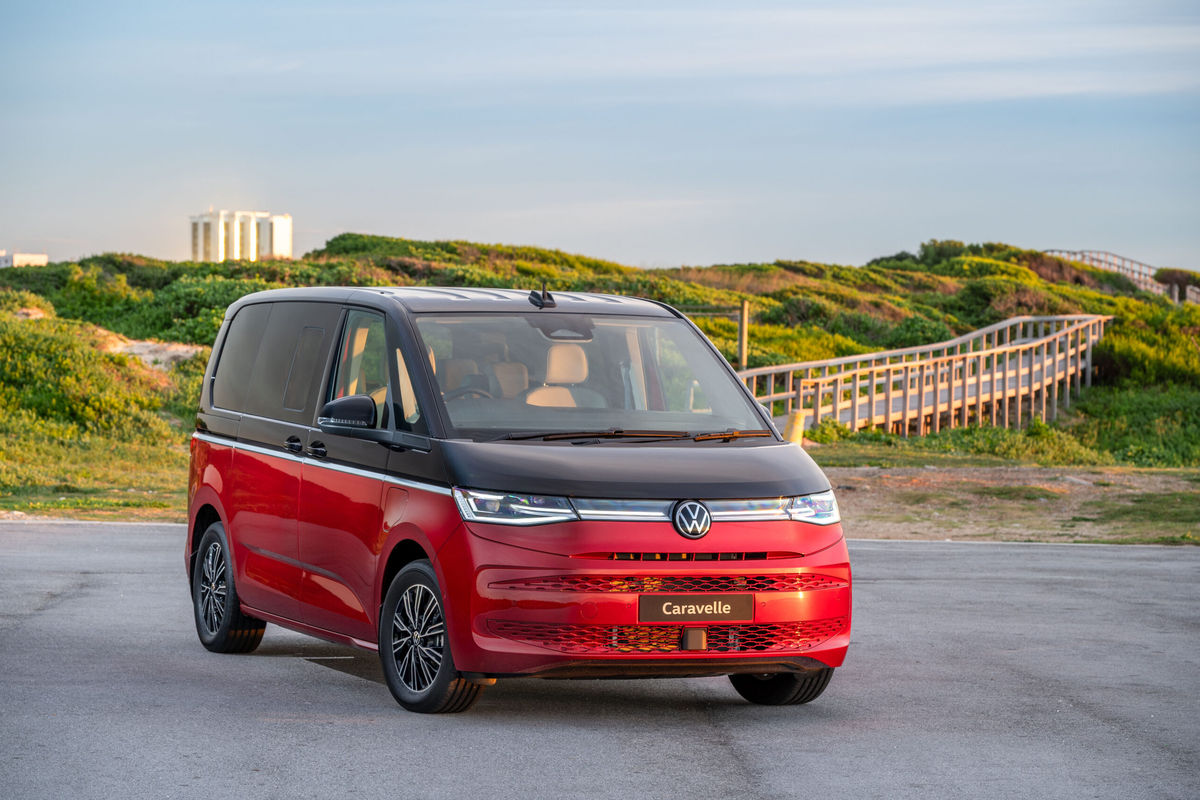
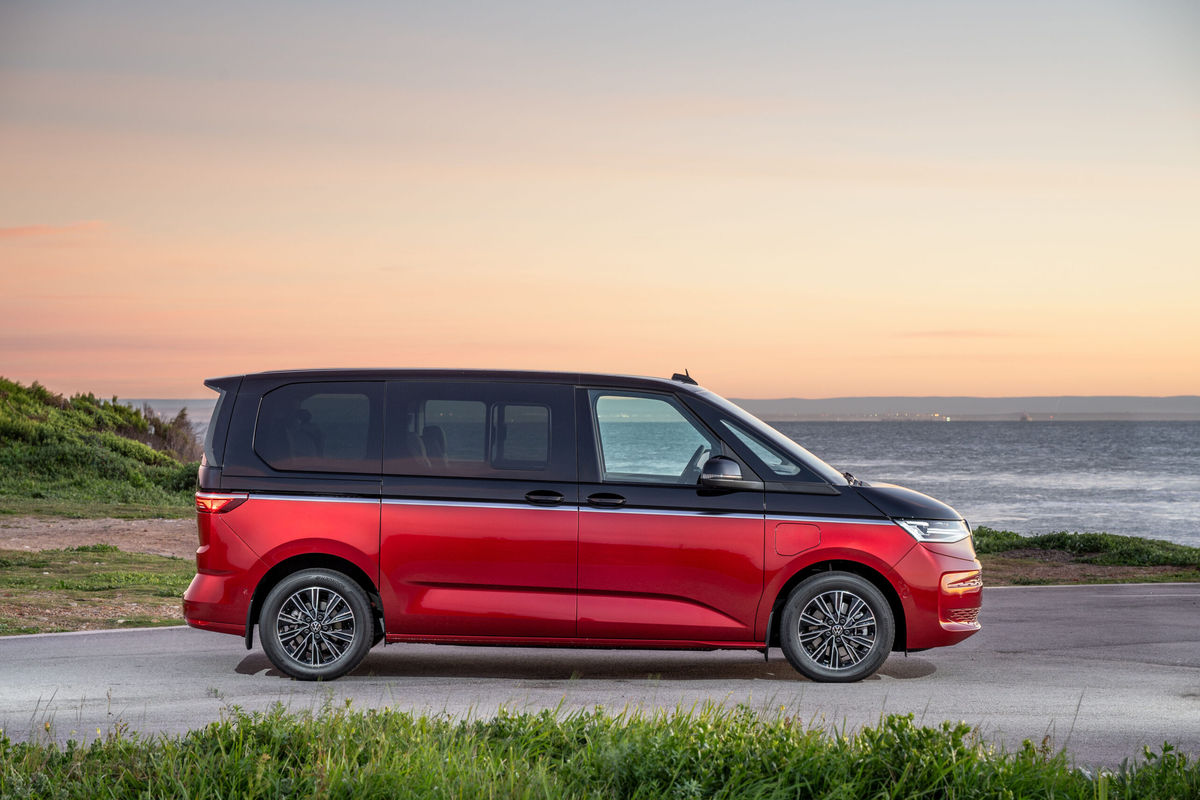
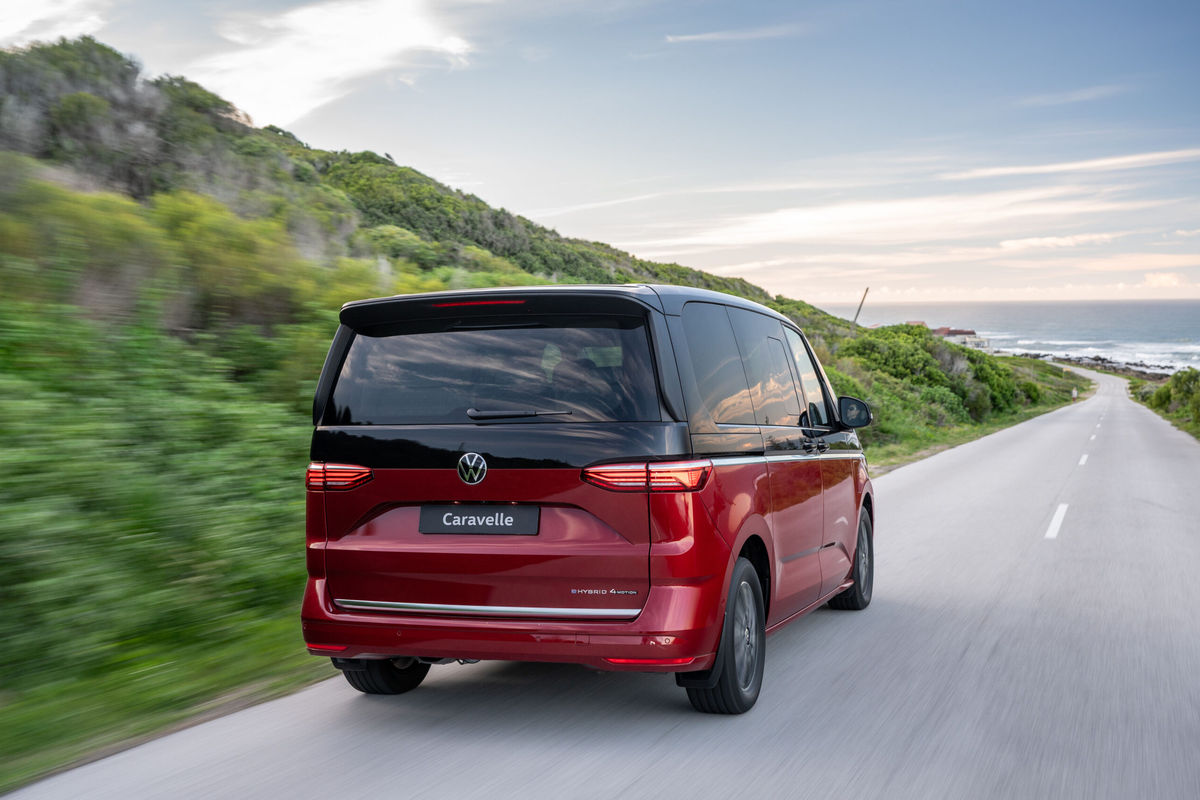
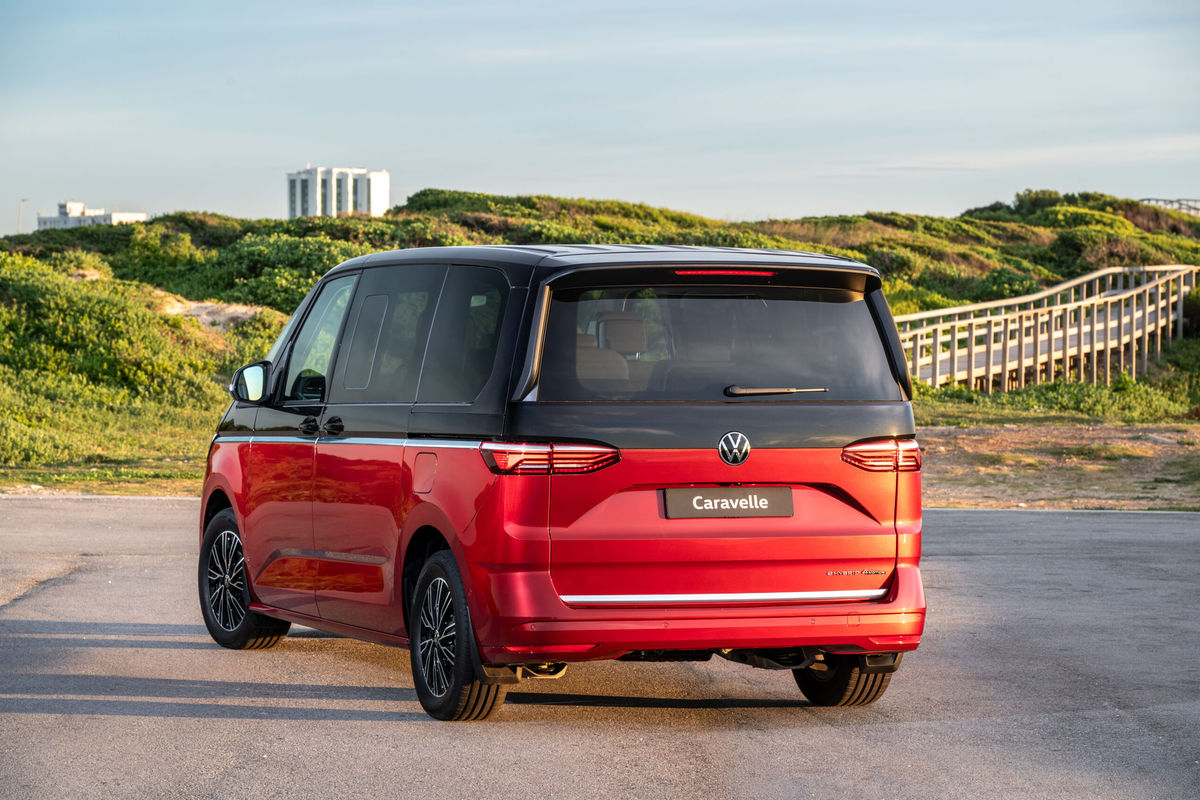
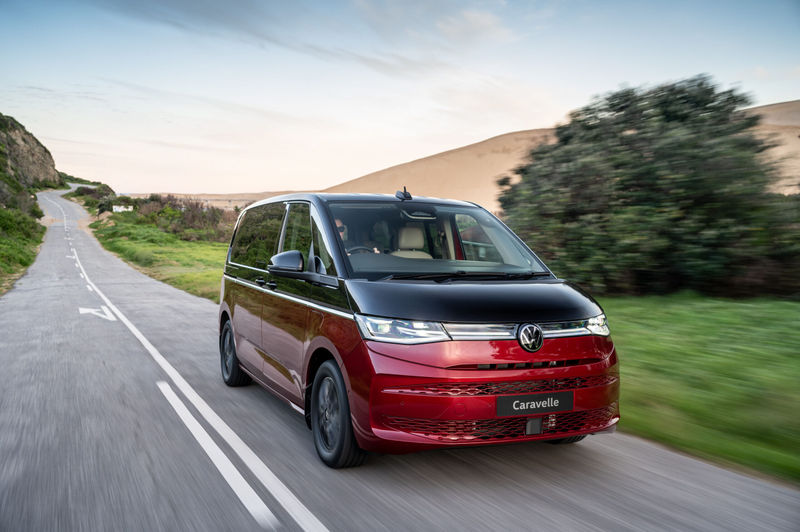
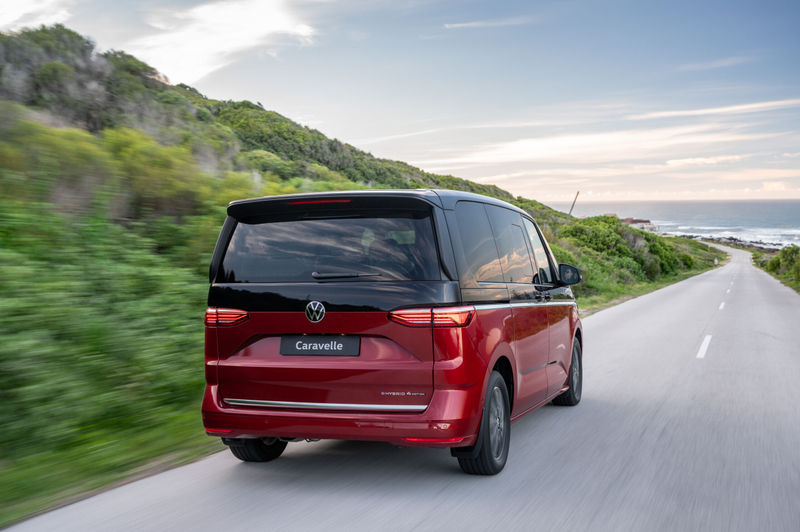
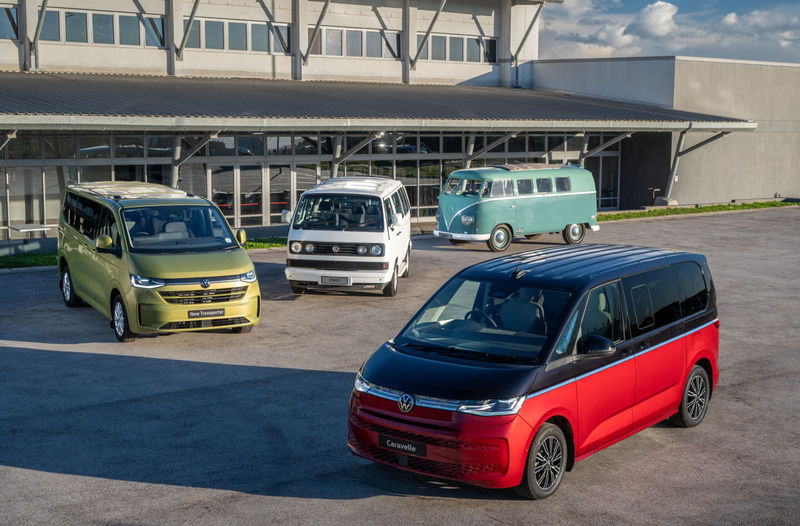
Aesthetically, the new Caravelle is a bit of a chameleon. Depending on the colour you choose, you can either have an understated-looking bus, or if you opt for the 2-tone colour combination, your Caravelle will stand out much more.
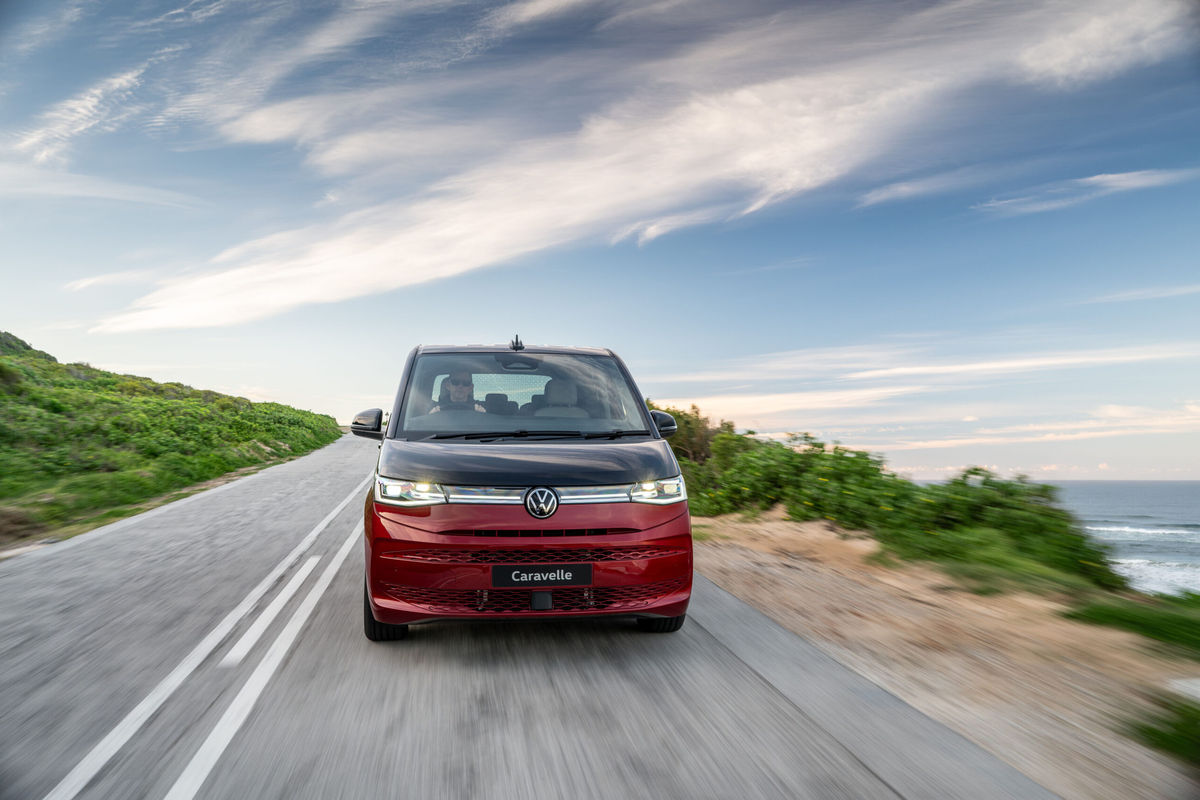
The design of the vehicle as a whole is simple. Up front, there’s slim LED headlamps connected via an LED bar, while the grille is partially blanked off. It’s not easy to make an MPV’s design unique (although GAC’s certainly tried), but the Caravelle at least looks smart and contemporary. Does it match the V-Class for status and premium appeal? Probably not…
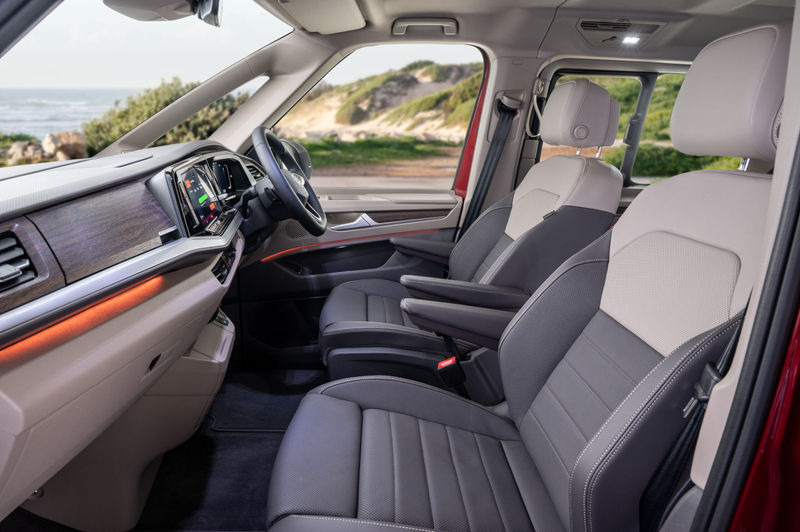
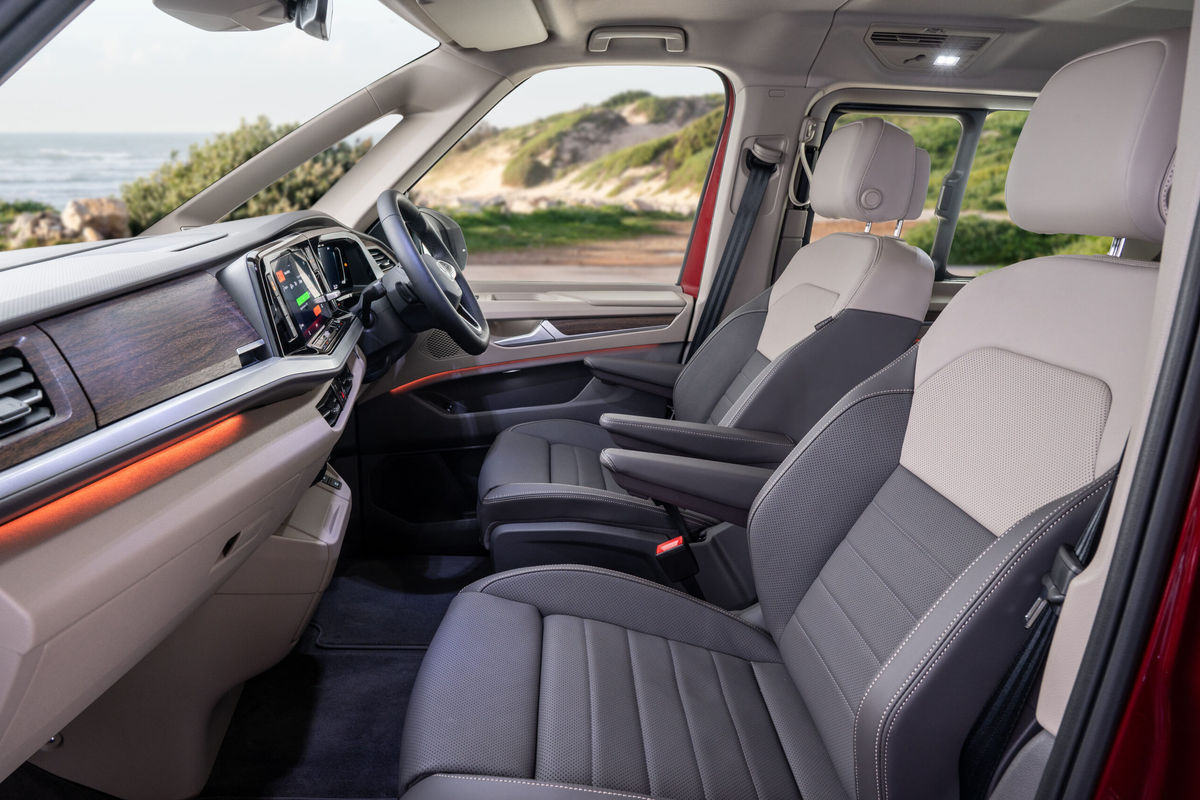
The news inside is a bit more mixed. The dashboard design is modern and the use of a 10-inch touchscreen infotainment system and VW’s Digital Cockpit Pro is welcome. However, hard plastics across the lower part of the dashboard and door cards are an eyesore at R1.8m.
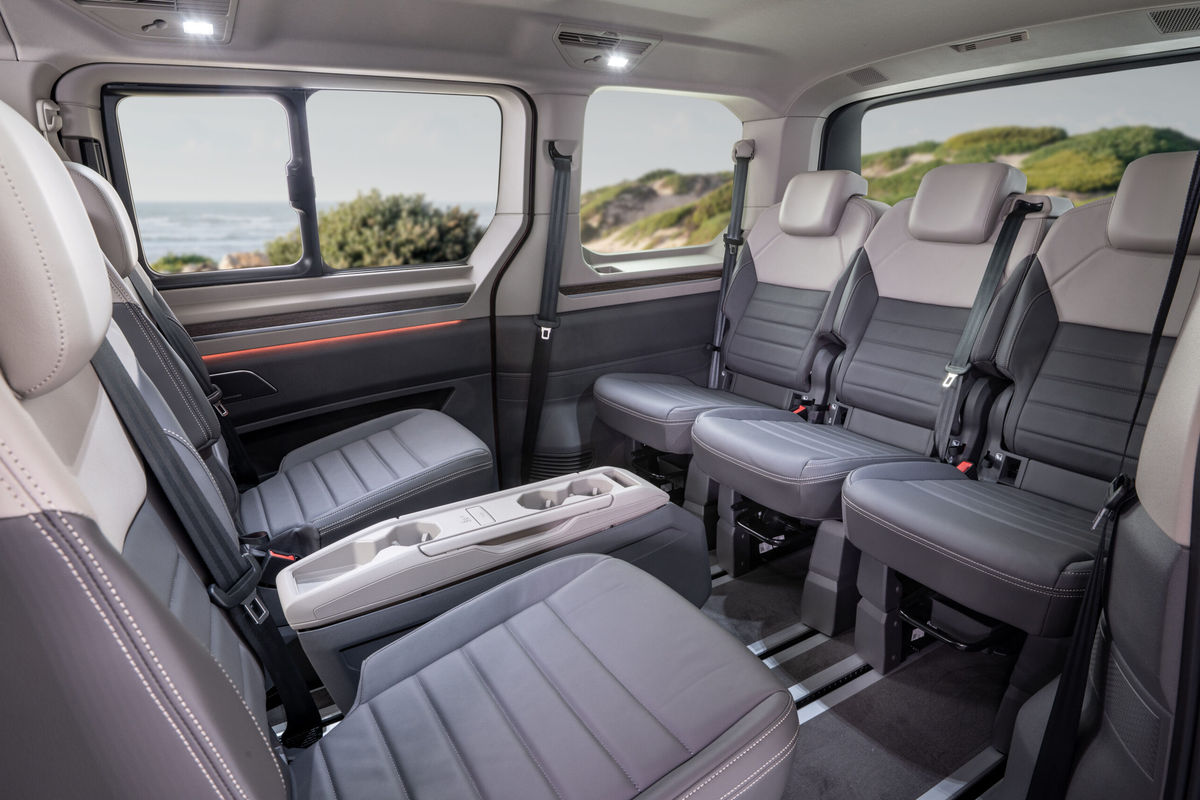
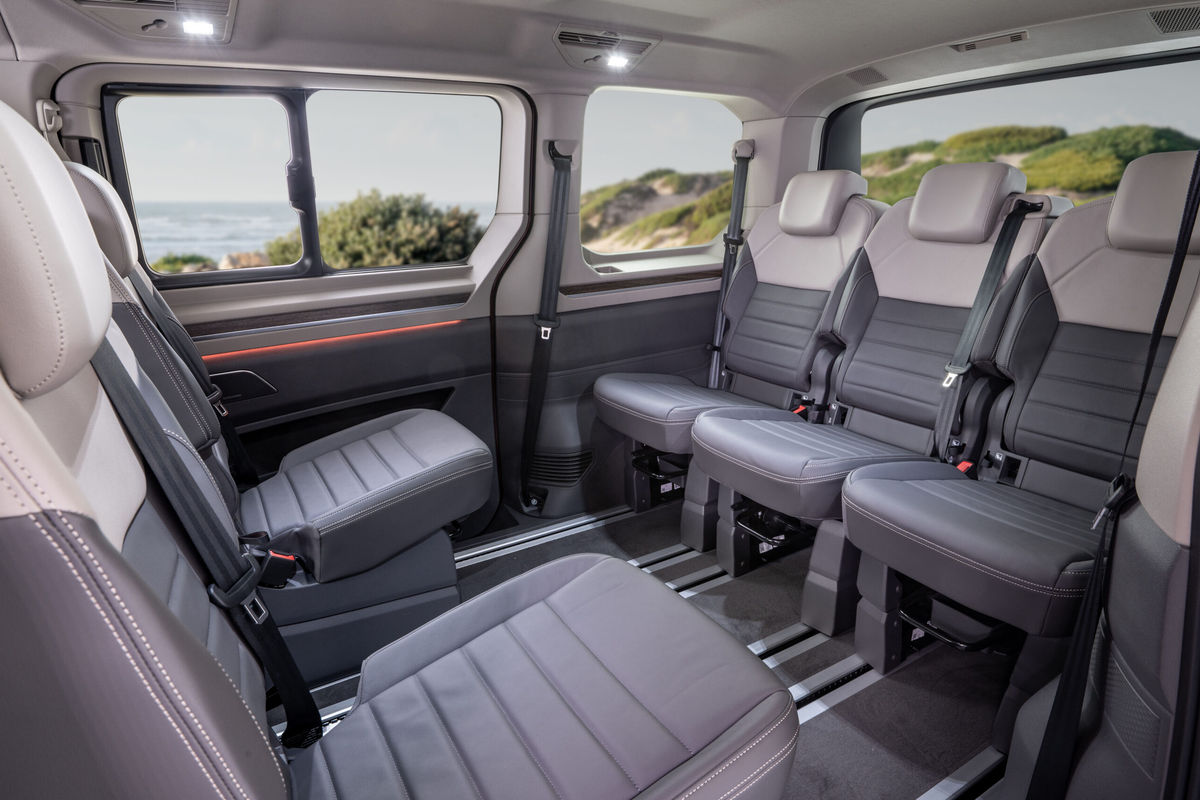
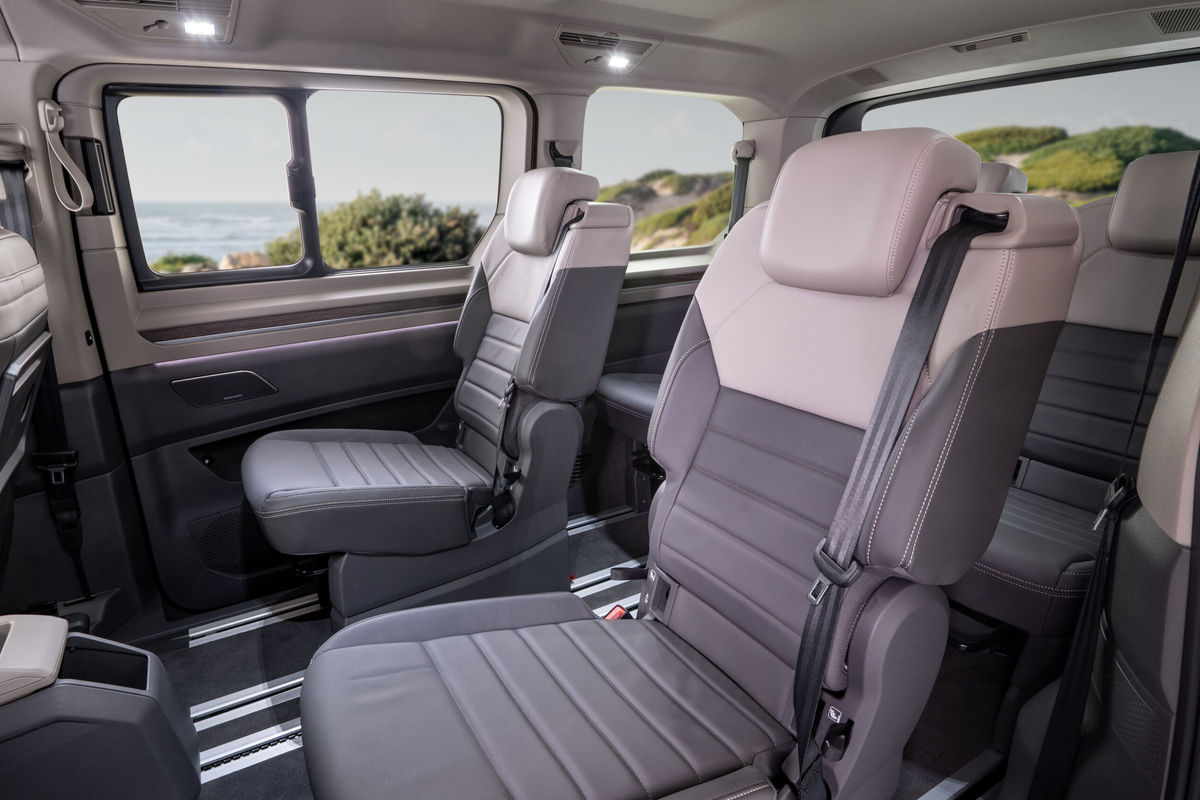
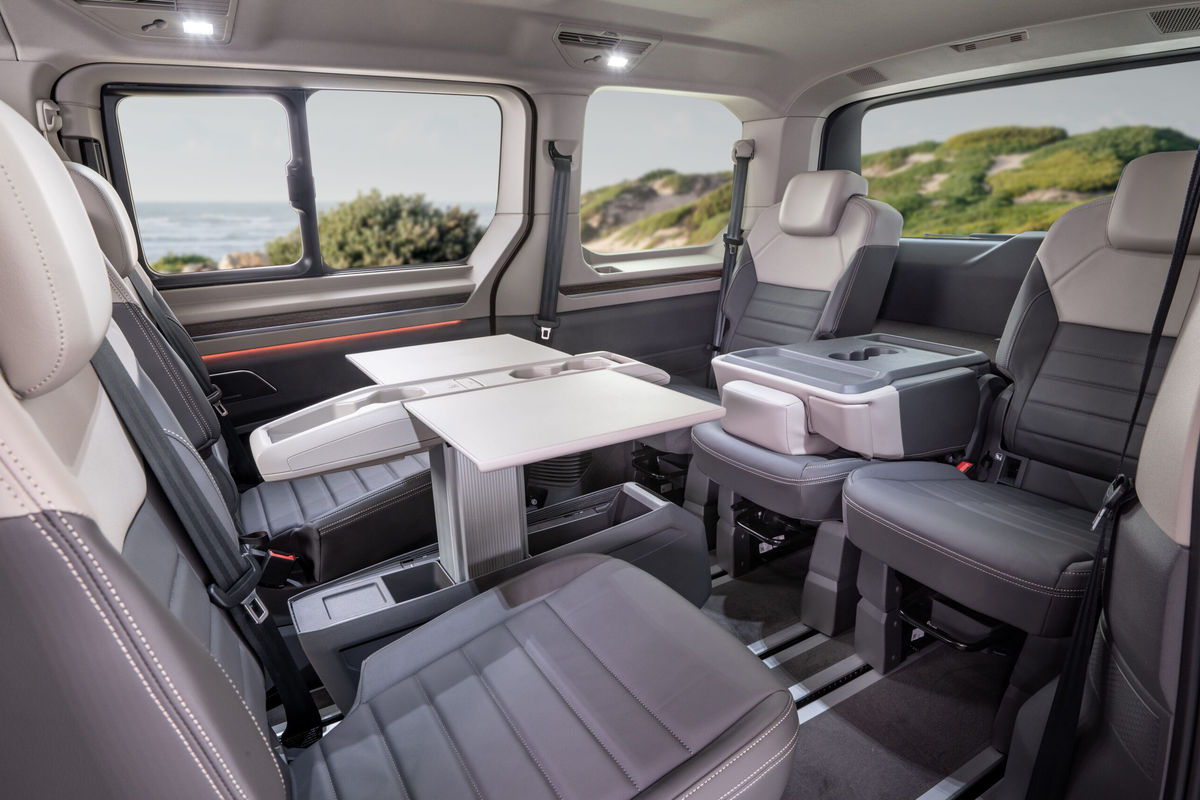
Thankfully, seating quality and the driving position are both very good. It’s easy to see out of the vehicle and use the various cabin functions. Rear-seat comfort for an additional 5 passengers is equally excellent and we’re happy to report the famous Caravelle picnic table is present and correct.
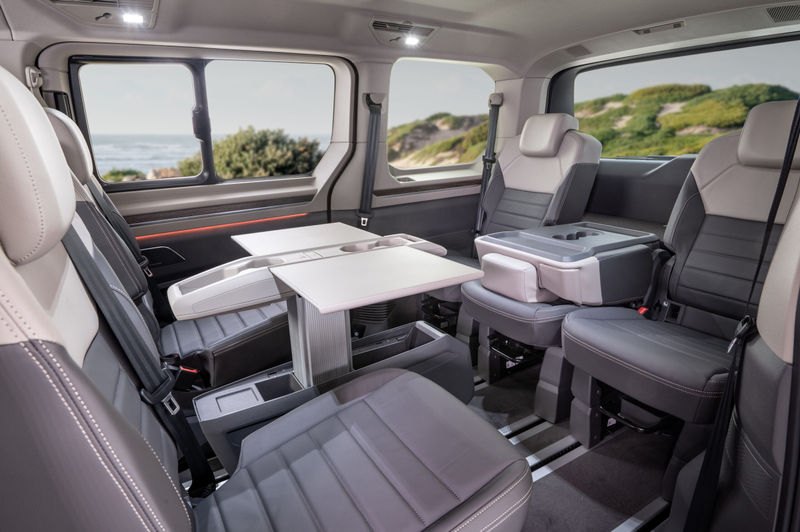
Music lovers will be glad to hear the Caravelle comes standard with a 13-speaker Harman Kardon sound system, so road trips should be a blast.
What’s it like to drive?
The new Volkswagen Caravelle eHybrid 4Motion is exceedingly pleasant to drive. Despite the middling system outputs and heavy weight (more than 2.2 tonnes), overtaking power is sufficient and the integration of the hybrid system works well.
The vehicle defaults to EV mode when started, but using the mode selector, you can opt for Hybrid mode for more of a balance between the powertrains.
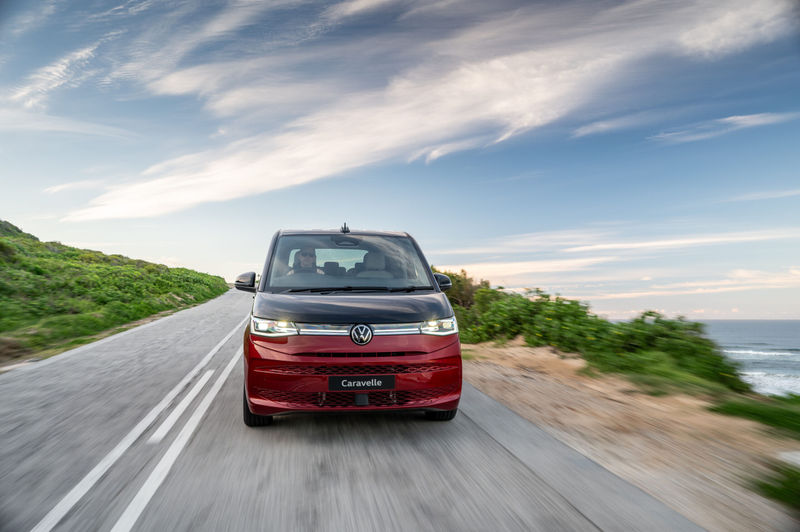
What was most impressive on the launch route was the suspension damping, which felt soft enough to be able to do long road trips but firm enough to take corners with confidence. This isn’t always a given with buses.
The DSG gearbox has long been a favourite among petrol heads and for good reason; it shifts smoothly and quickly. Overall, the Caravelle is an excellent cross-country tourer.
Final thoughts
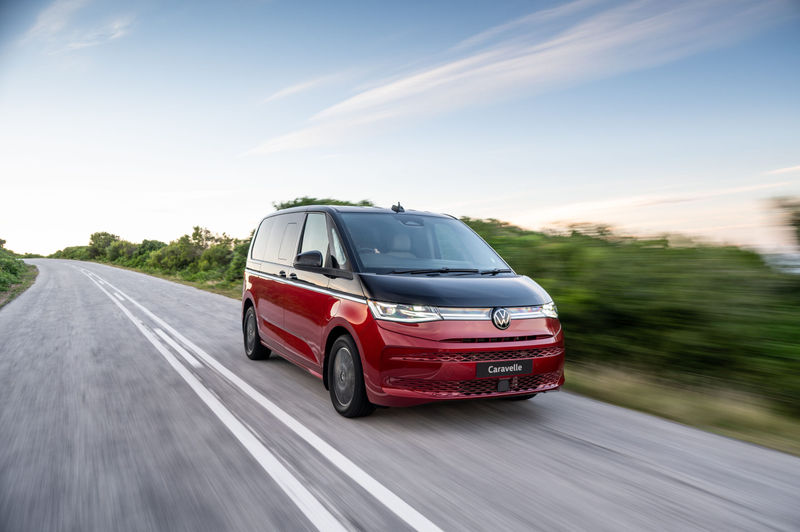
The Volkswagen Caravelle has always been a luxury people mover, so one can naturally expect a premium price tag. In the case of the new model, the addition of plug-in hybrid technology makes the Caravelle even more sophisticated and a pleasure to pilot.
However, we’re concerned buyers might be put off by the R1.8m price tag on a vehicle without a premium badge. Does it make as strong a statement about its owner as the Mercedes-Benz V-Class does? It arguably doesn’t… For that reason, we feel there’s much better value to be found in the Transporter range.
Frequently Asked Questions (FAQ)
Q: How much does the new Volkswagen Caravelle eHybrid 4Motion cost in South Africa?
A: The Volkswagen Caravelle eHybrid 4Motion retails for R1.8 million, positioning it in the luxury segment alongside premium 7-seater SUVs and luxury MPVs.
Q: What engine and power outputs does the Caravelle eHybrid 4Motion feature?
A: It combines a 1.5 TSI engine (130 kW/250 Nm) with a 19.7 kWh battery pack and dual electric motors across both axles, delivering a combined system output of 180 kW and 350 Nm.
Q: What is the electric driving range and charging speed of the new Caravelle eHybrid?
A: The Caravelle offers an all-electric driving range of approximately 85 to 95 km (with EV speeds up to 130 kph). It supports AC charging up to 11 kW and DC fast charging up to 40 kW.
Francisco Nwamba

A former vehicle salesman turned motoring writer, Francisco has managed to merge his passion for the arts with his love for motor vehicles. With a background in creative writing, 'Cisco is a freelance motor journalist for Destiny Man Magazine and Sawubona Magazine. Occasionally, you may even see him on the small screen as a TV presenter.