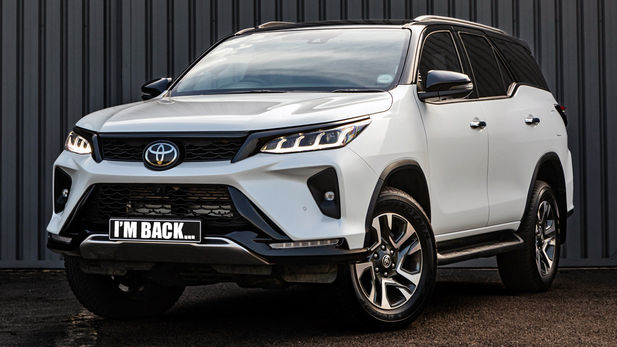
The South African new-vehicle market’s run of year-on-year growth has ended, with sales falling marginally to a still-impressive 50 157 units in March 2023. Here’s a look at SA’s best-selling vehicles, most popular brands and more…
In March 2023, South Africa’s new-vehicle market registered a marginal decline of 0.6% to 50 157 units, bringing to an end the industry’s 14-month streak of year-on-year sales growth. Still, the month’s sales tally represents a considerable 10.6% increase compared with February 2023’s effort and is interestingly also the first time the market has cracked the 50 000-unit mark in a year.
Naamsa described the industry’s performance in March 2023 as “modest”, saying this could at least in part be attributed to rising interest rates and the so-called “national shutdown” of 20 March, when “many dealers opted to close shop and vehicle manufacturers operating in hotspot metros also halted production”.
Out of the total reported industry sales of 50 157 vehicles, an estimated 43 801 units (or 87.3%) came via the dealer channel, with 6.1% representing sales to the rental industry, 4.1% to government and 2.5% to industry corporate fleets.
The new passenger-vehicle market decreased 6.4% to 31 631 units in March 2023, while sales of new light-commercial vehicles (including bakkies and minibuses) grew an encouraging 11.1% year on year to 15 529 units (the highest LCV figure for over a year, as you can see in the chart below). After the opening quarter of the 2023, domestic sales stood at 139 437 units, representing an increase of 2.4% compared with the same period in 2022.
What about the export market? Well, Naamsa’s figures showed a 3.1% year-on-year increase to 34 134 units in March 2023, with the year-to-date number coming in at 84 774 units (or 4.2% down on the first quarter of 2022).
Lebogang Gaoaketse, Head of Marketing and Communications at WesBank, was upbeat, suggesting March 2023’s performance was worth celebrating.
“Despite the public holidays, March is a long sales month and this month’s performance mirrored what was the best-selling month last year. Both March 2022 and 2023 have been the only sales months to breach the 50 000-unit level since October 2019,” explained Gaoaketse.
Furthermore, according to WesBank, March’s increased volumes compared with February’s tally indicates “growth remains possible despite the headwinds of the continued energy crisis, rising interest rates and the pressures of inflation on household budgets”.
Gary McCraw, National Director of the National Automobil Dealers’ Association (NADA), was similarly optimistic, saying the fact total sales exceeded the 50 0000- unit barrier “was a positive sign, showing that there is still ongoing, pent-up demand for new vehicles”.
“The retail dealer network fared well in the circumstances, with many of them having closed over the Human Rights Day period. In fact, the dealers’ share of the new-vehicle market continues to hold up, with the March share of 87.3% being even better than the 83.6% share in February. On a year-to-date basis, the dealers have sold 2 230 more vehicles this year than in the same period in 2022 – 117 178 versus 114 948,” added McGraw.
New vehicle sales summary for March 2023
- Aggregate new-vehicle sales of 50 157 units decreased by 0.6% (-308 units) compared to March 2022.
- New passenger-vehicle sales of 31 631 units decreased by 6.4% (-2 157 units) compared to March 2022.
- New light-commercial vehicle sales of 15 529 units increased by 11.1% (1 556 units) compared to March 2022.
- Export sales of 34 134 units increased by 3.1% (1 026 units) compared to March 2022.
10 best-selling car brands in South Africa in March 2023
Another month, another overwhelmingly dominant sales performance from Toyota. The Japanese firm’s local arm registered a hefty 13 406 units in March 2023 (translating to a market share of 26.7%), almost 2 000 sales more than it achieved in the preceding (admittedly shorter) month. The Volkswagen Group (6 139 units) was again 2nd on the list, though the German company at least managed to stretch its lead over the 3rd-placed Suzuki (3 734 units).
Hyundai (3 032 units) climbed a place to 4th, finishing the month a mere 20 units ahead of Nissan (3 012 units), which consequently dropped a spot to 5th. Ford wasn’t far behind, with its 2 993 sales enough to keep it in 6th, while Isuzu (2 691 units) enjoyed a particularly strong month, moving up a position to 7th. With 2 058 registrations, Renault thus slipped a spot to 8th, with Haval (2 002 units) gaining a place to 9th and Kia (1 833 units) sliding a position to 10th.
Which brands finished just outside the top 10? Well, Chinese automaker Chery again had to settle for 11th, with its 1 502 units sold in March 2023 proving a record haul, and seeing it finish ahead of Indian firm Mahindra (1 434 units) and the BMW Group (1 394 units), with the latter reporting sales to Naamsa for the first time this year.
1. Toyota – 13 406 units
2. Volkswagen Group – 6 139 units
3. Suzuki – 3 734 units
4. Hyundai – 3 032 units
5. Nissan – 3 012 units
6. Ford – 2 993 units
7. Isuzu – 2 691 units
8. Renault – 2 058 units
9. Haval – 2 002 units
10. Kia – 1 833 units
10 best-selling vehicles in South Africa in March 2023
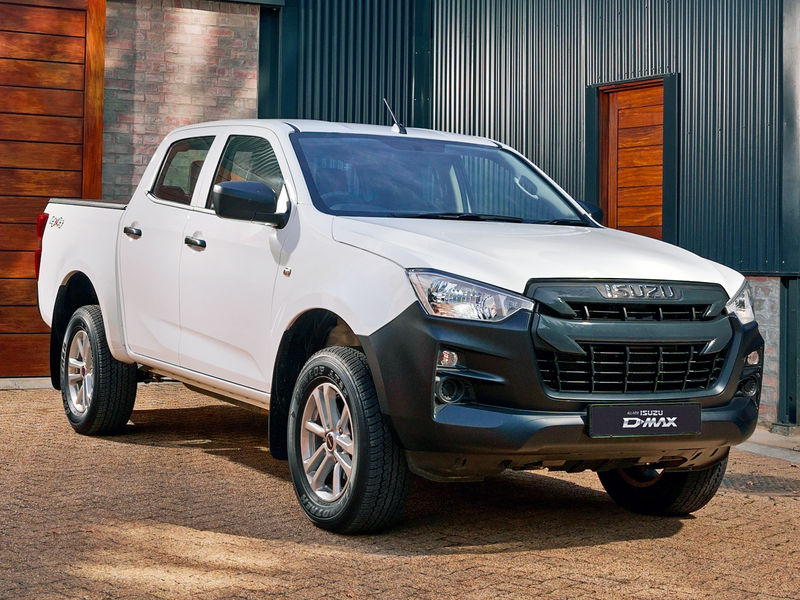
As you might very well have guessed, the Toyota Hilux was again South Africa’s most popular new vehicle, with as many as 3 920 examples registered in March 2023. Interestingly, the Isuzu D-Max (2 289 units, including 500 sales to government) climbed a spot to snaffle 2nd, pushing the new Ford Ranger (2 247 units) down to 3rd. Yes, that means the podium comprised a trio of locally produced bakkies (here’s the full list of SA’s best-selling bakkies for March 2023).
The Kariega-built Volkswagen Polo Vivo (2 016 units) – recently bolstered with the launch of a subtly updated GT flagship – moved up a position to 4th, forcing the Prospecton-produced Toyota Corolla Cross (1 839 units) down to 5th. The Toyota Hi-Ace (1 600 units) gained a spot to finish the month in 6th, while the Toyota Fortuner made a strong return to the top 10, with 1 409 registrations across the country (including 281 units courtesy of the rental channel). As a reminder, the Japanese firm’s locally produced adventure SUV lost the title of SA’s best-selling SUV in 2022 (and failed to crack the top 15 overall in both January and February 2023), though recently benefited from a handy refresh.
The long-in-the-tooth Nissan NP200 (1 404 units) and Suzuki-built Toyota Starlet (1 276 units) effectively swapped places compared with February 2023 – thus finishing in 8th and 9th respectively – while the Suzuki Swift tumbled 4 positions to close out the table on 1 248 registrations.
What about models that just failed to crack the top 10? Well, the Volkswagen Polo hatchback (1 008 units) had to settle for 11th, ahead of the Hyundai Grand i10 (977 units), Mahindra Pik Up (966 units), Haval Jolion (940 units) and Chery Tiggo 4 Pro (918 units).
1. Toyota Hilux – 3 920 units
2. Isuzu D-Max – 2 289 units
3. Ford Ranger – 2 247 units
4. Volkswagen Polo Vivo – 2 016 units
5. Toyota Corolla Cross – 1 839 units
6. Toyota Hi-Ace – 1 600 units
7. Toyota Fortuner – 1 409 units
8. Nissan NP200 – 1 404 units
9. Toyota Starlet – 1 276 units
10. Suzuki Swift – 1 248 units
Top 10 vehicles exported from South Africa in March 2023
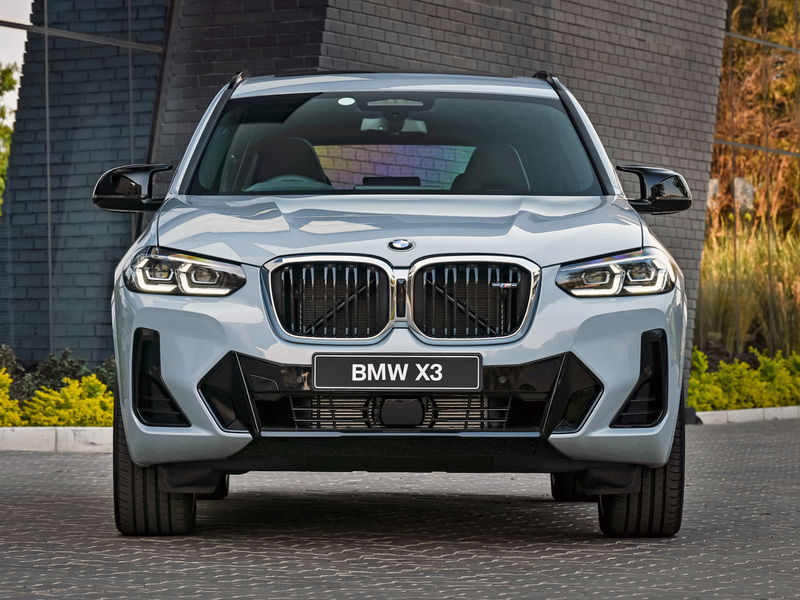
Though the Volkswagen Polo hatchback again missed out on a top-10 finish on the domestic front, it was the runaway leader on the export charts, with a whopping 10 029 units shipped overseas. Meanwhile, with the brand again reporting figures to Naamsa for March 2023, the Rosslyn-built BMW X3 (5 988 units) grabbed 2nd, with the Silverton-manufactured Ford Ranger (5 708 units) close behind in 3rd and the Toyota Hilux (3 588 units) relegated to 4th.
As is so often the case, the Isuzu D-Max, Nissan Navara, Toyota Corolla Cross, Toyota Fortuner, Nissan NP200 and Toyota Corolla Quest made up the export numbers. We should, of course, point out Mercedes-Benz did not submit detailed figures, so it’s not clear exactly how many new C-Class sedan units were exported during the month (for the record, though, Naamsa’s estimate for March 2023 stands at 7 075 units).
1. Volkswagen Polo (hatch) – 10 029 units
2. BMW X3 – 5 988 units
3. Ford Ranger – 5 708 units
4. Toyota Hilux – 3 588 units
5. Isuzu D-Max – 743 units
6. Nissan Navara – 450 units
7. Toyota Corolla Cross – 98 units
8. Toyota Fortuner – 81 units
9. Nissan NP200 – 29 units
10. Toyota Corolla Quest – 28 units
Sales outlook for the remainder of 2023
So, where to from here for South Africa’s new-vehicle market? Well, Naamsa believes the latest interest-rate hike as well as a multitude of other factors will have a further impact on the “shrinking disposable income purse many consumers rely on when making new vehicle sales decisions”.
“While vehicle production is ramping up and the overall performance [of] vehicle sales and exports sales has been steadily increasing, the continued monetary policy tightening, domestic and global slowing growth, as well as energy shortages will have greater spill over to the overall performance of the industry,” says Naamsa, before adding it “remains upbeat” that its forecast of domestic sales growth of 6.3% and export sales growth of 8.3% for 2023 is still achievable.
ALSO READ: 10 best-selling bakkies in South Africa for March 2023
Meanwhile, WesBank’s Gaoaketse also points to the latest increase in the prime lending rate as cause for concern for the new-vehicle market.
“In addition to making existing linked finance agreements more expensive, the higher-than-expected interest-rate hike will no doubt challenge affordability and future purchase decisions for the new-vehicle market, which could begin impacting sales volumes over the coming months,” warns Gaoaketse.
Despite this, WesBank “continues to expect market growth this year off the back of improved supply and the need to refresh the replacement cycle that has been delayed over the past few years”.
ALSO READ: Here’s how many EVs and hybrids were sold in SA in 2022
NADA’s McGraw takes a likewise positive stance, listing various factors that could see more new-vehicle sales growth.
“Looking ahead, we believe that as many local companies have entered a new financial year, there may be a greater appetite for them to start buying again. Ongoing load-shedding and changes in company policies are seeing many more people now returning to work in their offices instead of at home, which means they are driving daily, which could also be a spur for new-car sales.
“We also believe that the increase in interest rate may result in a speed up of the buy-down trend. We are hopeful that people intending to replace their cars this year will still do so, as there is a host of new models arriving and new-vehicle stock levels are much improved. This could lead to more aggressive trading,” concludes McGraw.
Related content
A Chery knocks VW Polo from top 10: SA’s best-sellers in Feb 2023
10 best-selling bakkies in South Africa: March 2023
SA’s top 10 automakers: 2022’s winners & losers by market share
Ryan Bubear

Having written about everything from sport and politics to crime, Ryan eventually settled on motoring. For well over 15 years, he's been penning articles – both online and in print – about the broader automotive industry, though he's particularly fascinated by vehicle-sales statistics. A freelance writer and editor, Ryan has owned a 1971 Austin Mini Mk3 for 20-plus years.