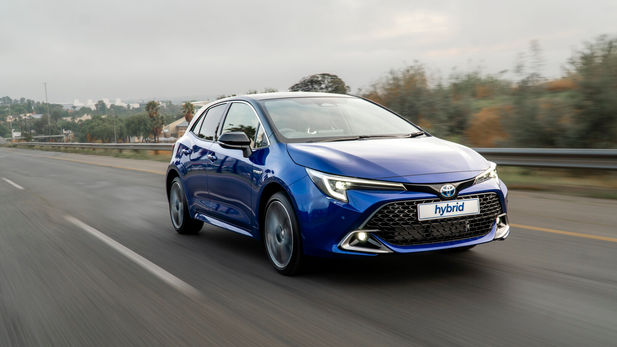
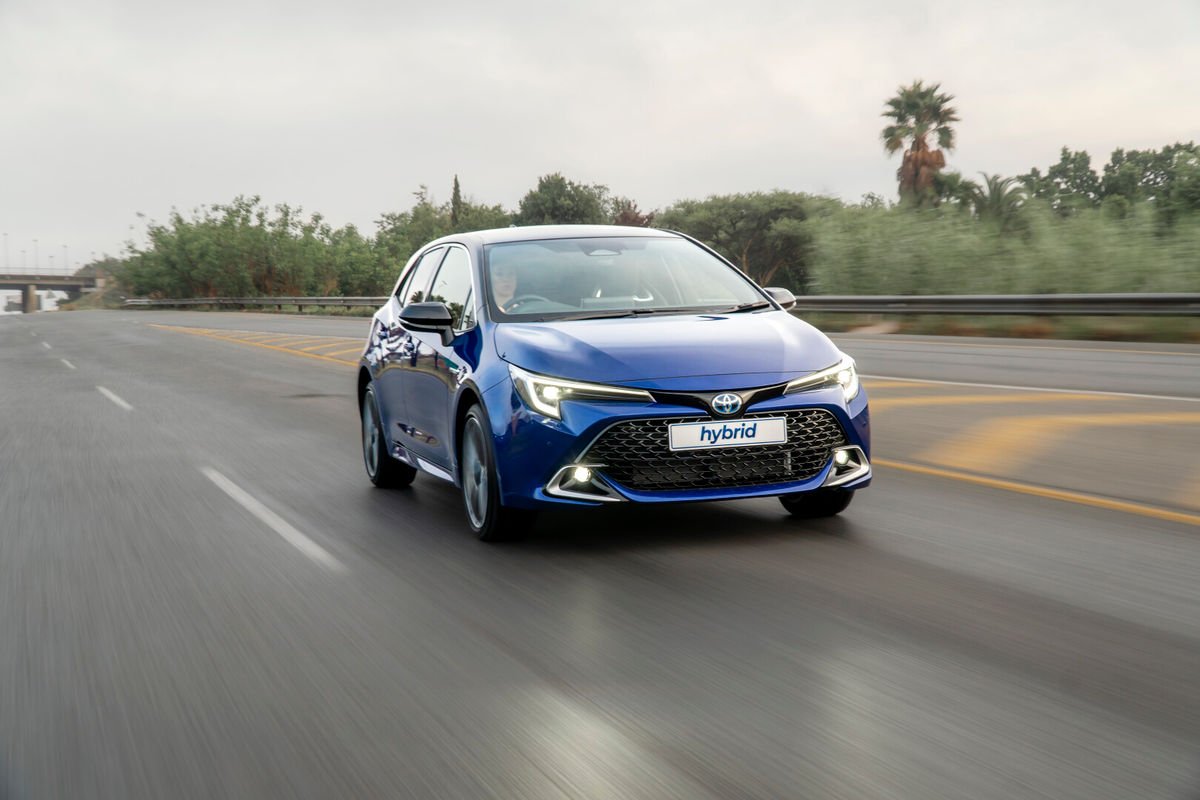
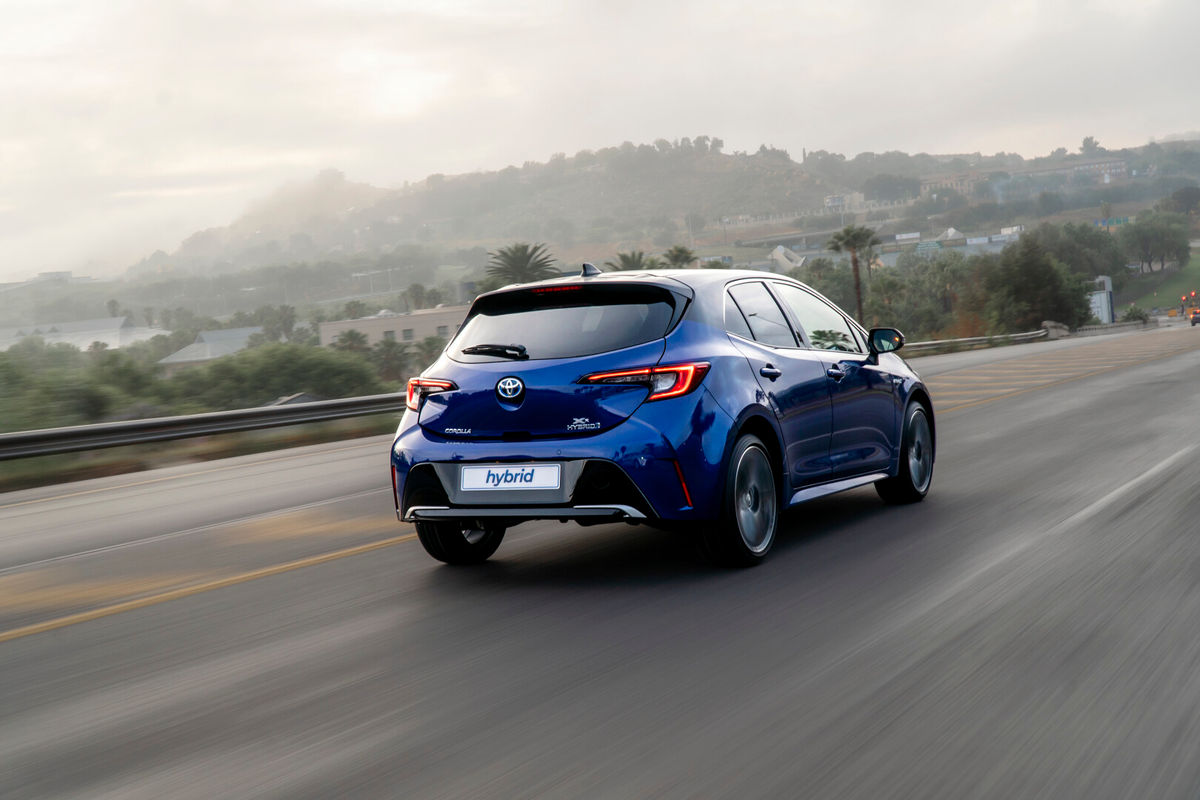
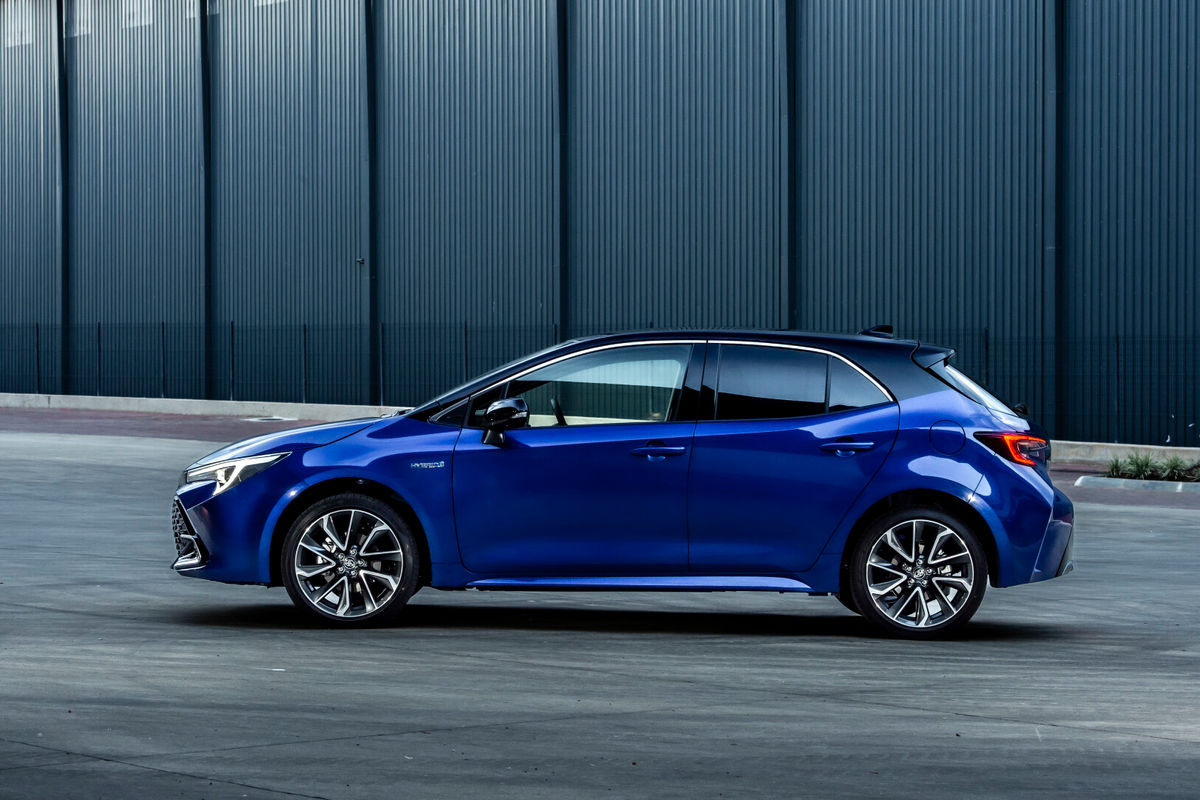
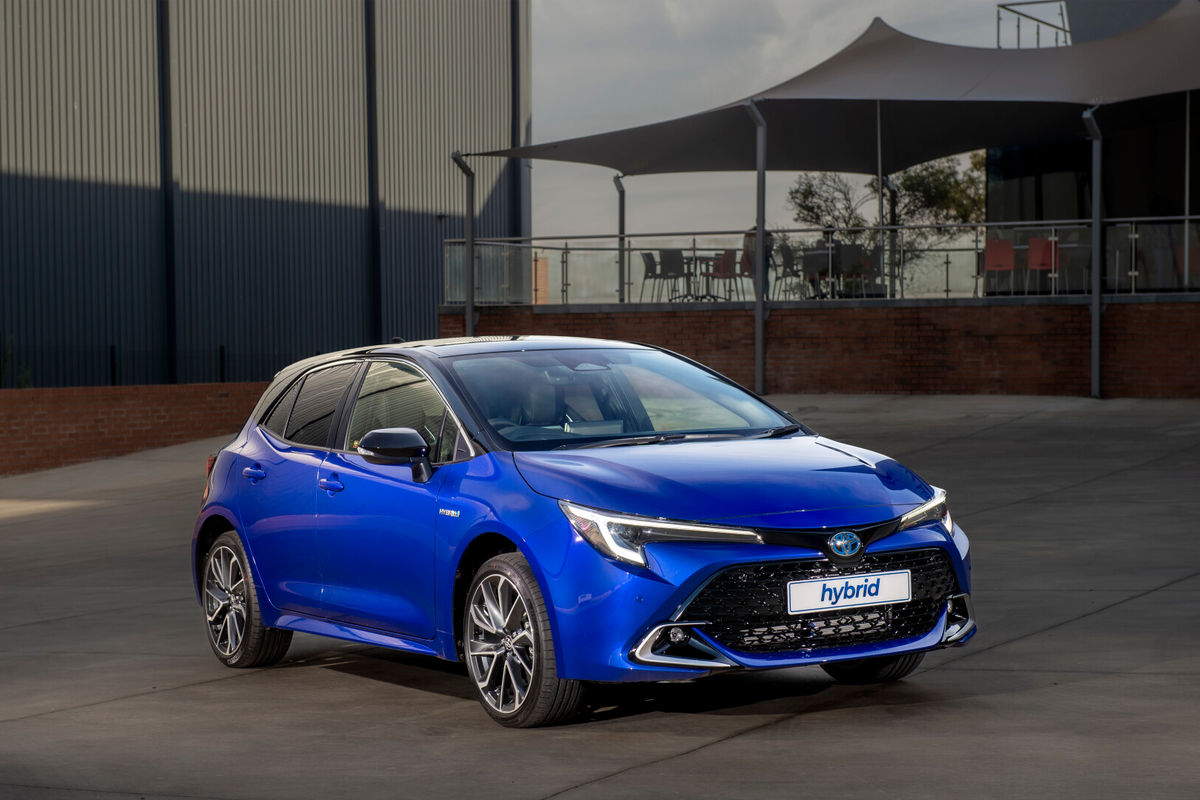
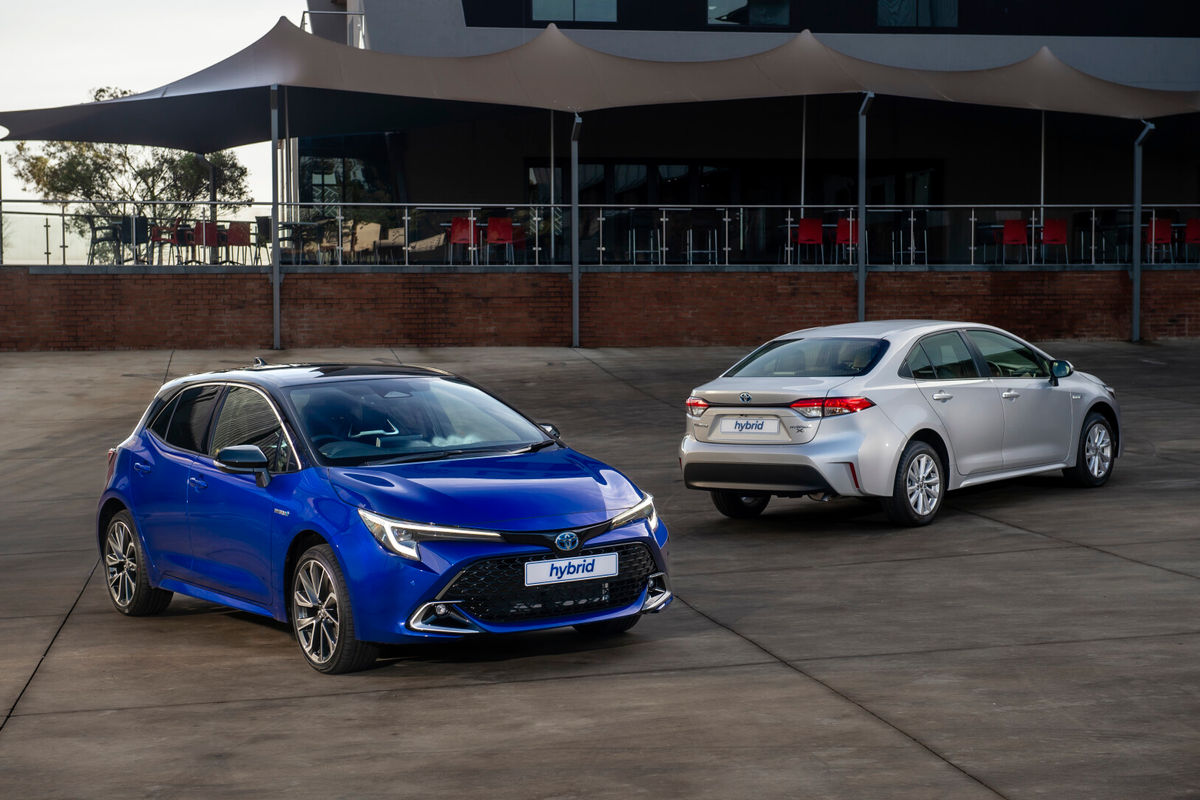
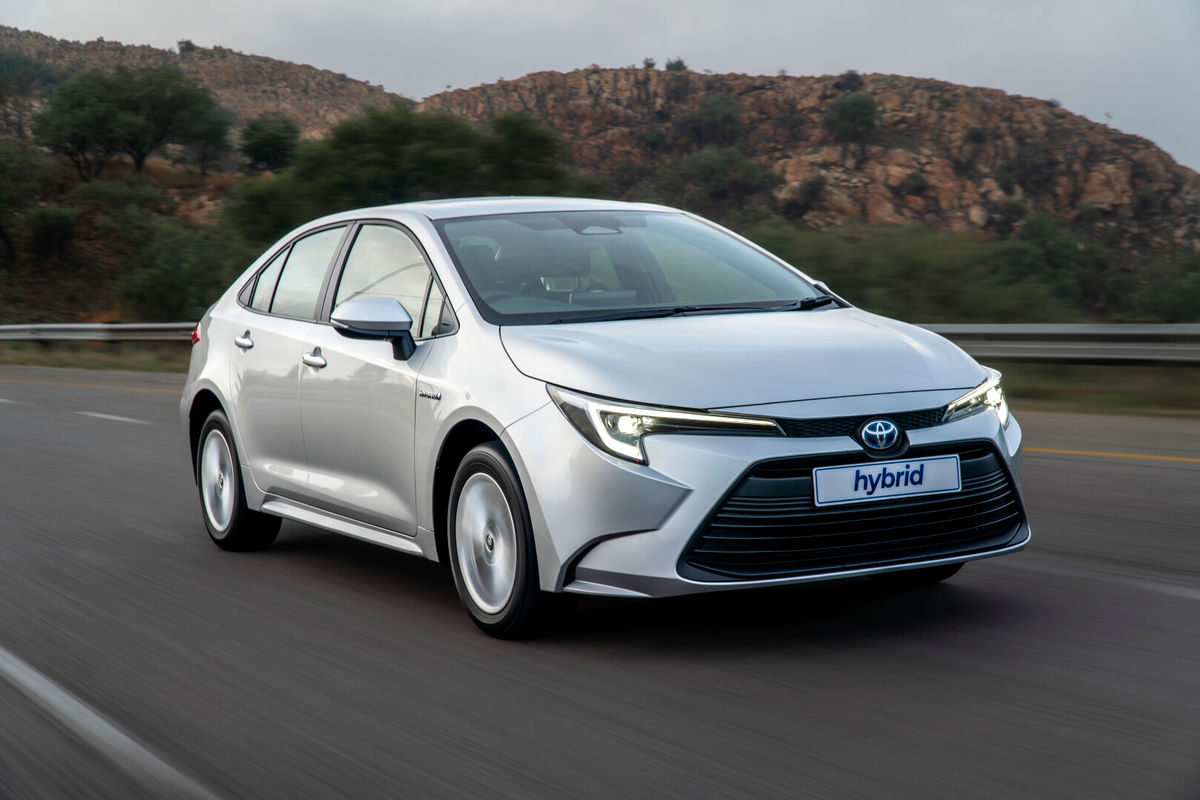
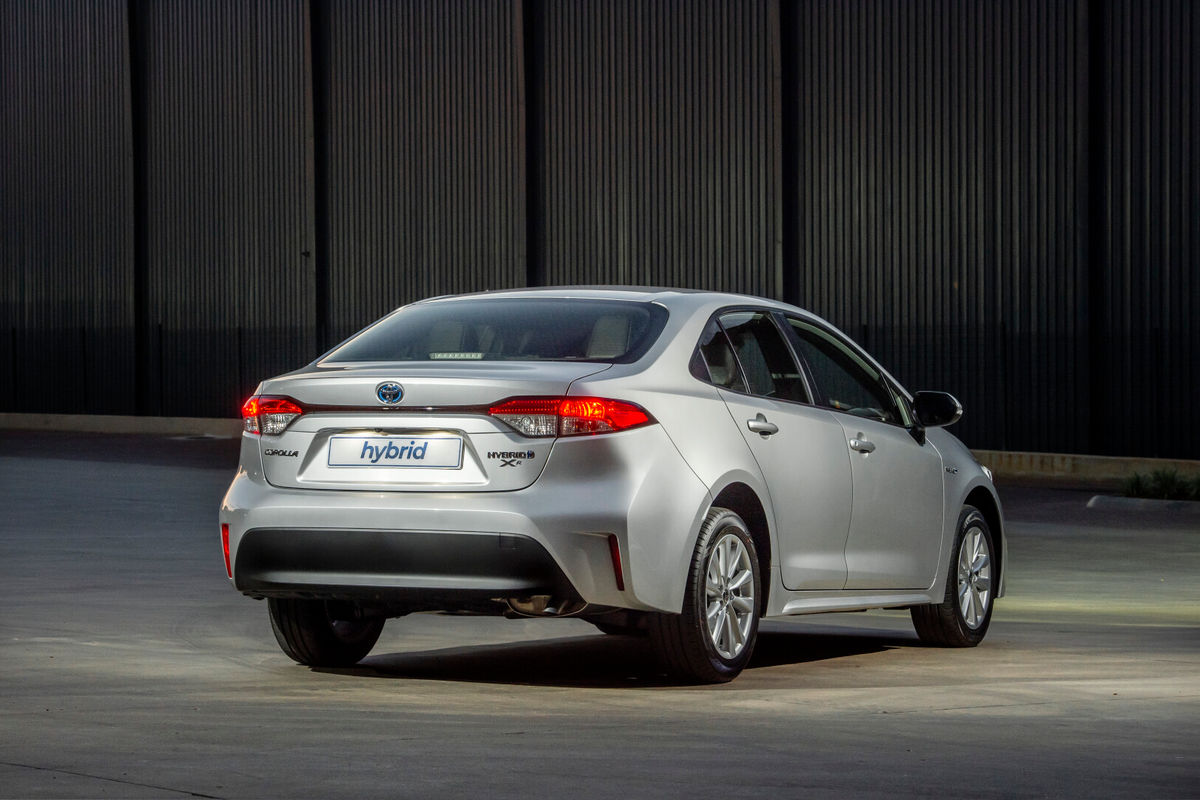
Toyota has introduced its updated Corolla hatchback and sedan range in South Africa and the Japanese firm has also expanded its New Energy Vehicle (NEV) offering to include the Corolla Hybrid Hatchback which is now available to customers in Mzansi. Gero Lilleike attended the local launch in Gauteng to bring you this report…
If you’ve had the displeasure of visiting your nearest fuel station, you’ll be very well aware that recent and dramatic spikes in fuel prices have had an adverse impact on household budgets and the South African economy. Many consumers are looking to buy more fuel-efficient cars and while Electric Vehicles (EVs) are still, for the most part, prohibitively expensive in South Africa, many buyers are turning to hybrid technology in an effort to reduce fuel consumption and overall running costs.
Demand for hybrids (and EVs) has increased substantially in the last 24 months and current projections indicate that demand will continue to rise sharply in 2023 and beyond. Toyota’s hybrid technology is well established and the Japanese giant is placing increasing emphasis on New Energy Vehicles (NEVs) in an effort to capitalise on this increasing demand.
The locally-assembled Toyota Corolla Cross Hybrid has been well-received by local buyers and together with the Corolla Hybrid sedan, accounts for 83% of the firm’s local hybrid / NEV sales while the RAV4 Hybrid is also gaining traction in the local market. In fact, Toyota is currently testing the suitability of the RAV4 Plug-In Hybrid for the South African market and we briefly experienced this powerful PHEV on launch.
Now though, with the revised Corolla hatchback and sedan available in South Africa, Toyota is increasing its local NEV footprint with the introduction of the Corolla Hybrid hatchback which employs the firm’s 5-generation 1.8-litre petrol-electric powertrain.
Before we dive into the merits of the Corolla Hybrid hatchback, let’s quickly run through some of the key changes to the Corolla range.
How has the Corolla range changed?
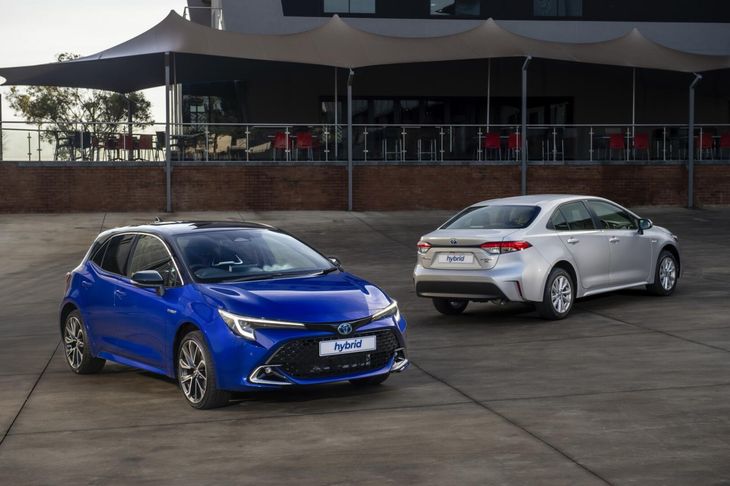
Toyota is increasing its New Energy Vehicle (NEV) footprint in South Africa.
Apart from updated styling for both the Corolla hatchback and sedan, the biggest change to the range is the worldwide discontinuation of the turbocharged Corolla 1.2T derivatives. For the Corolla sedan range, the entry-level Corolla 1.8 XS derivative has also been discontinued locally.
As such, the Corolla hatchback range now comprises 3 hybrid derivatives (XS, XR, XR with bi-tone styling) and two naturally-aspirated Corolla 2.0 derivatives (XS and XR bi-tone).
Meanwhile, the Corolla sedan range has been rationalised to include 2 hybrid derivatives (XS and XR bi-tone) as well as a naturally-aspirated Corolla 2.0 XR derivative. Lastly, all Corollas are now offered exclusively with a Continuously Variable Transmission (CVT) as the previous manual transmission has also been discontinued across the board.
What about changes to the Corolla’s interior?
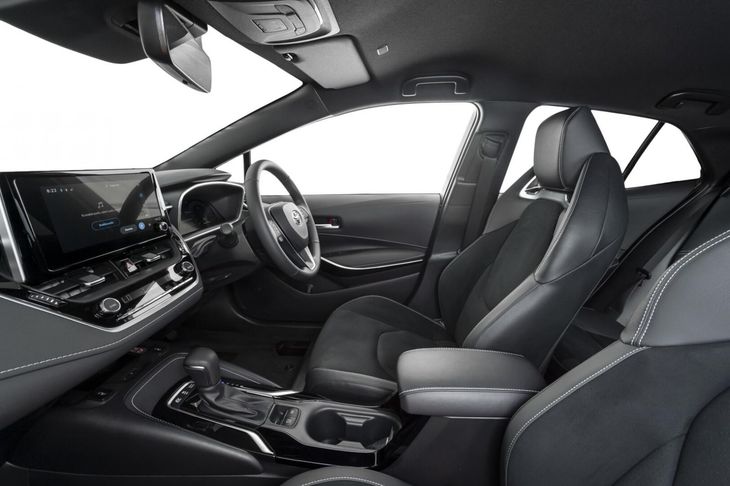
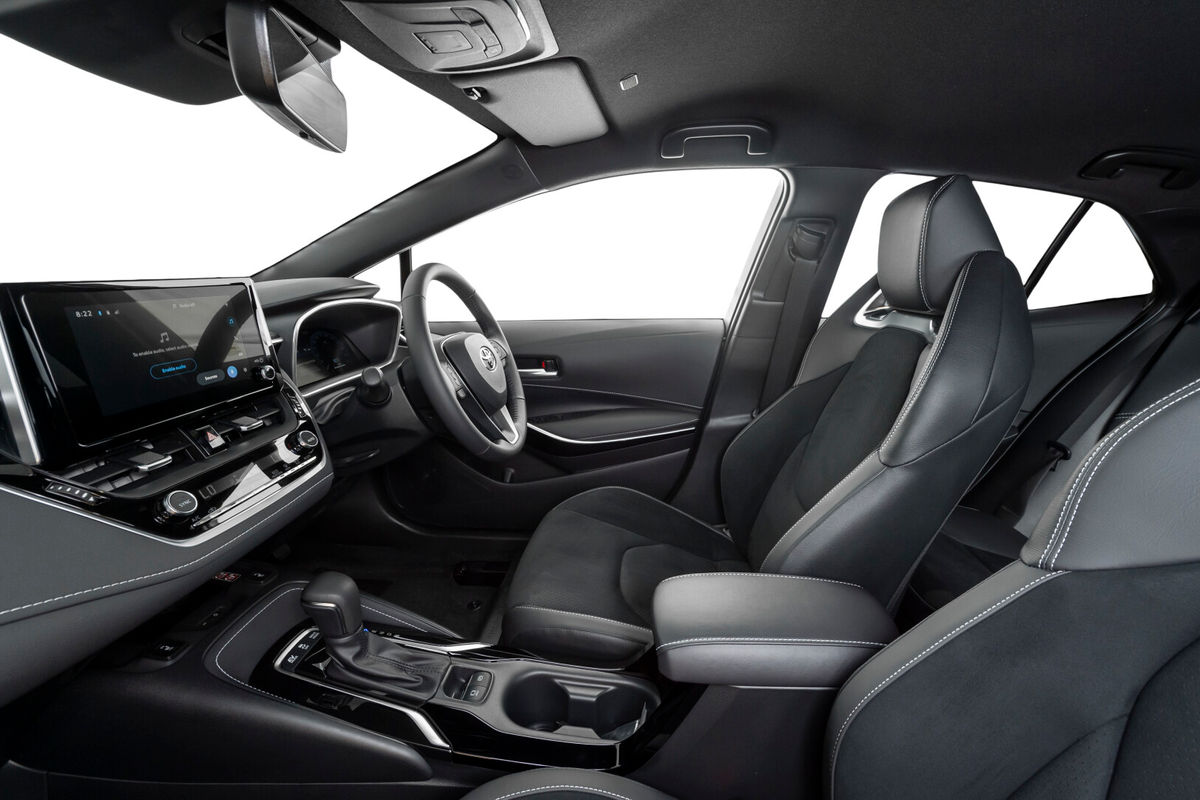
The Corolla hatch and sedan benefit from numerous interior equipment upgrades.
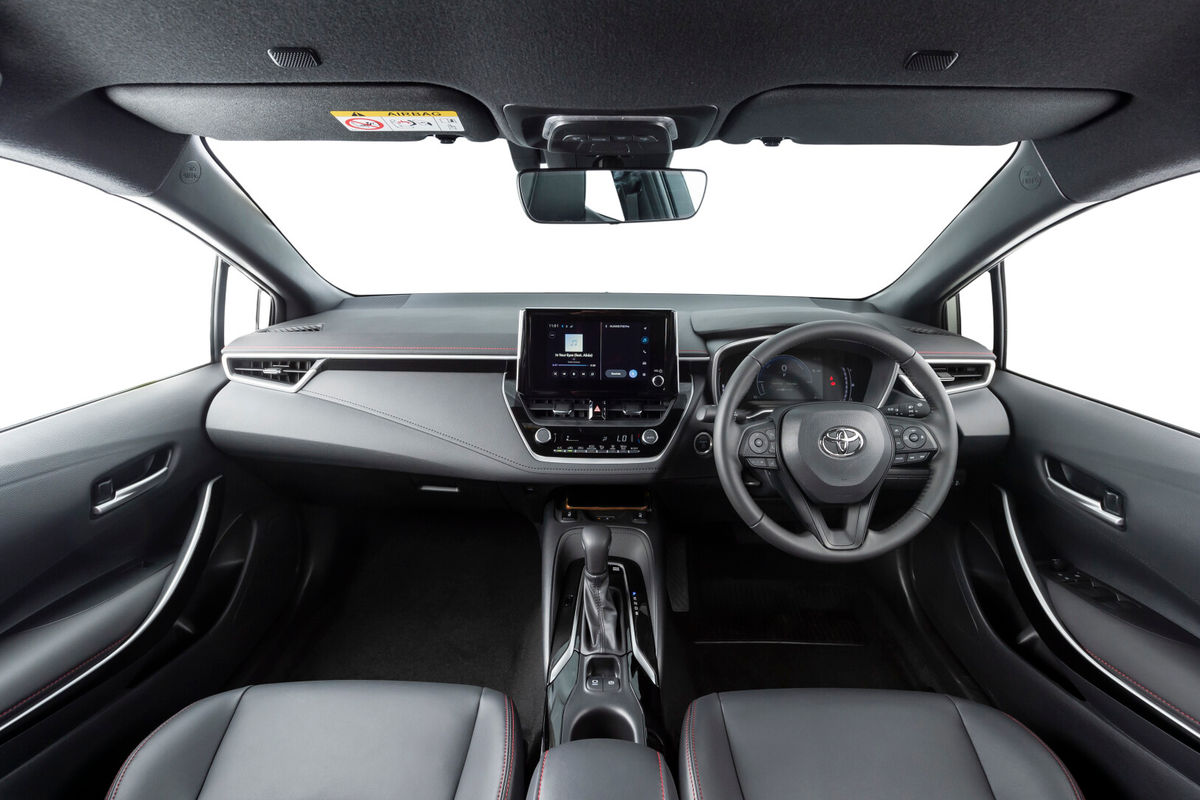
The updates inside the Corolla hatchback and sedan are fairly substantial. For starters and in addition to the standard black trim, Corolla hatchback buyers can now opt for a sportier red-black combination while the Corolla sedan can be had with new red inserts (previously blue).
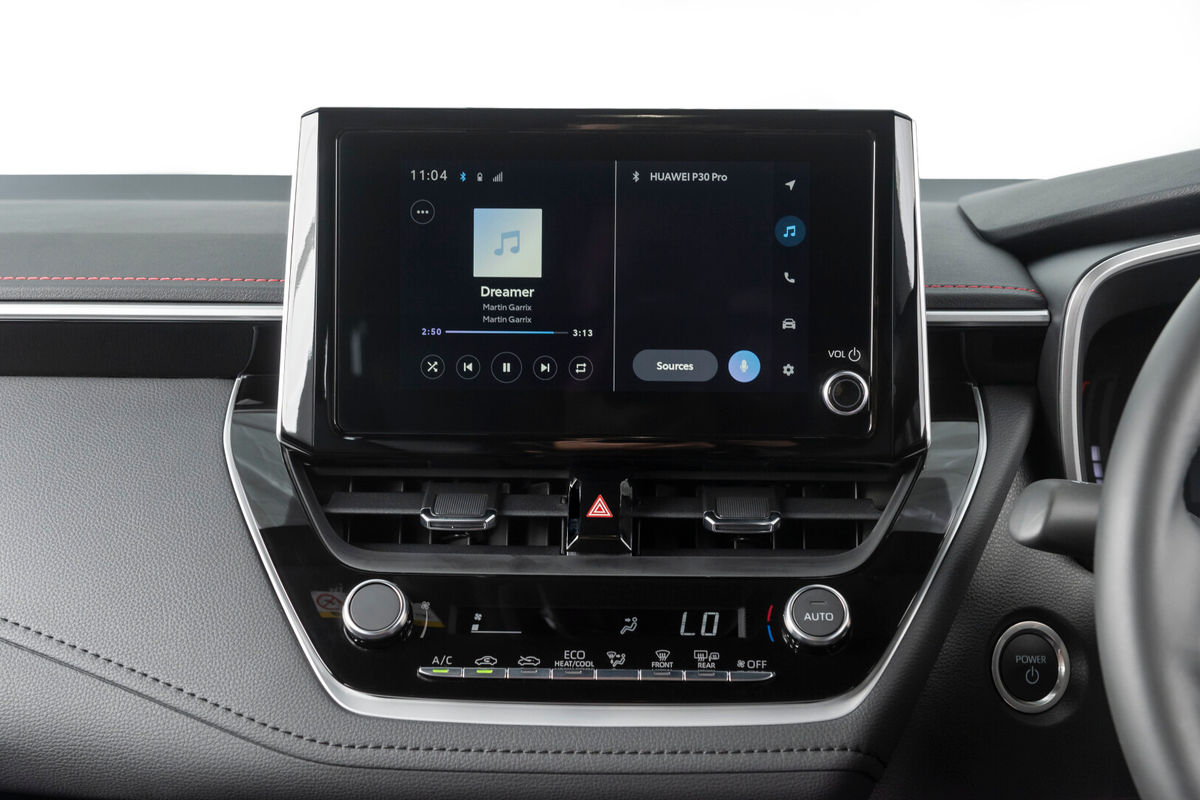
Perhaps more significant is the revised 8-inch infotainment system with soft-touch functionality, 3 new display modes, voice recognition, integrated navigation and wireless Apple CarPlay and Android Auto.
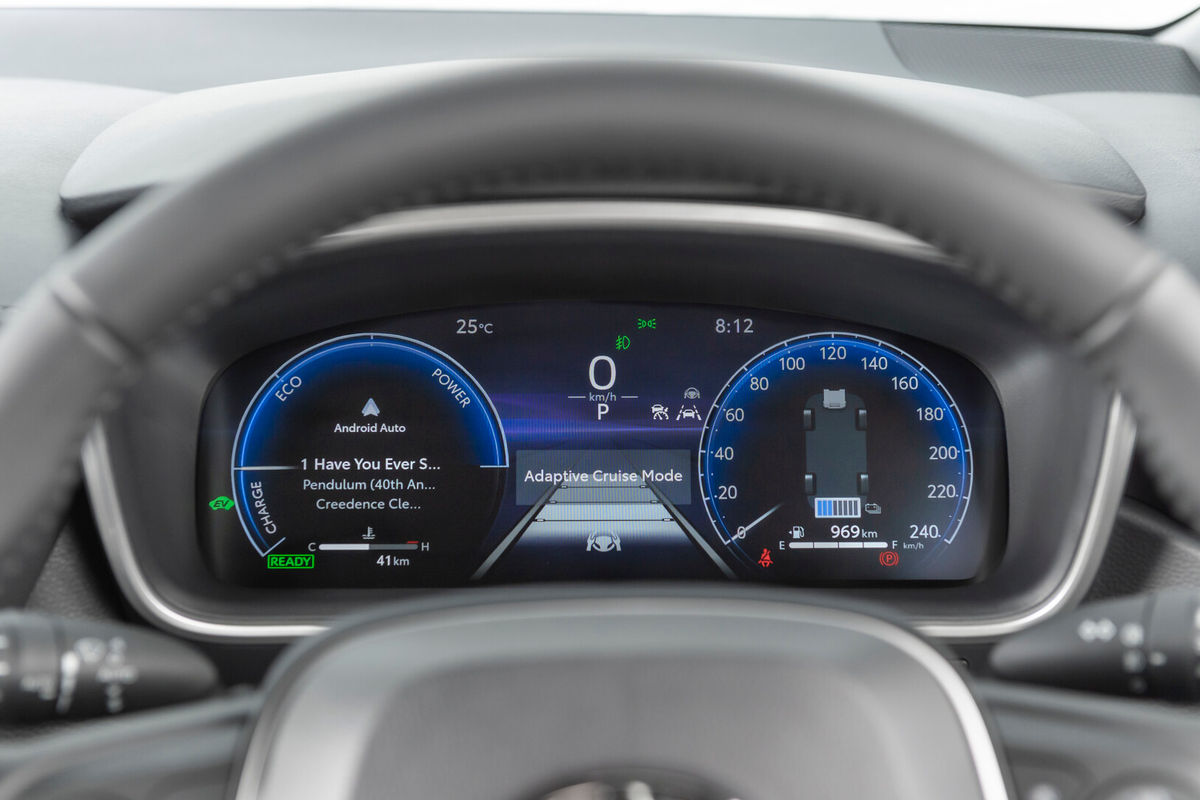
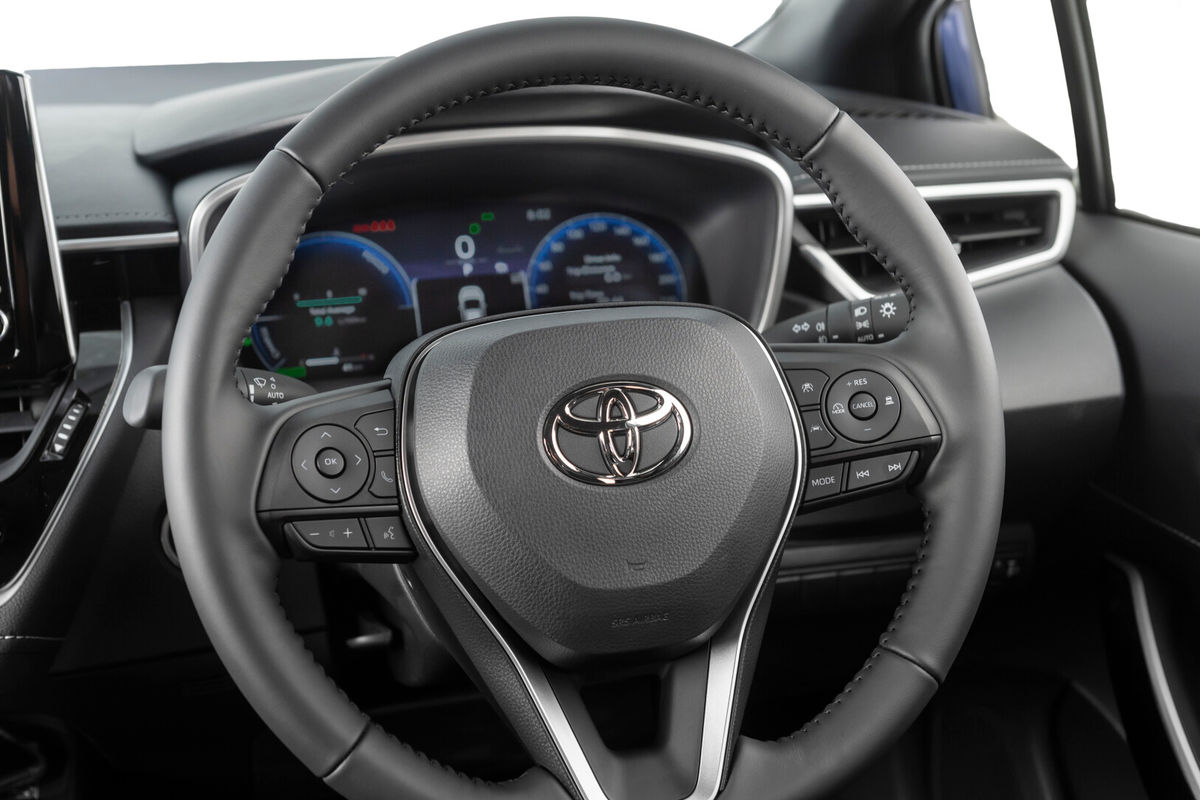
More so, the updated Corolla hatchback and sedan now also features a larger 7.0-inch combination instrument cluster with a central multi-information display (XS grade) while the range-topping Corolla XR hatch gains a 12.3-inch digital instrument cluster.
Convenience has also been boosted with the fitment of a high-speed wireless smartphone charger as well as 2 additional USB-C ports for rear passengers.
In terms of safety, the updated Corolla is equipped with the latest Toyota Safety Sense (TSS) 3.0 driver assistance suite which now benefits from enhanced radars with better detection capability as well as improved cameras with higher resolution and a wider field of view. Other new features include Intelligent Clearance Sonar (ICS) which makes manoeuvring in tight parking spaces safer by automatically applying the brakes if an imminent collision is detected. The Blind Spot Monitoring (BSM) is now aslo complemented with a Safe Exit Assist feature that detects approaching cyclists or vehicles when a passenger is opening a door.
Take a look at more specification details for the updated Toyota Corolla range here
What engines are offered for the Toyota Corolla?
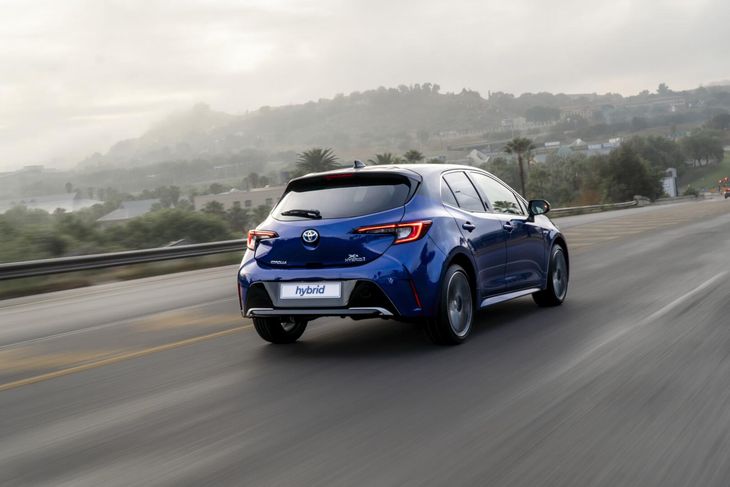
Hybrid derivatives now dominate the local Corolla offering.
The only ICE offering is the naturally-aspirated 2.0-litre petrol engine but it now offers 1 kW and 3 Nm more with outputs peaking at 126 kW and 203 Nm and with a claimed fuel consumption of 6 L/100km.
The new-generation Corolla Hybrid with its Atkinson-Cycle 1.8-litre petrol engine combines with an electric motor to offer a 14% bump in power from the previous 90 kW to 103 kW and with 142 Nm of torque on offer. The hybrid system is also supported by a lighter, newly-developed 18.1 kW lithium-ion battery. As mentioned previously, all derivatives are mated with a CVT. Toyota claims 3.5 L/100km for the Corolla Hybrid hatchback and 3.9 L/100km for the Corolla Hybrid sedan.
How does the Corolla Hybrid hatchback perform on the road?
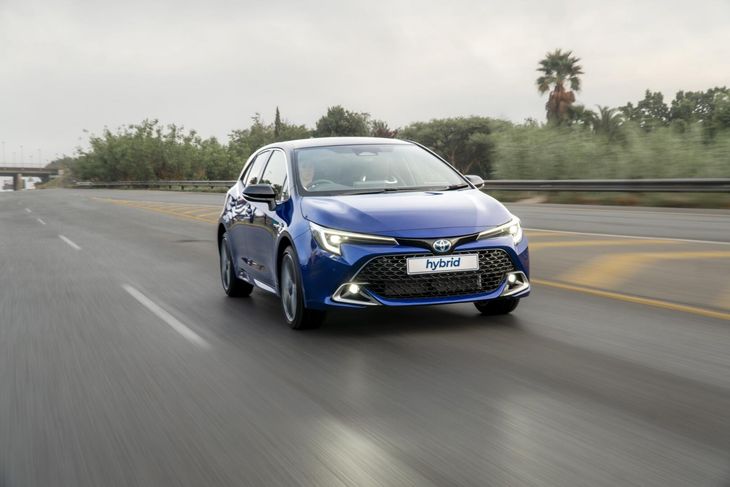
The Corolla Hybrid hatchback now offers more power and enhanced battery efficiency.
Toyota made both the Corolla Hybrid hatchback and sedan available for driving in the suburbs of Johannesburg. Even though the launch route wasn’t more than 40km in length, we still got a small but sweet taste of what the latest Corolla Hybrids offer.
Upon entering the Corolla Hybrid hatchback, it’s hard not to be impressed by the comfortable, cosseting seats as well as the premium-looking cabin design. At low speeds, such as when navigating a parking basement, driving is done in EV mode and only when throttle input and speed increase, does the 1.8-litre petrol engine kick in to deliver propulsion. Under a firmer right foot, acceleration is both smooth and progressive. The Corolla hatchback rides on Toyota’s TGNA platform and from a handling perspective, it certainly feels dextrous and agile on its rubber.
As highlighted in our previous review of the Toyota Corolla hatchback, ride quality is good overall with a comfortable disposition but the suspension is sprung slightly on the firmer side of the spectrum. This gives the Corolla hatchback a sportier feel, but larger road imperfections or potholes which are prevalent in Jozi’s suburbia can be quite jarring but nonetheless, the Corolla still manages to strike a good balance between sportiness and comfort.
It’s worth mentioning that as a self-charging hybrid, the Corolla is able to recoup energy while coasting and braking which tops up the battery which can then be re-used when cruising around in EV mode. If you consider that low-speed driving is very common in an urban setting, you’re likely to save a substantial amount of fuel in low-speed situations over the lifespan of the vehicle.
As far as overall driving efficiency is concerned, our short drive in the suburbs returned a figure of 5.5 L/100km and we’re fairly confident that with some highway driving in the mix, a figure of around 5 L/100km is not impossible to achieve.
Is a Corolla Hybrid worthwhile?
We are hoping to spend more time with the new Corolla Hybrid hatchback in the near future and only then will we be able to make a clear-cut verdict on whether it’s worth considering as an alternative to a conventional ICE-powered vehicle.
Even so, it’s evident that you can claw back fuel costs by opting for a Corolla Hybrid but the gains will only be fully realised if you own the vehicle for a longer period of time. It’s also worth noting that hybrid vehicles are generally more expensive to purchase than conventional ICE vehicles.
Below is a basic fuel consumption versus cost comparison between the Toyota Corolla Hybrid hatchback and the similarly-priced Volkswagen Polo 85kW 1.0TSI R-Line. Note that the calculations are based on projected real-world fuel consumption figures and not the manufacturer’s claimed consumption figures.
Also, note that the table below is by no means definitive but rather serves to illustrate and demonstrate basic fuel consumption versus cost over a period of time at current fuel prices. Obviously, future fuel prices are likely to be much higher. The table also doesn’t account for the Corolla Hybrid’s fuel-saving over time when driven in EV mode in low-speed situations.
Based on the table below and at current fuel prices, it will take roughly 5 years of ownership of the base Toyota Corolla Hybrid to reclaim the price difference between the Volkswagen Polo 1.0TSI R-Line.
Some food for thought…
Vehicle Price and Fuel Consumption
| Toyota Corolla Hybrid hatchback 1.8 Xs | Volkswagen Polo 1.0TSI R-Line | Difference | |
| Price (November 2022) | R490 300 | R445 500 | R44 800 |
| Claimed Fuel Consumption | 3.5 L/100km | 5.4 L/100km | 1.9 L/100km |
| Projected real-world consumption | 5.5 L/100km | 7.5 L/100m | 2.0 L/100km |
Projected fuel costs and savings over time
| Toyota Corolla Hybrid hatchback 1.8 Xs | Volkswagen Polo 1.0TSI R-Line | Difference | |||
| Ownership period | Distance | Cost (@ R22.87 p/l) | Distance | Cost (@ R22.87 p/l) | |
| 0.5 year | 10 000 km | 550 litres @ R12 579 | 10 000 km | 750 litres @ R17 153 | R4 574 |
| 1 year | 20 000 km | 1 100 litres @ R25 158 | 20 000 km | 1 500 litres @ R34 306 | R9 148 |
| 2.5 years | 50 000 km | 2 750 litres @ R62 893 | 50 000 km | 3 750 litres @ R85 763 | R22 869 |
| 5 years | 100 000 km | 5 500 litres @ R125 785 | 100 000km | 7 500 litres @ R171 525 | R45 740 |
How much does the Toyota Corolla hatchback and sedan cost in South Africa?
Corolla Hatch
Corolla Hatch 1.8 Xs Hybrid – R490 900
Corolla Hatch 1.8 Xr Hybrid – R528 400
Corolla Hatch 1.8 Xr Hybrid Bi-tone – R538 800
Corolla Hatch 2.0 Xr CVT – R517 100
Corolla Hatch 2.0 Xr CVT Bi-tone – R529 000
Corolla Sedan
Corolla 1.8 Xs Hybrid – R 502 600
Corolla 1.8 Xr Hybrid – R 521 800
Corolla 2.0 Xr CVT – R 517 100
The Toyota Corolla is sold with a 6-services/90 000 km service plan (intervals set at 15 000 km). Petrol models carry a 3-year/100 000km warranty, while hybrid models hold an 8-year/195 000 km warranty plan.
Buy a Toyota Corolla on Cars.co.za