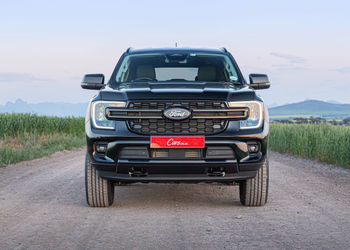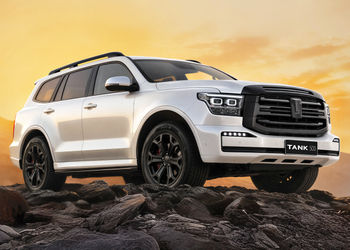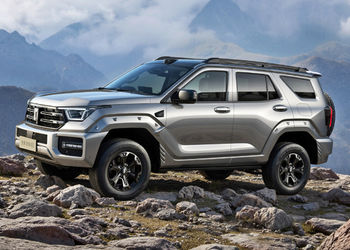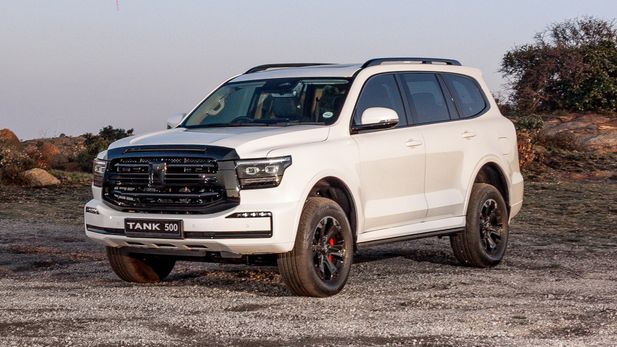
With the Tank 500 diesel, GWM engineers have created a real rival to the legendary Toyota Land Cruiser Prado and the powerful Ford Everest V6 diesel. But what are the numbers and technical features you really need to know about when comparing these three luxury SUVs with real all-terrain ability?
GWM’s Tank sub-brand has proved that Chinese automakers can build body-on-frame SUVs capable of challenging established heavyweights like the Toyota Land Cruiser Prado and the Ford Everest. Yet, while the Tank 300 has been a great brand builder for the brand, the larger GWM Tank 500 has struggled locally. The Chinese brand’s flagship SUV features a luxurious cabin, generous interior space and competitive off-road driving geometry, but it lacked a diesel engine. When you are competing in a segment dominated by the Prado and Everest, diesel powertrains matter.
Since its introduction in late 2024, the Tank 500 has been available only with a 2.0-litre turbopetrol HEV powertrain. Because it is a traditional hybrid rather than a plug-in, efficiency gains are modest. Combined with a heavy kerb weight, the Tank 500 HEV’s real-world fuel consumption proved too steep for many South African luxury 4×4 buyers.
For local Tank fans, the puzzle was why GWM did not initially share the P500 double-cab bakkie’s 2.4-litre turbodiesel engine with the Tank 500. That oversight is now rectified, with the Tank 500 finally receiving the powertrain it always needed: a high-output four-cylinder 3.0-litre turbodiesel.
Torque talk: Size matters under the bonnet
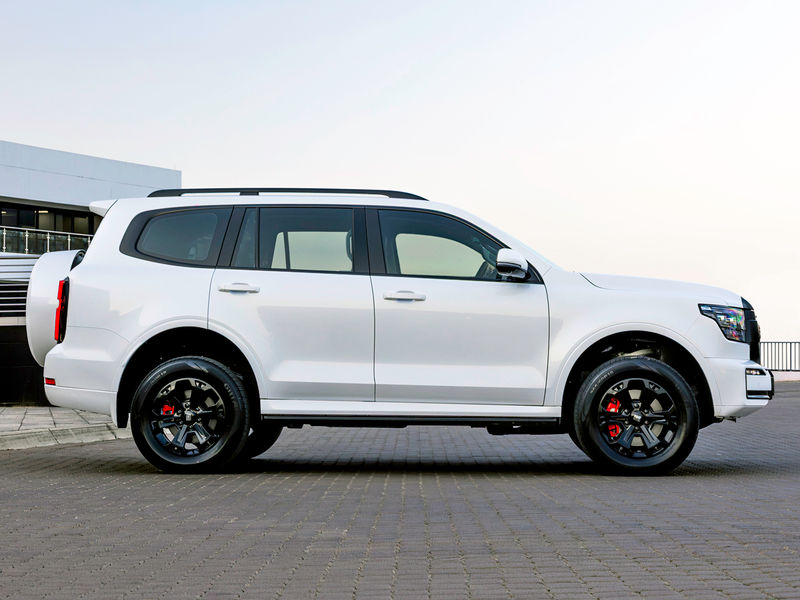
GWM’s new ‘big four’ turbodiesel adds significant pulling power to the Tank 500.
Driven by strong demand for oil-burners across Australia and African markets, GWM developed this new 3.0-litre turbodiesel engine to answer the call for robust low-end grunt.
Rated at 170 kW and 620 Nm, the Tank 500 diesel matches the working torque required for heavy-duty applications, providing a smooth delivery through a nine-speed automatic transmission. With plenty of gearing flexibility, the transmission optimises available torque and delivers responsive throttle input, particularly when towing or travelling with the Tank 500 fully loaded.
Pure diesel, no extra liquid hassles
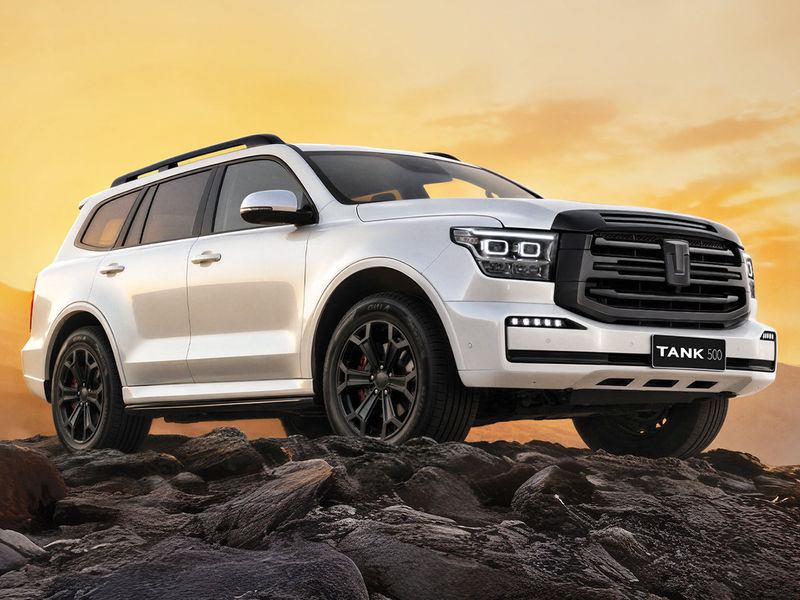
GWM’s diesel engine offers the simple, uncompromised remote-area usability that traditional SUV buyers demand.
Unlike some modern diesels that rely on selective catalytic reduction requiring AdBlue additives, GWM’s engineers brought this power unit to market without needing an AdBlue tank – a trait shared by the Prado diesel, whereas the Everest V6 requires the additive.
For remote-area overland travellers, skipping AdBlue means one less fluid to monitor on extended journeys across Southern Africa, where specialised exhaust fluid availability in small rural towns cannot always be guaranteed.
GWM’s 3.0-litre turbodiesel operates with a high-pressure common-rail injection system, meaning it performs best on clean 50 ppm (or lower) diesel. While ultra-low-sulphur fuel is widely distributed along main transport corridors, planning fuel stops remains an essential step when exploring deeply isolated routes.
Mass vs grunt: Reading beyond the GWM Tank 500 spec sheet
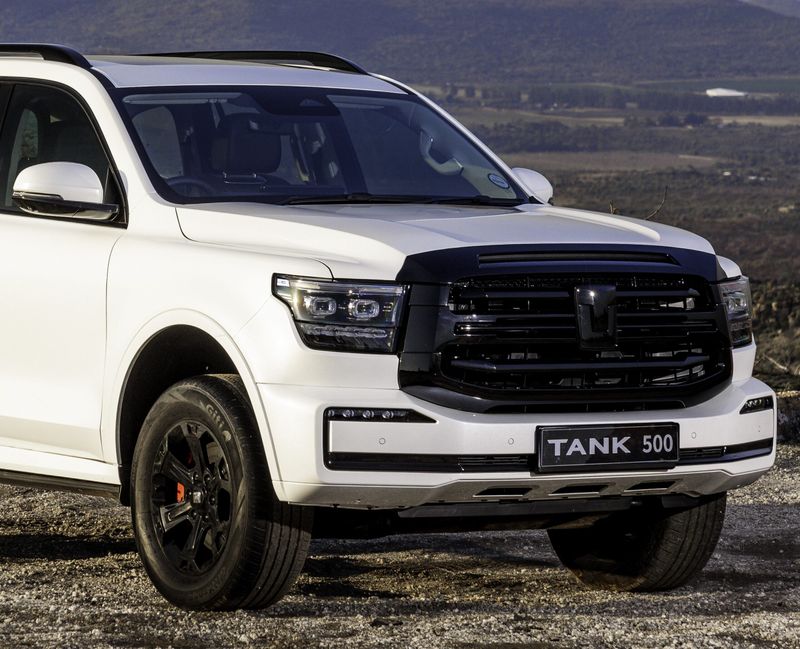
Like all true body-on-frame SUVs with three-row seating, the Tank 500 is substantial (it measures a considerable 5 078 mm long, 1 934 mm wide and 1 905 mm tall).
Body-on-frame luxury SUVs carry significant mass by design, built to withstand years of harsh off-road use and thousands of kilometres across heavily corrugated gravel roads.
The heavy ladder-frame chassis underpinning the Tank 500, Everest and Prado give all three vehicles serious durability, but that weight demands substantial power to maintain swift highway cruising and confident overtaking acceleration. Consequently, power-to-weight ratios offer the clearest picture of real-world performance.
With kerb weights hovering between 2 500 kg and 2 600 kg depending on trim, the Tank 500 diesel is a heavy vehicle, but the engine appears up to the task.
Long-distance range: The GWM Tank 500 has the ultimate overland edge
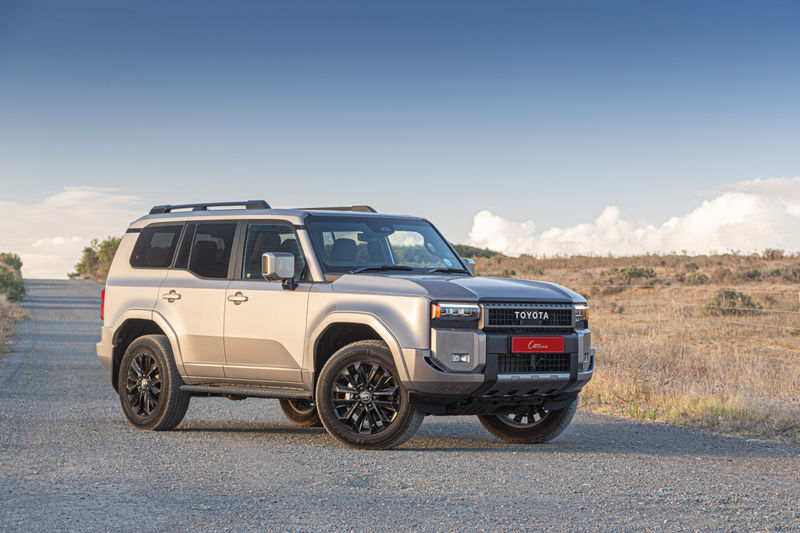
By far the most compelling addition to the line-up is the 4×4 Overland derivative tailored for remote exploration – giving South African buyers an alternative built specifically for long-haul wilderness routes.
Outfitted with factory-fitted all-terrain tyres and standard underbody protection, this derivative addresses one of the primary criticisms levelled against many modern luxury 4x4s: cruising range.
Where long-distance travellers often express frustration over reduced fuel tank sizes in modern competitors, the Tank 500 Overland offers an impressive total fuel capacity of 131 litres (78 litres on other models), delivering a distinct real-world range advantage. For South African drivers planning cross-border expeditions through isolated stretches of Namibia or Botswana, that extended range provides invaluable peace of mind.
Lance Branquinho

Lance Branquinho is a Namibian-born writer and photographer who has won numerous motoring journalism awards. He once smuggled parts to South America, in a minor contribution to help Giniel de Villiers finish on the podium at the Dakar. He fears for the eventual collapse of the air-cooled Porsche 911 market – and keenly awaits, in vain, the return of the brand's 928.