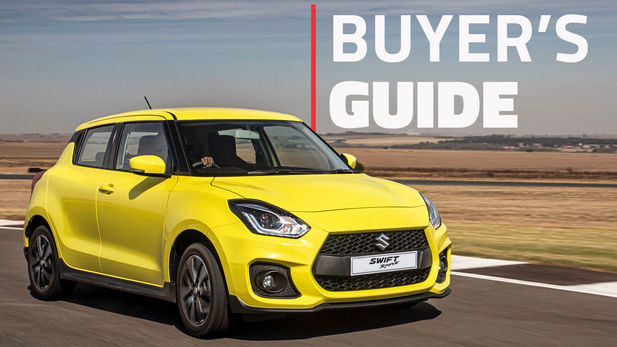
The Suzuki Swift Sport has quietly exited the local market. So, is the Japanese brand’s 3rd take on a warmed-up Swift hatchback worth considering as a used buy? Let’s find out…
The 3rd incarnation of the Suzuki Swift Sport represented a fundamental departure from the “warm hatch” recipe that effectively defined its cult-classic forebears – well, in the powertrain department, anyway.
Yes, the ZC33S-series Swift Sport traded a rev-happy naturally aspirated 1.6-litre engine for a considerably torquier turbocharged motor that displaced 1.4 litres. In some ways, that dialled out some of the Sport-badged Swift’s trademark feistiness, although it also made this model palpably less compromised as a daily.
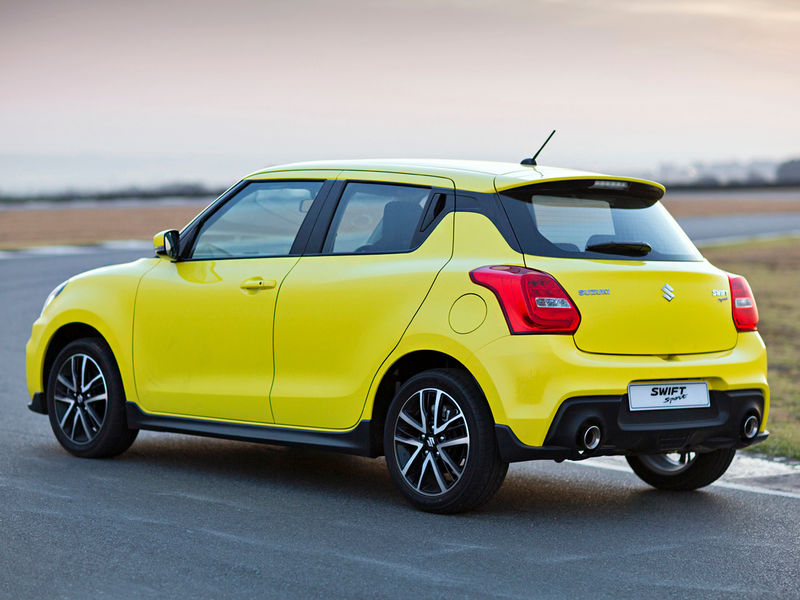
Interestingly, European markets switched to a tweaked version of the Swift Sport in mid-2020, with that iteration featuring 48-volt mild hybrid technology (in a bid to meet tightening emissions targets on the Old Continent, which also meant less power and more weight). Mzansi, meanwhile, stuck with the original non-electrified powerplant.
Note that, while the ZC33S was based on the A2L-series hatchback, it was sourced from Japan rather than built in India (the country from which Suzuki Auto South Africa imports most of its wares). The Hamamatsu-based brand has yet to confirm a new Swift Sport based on the current AOL-series hatchback, but rumours out of Japan suggest such a model might indeed be on the cards…
Suzuki Swift Sport model line-up in South Africa
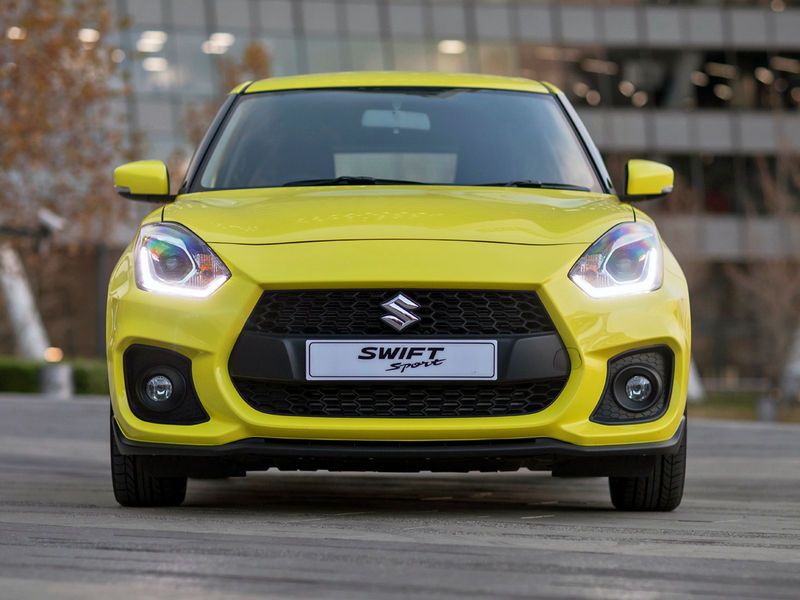
Suzuki whipped the wraps off the 3rd-gen Swift Sport at the 67th IAA Frankfurt Motor Show in September 2017. The flagship version of the Swift finally arrived in South Africa late in July 2019, offered with a choice of 6-speed transmissions: a manual gearbox and – for the first time in SA – an automatic of the torque-converter variety (featuring paddle shifters).
- Swift Sport 1.4T 6MT (103 kW/230 Nm)
- Swift Sport 1.4T 6AT (103 kW/230 Nm)
While the 5-door ZC33S was on the local market for some 7 years, very few changes – if any at all – were implemented. In fact, while the standard Swift was facelifted, the Sport did not benefit from an official mid-cycle update. Indeed, it even soldiered on unchanged when the AOL-series Swift launched locally in September 2024.
However, in December 2024, Suzuki announced a special “ZC33S Final Edition” derivative for the Japanese domestic market, effectively confirming that the end of production was indeed on the horizon. From what we can tell, the last Swift Sport rolled off the line at Suzuki’s Sagara Plant in Makinohara late in 2025, with local stock running dry at some point towards the middle of 2026.
What are the ZC33S-series Swift Sport’s strengths?
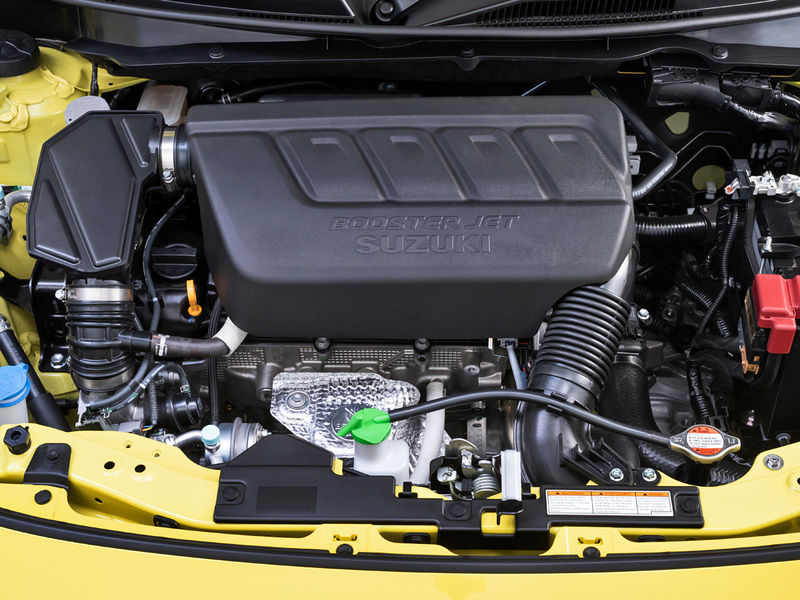
Plenty of useable torque: The switch from natural aspiration to forced induction fundamentally altered the front-wheel-drive Swift Sport’s character. In short, the resulting increase in torque lent this warm hatch markedly improved in-gear responsiveness and new-found tractability. Compared to its forebears, that meant gearing down was far less frequently required.
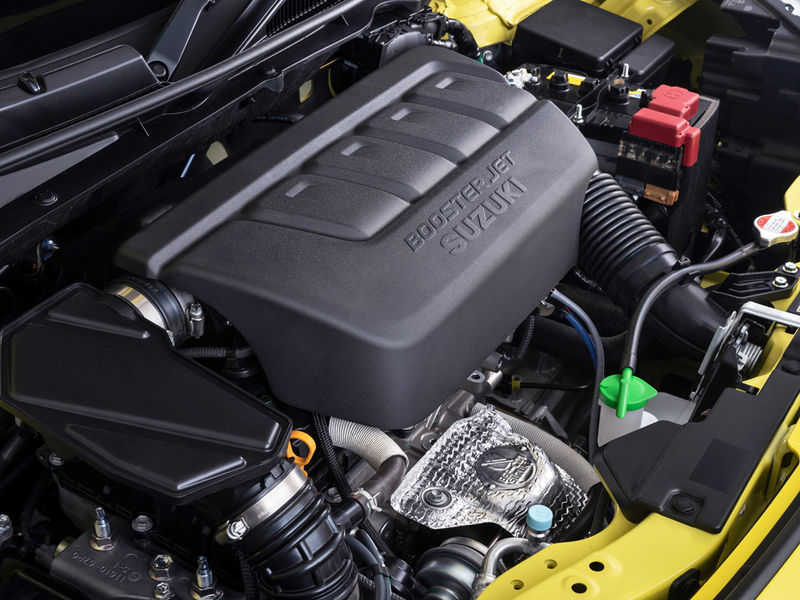
While the 103 kW turbocharged 1.4-litre direct-injection “BoosterJet” petrol engine delivered a mere 3 kW more than its normally aspirated 1.6-litre predecessor, peak twisting force climbed a considerable 70 units to 230 Nm. This maximum torque figure was available from 2 500 to 3 500 rpm.
For the record, a version of this K14C motor was also available in South Africa in the Hungarian-built LY-generation Vitara, although in that model it generated 10 Nm fewer. Our research suggests there are few widespread reliability issues with this engine, but early Swift Sport units (from the first few model years) have been known to suffer cracked cylinder heads.
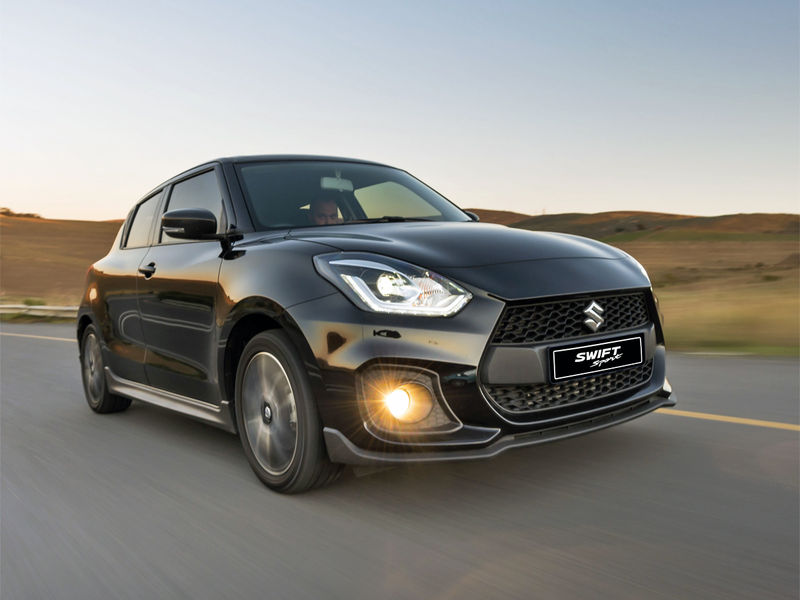
Low kerb weight: Despite the automotive industry’s trend towards generation-on-generation weight gains, the ZC33S-series Swift Sport was some 90 kg lighter than its predecessor. In fact, it tipped the scales at under a tonne, with Suzuki claiming a kerb weight of 970 kg for the manual version and 995 kg for the automatic-equipped derivative.
Of course, that meant the Swift Sport felt decidedly nippier than its fairly modest – by modern standards, anyway – peak outputs might have suggested. The benefits extended further than power-to-weight-ratio gains, with the Hamamatsu-based brand’s local division claiming a fuel-economy figure of just 6.1 L/100 km (regardless of the chosen transmission).
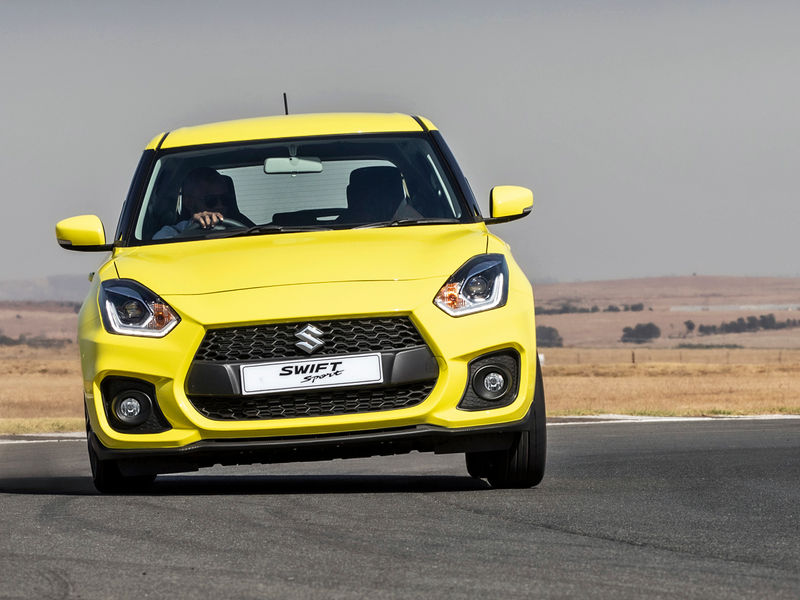
Well-sorted suspension: Suzuki partnered with Monroe to develop shock absorbers specifically for the Swift Sport, saying these items were “tuned for minimal body roll and progressive understeer in fast corners”. It’s a claim our experiences suggest was largely on the money. At the same time, the ride was firm without being crashy.
Compared to its predecessor, the ZC33S-series Swift Sport also gained thicker anti-roll bars as well as an integrated single-unit solution for the wheel hub and bearings, plus increased spring and damper rates on the front axle. Complemented by increased chassis rigidity, this bespoke suspension setup resulted in decidedly surefooted handling.
What are the ZC33S-series Swift Sport’s weaknesses?
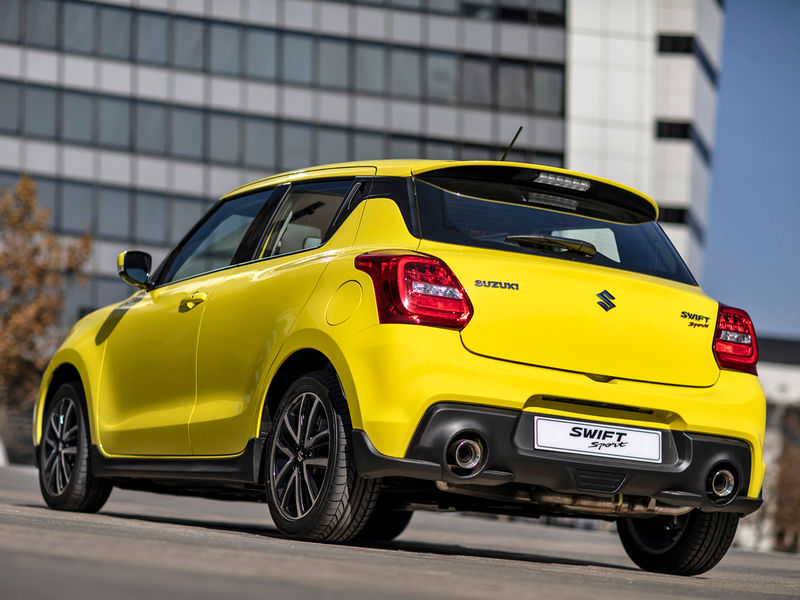
Lack of aural drama: Despite sporting a pair of tailpipes (one integrated into each side of its faux-diffuser), the Swift Sport offered very little in the way of aural theatre. Suzuki claimed the exhaust system was “acoustically engineered for a deeper sound at low engine speeds”, yet in reality it unfortunately didn’t offer a very distinctive sound at all (in standard trim, anyway).
Outgunned in a straight line: Sure, you could argue that it would be missing the point to mark down the 3rd-gen Swift Sport – the quickest iteration yet – for a lack of raw straight-line speed. But there was no escaping the fact that, in the customary traffic-light duel, the little hatchback was susceptible to any number of mildly powerful family crossovers, never mind full-fat hot hatches.
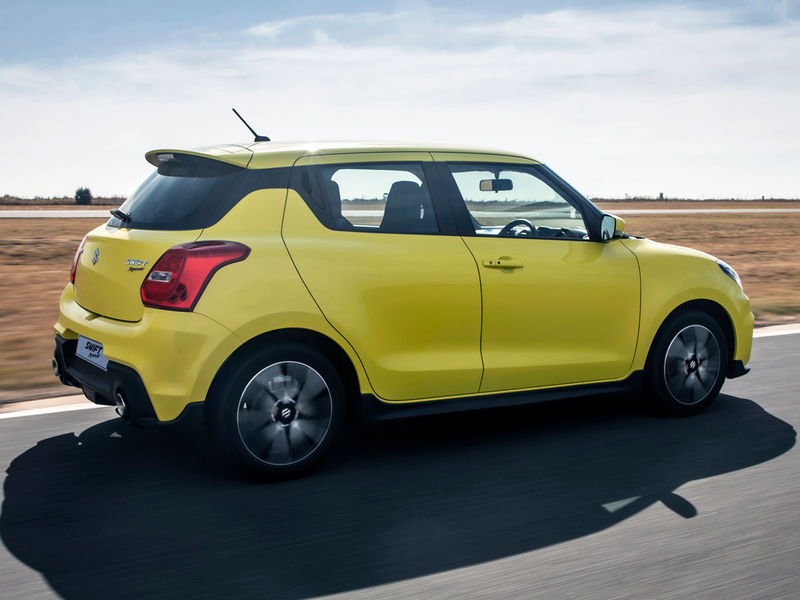
For the record, Suzuki listed a 0-100 kph time of 8.0 seconds (for both the manual and auto derivatives), along with a maximum speed of 205 kph. Of course, while the Swift Sport wasn’t winning many Top Trumps battles, it quickly came into its own when the tarmac turned twisty, where it could keep up with far more powerful machines (particularly in the right hands).
Some iffy cabin materials: In our comprehensive review of the manual derivative, we noted that some of the interior finishes could have been better. For example, the plastic inlay on the steering wheel looked and felt cheap, as did the orange inlays on the dashboard, door trim and centre tunnel.
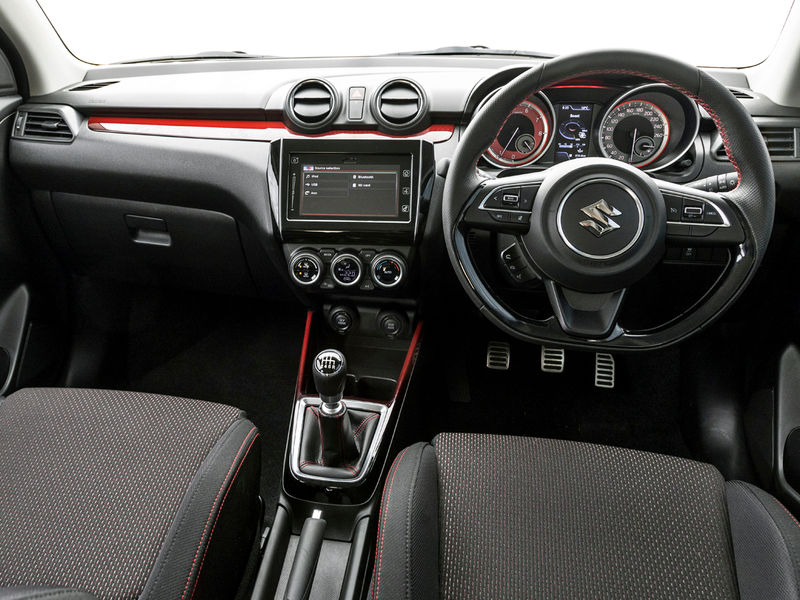
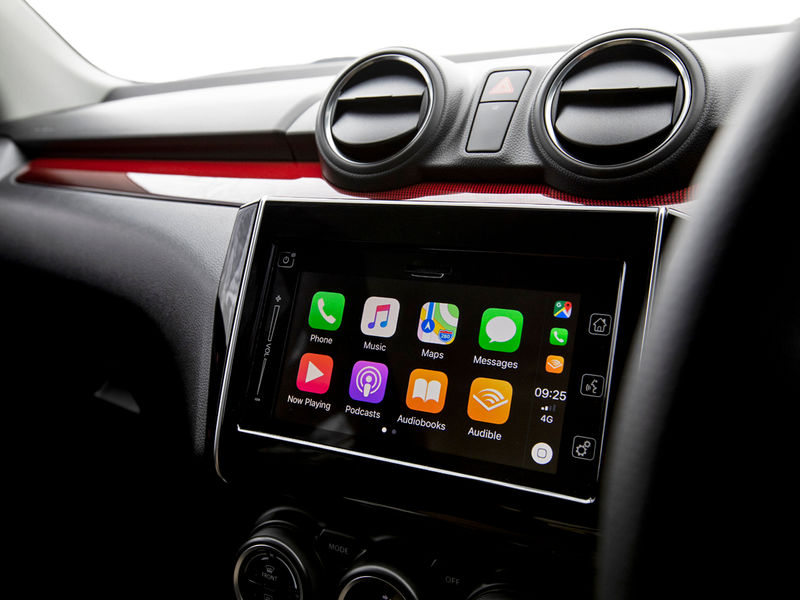
Furthermore, the 7.0-inch infotainment system looked like something of an afterthought. Overall, considering this model’s flagship status in the Swift range, our testers felt Suzuki could have done a bit more to heighten the sense of occasion in the cabin. In addition, luggage space was a little tight at a claimed 242 litres, although that was largely a function of the Swift’s compact dimensions.
Recall note: In some parts of the world, early versions of this Swift Sport were recalled for what Suzuki described as “a manufacturing defect”. According to the Japanese automaker, the valve between the engine and the vacuum-assist brake booster “may swell under certain conditions”, potentially requiring “increased brake pedal effort” to achieve the expected stopping distance. However, we could find no official documentation confirming this recall campaign was run in South Africa.
How much is a used Suzuki Swift Sport in South Africa?
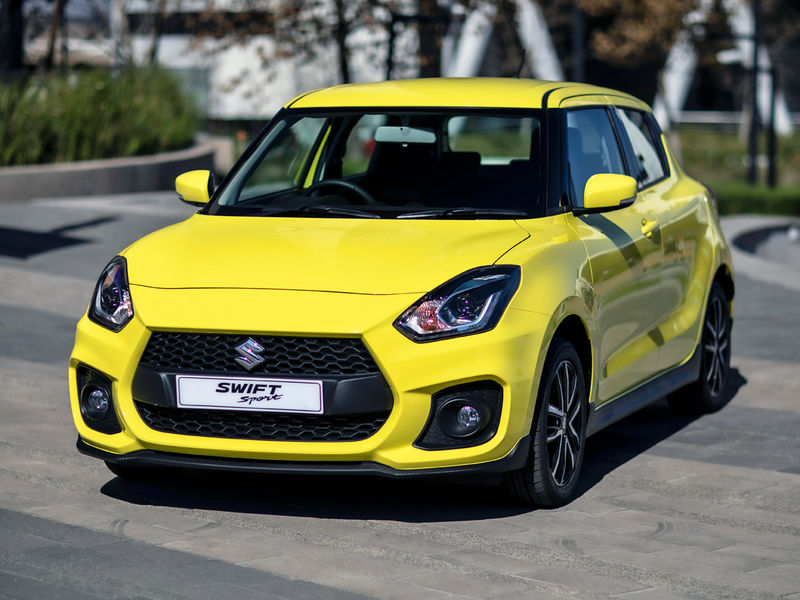
In Mzansi, the Swift Sport shipped standard with Suzuki Auto SA’s 5-year/200 000 km warranty and a 4-year/60 000 km service plan (note that the listed service interval came in at 10 000 km). The 7 exterior paint colours available locally were Burning Red, Speedy Blue, Pure White, Super Black, Premium Silver, Mineral Grey and Champion Yellow.
The Japanese brand’s local division also offered a range of factory-backed accessories, from decals and side-body mouldings to roof racks and edge protection for the luggage compartment.
At the time of writing, we found just 11 units of ZC33S-series Suzuki Swift Sport units listed on Cars.co.za. Fascinatingly, as many as 8 of those featured the automatic transmission. Indicated mileage ranged from just 435 km on a virtually new example to 197 720 km achieved by a 2019 automatic derivative.
- Below R300 000: At the time of writing, 5 of the 11 listed 3rd-gen models were priced below R300 000 (including all 3 manual units). The 2019 model year accounted for 4 of those, with a single 2021 example completing the set. The cheapest unit we found was the aforementioned high-mileage example, which was listed for R168 900.
- R300 000 and up: The remaining 6 listings – 5 of which showed well under 30 000 km on their respective odometers – were priced above R300 000. The 2023, 2025 and 2026 model years were represented here, with the priciest example being the low-mileage unit mentioned above, listed for R439 950.
For context on the used-vehicle prices above, note that the Swift Sport launched in 2019 at R315 900 in manual guise and R335 900 in automatic form, while the last list prices we saw before this model was discontinued were R469 900 and R493 900, respectively.
Which derivative from the ZC33S series should I choose?
Since Suzuki made virtually no changes to the Swift Sport over its local lifecycle, you need only decide on your preferred transmission (and model year). Though the automatic cog-swapper – which the Japanese brand included to broaden this model’s appeal – lacked the urgency of a dual-clutch set-up, it shifted smoothly enough and allowed the driver to take manual control via the paddles.
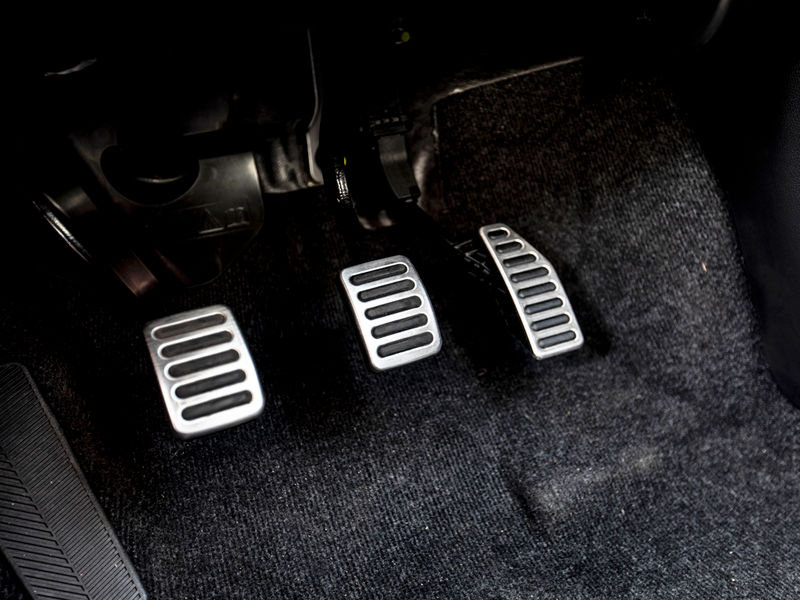
Still, unless you plan on using your Swift Sport as a commuter car largely confined to traffic-laden routes, we’d point to the manual-equipped derivative as the one to have (even though fewer are available in the used space). Delivering loftier levels of driver engagement, the 3-pedal version ultimately represented a more authentic warm-hatch experience than its auto-equipped sibling.
What are the alternatives to Suzuki’s Swift Sport?
The ZC33S-series Swift Sport had few direct “warm hatch” rivals in South Africa, since it slotted in above standard B-segment hatchbacks but below more powerful hot hatches like the Volkswagen Polo GTI and Mini Cooper S (note that the Ford Fiesta ST exited SA a year before this version of the Swift arrived). There was also the diminutive Abarth 595, while our market unfortunately missed out on the Volkswagen Up GTI.
So, its closest competitor was the X15-series Opel Corsa 1.4T Sport that arrived in late 2015, set apart by its subtle OPC Line body kit and a turbocharged 1.4-litre petrol engine generating 110 kW and 220 Nm. That said, around the time of the Swift Sport’s launch in 2019, Opel SA replaced this derivative with the Corsa GSi, featuring the same engine and 6-speed manual gearbox but switching to a 3-door body shell.
Is the Swift Sport (ZC33S) a worthwhile used purchase?
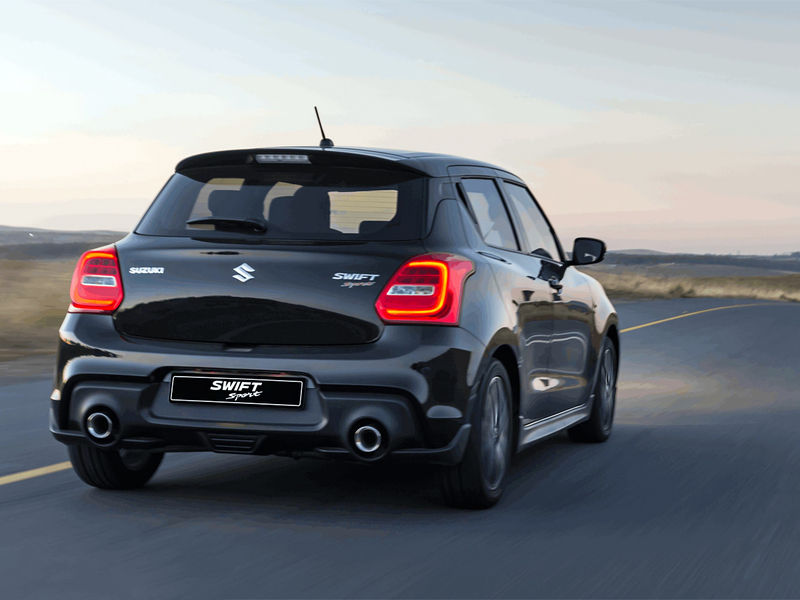
At the global reveal, Suzuki claimed the turbocharged Swift Sport’s favourable “torque-to-weight ratio” propelled the nameplate into “genuine hot-hatch territory”. While the ZC33S certainly felt energetic when driven with zeal – particularly through the bends – it simply didn’t have the grunt to justify such a title.
That said, the Swift Sport did offer something increasingly rare in a world of 300+ kW all-paw hyper hatches: accessible fun. While the power wars might suggest otherwise, there’s plenty of entertainment to be had thrashing a comparatively modestly powered yet dynamically sorted hatchback down a twisty road.
Rewarding near the limit, the Suzuki Swift Sport – ultimately defined by its tenacious cornering ability – delivered such enjoyment in spades. While it may not have possessed quite the character of its high-revving atmospheric forerunner, there’s no doubt it was a far more polished daily driver. Here’s hoping Suzuki builds a 4th generation.
Looking for a used Suzuki Swift Sport to buy?
Looking to sell your car? You can sell it to our dealer network here
Frequently Asked Questions (FAQ)
Q: Is the ZC33S-generation Suzuki Swift Sport still available as a new car in South Africa?
A: No, the 3rd-generation (ZC33S) Suzuki Swift Sport has been discontinued locally, with official production ending in late 2025 and new stock running out around mid-2026.
Q: What engine and power outputs does the 3rd-gen Suzuki Swift Sport feature?
A: The ZC33S Swift Sport is powered by a 1.4-litre turbocharged 4-cylinder “BoosterJet” petrol engine producing 103 kW and 230 Nm of torque, paired with either a 6-speed manual or a 6-speed automatic transmission.
Q: What are the main strengths and weaknesses of the Suzuki Swift Sport as a used buy?
A: Key strengths include plenty of usable low-end torque, a lightweight sub-tonne kerb weight (970–995 kg) and a well-sorted Monroe suspension set-up. On the downside, it lacks a distinct exhaust soundtrack, features some hard cabin plastics and offers limited boot space (242 litres).
Ryan Bubear

Having written about everything from sport and politics to crime, Ryan eventually settled on motoring. For well over 15 years, he's been penning articles – both online and in print – about the broader automotive industry, though he's particularly fascinated by vehicle-sales statistics. A freelance writer and editor, Ryan has owned a 1971 Austin Mini Mk3 for 20-plus years.