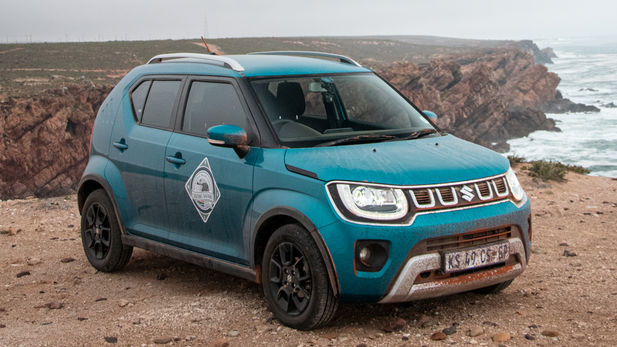
Spring has sprung and that means it’s wildflower season in Namaqualand. It’s a time-honoured SA tradition to take a road trip to see the colourful flora and, to that end, Suzuki invited us on a Northern Cape safari, where we’d be driving… an Ignis!
Words and images by Dieter Pey
The safari started in Upington, where we collected our adventure vehicles for this trip. Previously, I had toured Lesotho in a Jimny 4×4, but this time around we would be spending some quality time here in the Republic – in the stark beauty of the Northern Cape – in an Ignis 1.2 GLX. On Day 1, we departed from Upington Airport and travelled 600 km west, towards and past Springbok until we reached our trip’s first accommodation of “Die Houthoop”, near the town of Kleinzee.
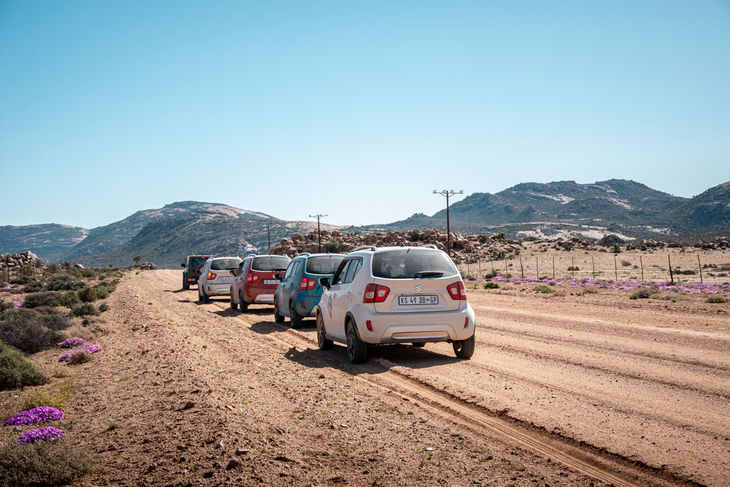
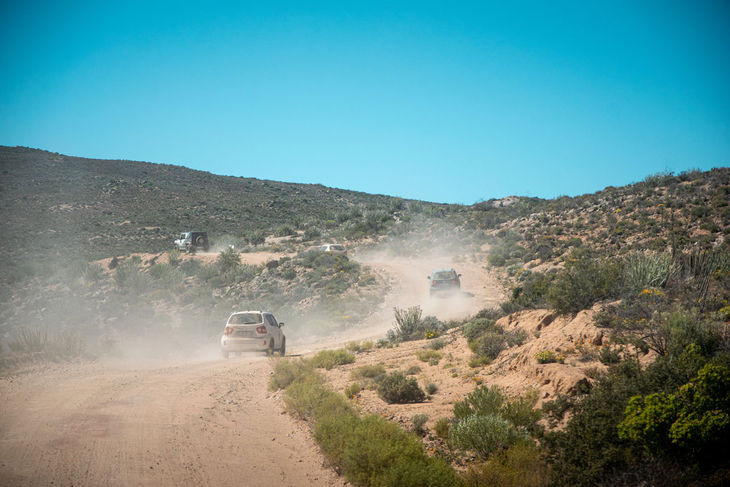
On Day 1, we covered the longest single stretch of our journey. For those who don’t know the Northern Cape region, much of its topography is virtually flat and the roads are very straight, but the Ignis’ 61 kW/113 Nm naturally aspirated (non-turbo) 1.2-litre petrol engine enabled the Suzuki to comfortably maintain the national speed limit for hours on end. Then, after what seemed like an eternity, we finally turned off the tar road and started our first leg of gravel driving.
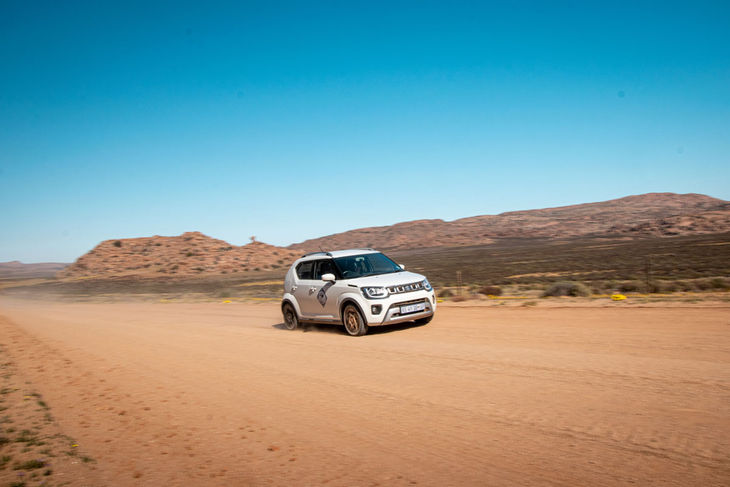
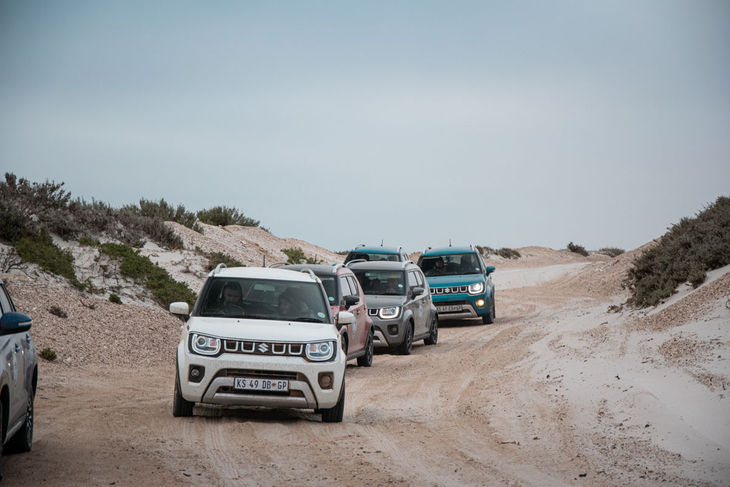
To be perfectly honest, I was a bit worried about how well this little Suzuki Ignis (with its 15-inch wheels and 175/65 tyres – a city-car configuration in anyone’s book) would handle the rough West Coast and Northern Cape roads. The roads in these areas can be pretty uneven, rocky and full of cattle grids. To my surprise and relief, the Ignis traversed these gravel roads with ease! On the worst bits of road, the ride was a little jiggly, but we were still very comfortable in the car.
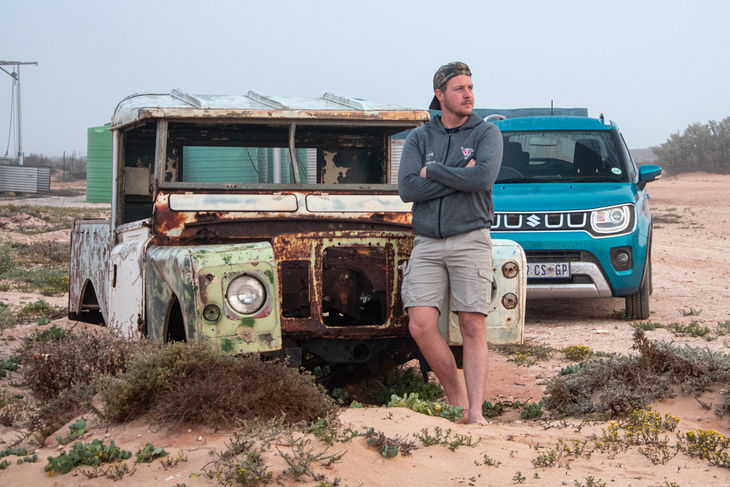
Thanks to its pliant (absorbent or forgiving) suspension setup, the Ignis is well suited to completing dirt-road journeys. I realise that it’s a front-wheel-drive vehicle (not a 4×4), but, at times, my inner rally driver simply got the better of me, so I steered into a few of the gravel-road bends at an, um, enthusiastic pace just to see how the 1.2 GLX would perform… I came away surprised by just how sure-footed the Suzuki felt on the loose road surface; it’s quite fun to drive, in fact.
Although all Ignis derivatives come equipped with ABS, EBD and brake assist, bear in mind that the Suzuki doesn’t have traction control, which is a disadvantage if you are not used to driving a car on slippery (low-grip) surfaces.
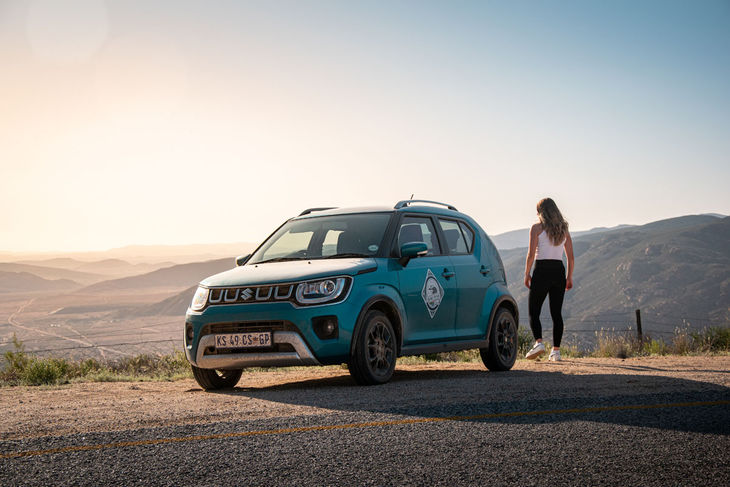
After drinking in the vast emptiness of the Northern Cape, we headed down the beautiful Spektakle Pass; the sun hung low in the sky as we reached Die Houthoop. We enjoyed a beautiful sunset and dinner at the rustic overnight stop.
See also: Suzuki Jimny Goes 4×4 in Botswana w/Video
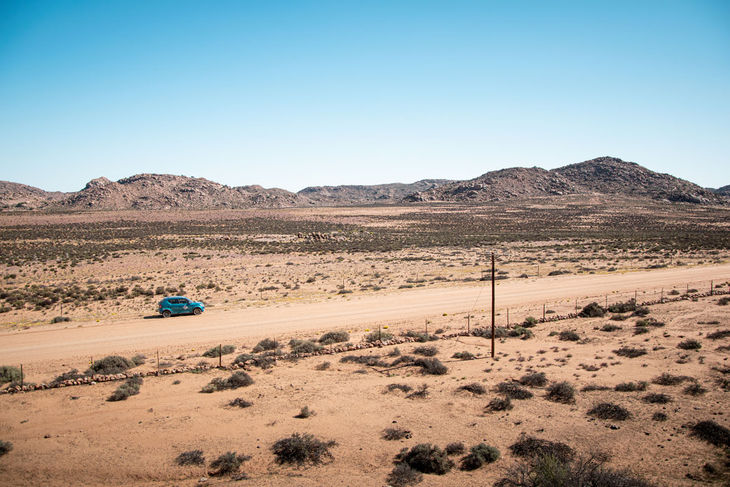
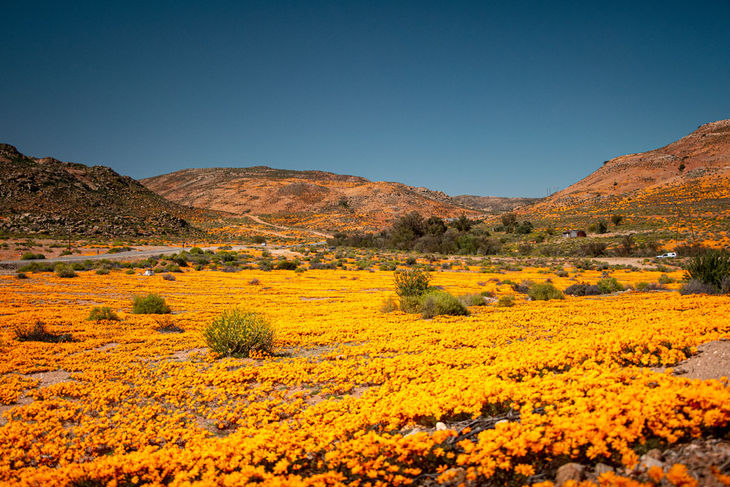
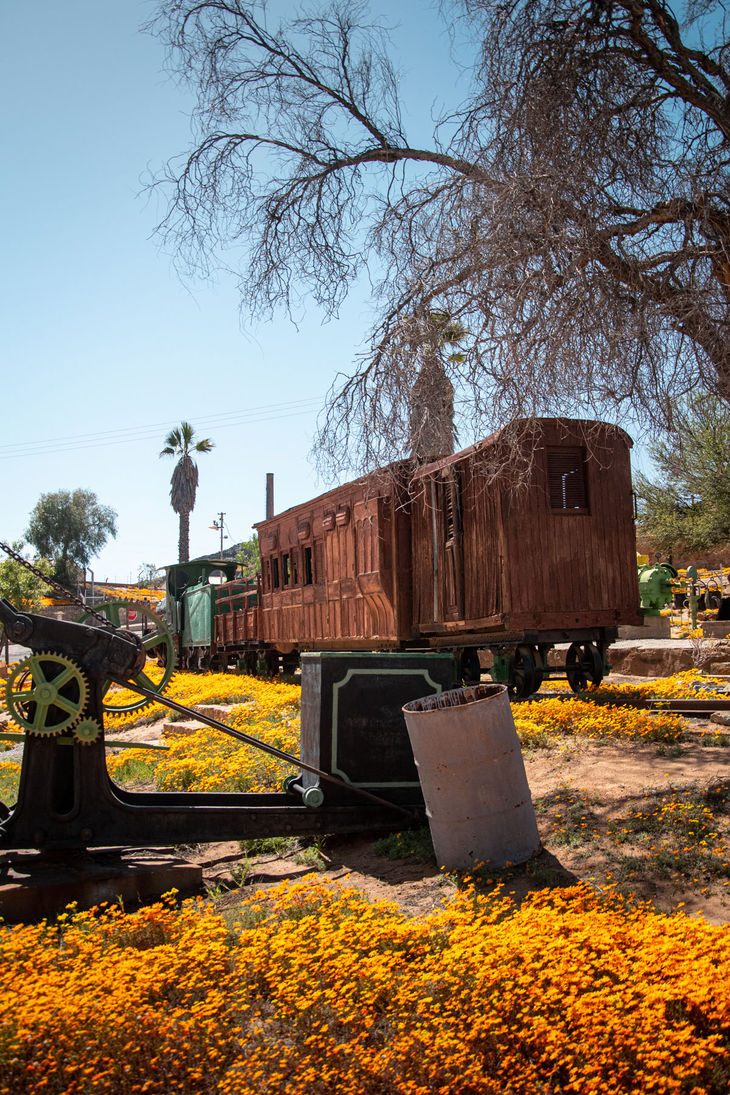
To me, Day 2 was the highlight of the trip. We headed north towards the town of Nababeep. This once thriving mining hub of the De Beer family is now a forgotten little town. Just outside the town, we drove into a valley of beautiful orange flowers which carpeted the landscape. We successfully found the Namaqualand wildflowers in full bloom and, like typical tourists, we frolicked in the flora and captured some colourful and vibrant images.
We then drove into Nababeep to visit the local museum, where we received a brief tour of the town and learned how its copper mining industry used to work. I highly recommend visiting the historic town (and its museum) to learn about and support this fascinating area. We ended the day in the town of Kleinzee, another small abandoned town which once had 4 000 inhabitants and now has a population of only 800 people.
To reach the Kleinzee Angling Club, we had a bit of sand driving to do. The Ignis’ tyres were deflated to 1.4 bar and, using a bit of momentum, we managed to clear the small sandy patches. Again, pretty impressive for a non-4×4 vehicle!
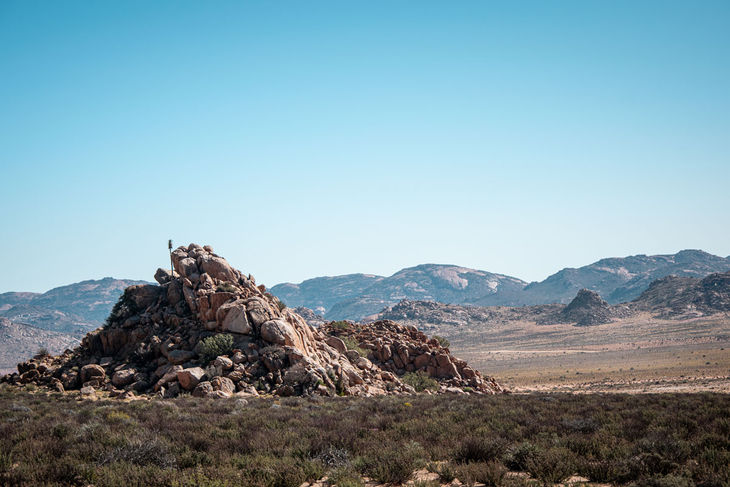
That evening, we savoured a seafood platter that Chef Jackie prepared for us and then got some shuteye, because Day 3 – our last day of the trip – beckoned. We packed our bags and JJ, our tour guide, directed us to our destination of Garies. We stayed on the gravel-road route and drove over the escarpment via the Wildeperdehoek Pass. This beautiful pass goes through the Namaqualand National Park and provides breathtaking views of the landscape.
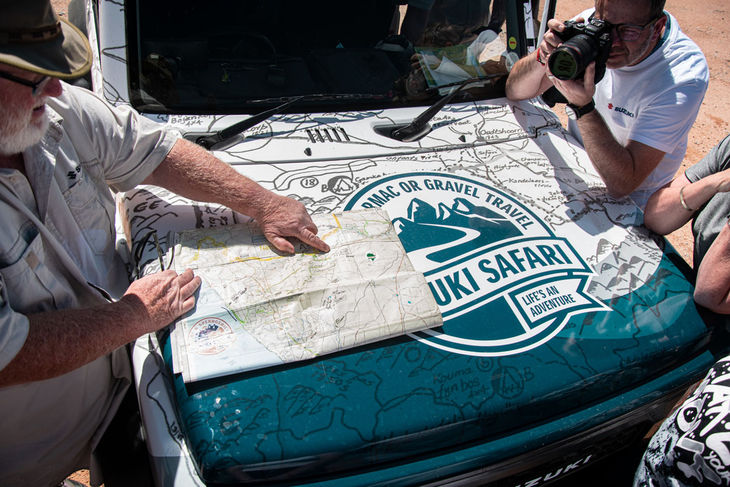
We spotted a herd of 13 Oryx antelope (Gemsbokke) galloping over the horizon. The surrounding area still shows traces of the ox-wagon routes that the early settlers used to travel between the inland riverbeds and the escarpment to the arid province’s Atlantic coast. After travelling another 40 km or so, we rejoined a tar road and we would stay on this smooth and comfortable surface until Garies and later, Cape Town.
All in all, we travelled a total of 1 800 km in just under 27 hours of driving. I’d guess that about 1 000 km of the route was made up of unsealed (gravel or sandy) roads and, to reiterate, I was hugely impressed with how well the Ignis adapted to travelling on the dirt. In fact, this Suzuki had quite a few hidden talents… Yes, it’s a small car, but it had enough space for me, my passenger and our luggage. At one point we had 4 people aboard and all of us were seated in relative comfort.
Twenty-seven hours of driving is no jaunt! Still, it would be unfair to say the Ignis offers too little in the way of long-haul occupant comfort; the seats are well-padded and the 7-inch touchscreen infotainment system is easy to use, although we did encounter a minor issue with connecting a Bluetooth device when another one is actively paired. The car handles impressively on gravel and tarmac; it’s wieldy – darty, even – and although the suspension is soft, road-holding is good.
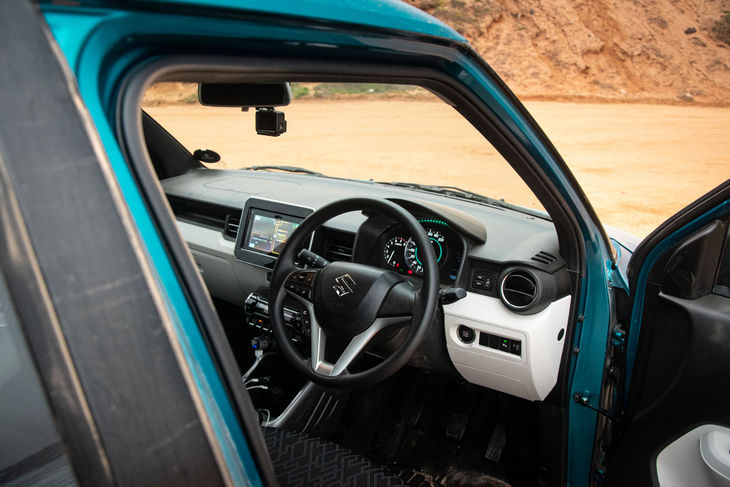
The Ignis’ steering is perhaps a little too lively for “the long, open road” – city cars need to be very easy to manoeuvre, for which you need quick steering – so that is something to consider. Apart from that, it is a great little touring vehicle for a couple of intrepid road-trippers. The claimed fuel consumption is 5.1 L/100 km and we averaged 5.6 L/100 km on the trip, including long-distance highway driving and slower gravel driving in searing heat (at times, the mercury nudged 30’C).

This trip demonstrated that you don’t need a large, fuel-inefficient, fully-kitted offroad rig to explore our beautiful country. Yes, there are some limitations, the chief of which is the front-wheel drive drivetrain – for the sake of safety and plain old practicality, stick to flat-ish, well-maintained gravel roads and, remember, you only have 180 mm of ground clearance to work with. The Ignis is, ultimately, a crossover, which means it’s designed to help you explore the country on a budget.
Priced at R236 900 (September 2022), which includes an attractive 5-year/200 000 km manufacturer warranty and a 2-year/30 000 km service plan, the Ignis 1.2 GLX will not only make short work of your daily commute, but if and when that travel bug bites (and oh, it will), the Suzuki will be well up to the task of facilitating your out-of-town adventures – be they big or small.
Thank you to the Suzuki Auto SA and African Expedition teams for hosting us on yet another unforgettable safari that showcased the beauty of the Southern African region.
Related content:
Suzuki Jimny Goes 4×4 in Botswana w/Video
A Suzuki Jimny through Lesotho, your perfect African Alpine retreat