If you are thinking of buying a Porsche 356, should you also take a look at the 4-cylinder Porsche 912? We drive both back-to-back outside Cape Town.
The modest four-cylinder, boxer engine that launched Porsche onto the motoring scene in 1948 started off with a paltry 30 kW from its 1.1-litre displacement. Fast-forward to around 12 years and the flat-4, 1.6-litre engine in the 1600 GT developed a very healthy 100 kW.
A look at Porsche’s racing history reveals it is littered with racing-developed flat-4s fitted to 356s, as well as several notable race cars that achieved several victories over many years.
History
By 1963, when the Porsche 356’s replacement saw the light of day, the Zuffenhausen-based brand’s focus had obviously shifted to the 911, but the company still saw enough appeal in the 4-cylinder concept to unveil a new model, the 912, at the 1965 New York Auto Show.
While the Porsche 912 was unveiled in 1965, it only became widely available by 1966. Interestingly, the 912 sold very well and evidently, buyers didn’t mind at the time to have a familiar flat-4 engine in the back of their Porsche and a cabin that offered less equipment than the 911.
The idea behind the Porsche 912 was to offer a more accessible sports car to buyers who couldn’t stretch all the way to the 911… and it clearly worked. In its first year of production, around 5 000 units were manufactured and 6 692 in 1966.
Today Porsche 912s are valued lower than early Porsche 911s. Bring the range of 356s onboard, and again the 912 slots comfortably below that range of models if you compare them specification-wise.
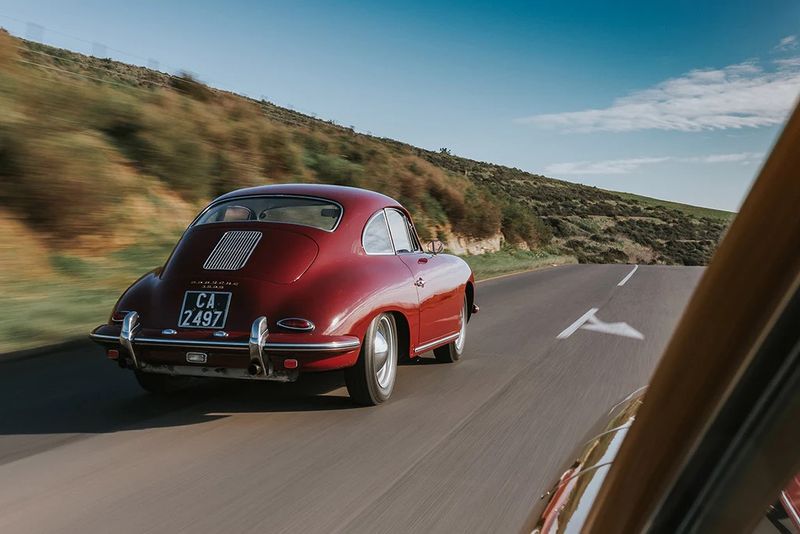
Compared to a car like this beautiful Ruby Red Porsche 356B, how does the Porsche 912 stack up from behind the wheel and does it deserve more admiration than it currently gets?
The entire 356 range was fitted with the flat-4-cylinder engine, and the 912 was the only 911 to ever receive a 4-cylinder engine, which makes it a bit of an oddball in Porsche’s road-going history.
Few enthusiasts know this, but a number of Porsche 356s were assembled in South Africa after being imported as knocked-down kits. However, this 1960 Porsche 356B was manufactured in Germany before being delivered to the Winelands town of Stellenbosch.
The first owner was an Olivetti typewriter engineer. He owned it until the day he died and the current owner bought it from his grandson 6 years ago.
Specifications
- Model: 1960 Porsche 356B
- Engine: 1.6-litre, flat-4 petrol
- Power: 44 kW at 4 500 rpm
- Torque: 110 Nm at 2 800 rpm
- Transmission: 4-speed manual, RWD
- Weight: 900 kg
- 0-97 kph: 14.4 sec (claimed)
- Top speed: 155 kph (claimed)
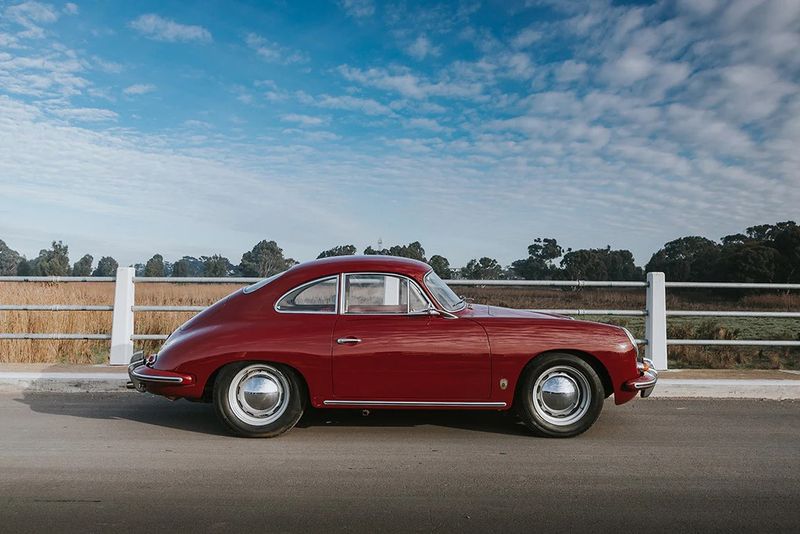
“I haven’t done anything to this car except to give it a small service and a polish every now and then. We even left the minor cracks in the paint. The car has not been restored and we have several invoices, even including insurance premium slips from early years. The original owner was really fastidious.
“For example, he took the original keys, made copies and only used the copies, filing the original keys in the car’s folder. There is the service book, the handbook and the toolkit. There was also a big folder on the then-new Porsche 928. At some stage, he considered trading in his 356 for this new GT.”
Subsequent to purchasing this 356B, it won the regional Porsche Club Cape concourse event in 2020.
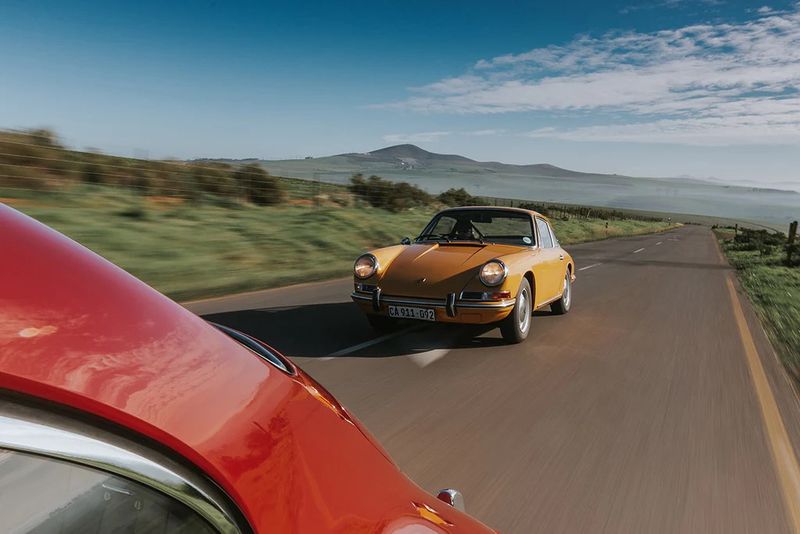
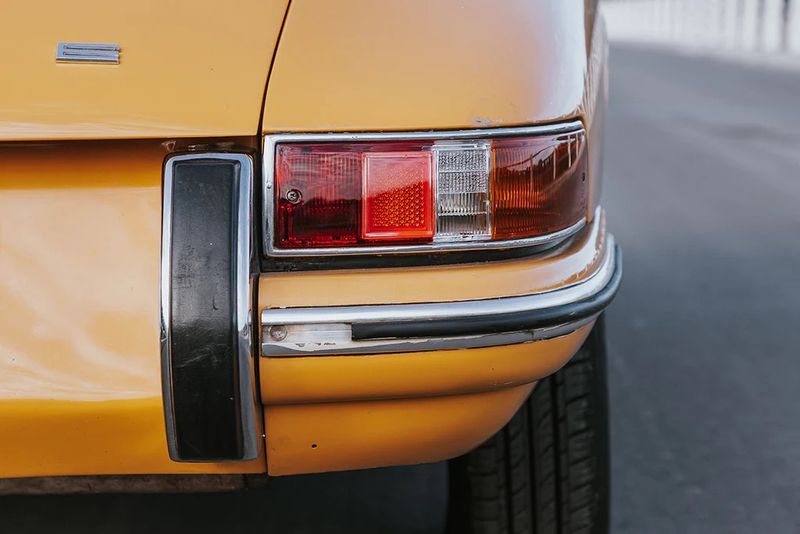
Eight years after that Porsche 356, in 1968, this Bahama Yellow Porsche 912 rolled off the production line. The owner, founder of Dogleg Werks in Cape Town, acquired it in early 2021.
Specifications
- Model: 1968 Porsche 912
- Engine: 1.6-litre, flat-4 petrol
- Power: 67 kW at 5 800 rpm
- Torque: 133 Nm at 3 500 rpm
- Transmission: 5-speed manual, RWD
- Weight: 970 kg
- 0-97 kph: 12.3 sec (claimed)
- Top speed: 184 kph (claimed)
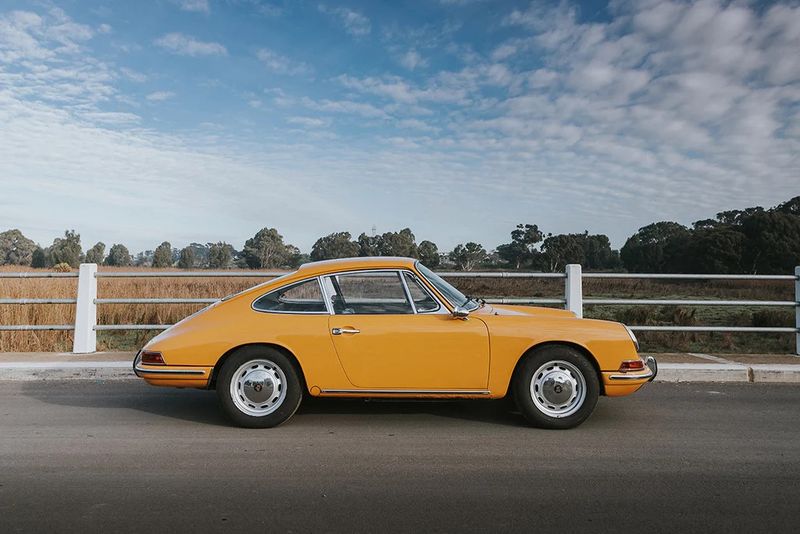
“All the license discs from new came with the car. It was a Johannesburg car and has had 2 or 3 owners. Unfortunately, it was cheaply maintained. It does have some rust and will soon be heading for a gentle restoration. However, it won’t be a nuts-and-bolts restoration. The fenders will be removed, sills will be replaced and it will receive a partial respray.
“This was a daily driver for the past 10 to 15 years. It was unfortunately kept in Newlands – one of the wettest parts of South Africa. The engine was rebuilt in the ’90s, but it now needs attention again.”
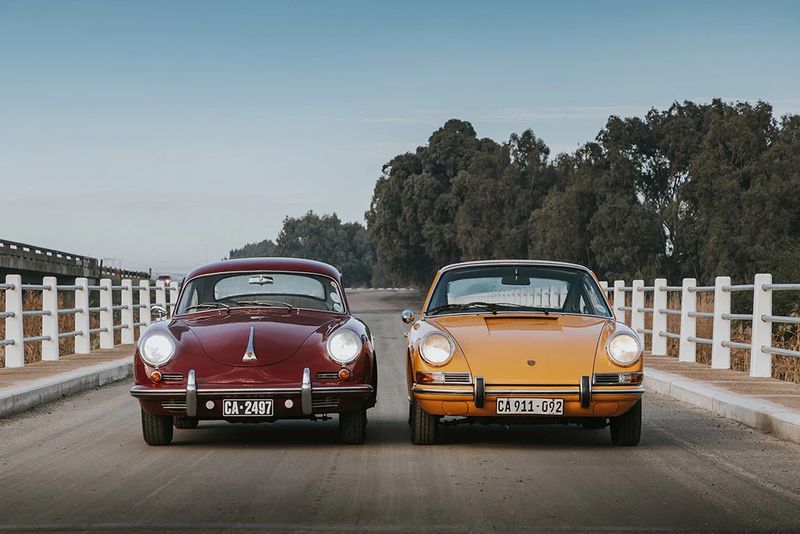
Parked next to each other it is easy to see the evolutionary design flowing from the 356 to 912. There are similarities, but they are also 2 very distinctly different cars.
Behind the ‘wheels of the Porsche 356 & Porsche 912
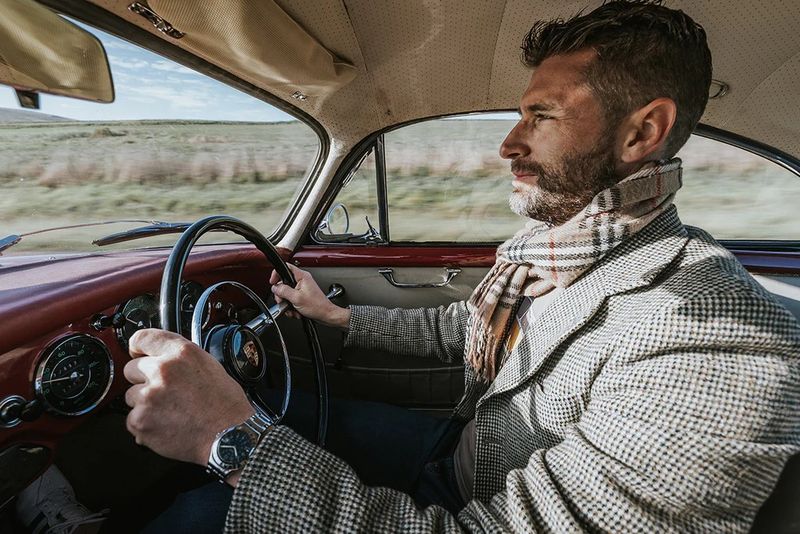
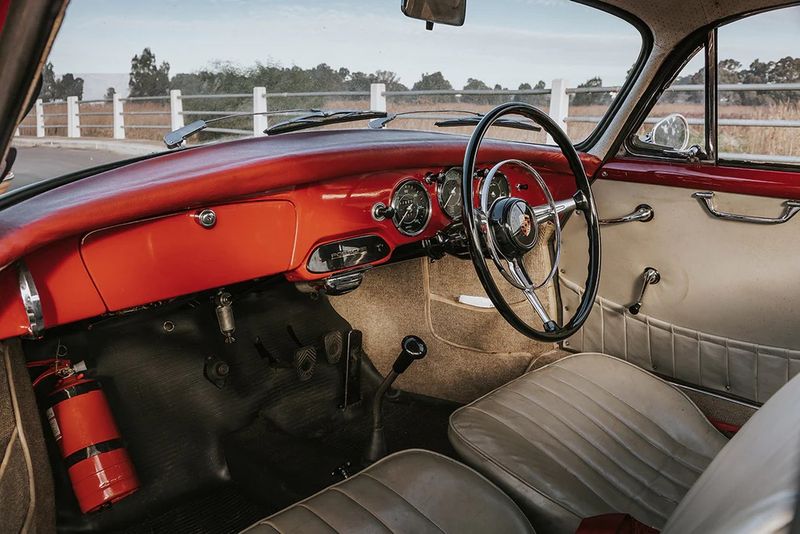
I settle in behind the wheel of the 356 and notice the solid thud when I close the door. Everything about the 356 is rounded. The dashboard curves underneath the windscreen and the large Bakelite steering wheel allows for much-needed leverage during slow speeds.
The red leather vinyl-covered dashboard ties in perfectly with the red window garnish rails below the side windows that run towards the rear of the car as well as the fascia, which is also ruby red.
Being a 356 means that there are only 3 dials behind the steering wheel, them being, from left to right, the speedometer, tachometer and a combination gauge for the oil temperature and the fuel level.
It is relatively luxurious in the cabin with rubber matting on the floor, carpets along the sides while the original beige seats and door panels provide a welcoming contrast. Over the bonnet, the rounded curves of the lid as well as the fenders are clearly visible.
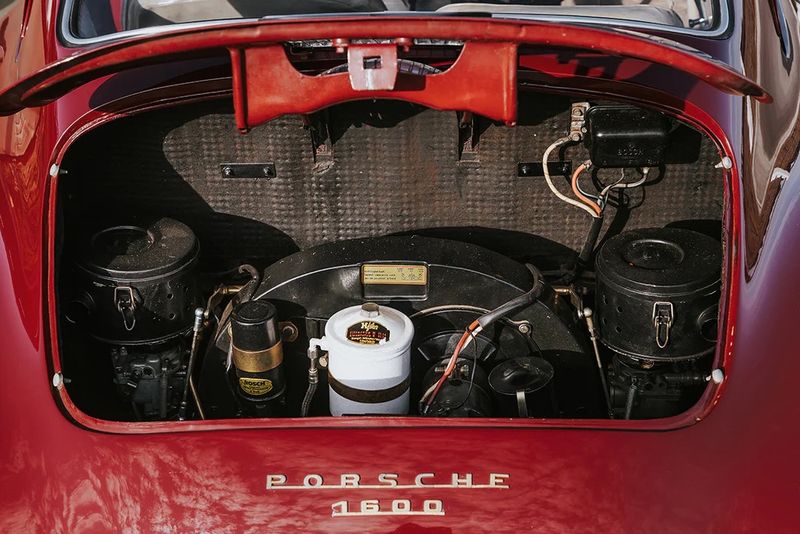
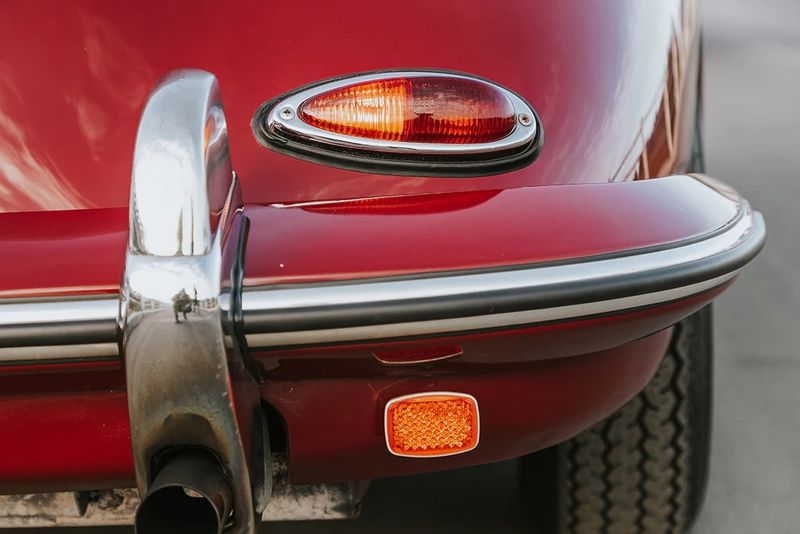
The engine starts without any trouble and it sounds spot on, a throaty flat-four rumble that permeates from the two exhaust pipes, situated inside the chromed overriders.
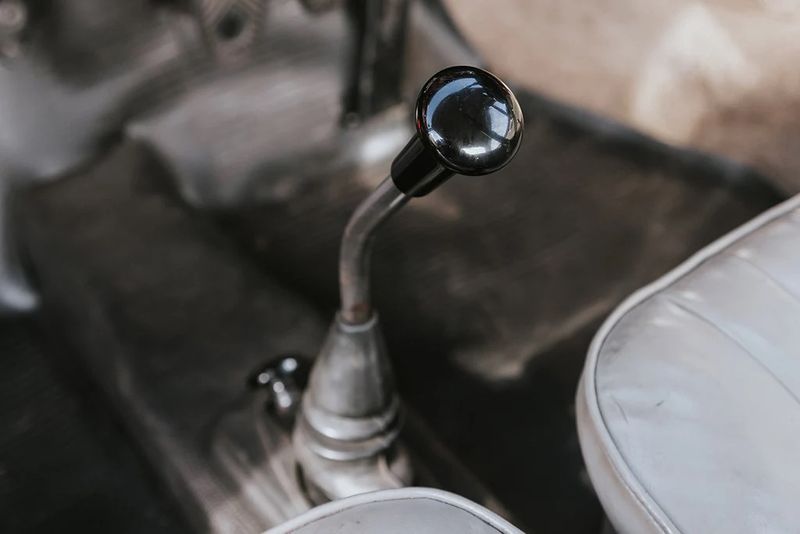
The gearlever slots with ease into gear in a very light manner and it is easy to modulate the clutch, all the pedals being floor mounted.
There is a surprising level of sprightliness to the 1 582 cm3 engine’s power delivery. You can potter around at 2 to 3 000 rpm, but it is from 2 500 to 4 000 rpm that the engine seems at its happiest and delivers an honest level of performance. The redline arrives 500 rpm later at 4 500.
Chase the 4 000-rpm mark through first, second and third gear, and you will be impressed at the speeds you can achieve.
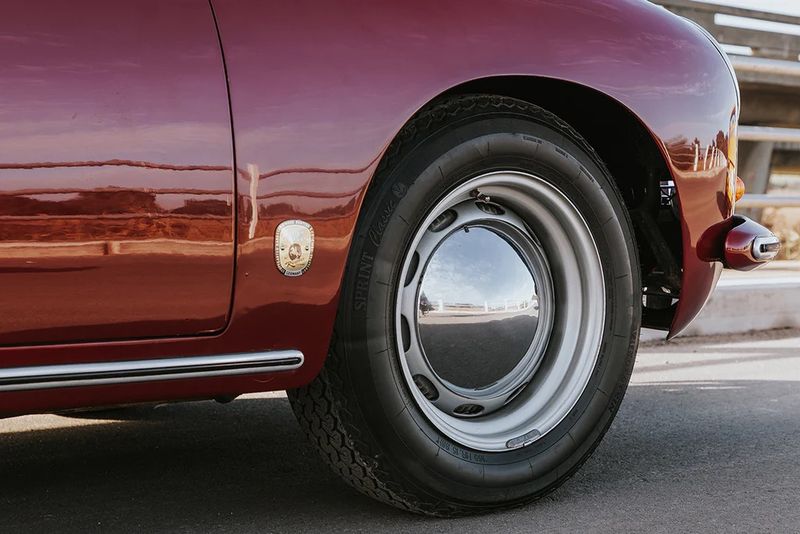
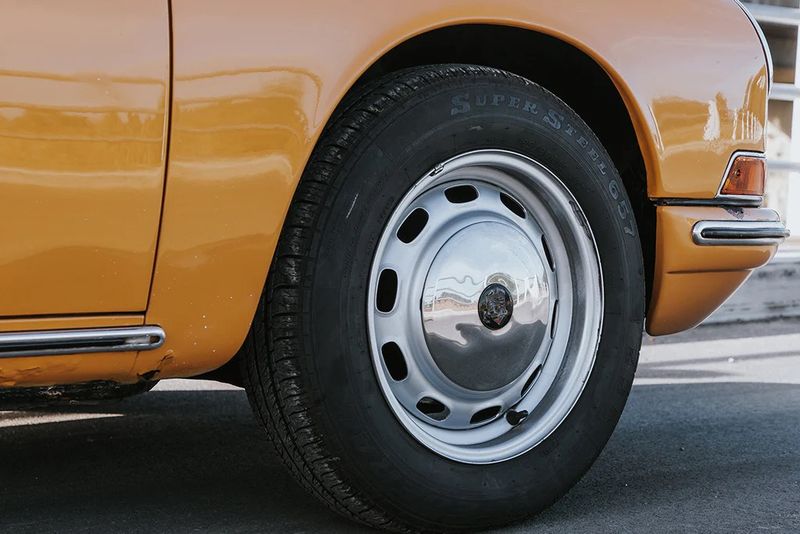
There is a little play in the steering, but you still get a good feel through the wheel. However, you need to remind yourself of those high-profile tyres when you drive more enthusiastically through the corners.
Still, being so lightweight and with the engine mounted low in the chassis, there is grip to be found through the bends and some fun to be had. Even the brakes feel up to the task of bringing the speeds down, although you don’t want to overdo it, having to then use them with vigour.
The owner also told me that he fits all the 356s in his collection with a camber regulator on the rear axle which limits the wheels tucking in during cornering or other vertical loading and unloading.
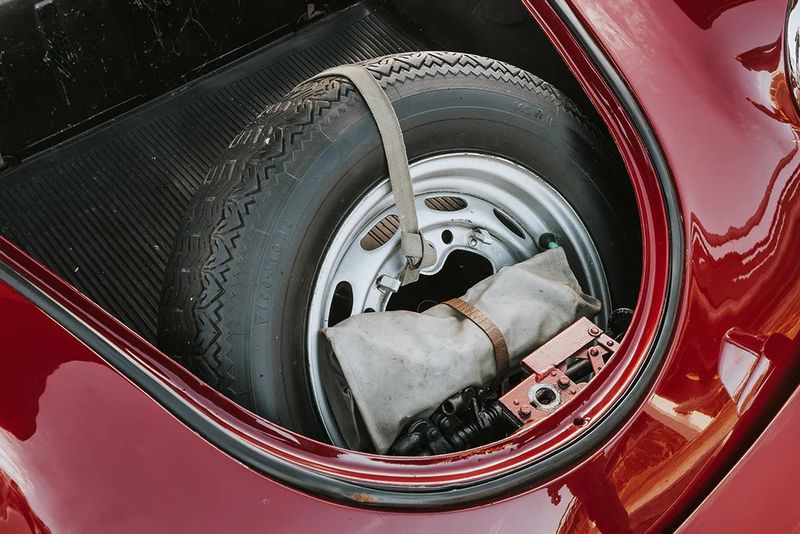
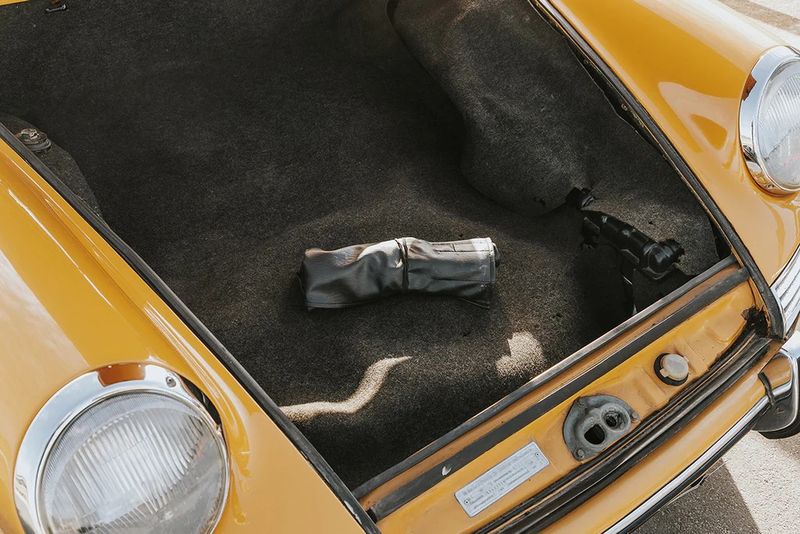
In terms of practicality the 356 offers less luggage space at the front thanks to the fuel tank and spare wheel which almost completely fills this area. In the 912 there is ample space for a few soft bags.
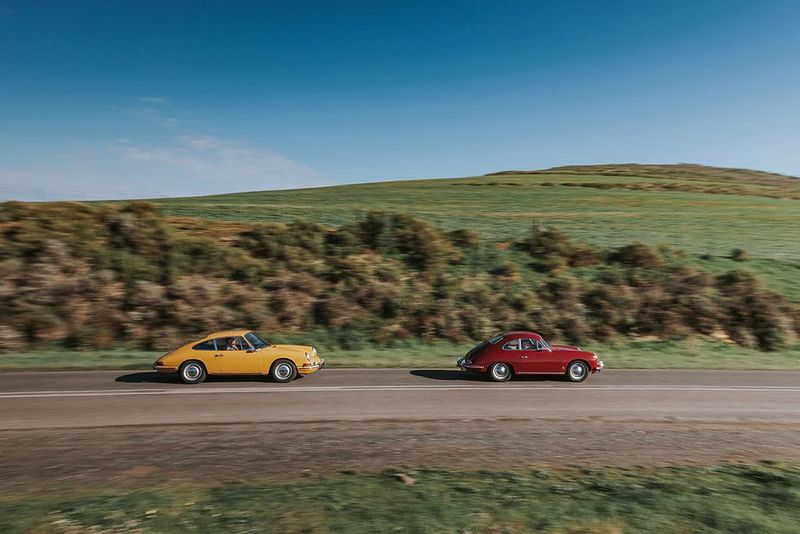
There might be only an 8-year difference between these two cars, but the moment you step into the 912 you know this is the more modern model, body and layout that also spanned around 2 decades of 911s.
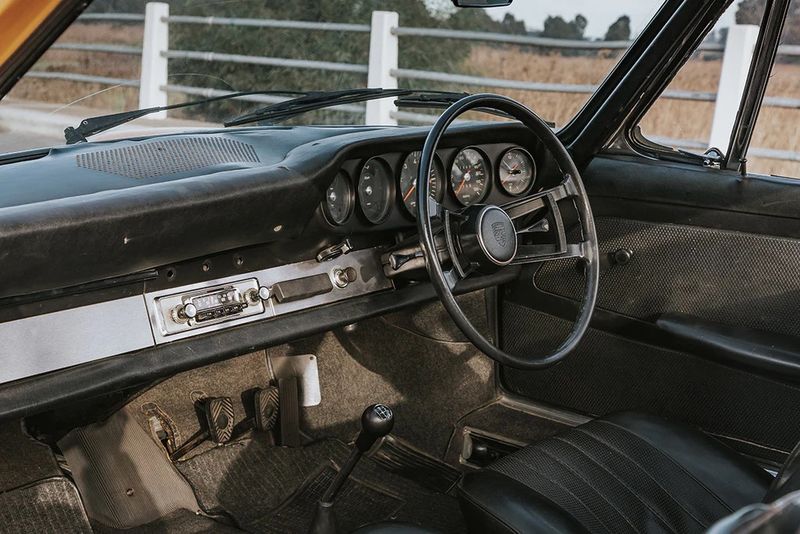
There is a complete change of feel in the cabin thanks to the horizontal, straight dashboard design and the cabin is marginally roomier in every direction.
The seats are well worn, so I sit very low, while the cabin colours are darker compared to the 356. The black vinyl seats, door trims and the dashboard are all black as well.
As in the 356, the steering wheel is close to the dashboard, but now there are 5 dials to look at (there were only 3 when the 912 was launched), one of the additions being a clock. As in the 356, there are still rear seats that can be folded flat to offer extra luggage space, or up to offer seating space for children.
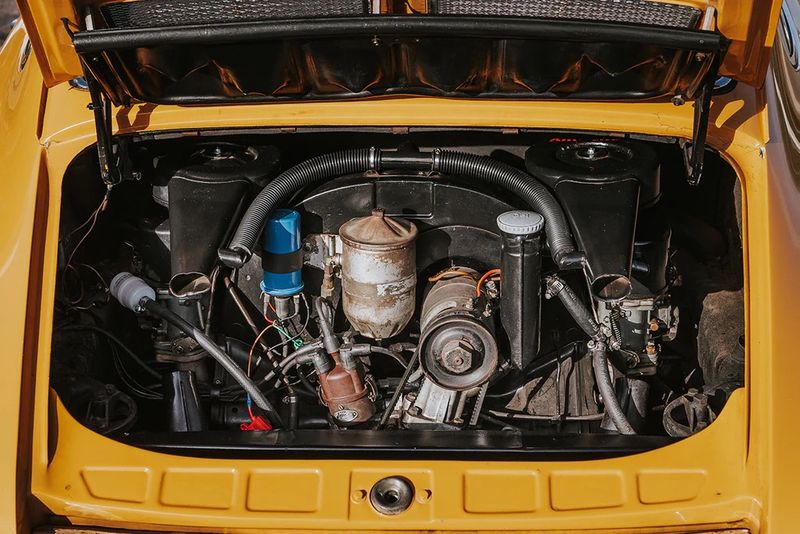
As I twist the key, the engine turns and for a moment the different beat from the flat-4 caught me off guard, not a sound you associate with a 911-shaped Porsche. When cars are half a century old, or older, they are very much the result of how they have been maintained. This example of the Porsche 356 has been maintained better than the car it’s being compared with here, but even so, this particular Porsche 912 has been used regularly and provides a good idea of what the 1960s cut-price 911 offers.
The view through the windscreen is also different compared to the 356. Gone is the rounded centre lid, now replaced by the sloping flat deck, with the pronounced fenders running towards the headlights leaving you in no doubt this is a 911 (or 912).
This 912 was, at some time in its life, fitted with a factory short shifter kit, as the throws are very short and direct and it doesn’t have any of the vagueness usually associated with this transmission. This does add another level of driver involvement and sportiness for me. If it was my car, I would probably have opted for this upgrade as well, especially after having experienced these gearboxes in their original state.
It still needs some getting used to though, but after a few minutes I become accustomed to finding that dogleg first gear and also the following four gears. The availability of five speeds is an important change over the Porsche 356’s driving experience.
The additional ratio allows you not only more speed, but once on the go it is easy to swap between second and third, ideal for the twisties, and then fourth and fifth as you head onto the longer straights. I immediately feel there is a wider scope of performance with the 912.
Although the engine, in its current state, is not as smooth as the 356B’s, it still pulls stronger than its older sibling, while also allowing you to head higher into the rev range. With the red line only arriving at 6 000 rpm, you can comfortably let the needle run past 4 000 and 5 000 rpm.
After all, the 912’s engine was based on the 356 Super 90 engine, offering 90 hp (67 kW) versus the 356B’s 44 kW.
As the suspension is a notably better setup compared to the Porsche 356, the Porsche 912 feels more planted on the road and it does feel more suited to enthusiastic cornering than the 356. Of course, the 912 benefits from the same suspension, steering and braking system as the early 911s.
Porsche 356 or Porsche 912?
On the way home we both select 3rd gear, needles pointing to the middle of the rev range. We push the throttle pedals to the floor. For a moment the Porsche 356 pulls away from its Porsche 912 stablemate, but as our speed builds and I select fourth gear in the 912, it pulls away from the 356.
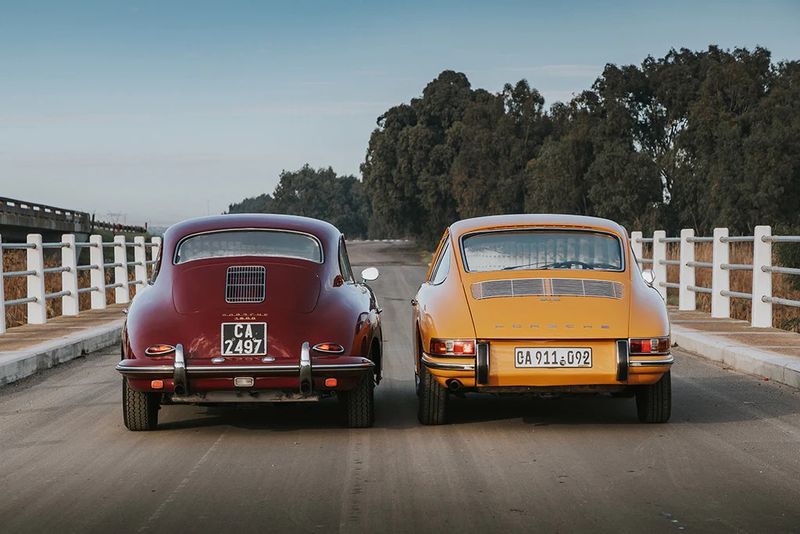
The Porsche 912 will probably continue to remain under the radar for most buyers, but I don’t understand why. Of course, it is 2 cylinders down on any other 911 in history, but it still delivers a visual experience that is 100% that of the 911 and a driving experience that is very close to that of the celebrated brand’s iconic sportscar. Oh, and did I mention it is around 50 kg lighter than a 911 of the same year?
For those who appreciate these benefits, that is a very attractive number. Depending on what your requirements are for an air-cooled 4-cylinder Porsche, give the underrated 912 a closer look.
Search for a classic Porsche listed for sale on Cars.co.za
Find exclusive car-themed merchandise at the SentiMETAL Shop
Related content:
Porsche 911 (993) GT2: Classic Drive
Porsche 911 Targa ‘Edition 50 Years’ (2022) Launch Review
Porsche 911 GT3 (2022) Launch Review
Porsche 911 GTS (2021) Launch Review
Wilhelm Lutjeharms

A passionate car enthusiast from an early age, Wilhelm has been a motoring writer since 2006, having worked for more than 10 years at CAR magazine before turning to a full-time freelance career. He is also a contributing writer for UK, USA and European-based motoring titles.