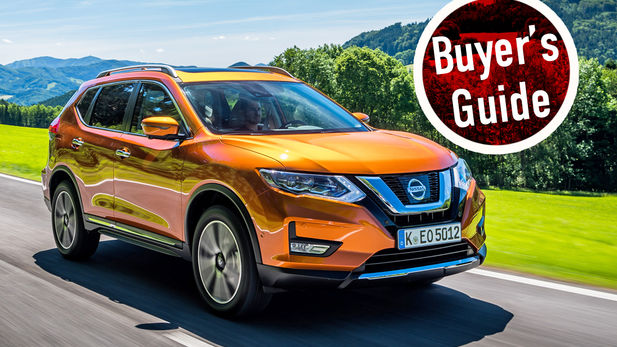
Does the 3rd-generation Nissan X-Trail make a compelling used buy? Let’s take a closer look at the variants available in South Africa, as well as this medium SUV’s strengths, weaknesses and more…
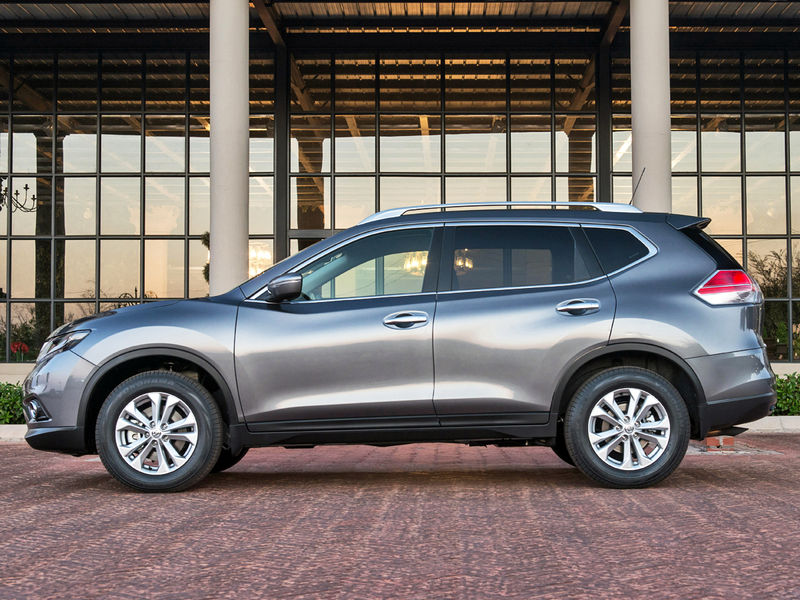
While the original Nissan X-Trail and its successor, the 2nd-generation model, were charmingly utilitarian family cars, the T32 series represented a significant step change for the nameplate. Indeed, the 3rd-gen X-Trail – launched in Mzansi in 2014 – traded the tough, boxy proportions of the first 2 models for a sleeker exterior design that shared cues with the slightly smaller J11-generation Qashqai. It also had a somewhat more upmarket cabin than the comparatively matter-of-fact interiors of its forebears.
Indeed, you could argue the T32 series X-Trail was little more than an upsized Qashqai, with the 7-seater derivatives of the former also effectively serving to replace the discontinued Qashqai+2. After all, these crossover siblings shared the CMF-CD platform and even looked remarkably similar from afar.
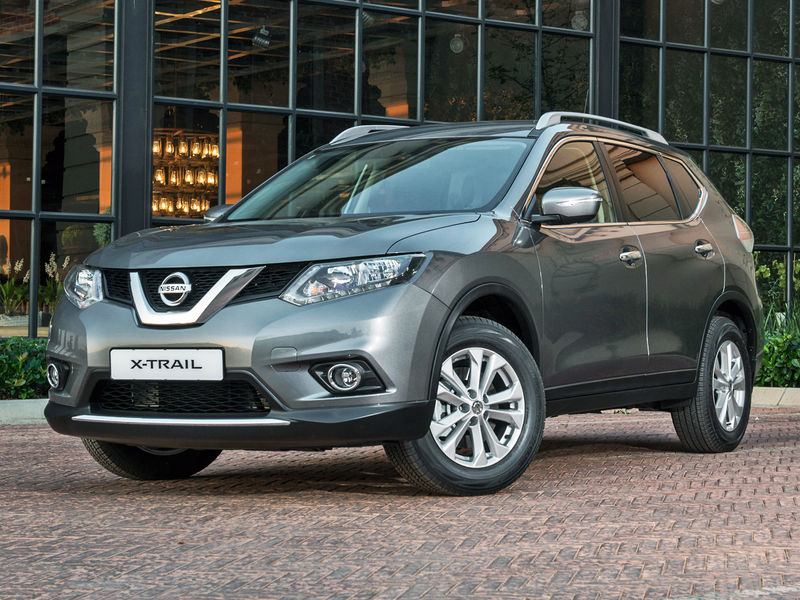
But the 3rd-generation X-Trail – known as the Rogue in North America – was an eminently successful model in its own right; it even bagged the title of the world’s best-selling SUV in 2016 and 2017. The Yokohama-based firm certainly took a risk by so drastically altering what was already a successful recipe (some enthusiasts even suggested the X-Trail had “gone soft”), but, ultimately, it paid off royally.
For the record, despite Nissan’s appreciable off-road heritage, its claims in the press material and indeed this model’s name, the T32 series X-Trail was anything but a bundu-basher. Instead, it was decidedly road-biased – yes, even derivatives fitted with the All-Mode 4x4i system – just as the market demanded.
Nissan X-Trail model line-up in South Africa
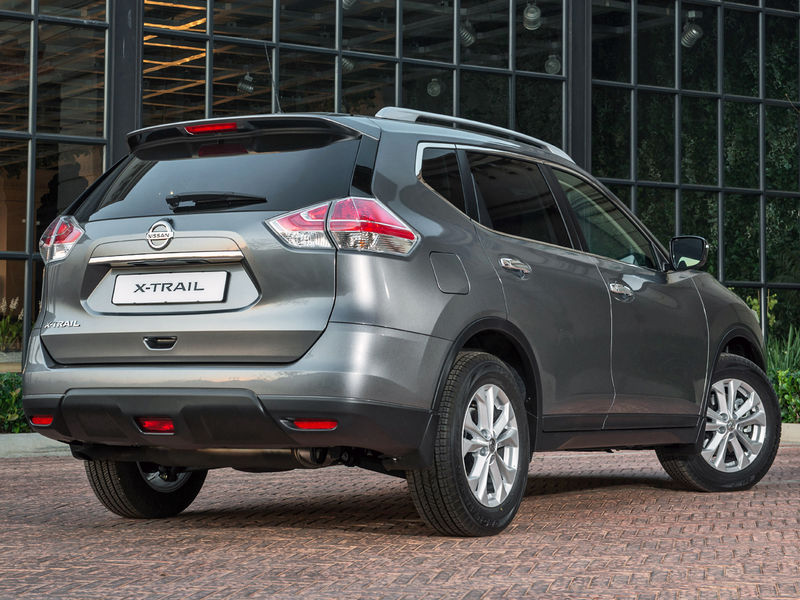
The 3rd-generation X-Trail was unveiled at the Frankfurt International Motor Show in September 2013. A little over a year later, in October 2014, the T32 series officially hit the market in South Africa, with local units sourced from Nissan’s Kyushu plant in Japan.
At launch, the range comprised 8 derivatives. There were 3 engine options (a pair of petrol motors and a turbodiesel), a choice of 2 transmissions, front- and all-wheel-drive configurations, a trio of trim levels, and 5- and 7-seater variants:
- 2.0 (106 kW/200 Nm) XE 6-speed manual
- 2.0 (106 kW/200 Nm) XE 6-speed manual (7 seats)
- 2.5 (126 kW/233 Nm) SE 4×4 CVT
- 2.5 (126 kW/233 Nm) SE 4×4 CVT (7 seats)
- 1.6 dCi (96 kW/320 Nm) XE 6-speed manual
- 1.6 dCi (96 kW/320 Nm) XE 6-speed manual (7 seats)
- 1.6 dCi (96 kW/320 Nm) SE 4×4 6-speed manual
- 1.6 dCi (96 kW/320 Nm) LE 4×4 6-speed manual
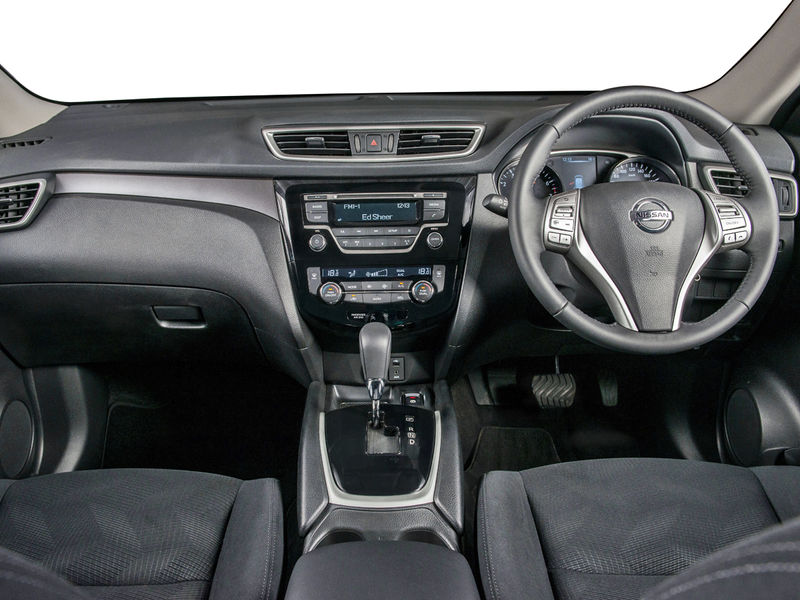
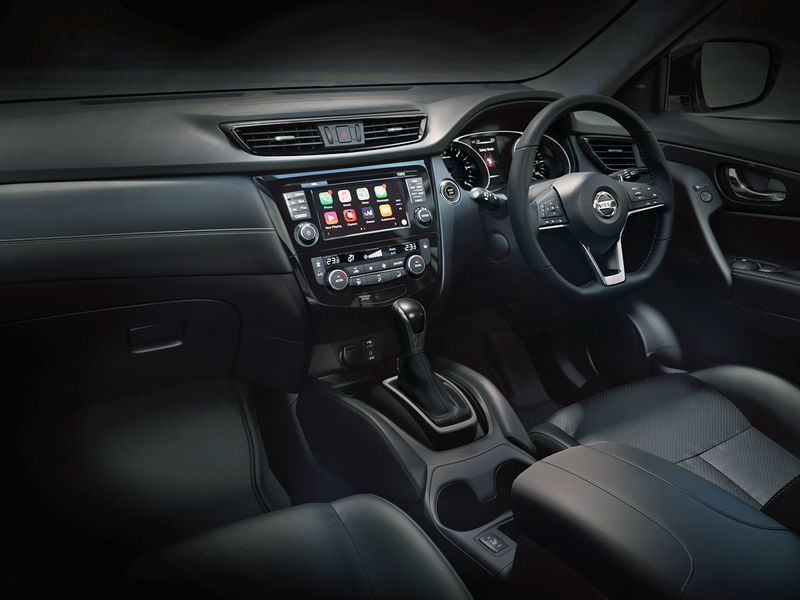
The facelifted X-Trail, meanwhile, made local landfall in October 2017, bringing revisions to the steering wheel, interior door finishes, console wrap and seat fabric (high-spec derivatives featured black leather with white stitching), along with additional driver-assistance features for the flagship versions.
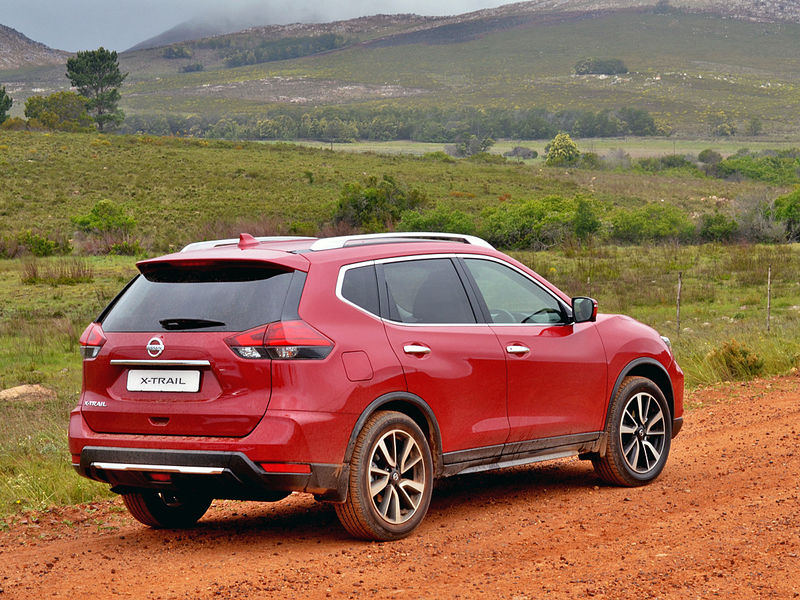
Exterior changes included a fresh version of the “V-Motion” grille, restyled headlights (with daytime running lights), integrated foglamps, LED taillights, new alloy wheel designs and updated bumpers.
By this point, the X-Trail’s trim levels had also been renamed, now comprising the base Visia, the mid-spec Acenta (including Acenta Plus) and the range-topping Tekna. An Acenta Tech derivative also made a fairly brief appearance.
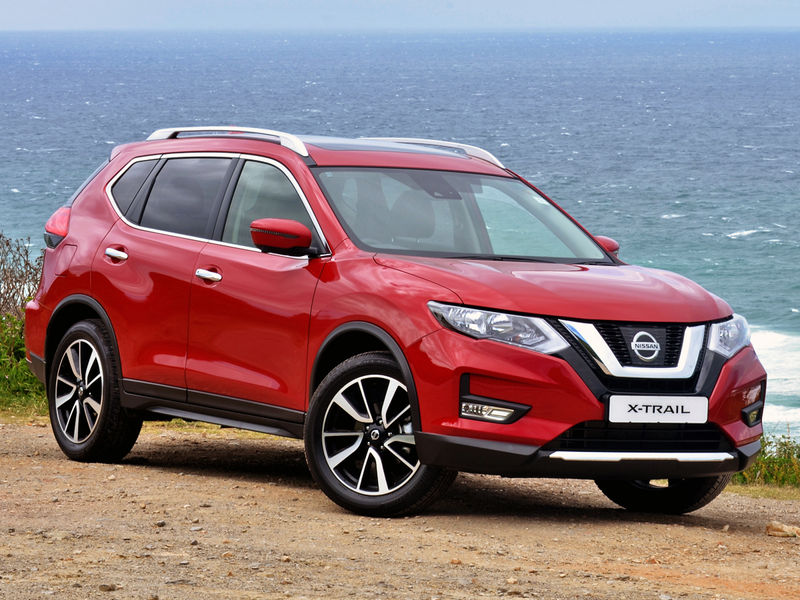
Finally, in March 2021, the X-Trail benefited from another update, this time gaining a new version of the Nissan Connect infotainment system that underpinned the 7-inch touchscreen interface, now equipped with Apple CarPlay and Android Auto. The mid-tier Acenta and top-spec Tekna grades further scored LED headlights, a reverse-view camera, push-button start and keyless entry with a sensor-controlled powered tailgate. At the same time, the local range was rejigged and rationalised from 8 to 5 derivatives.
Throughout the X-Trail’s lifecycle, Nissan South Africa offered a wide range of factory-backed accessories, from weather shields, bonnet protectors and towbars to Thule roof-rack systems, branded rubber floor mats and seat covers. There was even a special “Dog Pack”, which included items such as a fold-up canine walkway and a branded sleeping basket…
What are the advantages of a Nissan X-Trail?
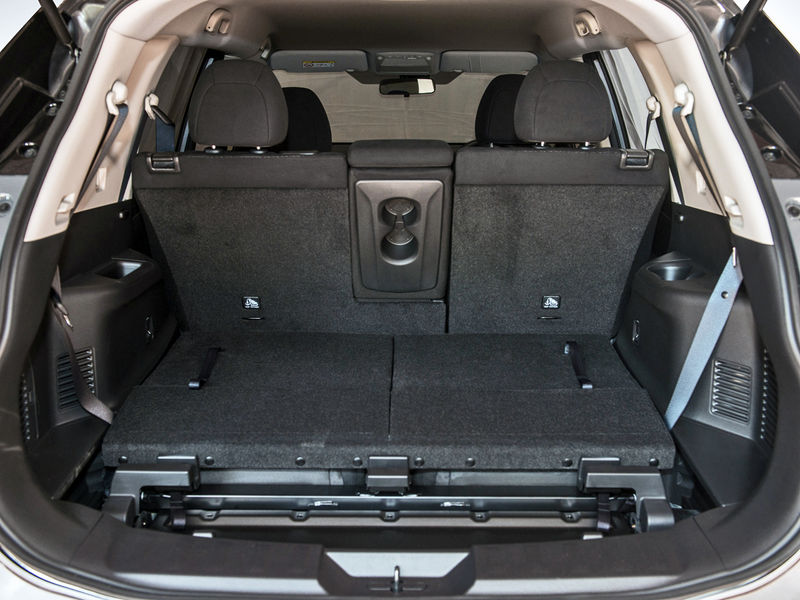
Practicality: There’s no doubt that the X-Trail was made with families in mind – the model was lauded for its practicality. For instance, the rear doors opened to a generous 80 degrees (easing ingress and egress for passengers, and making life easier for parents who have to shift bulky child seats), while the 5-seater’s split rear bench – which furthermore boasted reclining backrests – was able to slide fore and aft.
While 5-seat variants offered between 550 and 1 405 litres of luggage space (and generous rear legroom), 7-seater examples made do with capacity bookends of 135 and 1 310 litres. Note, however, that the 3rd row of 2 perches (which folded neatly into the floor when not in use) wasn’t particularly spacious. In addition, the panoramic sunroof (fitted to some X-Trail derivatives) limited rear headroom.
Available safety kit: The 3rd-generation X-Trail was awarded a full 5-star safety rating by Euro NCAP back in 2014, with its child-occupant protection score coming in at an impressive 83%. At launch, all South African-spec derivatives shipped standard with 6 airbags, ABS (with EBD and BAS), vehicle dynamic control, hill-start assist and ISOfix child-seat anchors. Meanwhile, the Nissan Safety Shield formed part of the optional Techno Pack for SE and LE derivatives, adding features such as a 360-degree camera system, lane-departure warning, blind-spot warning and moving object detection.
From the 2017 facelift, many of these advanced safety features were made standard for the Tekna trim level, which furthermore gained items such as intelligent lane intervention, intelligent blind-spot intervention, forward collision warning, autonomous emergency braking and cross traffic alert.
Ride quality: Employing MacPherson struts up front and an independent multi-link arrangement at the rear, the T32-series X-Trail’s suspension was tuned with ride comfort chief in mind. It was thus adept at soaking up imperfections on poorly surfaced roads, while also offering commendable comfort levels on gravel. Even the top-spec derivatives – the pre-facelift LE and later the Tekna – rode with a reasonable degree of pliancy (the 18-inch alloys of the former boasted suitably squishy 60-profile rubber, while the latter’s 19-inch items featured a slightly less-forgiving profile of 55).
What are the disadvantages of a Nissan X-Trail?
Potential CVT problems: All derivatives in the local T32-gen X-Trail range featured manual gearboxes, bar the naturally aspirated 2.5-litre variants, which shipped with Nissan’s “Xtronic” continuously variable transmission (CVT). Unfortunately, this CVT unit was known to malfunction and was even the subject of several technical service bulletins (mostly in North America, where class-action lawsuits were launched). So, look out for jerking or shuddering – which could be caused by either a faulty valve body or a worn (and thus slipping) metal transmission belt – when test-driving a derivative fitted with the QR25 engine.
No auto option for the diesel: While the 1.6 dCi (R9M) turbodiesel engine – a product of Nissan’s alliance with Renault – punched well above its weight and offered the potential for impressive fuel economy, it was available only with a 6-speed manual gearbox. Working with a narrow peak torque band typical of oil-burning engines, it tended to require frequent cog-swapping. It’s thus a pity there wasn’t a conventional torque-converter automatic transmission available for this powerplant in our market.
Miscellaneous electrical gremlins: A number of owners have reported electrical issues (covering a wide range of functions). For instance, we’ve heard of intermittent problems with the parking sensors, erratic stop-start systems (on the 1.6 dCi), infotainment gremlins (sometimes solved with a software update) and various issues with the electrically powered tailgate. So, it’s well worth testing those functions during a test drive to rule out as many electrical maladies as possible when viewing a potential buy. Also, note the infotainment system may feel a touch outdated compared with more modern equivalents.
How much is a used Nissan X-Trail in South Africa?
At launch, all X-Trail derivatives shipped with a 6-year/150 000 km warranty and a 5-year/90 000 km service plan. Take note, however, by the time the facelifted version was introduced in 2017, the service plan had been quietly cut to 3 years or 90 000 km. As always, favour vehicles with a full service history.
Of the used 3rd-gen Nissan X-Trails listed on Cars.co.za at the time of writing, nearly 80% employed a petrol powerplant. The 2.5-litre engine – the only model with a CVT – was the most popular, accounting for 60% of listings, followed by the 1.6 dCi (20%) and the naturally aspirated 2.0-litre petrol unit (20%).
Fascinatingly, more than 70% featured all-wheel-drive (check for underbody damage when shopping for an all-paw derivative), while 7-seater examples made up a shade over 20% of all listings. Mileage varied from virtually new examples through to a 2016 2.5 SE 4×4 CVT with a whopping 410 000 km on the clock (plus a further 7 derivatives with more than 200 000 km on their respective odometers).
- Below R200 000: The vast majority of listings below the R200 000-mark were early model-year units, most with mileage on the wrong side of 150 000 km. All 3 engines were present here. Tread particularly carefully if you plan on shopping in this space.
- From R200 000 to R350 000: There was plenty more stock to choose from (in fact, this was the most densely populated pricing bracket of all), including nearly new entry-level Visias at the upper end. Interestingly, every model year was represented here, though 2019 was the most common.
- From R350 000 to R500 000: We found only facelifted X-Trails here, with the earliest model year being 2018. All units listed between these pricing bookends had less than 80 000 km on their respective odometers, though there were very few turbodiesels on offer.
- R500 000 and up: Considering the outgoing X-Trail range started at R520 900 new at the time of writing, it’s little surprise most vehicles listed on the far side of half a million were 2023 models. That said, there were also a number of 2021 2.5 Tekna 4×4 CVT 7-seaters in this space.
Pick of the range?
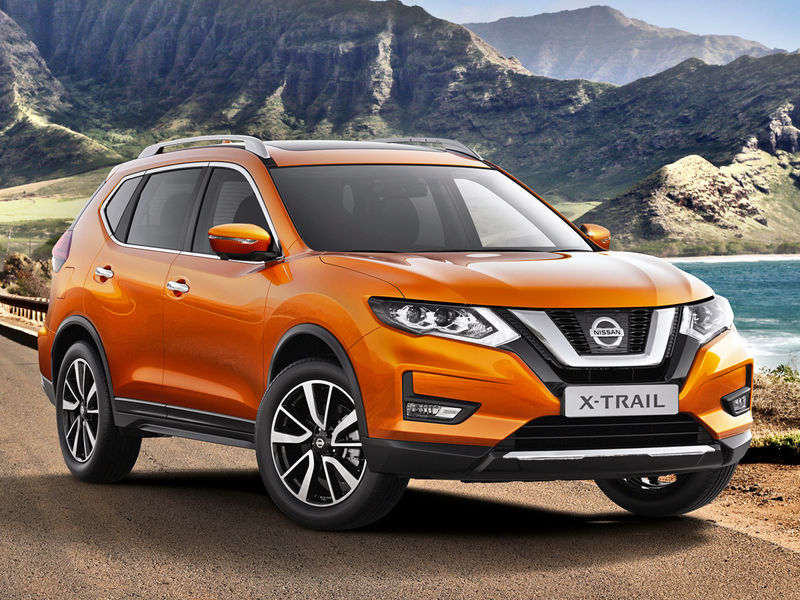
Which derivative should be near the top of your shopping list? Well, first we’d recommend narrowing your search to a facelifted model, since the mid-cycle update brought material improvements to the cabin, a smattering of extra kit and exterior styling that was a little more distinct from that of the smaller Qashqai.
While there’s an argument to be made that the naturally aspirated 2.0-litre petrol engine and its 6-speed manual gearbox would offer the best long-term ownership proposition from a reliability standpoint, this powertrain lacked grunt and refinement, plus was available (in facelifted form) only in entry-level Visia grade. What about the 2.5-litre variants? Well, they’re certainly the easiest to source on the used market, although they tend to be quite thirsty (and there have been issues with the CVT, as mentioned above).
That leaves us with the 1.6 dCi, which was available from 2017 in front-wheel-drive 7-seater Visia guise and all-paw 5-seater Tekna form (both with a 6-speed manual cog-swapper). We’d lean towards the latter, which came very generously equipped and was almost as frugal (at a claimed 5.3 litres per 100 km) as the front-wheel-drive version.
A caveat about this turbodiesel powerplant, however: we’ve seen a fair few local complaints of the diesel particulate filter (DPF) becoming clogged, a problem that sees the X-Trail default to limp mode. If you mostly drive around town (and seldom hit the open road), you may want to avoid the 1.6 dCi as short trips can quickly lead to DFP blockages, which – if left unchecked – can result in costly turbo damage.
Is the Nissan X-Trail a good second-hand buy?
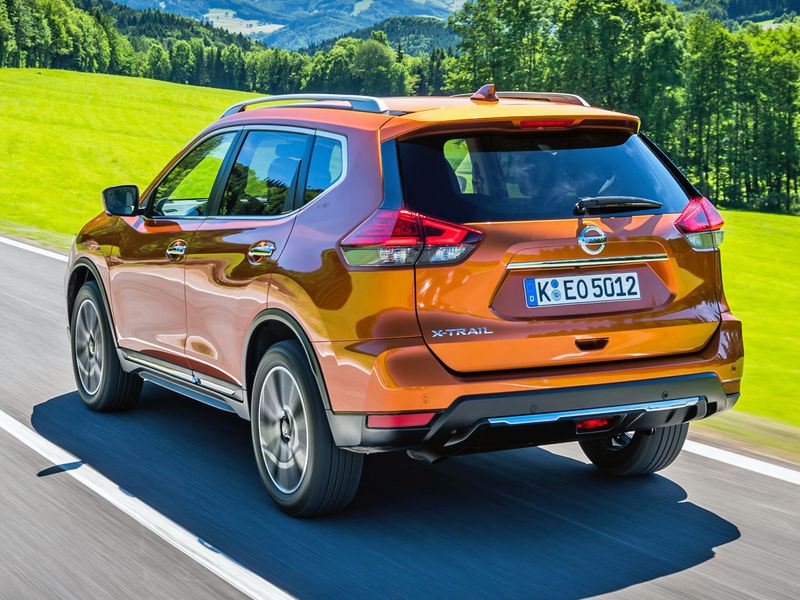
Like its more compact Qashqai sibling, the 3rd-generation X-Trail straddled 2 segments in many senses, meaning it competed with somewhat smaller alternatives – as well as bigger rivals. That saw it battle the likes of the XA40-gen Toyota RAV4, the 2nd-gen Volkswagen Tiguan, the KF-gen Mazda CX-5 and the 5th-gen Honda CR-V, not to mention the TL-gen Hyundai ix35 and the QL-gen Kia Sportage (plus the ill-fated and much maligned C520-gen Ford Kuga). The HC-gen Renault Koleos, which rode on the same platform (and was offered with the same 2.5 CVT powertrain), represented a left-field alternative.
On the 7-seater front, the X-Trail had to contend with the Chevrolet Captiva and perhaps even the 3rd-gen Mitsubishi Outlander, while the substantially larger 3rd-gen Hyundai Santa Fe and UM-gen Kia Sorento were certainly worth a shout for families that required even more space. Those seeking proper off-road ability were better served by the likes of the Toyota Fortuner and Ford Everest.
It’s also pertinent to reiterate here the X-Trail’s 3rd row of seats was quite cramped, so it was more of a “5+2-seater” than a fully-fledged 7-seater family car.
Though the T32 series X-Trail likely didn’t hold much appeal to faithful owners of the first 2 iterations of the Japanese model, it certainly opened the nameplate to a wider range of buyers. In well-looked-after used form today, the turbodiesel models in particular have plenty to offer, including a pleasing blend of punch and frugality, in conjunction with lofty comfort levels and oodles of family-friendly practicality.
Looking for a Nissan X-Trail to buy?
Find one on Cars.co.za here.
Looking to sell your car? You can sell it for free to our dealer network here.