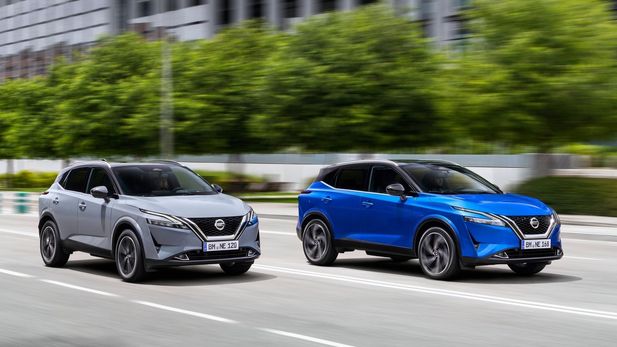
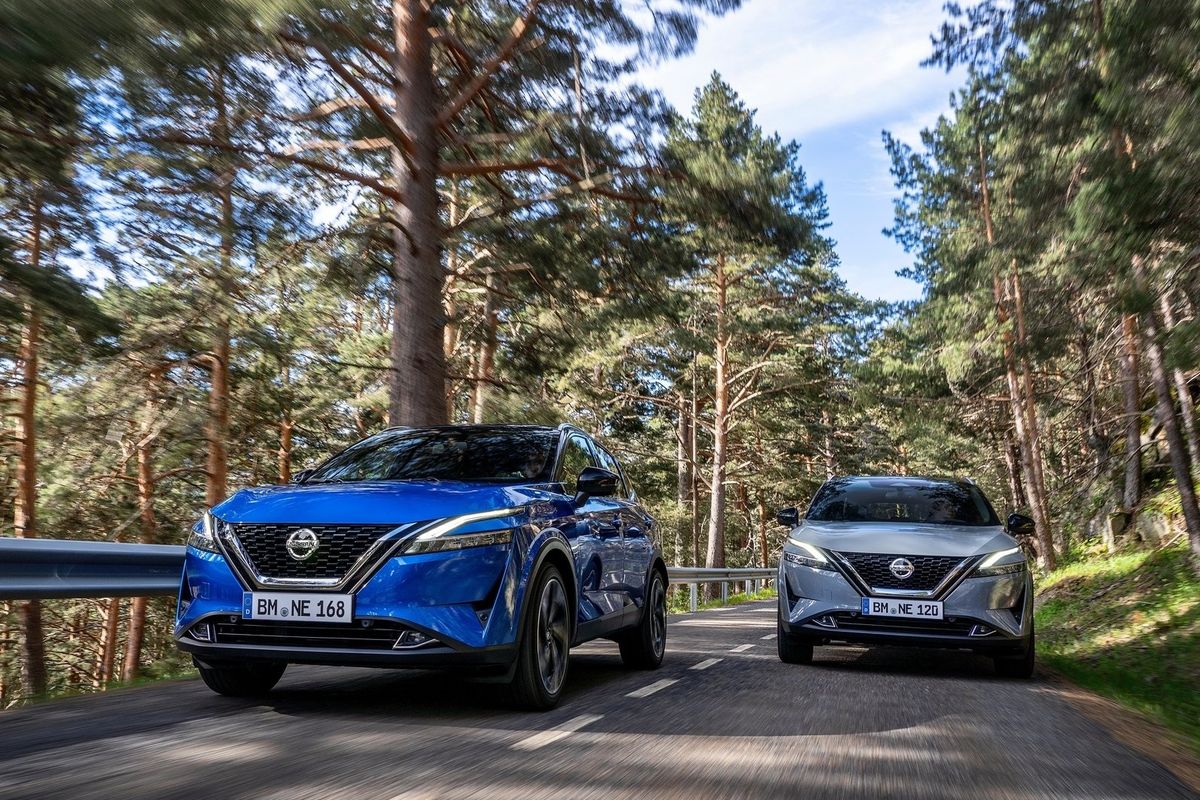
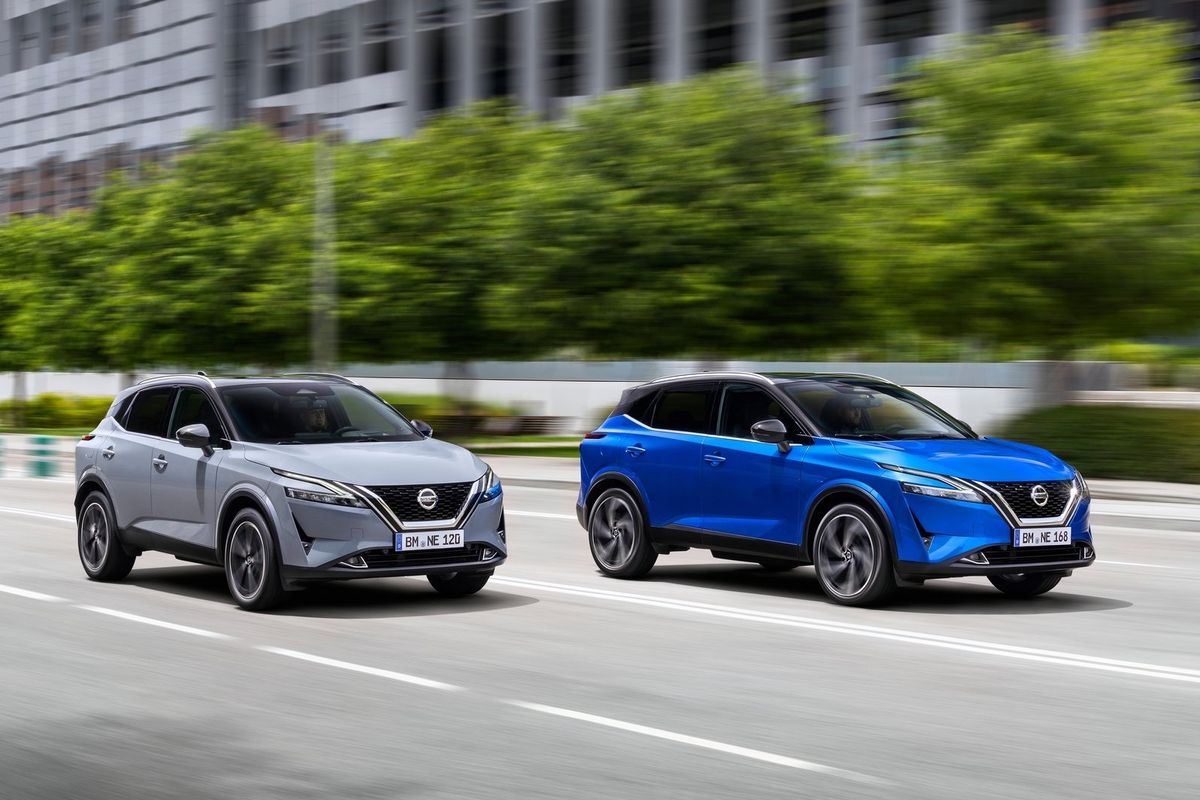
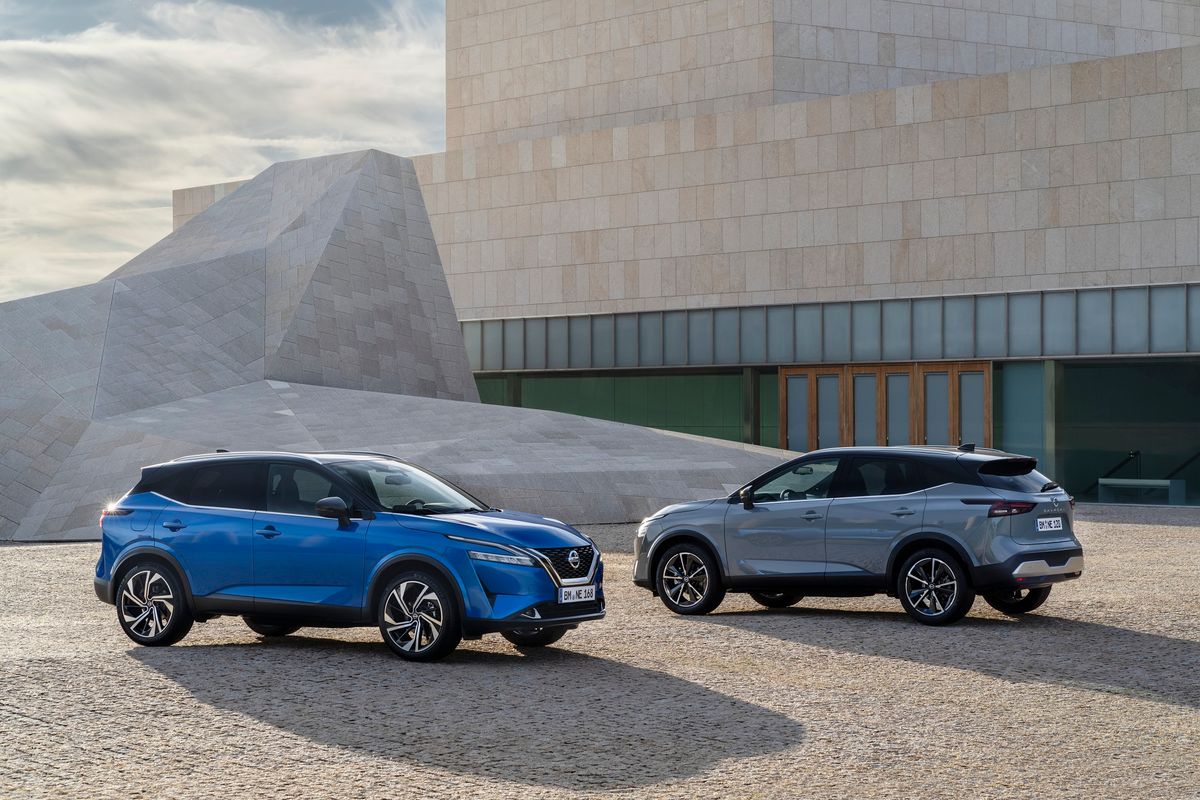
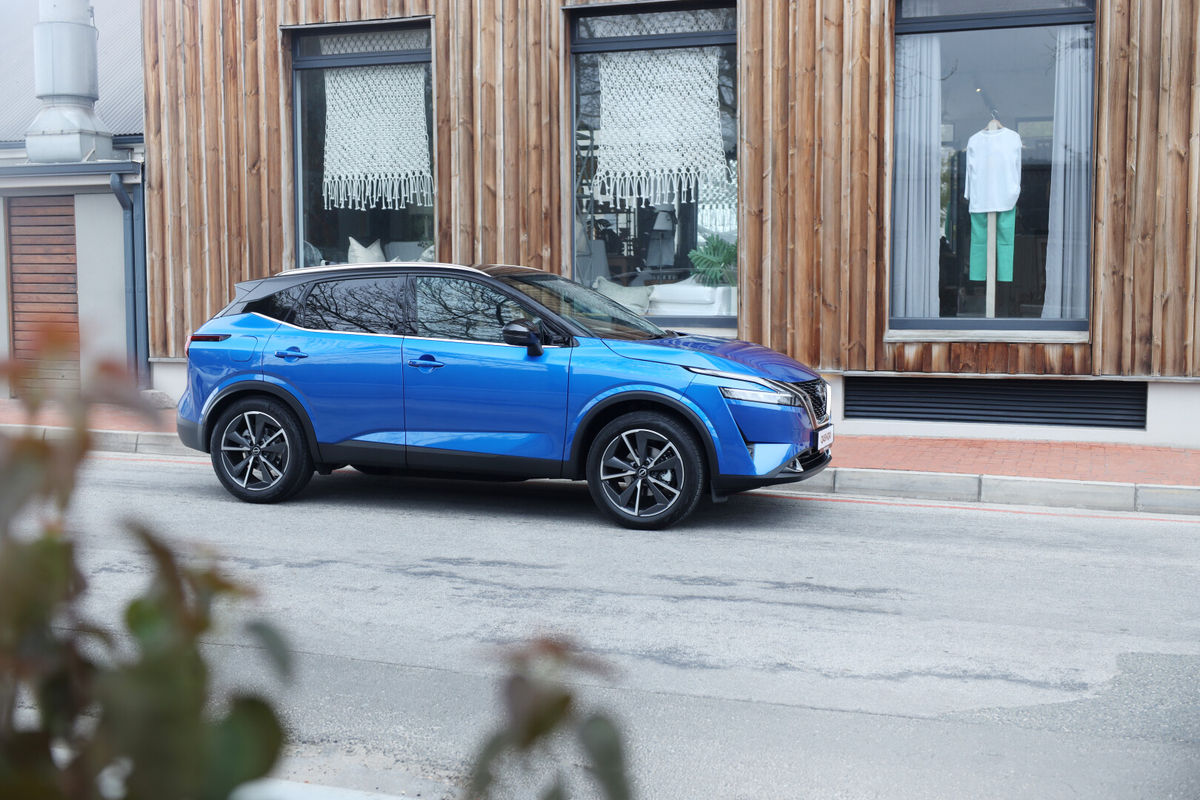
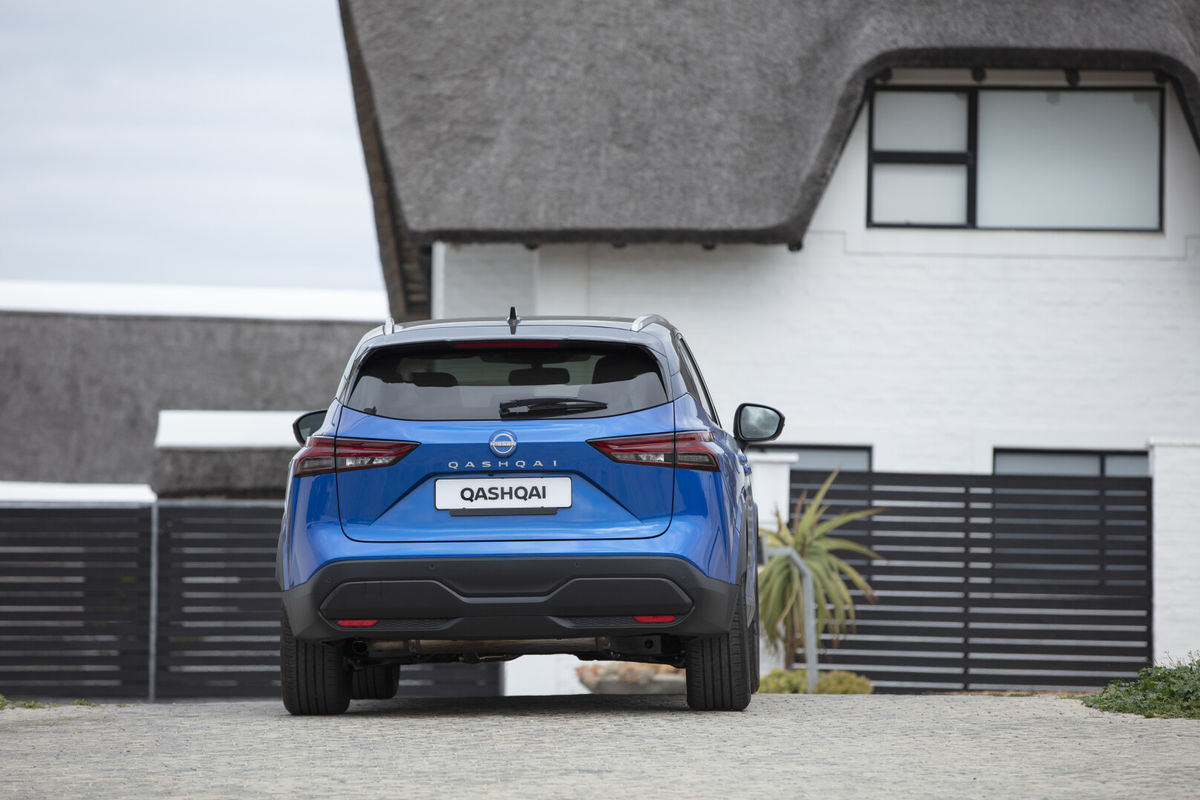
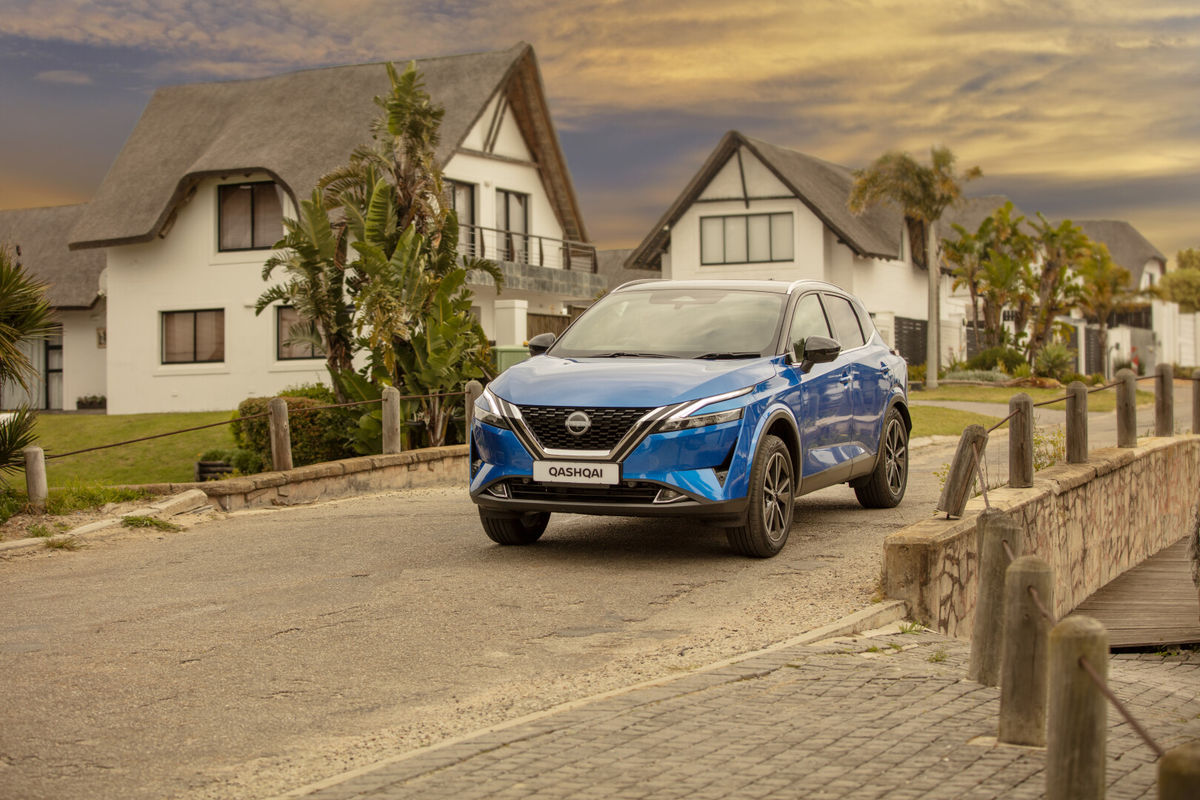
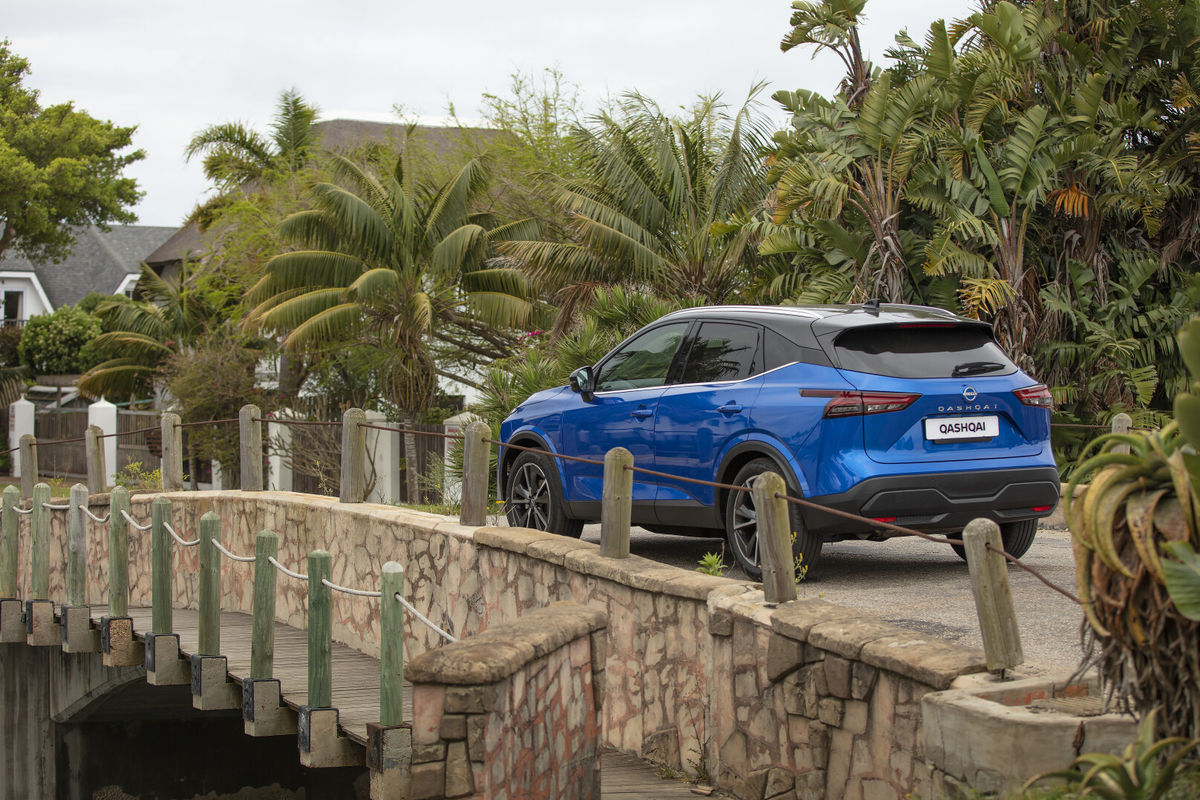
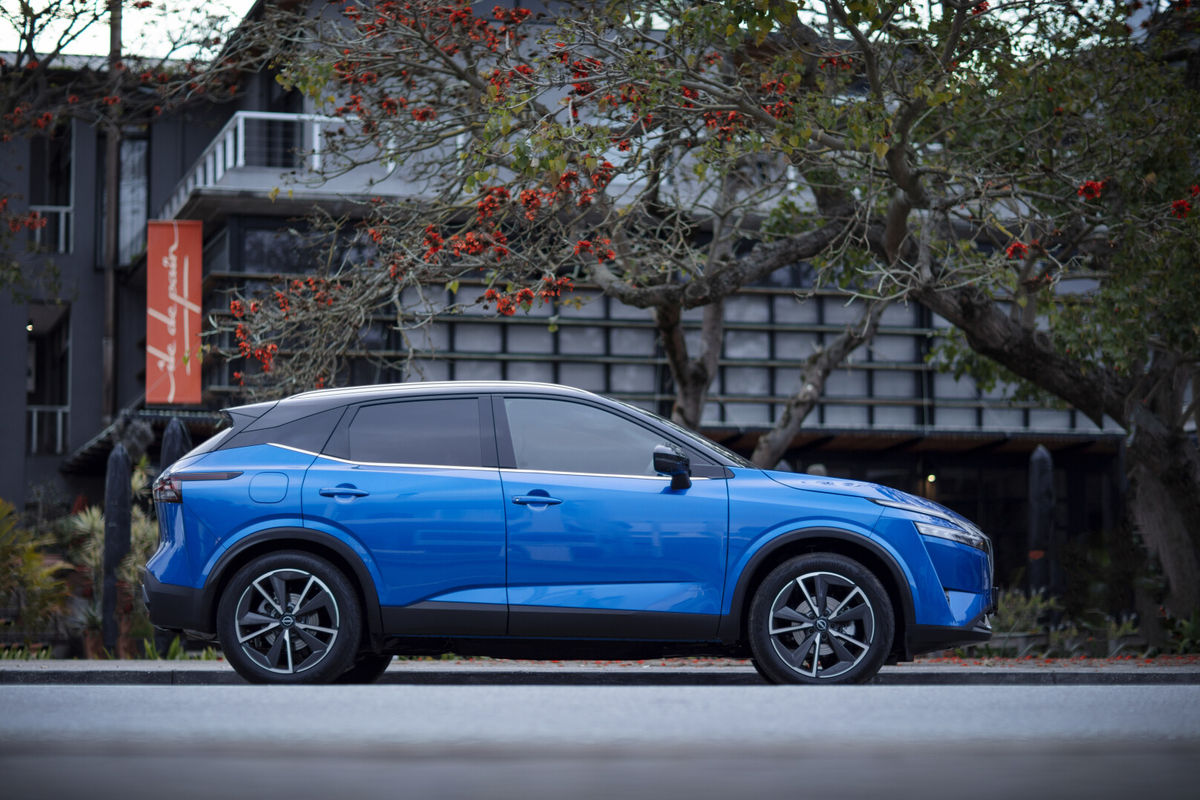
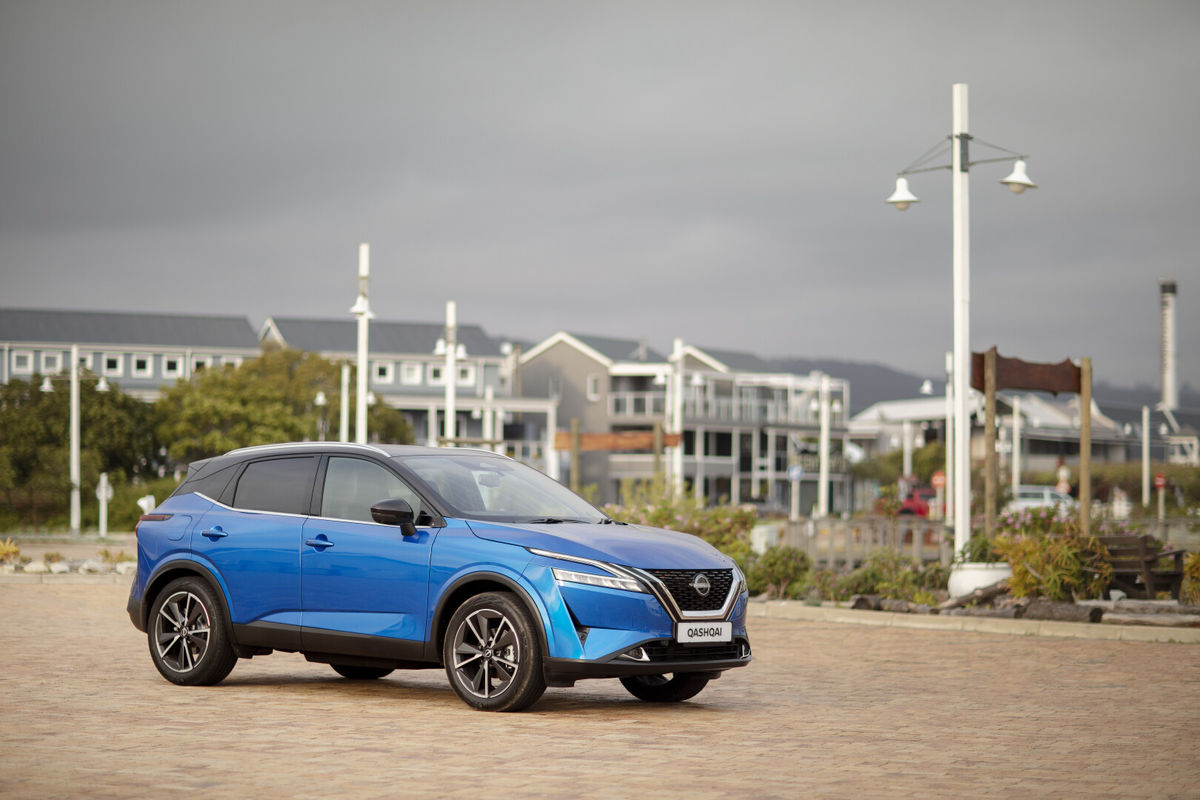
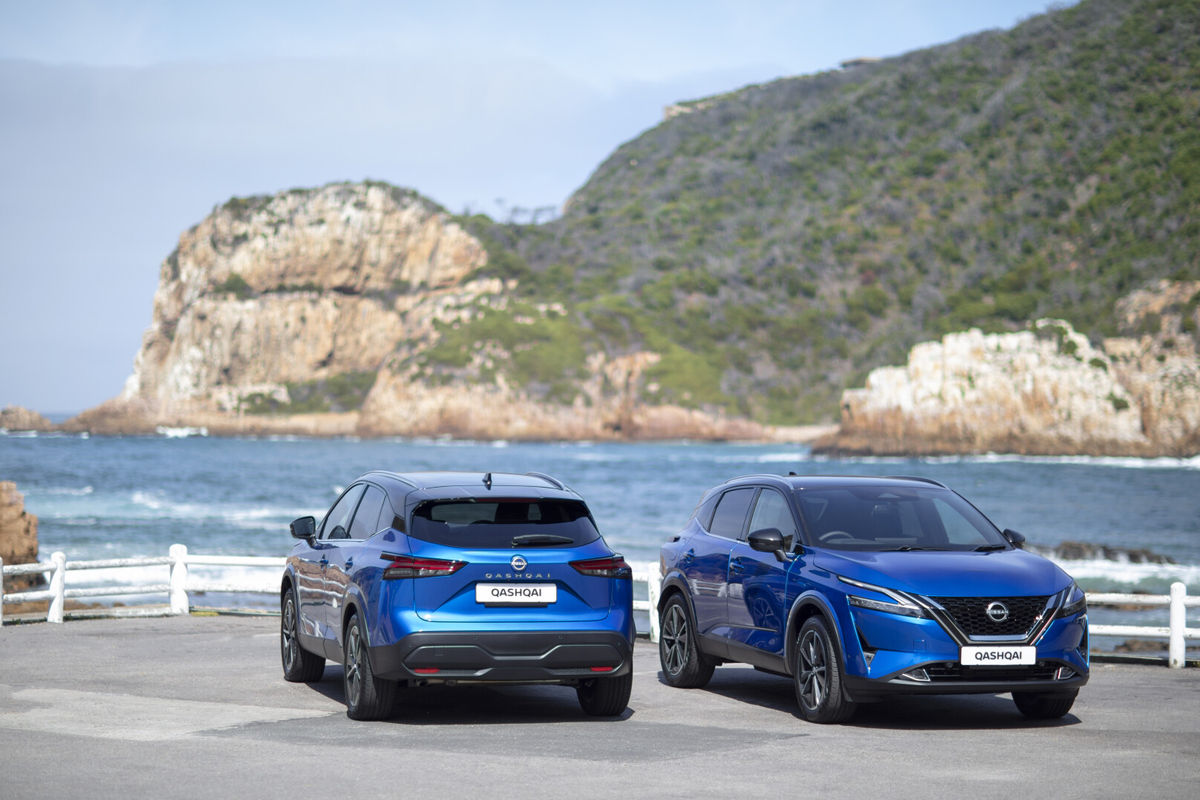
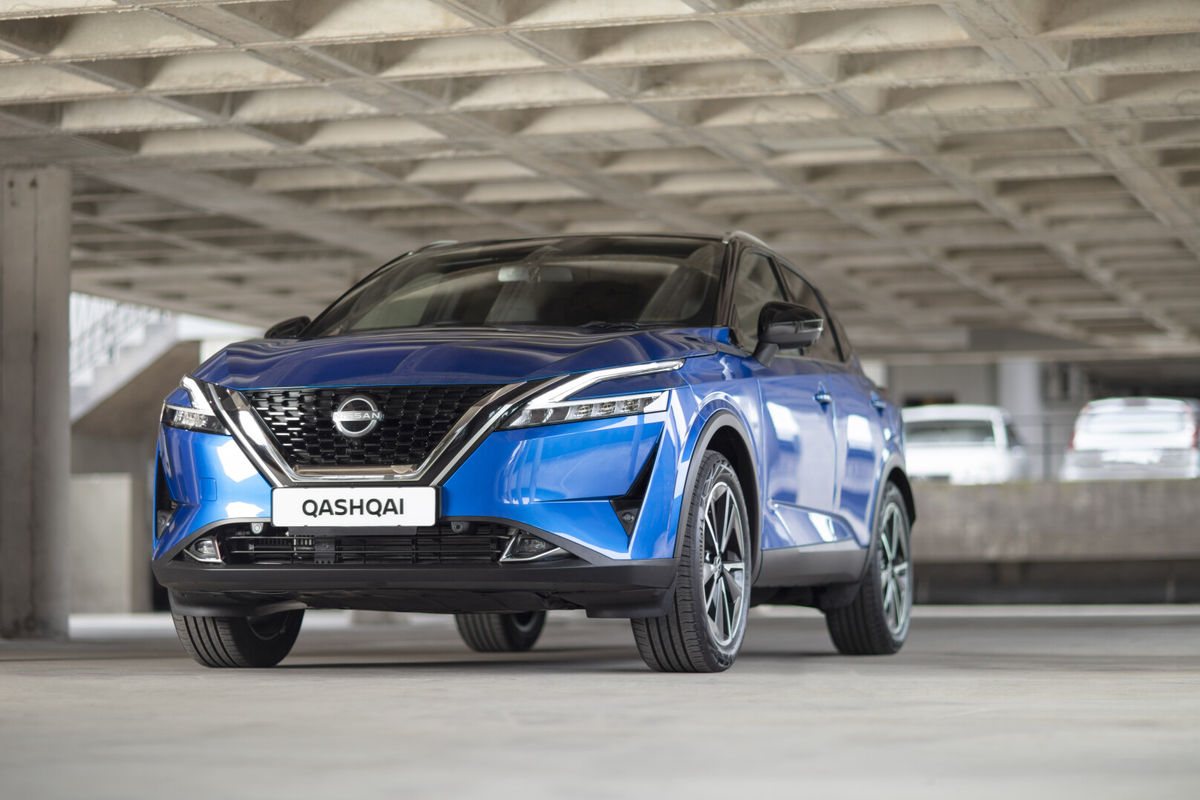
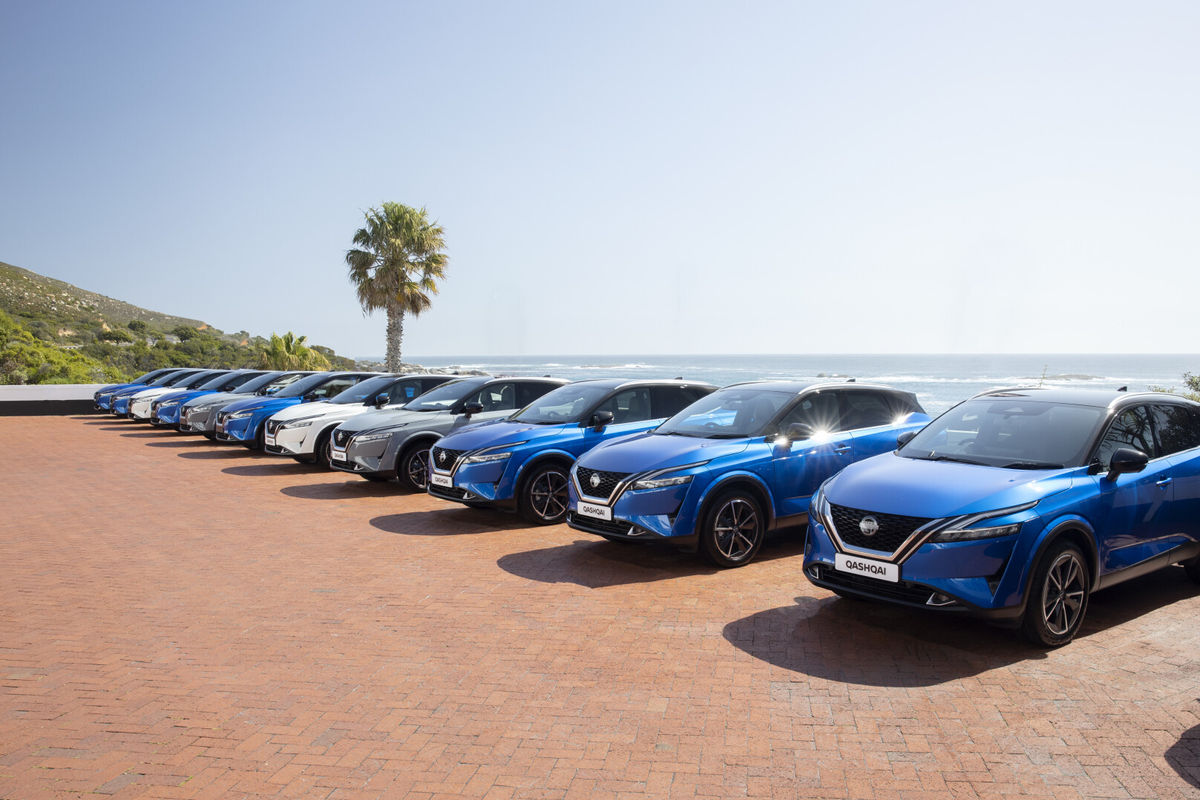
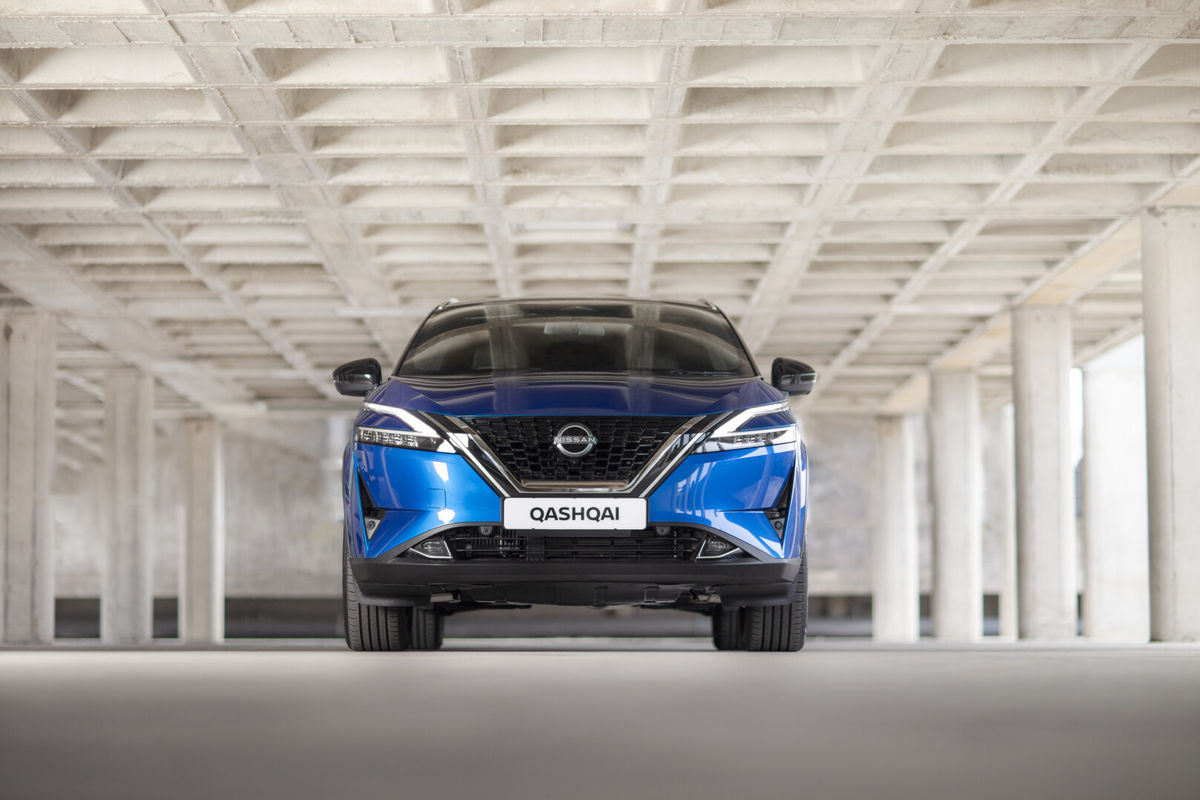
The 3rd-generation Nissan Qashqai has finally landed in South Africa and Ciro De Siena drove the new model at its local launch event in Cape Town. Is the Qashqai as brilliant as before, even though it has moved upmarket and faces much stiffer competition than its predecessors?
Like waiting for your favourite band’s 3rd album, South African motorists have had to be very patient in anticipation of the 3rd-gen Nissan Qashqai, which was launched in Europe in 2020. However, I can confirm that, after having seen a few and even driven one in real life, the latest iteration of Nissan’s (once segment-defining) small crossover is now very much available on local soil.
Sixteen years ago, the Qashqai arrived on the global motoring scene like a fresh rock band that nobody had ever heard of. Their first release was a smash hit, turning the industry on its head and spawning a dozen copycats.
Nissan’s second “album” continued the legacy and smashed sales records around the world. The Japanese brand must have felt the weight of expectation in creating the 3rd iteration of its pioneering small crossover. Many a rock band has faltered with their 3rd album, disappointing fans by deviating from the formula that endeared them to millions. And so, is Nissan’s 3rd-generation Qashqai a mature and solid offering, or will the nameplate leave long-time fans wanting more?
What’s on offer?
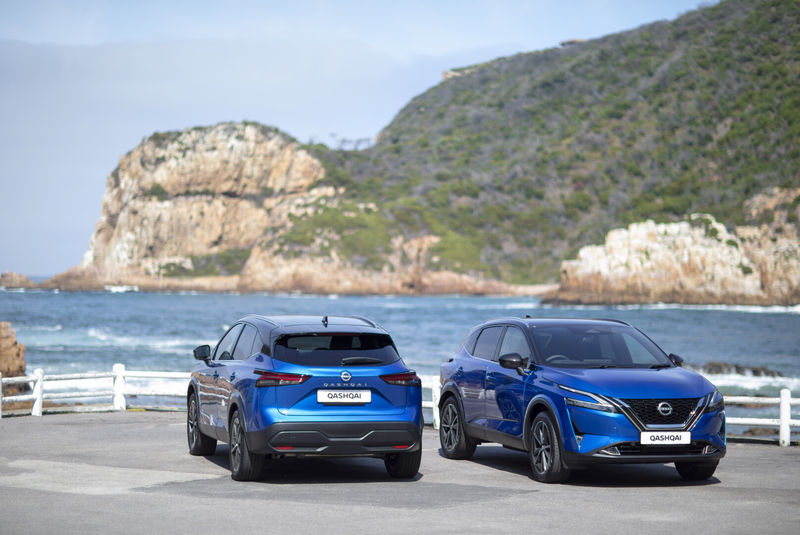
The South African Qashqai line-up comprises a single engine-transmission combination and 3 trim levels of trim, with no diesel option available at all. Additionally, there will be no all-wheel-drive option, it’s FWD only, folks (Nissan’s evidently saving the AWD offering for the upcoming X-Trail). The 1.3-litre 4-cylinder turbopetrol engine employed in the 3rd-gen Qashqai was co-developed by the Nissan-Renault-Mitsubishi alliance. Suffice it to say, you will find this engine at work in a number of products, including the Mercedes-Benz A-Class – because the Daimler Group co-opted the motor for its compact models!
In March 2023, Nissan will launch the ePower Qashqai locally, which the brand is particularly excited about, and which I suspect South Africans will be very interested in as motorists try to reduce their running costs. Nissan’s SA representatives were tight-lipped on any details to do with the ePower (especially the price) but as soon as we have more info, we will, of course, share it with you.
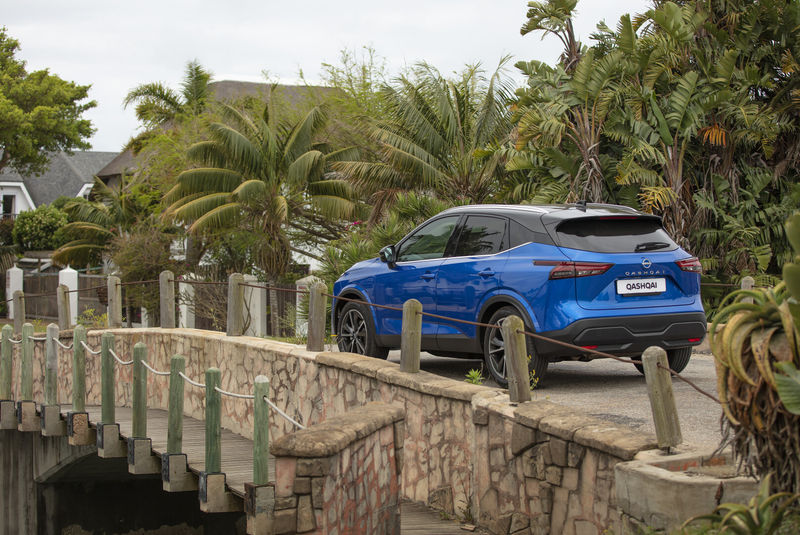
A 1.3-litre turbocharged 4-cylinder powers the new Qashqai
In the meantime, the 1.3-litre 4-cylinder motor is quite a peach. By virtue of strong peak outputs of 110 kW and 250 Nm from its powerplant, the Qashqai never feels anything but spritely (note that the entry-grade 1.3T Visia produces 96 kW and 240 Nm, however). In urban environments, you barely need to brush the accelerator pedal with your right foot to exact eager progress. The engine seems to have been tuned to perform particularly well in urban environments. Without even trying or being conscious of driving economically, we averaged a very impressive 6.7 L/100 km on the launch route (before hitting the freeway), which is very close indeed to the claimed fuel consumption figure of 6.1 L/100 km.
There is a manual ‘box in the 1.3T Visia, but the 1.3T Acenta and -Acenta Plus make use of a continuously variable automatic transmission (CVT). The Qashqai’s CVT impressed me very much. In vehicles equipped with earlier versions of the CVT, burying your foot on the long pedal would prompt the transmission to hold a constant (usually sky-high) engine speed, resulting in a sustained “droning” sound and dreary driving experience so lamented by the motoring press.
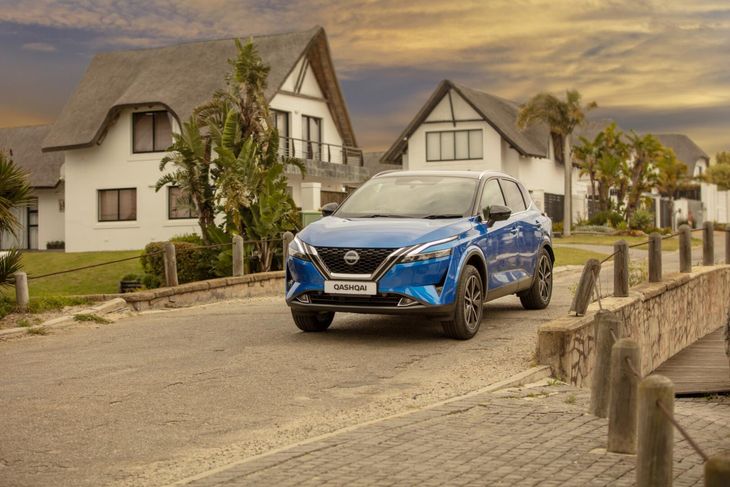
The new-generation CVT does a much better job of simulating the driving experience offered by conventional auto ‘boxes.
The CVT in the latest Qashqai has, however, been tuned to allow the engine speed to climb steadily, resulting in a more natural “automatic transmission”-like experience. There even seems to be a kickdown function coded into the software; it works like this: when you step on the accelerator pedal, the transmission responds by jumping into the engine’s peak power band, giving the driver everything the engine has got to give, which results in optimal overtaking acceleration.
When cruising, the ‘box keeps the engine speed low, resulting in a quiet, calm ride and, of course, optimised fuel efficiency. It was a particularly impressive aspect of the drivetrain.
The launch route was not of significant length, but it took in a mix of truly terrible roads (the poorly surfaced stretch around Misty Cliffs) and a highway stint, which showed off the breadth of the Qashqai’s talents.
On the truly awful country lanes that wrap the peninsula, which belie the usually billiard-table smooth roads of the Western Cape, the Qashqai was composed and quiet, its pliant suspension took the rough surface in its stride. After this stretch, I was convinced the new Qashqai could handle just about anything South Africa could throw at it.
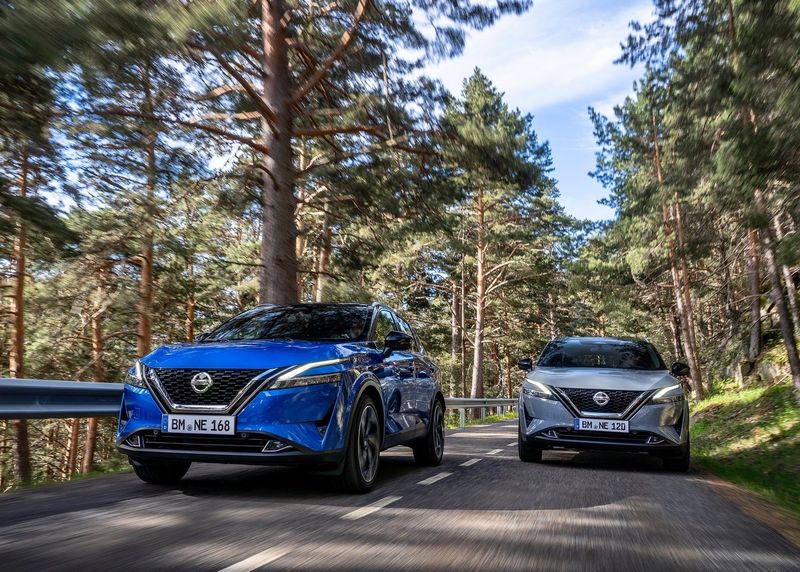
Fuel economy and ride refinement are the order of the day
On the highway, I immediately noticed the low level of engine-noise intrusion in Nissan’s newcomer. There was perhaps a touch more wind noise than ideal, but the car might as well have been powered by sails, it was that quiet.
On the freeway stretch, I was able to test out the new Qashqai’s ProPILOT system. This is a self-steering, or lane-centre-keeping system, which, when combined with radar-guided cruise control (featuring active acceleration and brake application), makes for a largely autonomous driving experience.
While not revolutionary from the systems offered by other manufacturers, the system works very well. The Japanese crossover remains bang in the centre of the lane and responds quickly to other vehicles crossing unexpectedly into its path.
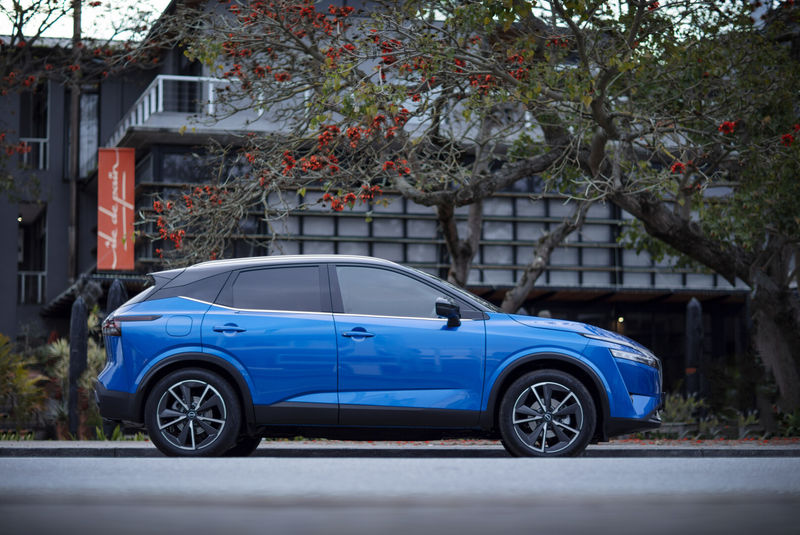
The Qashqai is available in 3 trim levels.
While the system will aggressively beep at you if you keep your hands off the ‘wheel for too long, it does allow you to keep a loose grip on the rim, and as it makes tiny steering adjustments on your behalf, the result is a very relaxing driving experience, which I suspect will be much appreciated by drivers when covering long distances, with the system going a long way to combat driver fatigue.
At highway speeds, ample power and torque give the driver the confidence to execute quick overtaking manoeuvres, and the transmission does an excellent job of keeping the engine speed low to minimise that aforementioned “CVT drone”.
The fuel consumption crept up to 7.8 L/100 km during our stint of highway driving (because we had some overtaking to do, plus plenty of slowing down and speeding up), but that’s a respectable figure for a car of this size, luxury and outputs.
Interior
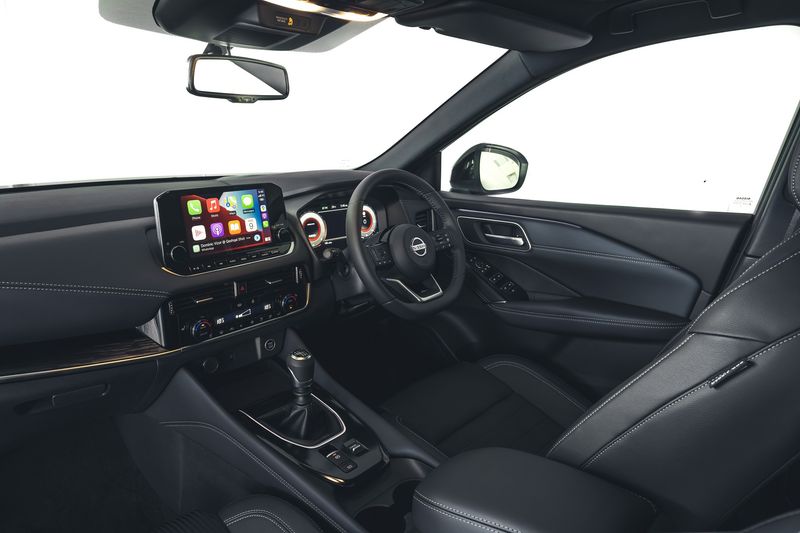
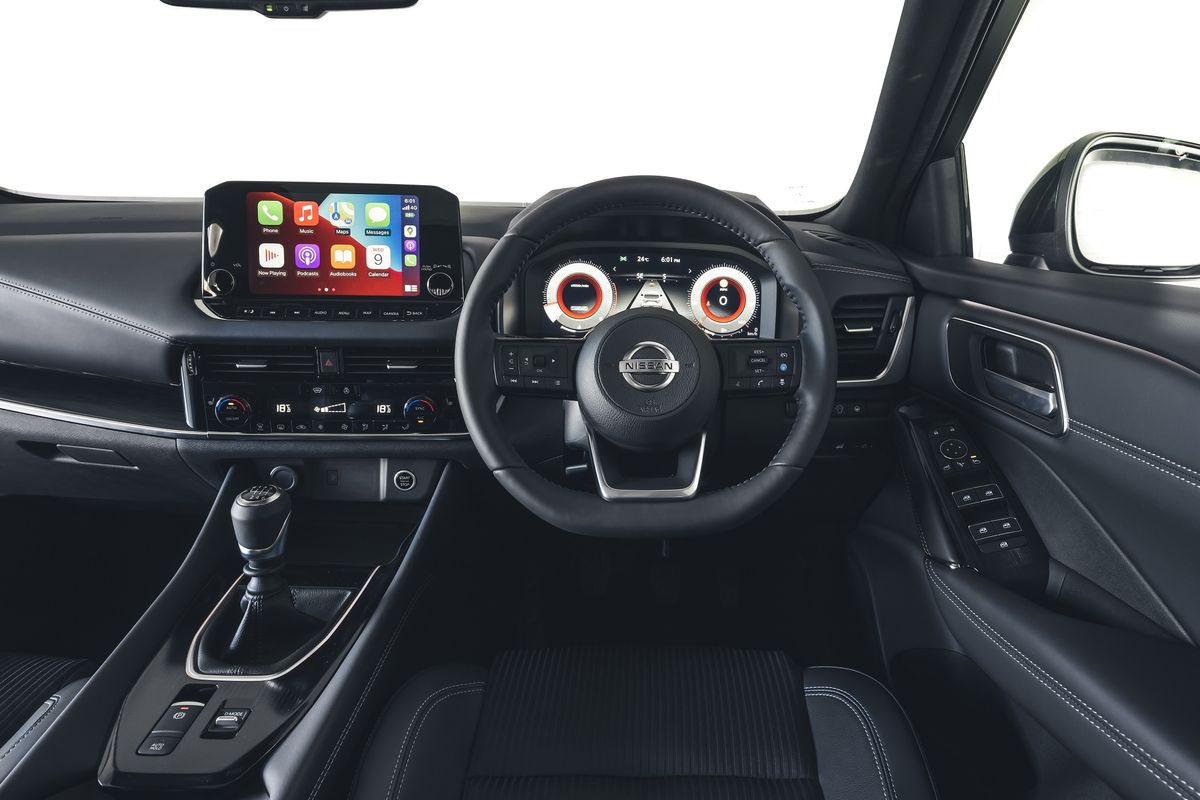
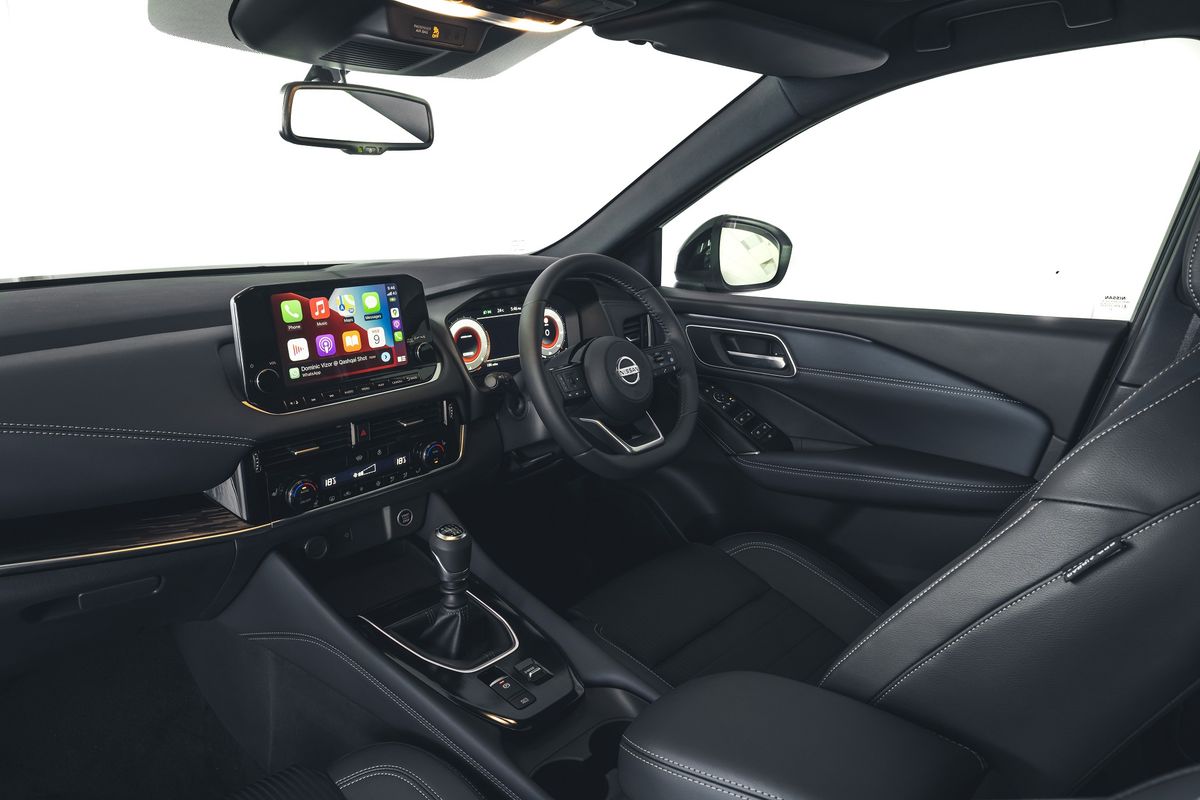
Inside, the new Nissan Qashqai’s fit-and-finish is very good.
I was only able to experience the top-grade Qashqai Acenta Plus, which features a premium-grade leather interior and all the tech and spec that Nissan can bring to the party. All Nissan Qashqais sold in South Africa will be built to European spec and carry a 5-star Euro NCAP safety rating.
The Acenta Plus features Nappa leather massage and heated seats, leather-wrapped steering wheel, wireless charge pad, fully electric seats (with memory function), dual-zone climate control, ProPILOT autonomous driving, autonomous emergency braking with pedestrian detection, intelligent headlights with 12-split capability and slick gear knob, which moves in a way you don’t expect. It sort of slides. It’s difficult to describe, but it’s very cool.
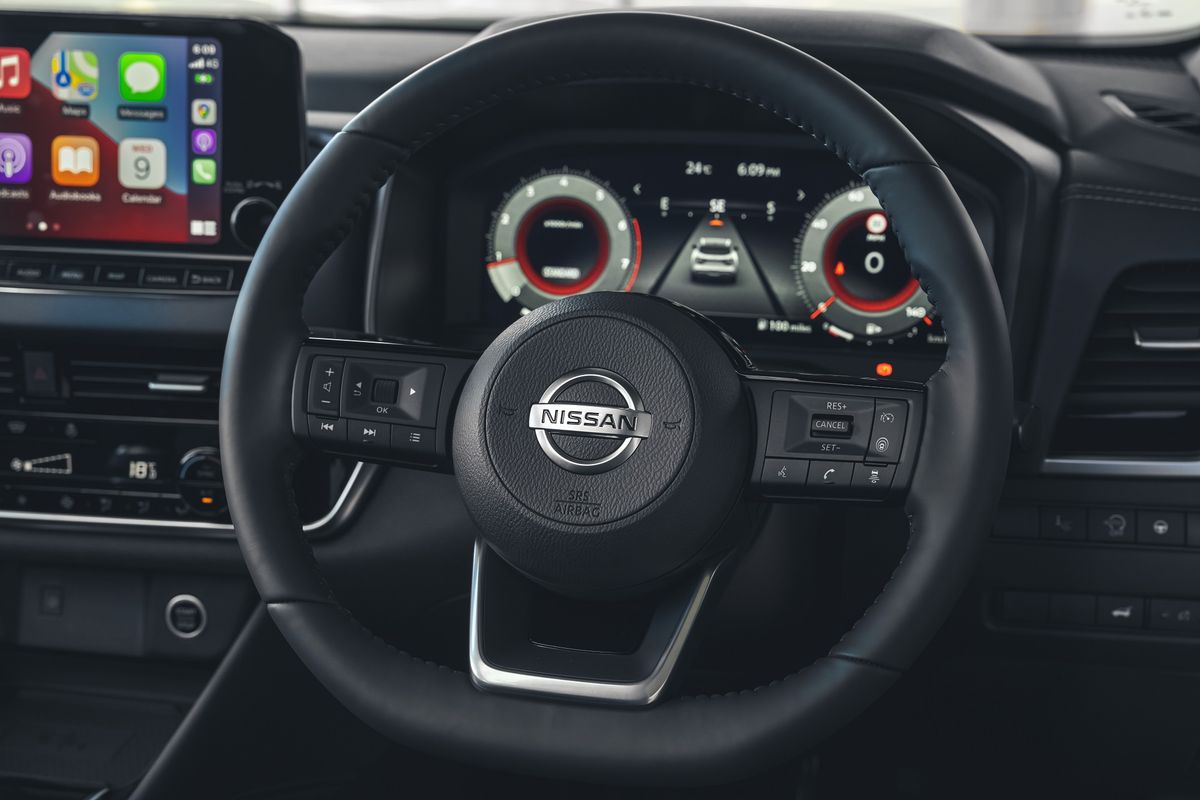
Overall, the cabin is impressive; it’s awash with soft-touch surfaces and stitched leather, with a particularly premium feel to the switchgear. The only element missing for me was a digital instrument cluster, with the analogue dials feeling a bit yesteryear compared to the rest of the cabin.
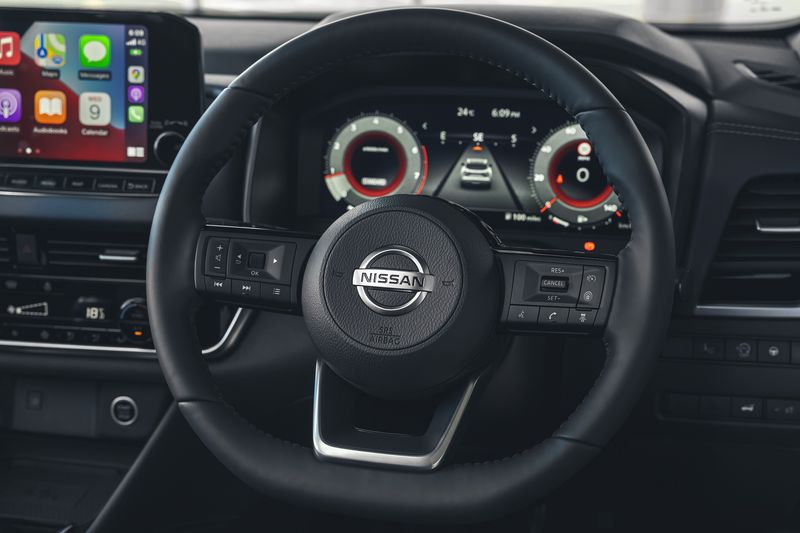
A digital instrument cluster is reserved for the European-grade Qashqai, sadly.
The centre of the dash is dominated by a 12.3-inch touchscreen featuring satnav, as well as wireless Android Auto and Apple Car Play, while the front-seat design was a highlight for me… I sat particularly comfortably with very little fatigue to speak of. I briefly tested the rear bench, which can’t match the front seats for comfort, but there was a respectable amount of knee room, at least when I sat behind the driver seat set up for me; children could sit there quite comfortably.
In summary, the interior is knocking on the door of the premium brands’ cabins. In fact, I would say it is better built and of better quality materials than you might find in something like the outgoing Mercedes-Benz GLC, and with styling and panache that easily rivals competitors such as the Mazda CX-5.
Nissan Qashqai (2022) Price in SA
The new Nissan Qashqai is sold with a 3-year/90 000 km service plan, 6-year/150 000 km warranty, and 6-year/150 000 km roadside assistance.
| 1.3T Visia | R568 200 |
| 1.3T Acenta | R639 300 |
| 1.3T Acenta Plus | R670 600 |
Want to buy a new/used Nissan? Browse stock now
Summary
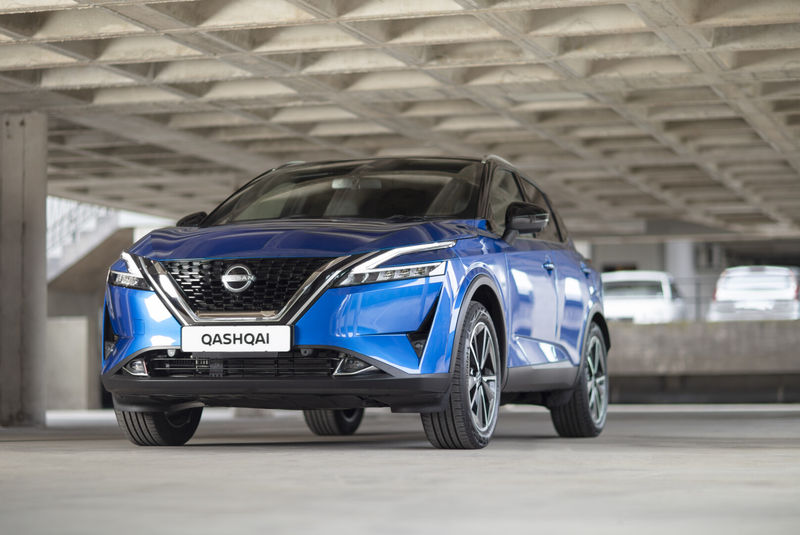
The 3rd-generation Qashqai looks set to become another success story for Nissan.
The Nissan Qashqai has grown up a lot. It is no longer the quirky crossover that endeared itself to millions around the world; it has become a mature member of the establishment – with a price tag to match its more upmarket positioning.
It is slightly more compact than the latest Kia Sportage family car, but noticeably smaller inside than the latter’s longer Hyundai Tucson cousin… an offering that doesn’t offer nearly the same level of specification as the Qashqai but does, perhaps in simple terms, represent “more car for your money”.
Any car maker entering a crossover/SUV segment in South Africa right now will have an eye firmly on the Chinese brands. Haval and Chery have disrupted the local market with offerings that offer solid build quality and liberal specification in combination with keen prices. Here’s some context: the top-spec H6 2.0T 4WD Super Luxury (if you can get one of the much-in-demand Havals) costs R589 950 (September 2022), which undercuts the mid-spec Qashqai 1.3T Acenta, while the Chery Tiggo 7 Pro is a similar offering in the basic aspects of size and shape (although the Nissan’s load bay is more capacious), but a top-spec Tiggo 7 Pro 1.5T Executive costs over R200 000 less than the 1.3T Acenta Plus…
However, I do feel there is space for many players in these increasingly fragmented SUV segments – Nissan might have to make sure that they, and their customers, are comfortable with being near the top end of the pricing spectrum.
In many ways, the Qashqai represents a technological tour de force in this segment, with many features that many of its rivals simply can’t match, or in terms of the premium brands, can offer – but at a hefty extra price.
Compared with some of the larger volume-selling small crossovers, such as the Kia Seltos, Hyundai Creta and Toyota Corolla Cross, the Qashqai aims at a more premium market. It’s priced very keenly compared with the BMW X1, Mercedes-Benz GLA and Lexus UX (the Audi Q3 Sportback begins at R666k, which narrowly undercuts the flagship 1.3T Acenta Plus), but could buyers of those marquee crossovers be genuinely tempted to opt for Nissan’s newcomer?
Perhaps buyers are more likely to compare the Qashqai with family SUVs such as the Haval H6, Kia Sportage and Hyundai Tucson, Mazda CX-5, Toyota RAV4 and Volkswagen Tiguan, most of which are bigger inside than the Nissan and, in an increasingly price-conscious market, motorists might be looking for more bread-and-butter value when spending their hard-earned Rands.
Ciro De Siena

Ciro built his first car website back in his university days and despite denting his first ever test car, it launched his career. He's still at this car journalism gig 16 years later and over the years has hosted live TV segments on national television and hosts a regular car segment on CapeTalk radio. He is most at his happiest however producing content for the Cars.co.za Youtube channel.