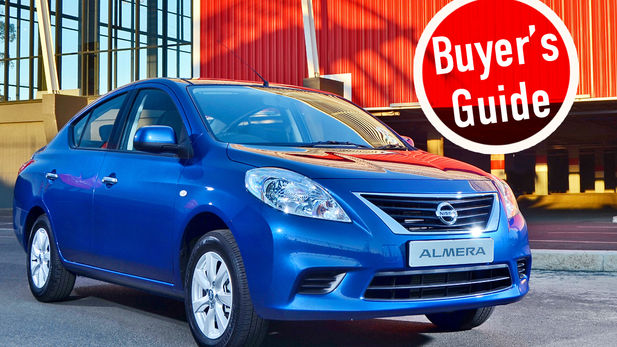
You can no longer buy a Nissan Almera new in South Africa, but you can most certainly acquire a used example. Let’s take a closer look at this budget sedan’s decade on the local market…
The history of the Nissan Almera nameplate in South Africa is fascinating. The badge – of which the roots can be traced back to 1995 – made its local debut in 2001. At the time, the N16-series model, which was built at Nissan SA’s Rosslyn plant, effectively replaced the Sentra, but quietly exited the market in 2006.
The likewise locally produced Tiida was its successor, though the Almera moniker – a name derived from almendra, the Spanish term for a large diamond – returned to the local market in 2013 (incidentally, around the same time that the Sentra was re-introduced), after a 7-year hiatus.
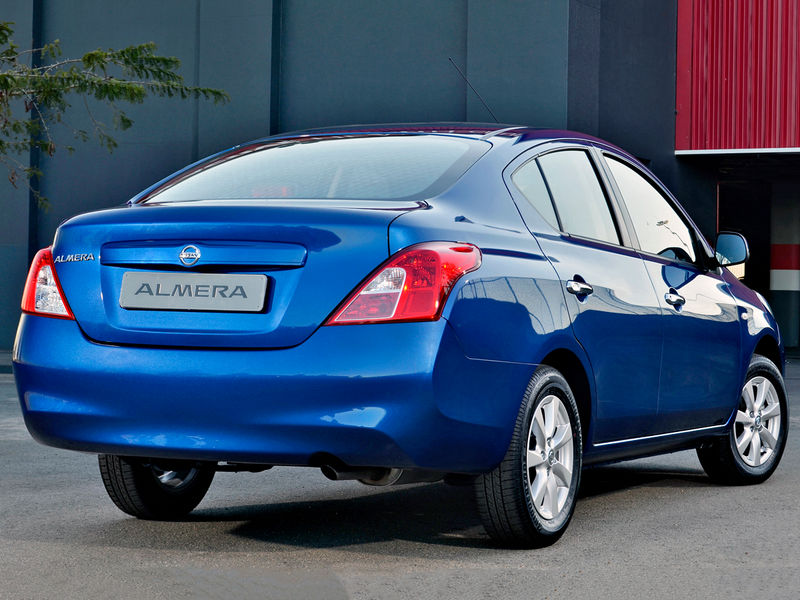
This 3rd iteration of the Almera sedan would soldier on in South Africa for the next decade, despite the fact that a 4th-gen version was revealed for overseas markets in 2019. Towards the end of its product life, it appealed particularly strongly to local rental and fleet buyers because it was priced very keenly.
Known by various names across the globe (including Sunny, Versa, V-Drive and Latio), the N17-series model was built on the same platform as the K13-series Micra. That said, the compact 3-box sedan was considerably larger than its hatchback sibling: 645 mm longer (at 4 425 mm) and 30 mm wider (at 1 695 mm), with an extra 150 mm between its axles (for a generous wheelbase of 2 600 mm).
Nissan Almera model line-up in South Africa
Revealed in China towards the end of 2010, the 3rd-gen Almera touched down in South Africa only in August 2013. Billed as a “global” car, the SA-spec model was imported from Chennai, India.
At launch, the line-up comprised a pair of front-wheel-drive derivatives, each powered by a naturally aspirated 1.5-litre, 4-cylinder petrol engine paired with either a 5-speed manual gearbox or a 4-speed automatic transmission:
- 1.5 Acenta (73 kW/134 Nm) 5-speed manual
- 1.5 Acenta (73 kW/134 Nm) 4-speed auto
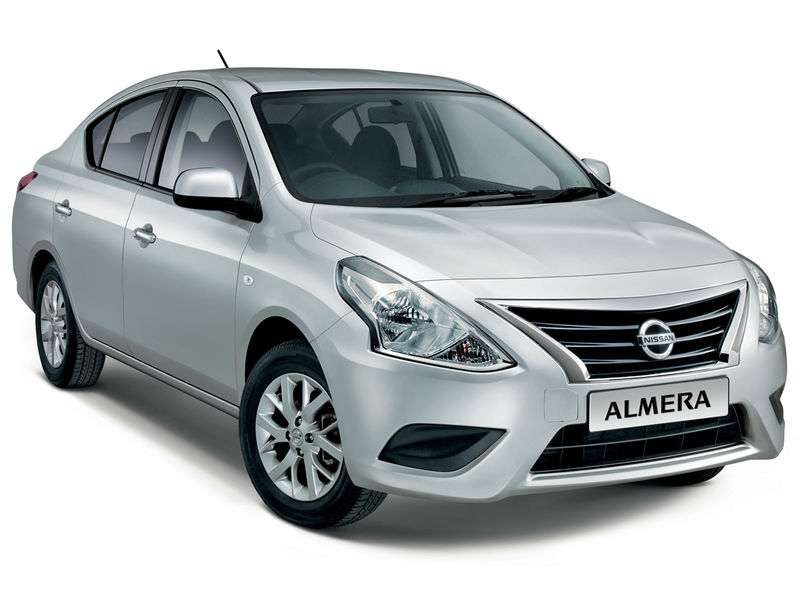
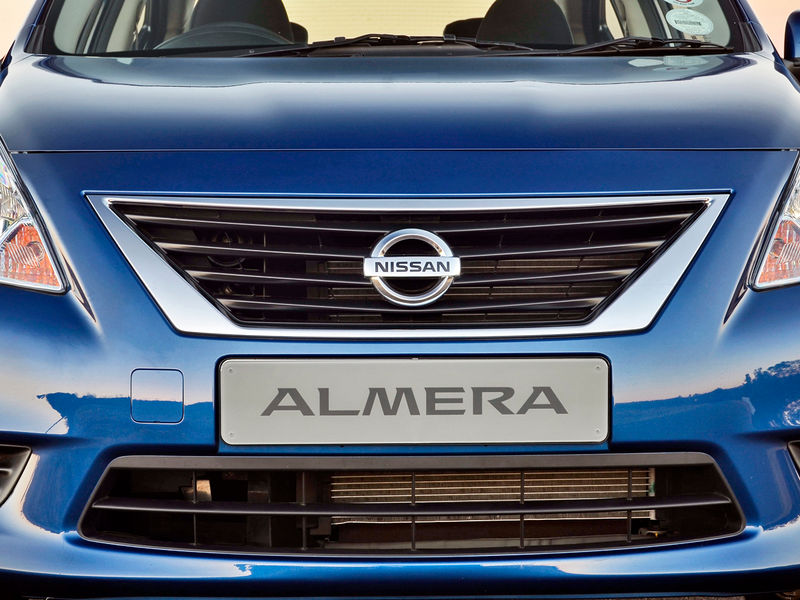
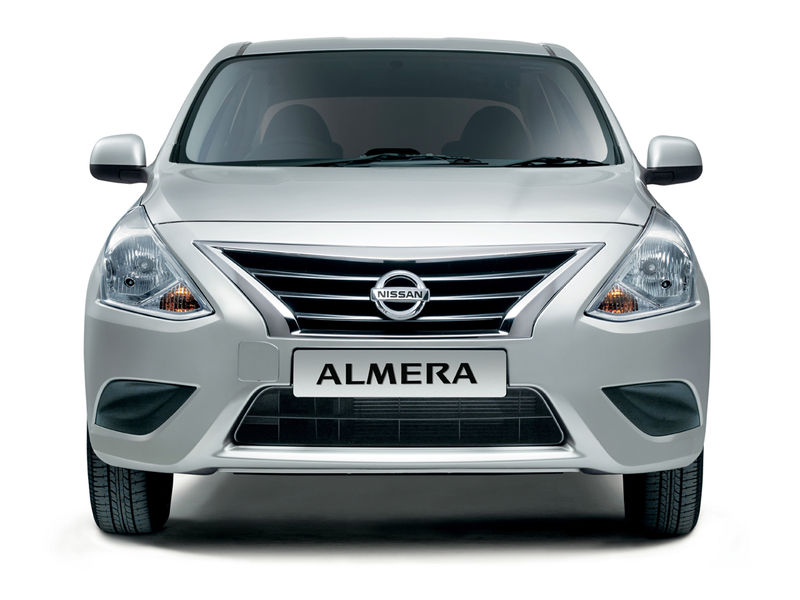
Changes to the Almera over the next 10 years were few and far between, but Nissan SA did roll out some styling updates in September 2014, just a year after the local launch. At that point, the sedan gained redesigned headlamps, -grille and -bumpers (fore and aft), along with new-look 15-inch alloy wheels.
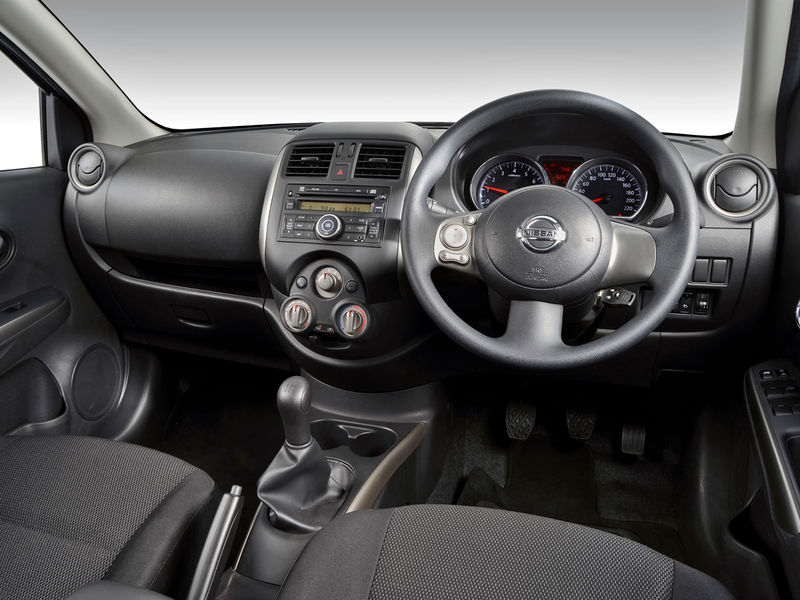
Inside, the modestly revamped Almera scored fresh seat fabric, an upgraded audio system (now with Bluetooth and USB functionality), revised air-conditioning controls, as well as a new multifunctional steering wheel. Furthermore, rear parking sensors were added to the list of standard features.
So, what else changed over the next decade or so? Well, very little, but we noticed the “Activ” trim name was briefly used interchangeably – rather curiously, we must add – with the more common Acenta grade.
For the record, when the Nissan Almera was discontinued locally towards the middle of 2023, the manual-equipped version was priced at R291 900, while the 1.5 Acenta automatic cost R310 000.
What are the advantages of a Nissan Almera?
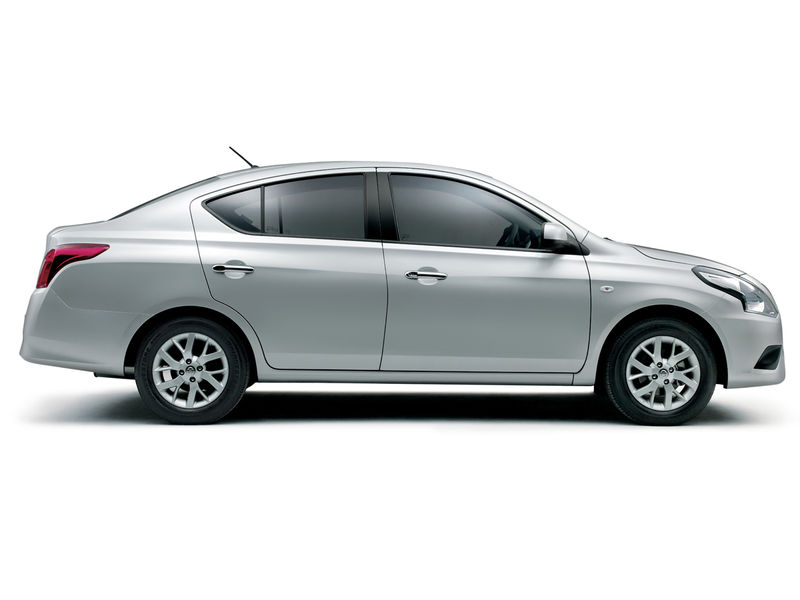
Cabin room and luggage space: There’s no denying that the Almera’s primary appeal centred on its exceptionally generous interior space. Thanks to that lengthy wheelbase – not to mention thin-profile front seatbacks – the Japanese sedan offered class-leading levels of rear legroom (as well as rear air vents with independent fan-speed control).
Indeed, Nissan claimed a rear knee-space figure of 636 mm, which was enough to put most full-size luxury saloons of the era to shame. That said, it’s worth noting that the Almera lacked a little in the width department; it didn’t offer all that much shoulder room…
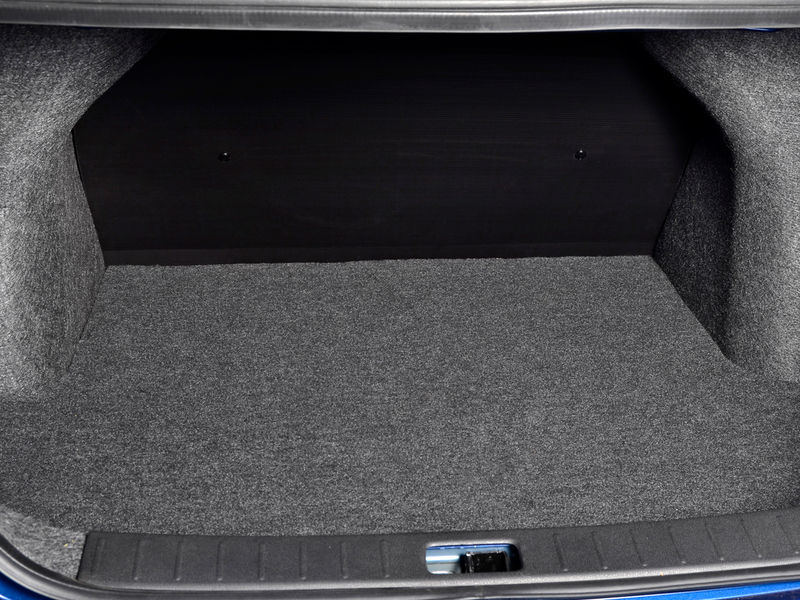
Meanwhile, the budget sedan was right at the top of its class in terms of luggage capacity, which came in at a whopping 490 litres (despite the boot housing a full-size spare wheel). However, the rear bench was fixed in place and thus not able to fold down, which saw the Almera lose a couple of points for versatility.
Soft ride and (mostly) quiet engine: Despite making do with a comparatively unsophisticated torsion-beam rear suspension set-up (as opposed to a multi-link arrangement), the Indian-made N17-series sedan – which employed MacPherson struts up front along with relatively long-travel dampers – rode with an impressive degree of pliancy, considering its price point. Note, however, that body roll was pronounced when cornering quickly and the front seats didn’t offer much in the way of lateral support.
Over the Almera’s decade-long lifecycle in South Africa, there was just a single engine choice: the atmospheric 1.5-litre 4-cylinder motor. In everyday driving, this petrol mill is pleasingly refined (thanks in part to clever insulation of the cabin), though accessing peak power of 73 kW required the petrol mill to spin to a heady 6 000 rpm, resulting in a noticeably coarser aural experience.

Affordable running costs: When the Almera landed in Mzansi, the HR15DE engine was well-proven, having seen service in the K13-series Micra and a number of other overseas models before that. This chain-driven motor was uncomplicated and thus fairly affordable to maintain. For instance, in the 2019 AA Kinsey Report (which considered a total parts basket price, comprising service, repair and crash components), the Almera placed 3rd in its class, just behind the Toyota Corolla Quest and Corolla sedan.
The daily running costs were also fairly light on the wallet, particularly in the case of the 5-speed manual derivative, which was capable of sipping unleaded at 6.3 L/100 km, according to Nissan (translating to a theoretical 651 km from the 41-litre tank). Specifying the 4-speed automatic transmission – which used a traditional torque converter – pushed that figure to a not-quite-as-frugal 7.2 L/100 km.
What are the disadvantages of a Nissan Almera?
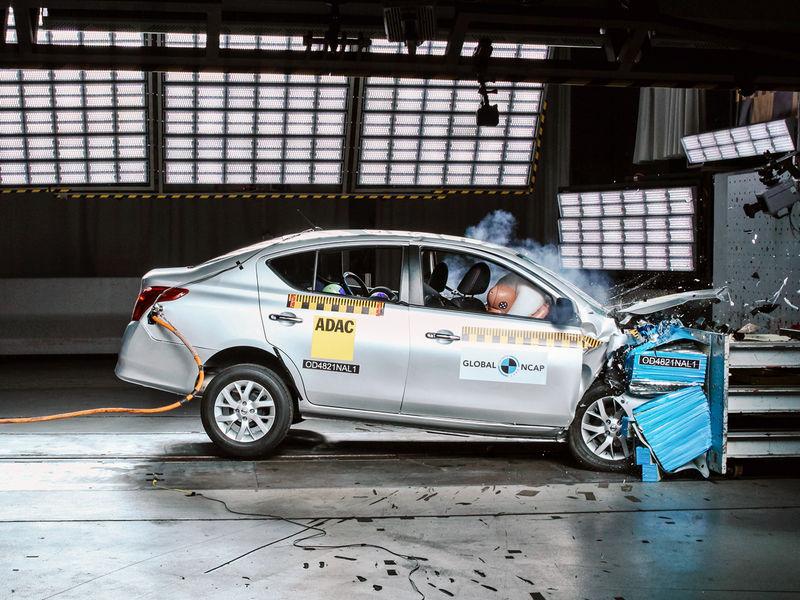
Mediocre safety kit: The Almera was offered locally with an abbreviated list of safety equipment. While ABS (with EBD), dual front airbags and 3-point seat belts all round were standard fare (as were outer-rear ISOfix child-seat anchors), the SA-spec model unfortunately missed out on stability control and airbags for the rear passengers. Furthermore, it had to make do with drum brakes on the rear wheels.
In 2021, Global NCAP handed the SA-spec Almera a middling 3 stars for adult occupant safety (and 3 stars for child occupant safety) after subjecting it to the standard 64 kph frontal crash test. Worryingly, the sedan’s body shell was rated as “unstable” and “not capable of withstanding further loadings”, while the driver’s seat detached during the evaluation. Global NCAP called on Nissan to “significantly improve the safety features” it offered as standard, but no changes were made.
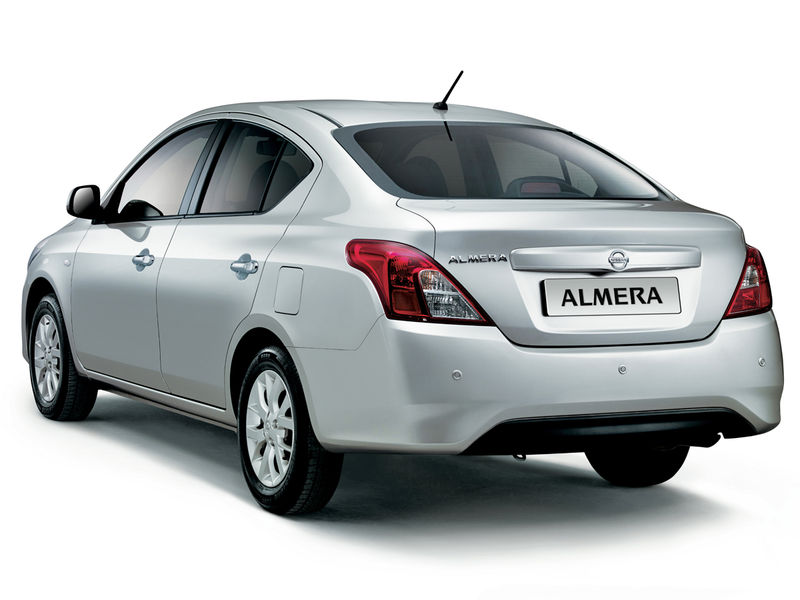
Bland to look at and to drive: Though Nissan SA described the 3rd-gen Almera as having “sporty yet refined styling” – and dropped descriptors such as “sleek” and “muscular” into the press material – most will agree this sedan was saddled with decidedly awkward proportions (and we’re being generous here).
The lack of visual sparkle extended to the driving experience – not that it was something that would have worried the majority of Almera buyers. Indeed, the N17-series model was fuss-free to drive, with controls such as the clutch and steering requiring only the lightest of inputs. Just don’t expect to have much fun behind the wheel (and do expect to be frequently mistaken for an Uber driver).
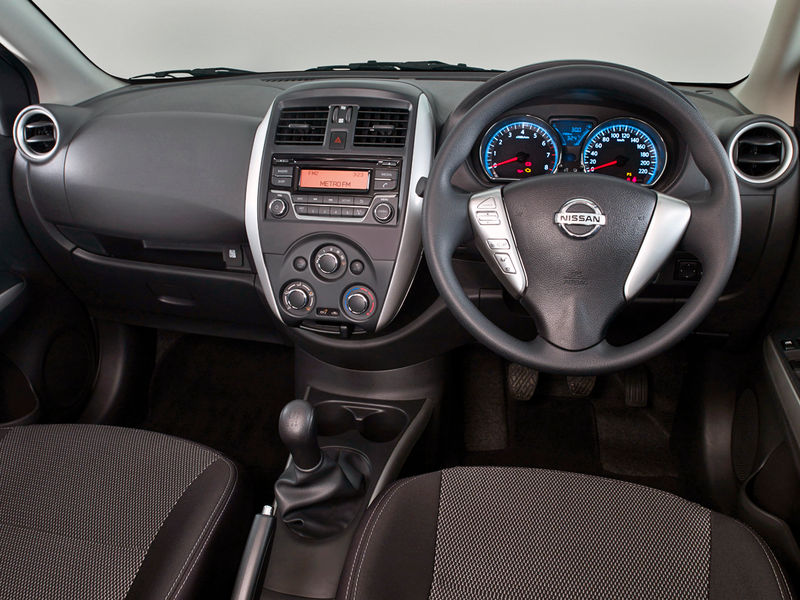
Built to a budget: Although much of the cabin felt relatively well made, hard plastics were the order of the day (as you’d expect from a budget beater), while frequent touch points such as the steering wheel and gear knob had to make do with a low-rent polyurethane finish. The list of standard features reflected the Almera’s budget positioning – items such as cruise control and front foglamps were not fitted.
How much is a used Nissan Almera in South Africa?
The N17-series Almera initially shipped standard with a 3-year/100 000 km warranty and a 3-year/60 000 km service plan, but those plans were extended to 6 years/150 000 km and 3 years/90 000 km, respectively, in 2016. Pay close attention to the maintenance history of a car you’re thinking of buying and make sure it has been serviced according to the manufacturer’s recommendations (in the case of higher-mileage former fleet vehicles, ensure routine servicing was carried out at least every 15 000 km).
At the time of writing, more than half of the 3rd-gen Almeras listed on Cars.co.za were fitted with a manual ‘box. Fascinatingly, the model-year distribution was anything but even, with very few examples from the initial 6 years listed, but almost 40% clustered in 2021 alone (and a further 23% registered in 2022).
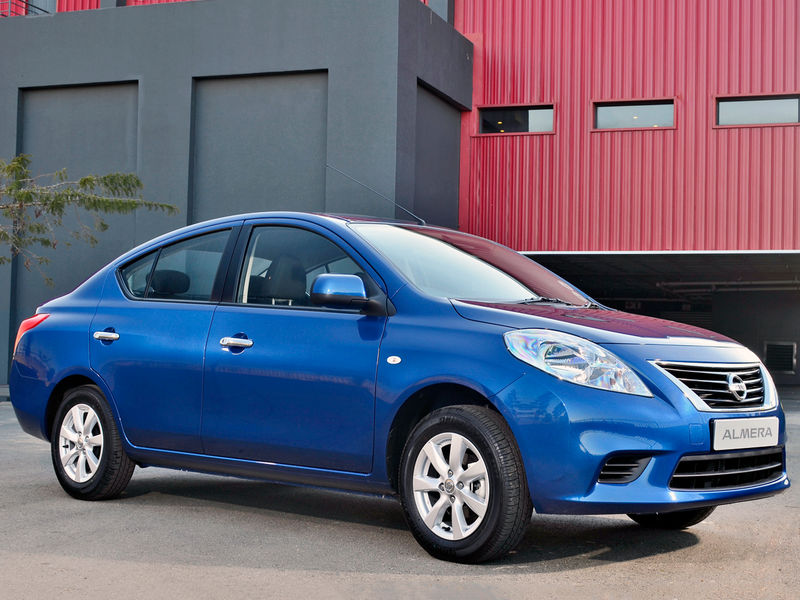
True to its hire-car reputation, most of the Almeras were finished in white (46%) and silver (37%), though the former hue encompassed both solid and metallic finishes. Indicated mileages ranged from almost nil (on a handful of virtually new vehicles) to 194 000 km, the latter racked up by a 2019 1.5 Acenta manual.
- Below R100 000: Slim pickings below this mark, though the few examples available (most looking worse for wear) were interestingly spread quite evenly across model years. As you might expect, mileages were relatively high, while 3-pedal versions dominated.
- From R100 000 to R150 000: The number of auto-equipped models in this space almost matched the manual tally, though most listings still showed more than 100 000 km on their respective odometers. Interestingly, 2019 was the most plentiful model year between these pricing bookends.
- From R150 000 to R200 000: This was the most densely populated pricing bracket by far, playing host to more than 62% of all 3rd-gen Almeras on Cars.co.za. Most examples were listed with under 50 000 km on their respective clocks, with only a handful of units on the far side of 100 000 km.
- R200 000 and up: Unsurprisingly, the listings in this space were heavily skewed towards the final 3 model years, with automatic derivatives outnumbering their manual counterparts. The most expensive example we found was a 2023 1.5 Acenta Auto (with 1 500 km on the clock), which was priced at R320 000 – or R10 000 above what it would’ve cost new…
Which Nissan Almera should I buy?
So, which version should you buy? Well, since just 2 derivatives were on offer over the 3rd-gen Almera’s decade-long run, it all comes down to your cog-swapping preference (though if you don’t mind rowing your own gears, it’s perhaps best to avoid self-shifting examples, because we’ve heard of a few – hopefully isolated – local incidents of automatic transmission failures).
That said, we’d recommend focusing your search on the later model years, since most of these examples would still benefit from the balance of the lengthier 6-year/150 000 km warranty. Zeroing in on the final couple of years of registration would furthermore score you a couple of manufacturer-covered services.
Is the Nissan Almera a good used buy?
Seeing as the Almera was on the market for such a long time, it had to contend with multiple rivals. Early on, there was the original Toyota Corolla Quest, as well as the sedan version of the 4th-gen Hyundai Accent and the Honda Ballade that made local landfall a couple of years before the Almera.
A little later, Nissan’s entry-level sedan faced competition from the likes of the similarly sized (and somewhat under-appreciated) Suzuki Ciaz, while also trading blows with everything from the seldom-spotted Fiat Tipo sedan to the strong-selling 2nd-gen Corolla Quest. More compact contenders, such as the Suzuki DZire, Honda Amaze and Kia Pegas (not to mention the Proton Saga and Hyundai Grand i10 sedan, right at the end of the Almera’s lifecycle), also played in this budget-sedan space.
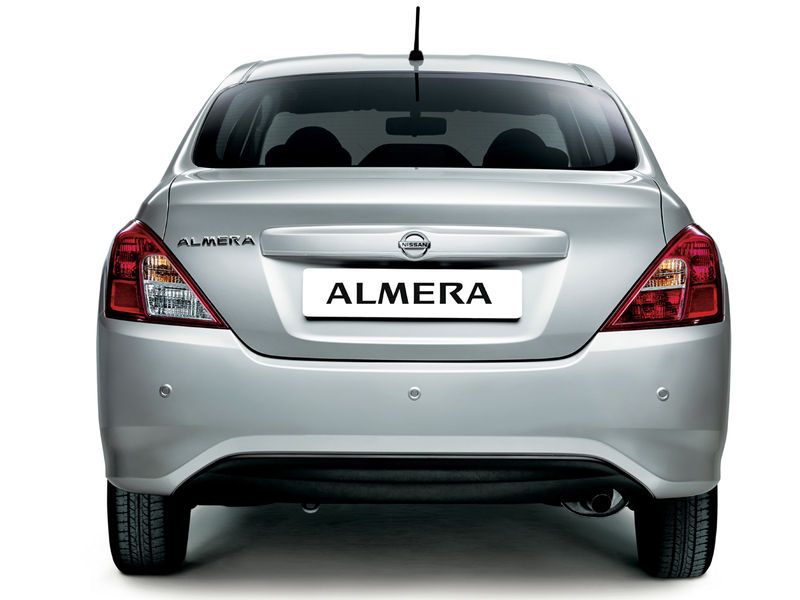
In many ways, the N17-series Nissan Almera was a little rough around the edges; today’s Corolla Quest, for instance, is a far more polished, more generously equipped (though pricier) package.
But for buyers who value space above all else – and thus place little emphasis on exterior styling, safety kit or the overall driving experience – this budget-beating sedan still holds appeal. After all, there’s a reason it remained highly popular with fleet buyers right up to its departure from the new-car market.
Looking for a used Nissan Almera to buy?
Or sell your car here, for no charge.
Ryan Bubear

Having written about everything from sport and politics to crime, Ryan eventually settled on motoring. For well over 15 years, he's been penning articles – both online and in print – about the broader automotive industry, though he's particularly fascinated by vehicle-sales statistics. A freelance writer and editor, Ryan has owned a 1971 Austin Mini Mk3 for 20-plus years.