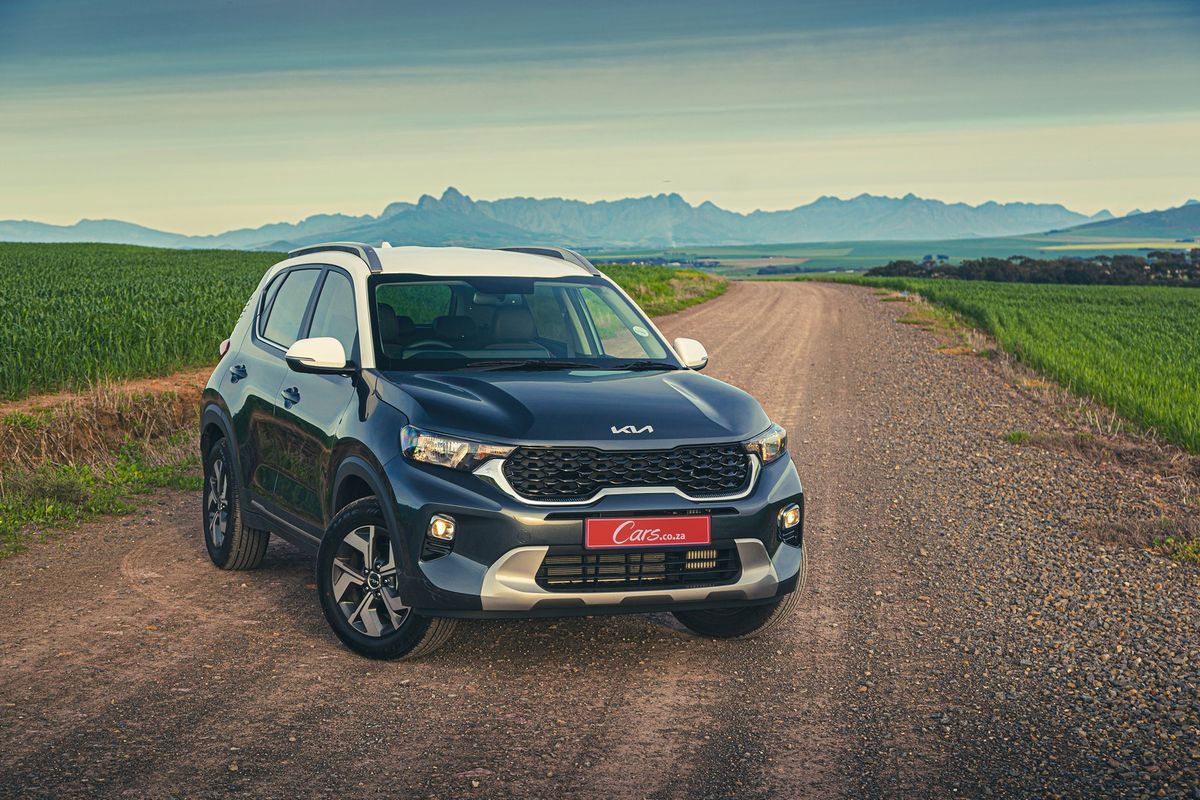
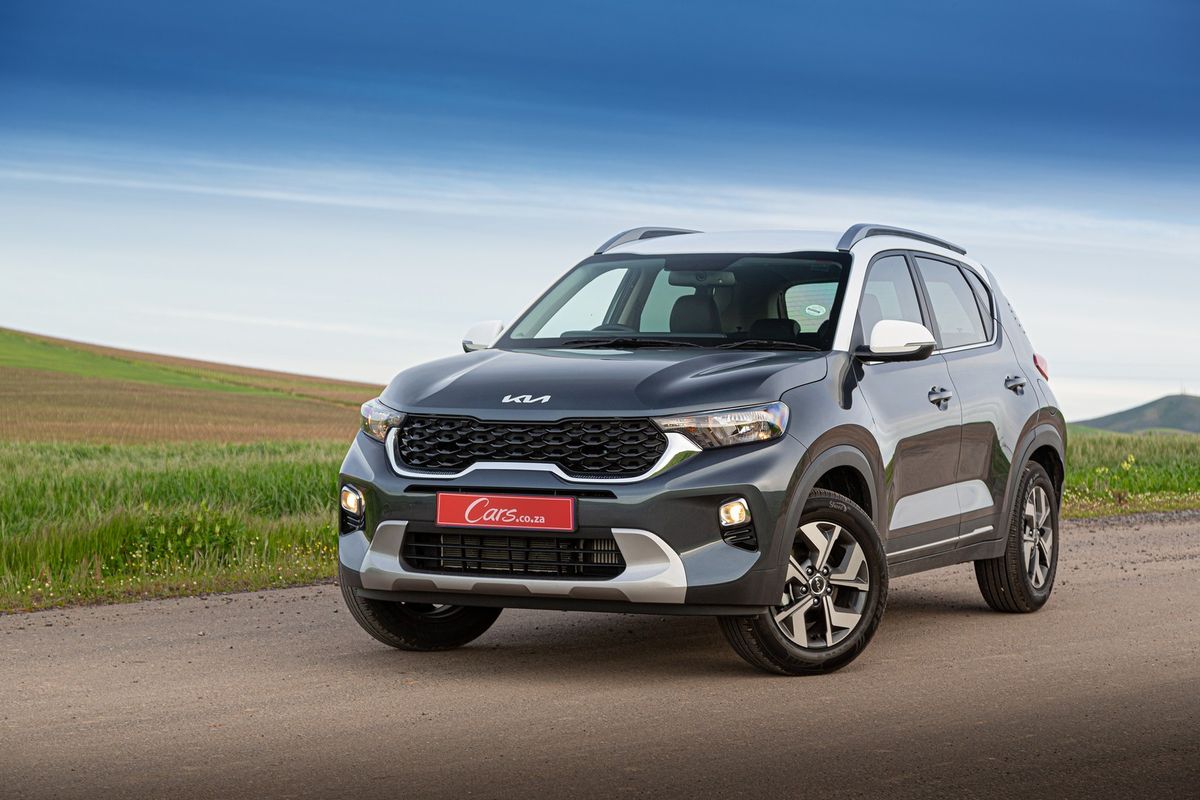
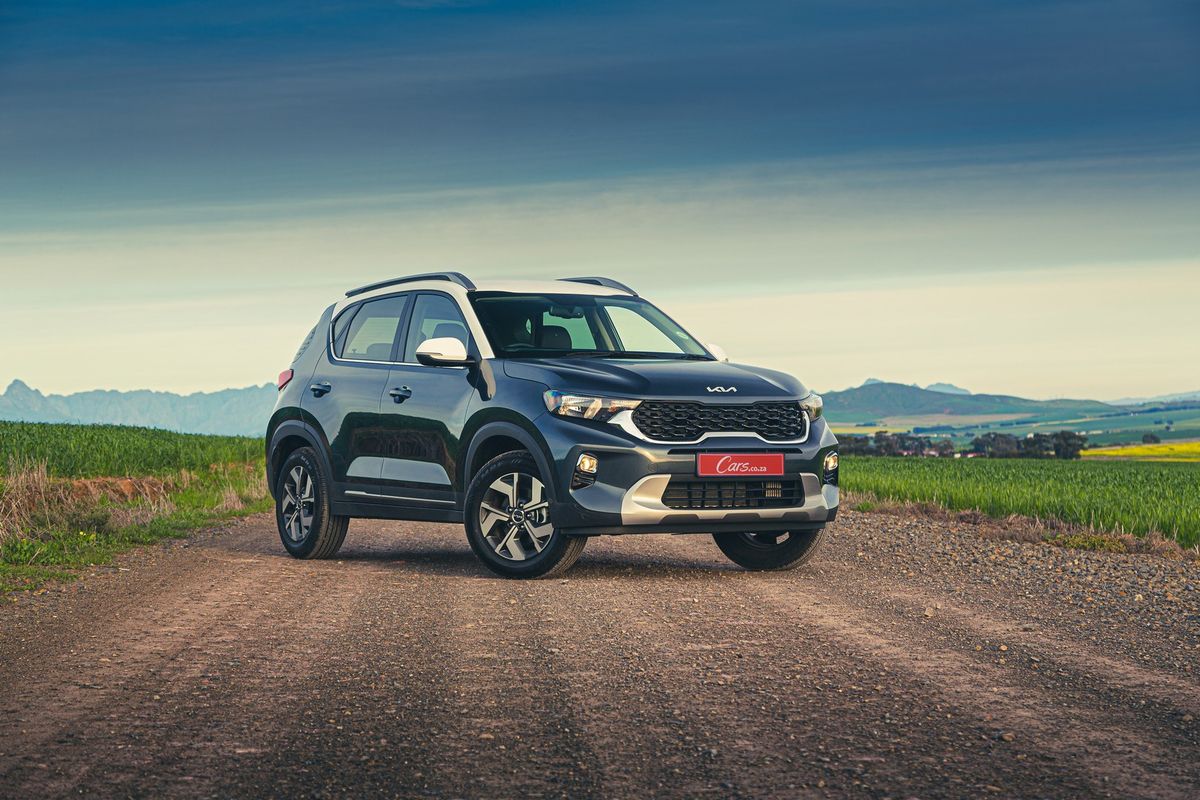
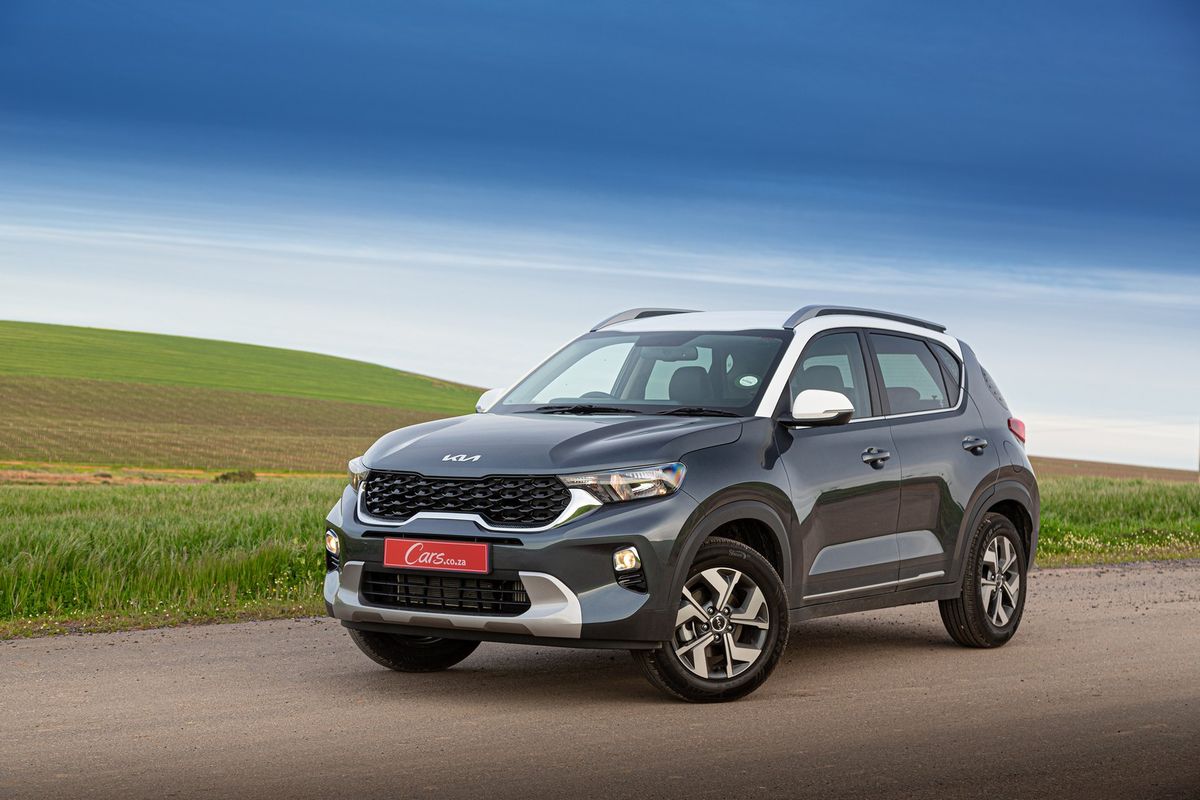
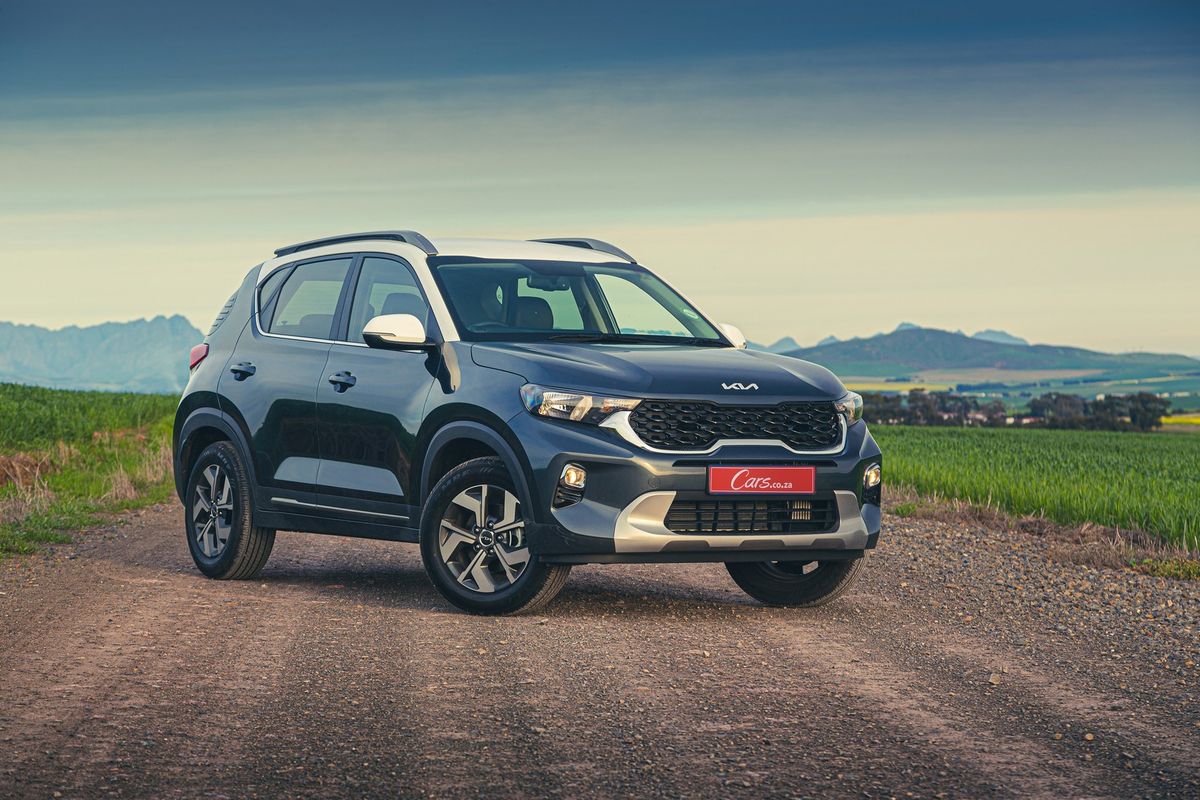
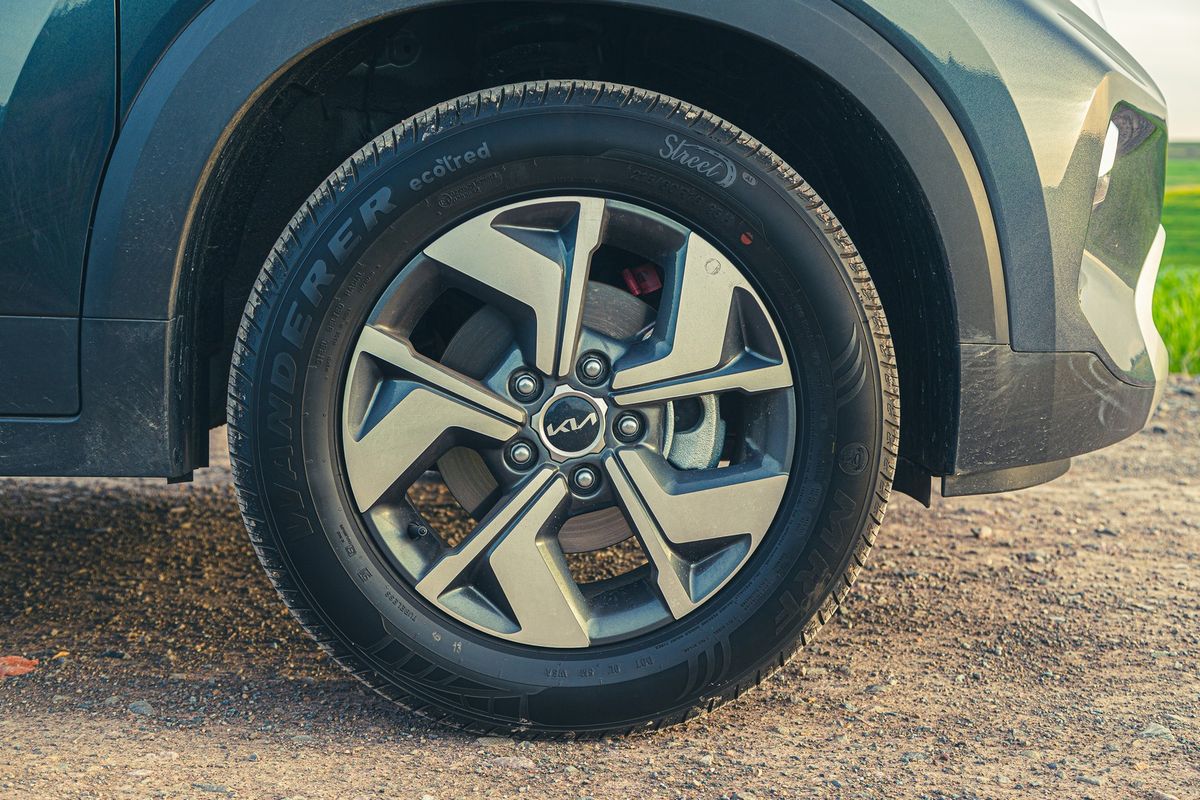
The Kia Sonet has a new flagship derivative – the 1.0T EX+, which is powered by a turbopetrol engine, has a dual-clutch automatic transmission and comes loaded with features. Is this the pick of the high-spec small crossovers?
Interested in the Kia Sonet Turbo? This review will help you make an informed buying decision!
We like: Auto ‘box well calibrated to gutsy turbopetrol motor, comprehensive features list, cute looks, improved safety tech, substantial after-sales support.
We don’t like: Engine can get noisy at higher revs, no one-touch up/down function for the driver’s window, no split-folding rear bench.
FAST FACTS
- Model: Kia Sonet 1.0T EX+
- Price: R389 995
- Engine: 1.0-litre 3-cylinder turbo petrol
- Power/Torque: 88 kW/172 Nm
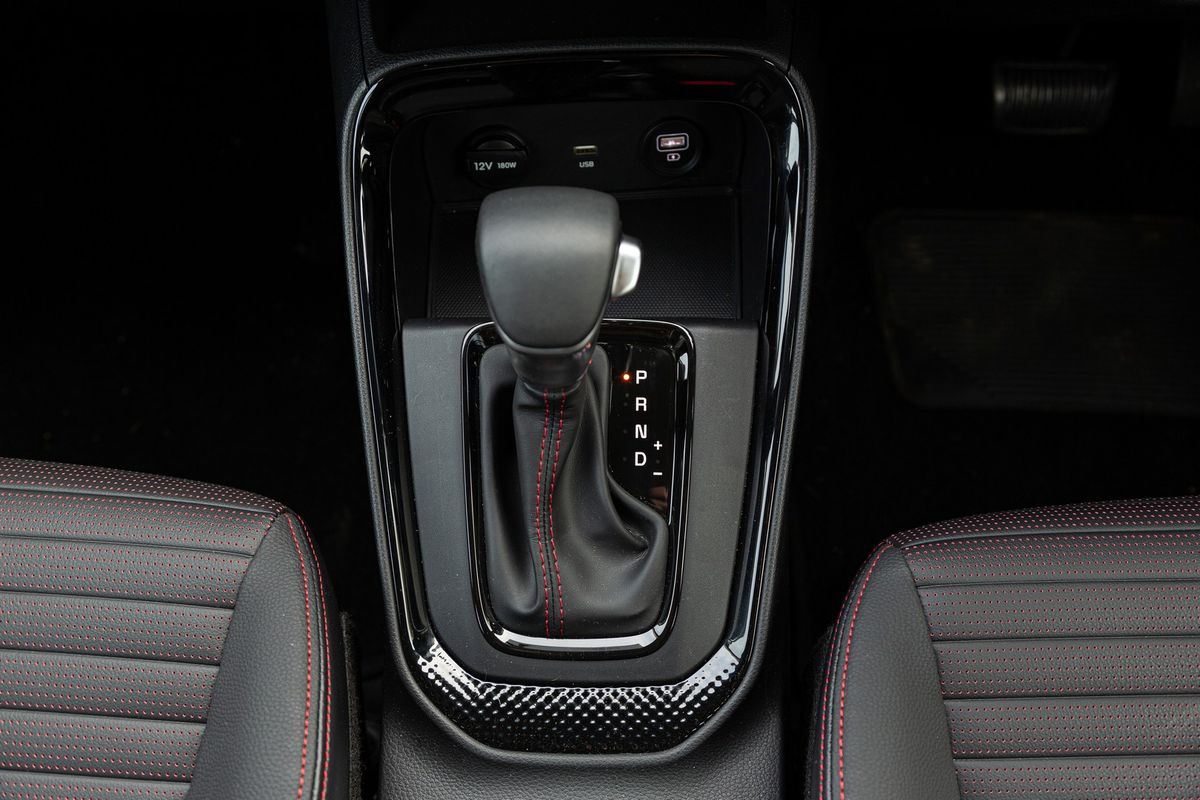
- Transmission: 7-speed dual-clutch transmission
- Fuel consumption: 6.0 L/100 km (claimed)
- 0-100 kph: 11.3 sec (claimed)
- Boot capacity: 392 litres
Serious about buying/selling?
Some Kia dealerships regularly offer great deals. See our New Car Specials!
Looking to sell your car? You can sell your car to SA’s biggest dealer network
Where does the Kia Sonet fit in?
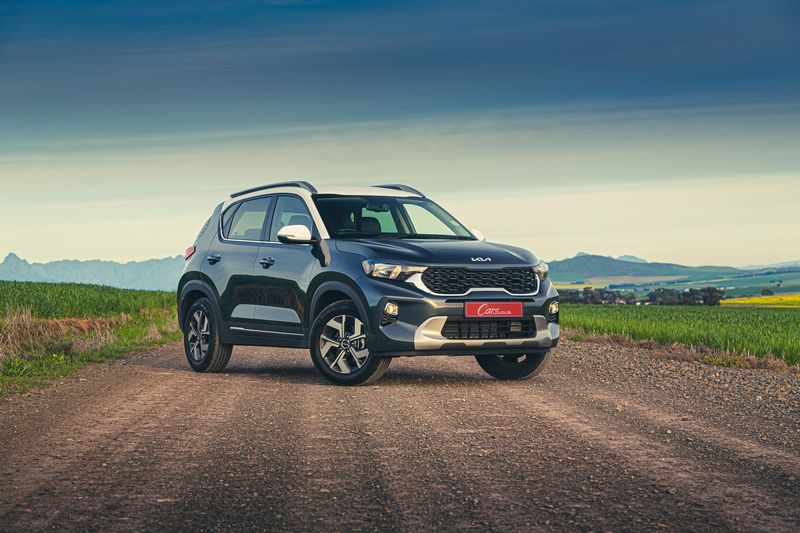
The Sonet is Kia’s entry-level crossover/SUV and it has proven quite popular thus far.
The Kia Sonet has been a popular offering for the local subsidiary of the Korean carmaker. Not only does exude cute-as-a-button kerb appeal; it offers great value for money. We’ve been impressed with the Sonet since it landed in Mzansi just over a year ago (May 2021).
As the entry point to the Korean brand’s crossover/SUV line-up, the Sonet presents as a more substantial and refined offering than some models in the “budget crossover” segment. What’s more, the 1.5-litre 4-cylinder naturally aspirated engine delivers commendable performance –customers could can between a 6-speed manual or a (surprisingly pleasant) CVT automatic.
Our assessment in June 2021 concluded with “there’s a lot to like about the Sonet – we won’t be surprised to see it steal quite a few sales from its established rivals”. Indeed, Kia South Africa has battled to satisfy demand for the pint-sized crossover during the past 12 months (although the firm says the shortage of units should ease in coming months). The range has also been bolstered with two 1.0-litre turbopetrol derivatives, including this, the 1.0T EX+.
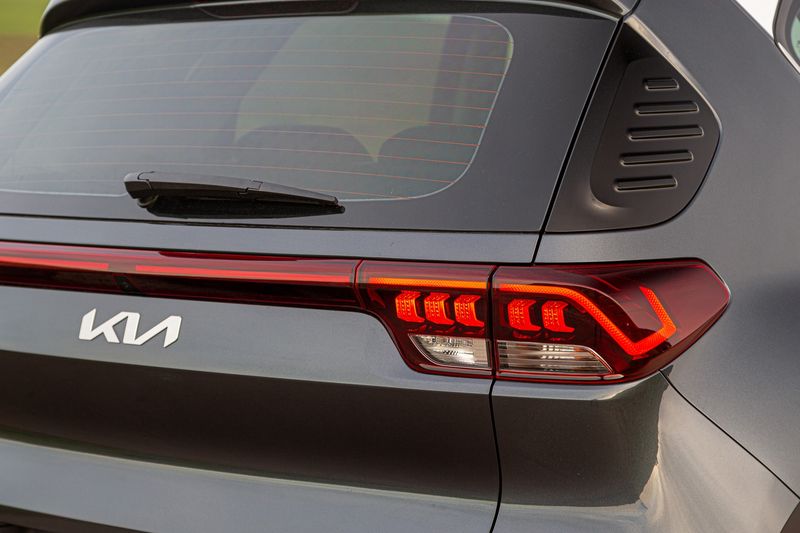
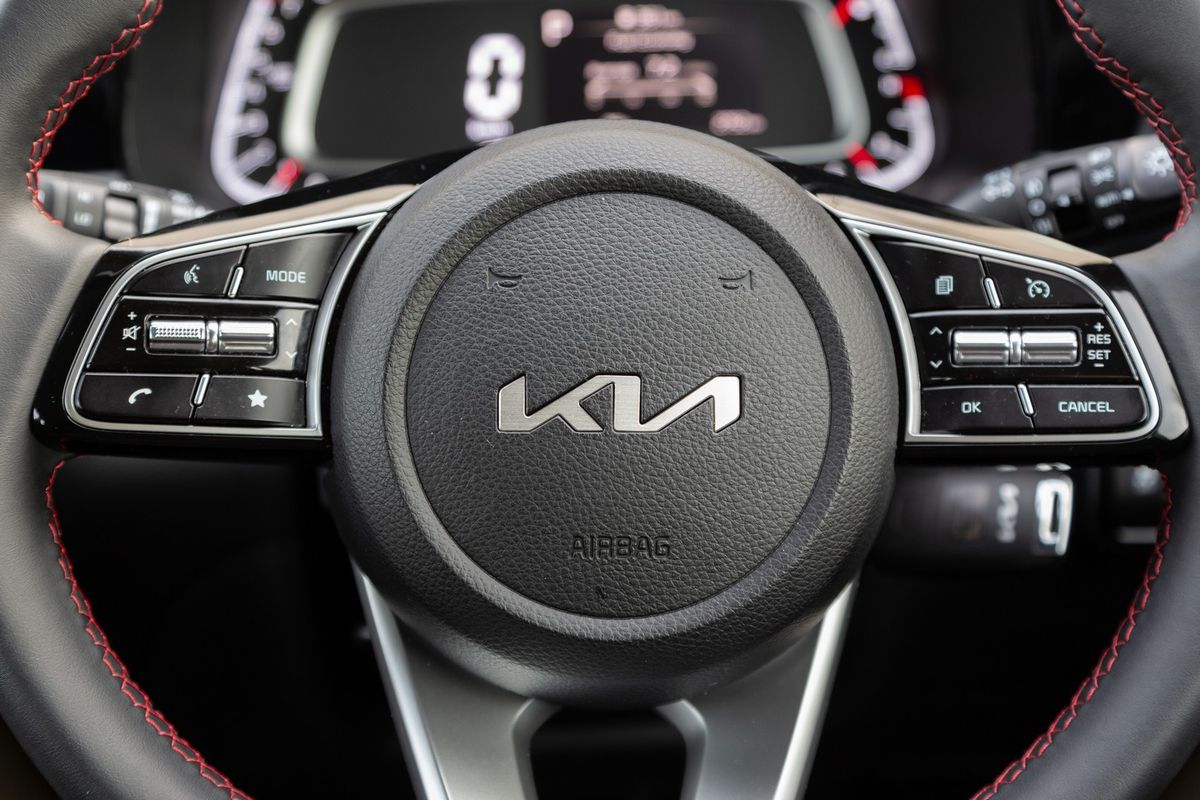
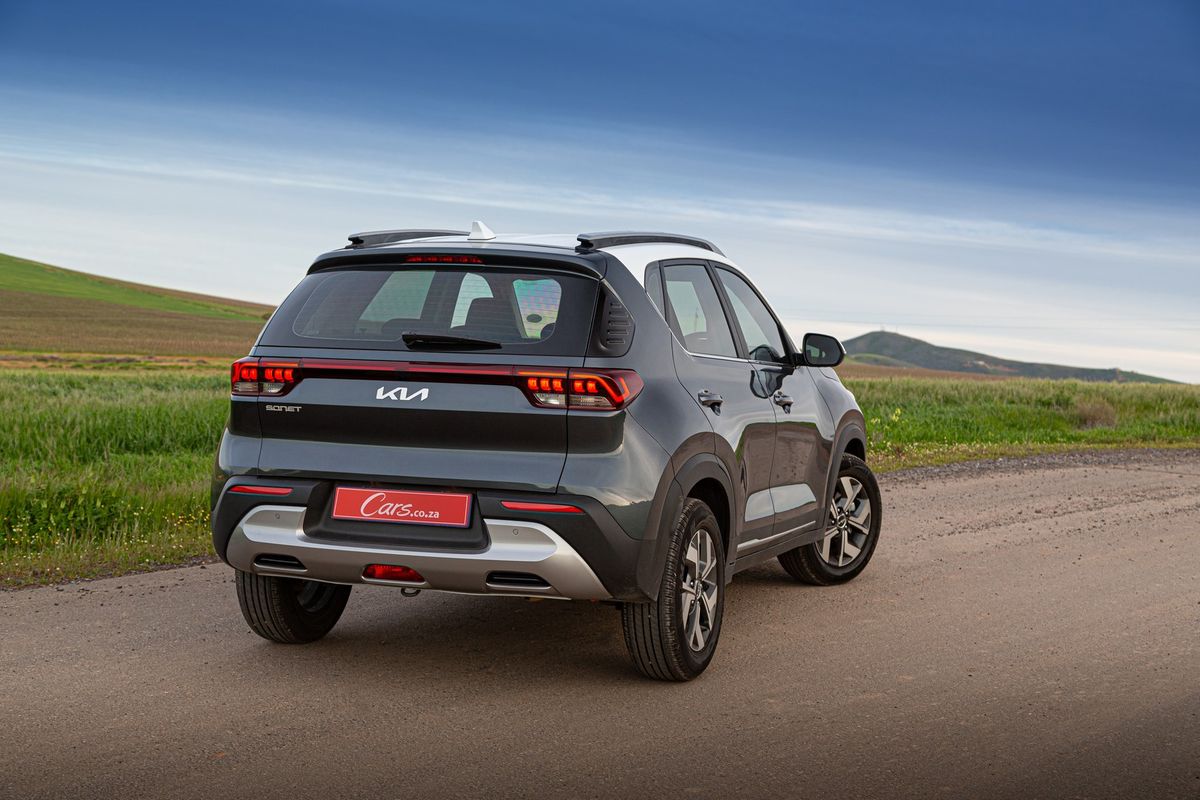
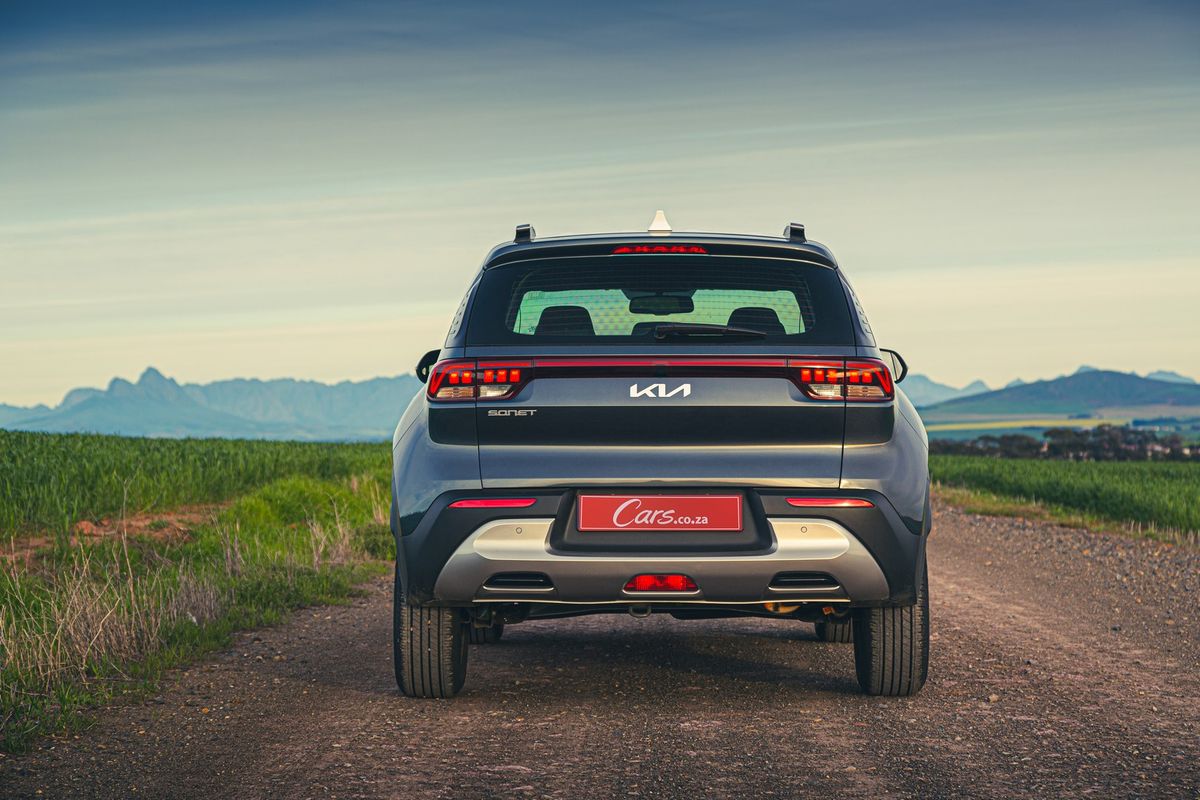
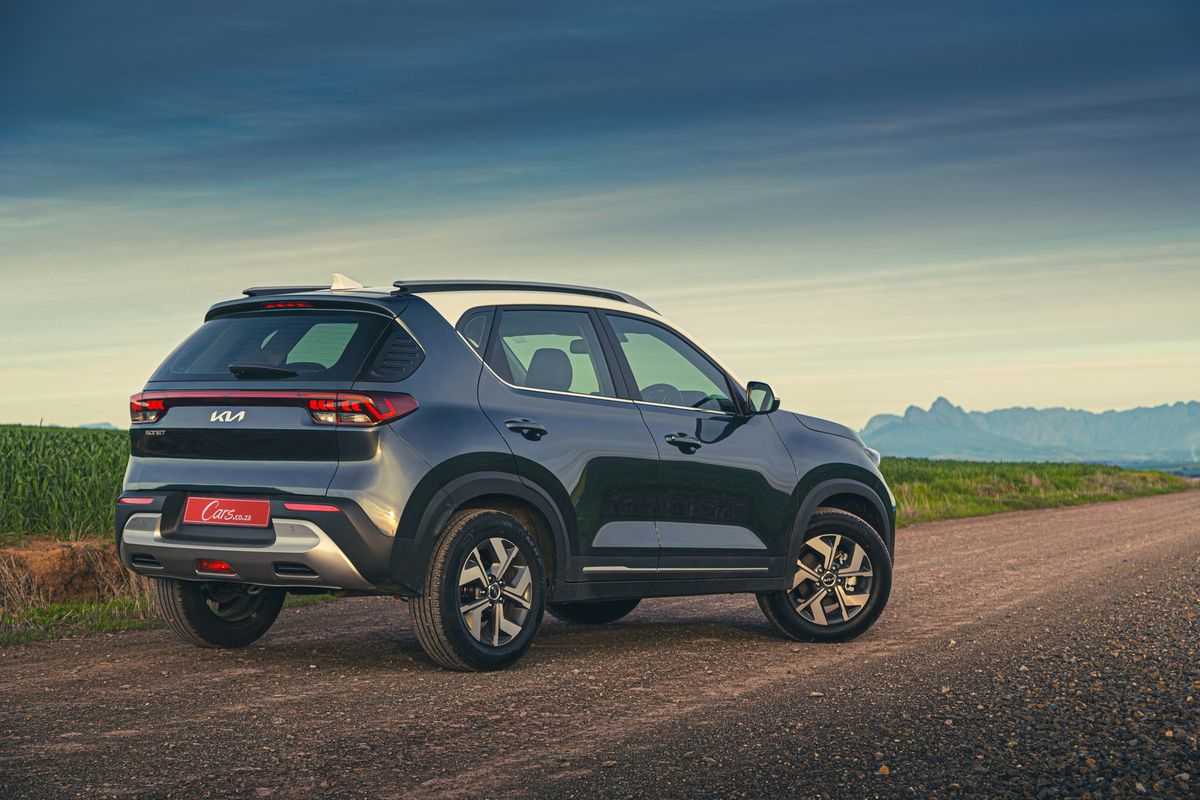
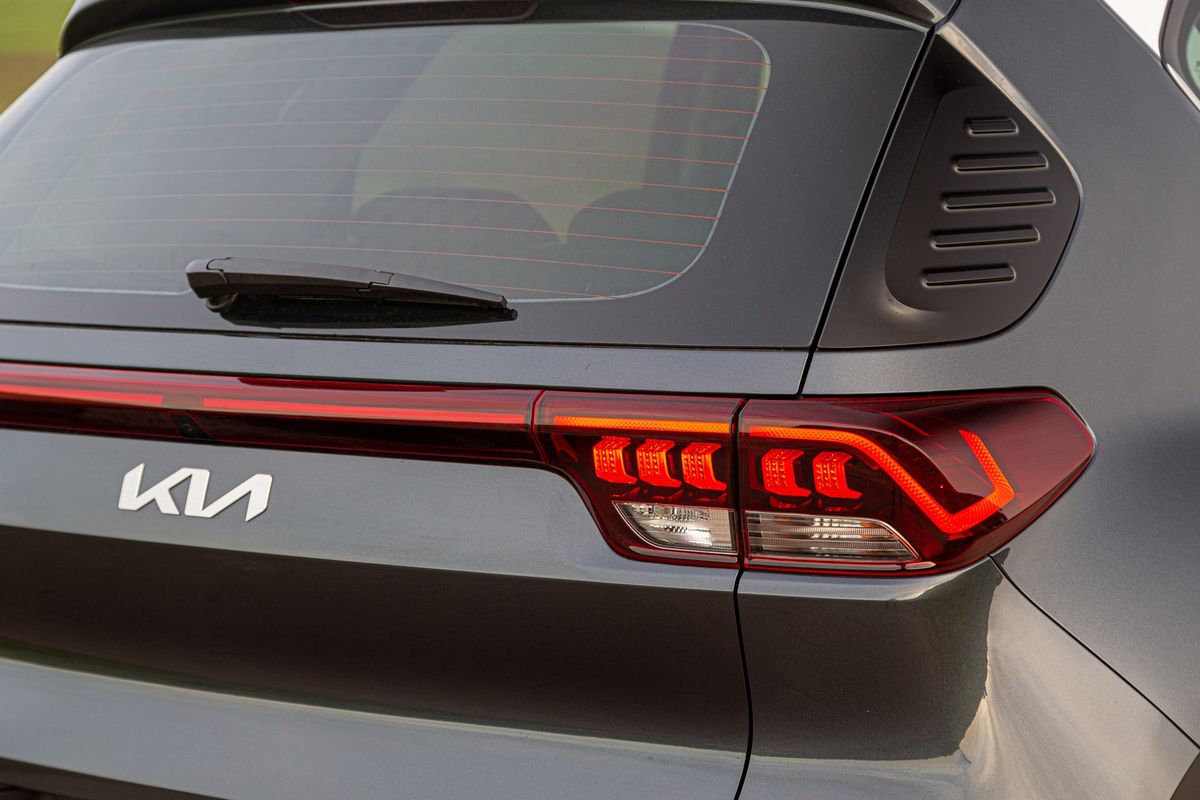
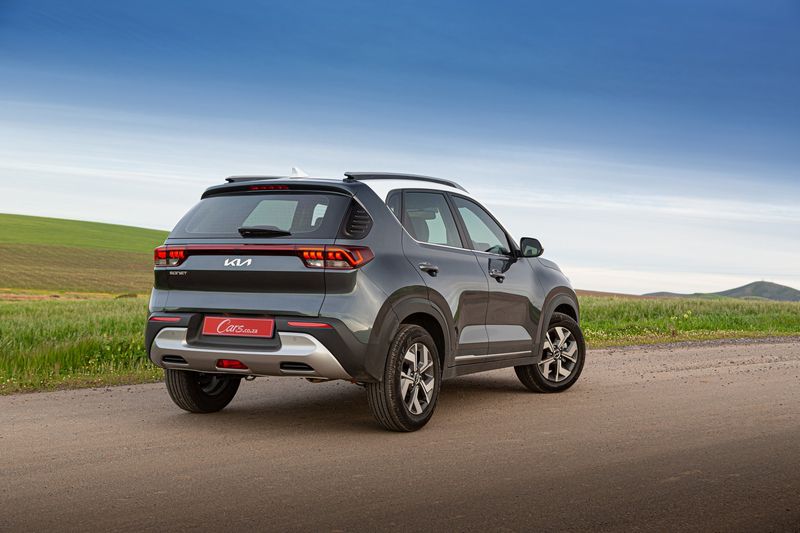
The EX+ features LED tail lamps. Note the new Kia logo!
The Sonet has 6 derivatives in its line-up (prices start at R296 995 and go up to R389 995) and it faces stiff competition, because virtually every mainstream brand has launched a hatchback-based model that offers an elevated driving position and a bit of extra ride height. If you’re looking for a new compact family car under R400 000, you’re spoilt for choice…
Alternatives to the Kia include the Chery Tiggo 4 Pro, Ford EcoSport, Haval Jolion, Honda WR-V, Hyundai Venue, Opel Crossland, Mahindra XUV300, Nissan Magnite, Renault Duster and Kiger, Suzuki Vitara Brezza, Toyota Urban Cruiser, as well as the Volkswagen T-Cross.
Compare the Kia Sonet 1.0 to the Haval Jolion and Volkswagen T-Cross.
How the Kia Sonet 1.0T fares in terms of…
Design and Packaging
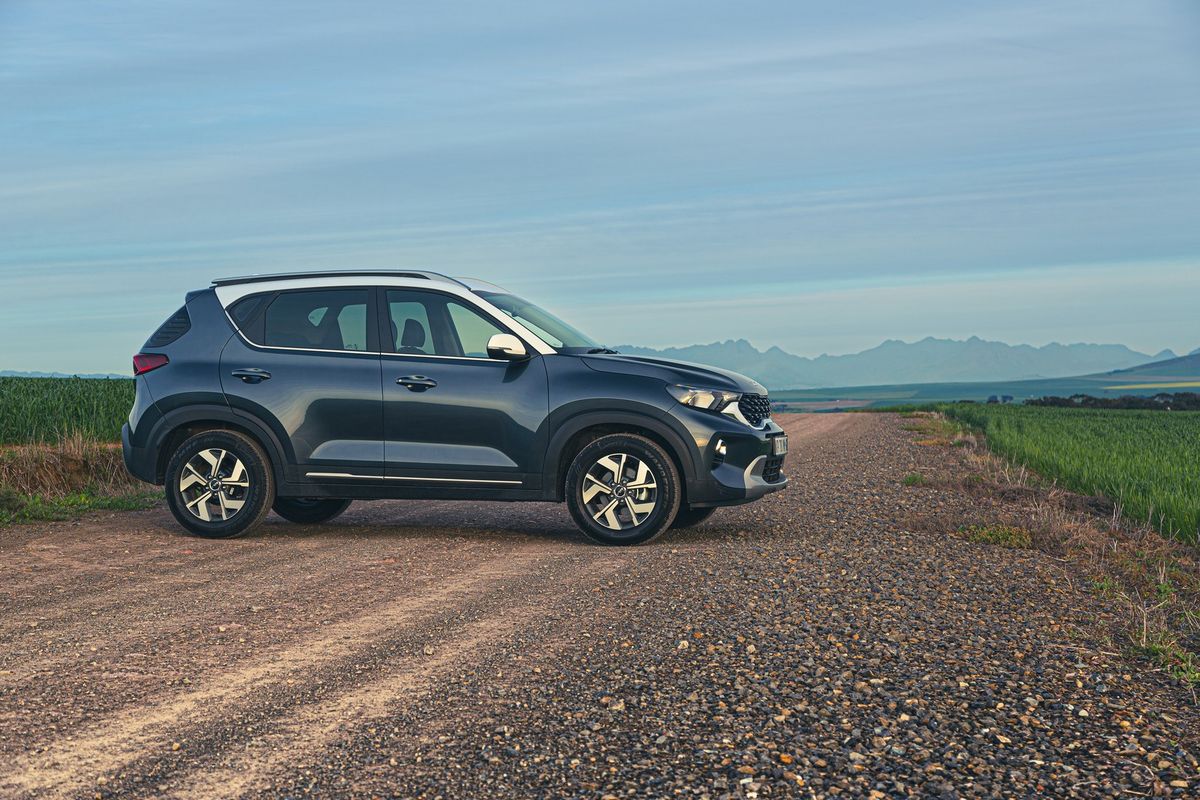
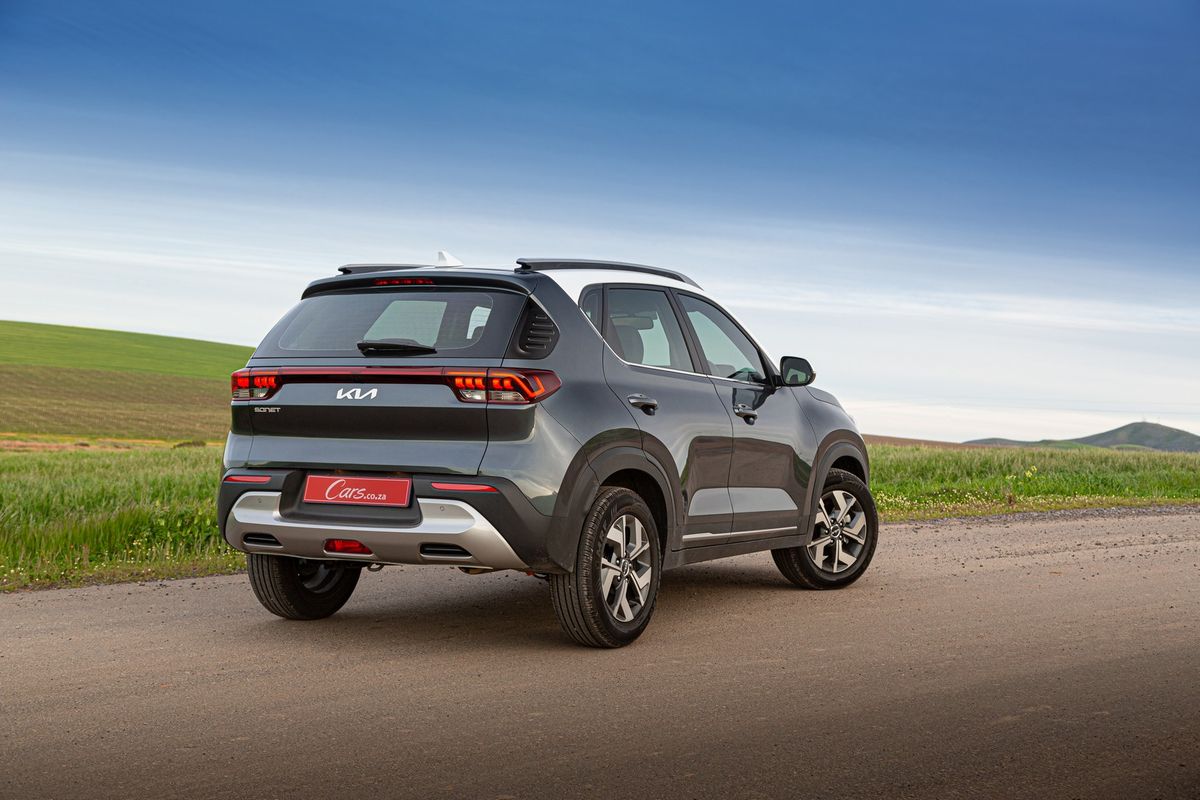
Some say, “it’s tough to tell all these small crossovers apart from each other”, but the Kia, which incorporates the brand’s current (and still fresh) design language, looks distinctive and its roof rails contribute to the “SUV look”. Compared with other Sonet derivatives, the 1.0T EX+ has LED tail lamps, but other than those adornments, there’s not much to distinguish this as the top-of-the-range version. There are a handful of colours on offer and some hues (such as Intense Red, shown here) are available in combination with a contrasting roof finish.
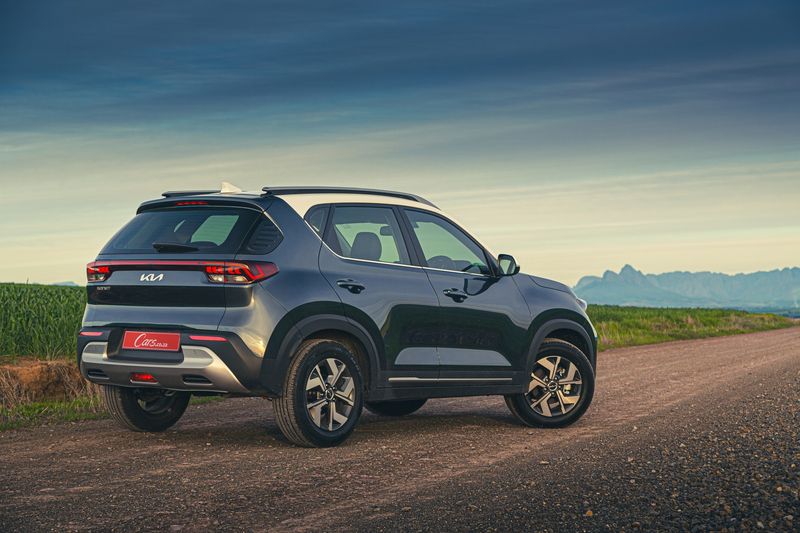
It may look compact, but clever packaging and a substantial wheelbase make the Sonet more practical than you’d expect.
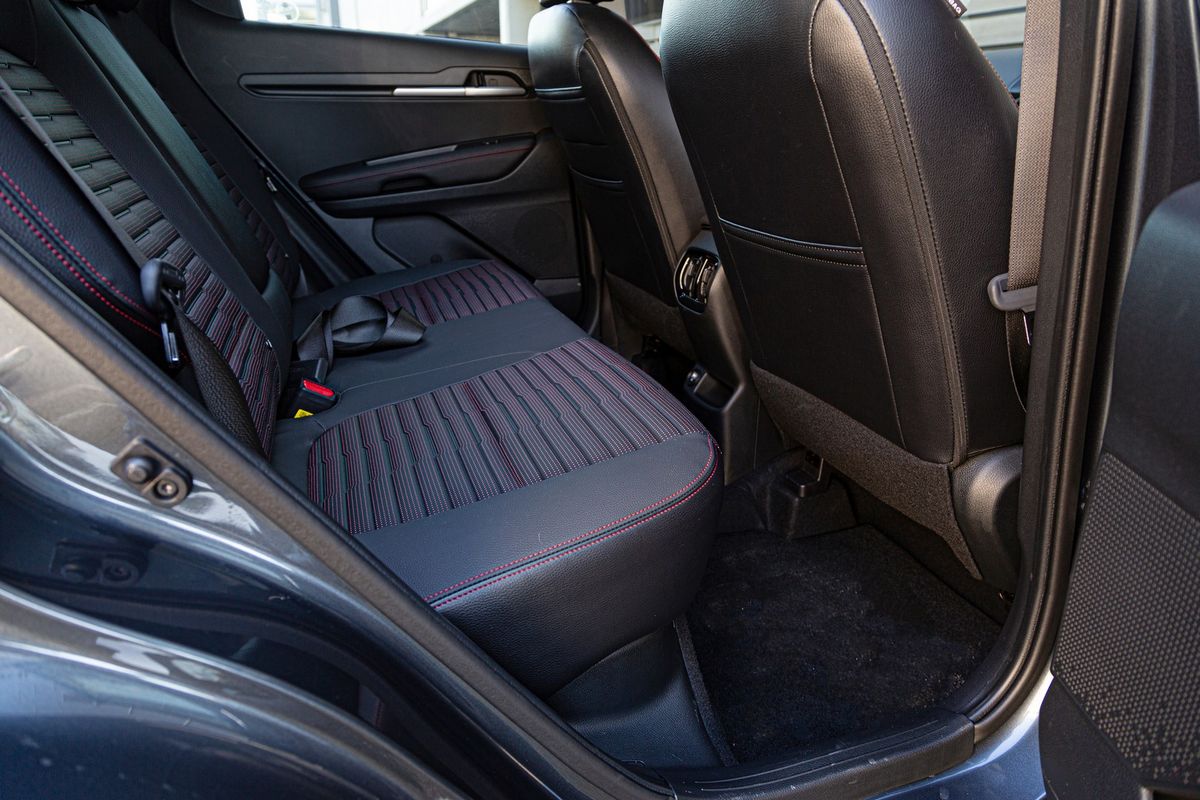
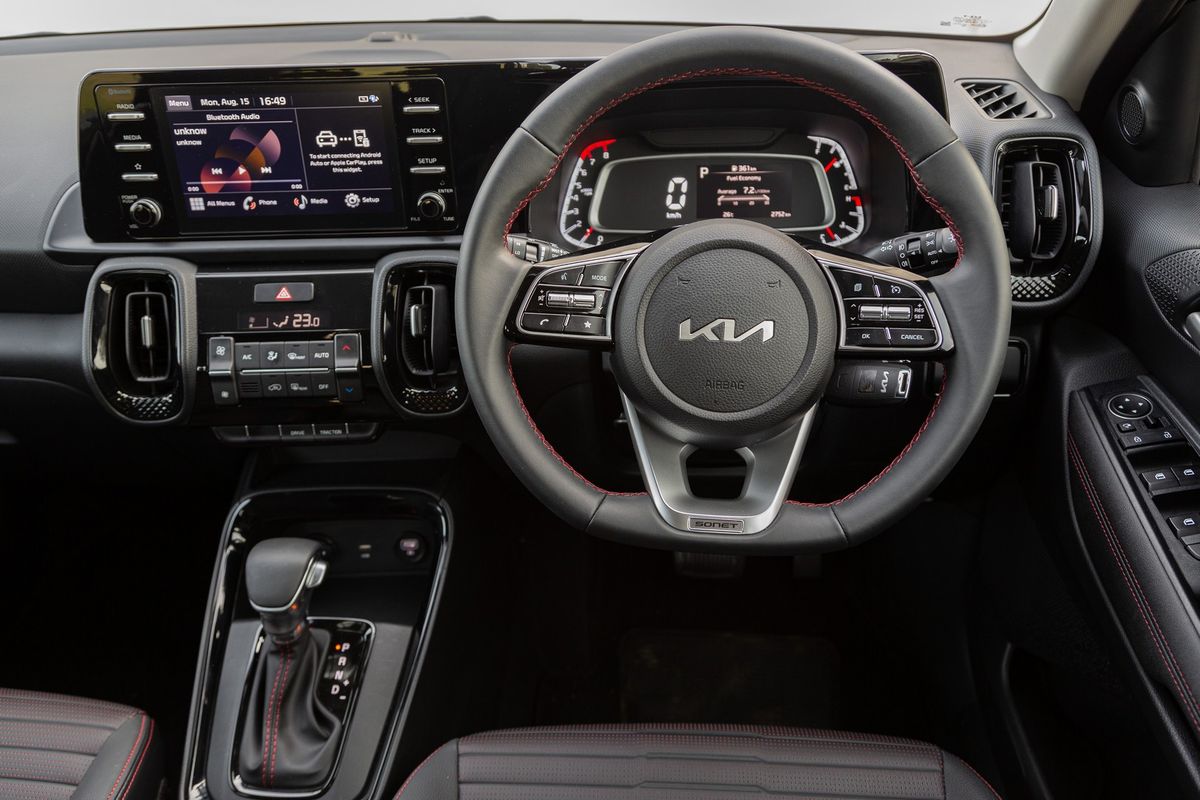
The cabin looks upmarket, but, better still, it feels reassuringly well-made, which, at the Sonet’s price point, is a bonus. The fascia is neat and uncluttered – a refreshing departure from some of the fussier layouts we’ve seen – and, while the Sonet looks dinky, its 2500-mm wheelbase facilitates a relatively roomy interior; even adults can sit comfortably at the back.
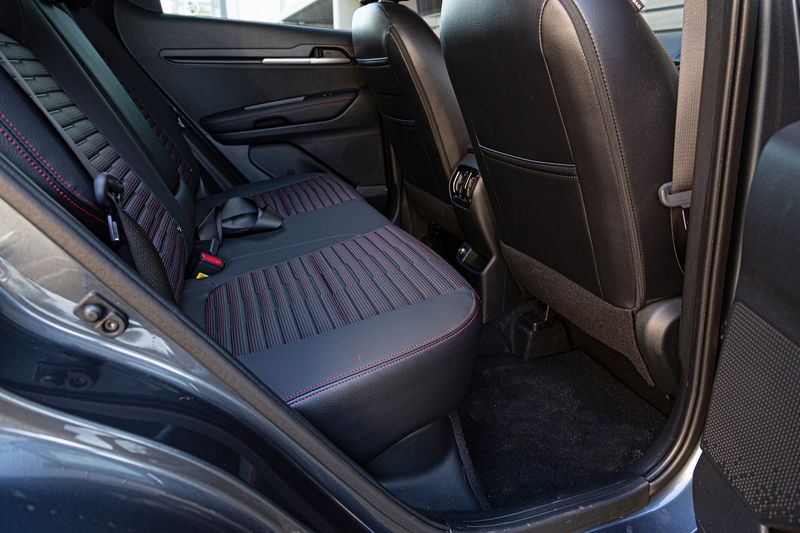
There’s sufficient rear leg- and headroom for adult occupants.
The load-bay is near the top of the segment in terms of outright capacity (392 litres), but frustratingly, the rear seatback doesn’t have a split-folding function (it’s a single-piece item). This would have been acceptable in lower-spec versions, but not the flagship. Interestingly, the top-tier derivatives of the Sonet’s cousin, the Hyundai Venue, has 60/40-split rear seats.
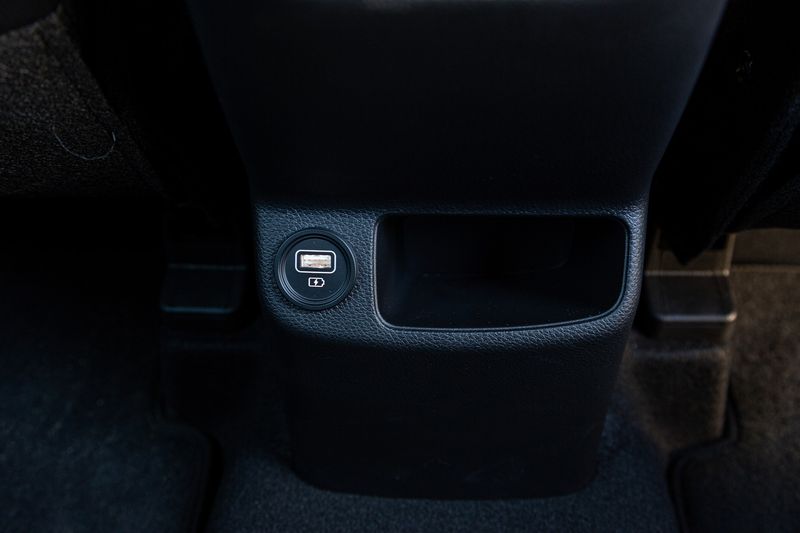
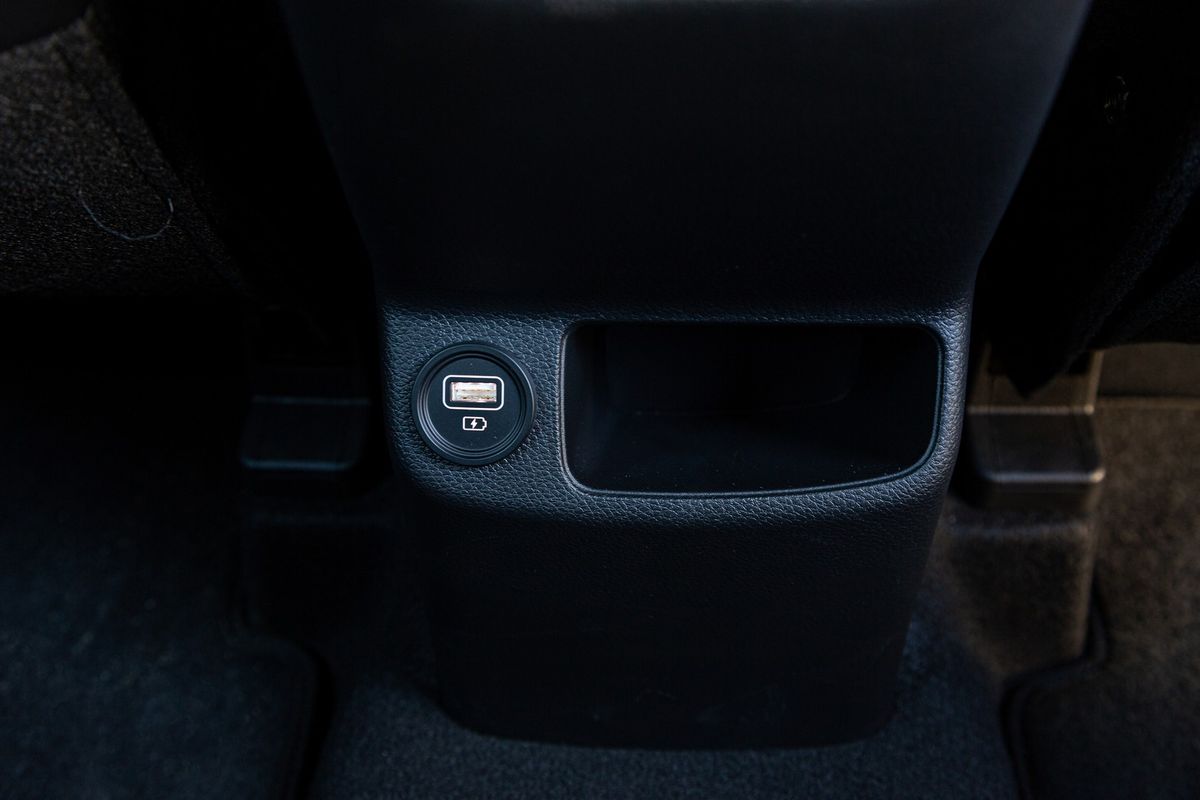
Rear passengers are afforded their own USB port to charge devices, plus a handy cradle.
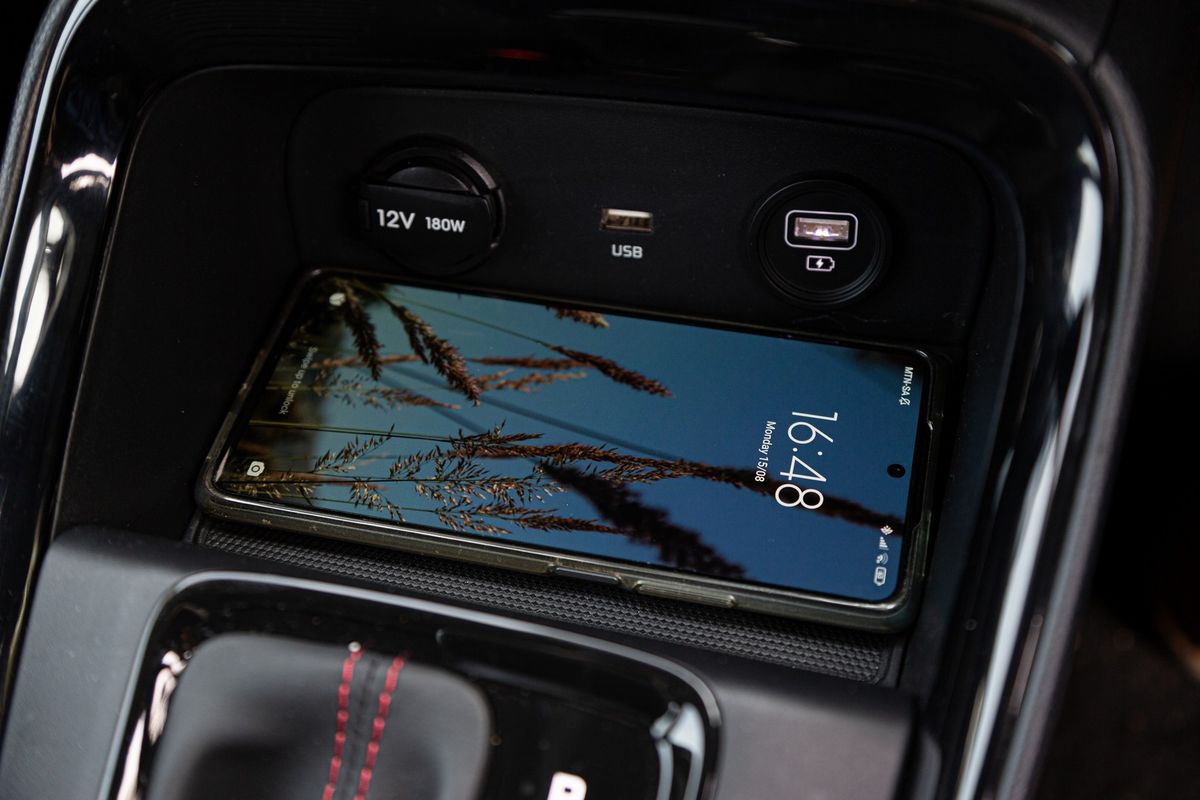
There’s little to fault with the rest of the cabin, however – it’s cleverly designed, replete with plenty of storage spaces for phones, keys, wallets and so on, while the door pockets are large enough to accommodate water bottles. We liked the slot for storing an electronic device (it’s located right next to a USB port), but a wireless charging pad would have been even better.
Standard features
Considering that the 1.0T EX+ is a top-of-the-range derivative – one that costs just under R400k (before on-the-road costs), no less – one would expect a comprehensive standard spec. However, considering that even in base (LX) guise, the Sonet comes well equipped, does the flagship offer enough in the way of luxury trim, extra convenience features and gadgets?
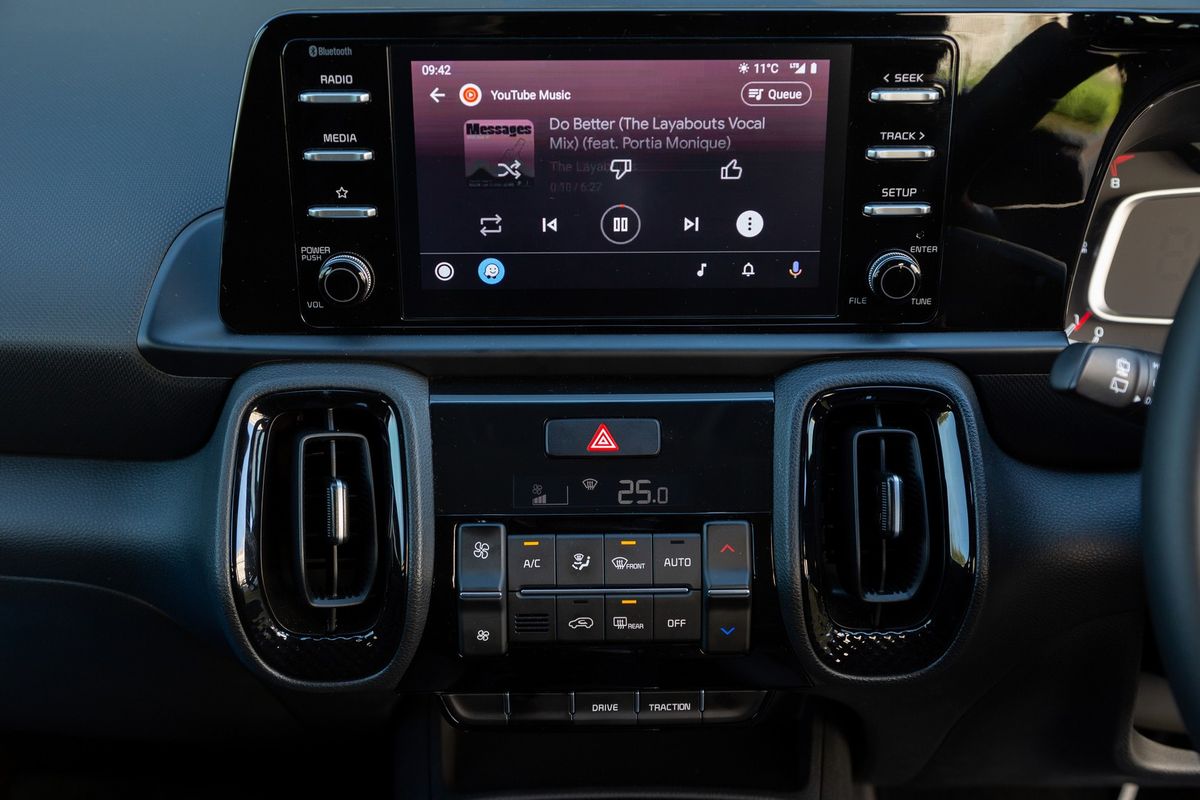
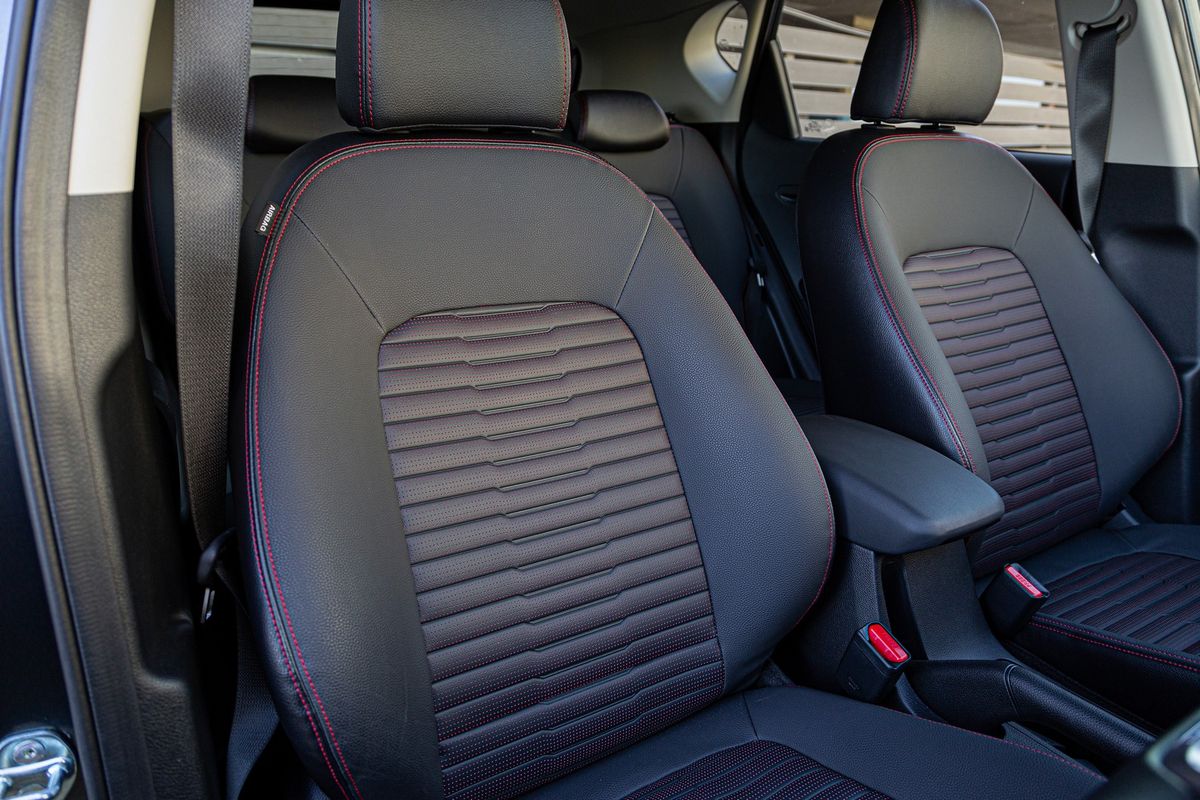
Yes, indeed. EX+ trim adds artificial leather seats with red stitching, electrically adjustable (and folding) wing mirrors, electrochromatic rear-view mirror, cruise control, automatic climate control and the drive modes. That’s on top of an 8-inch infotainment system with wireless Apple CarPlay/Android Auto, Bluetooth, USB ports (front and rear), reverse-view camera, rear parking sensors, height adjustable driver’s seat, auto headlights and fog lights.
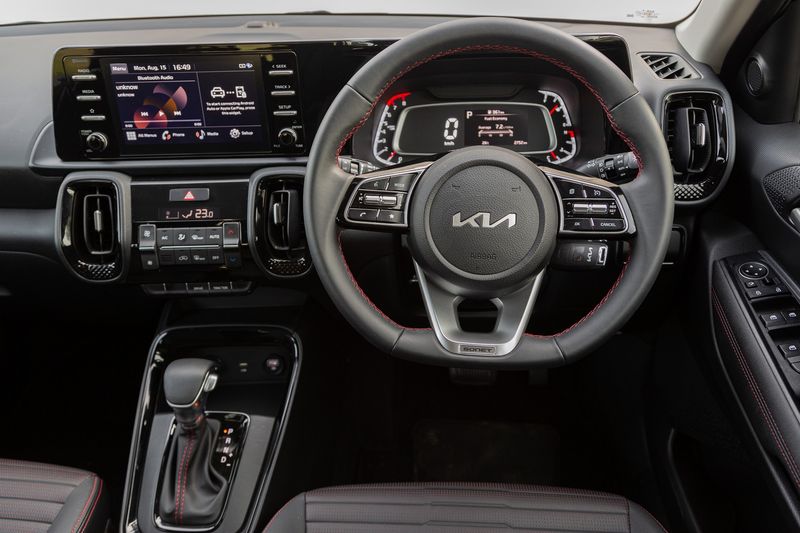
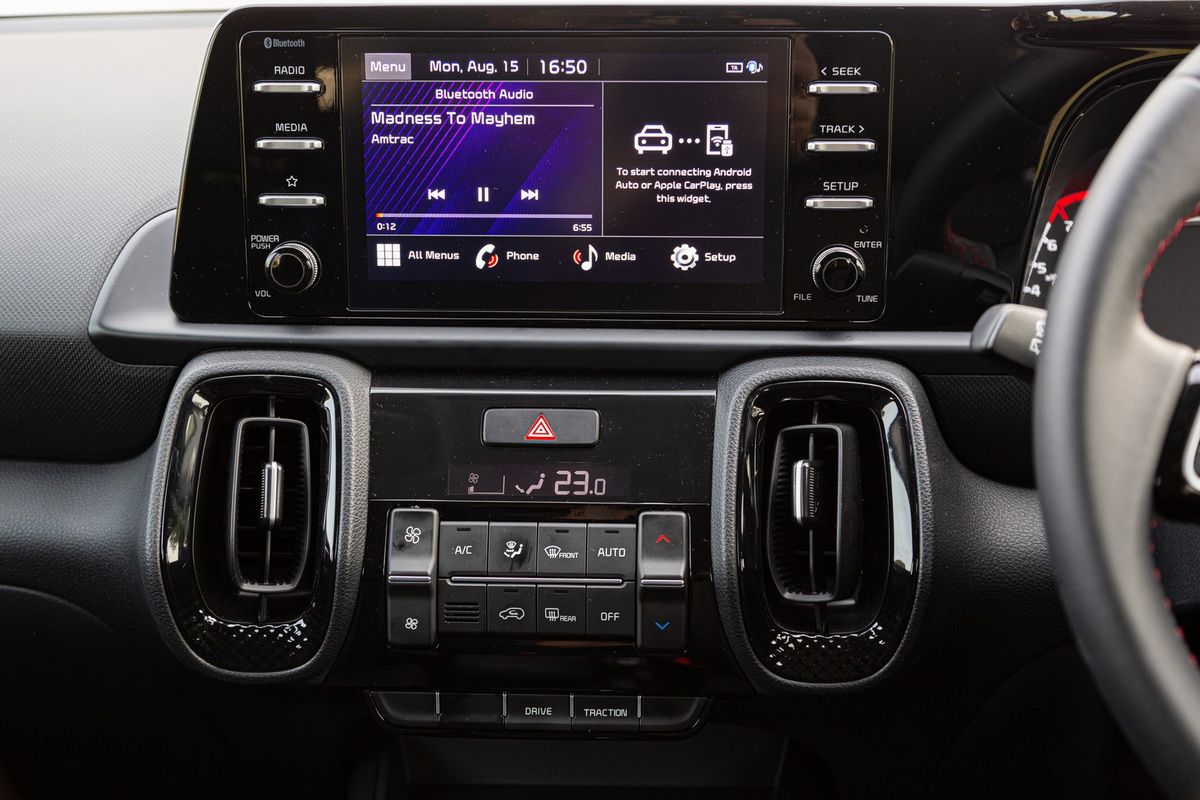
A neat and uncluttered fascia layout of the Kia Sonet.
In terms of safety features, this Sonet comes with 6 airbags (including side- and curtain airbags, over and above the usual dual front ‘bags), electronic stability control, anti-lock brakes with electronic brakeforce distribution, hill-start assist and ISOfix child-seat anchors.
However, there are some features that are missing, which we found curious. To reiterate, because the rear seatback is one piece, the Sonet becomes a strict two-seater when you need to transport items that won’t fit in the conventional load bay or on the rear bench’s cushion.
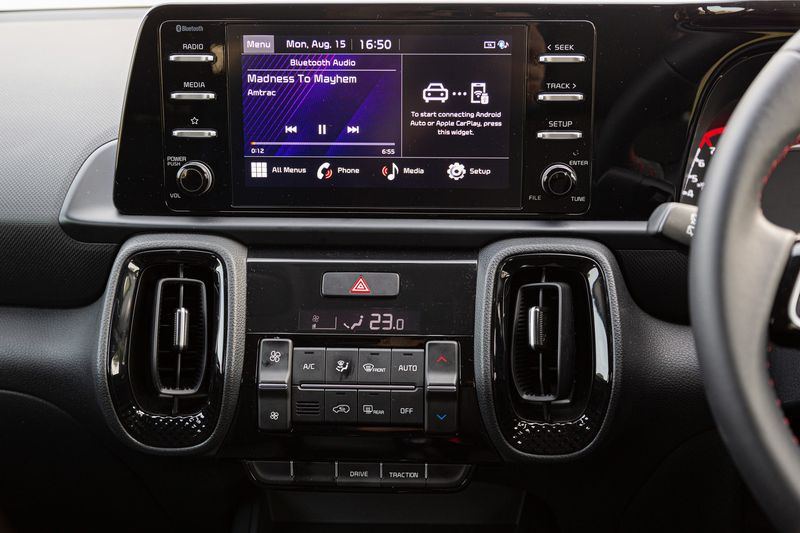
EX+ trim incorporates climate control, as well as selectable drive- and traction modes.
A one-touch up/down driver window would have been nice and one of our testers pointed out the car’s front-end look would have been bolder if Kia fitted LED daytime-running lights.
Kia Sonet: Performance and Efficiency
Unlike most Sonet derivatives, which are powered by a naturally aspirated 1.5-litre 4-cylinder petrol engine, the 1.0T EX+ features a 1.0-litre turbocharged 3-cylinder petrol engine. Its peak power output (88 kW) is remarkably close to that of the larger-capacity (non-turbo) motor’s 85 kW, but the torque difference is telling. See, with 172 Nm of torque (vs 144 Nm), the turbocharged Sonet is punchier (it produces stronger in-gear acceleration by comparison).
The 1.0T EX+’s turbocharged powertrain is one of the best in the business.
Does it feel quicker, though? Yes, you can feel the difference when the Kia accelerates to merge onto freeways or overtake slower traffic. The best part? You don’t even need to press the accelerator pedal more than 2/3rds down – there’s sufficient punch right from the get-go.
The main benefit of this powertrain is while naturally aspirated engines (such as those in the 1.5-litre Sonet derivatives) will lose around 17% of their power because of the thinner air at altitude, the turbocharged motor hardly suffers any loss at all. Therefore, it will be the more eager and responsive of the two engines in the country’s biggest car market – Gauteng.
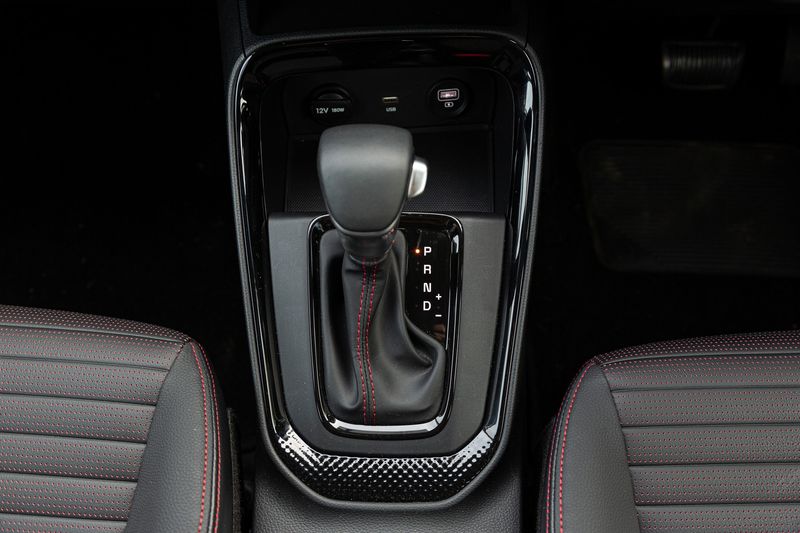
This dual-clutch automatic transmission shifts quickly and efficiently.
Don’t sell the 7-speed dual-clutch automatic transmission short, however. It shifts gear quickly and efficiently and seems particularly well-mapped to the engine’s performance characteristics. There’s a manual-override function available (if you want to “swap cogs” yourself), but we found the transmission behaved predictably when left to its own devices.
Now and again, when we pulled away abruptly, the powertrain jerked a little, but we learned to feather the accelerator pedal to negate that. Also, the engine sounds a bit buzzy beyond 5000 rpm, but it’s a minor gripe, because there’s hardly any need to rev the engine that hard.
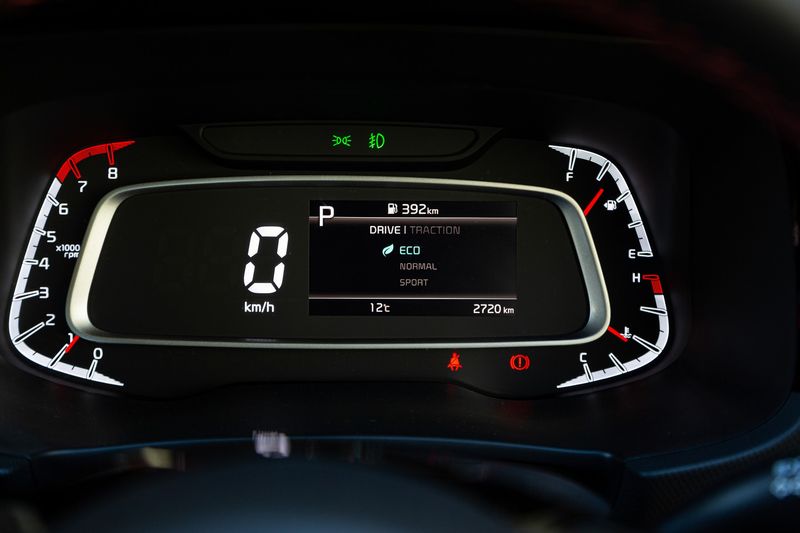
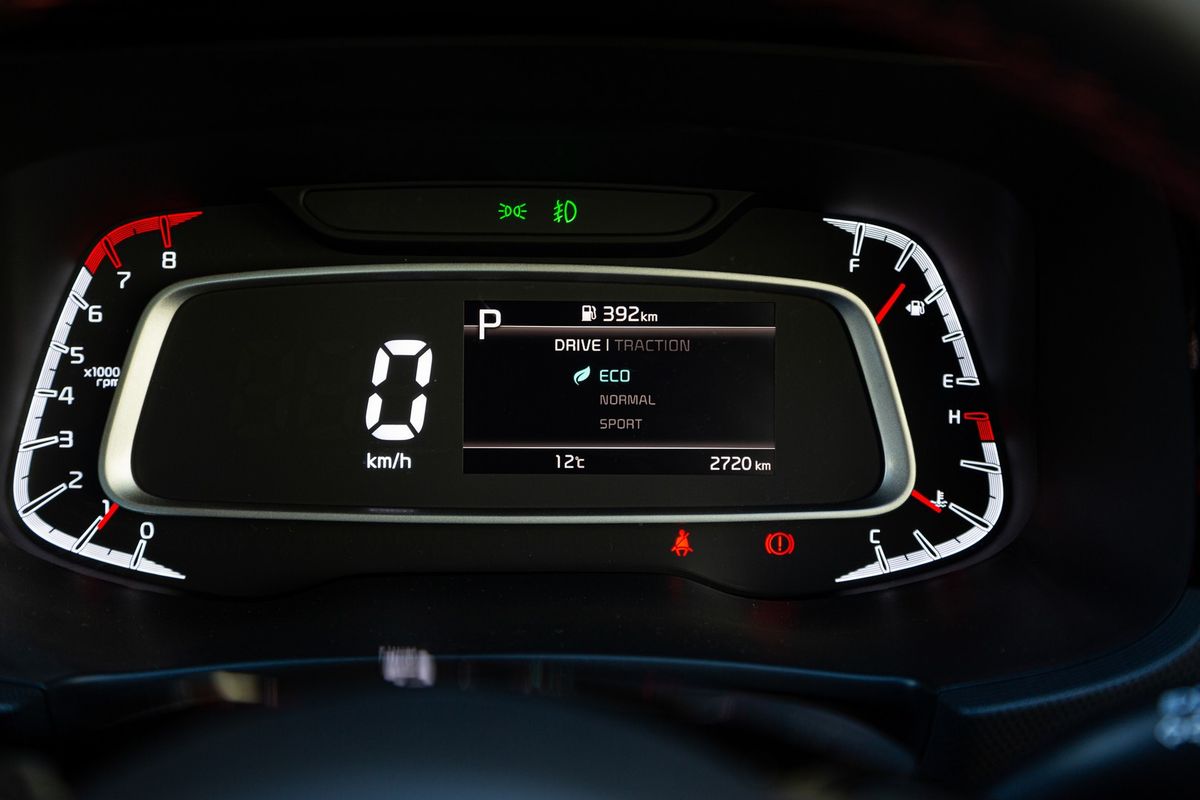
You can choose between three drive modes.
The 1.0T EX+ features 3 drive modes (Normal, Eco, Sport), along with traction modes for slippery roads; Normal is self-explanatory, Eco manages energy consumption to optimise fuel economy, and Sport sharpens the throttle and ‘shift responses for more spirited driving.
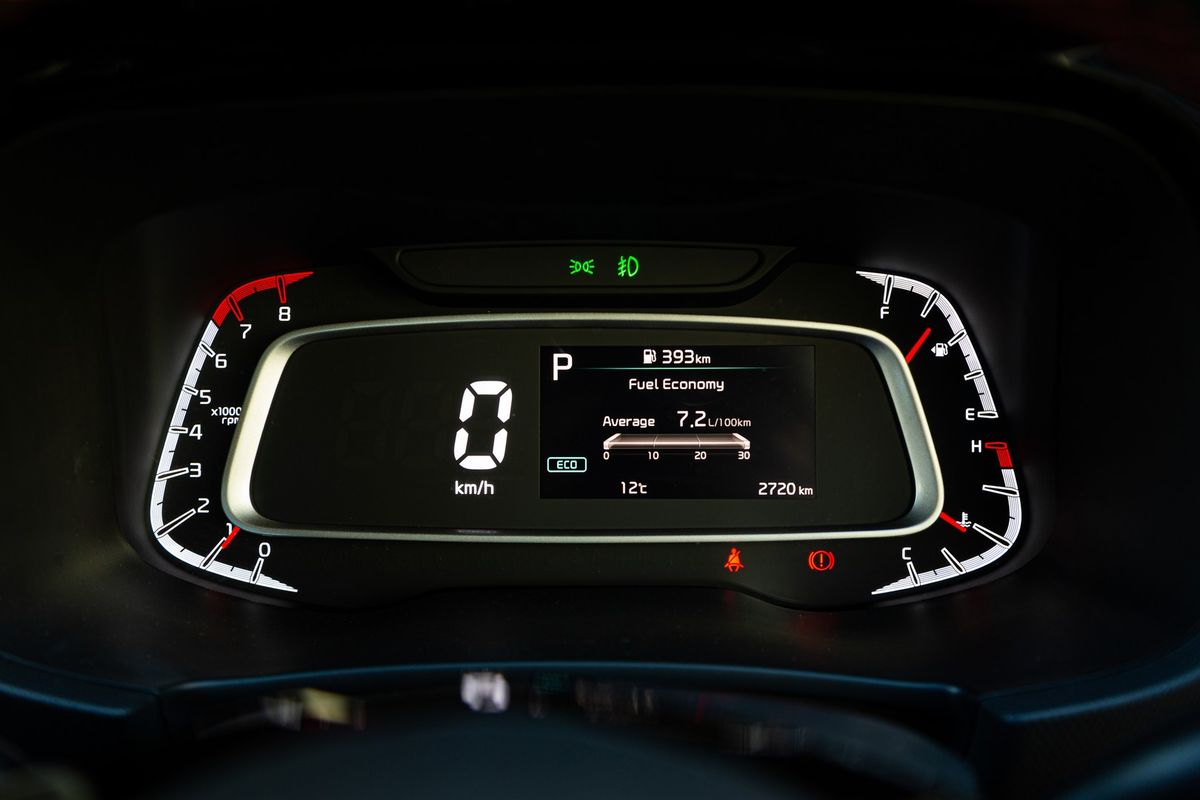
We have found that some compact turbopetrol engines aren’t nearly as fuel-efficient as their manufacturers claim, yet the Kia indicated a consumption figure of 7.2 L/100 km after we’d driven the 1.0T EX+ in a normal, everyday manner. We believe if you drive conservatively – and utilise Eco mode – returns of close to the claimed 6.0 L/100 km would be achievable.
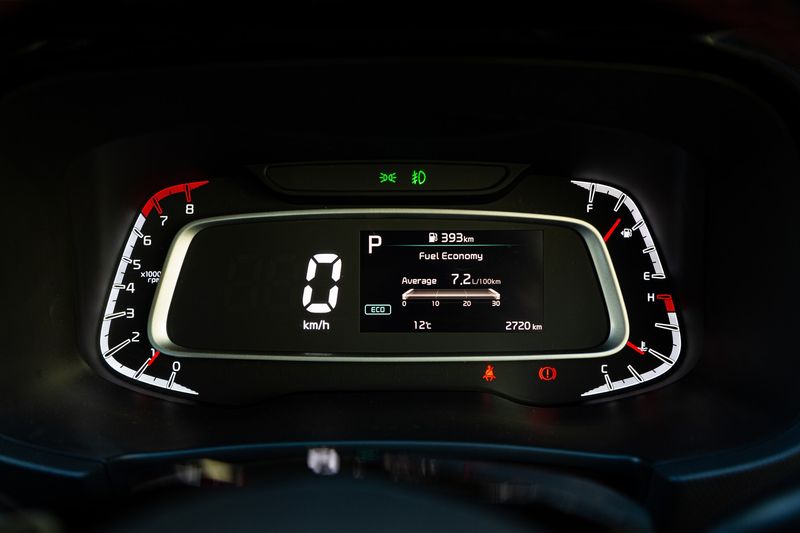
7.2 L/100 km is a commendable fuel consumption figure, but we know more frugal returns are achievable.
Ride and Handling
The Sonet is a small crossover – essentially an alternative to a compact hatchback – but at this price point, buyers are likely to expect vehicles to offer better than average on-road refinement. Fortunately for Kia, its Indian made Sonet exhibits high levels of NVH (noise, vibration and harshness) suppression, which is laudable, because that engine can sound a bit coarse at high revs and we did notice a bit of wind noise at the national speed limit (120 kph).
We are wary of nit-picking, though… few small crossovers can match the Sonet’s driving experience. While most of them demonstrate acceptable on-road behaviour, some models instil the feeling of being simple, made-to-cost products – they don’t always feel entirely sure-footed or capable of cruising quietly at higher speeds. The Kia is a good all-rounder.
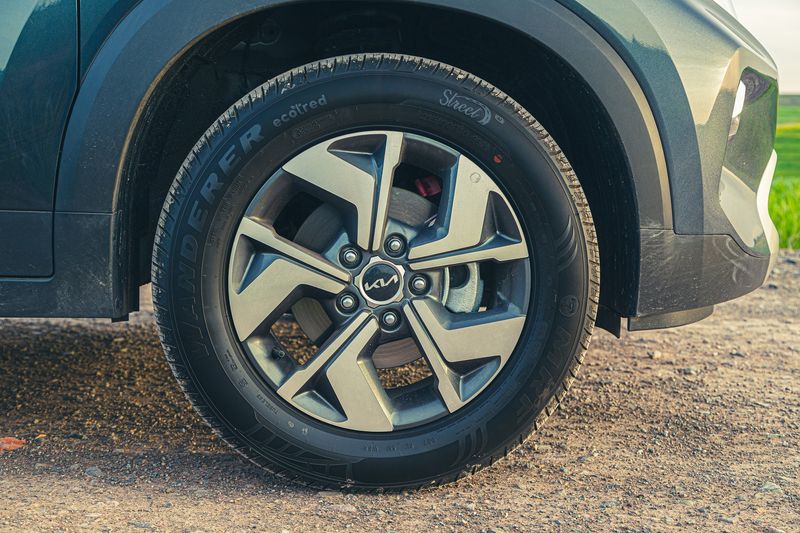
The high-profile 16-inch tyres offer a good ride quality, including on gravel roads.
The 1.0T EX+’s 16-inch alloy wheels are wrapped in plump 215/60 tyres; they help to soak up most road imperfections and provide some bolstering against rut and pothole impacts.
Considering the Sonet’s compact-car underpinnings, its general ride quality is quite forgiving and absorbent. The steering setup is well-assisted and not entirely devoid of feedback, but we did notice that the steering column is not reach-adjustable. You can compensate for this to a degree by tweaking the position of the driver’s seat, which is height adjustable as standard.
The chunky tyres and 190 mm of ground clearance make the Sonet adept at traversing gravel roads – it feels very stable on unsealed surfaces. It’s equipped with traction modes designed for (very mild) off-road excursions, but we’re wary of them; we once got a Peugeot 2008 stuck in the sand, despite the best intentions of its comparable stability control-based mode.
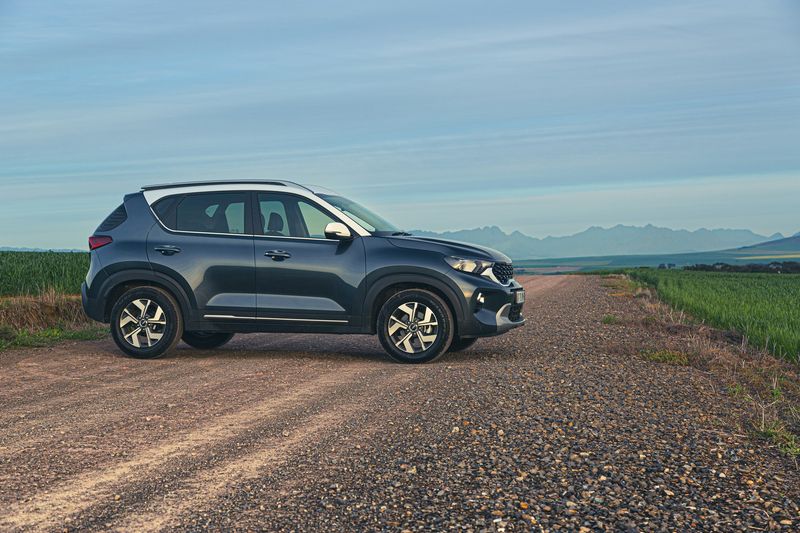
Tarmac or gravel, the Kia Sonet has proven to be adept at both
Price and After-sales support
The Kia Sonet 1.0T EX+ goes for R389 995 and is sold with an unlimited kilometre, 5-year warranty (with roadside assistance), as well as a prepaid 4-year / 60 000 km service plan.
Some Kia dealerships regularly offer great deals. See our New Car Specials!
Looking to sell your car? You can sell your car to SA’s biggest dealer network
Verdict
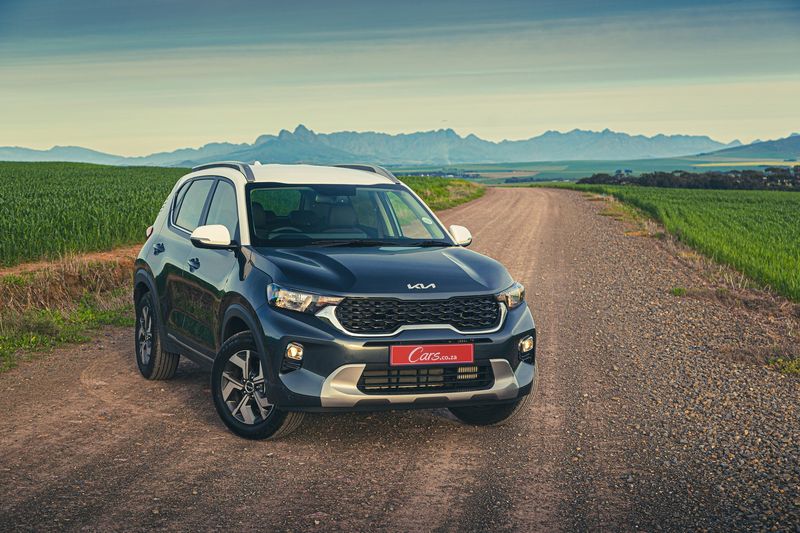
With the introduction of a turbocharged engine and dual-clutch automatic transmission, the Sonet range is now complete.
With the introduction of a turbocharged “triple” petrol motor – mated with a slick dual-clutch automatic transmission – to the range, the Sonet line-up is now complete. The 1.0T EX+ is one of those derivatives that demonstrates it does not need to be an ignominy to “buy down” if you choose wisely (empty nesters may not need the extra space that Kia’s larger Seltos offers, for example), plus the Sonet flagship comes packed with many “big-car” features.
So, should you buy one? The addition of a punchy-yet-efficient powertrain has broadened the appeal of the two top-end Kia Sonet derivatives. However, if your budget can’t stretch to this flagship version, you won’t feel short-changed if you opt for one of the “lesser” derivatives.
If you live at sea level and don’t need to contend with the loss of power (approximately 17%) that the naturally aspirated 1.5-litre engine suffers at the Reef (it will be most noticeable when the Sonet is fully loaded with people and their things, less so otherwise), the 1.5 EX offers exceptional value for money, even if it doesn’t have the nice-to-haves fitted to the 1.0T EX+. It does not have a dual-clutch transmission, but to reiterate, the CVT is quite tolerable.
Considering Kia’s substantial after-sales support (the 5-year warranty and service plan are very competitive), the Sonet is one of the better buys in this hotly contested segment.
Some Kia dealerships regularly offer great deals. See our New Car Specials!
Looking to sell your car? You can sell your car to SA’s biggest dealer network
Search for a new or used Kia on Cars.co.za
Frequently Asked Questions
What is the fuel tank capacity and mileage of the Kia Sonet?
The Kia Sonet has a fuel tank capacity of 45 litres. Kia claims between 5.8- and 6.6 L/100km.
How many people can sit in the Kia Sonet?
The Kia Sonet is a 5-seater SUV, with seating for a driver and four passengers. It does not come in a 7-seater option.
What are the available engine and transmission options for the Kia Sonet?
In South Africa, the Kia Sonet is available with both petrol two petrol engine options including a naturally-aspirated 1.2 litre and 1.0-litre turbo engine. The transmission options include manual, CVT and DCT automatic.
What are some of the key features of the Kia Sonet?
The Kia Sonet is known for its feature-rich cabin. Depending on the variant, key features can include an electric sunroof, a 10.25-inch HD touchscreen infotainment system, a digital instrument cluster, a Bose premium 7-speaker sound system, ventilated front seats, and advanced driver-assistance systems (ADAS).
What is the ground clearance of the Kia Sonet?
The Kia Sonet has a ground clearance of 205 mm, which is suitable for navigating various road conditions and terrains.
What are some common complaints or drawbacks of the Kia Sonet?
Commonly reported drawbacks include a lack of rear-seat knee room, which can be a concern for taller passengers, and noticeable tyre noise in the cabin at higher speeds. Some users also note that for its premium price, it could include features like auto wipers or a 360-degree camera on more variants.
Related Content
Kia Sonet (2025) Specs & Price in South Africa
Kia Sonet – Why you should buy it
Reviews