
Is the original Kia Seltos worth a look on the used market? Here’s what you need to know when shopping for a pre-owned version of the South Korean firm’s Indian-built crossover…
Back in late 2019, Kia’s crossover portfolio in South Africa comprised just a pair of models: the Sportage and Sorento (with the hatchback-esque Soul having been discontinued earlier that year). Yes, Kia’s local range was crying out for a sub-Sportage contender. Enter the original Kia Seltos.
Interestingly, the Seltos was the first Kia imported into Mzansi from India, with the Seoul-based company having completed construction of its sprawling Anantapur manufacturing facility just a few months prior to the first shipment’s arrival. The smaller Sonet that followed the Seltos in 2021 was also sourced from this factory.
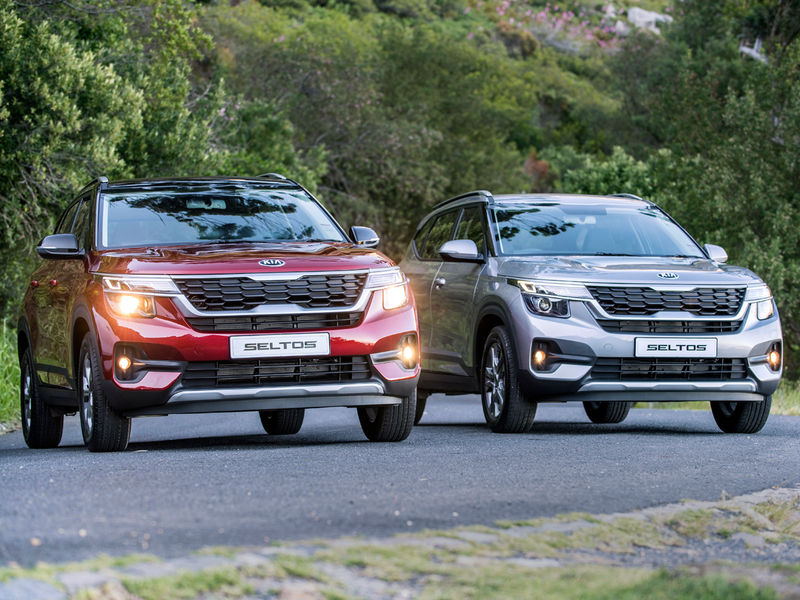
For the record, the 1st-generation Seltos that was produced in South Korea had an internal designation of “SP2”, while the version made in India was known as the “SP2i” (and the iteration manufactured in China, where it was badged as the KX3, had the codename “SP2c”). The SP2i-series model sold locally was built on the K2 platform that also underpinned the related 2nd-generation Hyundai Creta.
So, just how popular was the Mk1 Kia Seltos in South Africa? Well, this model – which was available locally in front-wheel-drive form only – breached the 3 000-unit barrier in each of its first 2 full years on the local market, before falling back to around 2 500 units in 2022.
The following year, the South Korean firm’s local distributor sold 2 230 units, a figure that dropped further still to 1 652 units in 2024, before bouncing back to 2 409 units in 2025. An additional 1 351 units were registered over the opening half of 2026, shortly before the 2nd-gen model was introduced.
Kia Seltos model line-up in South Africa
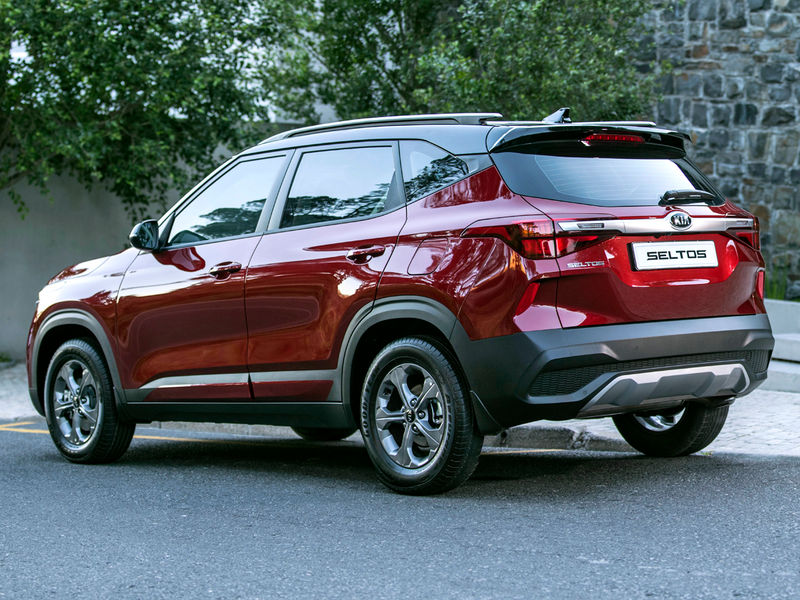
The SP Concept that previewed the SP2i-series Seltos was unwrapped at India’s Auto Expo in early 2018 (while the SP Signature show car – the concept version of the Korean-made SP2 – was displayed around a year later at the Seoul Motor Show). The SP2i production model was unveiled in India in June 2019.
It didn’t take long for the Kia Seltos to reach South African showrooms, with Mzansi serving as the first export market for the Indian-built version. In November 2019, the 4-strong local line-up went on sale, with 3 derivatives powered by a naturally aspirated 1.6-litre petrol engine and the flagship variant featuring a turbocharged 1.4-litre petrol unit.
- Seltos 1.6 EX 6MT (90 kW/151 Nm)
- Seltos 1.6 EX 6AT (90 kW/151 Nm)
- Seltos 1.6 EX+ 6AT (90 kW/151 Nm)
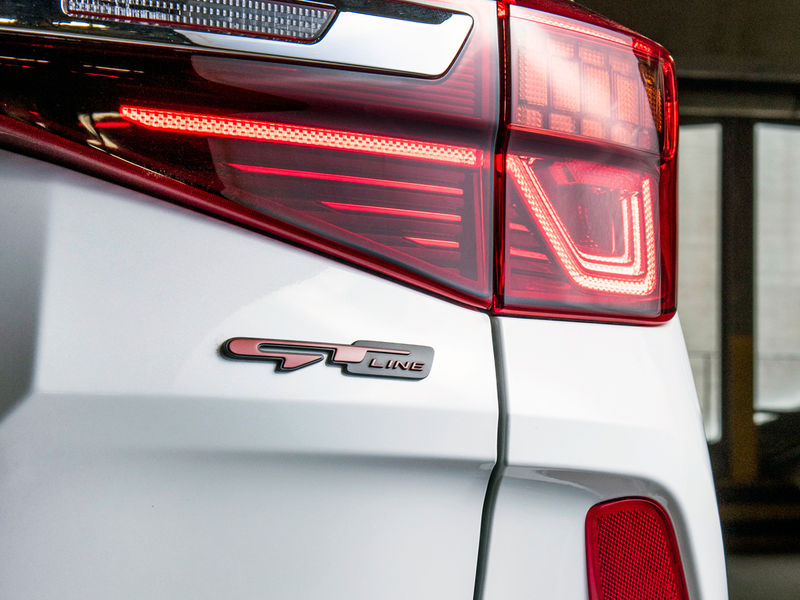
- Seltos 1.4 T-GDi GT-Line 7DCT (103 kW/242 Nm)
In July 2020, Kia SA expanded the local line-up with the addition of a trio of turbodiesel derivatives. Available in the EX and EX+ grades, the oil-burning variants each offered peak outputs of 86 kW and 250 Nm courtesy of a 1.5-litre turbodiesel motor. Transmission options included a 6-speed manual gearbox and a torque-converter auto with the same number of cogs.
- Seltos 1.5 CRDi EX 6MT (86 kW/250 Nm)
- Seltos 1.5 CRDi EX 6AT (86 kW/250 Nm)
- Seltos 1.5 CRDi EX+ 6AT (86 kW/250 Nm)
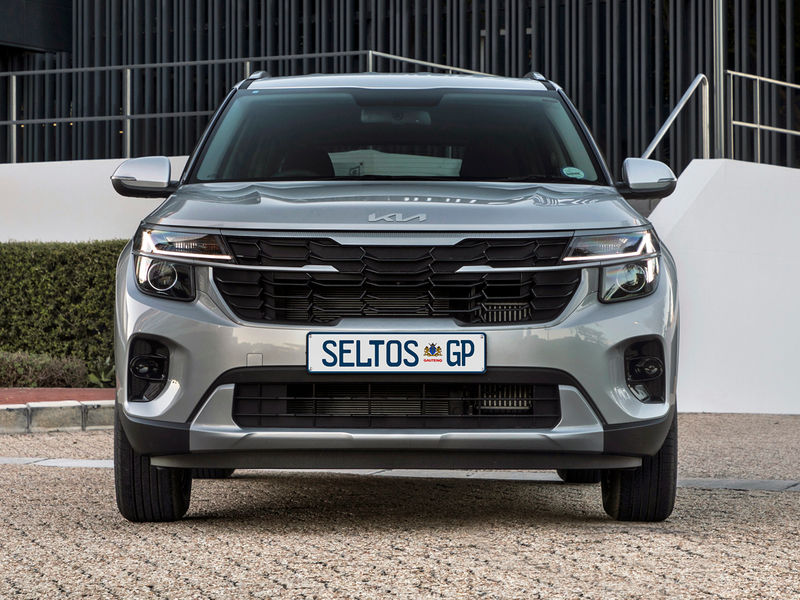
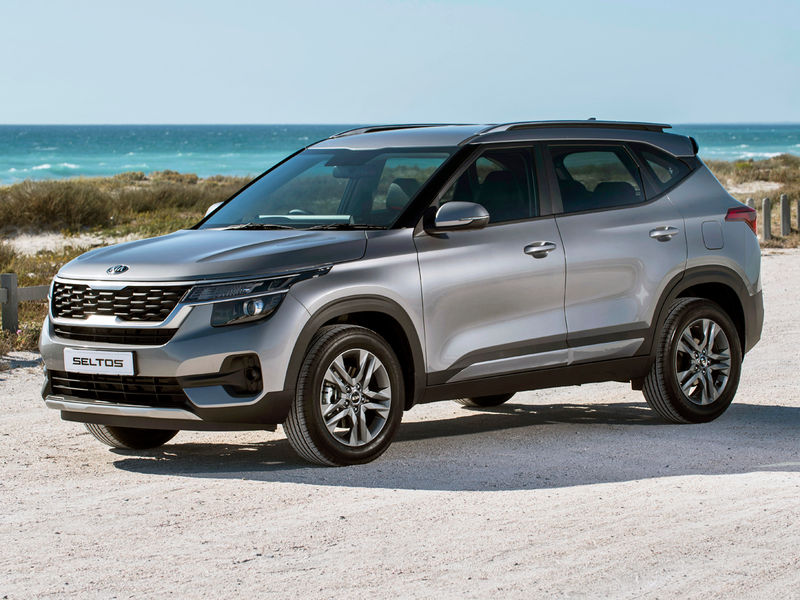
The facelifted SP2i-series Seltos – having grown slightly in length, from 4 315 mm to 4 365 mm – touched down in South Africa in April 2024. The revised crossover sported not only updated exterior styling, a redesigned interior and a new LX grade (resulting in an 8-strong range) but also several changes to its powertrain line-up.
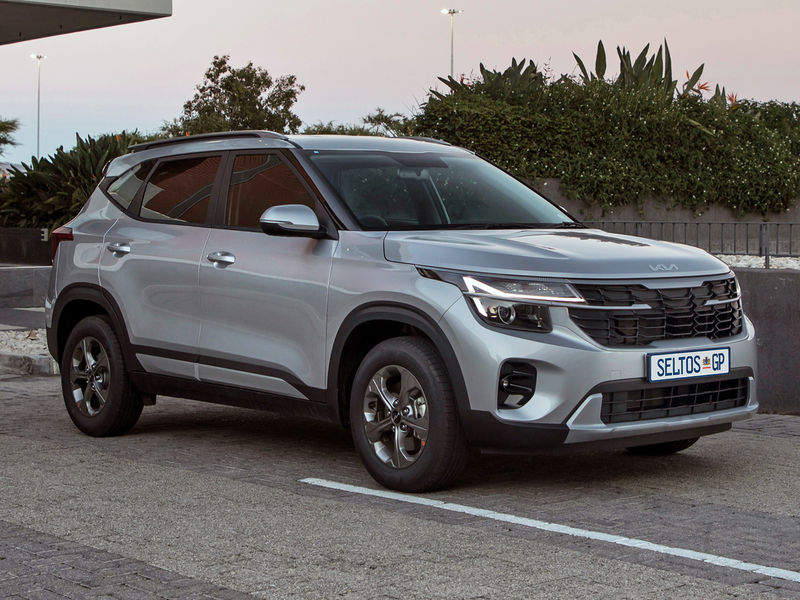
While the 1.5-litre turbodiesel mill carried over (but from that point it was available only with an automatic cog-swapper), the naturally aspirated 1.6-litre petrol motor was replaced by a likewise atmospheric 1.5-litre 4-pot that featured slightly lower outputs of 84 kW and 144 Nm. A 6-speed manual gearbox was again on offer, although 2-pedal versions switched to a continuously variable transmission (CVT).
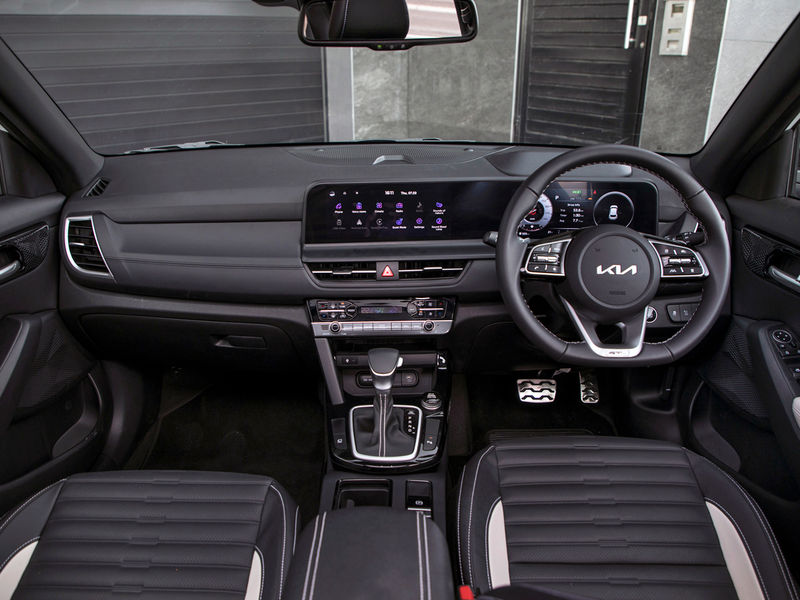
Furthermore, the flagship GT-Line derivative ditched the old 1.4-litre turbopetrol in favour of a 1.5-litre T-GDi motor, again driving the front axle via a 7-speed dual-clutch transmission as standard. This new forced-induction engine out-punched its predecessor on paper, generating 118 kW and 253 Nm.
- Seltos 1.5 LX 6MT (84 kW/144 Nm)
- Seltos 1.5 LX CVT (84 kW/144 Nm)
- Seltos 1.5 CRDi LX 6AT (86 kW/250 Nm)
- Seltos 1.5 EX CVT (84 kW/144 Nm)
- Seltos 1.5 CRDi EX 6AT (86 kW/250 Nm)
- Seltos 1.5 EX+ CVT (84 kW/144 Nm)
- Seltos 1.5 CRDi EX+ 6AT (86 kW/250 Nm)
- Seltos 1.5 T-GDi GT-Line 7DCT (118 kW/253 Nm)
A year later (in April 2025), the Korean firm’s local division quietly introduced a new entry-level LS grade below the LX, effectively dropping the nameplate’s starting price by a considerable R88 000. The LS derivatives were offered with the naturally aspirated 1.5-litre powerplant and either a 6-speed manual ‘box or a CVT, seeing the range swell to as many as 10 variants.
- Seltos 1.5 LS 6MT (84 kW/144 Nm)
- Seltos 1.5 LS CVT (84 kW/144 Nm)
The local lifecycle of the SP2i-series Kia Seltos finally ended in August 2026, when the automaker officially introduced the larger, 2nd-generation model. As such, the original Seltos was on the market in Mzansi for nearly 7 years.
What are the Kia Seltos’ strengths?
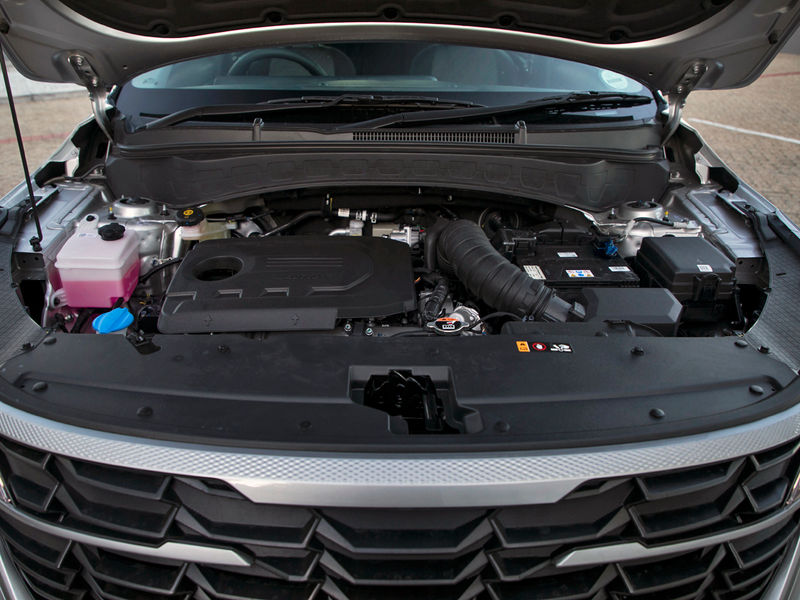
Several powertrain options: The Kia Seltos line-up offered a wide range of powertrain options, greatly broadening this model’s appeal. Over the Mk1’s local lifecycle, buyers could choose from a pair of naturally aspirated petrol engines, a pair of turbocharged petrol motors and a frugal turbodiesel mill.
Meanwhile, available transmissions included a 6-speed manual gearbox, a 6-speed torque-converter automatic, a CVT and a 7-speed dual-clutch cog-swapper. In short, the South Korean firm’s local product planners made sure several bases were covered.
In terms of real-world fuel economy (observed during each test vehicle’s review period), we achieved figures of 6.4 L/100 km in the pre-facelift 1.5 CRDi EX+ 6AT, 8.5 L/100 km in the 1.4 T-GDi GT-Line 7DCT and 10.9 L/100 km in the 1.6 EX+ 6AT. We later tested the refreshed 1.5 T-GDi GT-Line 7DCT, with indicated consumption settling on an impressive 7.4 L/100 km.
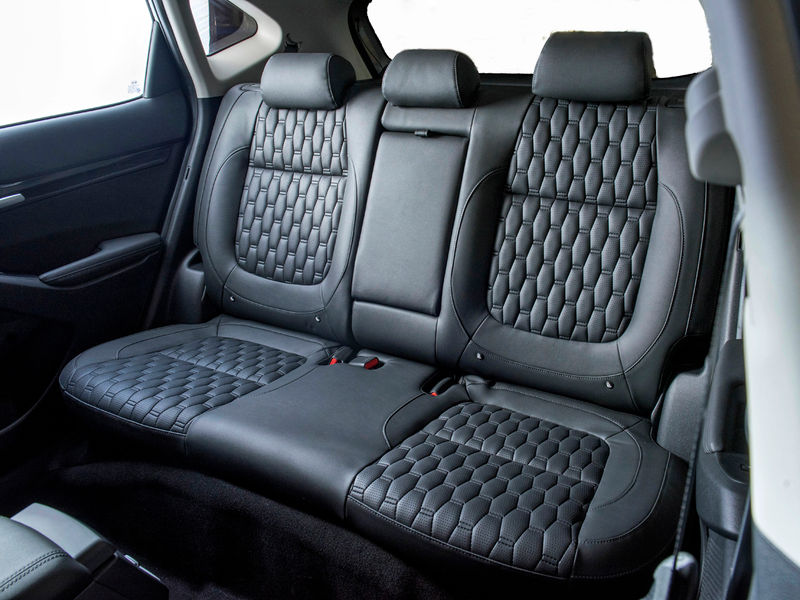
Spacious, practical interior: Courtesy of its 2 610 mm wheelbase and exterior dimensions that were larger than those of its (early) direct rivals, the Seltos offered a particularly roomy cabin. We found the rear bench very comfortable, as even tall passengers were availed sufficient head- and legroom. All derivatives furthermore featured dedicated rear air vents as well as a USB charging port sited behind the central front armrest.
The luggage compartment was likewise capacious, with Kia SA claiming a capacity of 433 litres (the rear bench split in a 60:40-configuration and could fold completely flat, unlocking generous utility space, too). The cargo opening, meanwhile, measured a useful 1 098 mm wide and 816 mm high.
Lengthy warranty cover: The original Seltos was covered by what Kia SA at the time described as an “industry-leading” warranty. This aftersales cover included roadside assistance and spanned 5 years, while mileage was unlimited. Of course, that last point – the “unlimited kilometre” parameter – could potentially be particularly beneficial to those who purchase a late model-year SP2i-series Seltos on the used market today.
What are the Kia Seltos’ weaknesses?
Potential issues with the DCT: While we struggled to unearth many local instances of premature failure of the turbopetrol derivatives’ 7-speed dual-clutch transmission, such problems have certainly surfaced in India, the country from which all SA-spec Seltos units were sourced.
In that market, several Seltos owners have reported low-speed judder, jerkiness and hesitation from the DCT (seemingly due to premature degradation of the clutch pack), while transmission temperature warnings aren’t uncommon. This appears most prevalent on the pre-facelift 1.4 T-GDi GT-Line 7DCT, although owners of the refreshed 1.5 T-GDi GT-Line 7DCT apparently weren’t immune.
In short, the Seltos’ dry-clutch design – which relies on airflow rather than oil for cooling – seemingly hasn’t coped well with India’s extreme ambient heat and notorious traffic. So, if you happen to reside in one of the typically warmer parts of South Africa and/or spend plenty of time in bumper-to-bumper traffic, we’d suggest avoiding the DCT.
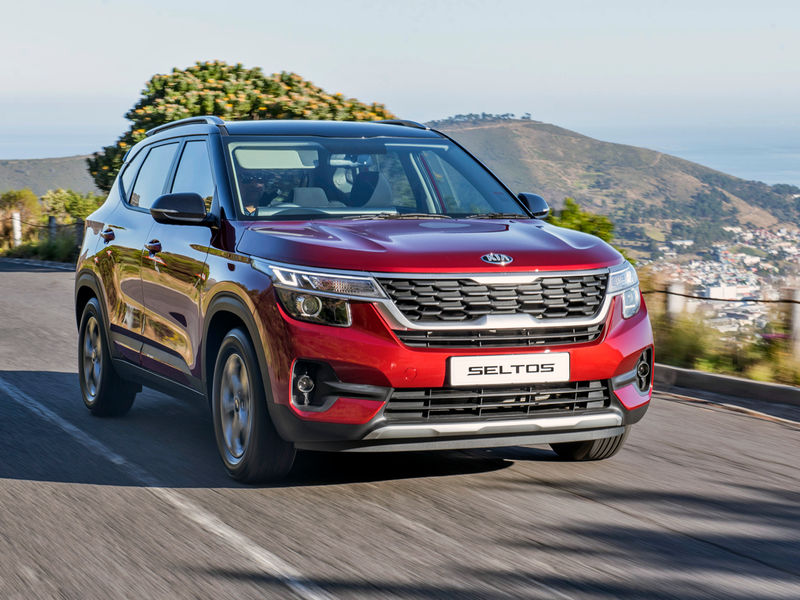
Certain variants lacked ESC: In the pre-facelift portfolio, only the EX+ and GT-Line grades included electronic stability control (ESC), meaning the quartet of EX derivatives did without this important piece of safety kit. Thankfully, Kia SA rectified this oversight at the model’s mid-cycle update, with all grades from that point featuring ESC.
On the topic of safety, note that all 1st-generation Seltos derivatives offered in South Africa came standard with ABS (with EBD), 6 airbags (including curtain items), outer-rear ISOfix child-seat anchors, rear parking sensors (at the least; some variants added front items) and a reverse-view camera.
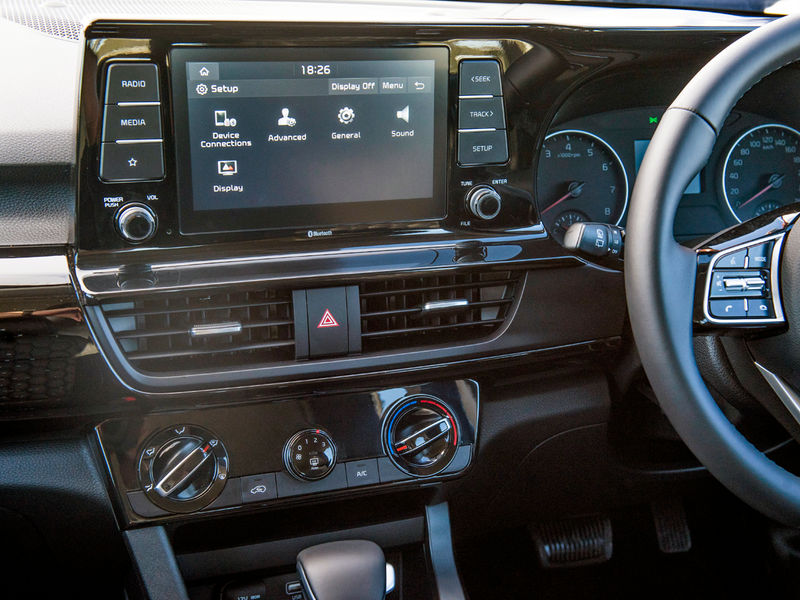
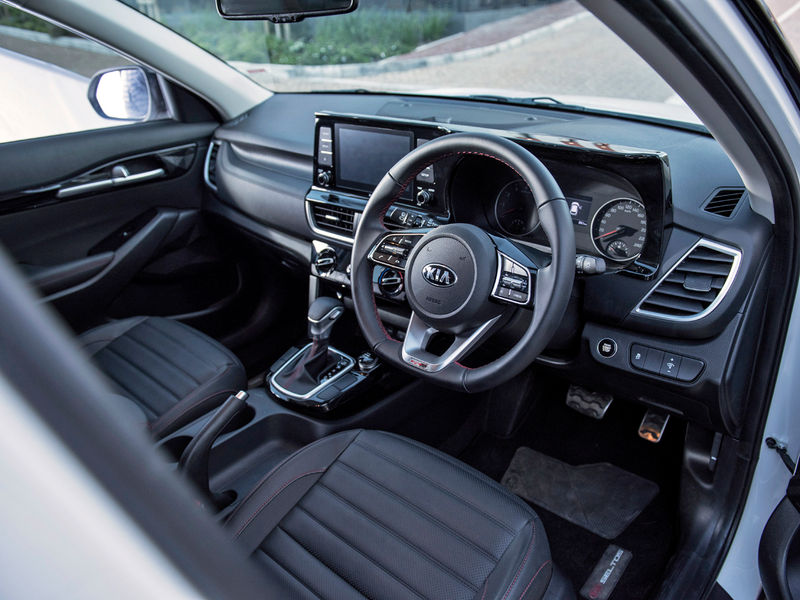
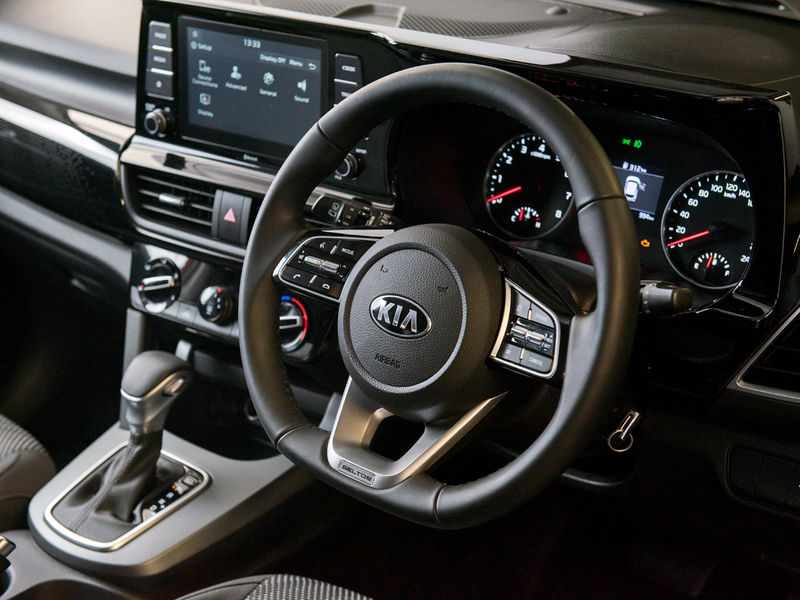
Fingerprint-magnet piano-black trim: The Seltos featured a shiny piano-black finish around its infotainment system (most obvious in pre-facelift guise) and on parts of the dashboard – as well as on the centre console in GT Line derivatives. This finish proved to be a “fingerprint magnet” – and tended to attract plenty of dust, too – so required constant cleaning to look its best.
How much is a used Seltos in South Africa?
While the SP2i-series Seltos launched locally with a 5-year/90 000 km service plan, keep in mind Kia SA quietly pared back these parameters to 4 years or 60 000 km around April 2025 (seemingly when the entry-level LS grade was introduced).
At the time of writing, about 78% of SP2i-series Kia Seltos units listed on Cars.co.za featured an automatic transmission of some sort, while 62% were powered by a petrol engine.
That said, the single most popular motor was the 1.5 CRDi (38%), closely followed by the naturally aspirated 1.5- (33%) and 1.6-litre (21%) petrol mills. Interestingly, there were very few examples of the turbopetrol motors on offer, with the 1.4 T-GDi comprising just 5% and the 1.5 T-GDi the remaining 3%.
Based on our analysis, 2026 was easily the most popular model year with a whopping 33% of listings, followed by 2021 and 2025 with 15% apiece. Indicated mileage ranged from virtually zero on almost-new 2026 examples to 147 000 km on a 2021 1.5 CRDi EX 6AT.
- Below R300 000: Just under a 3rd of all listed SP2i-series Seltos units were priced below R300 000. Predictably, almost all were pre-facelift examples, while most featured the atmospheric 1.6-litre petrol engine. That said, the cheapest Seltos we found was a 2021 1.5 CRDi EX (showing 96 000 km), priced at R159 999.
- R300 000 to R400 000: A little over 40% of listings were positioned between R300 000 and R400 000. The naturally aspirated 1.5-litre petrol engine (introduced at the mid-cycle update) was the most prevalent motor in this space, though the turbodiesel mill was also well represented. Most units here were facelifted examples.
- R400 000 and up: The final 27% were priced above the R400 000 mark. Interestingly, the 1.5 CRDi powertrain accounted for over half of the models listed in this space. The most expensive SP2i-series Seltos we found was a 2026 1.5 T-GDI GT-Line 7DCT (with 1 800 km on its odometer) listed for a rather optimistic R619 900.
For context on the figures above, note that the 10-strong SP2i-series Seltos range’s pricing bookends at the very end of its local lifecycle in South Africa came in at R379 995 and R626 995.
Which Seltos derivative should I choose?
Considering the lofty number of engine and transmission options offered across this model’s local lifecycle, identifying a pick of the range – for the general buyer, anyway – is perhaps best done via a process of elimination.
Risk-averse shoppers would do well to avoid the DCT-equipped turbopetrol variants, which remain fairly few and far between on the used market anyway. We’d also advise buyers to steer clear of the pre-facelift EX derivatives, since these lacked ESC.
While the initial 1.6- and subsequent 1.5-litre naturally aspirated petrol engines delivered honest daily commuting performance at sea level, they could feel somewhat strained at altitude. Therefore, we’d point to the 1.5 CRDi turbodiesel motor – a relatively rare option in this segment – as the powerplant to have.
This oil-burning motor offered plenty of low-down torque (with maximum twisting force on tap from just 1 500 rpm) as well as the potential for impressive fuel economy, particularly on the long road. The 1.5 CRDi EX+ 6AT was arguably the sweet spot in the pre-facelift portfolio, while this engine was available in LX, EX and EX+ guise from the mid-cycle update.
Note that the LX made do with cloth upholstery, manual air-conditioning and an 8.0-inch touchscreen, while the EX added items like hill-start assist control, drive-mode select, front parking sensors, faux-leather upholstery, a 10.25-inch touchscreen, dual-zone automatic air-con and wireless smartphone charging.
The EX+, meanwhile, boasted LED headlamps, LED front foglamps, LED taillamps, sequential indicators, auto-folding side mirrors, a 10.25-inch instrument cluster and mood lighting for the cabin.
What are the alternatives to Kia’s Seltos?
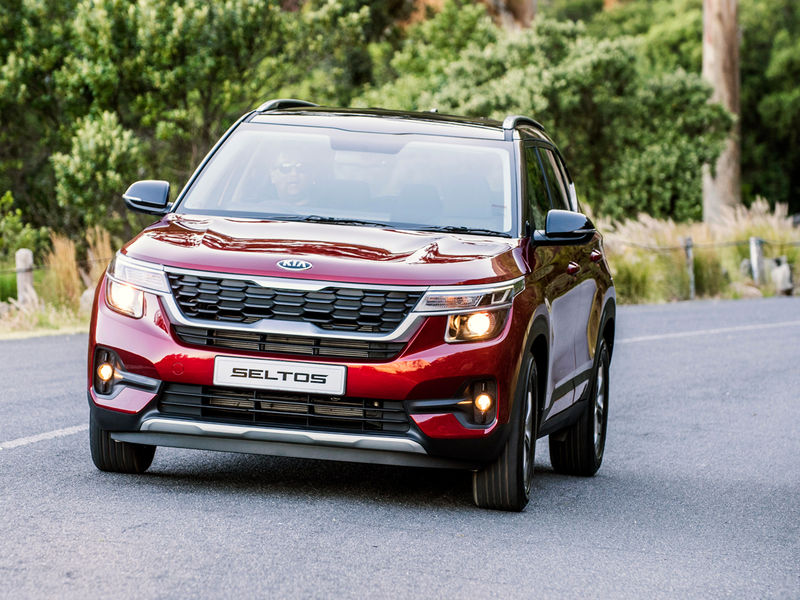
The original Kia Seltos jumped headfirst into a crowded segment that became only more congested – and indeed more fiercely contested – as time moved on. Still, it was a little larger than most of its early rivals, a lengthy list that included the Ford EcoSport, Renault Duster, Volkswagen T-Cross, Suzuki Vitara and Hyundai Creta.
Over time, its competitor base swelled to include contenders such as the likewise Indian-built Suzuki Grand Vitara, Toyota Urban Cruiser and Honda Elevate. It also faced competition from slightly bigger models like the Toyota Corolla Cross, Mazda CX-30 and GWM Haval Jolion.
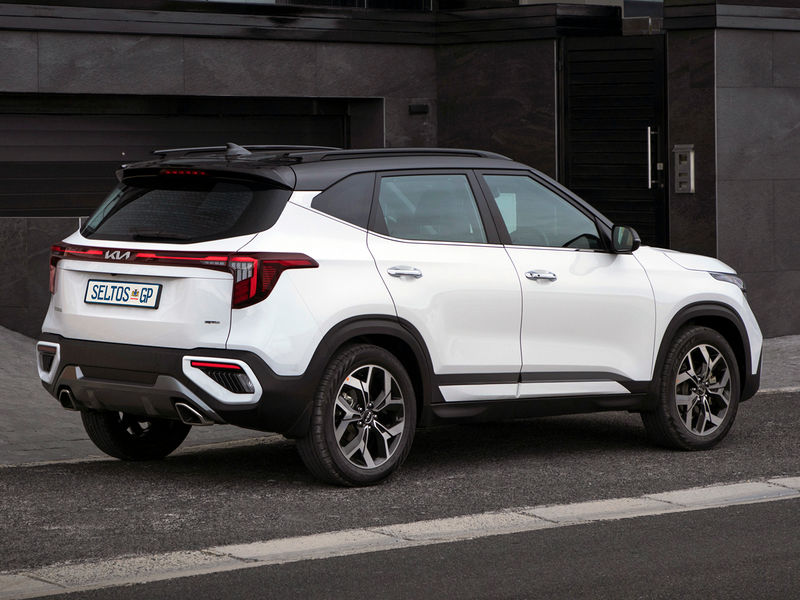
Of course, later in the original Seltos’ stint on the local market, a raft of cut-price Chinese crossovers also entered the space. The biggest sellers here were the likes of the Chery Tiggo 4 Pro (and Tiggo Cross), Omoda C5 and Jaecoo J5, while other options included the GAC GS3 Emzoom and Lepas L4.
Is the Kia Seltos a worthwhile used purchase?
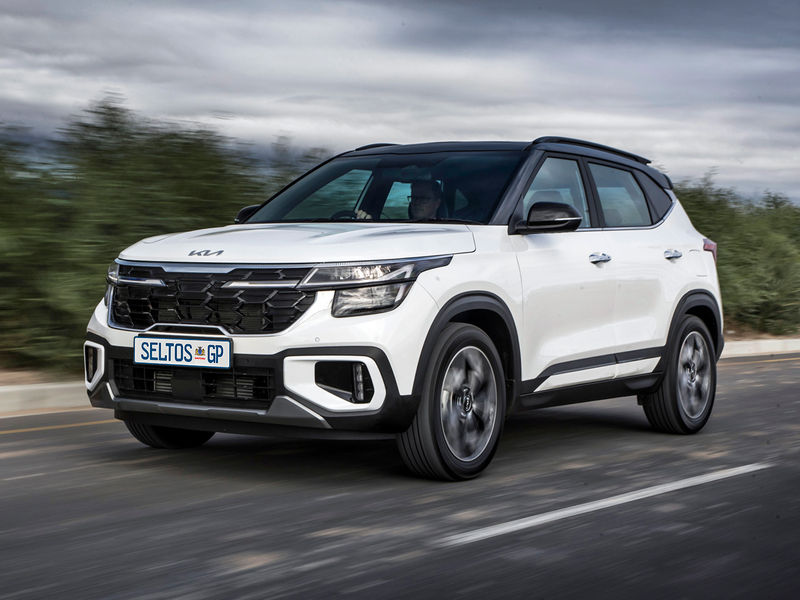
So, is the original Kia Seltos worth considering as a used buy? Absolutely. It remains a compelling package with few drawbacks, particularly in turbodiesel guise. Equipped with the 1.5 CRDi engine, the Seltos pairs a spacious, generally well-built cabin with a pleasing blend of low-down punch and open-road efficiency.
Hunt down a well-maintained example with electronic stability control – so, EX+ in pre-facelift form or EX/EX+ (preferably skipping the more modestly specified LX) in updated form – and you’ll have bagged yourself a genuinely versatile family crossover that should serve you well.
Looking for a used Kia Seltos to buy?
Looking to sell your car? You can sell it to our dealer network here
Frequently Asked Questions (FAQ)
Q: Is the original Kia Seltos a good used car buy in South Africa?
A: The 1st-generation (SP2i) Kia Seltos is considered a solid pre-owned choice thanks to its spacious cabin, generous 433-litre boot and long 5-year/unlimited km warranty.
Q: Which Kia Seltos engine derivative is the best option to buy pre-owned?
A: The 1.5 CRDi turbodiesel (86 kW/250 Nm) paired with a 6-speed automatic gearbox is considered the sweet spot in the used line-up due to its strong low-down torque and low fuel consumption (around 6.4 L/100 km).
Q: Which used Kia Seltos models should buyers be cautious of or avoid?
A: Buyers should exercise caution with 7-speed DCT-equipped turbopetrol variants (1.4 T-GDi and 1.5 T-GDi) due to potential clutch pack judder in heavy traffic, as well as pre-facelift EX trim models which lacked Electronic Stability Control (ESC).