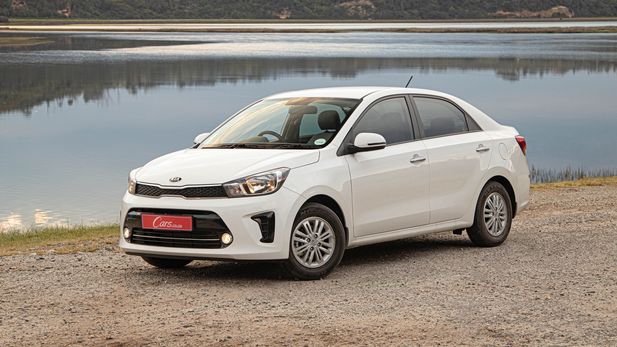
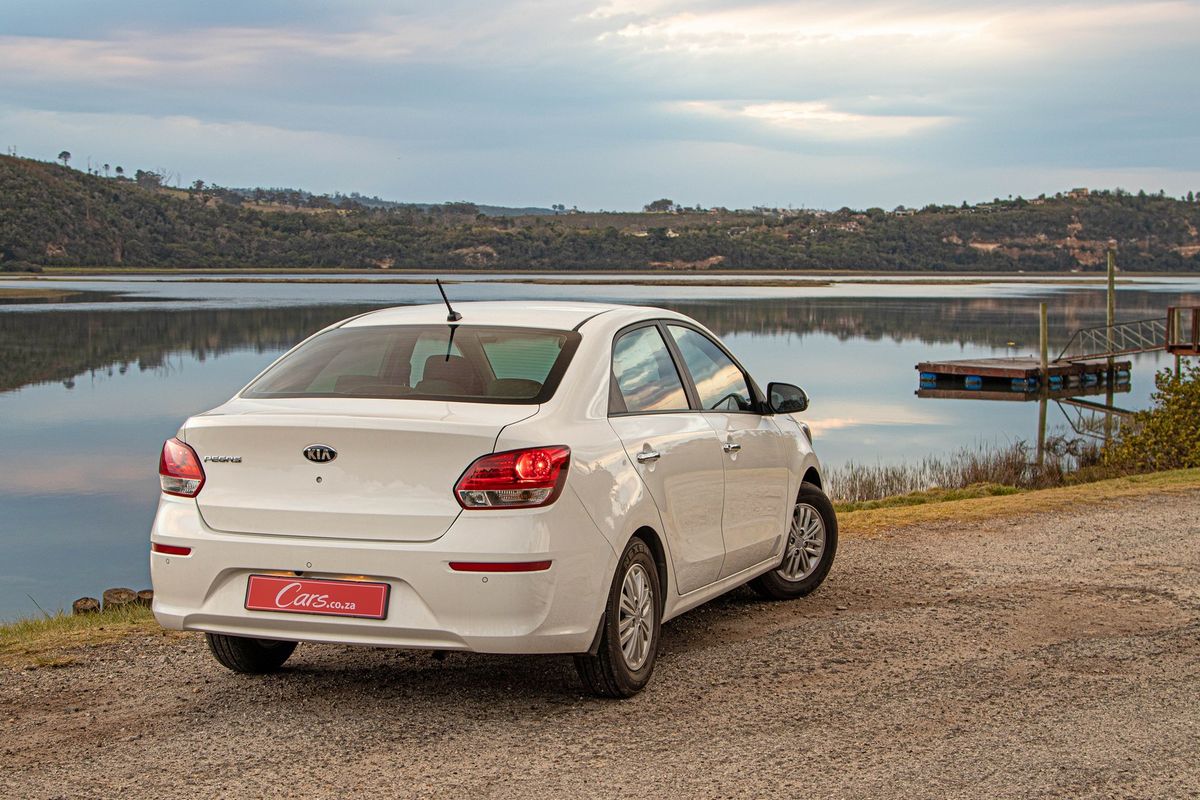
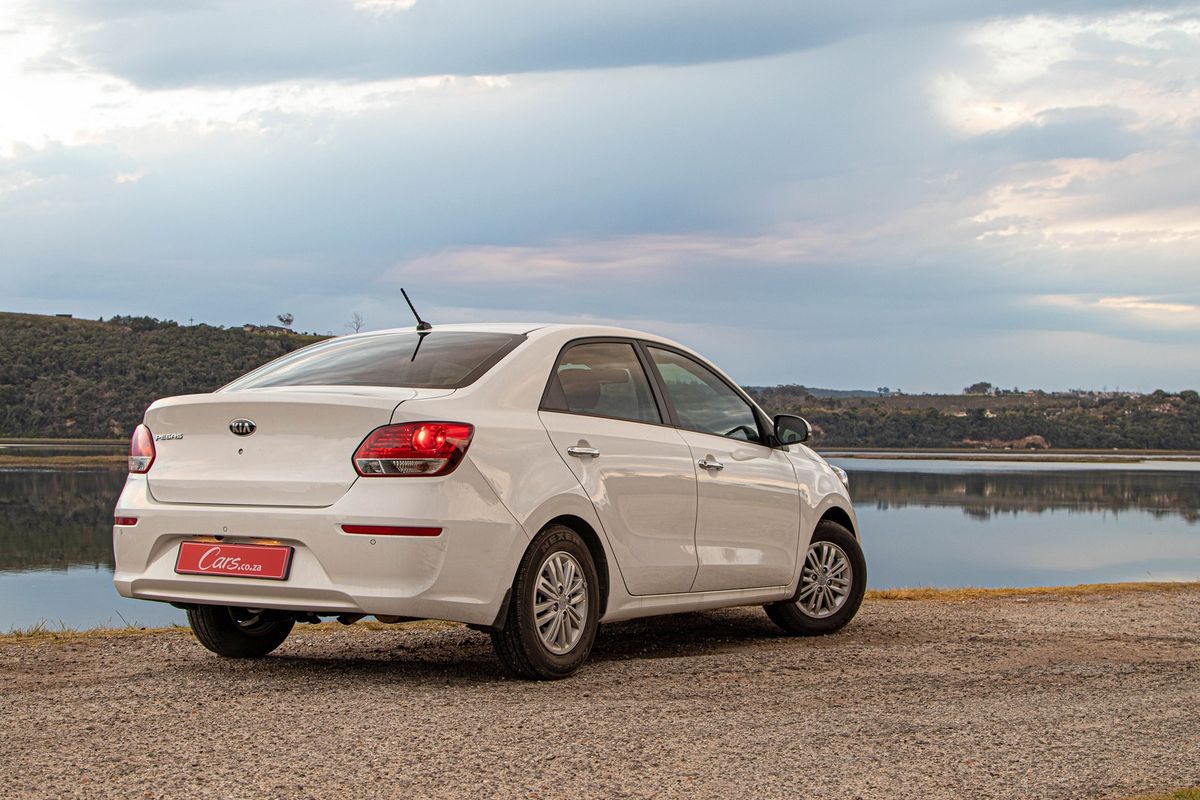
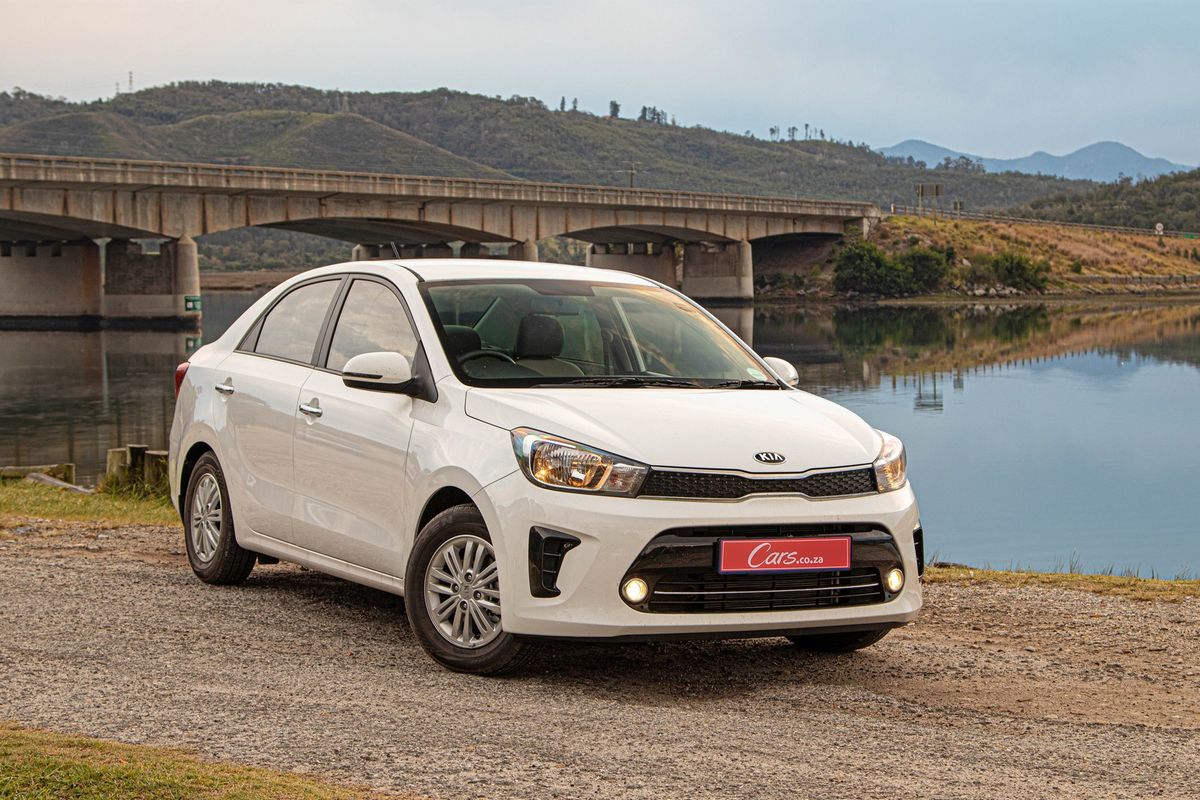
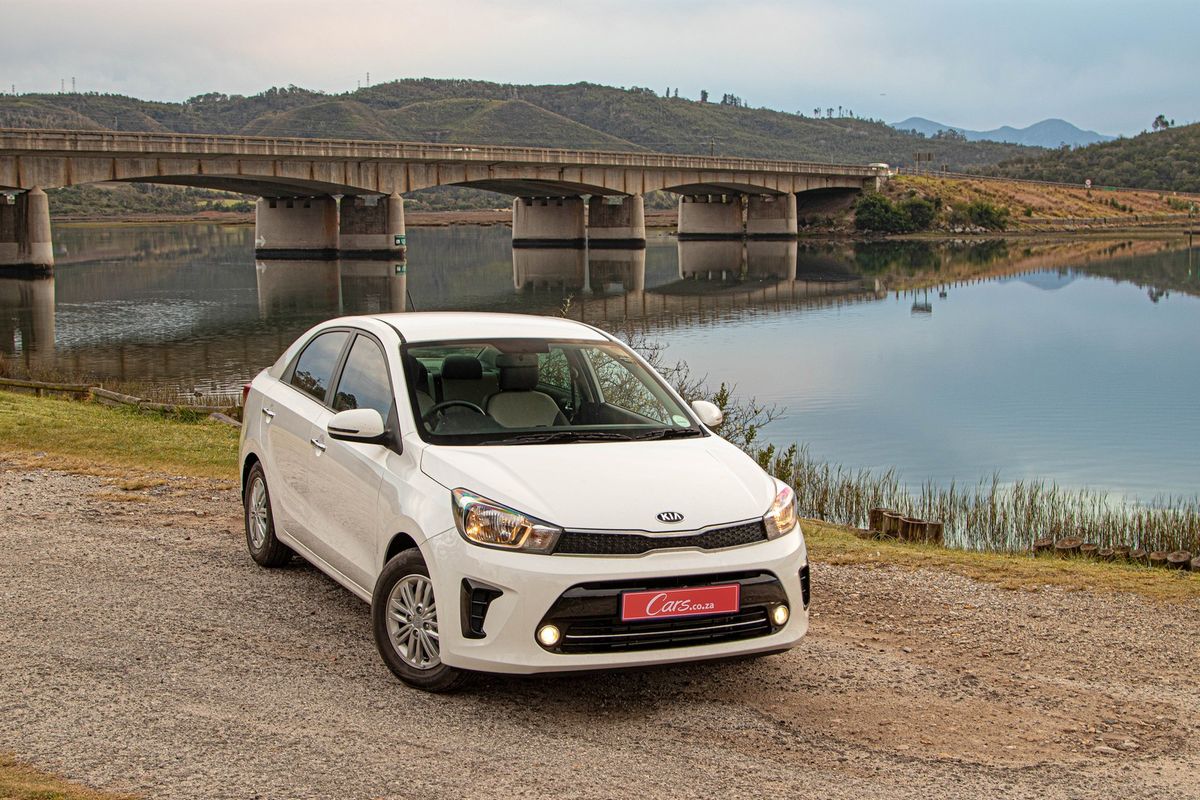
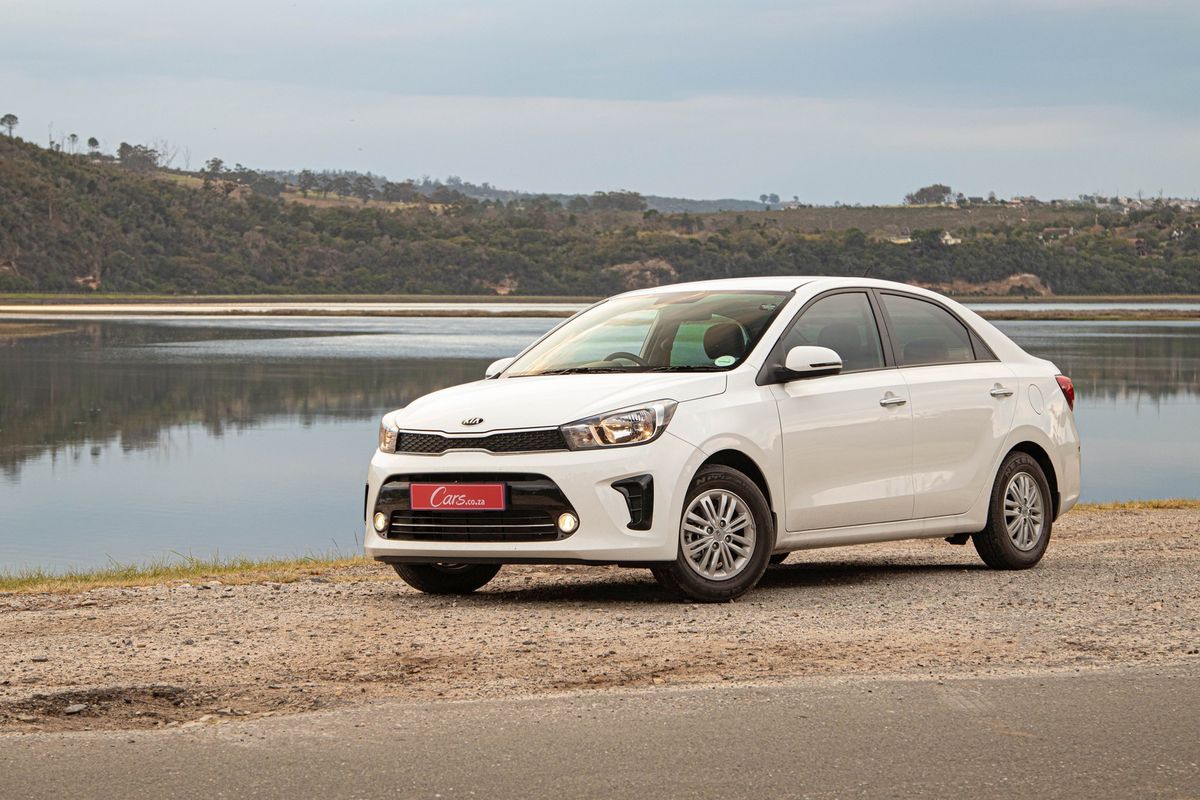
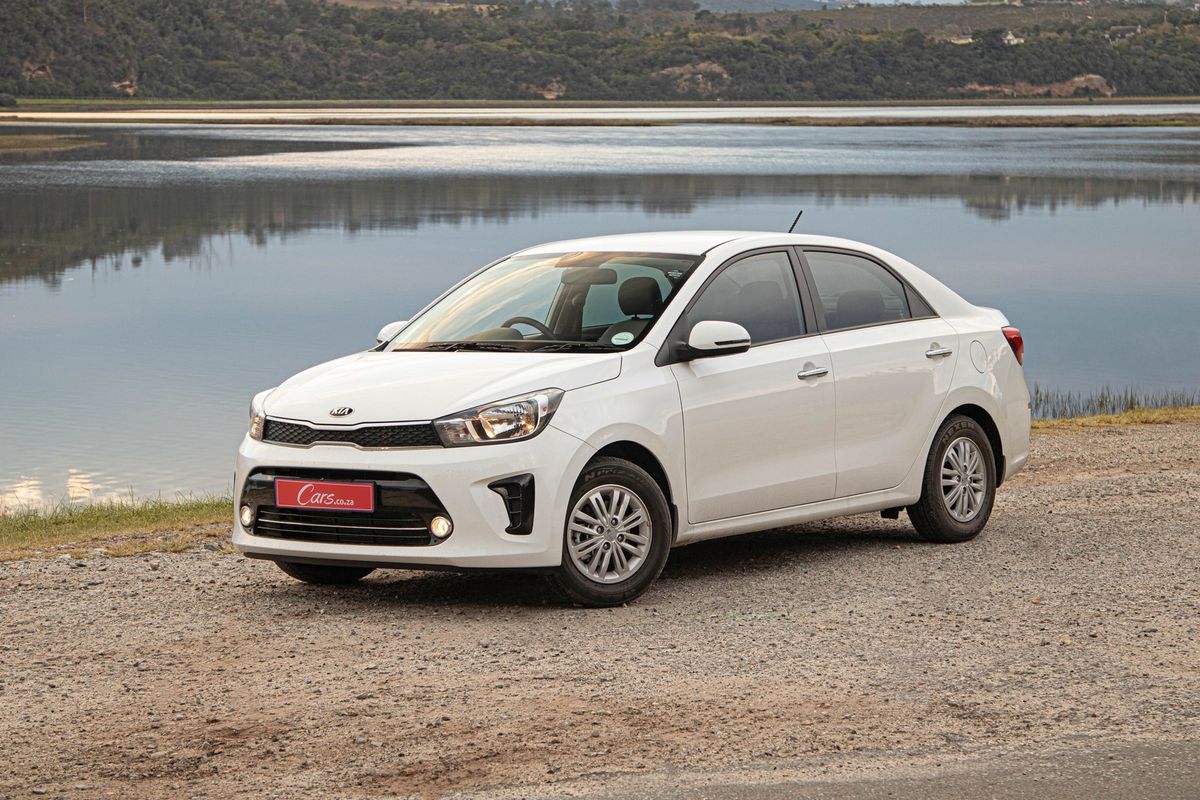
It would appear the South African compact sedan market is not in terminal decline after all… Kia has launched the Pegas – a sensibly priced small sedan amid a swarm of budget crossovers.
We like: Value for money, ride comfort, generous boot, generous spec, comprehensive after-sales support.
We don’t like: Lack of sound insulation at triple-digit speeds & mildly irritating speed alert, but that’s about it.
Fast Facts:
- Model Tested: Kia Pegas 1.4 EX
- List Price: R236 995
- Engine: 1.4-litre 4-cylinder petrol
- Power/Torque: 69 kW/132 Nm
- Transmission: 5-speed manual gearbox
- Fuel efficiency: 5.7 L/100 km (claimed)
- Performance: NA
- Load capacity: 475 Litres
What is the Kia Pegas?
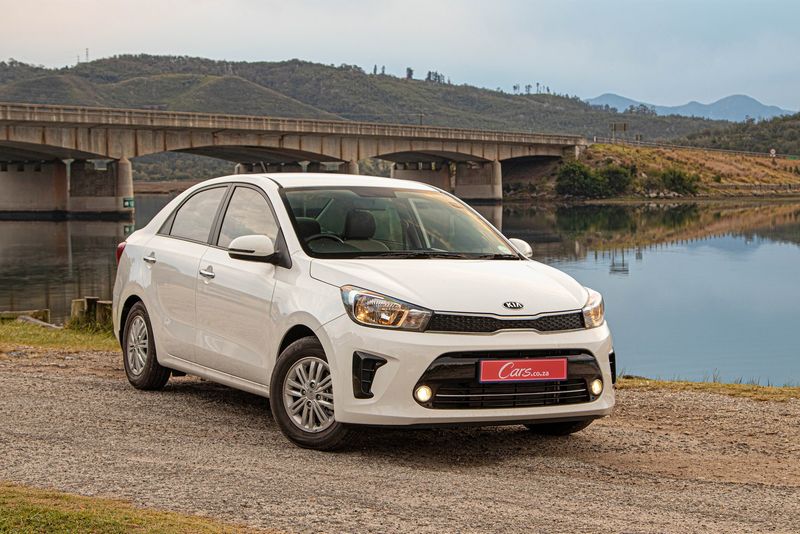
These days, SUVs (or at least SUV-inspired products) make up the bulk of new-model introductions, so when a pocket-friendly compact sedan comes to market, we tend to sit up and take notice, because it is such an anomaly.
In South Africa, there’s still some appetite for sedans in the passenger car market: in 2020, sedans accounted for just under 14%, SUVs and crossovers took up around 34%, with hatchbacks being the most popular choice at 46%.
Most car brands offer compact family cars these days and they range from budget to upmarket offerings. Kia is no outlier – the adorable Sonet and stylish Seltos small crossovers cover most bases. There’s also the Sportage and Sorento on offer, making that 4 “SUVs” from the Korean manufacturer. Sedans? Well, it’s just the one you see here.
Thanks to the proliferation of e-hailing companies, the general public assumes most compact sedans are used by Uber, DiDi, Bolt operators. It’s easy to understand why – those sedans offer generous rear legroom and boot space.
Kia SA challenges that assumption, however; it says the Pegas is more than just an “Ubermobile”. We wanted to find out whether there was any merit to Kia’s claim, so it would have been pointless to conduct a road test in and around Cape Town. Therefore, we packed our things into the Pegas and headed to the Garden Route for a family getaway.
Kia Pegas (2021) Specs & Price
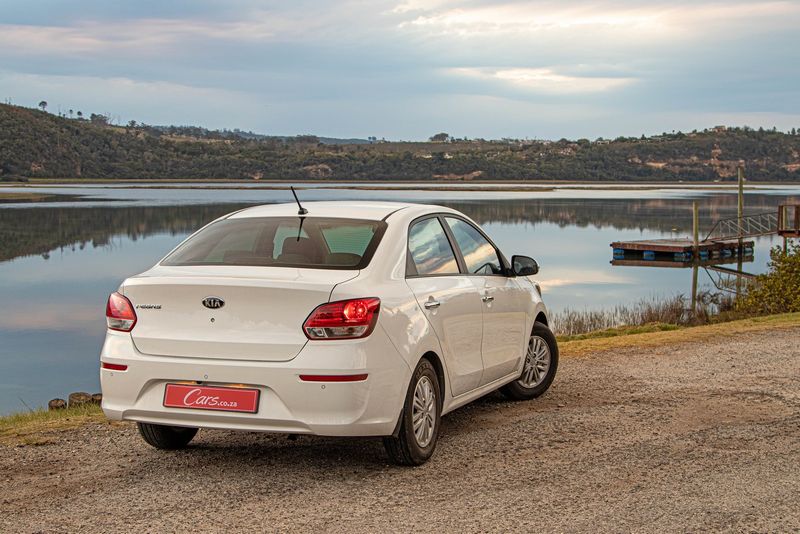
Which models are the Kia Pegas’ rivals?
Among the compact sedans that are still available from new, the 4-door Volkswagen Polo is the main protagonist. It may not have been updated as extensively as its hatchback sibling, but it still commands a notable share of the market. Rand for Rand, the Polo lacks a service plan and the Pegas’ standard feature list is far more extensive.
Suzuki offers exceptional value in the budget-car segment, but the Dzire is, comparatively, not particularly spacious. Not only is it a fractionally smaller car than the Pegas, but as good as its warranty is, the Kia’s is more extensive.
Other sedans worth considering are the Honda Amaze and, if your budget can stretch a bit further, the Suzuki Ciaz and Toyota Corolla Quest.
Compare the Kia Pegas to the Volkswagen Polo sedan and Suzuki Dzire here.
What the Kia Pegas like to drive?
The Pegas is positioned as a value-for-money compact sedan, so our driving-experience assessment focused mainly on refinement. We weren’t looking for corner-carving ability and engaging dynamics whatsoever, but paid close attention to the newcomer’s “ease of use” and comfort when driven in town and a longer, open-road trip.
Under the Kia’s bonnet sits a 1.4-litre 4-cylinder petrol engine that produces 69 kW and 132 Nm; power is directed to the front wheels via either a 5-speed manual gearbox or a 4-speed automatic transmission. We had the manual-equipped EX derivative on test and despite progress in the quality of automatic transmissions, we feel there’s still a place for an easy-to-use manual ‘box. The Pegas’ gearshift action is light and the clutch pedal has minimal travel.
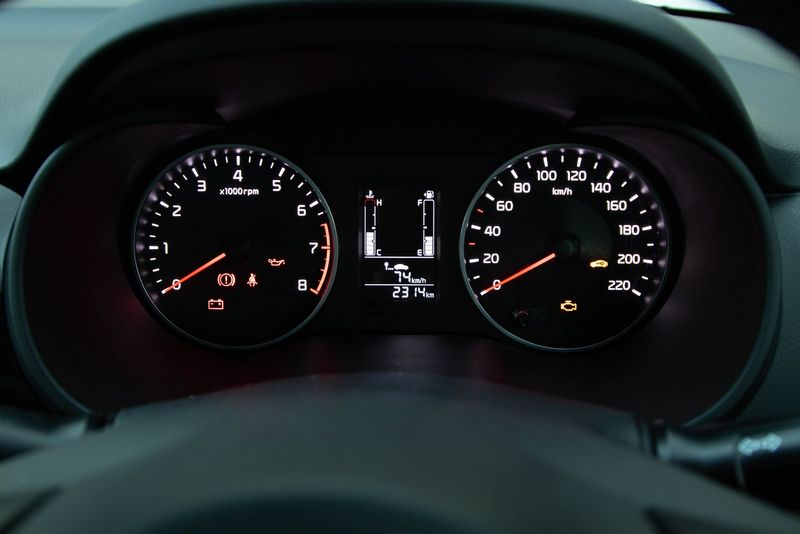
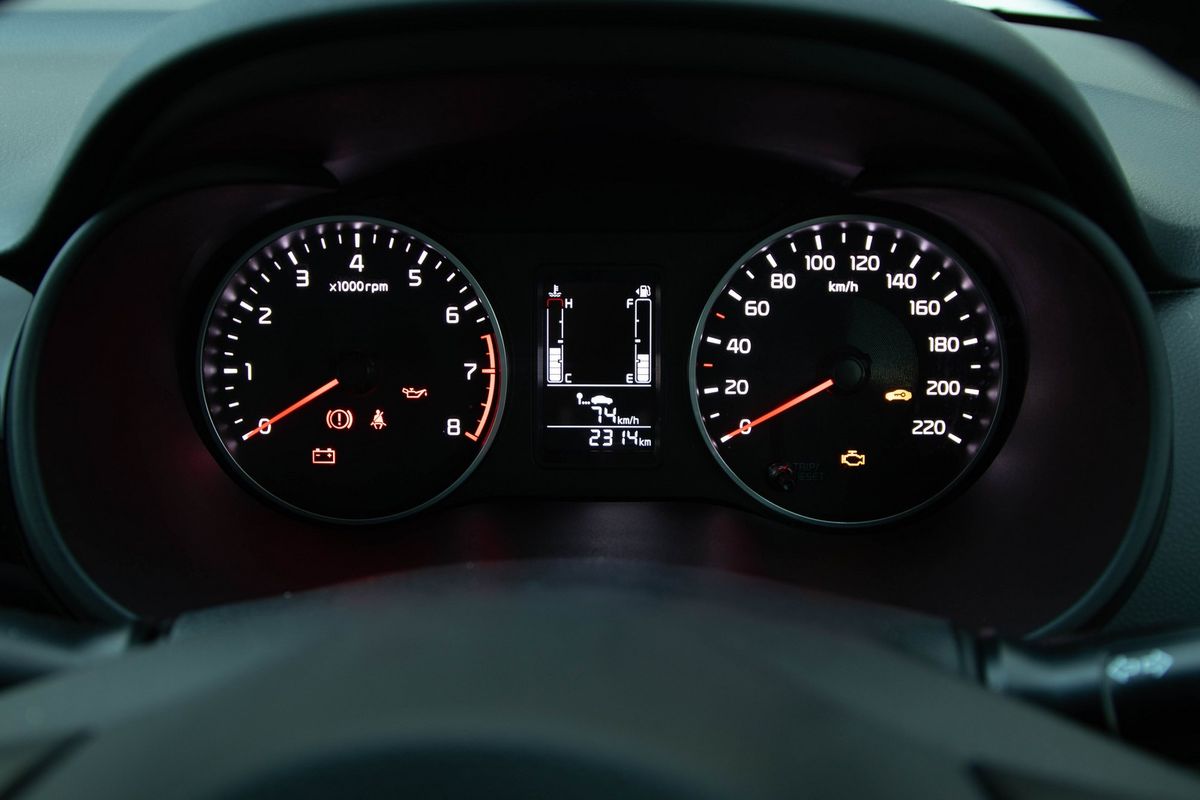
Well, the engine does the basics right. The motor can get a bit noisy when you rev it hard, such as when you need to accelerate to merge with a highway or overtake slower vehicles, but it’s not buzzy at cruising speeds… At 120 kph, the rev counter needle sits just above the 3 000-rpm mark.
There is some engine noise present at that speed, which suggests the Pegas’ product team decided that no more than a moderate amount of noise- dampening material needed to be installed – but that wasn’t all that bothersome, because we found another reason to set the sedan’s cruise control just below 120 kph…
Once the Kia reaches a speed of 120 kph, a small light on its instrument cluster flashes in time with an audible chime. It’s a subtle – or irksome, depending on your opinion – reminder that you’ve reached the national speed limit. The chime eventually quietens, but the light on the dashboard remains on until you slow down to under 120 kph.
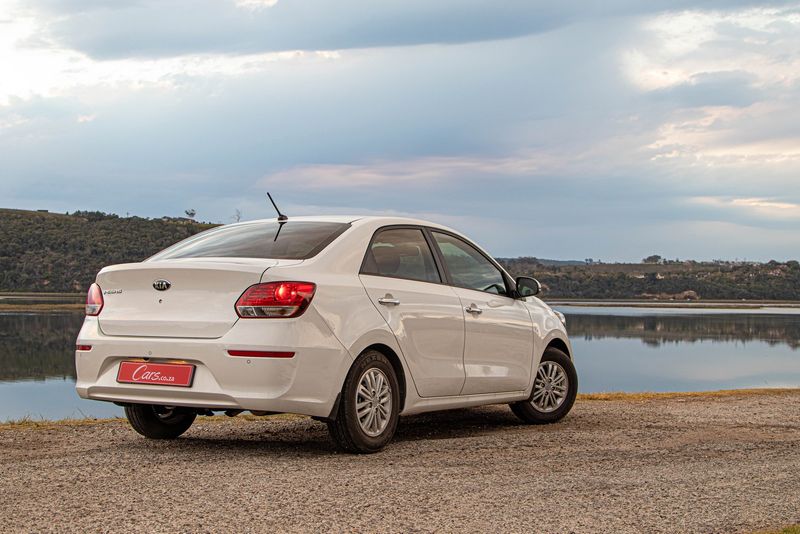
The on-road refinement and ride comfort levels are good – unlike some budget-car offerings, the Pegas doesn’t feel insubstantial in terms of its road-holding or slightly ponderous to drive at extra-urban speeds. There’s some feel to the steering, but generally, it is light and quick in action, which is great for executing tight parking manoeuvres.
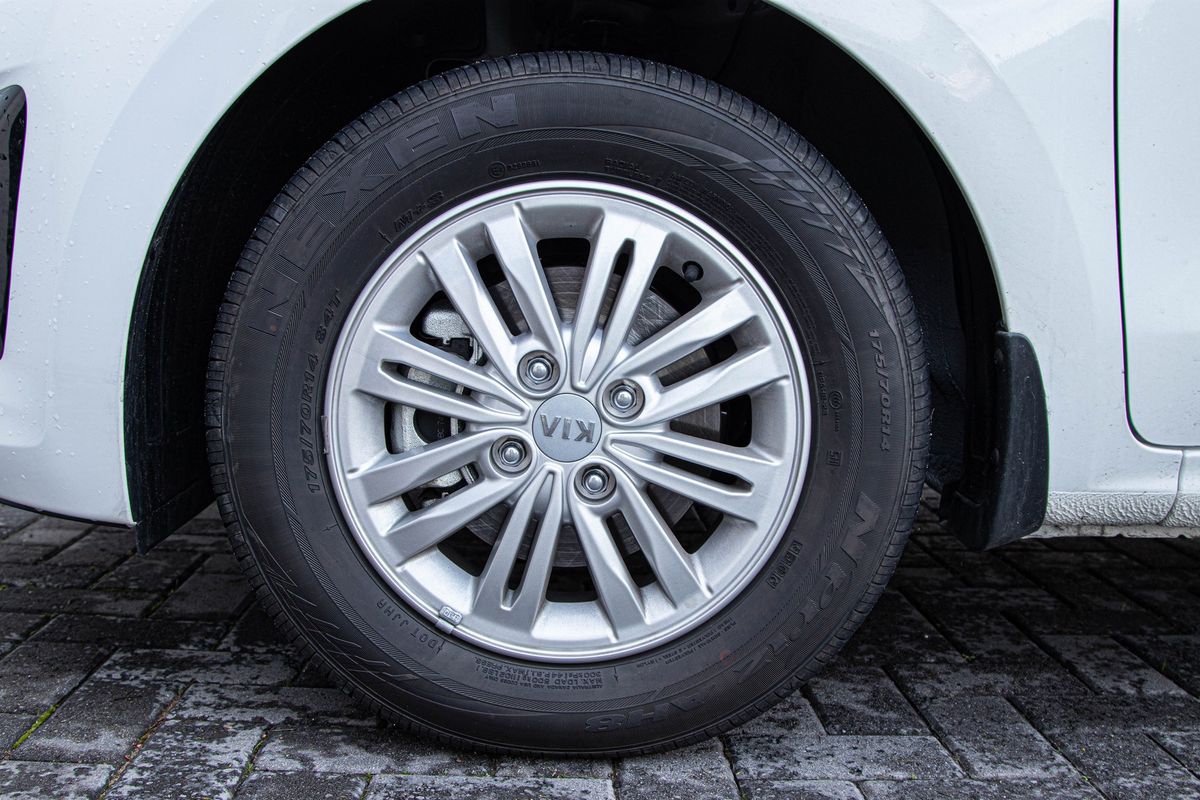
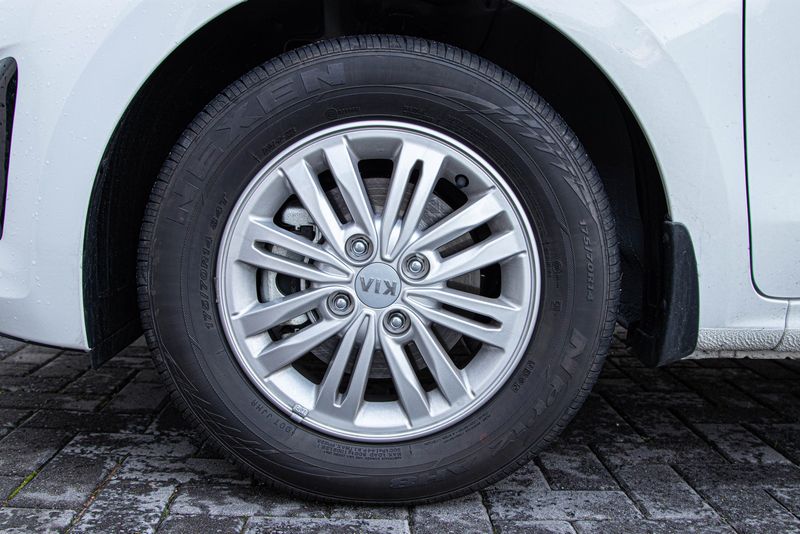
The Pegas 1.4 EX rides on 14-inch alloys wrapped in plump 175/70R tyres. The higher-profile tyres combine with the Kia’s comfort-orientated suspension tuning to soak up minor bumps in the road with notable aplomb. The sedan proved quite good to drive on gravel, which suggests the model was designed to traverse roads of variable quality. If you do decide to corner briskly, you’ll encounter quite a bit of body roll, which is the trade-off for the ride comfort.
As our route comprised mostly open-road driving, the Kia indicated an impressive 5.7 L/100 km fuel economy figure. Be aware that this figure will be quite higher if you drive in cut-and-thrust traffic on the daily commute, however.
What’s the interior of the Kia Pegas like?
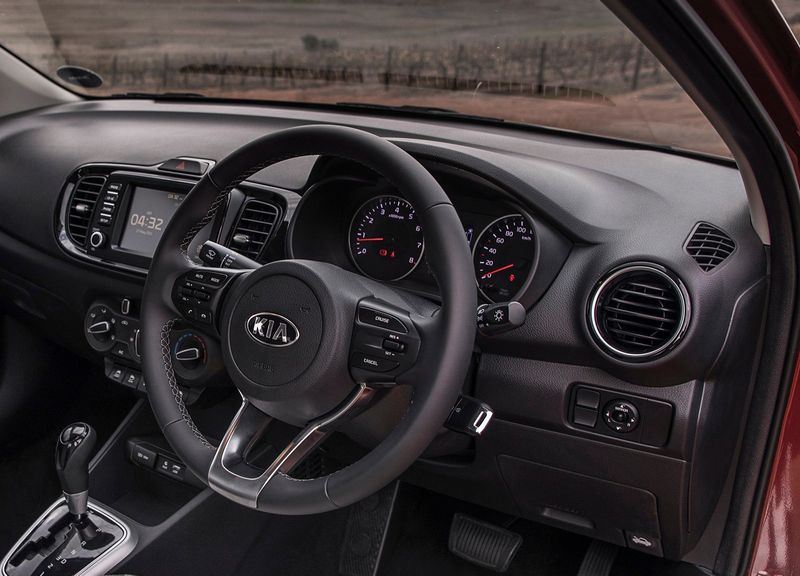
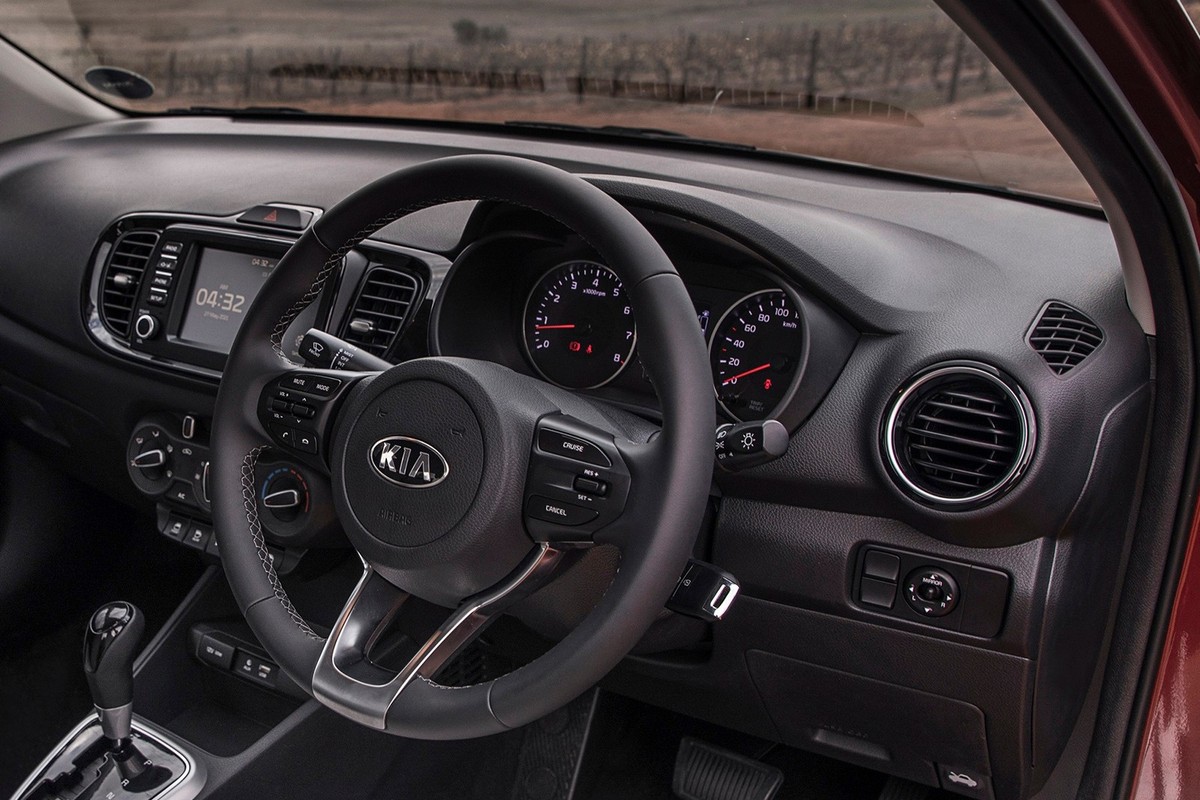
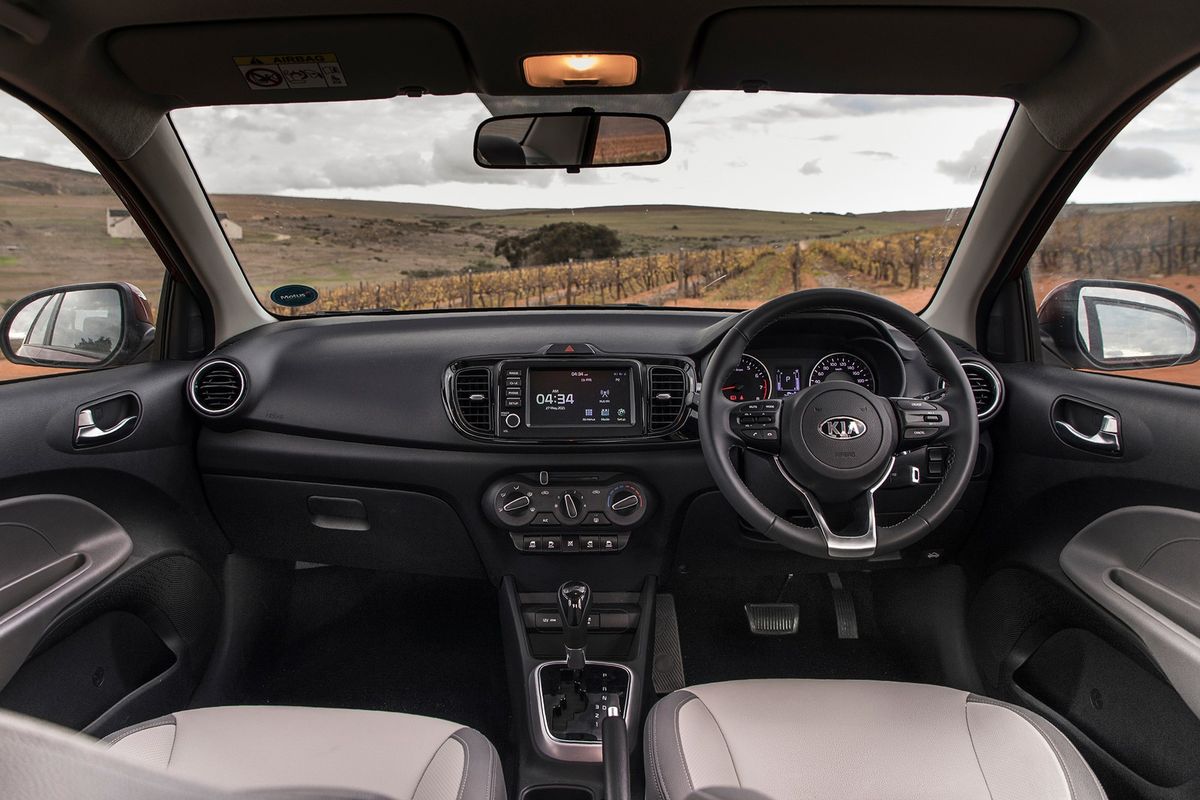
The Pegas’ front-cabin layout is pleasingly simple. The dials in the instrument cluster are easily legible and the infotainment system is positioned so that the driver can easily access it. Most infotainment functions are accessible via the steering-wheel controls and, if you’re using Apple CarPlay/Android Auto, voice commands are supported. The screen-mirroring tech enables a host of bonus features, such as streaming audio services and navigation apps.
Current Kia owners will find the Pegas’ interior instantly familiar. Everything looks and feels well assembled and hard-wearing, which bodes well for durability. Interestingly, the electric window switches are on the centre console.
It’s impressive stuff, considering the newcomer is not assembled in Korea or India (as the majority of Kia models in the SA market are). The Pegas comes from China, where it is produced as part of a Dongfeng Yueda Kia joint venture (we enquired during a courtesy visit to a Kia dealership and the answer confirmed our hunch). Conservative buyers can rest assured there’s no discernible difference in quality between the Pegas and its Rio hatchback sibling.
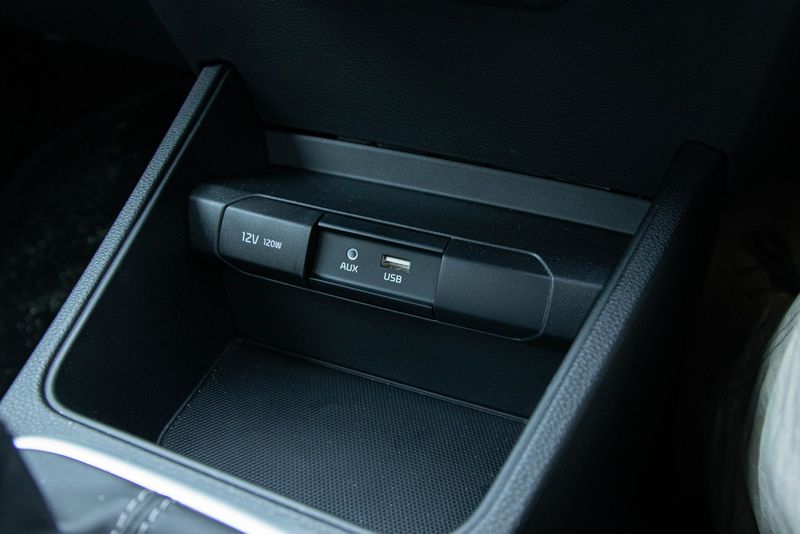
The Pegas has a long list of standard features – even in entry-level LX grade. A reverse-view camera, rear parking sensors, as well as the Apple CarPlay- and Android Auto compatible 7-inch infotainment system with Bluetooth is almost unheard of at this price point. The driver’s seat even features an armrest, a nice touch for the longer trips.
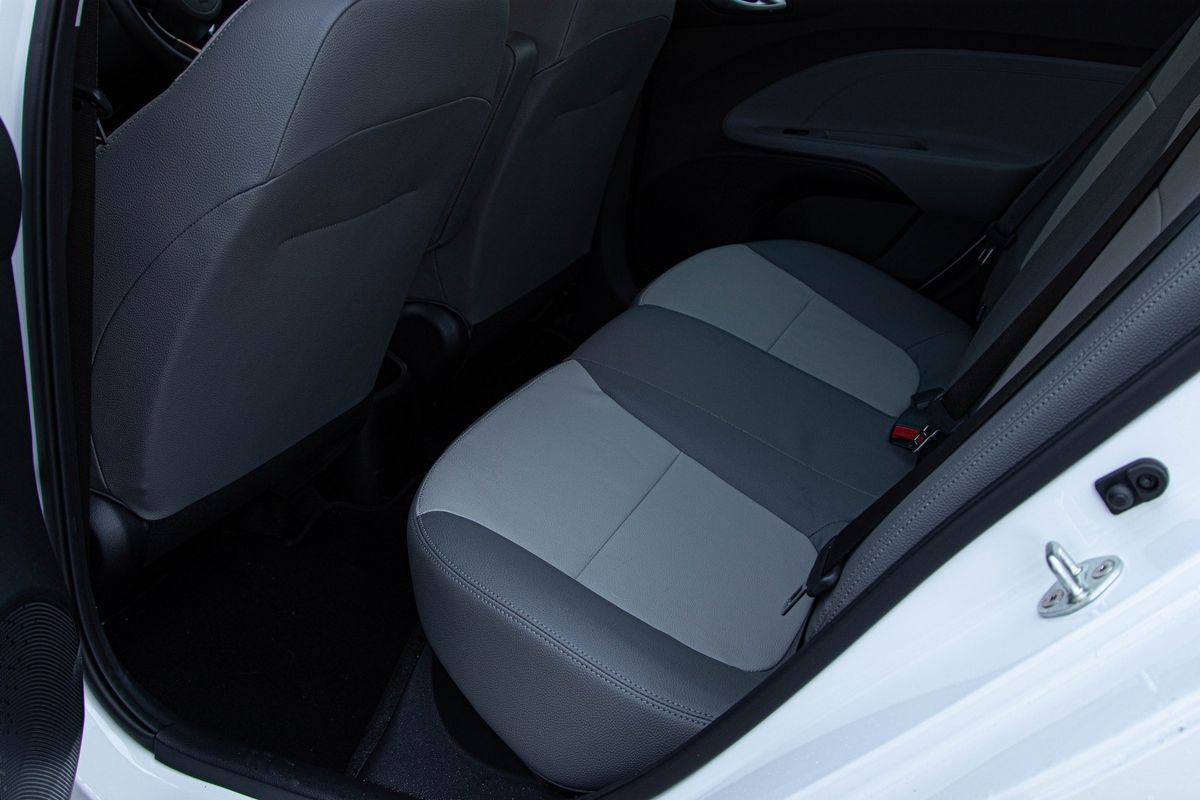
EX grade – as featured on this test unit – adds mostly cosmetic items such as the artificial leather trim, leather-bound steering wheel, front fog lights, 14-inch alloy wheels, cruise control and some chrome detailing.
As far as safety features are concerned, the Kia Pegas comes with dual front airbags, ISOfix child-seat anchors and ABS with EBD. Electronic stability control would have been a plus, but that would have hiked up the asking price.
Is the Kia Pegas practical?
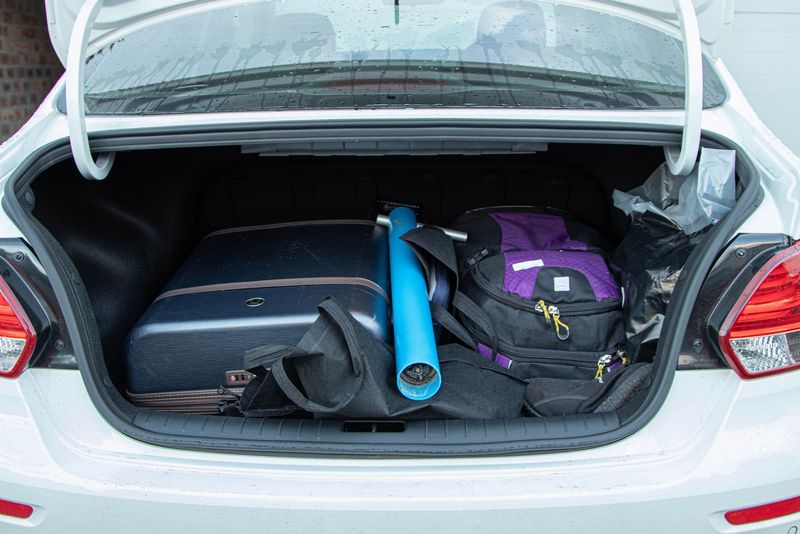
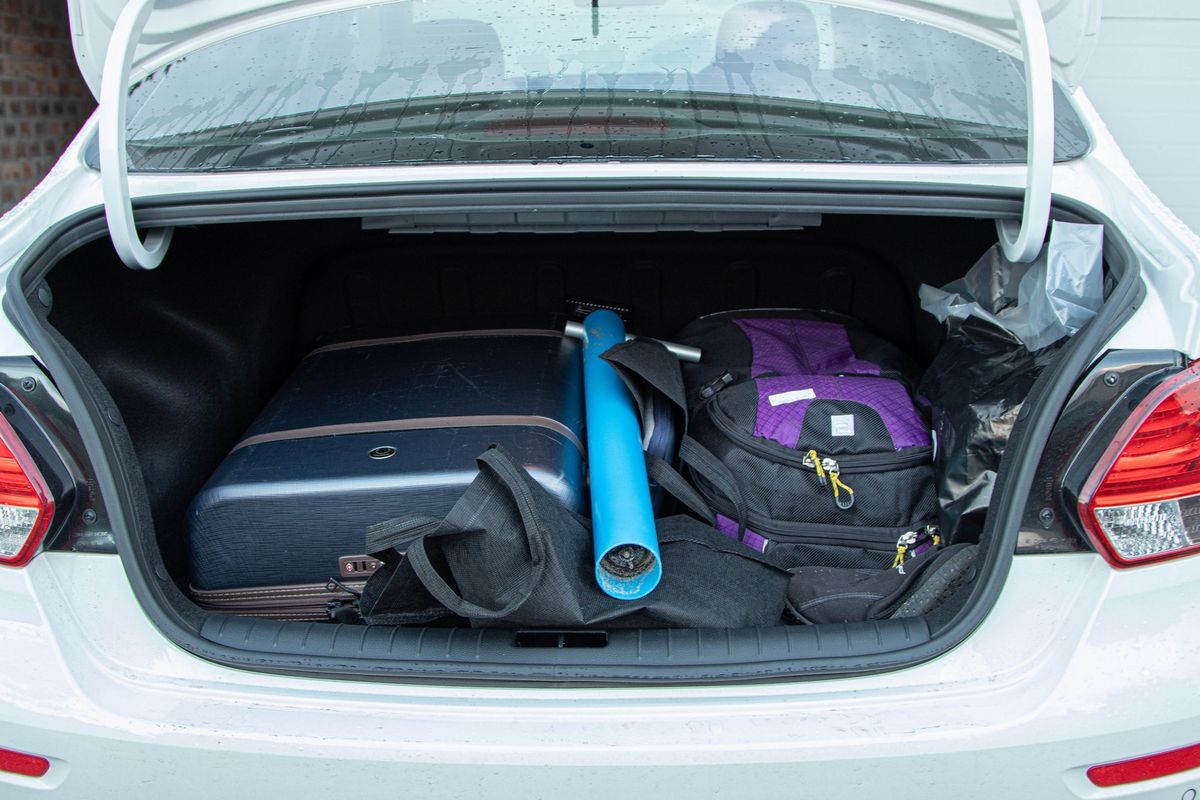
The Pegas has the longest wheelbase and largest boot capacity in its segment. The newcomer’s 475-litre luggage capacity eclipses that of its arch-rival, the Polo sedan – the Volkswagen’s boot is said to accommodate 454 litres.
No other rival, apart from the Ford Figo sedan (445 litres), comes close to the Kia in that regard. The Honda Amaze offers 420 litres and the Suzuki Dzire just 378 litres (the latter’s Ciaz sibling is a bigger car, but also pricier).
To put that into perspective, we could load 2 full-sized suitcases, a week’s groceries and the author’s angling gear into the Pegas – with room to spare. The boot should be big enough for a small family of two adults and a child.
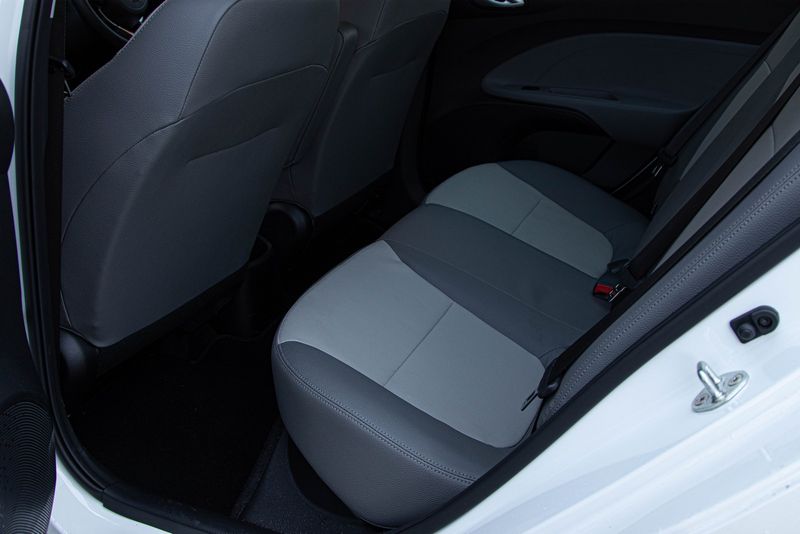
What’s more, the Kia’s relatively lengthy wheelbase optimises cabin space. There is sufficient legroom for adult occupants; a sit-behind-yourself test was passed with ease, but taller passengers may find rear headroom tight.
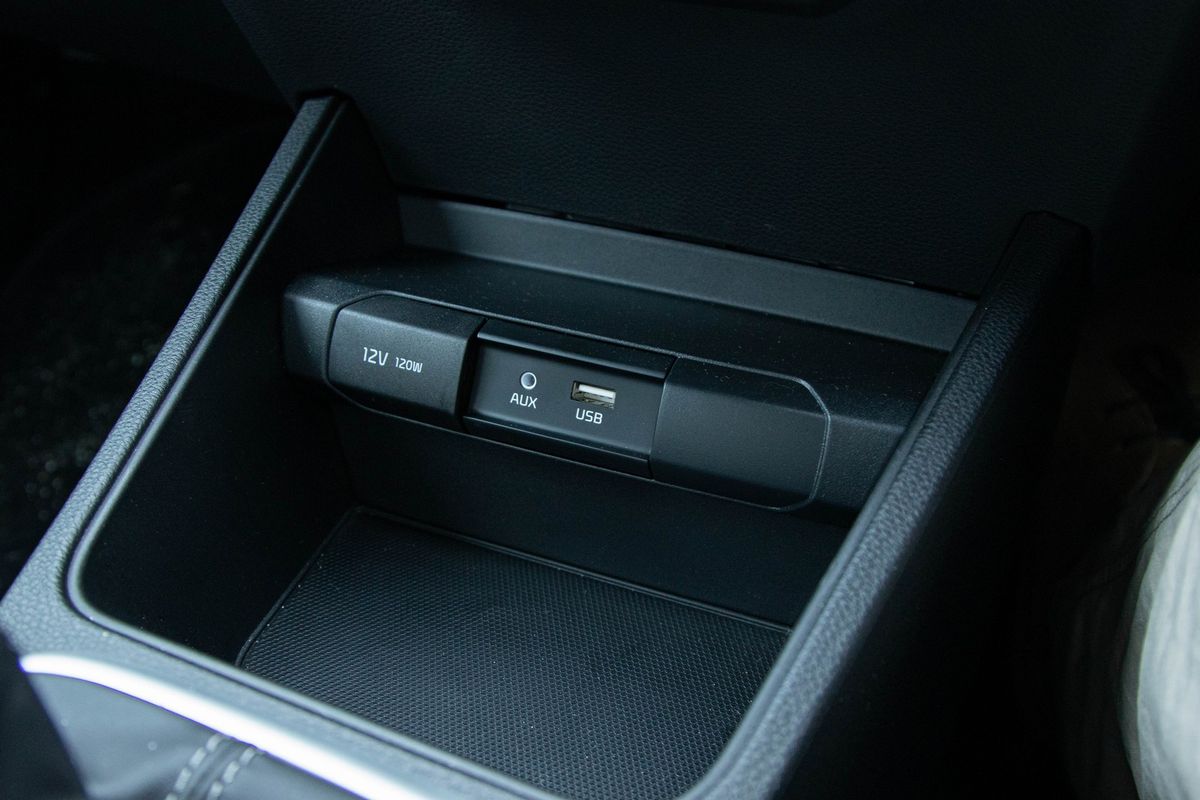
At the front, there are a few clever storage solutions to house errant coins, access cards, keys and so on. We stored our face masks in the recess ahead of the gear lever – it also serves as a convenient cradle for your mobile device.
How much does the Kia Pegas cost in South Africa?
The Kia Pegas’ prices start from R225 995 for the LX, with this EX derivative retailing for R236 995. An automatic version of the EX is also available and its asking price is R251 995.
The Pegas is sold with Kia’s industry-leading 5-year/unlimited-kilometre warranty (inclusive of roadside assistance), as well as a 4-year/60 000 km service plan.
New Kia Pegas Specs & Prices in South Africa
Verdict
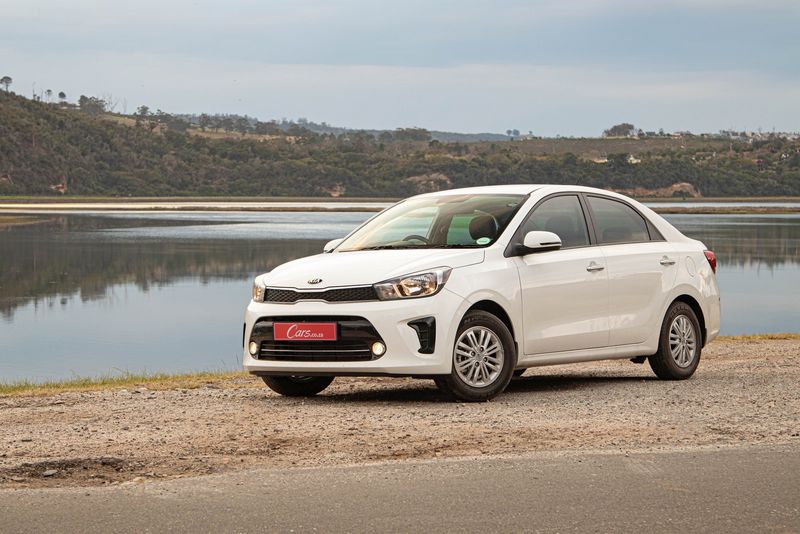
Despite my colleagues joking that smartphone-clutching pedestrians might try to get into the test unit every time it stopped next to a street kerb (because they mistook the sedan as their Uber ride – haha), the Kia Pegas proved very competent during its tenure in our test fleet. The long list of standard features, good rear legroom and that sizeable boot, coupled with that extraordinarily good price and long-lasting warranty, should win it more than a few fans.
We had a couple of minor gripes regarding the Korean offering’s powertrain refinement, as well as its minimal insulation from road-noise, but, given the Pegas’ keen pricing, we’d quite willing to look past those drawbacks.
The Pegas may not be the flashiest product or offer the most engaging driving experience, but it’s one of the most sensible products in Kia’s portfolio. While it’s easy to dismiss this sedan as “just another ride-sharing special”, it offers quite a lot of “family car” for not too much money. In these times, when austerity is the order of the day for many households, value for money should be commended. Therefore, the Kia Pegas gets a thumbs-up from us.
David Taylor

Having contributed to multiple motoring titles as well helping run the public relations machine of the Johannesburg International Motor Show, Dave has experience in both sides of the motoring industry. He's based in the Western Cape and is responsible for the performance testing, photography & weekly YouTube news for Cars.co.za.