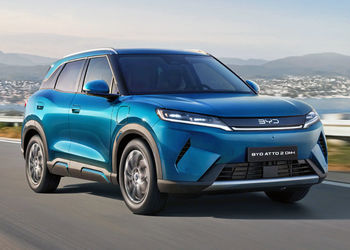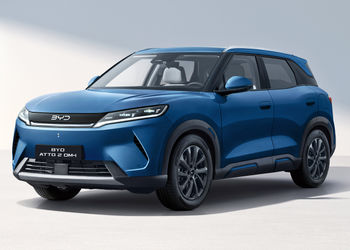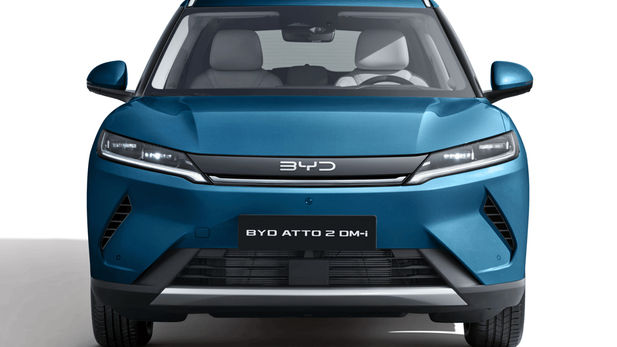
The BYD Atto 2 DM-i has an amazing claimed driving range. But its real benefit lies in its petrol engine’s potential high-mileage durability...
Over the last year, there has been a flood of extremely powerful Chinese crossover PHEVs launched into the local market. But these models, even with their excellent features-to-cost ratio, are just way too powerful for what most South African buyers need. If you’d never have considered a 400 kW German 6- or 8-cylinder model, why would you need a 400 kW+ Chinese PHEV?
BYD wants to change all that. It’s just launched a truly usable and affordable PHEV for South African buyers: the Atto 2 DM-i.
For less than R500 000, buyers get a neat design, lots of cabin space and excellent in-car UX. But the big draw is that powertrain: an efficiency-optimised 1,5-litre petrol engine (without turbocharging) and a plug-in rechargeable 7,8 kWh LFP battery pack.
The headline number is a claimed 930 km total driving range…
About that engine…
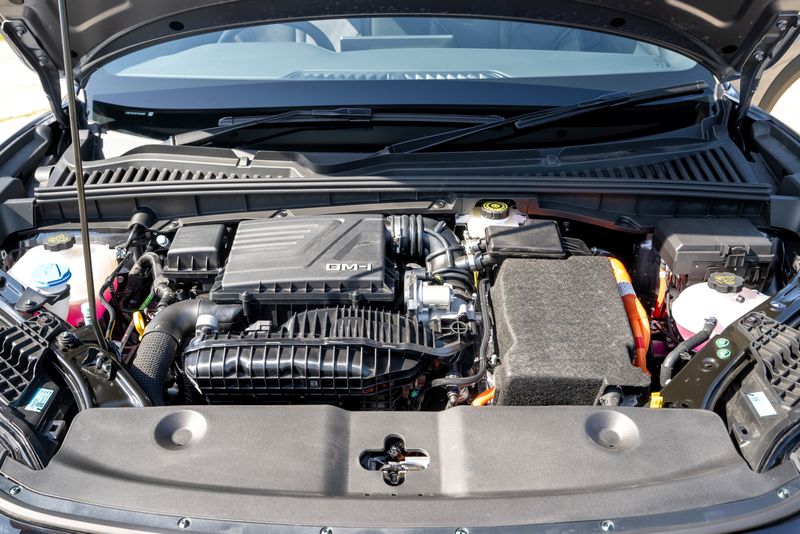
The Atto 2 DM-i has what appears to be a very average 1.5-litre petrol engine. It makes only 72 kW and 122 Nm of torque. In a vehicle that weighs 1 510 kg, those are underwhelming outputs. However, add the electric motor and the total system outputs jump to 122 kW and 300 Nm.
With the 1.5-litre petrol engine component of the powertrain being in such a mild state of tune, there are real durability benefits. Without turbochargers, high compression ratios, or ultra-trick valve timing, the Atto 2’s 1.5-litre petrol engine should run to very high mileages without many of the issues that afflict similarly sized turbocharged engines.
Search for a BYD Atto on Cars.co.za
Sensible speed limiter
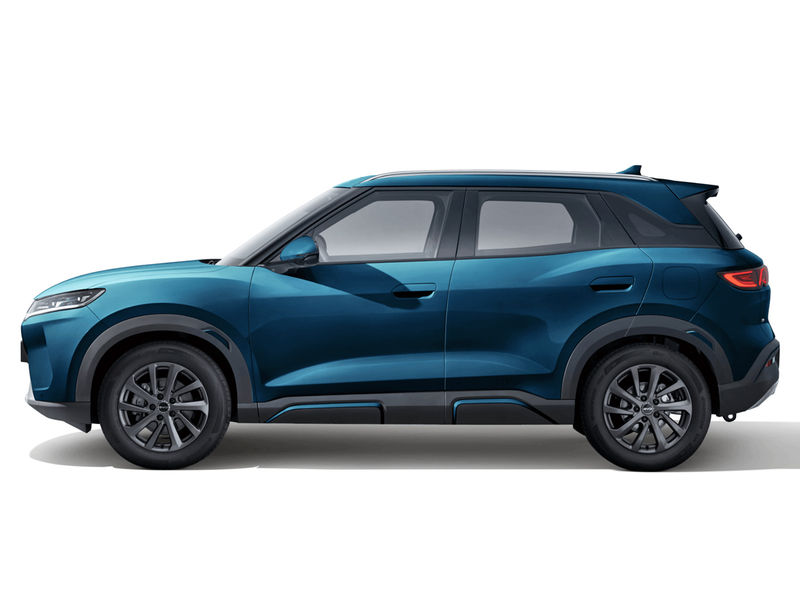
BYD claims 0-100 kph in 9.1 seconds. Any family car with a sub-10-second acceleration time is quick enough to keep up with South African highway traffic and find safe gaps when changing lanes and passing slower traffic.
Interestingly, the BYD PHEV does not suffer from an artificially low top-speed limiter to save battery life. This is a weakness of some of the bargain BEVs sold in South Africa, which are limited to 130 kph. This could be an issue when overtaking at highway speeds on long declines, or when needing to pass several trucks at once, where speed overrun is needed.
With a top speed of 180 kph, BYD’s compact crossover PHEV is ready for long-distance road trips across South Africa.
How realistic is that 930 km range claim?
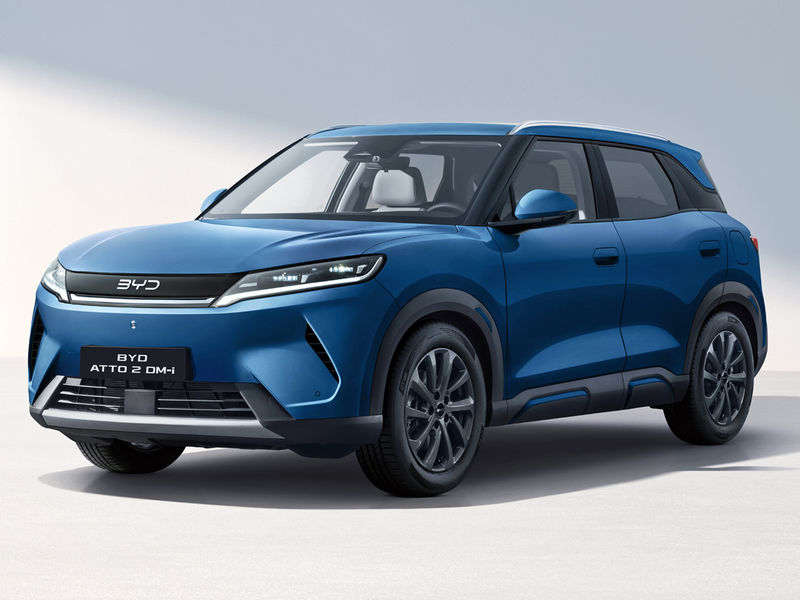
BYD’s range claim for the Atto 2 DM-i 930 km. It is the kind of number that South Africans, who are paying a lot for fuel, take notice of.
But like all fuel economy, battery range, and combined energy consumption claims, those numbers need to be scrutinised. The Atto 2 DM-i has an electric-only range of 40 km. That’s useful, but it’s a very small portion of that total claim.
If the battery capacity is large enough for only 40 km of range, that mild-tune 1.5-litre petrol must be incredibly efficient if it can power a 1 510 kg crossover for 890 km on 45 litres of fuel. That means average petrol consumption of 5.1 L/100 km, which seems a touch unrealistic.
Like all official petrol and diesel consumption numbers from car companies, range claims with PHEVs are always overrated because they’re calculated using ideal, perfect-flow driving patterns that don’t exist in the real world.
That does not mean the Atto 2 DM-i isn’t fuel-efficient, however. There are a couple of reasons for this. Firstly, it’s not that heavy at 1 510 kg. It has a reasonably aerodynamic shape. And because it runs a naturally aspirated engine rather than a turbocharged unit, the petrol portion of the powertrain runs very efficiently, and only when needed. This is especially true in traffic, where the electric motor and battery system will be managing the heaviest energy-consuming moments: pull-aways.
BYD Atto 2 DM-i vs Toyota Corolla Cross HEV
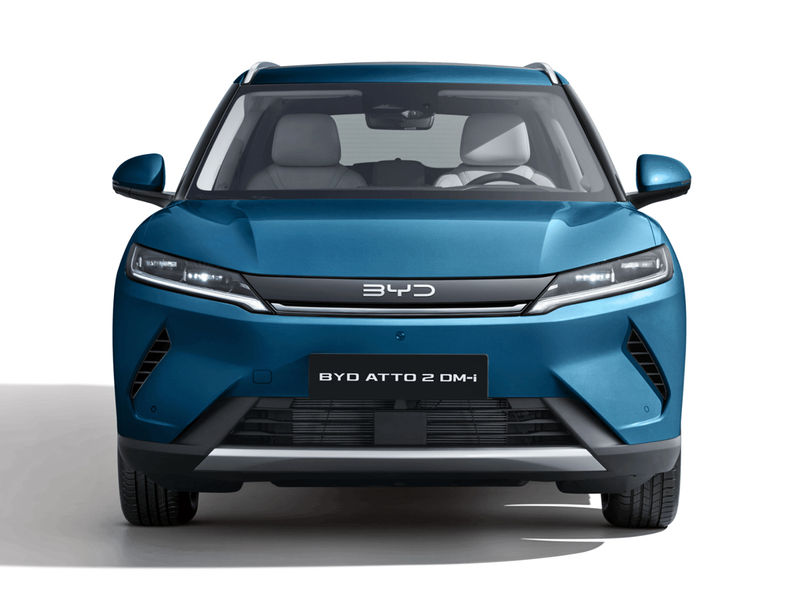
With its reasonably small battery, it’s easy to charge the Atto 2 DM-i pretty much anywhere, even using slower AC, not DC charging. It’s one of the ironic benefits of a compact PHEV; it doesn’t need to onboard huge volumes of power for recharging like a heavy, full-sized BEV.
For charging overnight at home from a wallbox, this BYD crossover makes a lot of sense. You’ll be recharging at the lowest possible electricity rate and have a full battery each morning when you wake. And with that battery being good for 40 km of real-world commuter range, you’ll be using very little fuel during your weekly driving cycle. If you have a solar setup at home, the savings are even better.
Toyota’s Corolla Cross HEV was the model that helped convert many traditional South African car buyers to hybrids. But everyone knows that the real value in a hybrid is having a PHEV, which you can charge externally. In a spec and price comparison, the BYD has a much more advanced powertrain and a better standard feature list than the Corolla Cross HEV.
The Atto 2 DM-i Comfort costs only R449 900. The Dynamic version, with its larger battery pack and additional ADAS features, is R489 900. That gives BYD an almost unrivalled PHEV crossover range in the crucial sub-R500 000 segment.