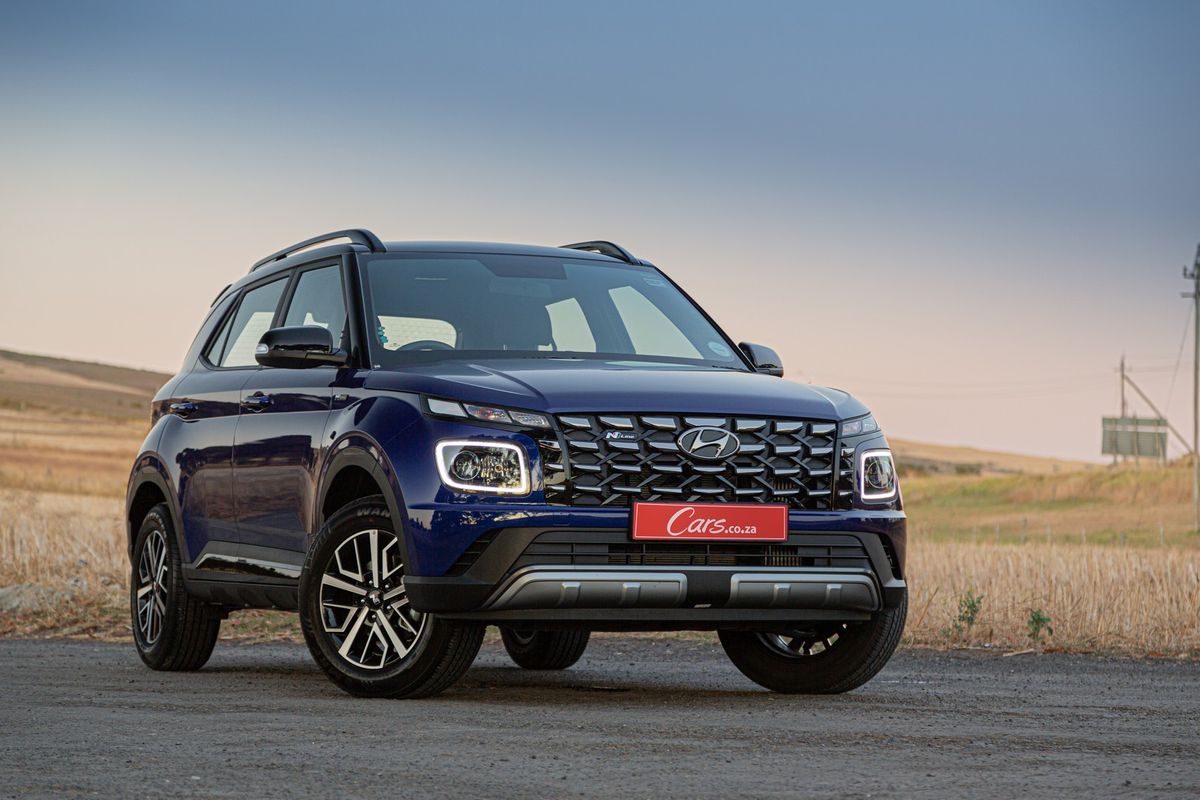
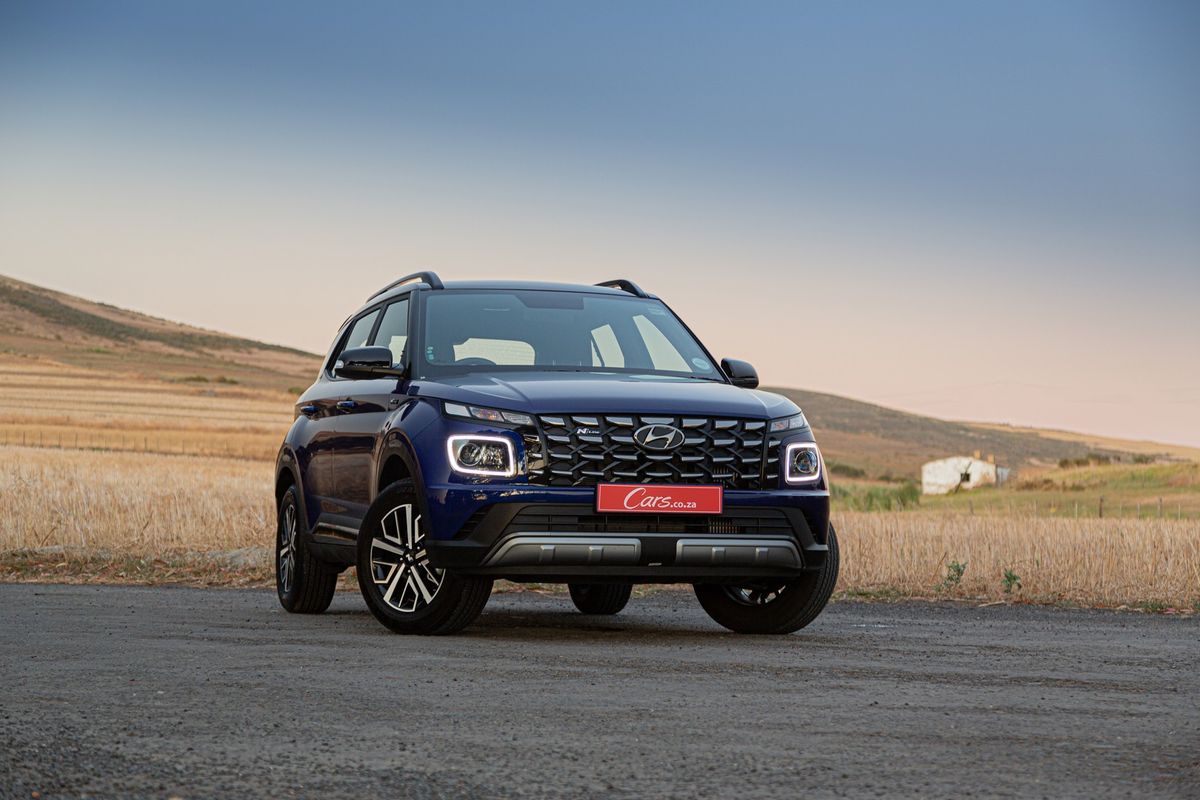
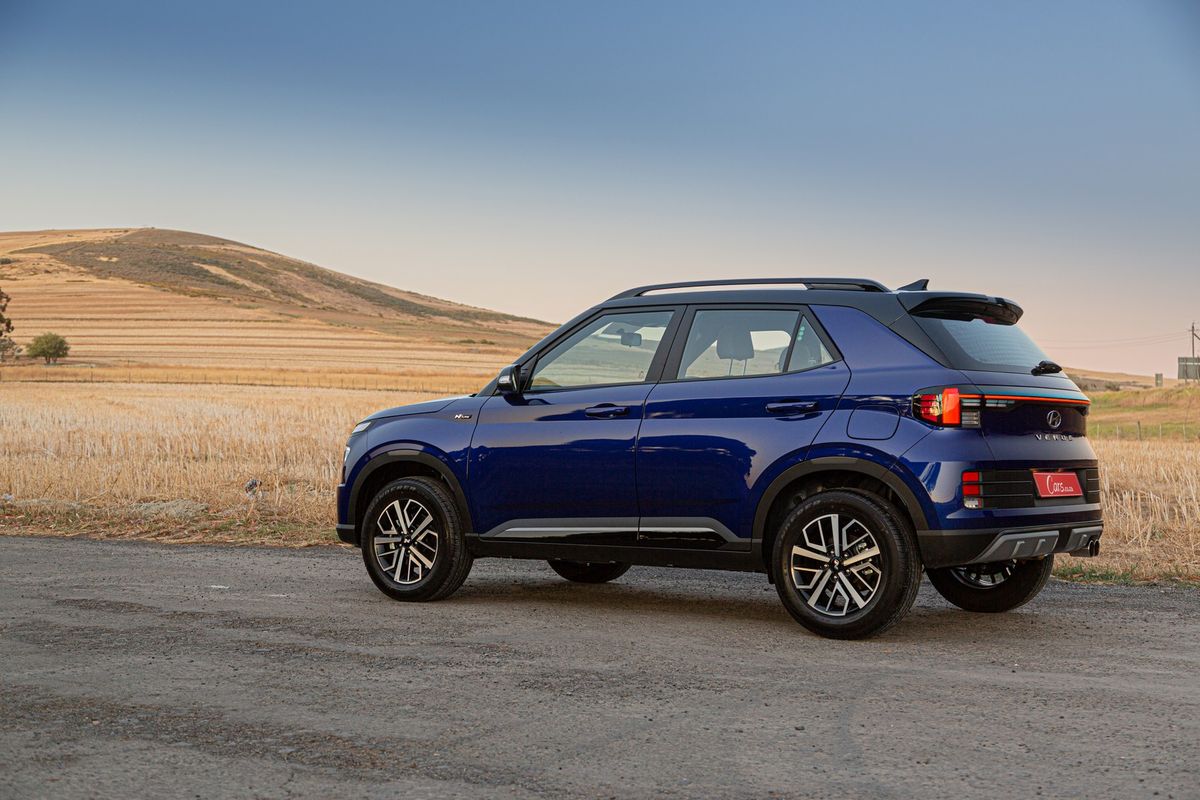
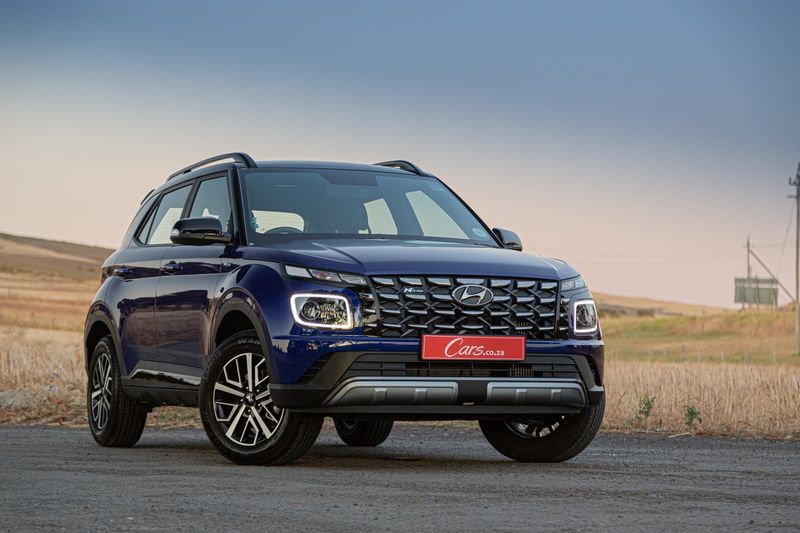
The Hyundai Venue was updated in October 2022 and, while all derivatives of the brand’s small crossover model benefitted from design revisions and an upgraded specification, the range also gained a sportier flagship version – the N Line.
We like: Sporty look – inside and out, fun exhaust pops and bangs, surprisingly quick
We don’t like: Engine/exhaust noise can get a bit tiresome, there’s better value elsewhere in the range
FAST FACTS
- Model: Hyundai Venue 1.0T N Line
- Price: R449 900
- Engine: 1.0-litre three-turbocharged petrol
- Power/Torque: 88 kW and 172 Nm
- Transmission: 7-speed dual-clutch transmission
- Fuel consumption: 6.9 L/100 km (claimed)
- 0-100 kph: 11.4 sec (claimed)
- Luggage capacity: 343 litres
Serious about buying/selling?
Browse the latest Hyundai Venue specs and prices.
Some dealerships regularly offer great deals. See our New Car Specials!
Looking to sell your car? Sell it on Cars.co.za for free
Where does the updated Venue fit in?
The segment in which the Hyundai Venue plays is enormous. The proliferation of small crossovers (also known as compact family cars/SUVs) has almost wiped out light sedans and their hatchback equivalents are on the endangered species list too. So many small crossovers are sold every month that it’s frankly easier to point out the brands that aren’t playing in this segment – the market is that competitive.
Visit our Buyer’s Guide to see which is the best SUV for you
Some of the more well-known small crossover models include the Haval Jolion, Kia Sonet, Ford Ecosport, Volkswagen T-Cross, Renault Kiger, and the Toyota Urban Cruiser and Suzuki Vitara Brezza cousins.
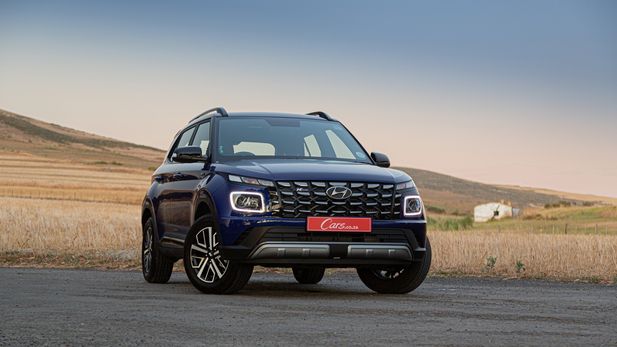
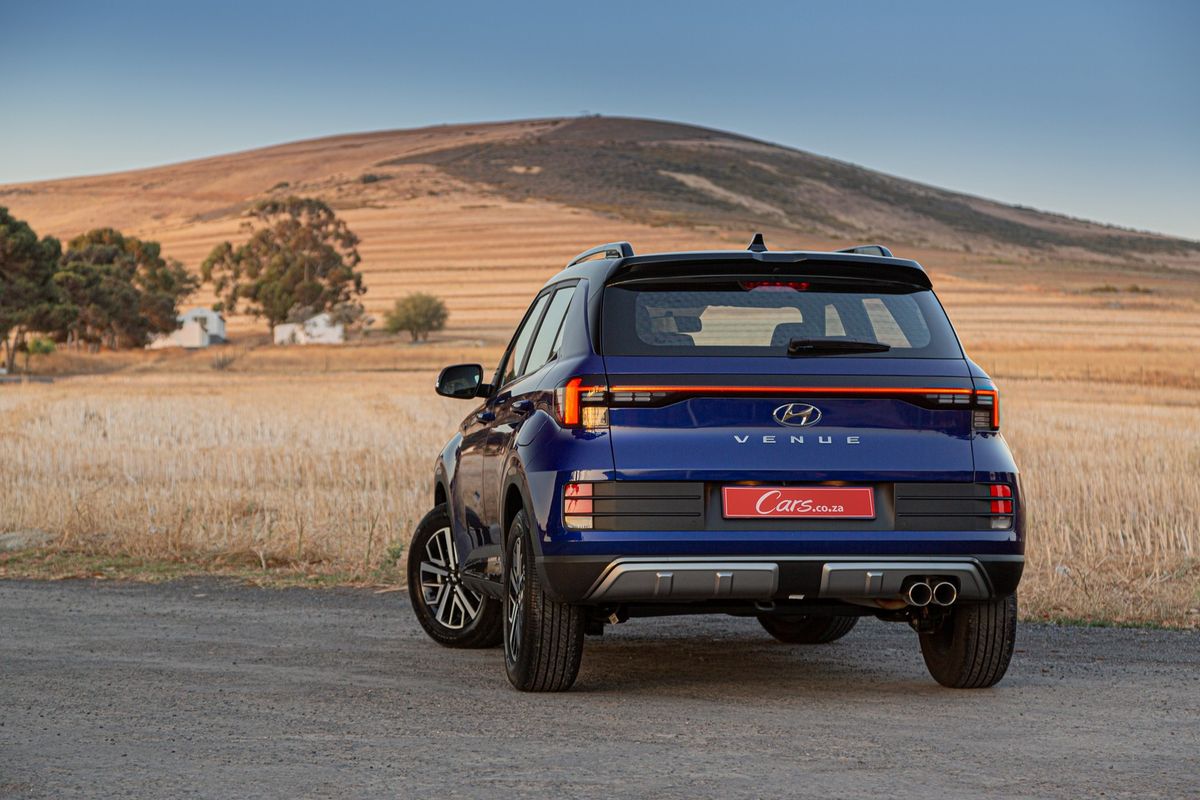
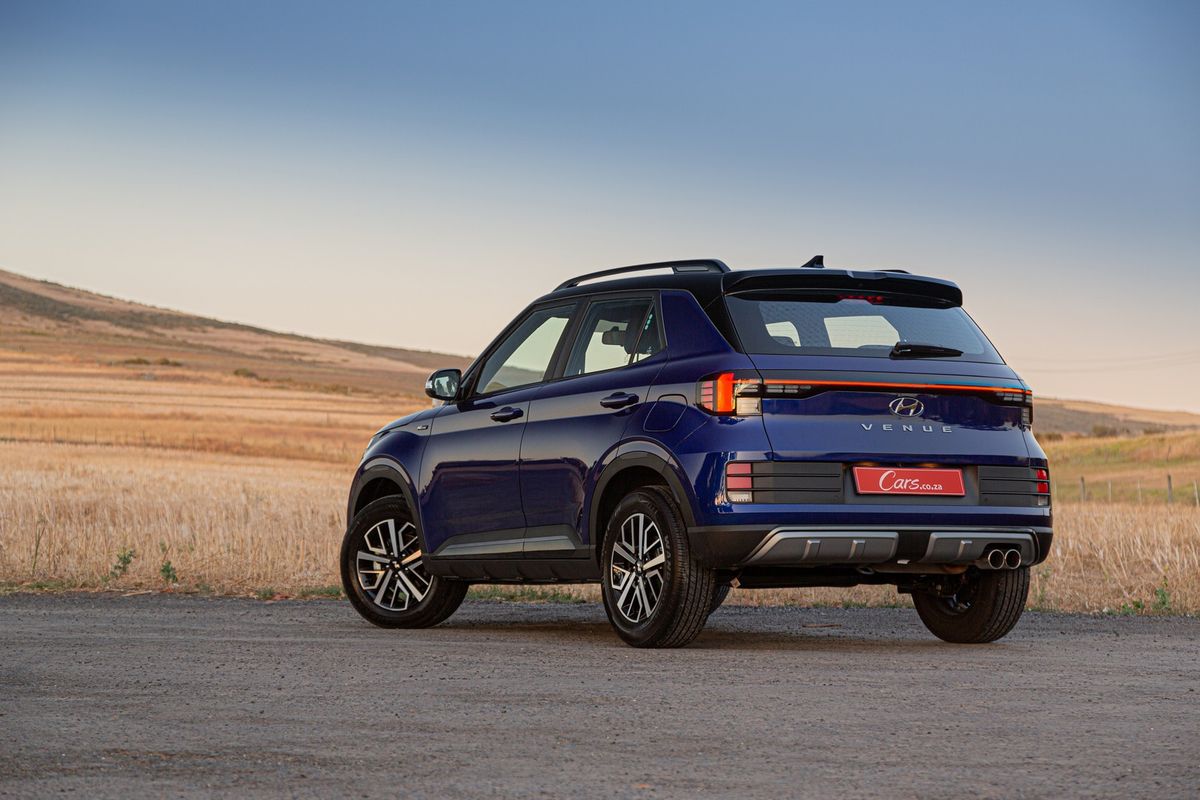
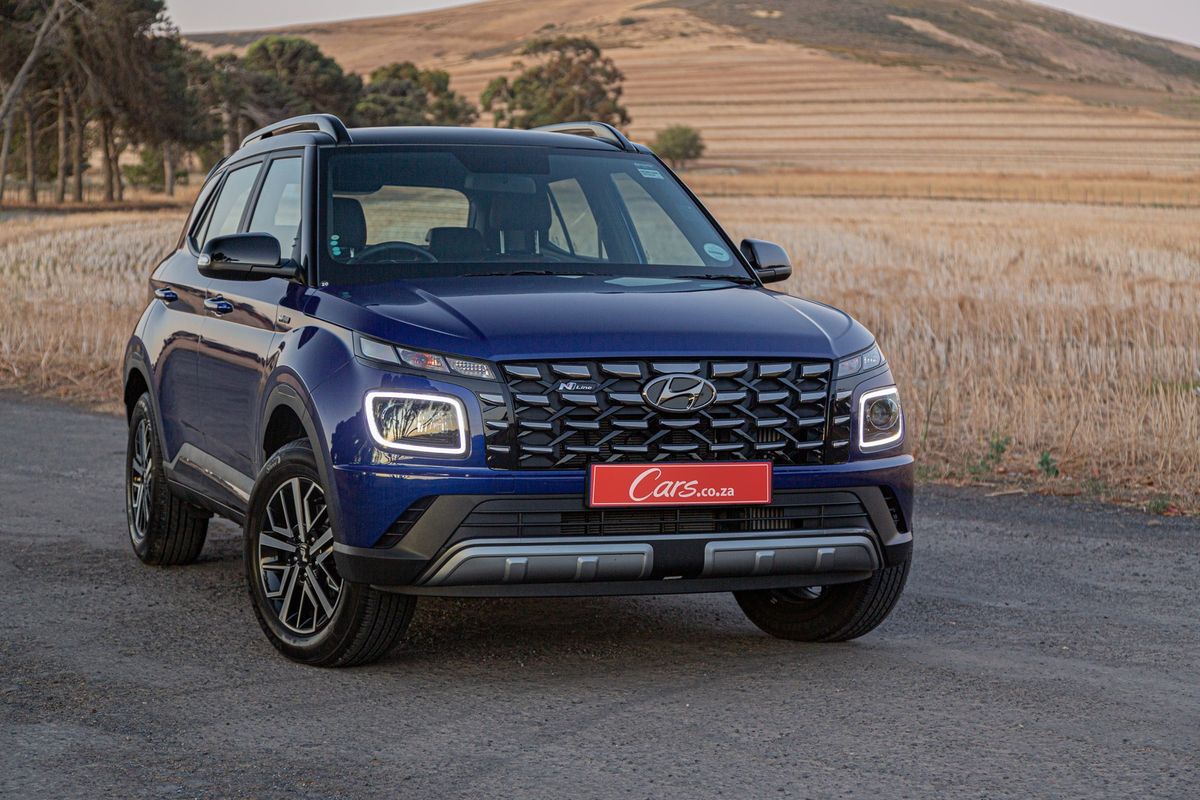
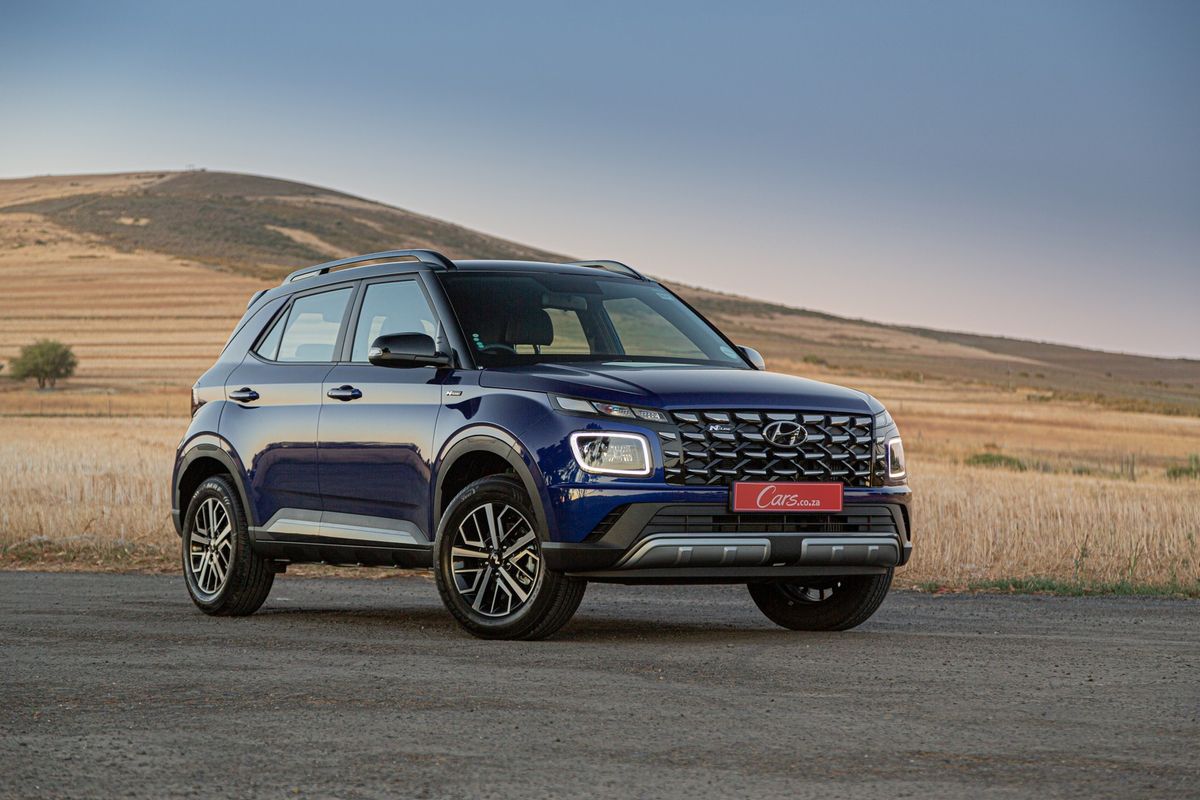
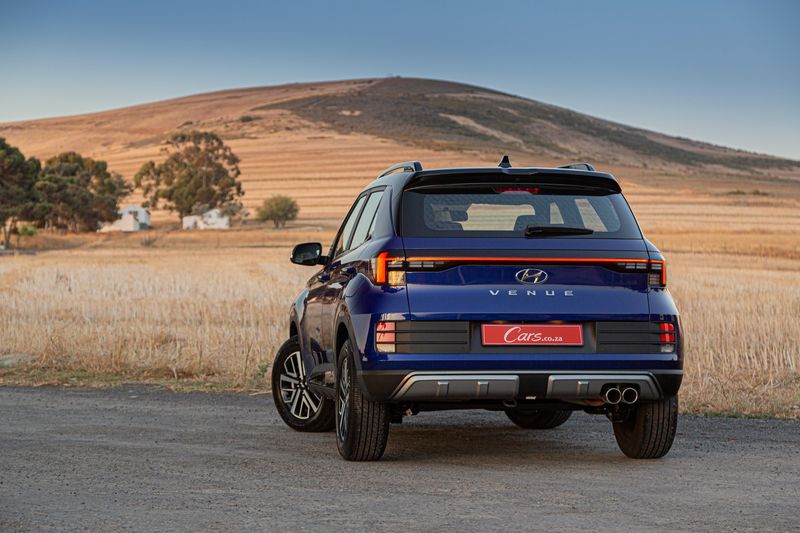
Since its local launch in 2019, the Hyundai Venue has sold briskly – it’s the 3rd-bestselling model in the segment (behind Urban Cruiser and T-Cross) and the recent update should help to keep it relevant. The Venue N Line is available in only 3 three colours (all with black roofs): white, grey and blue, shown here.
Compare the Hyundai Venue to some of its rivals here
How the Hyundai Venue fares in terms of…
Performance and economy
The range’s engine and gearbox options have been carried over from the pre-facelift model; whereas the entry-level 1.2 Motion is powered by a naturally aspirated (NA) 4-cylinder petrol motor, most derivatives have a 3-cylinder turbopetrol motor. And that’s a good thing – if you’re based in Gauteng (where the air is thinner than at the coast), the turbocharged 1.0-litre powertrain won’t lose as much power as its free-breathing sibling (it’s estimated that NA motors lose between 10 and 16 per cent on the Highveld).
With 88 kW/172 Nm driving the front wheels via a 7-speed dual-clutch transmission, the Venue N Line feels energetic. Its kerb weight is just over 1 100 kg, which accounts for some of the peppiness!
We suspected the N Line could post a faster 0-100 kph time than what its manufacturer claims and, sure enough, our test equipment confirmed that the Venue flagship dashed from a standstill to 100 kph in a respectable 10.01 seconds (that’s more than 10% quicker than Hyundai says the derivative should be).
We also reckon that the N Line comes equipped with a sports exhaust, because each gear change was accompanied by entertaining little pops/bangs, while the powertrain’s management software seemed to make the feisty Venue blip its throttle when shifting down a gear. It was quite out of character for a small crossover – and quite amusing, but we do wonder how long it would take for one to grow weary of it.
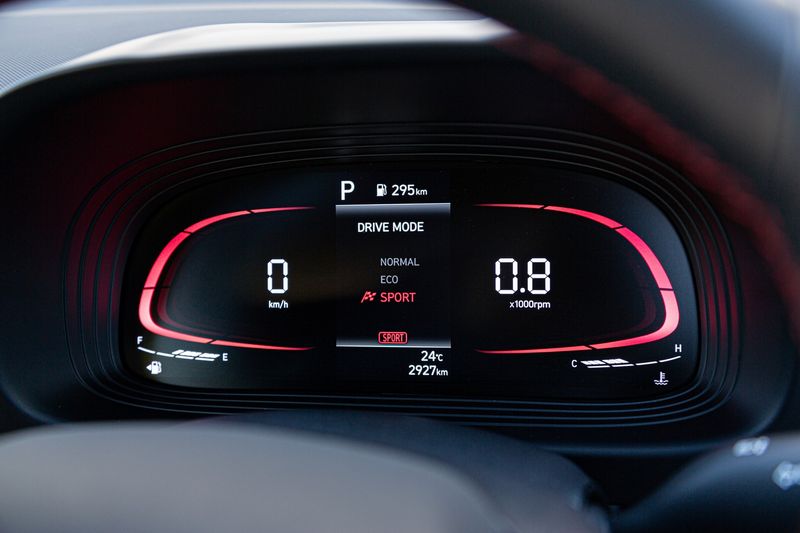
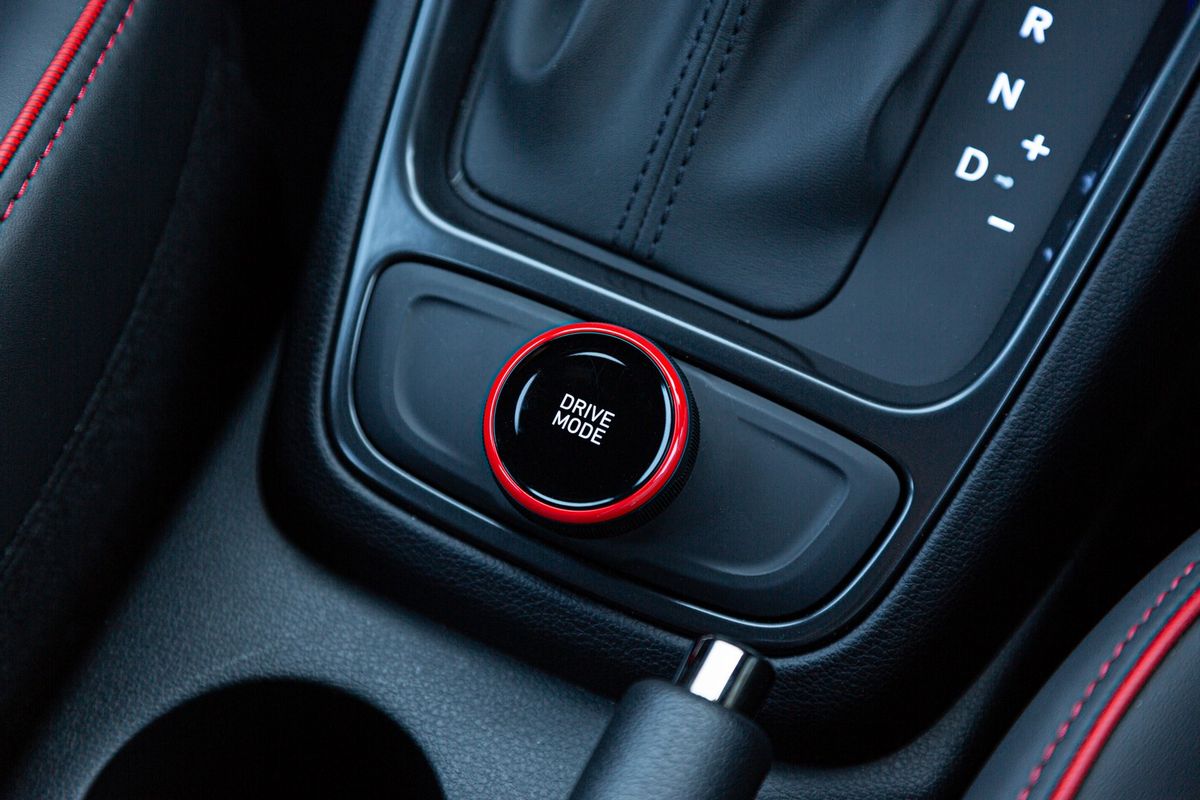
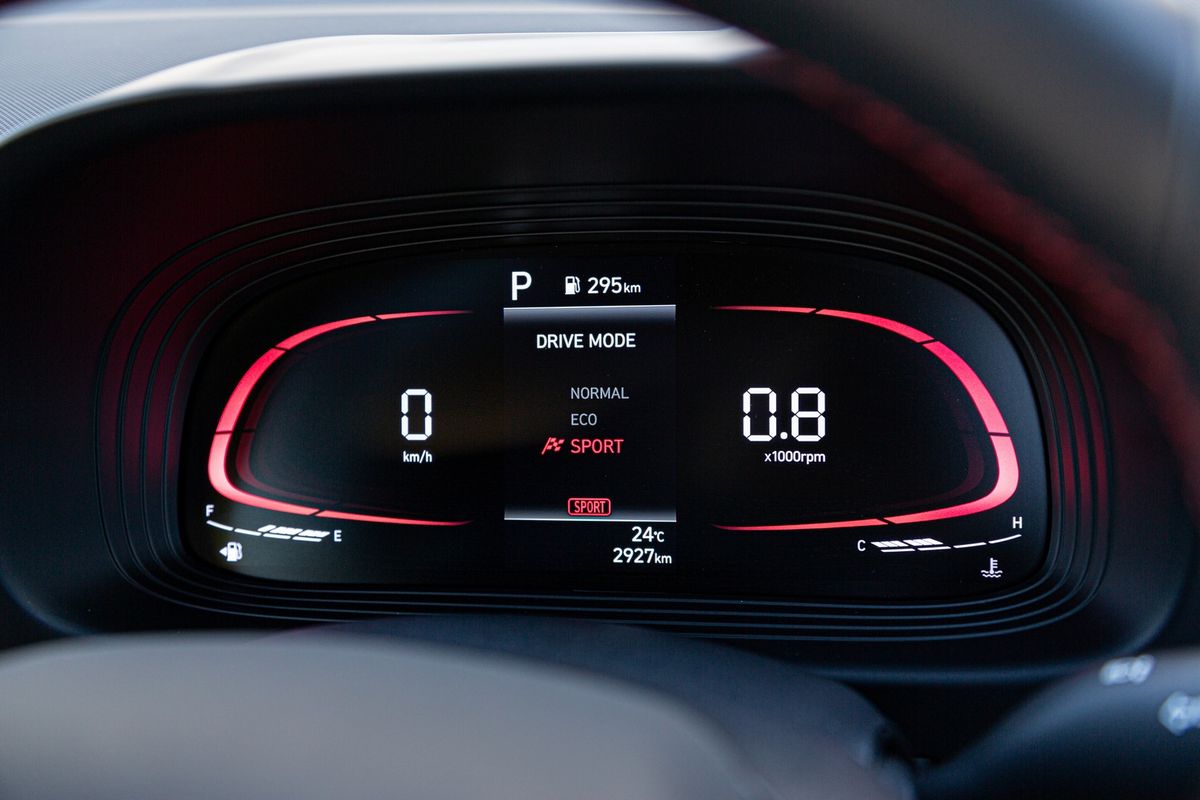
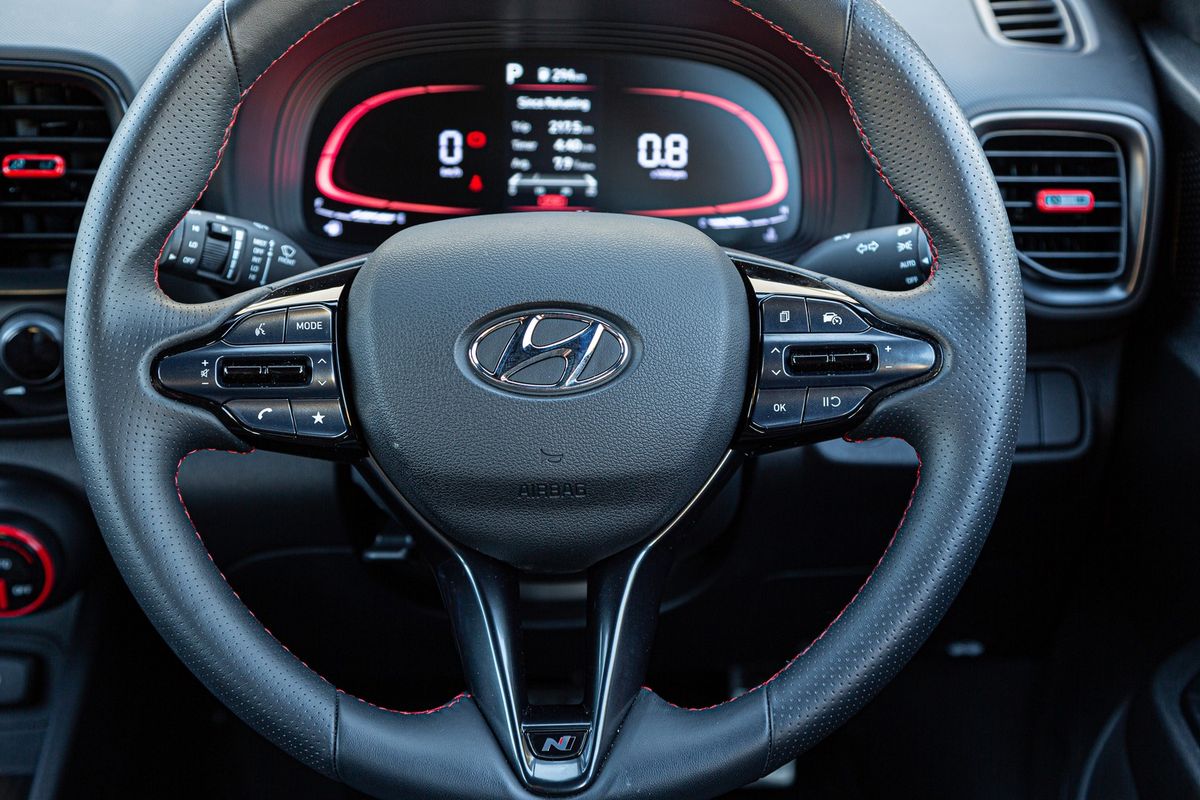
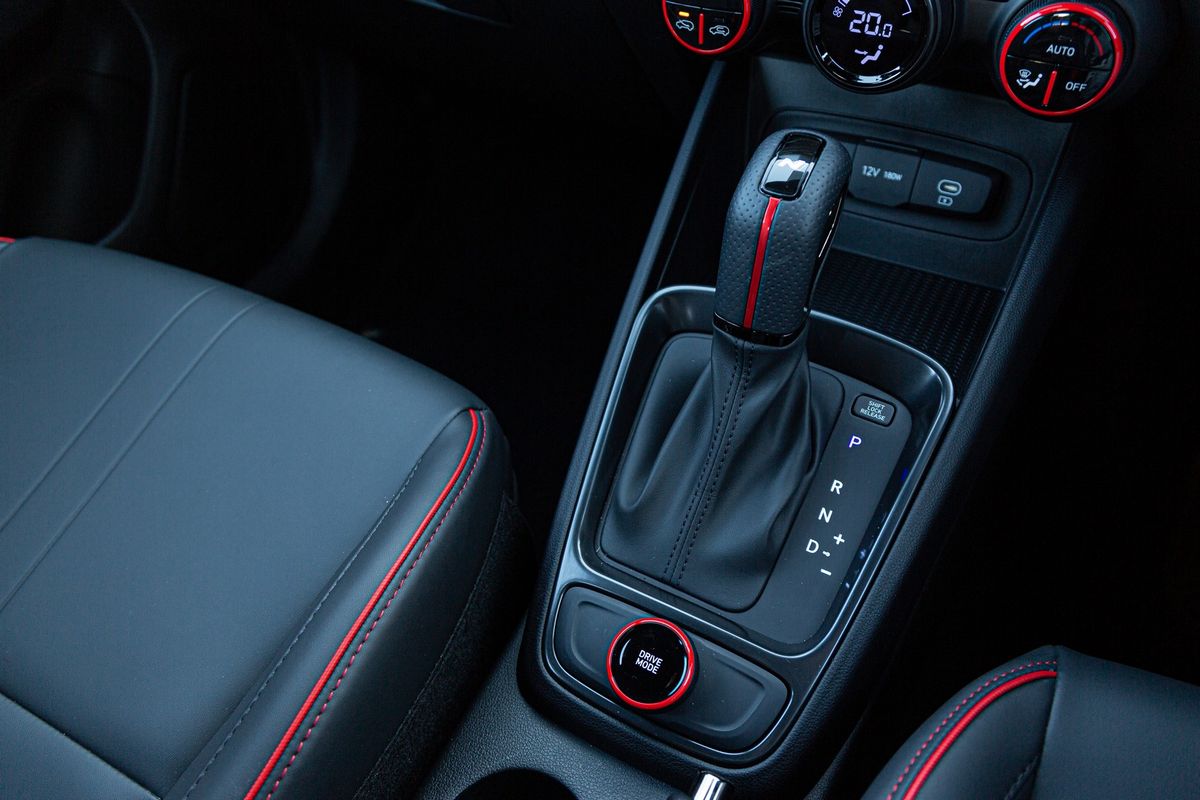
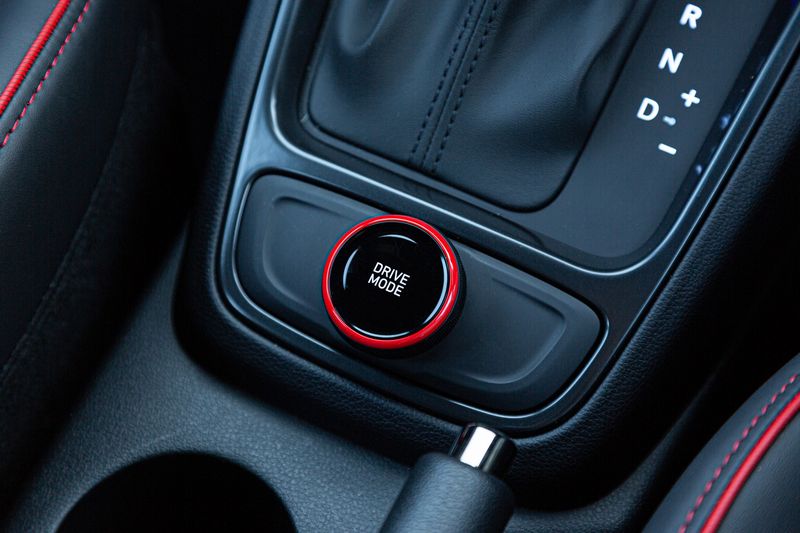
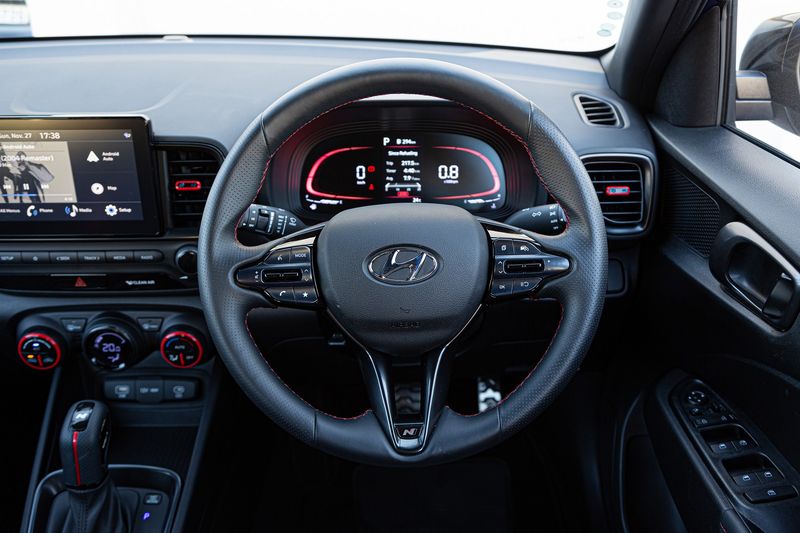
There are 3 drive modes, each of which alters the vehicle’s driving characteristics and is accompanied by a specific colour scheme on the digital instrument cluster. Normal is self-explanatory, Sport sharpens up the throttle response (sensitivity of the accelerator pedal) and Eco dials things back to preserve fuel.
While there are no ‘shift paddles on the steering wheel (for added driver engagement), you’re not likely to need them because the engine-transmission calibration seems near-perfect; changes are well-timed.
After a few days of spirited driving, the Venue N Line test unit indicated an average fuel consumption of 7.9 L/100 km, which is not much higher than the manufacturer’s claim (6.9 L/100 km). The Venue has a 45-litre fuel tank, which gives it a theoretical range of around 650 km from a single fill-up.
Ride and handling
Refinement-wise, many small crossovers’ cabins exhibit quite a bit of noise and vibration – a surefire indication that such vehicles are built to a tight price target. The Venue is priced a bit higher than some of its rivals, but it feels more solid/upmarket by comparison. Three-cylinder engines are known for their distinct rumbling sound (thrum) and vibration, but the Venue’s cabin seems particularly well insulated.
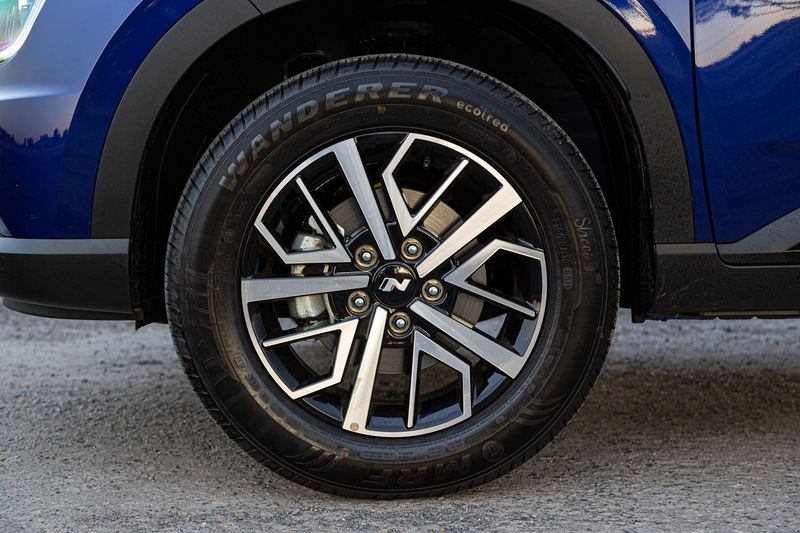
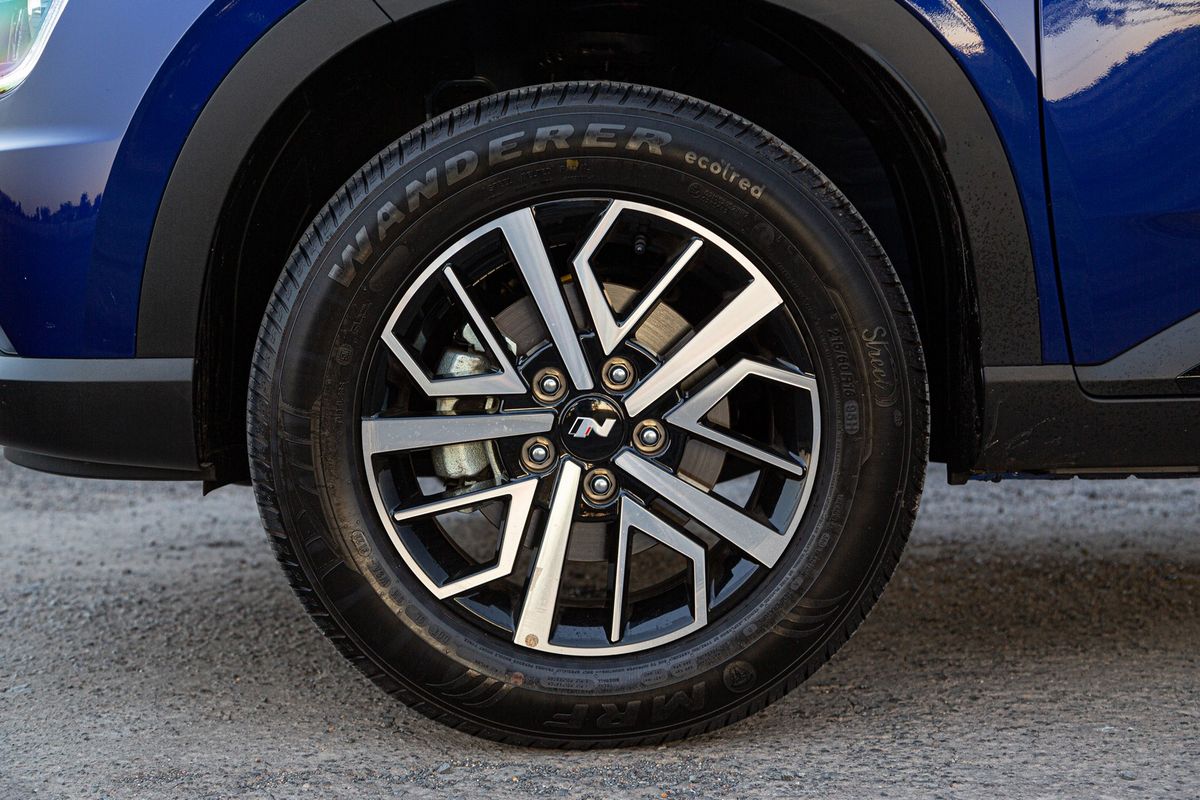
The N Line rides on handsome 16-inch alloy rims shod with 215/60 tyres, which, thanks to their generous sidewalls, absorb all but the worst ruts and bumps in the road. Hyundai and sister brand Kia favour comfortable suspension setups in the Venue and Sonet and, even though the N Line’s ride quality is slightly on the firmer side, it’s still quite comfortable by the standards of the small-crossover segment.
The multifunction steering wheel can be twirled with very little effort, which makes it a cinch to execute parking manoeuvres with the diminutive Venue, but it offers virtually nothing in terms of feel. Still, the setup is reasonably direct and it’s easy to place the vehicle on the road. It may be a “baby SUV”, but due to its relatively low kerb weight, the Venue N Line feels agile. However, don’t expect it to have corner-carving ability, this is an N-Line product (a packaging exercise) – not a performance-oriented N model.
With a ground clearance of 195 mm (all derivatives), the Venue has no problem coping with gravel roads. When we ventured off the tar during the test, the Hyundai’s stability on gravel routes proved impressive.
Features, tech and safety features
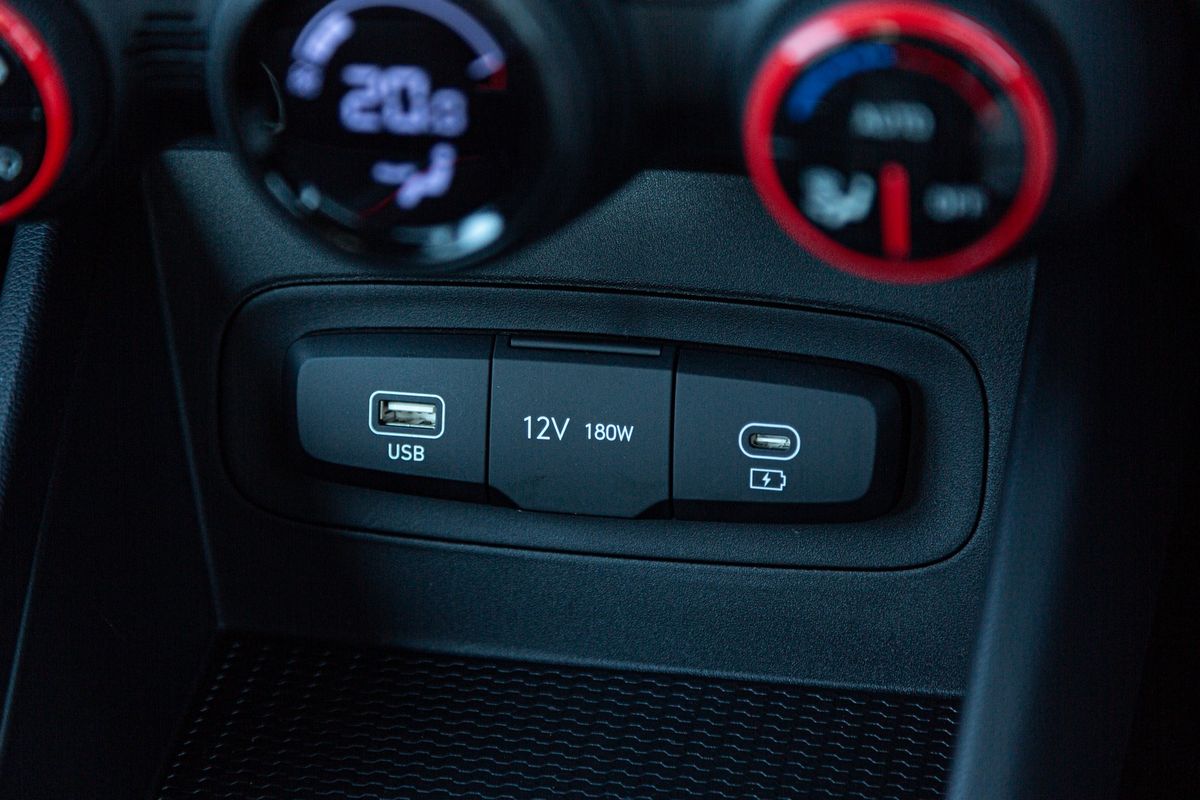
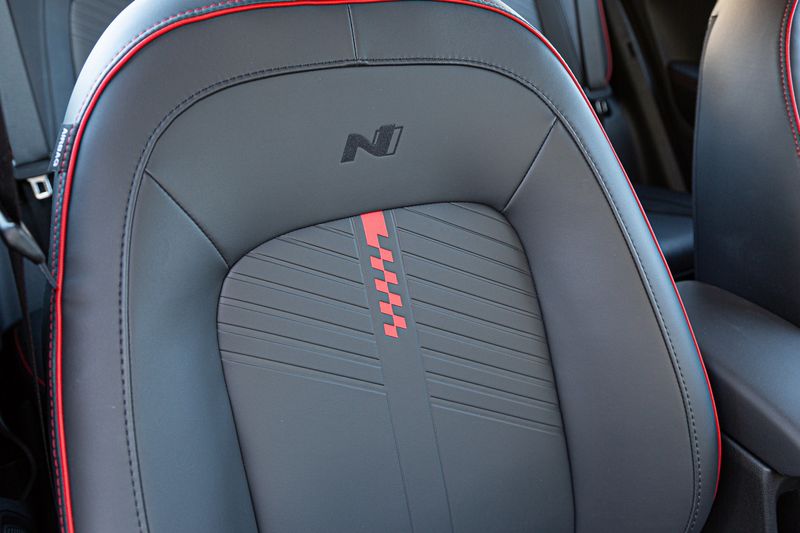
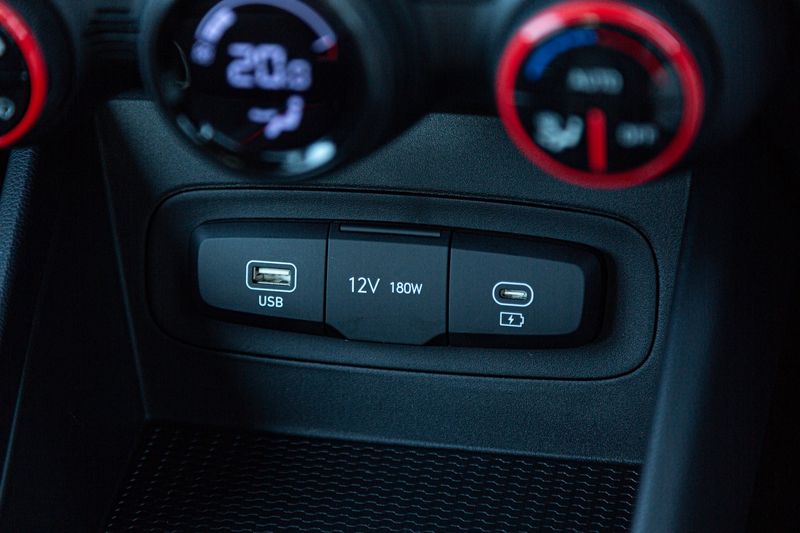
As befitting the flagship derivative of the range, the N Line comes well-appointed with features, such as synthetic leather seats, a leather-wrapped steering wheel, selectable drive modes, metallic pedals, a sunroof, an electrically-adjustable driver’s seat and both USB-A and USB-C ports, to name but a few.
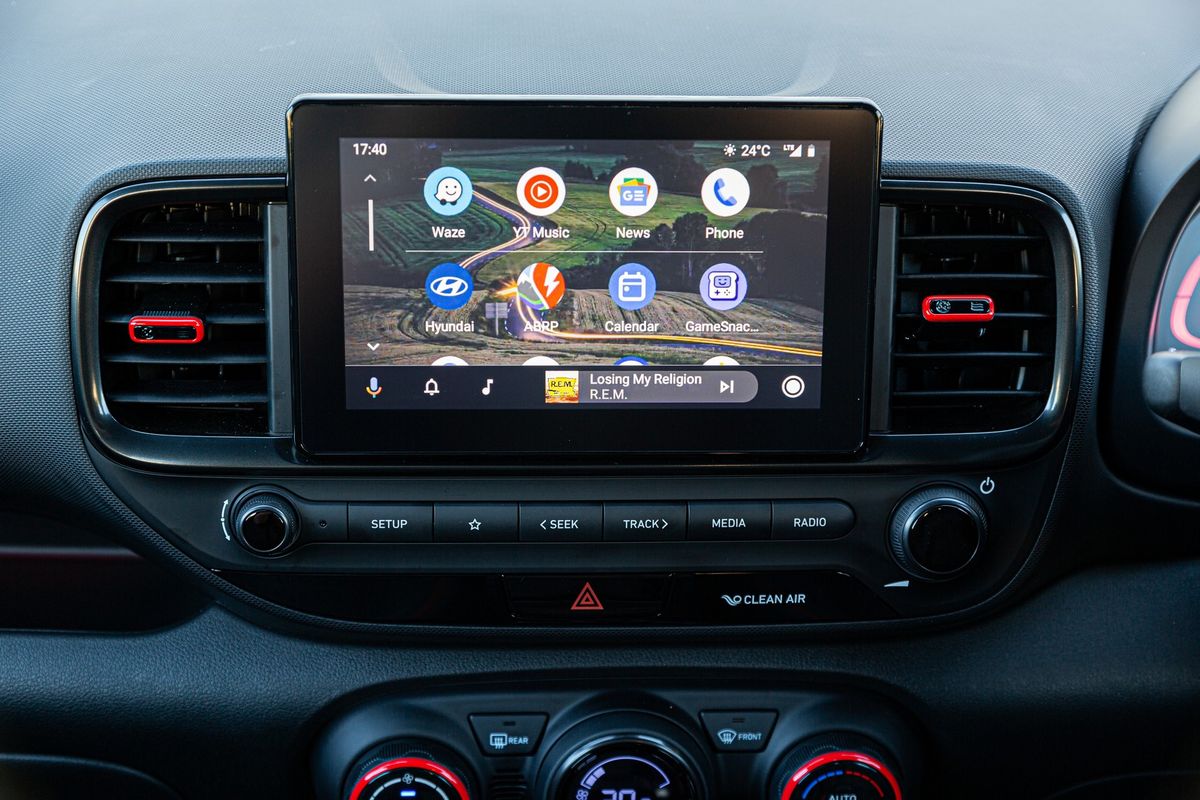
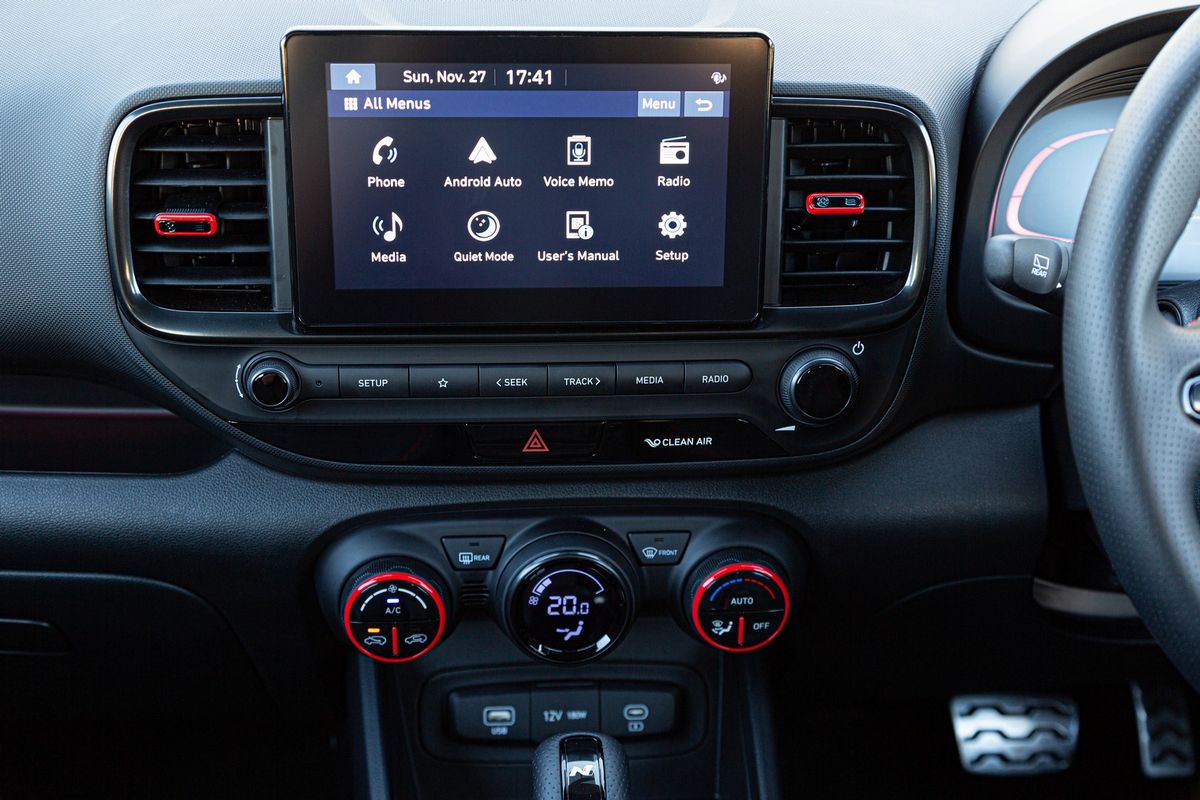
The infotainment system supports wireless Apple Carplay and Android Auto connectivity – we tested both systems and they worked seamlessly. Of course, beyond the screen-mirroring ability, you can access smartphone functions such as online navigation and streaming services – perfect for the Venue’s younger target market. The infotainment screen also displays the feed from the reverse-view camera.
In terms of safety features, the Venue N Line is not generously equipped. There are 6 airbags fitted (whereas the entry-level version has just a pair), ABS, stability control and hill-start assist, but we reckon that at this price point (R450k), you should get some form of semi-autonomous driving assist systems (such as autonomous emergency braking, which detects pedestrians and other obstacles) as well.
Packaging and Practicality
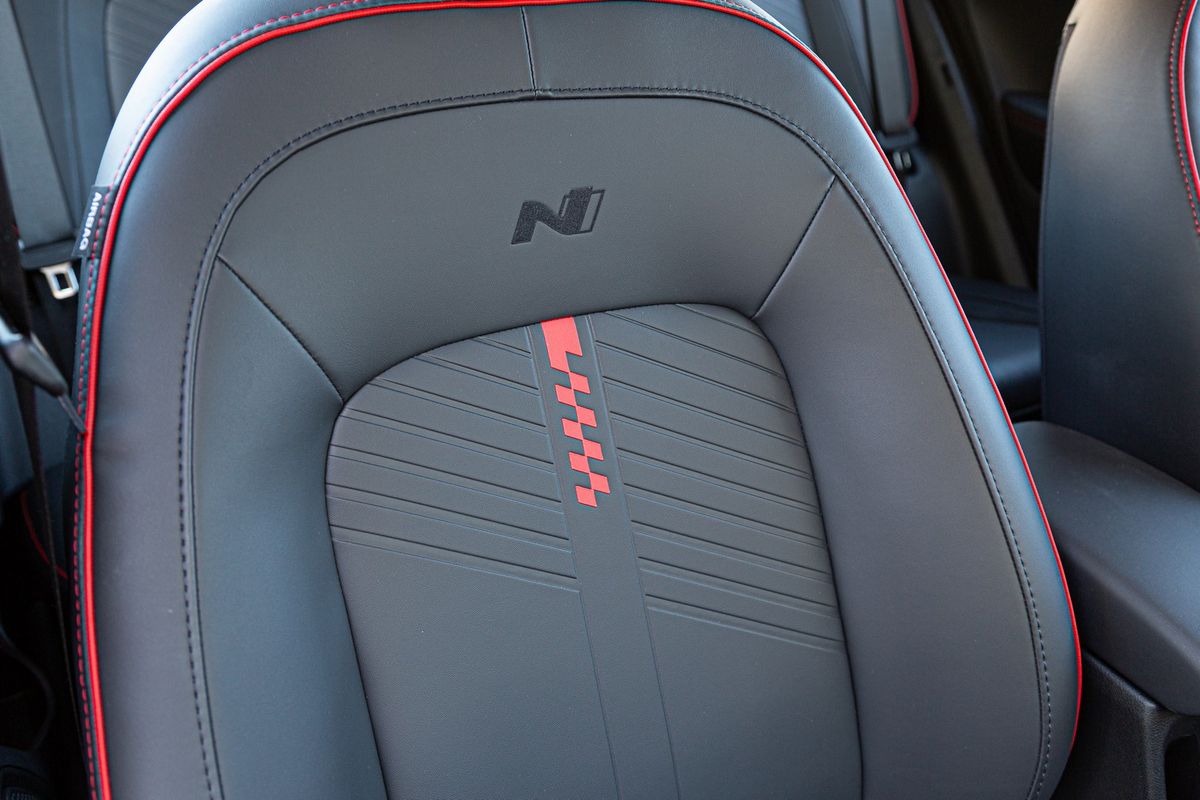
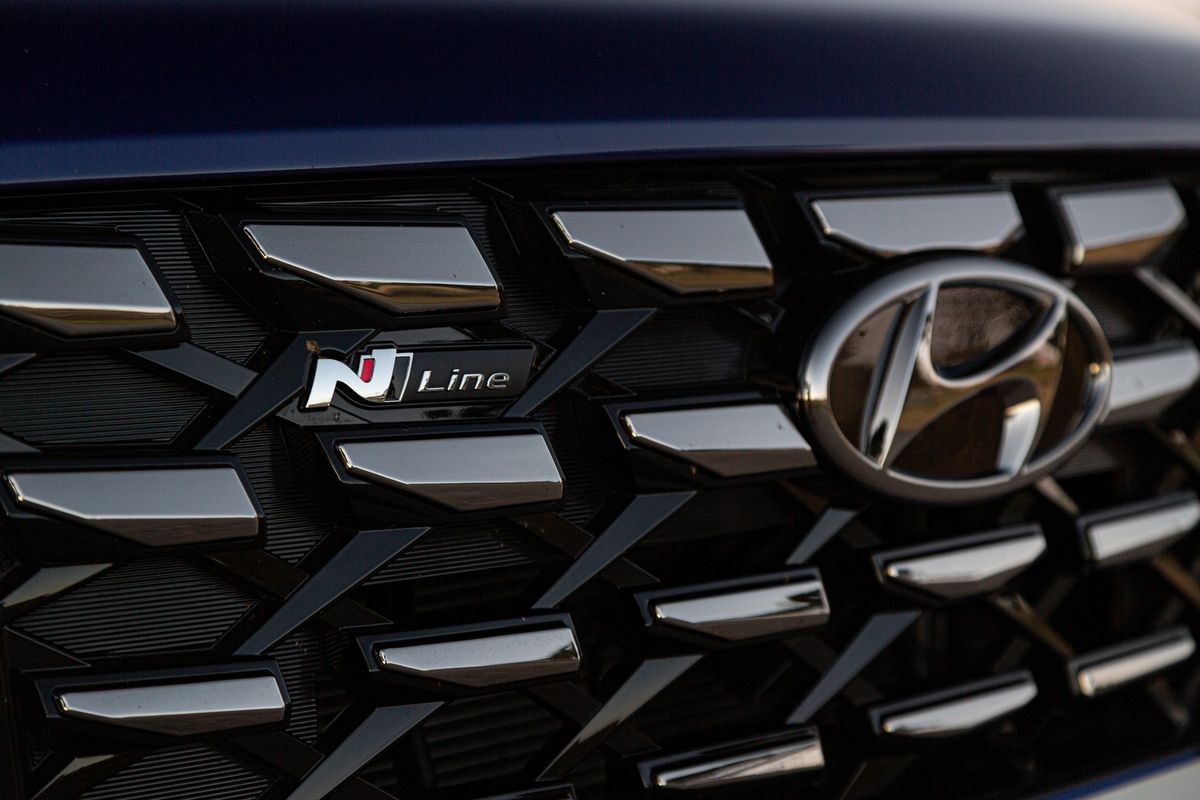
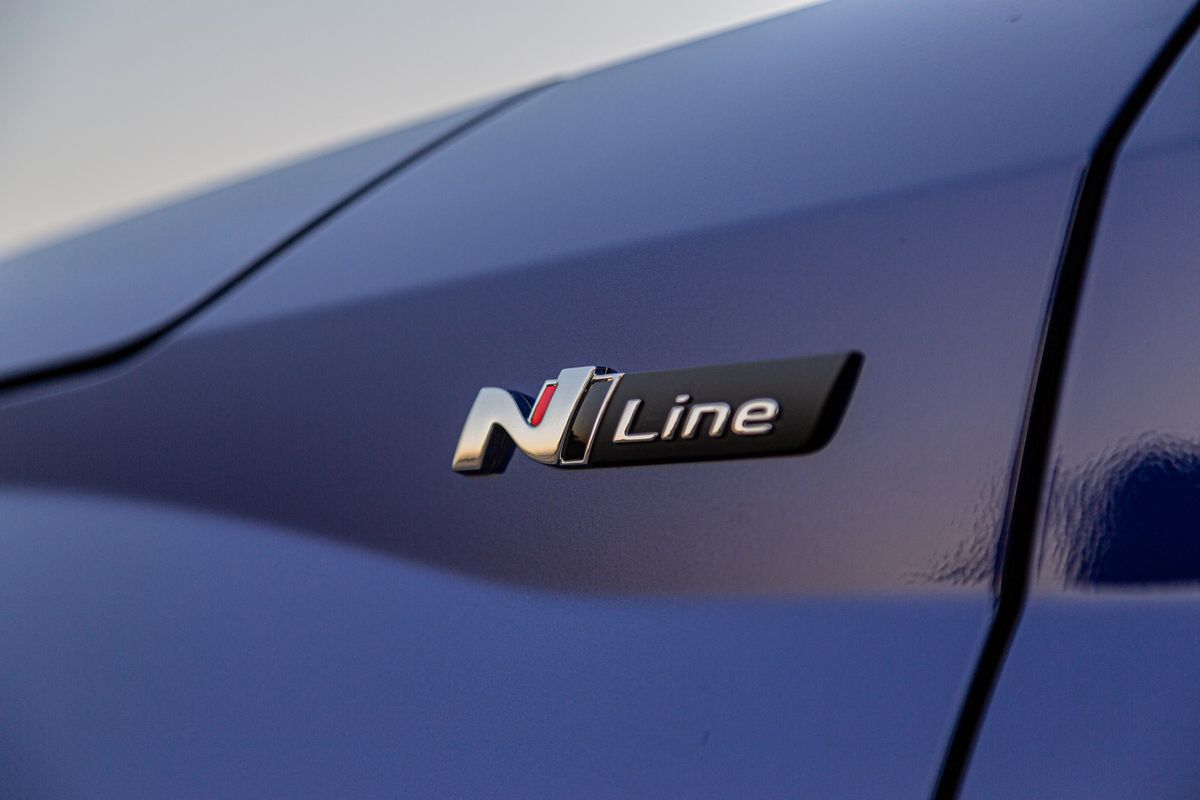
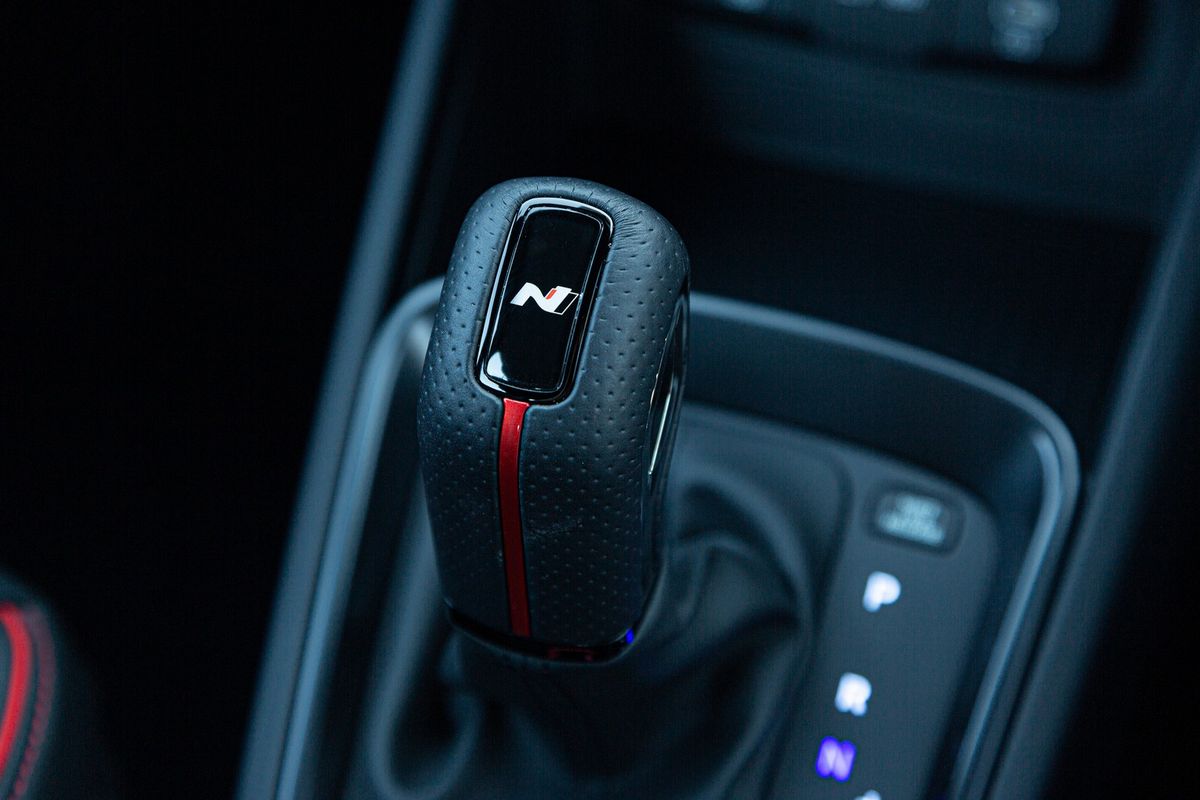
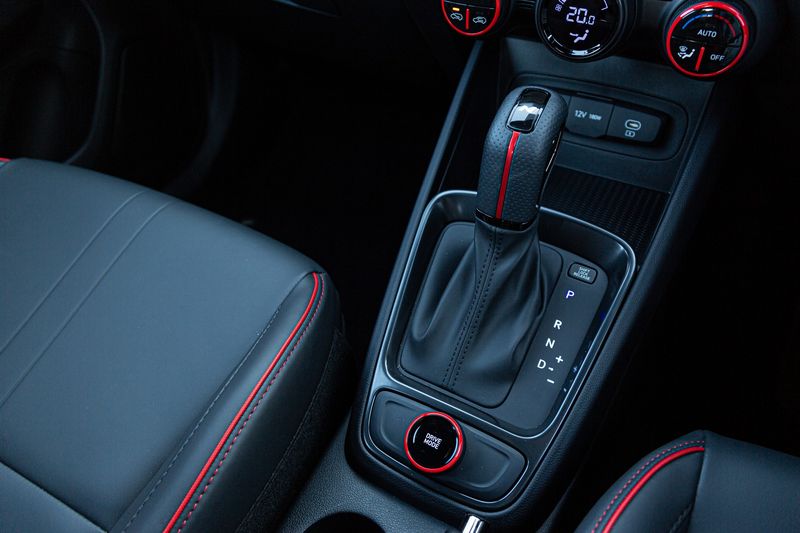
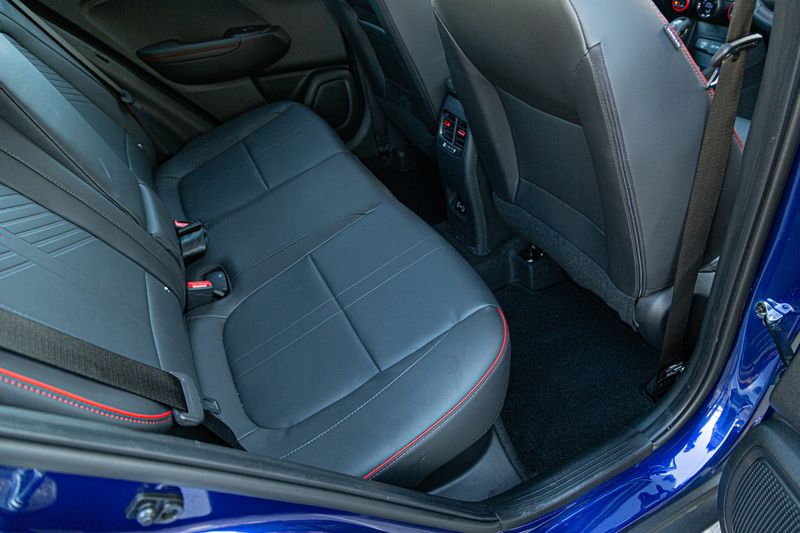
The N-Line derivative is distinguished by subtle N-Line badges (on its nose, flanks and tailgate), 16-inch alloy wheels, a black roof with a rear spoiler, plus a pair of exhaust pipes. As for the interior execution, well, we hope you like red, because there’s rouge detailing everywhere inside the flagship Venue.
There’s red stitching on the steering wheel, seats and gear selector, and red surrounds on the climate control knobs and the adjusters of the ventilation outlets. It is all a bit much? Perhaps, but at the least Venue’s cabin looks interesting (even funky) compared with those of bland and predictable crossovers.
The driver’s seat position is good; you’re perched higher than in a conventional hatchback, and the electric adjustment is a big plus, because the steering column is adjustable for rake, but not for reach.
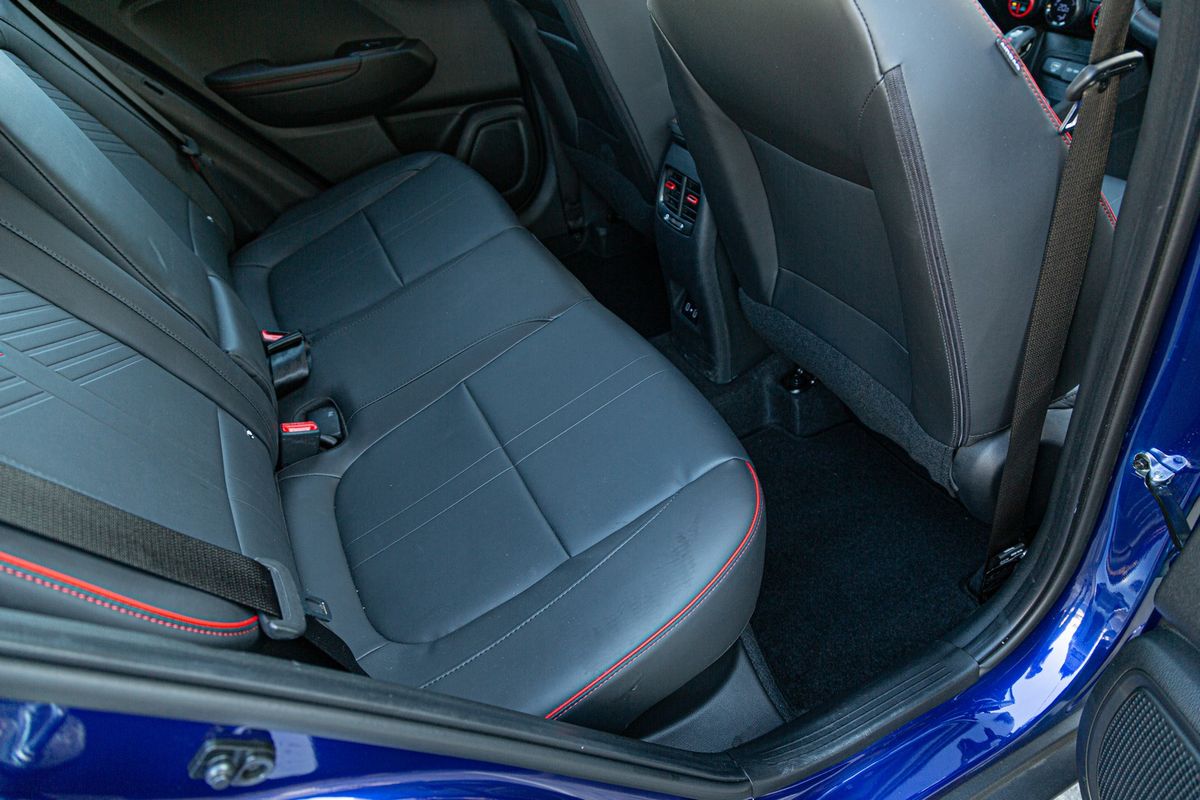
Rear passengers get their own air vents and USB charging port. Headroom is fair, but legroom is limited for taller occupants. The rear seats can be folded in a 60/40 split to increase cargo-carrying capacity.
Looking to sell your car? Sell it on Cars.co.za for free
Venue Price and After-sales support
The Hyundai Venue range starts from R294 900 and goes up to R449 900 for the N-Line you see here. The vehicle is sold with a 7-year/200 000 km warranty, as well as a 3-year/45 000 km service plan.
Verdict
We’re not sure who asked for a small crossover with a sporty bent, but we’re glad such a thing exists. Courtesy of its updates, the Venue remains fresh and its bold new look should be quite a drawcard. The N Line appeals to buyers who want a bit of extra kerb appeal (and even a bit of an exhaust burble), but the flagship derivative has the same drawback as many top-end small crossovers… less bang for buck.
While there’s no denying the Venue N Line’s novelty factor – and many buyers may be able to justify the derivative’s R20k premium over the 1.0T Fluid auto – R450k just seems a bit pricey when you consider that you could step into the bigger/more practical (but admittedly less attractive) Creta for that price. If you are single or part of a “double income with no kids” setup, however, the N Line’s well worth a look.
David Taylor

Having contributed to multiple motoring titles as well helping run the public relations machine of the Johannesburg International Motor Show, Dave has experience in both sides of the motoring industry. He's based in the Western Cape and is responsible for the performance testing, photography & weekly YouTube news for Cars.co.za.