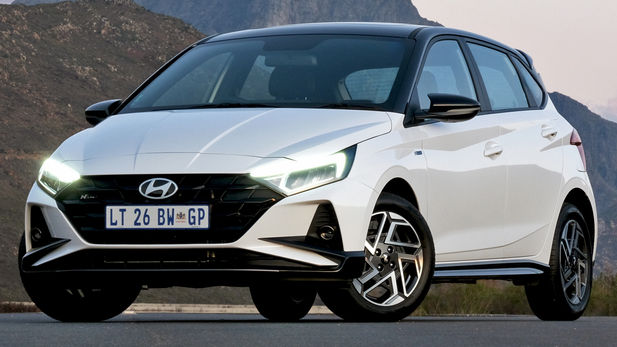
Interested in the Hyundai i20 but not sure how the various engine options measure up? Let’s take a closer look at the motors available in this hatchback in South Africa…
In July 2024, the facelifted Hyundai i20 arrived in South Africa, with a trio of engine options available. These 3 motors were carried over from the pre-facelift line-up, so the information in this article applies to such models, too.
Watch Ciro De Siena’s video review of the pre-facelift Hyundai i20:
All 3 engines available in the Hyundai i20 locally are petrol-powered, with the 4-cylinder units being naturally aspirated and the flagship derivative’s 3-pot benefitting from forced induction.
For the record, the Hyundai i20 sold in South Africa is imported from Chennai, India in BI3-series form (as opposed to the BC3-series model produced in Turkey and sold in Europe).
Naturally aspirated 1.2-litre, 4-cylinder (G4LB)
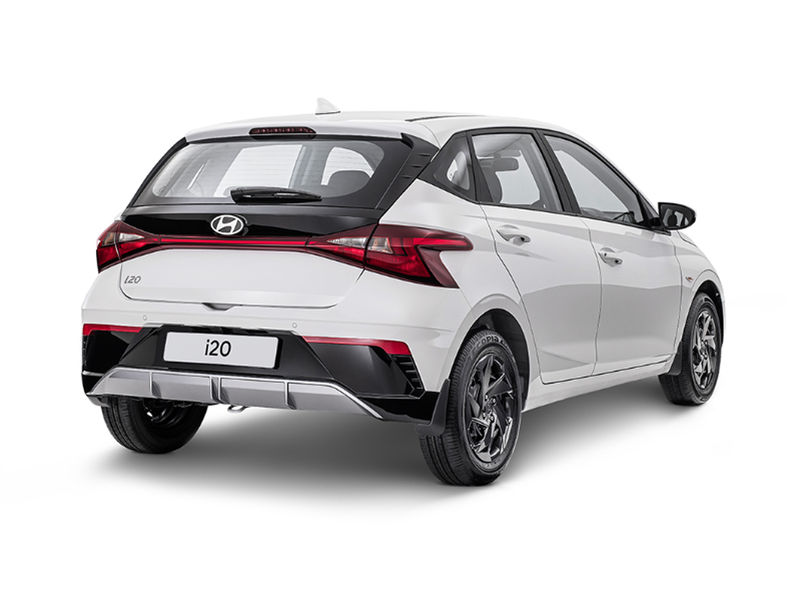
This MPI engine serves as the entry point to the Hyundai i20 range, available in both the base Premium and mid-tier Executive grades. Displacing 1.2 litres, it delivers 61 kW and 115 Nm to the front wheels through a 5-speed manual gearbox as standard.
| Capacity | 1 197 cm3 |
| Maximum power | 61 kW at 6 000 rpm |
| Maximum torque | 115 Nm at 4 200 rpm |
| Transmission | 5-speed manual gearbox |
| Fuel economy (claimed) | 5.9 L/100 km |
| 0-100 kph (claimed) | 12.9 seconds |
| Top speed | 169 kph |
Hyundai claims this 4-cylinder mill can sip unleaded petrol at a rate of 5.9 L/100 km. Taking into account all i20 derivatives use a 37-litre fuel tank, that figure translates to a theoretical cruising range of 627 km.
Naturally aspirated 1.4-litre, 4-cylinder (G4LC)
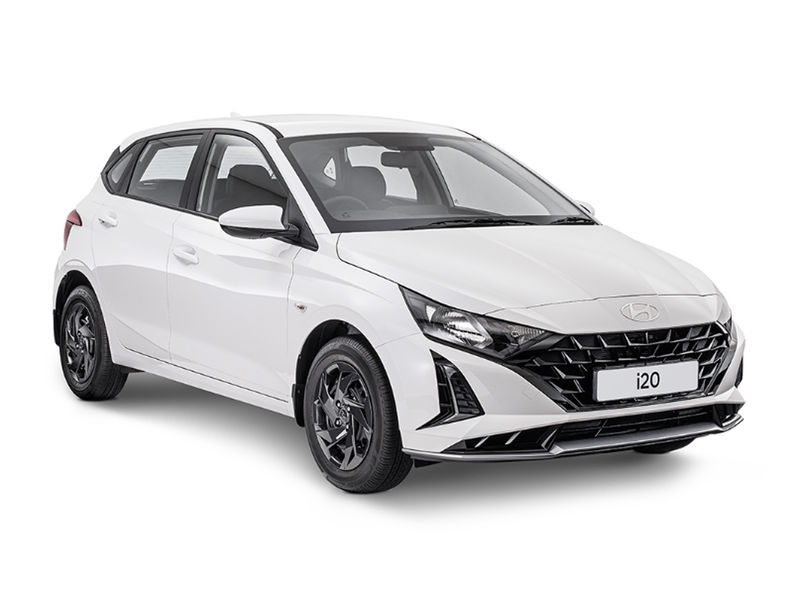
Like the 1.2-litre unit above, this MPI engine is from the Korean automaker’s “Kappa” range of powerplants. Thanks to its increased capacity, the 1.4-litre engine generates higher peak outputs of 74 kW and 133 Nm.
| Capacity | 1 368 cm3 |
| Maximum power | 73 kW at 6 000 rpm |
| Maximum torque | 133 Nm at 4 000 rpm |
| Transmission | 6-speed automatic |
| Fuel economy (claimed) | 6.9 L/100 km |
| 0-100 kph (claimed) | 12.5 seconds |
| Top speed | 173 kph |
In the local i20 line-up, this motor is likewise available in Premium and Executive guise, though ships standard with a 6-speed automatic transmission rather than in 3-pedal form. Using the claimed fuel-economy figure of 6.9 L/100 km, this engine offers a theoretical range of 536 km.
Turbocharged 1.0-litre, 3-cylinder (G3LC)
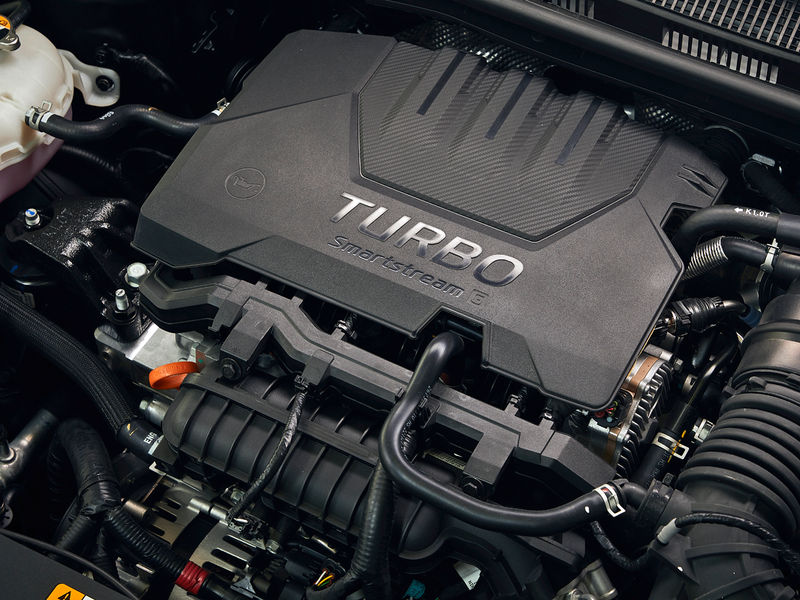
The flagship engine in the Hyundai i20 portfolio features 1 fewer cylinder than the powerplants above, but gains a turbocharger. Offered exclusively in range-topping N Line form, this unit sends 90 kW and 172 Nm to the front axle via a 7-speed dual-clutch automatic transmission.
| Capacity | 998 cm3 |
| Maximum power | 90 kW at 6 000 rpm |
| Maximum torque | 172 Nm at 1 500-4 000 rpm |
| Transmission | 7-speed dual-clutch |
| Fuel economy (claimed) | 6.9 L/100 km |
| 0-100 kph (claimed) | 9.9 seconds |
| Top speed | 187 kph |
Hyundai claims a combined fuel figure of 6.9 L/100 km for this GDI-badged engine, interestingly matching that of the G4LC motor above. Still, courtesy of forced induction, this 3-pot offers markedly improved performance figures, with the listed 0-100 kph time falling below 10 seconds.
Find a used Hyundai i20 on Cars.co.za!
Frequently Asked Questions (FAQ)
Q: What are the three engine options available for the Hyundai i20 in South Africa?
A: The facelifted Hyundai i20 in South Africa is available with three petrol engines: a naturally aspirated 1.2-litre (G4LB), a naturally aspirated 1.4-litre (G4LC), and a turbocharged 1.0-litre (G3LC).
Q: What are the power, torque and transmission details for the entry-level 1.2-litre engine?
A: The naturally aspirated 1.2-litre, 4-cylinder (G4LB) engine delivers 61 kW of power and 115 Nm of torque. It is paired with a 5-speed manual gearbox and has a claimed fuel economy of 5.9 L/100 km.
Q: What are the performance specifications and transmission of the flagship 1.0-litre turbo engine?
A: The flagship turbocharged 1.0-litre, 3-cylinder (G3LC) unit produces 90 kW and 172 Nm. It is paired with a 7-speed dual-clutch transmission and has a claimed 0-100 kph time of 9.9 seconds.
Related content
Hyundai i20 1.0T N Line (2024) Review