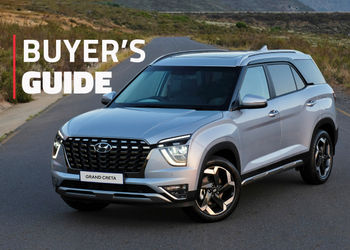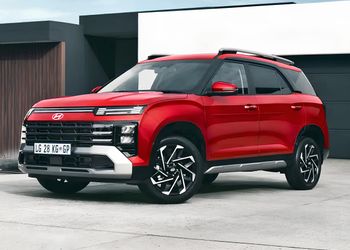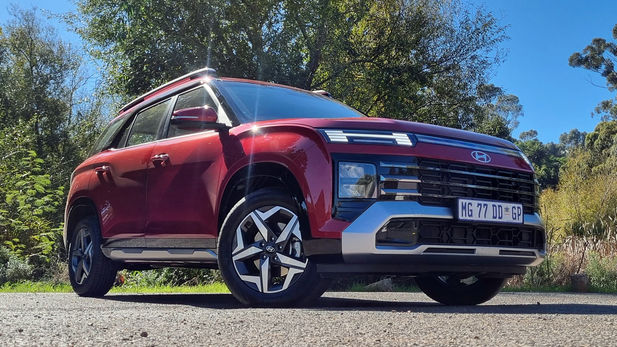
Affordable seven-seater crossovers with turbodiesel engines are becoming increasingly rare. The Hyundai Alcazar offers both petrol and diesel power, but which makes more financial sense for South African families?
The Hyundai Alcazar has established itself as one of the best-selling Hyundais in South Africa. Introduced as the replacement for the Grand Creta, it slots between the Creta and Tucson in Hyundai’s SUV line-up, competing in the fiercely contested family crossover market.
Built in India, the Alcazar faces growing competition from a flood of affordable, generously equipped Chinese crossovers. But it has something that few of its Chinese rivals offer: a turbodiesel engine.
And for many South African motorists, that’s a compelling advantage.
Why South Africans still love a diesel
South Africa is a long-distance driving market. Whether for work or leisure, family vehicles regularly cover hundreds of kilometres on the open road. And what engine type do many South Africans still favour for travelling long distances in a fully loaded family vehicle? That’s right, a turbodiesel.
The appeal is easy to understand. Turbodiesel engines typically offer strong low-rev torque, relaxed cruising and impressive fuel economy, particularly when covering long distances.
There’s another advantage for motorists living on the Highveld. At altitude, naturally aspirated engines lose a noticeable amount of power because of the thinner air. Turbocharged engines can compensate for much of that loss, making them particularly appealing to Gauteng drivers.
But does that mean the diesel-powered Alcazar is automatically the better buy? Not when you consider the substantial difference in purchase price.
Search for a Hyundai Alcazar on Cars.co.za
Hyundai Alcazar: Two engines, three derivatives

Hyundai offers three Alcazar derivatives, including two Executive models with comparable equipment levels: the 2.0 petrol and 1.5D turbodiesel.
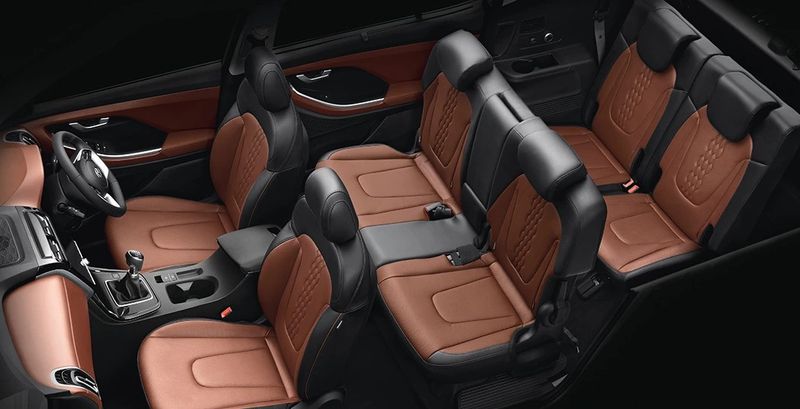
Both offer generous second-row accommodation and a third row that’s best suited to children or occasional short journeys.
That extra seating capacity is a major selling point for family buyers. You might not need seven seats every day, but when you’re suddenly responsible for the school sports lift club or collecting a few extra children from a weekend get-together, those foldaway third-row seats become invaluable.
The question is whether the Alcazar’s diesel engine offers enough of an advantage to justify its considerable price premium.
Petrol vs diesel: What do the numbers say?
Both Executive derivatives are front-wheel-driven and use six-speed automatic transmissions, but their engines have distinctly different characteristics.
The 2.0-litre petrol model uses Hyundai’s proven naturally aspirated four-cylinder engine, producing 117 kW and 191 Nm. With a kerb weight of less than 1 500 kg, the petrol Alcazar offers respectable performance, particularly at the coast.
Hyundai claims a 0-100 kph time of 10.4 seconds, which is perfectly adequate for a family crossover.
The challenge comes when you fill all seven seats and head inland. On the Highveld, where altitude reduces the output of naturally aspirated engines, the petrol Alcazar has to work harder to maintain performance, especially when climbing long inclines with a full complement of passengers.
That’s where the turbodiesel makes a compelling case.
Where the turbodiesel has the upper hand

The Alcazar 1.5D Executive has a smaller engine than its petrol sibling, but turbocharging changes the driving experience considerably.
Don’t assume that makes it more powerful, though. The 1.5-litre turbodiesel produces just 85 kW, approximately 28% less peak power than the 2.0-litre petrol. However, it delivers 250 Nm of torque, around 31% more than the petrol engine.
Crucially, that torque is available from just 1 500 rpm, compared with the petrol engine’s peak torque at 4 500 rpm.
When you’re trying to maintain momentum up a long Gauteng incline in a fully loaded Alcazar, that low-rev pulling power can make the diesel feel more effortless.
The turbodiesel also suffers less performance degradation at altitude because its turbocharger helps compensate for the thinner air.
However, there’s an important distinction between pulling power and outright performance. The petrol Alcazar is actually quicker from 0-100 kph, with Hyundai claiming 10.4 seconds versus the diesel’s 12.9 seconds. Its higher peak power also remains an advantage when accelerating at higher engine speeds.
Still, for motorists who regularly travel with seven occupants, particularly on the Highveld, the diesel’s stronger low-rev torque delivery is certainly appealing.
Search for a Hyundai Alcazar on Cars.co.za
Fuel economy: The diesel’s biggest advantage
Beyond its torque advantage, the turbodiesel’s strongest argument is fuel efficiency.
Hyundai claims average fuel consumption of 7.5 L/100 km for the Alcazar 2.0 petrol, compared with just 5.9 L/100 km for the 1.5D.
That’s a difference of 1.6 litres per 100 km, or approximately 21% less fuel consumption for the diesel.
For a family that regularly covers long distances, those savings will add up. But there’s a catch, and it’s a substantial one.
The Alcazar 2.0 Executive costs R499 900, while the 1.5D Executive is priced at R599 900.
That’s a R100 000 premium for the diesel, making it 20% more expensive than its petrol equivalent.
And although the diesel uses considerably less fuel, the purchase-price difference complicates the ownership equation.
Can you recover the diesel’s R100 000 premium?

Here’s where the diesel’s financial argument starts to unravel.
Based on Hyundai’s claimed consumption figures, the diesel saves 1.6 litres of fuel for every 100 km travelled. That’s certainly worthwhile, but recovering an additional R100 000 in purchase costs takes an enormous amount of driving.
Assuming petrol and diesel both cost R20 per litre, the diesel would save approximately R32 in fuel for every 100 km travelled.
At that rate, you’d need to cover more than 312 000 km before the fuel savings alone recovered the diesel’s R100 000 premium.
And how many Alcazar owners are realistically going to keep their vehicles for more than 300 000 km?
Of course, actual fuel prices, real-world consumption and driving conditions will influence the calculation. Resale values, servicing costs and financing charges also affect the overall ownership equation.
But the fundamental problem remains: the diesel’s impressive fuel economy comes at a considerable upfront cost.
Verdict: Which Hyundai Alcazar should you buy?
For most South African families, the Alcazar 2.0 Executive is the more sensible purchase.
It’s R100 000 cheaper, offers comparable equipment and delivers stronger outright performance at sea level. If you live at the coast and don’t regularly travel with seven occupants, there’s little reason to pay the diesel premium.
The calculation changes somewhat for Highveld motorists.
If you regularly carry a full complement of passengers, tackle steep inclines or cover substantial distances, the 1.5D Executive’s stronger low-rev torque and superior fuel economy make it an appealing alternative.
But there’s no escaping the financial reality. You’re paying a significant premium for the diesel’s more relaxed pulling power and lower fuel consumption, and recovering that investment through fuel savings alone will take an exceptionally long time.
The petrol Alcazar wins on value. The diesel wins on low-rev pulling power and fuel efficiency.
Ultimately, the question isn’t whether the diesel is better suited to certain driving conditions. It’s whether those advantages are worth an extra R100 000 to you.
Lance Branquinho

Lance Branquinho is a Namibian-born writer and photographer who has won numerous motoring journalism awards. He once smuggled parts to South America, in a minor contribution to help Giniel de Villiers finish on the podium at the Dakar. He fears for the eventual collapse of the air-cooled Porsche 911 market – and keenly awaits, in vain, the return of the brand's 928.