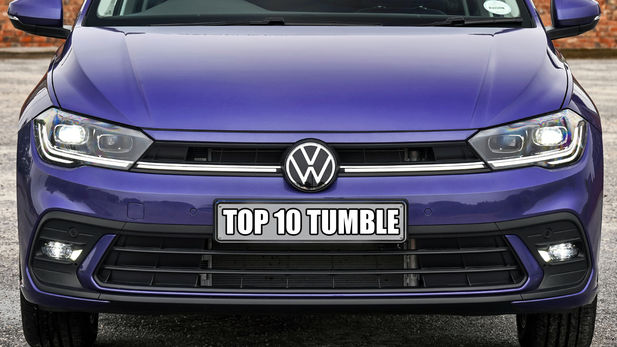
The unthinkable has happened: Volkswagen’s Polo hatchback failed to make the list of SA’s 10 best-selling vehicles in October 2022. So, what’s behind this apparent fall from grace and what’s next for the locally built hatch?
In many ways, October 2022 was a fairly routine month for South Africa’s new-vehicle market. Total industry sales grew year on year, with Toyota dominating proceedings and the list of the country’s best-selling vehicles speckled with the usual array of locally built bakkies. Pretty run-of-the-mill stuff, right? Well, there was one particularly interesting detail we immediately noticed.
That’s right, the Volkswagen Polo hatchback was nowhere to be seen. The Kariega-produced mainstay failed to crack the list of South Africa’s 10 best-selling vehicles, instead languishing in a lowly 15th place. That’s not something you see very often, is it?
Though an exceptionally uncommon occurrence considering the Polo’s long-standing popularity in SA, the last time this happened was actually fairly recently. Yes, the Polo missed out on the top 10 in December 2021, too, though that was clearly owing to the nameplate’s switchover to the facelifted model. But what’s behind this latest dip in sales?
Supply-chain problems and production stoppages
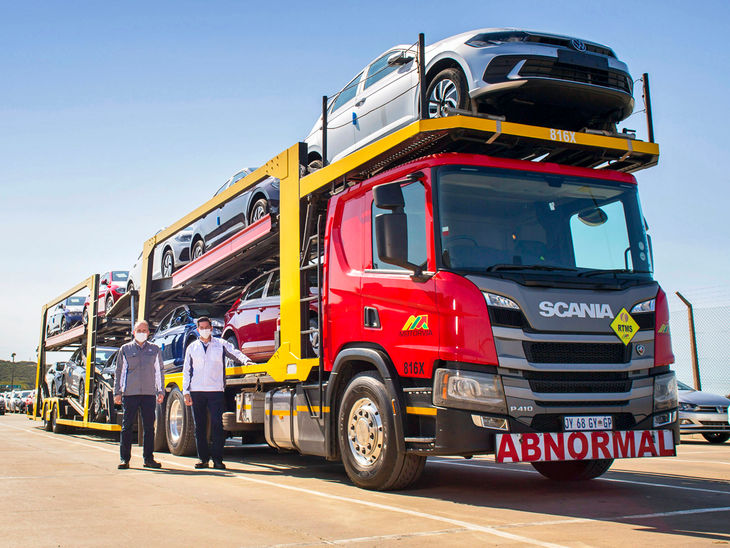
Like many factories, VW’s Kariega plant is still grappling with pandemic-related supply issues.
It’s a tricky question to answer, though it’s obvious Volkswagen Group SA has been struggling with major supply-chain headaches. As colleague David Taylor laid out in his comprehensive feature covering the delay in the local arrival of the Golf 8 R, there are countless interrelated variables that play a role in vehicle production. Remove just a single cog and everything grinds swiftly to a halt.
Thomas Schäfer, global CEO of the Volkswagen Passenger Cars Brand and former head of the South African division, furthermore recently confirmed to local media the worldwide semi-conductor shortage had been the cause of 90% of the (often last-minute) production stoppages at VW’s various factories. Kariega has certainly not been spared, as illustrated by the fact its Polo export numbers dipped from 9 656 units in September to 5 331 units in October. Local registrations of the Vivo, too, dropped 36% month on month.
“The low export figure [in October 2022] can be attributed to a breakdown in one of shops which made us lose a significant production volume. We’re also still grappling with semi-conductor chips shortages,” VW Group South Africa confirmed to us in a statement, without specifically referencing the dip in local Polo sales.
Of course, there are likely a few other factors also contributing to the Polo’s slow-but-steady slip down the list of South Africa’s best-selling vehicles. Let’s take a closer look…
Examining the Polo hatch’s sales figures in 2022 so far

The Volkswagen Polo hatch has steadily fallen down the local sales charts in 2022.
For some context, let’s first consider how the Polo hatchback performed in 2021. Last year, the 5-door hatch placed fourth on the list of SA’s best-selling vehicles, with 18 235 units registered. Just three models outsold it: the all-conquering Toyota Hilux, the more affordable Volkswagen Polo Vivo and the likewise locally built Ford Ranger.
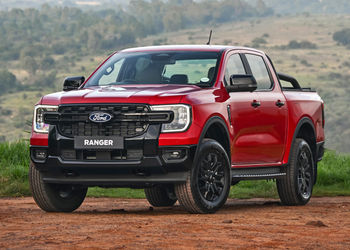
While the Polo’s 2021 tally translated to a monthly average of 1 520 units, that mean figure has declined to 1 261 units for 2022, year to date (with 12 608 units sold in total). At first glance, it might not appear too significant a fall, but it’s opened the door for a couple of Indian-built passenger vehicles – not to mention the Struandale-produced Isuzu D-Max – to elbow their way past.
With 809 units sold (including 114 in the rental channel), October was easily the Polo hatchback’s slowest sales month of the year thus far and the first time it has both dipped below four figures and fallen from the top 10 in 2022. It’s been a sustained slide down the table, as back in January the Polo found itself in a familiar and comfortable third place. By March, it had fallen to fifth, before sinking to sixth in June and eighth in July, where it stayed until placing 15th in October.
Which vehicles are gobbling some of the Polo’s pie?
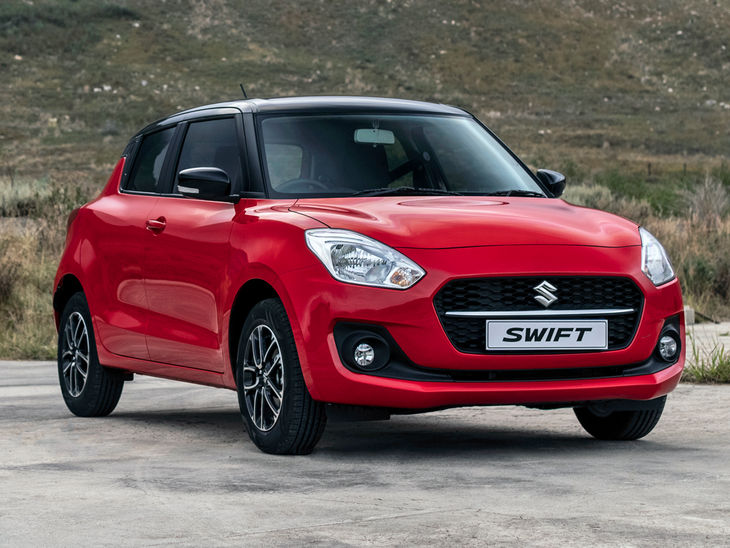
Suzuki’s Swift has hit the very summit of the list of SA’s best-selling vehicles twice in 2022.
Although it’s impossible to tell exactly where the Polo’s lost sales have gone, the most obvious candidates come in the form of increasingly popular Indian-sourced (and mostly Suzuki-built) budget vehicles. The Suzuki Swift – which was South Africa’s best-selling vehicle overall in May and June, taking full advantage of the temporary stoppage in Hilux production – is a prime example, boasting a year-to-date monthly average of 1 473 units.
The Toyota Urban Cruiser (averaging 1471 units a month in 2022) is another Indian-produced model that has sauntered well past the Polo. The Starlet, too, has surely scooped up some of VW’s dropped sales and is currently averaging more than 1 000 registrations a month.
In fact, cleverly leveraging Maruti’s gargantuan manufacturing division in India, Suzuki Auto SA is now firmly established as South Africa’s third biggest brand by volume, behind Toyota and VW. With the Polo’s tumble down the charts and the German brand seemingly struggling with other supply constraints as well, Suzuki is now snapping at VW Group SA’s heels. In fact, omit Audi sales from the equation in October 2022 and Suzuki was a mere 245 units behind the Volkswagen brand.
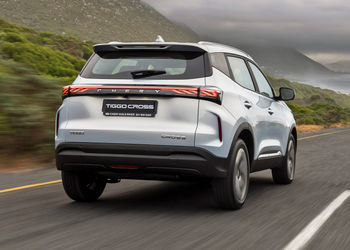
Though there’s also been a marked increase in the popularity of certain Chinese brands (Haval and Chery, in this case), the Polo is facing a threat from a locally produced model, too. Were it not for the KwaZulu-Natal floods that saw Toyota’s Prospecton factory shuttered for months on end, the Corolla Cross – which is larger, more powerful and potentially more fuel efficient in hybrid form, all for very similar money – would surely be ahead at this stage, too. For the record, with 11 912 examples sold so far, the Corolla Cross is just 696 units behind the Polo year to date and looks all but certain to overtake the hatchback by the end of 2022.
Playing in a segment that’s clearly in decline
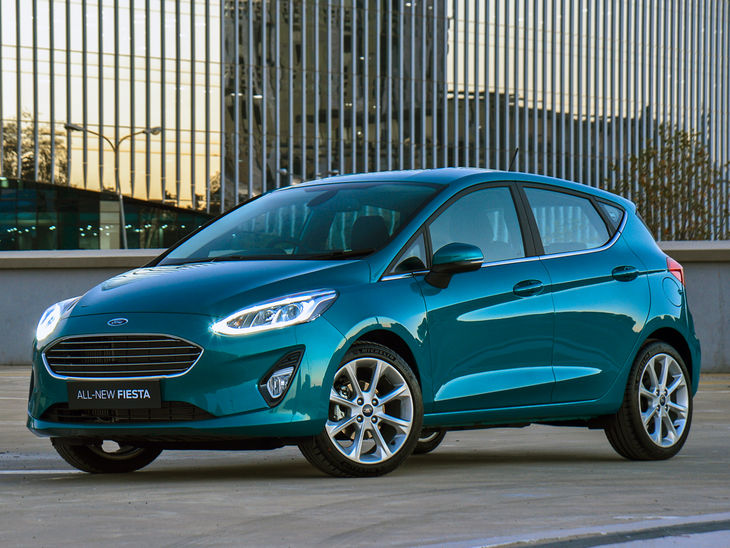
Ford pulled the plug on the Fiesta hatchback in South Africa earlier in 2022.
Of course, there’s also the fact the Polo hatchback finds itself in a sector that’s now in decline, in both local and global terms. Buyers are increasingly turning towards small crossovers at the expense of traditional B-segment hatchbacks. That fact prompted Ford to scrap the Fiesta in South Africa, before the Blue Oval brand confirmed global production would wrap up by mid-2023 as it shifts its focus towards electric vehicles. Nissan South Africa, meanwhile, also opted to axe the Micra earlier this year.
Although the Polo is still the clear volume leader in the local B-segment, sales of rivals such as the Hyundai i20, Kia Rio, Renault Clio and Opel Corsa have also decreased markedly in recent times, with many buyers seemingly migrating towards the aforementioned small crossovers or more budget-friendly hatchbacks from the sub-segment below (think Polo Vivo, Swift and Starlet).
In addition, as colleague Mike Fourie so eloquently pointed out in his 2021 feature, each successive generation of the Polo has brought increased sophistication in order to cater to the European countries to which it is exported. The upshot for South Africans is a higher price-tag, which has gradually diminished the model’s relevance to our more price-sensitive market (for the record, the five-strong Polo hatch range today runs from R329 300 to R514 500).
We saw a similar phenomenon with the Golf, which has evolved to the point that VW now offers only the performance derivatives (the GTI and – in early 2023, if all goes according to plan – the R) of the eighth-generation range in South Africa. The more basic Polo Vivo, though, continues to achieve strong volumes and, with 17 704 year-to-date sales, is on track to at least match its haul of 2021.
What does the future hold for the Polo hatchback?
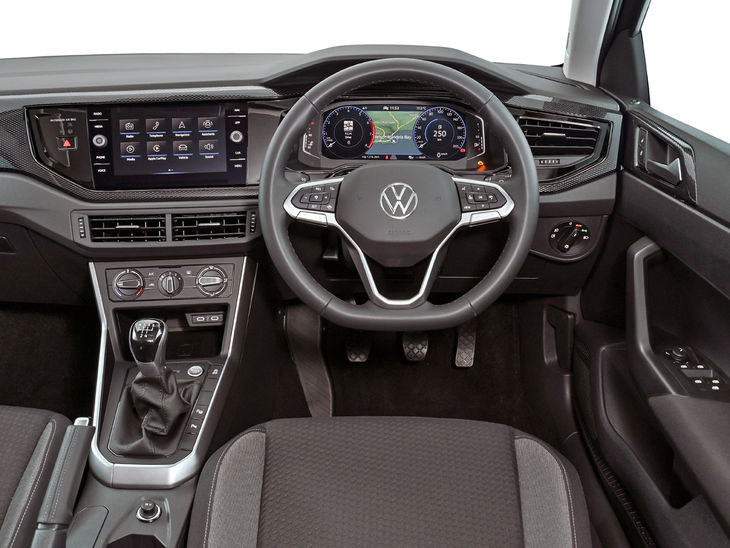
How much longer can the Volkswagen Polo, as we know it, survive?
So, is the clock ticking for the Polo? Though nigh on inconceivable just a few short years ago, it’s now an entirely real consideration. After all, Ford’s decision to discontinue the similarly treasured Fiesta nameplate suggests automakers are being forced to make utterly ruthless business decisions.
Though the Wolfsburg-based firm has yet to explicitly confirm the Polo – which has been the brand’s second most popular model globally for three years running – will see a seventh generation, Martina Biene, newly appointed chairperson and managing director of Volkswagen Group SA, has at least suggested the Polo and Polo Vivo currently built at Kariega “will both remain beyond 2025”.
It remains to be seen whether that means a seventh iteration will indeed see the light of day or whether the current Polo – which debuted as long ago as 2017 before being facelifted in 2021 – will simply have a longer-than-usual shelf life in markets such as ours. South African buyers certainly aren’t averse to prolonged lifecycle models, after all.
How long will VWSA be able to keep exporting to Europe?
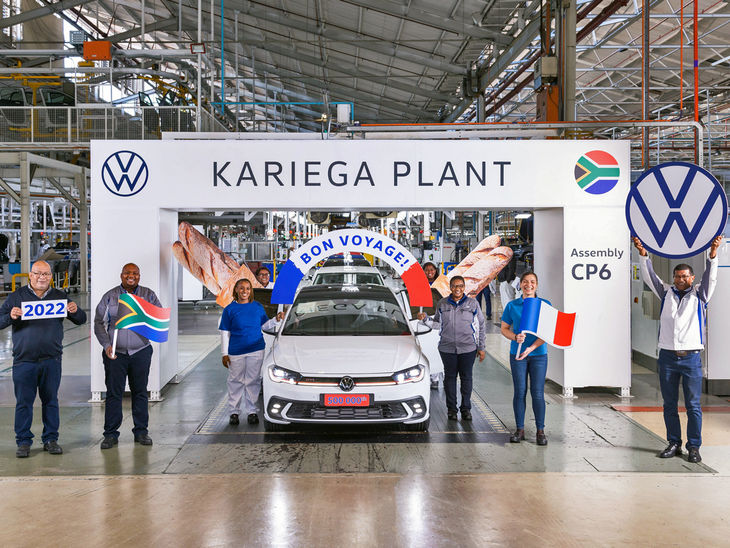
Volkswagen has built more than 500 000 examples of the sixth-gen Polo at Kariega.
Thanks to ever-tightening emissions regulations in Europe – which, we should point out, is the dominant export market for automotive manufacturers in South Africa – demand for the Polo on that continent will continue to dwindle. Building compact petrol-powered vehicles that are compliant is becoming an increasingly expensive (and perhaps even one day relatively soon untenable) exercise. With the related push to go fully electric in certain markets within the next few years, models such as the Polo are on borrowed time.
Despite describing the Polo as South Africa’s “export champion”, Schäfer knows VWSA’s long-term business model must change. In fact, he’s now advocating to “build cars where you sell them”, acknowledging there likely won’t be a market for vehicles such as the Polo in Europe in the relatively near future.
“The proposed Euro 7 regulations [cover] not only emissions, but also safety and cyber security. These three main topics will make vehicles incredibly expensive,” Schäfer explained during a local media briefing. “The regulations will probably add €3 000 or €4 000 easily per car, just for the new technology that you’d need to have in your car. For bigger cars, it’s not really such a big deal, but for smaller cars – so, Polo-sized vehicles – to add that kind of number would make them unaffordable for customers.”
A problem facing SA’s broader vehicle-building industry
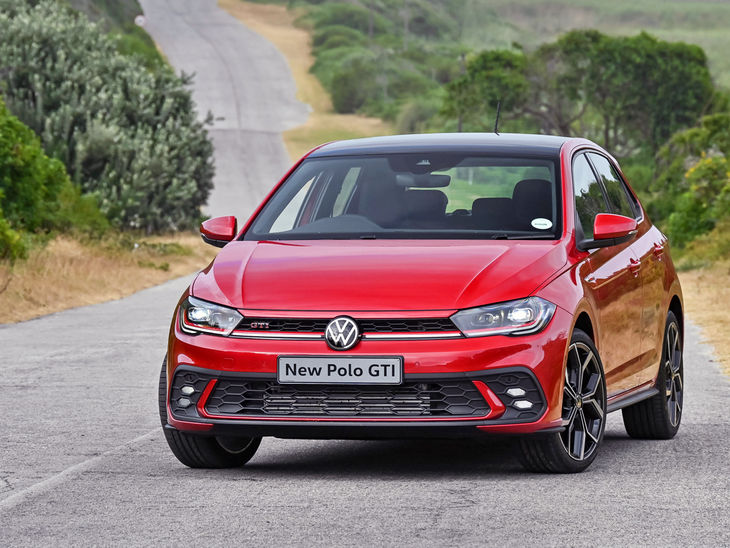
Kariega is the only factory in the world currently building the Volkswagen Polo GTI.
Question is, will there be sufficient demand for the Polo in other regions – such as the rest of Africa – to justify its continued existence? It’s a query that is becoming more pressing by the day.
The answer to that question will have a significant impact on South Africa, since VW’s Kariega facility currently builds the Polo hatch for all right-hand-drive markets (while also supplementing production for left-hand-drive markets) and is the sole producer of the Polo GTI. The factory has been manufacturing Polo models since 1996, with more than one million units exported since 2002.
The situation in major European markets has set up a hurdle facing not just VW but South Africa’s automotive manufacturing industry as a whole, which risks being left behind should it not (with government’s help, we might add) quickly transition to building more so-called new-energy vehicles.
Third model to be built alongside the Polo and Vivo
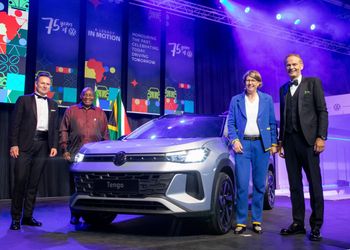
Volkswagen hopes to soon add a third model to its Kariega production line.
Though VWSA knows it has to start producing electric vehicles at some stage, the company’s medium-term solution appears to involve a bid to reduce its reliance on exports to Europe. With a third, as-yet-unidentified (but also MQB-A0-based) model likely to be added to the Kariega production line soon, Volkswagen looks to be hedging its bets. Producing a new “SUV-ish” (in Biene’s words) model that will be exported to emerging markets rather than Europe will potentially afford the plant an opportunity to sustain its current production capacity, without yet switching to battery-powered vehicles.
Right now, a great many of the major export markets serviced by South Africa need electric vehicles, while local buyers are increasingly favouring keenly priced crossovers. Crucially, the Polo – though still an exceedingly accomplished offering – is neither of those things. The new mystery model, however, will theoretically fill one of those gaps (we’re speculating it will be a budget crossover positioned below the T-Cross) and perhaps its very existence will allow the Polo to live on a little longer.
Related content
New vehicle sales in South Africa: October 2022