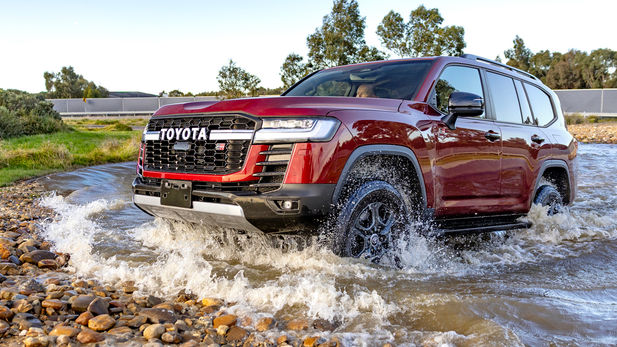
Turbodiesel powertrains have been the traditional choice for top-end Toyota Land Cruisers. Does the new Land Cruiser 300 HEV reshape that decision-making process for South African buyers?
Traditional logic states that, if you buy that costs more than R1 million, it will suffer huge depreciation in the first 3 years. Toyota’s Land Cruiser 300 bucks that trend; it’s one of the most depreciation-resistant luxury cars you can buy.
These vehicles, built on commercial-grade ladder-frame steel chassis, are renowned for their exceptional durability. That’s why there are waiting lists in nearly all global markets that sell the luxury Land Cruiser range.
But even Toyota’s quality-control department can get it wrong. Like the recent widespread recall of Toyota’s 3.5-litre petrol V6 engine (which, in some cases, will require full engine replacement). However, this hiccup appears not to have influenced residual values.
Considering the above, should buyers consider the new HEV version (which uses the same petrol engine), or go for the diesel?
Small, simple battery
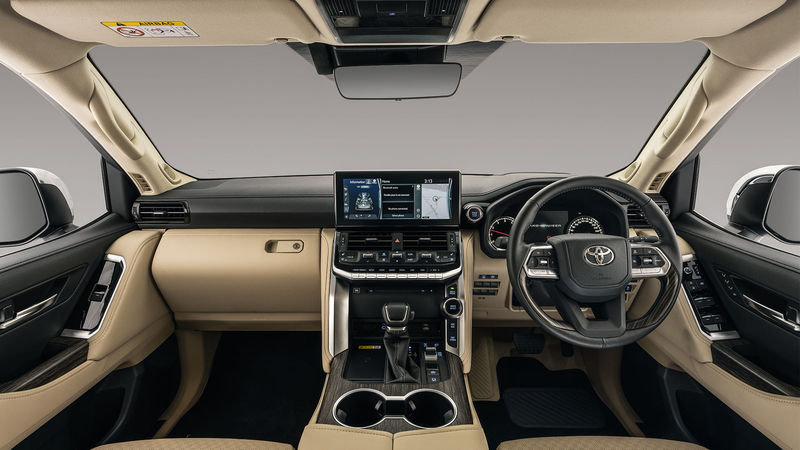
Despite the petrol-powered Land Cruiser undergoing a serious recall, Toyota has decided to introduce the HEV version of the Land Cruiser. It’s important to mention it’s not a PHEV. That means it has a comparatively tiny battery pack functioning predominantly as an emissions-compliance feature for global markets and cities with extremely strict vehicle-emissions taxes. It does have power and efficiency benefits, too, which we’ll get to.
Thankfully, the minute 1.8 kWh nickel-metal hydride (NMH) battery takes up very little space. That’s allowed Toyota to retain the 3rd row of seating. Interestingly, unlike in some global Land Cruiser 300 markets (such as Australia), the SA-spec HEV versions retain the 7-seater configuration (the same story applies to the Lexus LX 700h).
The Land Cruiser 300 HEV also has an indispensable full-size spare wheel – Toyota SA Motors knows its Land Cruiser customers and their needs, particularly off-road, better than anyone.
Search for a Toyota Land Cruiser 300 on Cars.co.za
Roll-on acceleration matters
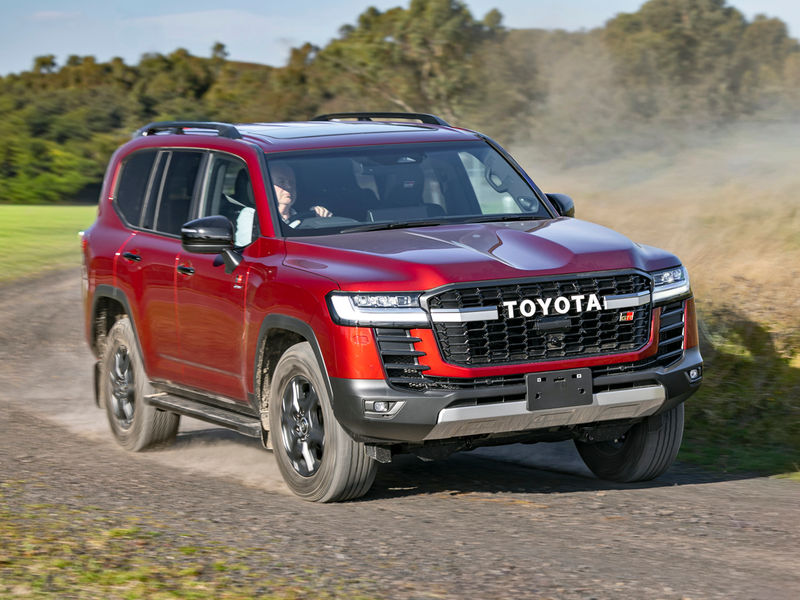
The only vehicle performance statistic that matters in the real world is roll-on acceleration. Standing-start sprints are entertaining, but in-gear punch when overtaking slow trucks in a fully laden SUV makes all the difference.
The Land Cruiser HEV has a peak power output of 341 kW, 36 kW higher than the non-HEV petrol version. It’s also a significant 116 kW more than the most popular Land Cruiser 300 powertrain, the 3.3-litre turbodiesel.
Because the Land Cruiser 300 is such a heavy vehicle, the HEV version’s extra on-demand peak power makes a real difference for safer long-distance driving and overtaking.
Search for a Toyota Land Cruiser 300 on Cars.co.za
Toyota Land Cruiser 300 HEV range
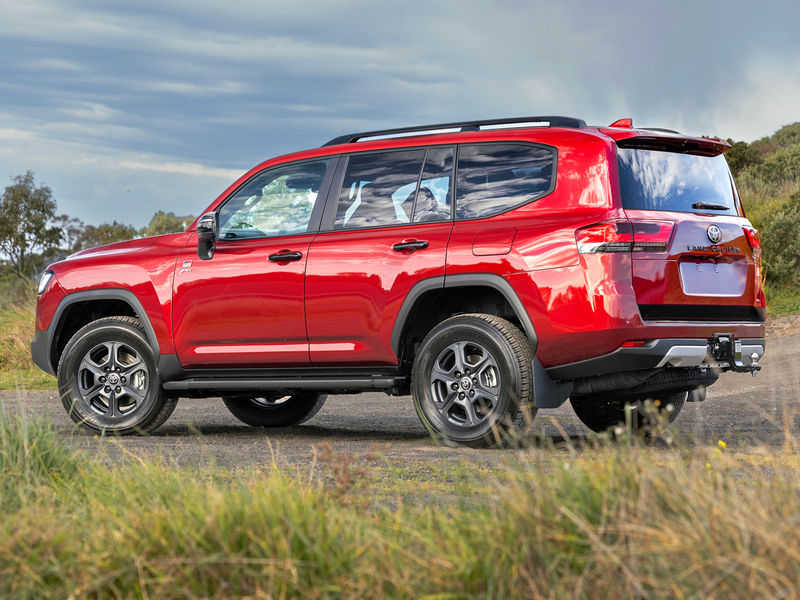
The Land Cruiser 300 HEV is a touch lighter on fuel than the standard 3.5-litre turbopetrol Land Cruiser, using 1.6 litres less per 100 km. But if you want real long-distance driving efficiency and fewer fuel stops, the turbodiesel Land Cruiser 300 is still better.
The diesel model sips 1.1 litres/100 km less than the HEV. And, not only is the diesel engine more efficient, but it draws from a 12-litre larger fuel tank. That makes all the difference when you want to take a spectacular detour to a scenic viewpoint during your 4×4 adventure. Compared to the HEV, the diesel easily adds another 100 km of range.
Ground clearance could be a concern…
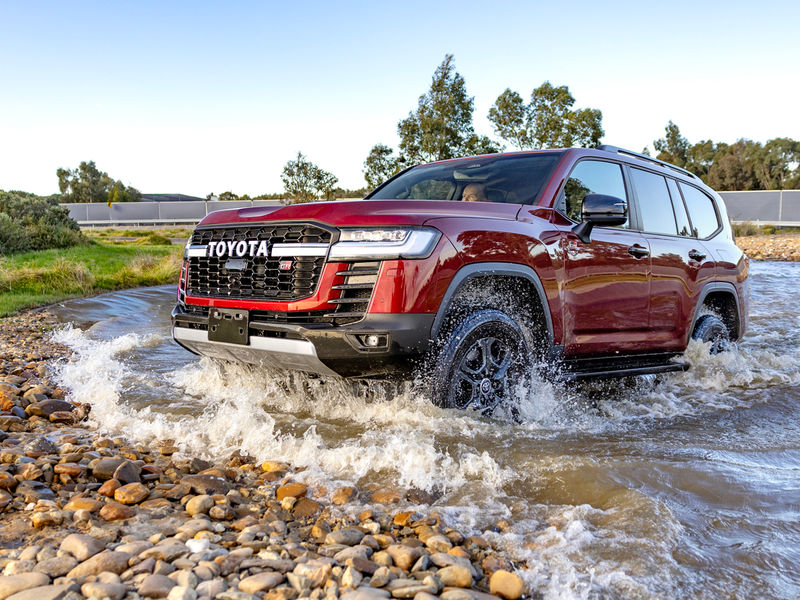
Another technical difference between the HEV and turbodiesel is ground clearance. The former sits 6 mm closer to the ground (234 mm vs 240 mm), which might make a difference in some off-roading scenarios.
However, considering the gains the HEV version makes in power output and rolling acceleration, it seems like the logical choice versus the standard petrol model (although the price difference could be a factor – compare their specs below using our handy tool).
For most Land Cruiser 300 buyers, though, the additional driving range, bigger fuel tank and slightly better off-road clearance will continue to make the diesel engine the first choice.
Compare their specs: Land Cruiser 300 3.3D ZX vs 3.5T ZX vs 3.5T HEV ZX
Lance Branquinho

Lance Branquinho is a Namibian-born writer and photographer who has won numerous motoring journalism awards. He once smuggled parts to South America, in a minor contribution to help Giniel de Villiers finish on the podium at the Dakar. He fears for the eventual collapse of the air-cooled Porsche 911 market – and keenly awaits, in vain, the return of the brand's 928.