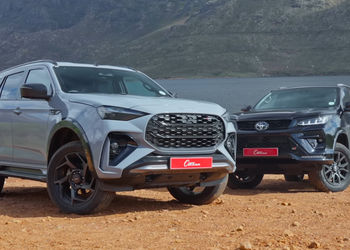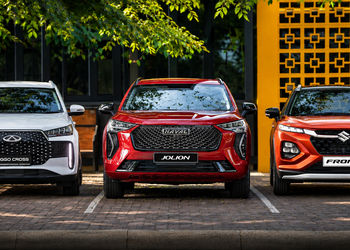
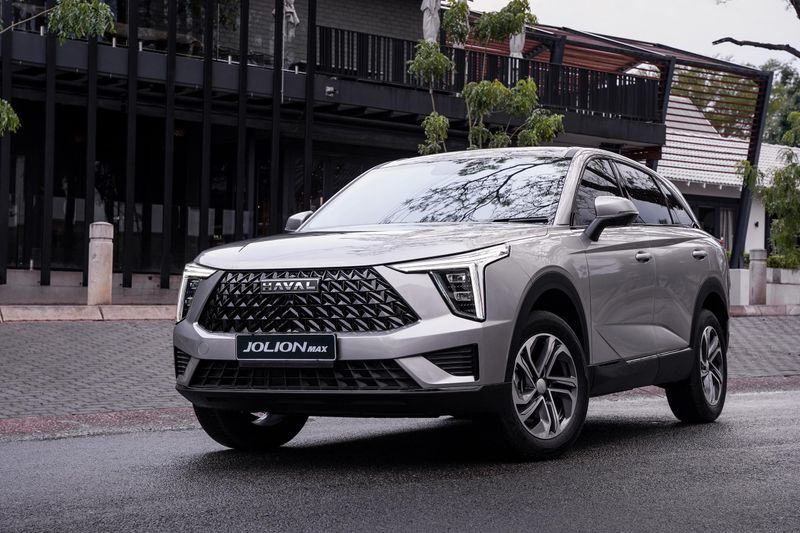
The Haval Jolion Max HEV offers considerably more power than the Toyota Corolla Cross HEV at a lower price. But how do these two hybrid crossovers compare on specification, practicality and ownership costs?
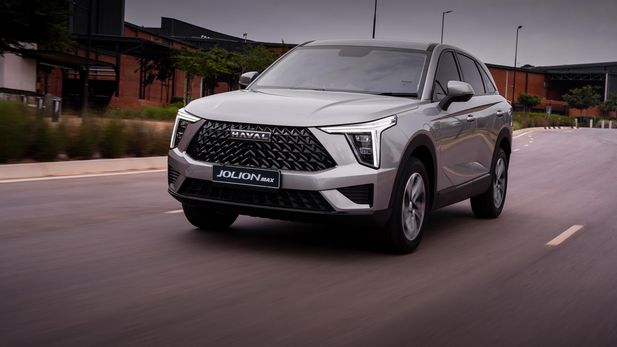
GWM has enjoyed tremendous success with its Haval sub-brand, particularly the Jolion range. Bold styling, generous standard specification and competitive pricing have made the Jolion popular among South African buyers seeking an affordable crossover. And now the range has been expanded further with the introduction of the Haval Jolion Max.
Compared with the Jolion Pro, the Max is approximately 120 mm longer, with a 10 mm longer wheelbase and a 53 mm taller roofline, which should make for a more spacious cabin.
But how does the Haval Jolion Max 1.5T HEV Premium compare with one of its principal rivals, the Toyota Corolla Cross HEV? And does the newcomer offer a more compelling value proposition than its established Japanese competitor?
Turbocharged power vs naturally aspirated efficiency
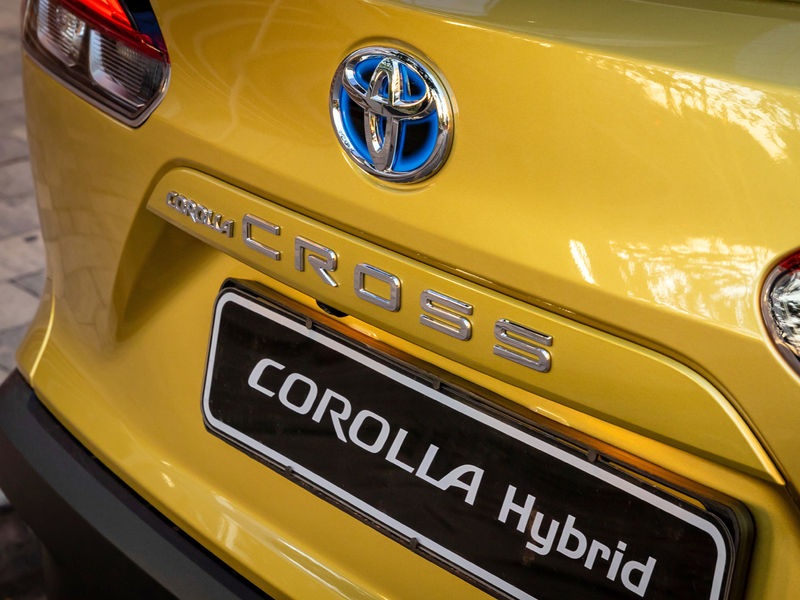
Although the Corolla Cross HEV has a larger-capacity petrol engine than the Jolion Max HEV, the Haval’s turbocharger gives it a significant power advantage.
The Toyota’s 1.8-litre 4-cylinder petrol unit operates on the Atkinson cycle, prioritising efficiency over outright performance, and produces 72 kW. By comparison, the Haval’s 1.5-litre turbopetrol engine develops 110 kW, some 53% more.
That additional power should prove particularly useful when travelling with a fully laden vehicle. Turbocharging also helps compensate for the power losses that naturally aspirated engines experience at higher altitudes, something worth considering for Gauteng-based buyers.
Toyota’s HEV battery upgrade
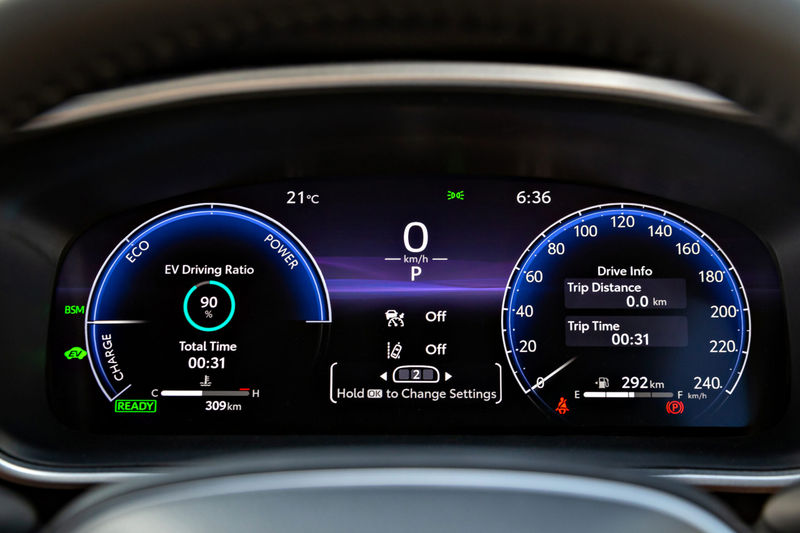
Conventional hybrids feature relatively small battery packs compared with plug-in hybrids (PHEVs). However, their electric motors supplement the petrol engine’s output during acceleration and allow for short periods of electric-only driving under suitable conditions.
The Toyota Corolla Cross HEV features a 1.3 kWh lithium-ion battery pack, which replaced the previous nickel-metal hydride unit as part of the model’s most recent product update. Total system output is rated at 90 kW.
Search for a Toyota Corolla Cross on Cars.co.za
Jolion Max HEV has a significant power advantage
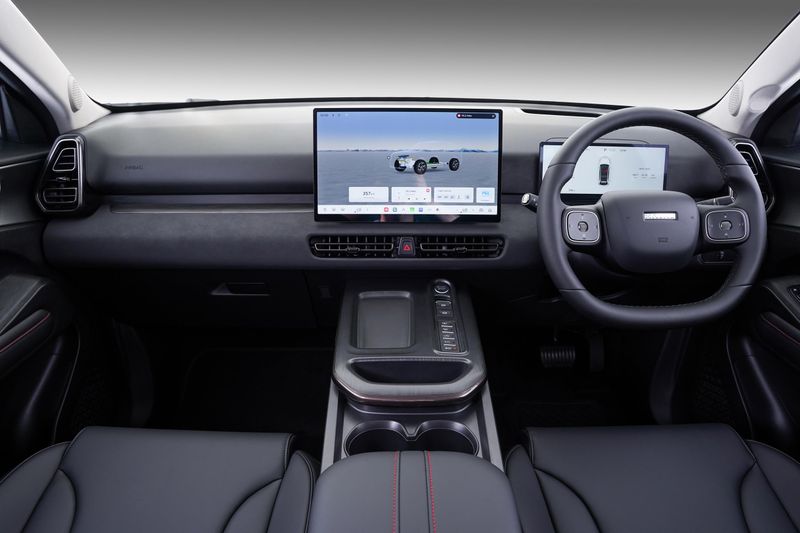
As we discovered during our Haval Jolion Max launch review, the HEV derivative’s performance is one of its standout attributes. Despite featuring a smaller, 1.09 kWh battery pack, the Haval produces a combined 164 kW, which is 82% more than the Toyota.
That additional output should be particularly useful when overtaking slower traffic or tackling steep inclines with passengers and luggage on board.
The two crossovers also differ in their rear suspension configurations. The Jolion Max HEV features an independent multi-link arrangement, whereas the Corolla Cross employs a simpler torsion-beam setup.
A well-tuned multi-link suspension can deliver better ride comfort and wheel control over uneven surfaces, potentially giving the Haval an advantage on poorly maintained roads.
The spare-wheel compromise
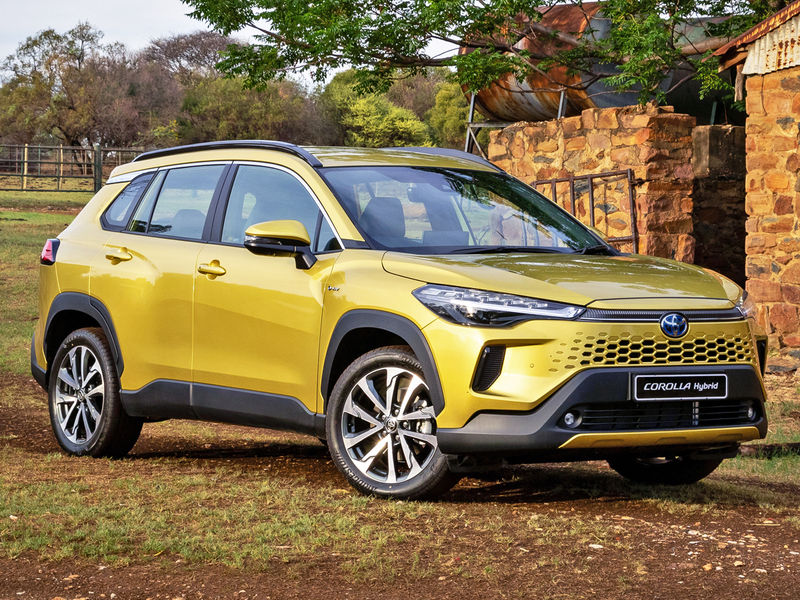
The Corolla Cross HEV is suitable for gravel-road travel, but features only a space-saver spare wheel.
Hybrids are increasingly attractive to South African buyers seeking low fuel consumption without buying a diesel-powered vehicle. However, accommodating both a fuel tank and a hybrid battery pack can introduce packaging compromises, particularly regarding spare-wheel provision.
Given South Africa’s variable road quality and the distances many families travel during holidays, a full-size spare wheel remains a desirable feature. Unfortunately, neither of these hybrid crossovers offers one.
The Jolion Max HEV features a 135/90 R17 space-saver spare wheel, while the Corolla Cross HEV also makes do with a temporary spare. Both are preferable to a puncture-repair kit, but their speed and usage restrictions make them less than ideal for long-distance travel, particularly on gravel roads.
Search for a Haval Jolion on Cars.co.za
Haval Jolion Max HEV vs Toyota Corolla Cross HEV: Key specifications
| Haval Jolion Max 1.5T HEV Premium | Toyota Corolla Cross 1.8 HEV XS | |
|---|---|---|
| Price | R469 900 | R511 200 |
| Petrol engine | 1.5-litre turbo | 1.8-litre naturally aspirated |
| Petrol engine output | 110 kW | 72 kW |
| Total system output | 164 kW | 90 kW |
| Battery capacity | 1.09 kWh | 1.3 kWh |
| Claimed fuel consumption | 4.8 L/100 km | 4.3 L/100 km |
| Rear suspension | Multi-link | Torsion beam |
| Spare wheel | Space-saver | Space-saver |
| Vehicle warranty | 7-year/200 000 km | 3-year/100 000 km |
| Battery warranty | 8-year/150 000 km | 8-year/195 000 km |
| Service plan | 7-year/75 000 km | 6-service/90 000 km |
Which hybrid crossover offers better value?
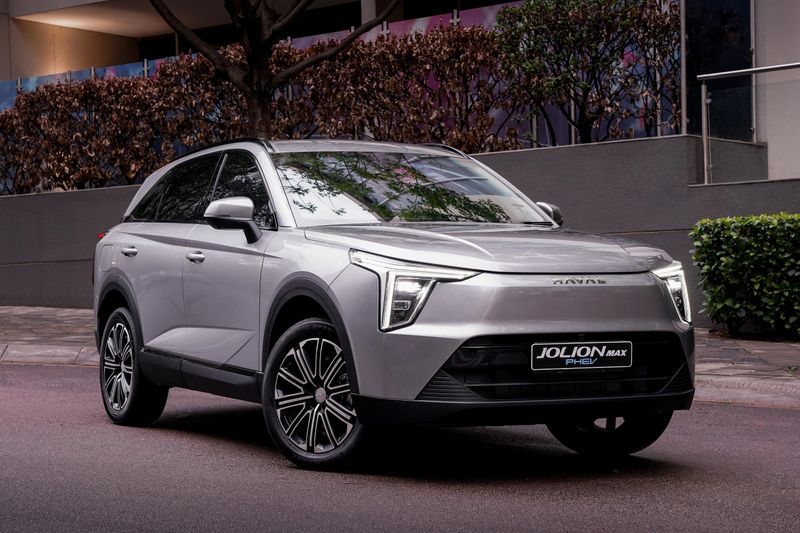
At R469 900, the Haval Jolion Max 1.5T HEV Premium undercuts the most affordable Corolla Cross 1.8 HEV XS by R41 300, despite offering 82% more power. It also boasts a considerably more generous vehicle warranty.
However, Toyota counters with lower claimed fuel consumption and a more comprehensive battery warranty in terms of mileage. As with the rest of the Corolla Cross range, the HEV derivatives also feature a 6-service/90 000 km service plan.
Toyota’s naturally aspirated engine does without the additional complexity of a turbocharger, while the brand’s hybrid technology has a well-established track record. These are considerations for buyers who intend to keep their vehicles well beyond 100 000 km.
Ultimately, the Haval makes a compelling case for itself on price, performance and specification. The Toyota’s strengths lie in its fuel efficiency, established hybrid technology and longer battery warranty in terms of mileage.
Search for a Toyota Corolla Cross on Cars.co.za
Related content:
Haval Jolion Pro Hybrid vs Toyota Corolla Cross Hybrid: What to buy?
Lance Branquinho

Lance Branquinho is a Namibian-born writer and photographer who has won numerous motoring journalism awards. He once smuggled parts to South America, in a minor contribution to help Giniel de Villiers finish on the podium at the Dakar. He fears for the eventual collapse of the air-cooled Porsche 911 market – and keenly awaits, in vain, the return of the brand's 928.