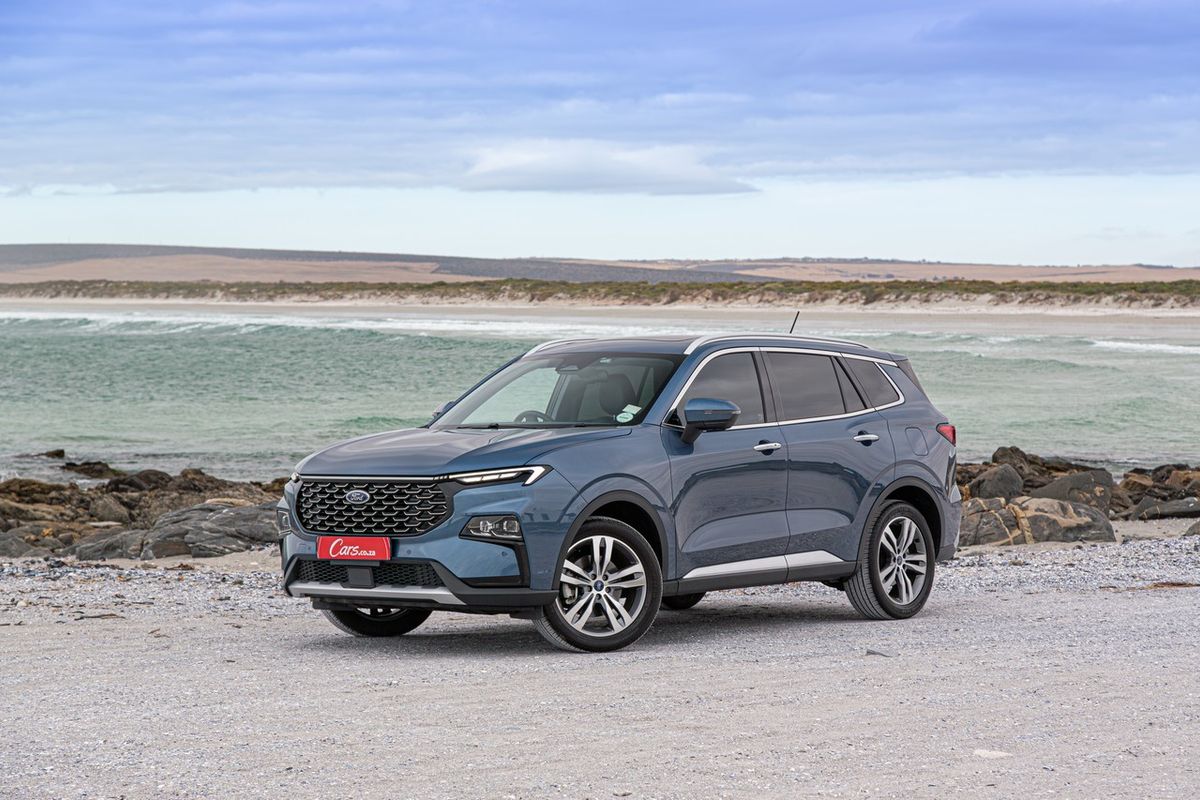
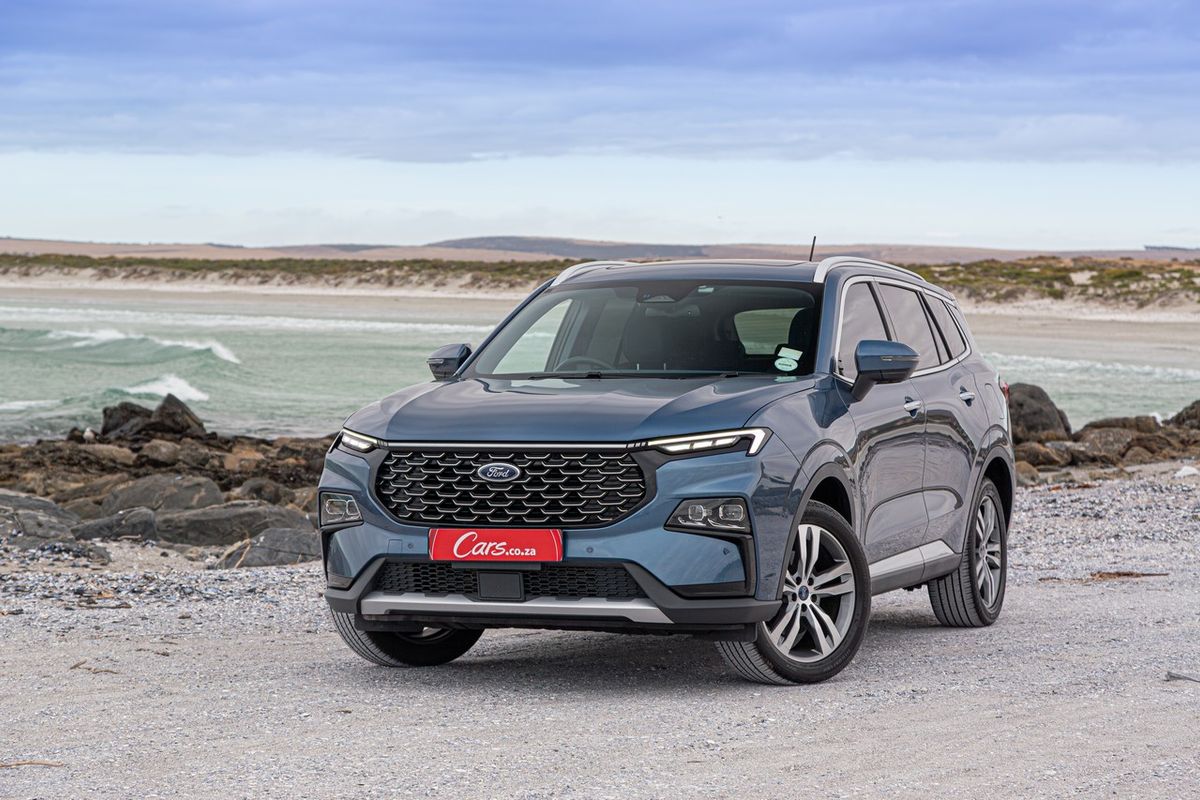
The 1.8T Titanium is the flagship variant of the Ford Territory – the Blue Oval’s latest rival to models such as the VW Tiguan, Kia Sportage, Toyota RAV4 and Haval H6. Does the Ford-JMC collaboration hit the mark? We took it on a road trip to find out.
We like: Refinement, spaciousness, comprehensive list of standard equipment and safety features.
We don’t like: A little on the thirsty side, some minor ergonomic issues, no SYNC4 infotainment system
FAST FACTS
- Model: Ford Territory 1.8T Titanium
- Price: R721 000 (December 2024, before options)
- Engine: 1.8-litre 4-cylinder turbocharged petrol engine
- Transmission: 7-speed dual-clutch transmission
- Power/Torque: 138 kW/318 Nm
- 0-100 kph: NA sec (claimed)
- Claimed fuel consumption: 7.0 L/100 km
- Luggage capacity: 448-1 422 litres
Serious about buying/selling?
Some dealerships regularly offer great deals. See our New Car Specials!
Looking to sell your car? Sell it on Cars.co.za for free
Where does the Ford Territory fit in?
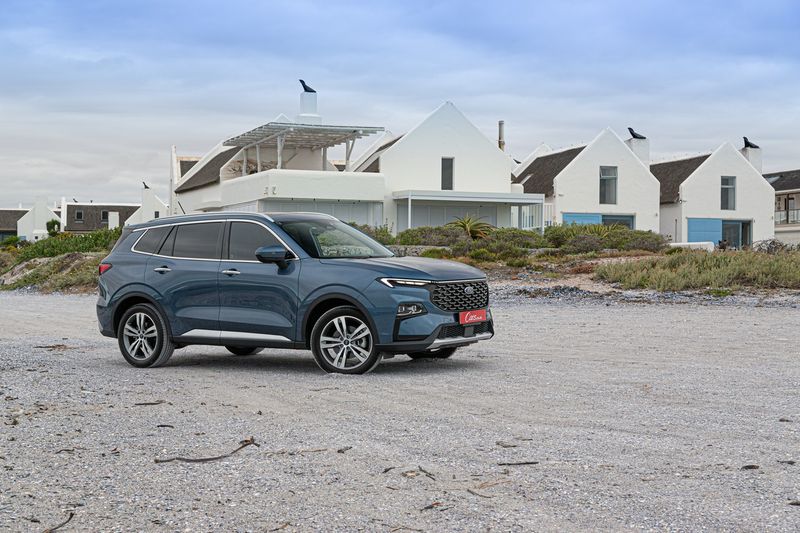
The Territory has an interesting history in South Africa. When it made its local arrival in 2005, the (then Australian-made) SUV featured a 4.0-litre inline-6 petrol engine, but it was only on our market for a few years. Its belated successor is a product of a collaboration between Jiangling Motors Corporation Ltd and Ford, which signed a joint venture in 2018. This 2nd-gen Territory was launched in 2022 and South Africa was the first right-hand drive market to receive the Chinese-built medium SUV (in mid-2024).
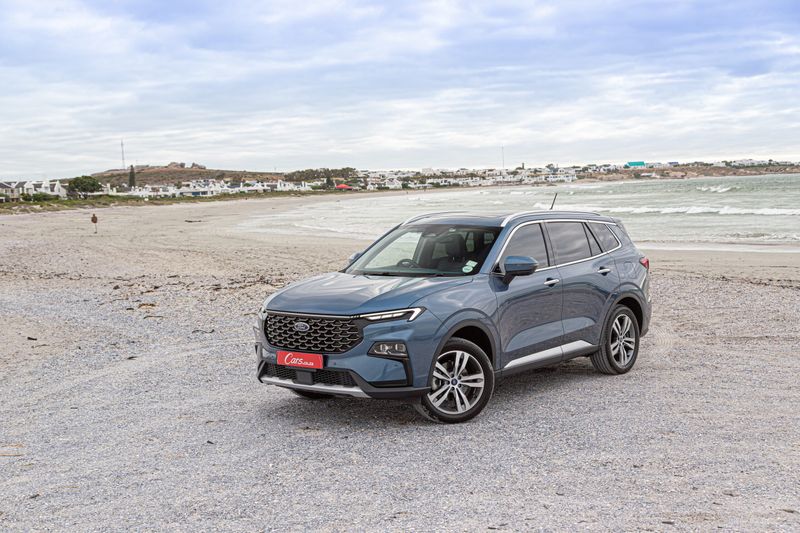
The sharply-styled Ford Territory (of which we review the top-of-the-range 1.8T Titanium here) competes in a congested segment, where Chinese brands have recently relegated legacy products, such as the Volkswagen Tiguan, Toyota RAV4, Kia Sportage, Hyundai Tucson and Mazda CX-5, to minor roles.
Indeed, products like the Haval H6 and Chery Tiggo 7 Pro have stolen more than a few sales from the legacy brands, thanks to modern offerings at an aggressive price. We’ve benchmarked the 1.8 Titanium against the #CarsAwards category-winning Kia Sportage and segment best-seller Chery Tiggo 7 Pro.
Compare the specs of the Territory with those of the Kia Sportage and Chery Tiggo 7 Pro
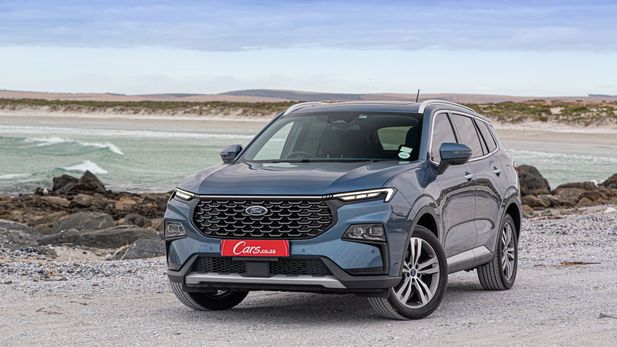
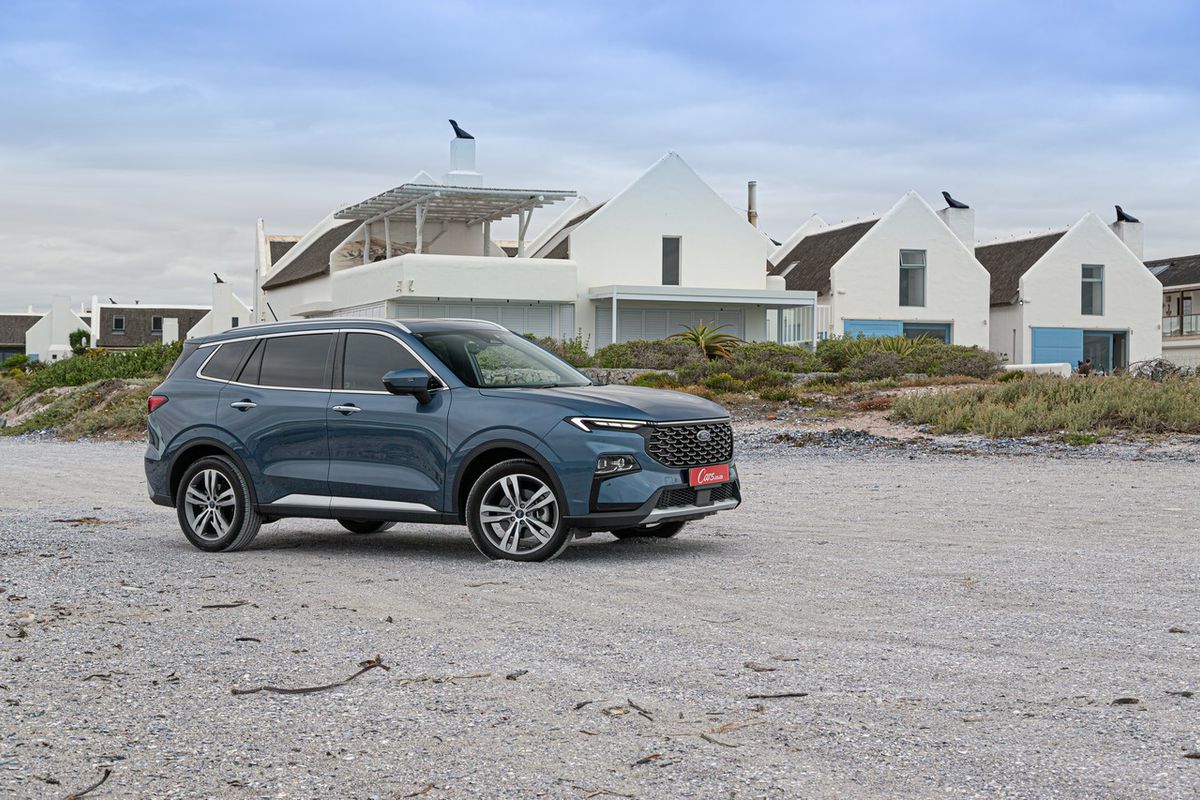
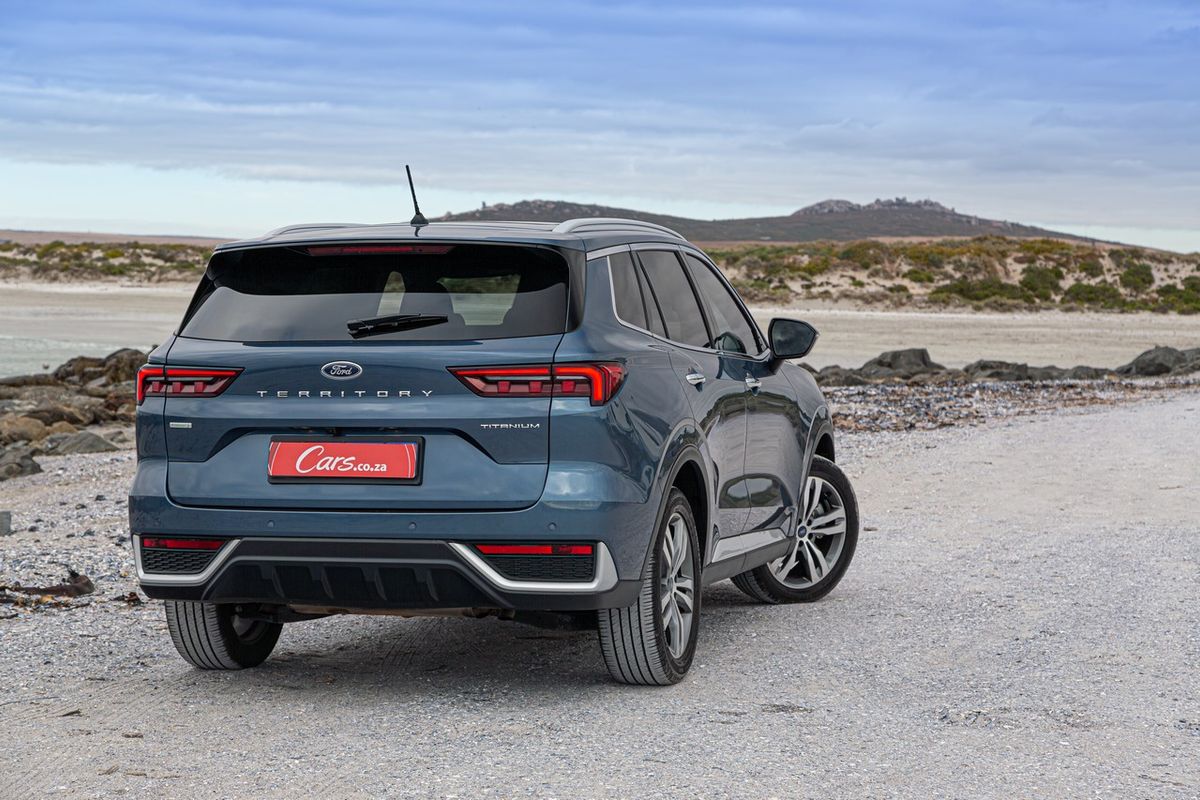
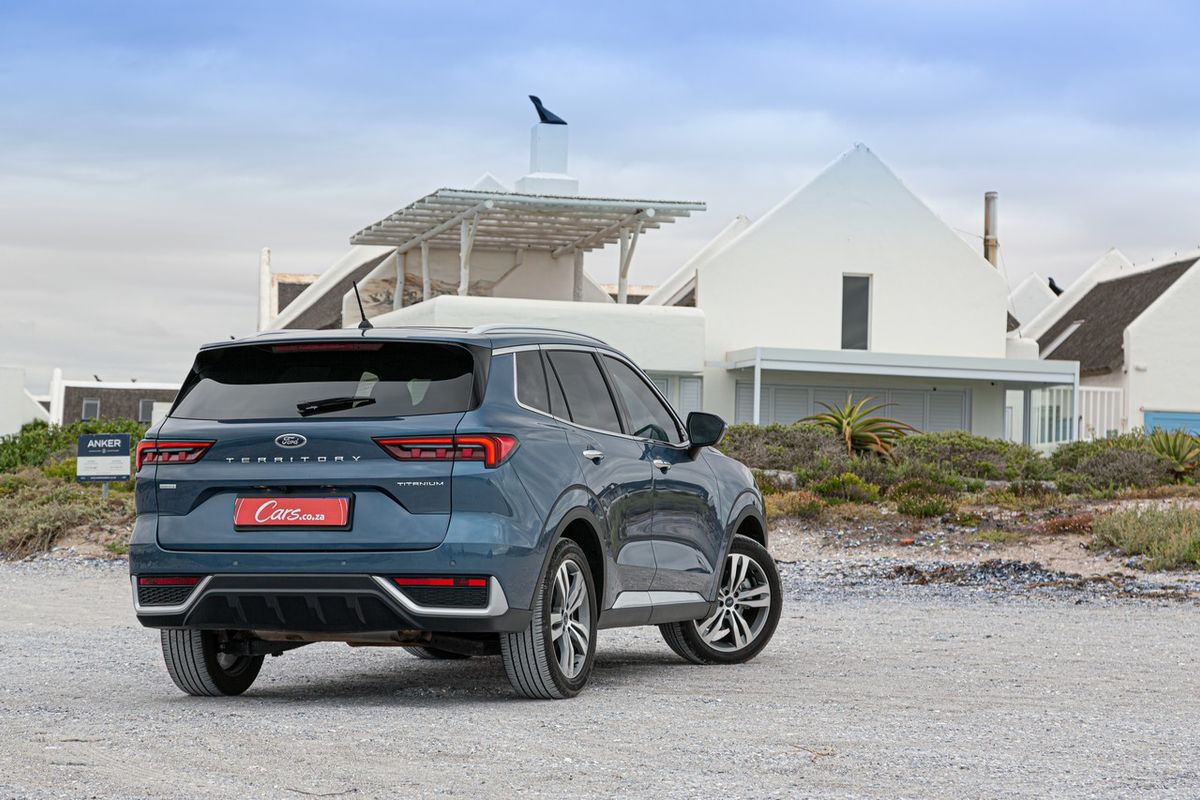
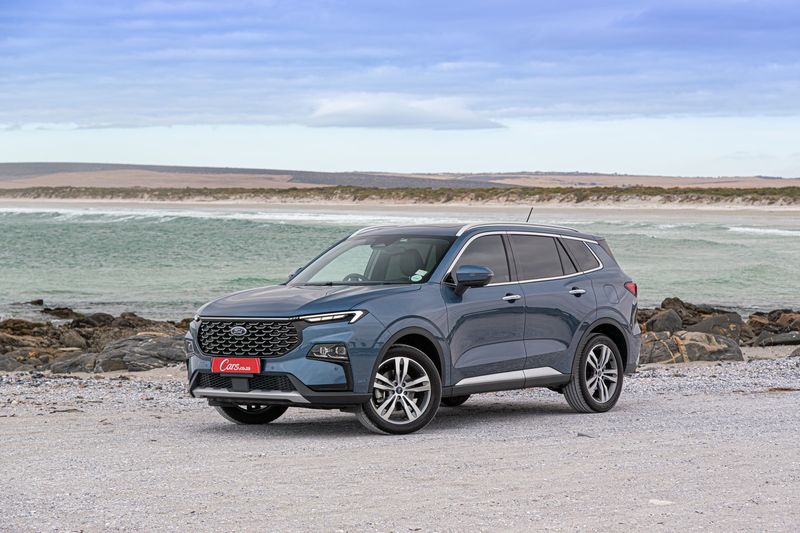
Our week-long review of the Territory culminated in a quick weekend away up the West Coast to the adorable seaside village of Paternoster, where the author took these photos.
How the Ford Territory fares in terms of…
Performance and Efficiency
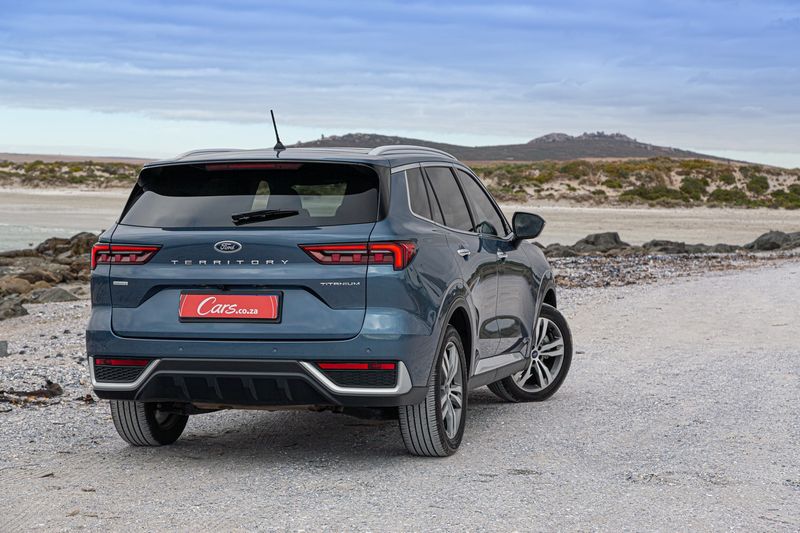
The 1.8-litre 4-cylinder turbopetrol produces 138 kW/318 Nm and drives the front wheels via a 7-speed dual-clutch transmission. With our test equipment plugged in, the Territory posted an 8.45-sec 0–100 kph time (about par for the segment). That said, acceleration runs at full throttle are not what this car was made for – the strained engine note lets you know it’s better suited for cruising comfortably.
To reiterate, the Territory is produced in China and we’ve found that several crossover models that are imported from that market have irregular throttle mapping (it manifests in somewhat jerky responses to accelerator pedal inputs, for example), as well as heavier-than-expected fuel consumption (higher than manufacturers’ claimed figures); in those regards, the Territory performed better than we expected.

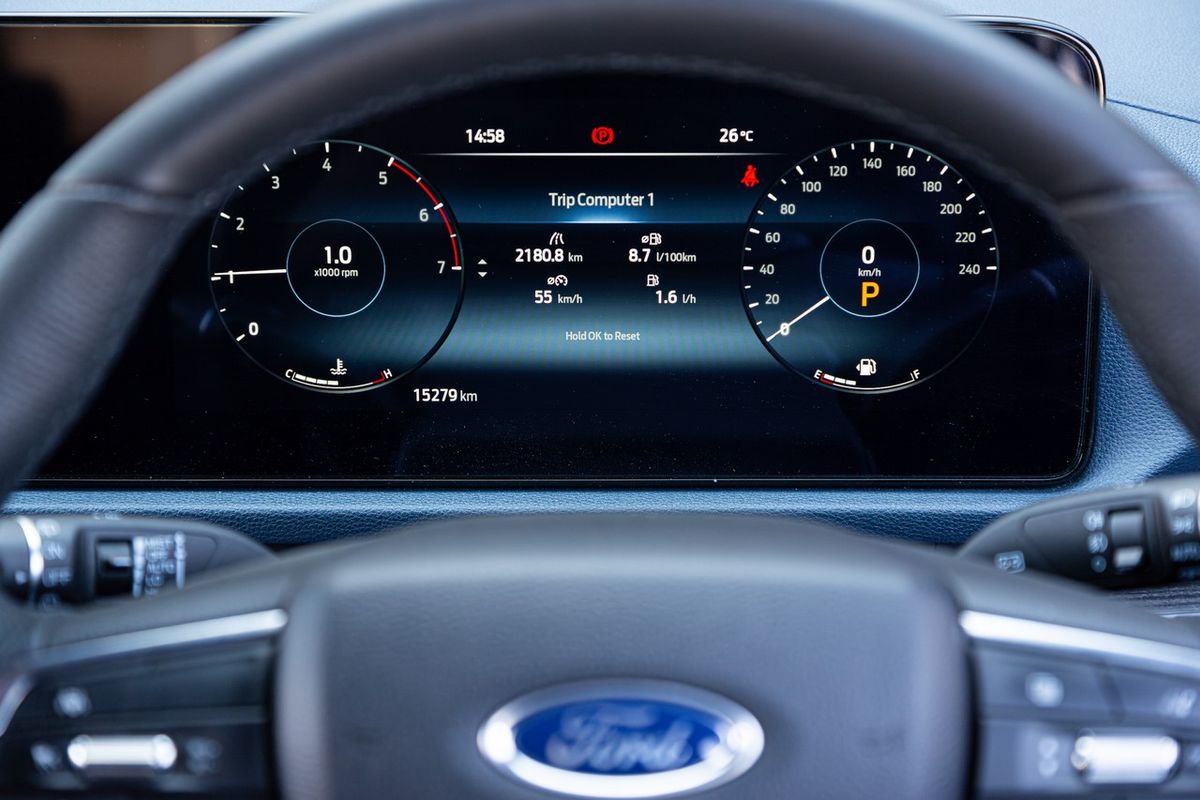
The test unit indicated an average fuel economy figure of 8.7 L/100 km, which was notably higher than Ford’s claimed figure for this model (7 L/100 km), but not a dismal return. When we utilised the Eco drive mode (while driving on the open road for an extended stint), however, the indicated consumption went down to 7.9 L/100 km. With the 60-litre fuel tank, you should achieve about 800 km between fill-ups.
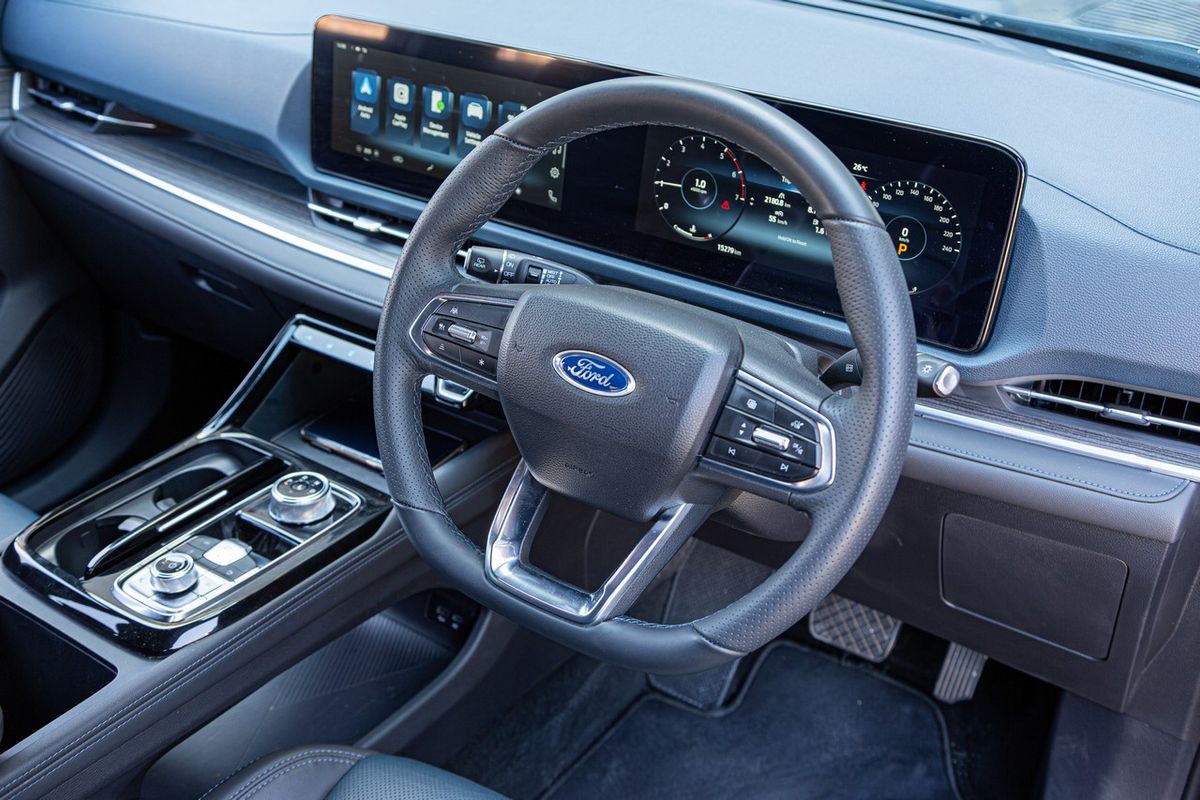
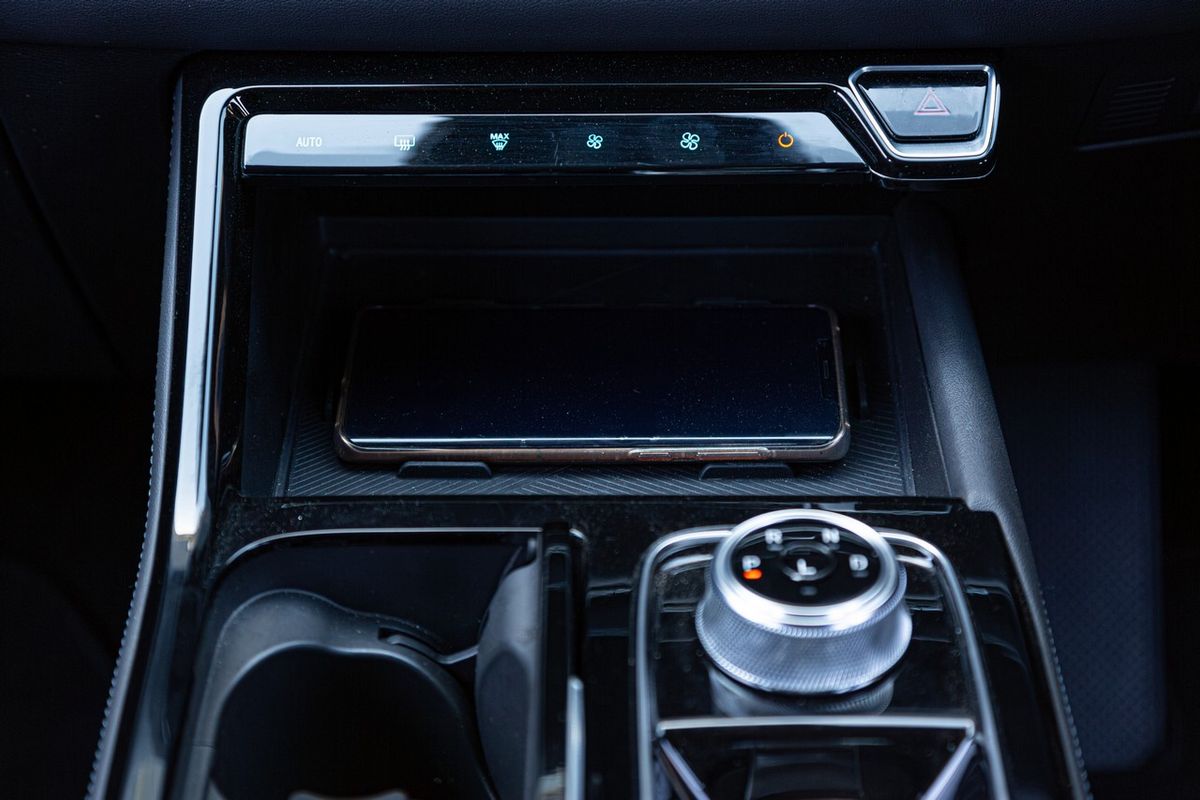
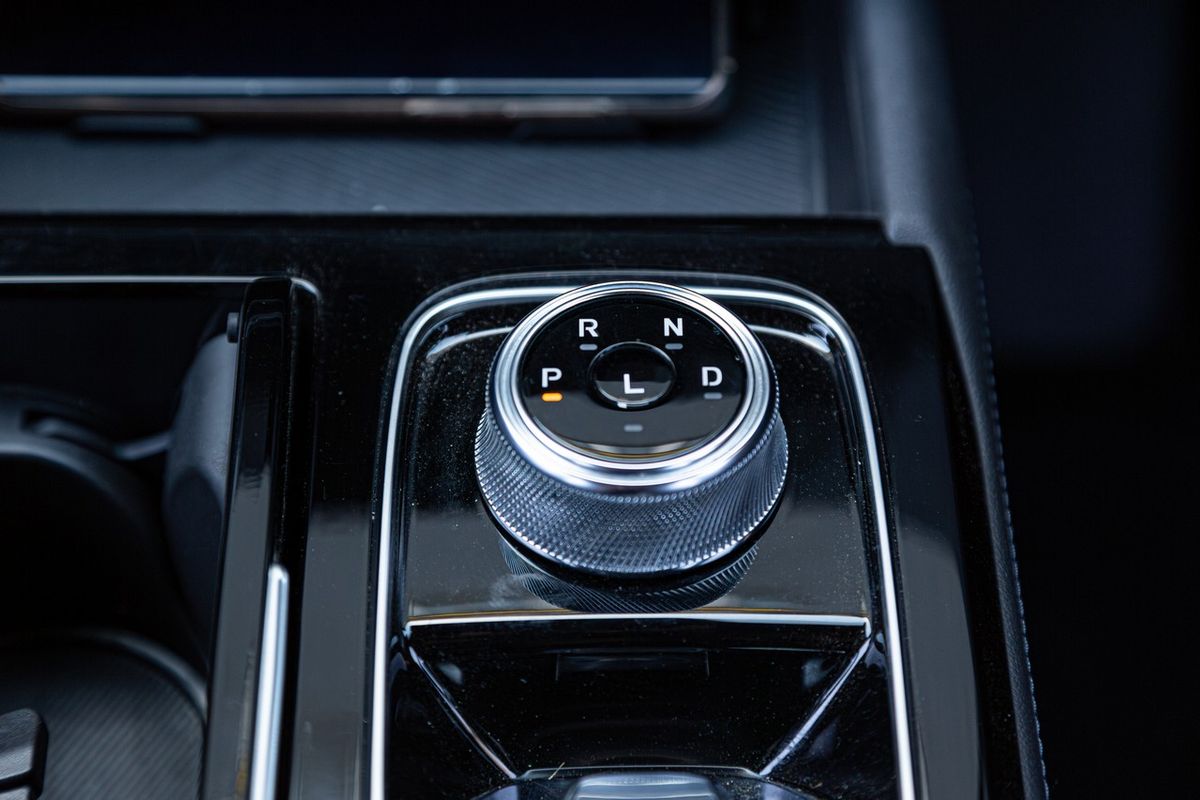
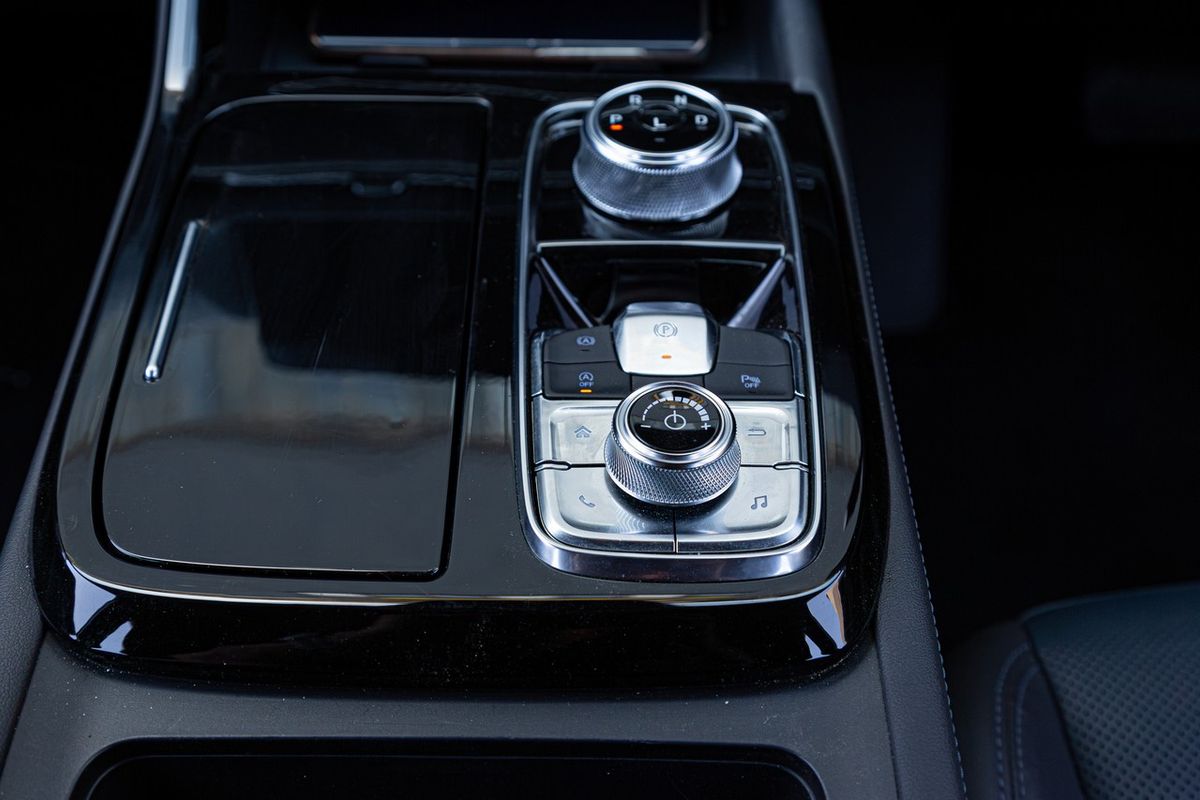
The circular transmission selector is neat (not unlike those on JLR models) and we appreciate that it takes up little space on the centre console. Simply switch on the car, rotate the dial to D, and off you go.
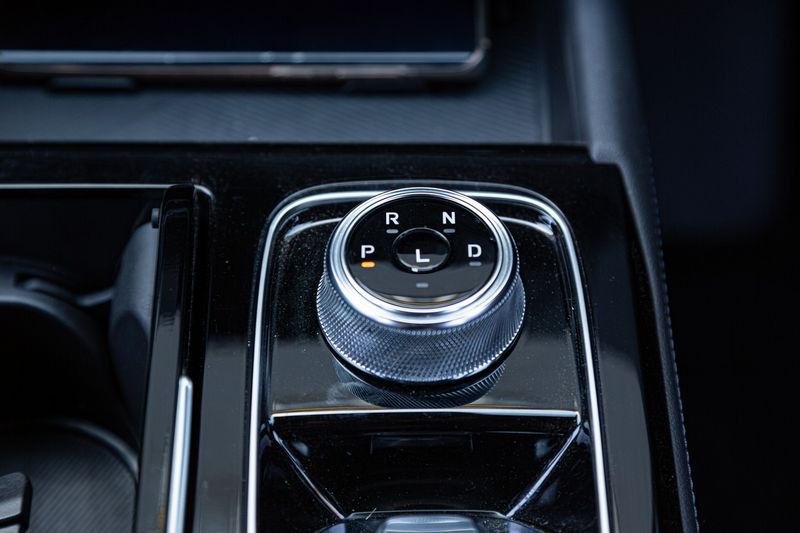
There’s no manual override mode or gearshift paddles, but that’s okay as the drivetrain calibration is good – you experience fewer sudden lurches from pull-aways as you do in other Chinese-made models.
The chief benefit of this powertrain configuration – a turbocharged powerplant with a quick-shifting dual-clutch ‘box – is excellent responsiveness. Irrespective of which drive mode you’ve engaged, the 1.8 Titanium will respond to accelerator inputs almost instantaneously, surge forward positively and, with plenty of torque available from low revs (the peak from 1 750-3 000 rpm) in-gear acceleration is eager.
Features and Practicality
Ford has kept the 2nd-gen Territory line-up simple: 3 derivatives that use the same powertrain, with the key differences being the level of standard equipment offered. The 1.8 Titanium is the flagship, and in terms of features, it’s easier to list what’s not fitted and that’s heated seats plus satellite navigation.
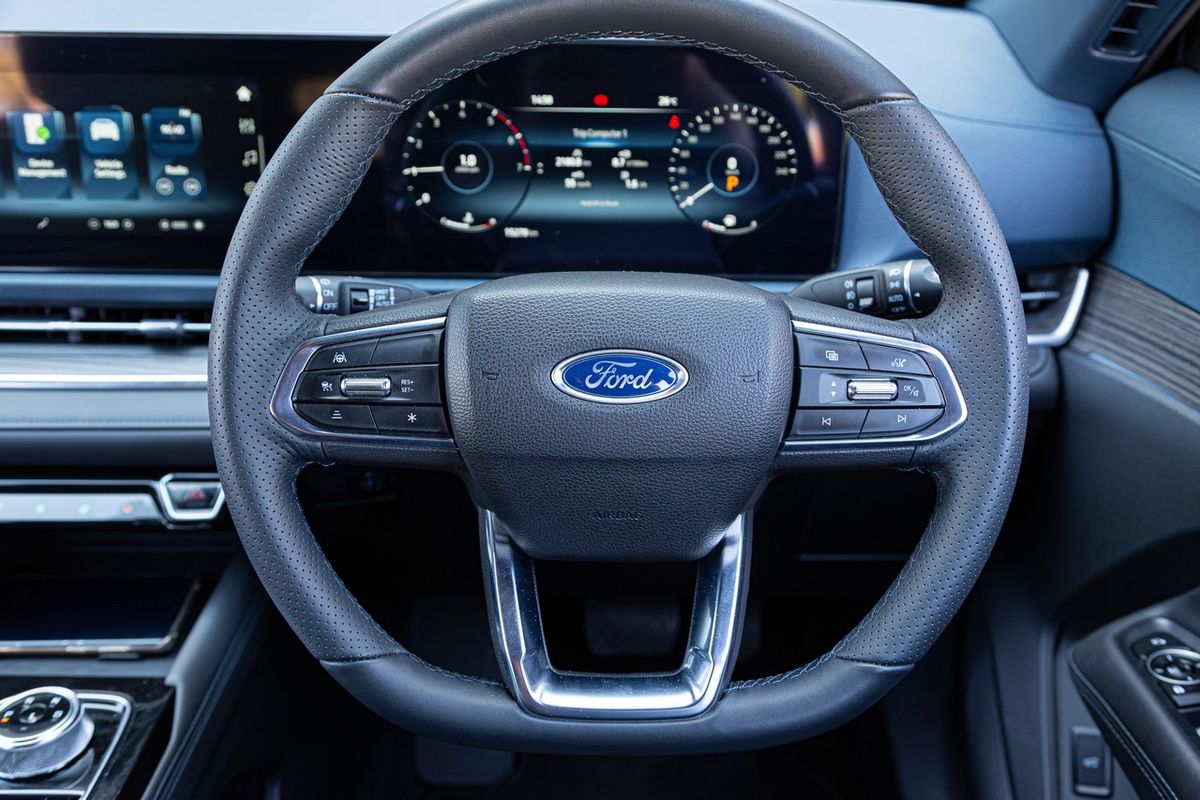
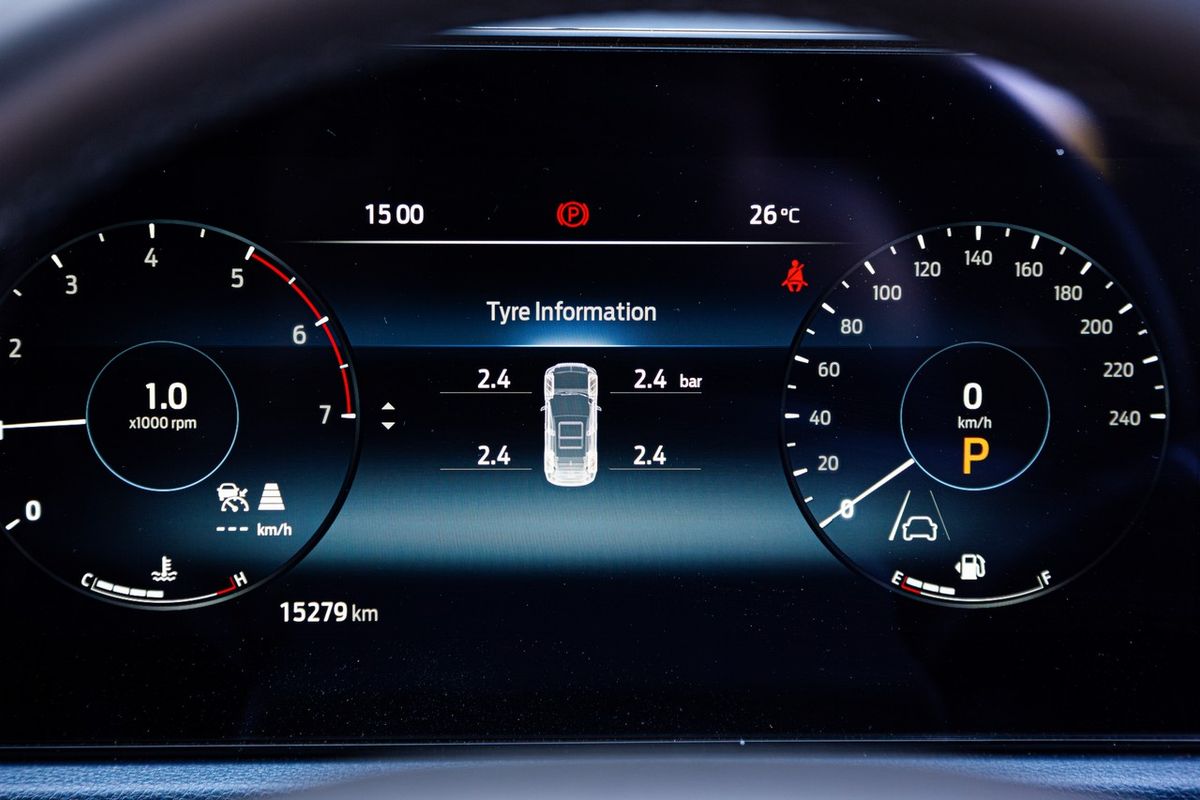
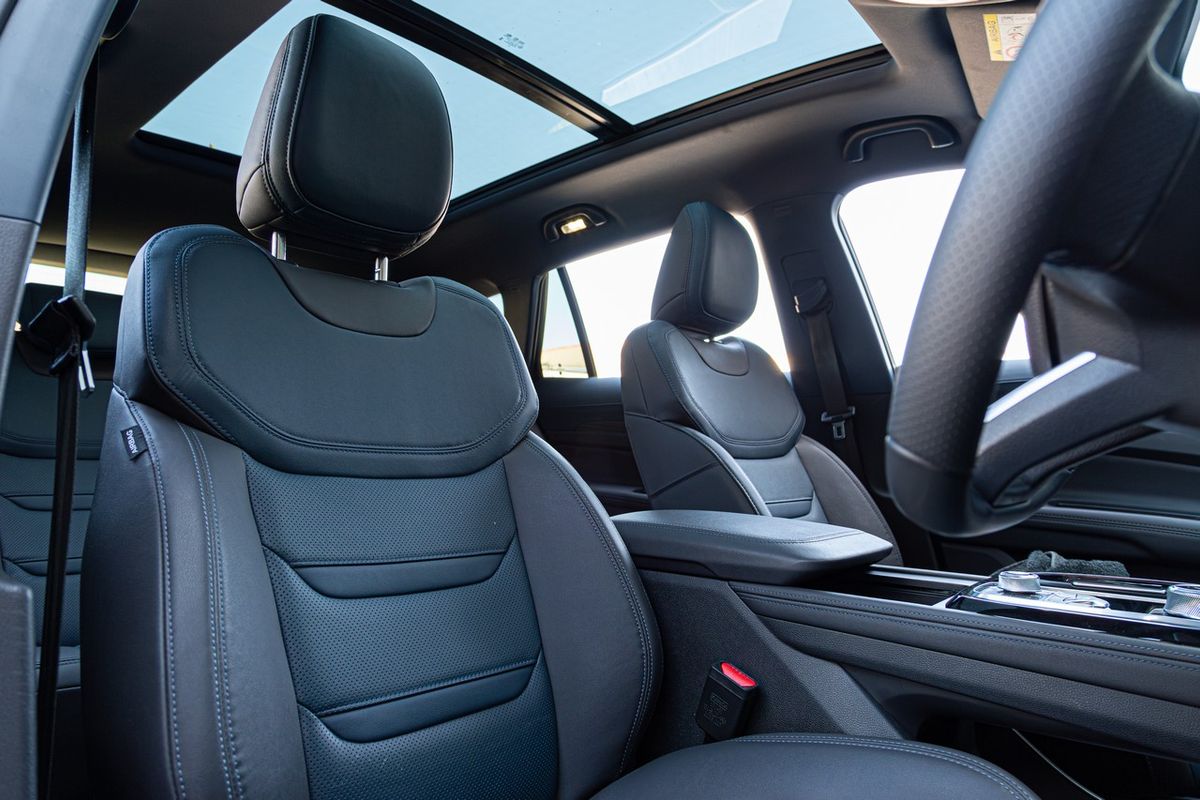
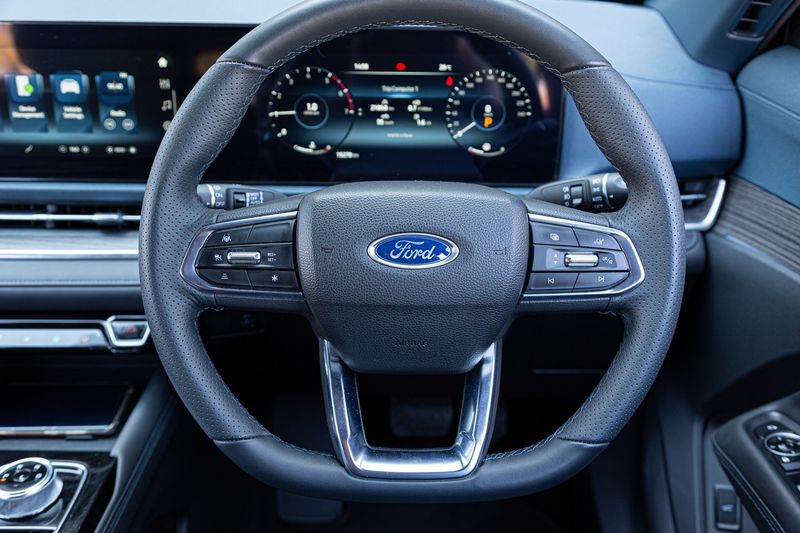
Titanium trim adds a panoramic sunroof, a 12.3-inch digital instrument cluster (lesser derivatives have analogue dials), leather trim and an 8-speaker audio system (other Territory variants have 6 speakers).
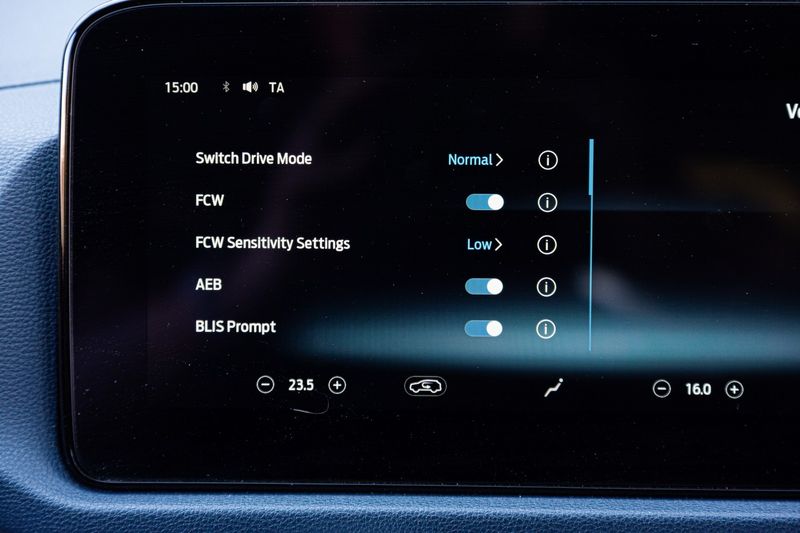
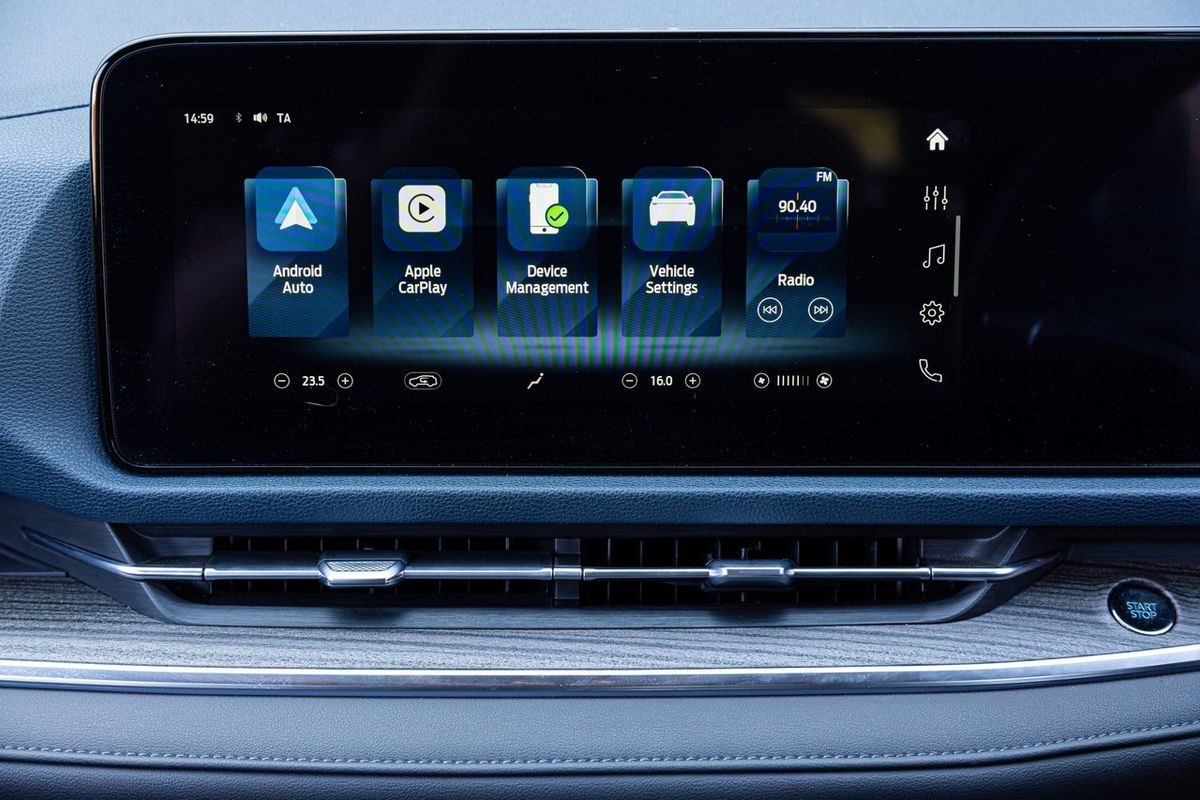
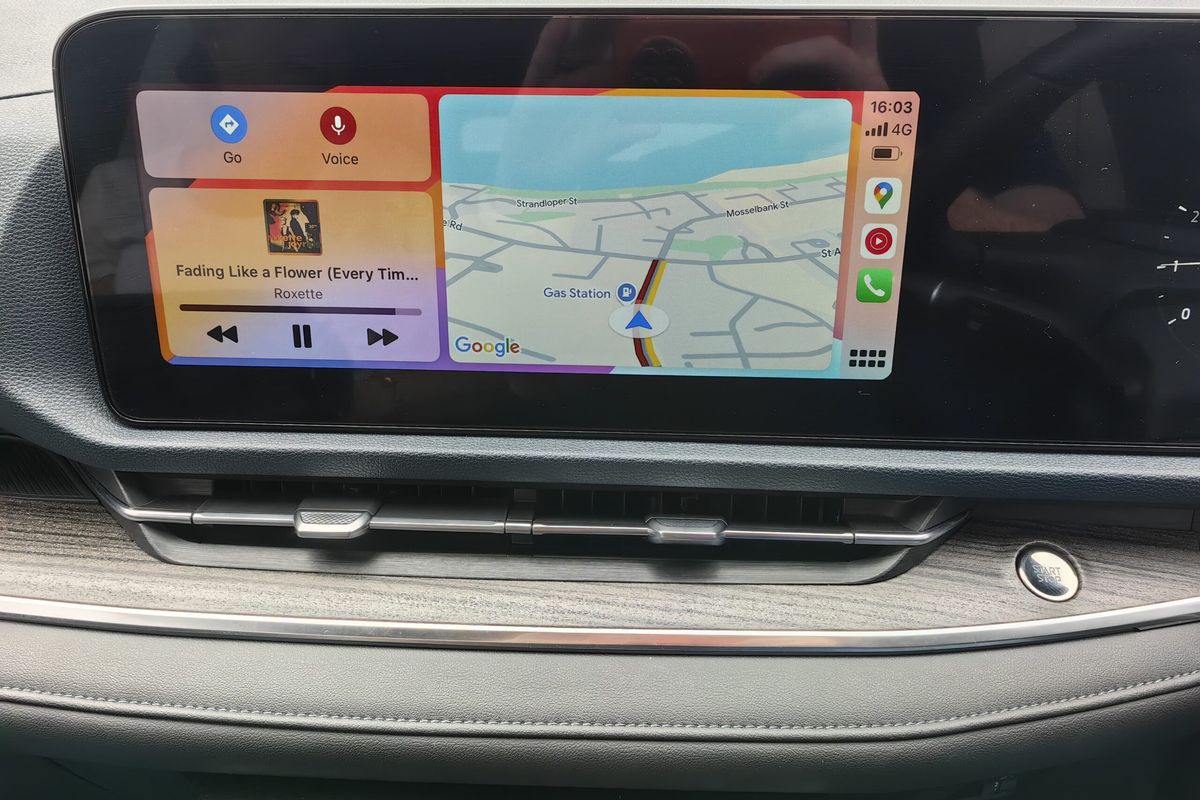
On the tech front, the car has a wireless charging pad and supports wireless Apple CarPlay and Android Auto (so the absence of satnav is no big loss – there are apps for that – unless you’re in a remote area).
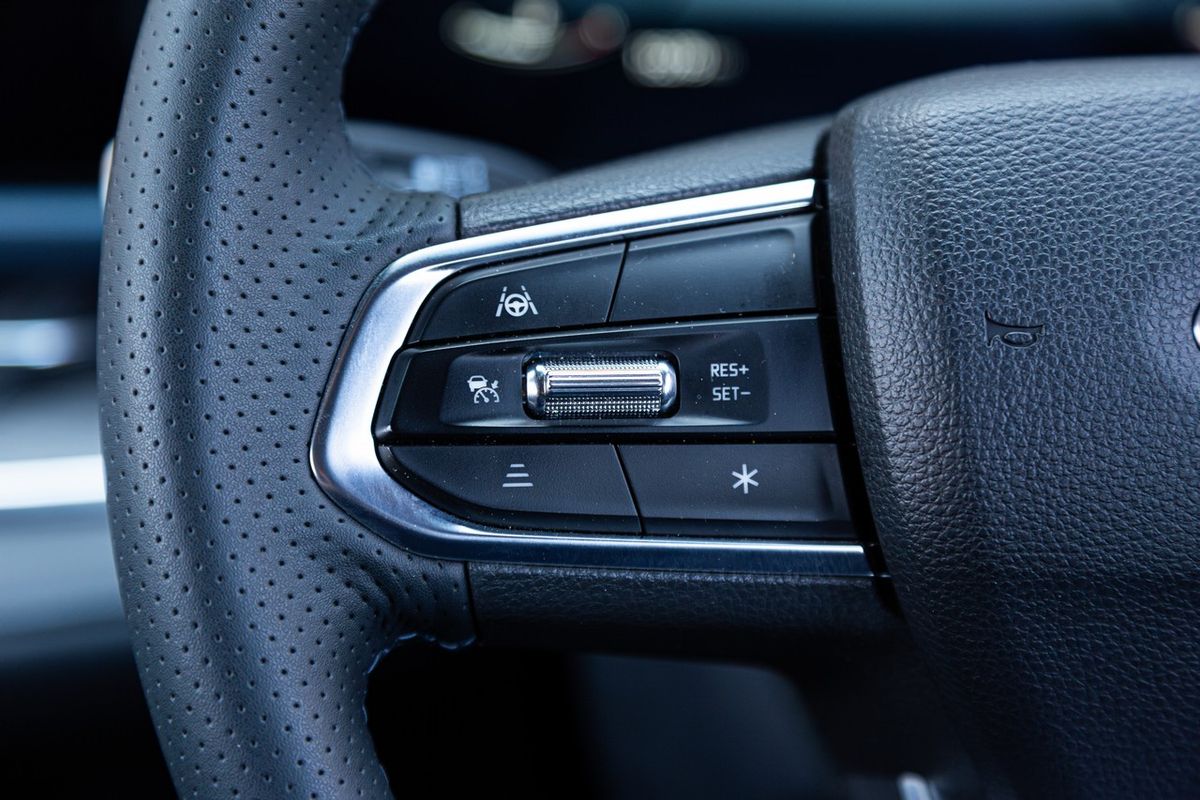
The biggest enhancement that distinguishes the 1.8 Titanium from its lesser siblings (in our book, anyway) is the provision of semi-autonomous (advanced driver-assistance system) safety technologies, such as adaptive cruise control, automatic emergency braking, blind-spot monitoring, rear cross-traffic alert, lane-keep assist, and forward collision warning (with pedestrian detection) – they’re big pluses.
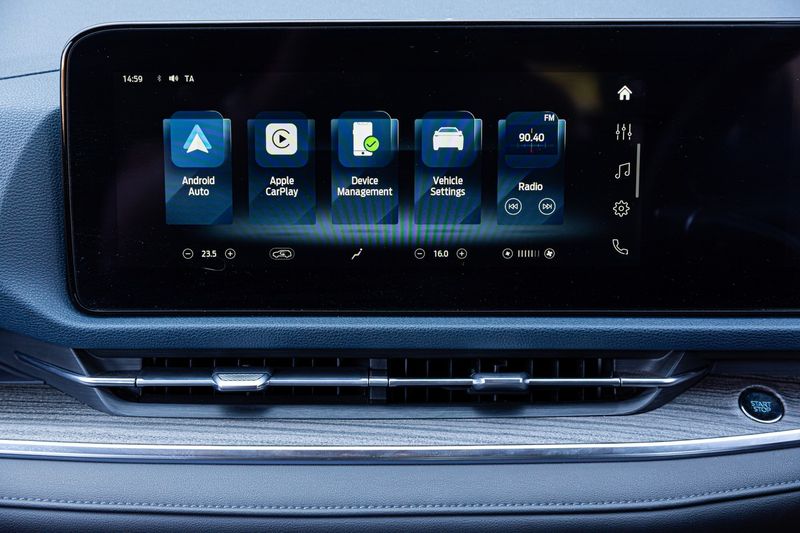
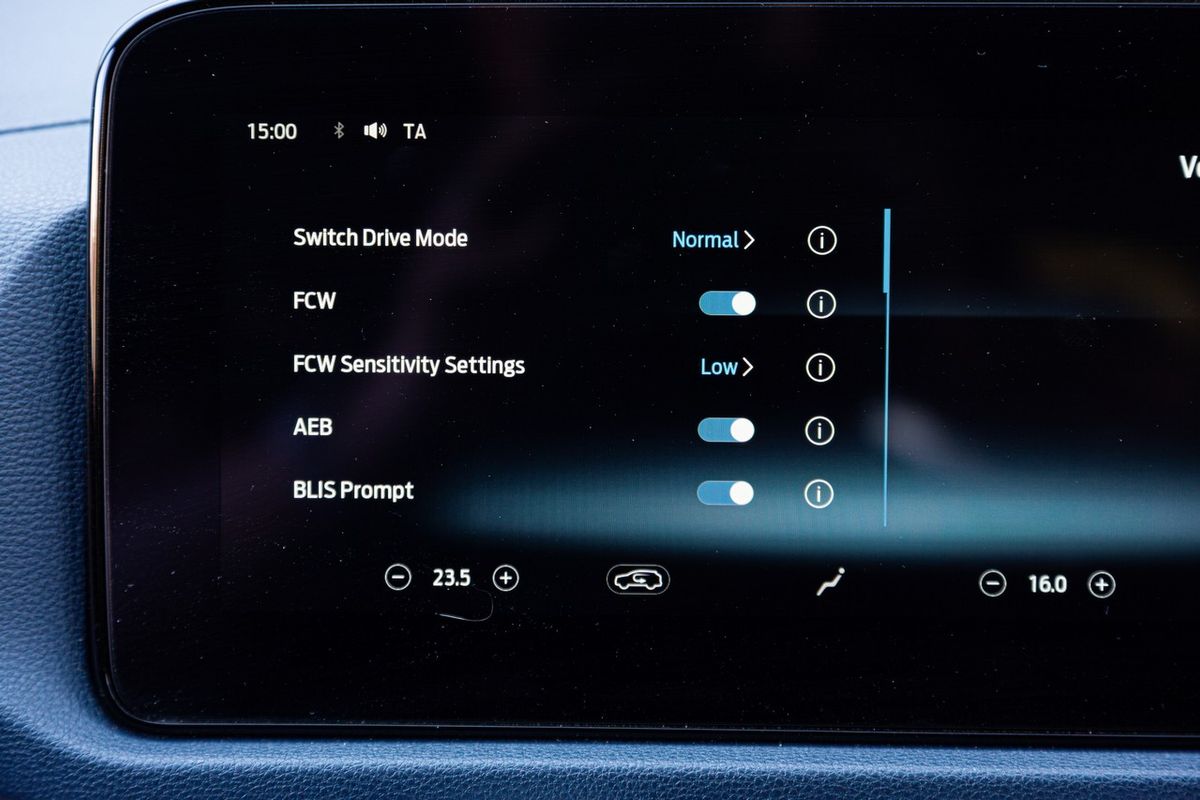
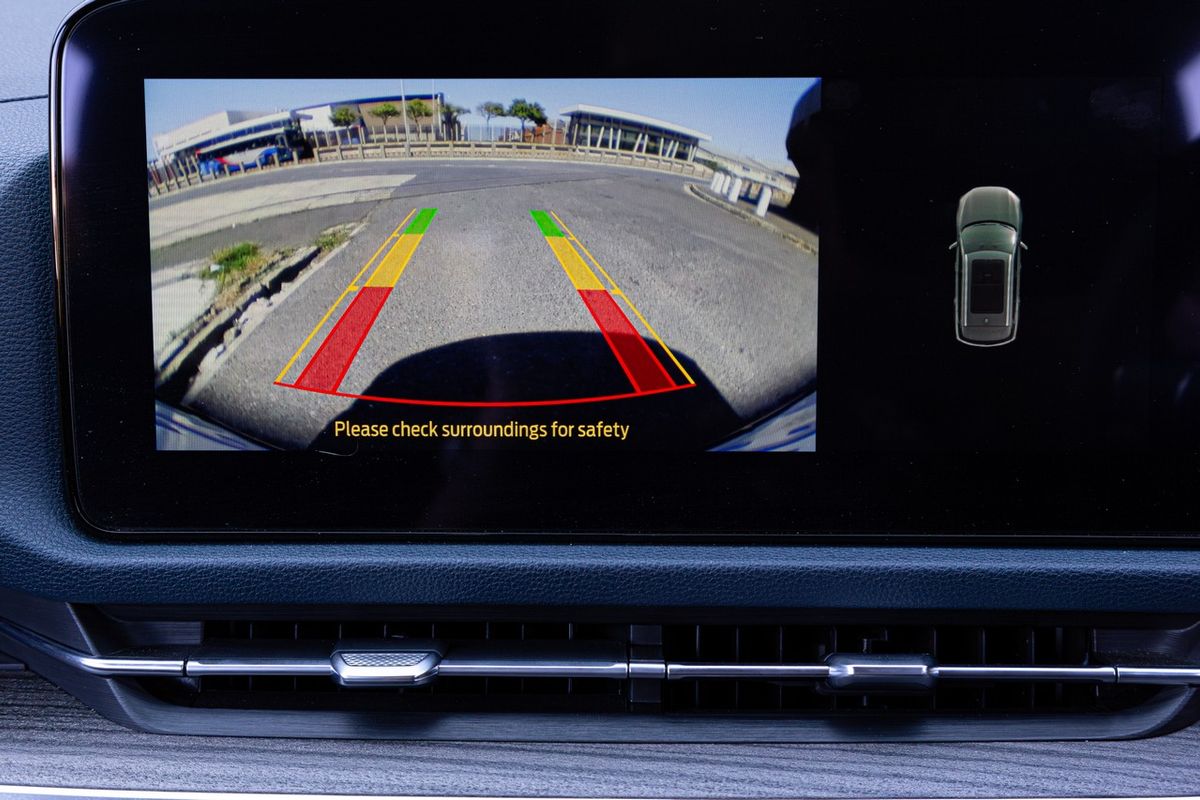
There aren’t major criticisms. Because we evaluate and assess almost every passenger vehicle on the market, we have plenty of experience with Ford’s SYNC system, particularly the SYNC3 of the Puma and SYNC4 of the Ranger. It’s excellent, but sadly, the Territory relies on JMC’s infotainment system instead.
Yes, it functions well enough and yes, the 12.3-inch screen’s display quality is great, but it cannot match Ford’s proprietary SYNC platform for sheer user-friendliness and intuitive, fuss-free user experience.
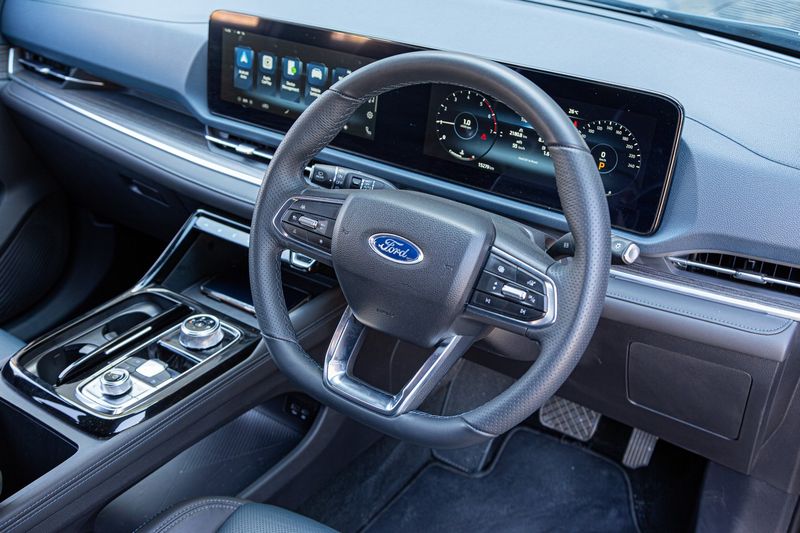
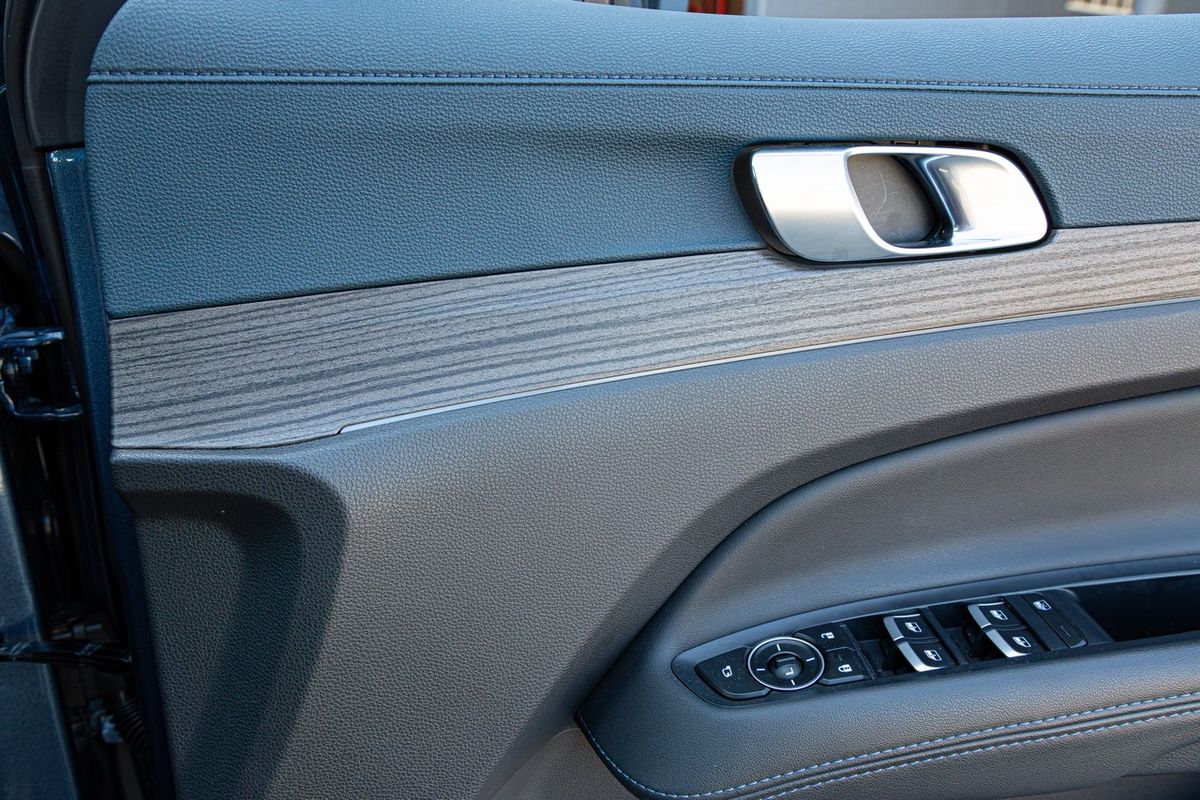
The cabin layout is ergonomically sound, build quality is appropriate for this price point and there’s a good blend of hard and soft-touch plastics. Plus, importantly, the test unit emitted virtually no rattles or squeaks during its tenure in our test fleet, during which time it clocked up quite a few kilometres.
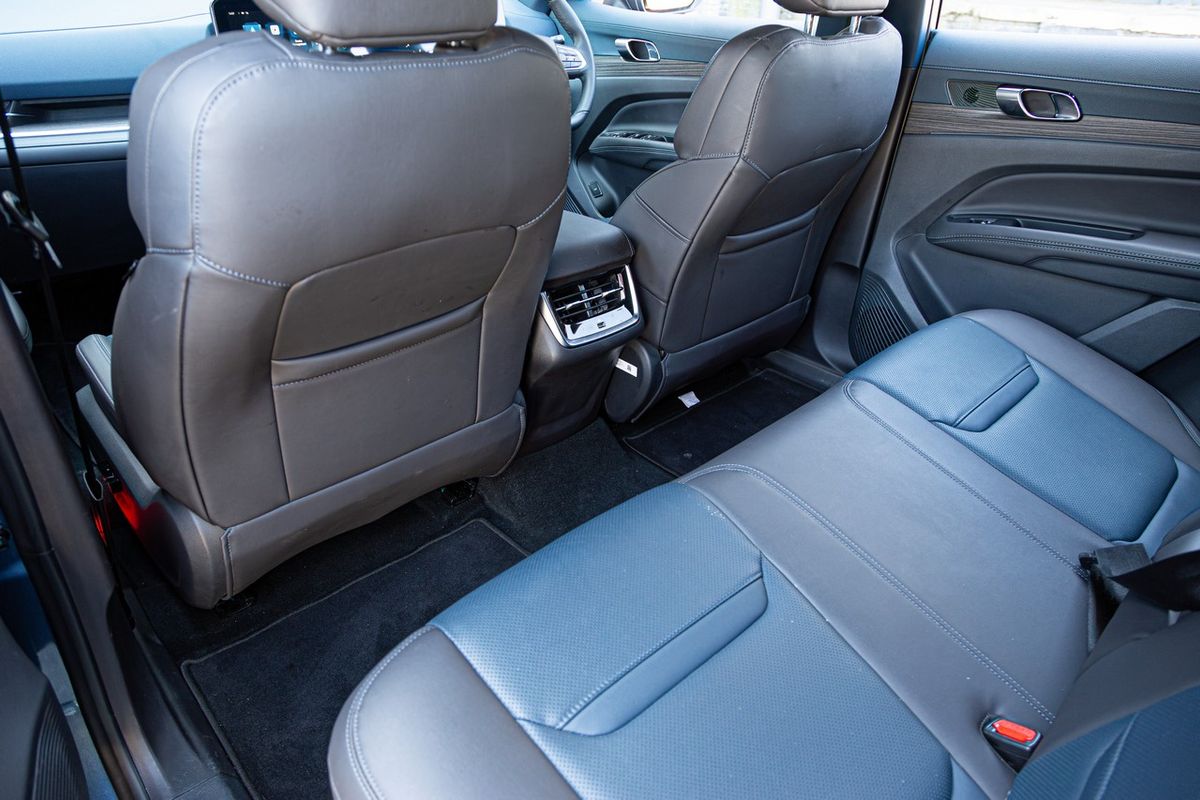
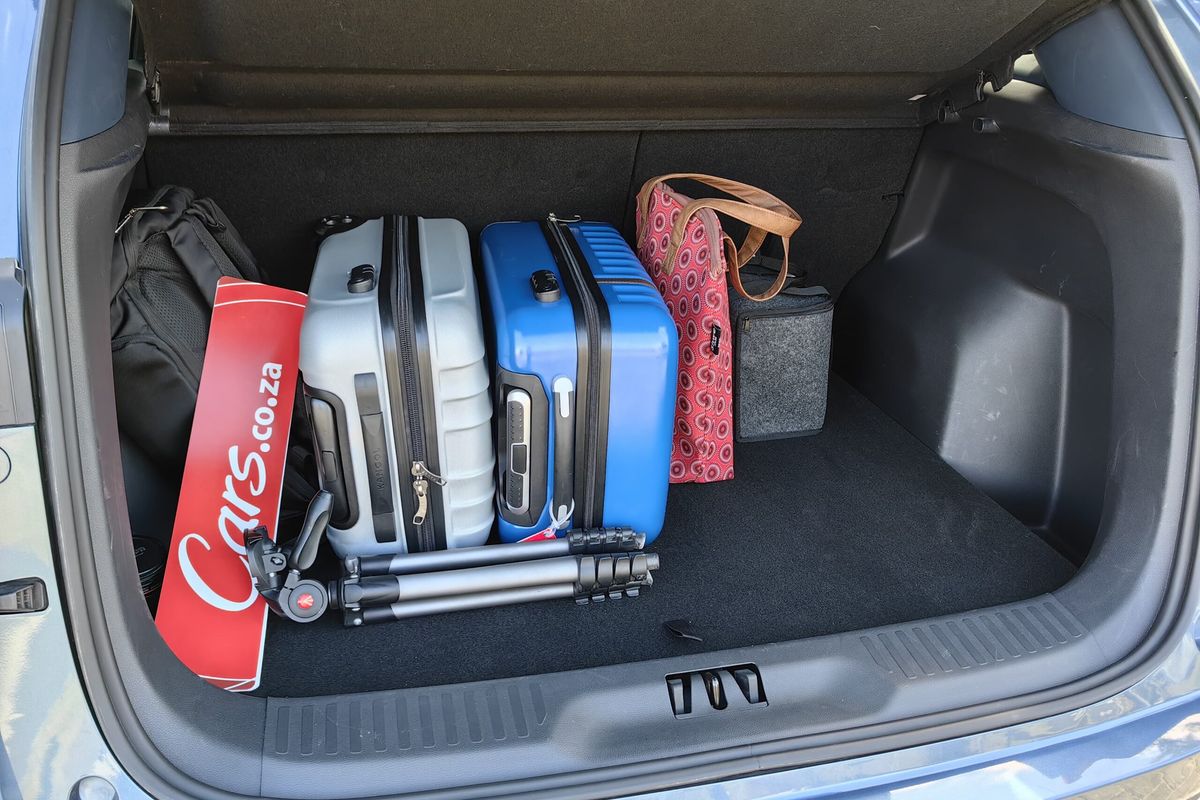
In terms of spaciousness and practicality, the Territory’s cabin is very comfortable, with ample legroom for rear occupants, but that comes at the expense of luggage capacity. The load bay looks sufficiently sized to haul a family’s baggage for a weekend getaway trip, but the numbers tell a different story…
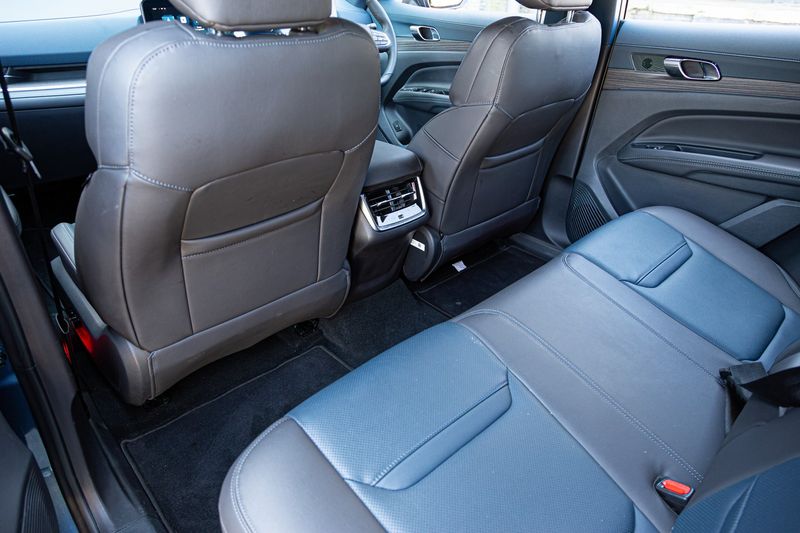
The keyword for passenger space is “wheelbase” – the length between the vehicle’s axles. As a general rule (for 4- or 5-door cars), “the longer the wheelbase, the larger the passenger area”, usually to the benefit of rear occupant space. The Territory trumps its rivals with a 2 726-mm wheelbase, compared with the (Euro-spec, for our market) Kia Sportage (2 680 mm) and the Chery Tiggo 7 Pro (2 670 mm).
It may not sound like much of a difference, but when your knees are pressed against the seat in front of you, every cm counts. No such problem in the Ford; it should be well-suited for ferrying growing teens.
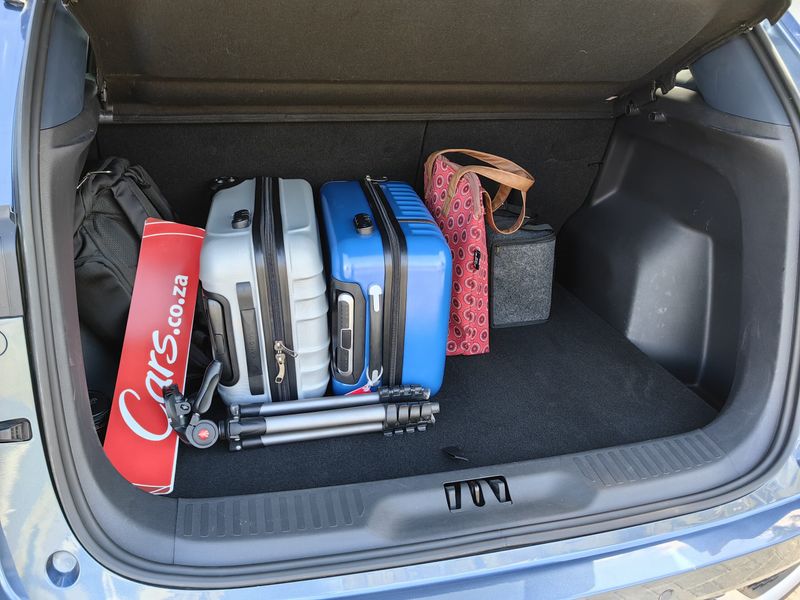
However, that generous aft legroom must have a trade-off and that’s a short load bay. Ford claims a luggage capacity of 448 litres, which grows to 1 422 litres if you fold the 60/40-split 2nd row down.
By comparison, the Kia offers 591 to 1 780 litres, while the Chery brings a sizeable 626 to 1 672 litres to the party. Still, the Ford’s electrically powered tailgate is a boon and can be operated via the key fob.
Compare the Ford Territory range. Which derivative is best for you?
Ride and Handling
When you’re shopping for a family car, on-road refinement and ride comfort are the key characteristics to look for and the Territory delivers on both counts. The cabin is particularly well insulated from road noise – unless you’re travelling on the roughest tar (we’re looking at you, R27 to Velddrif). Wind- and engine noise are sufficiently suppressed too, unless you’re accelerating briskly beyond 4 000 rpm.
Manufacturers of medium SUVs (most of them) seem convinced family-car models should have some dynamic handling ability; the Territory, which also has a firm(ish) suspension setup, is no exception, but at no point does its ride quality become jarring, thanks to the damping that soaks up most bumps.
The brakes are sharp – initial pedal depression results in grabbing – but you get used to it pretty quickly.
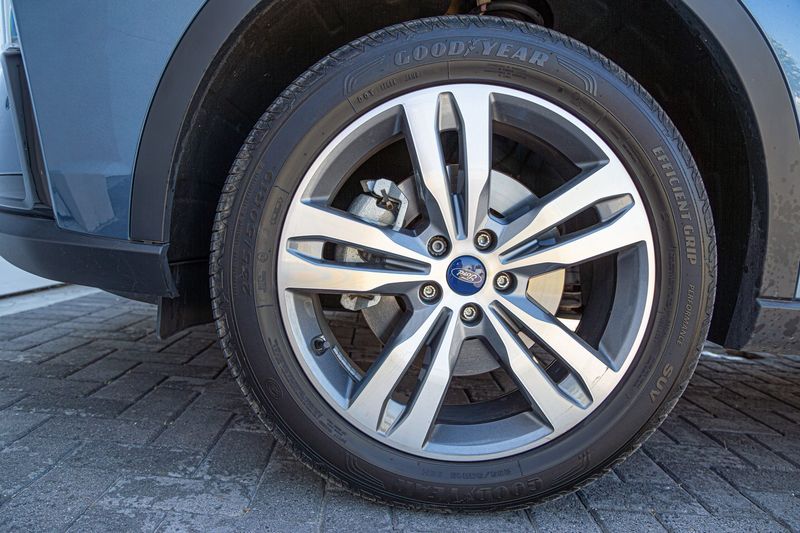
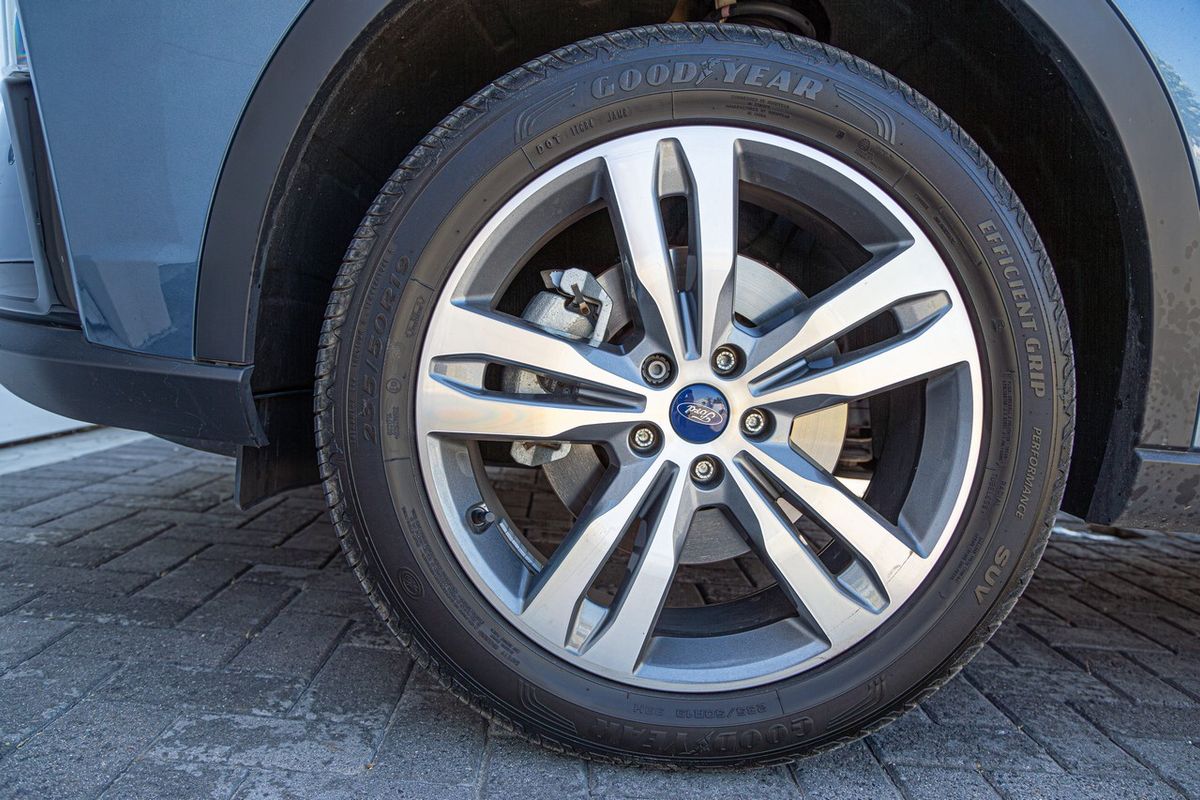
The top-of-the-range Territory 1.8T Titanium rides on larger (19-inch) wheels than its siblings (which have 18-inch rims) and they’re wrapped in 235/50 tyres. As for open-road cruising, the Territory will get the job done in a comfortable fashion, which is exactly what a vehicle like this is supposed to do.
The steering is tuned for ease of use/comfort, which is to say it doesn’t have the most direct setup, but that’s okay – it adds to the overall (relaxed) driving experience. Also, the body roll control is sound.
While the Ford is not purported to have any off-road ability, the 190 mm of ground clearance is helpful when traversing gravel roads, or in our case, navigating the beach parking lot to take these photos.
Price and After-sales support
The Ford Territory 1.8T Titanium retails for R721 000 (December 2024). The price includes a 4-year/120 000 km warranty, a 4-year unlimited km roadside assistance plan, a 5-year/unlimited km corrosion warranty, and a 6-year/90 000 km service plan.
See also: Ford Territory Specs & Prices in South Africa
Verdict
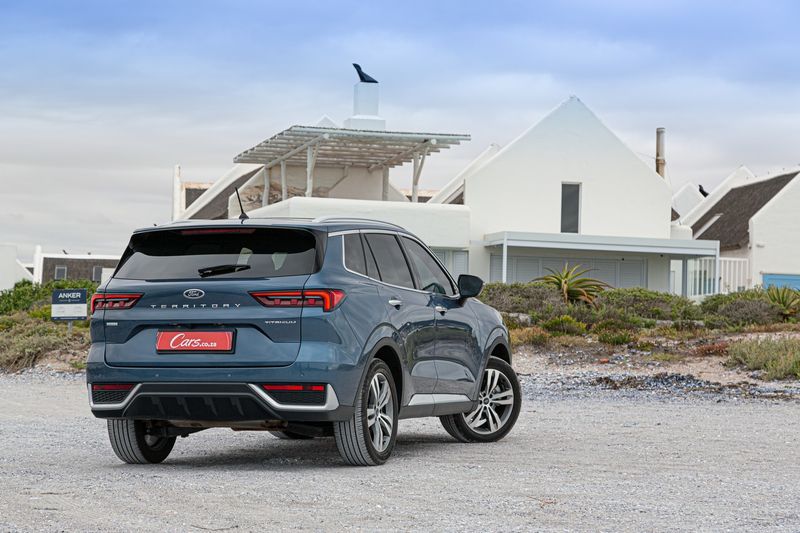
At this price point and with lofty levels of standard equipment and passenger space, the Ford Territory Titanium looks like quite a bargain – when you compare it with its aforementioned legacy-brand rivals.
However, like other market mainstays, Ford is also being undercut by fledgling Chinese brands, which have similar offerings to the Territory, but at prices that are almost too good to be true. That being said, some of those brands are still establishing themselves and don’t have notable dealership footprints (yet).
So, should you buy a Ford Territory? If you’re looking for a refined, comfortable and resolved family car with far more positives than negatives, then there is much merit in taking a closer look at the newcomer.
Want to buy a new or used Ford? Browse vehicles for sale
The latest Ford news and reviews
Watch Francisco Nwamba and Jacob Moshokoa compare the Ford Territory and Jaecoo J7:
David Taylor

Having contributed to multiple motoring titles as well helping run the public relations machine of the Johannesburg International Motor Show, Dave has experience in both sides of the motoring industry. He's based in the Western Cape and is responsible for the performance testing, photography & weekly YouTube news for Cars.co.za.