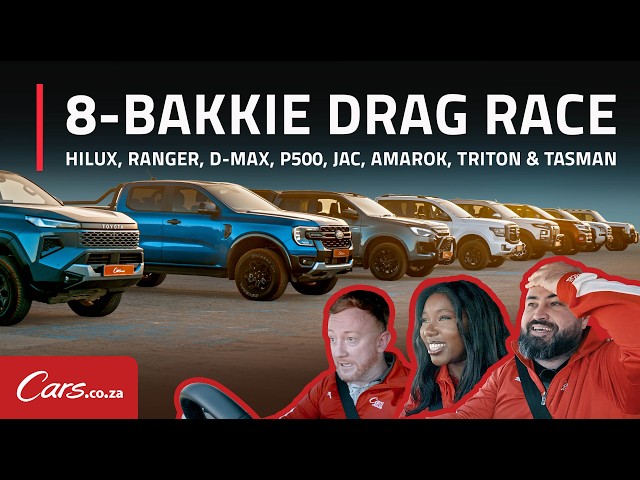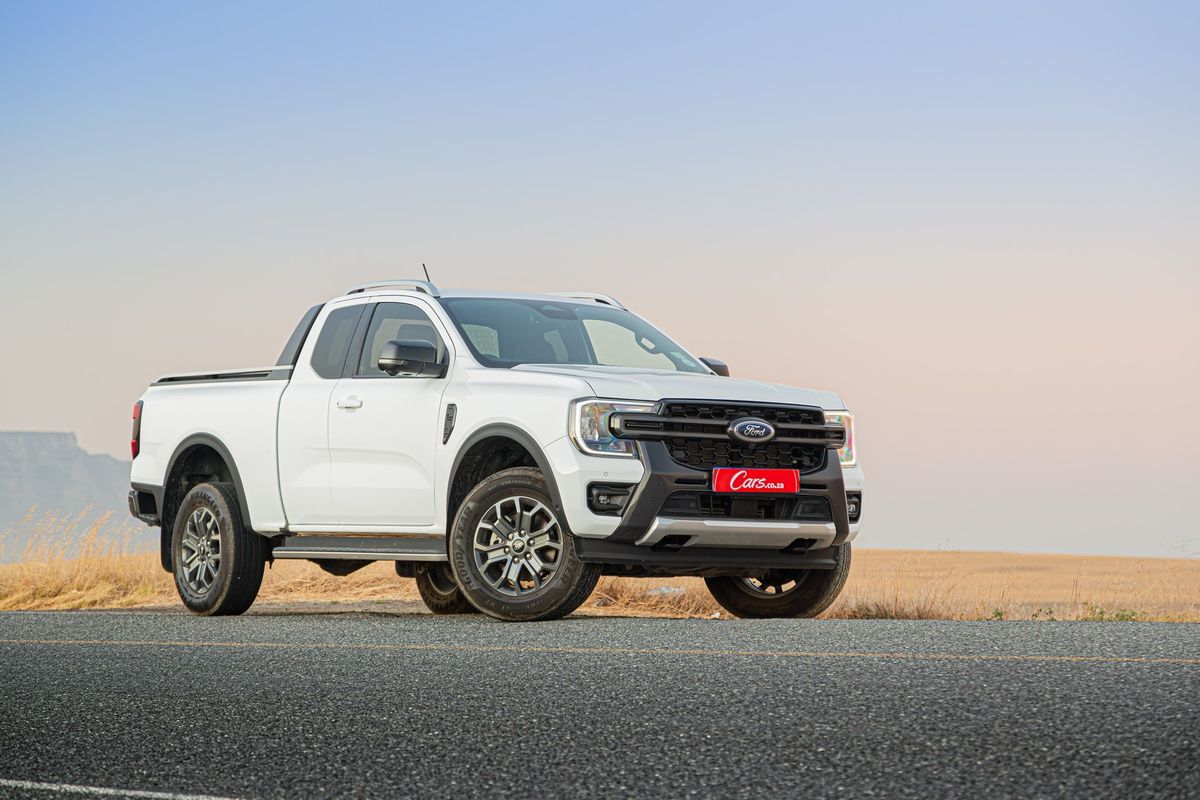
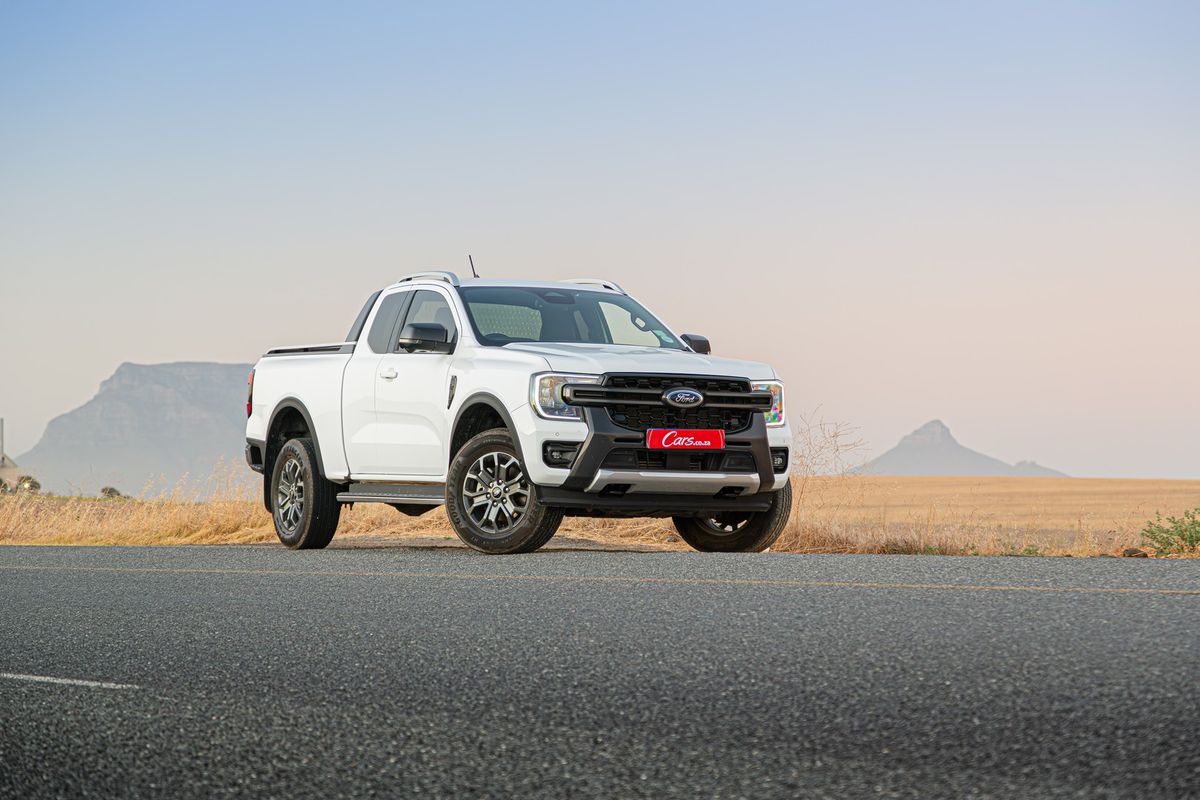
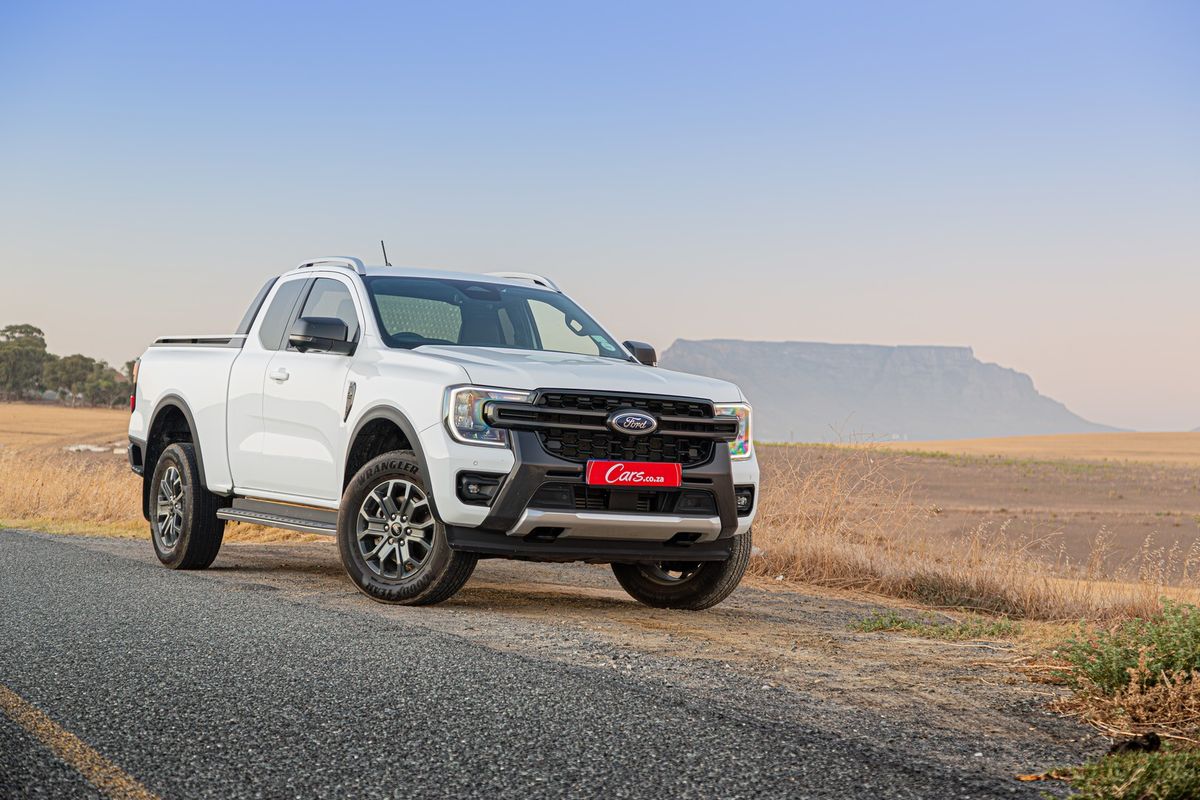
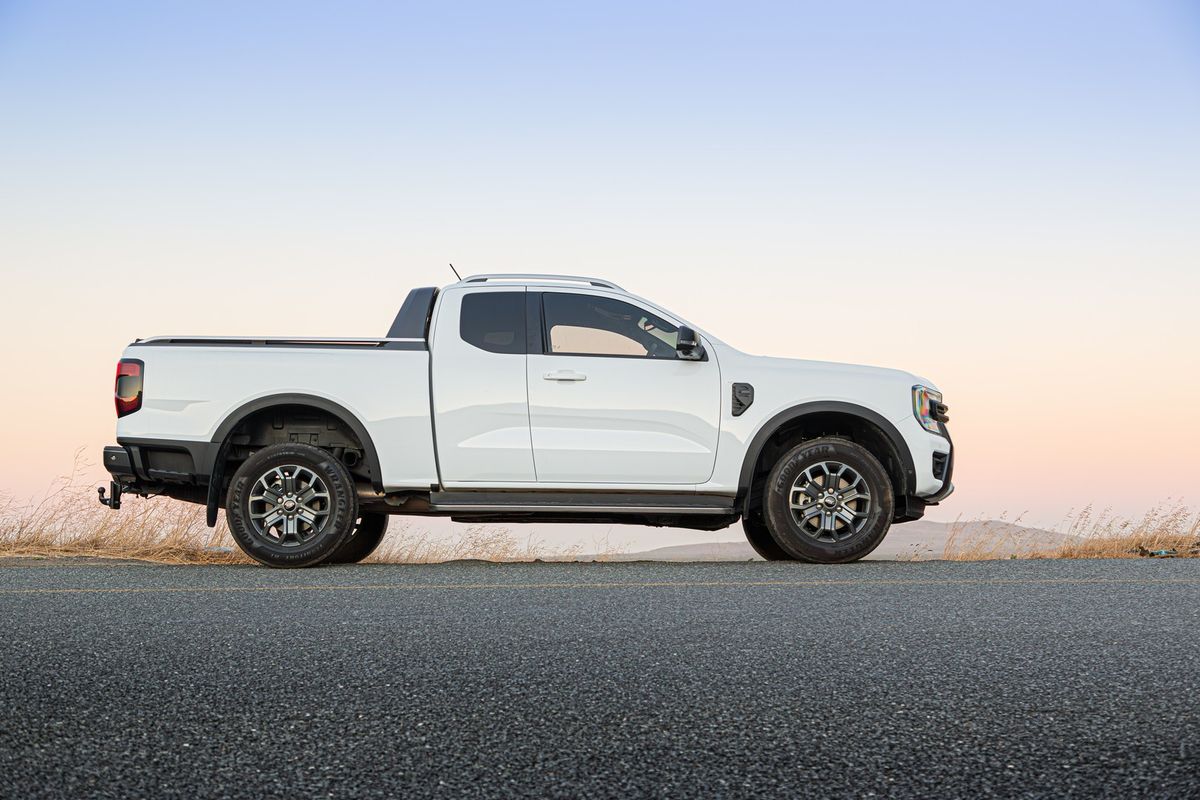
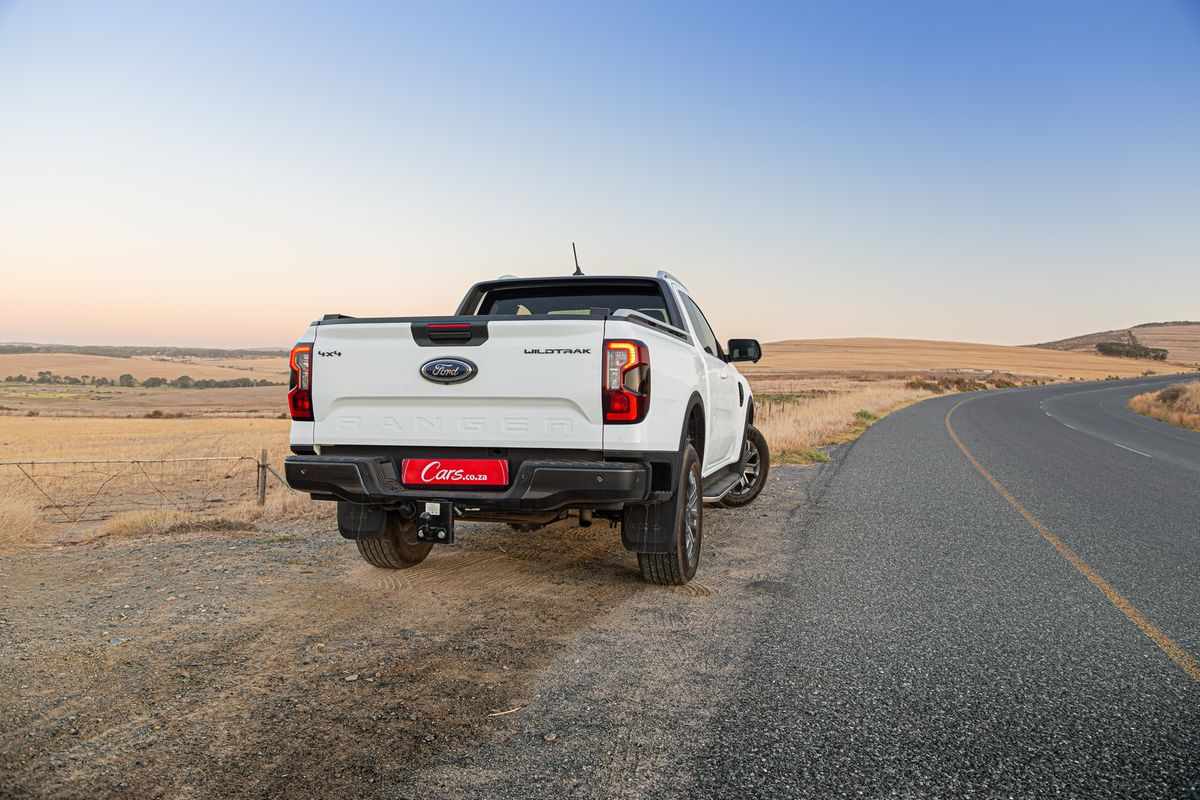
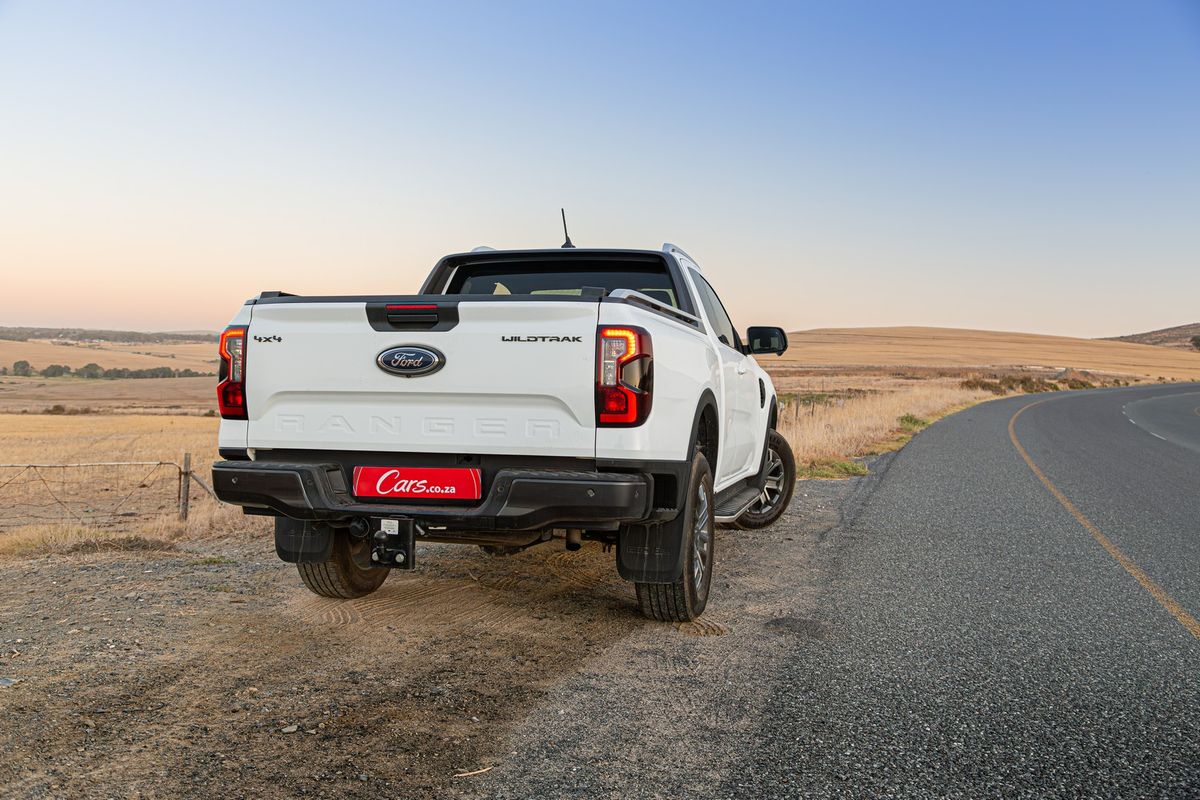
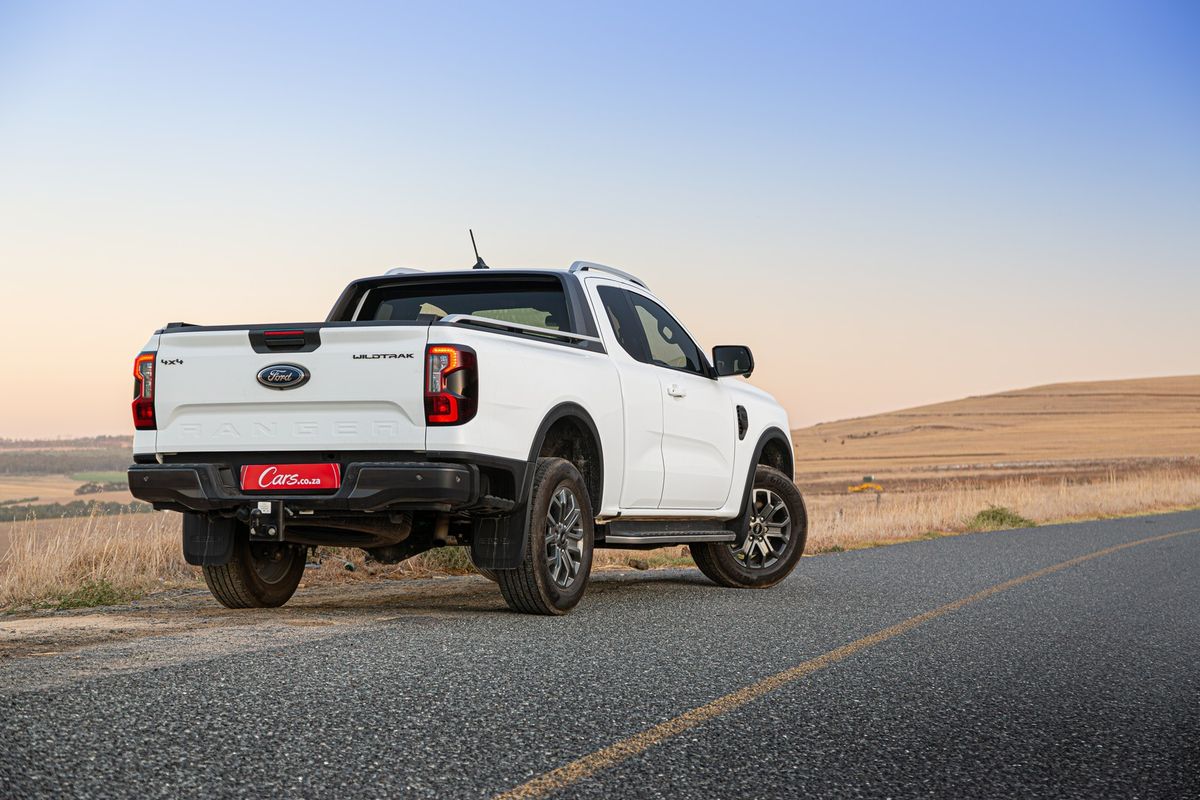
We spent a few months reviewing the Ford Ranger SuperCab Wildtrak 4×4. In this video, Jacob Moshokoa shares his thoughts on the Blue Oval’s flagship “cab and a half” and David Taylor provides further insights to the bakkie below.
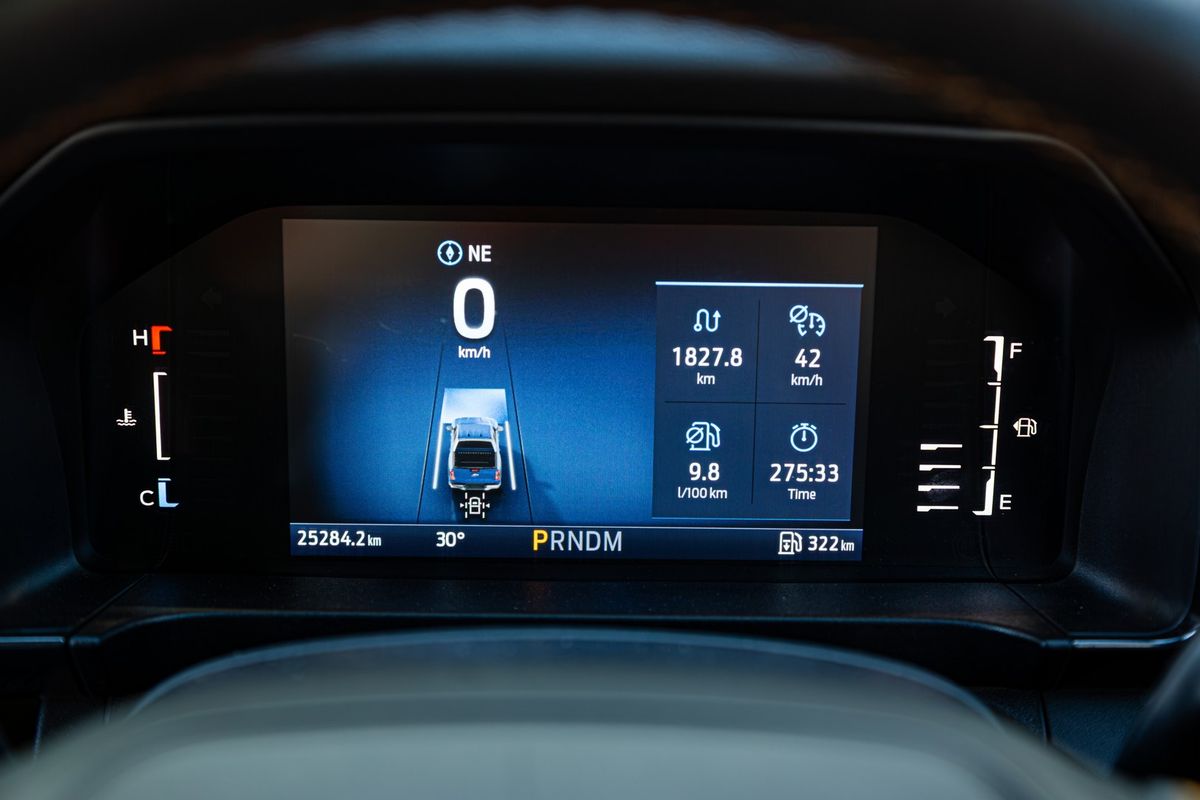
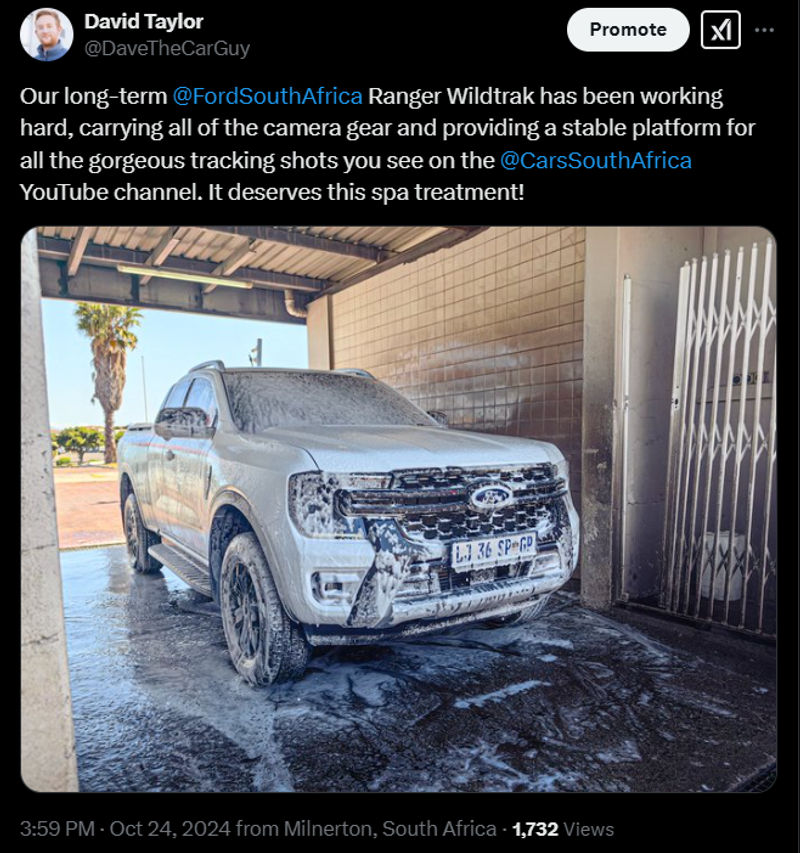
We received our Frozen White unit with 10 000 km on the clock. Keen-eyed readers will notice that it is the same Ford Ranger SuperCab variant we reviewed in March 2024. Back then, its odometer read 7 500 km and, after clocking up a further 3 000 km as a media test and marketing vehicle, it eventually landed back in our fleet for an extended review. While in our custody, its mileage ticked over to 26 000 km.
The majority of test units we receive have mileages of between 500 and 5 000 km – they’re still pretty new, expertly prepared for evaluation and stay in our fleet for 2 weeks – at the most, so if we evaluate a vehicle over a long period, we are afforded a chance to have a more real-world “ownership” experience.
So, what did we use the Ford Ranger 2.0 BiTurbo SuperCab Wildtrak 4×4 for? Well, all those lovely tracking shots you may have seen in the videos on the Cars.co.za YouTube channel were filmed from the back of this very Ford Ranger. It wasn’t just about having a cameraman secured in the load bin either, all the camera gear needed to be stored safely too, and this is where a SuperCab comes into its own.
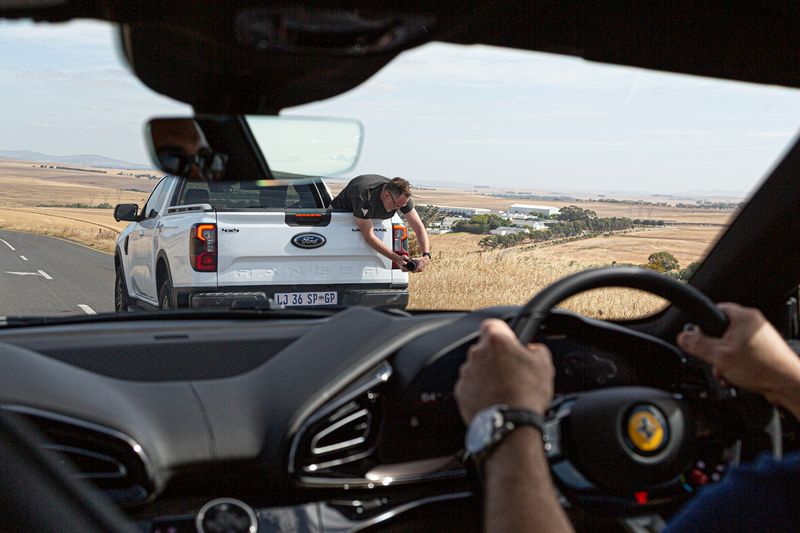
Finally, as our test period and 2024 drew to a close, our video presenter Jacob Moshokoa (who recently relocated to the Western Cape), drove the SuperCab Wildtrak 4×4 upcountry (Gauteng) to fetch the last of his earthly possessions. There’s nothing like 2 800 km behind the ‘wheel to get to grips with a vehicle!
What we like about the Ford Ranger SuperCab?
Handsome styling & oodles of kerb presence
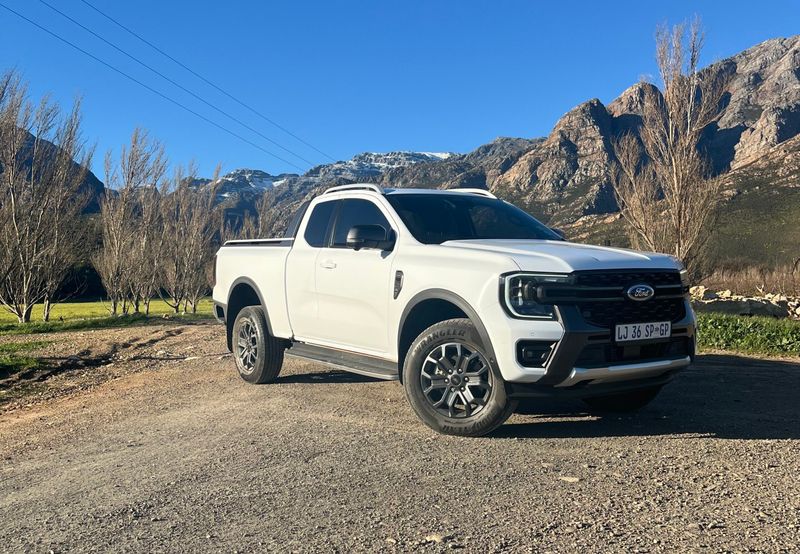
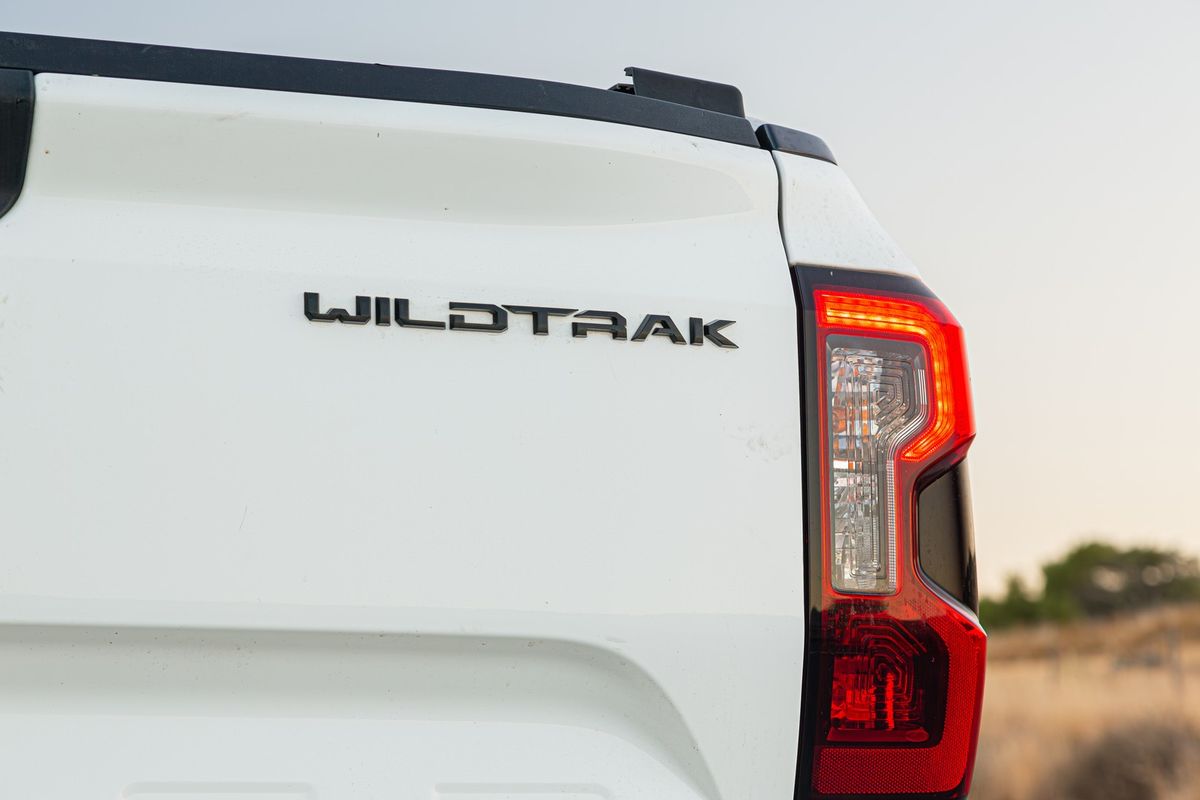
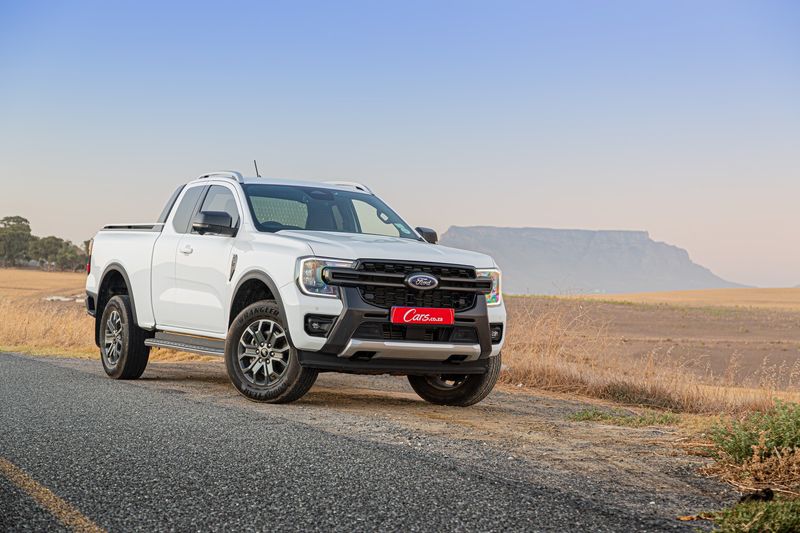
A Wildtrak-spec Ford Ranger makes quite a style statement. Design is subjective, of course, but our testers were unanimous: the Blue Oval’s bakkie, with its macho American truck looks, looks great. Huge wheels further ramp up kerb appeal and, if you truly want to turn heads, spec the Cyber Orange finish.
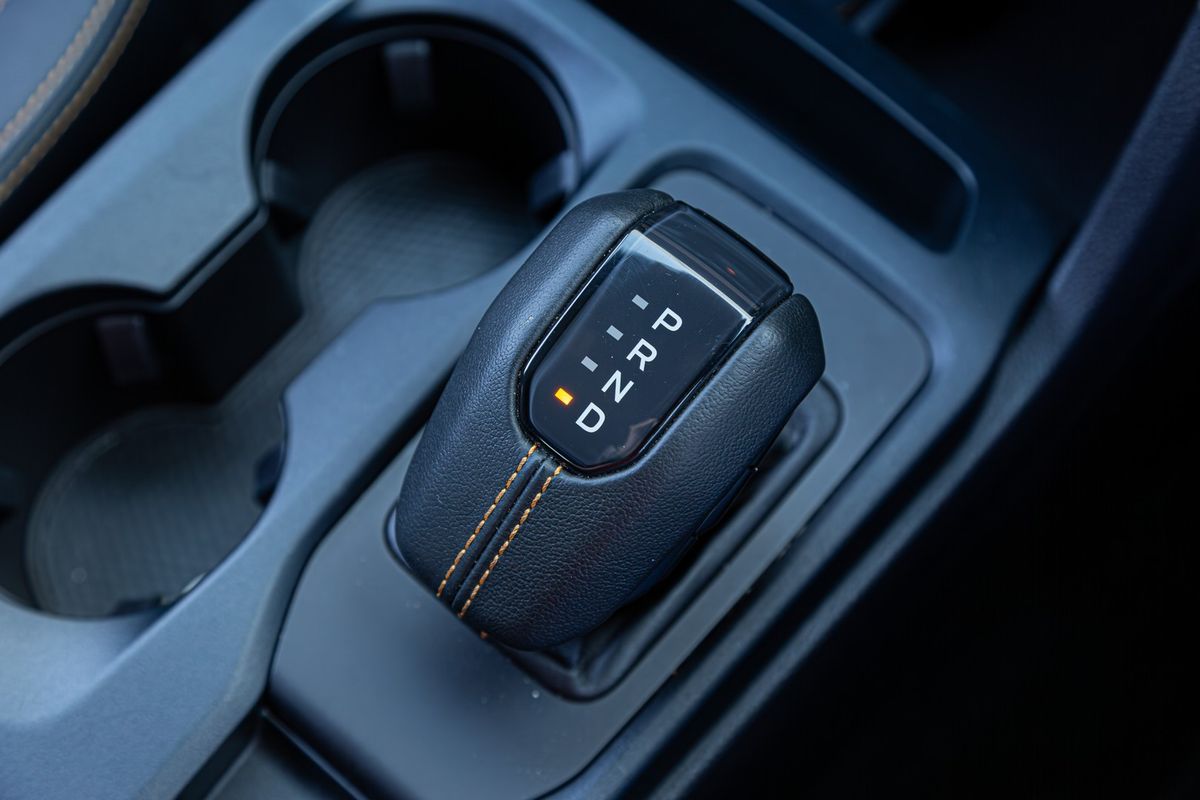
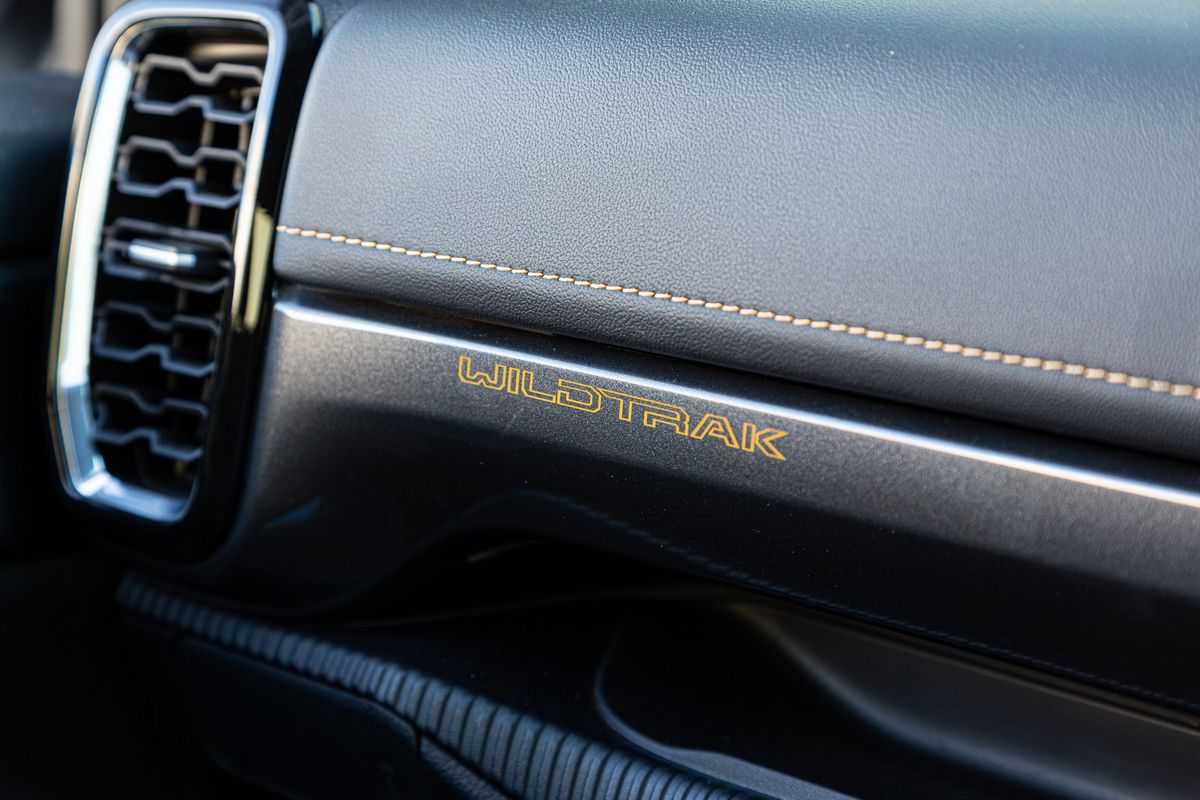
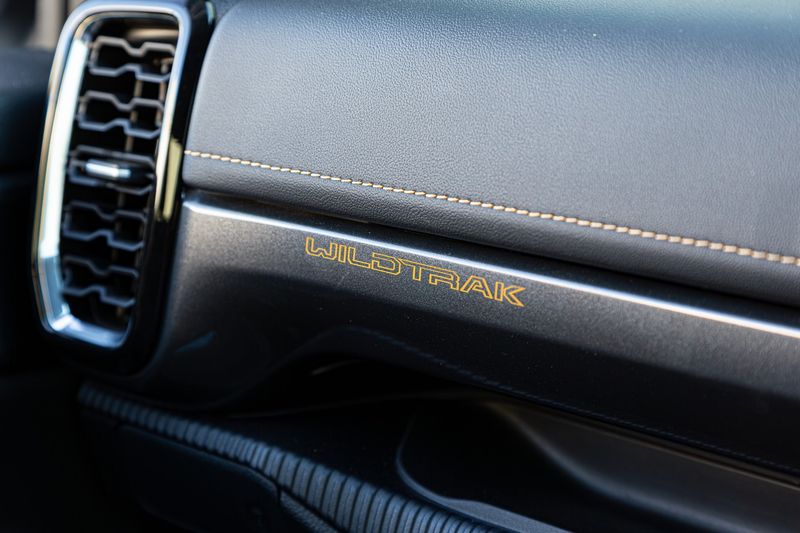
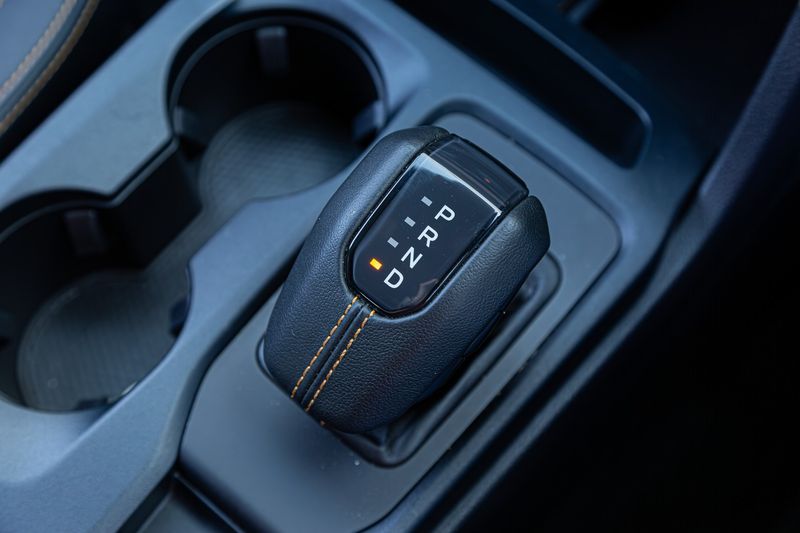
Those C-shaped LED DRLs are so distinctive that we suspect many vehicles pulled left to make way for “our” truck because they were spellbound by those lights. The goodness carries on in the cabin, which features eye-catching orange stitching on the transmission lever, steering wheel and dashboard covers.
Eager performance
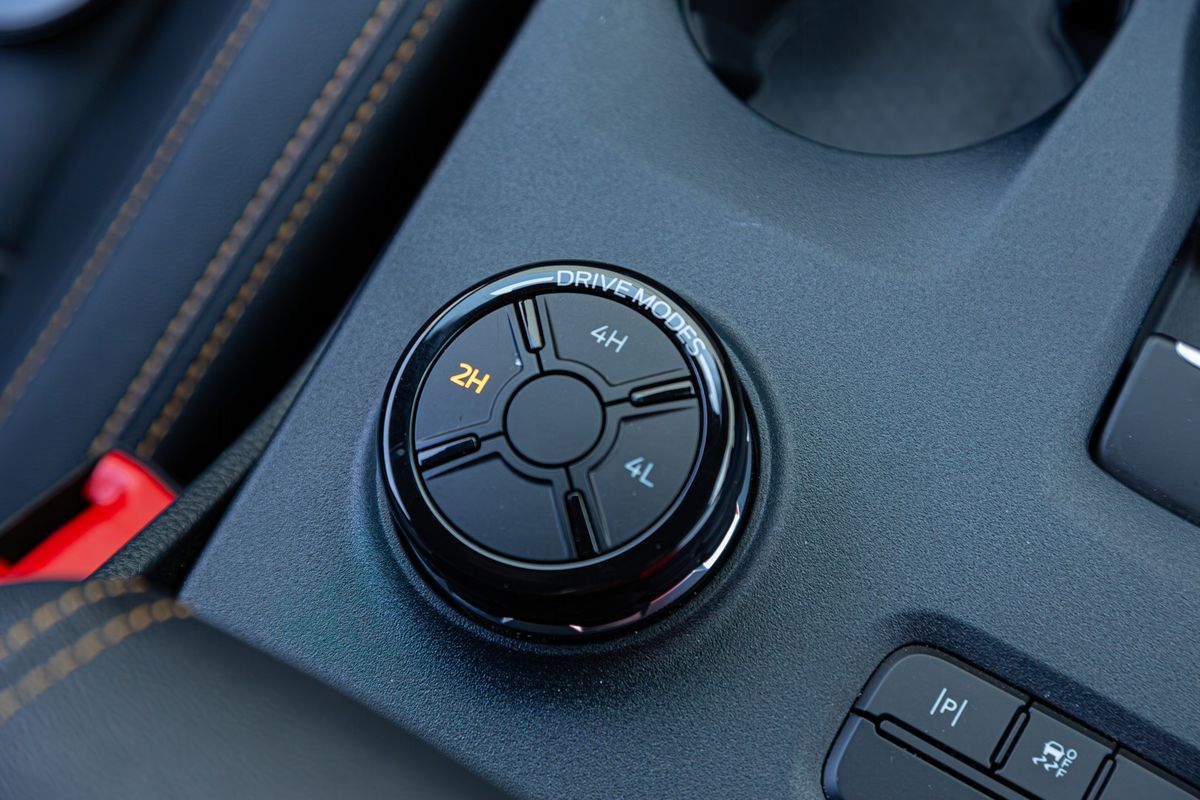
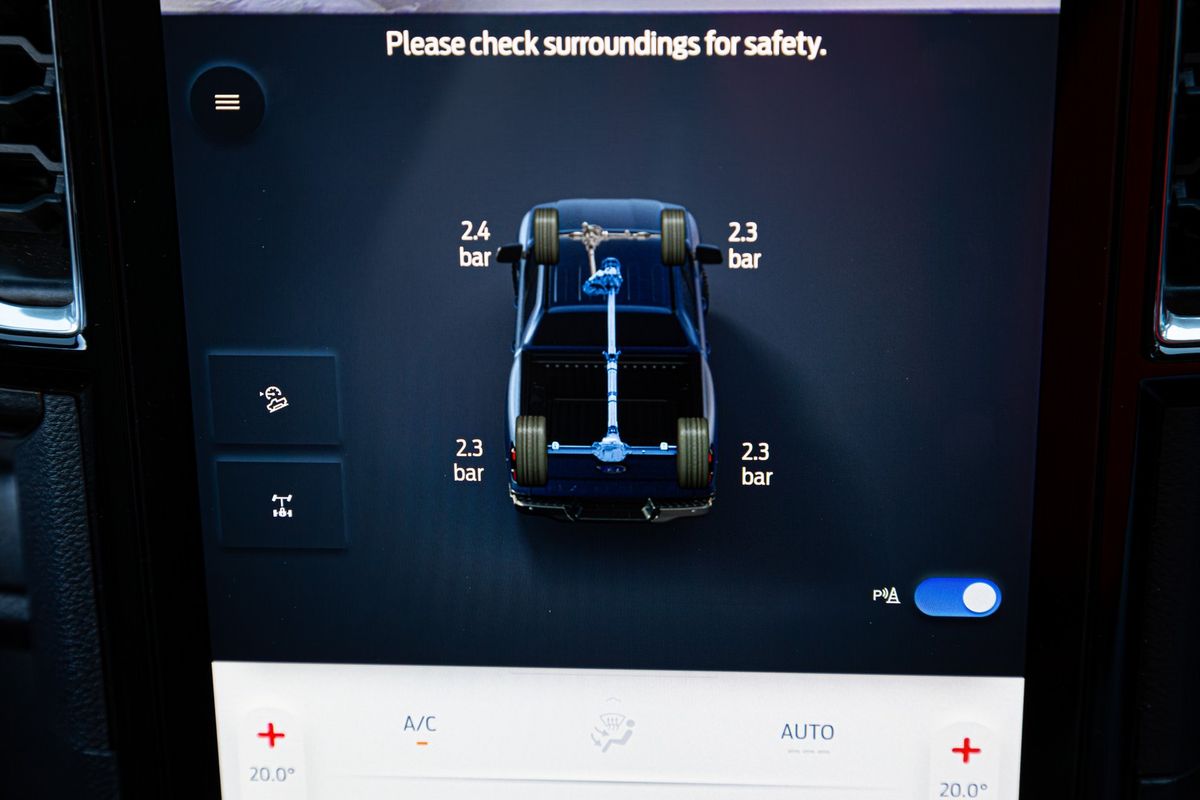
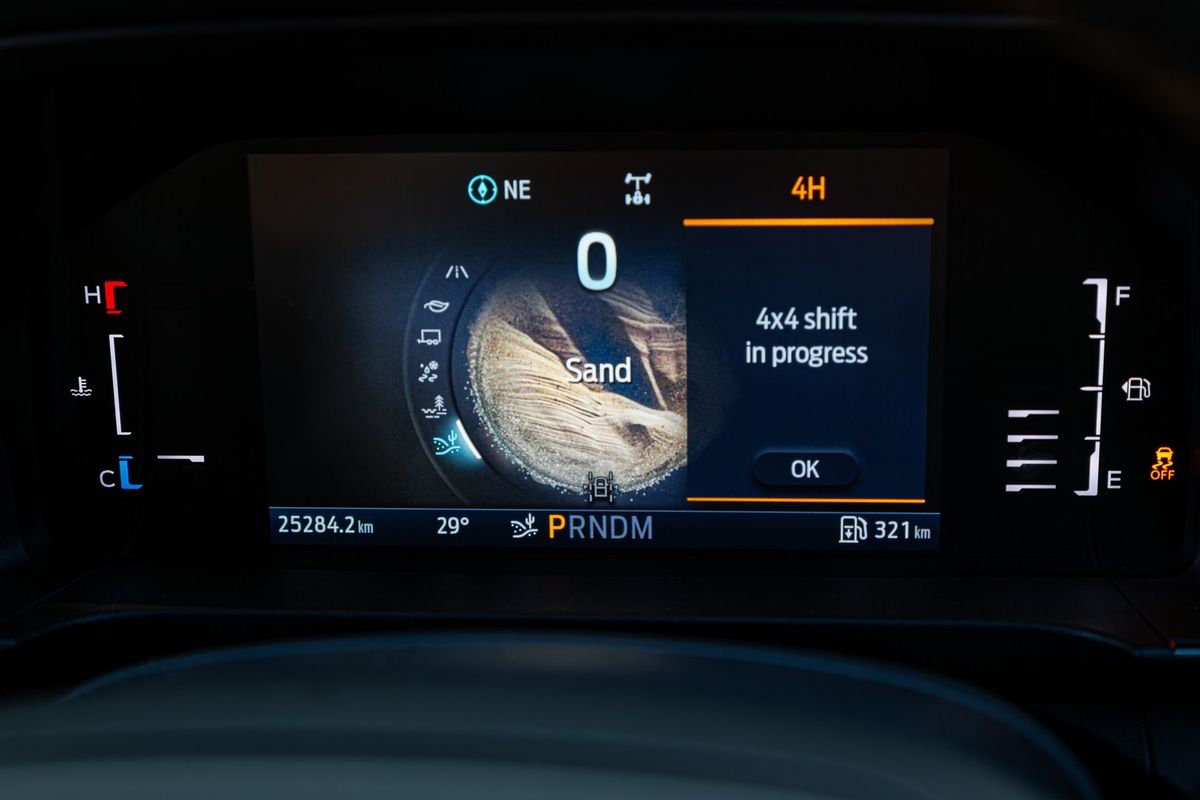
And, the Ford Ranger 2.0 BiTurbo SuperCab Wildtrak 4×4 delivers commendable performance to match its muscular good looks. Under the Silverton-made bakkie’s bonnet sits a Struandale-built 2.0-litre 4-cylinder bi-turbo diesel engine that produces 154 kW/500 Nm and is mated with a 10-speed auto ‘box and a low-range transfer case. Four-wheel drive on demand is complemented by various drive modes.
While we didn’t do a performance test for this extended review, when we conducted the initial review of the Ranger (in 2024), it bolted to 100 kph in 9.58 sec, which is on par for most bakkies at this price point.
Besides, the highlight of the SuperCab Wildtrak 4×4’s (on-road) driving experience is its ability to deliver strong overtaking urge; you don’t even need to dial up the Sport mode to access it. In general, we were satisfied with the powertrain – our only criticism is that the transmission seems to have too many ratios.
Look, we get why they’re there (for optimal efficiency); the idea is that the Ranger will maintain a high ratio even at low speed to help minimise the bakkie’s fuel consumption and, therefore, CO2 emissions.
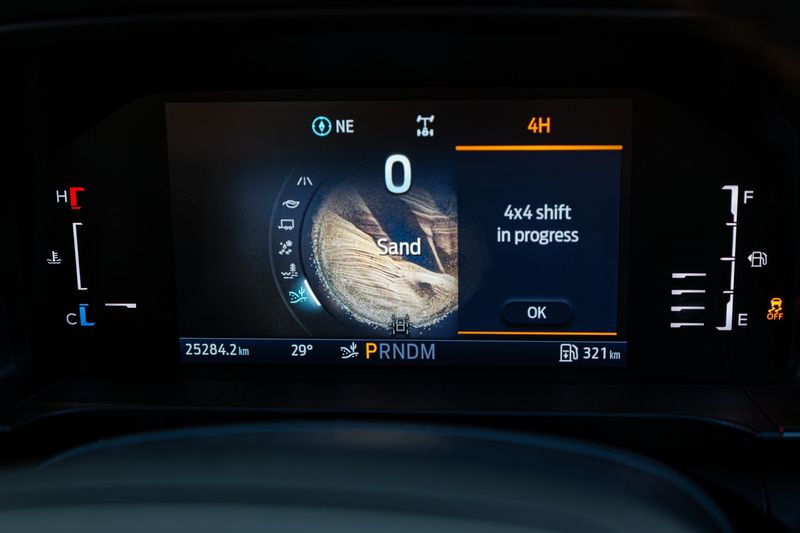
Sadly, too many ratios can complicate things. In our experience, the (usually smooth-shifting) ‘box tends to become flustered when you accelerate hard (after cruising in 10th gear) to overtake slower traffic, such as a truck travelling at 70 kph. Although the twin-turbo setup is designed to dial out turbo lag, the diesel engine’s peak torque is only available in a narrow band (from 1 750 to 2 000 rpm). To access that, the Ranger needs to shuffle through at least 3 or 4 gears, which is not the smoothest of processes.
To be fair, many automatic transmissions with multiple ratios suffer from this to an extent. Also, we don’t anticipate that many customers will encounter this unless they deliberately apply full throttle quite often.
Versatility and Capability
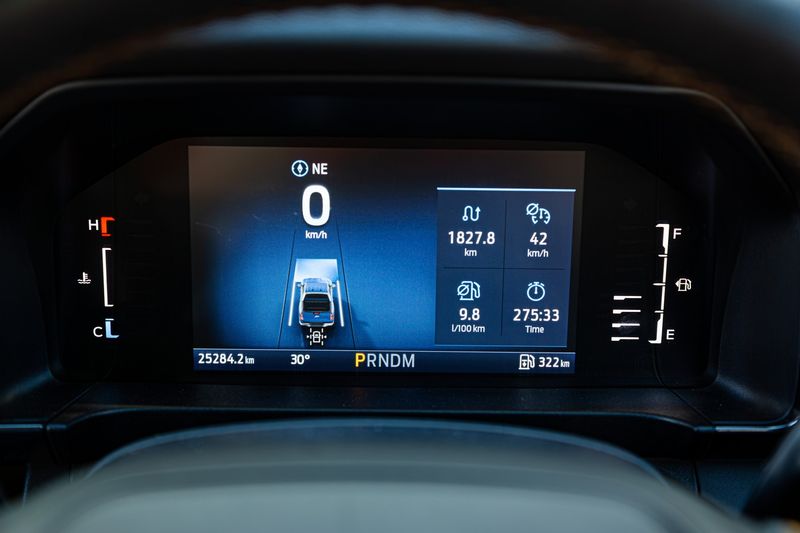
This Ranger is truly versatile, on- and off-road. With a ground clearance of 237 mm, off-road tyres, and 4×4 on demand, it’ll transition from highway cruiser to off-road specialist with a flick of your left wrist.

The best thing about the SuperCab is that it offers much more space to store your belongings securely than a single cab (even at the cost of some load-bin space) and, compared with a double-cab (which has large rear windows), what you stash behind the front seats is better obscured from prying eyes.
The SuperCab features “suicide rear doors” with tinted privacy glass, which open to plenty of space for camera bags, lighting gear, tripods and let’s not forget about the Budget Insurance cooler boxes (that we use for boot-capacity tests and storing the video crew’s lunches) – they fitted into that nook with ease.
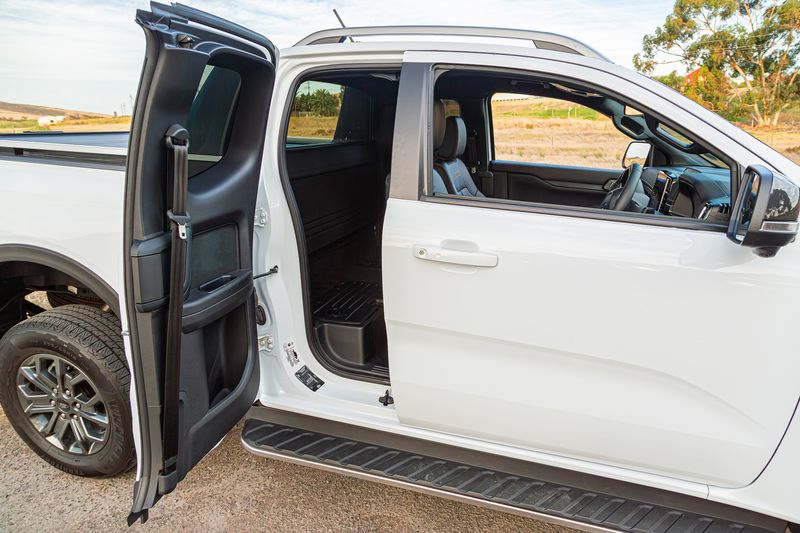
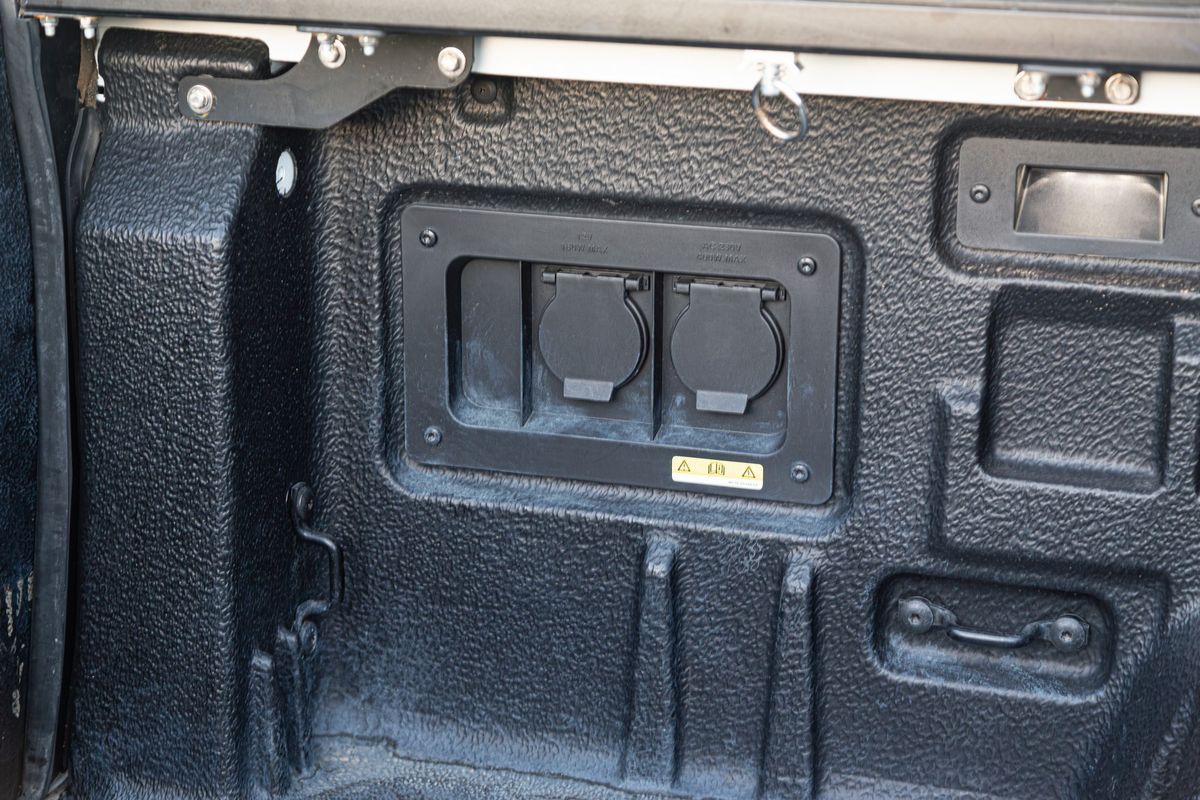
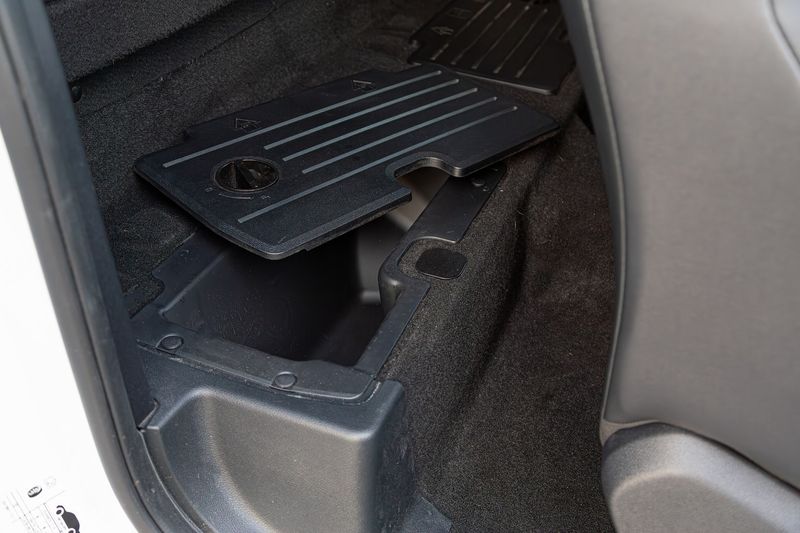
You have the option of using one of the storage bins (shown below, the other one houses the spare-wheel jack and associated tools), or you can simply place your cargo and possessions atop the bins.
Dislikes?
Software glitches
A modern motor vehicle’s electronic management system processes lines of code that are probably longer than its internal wiring loom and, despite over-the-air updates, glitches do occur now and again. There have been many occasions when we’ve tested a new model and seen a suspicious warning light or -message appear on its dashboard, only for it to disappear a few hours later (when the car restarts).
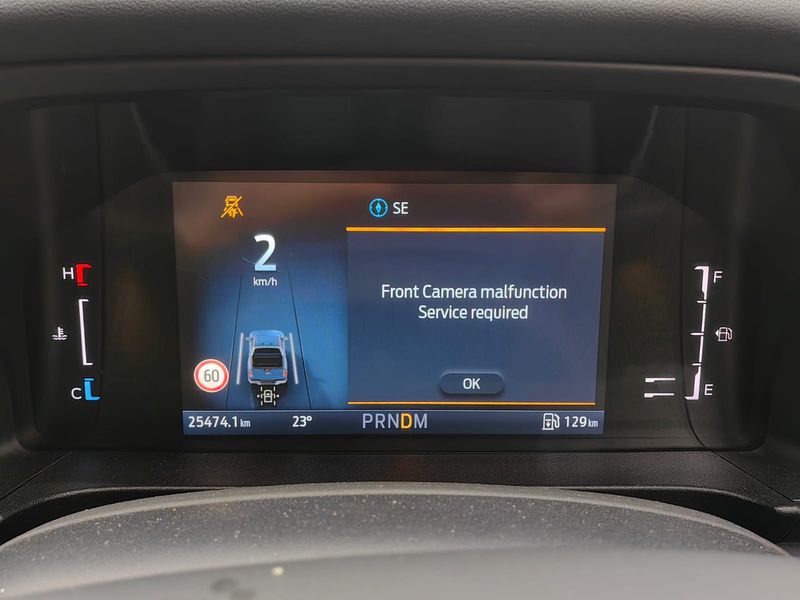
In our Ranger SuperCab test unit, a “Front Camera malfunction” message popped up sporadically. The vehicle operated without any interruptions or issues, and eventually the message did disappear. We suspected that the front sensor was blocked by a bug splat or dirt, or that it was overheating (the error message often occurred in gridlock traffic). We wiped the sensor clean and thought the airflow at higher speeds would help with the temperature management, but the message came and went randomly.
Trim issues
To reiterate, when we conduct assessments of vehicles, they usually have very low kilometre readings and are practically “new”. With some real-world mileage under the belt, our Ford Ranger was used extensively and thoroughly, and we started to notice some wear and tear that affected functionality.
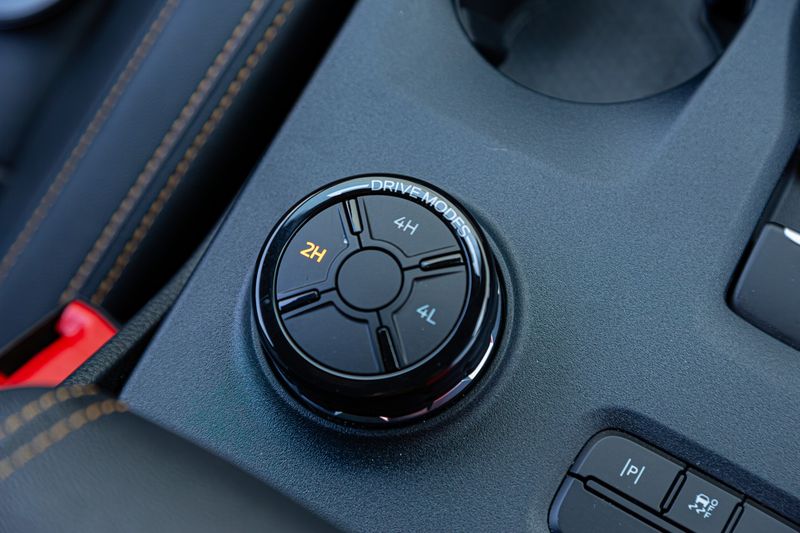
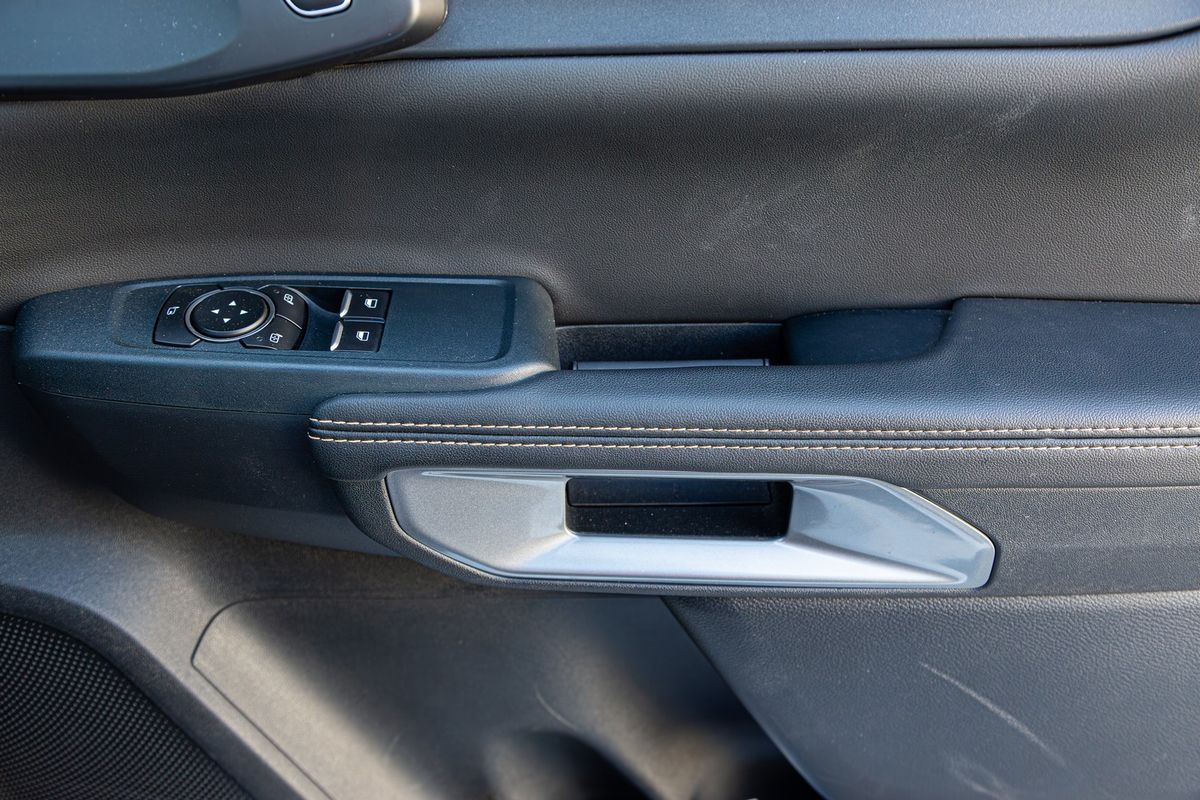
Cosmetic wear on common touchpoints due to repeated use, such as scuff marks on door handles (for example) is quite understandable, but it’s concerning when vehicle functions are affected by marginal build quality. The test unit’s rotary drive-mode selector began sticking (it didn’t turn smoothly), which created the impression that it was fragile. It surprised us, because we didn’t use the dial all that often.
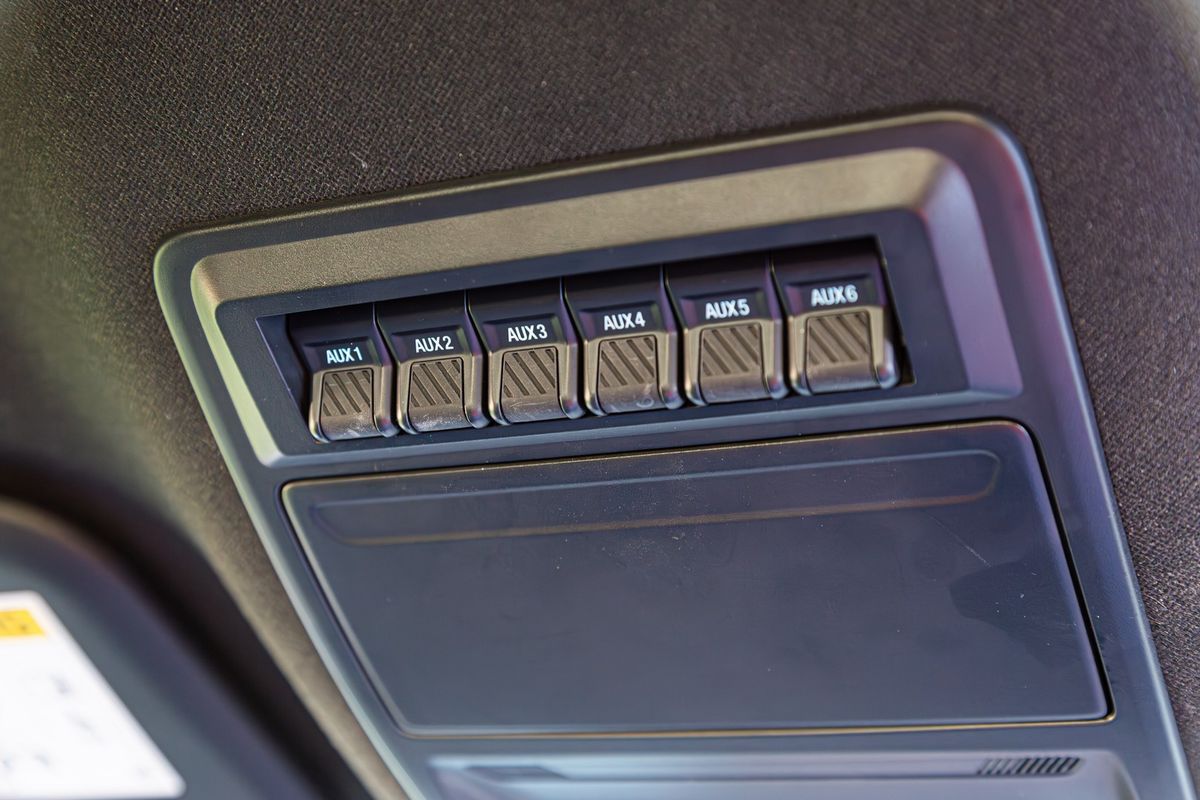
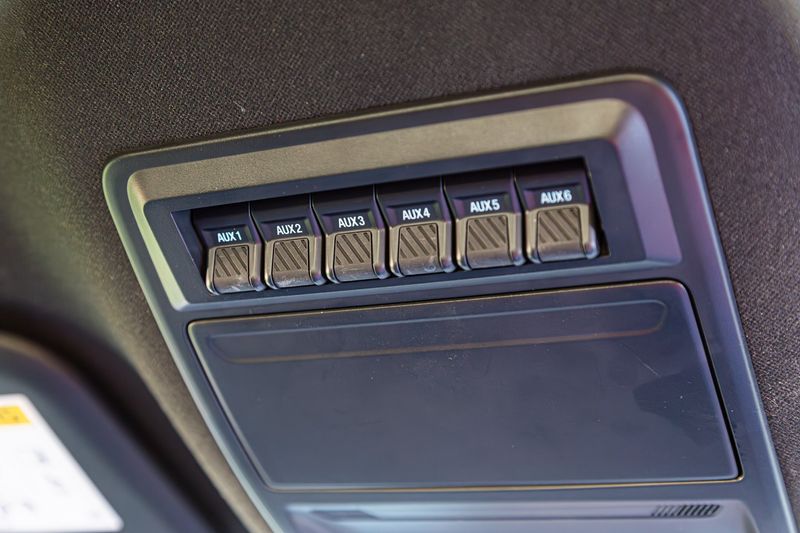
The same can be said of the auxiliary switches behind the Ranger’s sunglasses holder. We did not have accessories connected to them, but by the time the test unit returned to Ford, the switches had become jammed, which suggests a durability issue! The good news is that this generation of Ranger, which was launched in December 2022, is due for a facelift soon(ish). Hopefully, Ford will beef up those elements.
Purchasing considerations
Why is the Ranger so popular? Because there’s a variant to suit every requirement! The sales figures tell a fascinating story: with 25 552 units leaving showrooms (the highest volume for this vehicle type since 2018) and a 24.3% market share, the Ranger was South Africa’s best-selling new double-cab in 2024.
However, the main reason for opting for an extended-cab bakkie goes beyond practicality, styling and price; unlike with a double cab, if you buy “a cab and a half” to serve a VAT-registered small business, for example, that company can claim back the value-added tax in the bakkie’s purchase price AND deduct at least a part (if not all) of the vehicle’s depreciation against income tax over a period (such as 3 years).

Whereas its double-cab sibling is also available with a 3.0-litre V6 turbodiesel, the Ford Ranger SuperCab Wildtrak is only available with a 2.0-litre 4-cylinder bi-turbodiesel engine. There are 7 paint finishes and a variety of optional extras available, some of which are well worth a look (February 2025 prices quoted).
The online configurator showcases goodies such as 20-inch aluminium wheels (R8 500), Pro Trailer Backup Assist (R2 700), Spare tyre lock (R1 300), and Cargo management system (R3 300). There’s a raft of accessories to choose from; a manual roller shutter (R30 748) was fitted to our unit, for example.
Price and After-sales support
The Ranger 2.0 BiTurbo SuperCab Wildtrak 4×4 retails for R841 500 (February 2025), which includes a 4-year/120 000 km warranty, 4-year/unlimited km roadside assistance and 5-year/unlimited km corrosion warranty. The recommended service interval is 15 000 km or annually, whichever occurs first.
Customers can purchase service or maintenance plans up to 8 years or 165 000 km. The warranty can be extended up to 7 years or 200 000 km, while roadside assistance can be extended up to 2 years.
Verdict
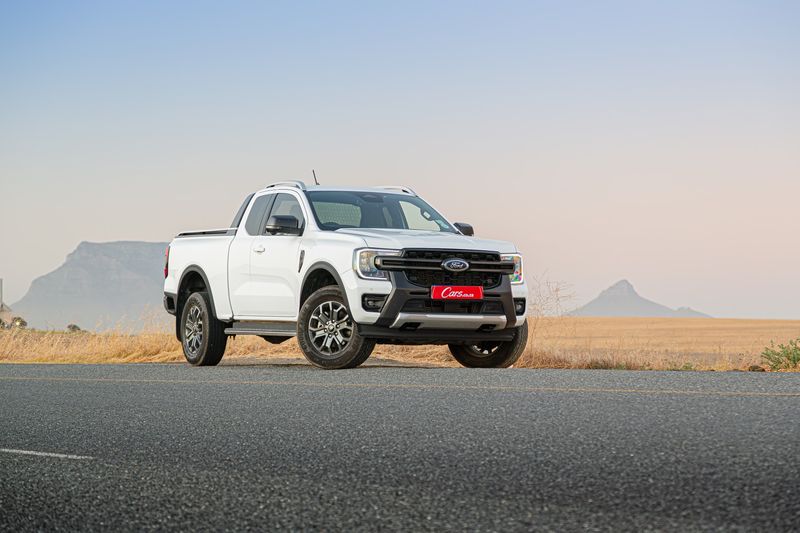
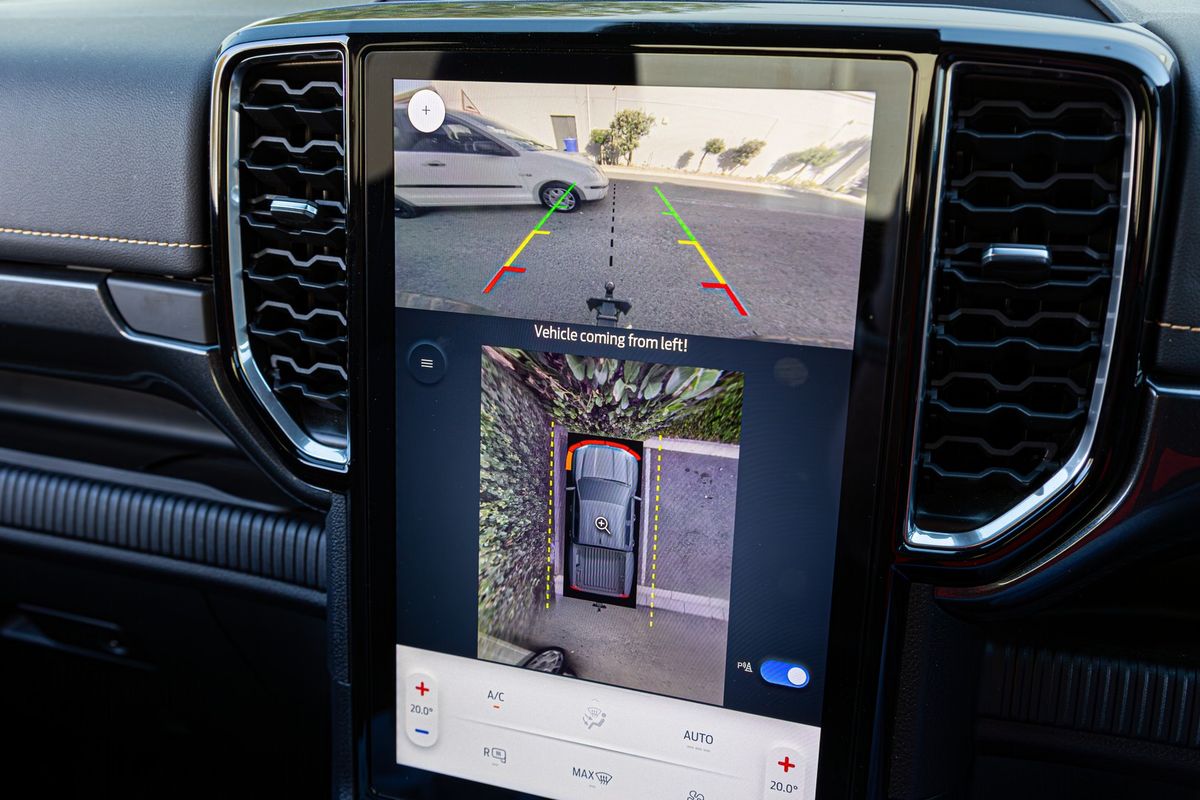
Yes, the Ranger 2.0 BiTurbo SuperCab Wildtrak 4×4 was a video crew support vehicle (which is to say “a humble workhorse”), but everyone who drove the bakkie was enamoured with its capabilities and oh-so-desirable image. It’s SuperCool! And, its practicality and well thought-out cabin were the real highlights; there is no new bakkie on sale today that has a cabin presence/ambience to rival that of the Ranger.
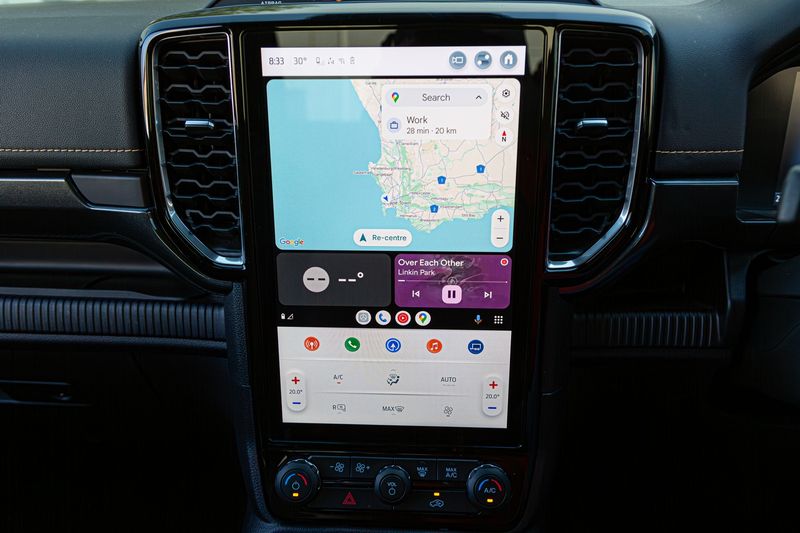
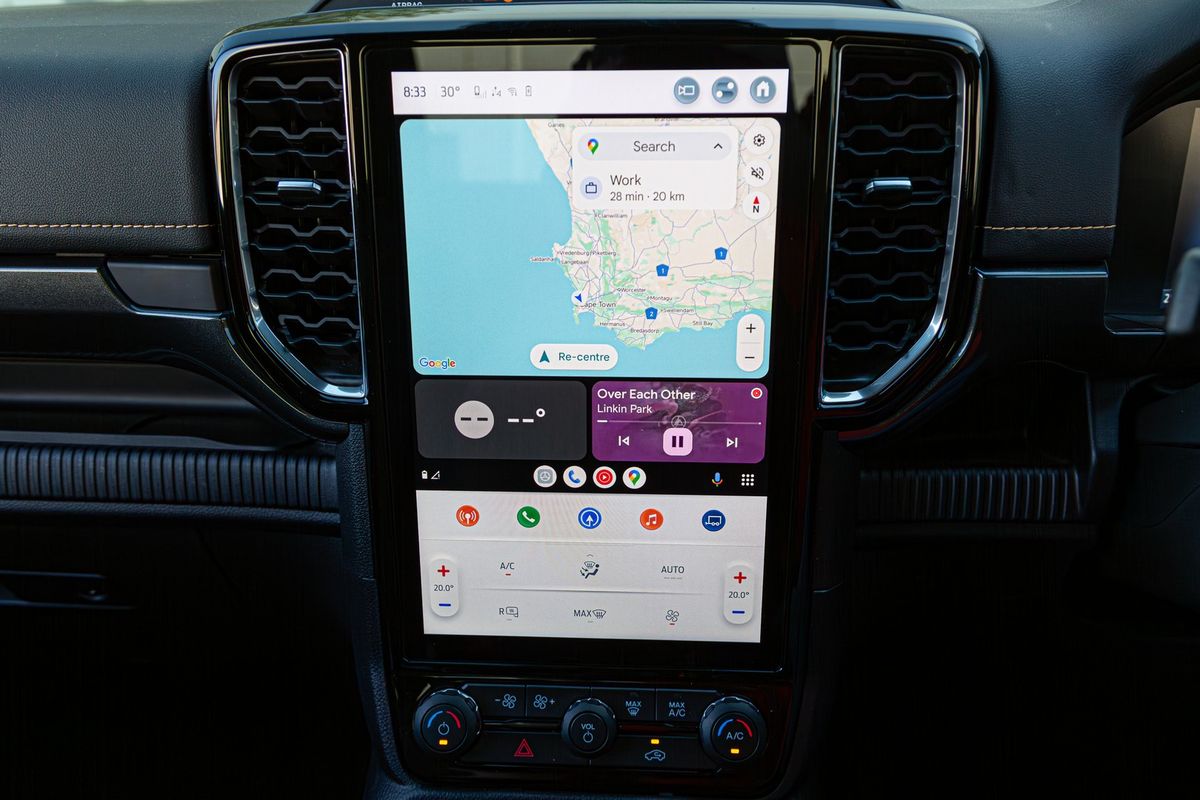
Climb inside, stab the start button and cue up your favourite music via Apple CarPlay/Android Auto; for when you are behind the ‘wheel of a Ranger, you feel ready to take on anything on SA’s embattled road network. Bakkies are integral to South African motoring life and so much more than utilitarian sources of transport – they embody the spirit of exploration and “forging your own way”. That’s why we love them.
David Taylor

Having contributed to multiple motoring titles as well helping run the public relations machine of the Johannesburg International Motor Show, Dave has experience in both sides of the motoring industry. He's based in the Western Cape and is responsible for the performance testing, photography & weekly YouTube news for Cars.co.za.