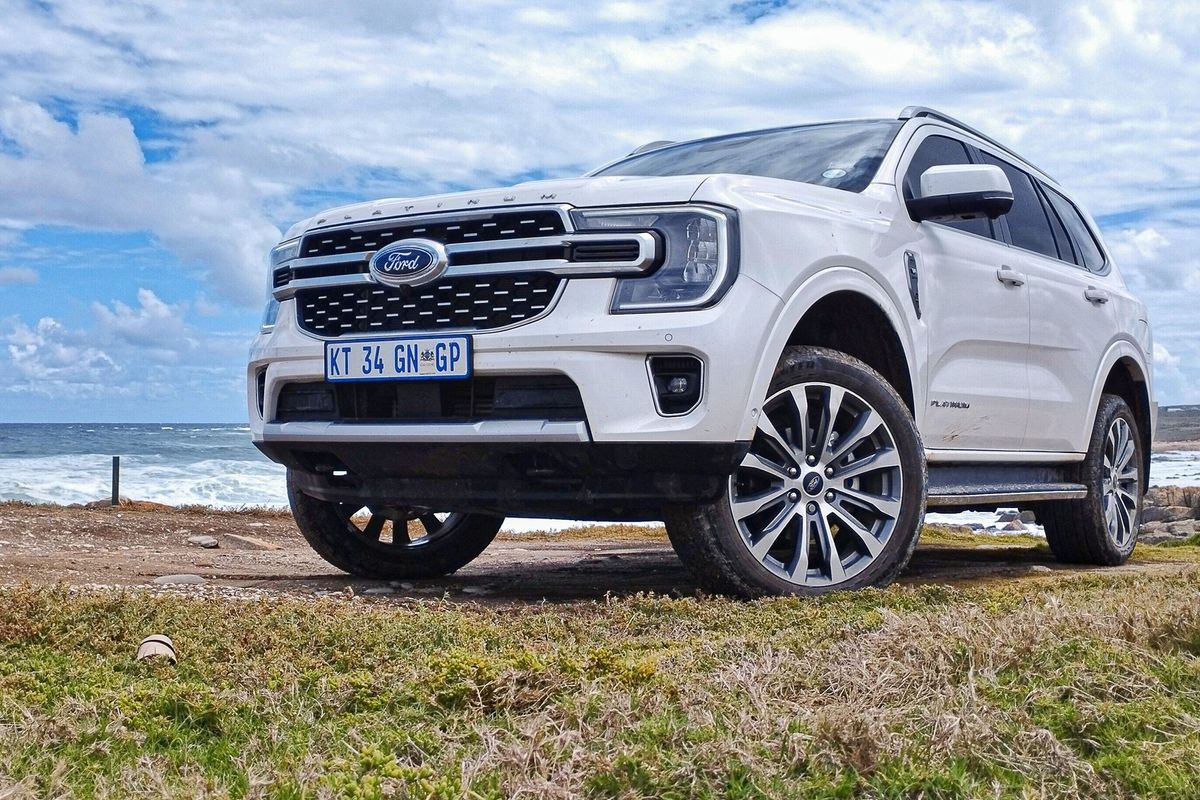
Customers have had to wait patiently for stock of the new, 3rd-gen Ford Everest to arrive in Mzansi; we spent a month with the range-topping 3.0 V6 AWD Platinum derivative to find out whether it’s been worth the hype (and wait)!
We like: Design, more powerful engine, balance of occupant comfort and surefooted handling, generous spec, long-distance comfort
We don’t like: Fuel thirst, “low-res” display of camera system
FAST FACTS
- Model: Ford Everest 3.0 V6 AWD Platinum
- Price: R1 113 100 (Jan 2023)
- Engine: 3.0-litre V6 turbodiesel
- Power/Torque: 184 kW/600 Nm
- Transmission: 10-speed automatic
- Fuel consumption: 8.5 L/100 km (claimed)
- Luggage/Utility space: 259-898-1 818 litres
Serious about buying/selling?
Browse the latest Ford Everest specs and prices.
Some dealerships regularly offer great deals. See our New Car Specials!
Looking to sell your car? Sell it on Cars.co.za for free
Where does the 2023 Ford Everest fit in?
Motoring journalists are accustomed to driving cars that turn heads. After all, we test the overwhelming majority of new passenger vehicles and, for observant road users, the sight of a media fleet (test) car may be their first in-the-metal glimpse of a new model. Suffice it to say, the new Ford Everest attracted a bewildering level of interest from countless onlookers during our extended test period!
Then again, we did not see another new-generation Everest along the Garden Route, so for most people in the Southern Cape, this vehicle would have provided them with a first (or closer) look at Ford’s highly-anticipated new 7-seat adventure SUV. And boy, did they want to have a look… and ask many questions!
Late last year, the Ford Motor Company of Southern Africa raised eyebrows when it suggested that the new Everest had moved beyond the “Fortuner” category of bakkie-based SUVs, and should rather be considered an alternative to the Toyota Land Cruiser Prado… Figuring out whether the Blue Oval’s claim was just marketing talk (to justify the model’s significantly higher price compared with its predecessor), was one of the major items on the agenda of our extended evaluation. If you click on the link below, you can see for yourself how well the Everest stacks up against the highly-regarded (but long-serving) Prado and the new Jeep Grand Cherokee. It looks like Ford may have a point – on the face of it, anyway…
How the 2023 Ford Everest fares in terms of…
Design and Packaging
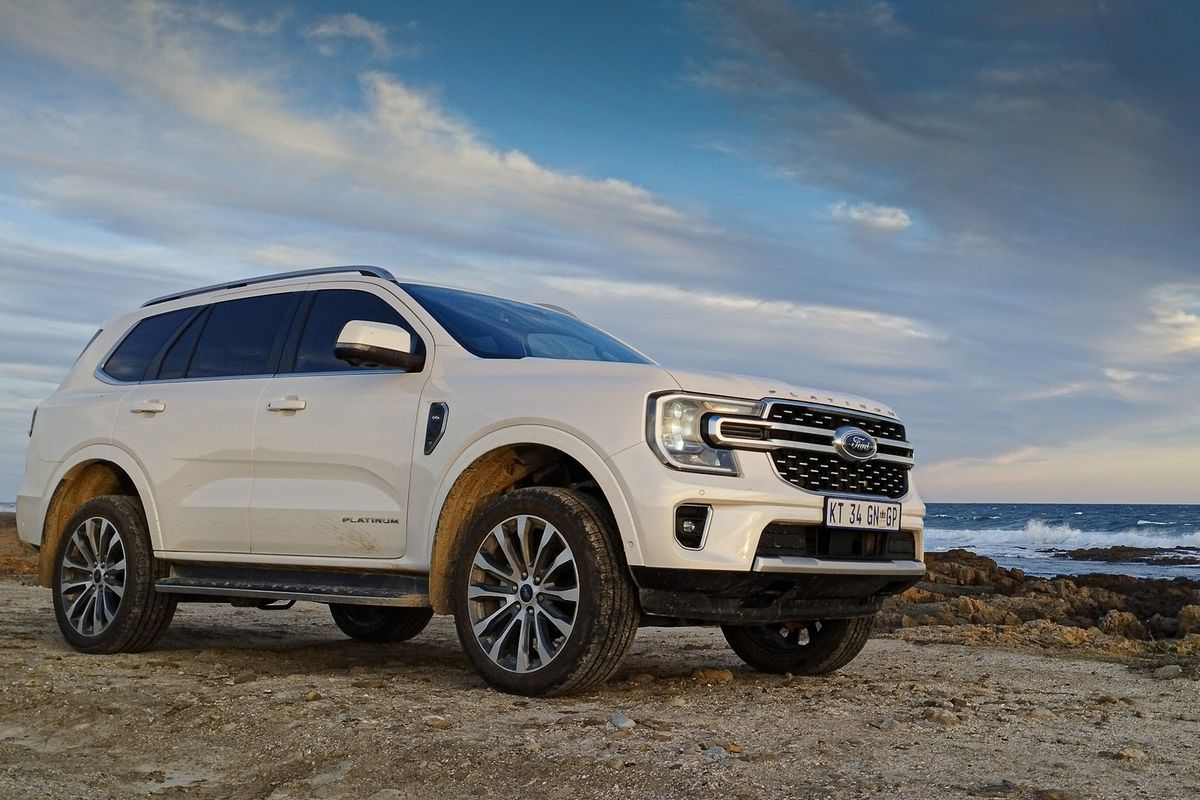
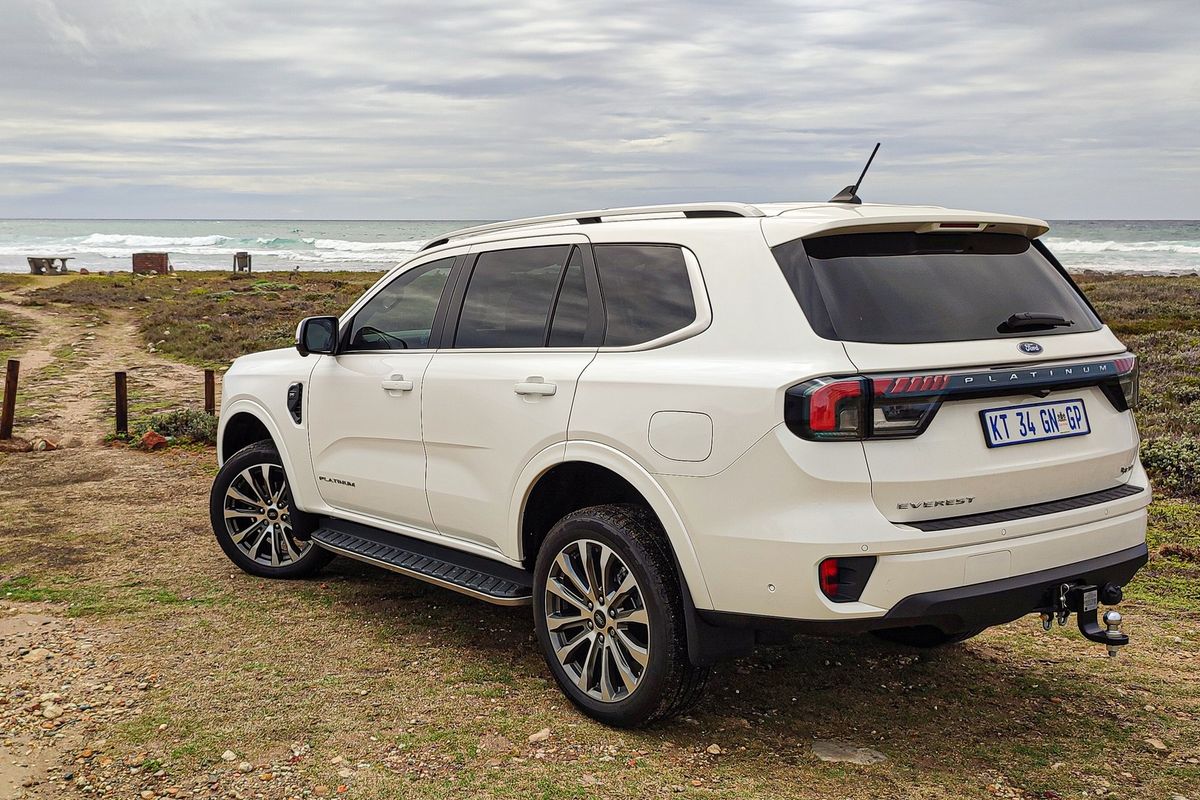
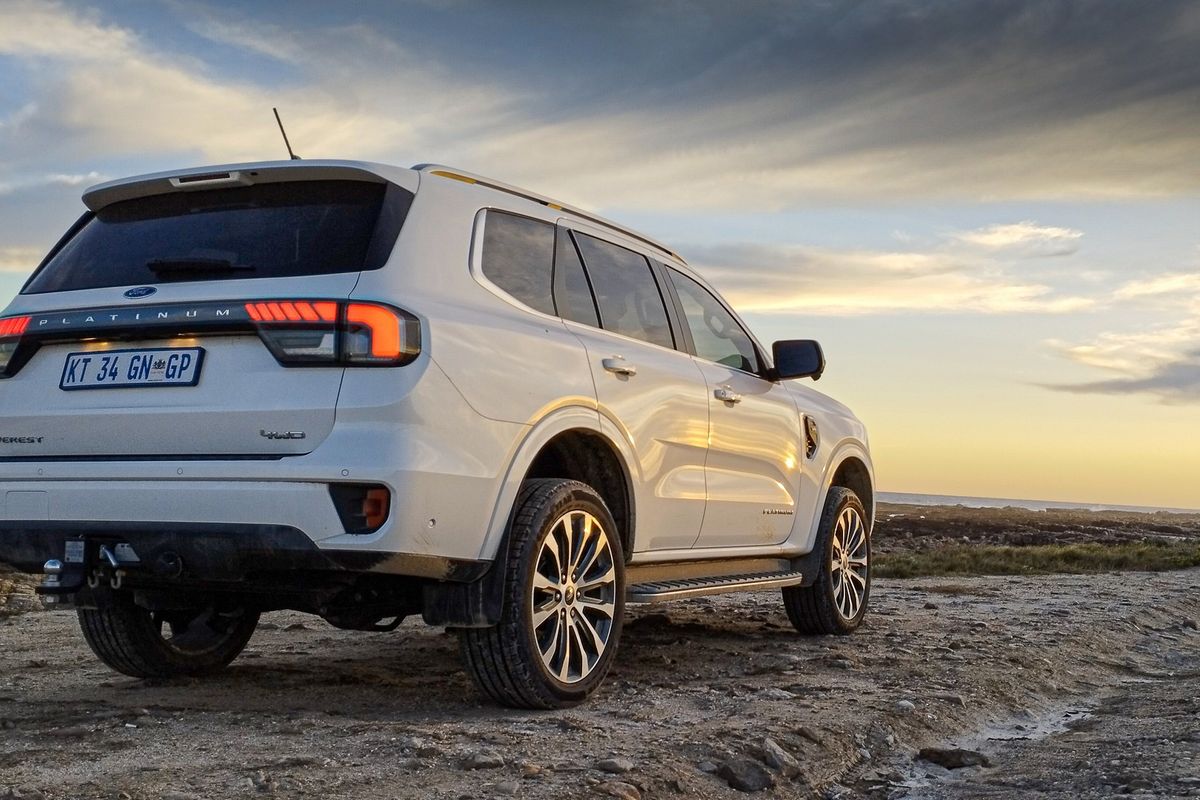
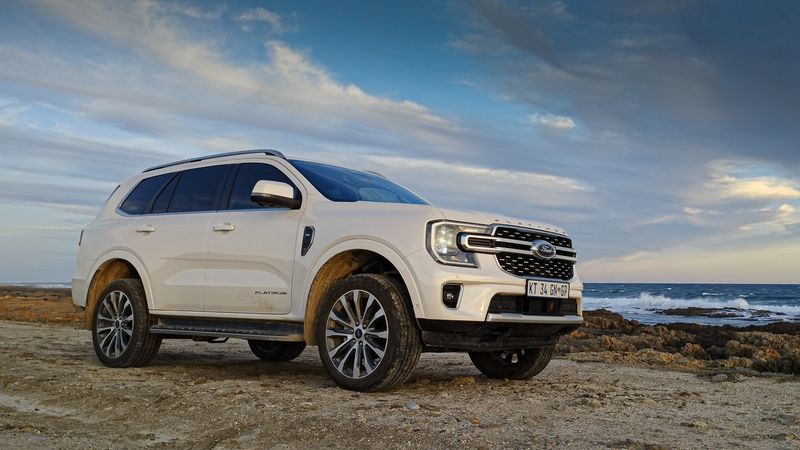
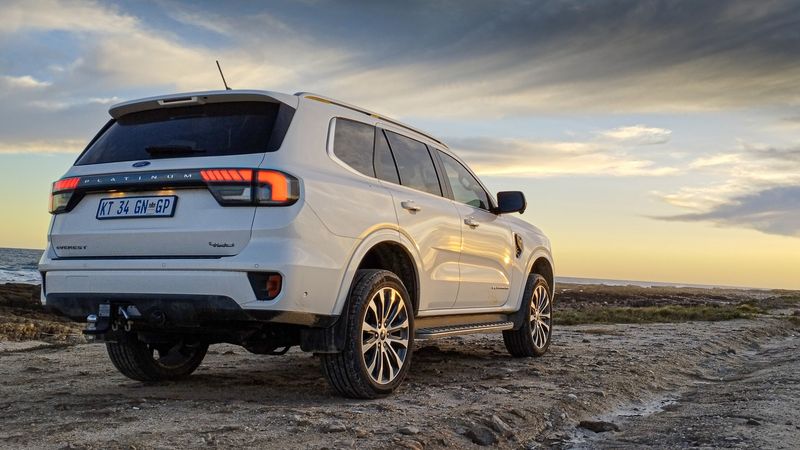
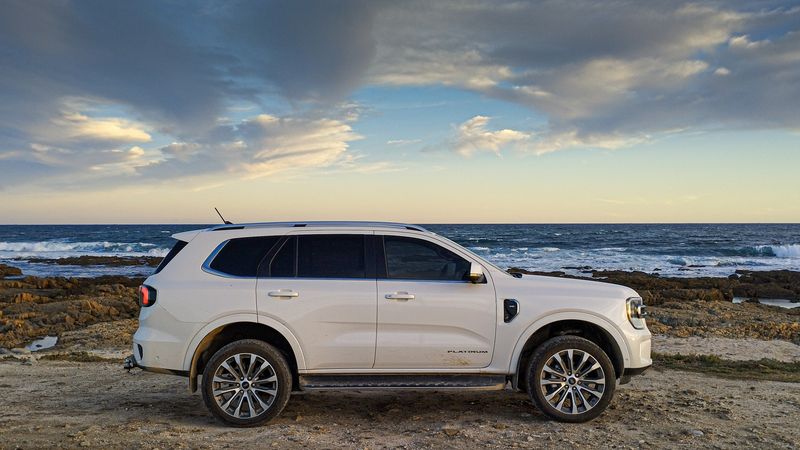
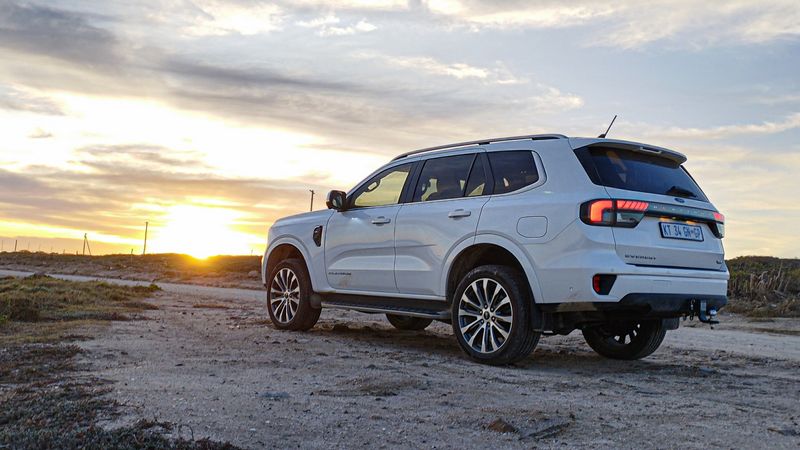
Riding high on its massive (21-inch) multi-spoke wheels and brandishing a bold, upright front-end design distinguished by distinctive “bracket”-shaped LEDs, the new-generation Everest is certainly a looker. As indicated by the presence of numerous Platinum badges on the vehicle – there are so many of ‘em, in fact, that some people thought the car had been renamed the “Platinum” – this is the flagship derivative. As such, it features significantly more shiny bits than the 2.0 BiTurbo 4×4 Sport derivative. You can make up your own mind about the design, but for what it’s worth, onlookers (almost all of them) adored it.
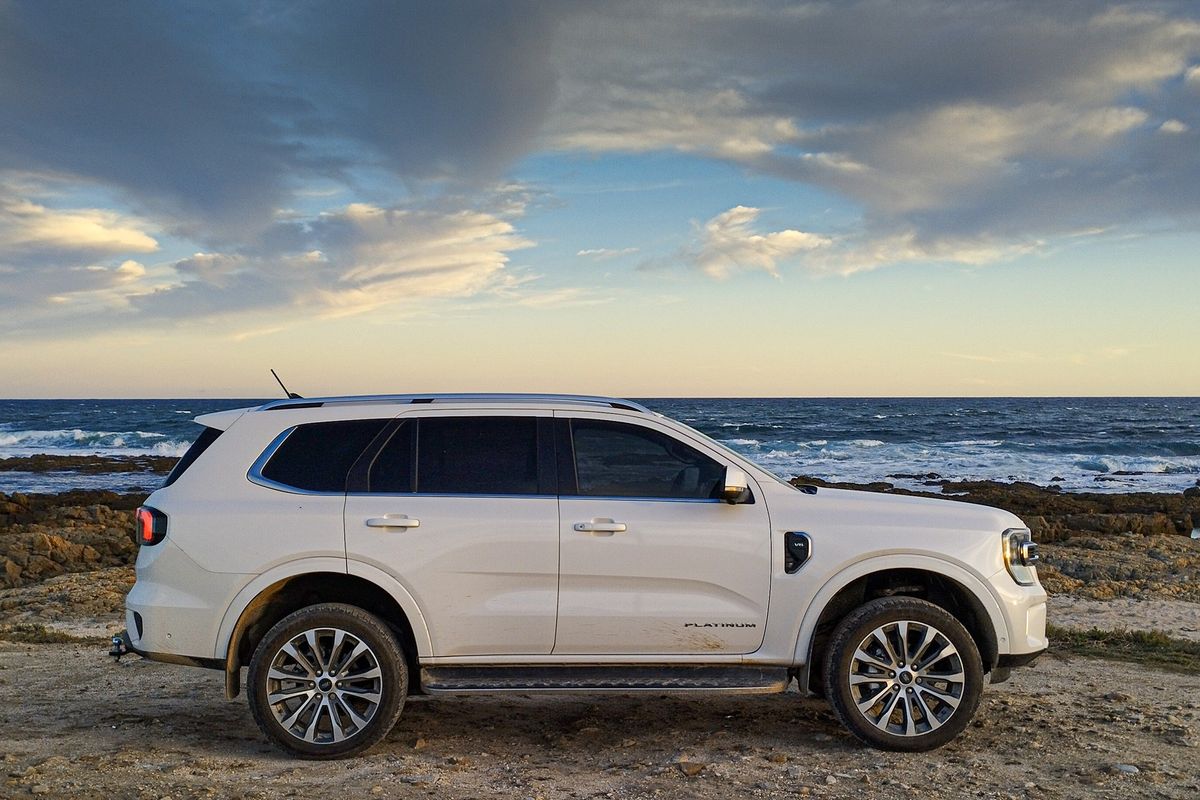
The Everest is a humongous vehicle, even by contemporary adventure-SUV standards. It is 4 940-mm long (including the towbar), has a 2 900-mm wheelbase, stands 1 837 mm high and its width (including side mirrors) is 2 207 mm. These dimensions make it a good match for the Prado (remember the Toyota carries its spare wheel on its tailgate), although the Jeep is a significantly longer proposition.
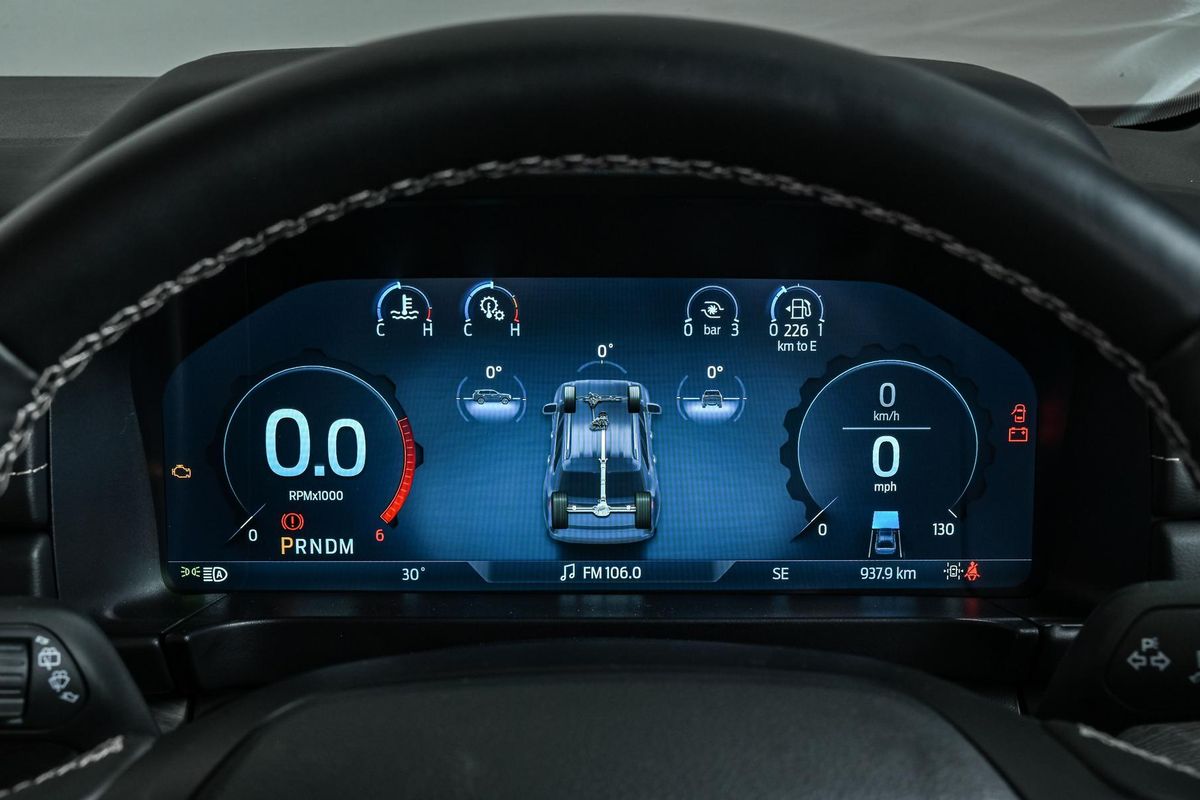
The Ford’s ground clearance is a decent 226 mm (the expansive side steps do look vulnerable, though) and that is notably higher than the claimed figures for the Toyota and Jeep. The new Everest can also wade deeper (800 mm) than its rivals and its roof is sturdy enough to carry a 350-kg (static) load.
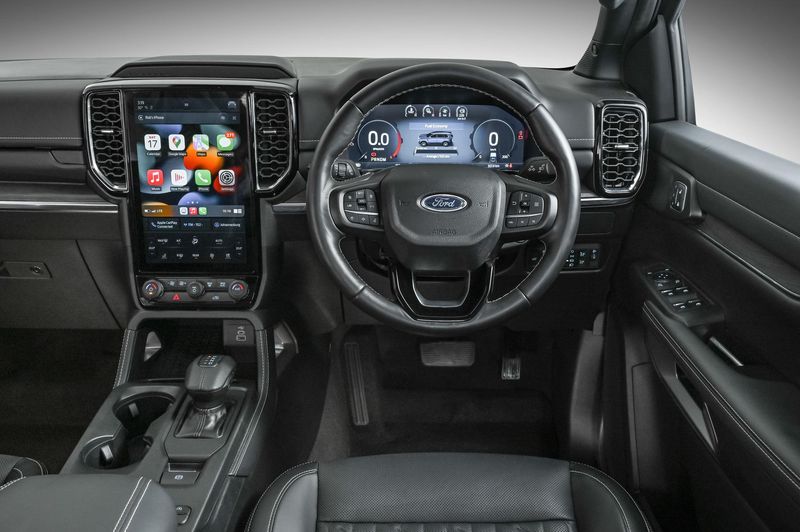
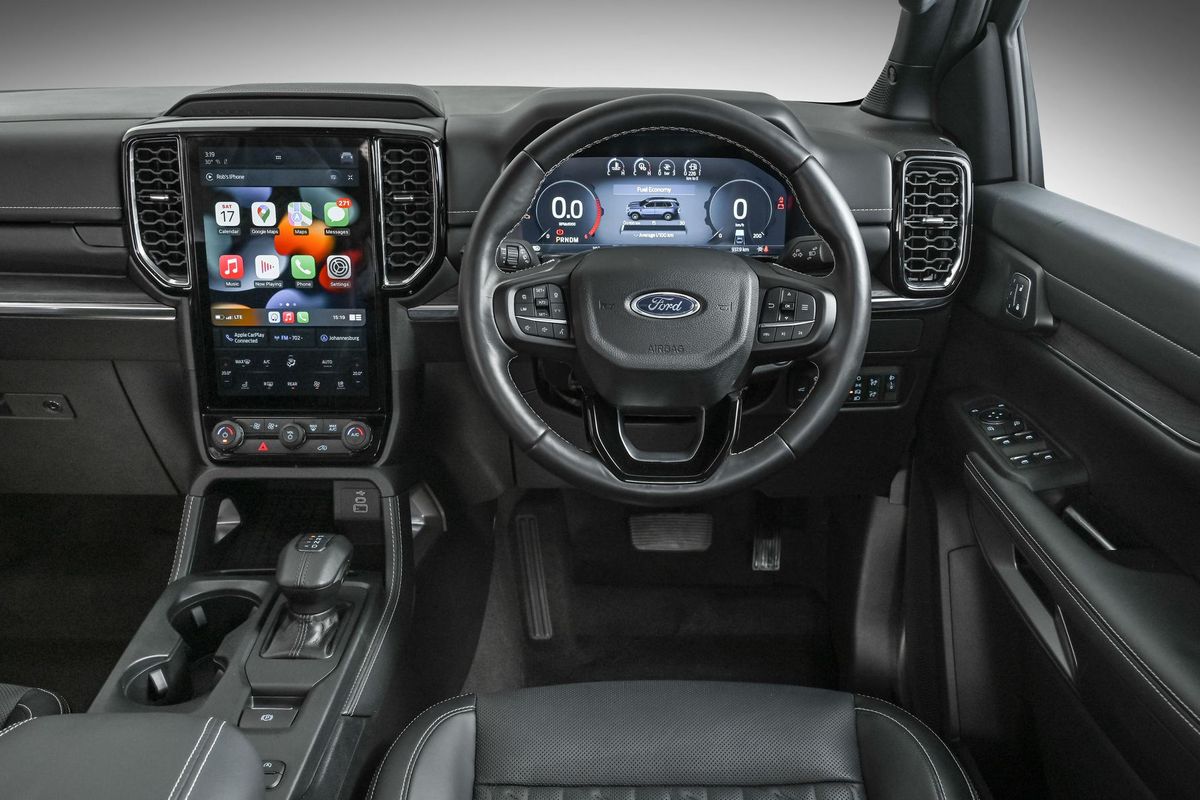
The newcomer’s capacious cabin is equally impressive, with top-notch finishes and fine attention to detail. We love the way the door handles are elegantly integrated into the door pulls, for example, and the stitched leather upper section of the fascia lends a welcome touch of “premium-segment class” to the model’s interior. Overhead, a vast panoramic sunroof is fitted as standard.
It’s hard to believe that the Everest’s smart interior essentially comes out of a bakkie (the new Ranger). Satin silver detailing, dark “wood” trim – and a minimalist approach to design – make the cabin appear worthy of a R1-million-plus vehicle, and well beyond the reach of the Fortuner, MU-X or Pajero Sport.
We’ll get to the comfort and luxury features later in this review, but in terms of packaging, the Everest leaves precious little to be desired. The front seats are electrically adjustable (including lumbar support) and the driver’s seat has memory settings as well. That, combined with a generously adjustable steering column, makes a comfy driving position easy to achieve.
Oddment storage up front is provided by a double glove box, large door pockets, pop-out drink holders in addition to those in the centre console, and a sizeable bin between the seats.
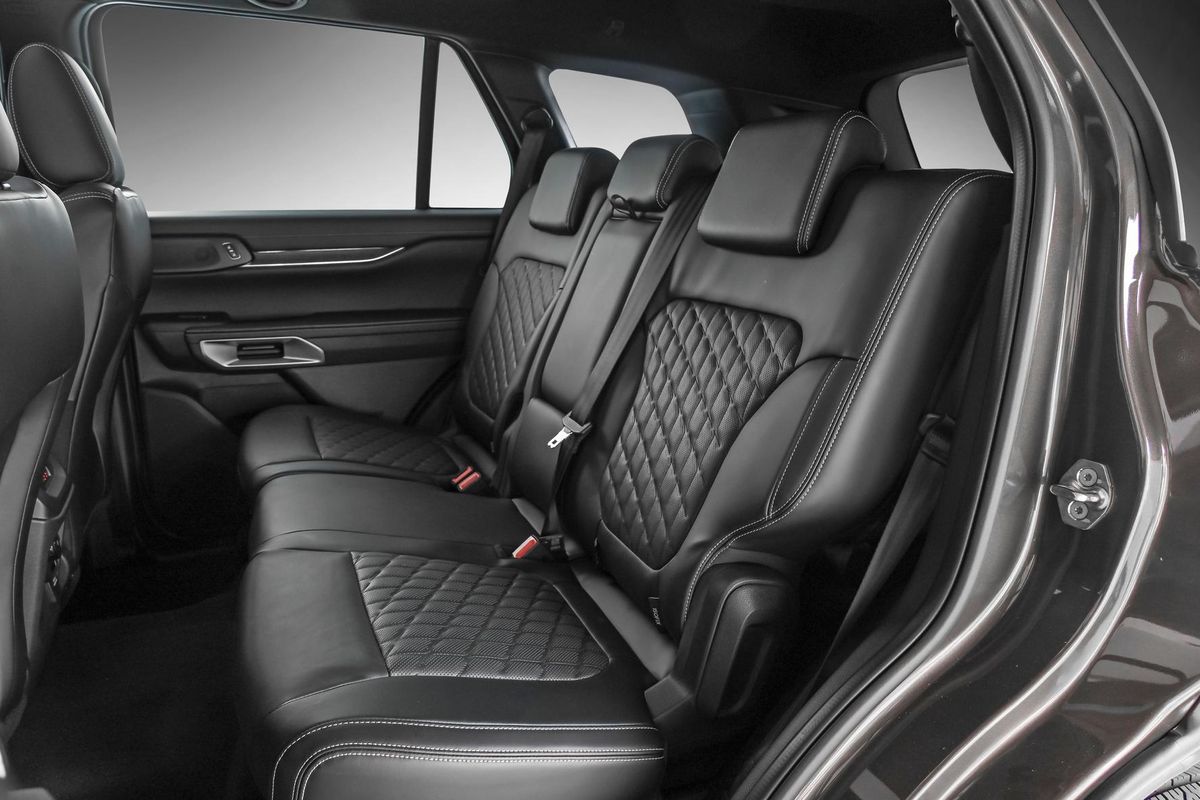
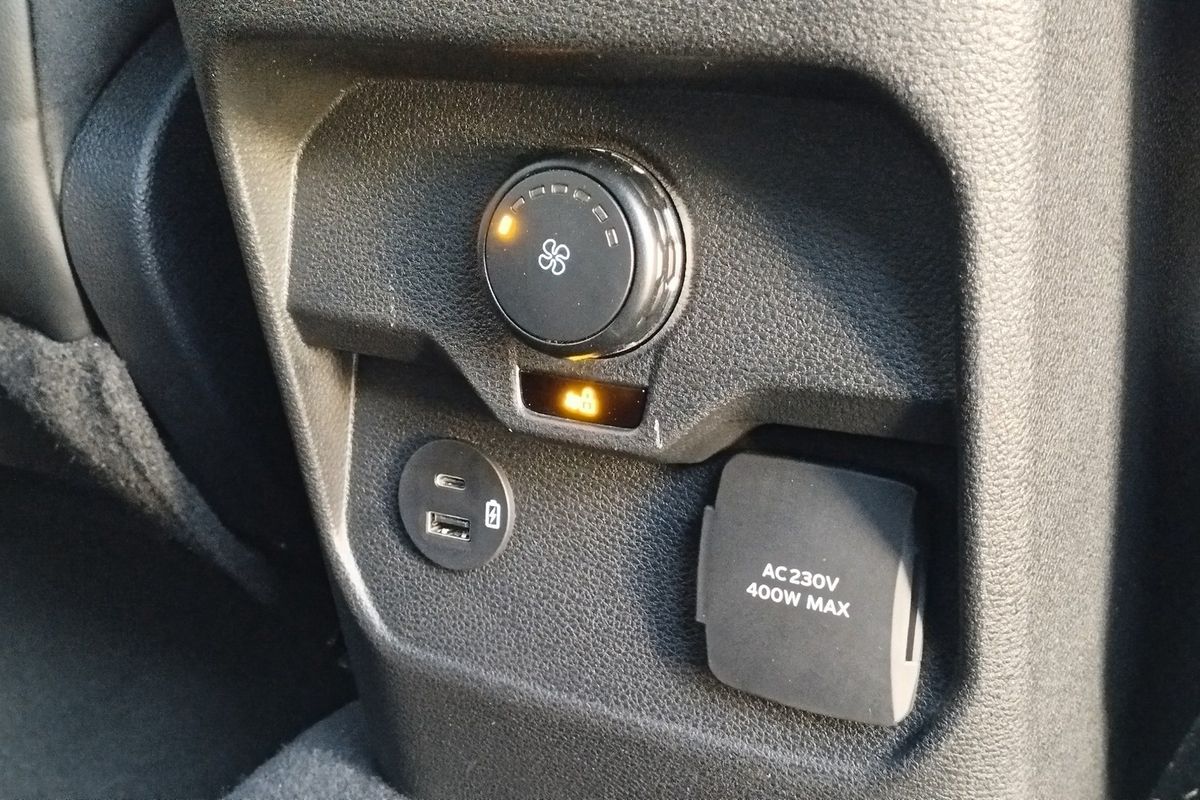
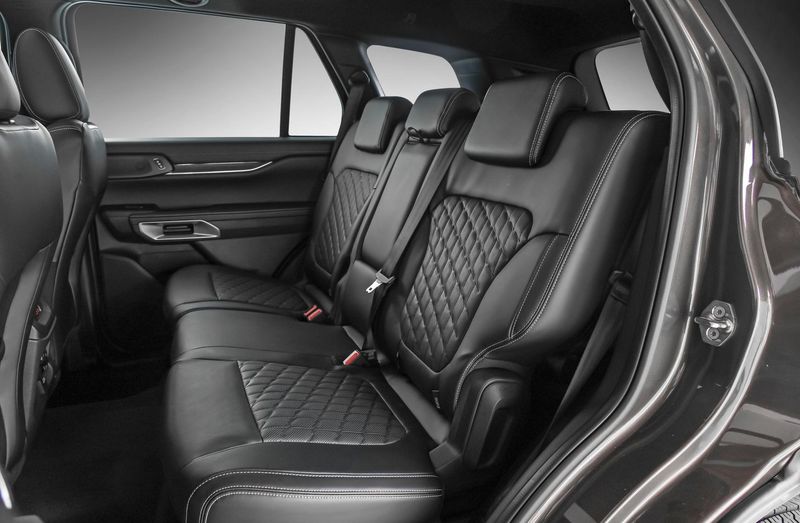
The fine attention to detail continues in the 2nd row. The bench is split 60:40, can slide fore or aft (as required), affords a measure of backrest angle adjustment – plus it’s heated! Second-row passengers have access to a pair of USB ports (USB-A and USB-C), as well as a 3-pin 400W inverter for powering laptops and other devices (you may need to use an adapter, though).
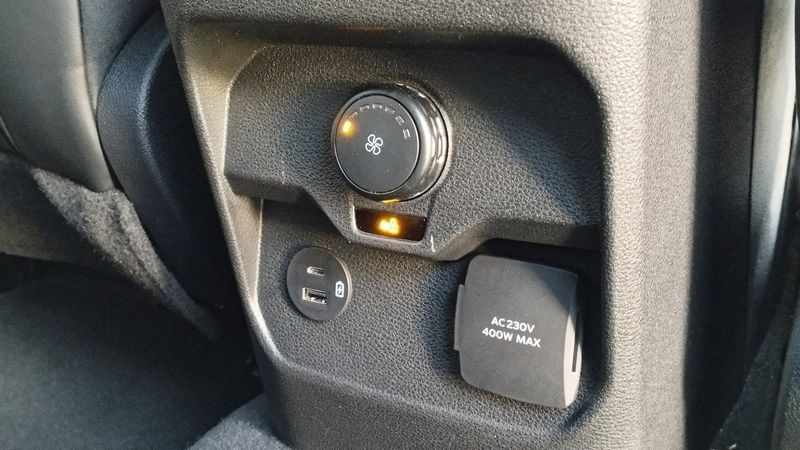
A rotary dial allows middle-row passengers to adjust fan speed of the rear climate control system (which can, of course, also be controlled via the front touchscreen). Ventilation outlets are mounted on the roof lining. Note that the bench is mounted quite high (to provide nice “stadium” seating and a good view out for kids), but that may leave too little headroom for taller adults.
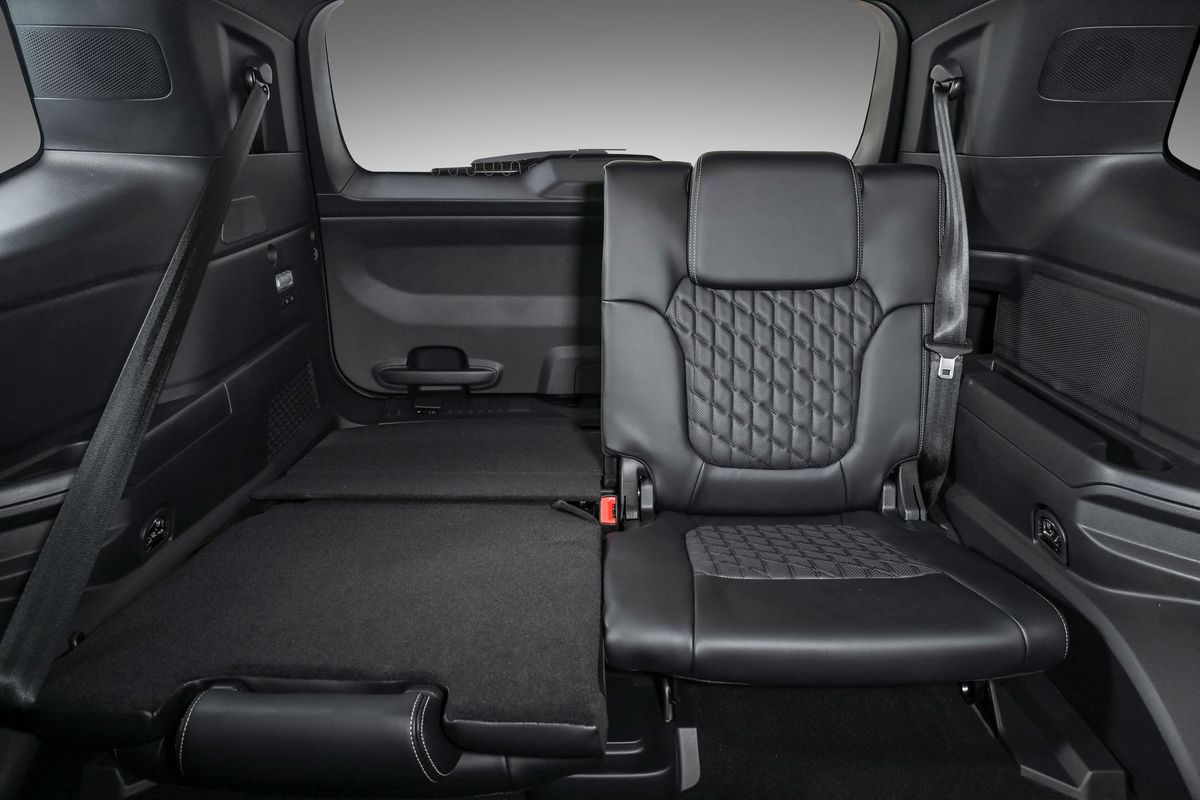
If you slide and tilt the 2nd row forward, it’s relatively easy to access the 3rd row. However, as is the case with most 7-seat bakkie-based SUVs, there isn’t much space for the occupants of the rearmost seats – headroom, in particular, is rather limited. A 1.8-meter-tall passenger could sit in the 3rd row when they were seated behind a driver and 2nd-row occupant of a similar height.
It was a squeeze, though; the 3rd-row passenger’s knees touched the seatback of the 2nd-row. At least the Everest offers ventilation outlets for those in the 3rd row, as well as a power outlet.
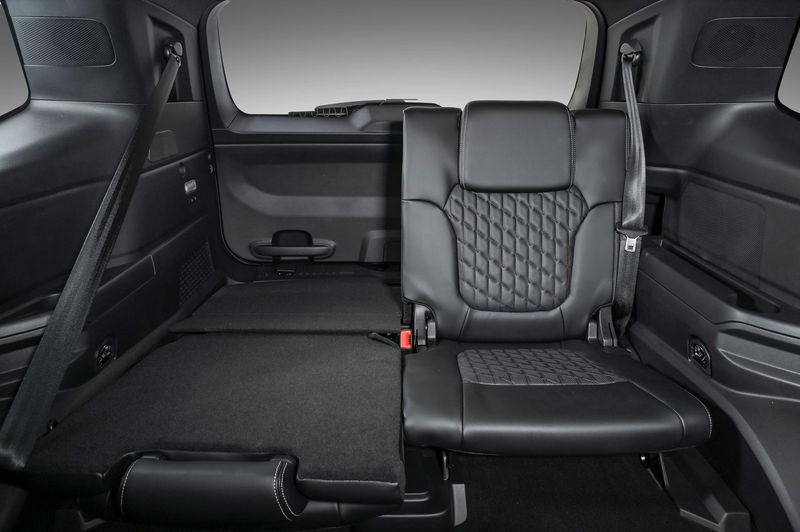
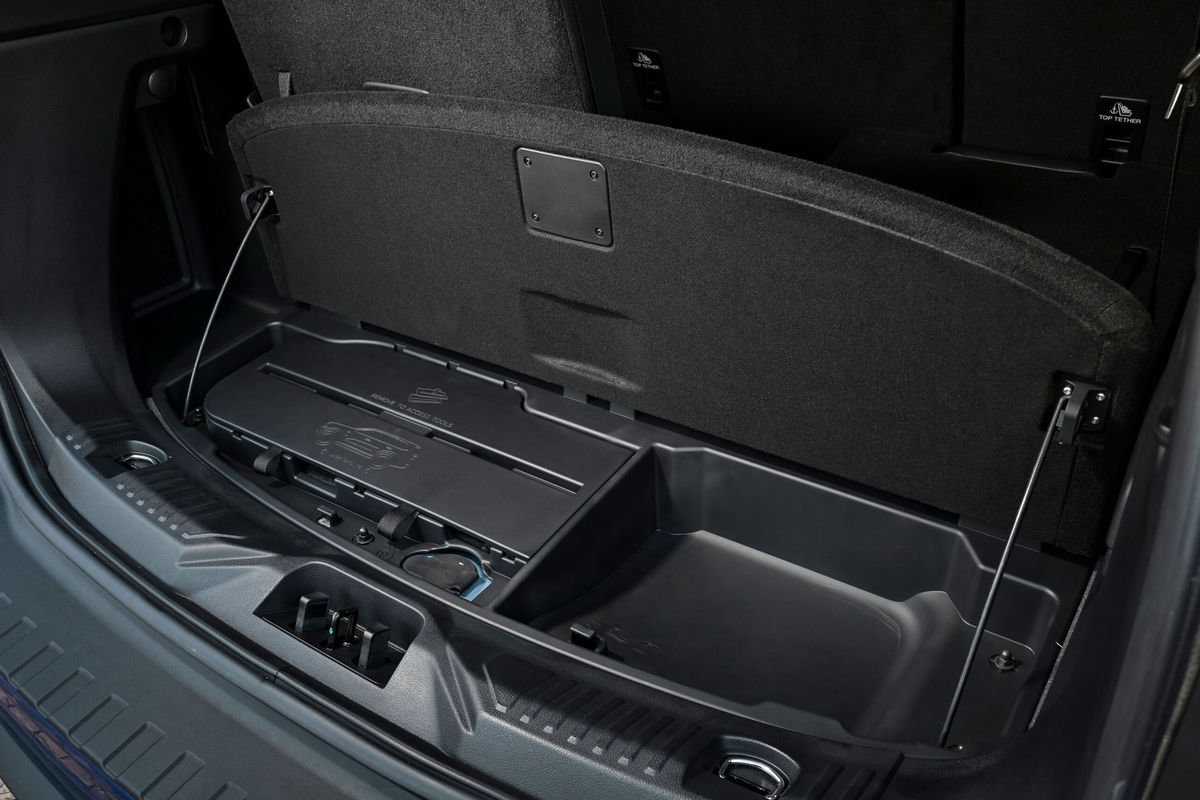
And what about luggage space? Obviously, when all 7 seats of the Everest are occupied, there isn’t too much load-bay capacity, even if the quoted figure (259 litres) is relatively good. The boot floor lifts up to reveal access to the tools and there is a small compartment for a few odds and ends as well. If you fold the 3rd row down (electrically, by pressing buttons mounted on the side of the load bay), the Everest’s utility space grows to 898 litres (which is voluminous, but not quite Prado-sized).
Finally, it’s worth noting that the tailgate is electrically powered and that the Everest 3.0 V6 AWD Platinum comes fitted with a detachable tow hook as standard. Also bear in mind that the Ford’s (braked) tow rating has increased by 400 kg compared with the previous model (its maximum rating is 3 500 kg).
Performance and Efficiency
One of the main talking points of the Everest is its brand-new 3.0-litre V6 turbodiesel engine. It delivers a whopping 184 kW at 3 250 rpm and peak torque of 600 Nm from a pleasingly low 2 500 rpm.
The powerplant is mated with an updated 10-speed automatic transmission that drives the flagship’s permanent 4-wheel-drive system, although most on-road driving will take place in 2H mode. Ford doesn’t quote performance figures, but we can confirm that the powertrain performs spiritedly.
Even when loaded with a full complement of passengers (with as much crammed into the cabin as possible), as well as surfboards strapped to the roof and bicycles mounted on a rack at the back, the top-rung Everest made easy work of our long-distance trips during the holiday season.
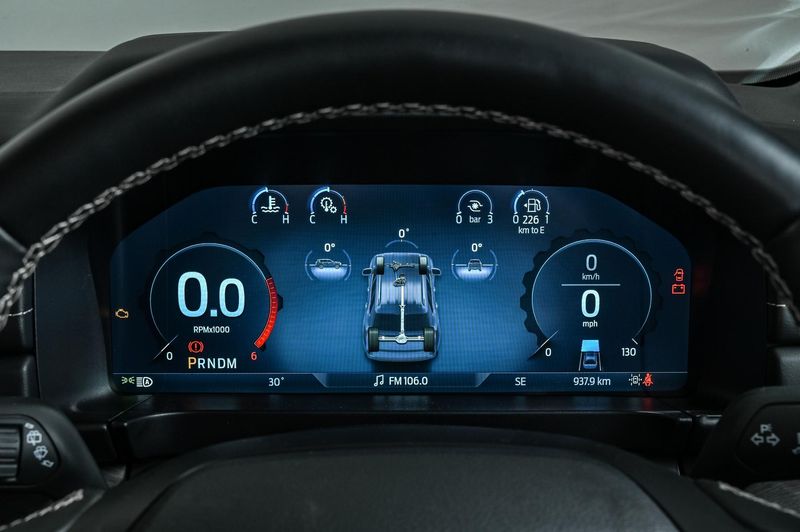
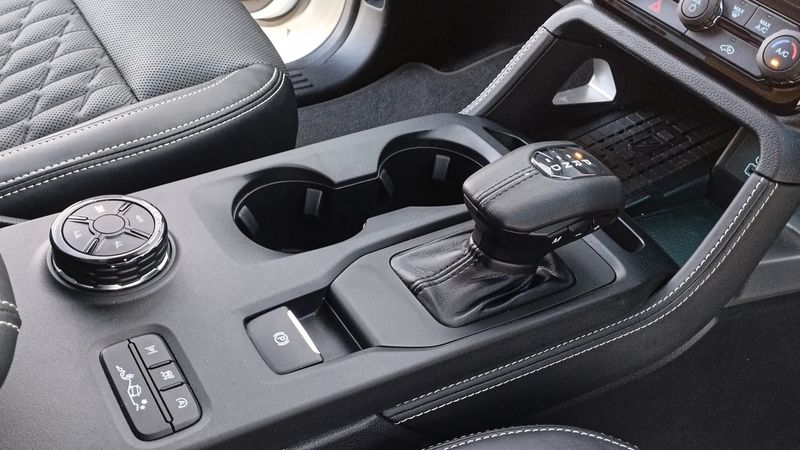
Not only did the Ford provide strong overtaking acceleration when required; its 10-speed ‘box was superb – the Everest never felt flat-footed or “laggy”. There are no flappy paddles behind the ‘wheel, but you won’t miss them – the transmission is THAT good (well-calibrated). If you really, really want to shift manually, you can do so by using buttons mounted on the side of the transmission lever.
Predictably, the downside to the 3.0 V6 AWD Platinum’s punchy performance is disappointing fuel economy. Ford claims a hilariously optimistic average consumption figure of 8.5 L/100 km, but, even when driven with an efficiency-minded driving style (in Eco mode), a more realistic consumption figure is about 10.5 L/100 km. This means you are looking at a range of 723 km, at best, from the 76-litre tank.
If you plan to make regular long-distance journeys “into the unknown”, then the fact that the Prado offers a pair of tanks (that total 150 litres) may be a deciding factor.
Comfort and Features
To mention all the standard features fitted to the Everest 3.0 V6 AWD Platinum would take a very long time (rather use our handy compare tool); we will point out the highlights, however. In its launch literature Ford describes the Everest’s cabin as a “sanctuary” for its occupants… Well, it’s quite an apt description, because the Everest boasts class-leading NVH (noise, vibration, harshness) control, which is a great foundation on which to build a comfortable cabin. Road and engine noises or vibrations, in particular, are impressively suppressed, and only a slight rustle tends to emanate from around the massive side mirrors. Again, details such as these elevate the Everest’s cabin refinement beyond those of its traditional rivals.
We’ve already mentioned the superb seats (heated and cooled at the front, plus a heated multifunction steering wheel), but, on top of that, Ford has fitted a banging B&O branded audio system, dual-zone climate control and a staggering number of driver assistance or safety systems, including adaptive cruise control, forward collision assist, rear cross-traffic alert with braking (very useful on a big vehicle such as this), lane-keep assist and even active parking. Of course, as with many modern vehicles, some of these systems can be a little intrusive at first, but you can delve into the various menus (using the massive 12-inch portrait-style touchscreen) and either deactivate some of them, or adjust them to be less sensitive.
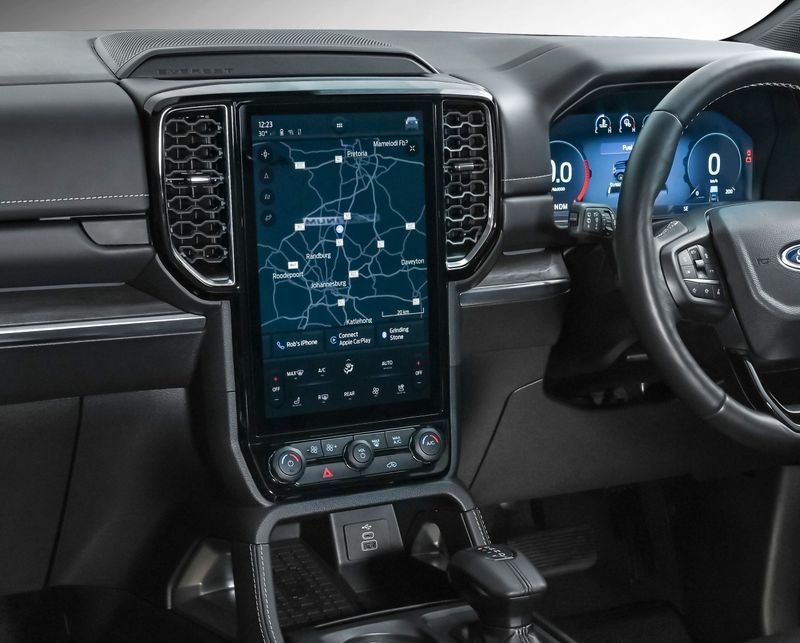
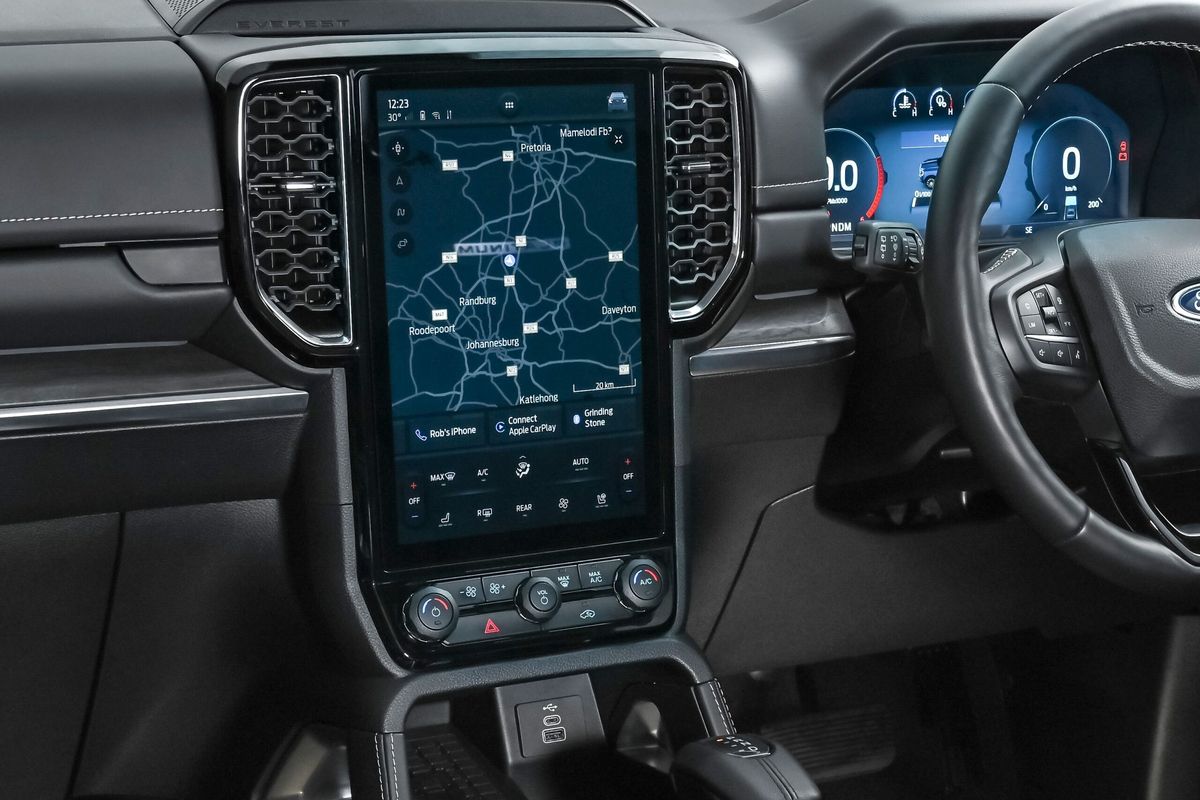
And so, we get to another big talking point. The massive touchscreen looks very smart, but some folks have raised concerns that the elaborate setup takes things too far (particularly for a bakkie, or a variant thereof). However, it feels very much at home in this R1-million-plus SUV, and allows for fine-tuning of features that would have required myriad buttons. Thankfully, the controls that you will use most often (fan speed, temperature control, volume etc.) can still be accessed using physical buttons/knobs.
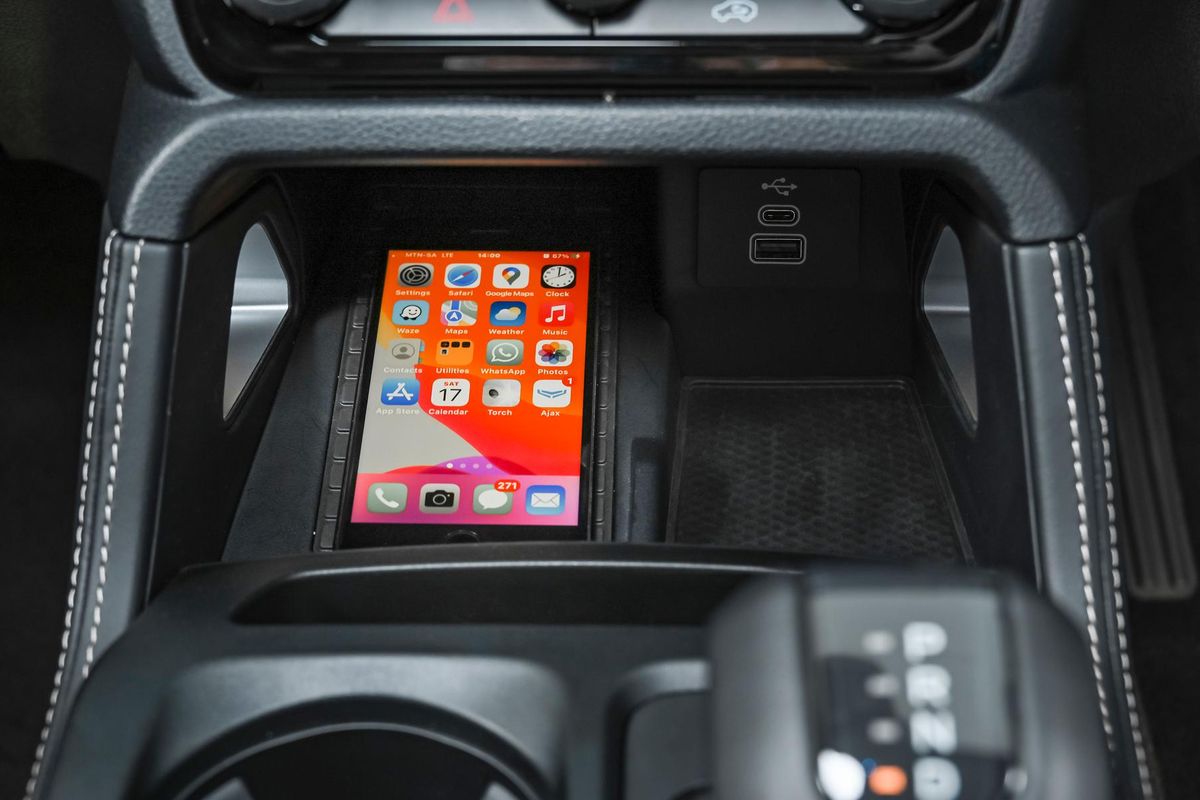
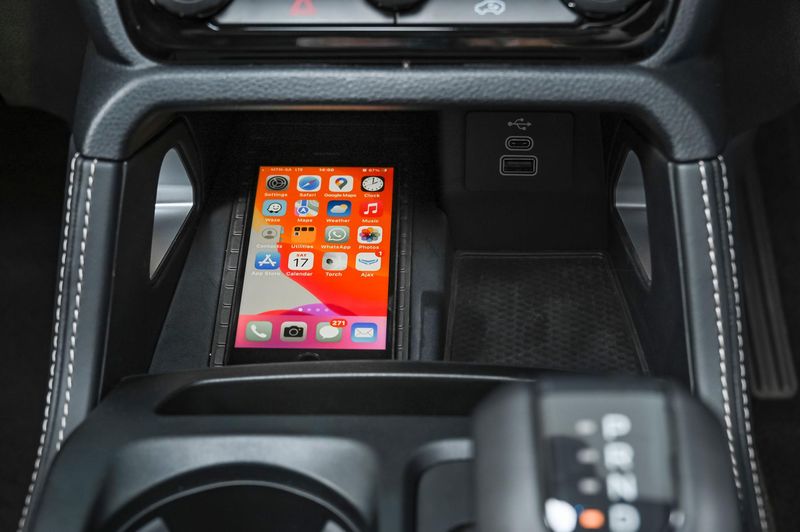
We enjoyed the intuitive nature of the SYNC4 system and its menu layouts. Bluetooth, Android Auto and Apple CarPlay are all supported and a wireless charging pad is provided. Up front, occupants have access to a trio of USB ports (one being windscreen mounted – you can use it to power a “dash cam”, for example) and, specifically, USB-A and USB-C sockets – they’re located in front of the ‘charging pad.
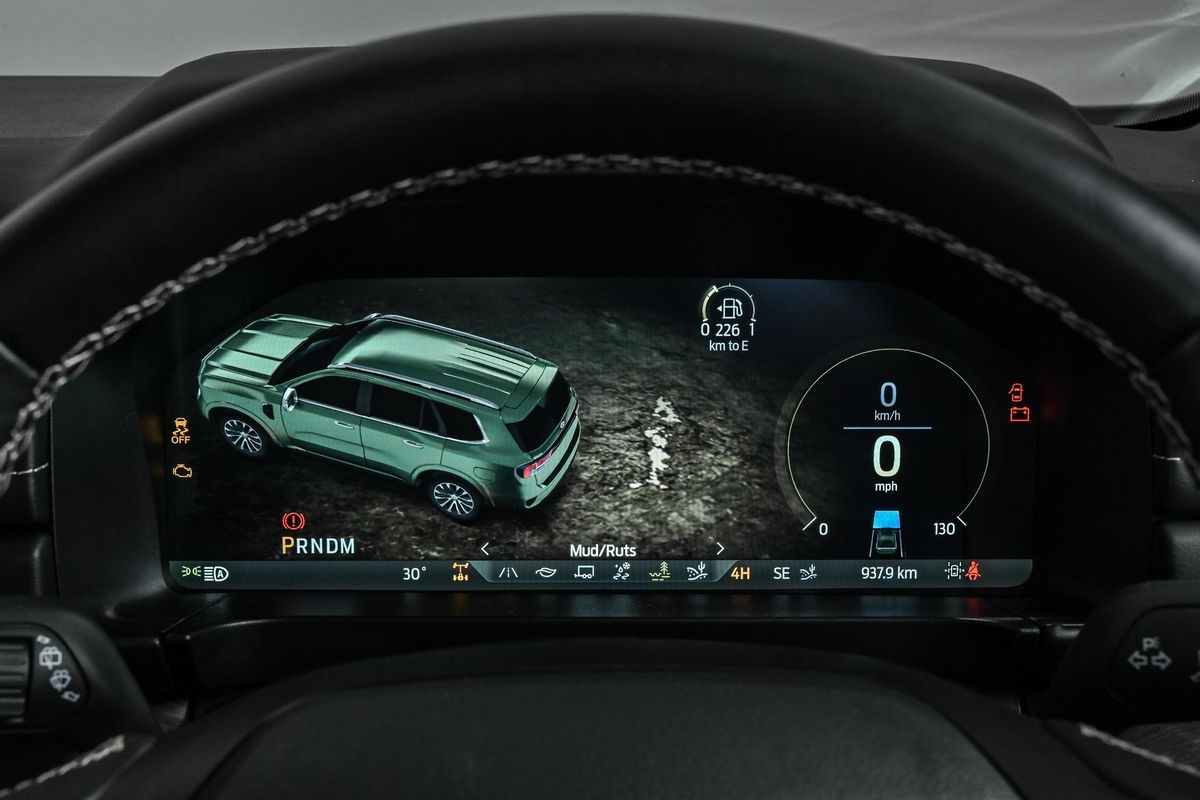
If we had to nitpick, we’d say we were somewhat disappointed with the Ford’s surround-view camera system. It does offer a 360-degree perspective, and you can zoom in on the corners of the vehicle, but the resolution isn’t as crisp as we’ve seen on vehicles costing half the price, and there is no 3D mode, which would have been particularly helpful in off-road conditions.
On the road, and off it…
Courtesy of its wider tracks (up by 50 mm front and rear, compared with its predecessor), and upgraded suspension, the Everest feels the most “un-bakkie-like” of all the ladder-frame-based 7-seat SUVs on the market (in January 2023). This Platinum-spec derivative is arguably more road-biased than ever before, with its large (21-inch) wheels wrapped in relatively low-profile 274/45 rubber.
As an option, you can fit 18-inch wheels – shod with more suitable all-terrain tyres – if you intend to traverse challenging off-road terrain, such as technical 4×4 courses, quite often.
But, as it stands, the Everest’s ride is slightly on the firm side (although it’s far from jarring), and sharp, sudden jolts will remind you that there’s a bakkie chassis underneath it all. Having said that, 99% of the time, the Blue Oval’s adventure SUV just feels planted, secure and safe… Overall, it seems significantly less “wallowy” than its predecessors, older rivals, and miles better – on tar – than the ageing Prado.
To match the Prado off-road, however, is another story… Due to the tyres fitted to our test unit, we elected to stay clear of conditions that could inflict damage to the Ford’s pretty rims or pronounced side steps, but we did do a lot of gravel road driving, as well as some rock climbing and gully exercises.
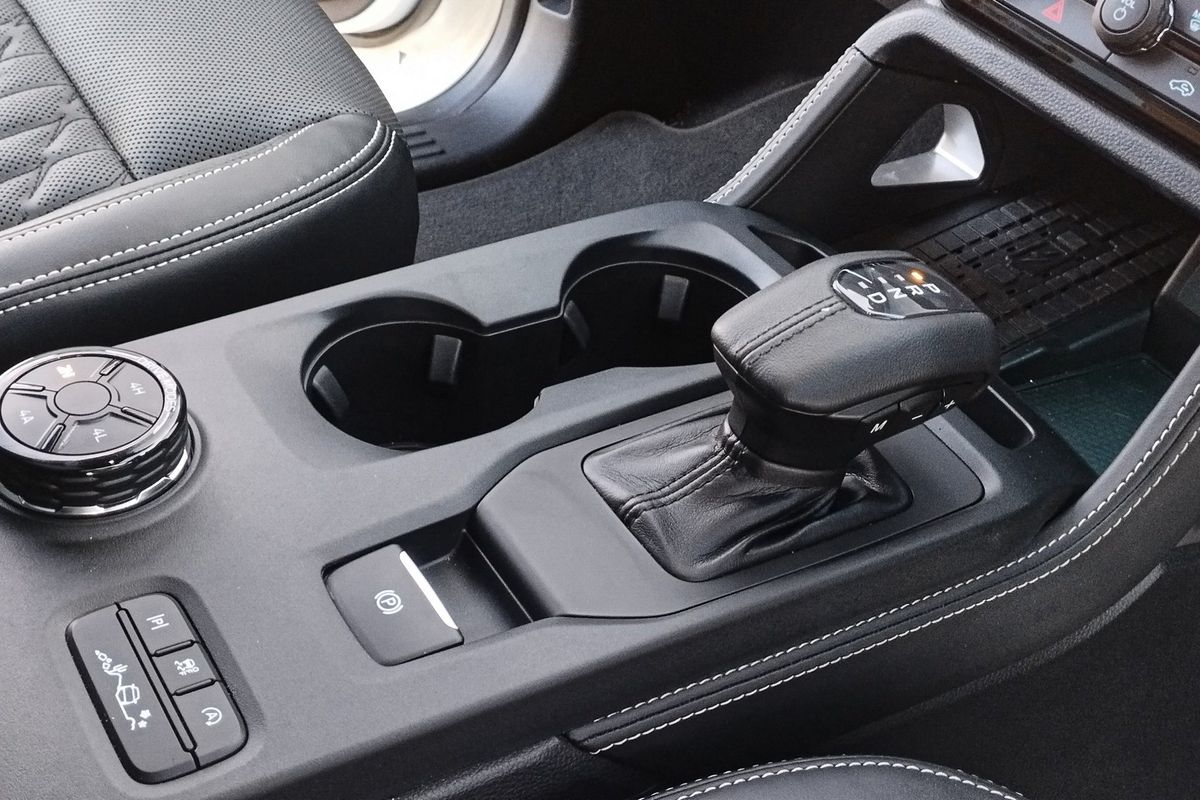
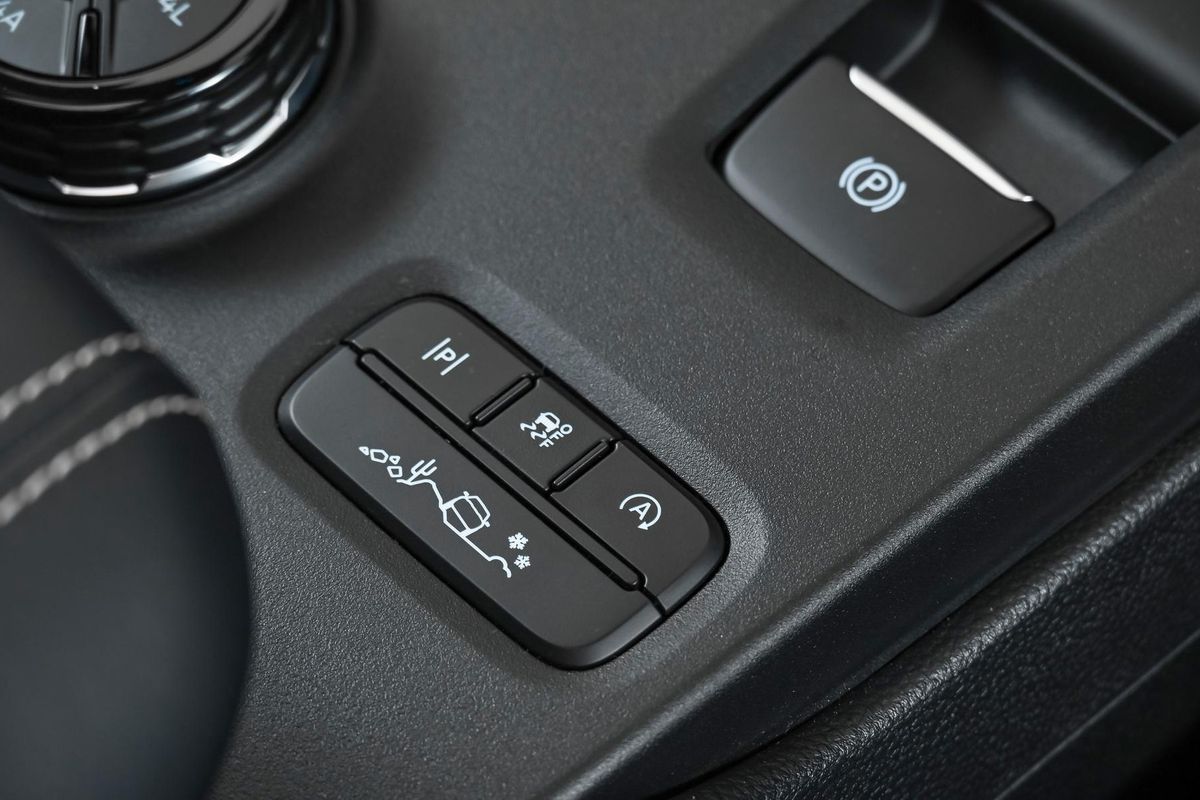
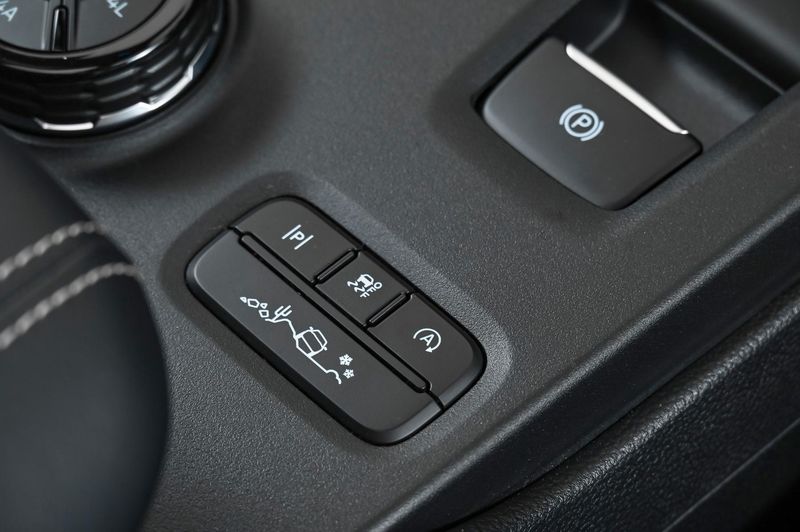
The Everest is a close match for the Prado in terms of its approach and departure angles (just mind the towbar!) and, in addition to the automated four-wheel drive setting, you can manually select 4H or 4L, and then further fine-tune the vehicle settings using a dial on the centre console. Normal, Eco, Tow Haul, Slippery, Mud&Ruts and Sand modes are available, and the rear diff lock can be activated electronically.
On gravel roads, we found the Everest’s driving experience quite superb and, when we did some off-road driving in trickier conditions, it was abundantly clear that even when rolling on road-biased tyres, the combination of stonking torque and clever off-road systems make the Everest a true Adventure SUV –not a show pony. Oh, and tyre pressure monitors are also fitted, as is specific underbody protection.
Ford Everest Price and After-sales Support
The Ford Everest 3.0 V6 AWD Platinum sells for R1 113 100 (before options – January 2023) and comes standard with a 4-year/120 000 km warranty, 5-year/unlimited distance corrosion warranty, as well as 4 years’ (unlimited distance) roadside assistance. Customers can buy service or maintenance plans as required (of up to 8 years or 135 000 km). The warranty can also be extended to 200 000 km.
Verdict
With the new Everest, Ford has indeed elevated its flagship SUV beyond the reach of its traditional rivals. In one move, it has left the still-relatively new Isuzu MU-X feeling decidedly dated, and provides a heady new benchmark for Toyota to aim at with its next-generation Fortuner, which will undoubtedly also shift upmarket. As it stands right now, however, this is the finest bakkie-based SUV that you can buy now; it combines true adventure ability with premium, luxurious on-road motoring and the latest technology.