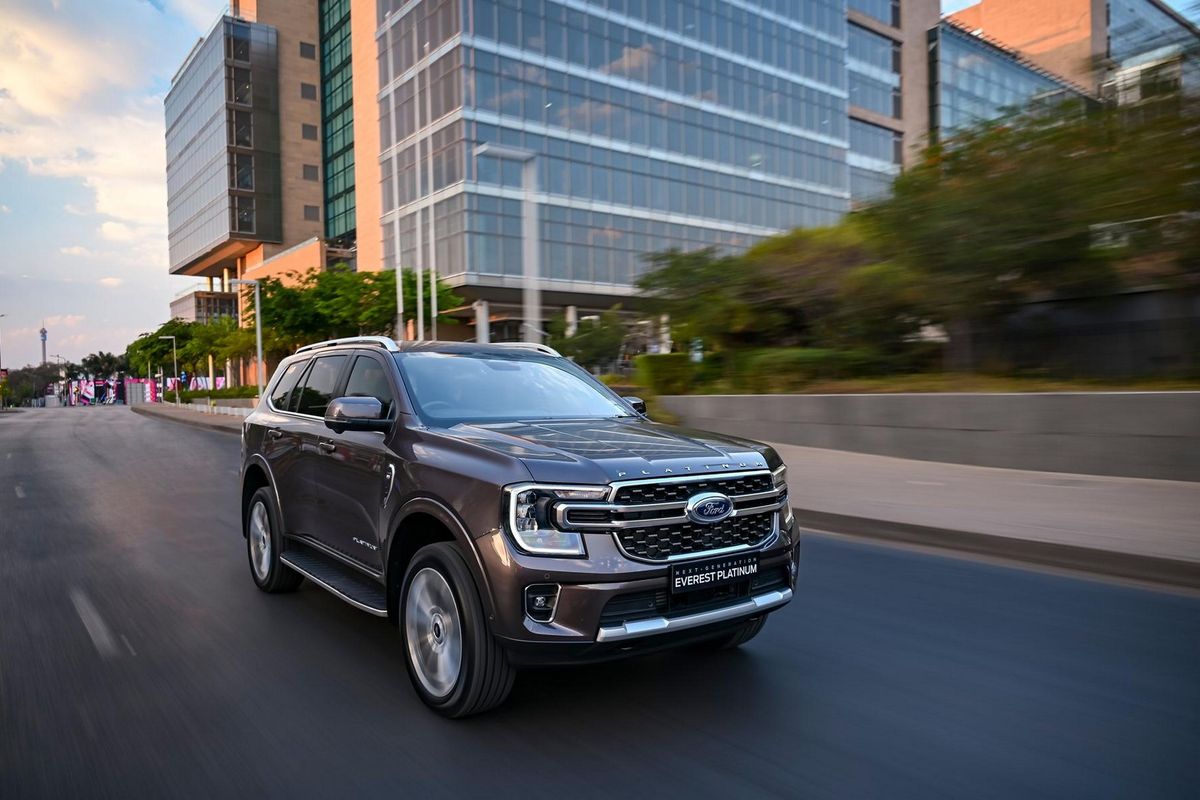
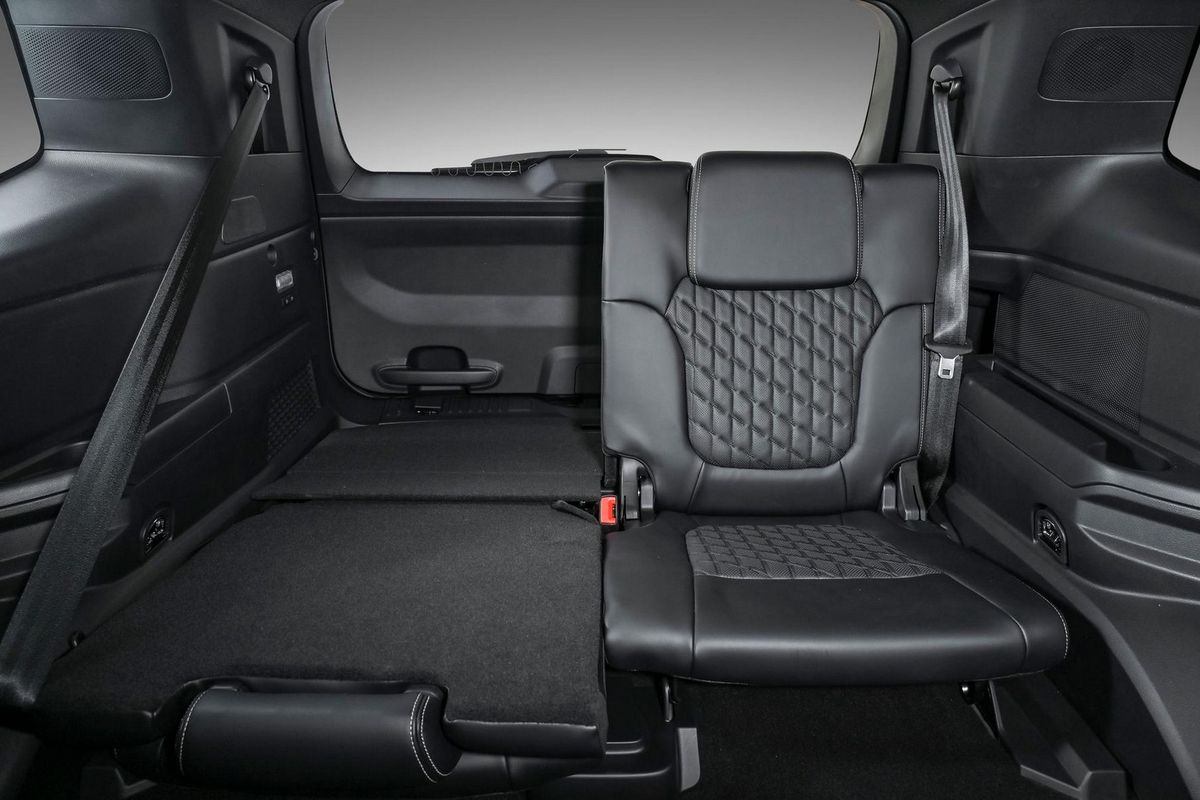
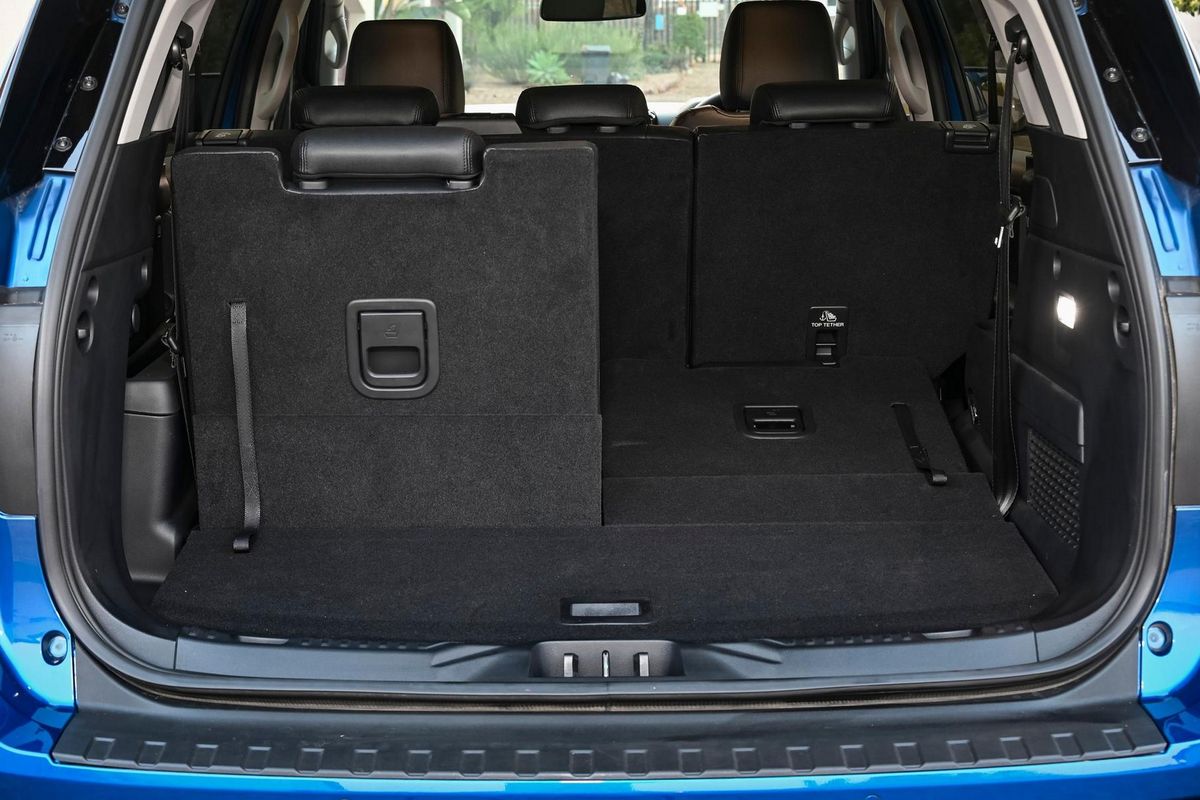
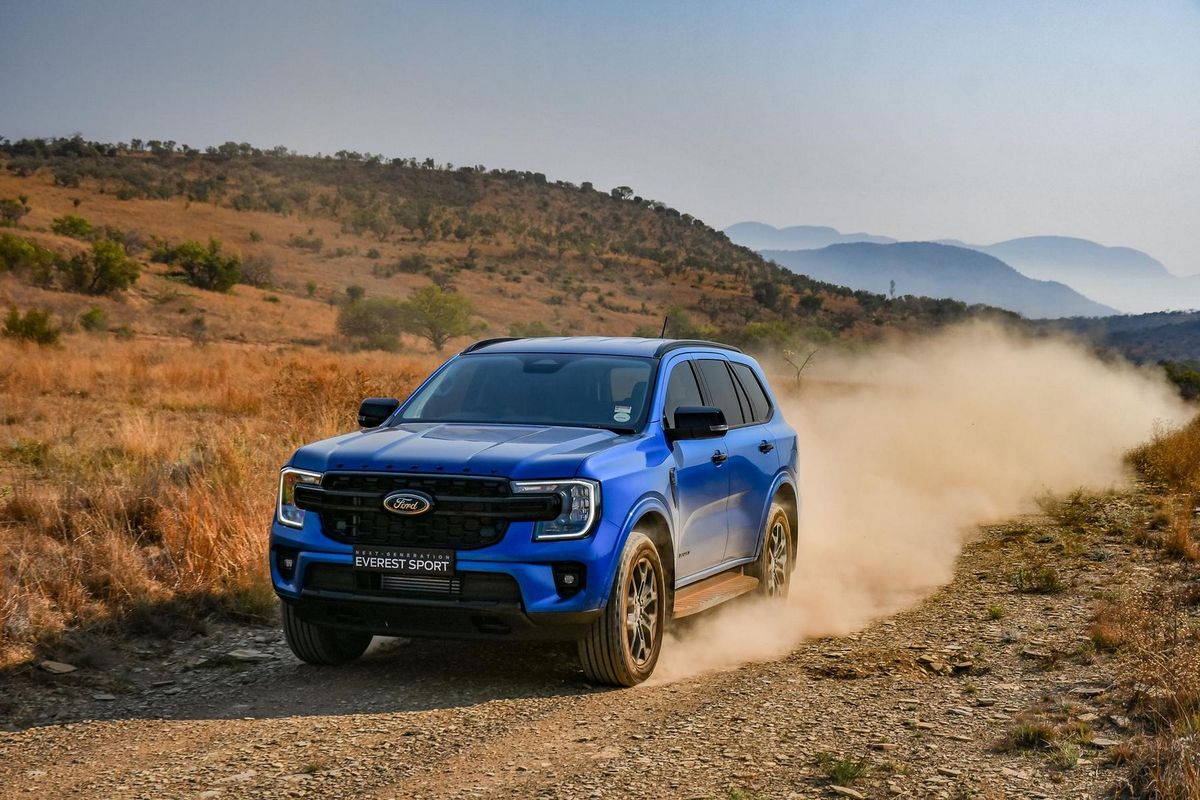
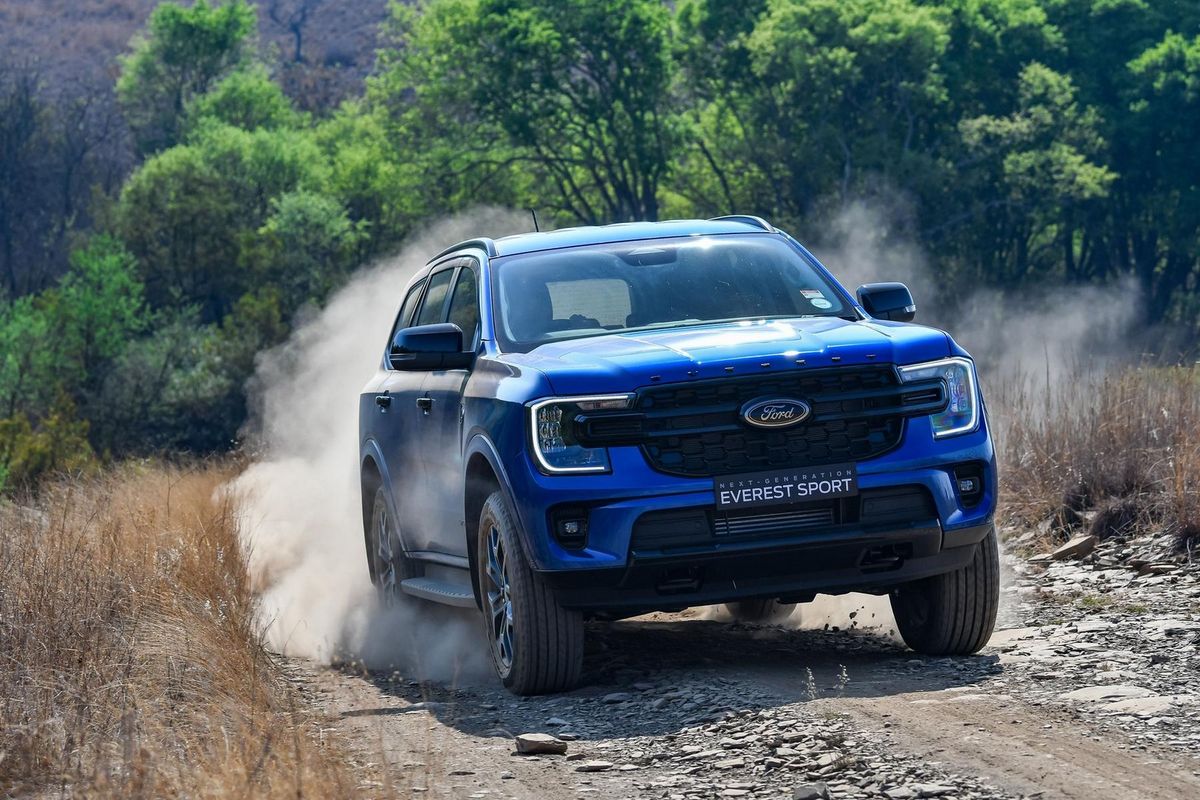
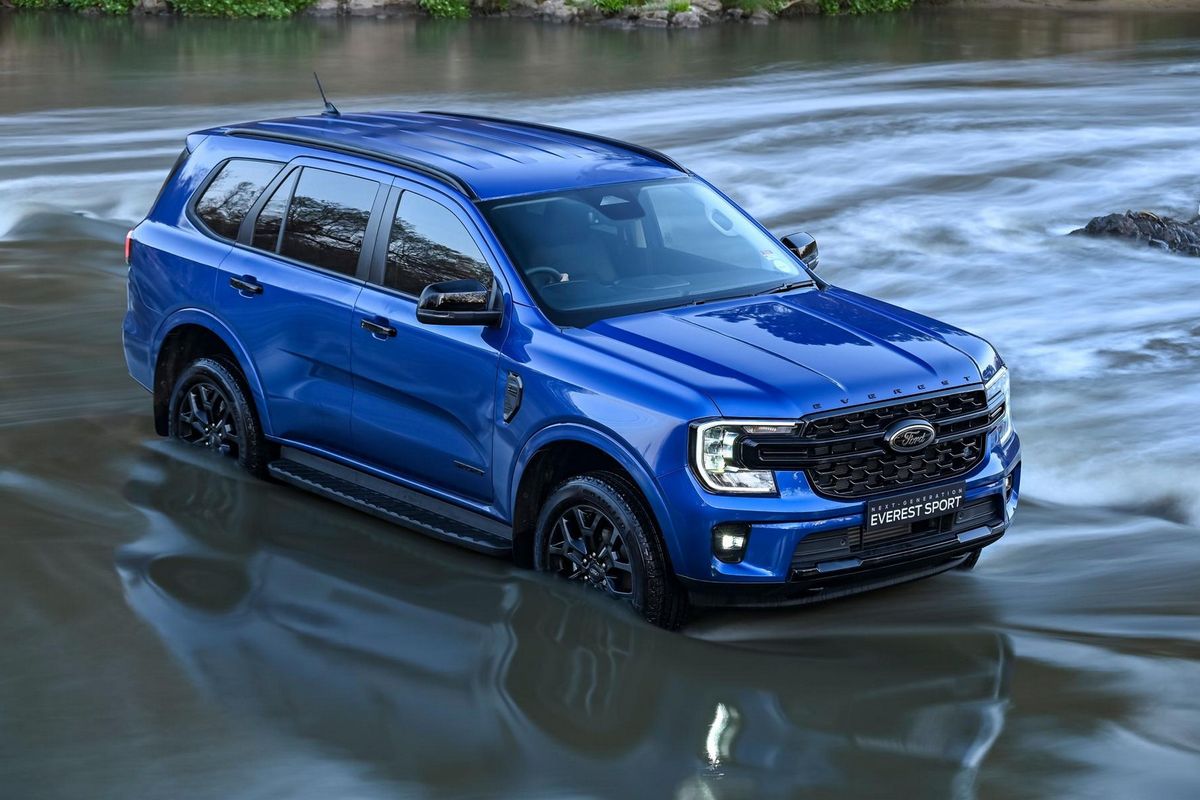
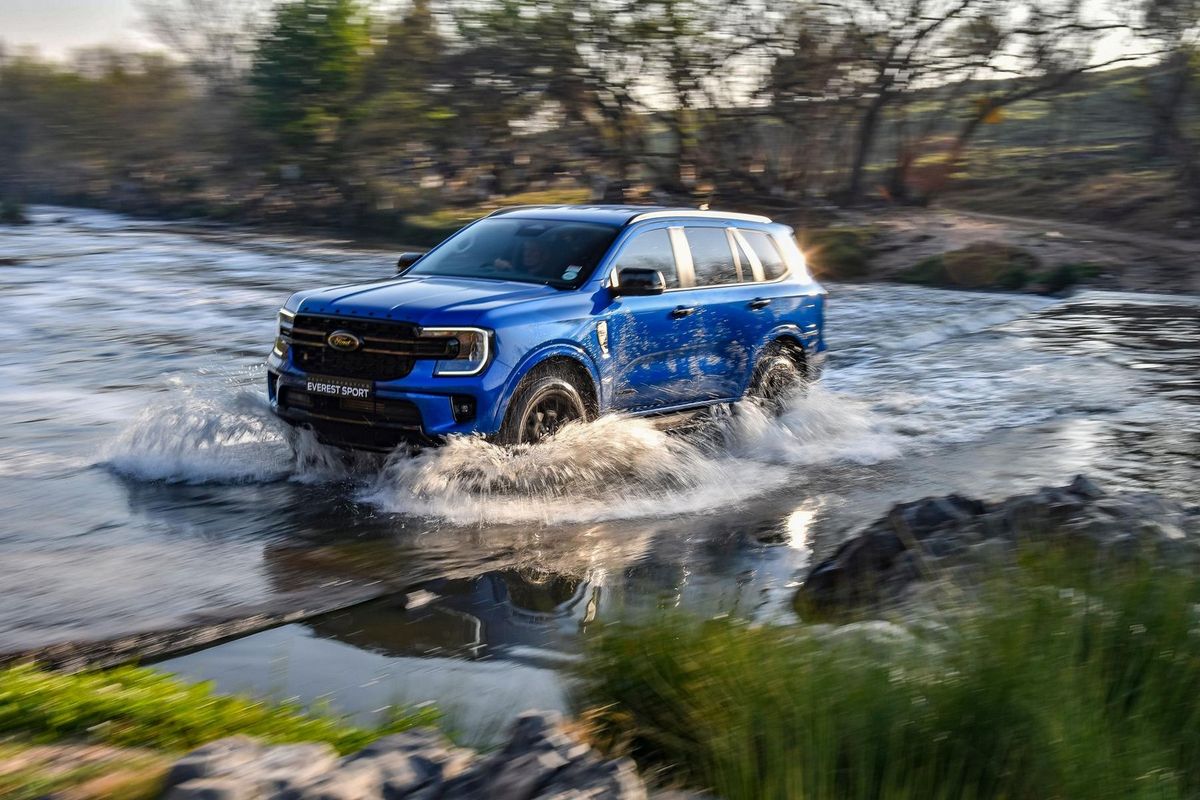
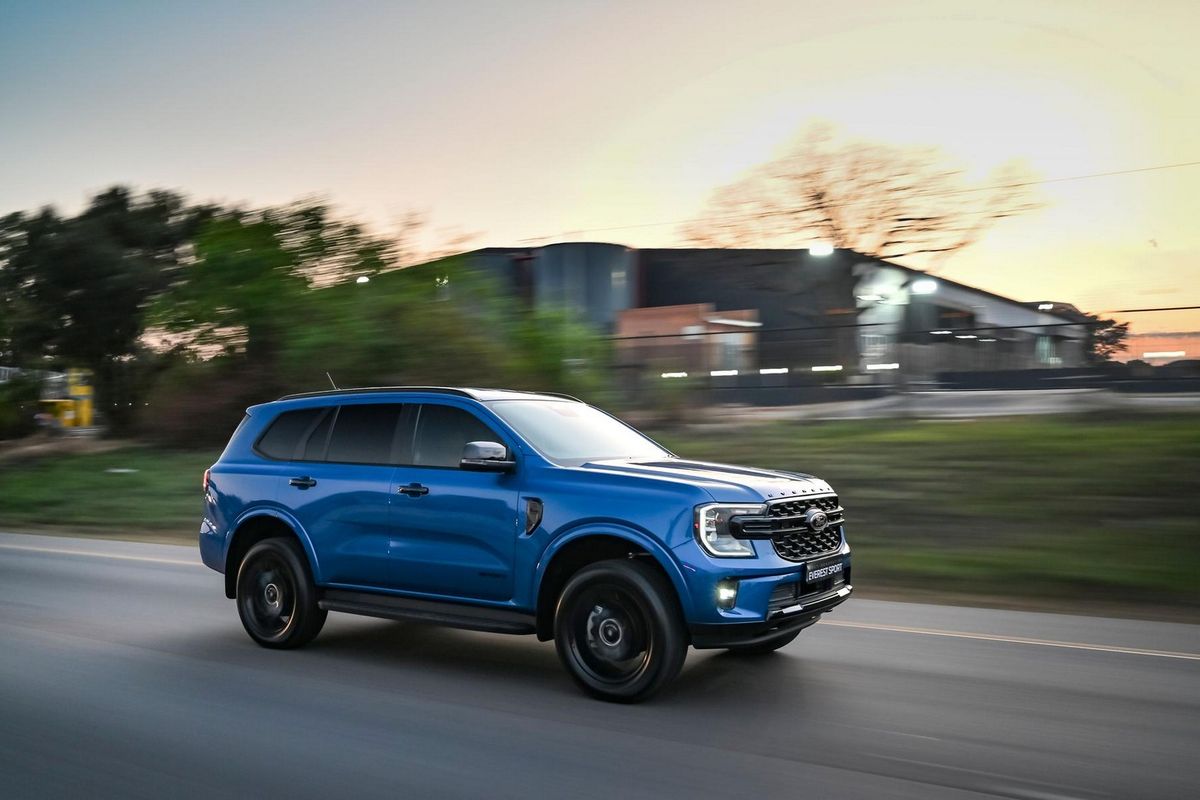
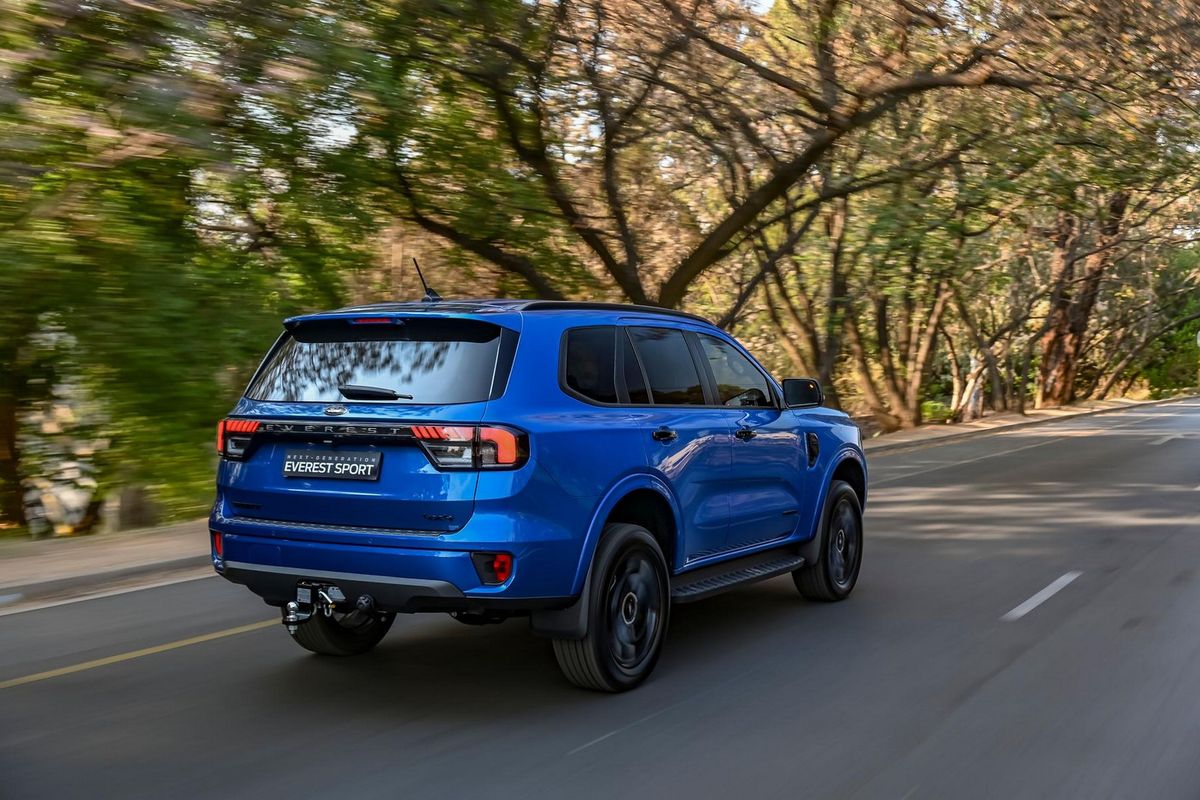
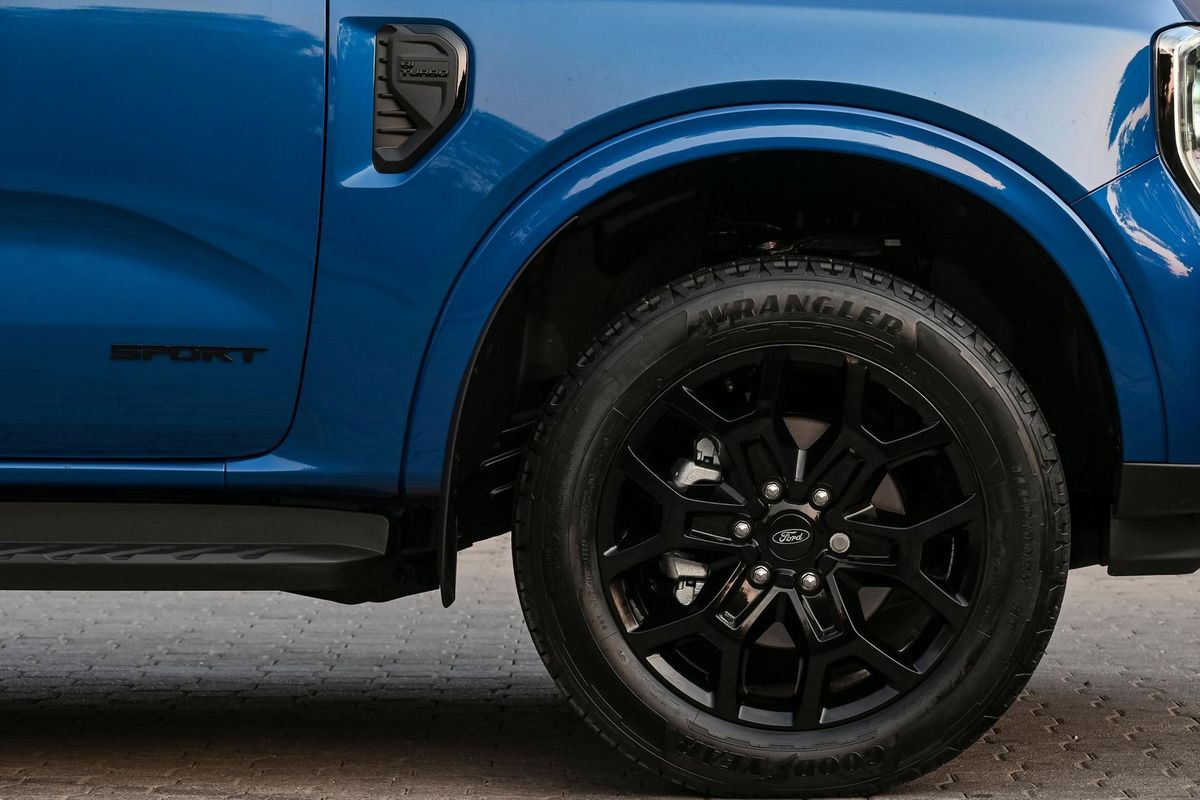
The all-new 3rd-generation Ford Everest has touched down in South Africa and we attended its local launch in Mpumalanga. With a big new 3.0-litre V6 turbodiesel engine – and an equally big price tag – the Blue Oval’s 7-seater adventure SUV has lofty ambitions.
Watch or read our full review of the 2023 Ford Everest here
The Everest has been a solid performer in the bakkie-based Adventure SUV segment; Ford Motor Company of Southern Africa (FMCASA) has sold more than 26 000 units of the model, of which the outgoing version was produced locally.
Now there’s an all-new model and it brings a significant number of updates and upgrades to the Everest family. It’s no longer assembled in the Republic, because FMCSA’s facility in Silverton is focused on producing the new Ranger (and next-generation VW Amarok). The South African market will get its 3rd-generation Everest units from Thailand and sadly, due to the semi-conductor shortage and the ongoing logistics/shipping challenges, stock shortages are expected.
Still, FMCSA is upbeat about its new offering and says the interest shown in, and orders taken for, the new Everest have been impressive. There’ll be a delay, however – one dealer we spoke to says it’ll only receive units in January 2023.
What’s on offer?
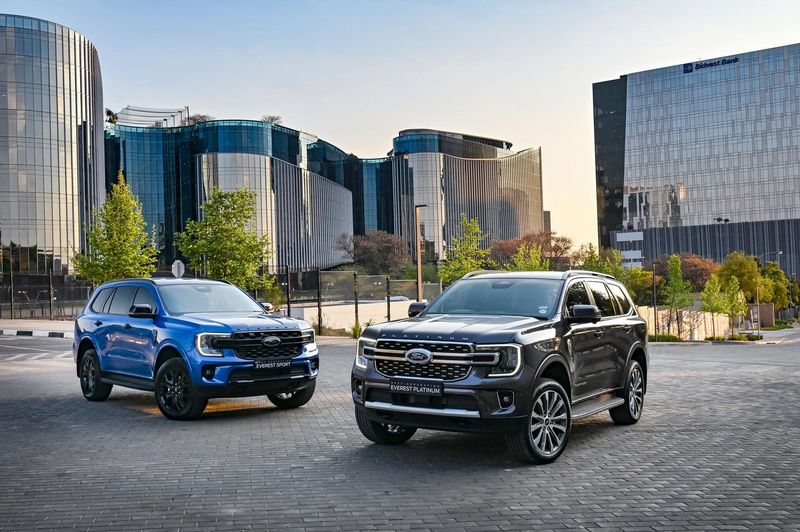
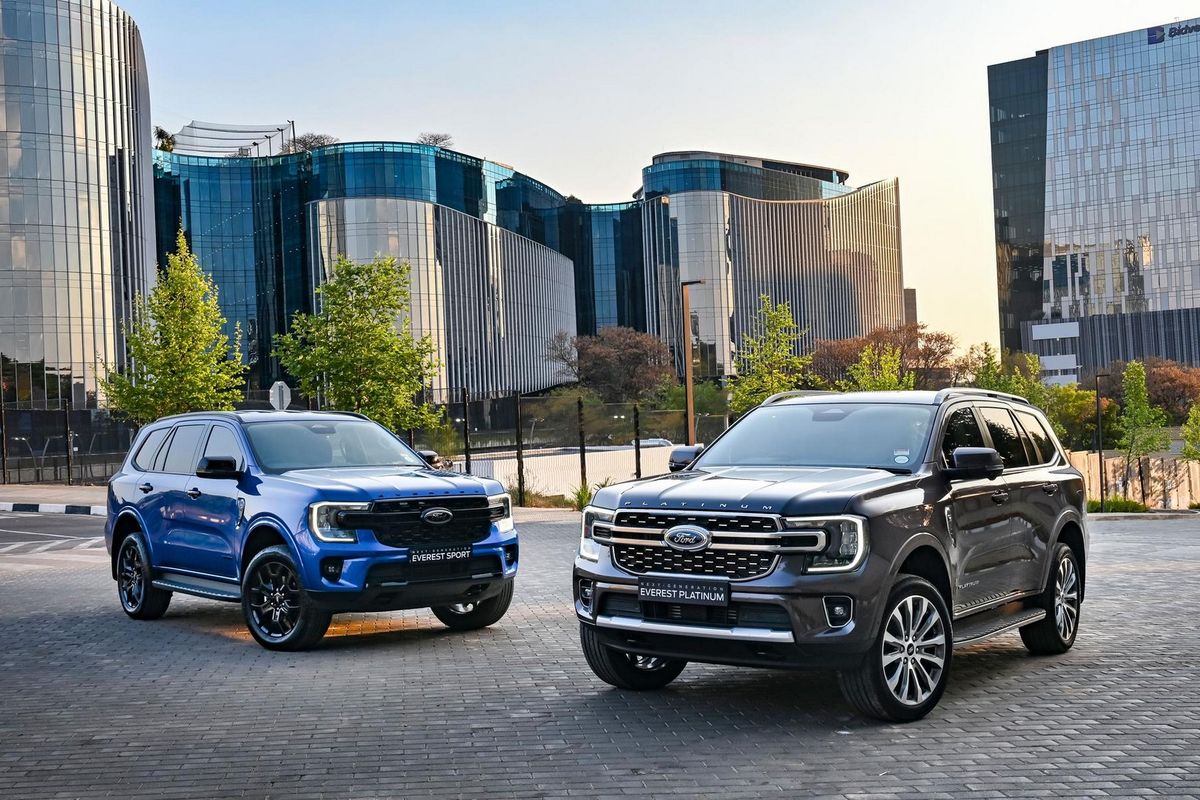
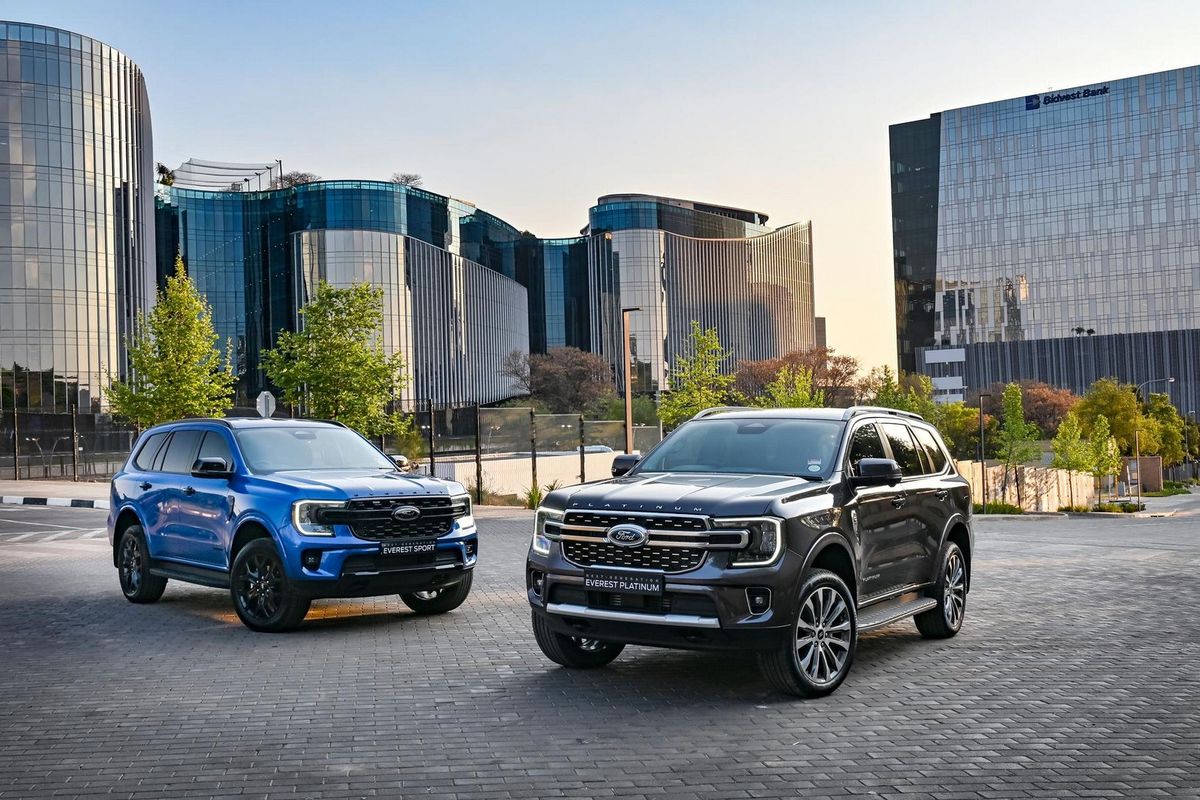
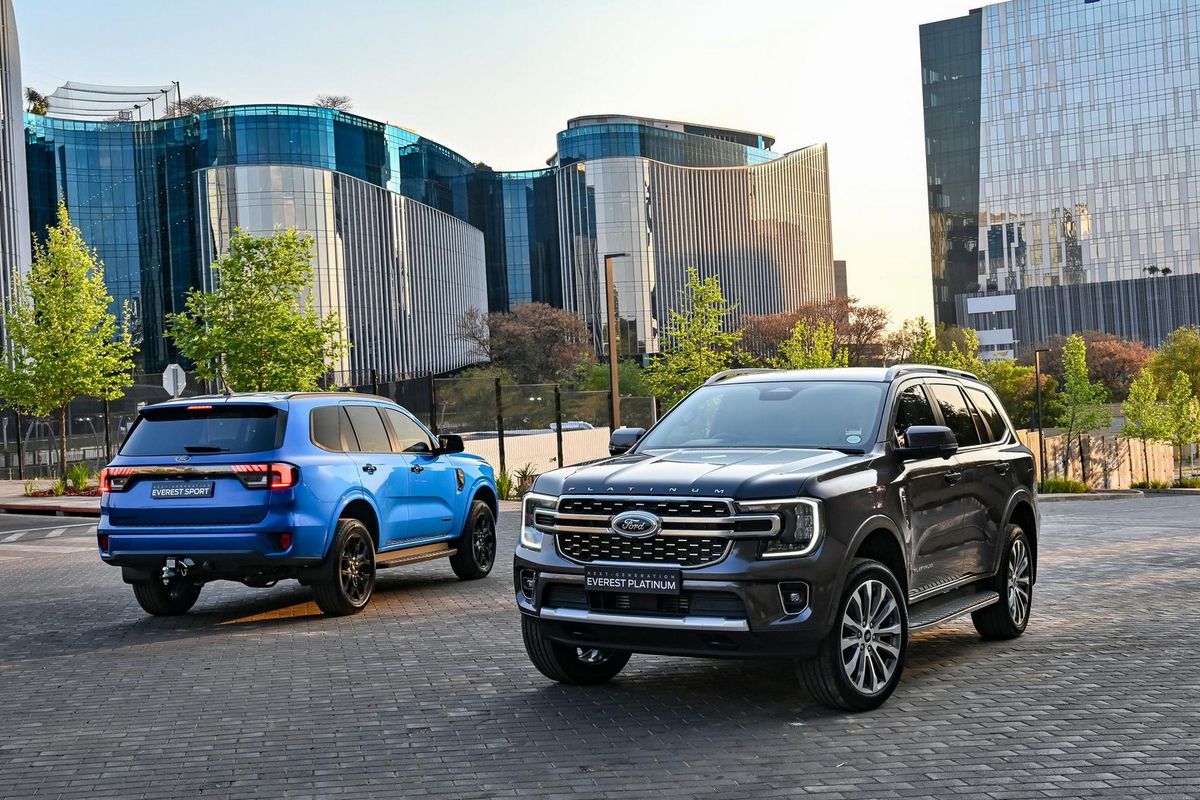
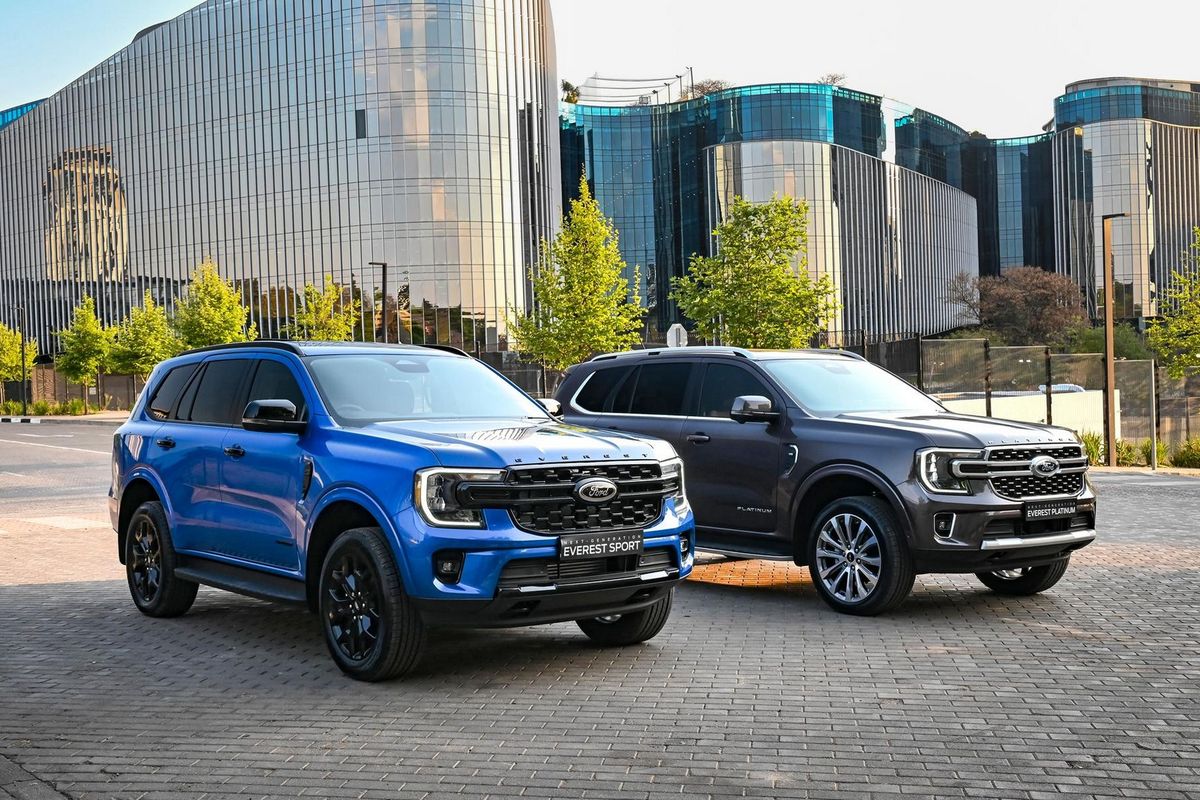
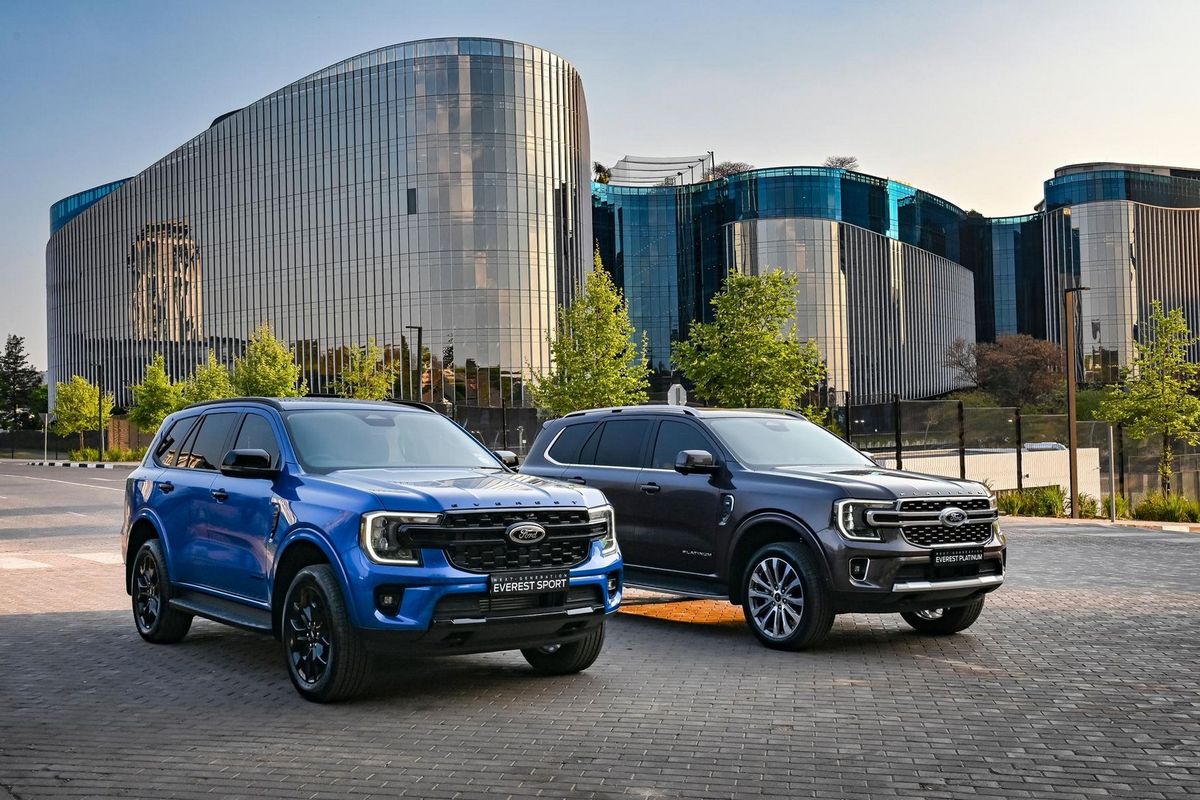
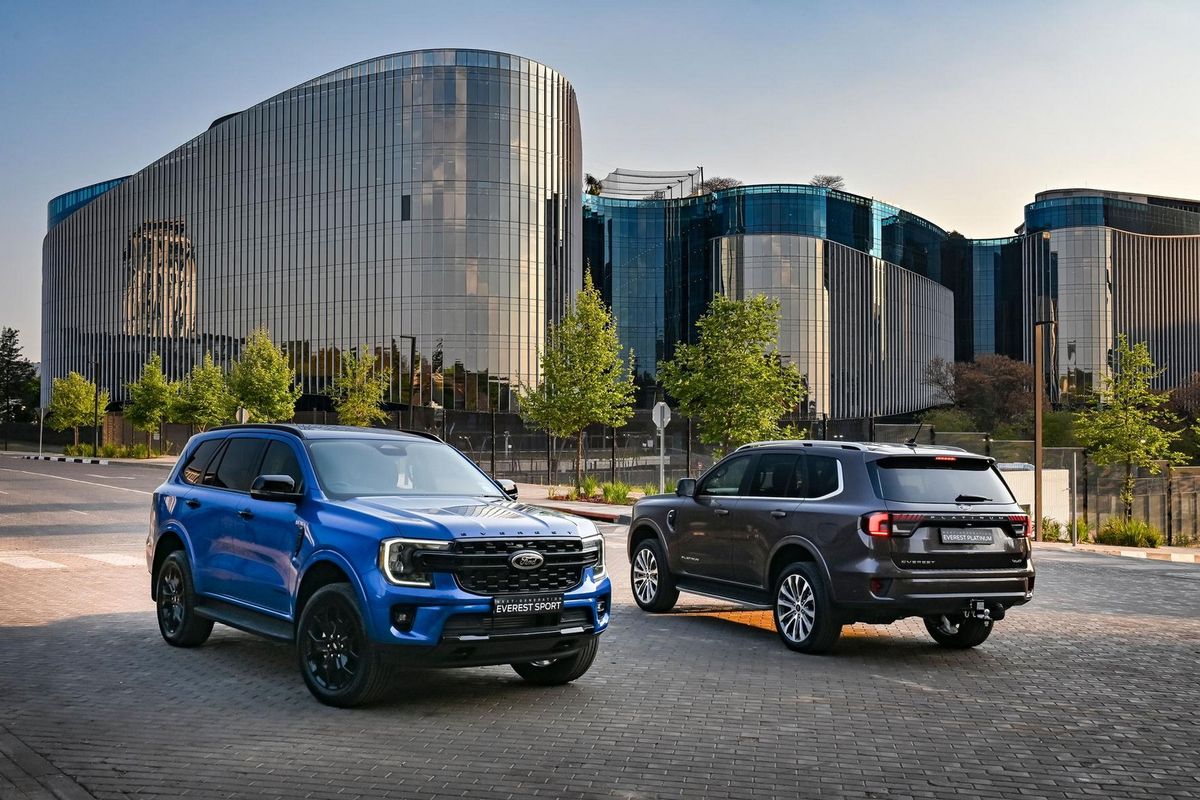
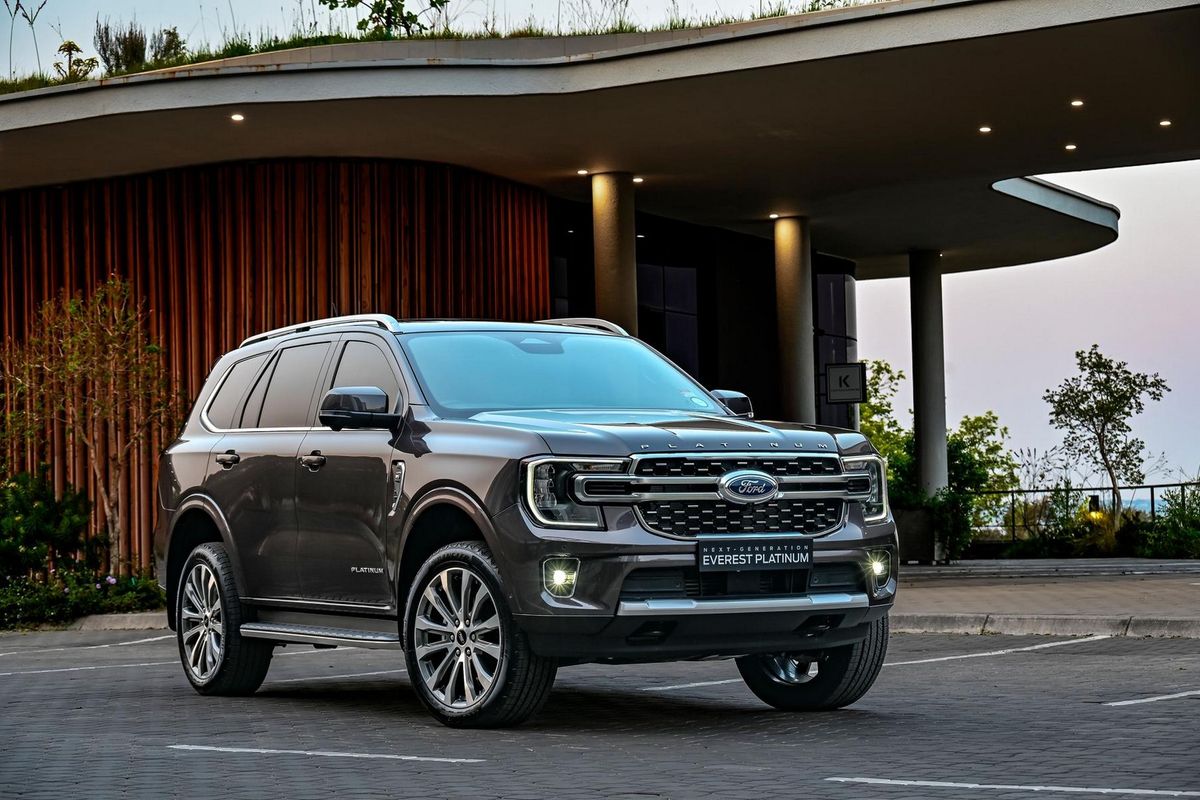
The new Everest in Sport (left) and Platinum (right) guises.
FMCSA will initially offer its new Everest in 2 flavours: Sport and Platinum. The two derivatives are separated mainly by engines and features, with the Sport powered by a 2.0-litre 4-cylinder biturbo diesel motor that offers up 154 kW/500 Nm.
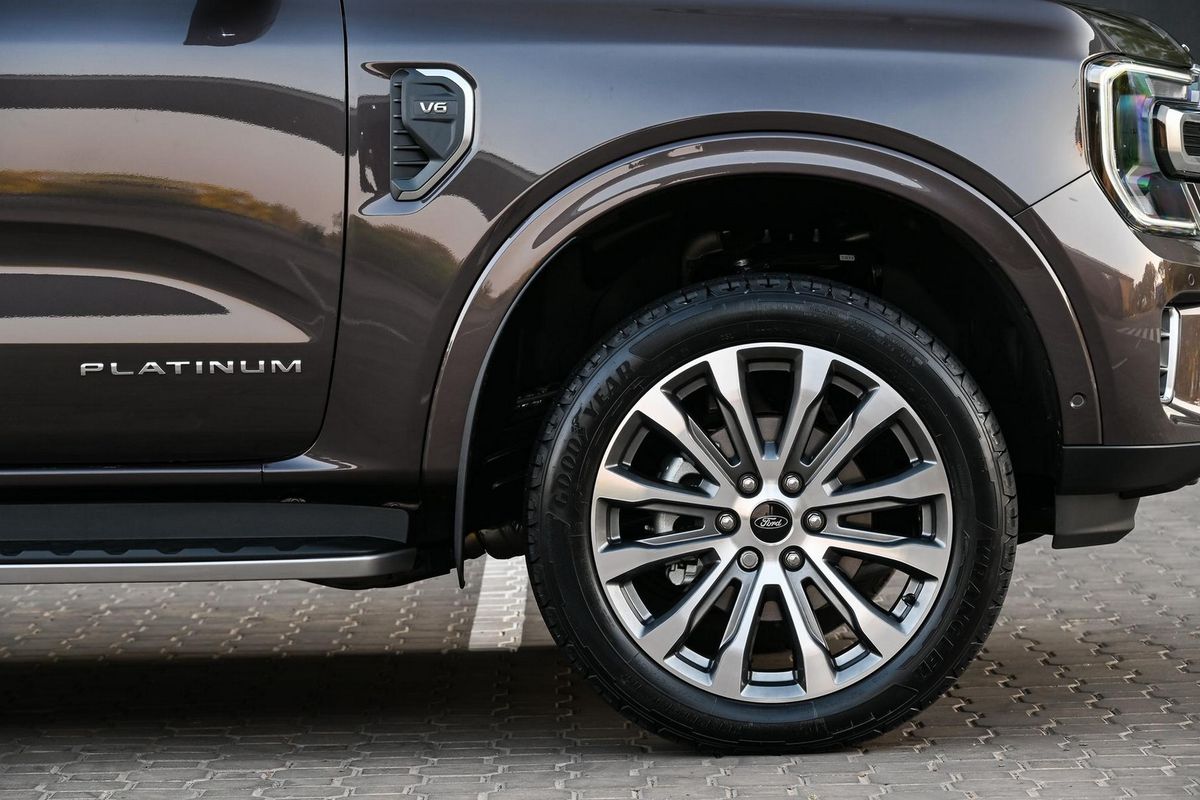
The Platinum, however, sees the debut of a new V6 turbodiesel (sourced from Ford’s F-Series range of pickups) with peak outputs of 184 kW and 600 Nm. Both powerplants are mated with a 10-speed automatic transmission.
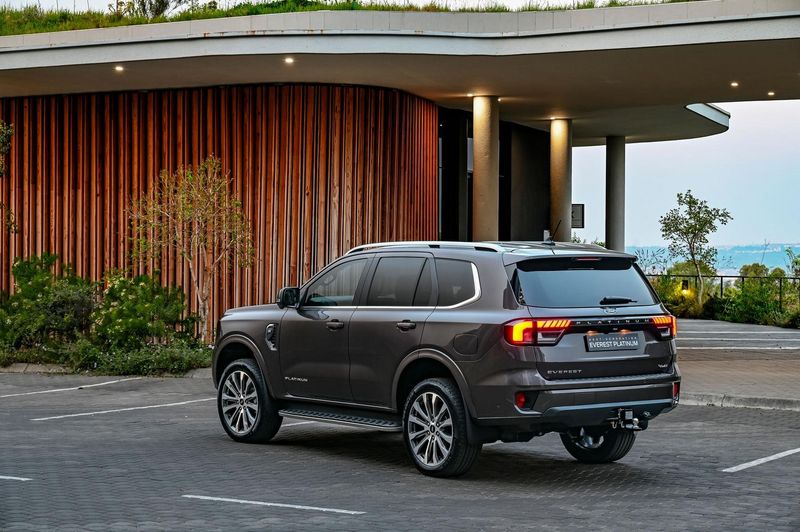
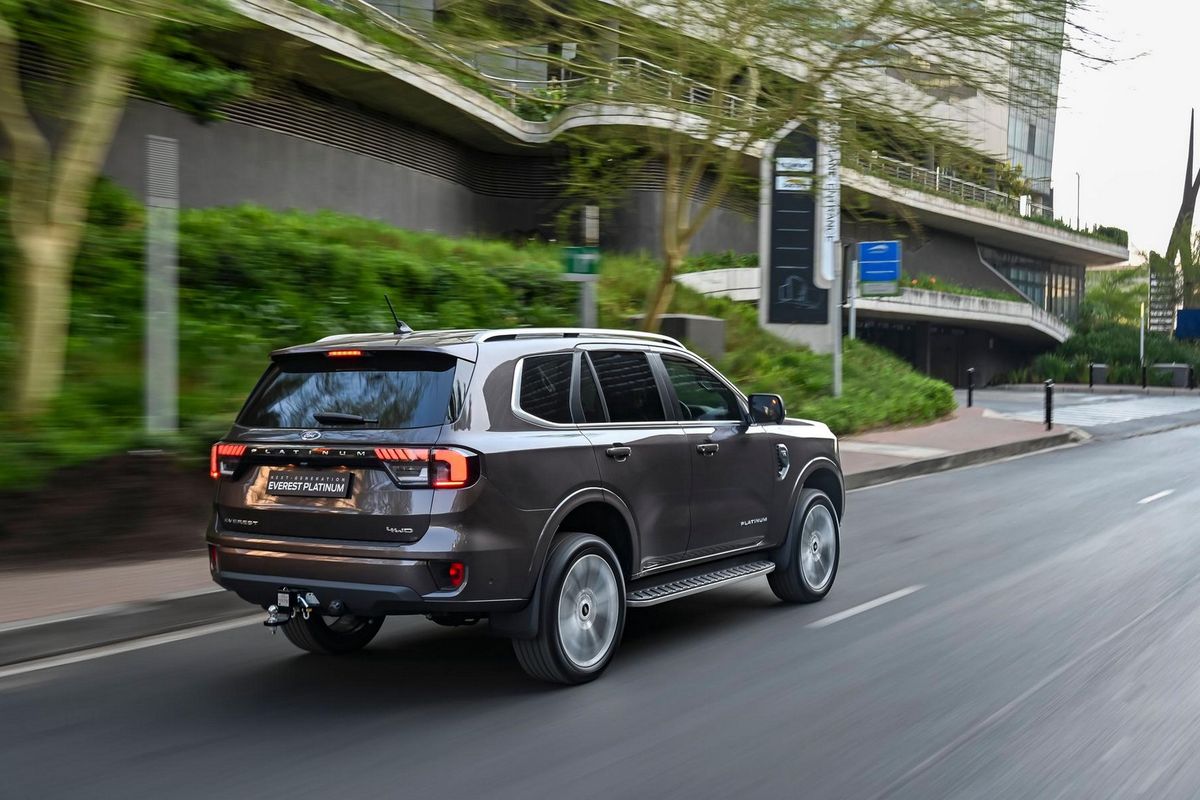
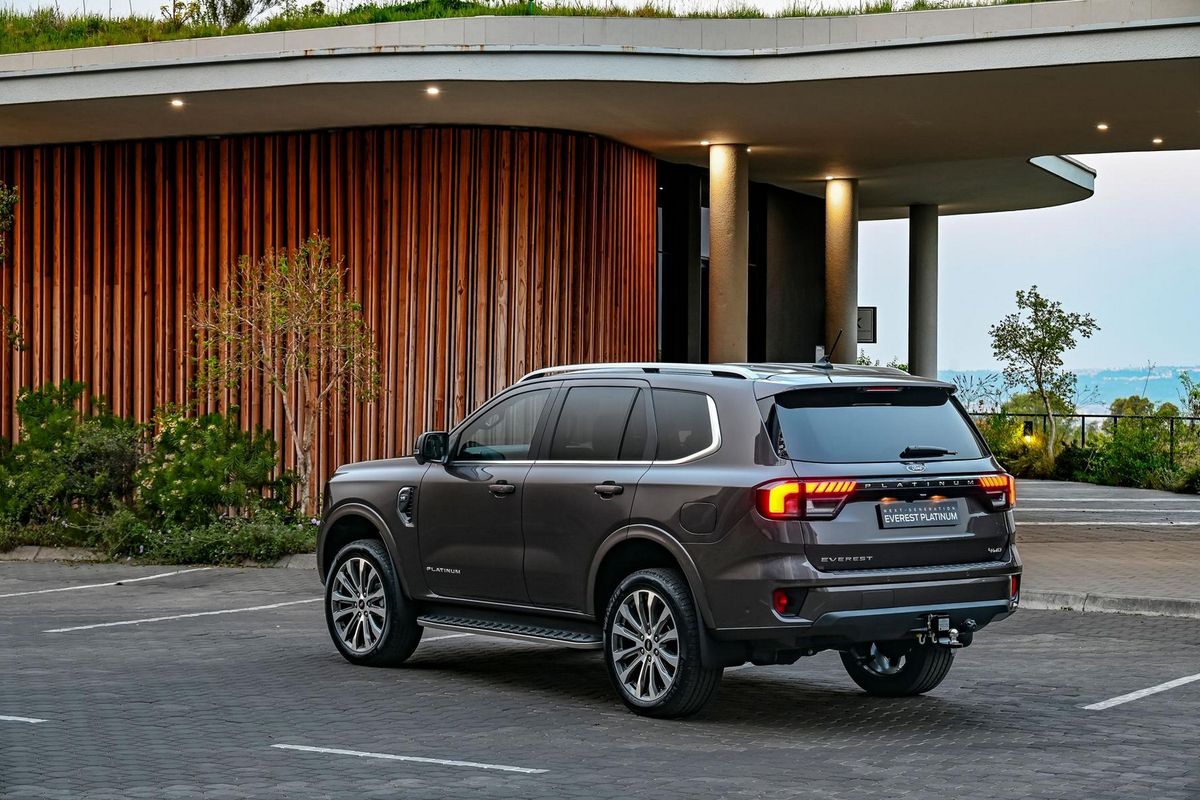
The newcomer’s tail-lamp treatment would not look out of place on a North American SUV.
As far as generational changes go, the new Everest is bigger in all directions – length, width and height, and boasts a slightly longer wheelbase. For the benefit of 4×4 enthusiasts, the ground clearance of Ford’s 7-seater has gone up to 229 mm and the approach and departure angles have been increased slightly. Then you have those muscular looks; some would even suggest that the Everest’s been Americanised. We’re big fans of the C-shaped daytime running lights.
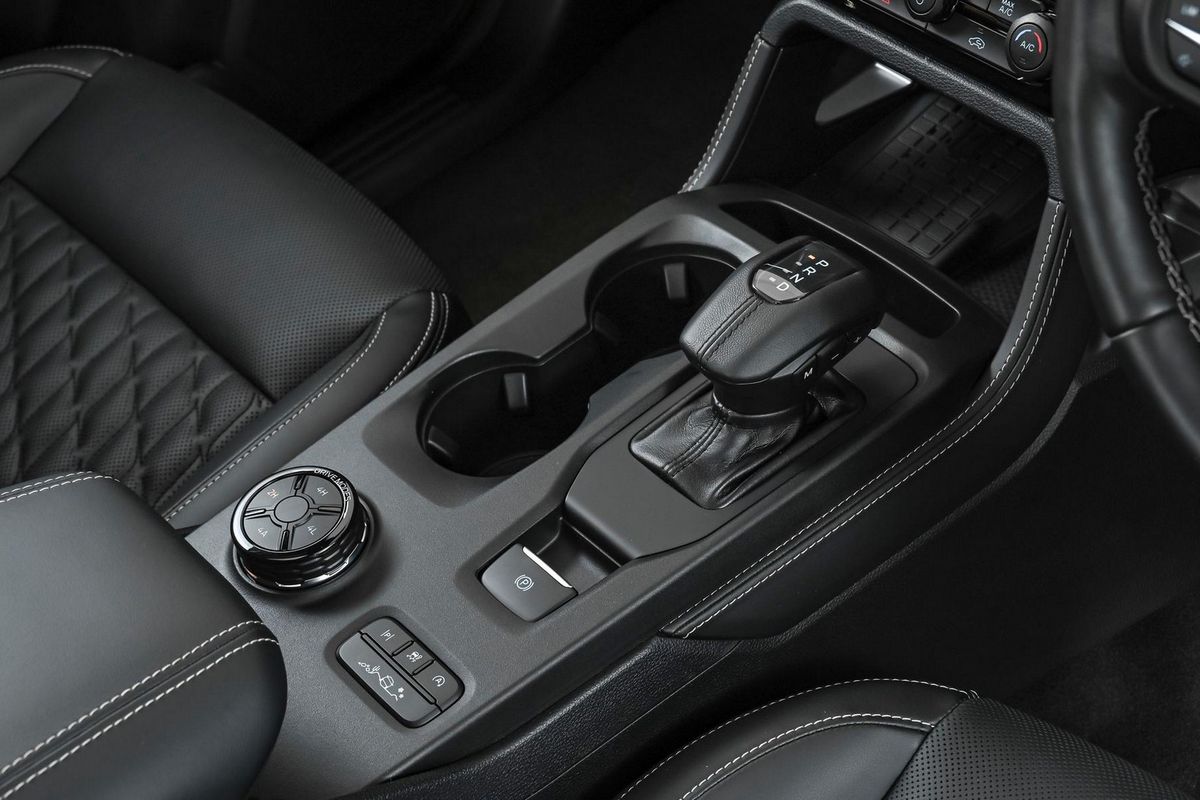
The Everest Sport makes do with a part-time 4×4 system that allows for shifting from 2H to 4H on the fly, while the Platinum has permanent all-wheel drive. Both derivatives offer an array of selectable off-road drive modes, hill descent control as well as an electronically-controlled rear differential lock.
What is it like to drive?
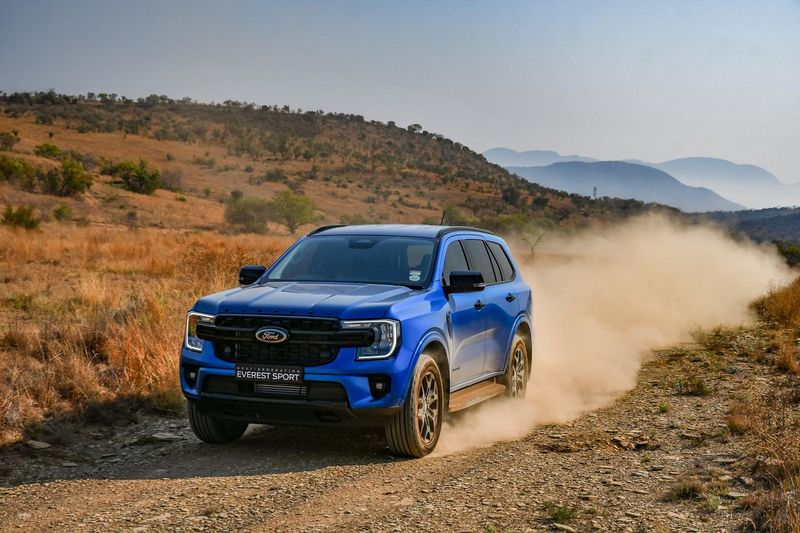
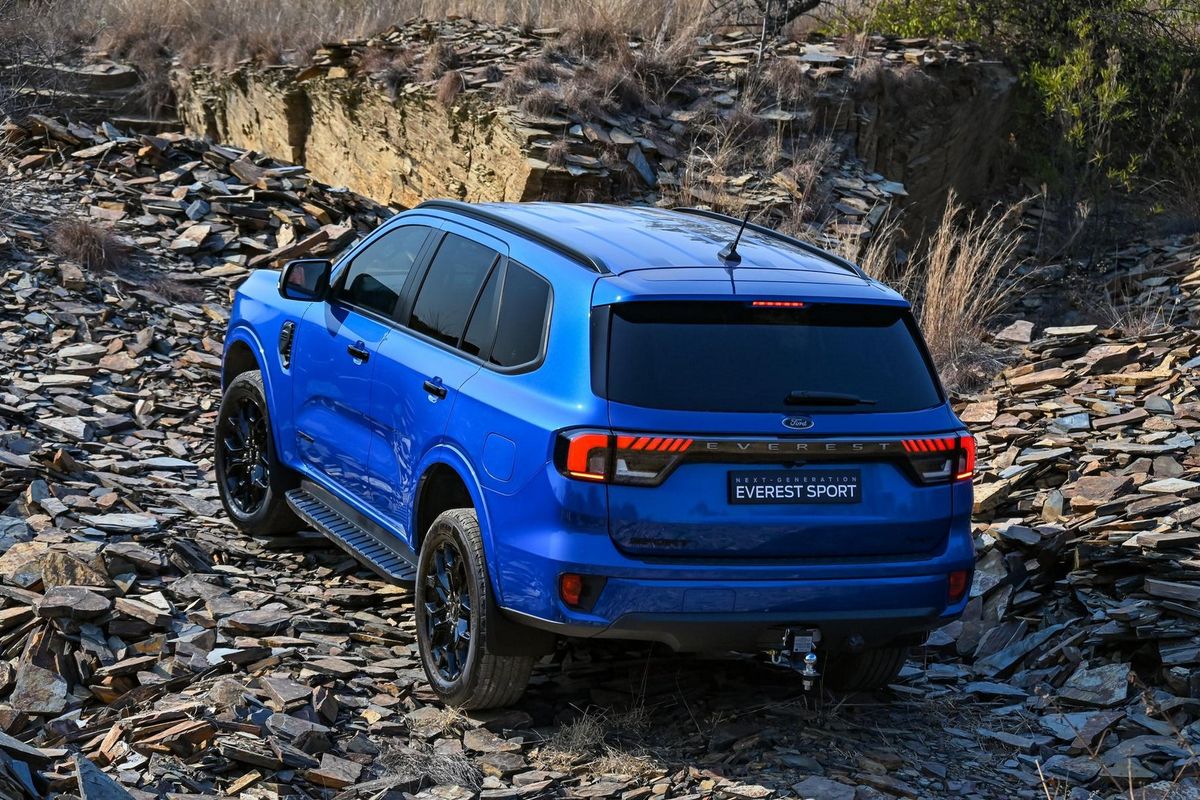
The Everest continues to offer impressive off-road capability.
We spent the vast majority of our evaluation drive behind the ‘wheel of the flagship Platinum derivative, but not before conducting a quick off-road test at a local fruit farm near Mbombela (formerly Nelspruit) behind the tiller of the Sport. Here the systems were put to the test on a tricky little track that combined steep climbs and descents with some nasty little dongas and axle twisters in between. As expected (given its predecessors’ track records), the Everest didn’t break a sweat.
With the off-road excursion done and um, dusted, we jumped into the Platinum – the flagship of the range. Right now this is the pinnacle of the Everest line-up, but we understand that more derivatives are under consideration for our market.
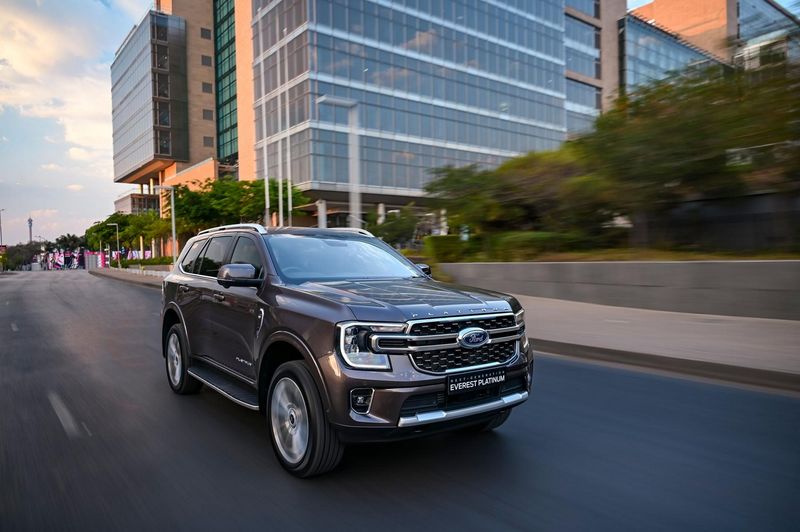
The new Everest offers a resolved ride quality, although the ride is still a tad jiggly on uneven road surfaces.
Two things stood out about the new model’s Platinum derivative… Firstly, that new V6 engine is exactly what the Everest needed. Not only is it a deliciously smooth-running motor, but its ability to produce urgent overtaking acceleration is deeply impressive – revisions to the outgoing model’s 10-speed automatic ‘box certainly help in that regard. This powertrain will be a treat when it comes to towing and, for the record, the braked tow rating has been upped to 3.5 tonnes.
The engine never sounds strained when the throttle is wide open and its outright grunt makes it stand head and shoulders above any other powerplant in this segment. Impressively, and despite some spirited driving on some glorious Mpumalanga backroads around White River, our test unit indicated an average fuel economy figure of 11 L/100 km (which is to be expected, FMCSA’s claimed consumption figure for this derivative – 8.5 L/100 km – is rather optimistic).
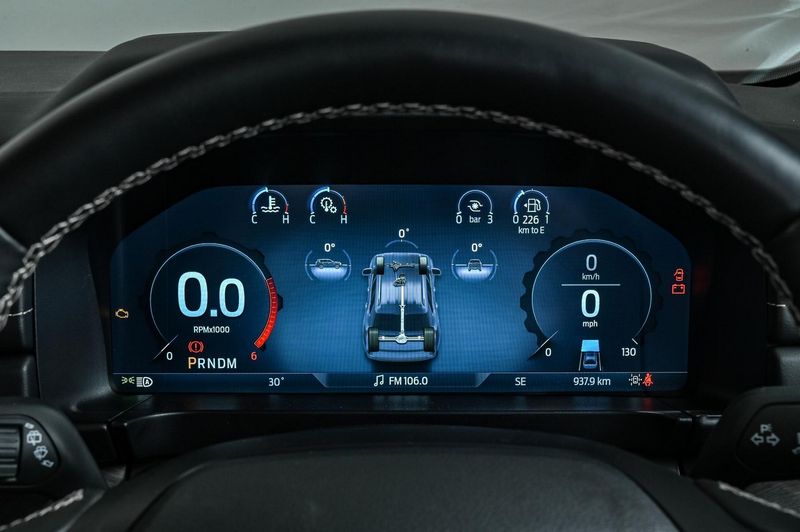
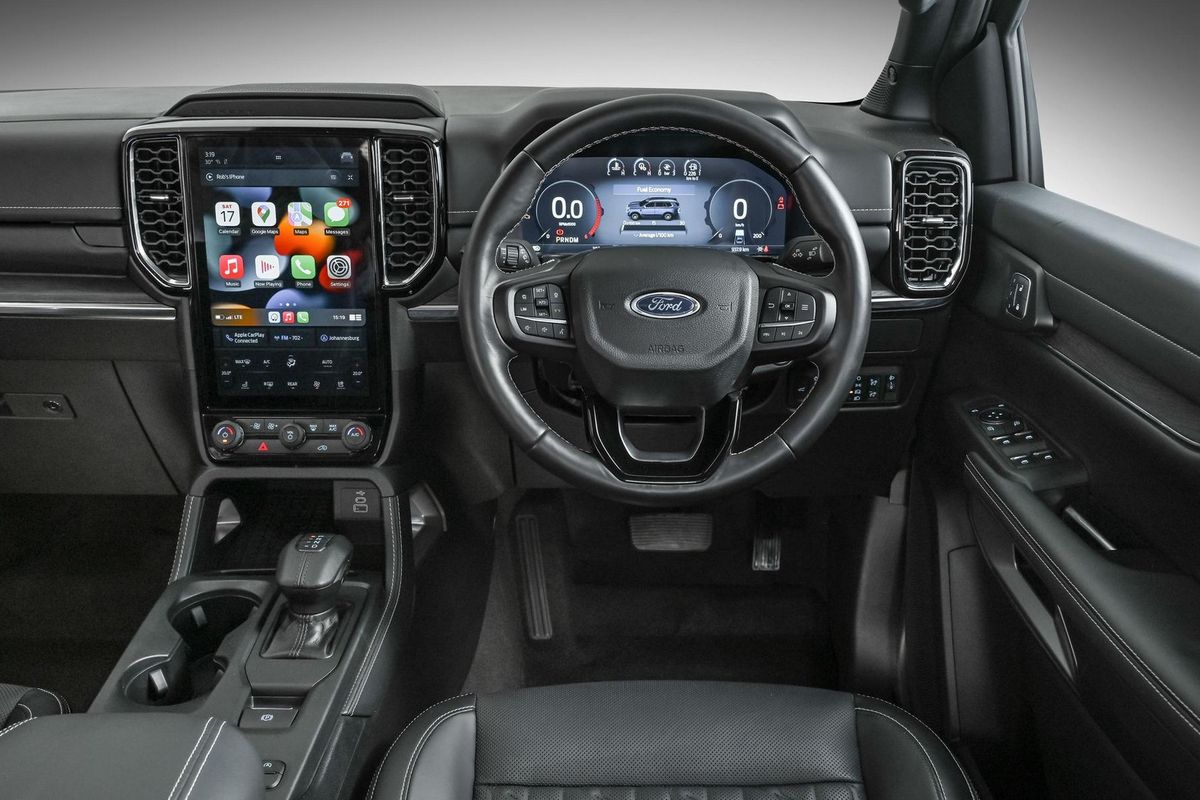
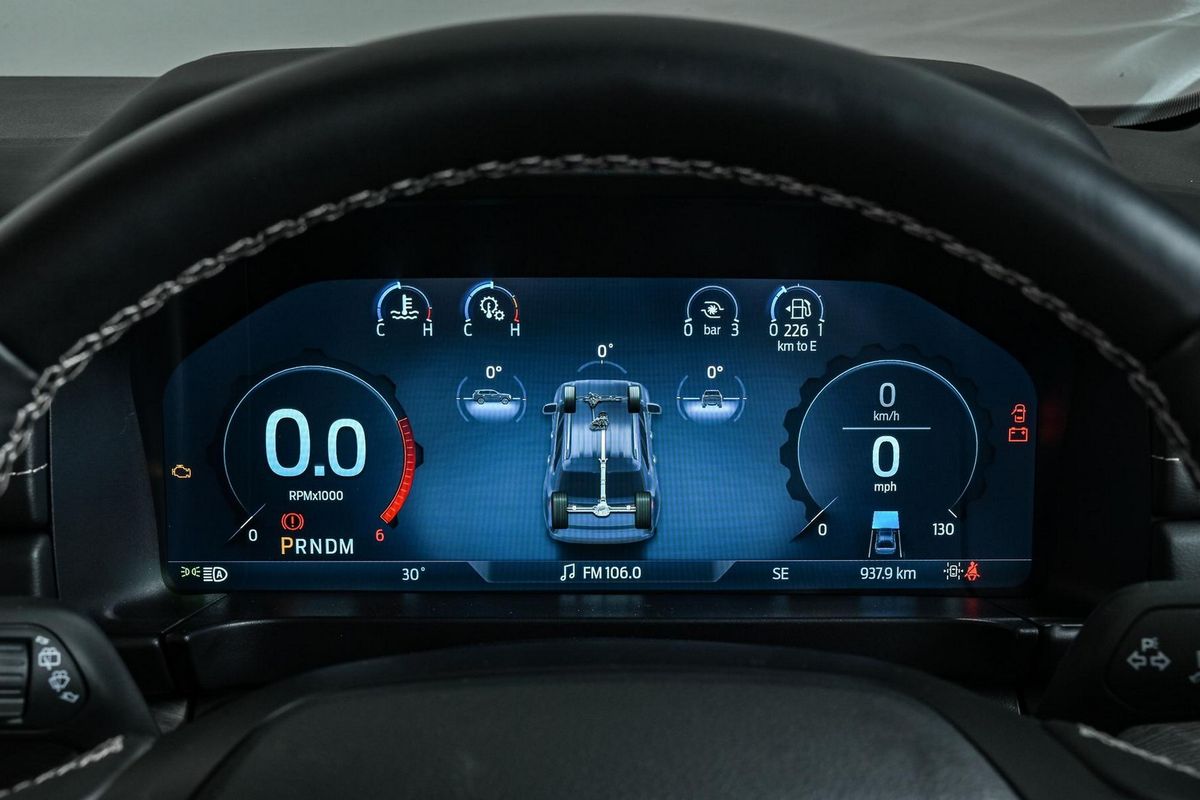
The digital dashboard’s display is crisp and modern.
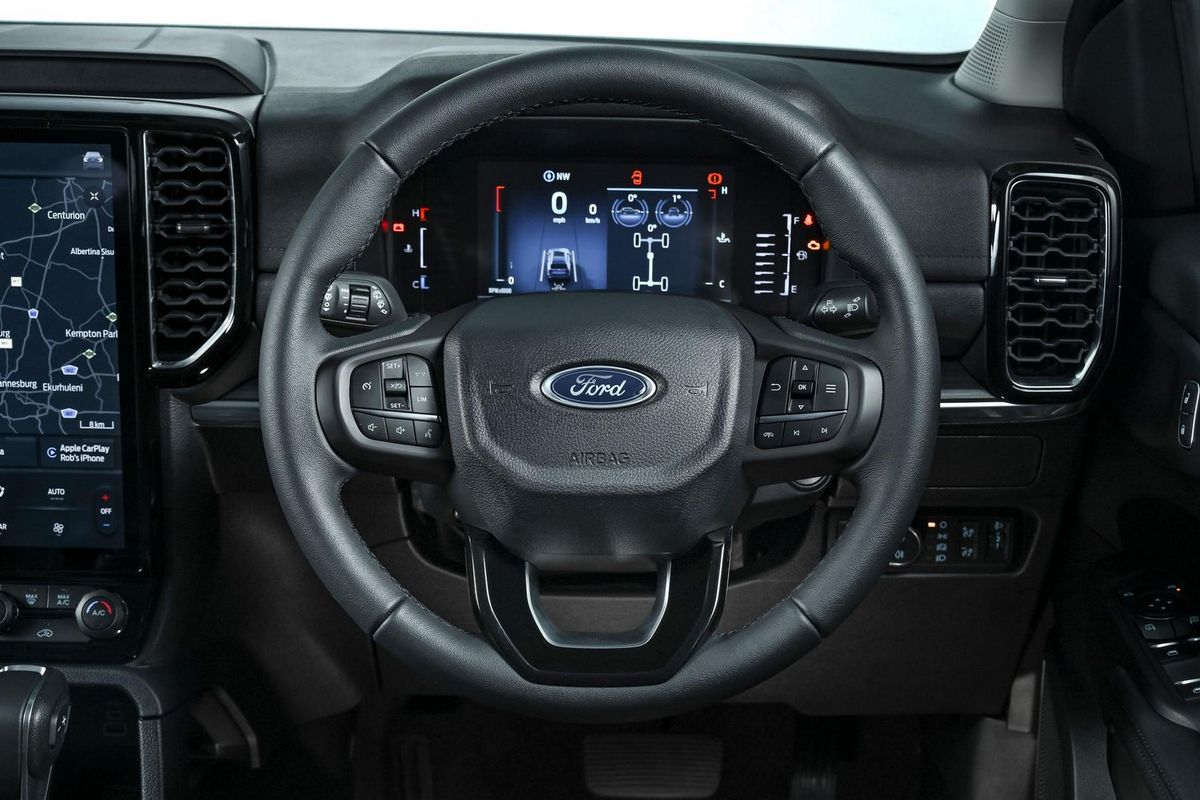
Secondly, the 3rd-generation Everest’s interior makes everything else in the segment look and feel remarkably old-school. There’s nothing analogue in the Ford cabin, which is equipped with a gorgeous digital instrument cluster and a large portrait-orientated infotainment screen. The latter is powered by the latest Ford SYNC4 user interface and while the system seemed a trifle confusing at the outset, we got the hang of it after a (relatively brief) period of familiarisation.
Ford says it has implemented improvements to the suspension, but as the Everest is a body-on-frame vehicle, its ride quality can still get a bit jiggly. It still shimmies on uneven tarred roads, but overall cushiness and comfort levels are high.
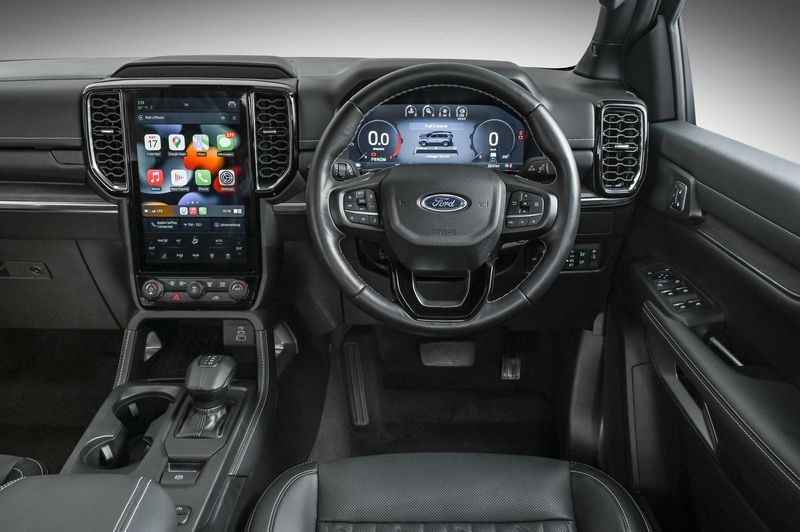
The portrait infotainment screen dominates the Everest’s fascia.
The newcomer’s noise, vibration and harshness (NVH) levels are impressively low, but we did discern some wind noise at the national speed limit, which we suspect was generated by the 7-seater SUV’s chunky side mirrors. We’ll have to wait for a new Everest test unit to arrive in Cape Town to confirm whether this is a major issue or not. It didn’t bother us; we drowned it out with the aural satisfaction provided by a premium audio system from B&O (it incorporates 12 speakers).
As far as standard features are concerned, the Everest Premium comes fully loaded with almost every conceivable gadget and gizmo, as well as a comprehensive semi-autonomous safety suite. There are numerous USB chargers dotted around the cabin, wireless charging, a panoramic sunroof, heated seats for the first two rows, as well as a 400W inverter, which allows rear passengers to charge a laptop, for example.
Click here for full specs and latest pricing of the new Everest
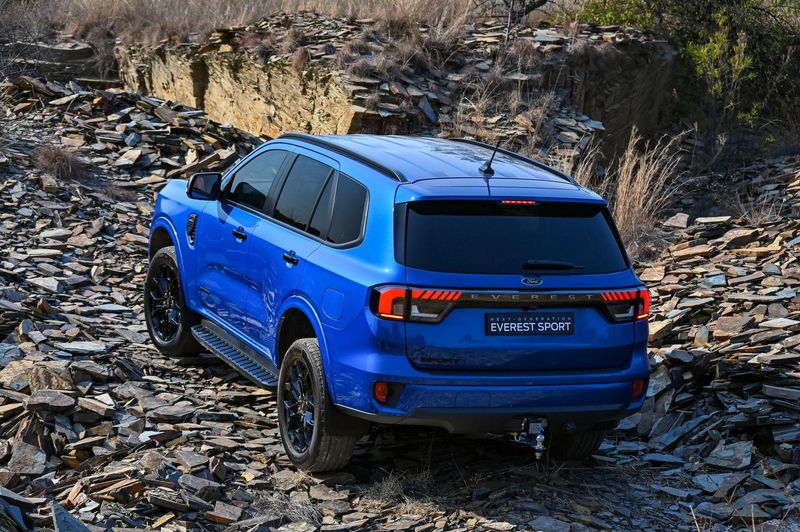
There are only two versions available: Sport (shown above) and Platinum.
Pricing & after-sales support (Sept 2022)
| Everest Sport 2.0L BiT 4WD 10AT | R965 400 |
| Everest Platinum 3.0L V6 AWD 10AT | R1 113 100 |
Included in the price is a 4-year/120 000 km warranty, 4-year/unlimited km roadside assistance and 5-year/unlimited distance corrosion warranty. The recommended service interval is 15 000 km or once a year, plus customers have the option of purchasing service or maintenance plans of up to 8 years or 135 000 km. The warranty can be extended up to 7 years or 200 000 km, while the roadside assistance can be extended for up to 2 years.
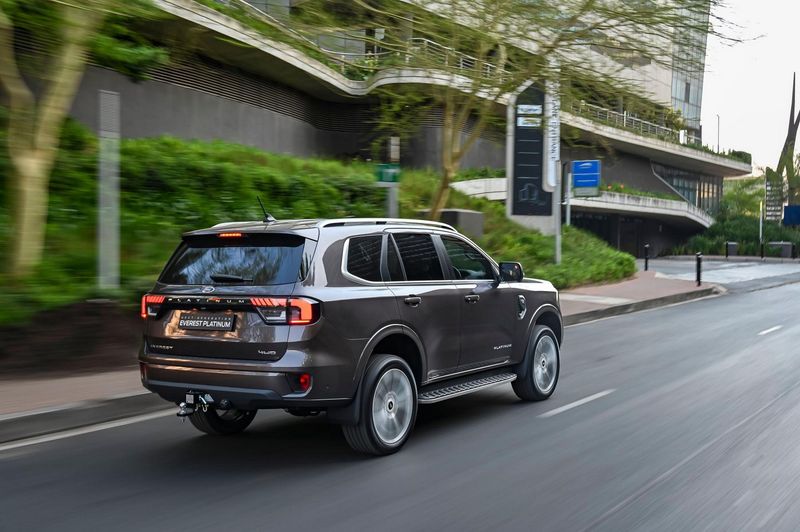
Ford has lofty ambitions for its 3rd-gen adventure SUV… In fact, the new Everest is said to have the Toyota Prado in its sights.
Summary
Given the array of technology offered in both the Sport and Platinum iterations of the new Everest, plus that range-topping muscular V6 diesel engine, Ford could be accused of being a bit cocky in suggesting that the new Everest is no longer a Toyota Fortuner rival, but a competitor to the Japanese giant’s 7-seater off-roader – the Prado.
The Toyota Prado is due for replacement and is priced on par with the Blue Oval’s new offering, but its cabin lacks the “loaded with tech” feel that the Everest offers in abundance. Perhaps there’s some validity in that claim after all…
Still, when it comes down to numbers, consumers won’t be too happy to hear that whereas the outgoing flagship Everest Limited came in at R877 300, the newcomer starts just under R1 million (for the Sport BiT 4WD version). That’s quite a hike, especially when you consider that South Africa’s perennial top seller in the Adventure SUV category – the admittedly long-serving and less tech-oriented Fortuner – tops out at R870 900 (September 2022).
On reflection, is the smarter-but-pricier 3rd-gen Ford Everest worth it? After our introductory drive, we’re certainly interested in the newcomer, but we’ve only had a small taste of what’s undoubtedly a highly-advanced SUV (that packs a wallop in flagship Platinum 3.0L V6 guise). It’s going to take us some time to master the new SYNC4 system, but the initial signs are very promising. We think Ford has succeeded in moving the goalposts of the Adventure SUV segment.
Related content:
Toyota Fortuner Given Spec Upgrade
David Taylor

Having contributed to multiple motoring titles as well helping run the public relations machine of the Johannesburg International Motor Show, Dave has experience in both sides of the motoring industry. He's based in the Western Cape and is responsible for the performance testing, photography & weekly YouTube news for Cars.co.za.