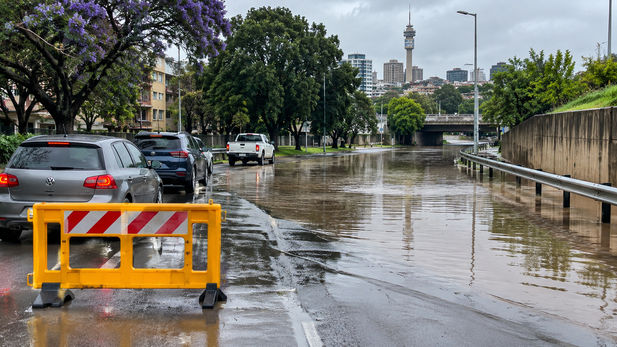
Severe thunderstorms swept vehicles off Johannesburg’s roads and submerged others in parking areas on Wednesday. If your car has suffered flood damage, what you do next could make the difference between a relatively straightforward repair and a costly write-off.
Gauteng motorists woke up on Thursday to submerged bridges, road closures and, in some cases, cars sitting in floodwater. Severe thunderstorms on Wednesday, 25 November 2026, flooded roads and highways in Alexandra, Midrand, Brakpan and surrounding areas after the South African Weather Service (SAWS) issued a yellow level 4 warning.
At the Braamfontein Spruit bridge on Witkoppen Road, a motorist’s vehicle was swept away by the current. He managed to escape and cling to a tree before being rescued. According to the Sandton Community Policing Forum (CPF), as reported by Fourways Review, warnings had already been issued for the crossing, but the motorist appeared to have attempted to cross regardless.
With SAWS forecasting more isolated to scattered thundershowers over Gauteng on Thursday, the risk of further flooding remains. For motorists, the advice is simple: never attempt to cross a flooded road. And, if your car has already been submerged, one of the most expensive mistakes you can make is attempting to start its engine.
Joburg floods: Which roads were affected?
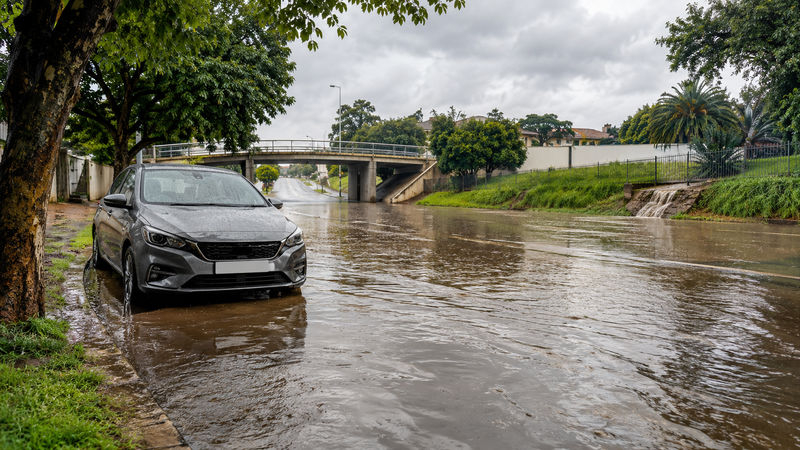
Wednesday’s storms caused widespread disruption across Gauteng, with emergency services responding to numerous incidents:
- Alexandra: Videos showed vehicles being submerged and swept away by floodwater.
- Bryanston: The Johannesburg Roads Agency (JRA) closed Belgrave Bridge after water began flowing over it.
- Midrand and Brakpan: Flooding affected several major roads and highways.
- Ekurhuleni: The municipality confirmed 15 water-rescue incidents and 5 incidents involving fallen trees, according to Eyewitness News.
The Johannesburg Metropolitan Police Department (JMPD) identified several particularly dangerous crossings, including Witkoppen Road Bridge, Belgrave Street Bridge, Bryanston Drive Bridge, the Allandale Road on-ramp to the N1 in Midrand, Vincent Tshabalala Road (London Road) in Alexandra and Marlboro Drive in Kelvin.
The JMPD warned motorists that even seemingly shallow floodwater could conceal damaged road surfaces, potholes and open manholes, while strong currents could sweep vehicles away. Motorists should turn around and seek alternative routes on higher ground.
Rule 1: Do not start a flood-damaged car
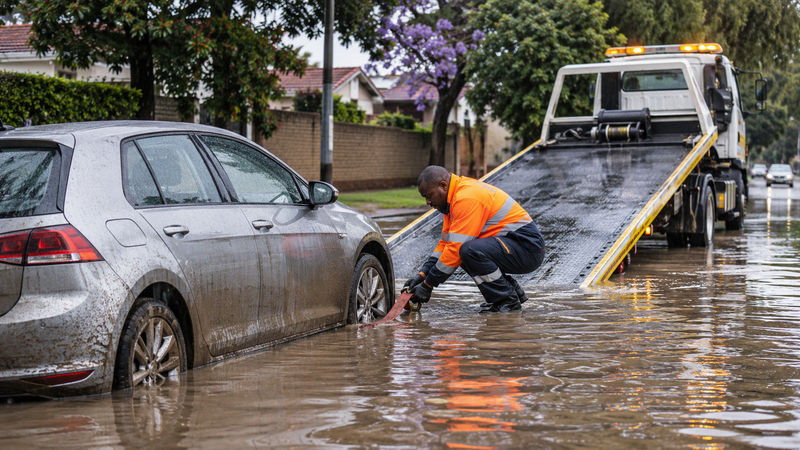
If your car has been submerged, don’t attempt to start it. Internal combustion engines are designed to compress air, not water. If water enters the cylinders, attempting to start the engine can bend connecting rods or cause extensive internal damage, a condition known as hydrolock.
Electrical systems are another concern. Switching on the ignition can cause wet circuits to short, damaging electronic control units and wiring looms. Corrosion can also cause components to fail weeks after exposure to water, even if the car initially appears to be functioning normally.
Here’s what you should do instead:
- Leave the engine and ignition switched off. Don’t attempt to restart the vehicle, even if the water has receded.
- Photograph the damage. Once it’s safe to approach the vehicle, document visible waterlines, affected interior surfaces and the surrounding area.
- Contact your insurer immediately. Ask about the claims procedure and approved towing services.
- Have the vehicle professionally recovered and transported to a suitable location for assessment. Don’t attempt to drive it there.
- Don’t undertake repairs without authorisation. Follow your insurer’s instructions regarding professional drying, cleaning and damage assessment.
If you own a hybrid, plug-in hybrid or electric vehicle (EV), do not attempt to disconnect its electrical systems yourself. Flood exposure can damage high-voltage batteries and components, creating additional electrical and fire hazards. Inform your recovery service that the vehicle is electrified.
How high did the water rise? What it means for your car
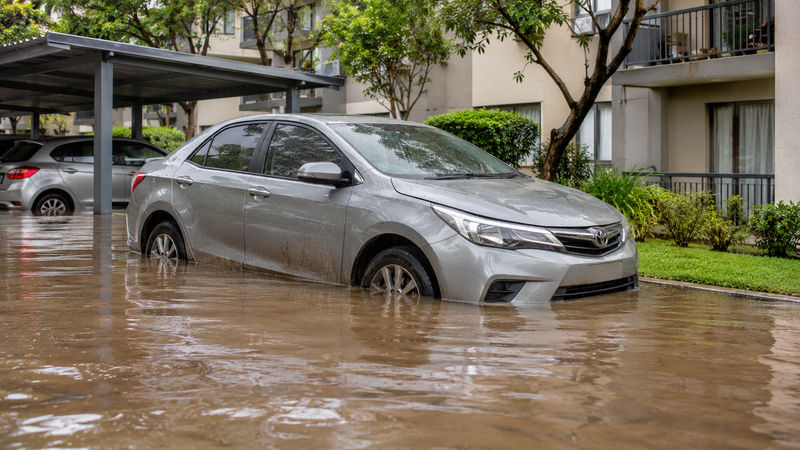
GAC South Africa’s post-flood vehicle maintenance guide identifies three levels of flood exposure. These provide a useful preliminary indication of the potential extent of the damage.
| Water level | Components potentially affected | Recommended action |
|---|---|---|
| Level 1: Below the door sills | Brakes, wheels, suspension, underbody | Have the brakes, suspension and underbody inspected. |
| Level 2: Inside the cabin | Carpets, upholstery, wiring, electronic control modules and seatbelt mechanisms | Arrange professional interior cleaning, drying and electrical assessment. |
| Level 3: Dashboard or engine bay inundated | Engine, transmission, electronic control units and electrical systems | Arrange professional recovery and a comprehensive damage assessment. |
The depth of the water, duration of exposure and location of vulnerable components all influence the severity of flood damage. A vehicle with water in its footwells could be repairable, whereas extensive damage to its engine, electronics and interior could result in a write-off.
Even SUVs and bakkies with impressive claimed wading depths aren’t immune to flood damage. A manufacturer’s wading-depth figure should never be interpreted as a guarantee that a flooded road is safe to cross.
Does car insurance cover flood damage in South Africa?
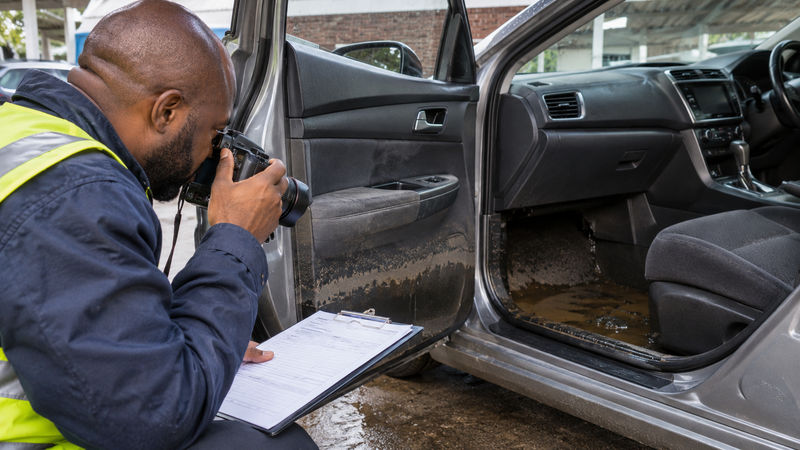
Whether your insurer will cover the cost of repairing or replacing your flood-damaged car depends on the type of insurance you have, your policy’s terms and conditions, and the circumstances surrounding the incident.
As explained in our comprehensive guide to car insurance in South Africa, the three main types of vehicle insurance offer substantially different levels of protection.
| Type of cover | Flood damage to your own car covered? | Important considerations |
|---|---|---|
| Comprehensive | Generally, yes | Subject to policy exclusions, conditions and applicable excesses. |
| Third-party, fire and theft | Generally, no | Covers third-party liability, as well as fire and theft involving your vehicle. |
| Third-party only | No | Covers your liability for damage caused to other parties, not your own vehicle. |
One of the most important considerations is whether the motorist knowingly drove into floodwater. Insurance comparison platform OneCompare identifies this as a significant reason for the rejection of flood-related insurance claims.
Similarly, OUTsurance’s guide to flood damage and car insurance identifies deliberately driving into a flooded area as an instance in which water damage may not be covered.
Generally, a motorist whose parked car was unexpectedly submerged by rising floodwater is in a stronger position than one who ignored warnings and attempted to cross a flooded bridge. However, each claim must be assessed according to its individual circumstances and the relevant policy wording.
Some insurance policies also contain specific exclusions relating to hydrolock, engine damage and a motorist’s obligation to take reasonable precautions to prevent further damage. Familiarise yourself with these provisions before the next storm.
If your insurer rejects your claim and you believe the decision is unjustified, first follow the insurer’s internal complaints procedure. If the matter remains unresolved, the National Financial Ombud Scheme (NFO) offers a free dispute-resolution service. It can be contacted on 0860 800 900 or via email at info@nfosa.co.za.
Buying a used car? How to spot flood damage
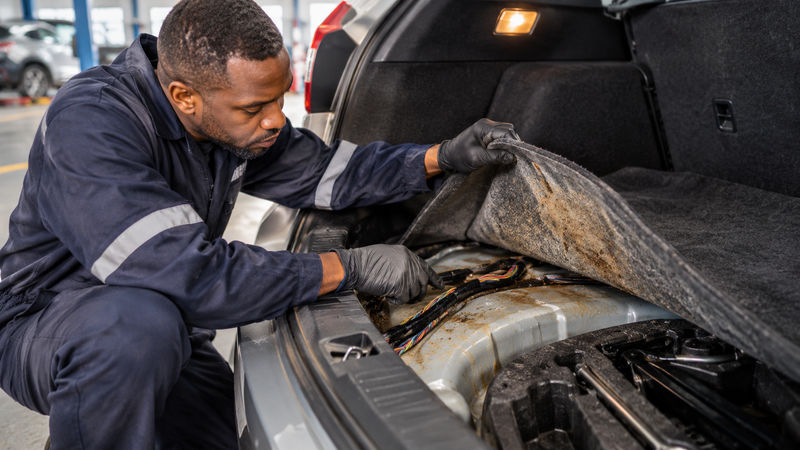
Following major flooding events, prospective used-car buyers should be particularly vigilant. Water-damaged vehicles may find their way back onto the used-car market, and evidence of flooding isn’t always immediately apparent.
If you’re shopping for a used car over the next few months, look out for these warning signs:
- A persistent musty or damp smell inside the cabin.
- Water stains or discolouration on carpets and upholstery.
- Silt or sediment beneath the seats or in the spare-wheel well.
- Unusual corrosion on seat rails, fasteners and electrical connectors.
- Intermittent electrical faults or unexplained warning lights.
- Recently replaced carpeting or upholstery that appears inconsistent with the vehicle’s age.
Ask for the vehicle’s history and any available records of previous insurance claims. A professional pre-purchase inspection is a relatively small expense compared with the potential cost of repairing undisclosed flood damage.
Also read: Tips for buying and insuring a used or ex-rental car
The verdict: Never underestimate floodwater
Wednesday’s storms demonstrated how quickly Johannesburg’s streams and rivers can become dangerous torrents. No meeting, school run or shortcut is worth risking your life, your vehicle and potentially your insurance cover.
If your car has already suffered flood damage, don’t attempt to start it. Document the damage when it’s safe to do so, contact your insurer and arrange professional recovery and assessment as soon as possible.
If you have only third-party insurance, now may be a good time to reconsider your level of cover. Regardless of which insurer you’re with, familiarise yourself with your policy’s provisions regarding flood damage and engine-related exclusions.
Emergency contact numbers: City of Johannesburg Emergency Management Services: 011 375 5911, 10177 or 112 (from a mobile phone). To report flooded roads, damaged traffic lights or blocked stormwater drains, contact the Johannesburg Roads Agency on 0860 562 874.
Frequently asked questions about flood-damaged cars in South Africa
Does comprehensive car insurance cover flood damage in South Africa?
Comprehensive car insurance generally covers flood damage to your vehicle, subject to your policy’s terms, conditions and exclusions. Third-party and third-party, fire and theft insurance generally do not cover flood damage to your own car.
What should I do if my car has been flooded?
Do not attempt to start the engine or switch on the ignition. Once it is safe, photograph the damage, contact your insurer immediately and arrange professional recovery and assessment. Do not undertake repairs without your insurer’s authorisation.
Can an insurer reject my claim if I drive through floodwater?
Yes. An insurer may reject a claim if you knowingly drove into floodwater or failed to take reasonable precautions to prevent damage. The outcome depends on the circumstances of the incident and your insurance policy’s terms and exclusions.
How can I tell if a used car has been damaged by flooding?
Common signs of flood damage include musty smells, water-stained carpets, sediment beneath the seats, corrosion on seat rails and intermittent electrical faults. Request the vehicle’s history and arrange an independent pre-purchase inspection if you suspect flood damage.
Cars.co.za

Providing you with the latest motoring news, new car releases and the simplest way to buy and sell cars.