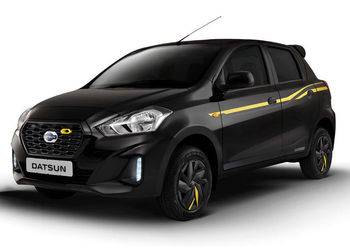
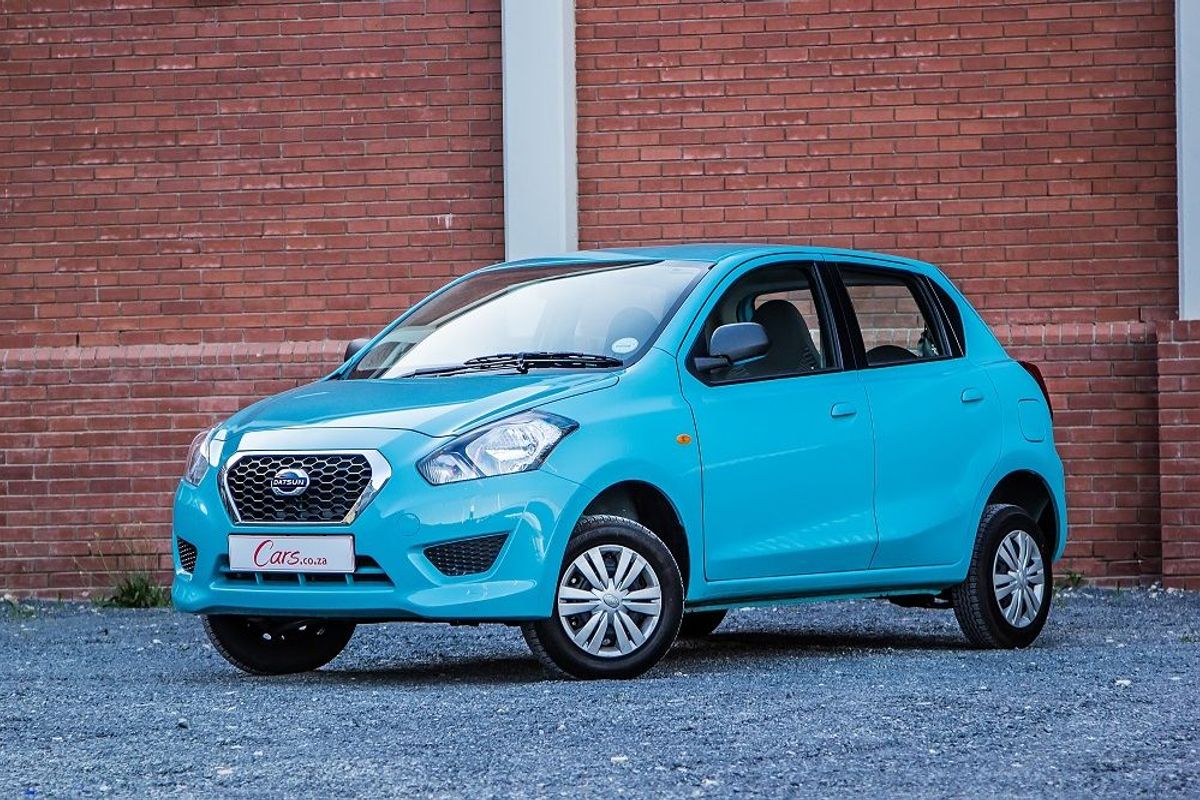
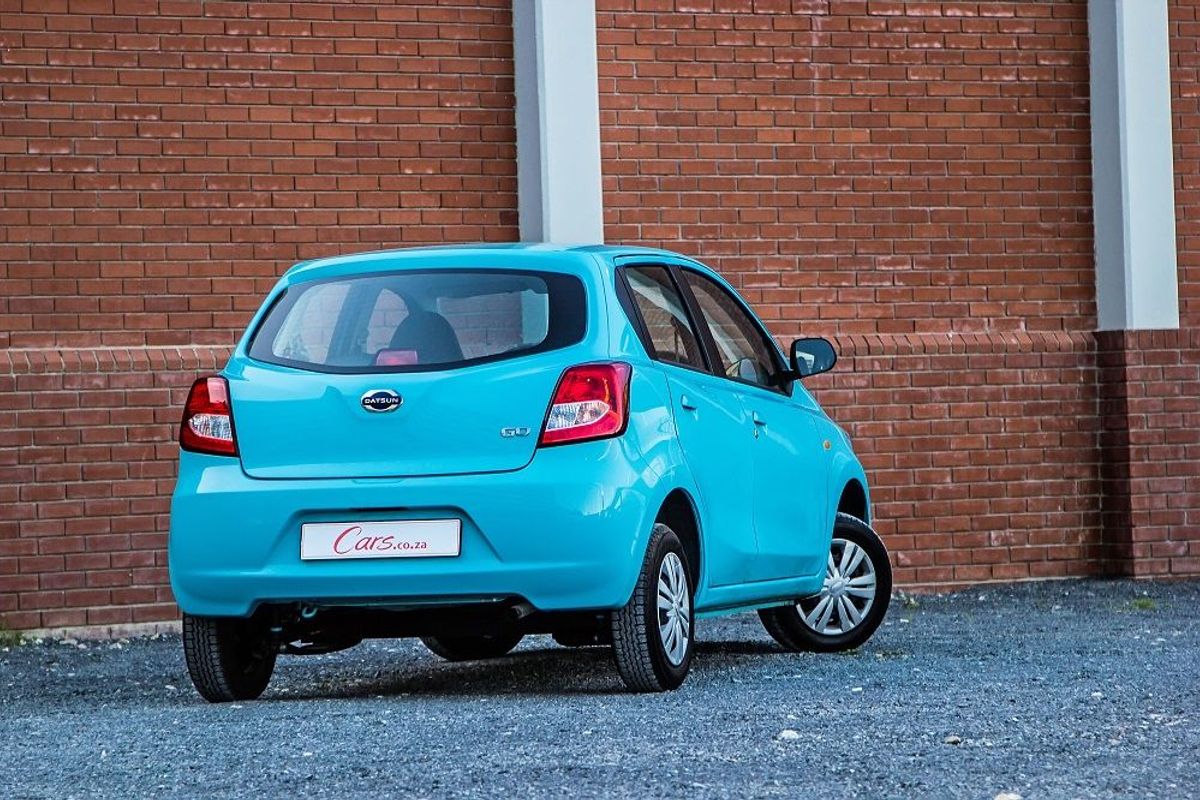
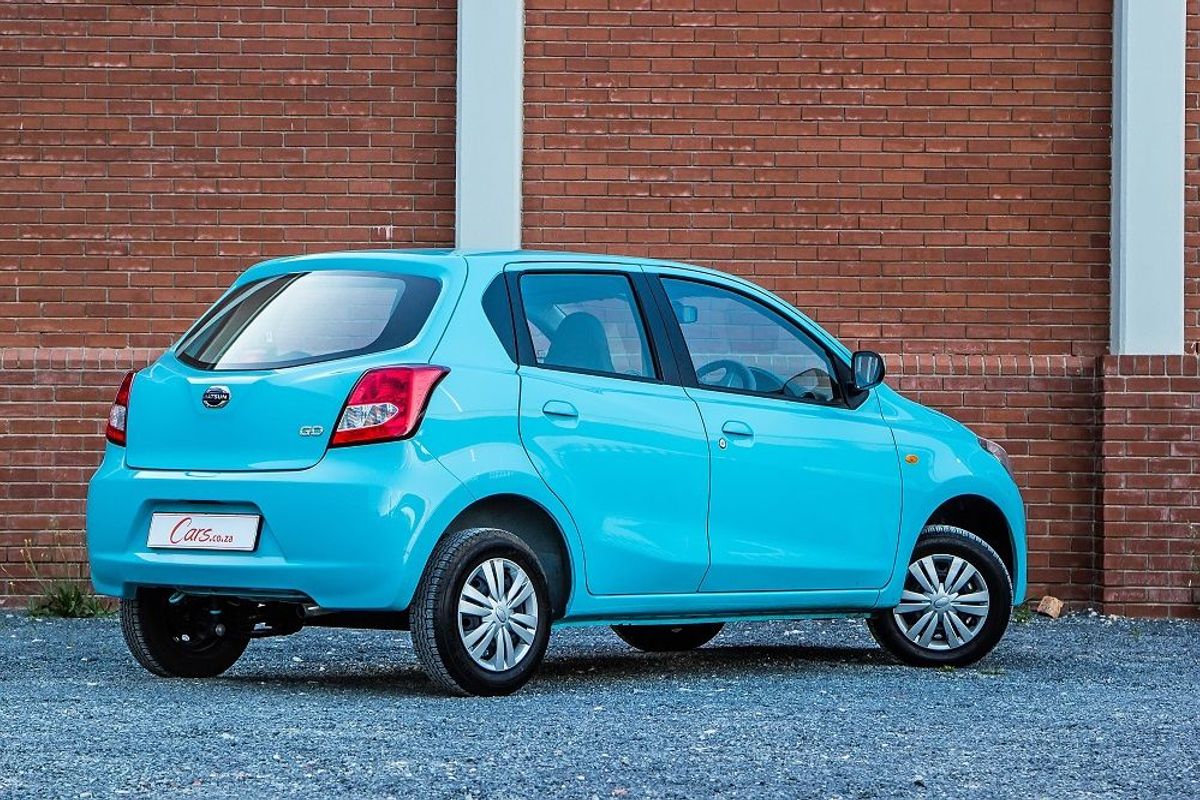
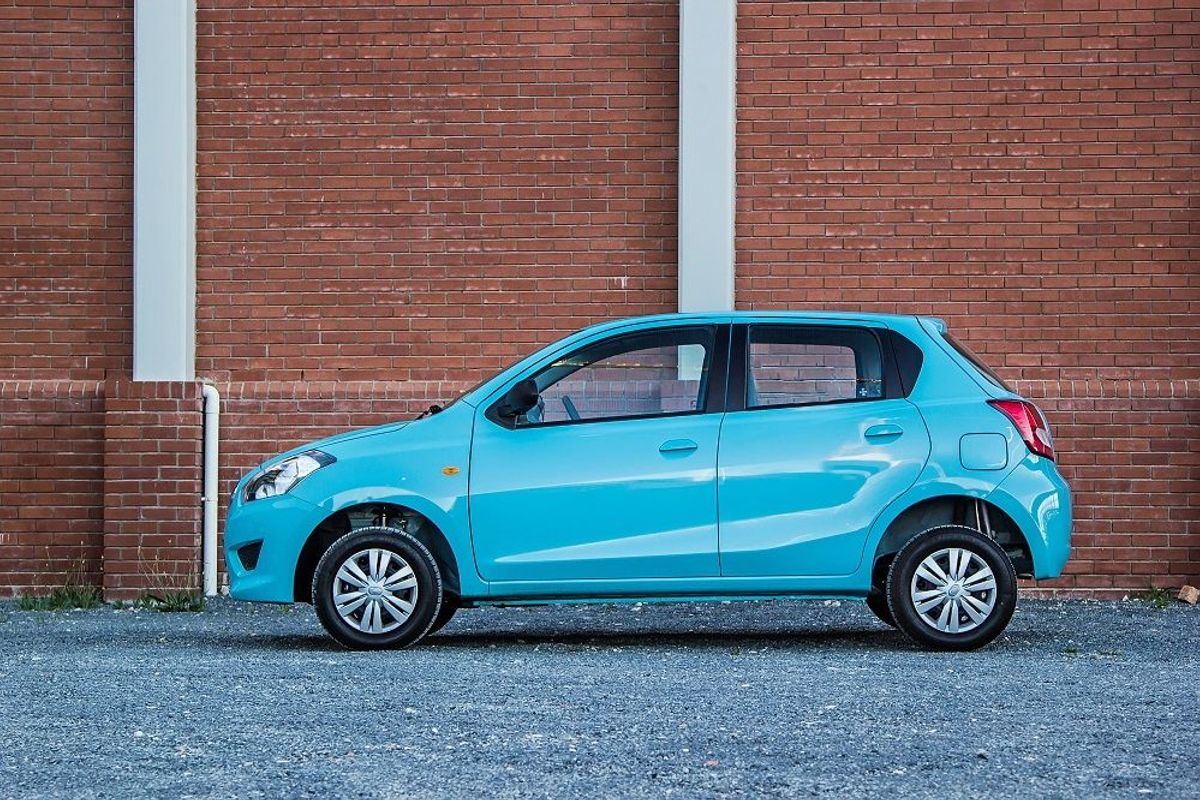
In response to concerns about the safety specification of its popular Go hatchback, Datsun has added a driver's airbag to the Lux model. Given the sales success of the Go, the Japanese brand's budget offering is as relevant as ever…
The Go competes in an ultra-competitive segment in which value for money and practicality count for a lot; its rivals are products such as the Chery QQ3, Geely CG2 and FAW V2 (to name just a few examples). And, what has been the secret of its success? It's simple: price.
At R99 900 for the 1.2 Mid and R114 900 for the 1.2 Lux model tested here, the Go is significantly more affordable than "city car" offerings from mainstream, volume-selling manufacturers.
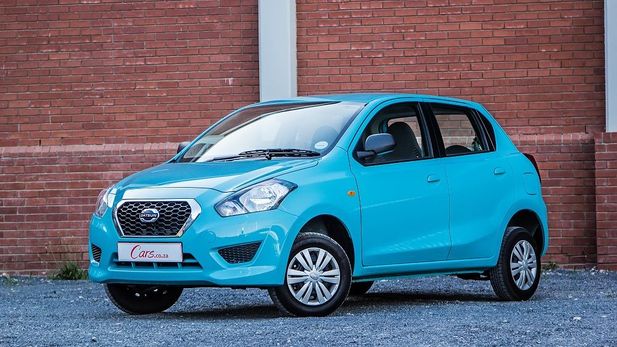
It's not a bad looking vehicle either, especially if you opt for the Sky Blue paint finish. By the standards of most inner-city runabouts available from new, the Go looks great.
Engine and Performance
Under the bonnet of the Datsun Go is a 1.2-litre three-cylinder petrol engine that produces 50kW and 104Nm and feeds power to the front wheels via a five-speed manual transmission. Those outputs suggest that the Go should feel sluggish to drive, but the Datsun Go tips the scales at around 800 kg. As a result, the engine doesn't have to work hard to get the vehicle moving; the Go's performance round town is spritely and it is pleasant to drive at the urban speed limit.
Datsun claims the Go will reach 100 kph from standstill in around 13 seconds, which doesn't sound that fast, but that figure doesn't tell the full story. After driving both on the highway and urban roads during the week-long test period, we saw an average fuel consumption reading of 5.9 L/100 km, which is a good for a vehicle in this segment.
Ride and Handling
For a car costing this little, you'd expect mediocre refinement, but although the noise from the 1.2-litre three-pot permeates to the cabin, road noise is fairly low at lower speeds. The power steering is light and the Go's agility in confined spaces is aided by its compact size and tight turning circle, which makes city parking so easy.
On the open road, the Go starts to battle at higher speeds, however. It'll reach 120 kph relatively easily, but you probably won't feel comfortable travelling at the national speed limit because the powertrain feels a little strained. The claimed top speed is 161 kph.

Features and Equipment
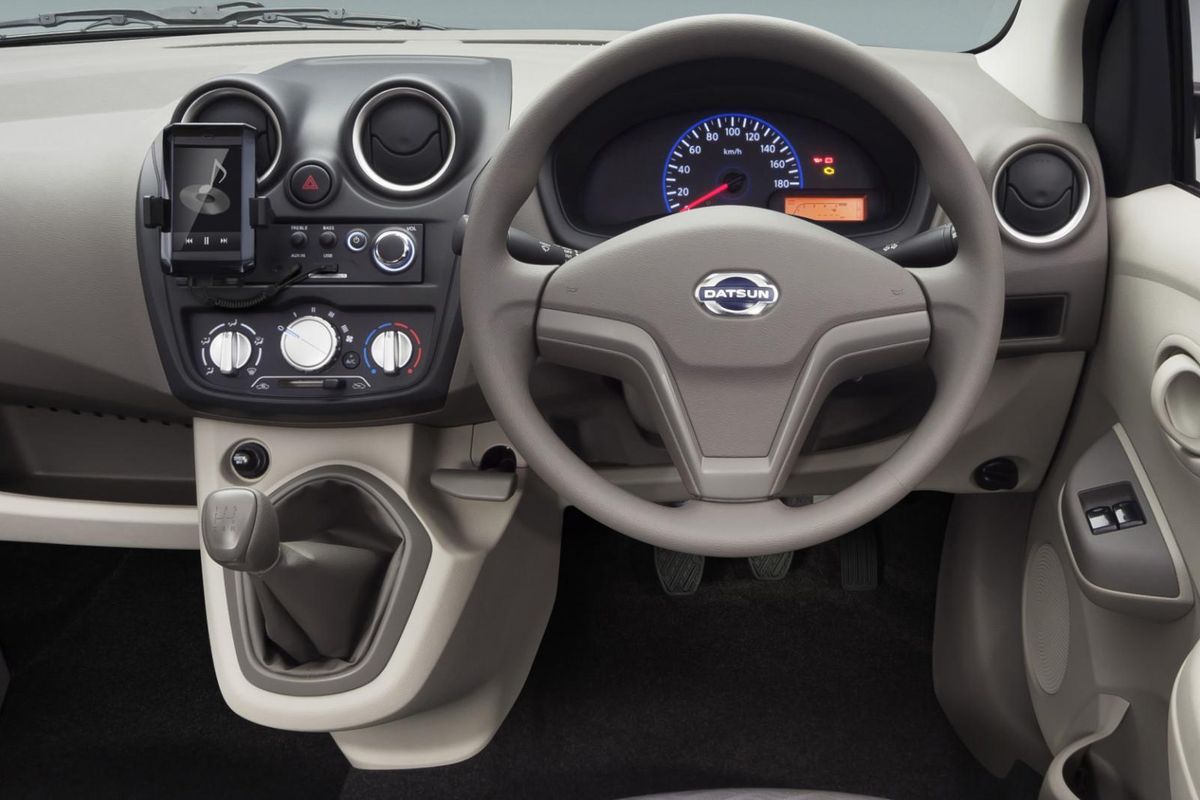
The Datsun Go 1.2 Lux has a trip computer, power steering, air conditioning, front electric windows, and a USB port (although this is for charging devices and not for music playback). What's more, the cabin feels comparatively spacious – the Go might not be quite as big as the market-dominating light hatchbacks, but it is bigger than most "city cars", which means that rear passengers will have a bit more legroom in the Datsun than most of the vehicles in its price bracket…
This model also features a mobile docking station which allows you to connect your mobile device via the aux input for music playback. Some dealers have omitted this option and offered an aftermarket radio instead. This particular unit had the radio option and, in terms of ease of use, it's arguably the less clunky of the two systems.
The Elephant in the Room
When we first drove a Go we were concerned that the Datsun was equipped with neither anti-lock brakes (ABS) nor (at least) a driver's airbag. This 1.2 Lux model has one of those: a single 'bag for the driver.
Since then, a Datsun Go failed the standard 64 kph front offset crash test and that video went viral. NCAP safety testers commented that the vehicle's structure and body shell collapsed, which would have made the fitment of an airbag pointless…
This leads us to ask: why did Datsun fit an airbag when anti-lock brakes (ABS) would have been the most logical option? ABS would help the vehicle stop better and as the saying goes, "prevention is better than cure."
Despite our (and many other publications') criticisms of the Go for its lack of safety features, research shows the general buying public rates affordability above safety in terms of its requirements of a vehicle in the Go's segment. Go buyers are looking for a new car and don't have a lot of money to spend. And, you get what you pay for with this car and keep in mind that similarly priced vehicles in this segment also lack safety features that many of us take for granted.
Take a look at this social media survey which indicates a car buyer's priorities. Value for money counts for so much and this is why Datsun Go is popular. The sales figures for the Datsun Go in 2015 indicate that value for money far outweighs specification and safety, and incredibly the Datsun Go was the 8th most popular car in terms of sales.

Verdict and Summary
As we mentioned in our first experience with this car (read it here), we’re impressed with the simplicity and affordability of the Datsun Go. Its performance around town is good and we enjoy "the city car life". However, the Go's poor performance in crash testing and lack of ABS make it difficult for us to recommend it to consumers. Remove safety from the equation and you’re looking at a vehicle that’s better than you think and scores highly in terms of affordability. It is also worth noting that Datsun dealers operate in conjunction with Nissan South Africa's established network, which should provide buyers peace of mind in terms of ongoing after-sales support.
Price and after-sales support
The Datsun Go range starts at R99 900 for the 1.2 Mid, while this 1.2 Lux with an airbag comes in at R114 900. The vehicle comes with a 3 year / 100 000km warranty while a service plan is optional.
We like: Pleasant to drive at low speeds, ease of use around town, willing engine, outstanding value for money.
We don’t like: Lack of safety features such as anti-lock brakes, lack of noise insulation.
Also consider: Chery QQ, Chevrolet Spark, Suzuki Celerio