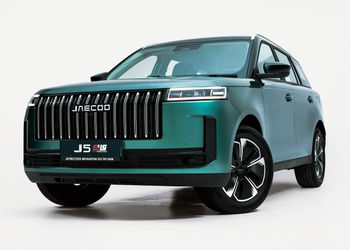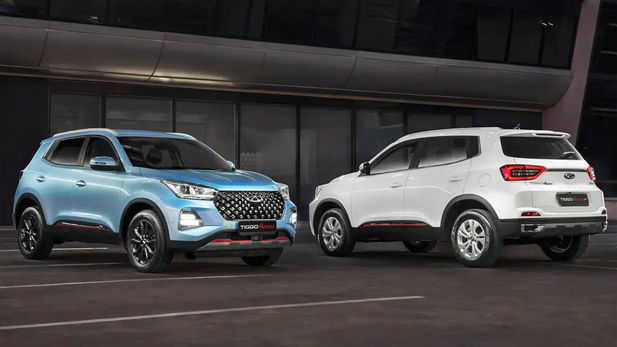
Chery’s rapid rise in South Africa has been remarkable, but a safety recall affecting more than 23 000 vehicles presents a major challenge. With potentially serious axle and braking defects, and the summer holiday season approaching, how the Chinese manufacturer responds could have lasting consequences for its reputation.
Chinese car brands have transformed South Africa’s new-vehicle market, challenging established manufacturers with competitively priced, generously equipped models. Few have made a bigger impression than Chery and its expanding family of sub-brands. But rapid growth brings greater responsibility. And nothing tests an automaker’s relationship with its customers quite like a major safety recall.
Chery South Africa is recalling 23 667 vehicles across 3 models because of potential rear-axle and braking-system defects. These aren’t minor electronic glitches that can be resolved with a software update. They involve components fundamental to vehicle safety.
For a manufacturer that has worked hard to establish itself as a credible alternative to legacy brands, the stakes are considerable.
Not all vehicle recalls are created equal
The nature of vehicle recalls has changed significantly over the past decade.
As cars have become increasingly software-driven, manufacturers can address certain faults through electronic diagnostics and over-the-air (OTA) updates. An infotainment glitch, for example, might be resolved without the vehicle ever visiting a workshop.
However, it’s important to distinguish between routine software updates and safety-related recalls.
A software defect affecting braking, steering or another safety-critical system can be every bit as serious as a mechanical failure. Conversely, not every mechanical recall involves an immediate danger to occupants.
What matters is the nature of the defect, its potential consequences and how effectively the manufacturer addresses it.
And when a recall involves the structural integrity of a vehicle’s suspension or the operation of its brakes, there’s little room for complacency.
Even Toyota isn’t immune to serious recalls
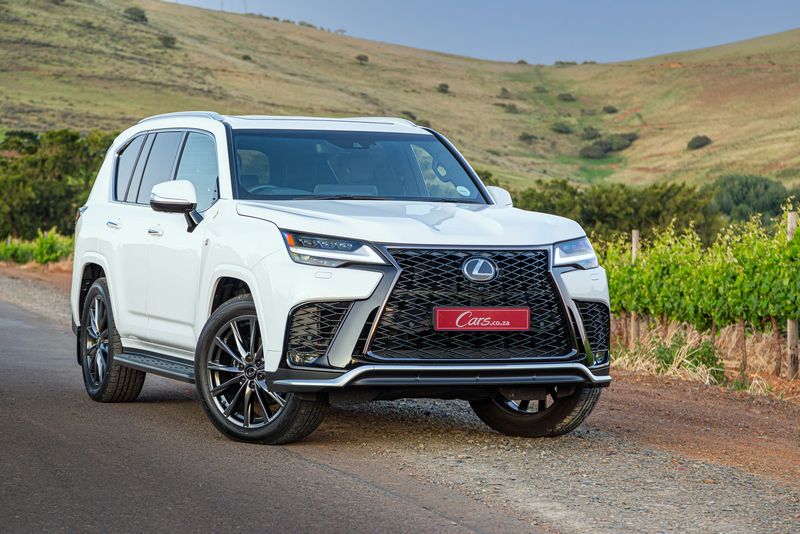
Recalls aren’t unique to Chinese manufacturers. Every major automaker has encountered them, including brands with longstanding reputations for engineering excellence.
Toyota, for example, has faced serious engine-related recalls involving its V35A twin-turbopetrol V6, used in some of its most expensive vehicles.
Modern engines are equipped with sophisticated monitoring systems, and certain faults can trigger warning lights or reduced-power operating modes to help limit damage.
But not every mechanical problem provides an electronic warning.
A defective suspension weld, for example, may not be detected by the vehicle’s onboard diagnostics. Depending on the nature of the defect, a component could deteriorate without triggering a dashboard warning.
That’s why recalls involving suspension structures, steering components and braking systems deserve particular attention.
Search for a Chery Tiggo 4 Pro on Cars.co.za
What’s wrong with the recalled Chery models?
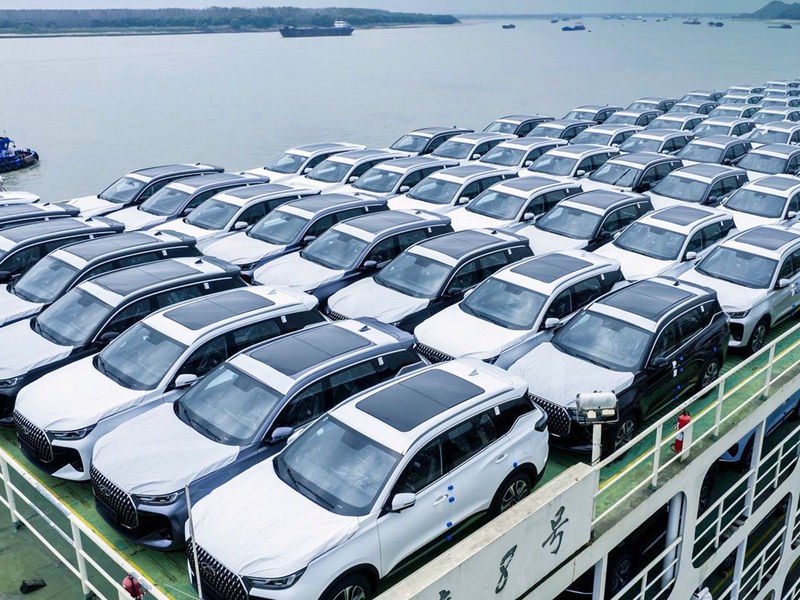
According to South Africa’s National Consumer Commission (NCC), the recall covers 23 667 vehicles across 3 models.
The affected vehicles are:
- Chery Tiggo 4 Pro: 17 508 vehicles potentially affected by irregularities in the weld connecting the rear axle trailing arm and sleeve.
- Omoda C5: 2 685 vehicles potentially affected by a similar rear-axle welding defect.
- Chery Tiggo 8 Pro Max 2.0: 3 474 vehicles potentially affected by contact between a front brake pipe and the turbocharger assembly, which could cause wear and brake-fluid leakage.
The rear-axle issue is particularly concerning. In extreme circumstances, failure of the affected weld could compromise wheel control and cause the rear suspension to collapse, increasing the risk of an accident.
The Tiggo 8 Pro Max recall involves a separate defect. If the brake pipe becomes damaged and leaks fluid, braking performance could deteriorate and stopping distances could increase.
These are potentially serious safety issues, although inclusion in a recall doesn’t necessarily mean that every affected vehicle has a defective component.
The distinction matters. Chery is conducting a precautionary campaign to identify and rectify vehicles that may be at risk, rather than responding to confirmed failures across the entire recalled population.
Nevertheless, with more than 23 000 vehicles involved, this is a substantial undertaking.
Can Chery’s dealerships handle the workload?

Chery has enjoyed remarkable growth in South Africa, expanding its model range and introducing additional brands in a relatively short period.
That success has created a growing population of vehicles requiring routine servicing, maintenance and warranty support. Now, thousands of owners must also be accommodated for recall inspections and, where necessary, repairs.
For the affected Tiggo 4 Pro and Omoda C5 models, Chery has confirmed that authorised dealerships will inspect the rear axle and replace the complete assembly where required.
That’s again an important distinction. Dealership technicians won’t necessarily need to undertake specialised welding repairs, but replacing an axle assembly is still more involved than routine servicing. It requires workshop space, appropriately trained technicians and sufficient replacement components.
Chery says the necessary parts are already available in South Africa and that recall-related repairs will receive priority. Even so, coordinating inspections for more than 20 000 vehicles with potential rear-axle defects, alongside the separate Tiggo 8 Pro Max braking recall, represents a considerable logistical challenge.
The real test will be whether Chery can complete the campaign efficiently without significantly disrupting routine servicing or inconveniencing customers.
Search for a Chery Tiggo 4 Pro on Cars.co.za
Why the timing couldn’t be worse
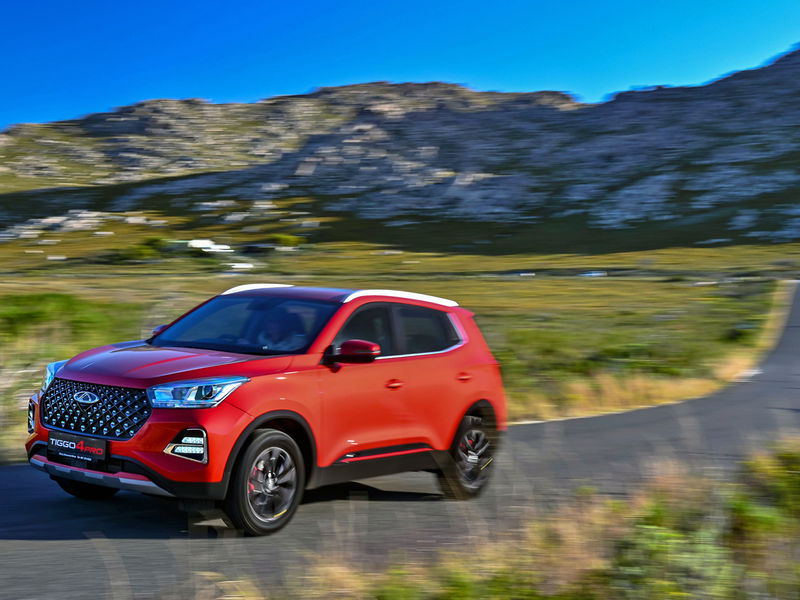
There’s another complication for Chery: the calendar. South Africa’s December holiday season is approaching, bringing the annual rush of motorists preparing their vehicles for long-distance journeys.
Dealership workshops typically face increased demand for servicing, inspections and repairs as families prepare for their year-end road trips. Chery must now accommodate a major safety recall during an already busy period. For affected owners, the timing is hardly ideal.
A family preparing to travel hundreds of kilometres, perhaps with a fully loaded vehicle and luggage, won’t welcome uncertainty about the condition of its rear suspension or braking system.
South African holiday journeys frequently involve heavily trafficked highways, potholes and stretches of poorly maintained rural roads. None of these conditions makes a potential safety defect any less concerning.
That doesn’t mean every recalled vehicle is unsafe to drive. However, owners should check their vehicle’s recall status and follow Chery’s instructions before embarking on a lengthy journey.
The NCC advises owners whose vehicles may be unsafe to contact an authorised dealership or Chery’s customer service centre to arrange towing.
For Chery, the challenge is clear: inspect affected vehicles, complete necessary repairs and reassure customers before the holiday rush reaches its peak.
Is China’s rapid development cycle a concern?
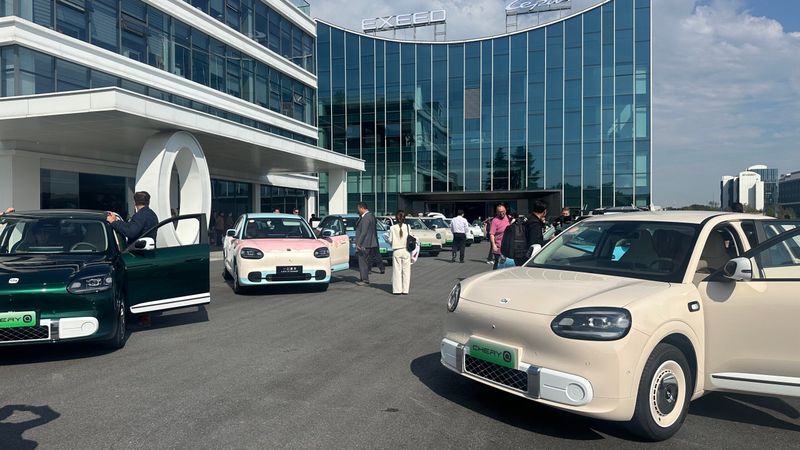
The Chery recall also raises a broader question about the extraordinary speed at which Chinese manufacturers are developing and launching new vehicles.
China’s automotive industry has transformed itself in little more than a decade. Manufacturers that were once dismissed as makers of inexpensive, unsophisticated vehicles are now producing technologically advanced models that compete with established global brands. Chery is a particularly impressive example, having established itself as China’s leading passenger-vehicle exporter.
Its rapid development of new models and digital technologies has become a defining characteristic of the business. But rapid product development inevitably places pressure on engineering validation, manufacturing processes and supplier quality control.
The challenge isn’t unique to China. Every automaker must balance development speed, production costs and the extensive testing required to ensure that components perform reliably over many years.
Nor does this recall establish that Chinese manufacturing standards are inherently inferior. China has substantial expertise in advanced industrial manufacturing, including highly demanding welding applications.
What the Chery recall does highlight is the importance of consistent quality control across the entire supply chain.
A vehicle manufacturer can invest heavily in research, development and testing, but a defect involving a relatively small component or manufacturing process can still create a major safety concern.
Has Chery’s rapid expansion contributed to the current problem? There’s insufficient evidence to draw that conclusion. But the recall provides a timely reminder that launching vehicles quickly is only one measure of an automaker’s capability. Ensuring their long-term safety and reliability is another.
A defining moment for Chery in South Africa
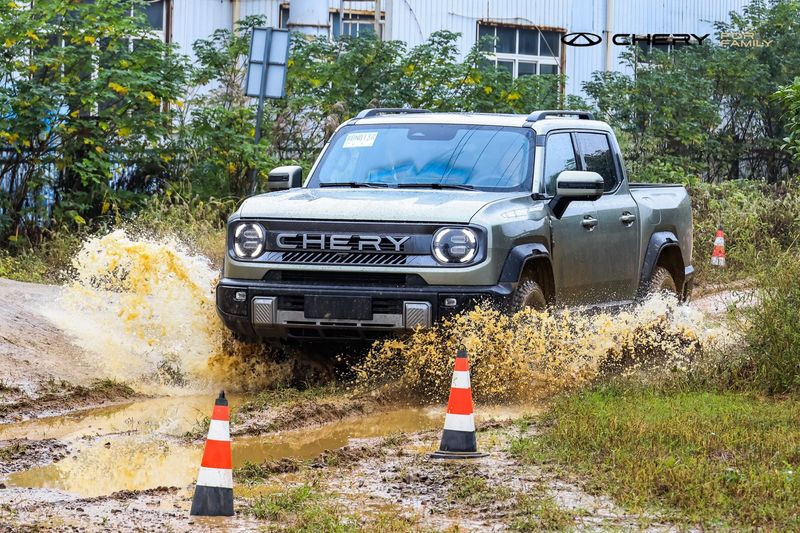
Chery has spent the past few years building an increasingly influential presence in South Africa. Its products have attracted buyers with their combination of competitive pricing, generous equipment levels and modern technology. The company has also expanded its dealership footprint and introduced new brands to reach additional market segments.
But selling vehicles is only part of building a successful automotive business. Supporting customers when something goes wrong is equally important.
This recall will test Chery’s ability to communicate clearly, supply replacement parts, coordinate its dealerships and complete repairs with minimal inconvenience.
It also arrives at a sensitive moment for the brand. Chery is preparing to enter one of South Africa’s most demanding vehicle segments with the Grootman bakkie.
South African bakkie buyers place enormous value on durability, mechanical reliability and long-term ownership confidence. Many use their vehicles for towing, carrying heavy loads and travelling on challenging roads. Although the current recall involves SUVs rather than the forthcoming Grootman, concerns about structural components could influence how some buyers perceive the wider brand. And that makes Chery’s response particularly important.
The company has already taken positive steps by announcing the recall, confirming that replacement components are available locally and committing to free inspections and repairs.
However, the NCC has also disclosed an ongoing investigation into allegations that Chery previously conducted certain recalls without notifying the regulator. Those allegations remain under investigation, but they add another dimension to the manufacturer’s responsibilities.
Ultimately, recalls happen to even the most respected automakers. What distinguishes them is how effectively they respond.
For Chery, the next few months will be about more than repairing potentially defective components. They’ll be about demonstrating that its aftersales operations, customer service and quality-control systems can support the remarkable growth of its South African business.
Chery has already proved that it can sell cars to South Africans. Now it needs to demonstrate how well it can look after them.
Lance Branquinho

Lance Branquinho is a Namibian-born writer and photographer who has won numerous motoring journalism awards. He once smuggled parts to South America, in a minor contribution to help Giniel de Villiers finish on the podium at the Dakar. He fears for the eventual collapse of the air-cooled Porsche 911 market – and keenly awaits, in vain, the return of the brand's 928.