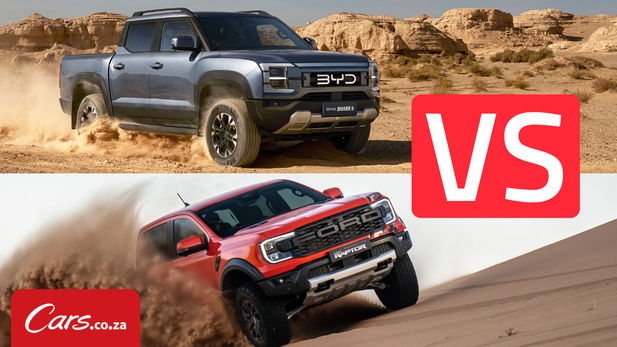
The BYD Shark 6 is the 1st Plug-in Hybrid (PHEV) double-cab bakkie in South Africa. Is the Shark 6, which has a price tag of under R1 million, a better buying proposition than the formidable (and more expensive) Ford Ranger Raptor? We compare their specs.
There’s been a lot of buzz about the new BYD Shark 6. Not only is it the 1st plug-in hybrid (PHEV) double-cab to go on sale in South Africa – it’s the most powerful bakkie variant available in our new-vehicle market, a bragging right previously held by the Ford Ranger Raptor.
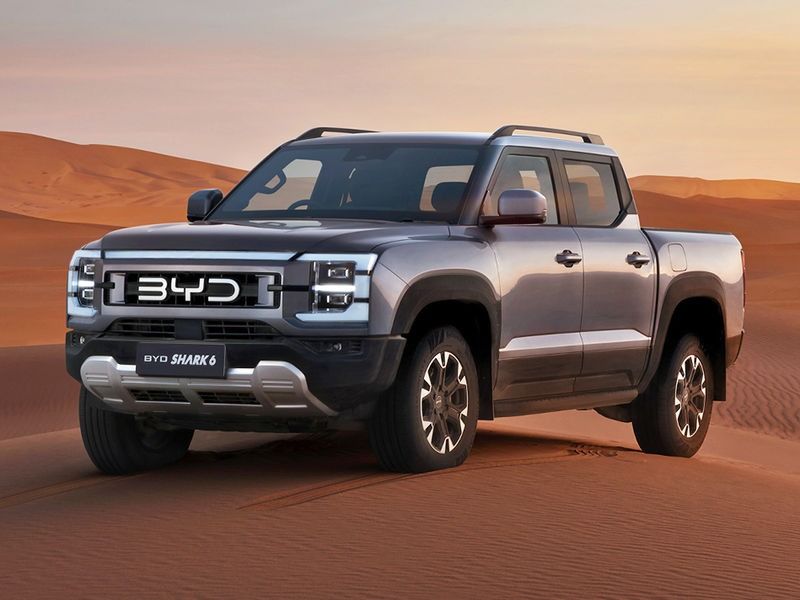
With the new BYD Shark 6 now available in South Africa, we thought it’d be useful to compare the newcomer’s specs with those of the Ford Ranger Raptor, which is the 2024/25 Cars.co.za Awards, sponsored by Absa Ultimate Double Cab category winner. This exercise is made more interesting when you consider that the BYD Shark 6 is priced from R959 900 (April 2025), while the Ford Ranger Raptor is priced from R1 270 000 (April 2025) – a price difference of R310 100, which is not insignificant.
So, what exactly is the difference between the BYD Shark 6 and the Ford Ranger Raptor and which of these bakkies represents a stronger buying proposition? Let’s dive into the specification details!
The main aim of this article is to help you, the consumer, make an informed buying decision. To help you do this, we will provide you with the need-to-know information and insight based on available vehicle information and our experience with the cars in question.
This article will cover key aspects, including Exterior Styling, Performance & Efficiency, Interior Features & Execution, Practicality & Offroad Ability, as well as Pricing & Warranty details.
If, at the end of this article, you are still undecided as to what to buy, you are more than welcome to reach out to us for advice via X, Facebook or Instagram. Our experienced test team will gladly assist you.
BYD Shark 6 vs Ford Ranger Raptor
Exterior Styling
The BYD Shark 6 has come to market with an extroverted exterior design that’s strikingly similar to that of the Ford Ranger Raptor, but perhaps even bolder in execution! The Shark 6’s large front end features oversized E-shaped LED headlights with a horizontal light bar that runs below the bonnet lip, and this design language is also seen at the rear, where a horizontal light bar appears on the tailgate.
Large BYD lettering takes pride of place, and a silver-coloured chin spoiler beefs up the front-end look even further. Chunky plastic cladding around the wheel arches (which house 18-inch alloy wheels) and lower sills add further rugged appeal, hinting at the Shark 6’s intention to be a competent off-roader.
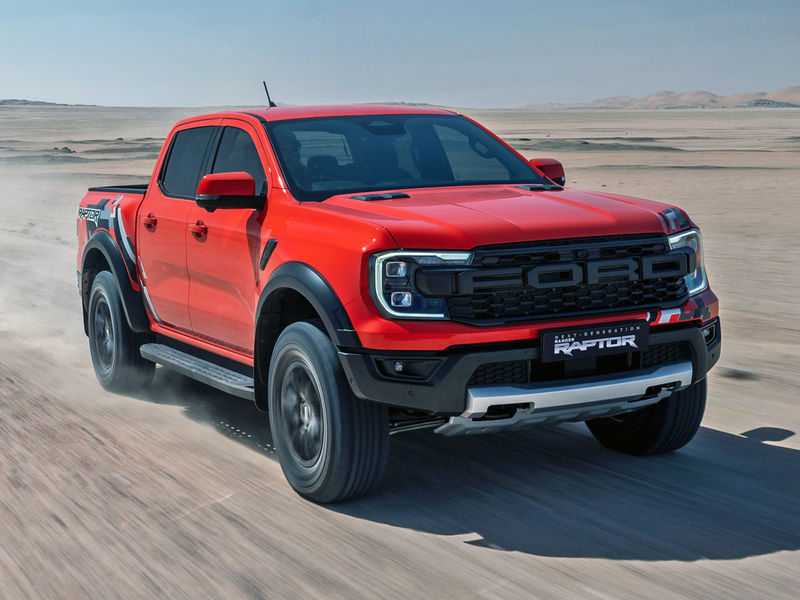
As for the Ford Ranger Raptor, it wears a C-shaped headlight design and, much like the BYD, the central grille features large Ford lettering, while a lower bash plate helps to protect the Raptor’s mechanical bits while off-roading. Similarly, generous plastic cladding around the 17-inch wheels contributes to a wider, planted stance. The C-motif is carried over to the rear, but the Raptor sets itself apart with dual exhaust tips that hint at its credentials as a high-performance off-road bakkie.
Styling is subjective and while the Ranger Raptor has been widely regarded as one of the best-looking bakkies on the market, the arrival of the Shark 6 might split many opinions on the matter.
Performance and Efficiency
| BYD Shark 6 | Ford Ranger Raptor | |
| Powertrain | 1.5-litre, 4-cylinder, turbopetrol hybrid | 3.0-litre twin-turbopetrol V6 |
| Battery Capacity | 29.6 kWh | None |
| Power | 321 kW | 292 kW |
| Torque | 650 Nm | 583 Nm |
| Transmission | Single-speed transmission with reduction gear | 10-speed automatic |
| Acceleration (0-100kph) | 5.7 sec | 5.8 sec |
| Fuel Efficiency (claimed) | 2.0 L/100 km (above 25% battery charge) 7.9 L/100 km (below 25% battery charge | 11.5 L/100 km |
| Driving range | 670 km | 696 km |
BYD Shark 6
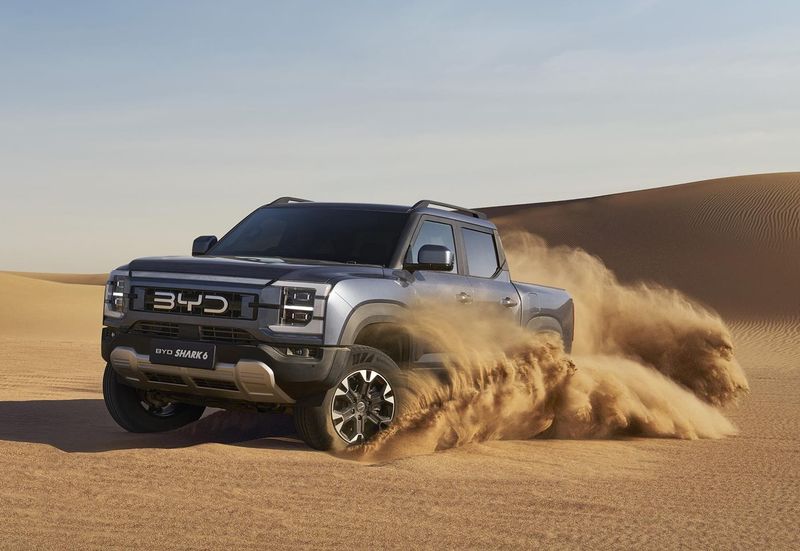
At the time of writing, Cars.co.za had yet to test the performance of the Shark 6, but, the Shark 6’s on-paper powertrain specification, with 321 kW and 650 Nm available from its all-wheel-drive hybrid powertrain, which includes both a 170 kW/310 Nm front- and a 150kW/340Nm rear electric motor, which work in conjunction with a 1.5-litre 4-cylinder turbopetrol engine, makes for interesting reading.
A 29.6 kWh battery pack allows for a claimed electric-only range of 85 km, and the hybrid system harvests energy through regenerative braking. Furthermore, the Shark 6 offers Vehicle-to-Load (V2L) functionality that allows the battery pack to power external devices, effectively turning the bakkie into a source of electricity, which will be helpful on work sites, camping adventures or during loadshedding.
From a performance perspective, on paper that is, the Shark 6 claims rapid acceleration with BYD pegging the zero to 100 kph sprint at 5.7 sec – a feat that we have yet to experience. If true, the Shark 6 may outperform the Ranger Raptor in a straight line, but only a Cars.co.za Drag Race will settle that score… We’ll hopefully have the Shark 6 on test in the near future so look out for feedback soon.
Ford Ranger Raptor
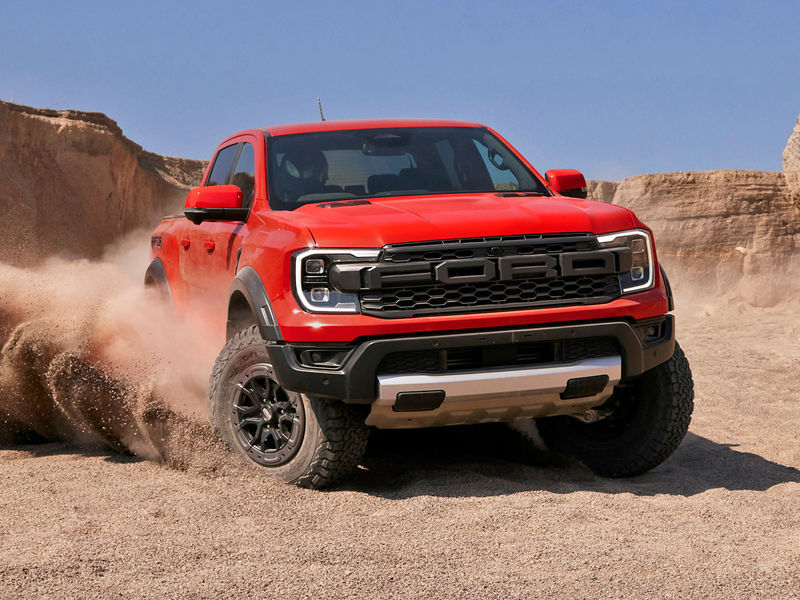
We’ve spent a considerable amount of time with the Ford Ranger Raptor, and its performance is nothing short of impressive. With its twin-turbo V6 petrol engine pumping out 292 kW and 583 Nm of torque, all of which is directed to all 4 corners of the vehicle, the Raptor delivers stonking performance by double-cab standards, both on- and off-road. Moreover, the Raptor’s specially calibrated 10-speed transmission, replete with steering-mounted paddle shifters, delivers snappy and engaging gear changes.
Not only does the Ranger Raptor gain rapid pace — the zero to 100 kph sprint takes about 5.8 sec – its dual exhaust pipes emit a rorty, evocative V6 soundtrack that sets it apart from the rest of the segment. However, the Raptor’s performance does come at the cost of efficiency, and while Ford claims 11.5 L/100 km, the Ranger Raptor will consistently return higher figures, so be prepared to fill up fairly often.
Interior Execution and Features
Compare the BYD Shark 6 with the Ford Ranger Raptor using our Car Comparison Tool
| BYD Shark 6 | Ford Ranger Raptor | |
| Infotainment system | 15.6-inch rotating touchscreen | 12-inch touchscreen |
| Digital instrument cluster | 10.25-inch digital instrument cluster | 12.4-inch touchscreen |
| Android Auto and Apple CarPlay, Bluetooth, voice control, USB ports | Yes, wireless functionality, 2 x USB-A ports 2 x USB-C ports (front and rear) | Yes, USB-A and USB-C ports (front and rear) |
| Wireless Charging | Yes | Yes |
| Sound System | Yes, 12 speakers | Yes, 10 speakers |
| Rear View Camera | Yes, 360-degree | Yes, 360-degree |
| Cruise Control | Yes, adaptive | Yes, adaptive |
| Air Conditioning | Automatic dual zone climate control | Automatic dual zone climate control |
| Panoramic Sunroof | Yes | No |
| Front and rear park distance control | Yes, both | Rear |
| Upholstery / electric seats | Leather upholstery, 8-way power adjustable driver’s seat with 4-way lumbar support, 4-way power adjustable passenger seat, front heated and ventilated seats | Partial suede and leather, electric driver seat adjustment |
| Safety Features | 7 airbags, ABS with EBD, brake assist, Electronic Stability Control (ESC) with Traction Control, Hill Hold Control (HHC), Hill Descent Control (HDC), Lane Departure Warning (LDW), Lane Departure Prevention (LDP), Emergency Lane Keeping Assist (ELKA), Blind Spot Detection (BSD), Front Collision Warning (FCW), Door Open Warning (DOW), Trailer Stability Control (TSM), Rear Collision Warning (RCW), Front Cross Traffic Alert (FCTA), Rear Cross Traffic Alert (RCTA) | 7 airbags, ABS with EBD, brake assist, Electronic Stability Control (ESC) with Traction Control, Hill Launch Assist (HLA), Hill Descent Control (HDC), Lane Departure Warning, Lane Keeping Assist (LKA) with Lane Keeping Alert (LKA), Lane Keeping Aid (LKA), Road Edge Detection, Blind Spot Detection (BSD), Forward Collision Warning (FCW), Evasive Steer Assist (ESA), Active Park Assist 2.0, Tyre Pressure Monotoring |
BYD Shark 6
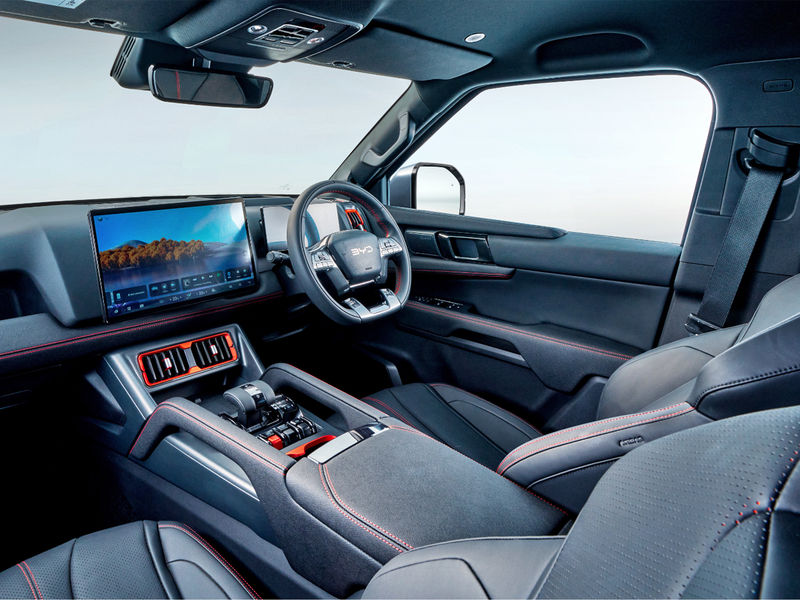
The interior of the BYD Shark 6 adopts a thoroughly modern cabin architecture that combines soft-touch surfaces and harder-wearing materials befitting of a high-end double-cab bakkie.
The central infotainment touchscreen, the largest in the segment, is rotatable and houses all major infotainment and vehicle settings. A separate digital instrument cluster adds to the tech-forward design approach. The central tunnel is where you can access a host of functions via a set of switches and buttons. The red-framed, vertically-orientated air vents add further visual appeal and colour to the cabin, as does the contrasting red stitching seen on the leather seats, door trim, centre bin and steering wheel.
Standard specification is generous; the list of safety features, including driver-assistance technology, is particularly comprehensive. Overall, the Shark 6’s interior is what you would expect to see in a premium SUV and combined with a comprehensive standard feature set, we think it will impress local buyers.
Ford Ranger Raptor

Much like the BYD, the interior of the Ford Ranger Raptor also features a mix of hard and soft materials, and the perceived build quality is very good. While Ford’s vertical infotainment touchscreen is not as expansive as the Shark 6’s setup, the SYNC 4A operating system is considered to be among the best in the segment in terms of functionality and usability.
The seats are generously bolstered, plus red detailing on the seat trim, steering wheel and air vents add to the sense of occasion. The centre tunnel isn’t as cluttered as the Shark 6’s – this is where you can access the Raptor’s off-road command dial.
The Ranger Raptor is also generously equipped with standard features and, much like the Shark 6, it too offers a comprehensive list of standard safety features and driver-assistance features.
The Raptor’s interior has been the benchmark in the segment for some time. While it may not appear to be as “upmarket” as the Shark 6’s cabin, we suspect that it might be more robust and fit for purpose…
Dimensions, Practicality and Off-road Features
| BYD Shark 6 | Ford Ranger Raptor | |
| Kerb weight | 2 710 kg | 2 460 kg |
| Length | 5 457 mm | 5 360 mm |
| Width | 1 971 mm | 2 028 mm |
| Height | 1 925 mm | 1 926 mm |
| Wheelbase | 2 920 mm | 3 270 mm |
| Ground clearance | 230 mm | 272 mm |
| Approach angle | 31° | 32° |
| Departure angle | 19.3° | 25° |
| Breakover angle | 17° | 24.2° |
| Wading depth | 700 mm | 850 mm |
| Low Range | No | Yes |
| Differential Locks | No traditional diff locks “Virtual” differential lock system using brakes and electric motors to achieve traction | Front and rear differential locks |
| Offroad driving modes | Sand, Mud, Snow, Mountain | 4A (automatic 4×4), 2H (rear-wheel-drive), 4 High and 4 Low. Driving modes include Normal, Sport and Slippery, Rock Crawl, Sand Mud/Ruts, Baja, Trail Control |
| Towing capacity (braked) | 2 500 kg | 2 500 kg |
| Payload | 790 kg | 670 kg |
Summary
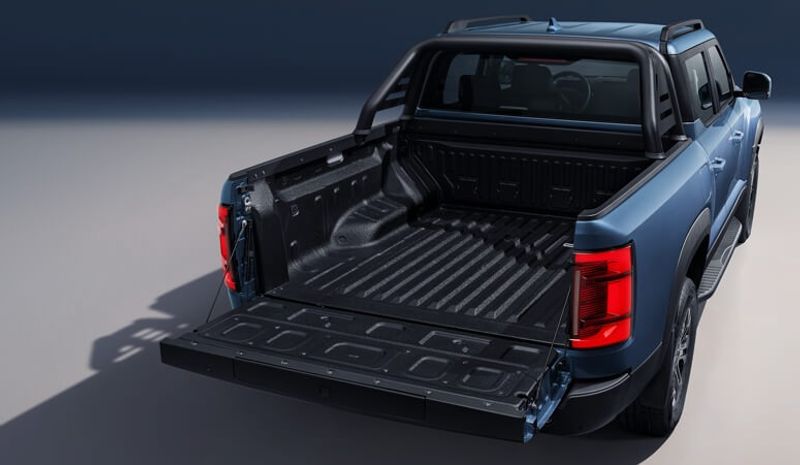
The BYD Shark 6 is longer than the Ranger Raptor, but the Ford has a longer wheelbase and stands 57 mm wider. In addition, the Ranger Raptor also has a higher ground clearance. And if you intend to do deep water crossings, the Ranger Raptor also has a more generous wading depth at 850 mm.
From an off-roading perspective, the Shark 6 foregoes traditional off-roading hardware such as low range and differential locks and instead uses electronic trickery (let alone electric motors) to achieve the necessary traction with 4 main drive modes available to suit various terrain. Note that we have yet to test the Shark 6’s off-road capability on local soil, therefore, we have to reserve judgment for now.
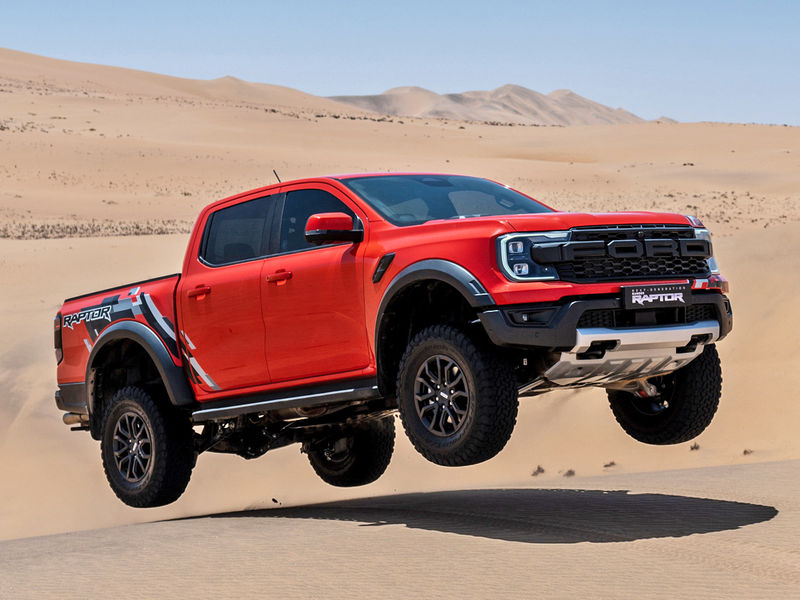
The Ford Ranger Raptor, however, has proven itself to be exceedingly capable in the toughest of terrains and is equipped with an uprated Fox suspension with 2.5-inch Live Valve Internal Bypass shock absorbers that allow for high-speed off-road driving in combination with unique drive modes… Up to 7 of those modes are available, including Baja and a useful off-roading feature known as Trail Control.
On paper, the Ford Ranger Raptor appears to be better equipped to tackle a wider variety of off-road situations, whereas the Shark 6 is perhaps not as “hardcore”, but more of an on-road-focused product with a degree of off-road capability.
We look forward to testing the full capability of the BYD Shark 6 on local soil very soon, so stay tuned!
Pricing and Warranty
| BYD Shark 6 | Ford Ranger Raptor | |
| Price | R959 900 | R1 270 000 |
| Warranty | 5-year/100 000 km | 4-year/120 000 km |
| Service Plan | 5-year/100 000 km | 6-year/90 000 km |
Buy a BYD Shark 6 on Cars.co.za
Buy a Ford Ranger Raptor on Cars.co.za
Not sure what you’re able to afford? Use our Car Affordability Calculator
Work out monthly instalments with our Finance Calculator
BYD Shark 6 vs Ford Ranger Raptor: What should you buy?
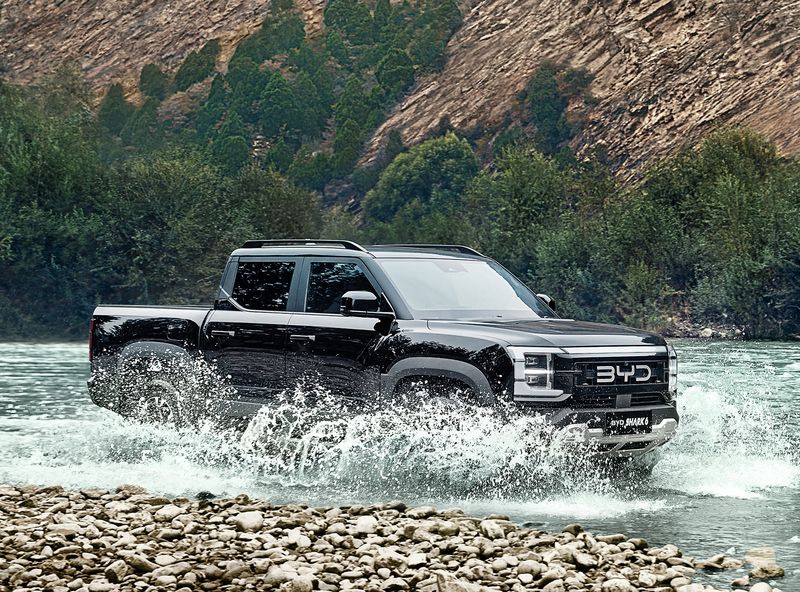
The new BYD Shark 6 is certainly a compelling buying proposition if you consider the sheer performance its powertrain is said to offer, as well as the glut of standard features packed into a bold bakkie package that retails for under R1 million. Suffice it to say, it will lure many potential buyers into BYD showrooms.
Make no mistake, the Shark 6 is here to steal the Raptor’s lunch and it will likely sneak more than a few bites as consumers get swept up in the new-vehicle hype. Nonetheless, a nose of caution is necessary: BYD is still a new brand in South Africa (it was launched locally in 2023) with a largely unproven track record in terms of aftermarket service, and that fact alone might be enough to give some buyers pause. Also, importantly, BYD’s product reliability and depreciation in the local market are unknown.
While we have yet to properly test the full capability of the Shark 6, both on and off-road, it has big shoes to fill if it’s to beat the Ranger Raptor in terms of outright capability.

If you’re a die-hard off-road enthusiast looking for the ultimate off-road bakkie, the Ford Ranger Raptor is near-as-damn unstoppable (to reiterate, it’s the Cars.co.za Awards Ultimate Double Cab category champion), but you’ll have to accept its lofty price tag as it’s a niche high-performance off-road bakkie.
However, if you’re less serious about taking your double cab into the bundus and more concerned about driving the latest, flashiest new bakkie, perhaps the Shark 6 will win you over – and serve you better.
It will be interesting to see how well the Shark 6 is received locally and if initial indications are true, you’re likely to see many more BYD double cabs cruising around Mzansi soon.
Look out for our full test of the new BYD Shark 6 coming your way soon!