
Audi’s RS-model offensive is in full swing. The RS4 is only available as a station wagon (as it was before its facelift), but will that limit the model’s prospects in a country known for “antistationwagonism”? We took the RS4 Avant on a week-long trip to the Overberg to find out how practical the performance ‘wagon really is.
We like: A ‘wagon just feels more “special” than a sedan or coupe, everyday performance, practicality.
We don’t like: Overly firm ride quality and insufficient ground clearance for driving on gravel roads.
Fast Facts:
- Model tested: Audi RS4 Avant
- Price: R1 296 000 (R1 569 400 as tested)
- Engine: 2.9-litre 6-cylinder turbopetrol
- Power/Torque: 331 kW and 600 Nm
- Transmission: 8-speed automatic
- Fuel efficiency: 9.2 L/100 km (claimed)
- 0-100 kph: 4.1 sec (claimed)
- Top speed: 250 kph (280 kph on request)
- Load capacity: 495/1 495 litres
Serious about buying?
Some Audi dealerships regularly offer great deals. See our Car Specials page here!
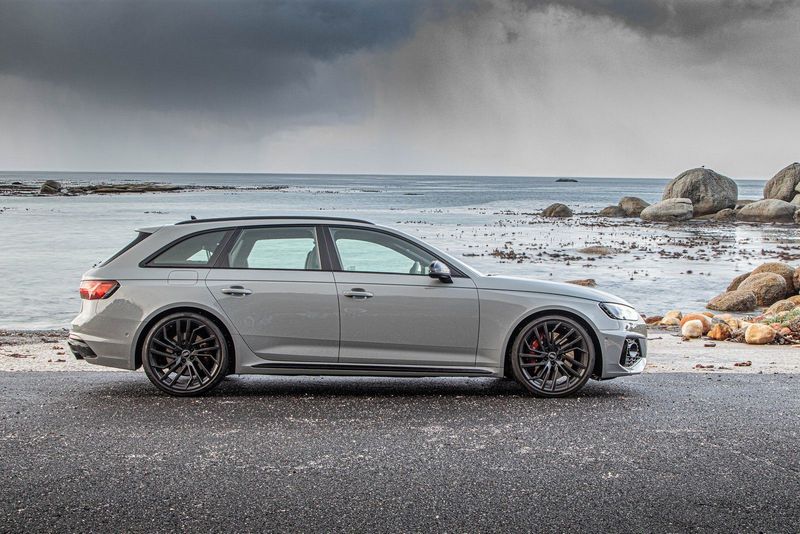
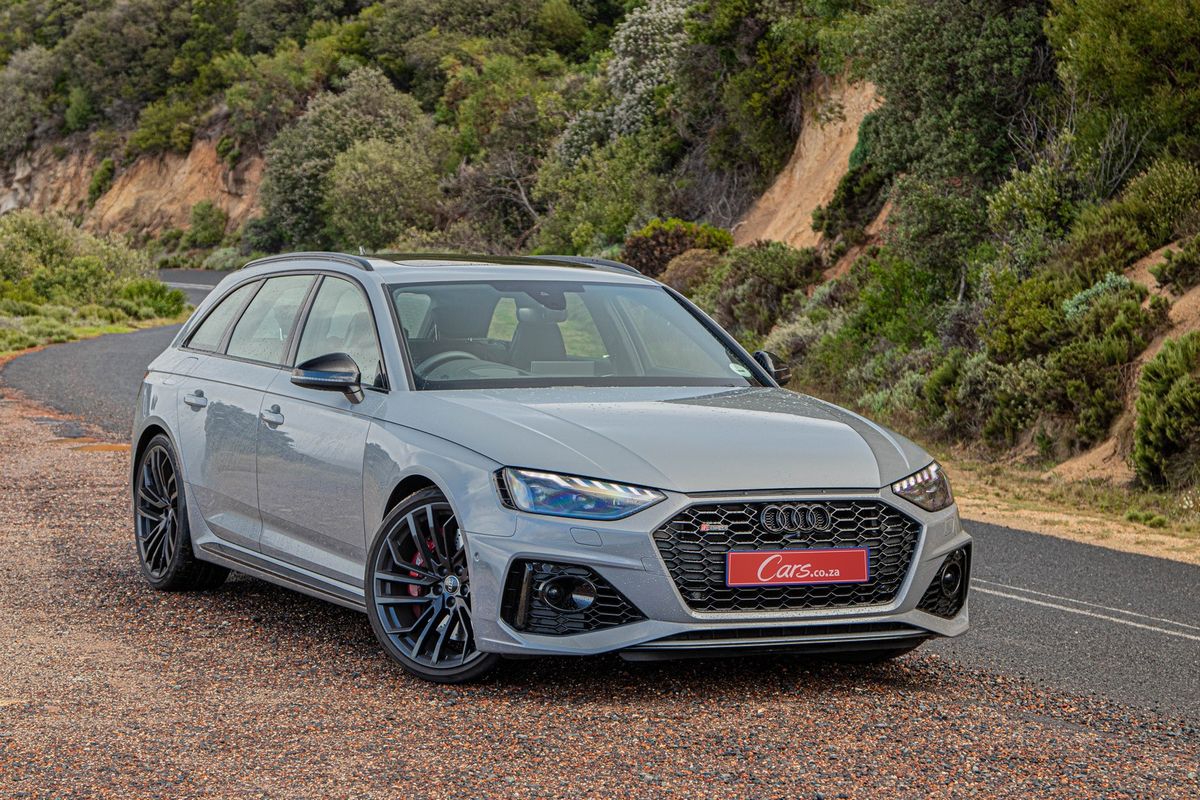
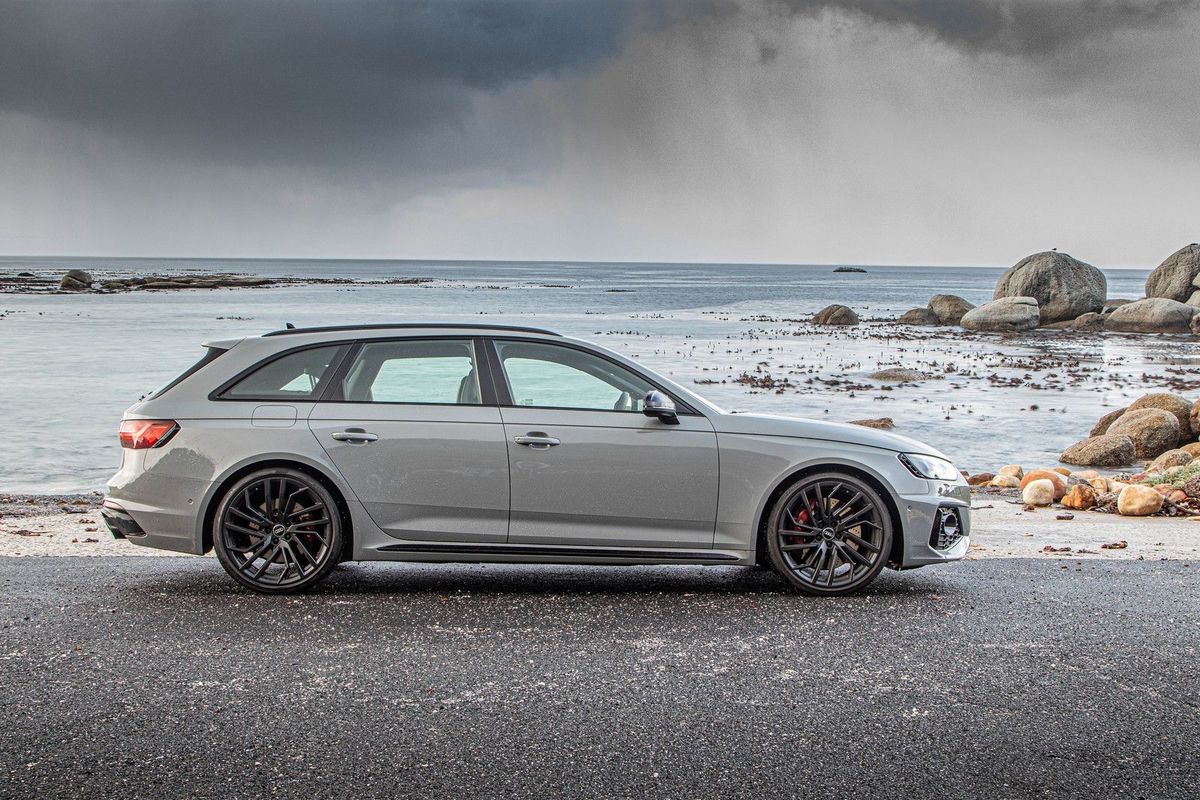
20-inch wheels are now standard on the Audi RS4 Avant.
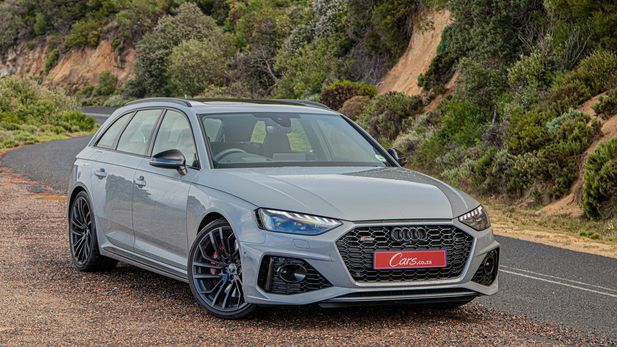
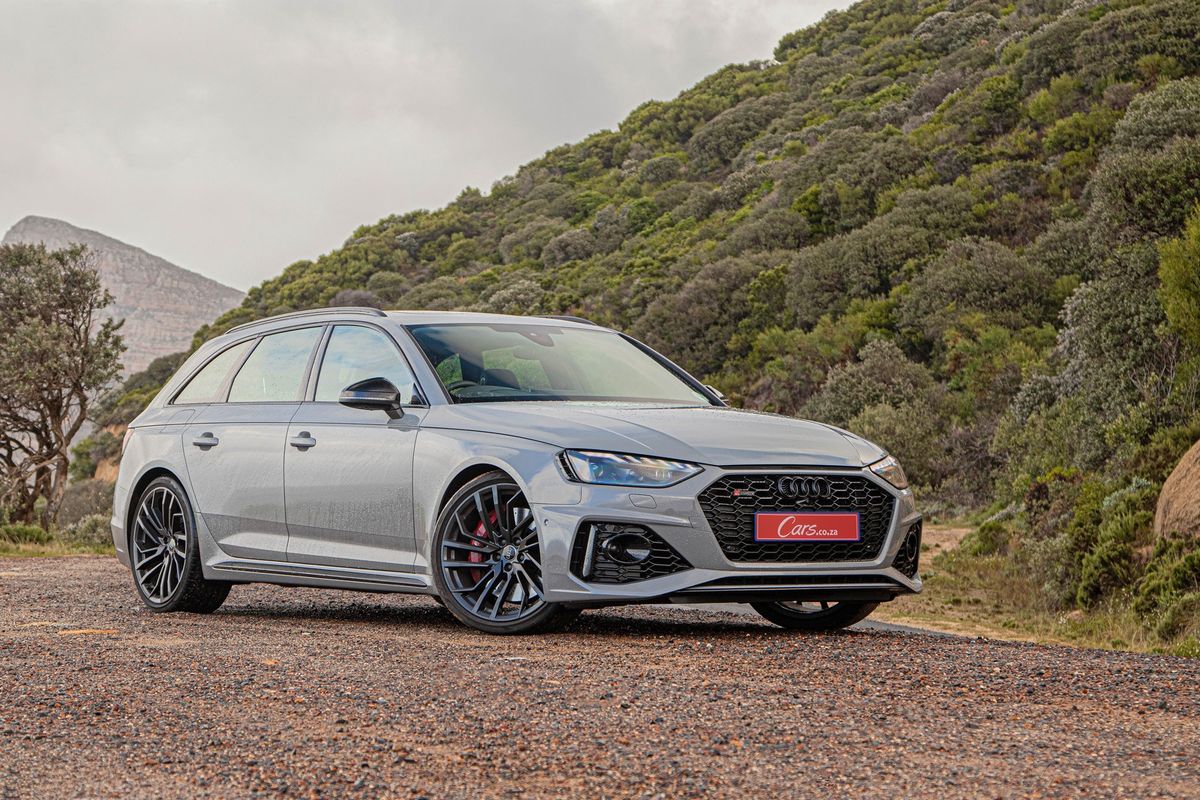
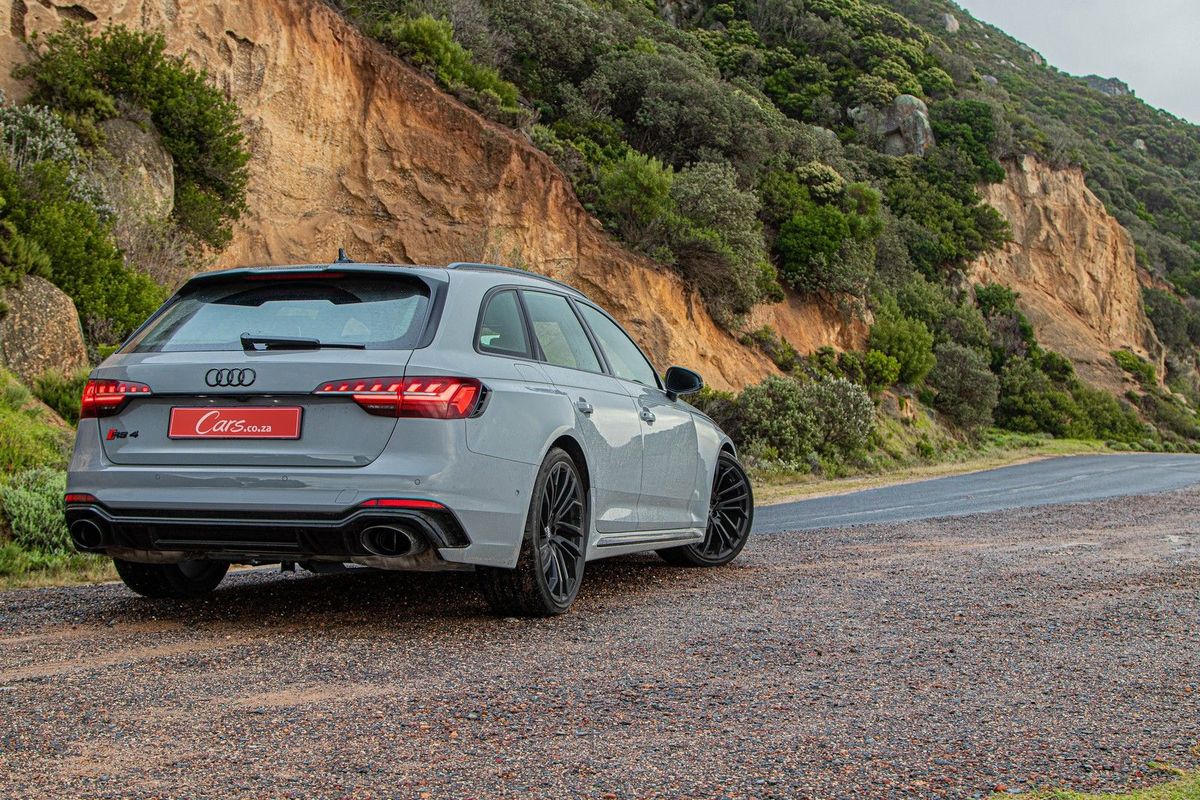
The RS4 Avant has undergone a mid-lifecycle update, of which the primary focus was to freshen up the appearance of the Ingolstadt-based brand’s performance ‘wagon. Audi redesigned the model’s grille, headlamps and front bumper to give it a more attractive – and muscular – kerb presence; when viewed from head-on, the RS4 seems to glare down the road in a menacing way. The puffed-out wheel arches bolster the ‘wagon’s musclebound physique and the car hunkers down on standard 20-inch alloys. A pair of oval “cannon barrels”, linked by a functional diffuser, protrudes from the rear. All of this is affixed to a practical station wagon body, which, at the time of writing, seemed to appeal to car enthusiasts and -nostalgists only. The Audi looks right from every angle – something that can’t be said of its rivals…
ICYMI: Ciro De Siena investigated “antistationwagonism” a few years ago. Watch his report here.
How the RS4 Avant fares in terms of…
Performance
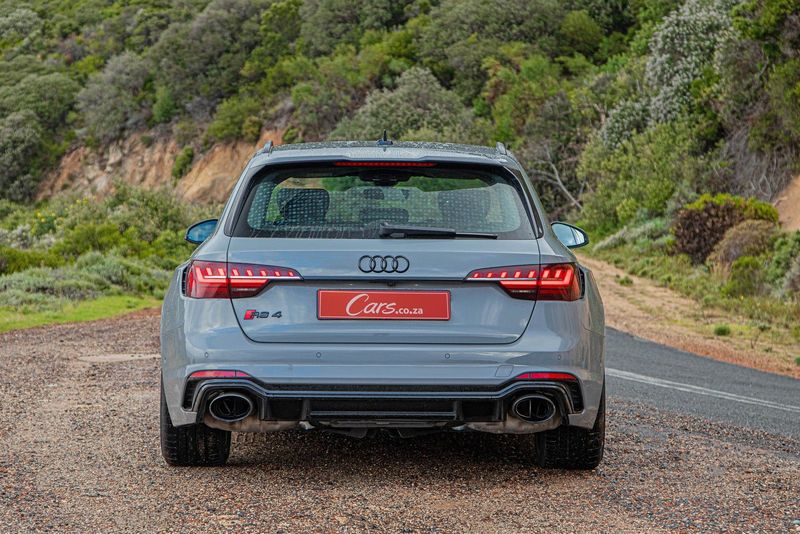
Dual cannons jut out at the back and produce a bassy howl when the RS4 Avant is revved hard.
Mechanically, the RS4 hasn’t undergone much of a change from the outgoing model. The Porsche-developed 2.9-litre turbopetrol V6 under its bonnet still develops peak outputs of 331 kW and 600 Nm of torque, which seems comparatively low compared with the BMW M3 Competition and the Mercedes-AMG C63 S, which produce 375 kW/650 Nm and 375 kW/700 Nm respectively. At this point, however, the Teutonic trio has extracted more performance from their sports executive flagships than we’ll ever need. Now it’s just a daft game of top trumps for the manufacturers; more power is not better.
Besides, the RS4 is more than fast enough (its claimed to bolt from 0 to 100 kph in 3.9 sec) and, thanks to quattro all-wheel drive, you’re likely to achieve that time on almost all sealed road surfaces time and again (unless the road is wet or the ‘wagon’s tyres have been ruined as a result of repeated punishing use). The sound the V6 emits as it spins up the rev range is a bassy howl that is neither overly loud nor supplemented with unnatural pops on the overrun or bangs at upshifts. It’s a clean, natural sound – while many of us still pine for the old 4.2-litre V8 rumble, its replacement still gets the juices flowing.
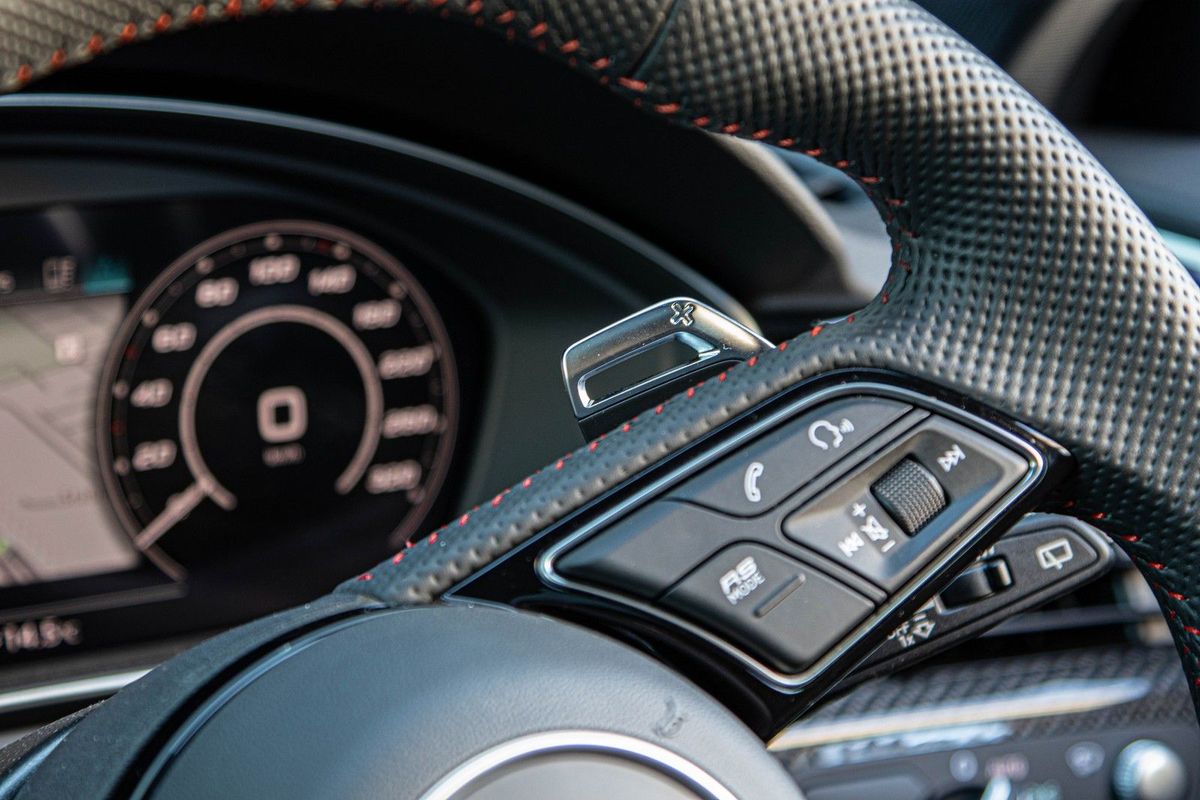
The Audi’s 8-speed ZF automatic transmission, meanwhile, seamlessly files through its ratios and, if you prefer, you can actuate gear shifts manually via the perfectly placed paddles mounted at the back of the sports steering wheel. Each shift is accompanied by a slight thud in the back as another helping of maximum torque gets fed through the transmission.
To reiterate, there’s more power available than you will ever need (outside of a race circuit). Executing overtaking manoeuvres is a pleasure – the RS4 can zip past slower vehicles in lightning-quick time.
Handling
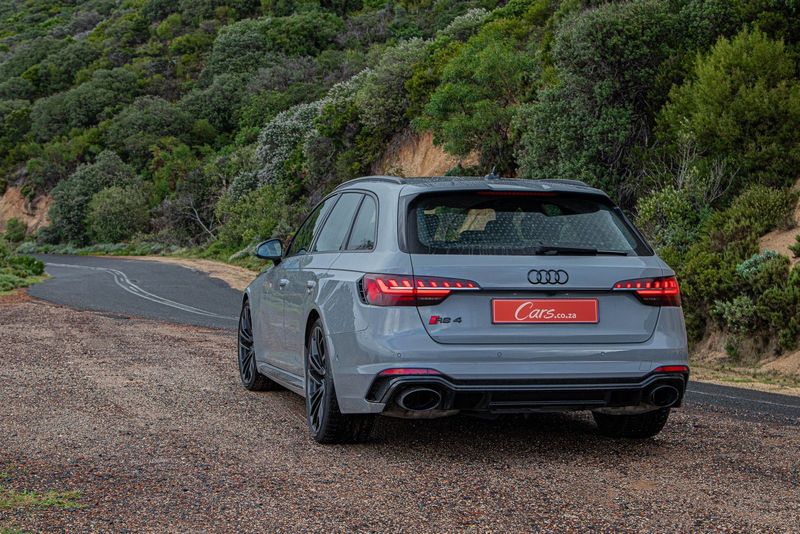
On a wet day like this, you’ll be glad for permanent all-wheel-drive and safety-first understeer.
It seems that Audi’s focus for the RS4 was to offer ample usable performance and predictable (neutral) handling. This may be a station wagon, but it still does the business when roads get twisty. The front end is eager to hunt down apexes and when you feed in the power, the Avant’s rear stays glued to the road. If you want a squirmy, on-the-edge-of-adhesion driving experience, the Audi might not be to your liking – it corners as if it’s running on rails (as the saying goes) and the powertrain is so instantly responsive to throttle inputs that the lusty V6 under the bonnet feels more super- than turbocharged.
If you’re brave enough to push the Audi to its limits, the package’s weaknesses will present themselves. Weight is always an issue in a big car and, given the RS4’s 1.7-tonne kerb weight, you can feel the effect of that heft when the ‘wagon is tasked with changing direction quickly. It takes a moment for body roll to settle, which delays the point at which you feel confident to stab the accelerator pedal again.
Bearing in mind that the Audi is a family-oriented estate car (albeit a very rapid one that’s also styled like a sportscar), RS4 Avant it’s fun to drive and wring all accessible performance from, provided the road does not get too tight and squiggly. Our test unit came with the optional Dynamic Steering (R18 000), which adjusts the weighting and speed of the steering depending on your driving style (it feels lighter and faster in slow cities, but heavier and more progressive at higher speeds). It can take some getting used to and feels unnatural at times, but it’s an option you – don’t have to spec if you don’t like it.
There is a downside to having a ‘wagon that’s performance-based and looks this aggressive, replete with minimal ground clearance… If you have to traverse a section of dirt road to get to dog-walking parks or access the public areas of wine farms, it’s a bit of a fuss to avoid incurring inevitable scrapes to the underbody. Maybe an “RS4 Allroad” would present the perfect blend of performance and practicality?
Interior tech and comfort
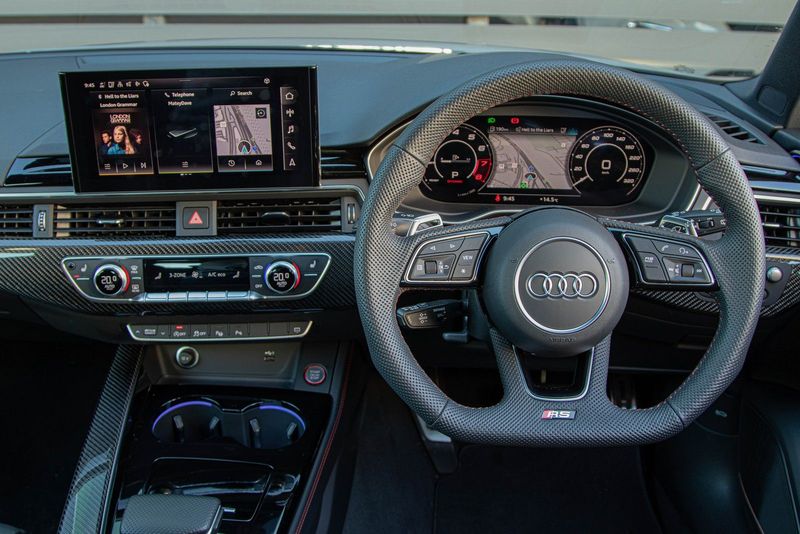
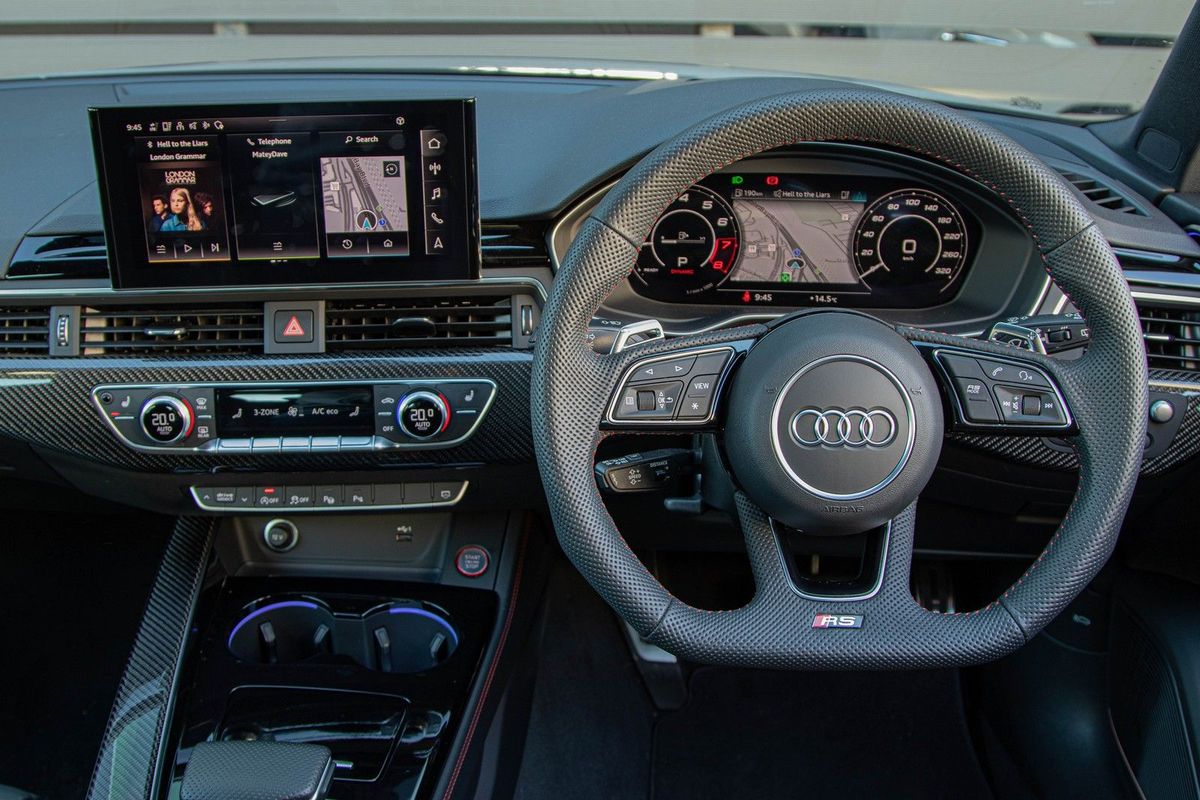
One of the last remaining Audi’s using the infotainment system atop the dashboard rather than the newer, integrated screen.
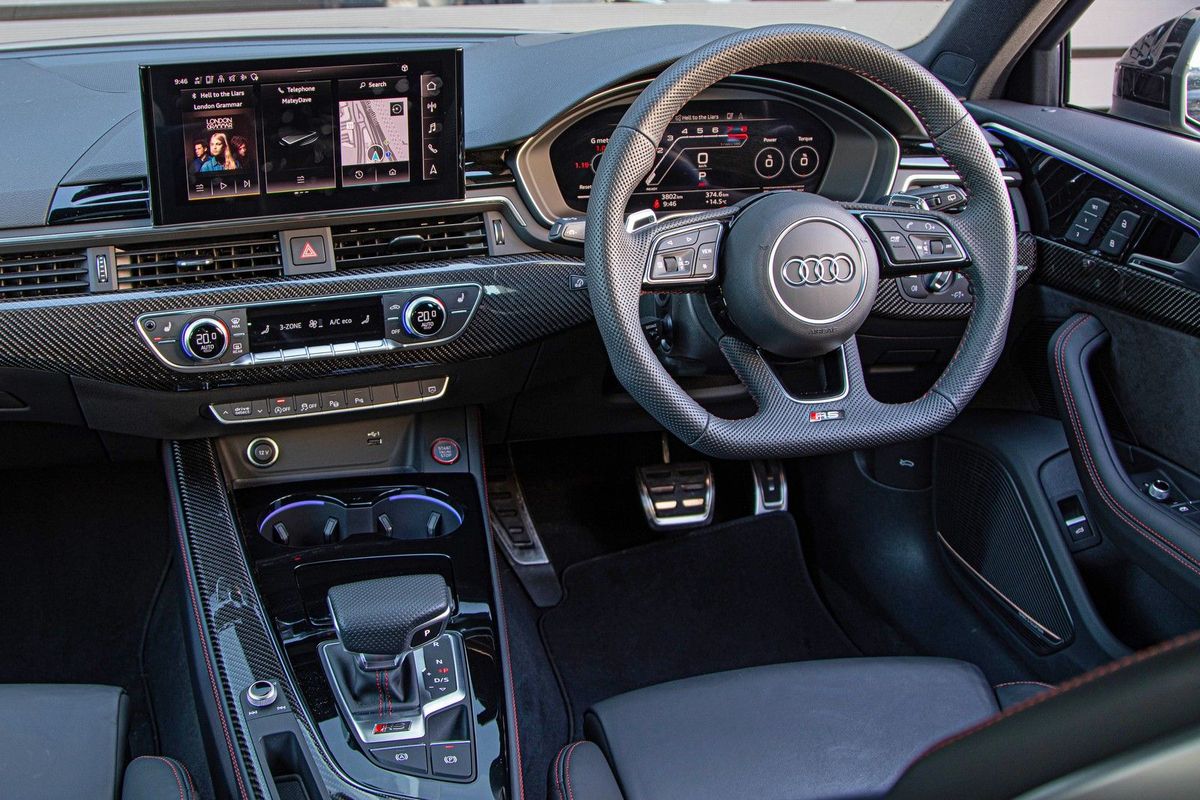
Stepping into the RS4 feels like a bit of a time warp compared to climbing aboard the futuristic interiors of other (obviously newer) Audi models on the market. The RS4’s infotainment screen, for example, sits atop the dashboard; newer Audis have touchscreens built into their fascias with new software and menu layouts. The A4 and Q2 probably are the only current Audis that still have the old screen setup.
Aside from that, the RS4 still feels decidedly plush inside. It can be argued that Audi does the best job of producing car interiors that feel luxurious without skimping on material quality; the Avant’s cabin appears more, let’s say “effortlessly upmarket” than those of comparable (on price) BMW, Jaguar, Lexus, Mercedes-Benz and Volvo models.
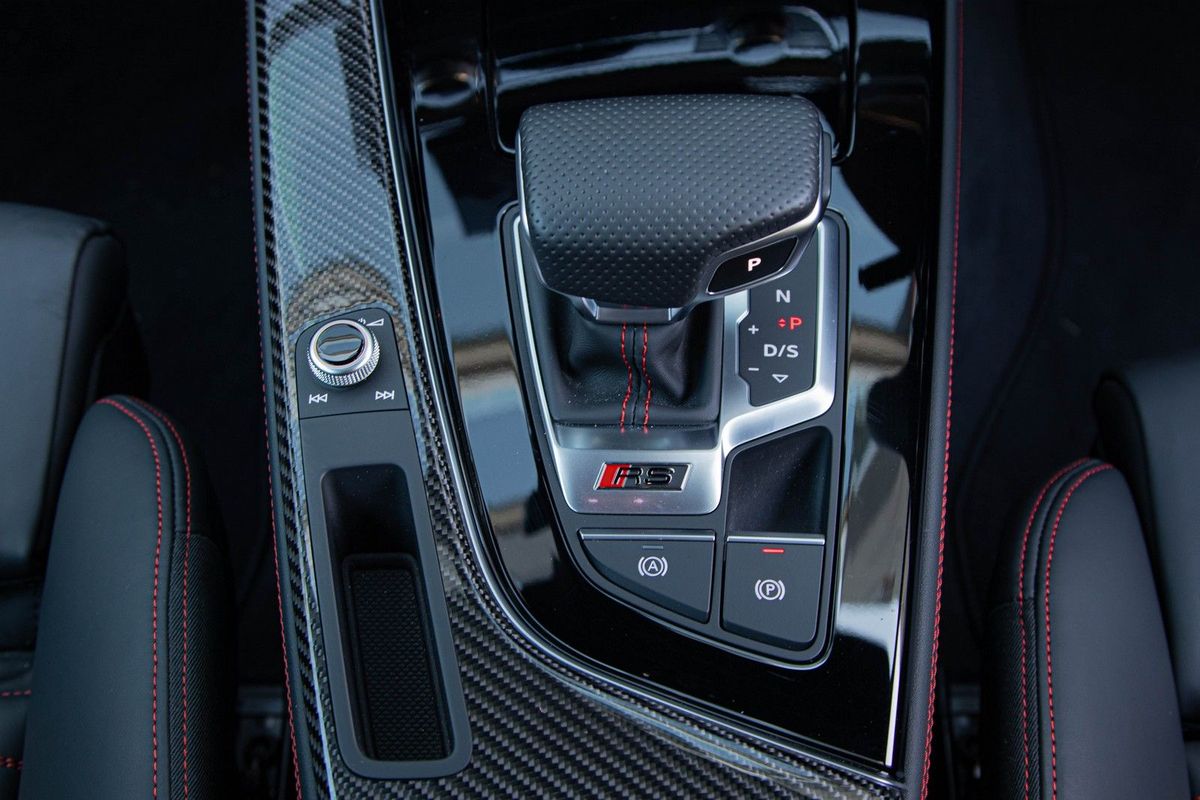
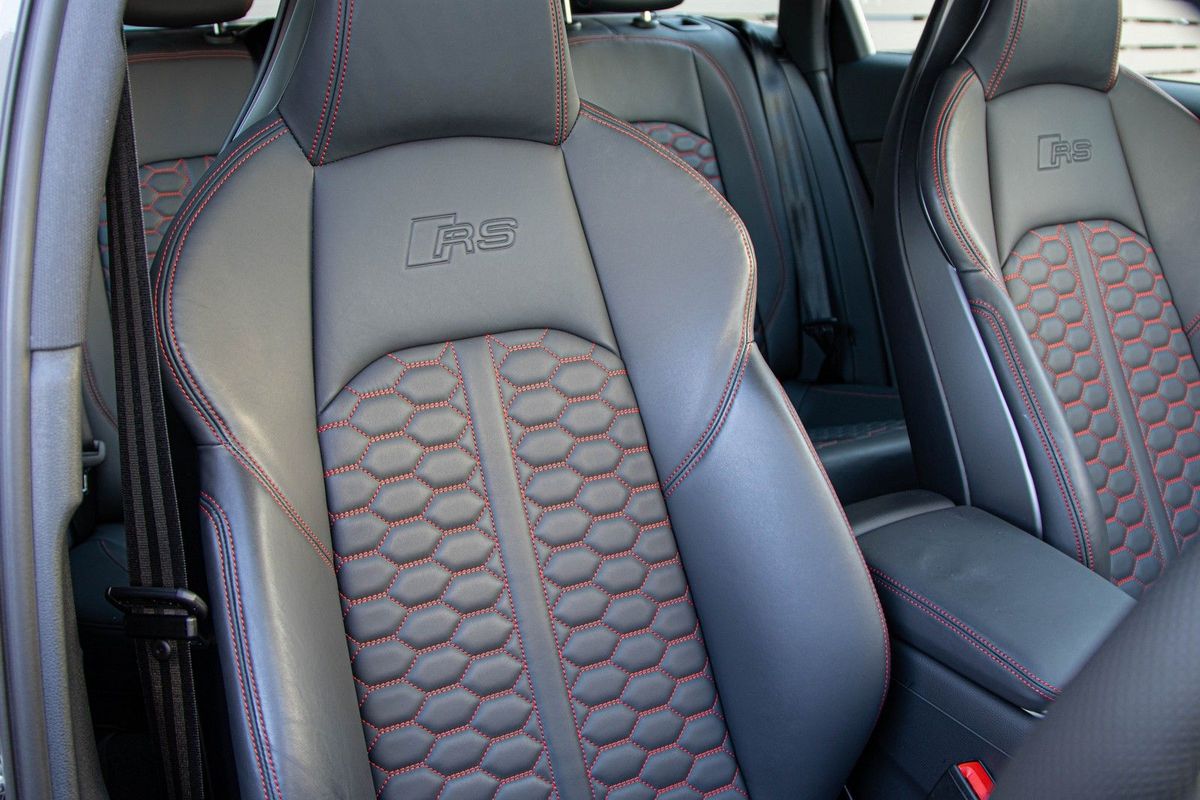
As can be expected, the Audi’s leather-trimmed front seats are very supportive and comfortable on long trips, but it’s the simple things that the Ingolstadt-based firm does that give the ‘wagon’s interior an upmarket feel. Here are a few examples: thick carpeting in the boot, Alcantara stitched into the doors and the dimpled leather trim on the rim of the steering wheel. The only poor touchpoint is the “carbon fibre” inserts on the fascia and transmission tunnel, which are clearly plastic substitutes. Many manufacturers are guilty of using “carbon fibre-look” trim though, so Audi shouldn’t be singled out for that.
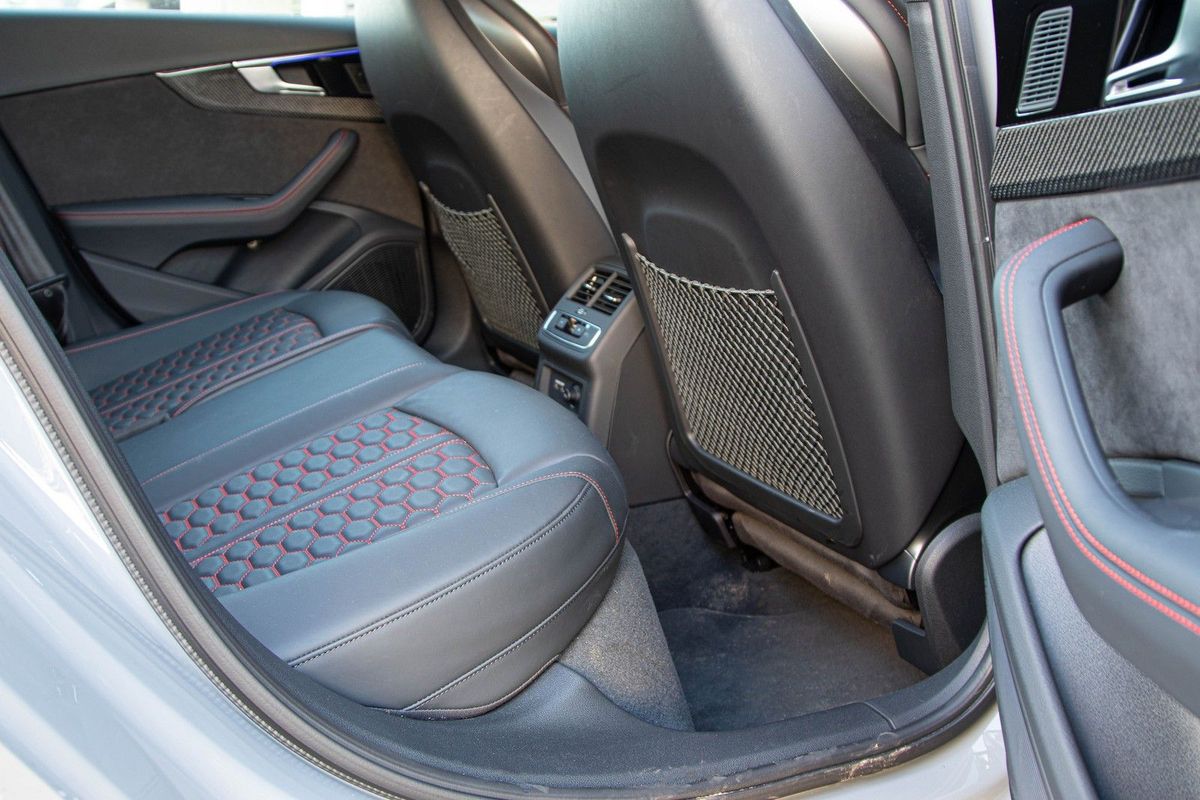
In terms of connectivity, a few options need to be ticked to bring the Audi up to modern standards. Audi Phone Box (R6 200) allows for wireless charging and a signal boost by using the shark-fin antenna, while USB ports can be added for rear passengers (R1 200). The infotainment system is Apple Carplay and Android Auto compatible via cable, wireless connection will only be available on the next-gen car.
Pricing and after-sales support
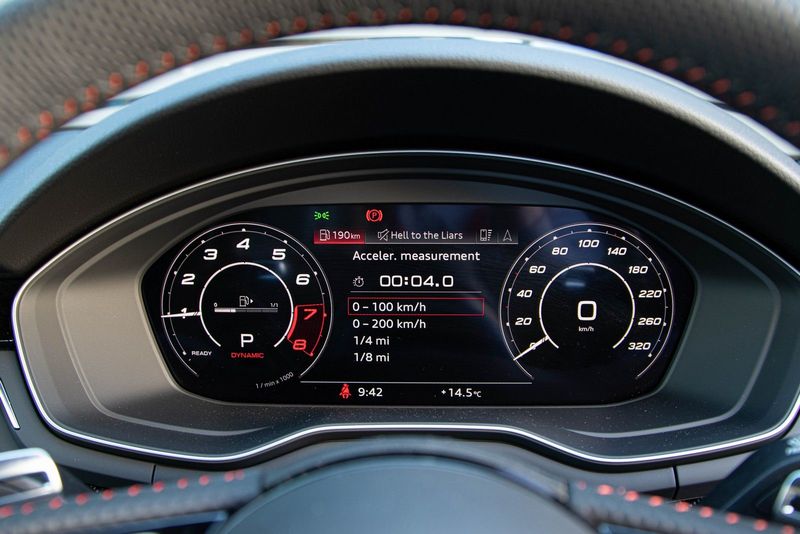
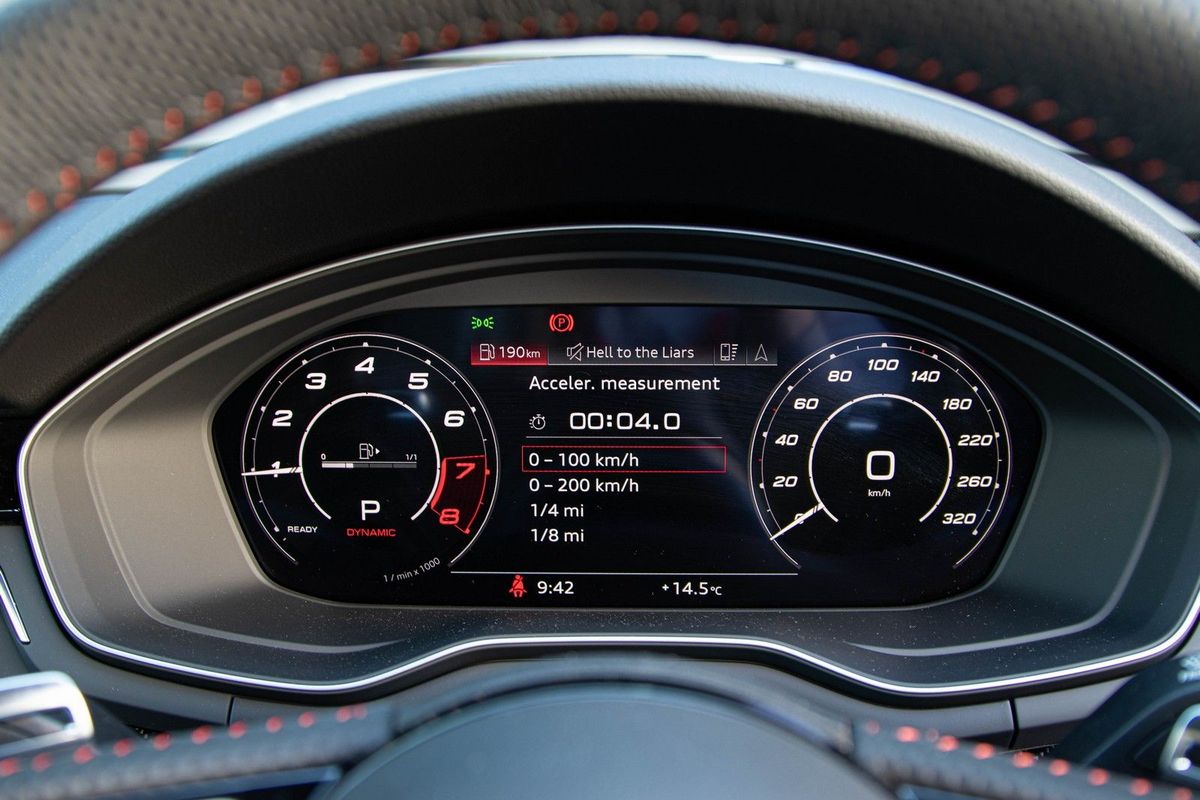
Virtual cockpit allows you to customise what is displayed in the instrument cluster.
Audi’s current range of RS cars is particularly enticing at pricing that undercuts BMW M and Mercedes-AMG offerings by some margin. The RS4 Avant retails for R1 296 000, whereas our test unit (with options included) was specced to R1 569 400. The Audi is sold with a 1-year/unlimited km warranty and a 5-year/100 000 km maintenance plan, both of which can be upgraded via Audi Driveplan options.
Verdict

The RS4 Avant is arguably the sports sedan/wagon with the most usable performance in the new-vehicle market.
It would appear that the power-obsessed era of motoring, in which well-monied performance enthusiasts crave ever-faster acceleration and preposterously high peak engine outputs, is coming to an end, but it’s not over yet. In light of that, the Audi RS4 Avant offers a comparatively prudent balance of usable performance and desirable looks in body shape (a ‘wagon) that is sure to stand out in South Africa.
There’s not much to be said about the differences between the pre- and post-facelift RS4 Avant models, bar the aforementioned styling changes, but it needs to be noted that the Audi’s asking price hasn’t escalated as steeply as those of its rivals. What you get is a sure-footed, all-wheel-drive luxury performance wagon that offers surfeit “longitudinal performance” without all the “lateral excitement” of going sideways, which so-called drivers’ cars are widely lauded for. It’s still good fun to drive on twisty roads and offers easier access to all its performance than its rear-wheel-drive rivals from BMW and Benz.
At the time of writing (August 2021), the Audi undercut its direct competition (the all-wheel-drive BMW M3 Competition M xDrive) by more than R600k, which makes it a bit of a performance bargain.
Ashley Oldfield

Ashley has been riding or driving some sort of motorised vehicle since his 4th birthday when he got a Yamaha PW50. Equipped with years of racing experience, Ashley took up journalism and became a writer for some of South Africa’s best motoring magazines and online publications. He is SA’s first (and only) GT Academy winner having raced professionally overseas. He now serves as the Content Manager at Cars.co.za, putting his wealth of racing and driving experience to good use.