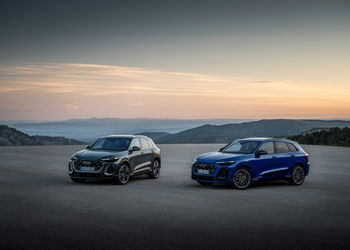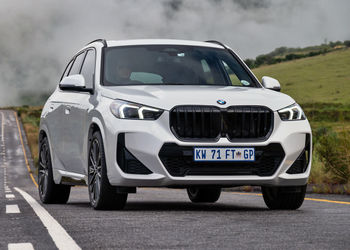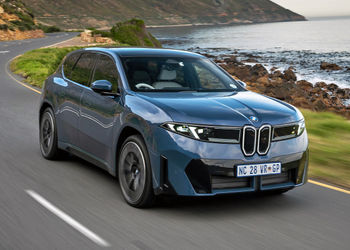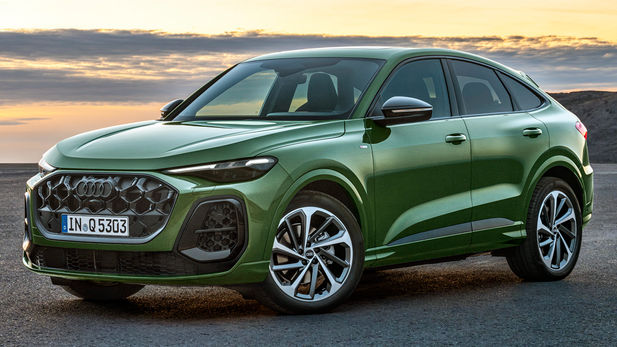
In the luxury midsize crossover SUV market, the rivalry between the Audi Q5 and BMW X3 has long been a defining decision point for South African buyers. But as both models evolve, what key differences should prospective owners actually understand?
When Audi was an emerging, alternative luxury brand in South Africa, much of its momentum was built by the Q5. Globally, the midsize SUV became a bestseller and a cornerstone of the brand.
However, Audi’s third-generation Q5 enters the local market at a time when traditional German brands face significant disruption, particularly around the concept of ‘new luxury’. Chinese rivals now offer abundant technology and features for substantially less money, influencing a new generation of buyers who prioritise value over the design heritage Audi was once celebrated for.
Audi Q5 versus the new competition
In a market where traditional German marques have lost market share, how does a match-up between the new Audi Q5 and its fiercest traditional rival, the BMW X3, play out?
The third-generation Q5 arrives during a turbulent era for Audi’s parent company, the VW Group. Yet beneath the surface, the Q5 retains a depth of engineering that sets it apart. Much like the BMW, in fact.
Admittedly, like most German rivals, the Q5 cannot match the price-to-feature ratio of Chinese alternatives. Where the Q5 and X3 compensate, however, is in their ability to crush the vast, single-day distances South African luxury SUV owners routinely drive – whether for business, long weekends or coastal holidays.
Built for long distances

While there is a perception that German cars built their local reputation solely on prestige, their real strength lies in high-speed, long-distance composure.
Few global markets regularly subject luxury family vehicles to long trips at high cruising speeds. In these conditions – familiar to South Africans tackling inter-provincial journeys – the stability engineered into German platforms via Autobahn testing is invaluable, and something many Chinese rivals have yet to master.
In the latest Q5 and X3, the controls are weighted precisely for this environment. Their steering systems avoid being overly light, ensuring that if you need to execute an emergency avoidance manoeuvre for stray livestock, the chassis response remains predictable and controllable.
Search for an Audi Q5 on Cars.co.za
Only the Q5 Sportback offers a diesel
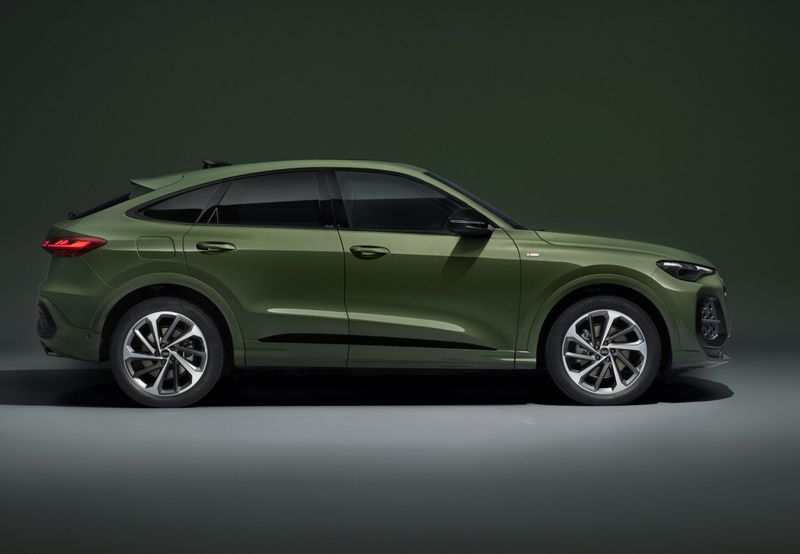
For a mid-size luxury SUV, load capacity is key – wealthier buyers tend to pack heavily for road trips.
While the sloping roofline of the Q5 Sportback body style offers undeniable kerb appeal outside trendy coffee shops, it typically compromises cargo volume. However, Audi’s cabin architects have minimised the penalty: the capacity difference between the standard wagon and the Sportback is a negligible five litres.
Because Audi expects significantly higher demand for the Sportback, the 2.0-litre turbodiesel engine is currently restricted to this body style. A diesel option for the standard wagon shape is only anticipated in 2027.
The BMW, meanwhile, offers the brand’s exceptional 2.0-litre turbodiesel in the SUV-only body shape. The rival to the Q5 Sportback, BMW’s X4, hasn’t been launched yet.
No PHEV for South Africa (for now)
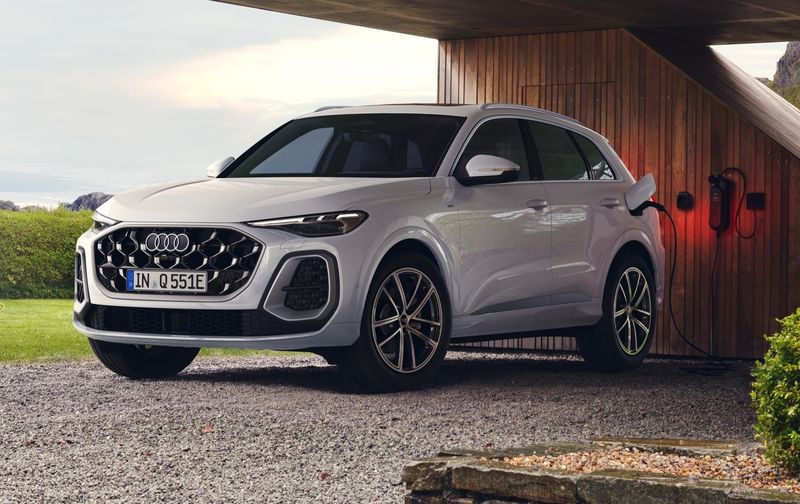
Although plug-in hybrid (PHEV) adoption is surging locally, no Q5 PHEV is currently offered in South Africa, but BMW boasts a plug-in X3 option – the 30e.
Audi manufactures an e-hybrid quattro variant globally, equipped with a 25.9 kWh lithium-ion battery pack offering around 100 km of pure-electric range. Yet despite strong local demand for Chinese luxury PHEVs and its rival offering an electrified option, Audi has opted not to introduce this powertrain locally for now.
Diesel engines remain one area where German brands maintain a clear advantage over Chinese competitors. However, the business case for turbodiesel is weakening in South Africa. Modern PHEVs offer a superior balance of performance and economy, while complex emission-control systems on diesel engines can become costly to maintain – especially given variable rural fuel quality.
Even so, many local buyers still favour diesel for its exceptional range and fewer refuelling stops. Thankfully, both the Q5 and X3 (as well as Mercedes-Benz’s GLC) offer this option.
Read more: How to optimise the fuel economy of your diesel-powered vehicle
Transmission differences: Q5 vs X3

Transmission design is another crucial differentiator between the Audi and BMW, especially if your daily drive involves urban traffic congestion.
All versions of the new Q5 utilise the VW Group’s seven-speed dual-clutch (DSG) transmission. While brilliant for crisp, rapid downshifts when overtaking, dual-clutch setups can suffer increased wear over time when subjected to heavy, stop-and-go Gauteng or Cape Town traffic.
Conversely, BMW has phased out dual-clutch gearboxes across most of its mainstream line-up. The X3 range relies instead on the proven ZF eight-speed torque-converter automatic, providing smooth low-speed operation.
Search for an Audi Q5 on Cars.co.za
BMW X3 offers PHEV and local production

Because the X3 is produced in South Africa, owners benefit from lower supply chain risks for maintenance parts and body panels. And, as mentioned, BMW provides a broader array of powertrains, including the xDrive30e and a fully electric iX3. For homeowners with rooftop solar, a PHEV or EV allow daily commute miles to be powered directly by home generation – a key selling point in the current market.
Read more: SA’s NEV sales for Q1 2026: PHEV market surges 430%
The X3 has a Rugged advantage

Another advantage BMW offers locally is the X3 Rugged variant. Equipped with 225/60 R18 General Grabber all-terrain tyres and revised suspension tuning, it is tailored for South African roads where pothole risks are severe.
Audi currently has no direct counterpart to the X3 Rugged, although its heritage with allroad models leaves room for a future A5 avant allroad derivative.
In South Africa, fitting higher-profile all-terrain tyres on smaller wheels is no longer just for off-grid trips to the Karoo or Namibia; given severe tar damage on national routes, it has become a practical vehicle safety consideration. While German luxury crossovers are built on sedan platforms, South African drivers expect them to handle harsher environments. Offering robust, rough-road wheel packages is becoming a vital factor in this head-to-head comparison.
So, which is better suited to local conditions?
Ultimately, the choice between these two legacy models comes down to how well they adapt to South Africa’s changing landscape. While the new Audi Q5 retains the refined, long-distance composure and engineering depth that built its reputation, its limited powertrain options and urban transmission quirks leave room for BMW to capitalise.
With local production advantages, a broader choice of hybrid powertrains and a rough-road-ready Rugged variant built for real-world potholes, the X3 currently feels better tailored to South African conditions. In a market rapidly being reshaped by value-packed Chinese rivals, both German crossovers remain unmatched on the open road – but BMW’s flexibility gives it the edge in meeting the everyday demands of local drivers.
Lance Branquinho

Lance Branquinho is a Namibian-born writer and photographer who has won numerous motoring journalism awards. He once smuggled parts to South America, in a minor contribution to help Giniel de Villiers finish on the podium at the Dakar. He fears for the eventual collapse of the air-cooled Porsche 911 market – and keenly awaits, in vain, the return of the brand's 928.