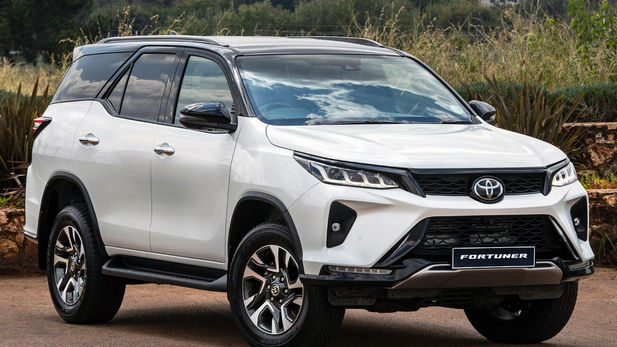
The 3rd-row seats in SA’s top-selling Adventure SUV – the Toyota Fortuner – are for occasional use only and the Japanese brand is hell-bent on retaining their jump-seat configuration, but you CAN remove them to increase luggage or utility space…
Before I get to the Toyota Fortuner hack, earlier this year, I highlighted the inherent spatial limitations of SUV-based 7-seaters in my column titled Want a versatile, spacious 7-seater? Don’t buy an SUV.
Watch Ciro De Siena’s video review of the 2023 Toyota Fortuner:
Therein I argued that in such a model (it could be a hatchback or crossover, a pseudo-van or a ladder-frame chassis SUV) the absence of sufficiently deep footwells for the 3rd row (because it’s located above the rear axle) rendered the vehicle’s lattermost seats near-useless through the inability to provide notable leg- and knee room. And that’s not to mention the impracticality of the inelegant ingress/egress.
Apart from this fundamentally compromised approach to transporting 3rd-row passengers, the mere presence of an additional row of seats (when it’s in use – or not) primarily only serves to deprive so-equipped vehicles of practicality-defining utility space. When their services are not required, pews 6 and 7 still have to be stowed somewhere, there’s no getting around that. So where do they land up?
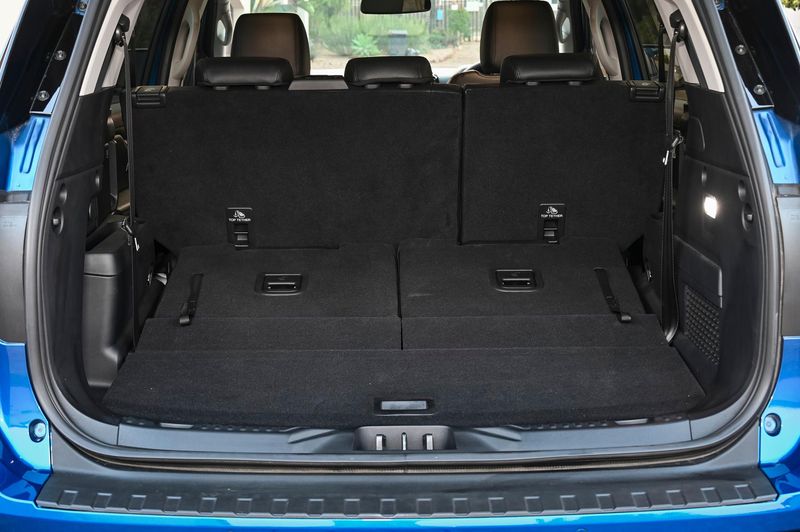
In most cases that somewhere is the load-bay floor. Except in the Toyota Fortuner, that is.
Unlike its (also bakkie-based) Adventure SUV counterparts, such as the Ford Everest, Isuzu MU-X and the Mitsubishi Pajero Sport, come holiday time the venerable Toyota’s two 3rd-row jump seats turn into 2 immovable towers of hate for luggage-intensive adventurers – they literally stand in the way of loading sufficient quantities of camping gear, multiple cases of liquid amber goodness, half a dead ox and some tree stumps to roast it over – and presumably, other less essential items such as clothing and toiletries.
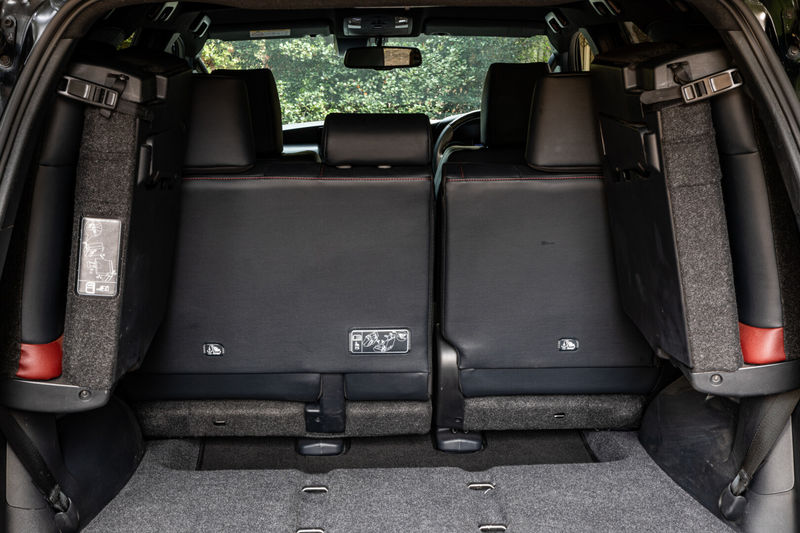
How many buyers with 2 or 3 children will buy a Fortuner to transport more than 4 or 5 occupants daily – let alone over long distances? Not many, I believe and, the opportunity cost of restricted utility space throughout the year far exceeds the sporadic convenience of being able to transport an additional pair of ride-seekers, should the neighbours’ car conveniently break down minutes before the school bell rings.
Here’s what to do
Every day, YouTube’s servers grimace in anticipation of the latest batch of hack videos by DIY tinkerers – let alone the dreck compiled by crafty clickbaiters and fools with tools – that are about to be dumped on them in the desperate quest to get eyeballs. Of these, the marginally more useful ones are the vids that demonstrate how to remove the Fortuner’s 3rd-row seats, which can incidentally be DIYed with a number 14 socket, a same-sized ring spanner, a mild bout of swearing and no need for an engineering degree.
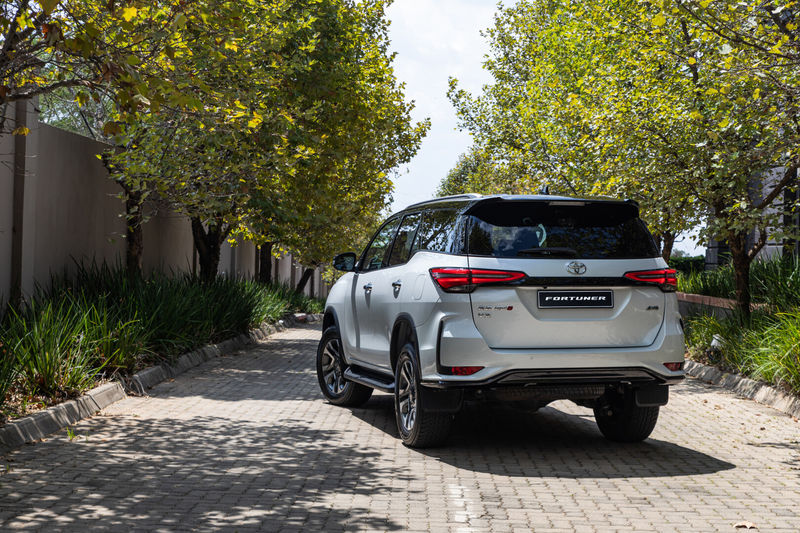
But here’s the thing. Why should owners have to remove those seats themselves when Toyota can simply do it at the factory or even make some money by charging the same for a 5-seat Fortuner as a 7-seater?
Heck, Toyota SA Motors could even guarantee its franchisees’ workshops a follow-up revenue stream because re-mounting those “jump seats” at a later stage would certainly require another pair of hands, or better yet, expert assistance.
Watch Ciro De Siena’s video review of the 2034 Ford Everest:
Another slightly more laborious alternative would be to change the jump seats’ release mechanism to something a little more user-friendly that requires no tools. Perhaps Toyota will avail that functionality with the next-gen Fortuner model (or offer a 3rd row that folds into the floor) – we can only hope.
Respective vans and proper people carriers built by Toyota’s bakkie-arch rivals Ford and Volkswagen such as the Tourneo and Kombi/Caravelle line-up are equipped with floor-mounted removal mechanisms purposely designed for ease of use demanding little more than few pushes, pulls, tugs and wiggles. (Incidentally, only the Hyundai Staria’s 3rd row can be removed, though not without tools or first disconnecting its seatbelt sensor cables).
Watch Ciro De Siena’s video review of the 2023 Isuzu MU-X 1.9TD:
Changing the bolts that hold the Toyota Fortuner’s jump seats could realise a similar ease of use and more options around their utilisation: in place during Granny’s annual visit and out when it’s time to go and drop that busted washing machine off at the skip.
It’s a best-of-both-worlds solution that, owing to the jump seats’ absence when in disuse, would free up notably more loading capacity in the ageing Fortuner, turning its initial spacial setback into a supremely practical comeback against its newer, feng shui-friendly rivals.
Find a new/used Toyota Fortuner listed for sale on Cars.co.za
New Toyota Fortuner specs & prices in South Africa
Related content:
Why Chinese car brands will win the EV war
6 Small Crossovers that faltered, so others could fourish
Freakish cars that we’re (kind of) glad were made
For business, not pleasure: App-tap small sedans
Turbodiesel heroes you might have forgotten about
Forget the M3 Touring, you want a Golf R Wagon