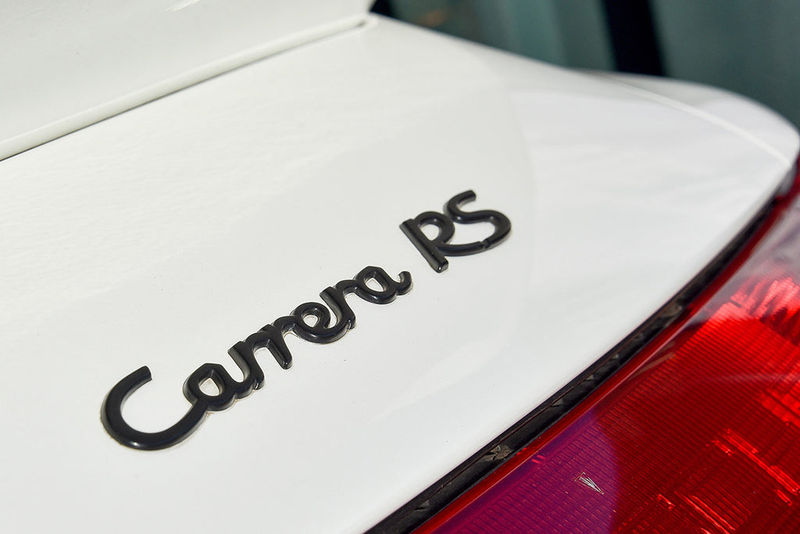
New or old? It is a choice many of us dream about when considering a sportscar. We drive an air-cooled, 993-series 911 Carrera RS and a much more recent 991-series 911 GT3 RS back to back, but which machine leaves the biggest impression?
It is quite a sight, isn’t it? A previous-generation Porsche 911 GT3 RS is parked next to an example of what is currently one of the most sought-after RS models, the 993-series 911 Carrera RS.
IMAGES: Rob Till
The values of most air-cooled 911s, and many other classic Porsches for that matter, may have levelled off lately, but they remain high. This situation has created a challenge for would-be 911 buyers: whether to opt for a modern water-cooled 911 or a classic air-cooled derivative. Ultimately, the decision depends on your needs and intended use for the car. Some decisions might be particularly difficult in this regard.
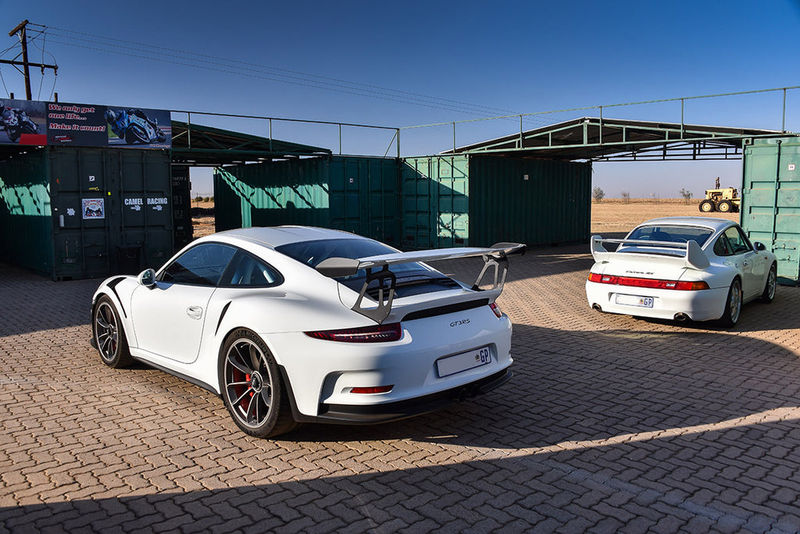
Most Porsche 911 RS models have increased in value over the past 10 to 15 years, and the 993-series 911 Carrera RS is no exception. These top-tier Porsche 911s are separated by 20 years – an almost light-year leap in automotive development. But which one should you consider, and how do their respective driving experiences differ from behind the wheel?
Neither of these white RSs is a garage queen. The day before their keys were handed to me, both cars were taken to Kyalami Grand Prix Circuit in Johannesburg, South Africa, to be enjoyed by their owner. The Porsche (991.1) 911 GT3 RS was acquired more recently, but he purchased the 911 (993) Carrera RS more than a decade ago. Today, we are heading for Red Star Raceway.
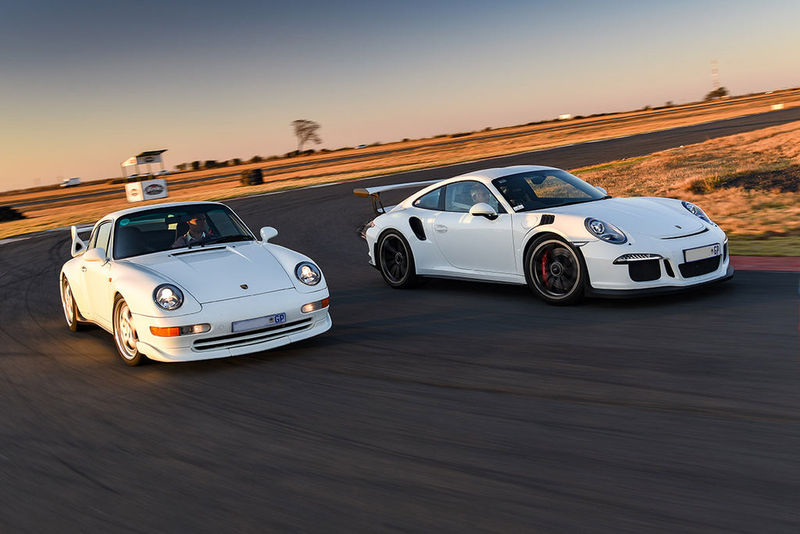
My adoration for the Porsche 911 (993) Carrera RS goes back to my teenage years, when I was thoroughly fascinated by “all things 993”, especially those versions adorned with enlarged wings.
Piloting the air-cooled 911 Carrera RS
As I climb into the 911 (993) Carrera RS, the environment immediately feels familiar, akin to any 911 from the ’80s or ’90s. The cabin is snug, the steering column is non-adjustable, and the 5 instrument dials are present and correct.
The driver’s seat firmly supports your upper legs and hips, and even hugs your shoulders slightly. Pull the lever beneath your seat to move to your desired distance from the steering wheel, and voilà, you have your perfect driving position.
On the motorway, as we make our way to the track, I am immediately impressed by the 911 Carrera RS’s ride quality. It is, in fact, very well damped, unlike some modern performance cars. Even at an indicated 120 kph, I can easily converse with my passenger while the RS’s rev needle hovers at 3 000 rpm.
On arrival at the track, we prioritise the photoshoot. It also gives me time to take in the details of both RS models and to discuss them with their owner.
Specifications:
- Model: Porsche 911 (993) Carrera RS
- Engine: 3.7-litre, flat-6, petrol
- Power: 221 kW at 6 500 rpm
- Torque: 355 Nm at 5 400 rpm
- Transmission: 6-speed manual, RWD
- Weight: 1 270 kg
- 0-100 kph: 5 sec (claimed)
- Top speed: 277 kph (claimed)
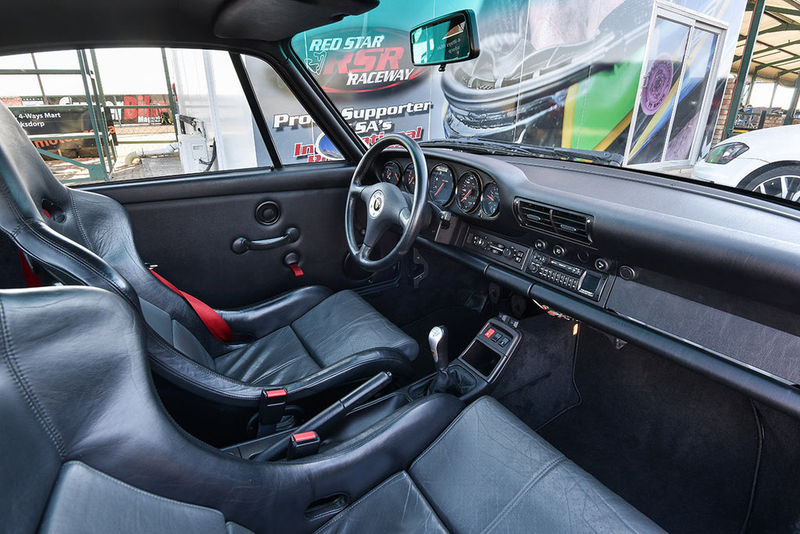
Some of the weight-saving measures Porsche implemented with the 911 (993) Carrera RS include the removal of most sound insulation materials, replacing the bonnet with an aluminium one, and fitting thinner glass for the side and rear windows.
The increased engine capacity was achieved by enlarging the bore from 100 to 102 mm; engine size is now up to 3.8 litres. Overall power increased only to 221 kW – marginally more than the 203 and 212 kW generated by the base 911 (993) Carreras produced between 1994 and 1998.
Thirty minutes later, when a gaggle of racing motorcycles returns to the pits from their final outing, I point the RS’s nose onto the track’s smooth asphalt.
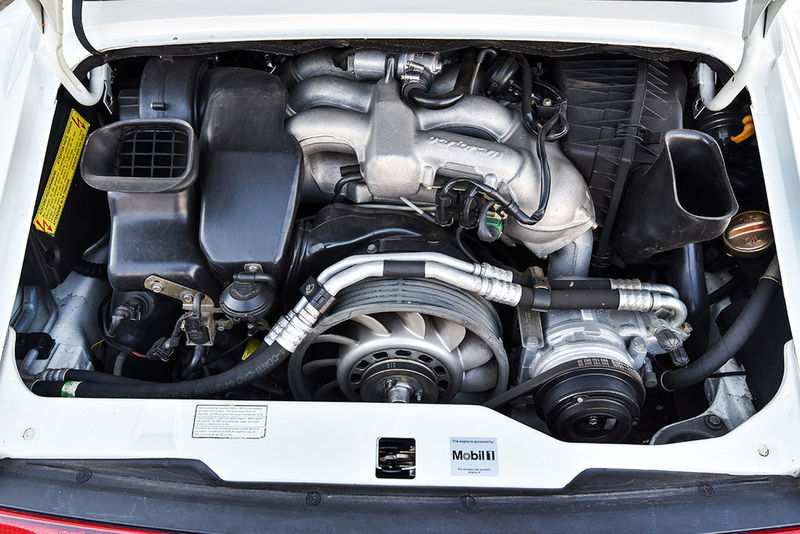
According to the owner, the car had a hard life before he bought it, so he has fixed and restored various parts. Surprisingly, the car feels solid from behind the wheel, with no rattles or noises coming from any part of the vehicle, even though it’s well over 20 years old and has clocked up more than 56 000 km.
The gearbox operates smoothly; each gear engages with minimal effort. You are never in doubt about which gear you are in, nor which one you should select next.
As I settle into a rhythm with the car’s handling, I am reminded of how nimble these earlier 911 models are, particularly these lightened 993s. Look, 221 kW is not a mammoth power output, but as Porsche has removed 100 kg compared to the base 911 (993) Carrera 2, the car weighs in at only 1 270 kg.
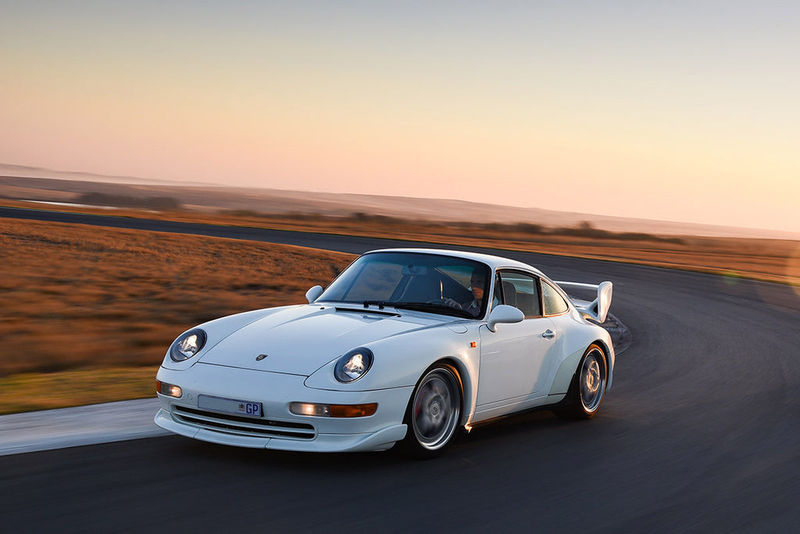
As a result, whether you’re turning in or applying power mid-corner, the 933-series 911 Carrera RS never feels intimidating to pilot. The placement of the brake pedal – almost in line with the throttle when already pressed – further encourages a heel-and-toe technique.
After a while, I gradually gain more confidence, only to realise that the old car’s grip is not quite as high as I had anticipated. This could partly be due to our privilege of driving dynamically superior modern sportscars almost each month; nevertheless, it is an enlightening experience.
However, it remains a sensitive machine, and you can sense that, if you are deliberately over-eager with the throttle through a corner, the rear wheels will break traction. Yet, on this tight circuit, with its relatively slow corner speeds, the 993 surprised me with its breadth of capability and the joy it offers the driver.
Moving into the 911 (991) GT3 RS
Stepping from “the 993” into “the 991” requires more than just a few physical steps; it requires a mental adjustment. The 991.1 generation’s footprint is larger than the 993’s, and the cabin is notably roomier.
The GT3 RS’ exterior is dominated by the massive rear wing, a prominent front splitter, and those track-inspired cuts in the front wheel arches, making this one of the least graceful 911 road cars of all time.
However, if you understand and appreciate the Zuffenhausen-based marque’s race- and track-focused cars both past and present, the intense stance of the 991.1-series RS’ stance will speak to you.
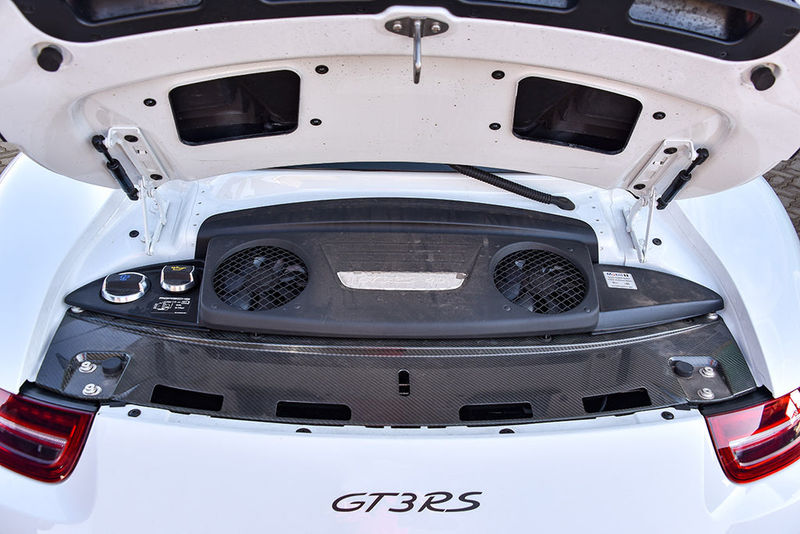
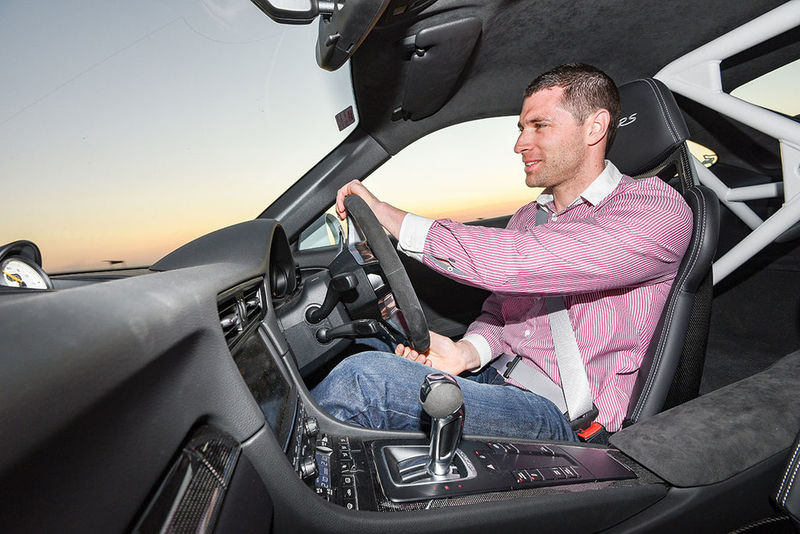
The modern RS interior is more user-friendly and accommodating than that of the ’90s RS. The car isn’t built for touring, but you feel as though you could easily spend several hours behind the Porsche’s helm. All the contemporary luxuries are available, most notably an automatic dual-clutch (PDK) transmission. The steering wheel and supportive bucket seat are perfectly positioned for my driving style.
I move the PDK lever to D, and with a gentle press of my right foot, the 911 (991.1) GT3 RS makes its way onto the track. As the owner has already completed a few laps, the powertrain’s fluids are still at optimal temperature. I select second gear and lean on the accelerator pedal.
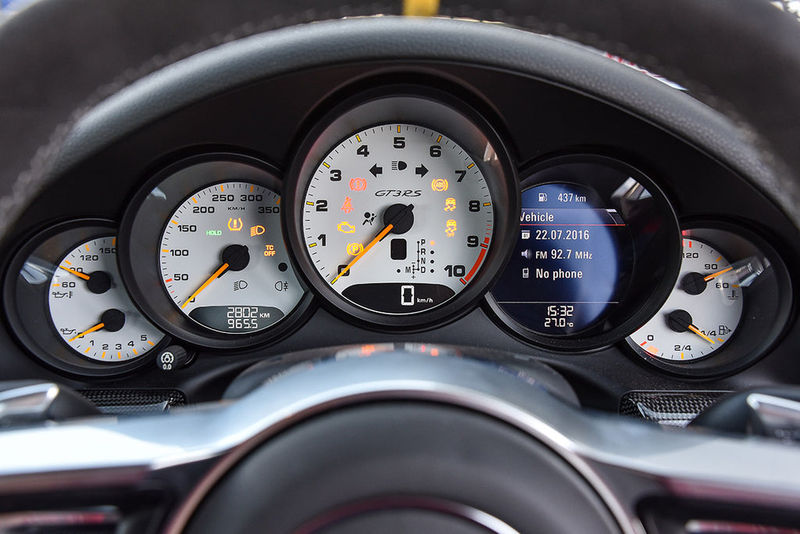
With zero hesitation from the engine, I watch the rev needle swing toward 7 000 rpm as the GT3 RS piles into the first corner. The steel brakes work quickly and decisively, with decent feedback, while the front tyres bite as I turn in. It must be said, the whole car feels more solid and planted than its 993 forebear.
A longer straight beckons, and I keep my foot pinned to the floor. Seven thousand revs turn to eight, and then, approximately 200 rpm before the needle brushes the 9 000-rpm mark, I pull the right paddle to shift up. The intensity of the engine truly shapes the driving experience.
You might think that, as the flat-6’s pistons have increased in diameter over the years, the motor would be less rev-happy, but thanks to ceaseless research and development, that is fortunately not the case.
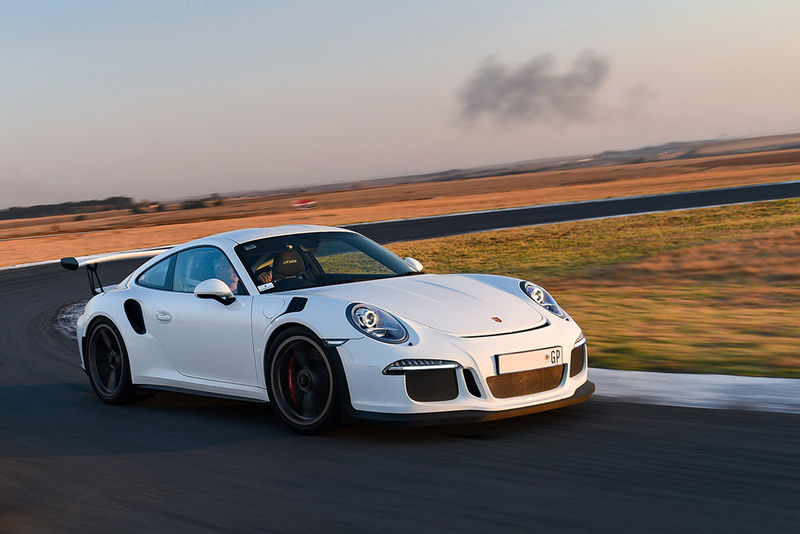
I soon begin to trust the Porsche 911 (991.1) GT3 RS’ massive 265/35 ZR20 front and 325/30 ZR21 rear tyres, marvelling at the level of grip that they provide. There are no high-speed corners here, which is a slight injustice to this modern RS, but even in these 2nd-gear bends, the machine feels phenomenal.
While you need to work the 993-series 911 Carrera RS hard by using all 3 pedals to get the most from a corner, with the 991.1-series RS, it is not, in fact, any easier. As the speeds – at the braking point, the apex, and corner exit – are so much higher, you must recalibrate your thinking in this 368-kW car.
If you leave the PDK to its own devices, it allows you to focus on your braking points and manage grip levels through accelerator-pedal and steering inputs.
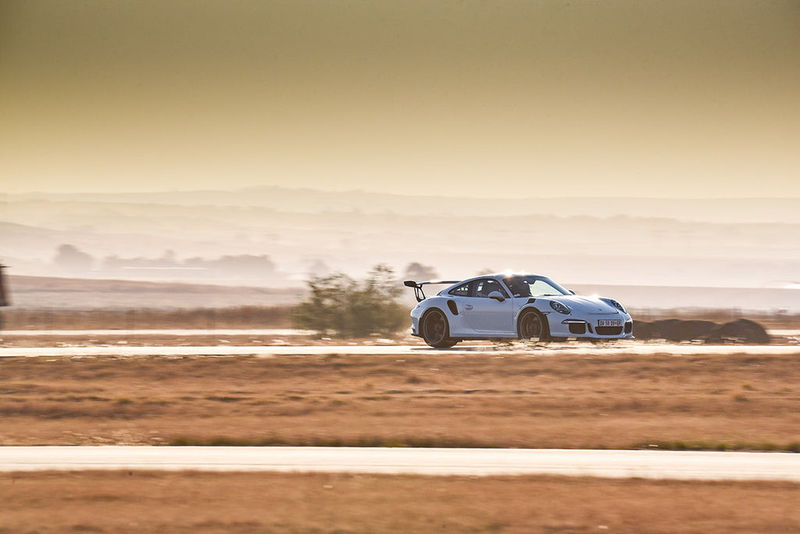
After several laps, during which I spun the engine to 8 800 rpm on several occasions, I pulled into our parking spot. I hopped out, took out my phone and photographed the 2 cars side by side – I fanboyed.
Verdict
However, my hands were shaking slightly, which hadn’t happened for quite a while. Maybe I’d been a bit nervous because the 911 (991.1) GT3 RS was privately owned, but it was challenging – and exhilarating – to drive the car quickly. It demanded far more of my concentration than the 911 (993) Carrera RS did.
You might assume the GT3 RS is the model to choose if you are fortunate enough to afford a car in its price bracket. Indeed, the 991.1-series RS can be used for adrenaline-fuelled track outings, and not only in your local area – if you pack a weekend bag or two, the Porsche will facilitate memorable road trips.
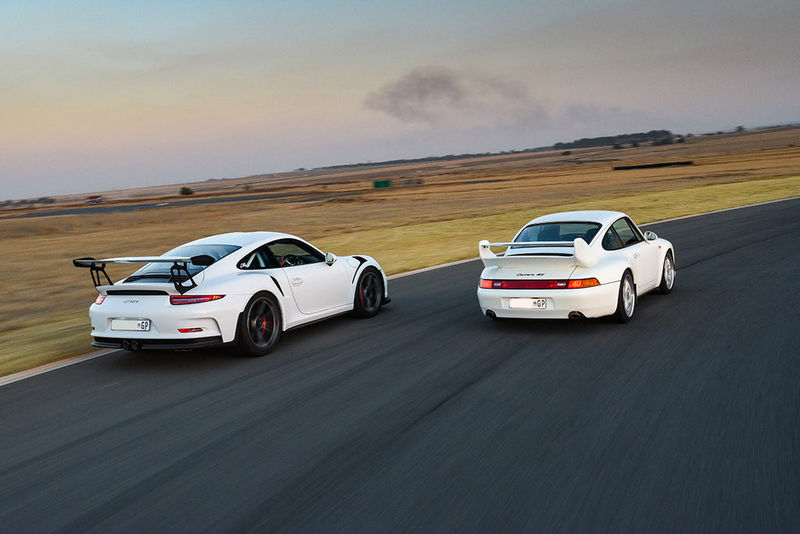
However, the same, to a certain extent, can be said of the 911 (993) Carrera RS. Some drivers may find the older car easier to master when approaching the limits of its performance envelope, because everything happens more slowly, and you receive more feedback from every aspect of the vehicle.
It is more compact, has a manual gearbox, and remains truer to the original Porsche 911 philosophy. For once, I am not jumping the “993 bandwagon”, but after I drove the 993-series 911 Carrera RS for the first time, I came away pleasantly surprised: what an honest sportscar it is!
What a privilege it must be not to have to choose between these 2 machines; just imagine having both these models – each representing the hallowed RS pedigree of their respective eras – in your garage!
Find a new/used Porsche 911 on Cars.co.za
Related content:
Ciro drives a Porsche 911 Carrera RS recreation
Porsche 911 (993) GT2: Classic Drive
Porsche 911 (997) GTS vs GT3: Classic Comparison
Porsche 911 (930) Turbo vs (996) GT3: Classic Comparison
Porsche 911 Turbo SE ‘flat nose’: Classic Drive