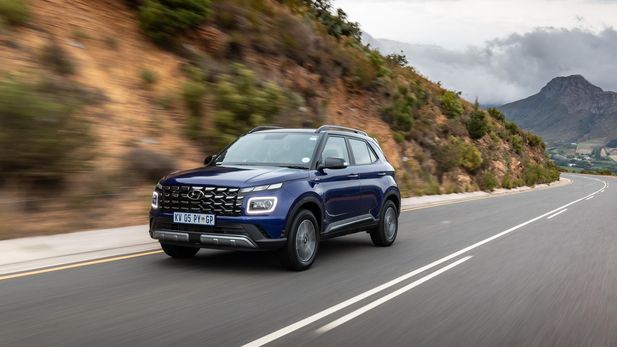
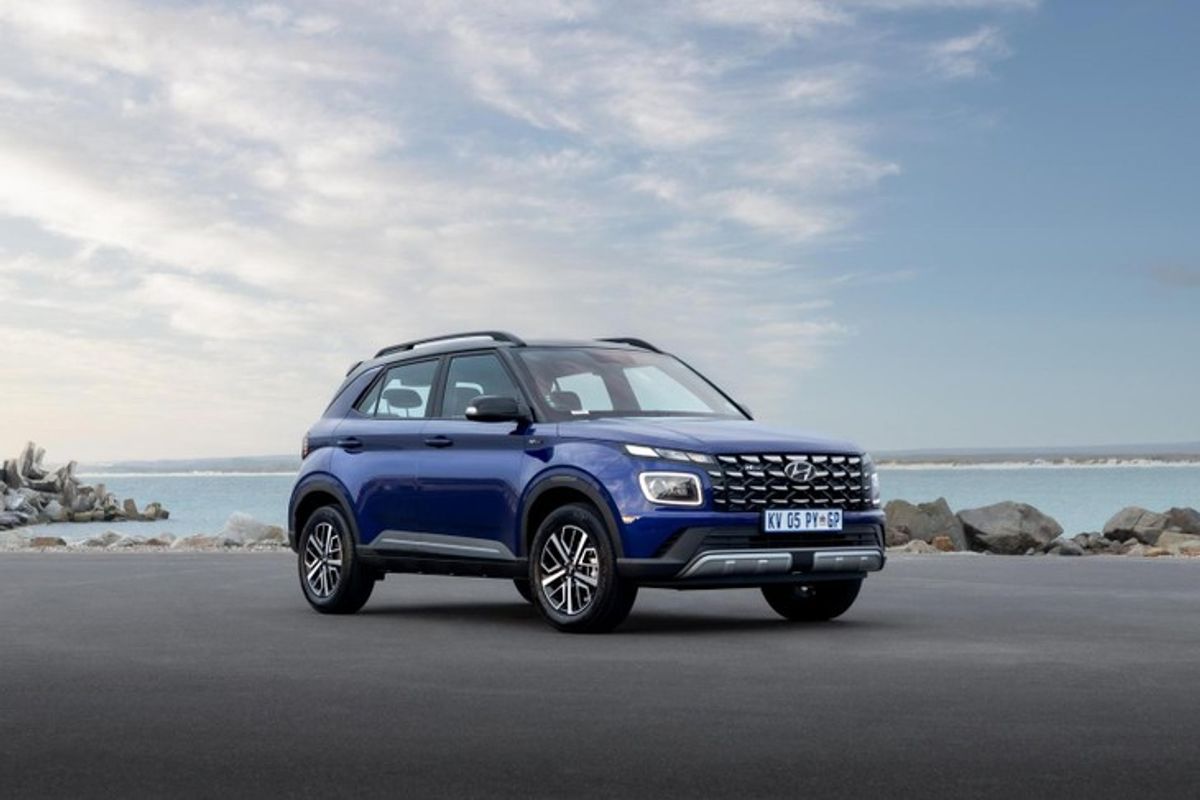
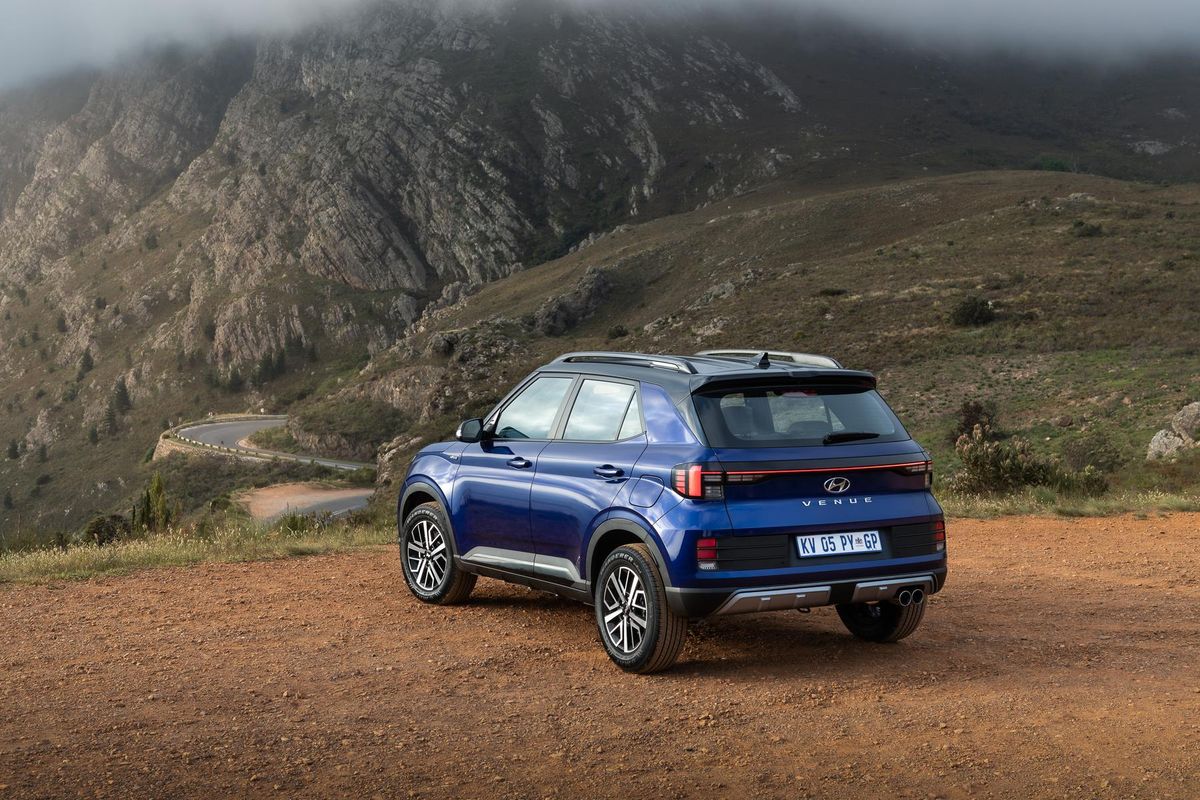
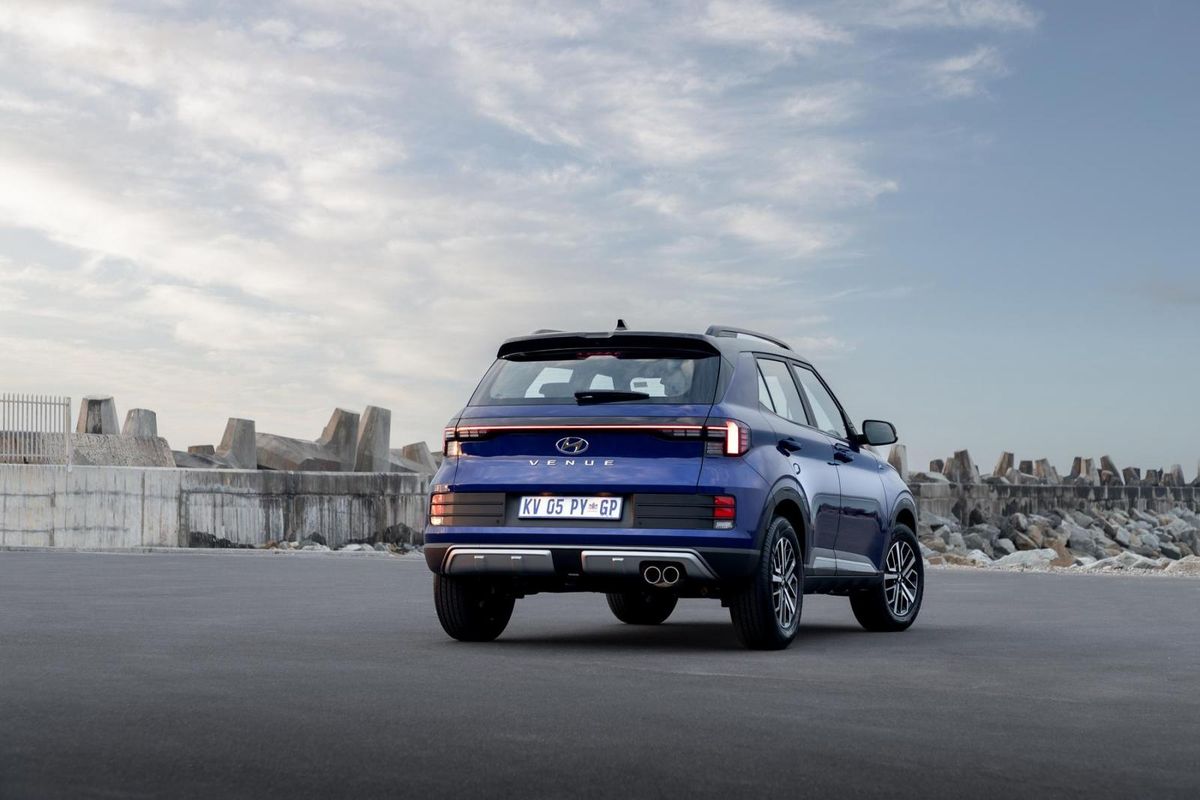
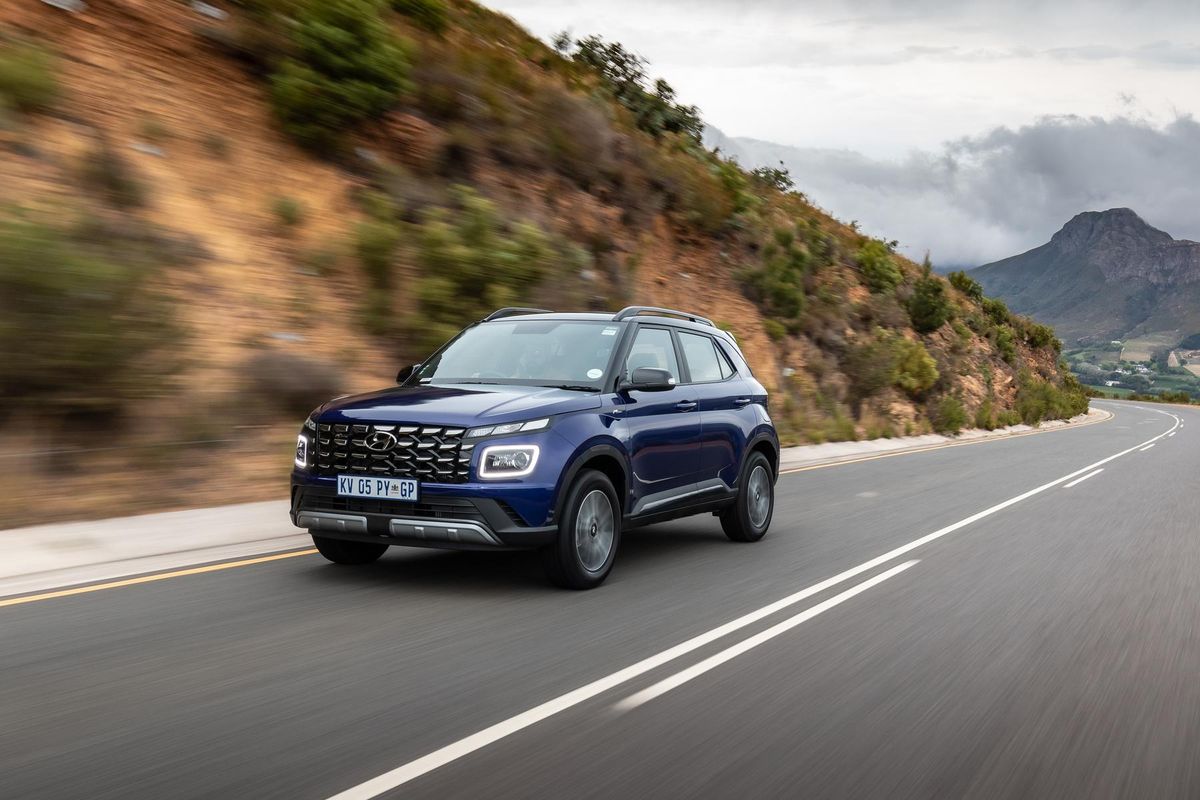
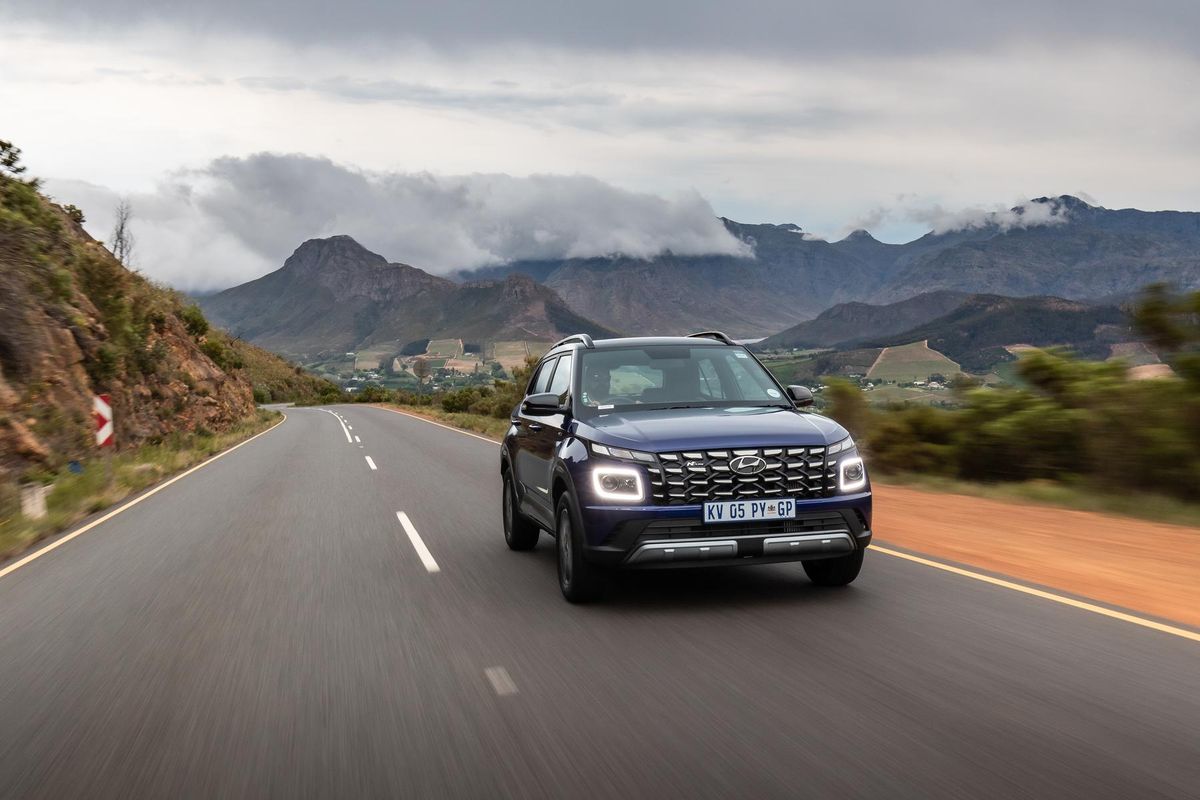
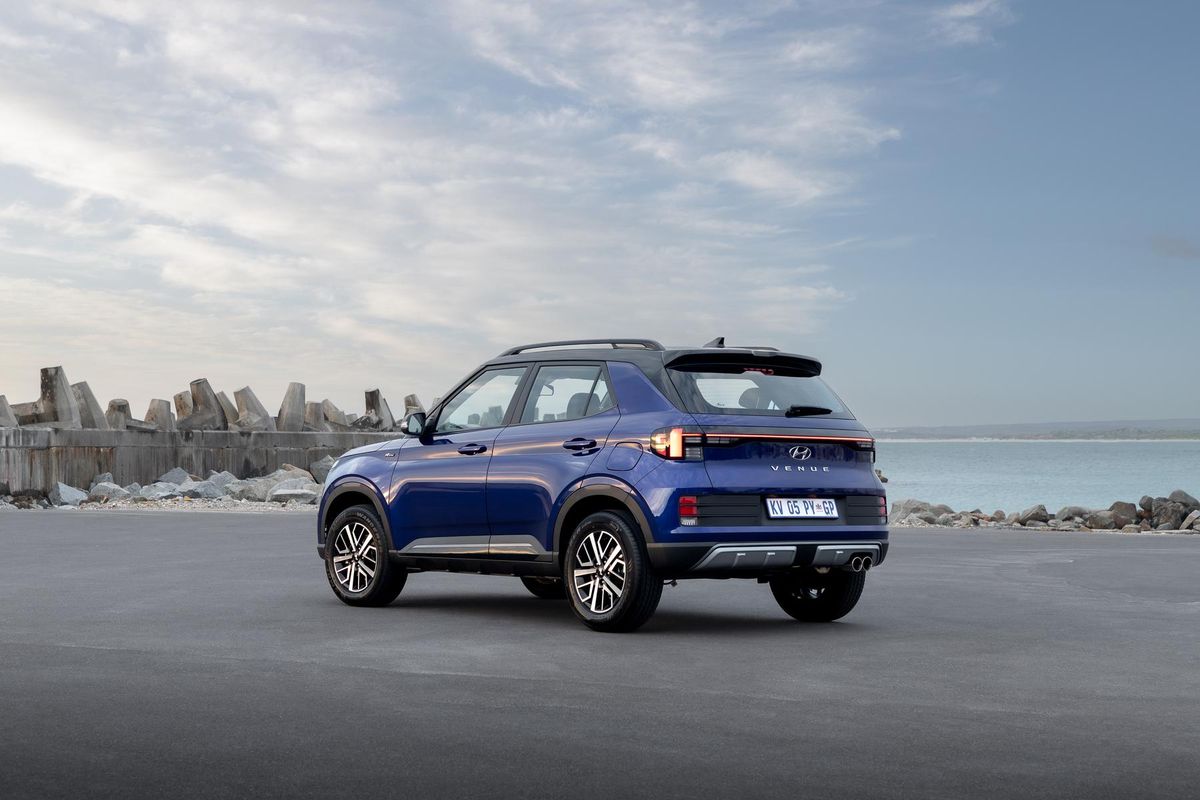
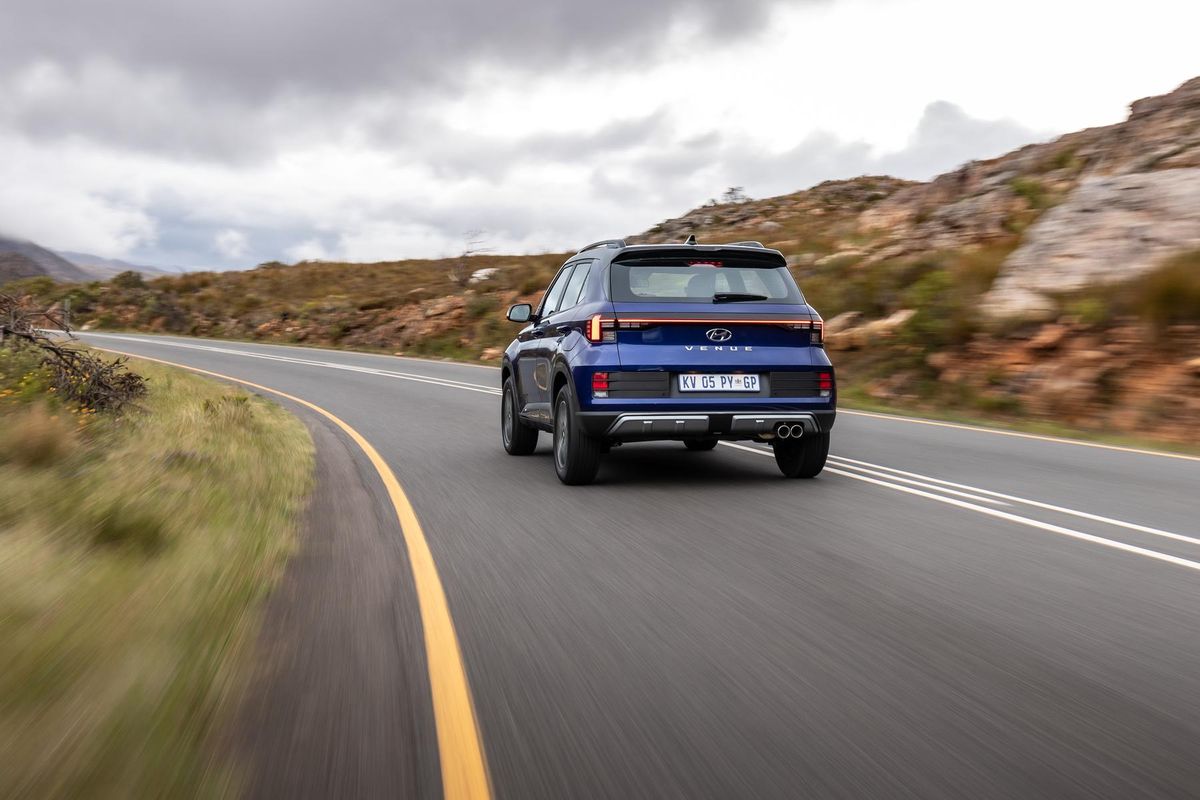
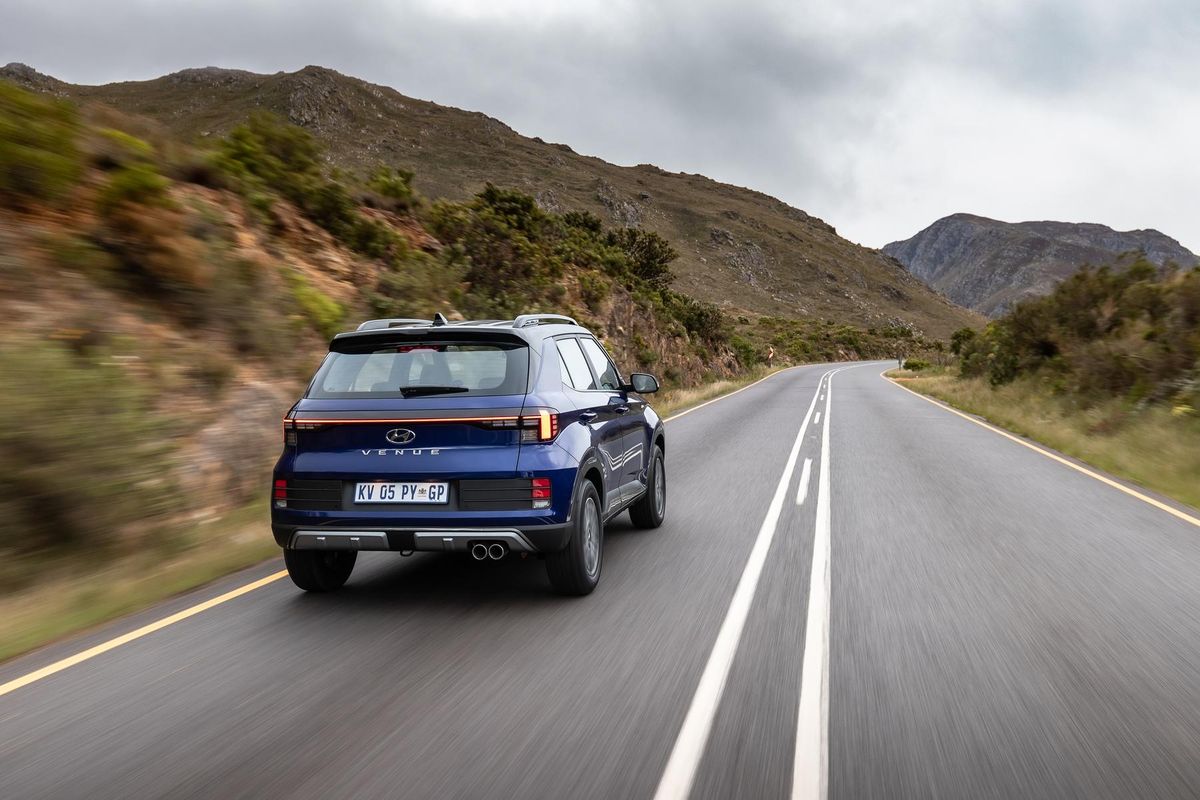
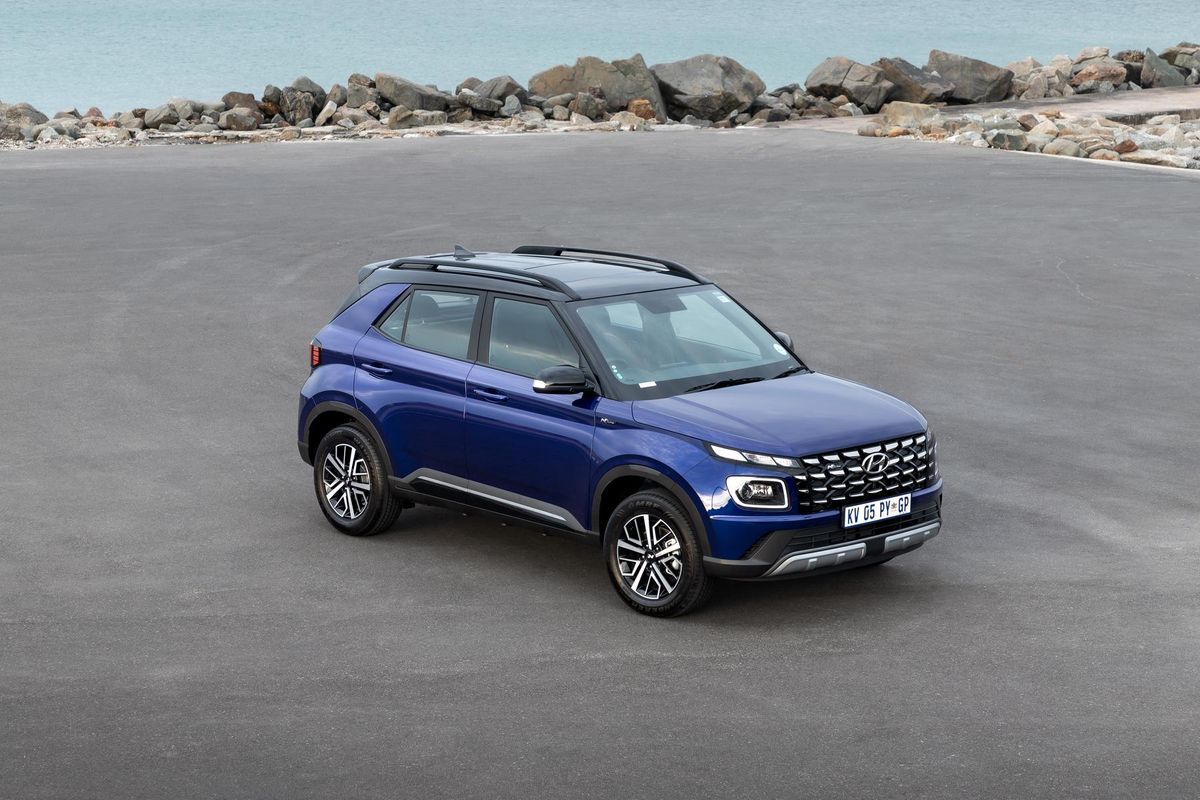
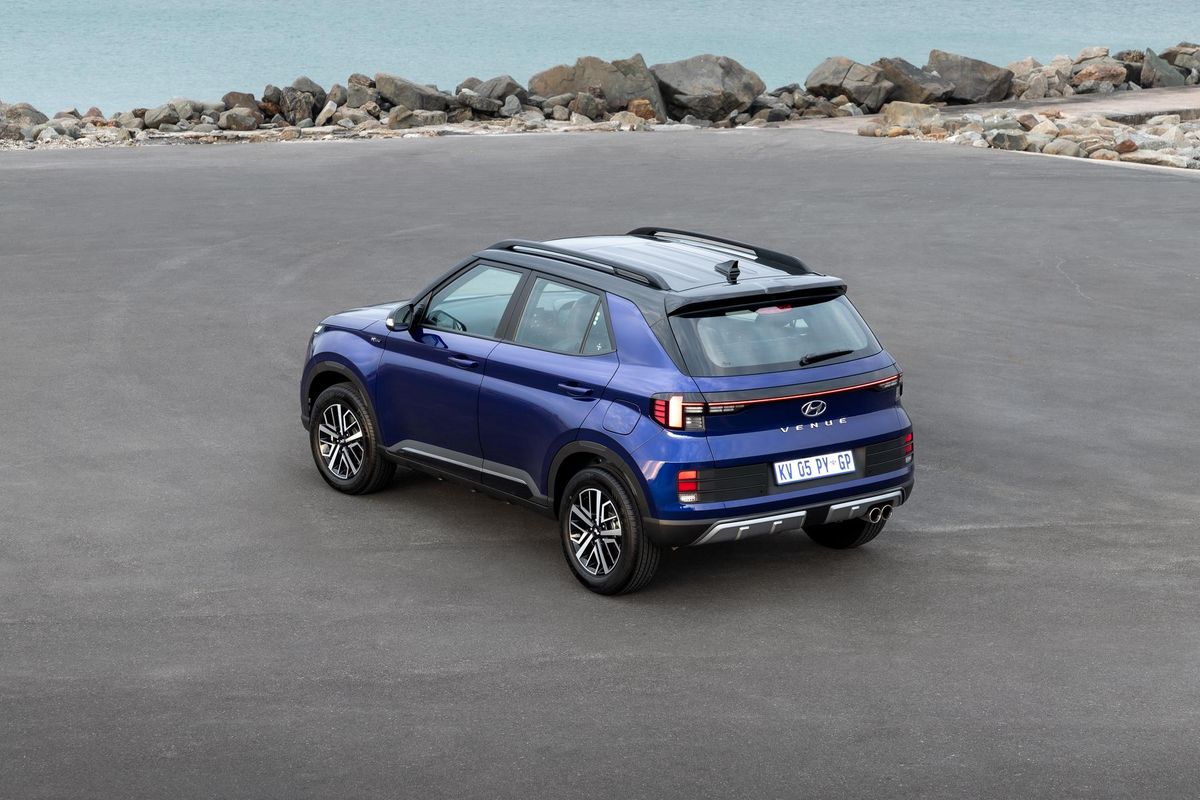
Since its introduction in 2019, the Hyundai Venue has proved a popular choice in the South African compact family-car segment. However, the South Korean brand has decided to implement a minor facelift on its Indian-made model… and it has come just at the right time, because the segment is positively bursting with new competitors from all corners of the globe.
What’s new on the Hyundai Venue?
The Venue competes in the biggest segment of South Africa’s new-vehicle market (sales-wise) – the compact family car/small crossover has transformed from an alternative to the hatchback into Mzansi’s passenger car of choice. The major players in the segment include the VW T-Cross, Toyota Urban Cruiser, Kia Sonet, Suzuki Vitara Brezza, Nissan Magnite, Renault Kiger, Ford Ecosport and Chery Tiggo 4 Pro. There are more models than those, but let’s leave it there for now.
Also read: 8 Cheapest Compact SUVs under R300k
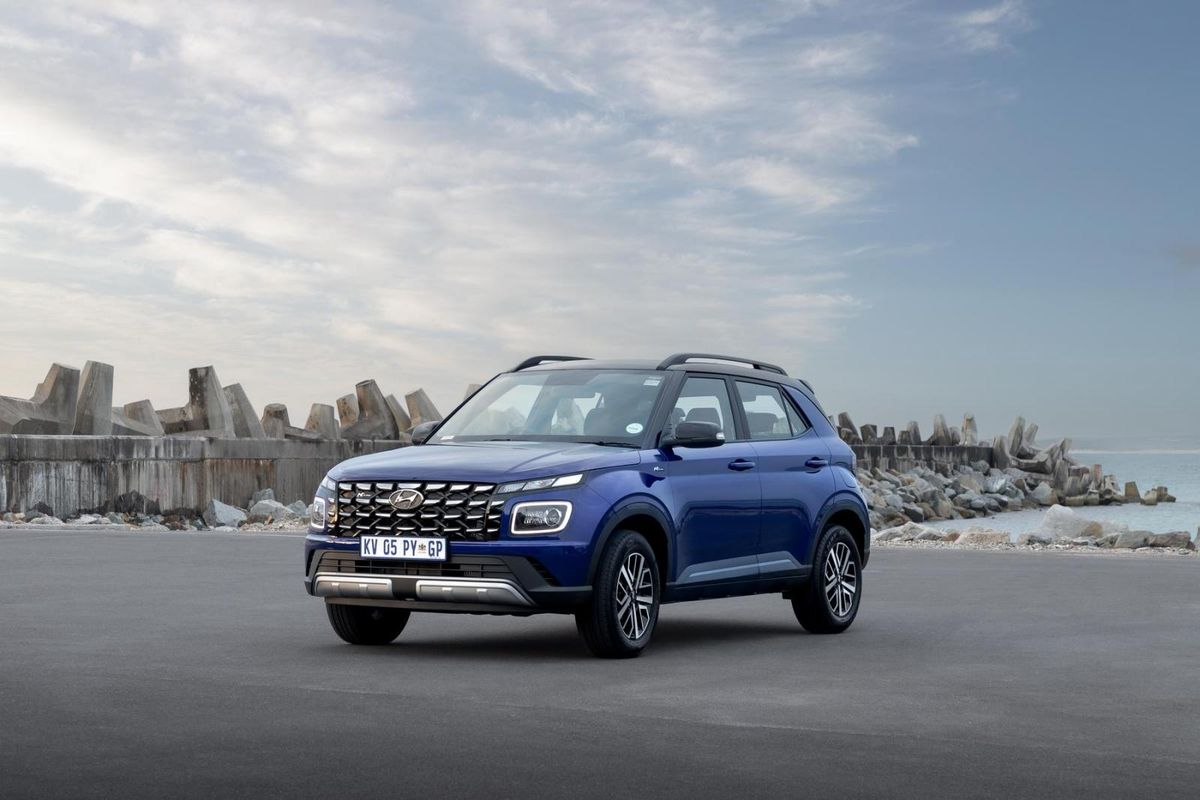
The Venue ranks as the 3rd-best seller behind the aforementioned Urban Cruiser and the T-Cross, but Hyundai aims to close the gap to its Japanese and German rivals with the latest evolution of its Chennai-produced model. The facelifted version incorporates updated specifications (for all derivatives) and introduces a top-of-the-range 1.0 TGDI N-Line automatic, which looks sportier than its siblings and supersedes the Glide version. Engines and transmissions are unchanged.
Get a full breakdown of the Venue specs.
The spec update
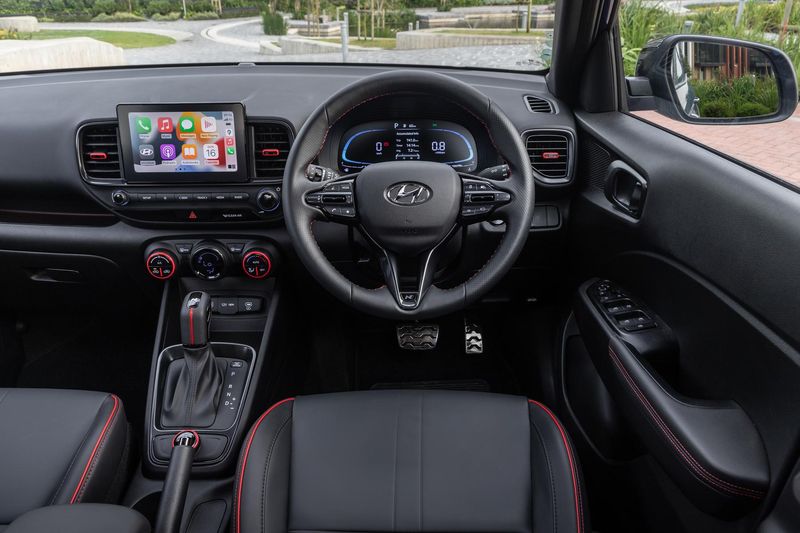
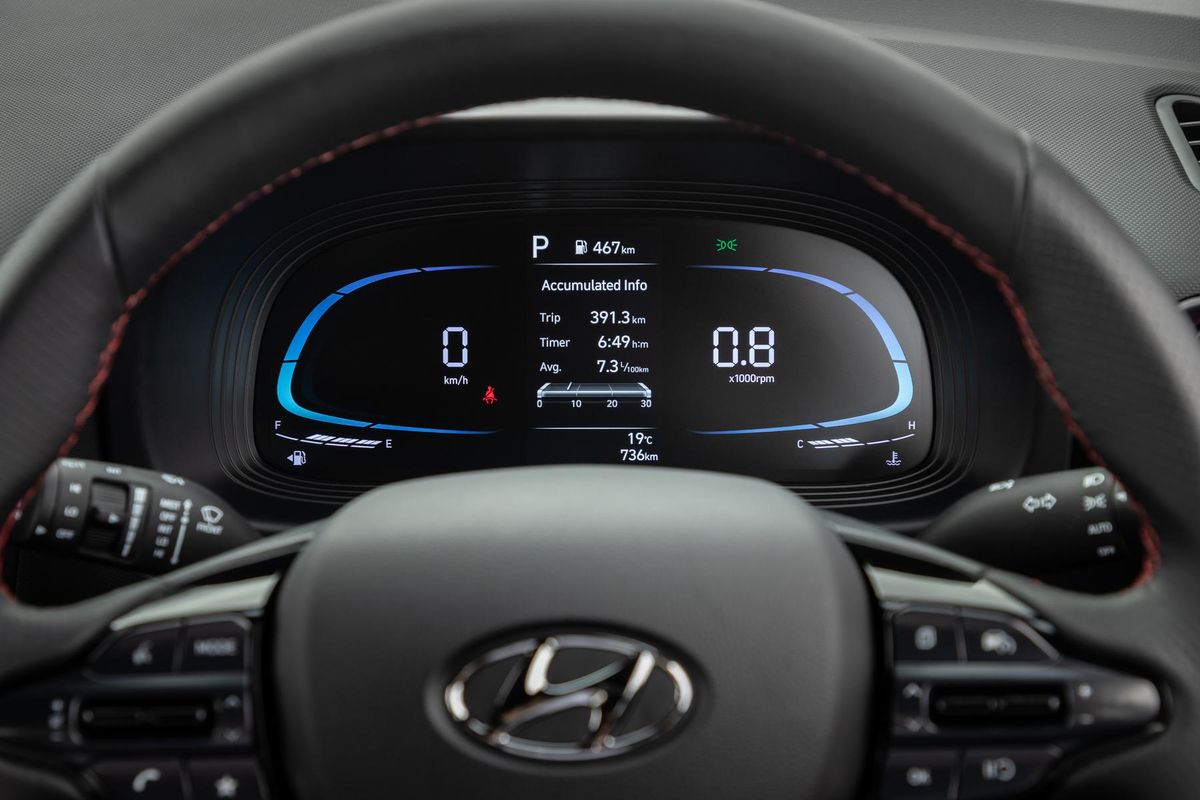
The digital instrument cluster has increased in size for the facelifted model.
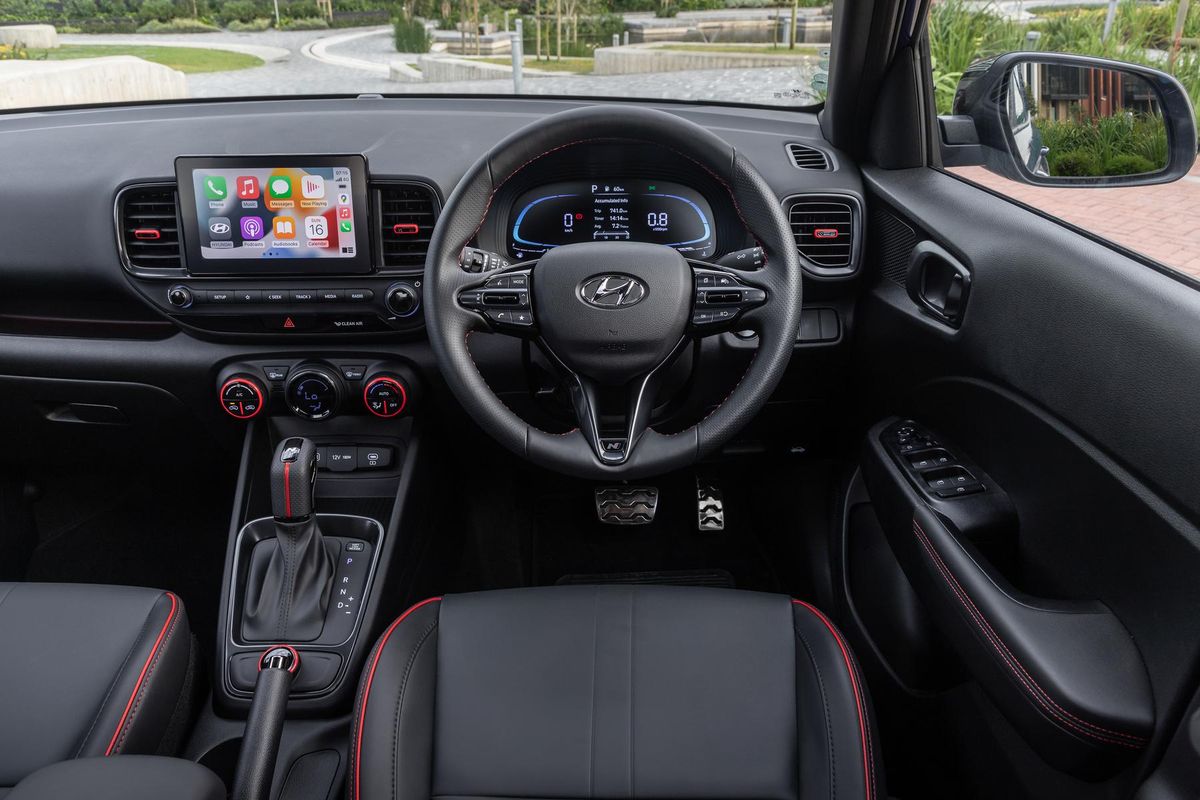
Spec improvements for the updated Venue focus on digitisation and a few comfort features. All Hyundai Venue derivatives now come with a 4.2-inch digital instrument cluster, which improves upon the 3.5-inch version of the pre-facelift model. It utilises modern-looking and easy-to-read graphics, plus the bigger screen makes it dead easy to sort through the trip-computer options.
Rear ventilation outlets have been added to Motion-grade 1.0-litre turbocharged derivatives, while all Venues now feature side mirrors with integrated indicator lights.
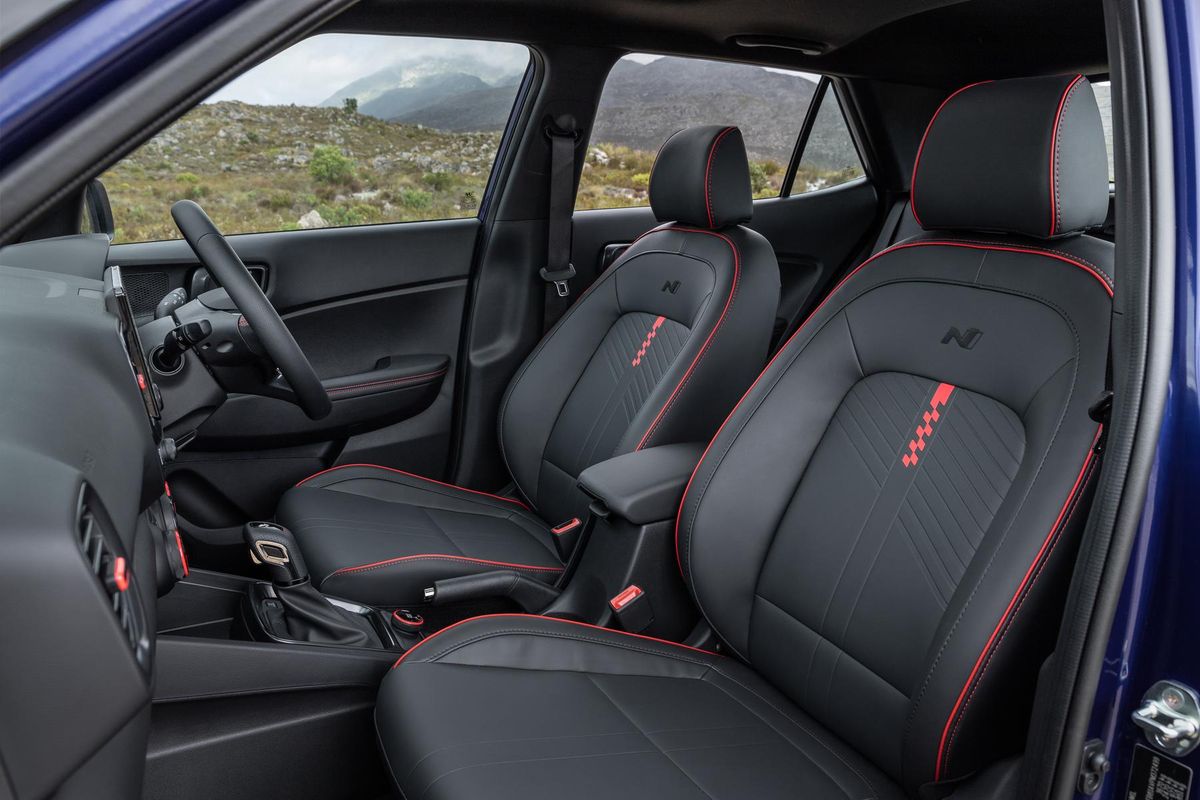
The N-Line flagship comes generously specced, with notable additions being the artificial leather seats, drive-mode selector, aluminium-finished pedals, electrically adjustable driver’s seat, sunroof and, of course, the exterior styling package.
What’s the Venue like to drive?
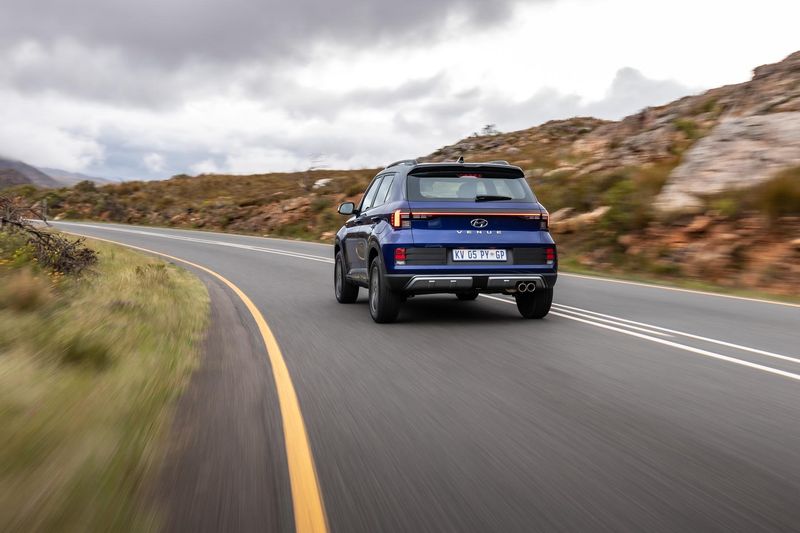
The Venue is certainly one of the better-to-drive small crossovers in the segment.
It had been a few years since I’d driven a Venue and, given the plethora of models that recently joined the segment, it was good to reacquaint myself with one of the better-to-drive compact family cars. Price-wise, the Venue sits at the upper end of its segment (along with the T-Cross), but once you drive it and truly get a feel for the overall product, it becomes quite apparent that Hyundai’s offering thoroughly deserves its “premium” price tag.
Out on the road, the cabin is reasonably quiet and wind noise isn’t particularly noticeable. We drove the 1.0-litre turbocharged Fluid derivative (equipped with the dual-clutch automatic transmission) at the launch event and, by “small turbo car with an auto ‘box” standards, the Hyundai’s is pretty good. There’s a little hesitation from the ‘box when you floor the throttle to execute overtaking manoeuvres, but it shifts smoothly and doesn’t moan (like some CVTs in this segment).
The ride refinement is good too. Hyundai and Kia have improved drastically in this department over the past 5 years – the sister brands now produce compact cars that ride well over our local road surfaces, even if their suspension setups tend to be on the firm side of pliant. The steering action is devoid of any real feel or feedback, but that’s not going to deter buyers. In fact, they’ll appreciate an easy-to-twirl ‘wheel that makes the Venue a cinch to park.
What’s the interior like?
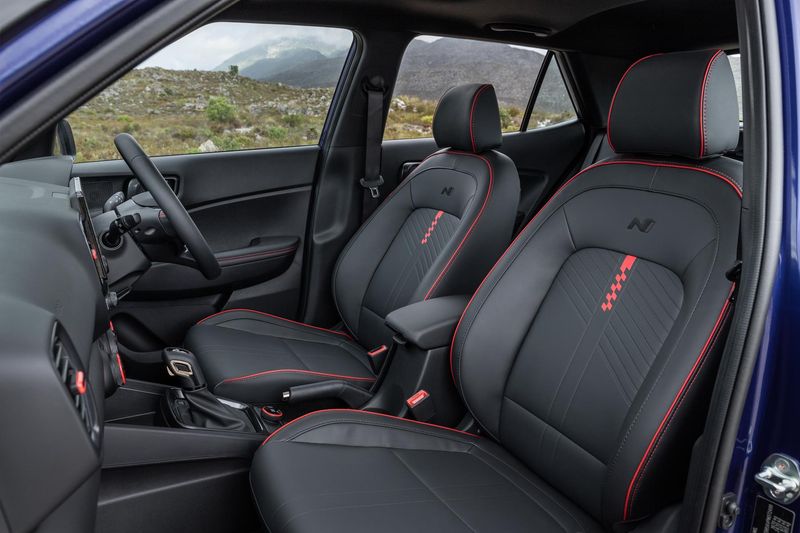
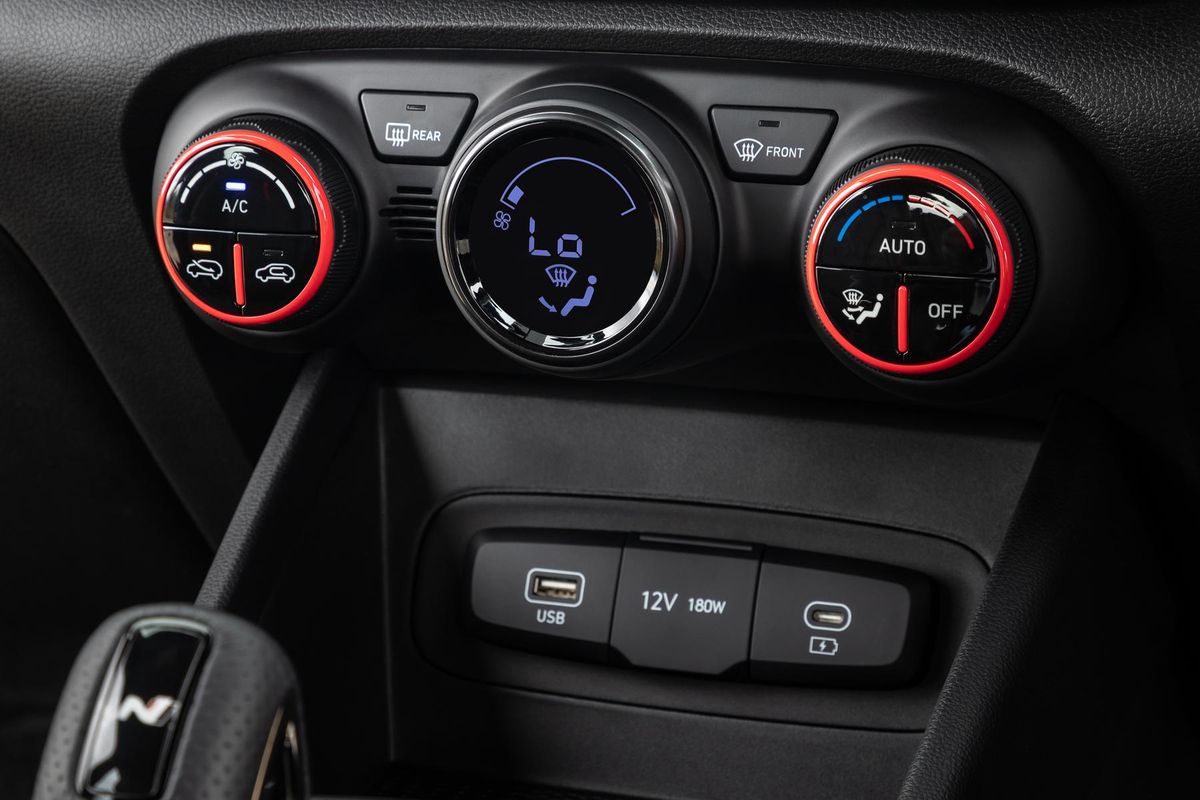
The N-Line model features red stitching as well as a drive mode selector.
The 1.0T Fluid features cloth seats, which are neatly upholstered, but I would have liked a bigger range of height adjustment for the driver’s seat (admittedly, I tend to adjust virtually every test car’s driver’s seat to its lowest position). It’s easy enough to find a good driving position, even if the steering column doesn’t have reach adjustment – it only tilts up and down.
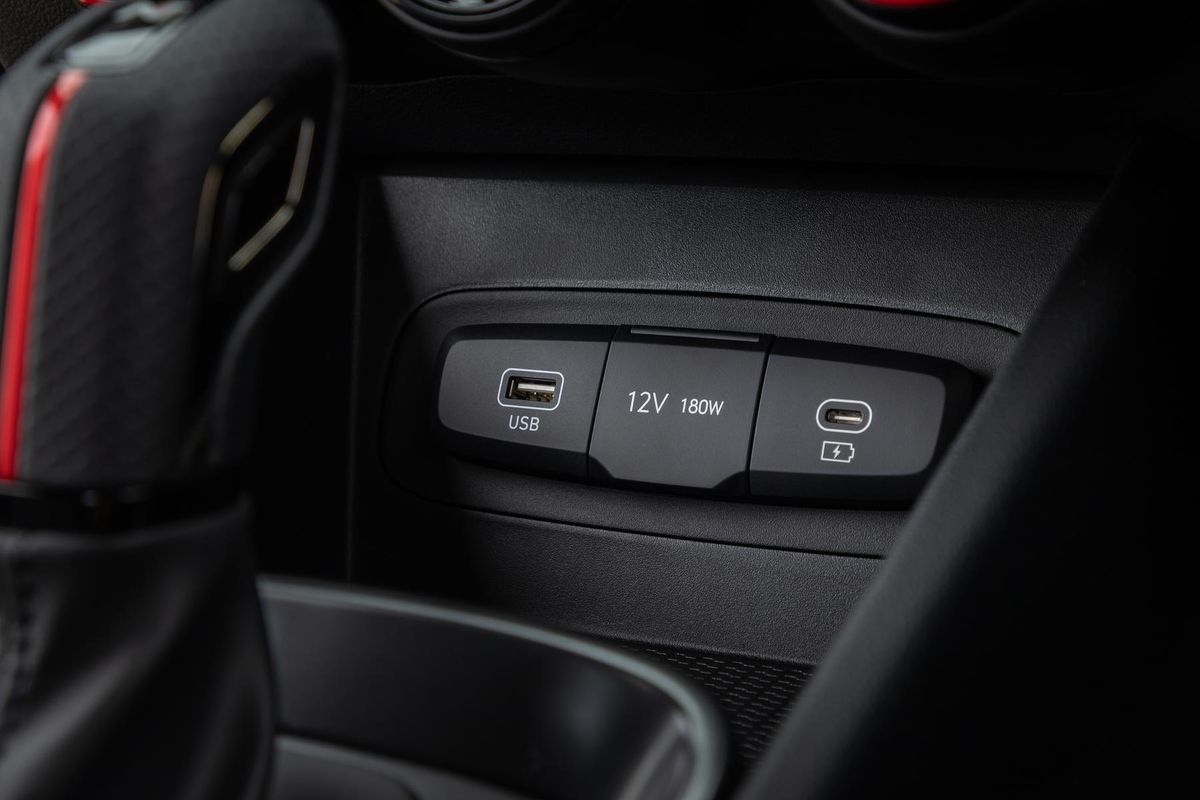
The infotainment system supports Apple Carplay and Android Auto (via a cable connection), with a USB-C port and (the older) USB-A port provided at the front. The system is fairly basic, but its menu is easy to navigate and it’s simple enough to pair your smartphone to the car via Bluetooth. The audio system isn’t going to wake any neighbours, even if its volume is at maximum as you arrive home at 2 am; that’s where VW possibly has an advantage with its Beats collaboration.
That aside, the interior is neat, well put together and feels devoid of awful sweaty plastics. The Venue doesn’t feel as made-to-cost and disposable as some of its rivals in this segment, but that’s why you have to pay a little more to buy one.
Hyundai Venue prices and after-sales
The updated Hyundai Venue is sold with a 7-year/200 000 km warranty and a 3-year/45 000 km service plan.
| Venue 1.2 MPI Motion MT | R294 900 |
| Venue 1.0 TGDI Motion MT | R354 900 |
| Venue 1.0 TGDI Fluid MT | R389 900 |
| Venue 1.0 TGDI Motion DCT | R394 900 |
| Venue 1.0 TGDI Fluid DCT | R429 900 |
| Venue 1.0 TGDI N-Line DCT | R449 900 |
Summary
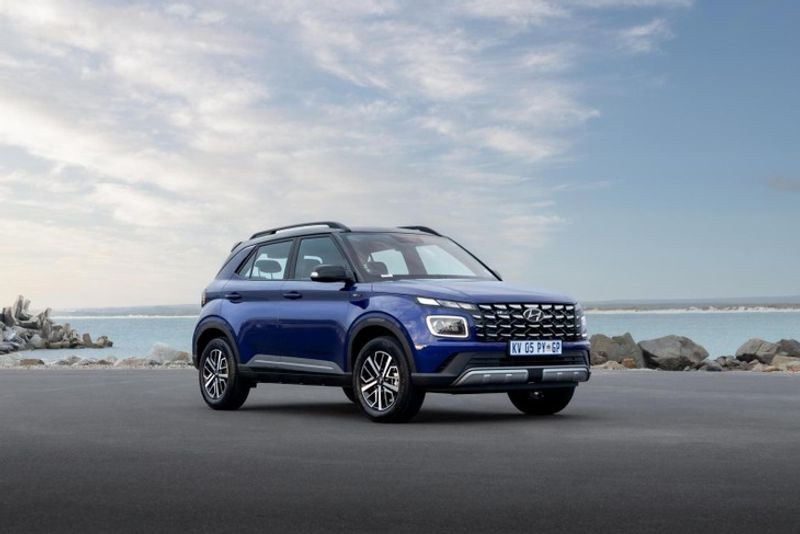
Priced at the upper end of the segment, the Venue offers a better driving experience and better build quality than most of its rivals.
The facelifted Hyundai Venue’s spec update may seem minor, but it lifts the cabin’s ambience slightly, even if not quite enough to be considered segment-leading. As is often the case, this Hyundai represents fairly good value for money, but the Venue does demand a bit of a premium over its chief rivals. However, that premium is arguably justified in terms of the excellent warranty, top-of-segment driving manners and good build quality that the compact family car delivers.
Ashley Oldfield

Ashley has been riding or driving some sort of motorised vehicle since his 4th birthday when he got a Yamaha PW50. Equipped with years of racing experience, Ashley took up journalism and became a writer for some of South Africa’s best motoring magazines and online publications. He is SA’s first (and only) GT Academy winner having raced professionally overseas. He now serves as the Content Manager at Cars.co.za, putting his wealth of racing and driving experience to good use.