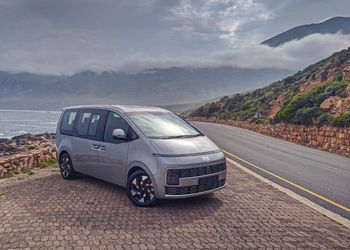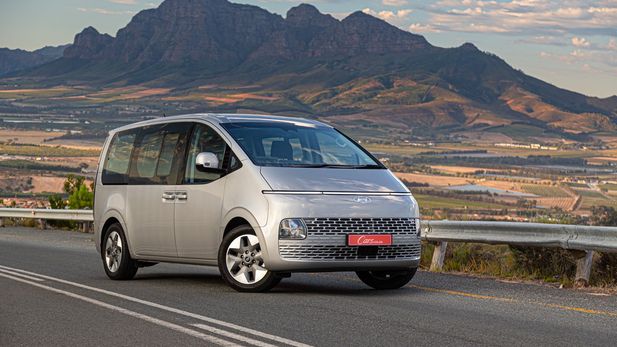
The Hyundai Staria has started quite a few conversations thanks to its futuristic styling, but is it actually a good people-mover? We’ve spent a few thousand kilometres behind its ‘wheel.
We like: Space and packaging, strong engine with good economy, semi-autonomous technology, value for money
We don’t like: Controversial styling won’t please everyone, some cheap plastics around the central cluster
FAST FACTS
- Model: Hyundai Staria 2.2D Elite
- Price: R959 900
- Engine: 2.2-litre 4-cylinder turbocharged diesel
- Power/Torque: 130 kW/430 Nm
- Transmission: 8-speed automatic
- Fuel consumption: 8.7 L/100 km (claimed)
- Load capacity: 831–1 303 litres
Serious about buying?
Some Hyundai dealerships regularly offer great deals. See our New Car Specials here!
What’s new about the 2022 Hyundai Staria?
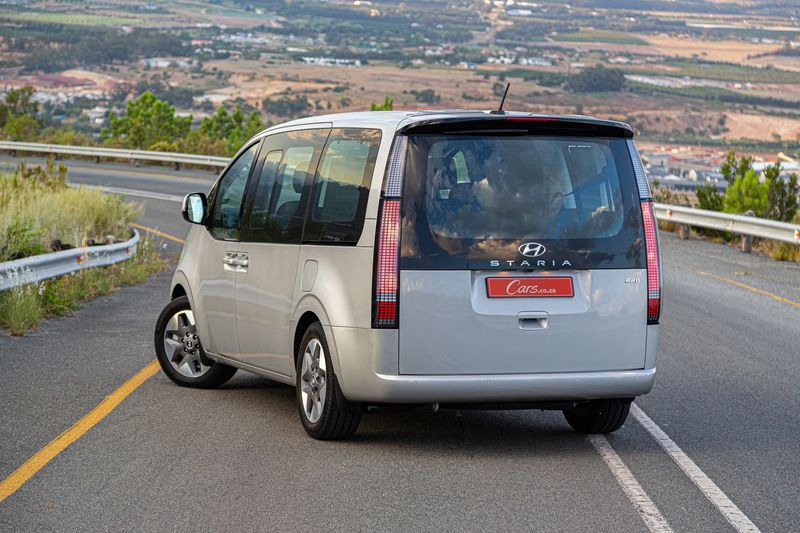
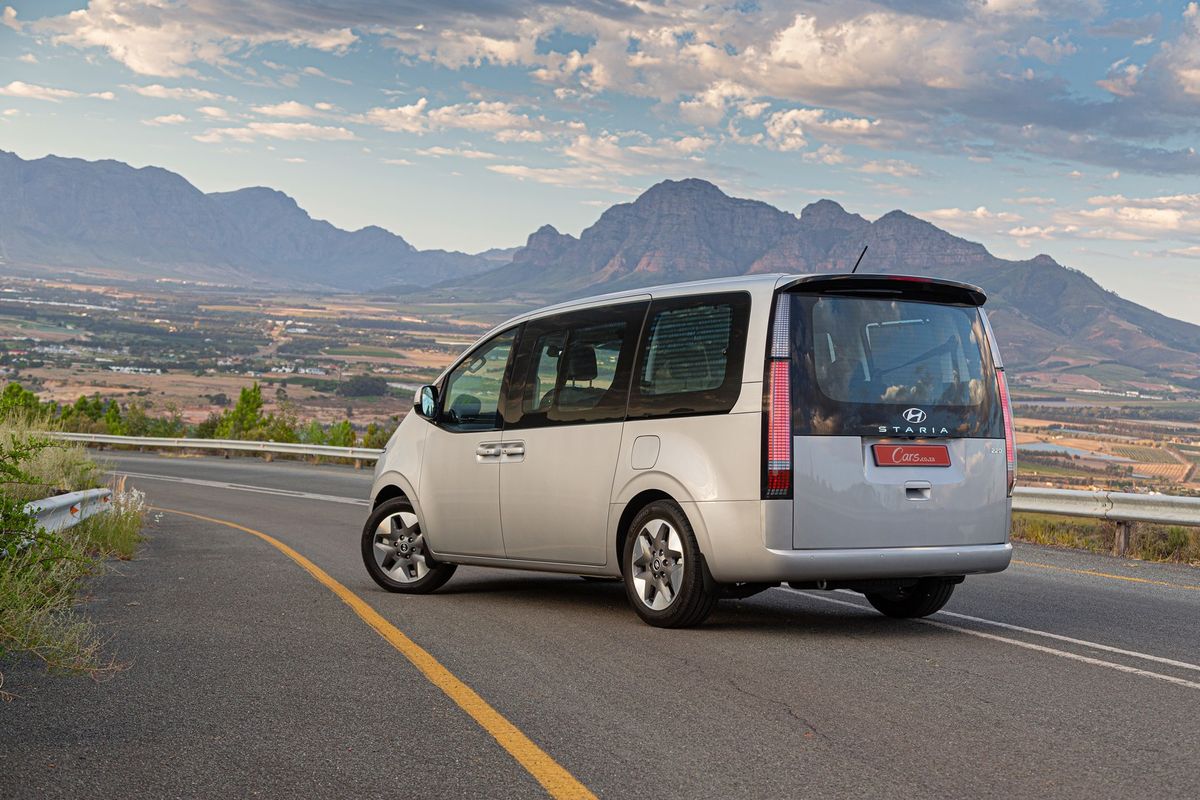
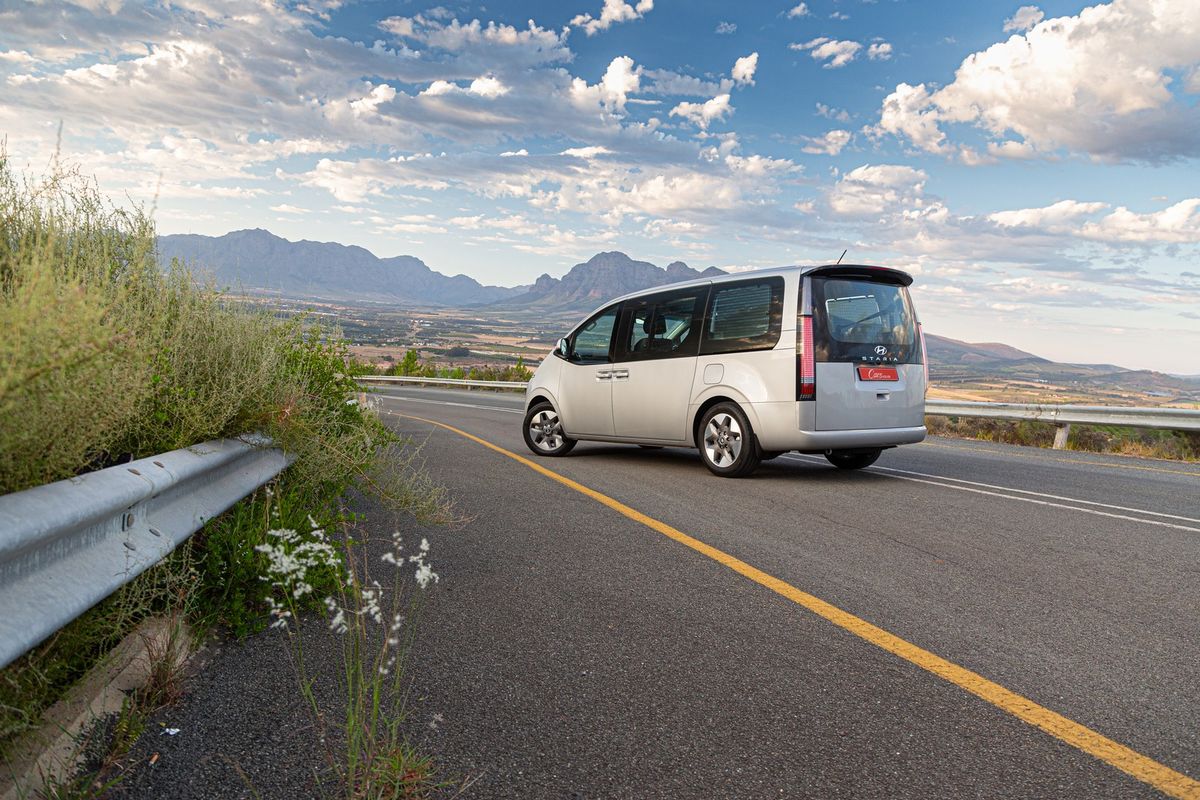
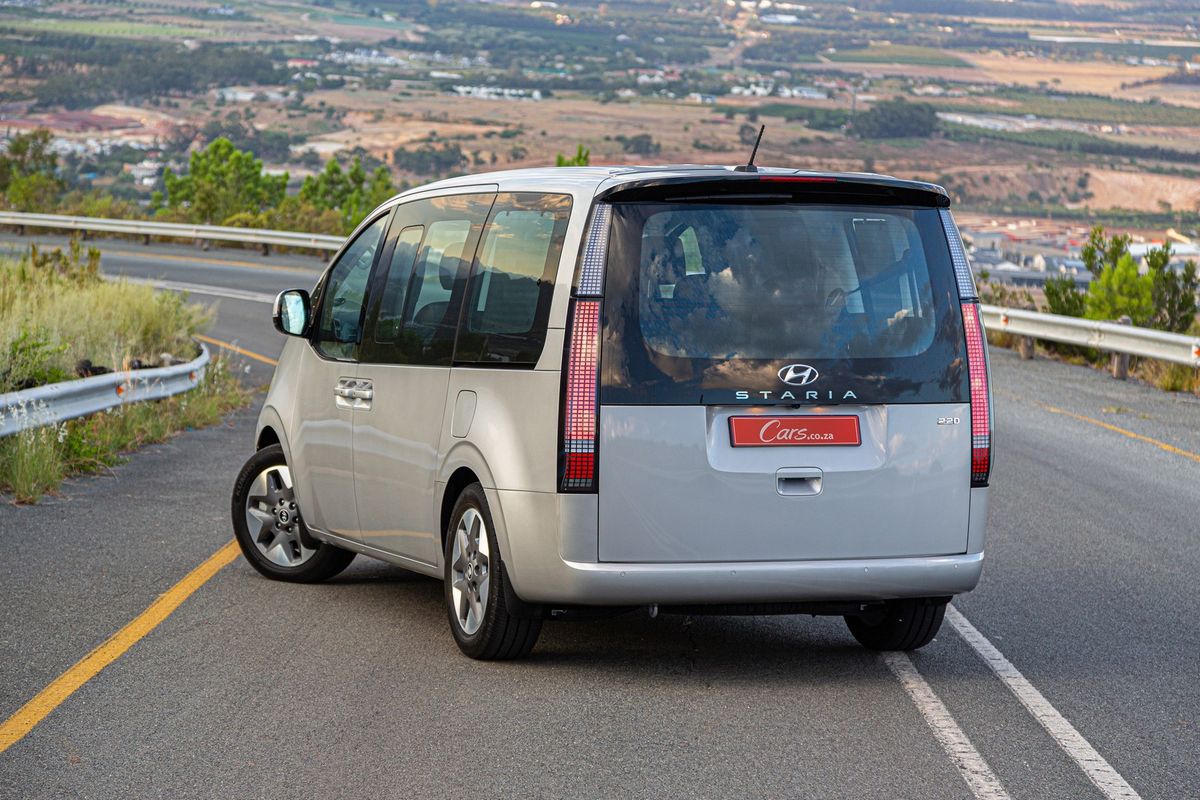
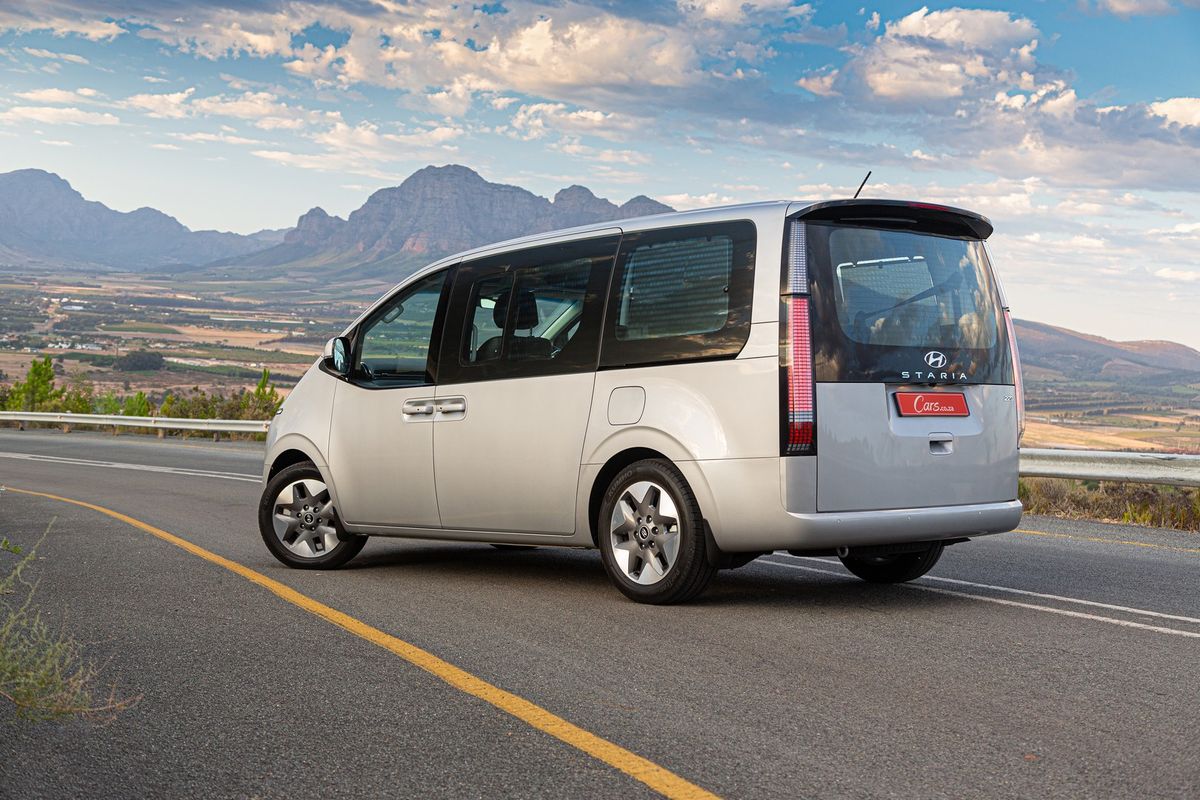
The rear aspect of the Hyundai Staria isn’t as aesthetically challenging as its front-end design, but those tail-light clusters seem to go on forever.
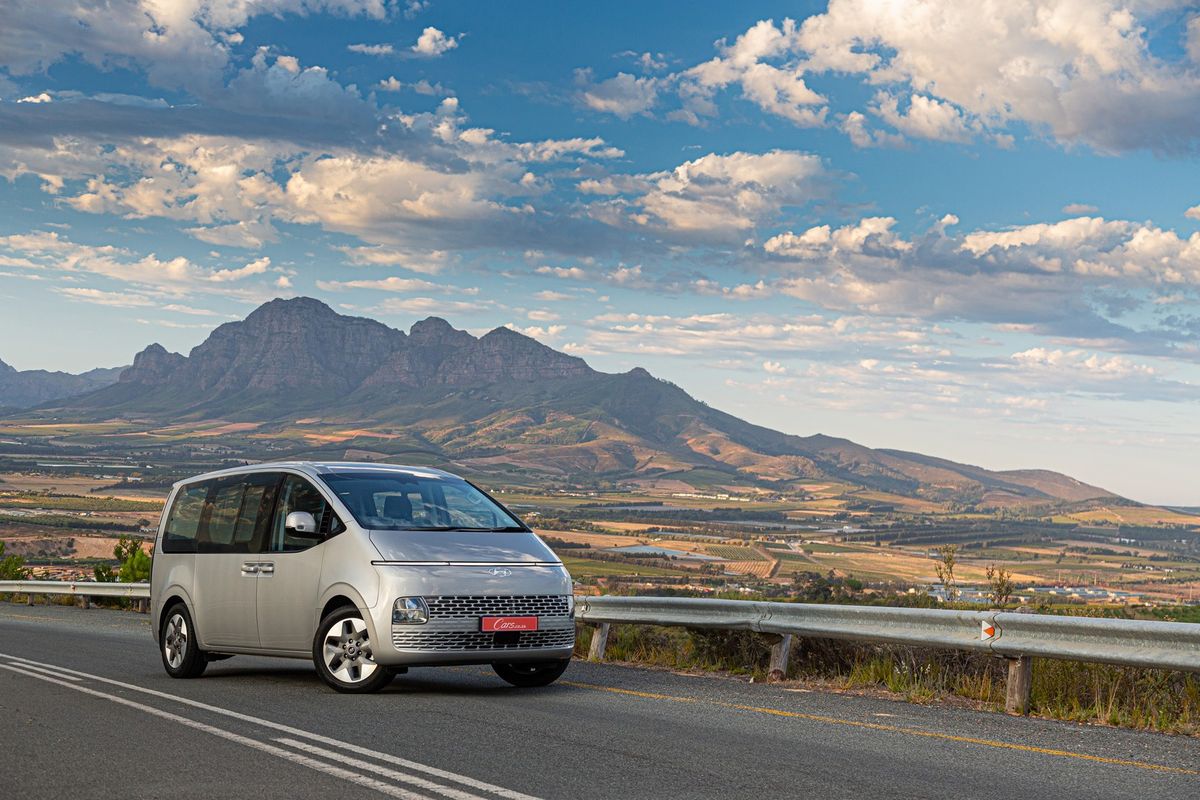
Compared with its predecessor (the now-discontinued H1), the new Staria is a revelation. From a stylistic point of view, the H1 and Staria are chalk and cheese. The H1 was a typical van-based minibus that prioritised practicality and value for money, but the Staria is styled to make heads turn and its cabin is equipped with some special touches to make the model more family-orientated, or, to put it another way, less LCV-like.
With the Staria, Hyundai hopes to snatch more than a few sales away from the likes of the Volkswagen T6.1 range and the Mercedes-Benz V-Class family. Its predecessor, the H1, was the segment leader by quite some margin, so the Staria has some big shoes to fill.
Despite the segment taking a dip in sales over the past few years, it appears the demise of the large family bus has been put on hold. Multiple new entries have been added to the segment and the Hyundai Staria competes with its fellow countryman – the Kia Carnival, as well as the Opel Zafira and the Ford Tourneo Custom.
At this price point, you can also get into off-road-capable bakkie-based SUVs, such as the Toyota Fortuner, Ford Everest, Isuzu MU-X, Mitsubishi Pajero Sport, but you won’t have more than 7 seats…
Compare the Hyundai Staria to the Volkswagen Kombi and Mercedes-Benz V-Class here.
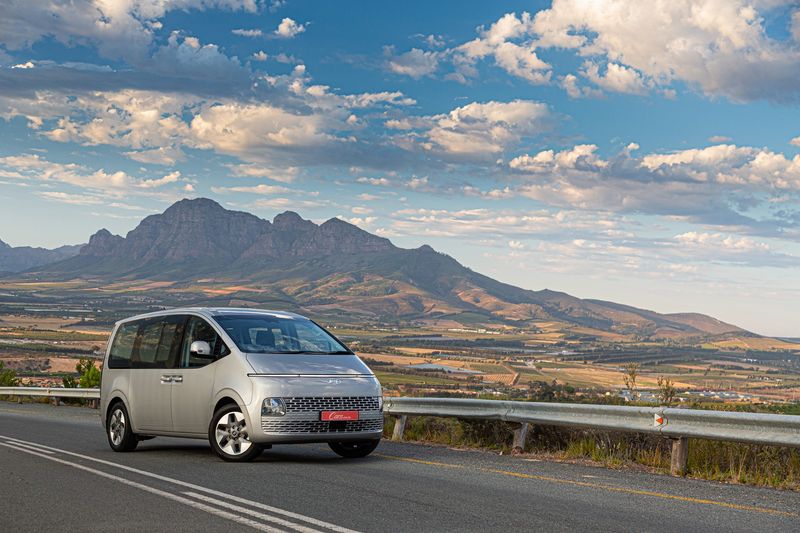
How the 2022 Hyundai Staria fares in terms of…
Design and Packaging
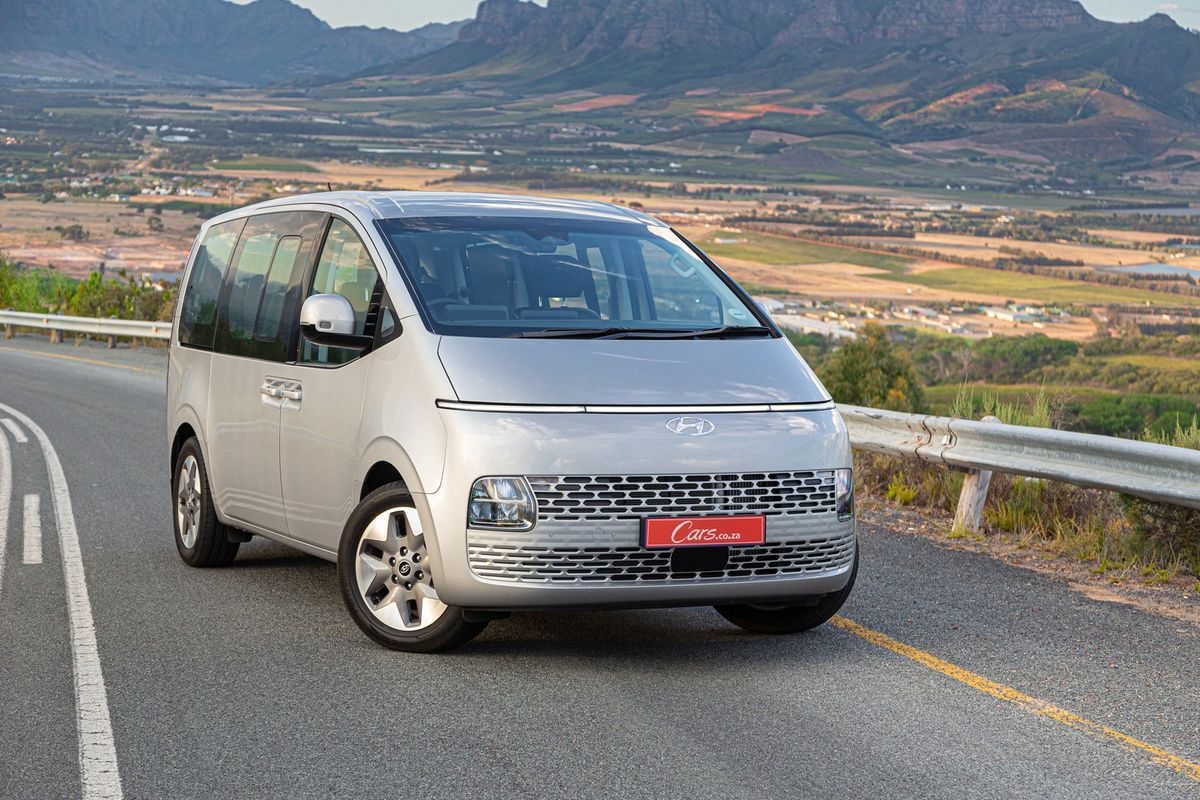
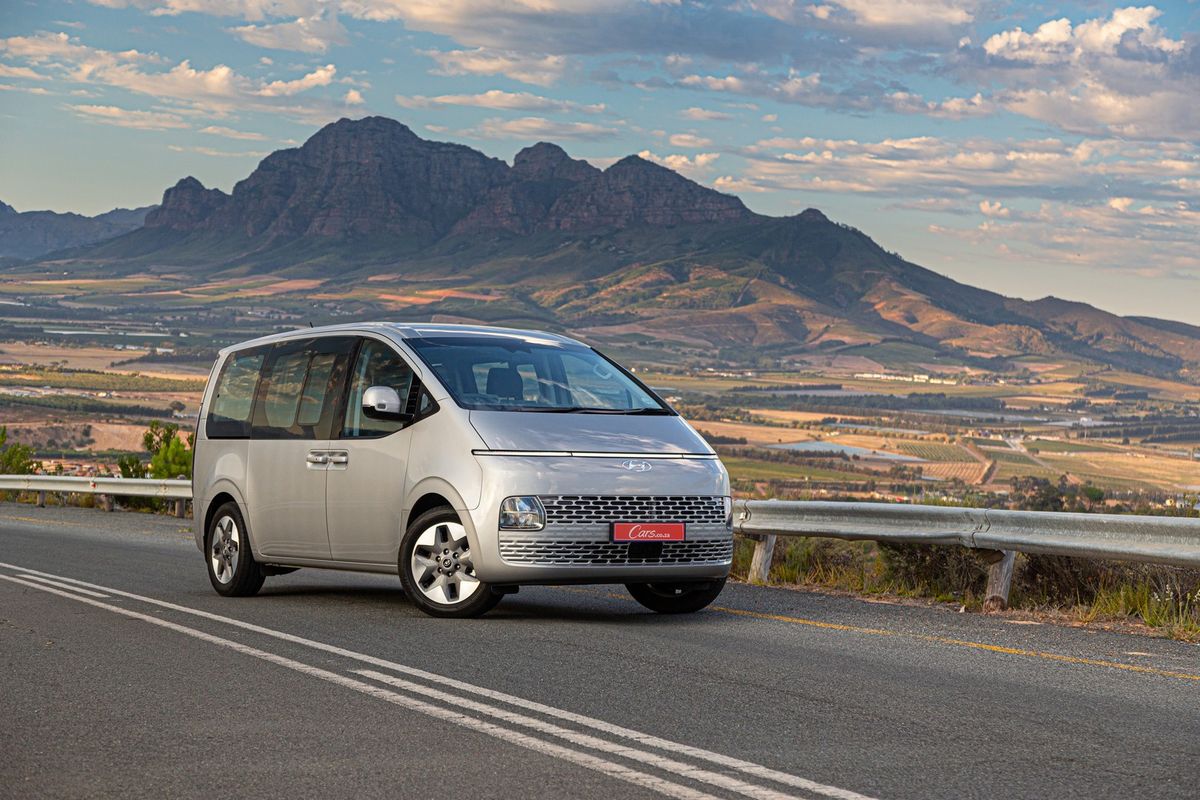
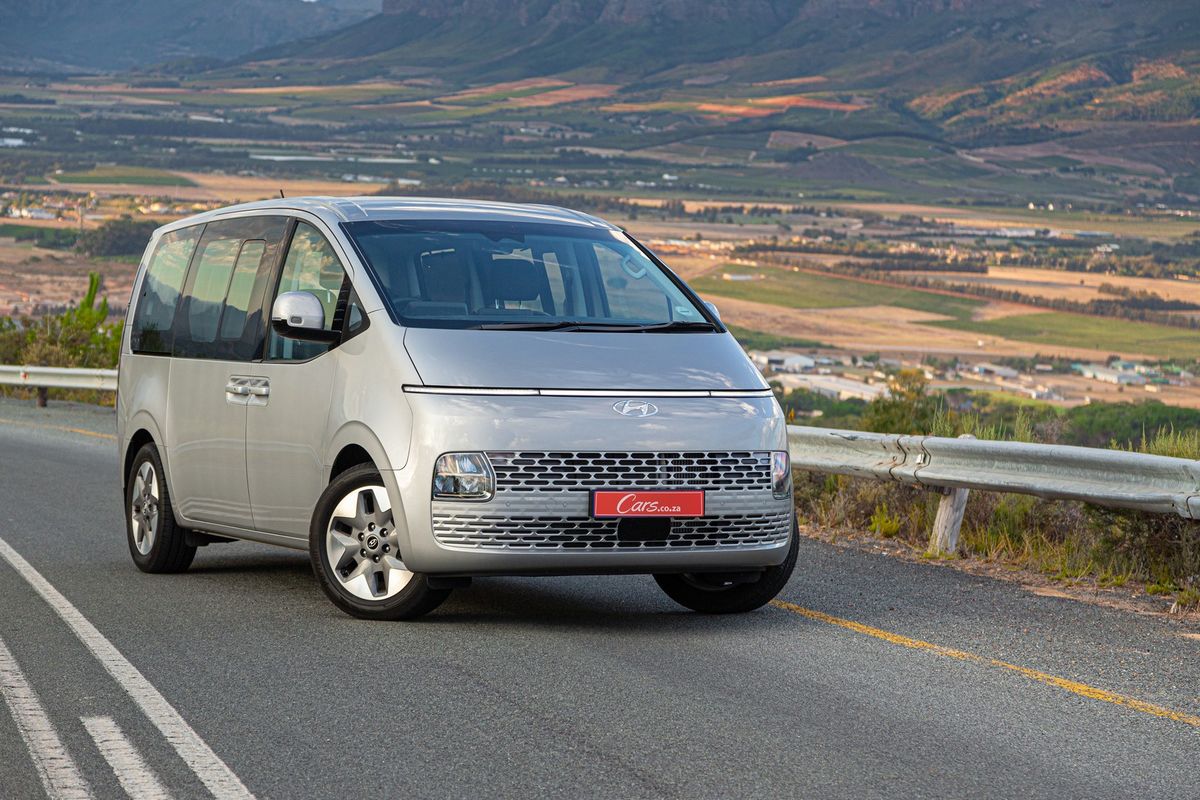
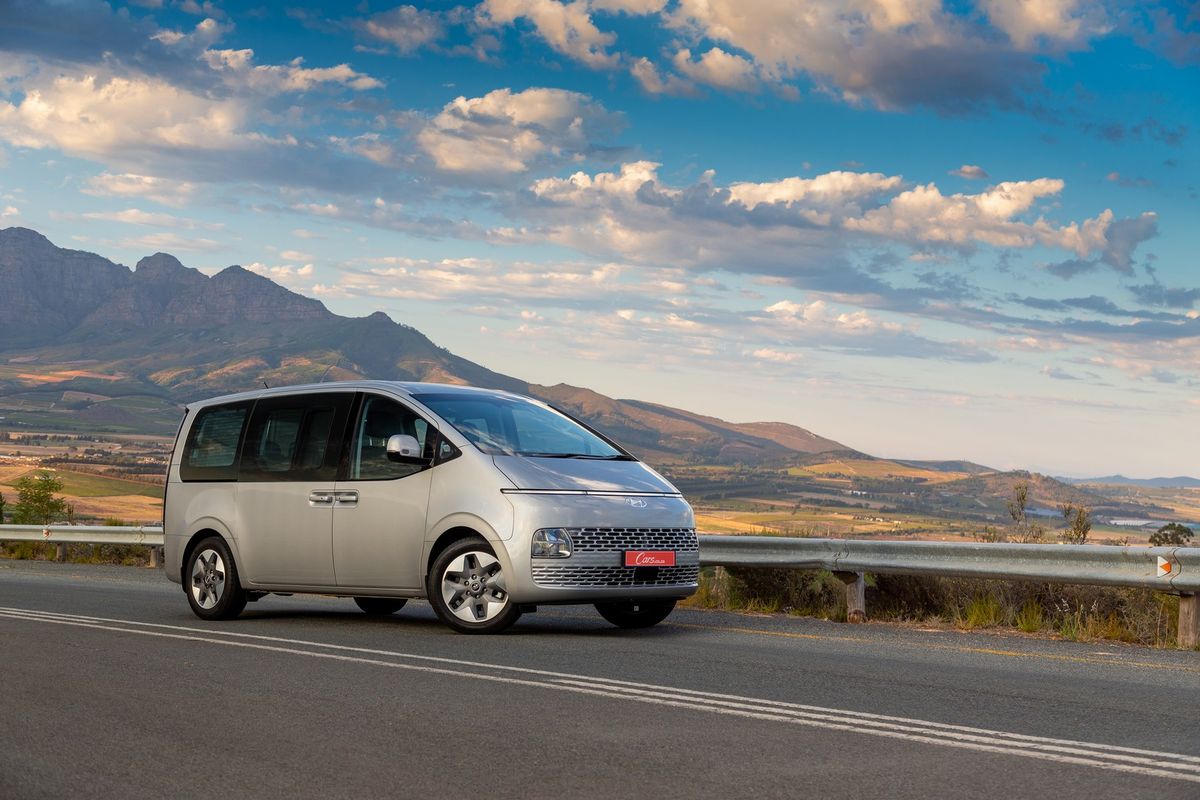
If you think of an 8-seater MPV, “cool” is hardly the first word that comes to mind. This segment has always moved metal on the grounds of practicality, number of seats, operating costs and other rational criteria. But just look at the Staria, it’s designed to turn heads and evoke an emotional response in onlookers! The minibus’ bold frontal aspect takes cues from futuristic vehicles as seen in sci-fi flicks such as Robocop and Star Wars. If the Staria was available in maroon, it would have Iron Man’s face. The rear end sports dramatic vertical LED tail-lights with a black lattice (grid) pattern.
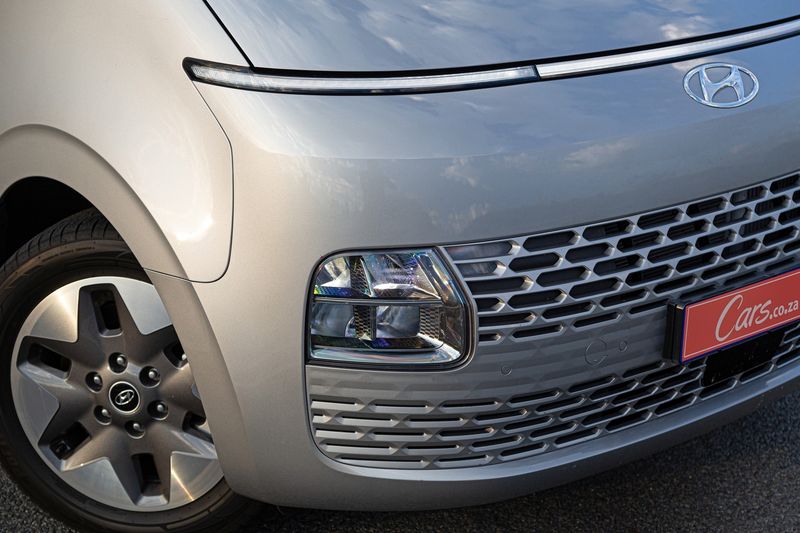
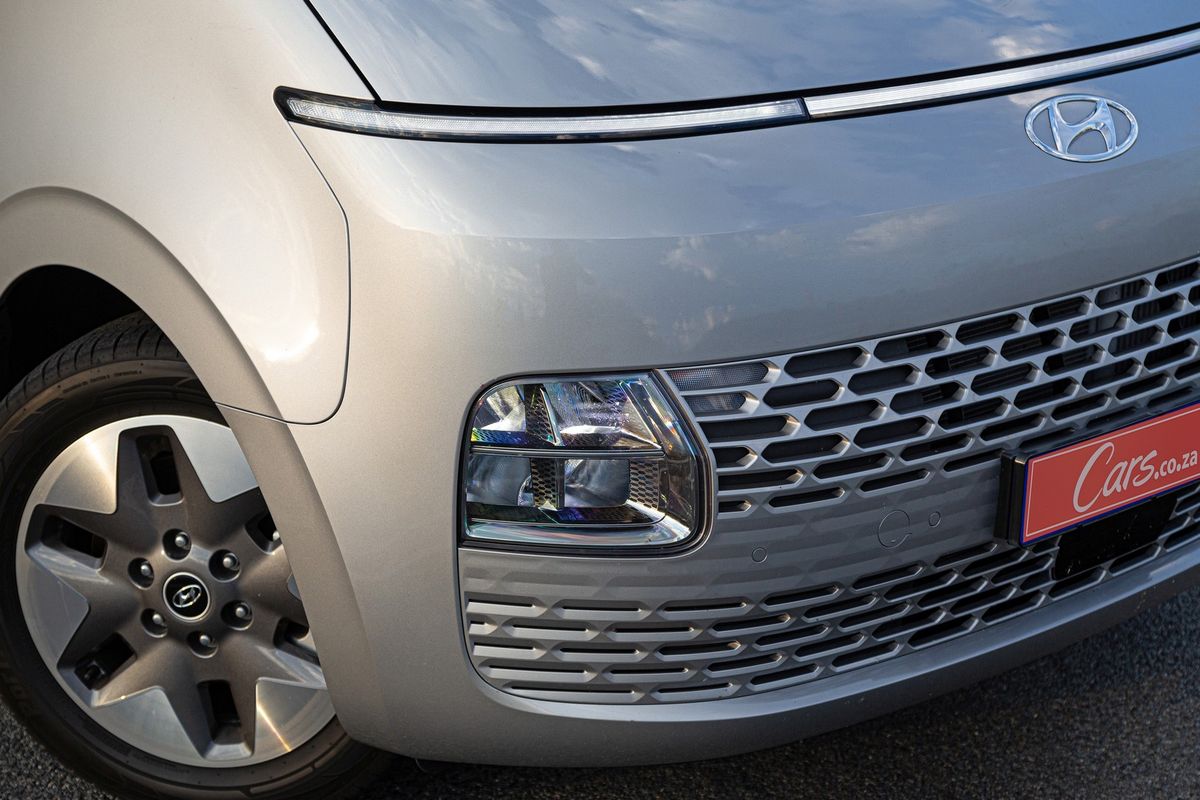
The combined headlight and indicator clusters are positioned in the bumper.
At night, the Staria can be distinguished by a large horizontal light bar that spans the upper edge of the front bumper, but that is just the model’s lighting signature – the headlights are mounted in the bumper along with the indicators. Meanwhile, when those rear-light clusters are illuminated, they remind us of the exhaust ports of a Starfleet shuttlecraft (okay, we promise that’s the last geeky sci-fi reference).
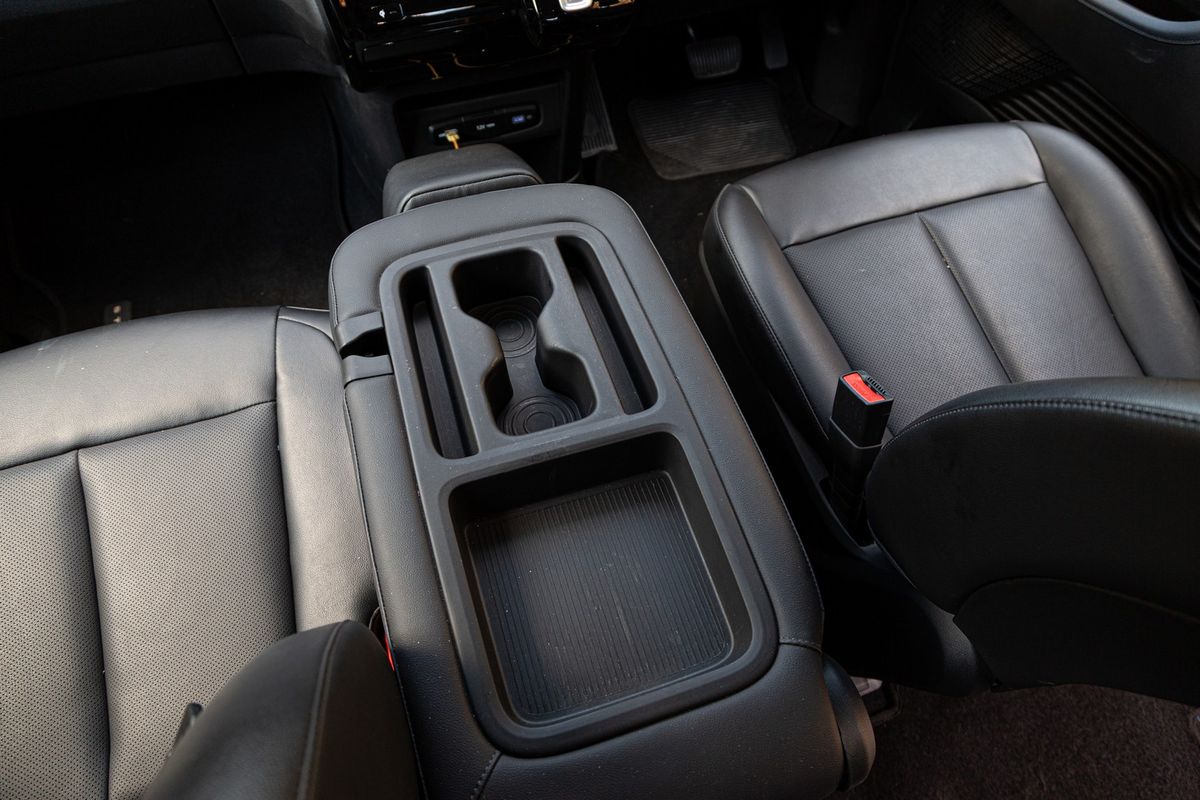
Besides, the Staria’s true strength lies in its interior packaging. The Staria’s configured to be a 9-seater (in a 3-3-3 setup), but that’s only for when you need to transport the maximum number of occupants; we preferred to fold down the middle seat in the front row and utilise the back of the seat to hold drinks upright and store keys, phones and all kinds of odds and ends (see below).
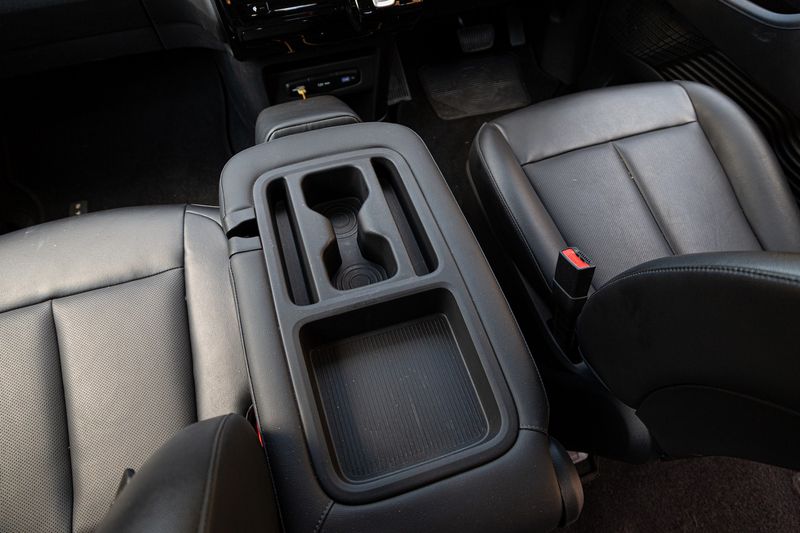
The backrest of the middle seat in the front row provides a nifty storage solution!
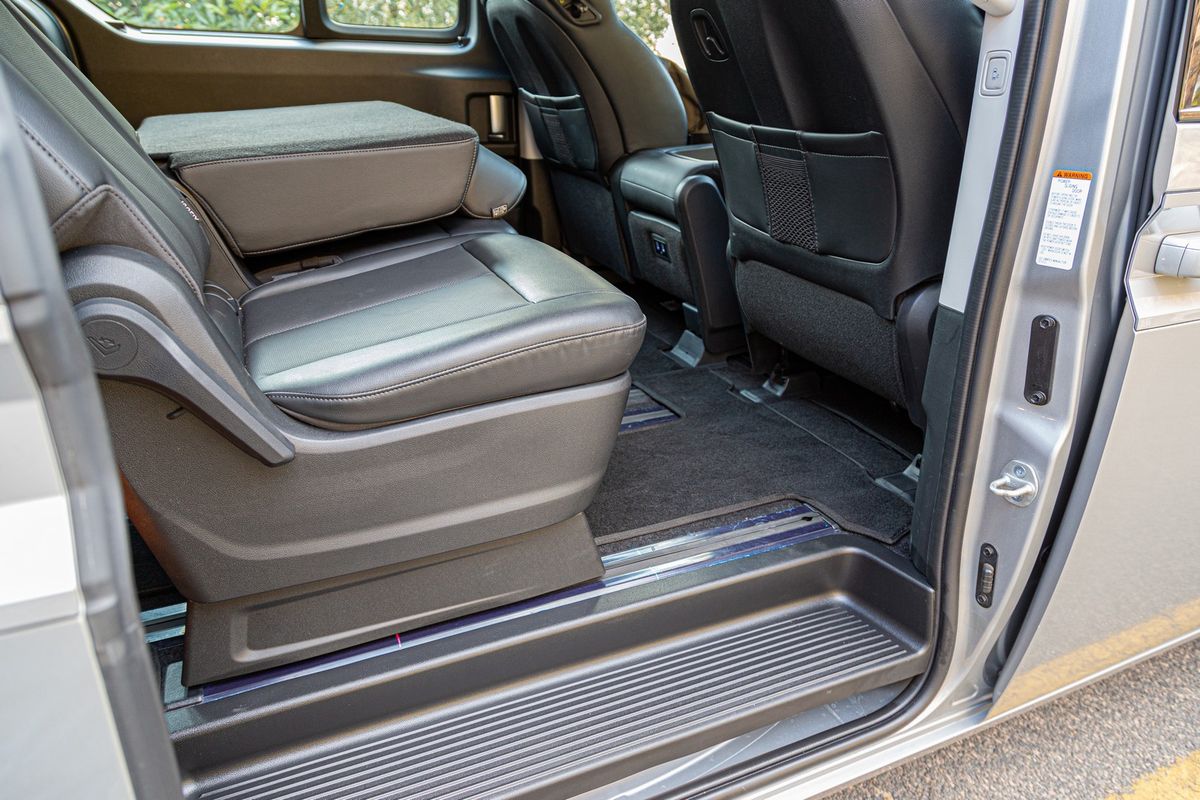
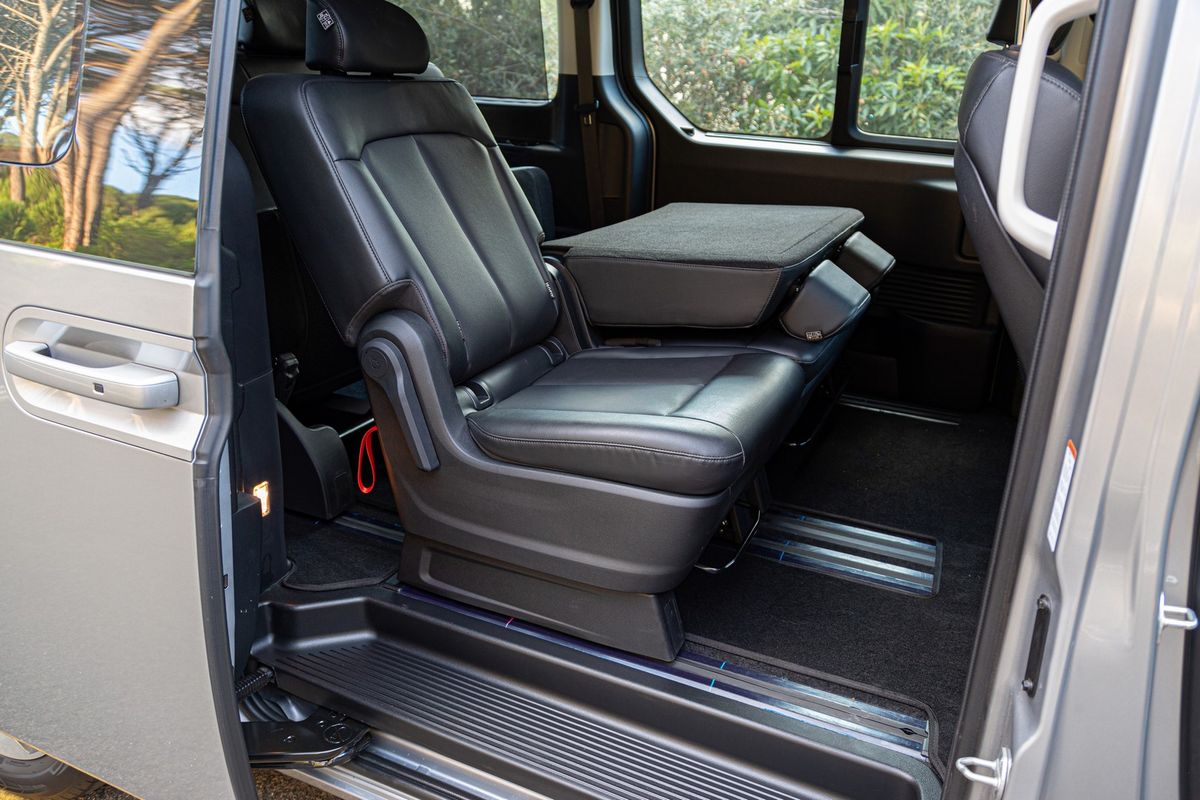
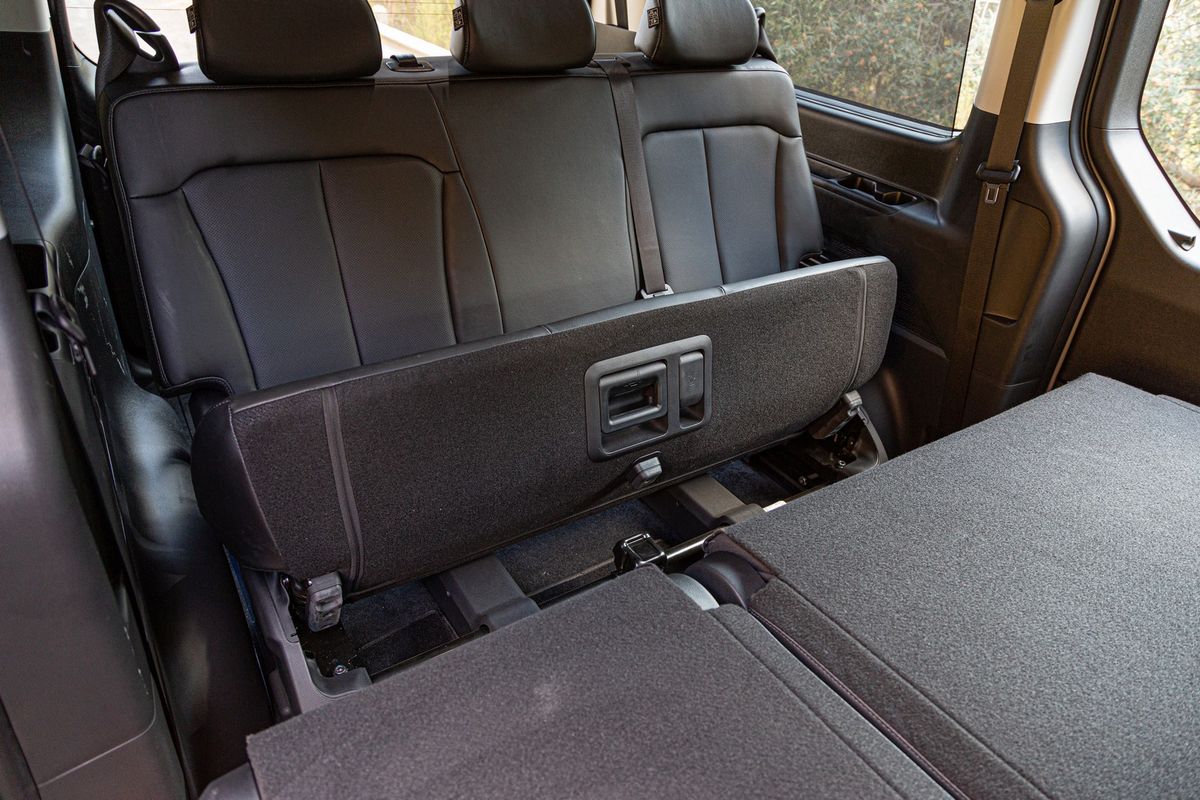
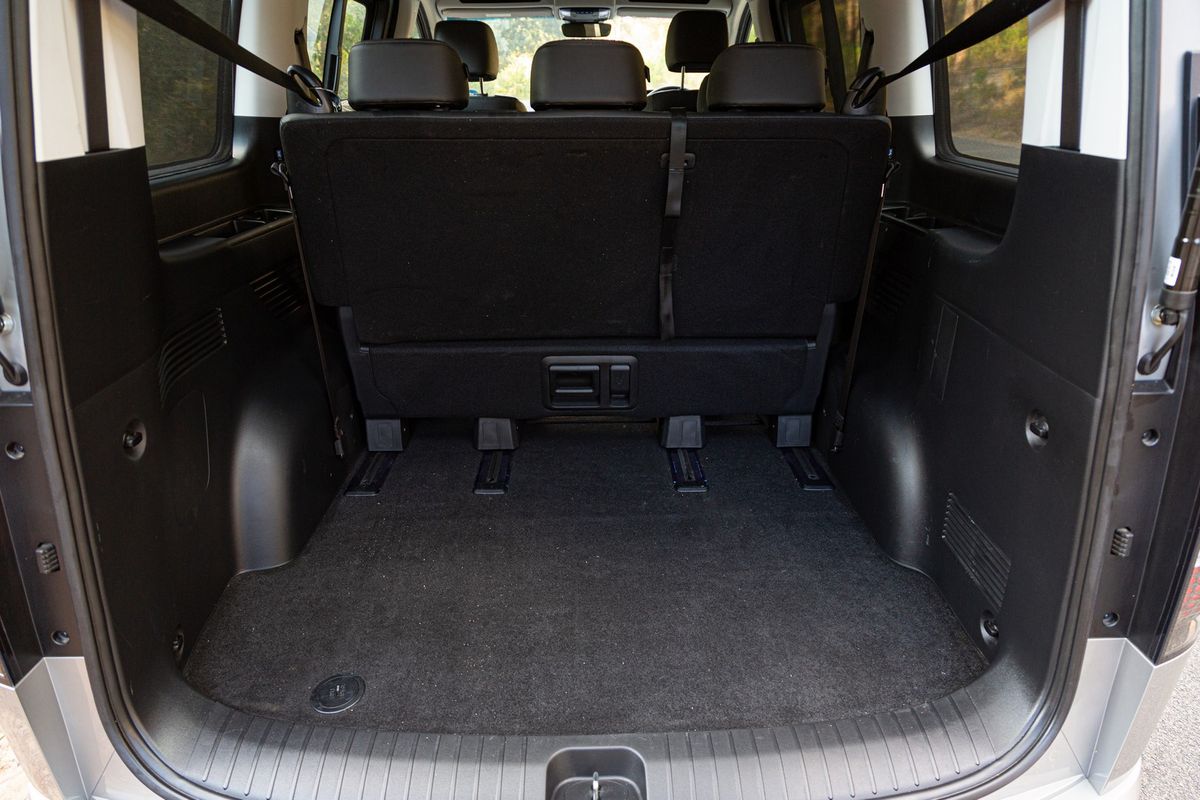
The 2nd and 3rd row of seats are mounted on rails, so you can slide them fore and aft to suit your needs. Thanks to those rails, if you’re about to transport lanky (or just fussy) passengers, you can free up generous legroom and, if you need to haul more cargo than usual, enhance the capacity of the (already generously sized) load bay.
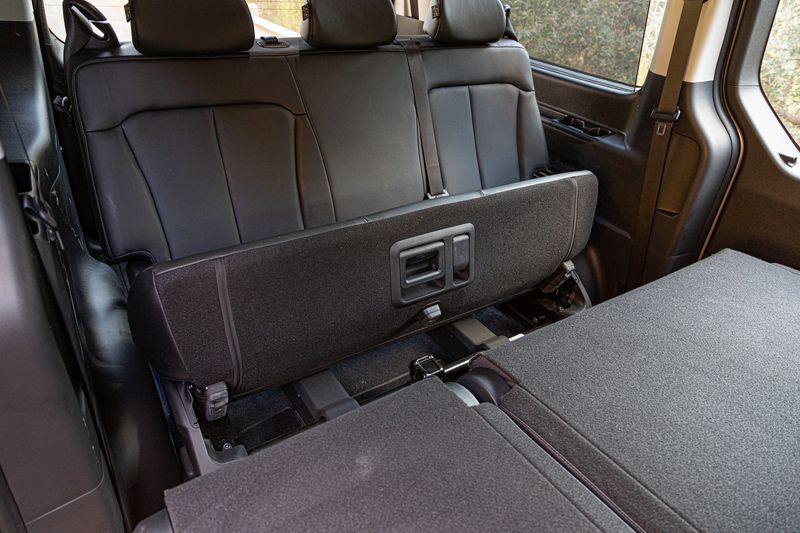
The 2nd row of seats can fold down, while the 3rd row can be pushed forward to increase boot space.
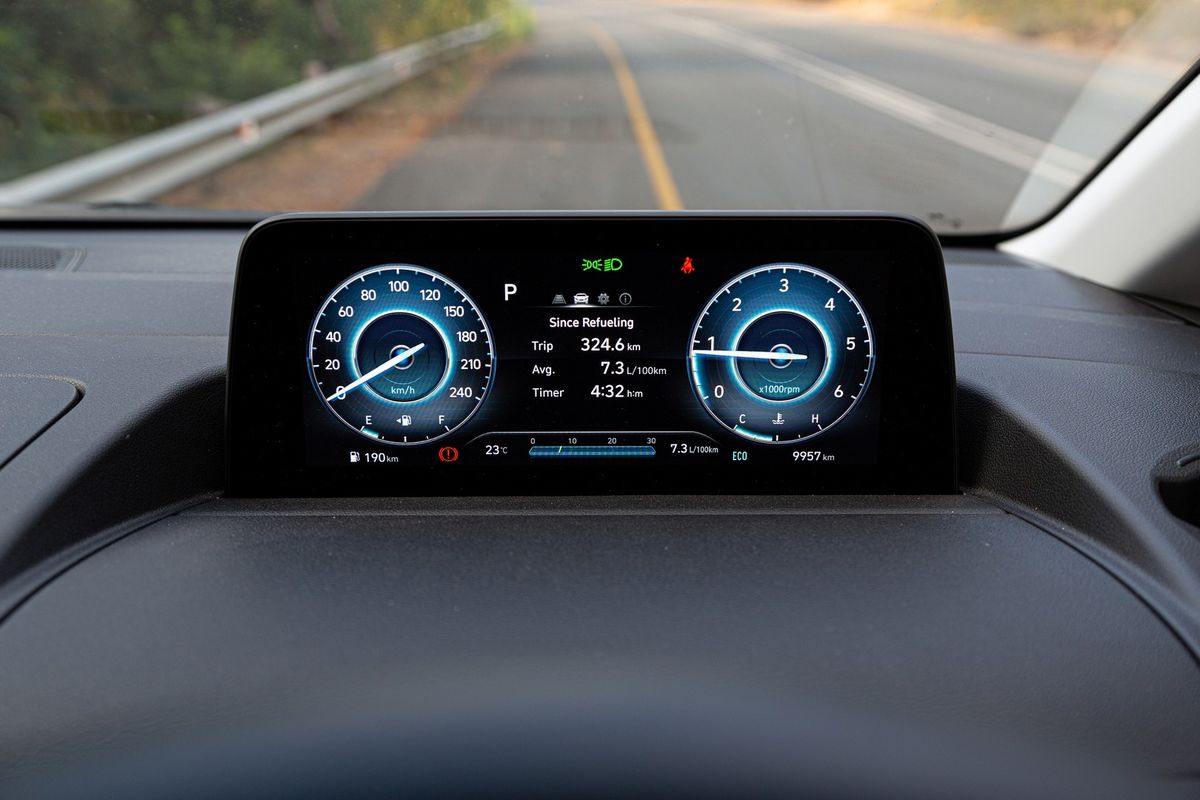
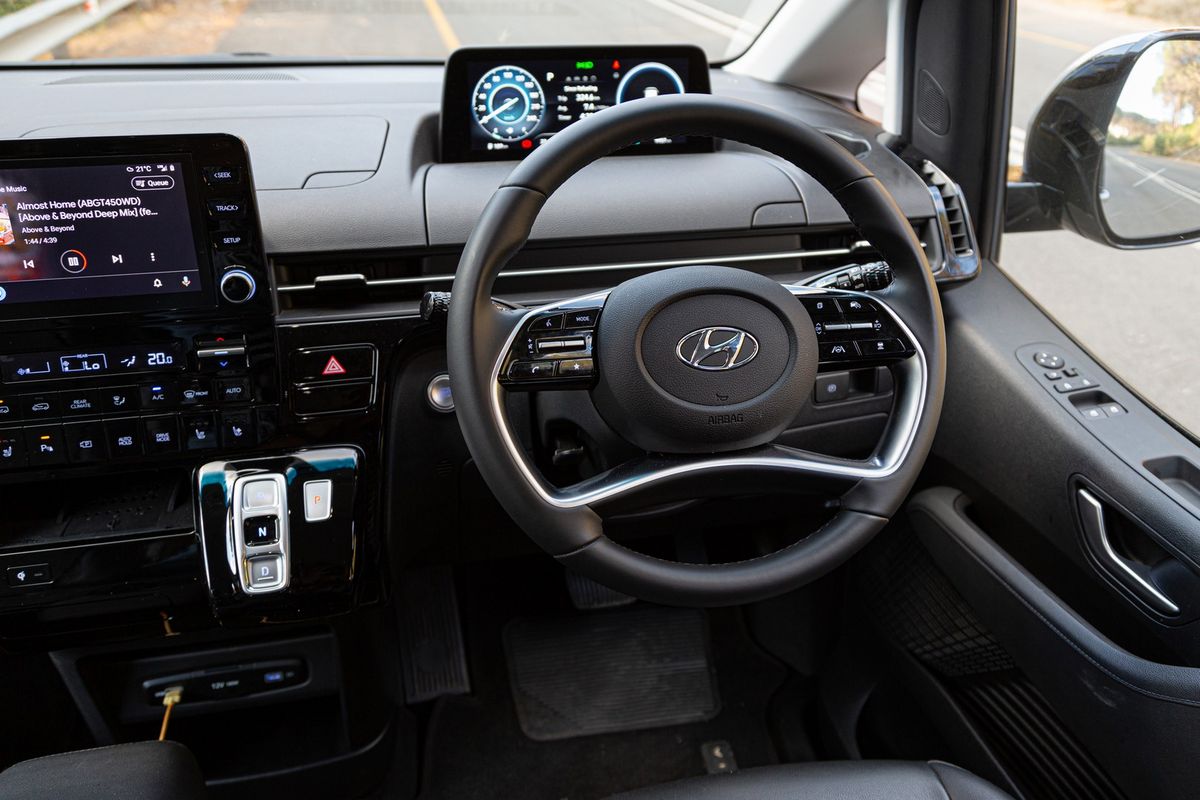
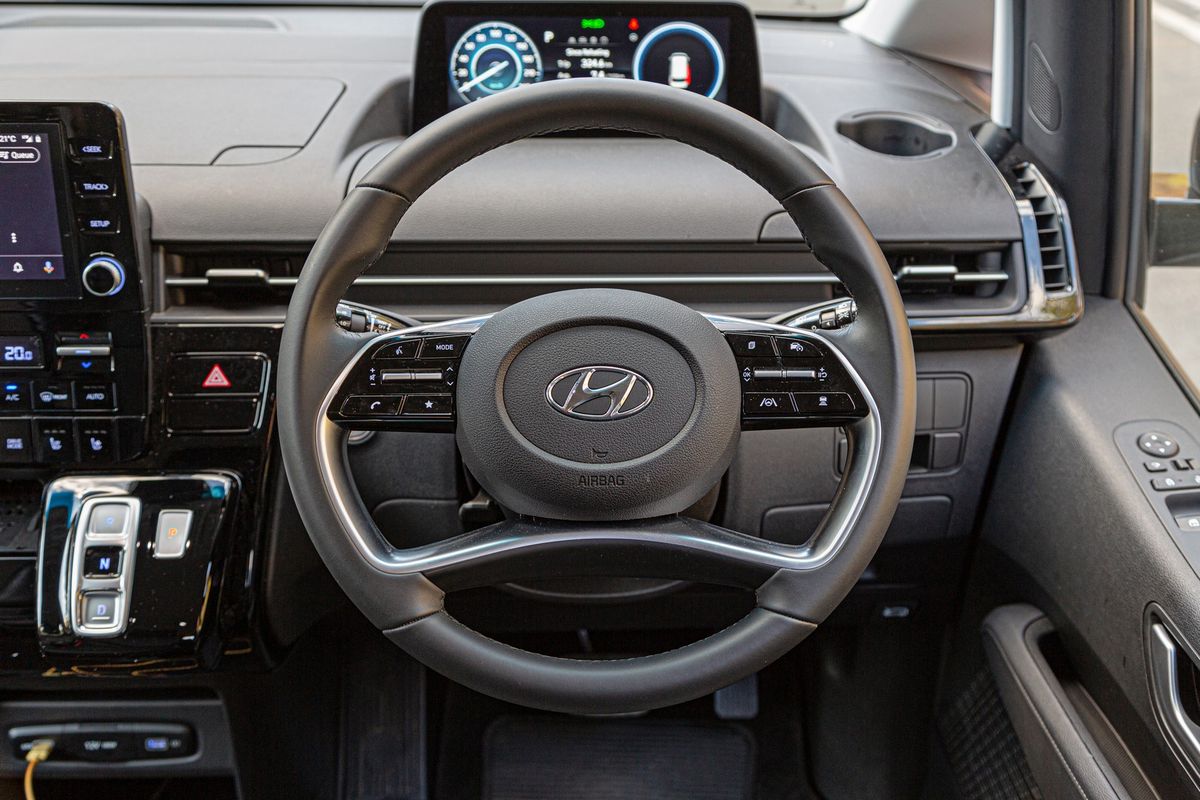
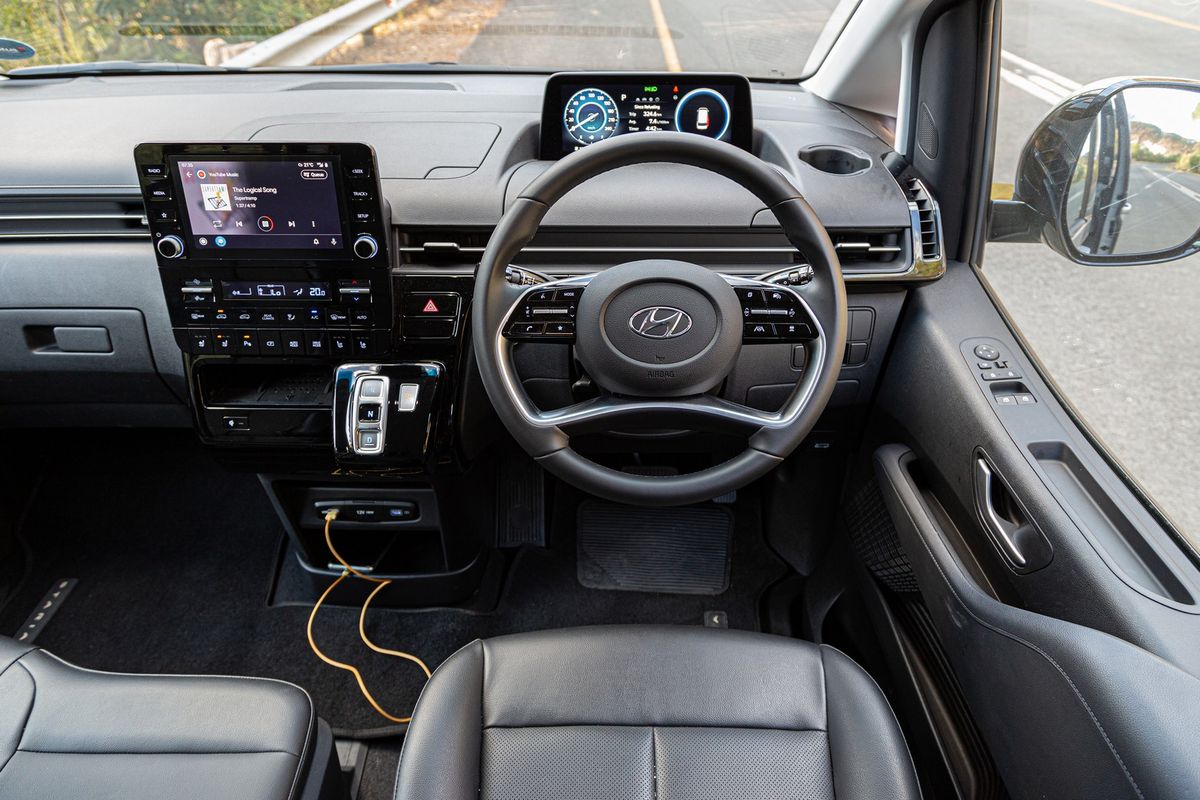
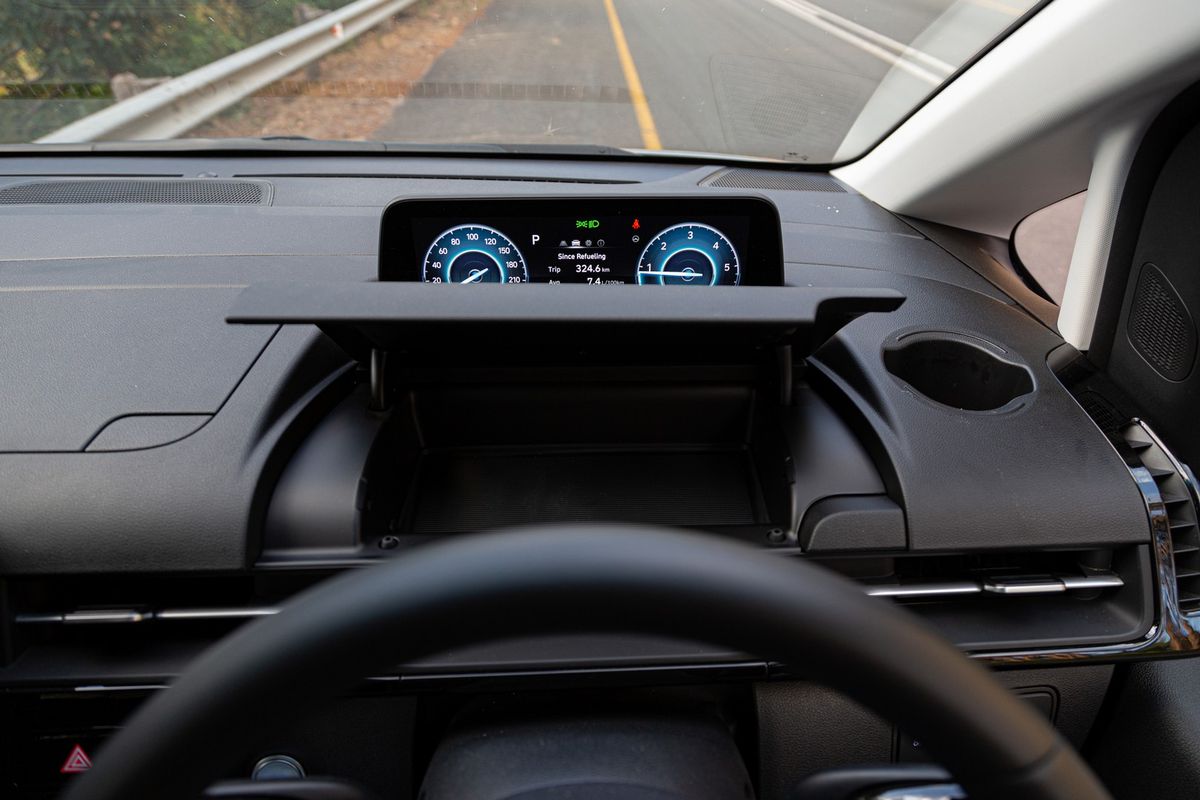
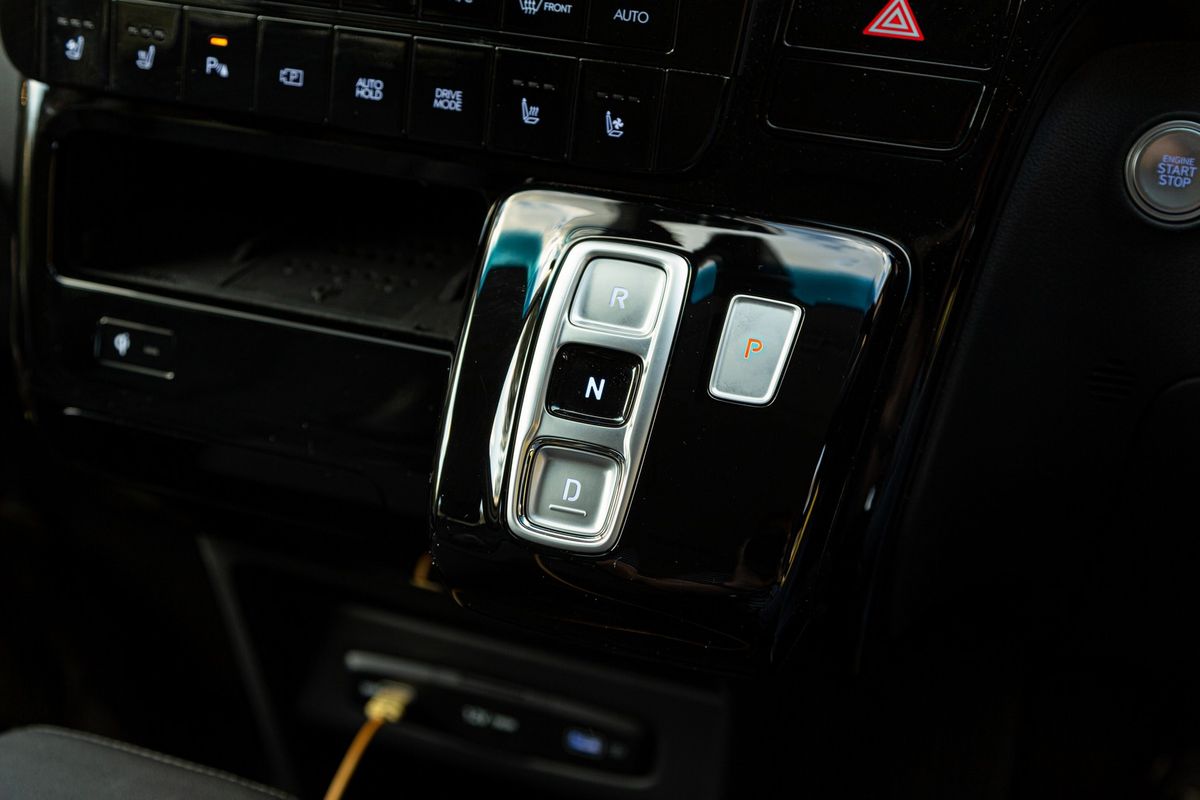
As expected, the driving position is high – it feels as if you climb up into the cabin (although it’s not as much of an ascent as when you need to ingress a ladder-frame-based large SUV). Visibility out of the cabin is excellent, with huge windows enhancing the airiness of the already spacious interior. From the driver’s point of view, the digital instrument cluster is refreshingly minimalist and there’s a simple drive-by-wire button arrangement instead of a traditional transmission lever, which makes the fascia seem more expansive. Simply put your foot on the brake, press D (to select drive) and away you go.
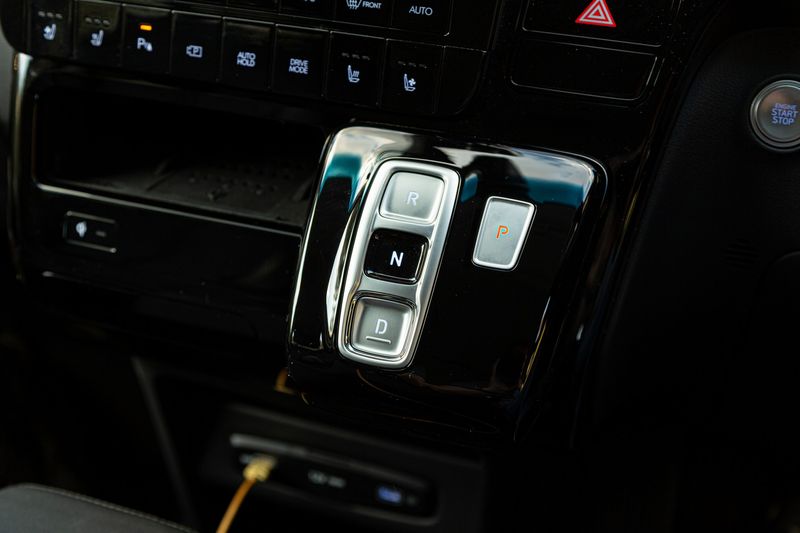
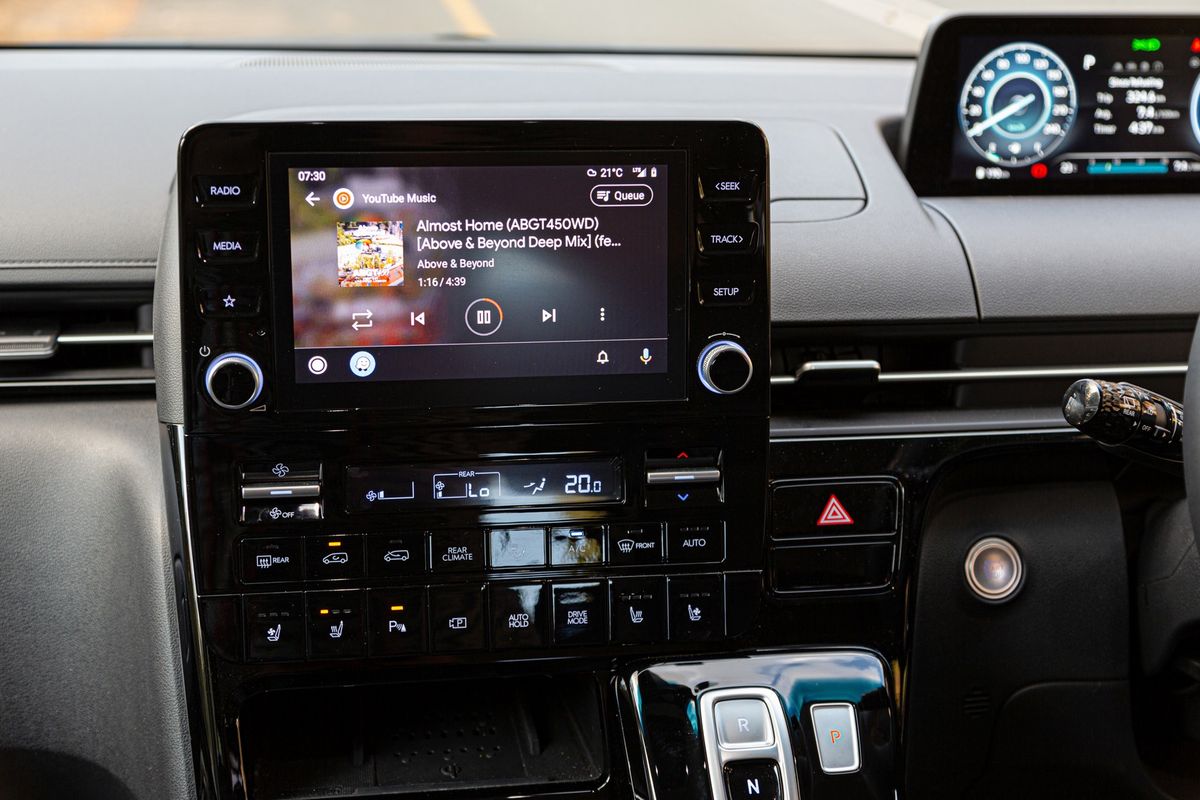
As is the case in the Palisade premium SUV, the Staria has a transmission console. So simple, so uncluttered.
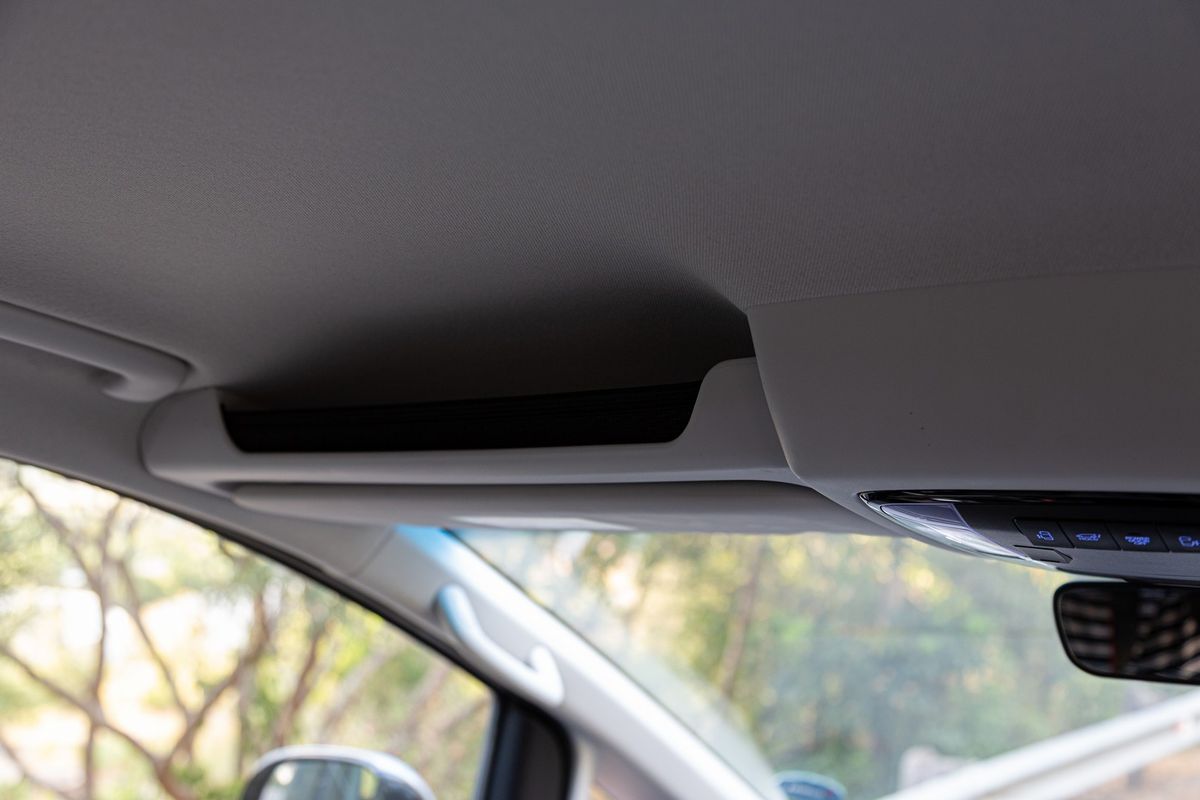
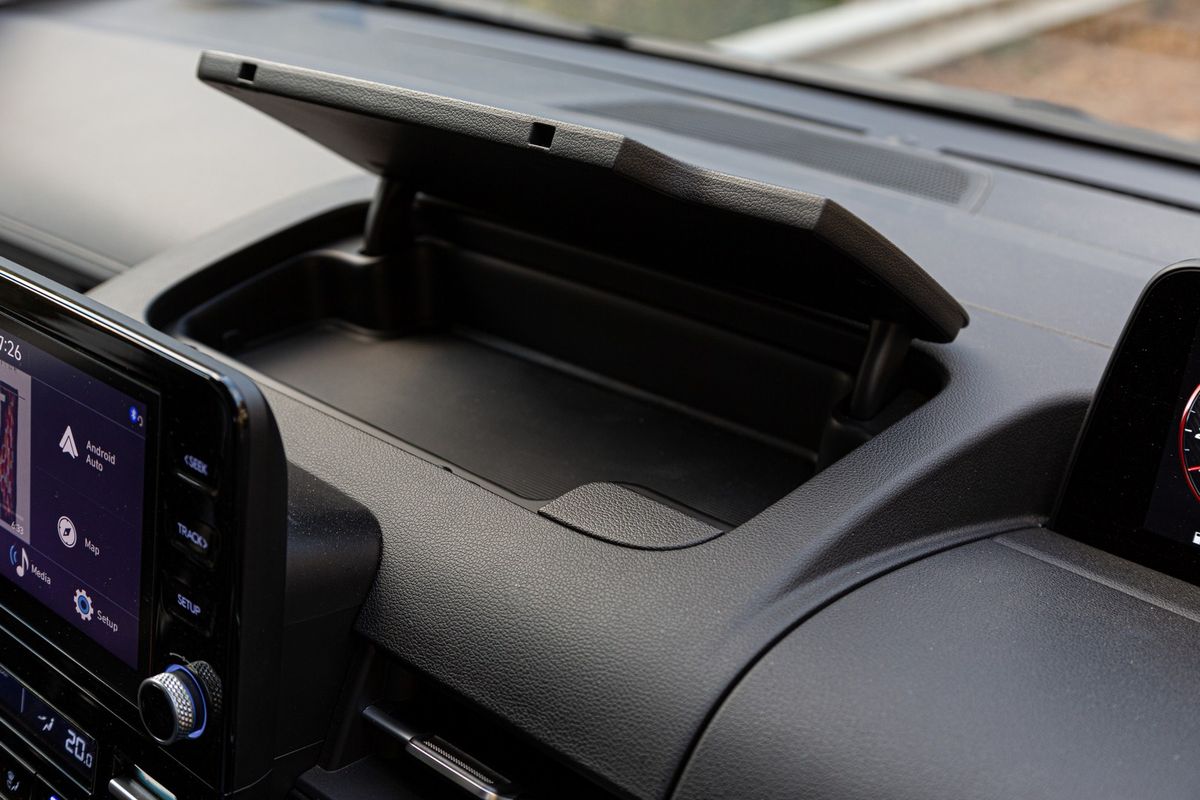
The multitude of in-cab storage spaces impressed us most. There’s simply a bin and a pocket for everything. The dashboard has not one, but two storage bins, which we used to store our road-trip snacks, plus overhead storage bins (positioned behind the sun visors) are provided for the driver and front passenger.
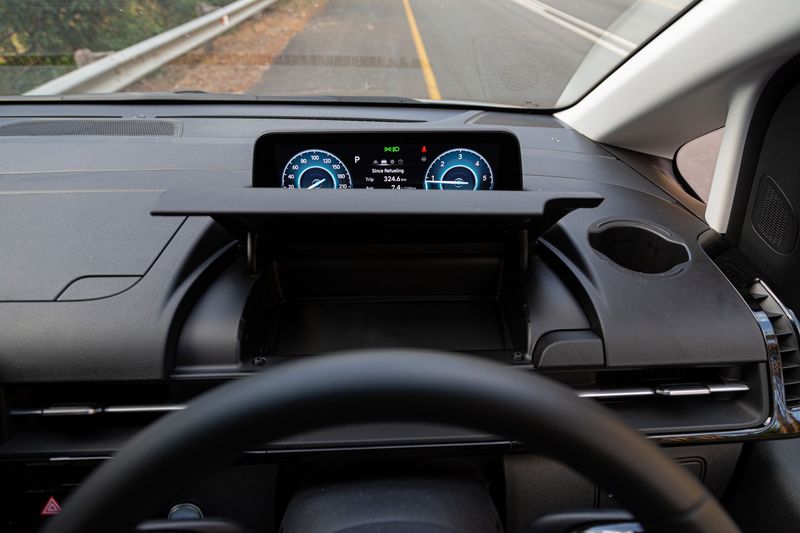
The oddments bin in front of the steering wheel is for occasional use (when the vehicle’s stationary).
Performance and Efficiency
Underneath the Staria’s aerodynamically sculpted nose lies a 2.2-litre 4-cylinder turbo-diesel engine that produces 130 kW and 430 Nm. Power goes to the front wheels via an 8-speed automatic transmission. The engine does emit some of that typical diesel clatter, but once you’re inside the Staria’s cabin (and the minibus is on the move), the cabin is quite hushed and well insulated from engine-, road- and wind noise. We would have liked some form of manual override for the transmission (for the odd occasion when you may want to boss the pre-programmed shift pattern), but, to be fair, the ‘box does a good job on its own with smooth, responsive ‘shifts when you need to summon brisk overtaking acceleration.
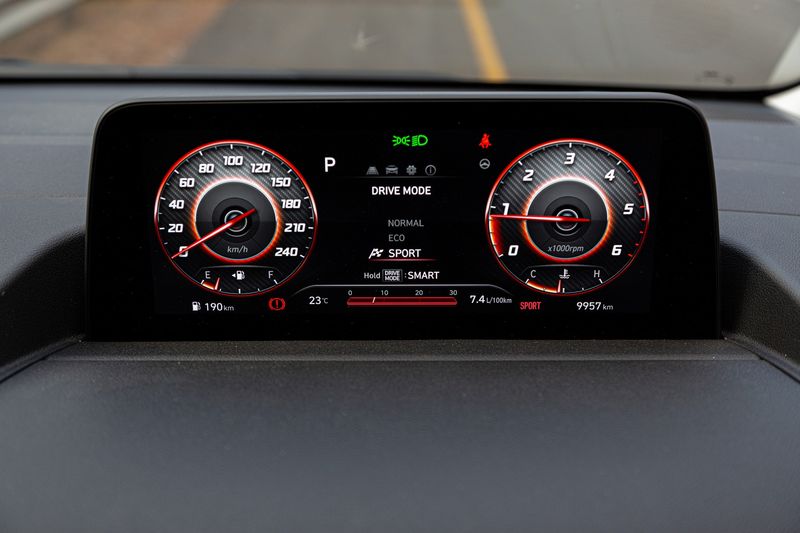
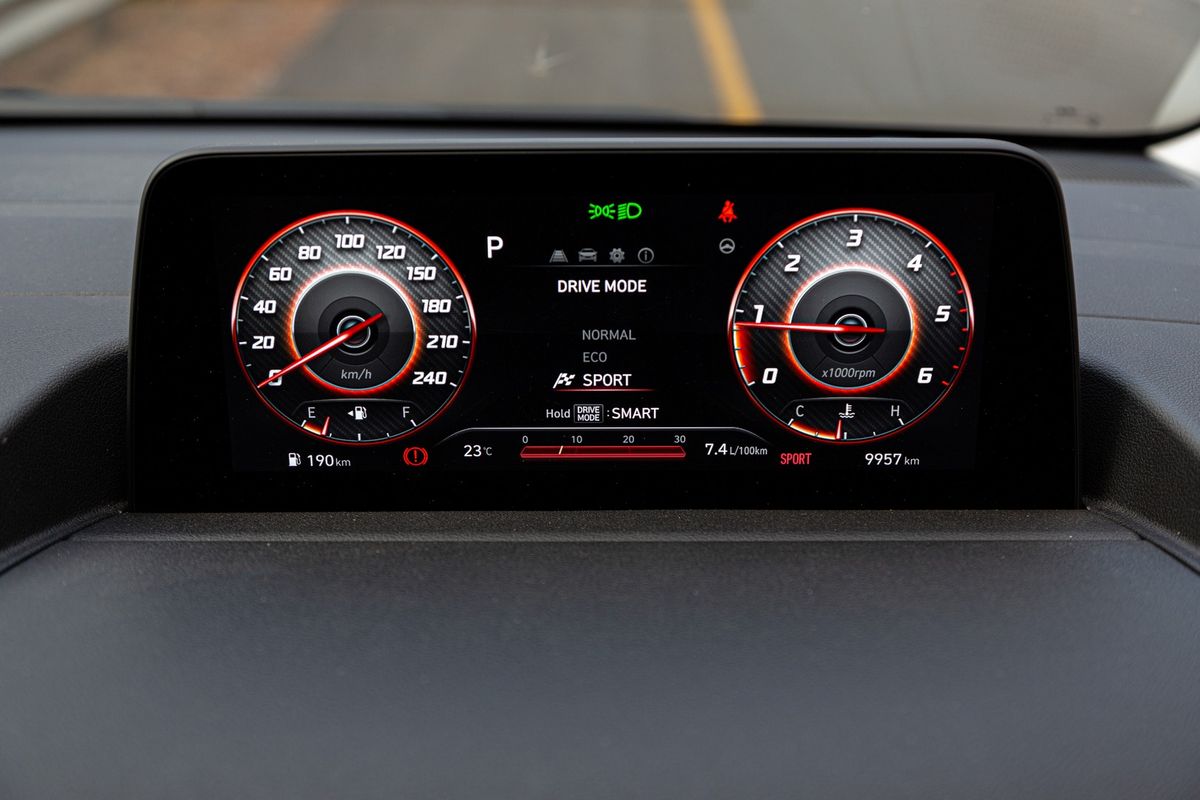
When you’re in a rush to “get the kids to the game on time”, you may engage a Sport drive mode in the Staria.
The Staria also comes with some well-mapped drive modes – and yes, although this is a practical MPV, you can feel the differences between the settings. Each of them coincides with a distinct colour theme on the digital dashboard. Comfort, Eco, Sport and Smart+ are self-explanatory; Sport makes the engine a bit more responsive and tends to delay upshifts a little, Eco dials things back considerably for a relaxed trip, while Smart+ conveniently does all the thinking work for you.
We did not hustle the Staria along, but the fuel consumption was really good. Hyundai claims 8.7 L/100 km for the combined cycle, but we saw the Staria sipped under 8 L/100 km – at some point in the test, the figure dropped to 7.3 L/100 km.
Comfort and Features
The array of standard equipment on the Hyundai Staria is generous and what’s even more impressive is that this Elite derivative’s spec is comprehensive… even though it’s not the top-of-the-range derivative. If full-house spec is what you’re looking for, the Luxury version boasts even more nice-to-haves, such as heated/ventilated seats for all passengers, a panoramic glass roof, a swivelling seating arrangement for the 2nd and 3rd row, as well as a Bose audio system.
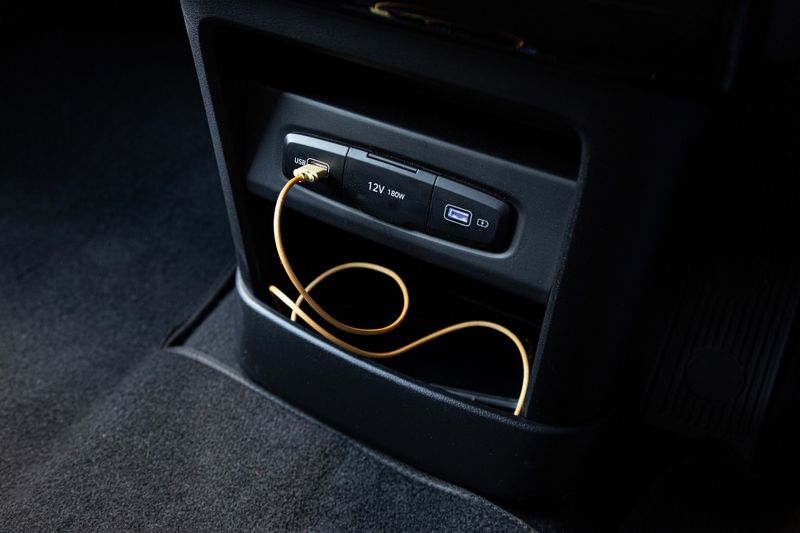
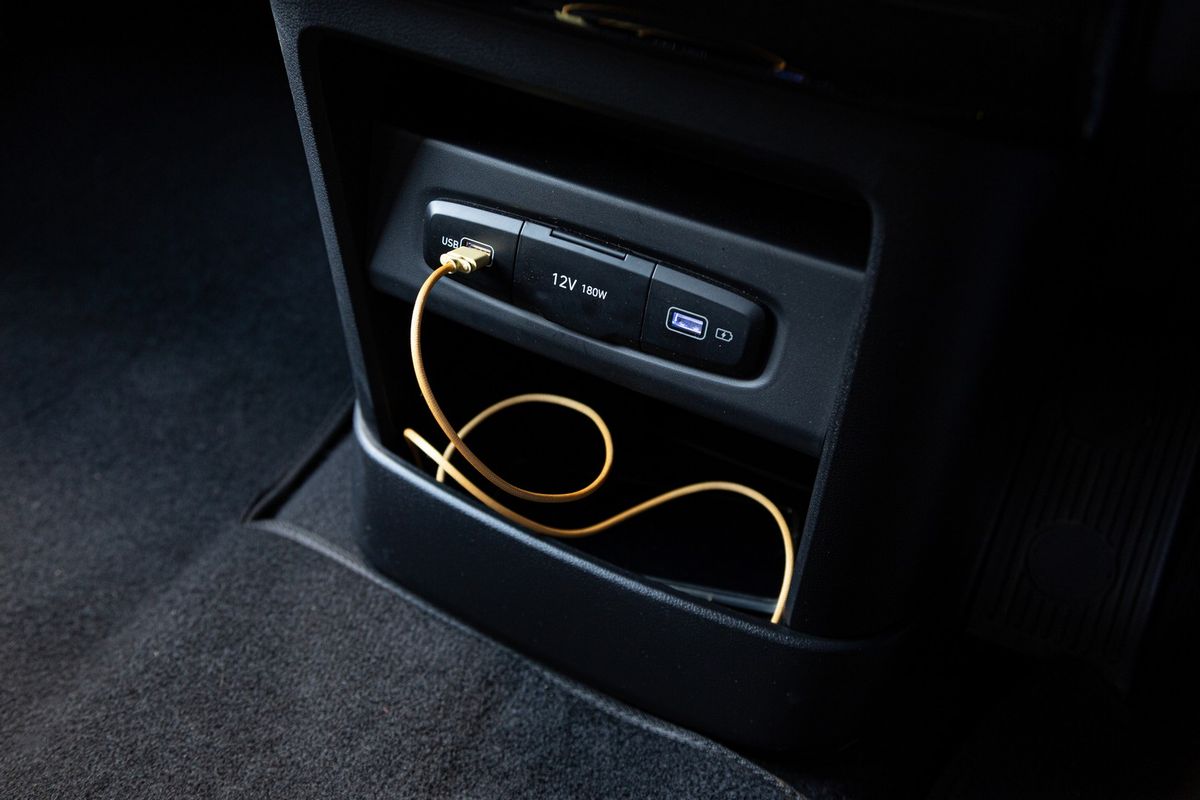
Rear passengers benefit from a pair of USB ports and a 12V power outlet.
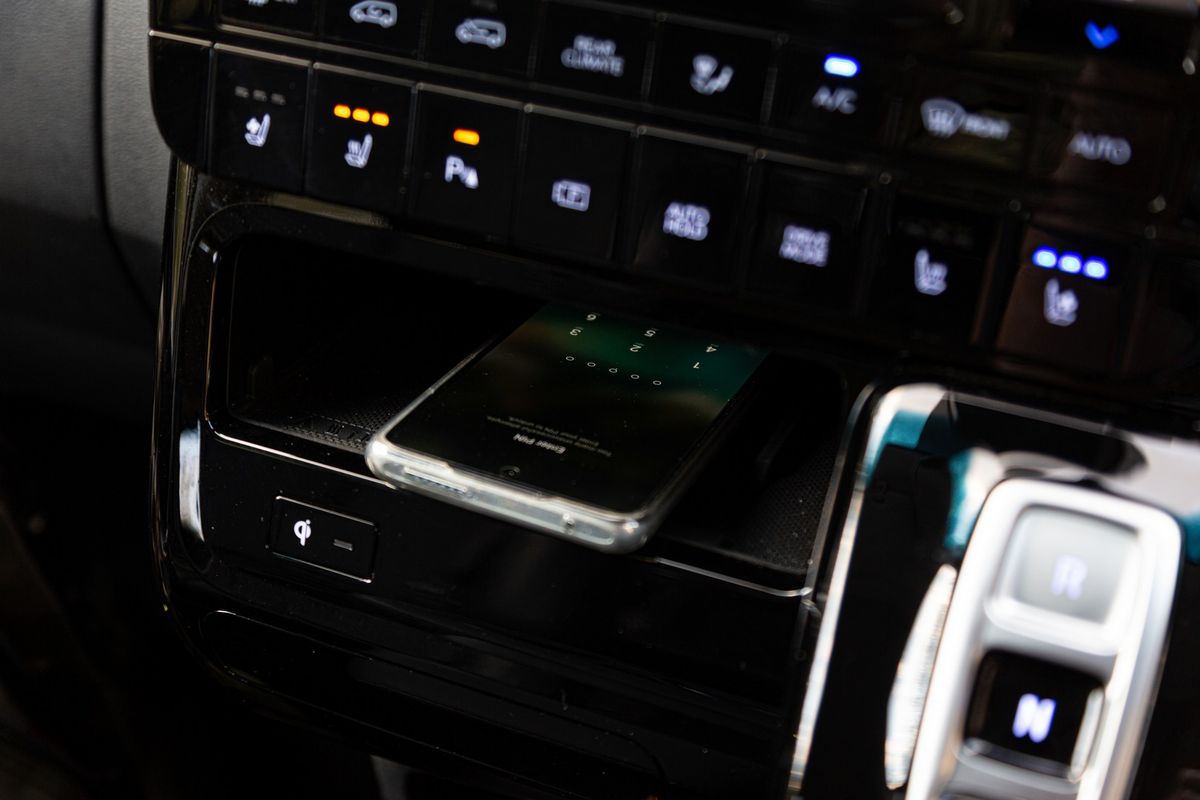
Back to the Elite derivative and for the tech fundis, you’ll be pleased to read that there are USB ports for all three rows, a wireless charging pad, as well as Apple CarPlay and Android Auto connectivity. The infotainment system works well, but the glossy black plastic felt a touch cheap; it was an anomaly, given that the rest of the interior felt reasonably upmarket and well screwed together.
Both the driver and passenger get heated and ventilated seats, the latter being a nice-to-have on a sweltering hot day in South Africa. The tailgate and the sliding doors operate automatically, you can open/close them at the touch of a button.
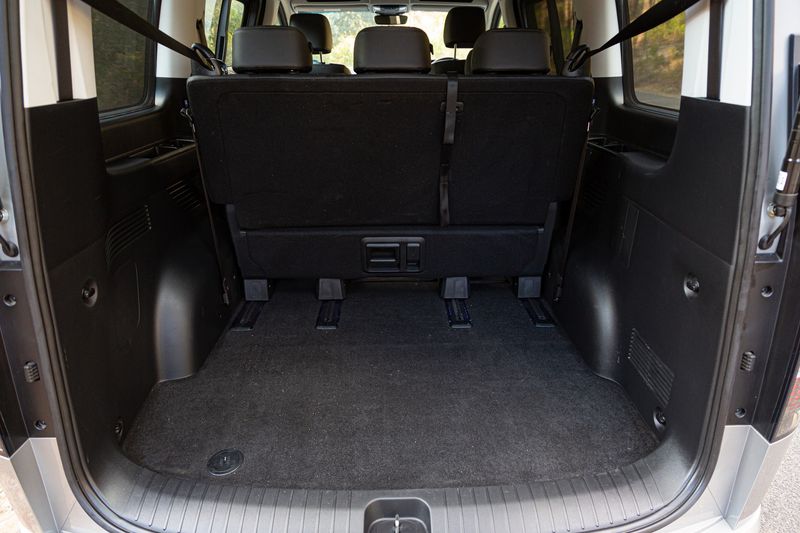
The load bay is capacious. Note the 3rd row of seats can be moved forward and backwards.
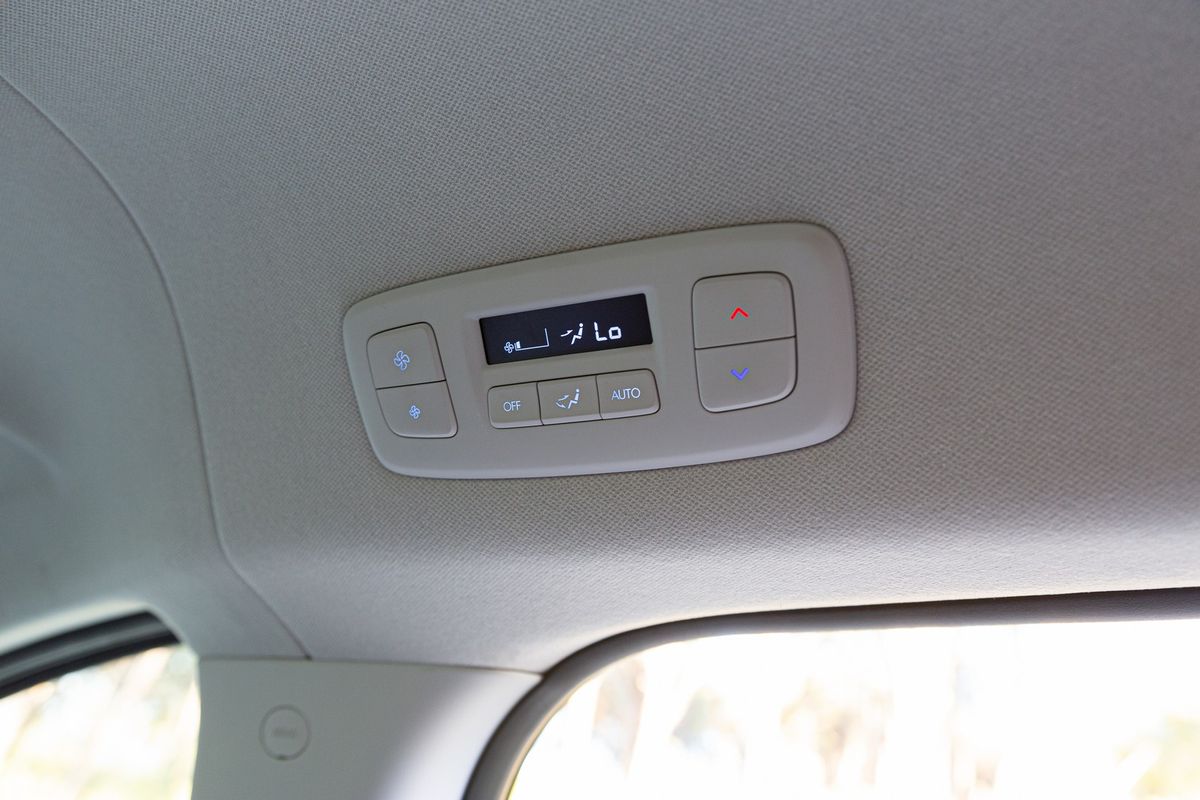
We did notice the Staria’s electrically powered tailgate had this annoying habit of closing automatically less than a minute after it had been opened (either manually or via the remote key fob); believe us: it’s a source of irritation when you need to pack/unpack several items in one go. Thankfully, there’s a switch in the load bay that will override that (safety) function. There are privacy blinds for the second and third rows of seats and rear ventilation controls as well.
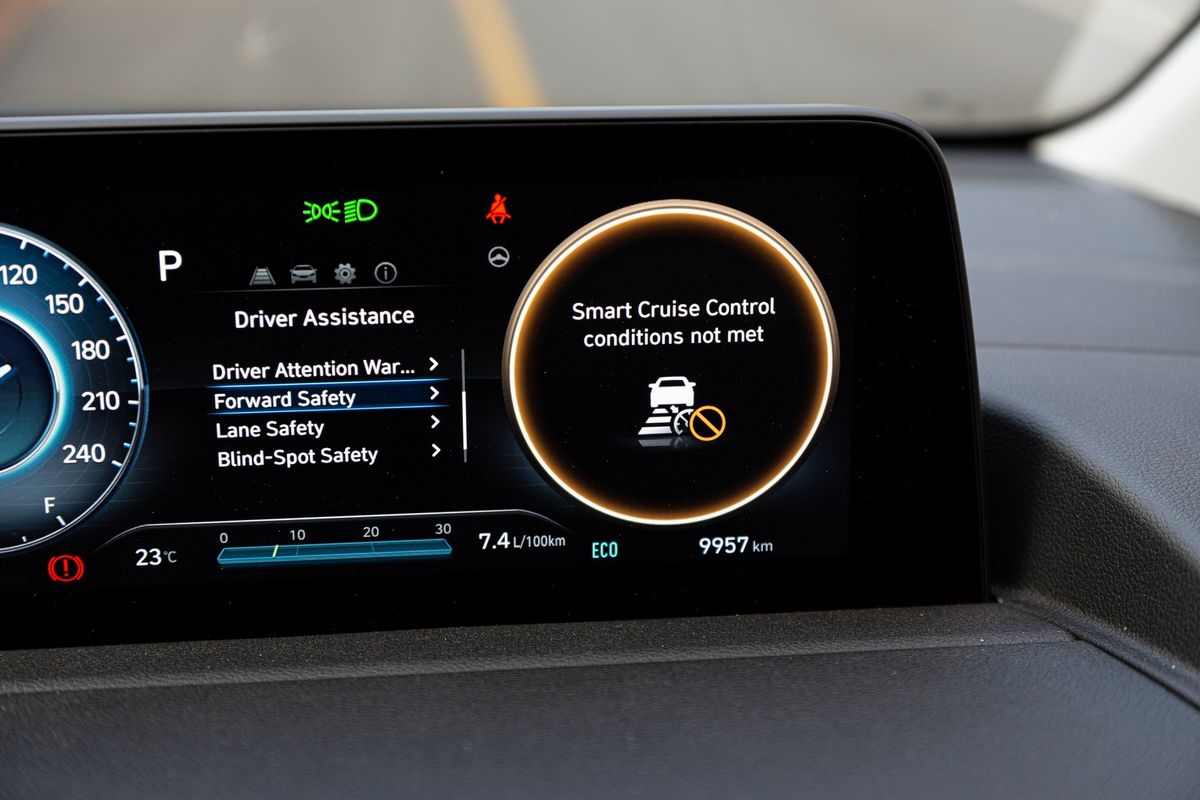
In terms of safety, the Hyundai Staria ticks the boxes for passive and active features. There’s also a degree of semi-autonomous capability, with radar-guided cruise control, lane-keeping and active steering assist. With all three systems engaged on the national highway, the Staria was able to stay in its lane while observing a safe following distance. The vehicle will also automatically brake if it feels a collision is imminent and the driver has not reacted quickly enough.
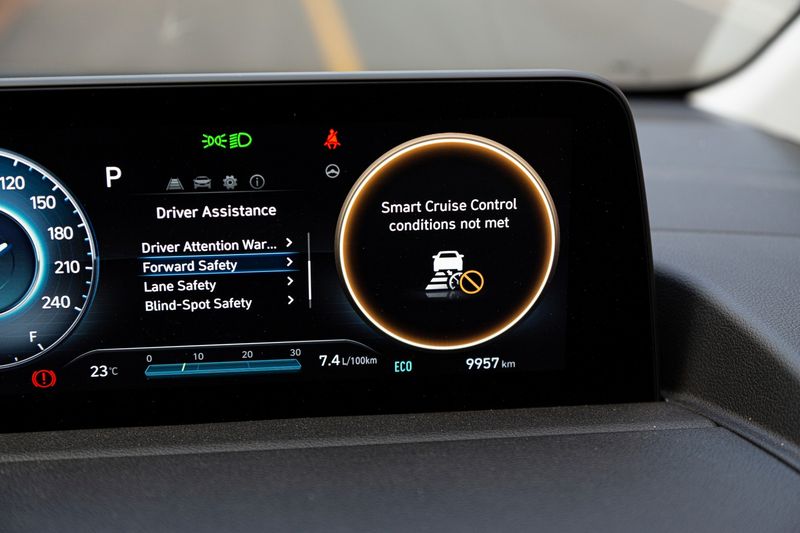
Smart cruise control (deactivated here because the Staria was not moving) takes so much drudgery out of long-haul driving.
Passengers who are unaware of how the Smart Cruise Control function works might be initially alarmed when they see you take your hands off the ‘wheel (to reach for a snack), but the Staria’s autonomous driving tech works beautifully. It surreptitiously adapts the Hyundai’s road speed to that of vehicles travelling ahead of it and subtly keeps the vehicle from wandering out of its lane. Don’t worry, the vehicle will sound an alert if your hands are off the ‘wheel for more than a few seconds, so keep at least one hand on the tiller at all times. Other noteworthy safety features include tyre-pressure sensors, parking sensors, blind-spot monitoring, a reverse camera with cross-traffic alert and 6 airbags.
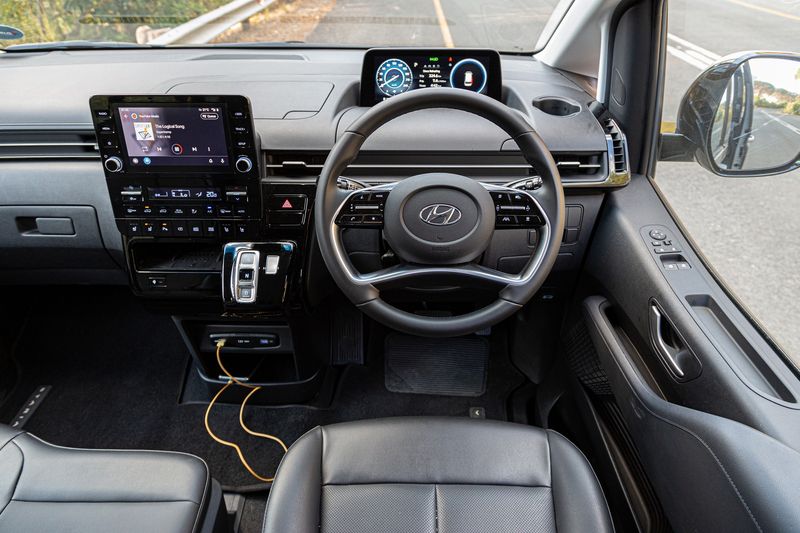
Everything is logically and clearly laid out in the Staria’s cabin
Ride and Handling
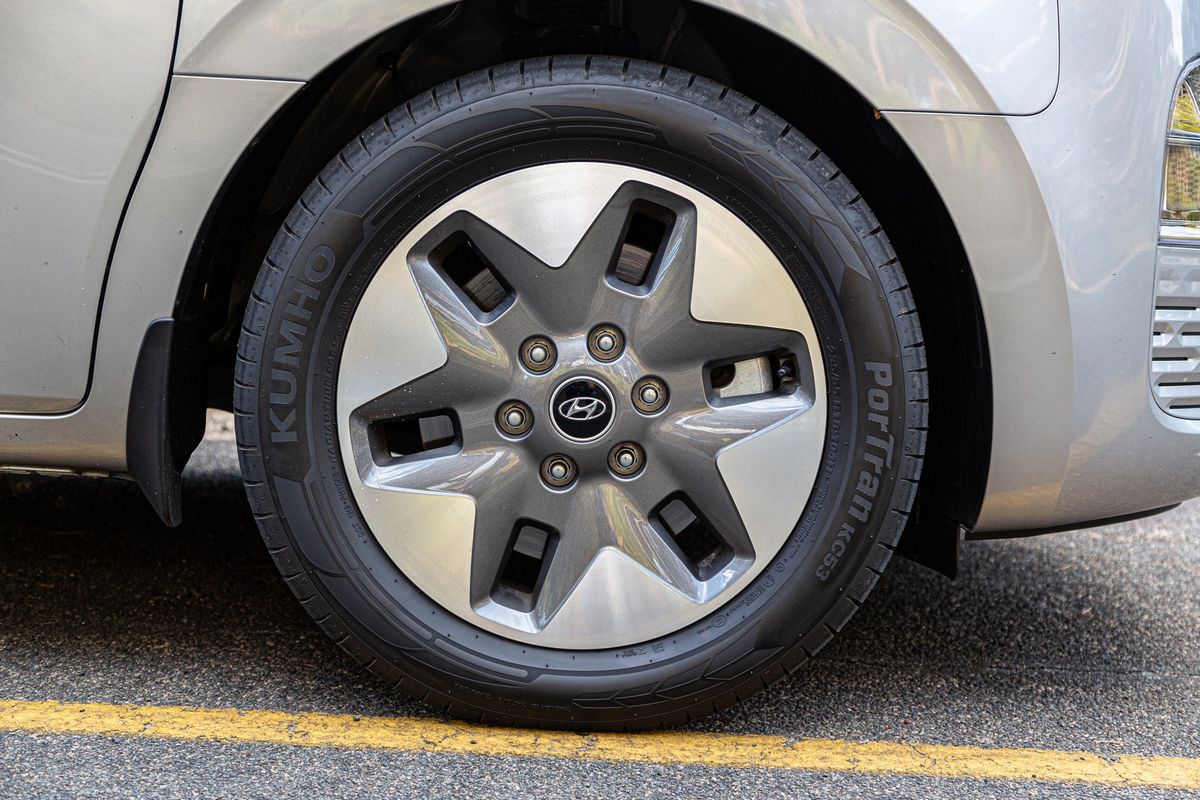
Beyond those futuristic looks lies not an antiquated ladder-frame chassis, but a platform shared with the Hyundai Santa Fe and Palisade, both of which are thoroughly modern unibody SUVs. This means that, unlike its H1 predecessor, the Staria feels notably more car-like and, therefore, more luxurious to drive. The minibus’ driving experience genuinely evokes a feeling of comfort and refinement. If we had to nit-pick, we’d say the 18-inch wheels/tyres emit a hint of road noise.
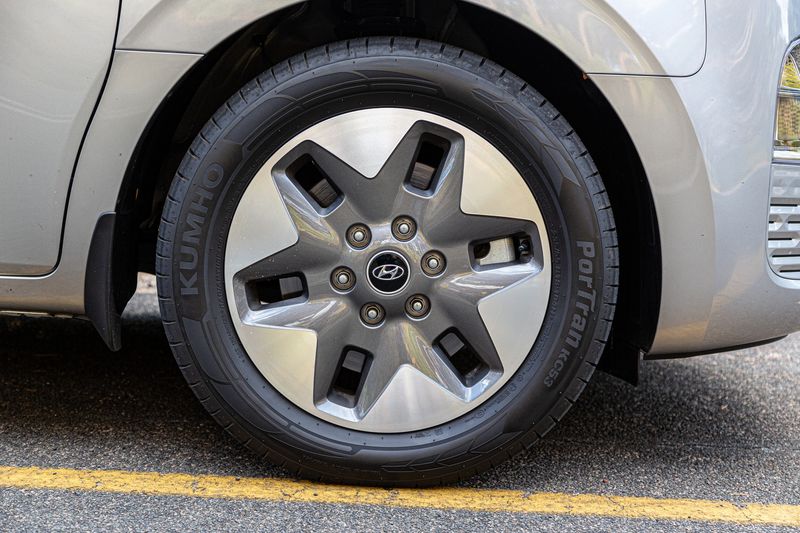
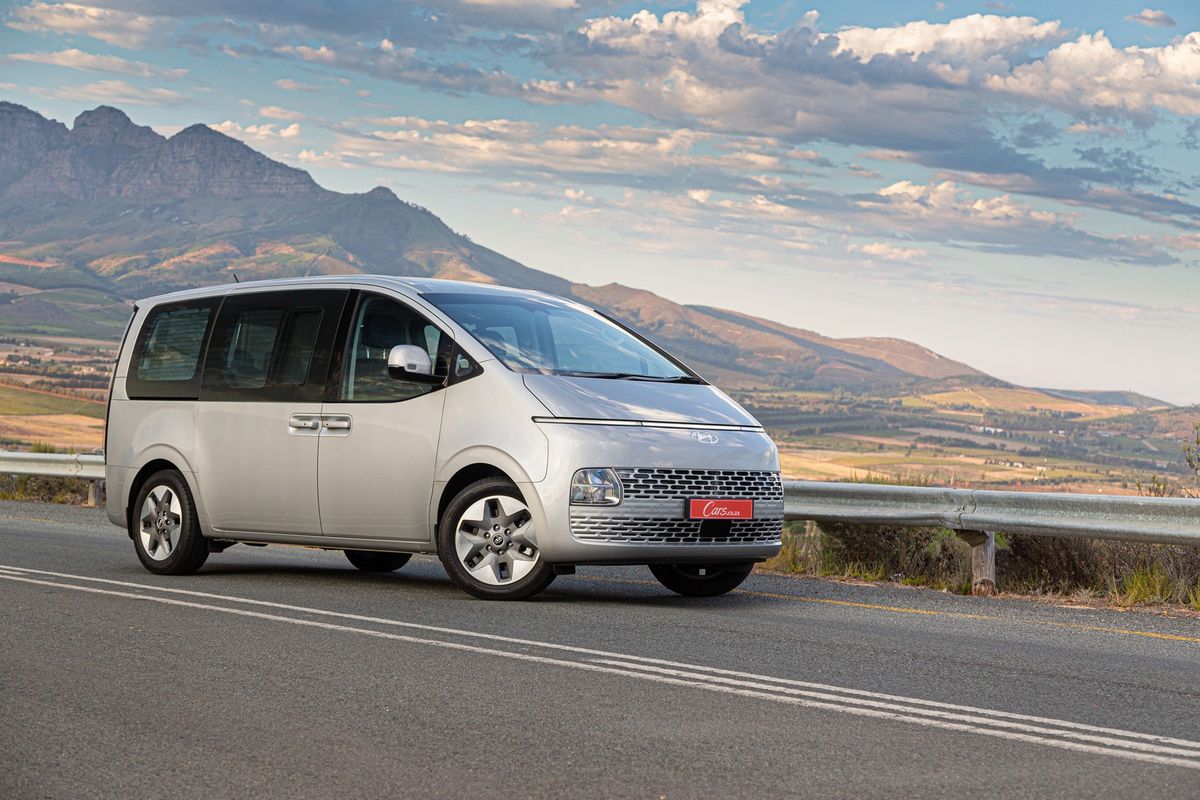
The Staria 2.2D Elite rides on handsome 18-inch alloys.
Due to its large proportions (a 5-metre length is not insignificant), you’d think it would be a challenge to manoeuvre the Staria on parking lots and in the confines of the city. However, the combination of light and quick steering, not to forget the convenience of exterior-view cameras and parking sensors, makes it a lot wieldier than you’d expect a 9-seater bus to be.
The ride quality is fair, with the Hyundai’s suspension absorbing most of the road imperfections easily. The longer wheelbase arguably helped to smooth out some of the undulations too, as did the plump 235/55 R18 Kumho tyres. In fact, the only reminder we had that we were driving a large vehicle was when we had to execute an emergency stop – unsurprisingly, a minibus takes a bit longer to scrub off speed than a crossover! Thankfully the brakes proved well up to the task.
Price and after-sales support
The Hyundai Staria 2.2D Elite retails R959 900, which includes a 7-year/200 000 km manufacturer warranty, a 6-year/90 000 km service plan a 7-year/150 000 km roadside-assistance plan.
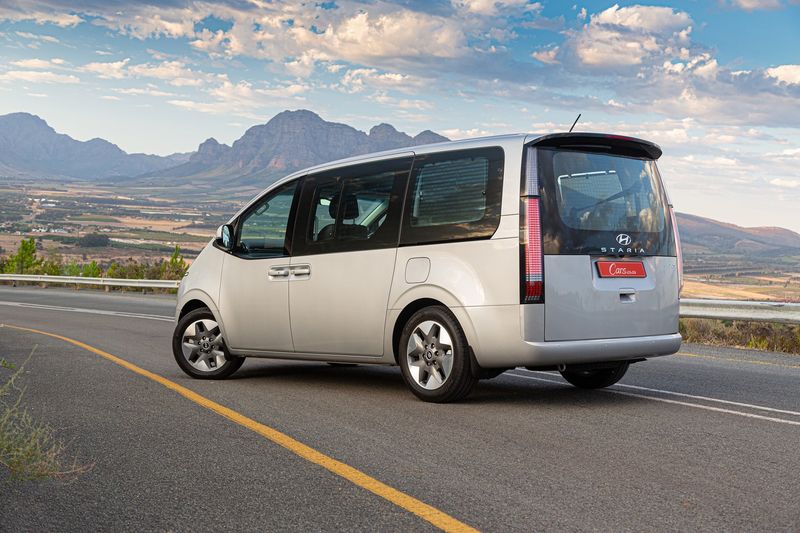
Verdict
Space-age styling aside, the generously-equipped 2.2D Elite (the 2nd most expensive offering in the 5-variant Staria line-up), is an accomplished people-mover. If your family are fanatical cyclists or surfers, then this could be the vehicle for you. Look, the derivative costs just under R1 million – for a little more money, you can also get an 8-seater Palisade, which is a “big-rig” SUV – a more practical alternative is arguably the 5-seat Staria Multicab (with its enormous load bay).
But, if you must have a 8- or 9-seater, should you buy the Staria 2.2D Elite? People-movers have never been regarded cool and/or desirable – until now. The Staria takes the MPV concept and modernises it, without compromising on the basic functionality and practicality. If you’re determined to have an all-encompassing family bus that comes significantly cheaper than the established players from Volkswagen and Mercedes-Benz, then this model should be on your shortlist.
[helpful]
David Taylor

Having contributed to multiple motoring titles as well helping run the public relations machine of the Johannesburg International Motor Show, Dave has experience in both sides of the motoring industry. He's based in the Western Cape and is responsible for the performance testing, photography & weekly YouTube news for Cars.co.za.