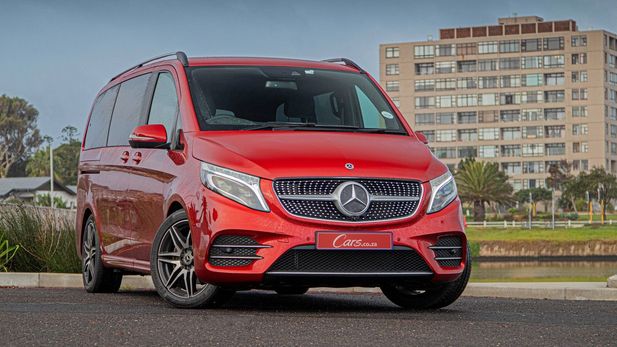
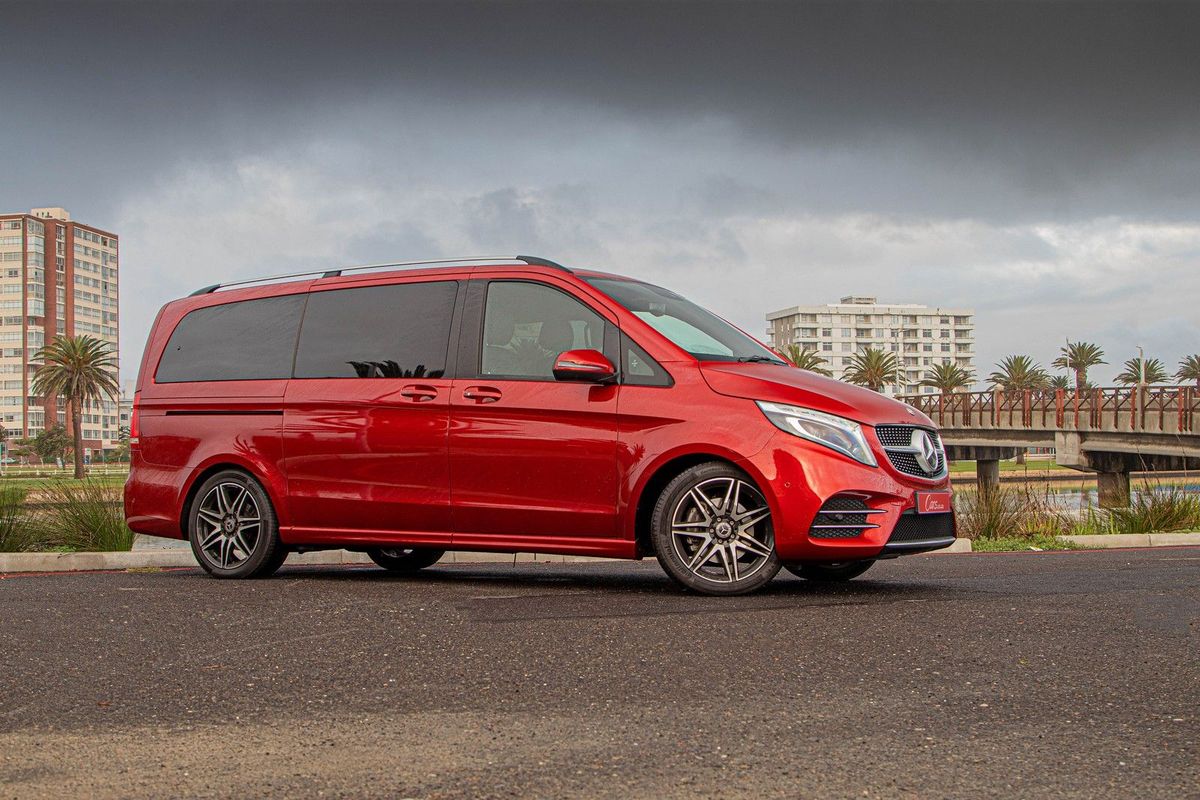
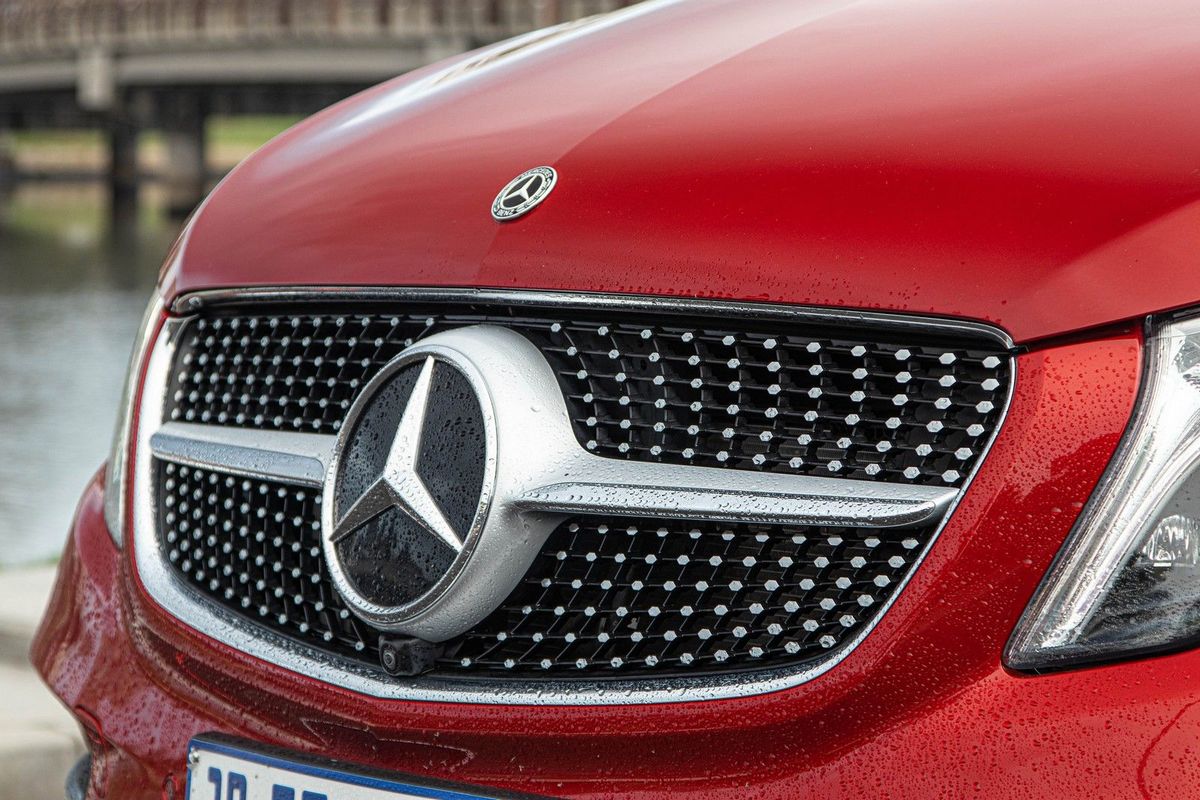
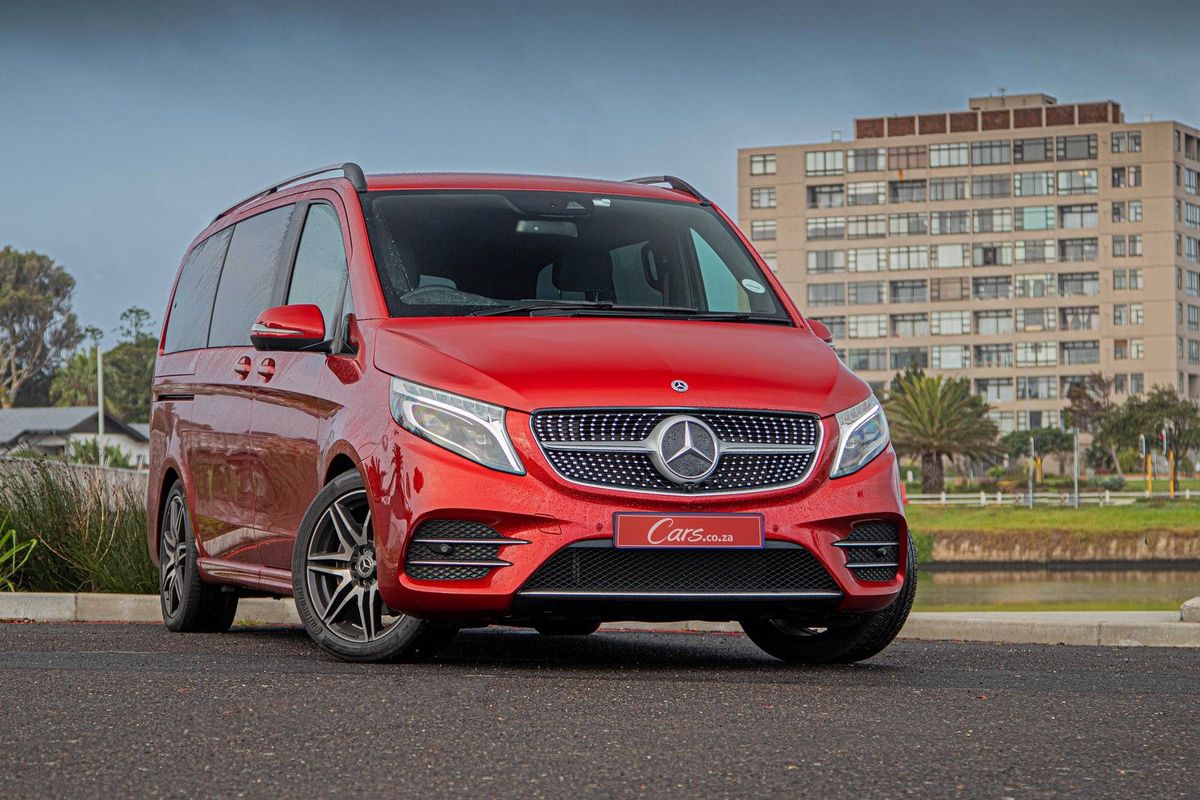
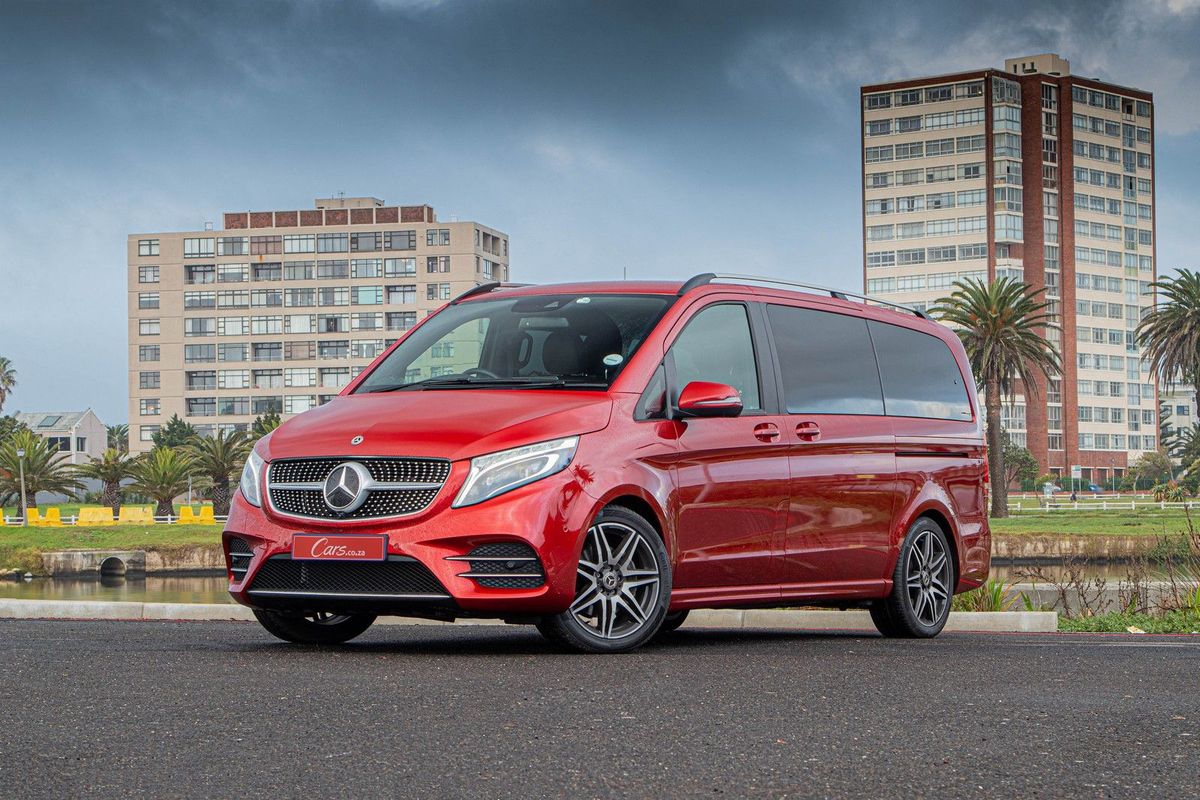
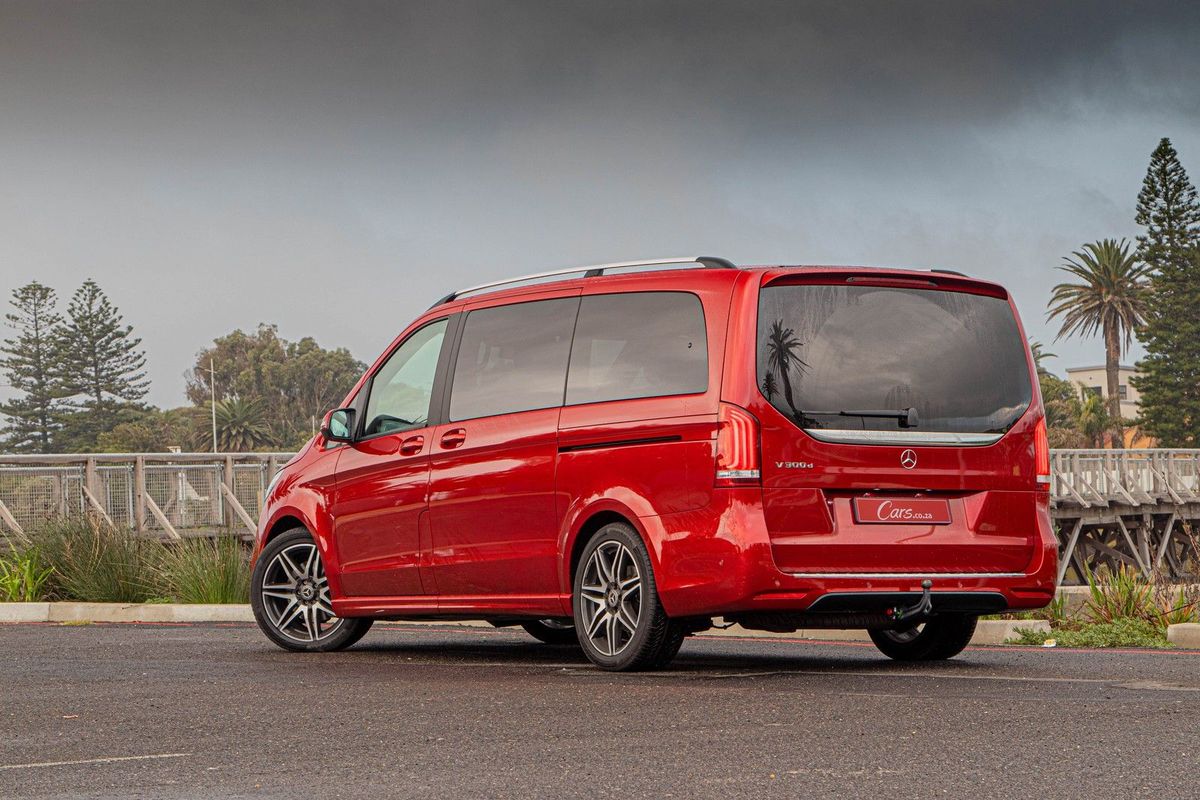
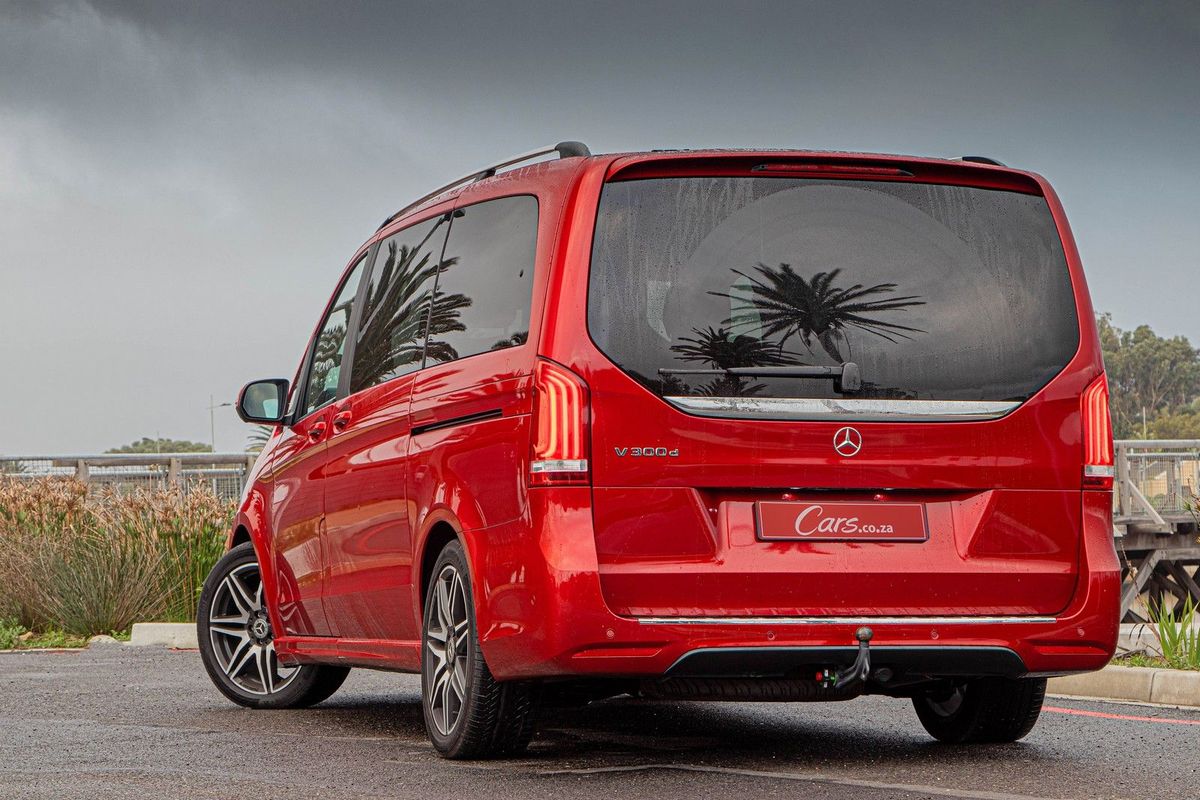
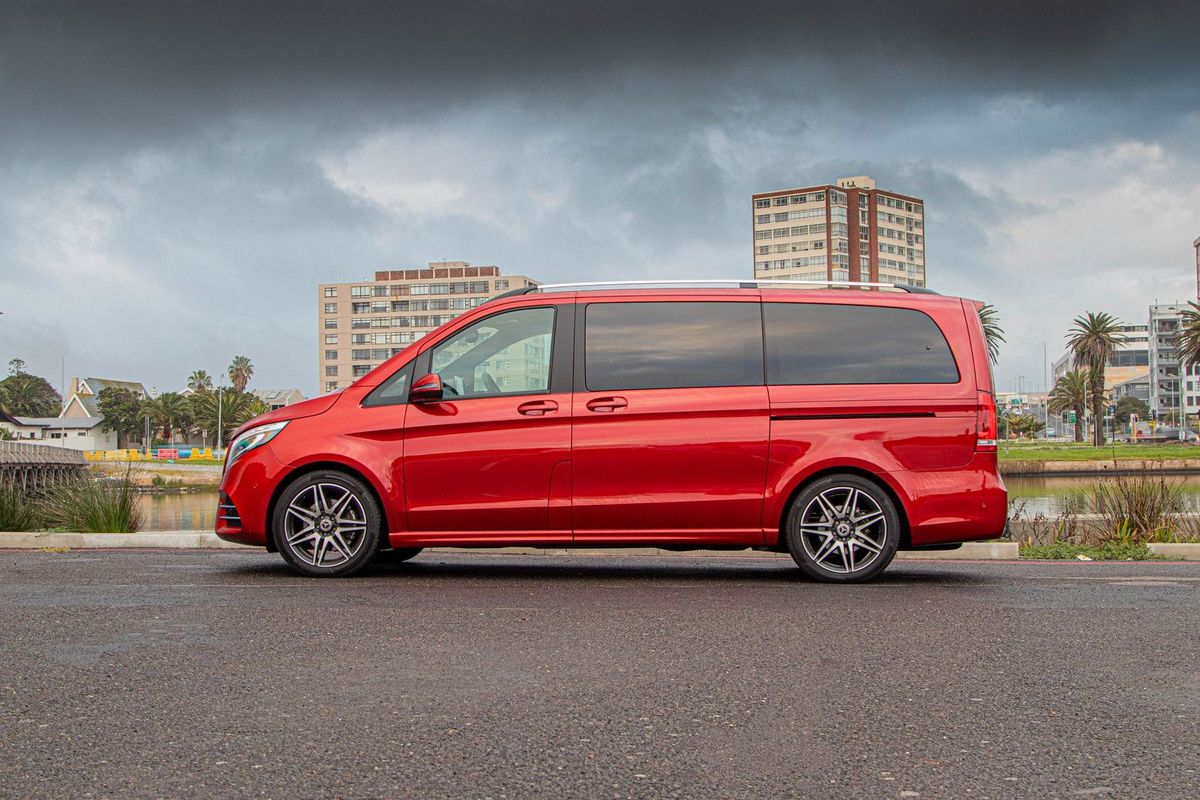
The desirability of Mercedes-Benz’s V-Class luxury minivan was recently enhanced through the introduction of a new engine/transmission combination and the addition of several refinements. We spent some quality time with the range-topping V300d to find out whether it’s worth the (hefty) premium.
We like: Power/efficiency balance, luxurious
We don’t like: Eye-wateringly expensive, somewhat dated ergonomics
Fast Facts
- Model Tested: Mercedes-Benz V300d Exclusive
- Price as tested: R1 799 060 (July 2021, without options)
- Power unit: 2.0-litre 4-cylinder turbodiesel
- Power/Torque: 176 kW/500 Nm
- Transmission: 9-speed automatic
- Fuel economy: 8.8 L/100 km (claimed)
- Load space: 542 litres
Where does the Mercedes-Benz V300d fit in?
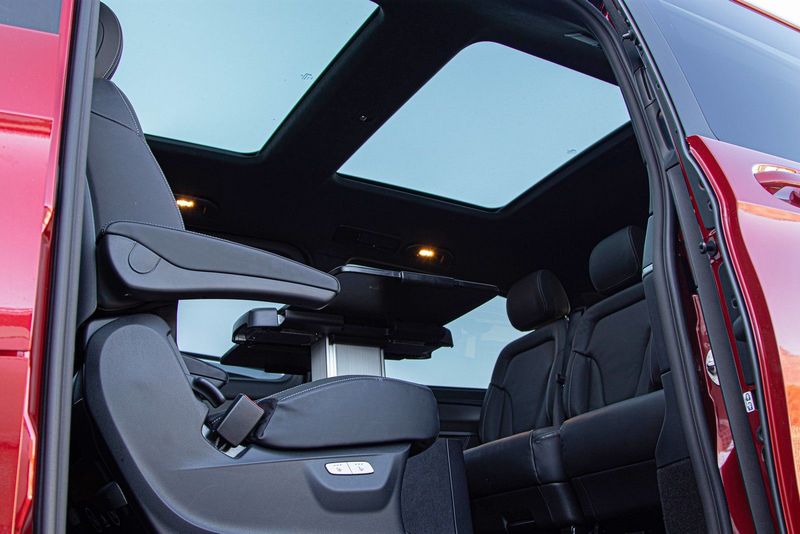
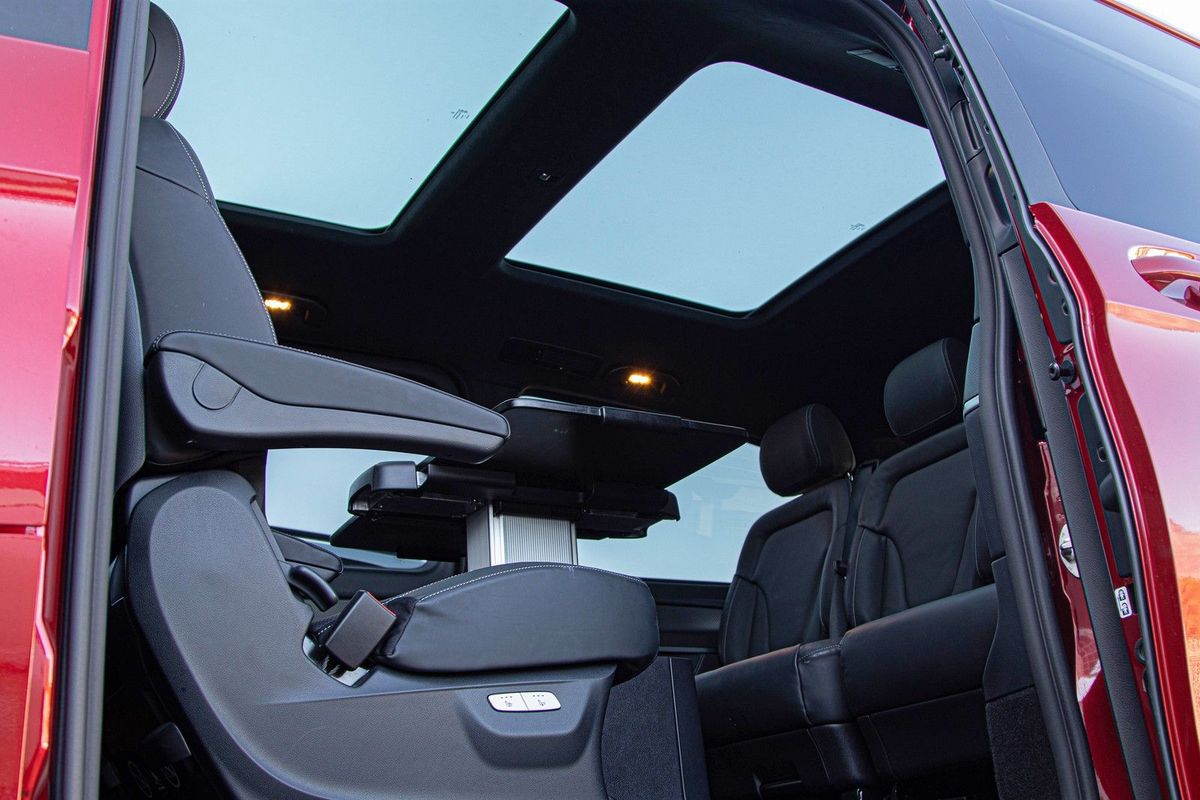
This is no mere people-mover… this V-Class has a panoramic sunroof, as well as heated/ventilated 2nd-row seats!
Mercedes-Benz and Volkswagen have found the South African market quite receptive to luxurious people-movers and although the V-Class and Caravelle are popular with VIP shuttle/transport operators, these family hold-alls offer plenty of appeal to well-to-do private individuals. The current V-Class was launched quite a while ago (in 2014), but ongoing refinements and updates have kept it in play.
The most recent update to the Three-pointed Star’s W447-generation minivan arrived in South Africa last year and coincided with the introduction of a new flagship derivative, powered by the marque’s 2.0-litre OM 654 4-cylinder turbodiesel engine, which is mated with a 9-speed automatic transmission. Named the V300d, it is offered in a choice of 3 trim levels, with the priciest version being the one you see here – the Exclusive. Priced at just under R1.8 million (without options), it is the most expensive 7-seat minivan you can buy in South Africa (and by some margin). Is it worth the outlay?
How the Mercedes-Benz V300d fares in terms of…
Performance and Efficiency
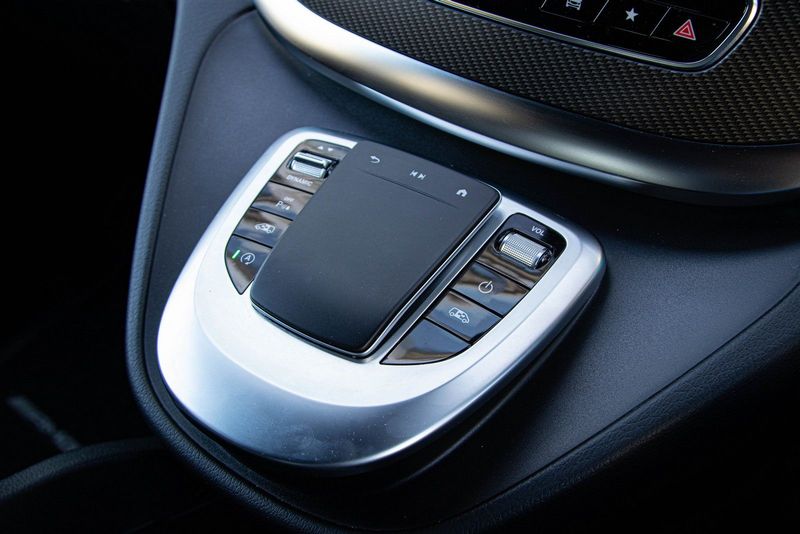
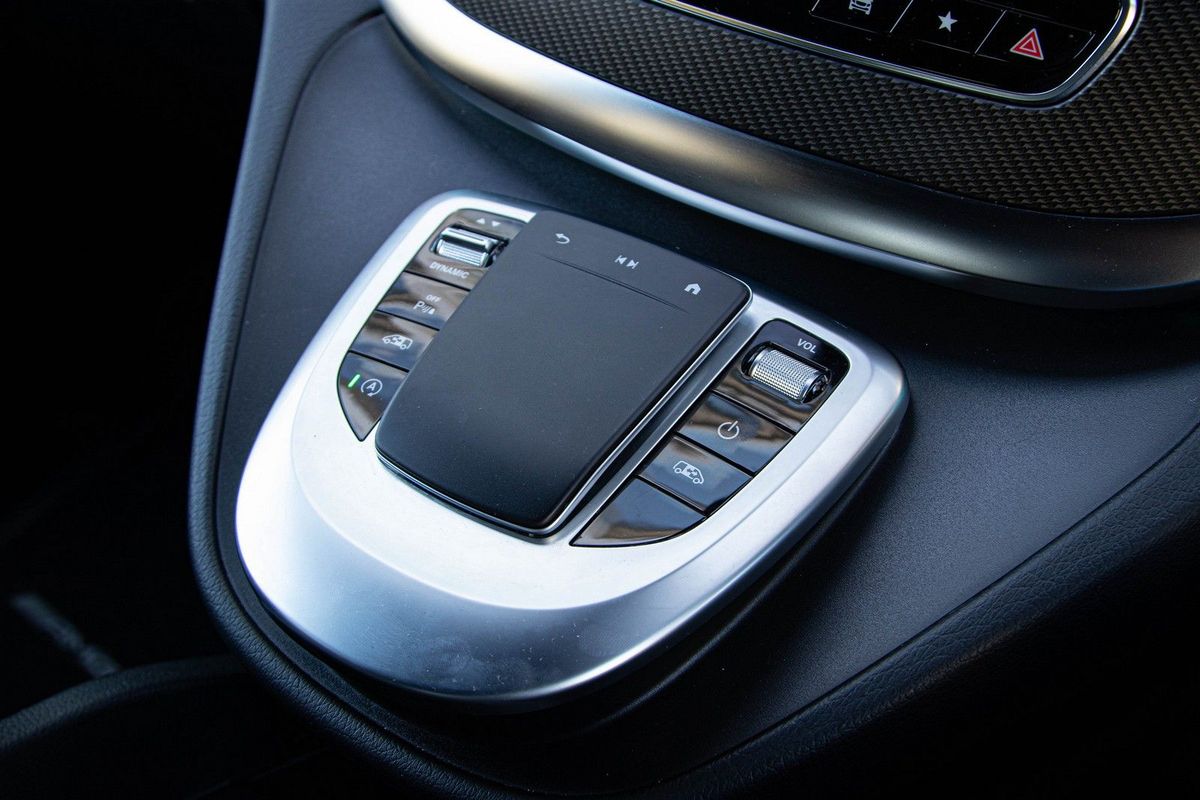
Dynamic Select switch allows the driver to choose between Comfort and Sport settings.
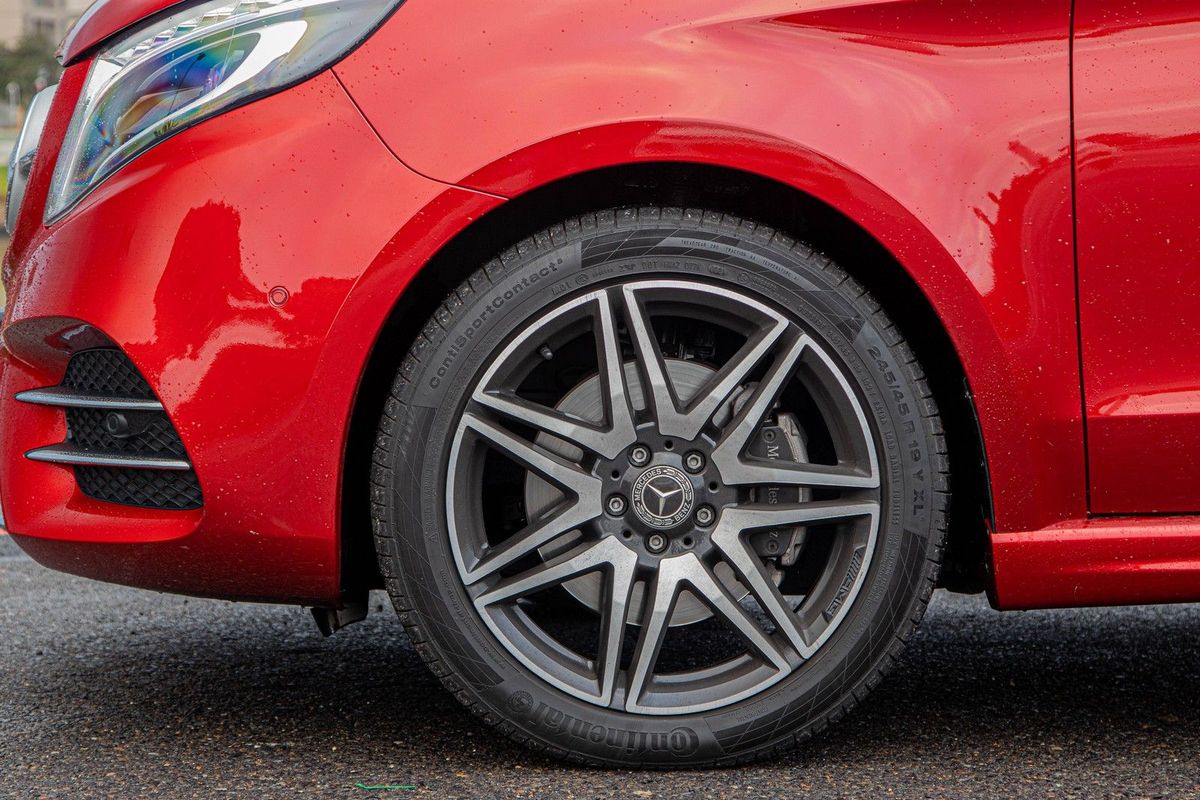
Given that it weighs well over 2 tonnes and is shaped like a pointy-nosed brick, the V300d shouldn’t have any sporty pretensions, but here it is, flaunting various AMG paraphernalia, including two-tone 19-inch alloy wheels! The V-Class shares its OM 654 engine with the E-Class and, in its latest application, punches out a class-leading 176 kW at 4 200 rpm and 500 Nm of torque from 1 600 to 2 400 rpm. That’s impressive shove for a minivan and makes the V300d a noticeably brisker tourer than, for example, the V250d. Mercedes-Benz even claims a 0-100 kph time of 7.8 sec and a 220-kph top speed!
That said, in our previous review of a V250d, we found Benz’s bus was already an impressively swift tourer with sufficient power for overtaking, so we won’t suggest opting for the significantly more expensive V300d purely for the sake of extra performance… unless you intend to tow trailers regularly. Where the V300d’s new drivetrain does move the game forward for the V-Class line-up, however, is in its combination of power – with efficiency – and refinement. The 9-speed transmission’s role in the impressive combination of talents should not be underestimated, either. It also features a Dynamic Select switch on the fascia, which allows the driver to select Comfort or Sport driving settings, with the latter mode sharpening up throttle response and keeping the transmission on “high alert”.
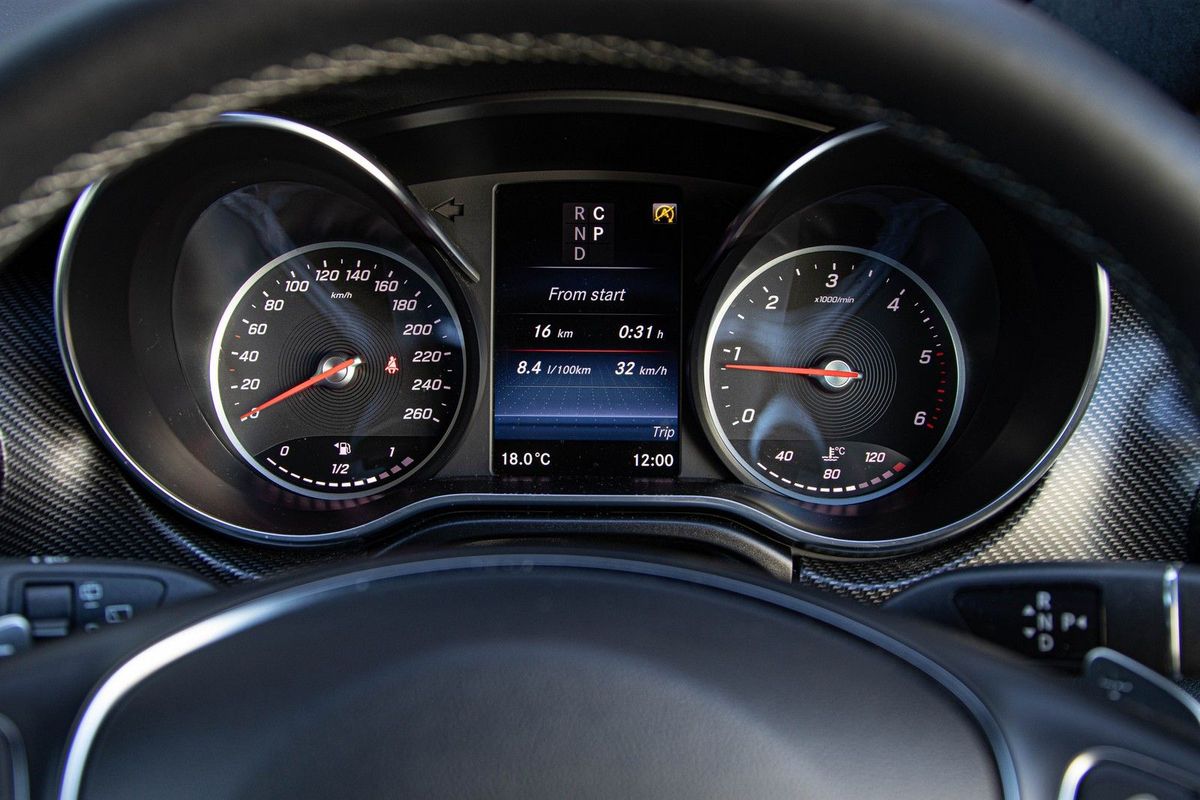
Mercedes-Benz claims average fuel consumption of 8.8 L/100 km and, during our test period, this translated into a real-world figure of around 10.5 L/100 km, which is acceptable for this type of vehicle.
Luxury and Practicality
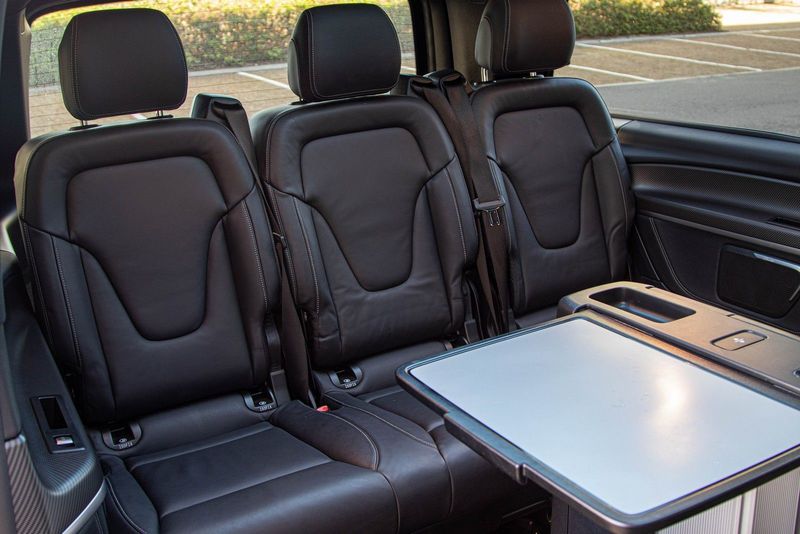
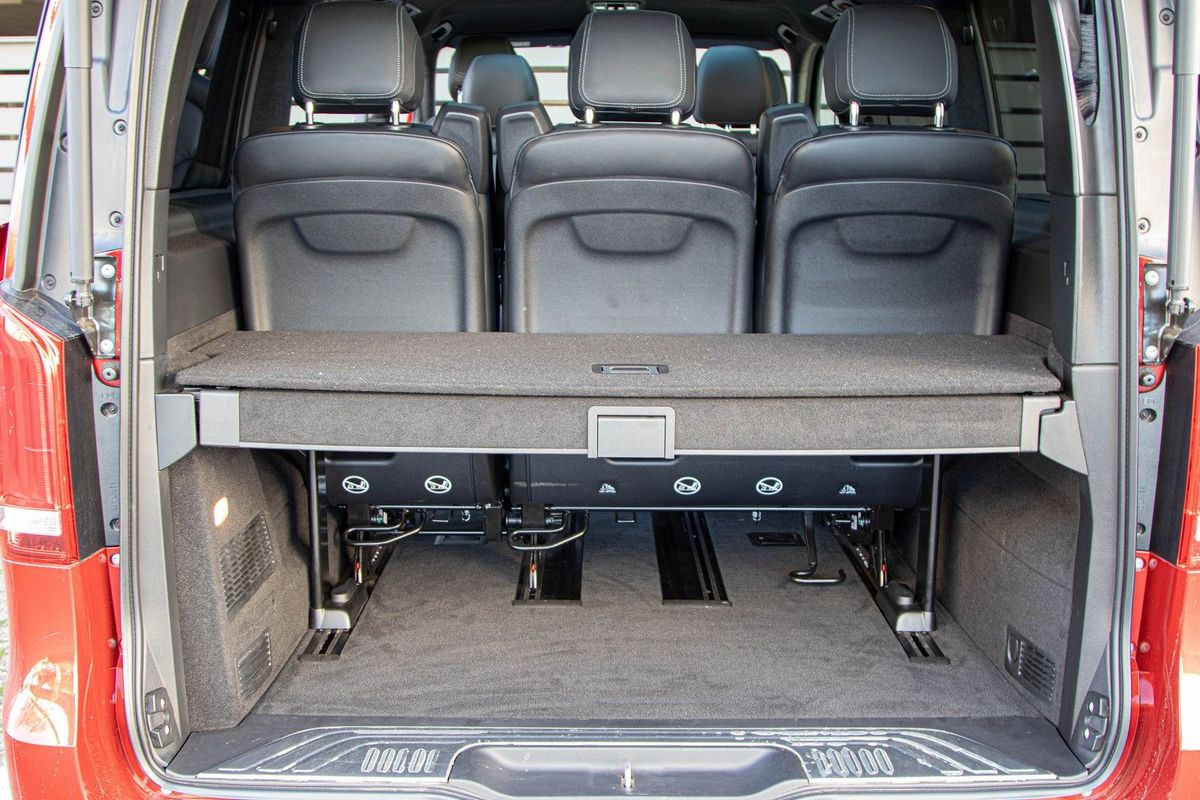
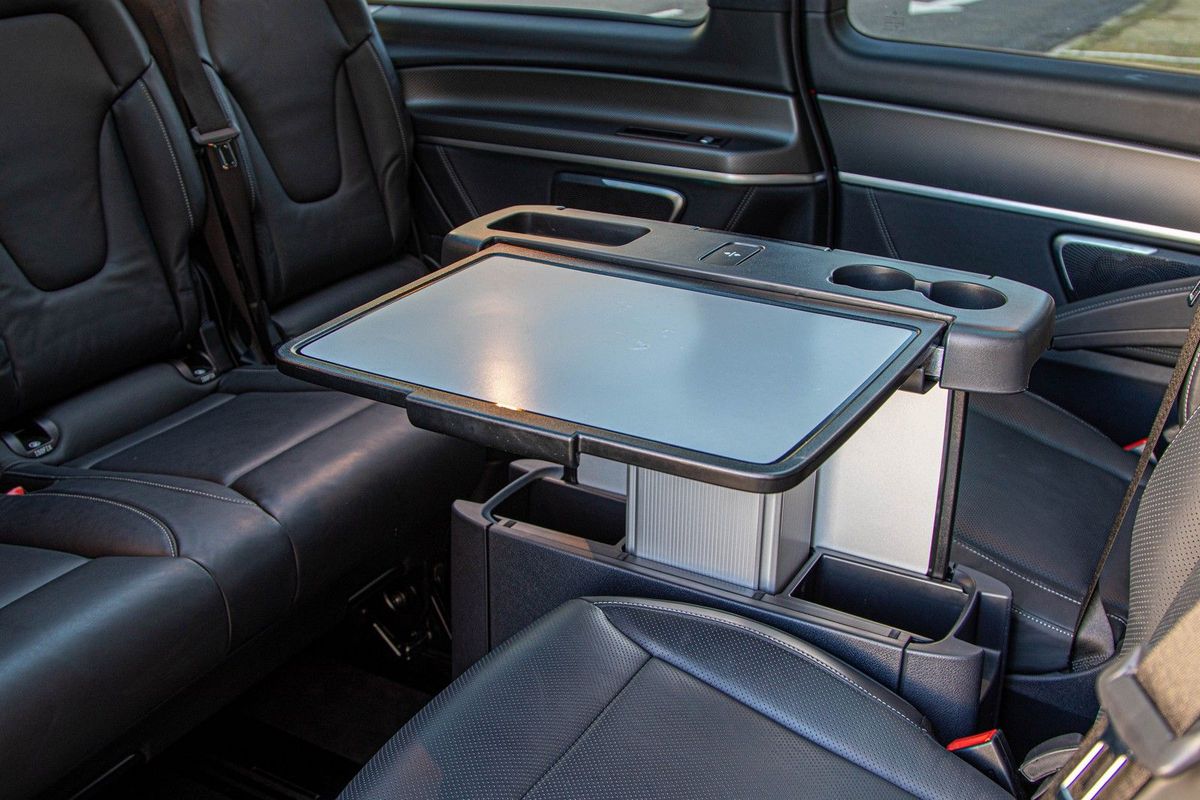
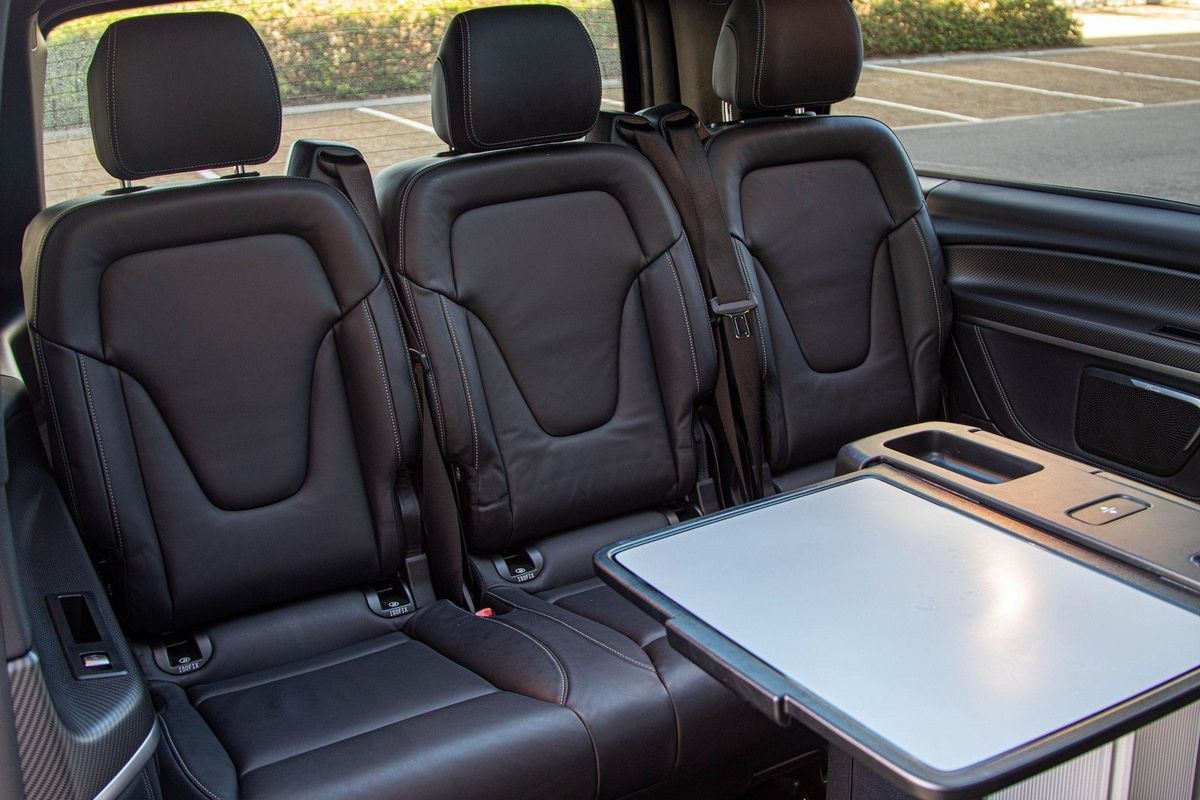
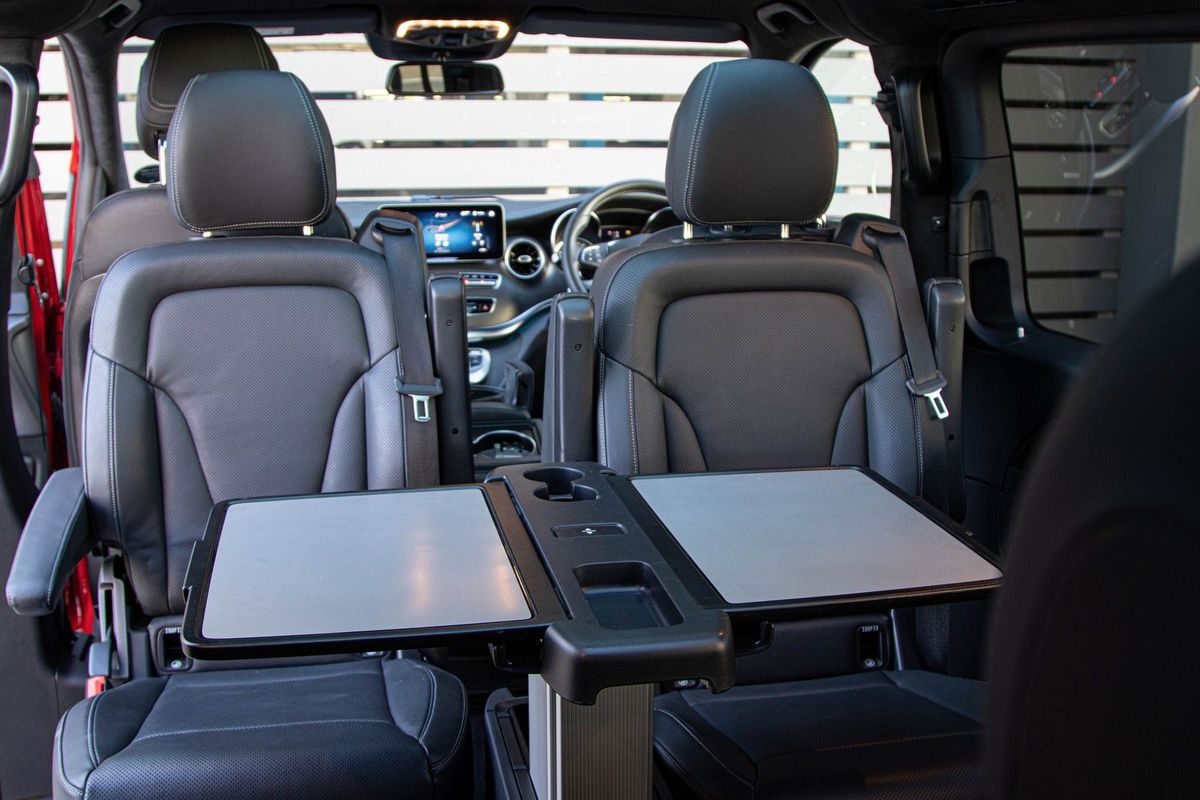
The test unit featured 3-seat rear bench and fold-out picnic table. Other seating arrangements are also available.
Our striking Hyacinth Red test unit featured a 7-seat interior layout with 2 centre-row seats separated by a sliding/fold-out picnic table and 3 individual chairs at the back. With the pair of centre seats in a rearwards-facing position and the table folded out, the V-Class’ cabin gains a “clubby” feel, which the family will enjoy on longer journeys, especially because the layout is conducive to playing card- or board games or having a “mobile picnic”. Impressively, the 2nd- and 3rd-row seats are “climatised”, but the V-Class does perhaps show its age by its lack of multiple USB outlets for rear passengers.
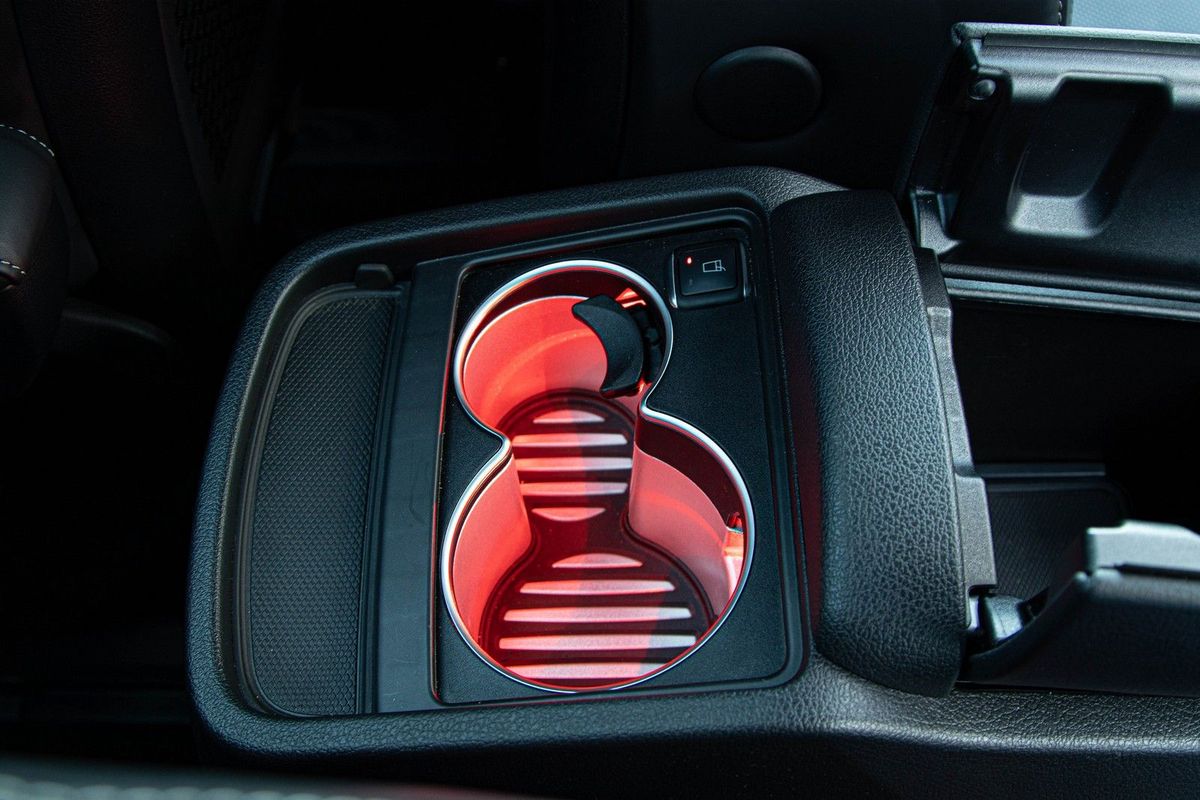
When all seats are occupied, the load bay is not particularly capacious, but you can fit soft bags underneath the rear seats and the parcel shelf is sturdy (and features integrated pop-up baskets), so more items can be stashed there. A nice touch is that the tailgate screen can be opened separately to access the top shelf and our test unit featured, inter alia, heated drinks holders! The V300d also features a standard towbar and the 2 sliding side doors can be opened via the remote key fob.
So, it’s certainly possible to configure a V-Class’ cabin exactly as you’d like it, but it has to be said that rearranging the seats is somewhat harder work than in, for example, the latest VW Caravelle.
Comfort, safety and infotainment features
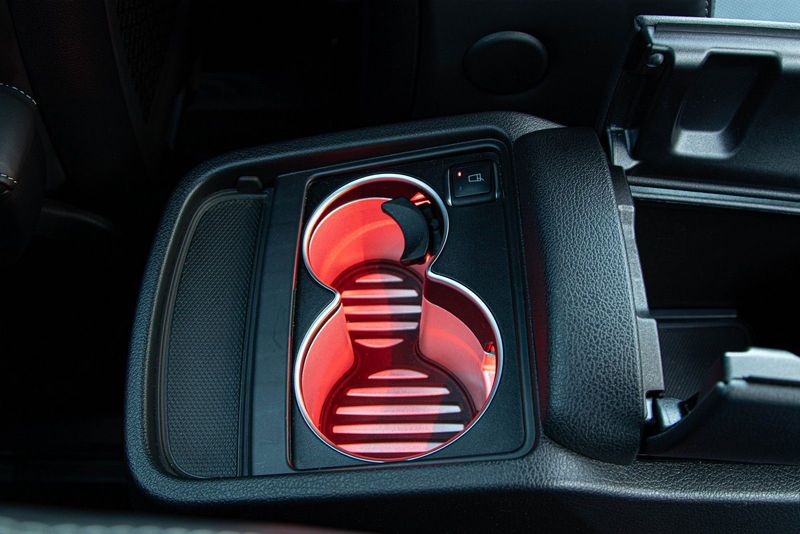
Heated drinks holders are a nice touch, too.
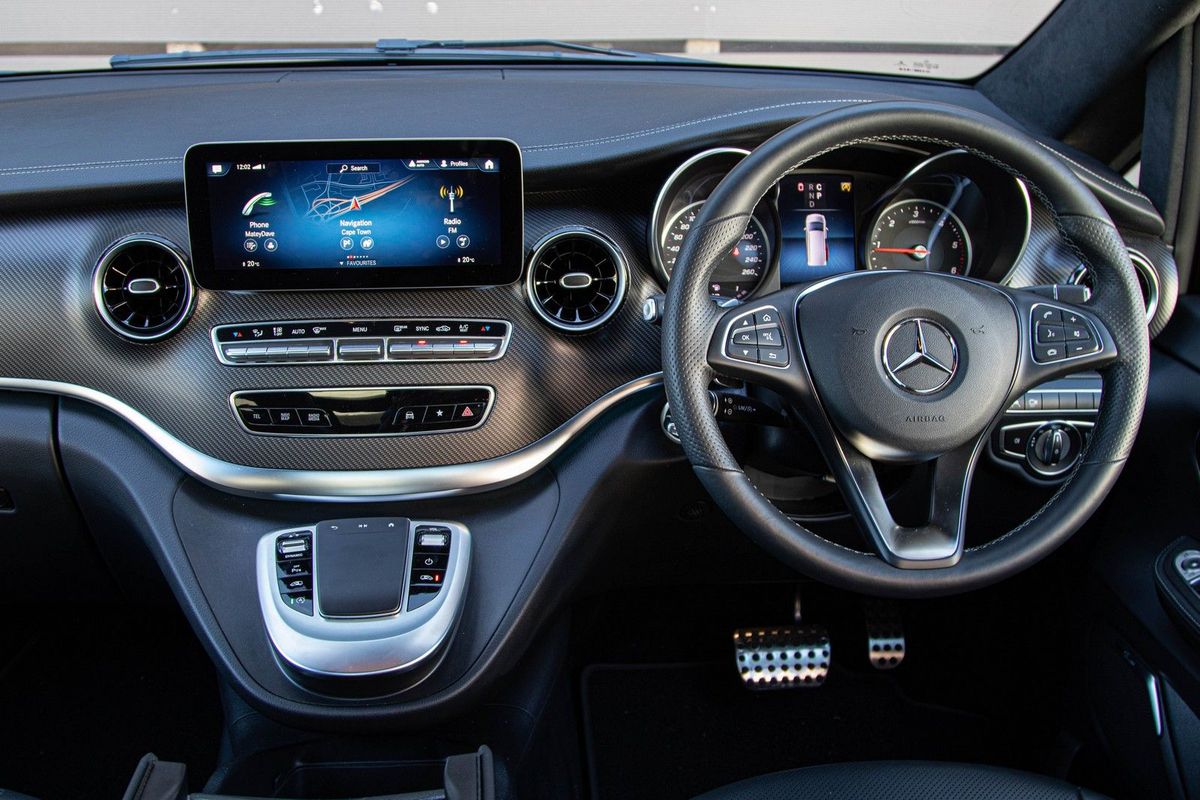
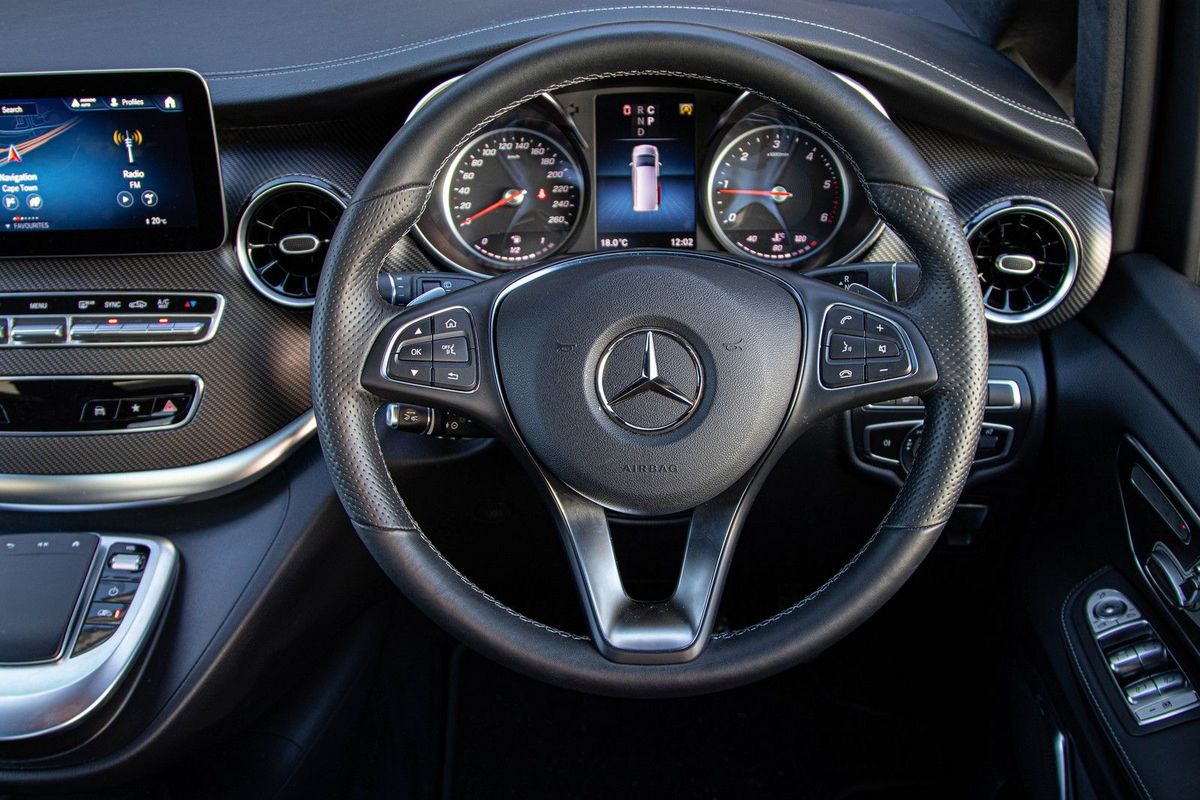
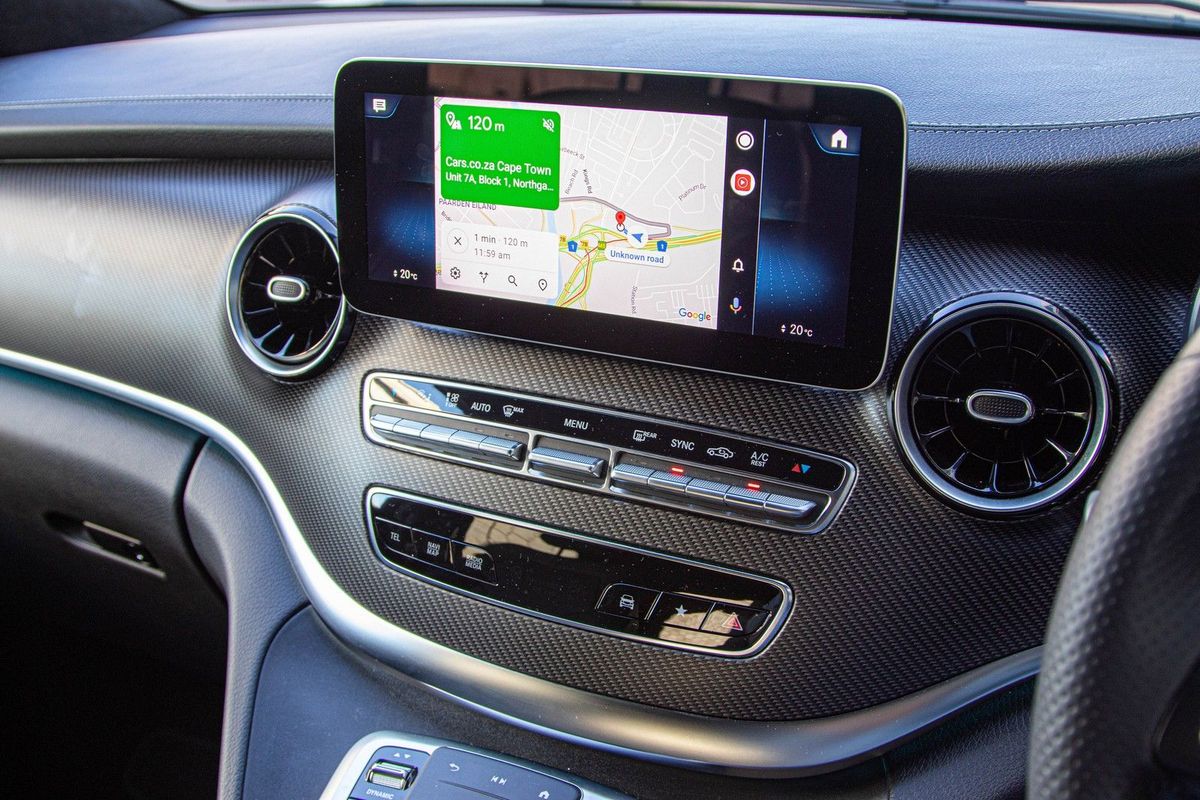
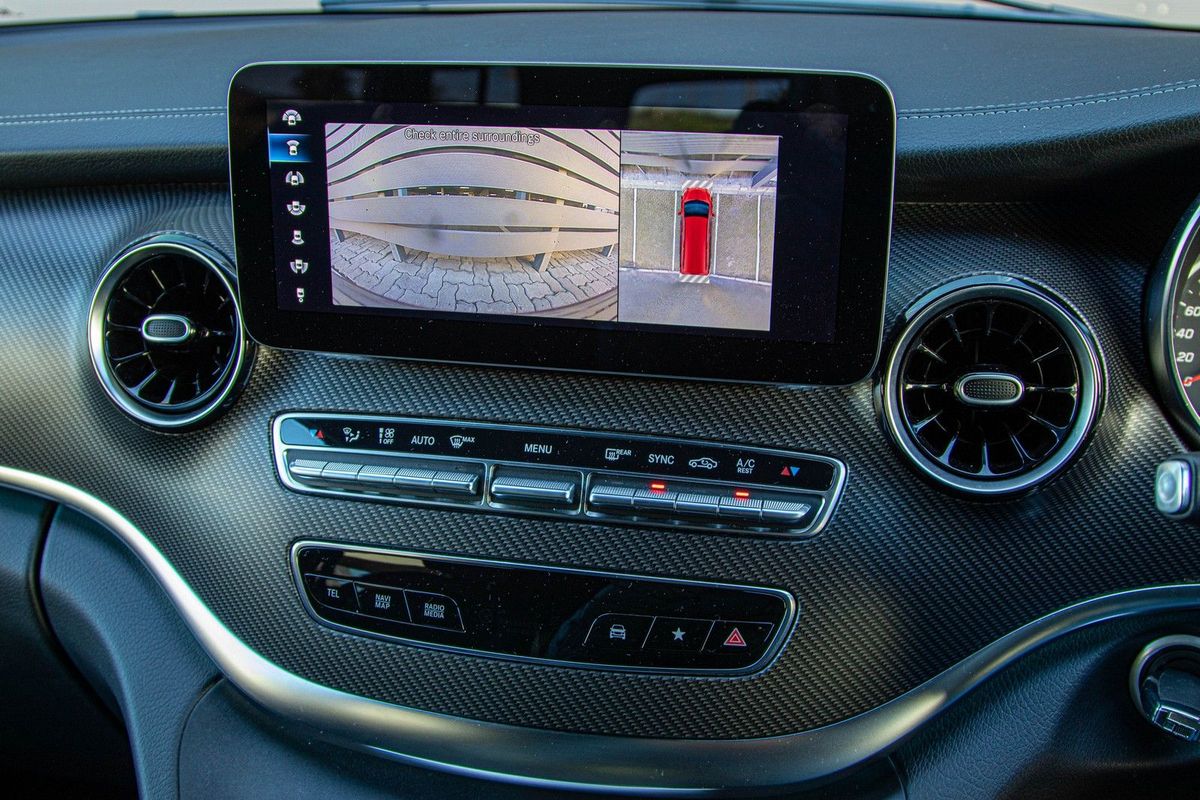
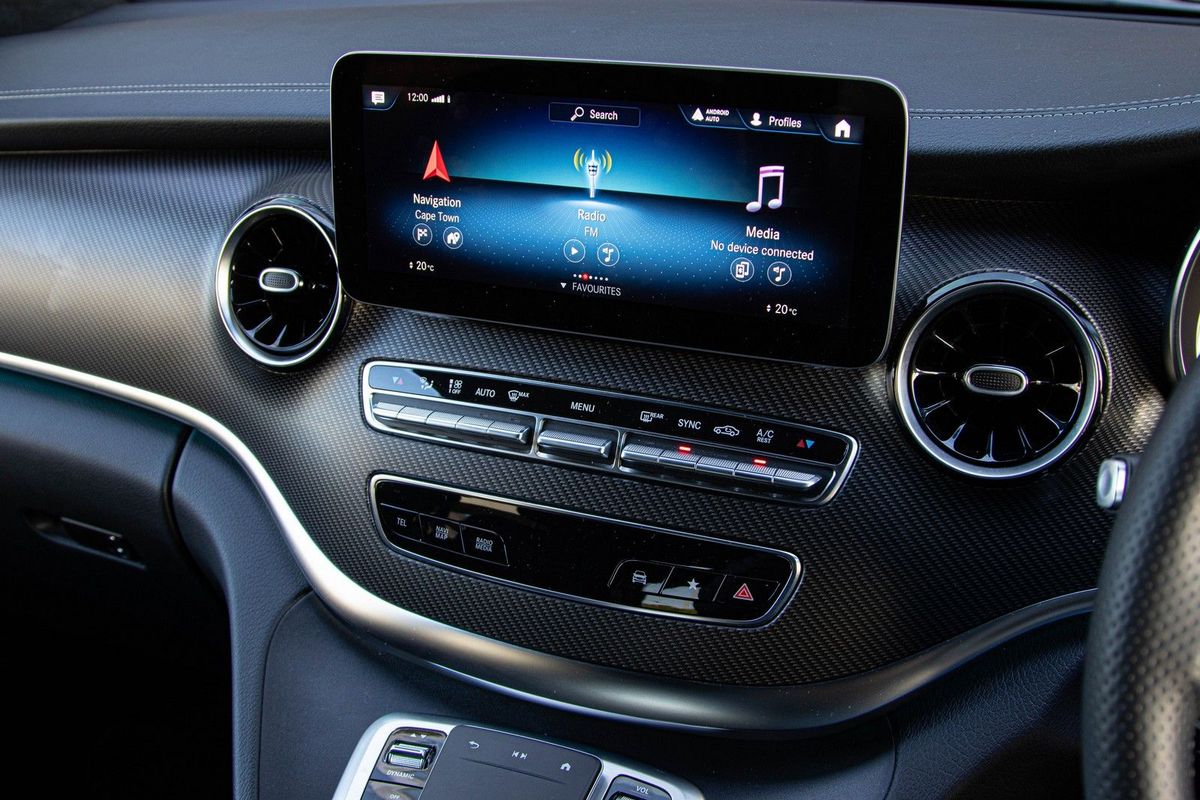
Compared with the V250d that we tested previously (in January 2020), the latest V-Class has benefited from a number of further interior upgrades. The outdated COMAND infotainment system has made way for Mercedes-Benz’s MBUX system, which includes Apple CarPlay and Android Auto compatibility, and the old jogger-wheel control has made way for the more modern trackpad design. You also get a great Burmester audio system and a 360-degree camera system, the latter of which is particularly useful because of the vehicle’s sheer size.
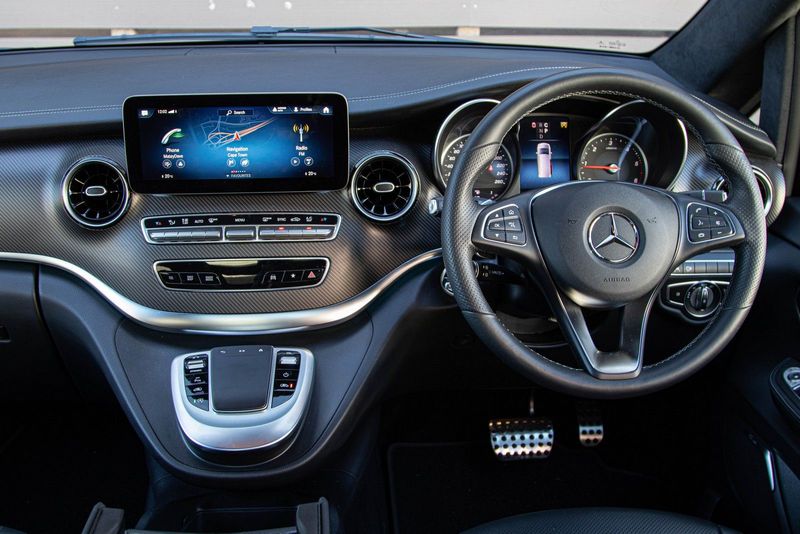
Though the facia looks very similar to pre-upgrade models, the V-Class now features the MBUX infotainment system.
The general design and layout of the fascia remain similar to before, however, and this means the V-Class has a distinct “previous-generation” Mercedes-Benz feel to it, which is further highlighted by the comparatively bigger strides Volkswagen has made with the introduction of the slick new T6.1-generation Caravelle. It also has to be noted that while there are some nice materials (leather-wrapped steering wheel and stitched-leather dashboard upper section), the V300d’s cabin emitted quite a few rattles and creaks, which was disappointing given the vehicle’s price (and the badge on its grille).
In terms of safety, the V300d Exclusive offers the expected 6 airbags as standard (can be optionally increased to 8) and the usual ABS with EBD and ESP package, but there are a number of more advanced features, too, including adaptive cruise control, active park assist, rear blind spot alert (very useful) and lane keep assist, among other features.
Pricing and after-sales support
The Mercedes-Benz V300d Exclusive is priced at R1 799 060 (July 2021) without options. The price includes a 2-year/unlimited km warranty and 5-year/100 000 km maintenance plan.
Verdict
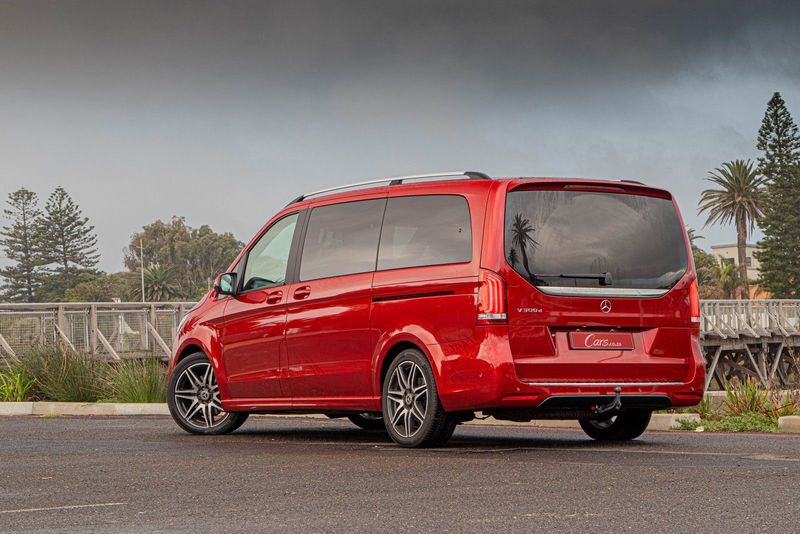
Impressive as the new drivetrain is, the V300d is showing its age in other areas. And it’s simply too pricey.
There is still a lot to like about the Mercedes-Benz V-Class. With its new drivetrain, it offers class-leading performance, combined with good efficiency and impressive drivetrain refinement. Features such as climatised seats all-round, a panoramic sunroof, a Burmester audio setup and an updated MBUX infotainment system endow the big bus with enough “Mercedesness” to make it feel worth a premium.
But, in our view, that premium is currently simply too much. The V-Class can’t hide its advanced age in some respects (particularly with regards to ergonomics) and, in a number of ways, the latest versions of Volkswagen’s T6.1 Caravelle feel more refined, more modern. This extends even to the areas of ride comfort and suspension suppleness. Now, if you consider that the Volkswagen, though down on power (compared with the V300d) and lacking a few of its rival’s ultra-luxurious features, is more than R500 000 more affordable (without options), it’s hard to make a case for the Benz over the VW.
Related content:
Hannes Oosthuizen

With the ultimate goal of spending his life writing about cars, Hannes studied journalism at the University of Stellenbosch. A brief stint as a sports editor for Paarl Post followed, before he joined CAR magazine in 2001. He eventually became the (youngest-ever) editor of CAR in 2011, a position he occupied for two years. During his career at CAR he became a member of the WCOTY (World Car of the Year) panel, wrote a book (Cranked Up: Confessions of a Petrolhead) and was named by the Mail & Guardian as one of the Top 200 South Africans to take to lunch in its 2008 Youth Day supplement, and by The Media magazine as one of the most influential media professionals under 40 (2012). He left CAR in 2013 to experience the \other\" side of the industry