From being an unexpected replacement for the H2 compact family car to becoming a top-seller within the space of about 3 months, the Haval Jolion has drawn so much public attention that we’ve been inundated with requests to do a full Haval Jolion review. So, here it is, by popular demand! The Jolion appears to offer such exceptional value for money (in a market where car prices have risen significantly), that one has to ask: “Is it all too good to be true?”
This 2021 Haval Jolion review aims to provide you with vital product information so that you can make the best buying decision possible.
Browse used Haval Jolion cars for sale in South Africa
We like: Value for money, safety features, design, space, fit and finish
We don’t like: Thirsty when pushed, drivetrain not as refined as some rivals
Fast Facts
- Model Tested: Haval Jolion 1.5T Super Luxury
- Price: R398 900 (July 2021)
- Engine: 1.5-litre turbocharged 4-cylinder petrol
- Power/Torque: 105 kW/210 Nm
- Transmission: 7-speed dual-clutch
- Fuel efficiency: 7.5 L/100 km (claimed)
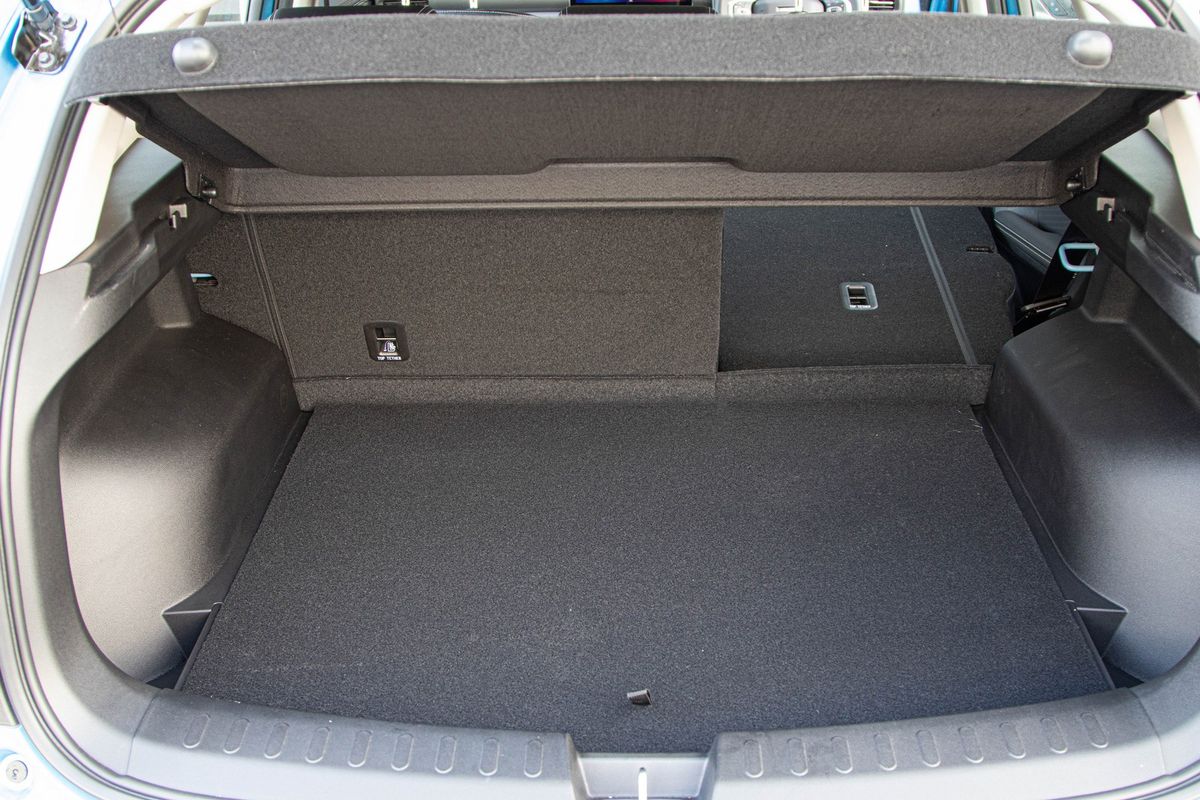
- Load capacity: 337 litres
What is the Haval Jolion?
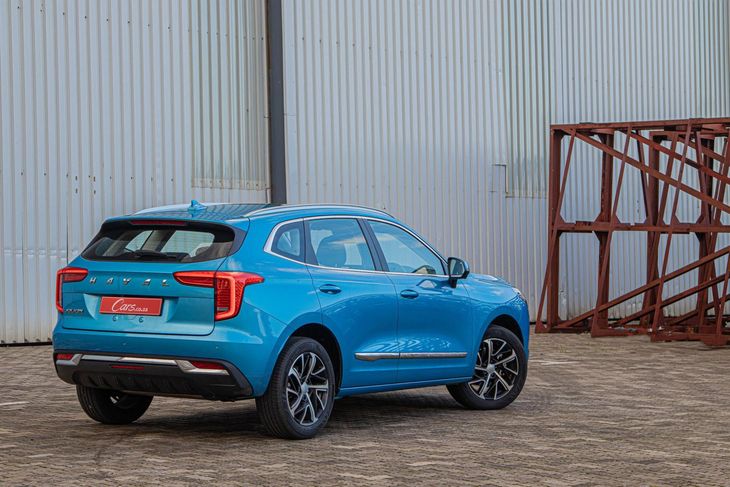
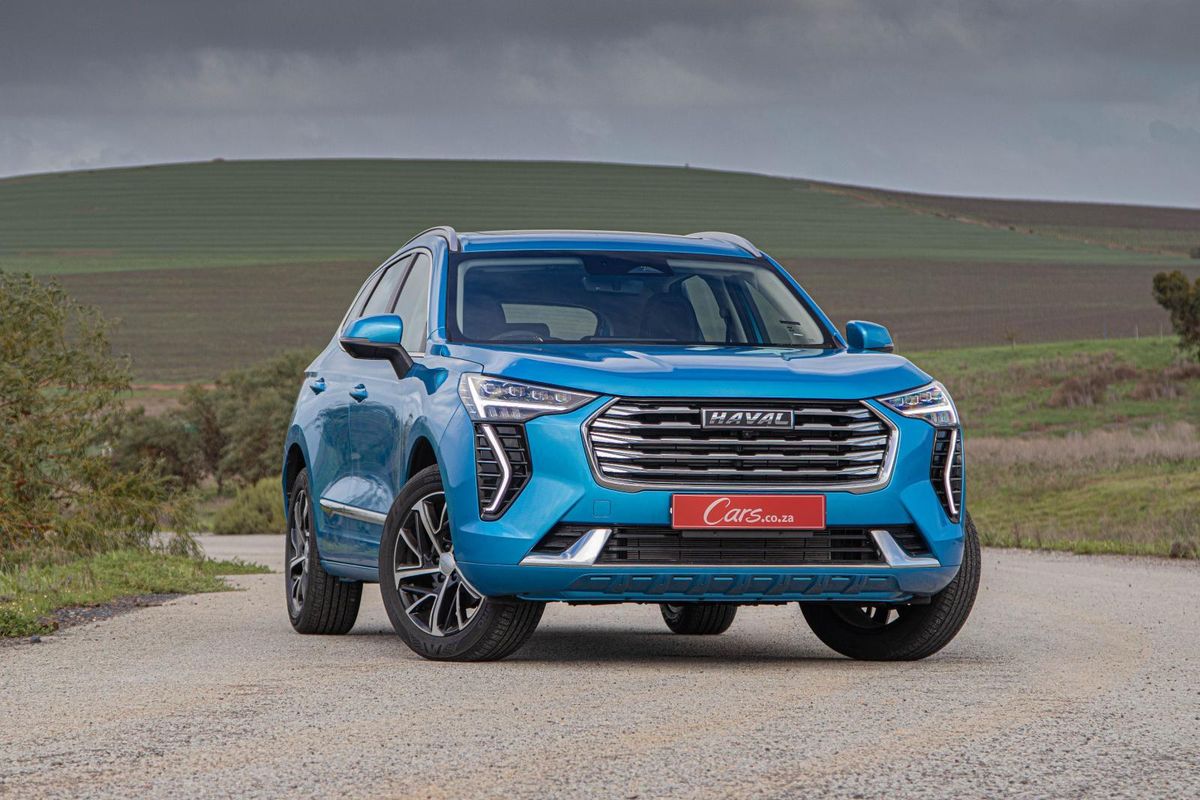
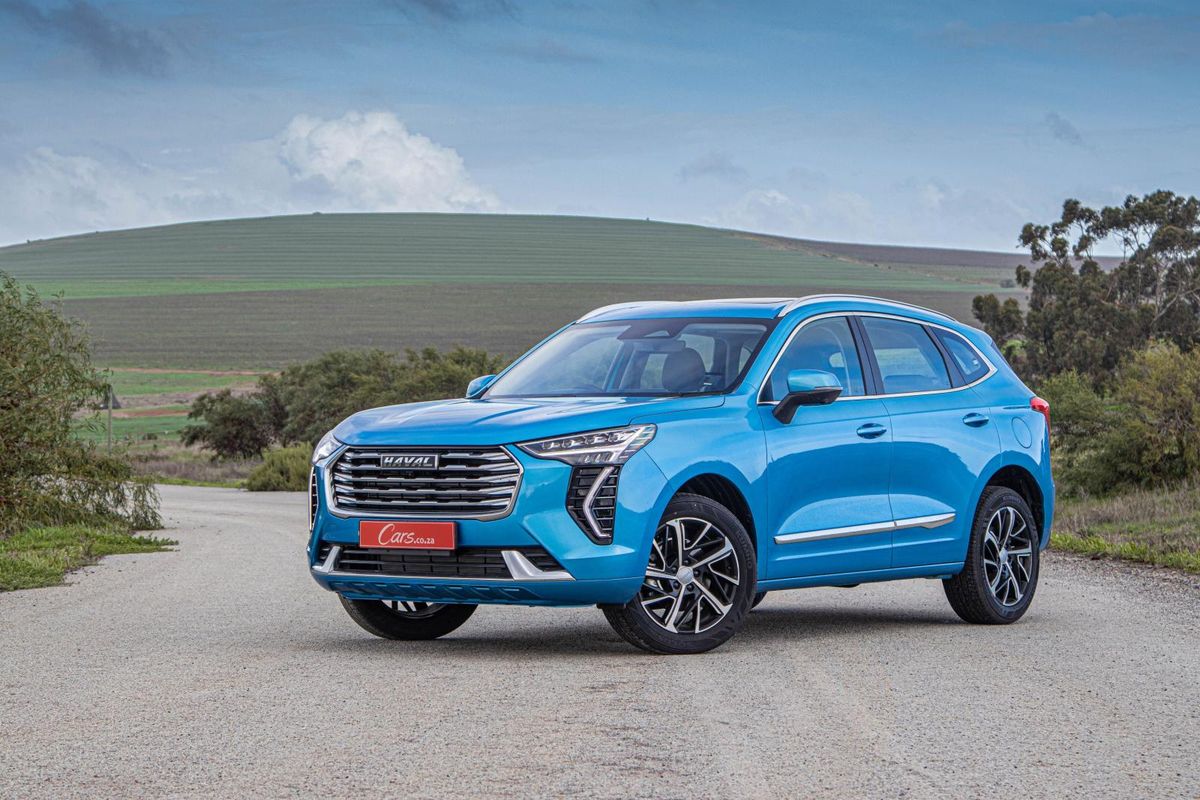
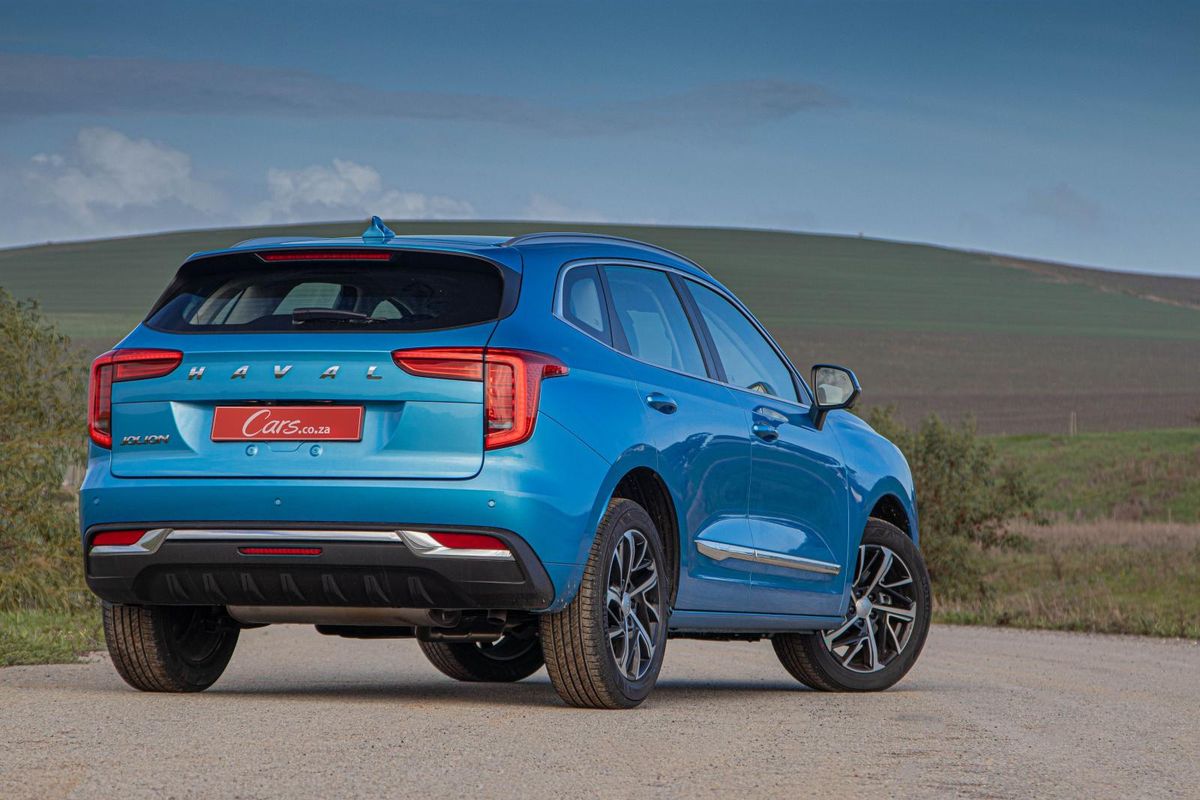
Distinctive design, upmarket features and finishes and a bigger footprint than most rivals make the Jolion look more expensive than it is.
Given today’s globalised automotive- and media industries, a new model is unlikely to sneak onto a market with hardly any foreshadowing (such as “spy shots”, “leaked brochures” and cryptic teasers from manufacturers), but this is exactly what happened with Haval’s smash-hit Jolion compact family car. Local media only became aware of the Jolion’s imminent arrival in the few short weeks leading up to its market introduction. Since then, it has gone on to become one of the fastest-selling vehicles in the country, achieving a Top-5 position overall in June and catapulting Haval up the brand rankings.
In some ways, the newcomer’s immediate success should not come as a surprise. The Haval H2 (updated in early 2020) was still one of the best-selling small crossovers by the time the Jolion arrived on the market (its popularity was due to a neat design, generous standard spec and value-for-money price positioning). The Jolion, at first glance, appears to follow this same recipe, but on closer inspection, it might even have shifted the goalposts – not only in its segment (“compact family car” by price, “family car” by size) – but in the important R300 000 to R400 000 price segment – for any vehicle.
Offering striking design, an almost unbelievable list of standard features, a bigger body than most of its rivals, a decent manufacturer warranty and at prices that, frankly, appear to have been misprinted, it is very hard to ignore the Haval Jolion. But does it live up to the hype, however?
Haval Jolion Review
Design and Packaging
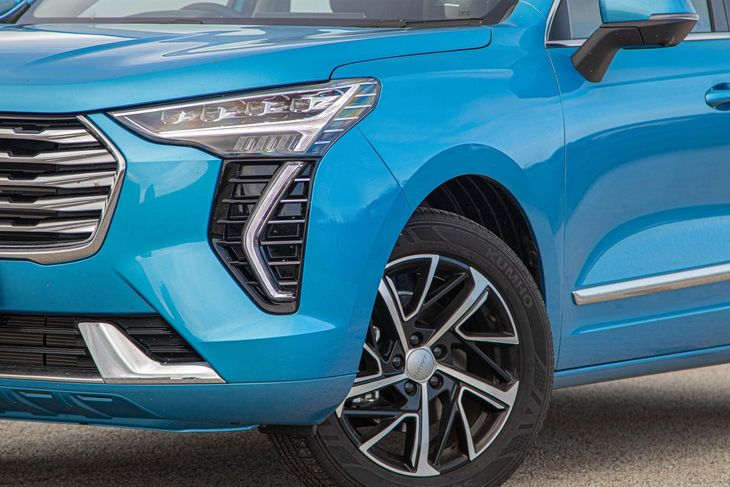
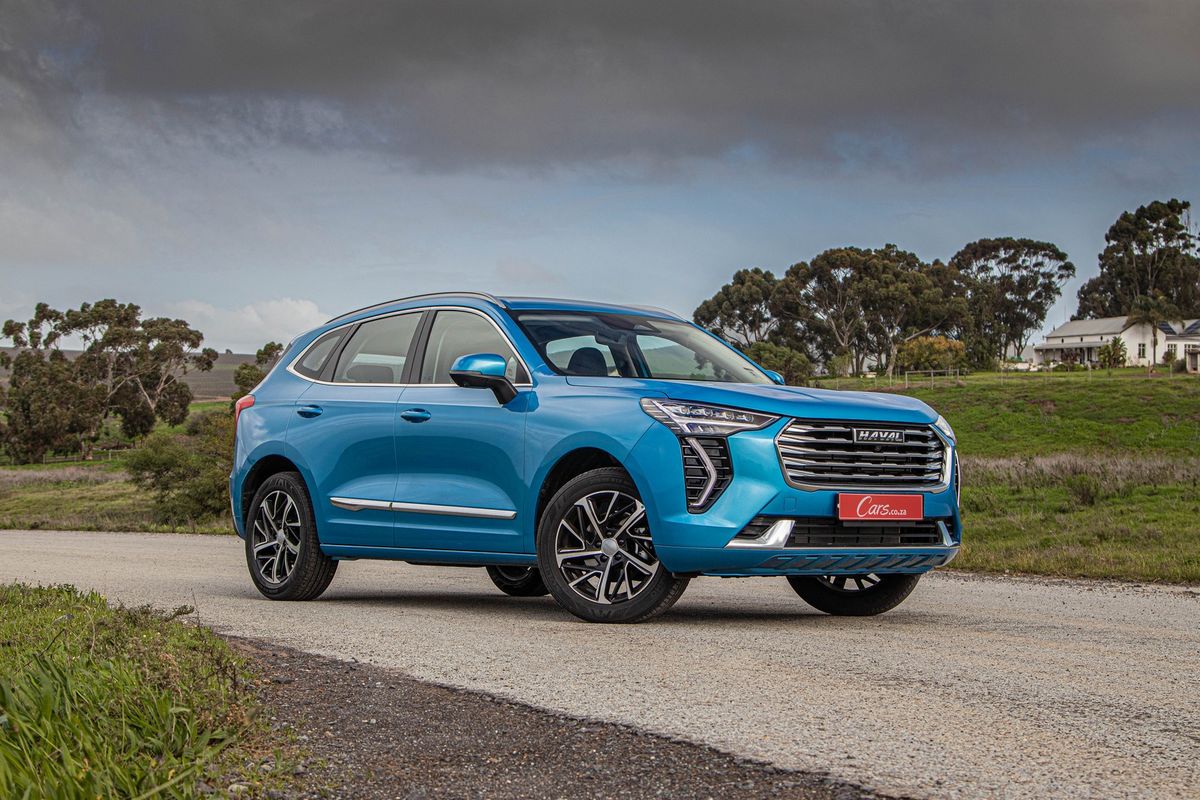
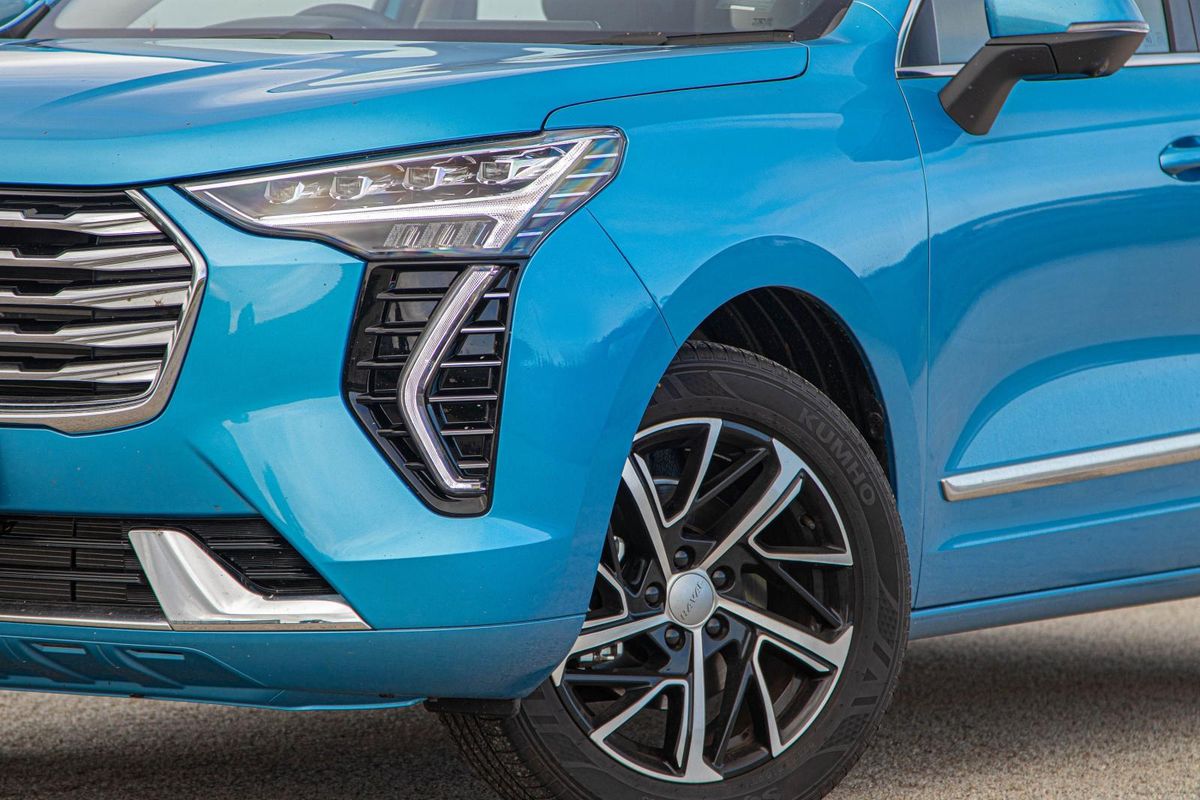
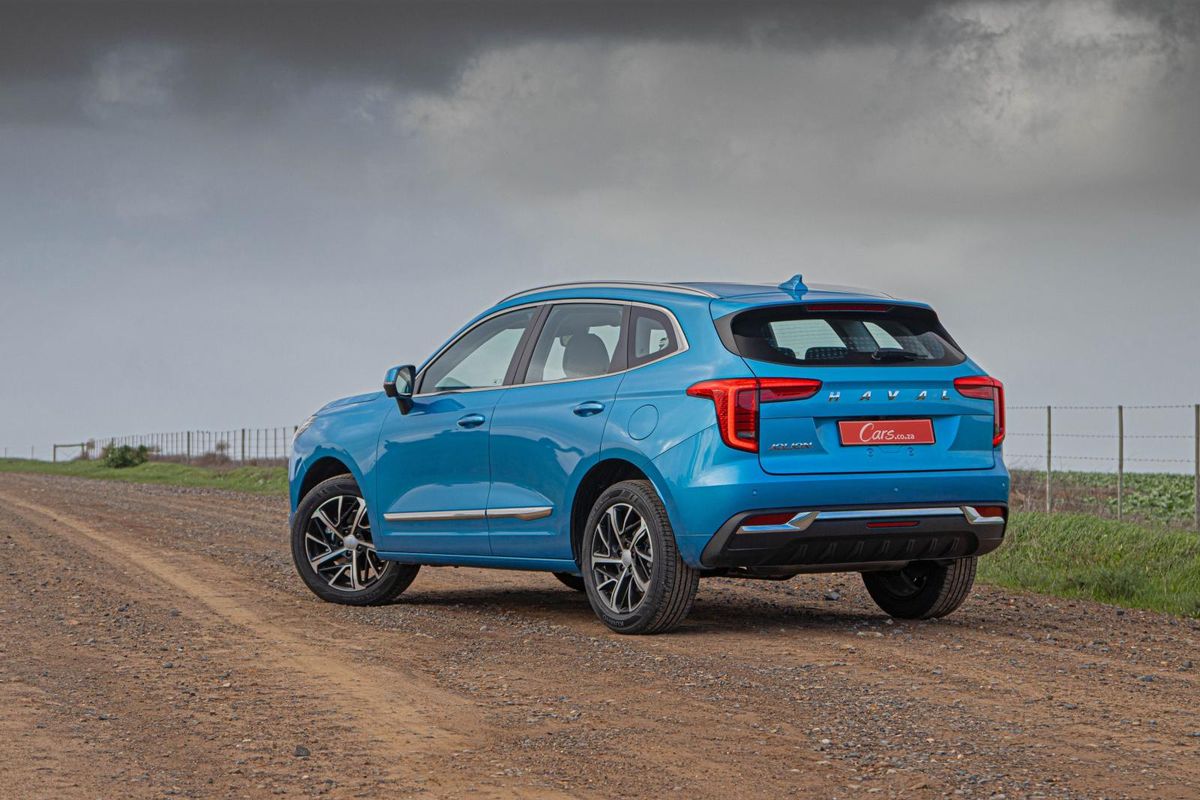
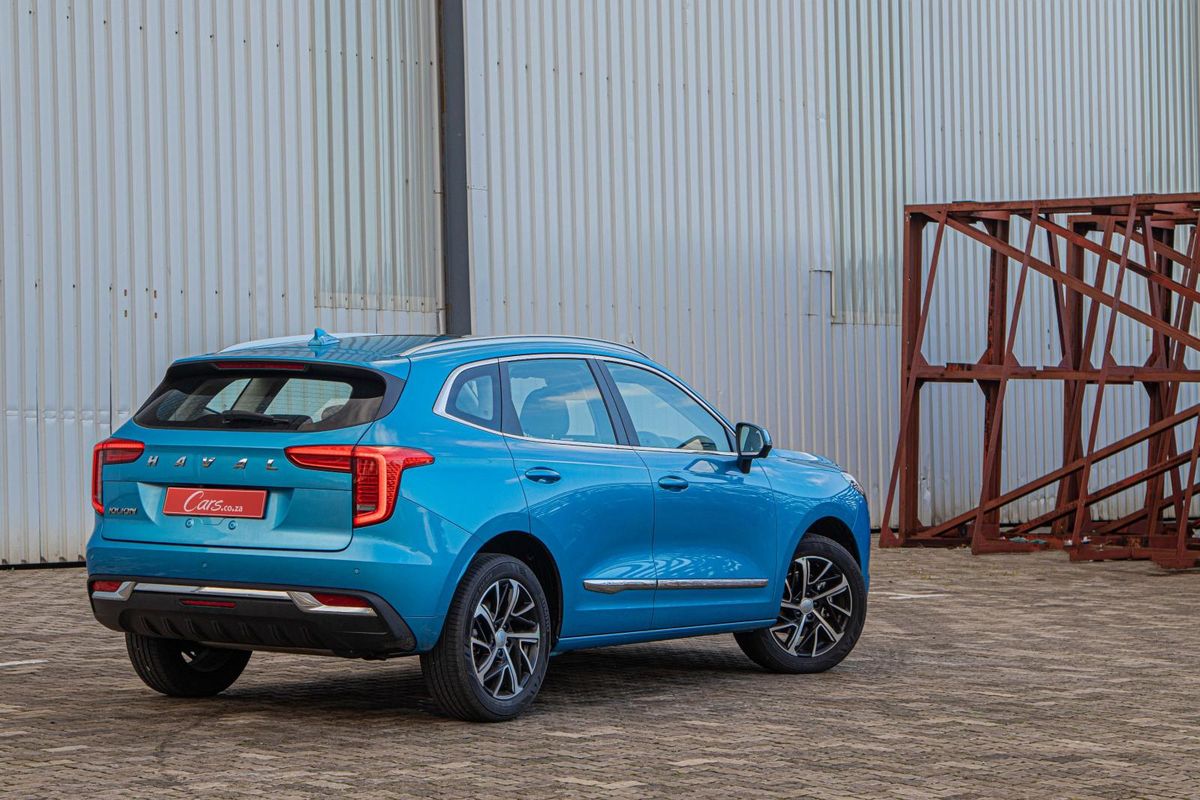
The Jolion is bold, featuring 18-inch wheels and a striking LED arrangement at the front on this Super Luxury derivative.
Based on Haval’s new, modular L.E.M.O.N platform, which also underpins the new, larger H6, the Jolion is a bigger car than the H2, and also larger than most of its rivals, including the Kia Seltos, Hyundai Creta and Volkswagen T-Cross. The lighter (but torsionally, more rigid) L.E.M.O.N. platform is claimed to significantly improve on the H2’s NVH (noise, vibration, harshness) control and, having spent a significant amount of time driving this important newcomer on a variety of road surfaces, we can certainly vouch for its cabin being very well-insulated from road and wind noise.
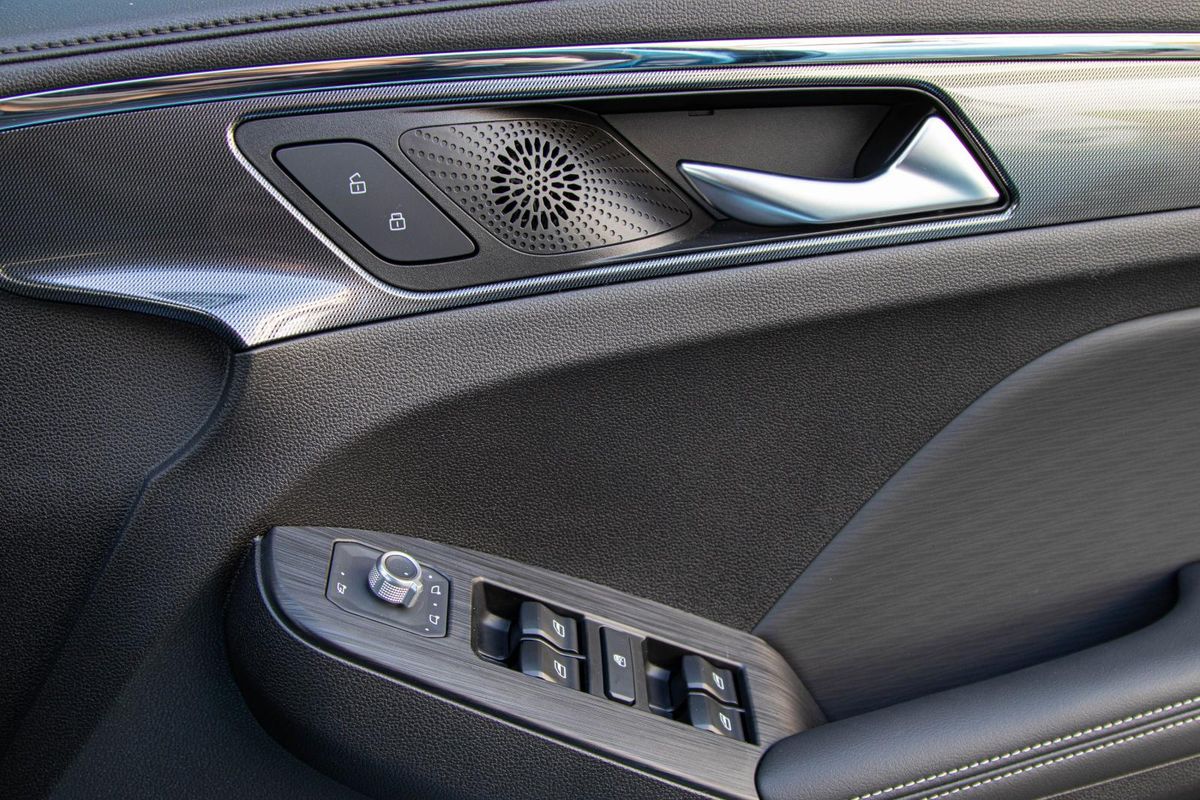
Besides enabling the aforementioned improvement in NVH control, the new structure benefits the Jolion’s ride and handling balance. The model corners assuredly and rides generally comfortably on most surfaces, but it remains, like most GWM/Haval products, somewhat firmly sprung. Build quality also appears to be excellent, with neither a rattle nor a squeak evident during our intensive test period.
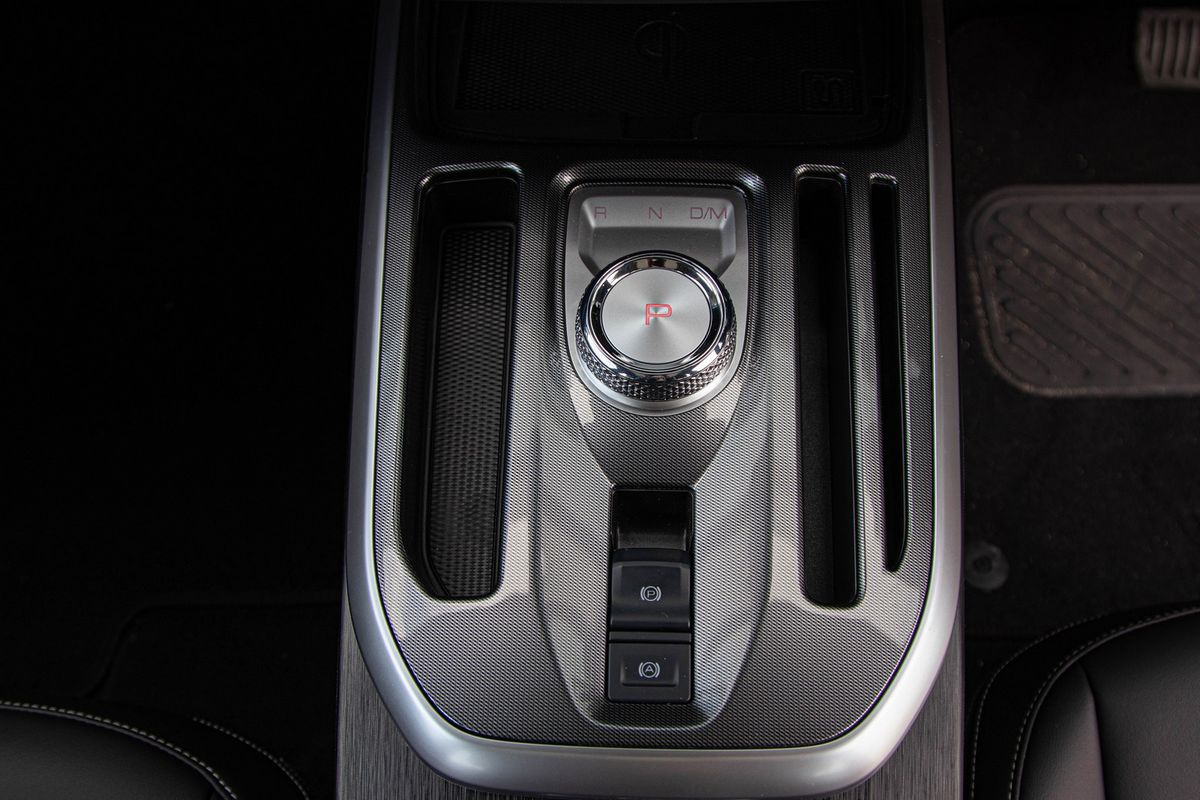
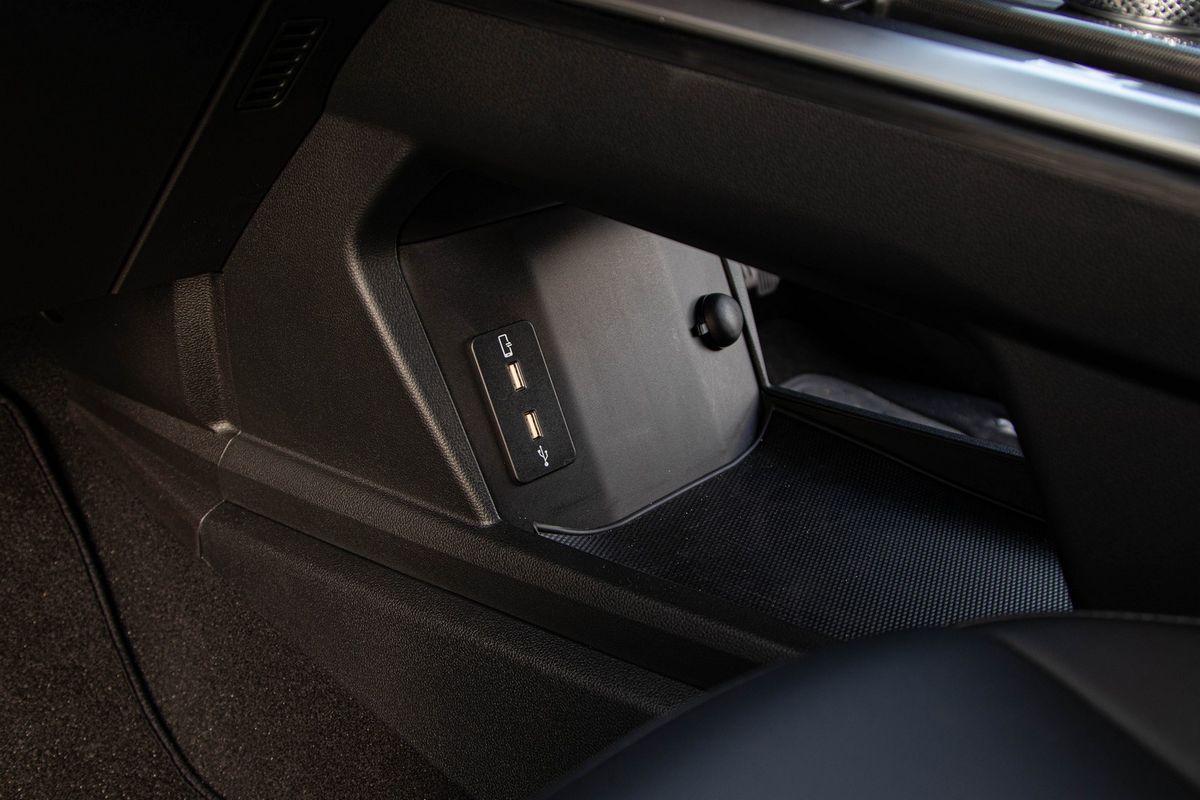
The Jolion’s bigger footprint results in obvious benefits in terms of interior packaging. The sense of space and “openness” in the cabin is further enhanced by the use of lighter materials in the upper areas of the cabin, as well as the fitment of a vast panoramic sunroof (as standard). Rear legroom is exceptional in this segment, but the load bay is, at best, about average in size. You won’t be short of storage spots for smaller items inside the vehicle, however… By implementing a shift-by-wire transmission controller, Haval created a large storage area underneath the Jolion’s “floating” transmission tunnel.
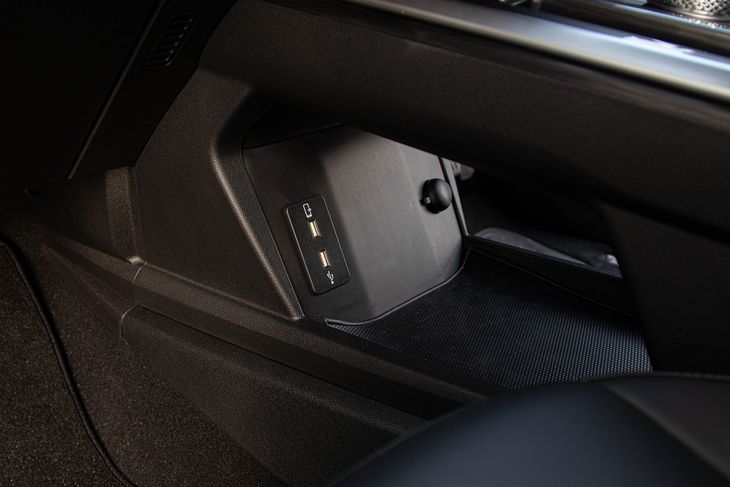
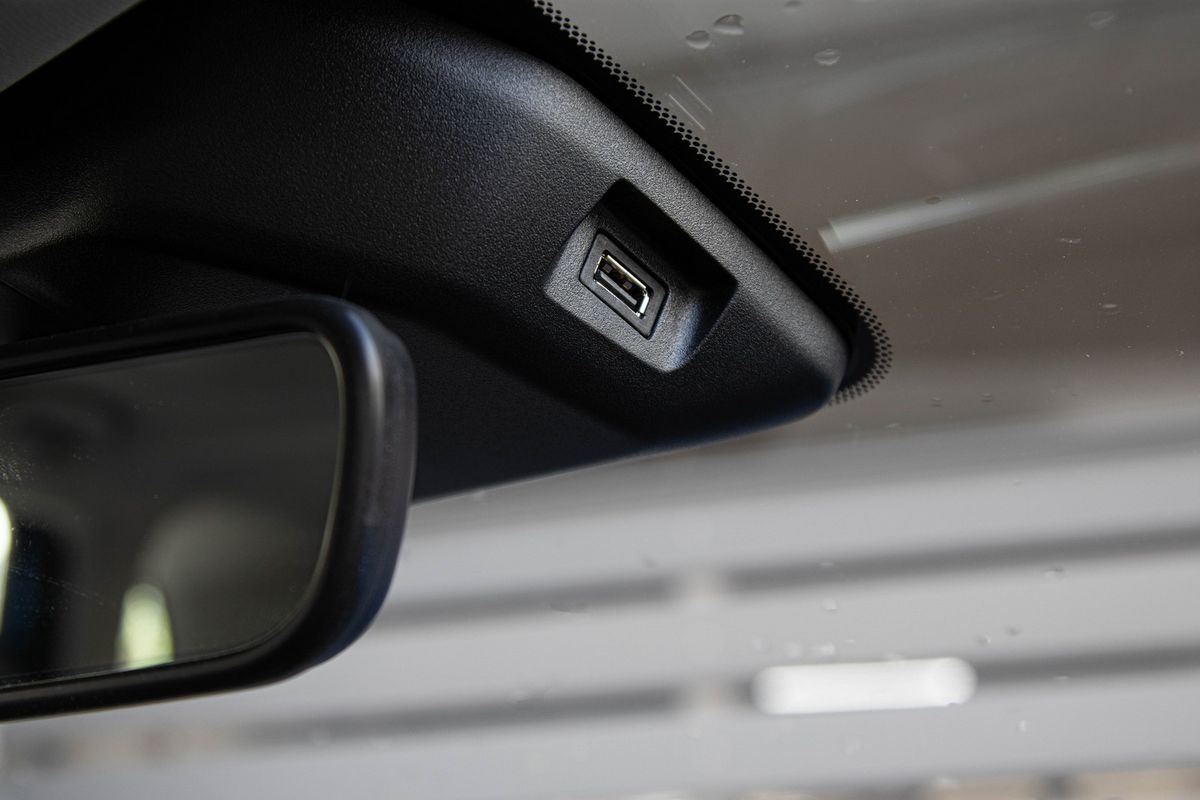
Lots of storage space underneath the transmission tunnel, along with the fitment of two USB ports as well as a 12V outlet.
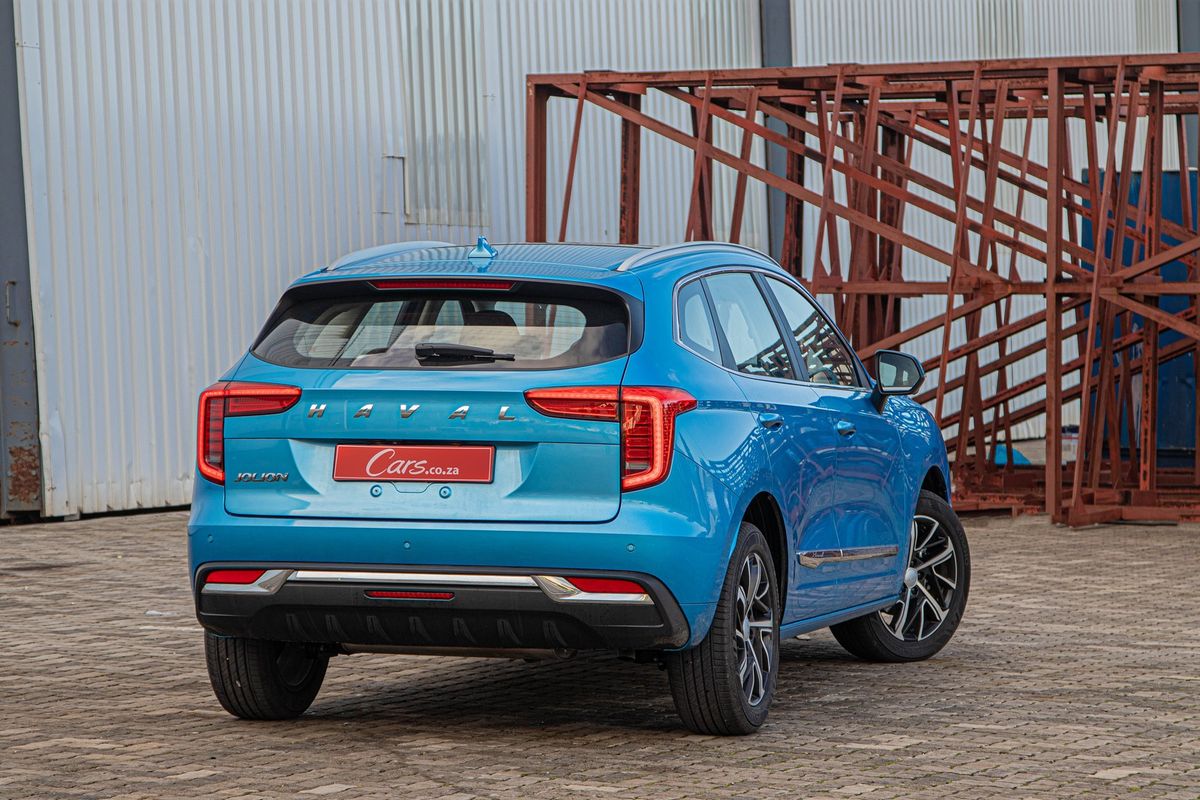
Design is, of course, a subjective matter, but online chatter about Haval’s newcomer, as well as feedback we received from those who saw the Jolion in the metal, suggest that the Chinese compact family car’s styling has well and truly hit the sweet spot. Available in a number of vibrant colours, including this HB Blue hue, the Jolion Super Luxury rides on bold dual-tone 18-inch wheels, boasts eye-catching LEDs (at the front and rear), has lots of chrome on the grille and, by virtue of being longer and wider, but slightly lower, than most rivals, the Haval has the “stance” of a more upmarket, premium vehicle.
Features and in-car tech
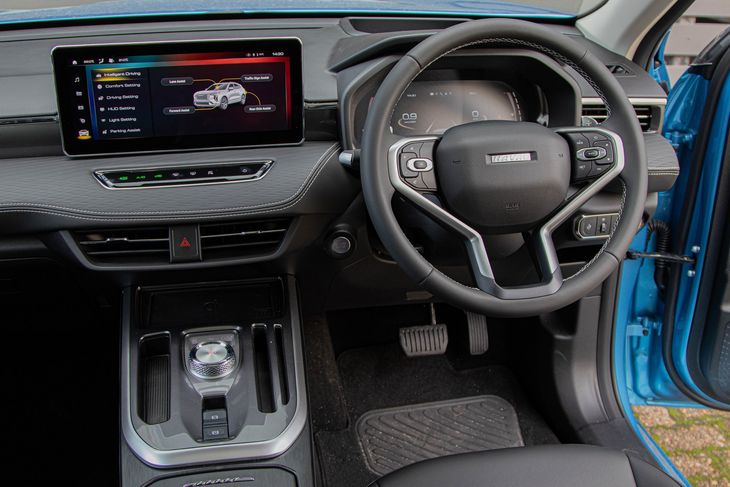
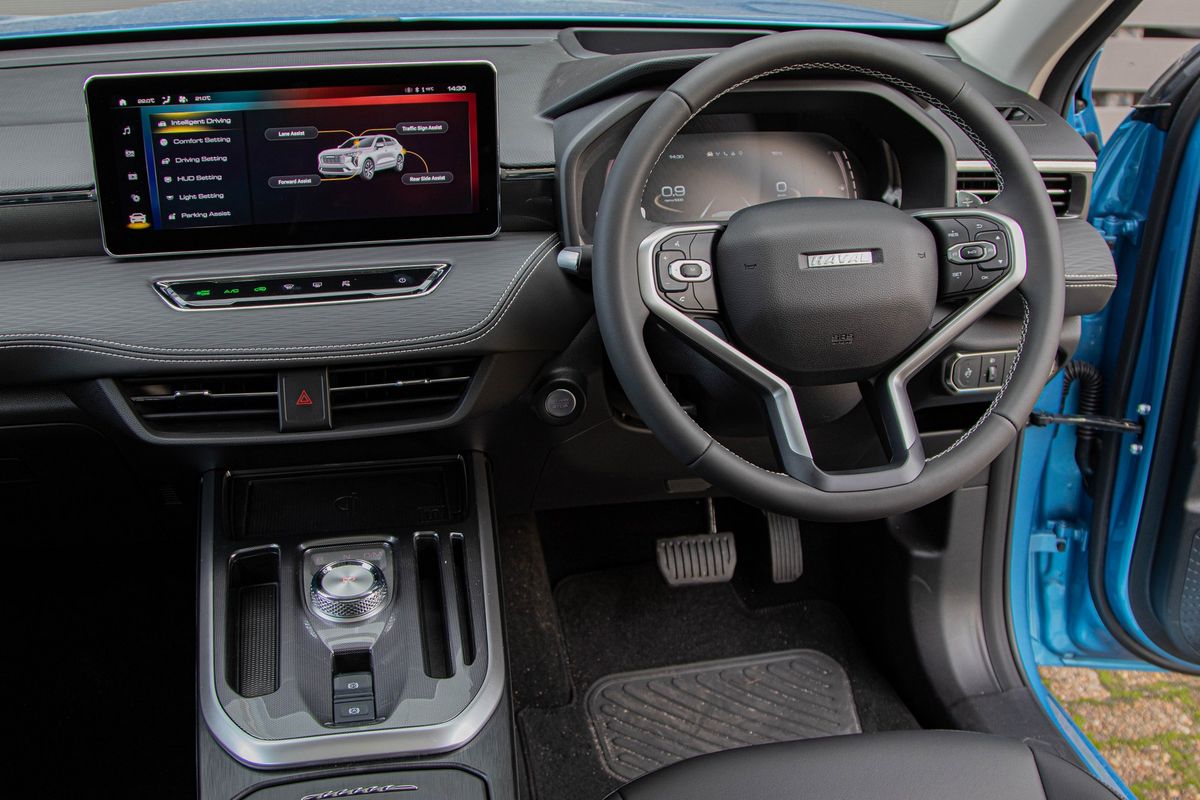
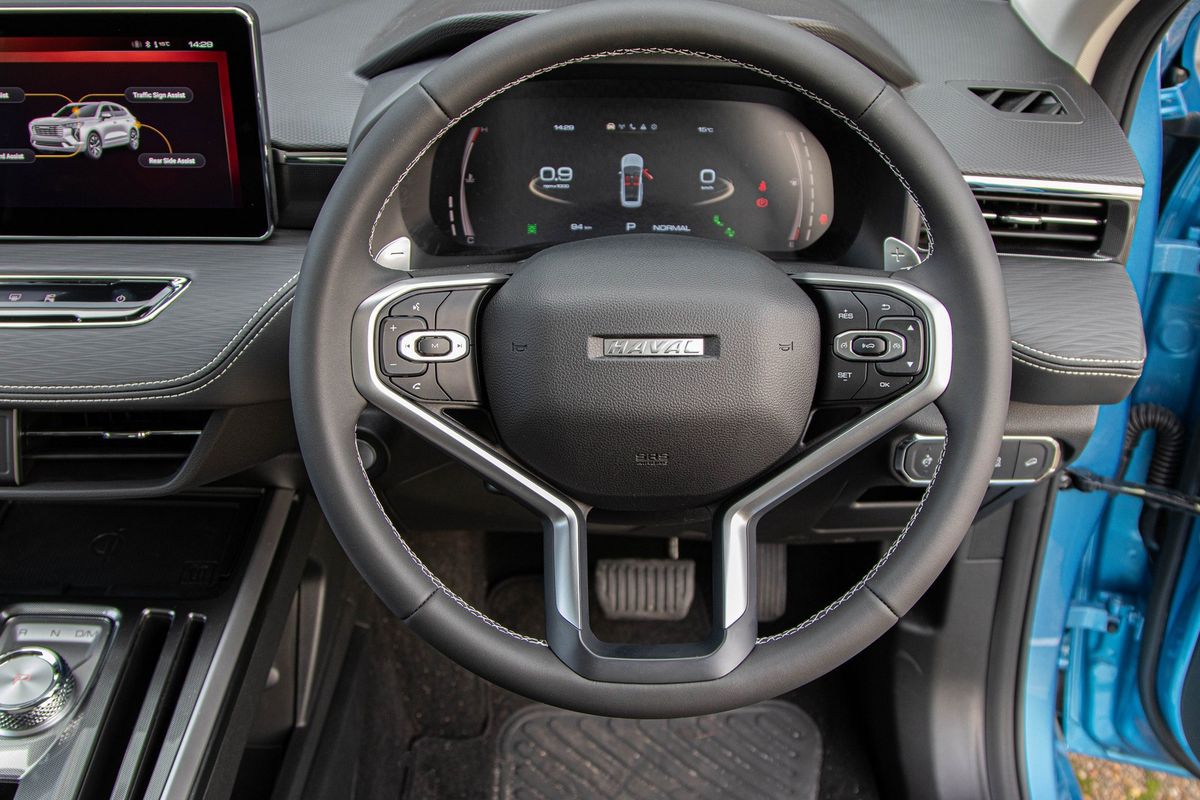
Modern, minimalistic cabin is finished in quality materials and boasts class-leading tech.
Now, this is where the Jolion really gets into its stride… For a vehicle of this type, priced at just below the R400 000 mark, the Jolion 1.5T Super Luxury has a simply unheard-of standard specification for its segment. In fact, some of the safety features are not even available as options on some premium crossovers, at twice the price…
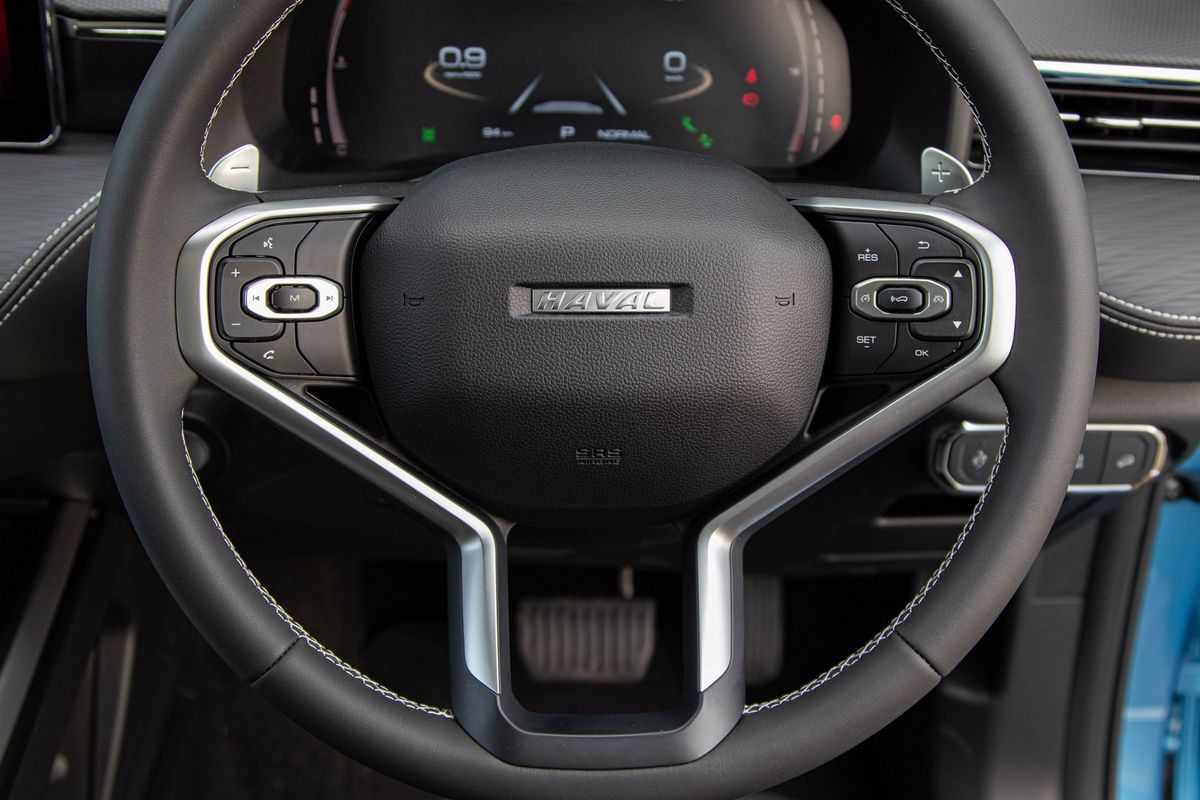
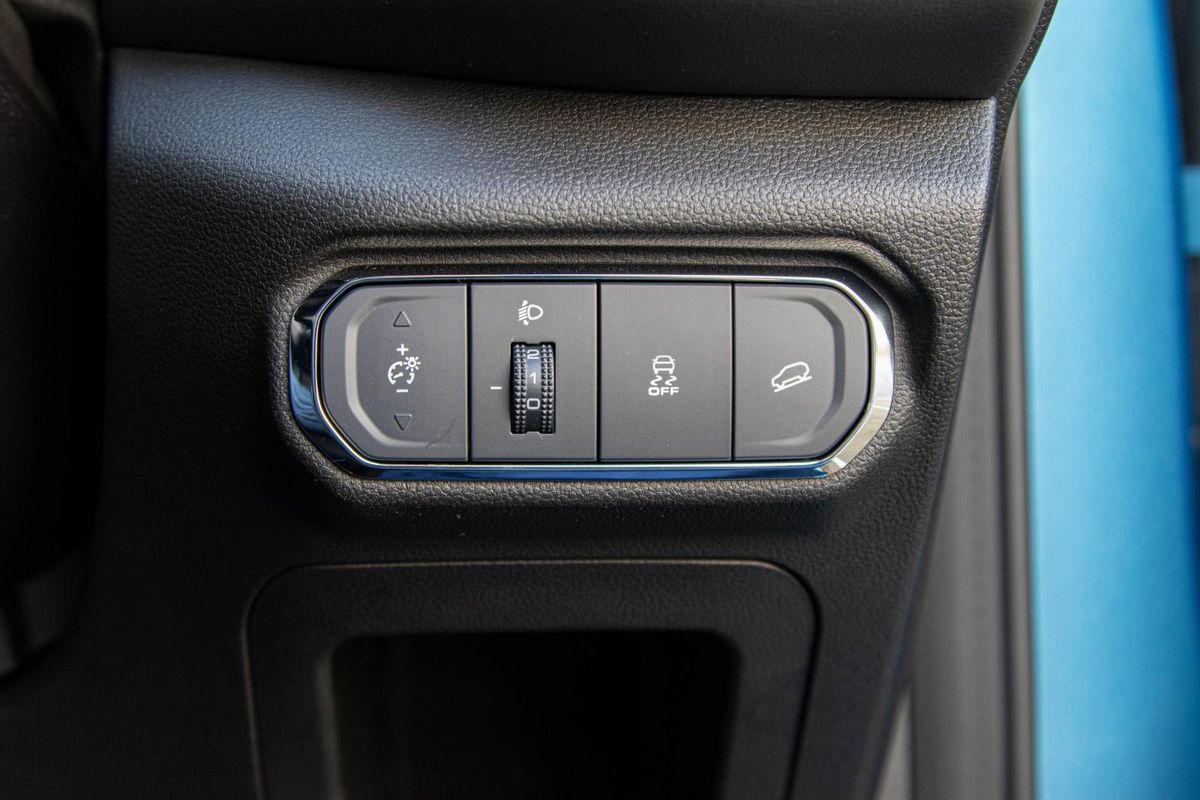
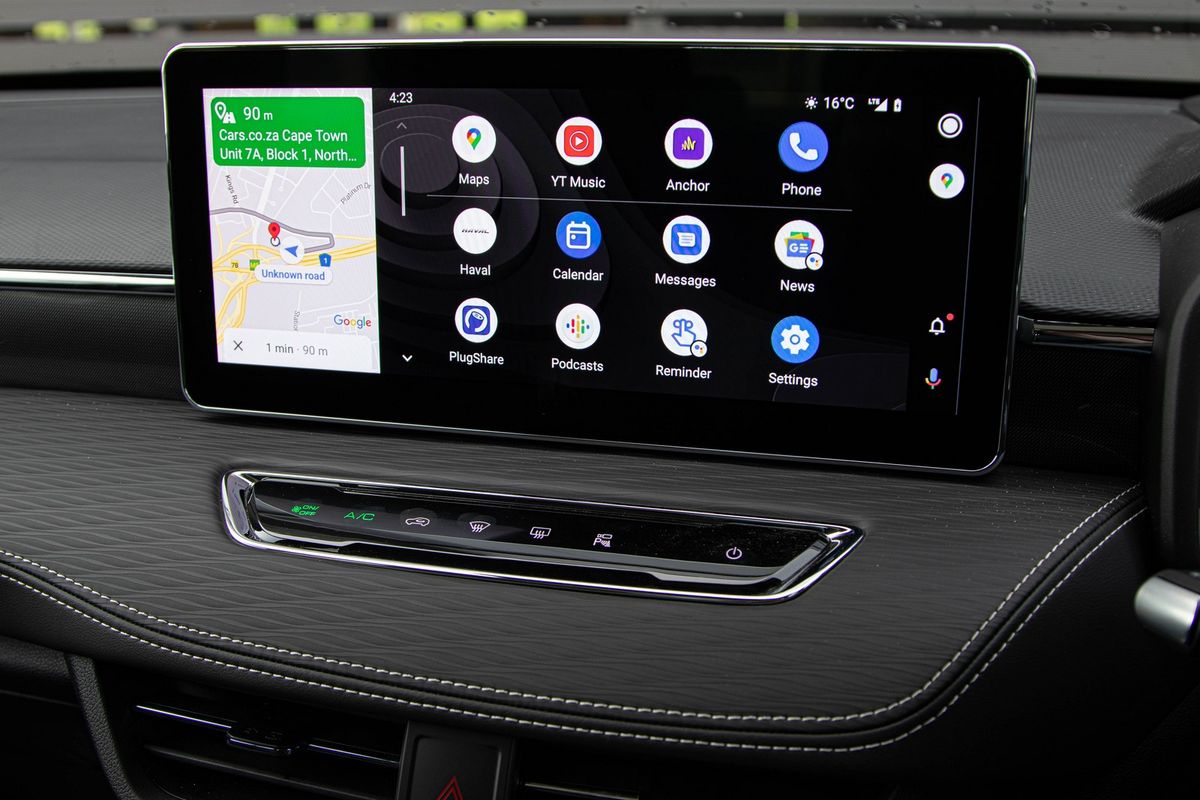
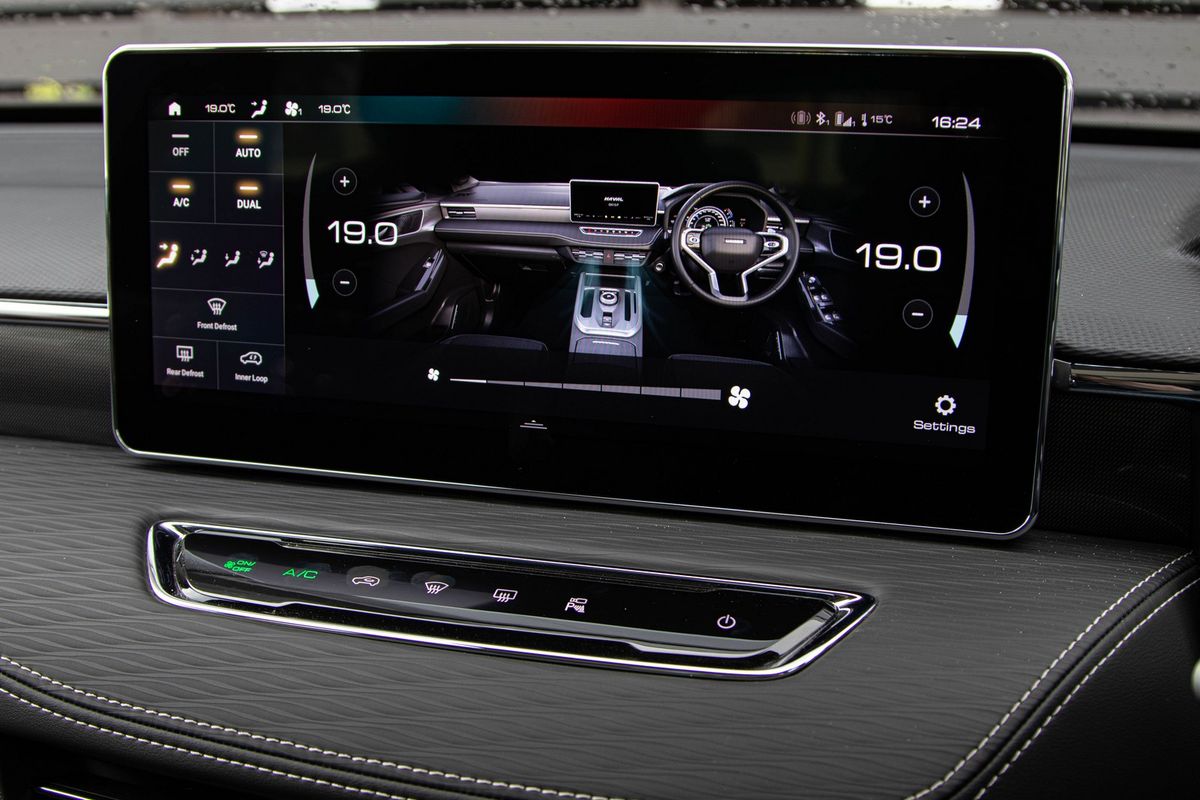
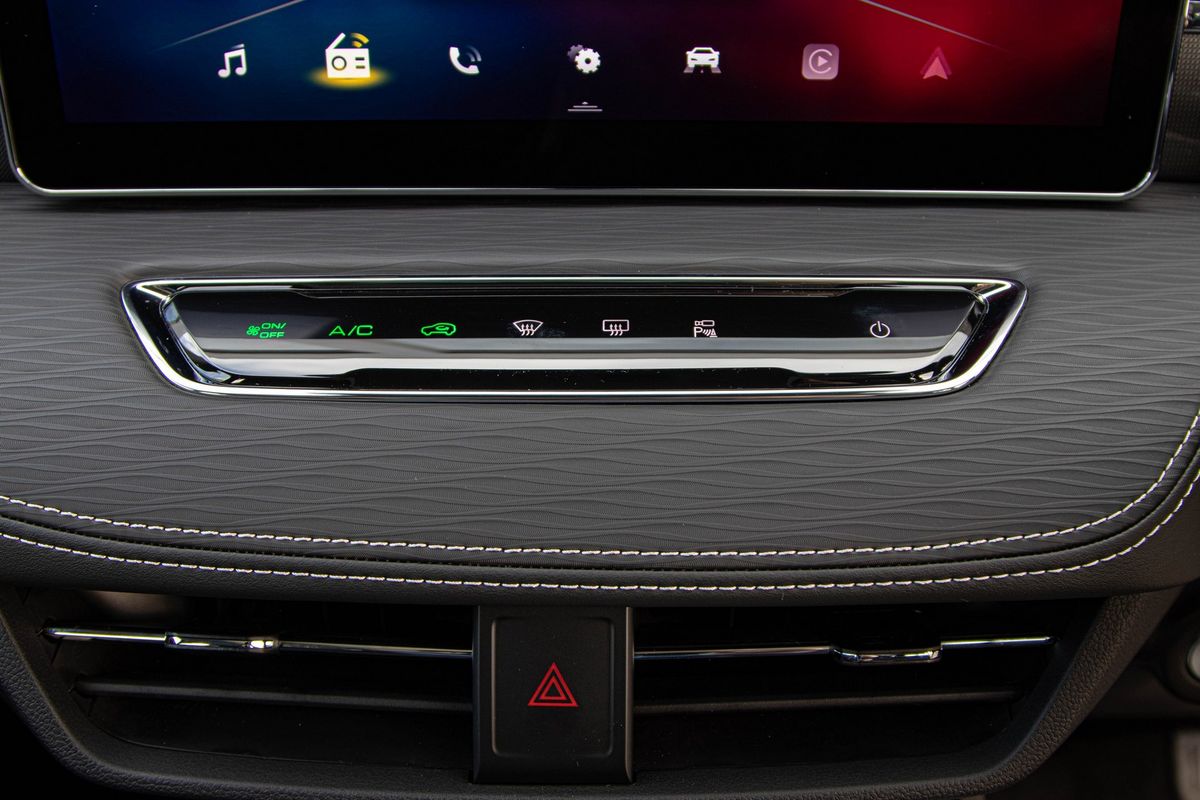
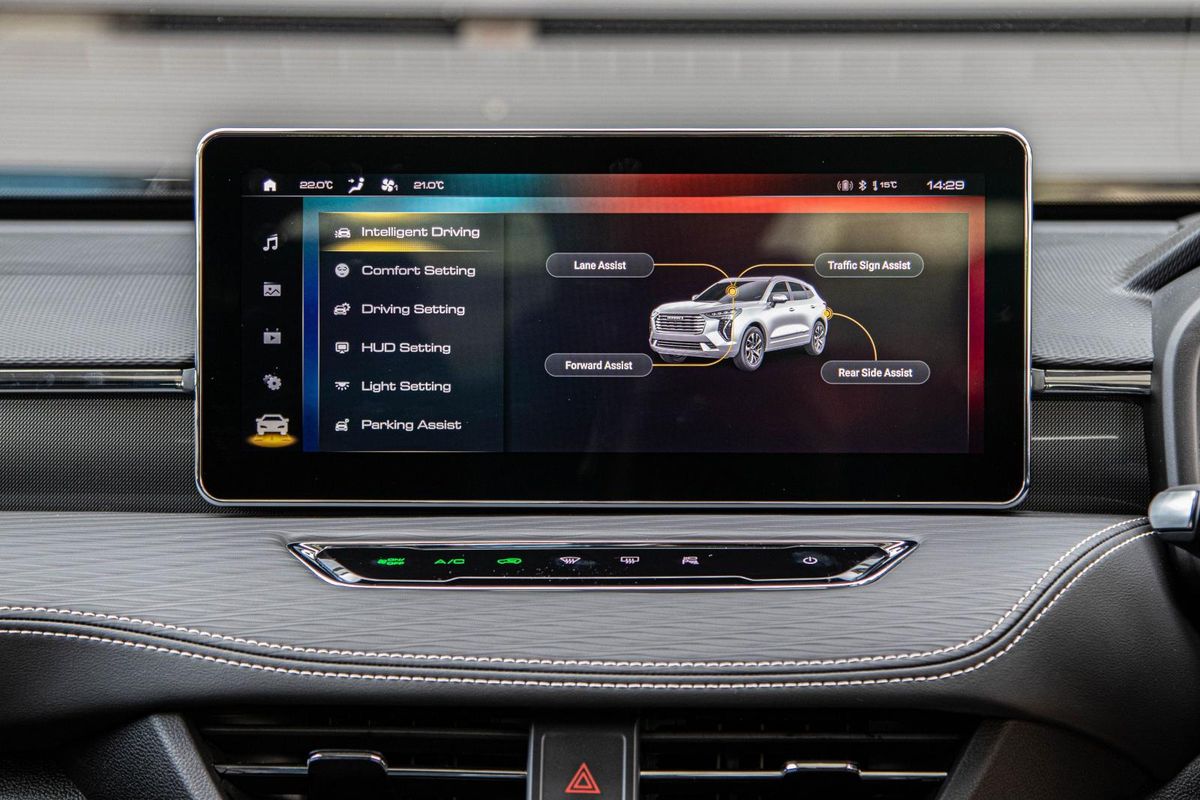
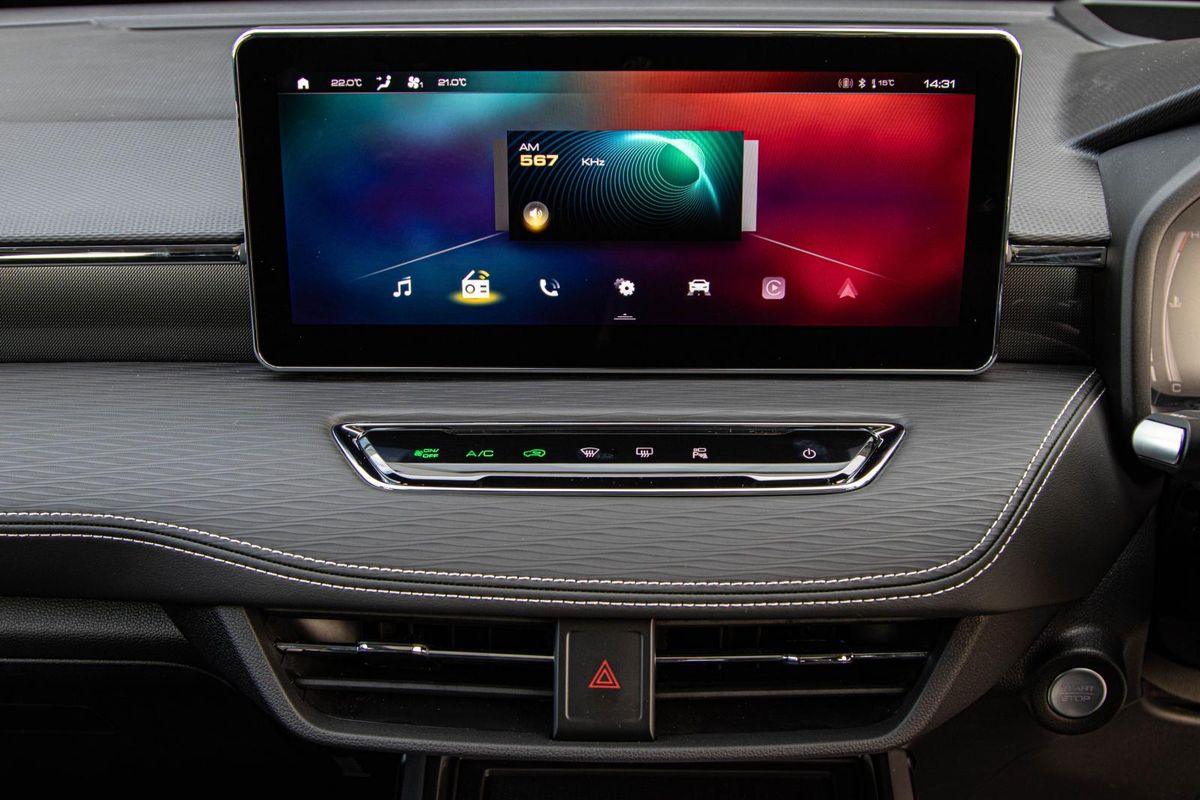
First, however, a note on the fascia design. Haval’s designers sought a very modern, minimalistic look, which is why the cabin is remarkably free of buttons. This gives the fascia a very clean, upmarket appearance, further boosted by the use of quality materials and excellent fit and finish. It does, however, also mean that it may take you some time to get used to controlling major features, such as the climate control system (dual-zone, as standard) through the big, very slick-looking 12.3-inch infotainment touchscreen. They’ve also done away with a volume knob (except for the buttons on the wheel).
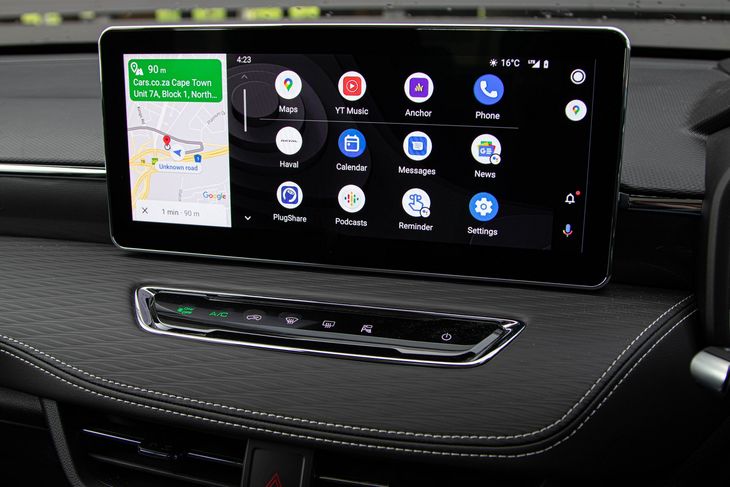
The big 12.3-inch infotainment screen allows for Android Auto/Apple Carplay functionality.
The infotainment system features slick graphics, is customisable (in terms of choice of backgrounds, etc), and offers Android Auto and Apple Carplay functionality (again, as standard). It is worth noting, however, that the deeper one delves into the sub-menus of the system, the poorer the on-screen grammar becomes…
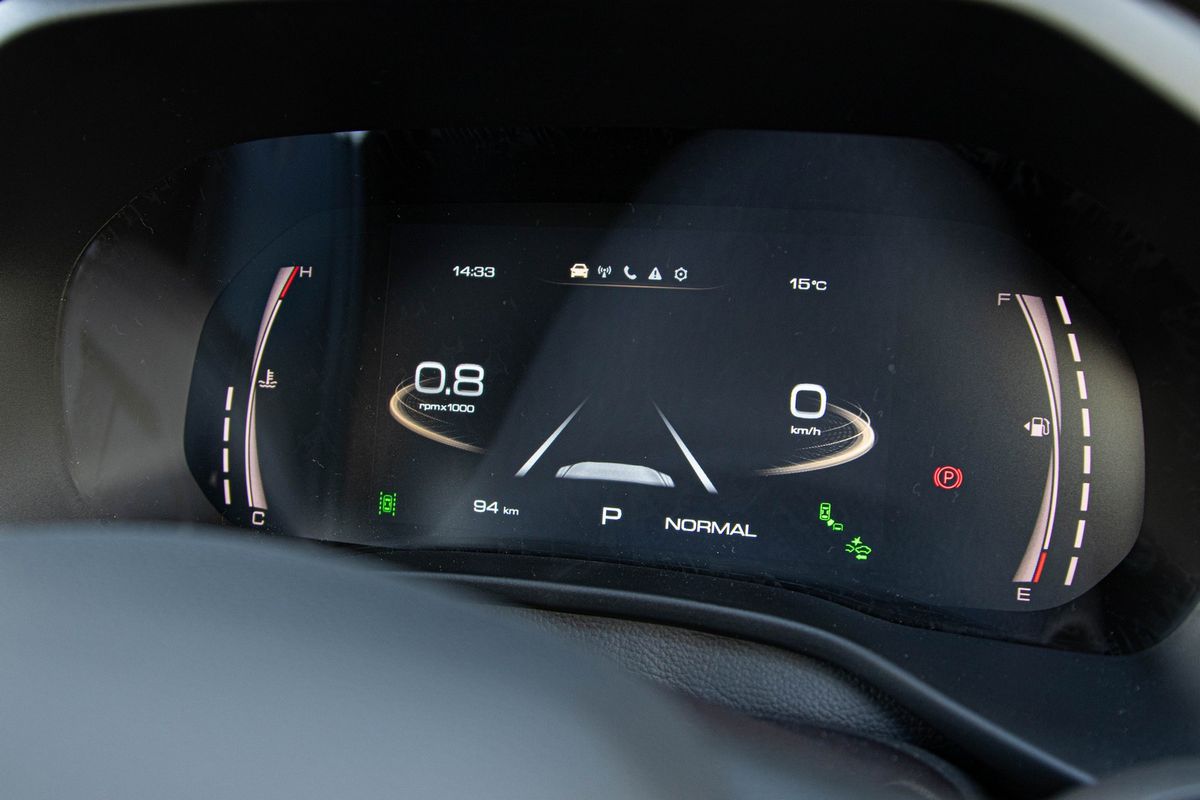
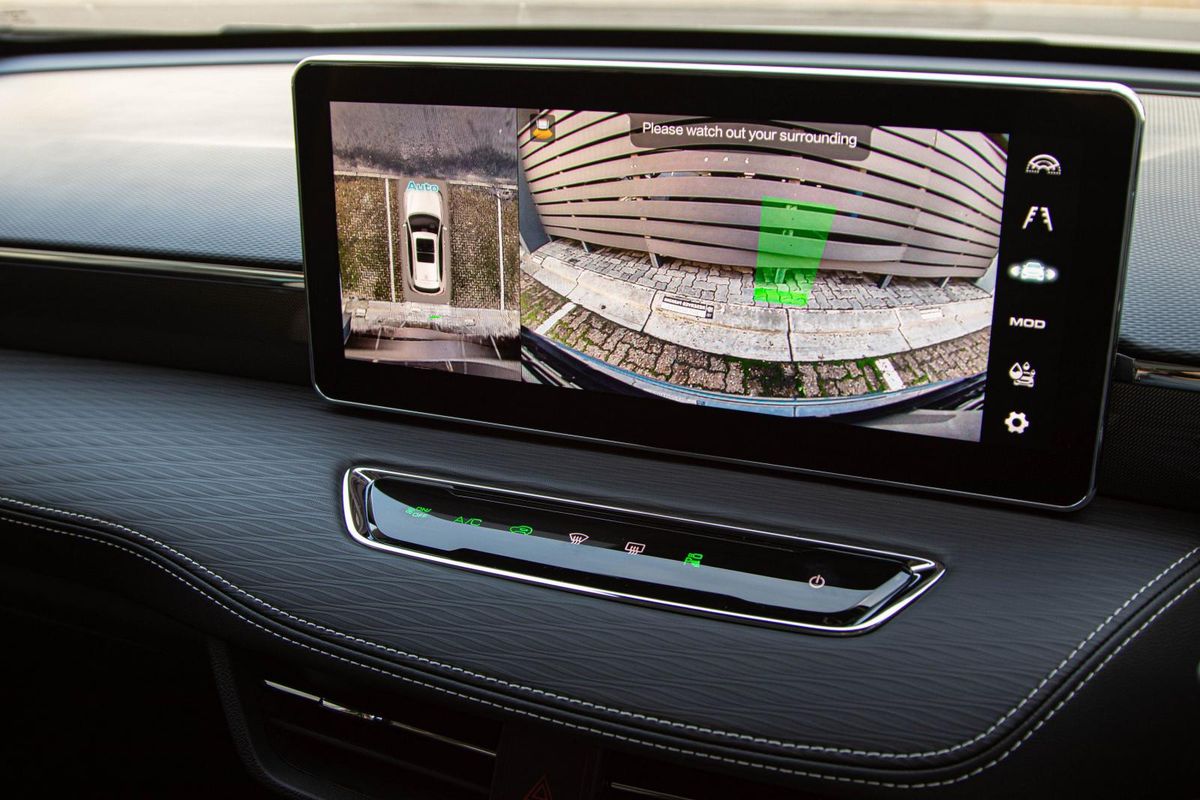
That said, this is easily the most comprehensive and most attractive infotainment/screen combination on any model in this segment. But that’s not all, folks, you also get a digital instrument cluster, as well as a head-up display. Another very attractive standard feature is a full 360-degree camera system, the likes of which are usually found on much more expensive vehicles.
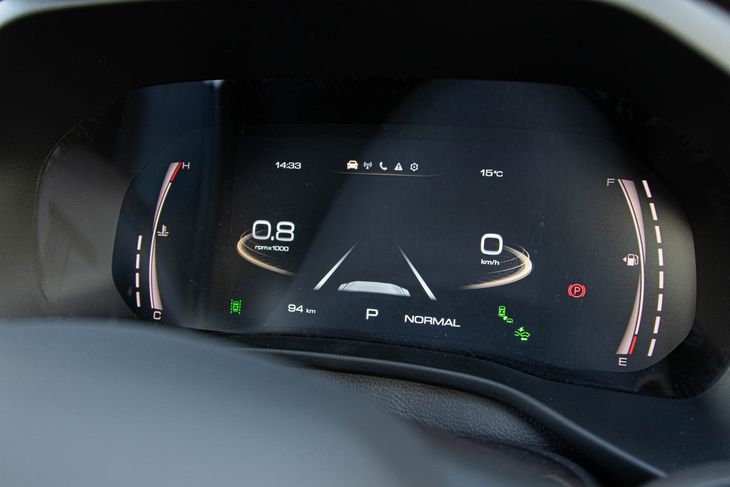
Digital instrumentation is another feature not generally fitted as standard to vehicles in this segment.
The array of standard luxury and infotainment features is impressive, but what sets this 1.5T Super Luxury variant apart from its siblings (and from much of the competition, truth be told) is its eyebrow-raising active safety features package. Adaptive cruise control is standard, which includes Traffic Jam Assist (that means the vehicle will crawl and brake autonomously in low-speed traffic), as are the traffic-sign recognition and pedestrian/cyclist detection with automated emergency braking functions.
Impressively, you also get a lane-departure warning function in conjunction with lane-keep assist and active lane-centre keeping (LCK). All of this is very good, of course, and during our test period, all the active safety systems worked very efficiently in everyday traffic conditions. Having said that, they can be a trifle intrusive, because they prompt the Jolion to emit a plethora of beeps and alerts as the vehicle’s sensors detect “potential trouble”. If you delve into the infotainment system, however, there are menus where you can lessen the severity of the notifications and even deactivate some functions.
Performance and fuel economy
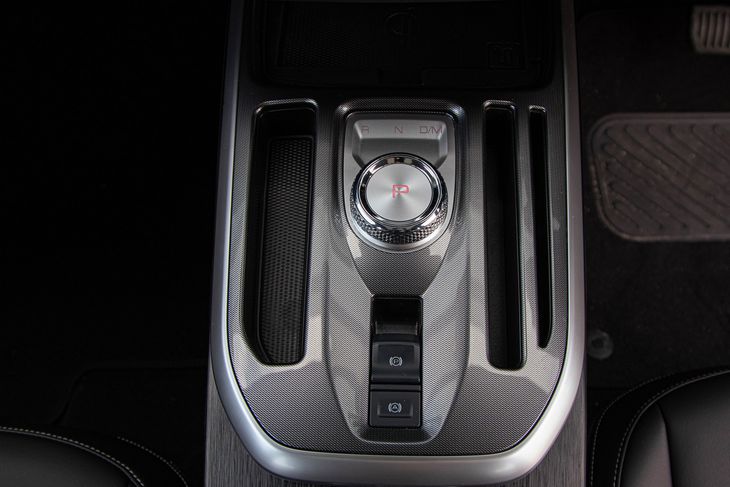
A smart-looking rotary knob controls the Jolion’s 7-speed dual-clutch transmission. Note neat storage slots for cards, smartphones etc.
The Haval Jolion is powered by the same 1.5-litre 4-cylinder turbopetrol engine that served in the H2. It’s not a particularly punchy unit, with 105 kW on offer between a relatively heady 5 600 and 6 000 rpm, and torque of 210 Nm between 2 000 and 4 400 rpm. In the H2, and in manual versions, in particular, the engine suffered noticeable turbo lag and had to be kept “on the boil” with frequent gear shifting. We’ve not yet driven a Jolion with a manual gearbox, but this new 7-speed dual-clutch transmission appears to have been cleverly matched with the engine’s performance characteristics.
In fact, we would go as far as to say that the transmission “masks” most of the engine’s deficiencies, because it actually comes across as being a pleasingly throttle-sensitive powerplant during normal driving – there are also driving modes on offer should you want to attempt to sharpen things up – or prioritise fuel economy. Ultimately, however, there are more refined powerplants on the market… When pushed hard, the Jolion’s engine sounds strained because the transmission tends to immediately reach for the upper end of the rev range, which, of course, is where the peak power resides.
Fuel economy, or the relative lack thereof, remains our main gripe with the overall package. Haval claims an average fuel economy figure of 7.5 L/100 km, but that’s simply not a realistic return; even when we engaged the Economy drive mode and adopted a measured driving style, we couldn’t achieve a comparable (indicated) consumption readout. It’s also a drivetrain that, in terms of fuel efficiency, appears to be very sensitive to driving style (more so than usual) and, for that reason, we suspect you’re more likely to see real-world consumption figures of between 9.0 and 12 L/100 km.
What does the Haval Jolion cost in South Africa?
The Haval Jolion 1.5T Super Luxury is the flagship of the Jolion line-up and is priced at R398 900 (July 2021). There are no optional extras to be added to this product. The price includes an impressive 5-year/100 000 km warranty and 5-year/60 000 km service plan.
Shop for a new or used Haval Jolion here.
Haval Jolion Review: Verdict
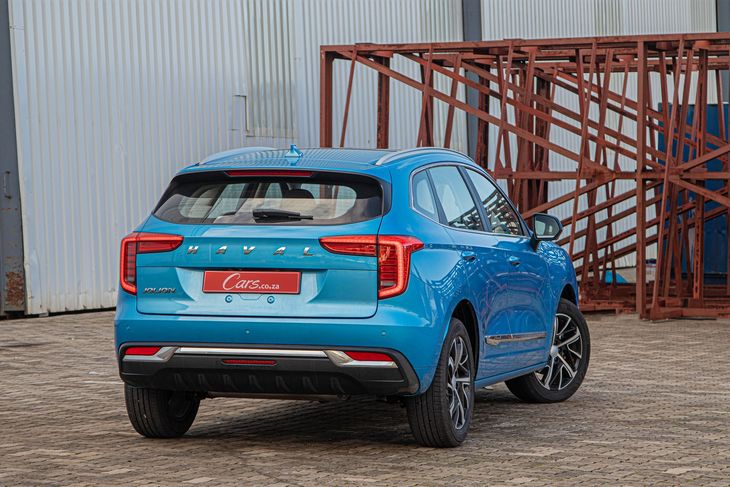
Deservedly popular straight-off-the-bat, the Haval Jolion is the first Chinese-made vehicle to genuinely cause market disruption in SA.
Given the extremely high interest in this newcomer to the market, the Haval Jolion was put through extra-intensive scrutiny during its tenure in our test fleet. In the end, we’re not sure what is more impressive – the seemingly multi-generational leaps in overall design and features that Haval has achieved with this model… or the VERY keen price at which the brand offers this level of product.
Only time will tell how sustainable the fledgling Chinese SUV brand’s aggressive pricing will be, but the reality of the matter is that even if the Jolion cost the same as its established rivals it would be worthy of very serious consideration – the offering itself has simply dramatically improved, although we still have concerns about its fuel economy.
So, should you seriously consider the Haval Jolion when shopping for a small crossover/compact family car in the R300 000 to R400 000 price bracket? In short… you’d be silly not to. In fact, some buyers looking for a new vehicle in the R400 000 to R600 000 ballpark may do well to give this newcomer a closer look!
We trust that you found this Haval Jolion review to be useful and insightful!
Frequently Asked Questions
Is the Haval Jolion a good car to buy?
According to Cars.co.za, the Haval Jolion is considered a good car to buy as it is a popular choice in the compact SUV segment. It offers an appealing blend of style, standard features, practicality, and value-for-money.
Is the Jolion a fuel-efficient car?
While Haval claims a fuel consumption range of 5.1-8.1 L/100km, the article notes that the car has been criticised for higher-than-expected fuel consumption in real-world driving situations.
Is the Haval Jolion all-wheel-drive?
No, the article specifies that the Haval Jolion is offered exclusively as a front-wheel-drive car.
Related Content
Haval Jolion (2025) Specs & Price in South Africa
Haval Cars for Sale in South Africa (2025)
Reviews
Haval Jolion HEV (2023) Review
Comparison articles
Haval Jolion vs Jolion Pro: What’s the Difference?
Haval Jolion Hybrid Vs Toyota Corolla Cross Hybrid: Which is the better buy?
Haval Jolion Vs Toyota Corolla Cross – Which should you buy?
Buyer’s Guide