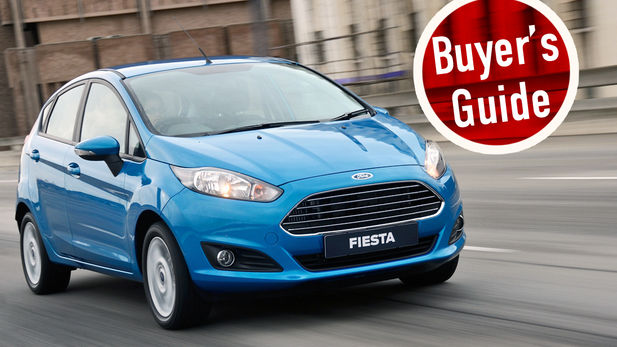
You can no longer buy a new Ford Fiesta, but have you considered acquiring a used example? Let’s take a closer look at the 6th-gen iteration of the compact hatchback…
After a 47-year run, the Ford Fiesta is no more. Global production of the Blue Oval’s compact hatchback ended in mid-2023 (with little fanfare), although the supermini actually exited South Africa before that.
Yes, though the 7th-generation model was launched in South Africa in 2018, the facelifted version didn’t even make it to local shores, with stock running dry in early 2022. For the record, the Mk7 wasn’t nearly as popular in Mzansi as its predecessor and it’s for that reason we’ll concentrate on the Mk6 model here.
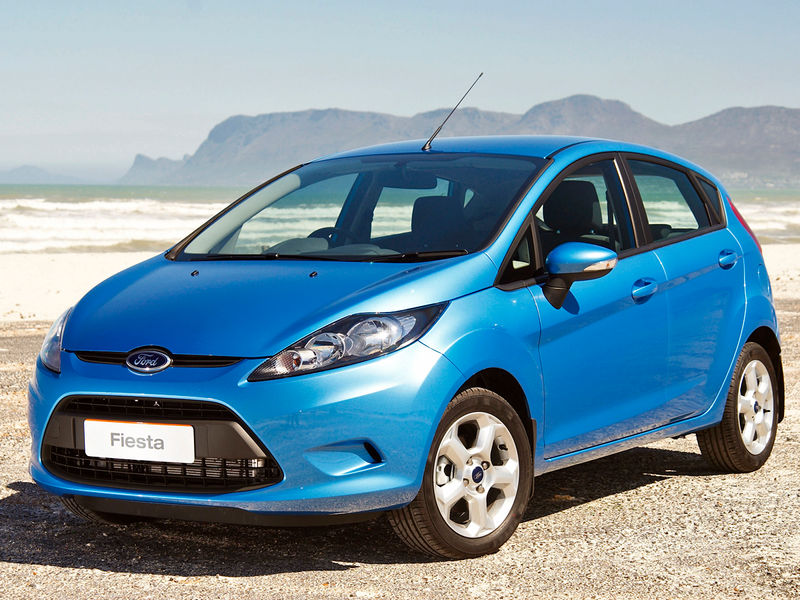
As the first model conceived under the “One Ford” strategy (which would see the brand develop vehicles for a global audience instead of offering a variety of variants in regional markets), the 6th-gen Fiesta was described by the then FMCSA marketing manager as Ford’s “most significant project since the Model T”.
As such, the Cologne-manufactured hatch was underpinned by the B2E version of the Blue Oval’s global B-car platform. Ford did offer the Mk6 Fiesta in 4-door guise in our market, but we’ll focus on the 3- and 5-door hatchback variants in this article, because the sedan version sold in extremely limited numbers in South Africa. In fact, at the time of writing, not a single Fiesta sedan was listed for sale on Cars.co.za.
Ford Fiesta line-up in South Africa
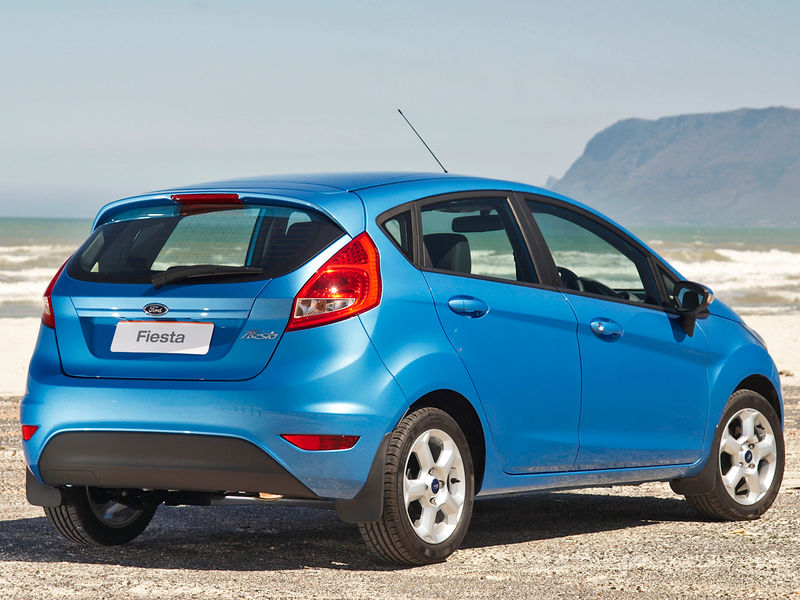
Preceded by a trio of Verve concepts, the 6th-gen Fiesta enjoyed its global premiere at the Geneva International Motor Show in March 2008. By October of the same year (right after making an appearance at the Johannesburg International Motor Show), the new model rolled onto local dealership floors.
Initially, the front-wheel-drive Fiesta hatchback was offered with a choice of 3 engines (2 naturally aspirated petrol motors and a turbodiesel) and 3 trim levels. There were 3- and 5-door versions, though only manual gearboxes were available. At launch, the local range comprised the following 8 derivatives:
- 1.4 Ambiente 5-door 5MT (71 kW/125 Nm)
- 1.6 Ambiente 5-door 5MT (88 kW/149 Nm)
- 1.6 TDCi Ambiente 5-door 5MT (66 kW/200 Nm)
- 1.4 Trend 5-door 5MT (71 kW/125 Nm)
- 1.6 Trend 5-door 5MT (88 kW/149 Nm)
- 1.6 Titanium 5-door 5MT (88 kW/149 Nm)
- 1.4 Titanium 3-door 5MT (71 kW/125 Nm)
- 1.6 Titanium 3-door 5MT (88 kW/149 Nm)
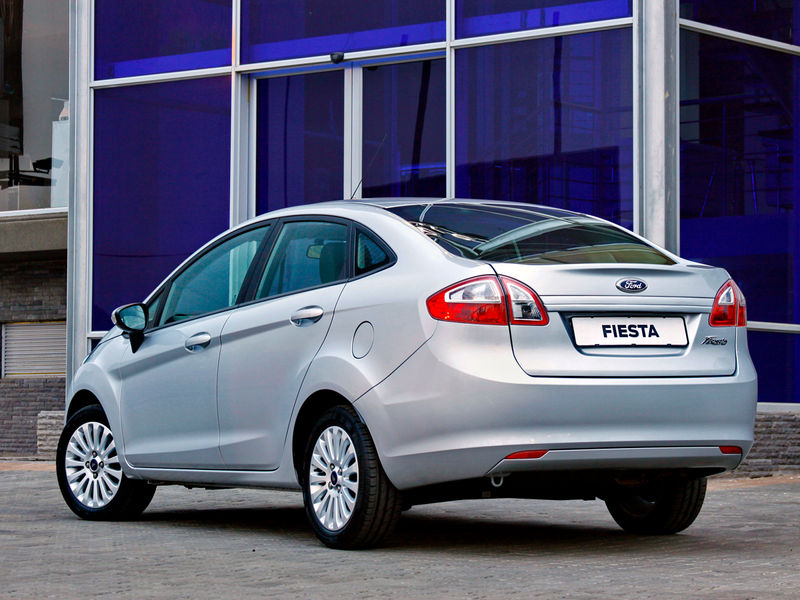
In November 2010, the Fiesta line-up expanded with the arrival of 5 sedan derivatives, along with a new 1.6 Sport 5-door. FMCSA also rolled out the option of a 6-speed dual-clutch automatic transmission (yes, the much-maligned PowerShift unit), mated with the 1.6-litre petrol engine and offered in either 5-door hatch or 4-door saloon form. With the 3-door 1.4 Titanium quietly scrapped, the range nevertheless ballooned to 13 derivatives at this point. Interestingly, engine outputs were adjusted slightly, with the 1.4 Sigma moving to 70 kW/128 Nm, the 1.6 TiVCT to 88 kW/152 Nm and the 1.6 TDCi DV6 to 66 kW/212 Nm.
In October 2012, Ford opened orders for the limited-edition Fiesta Magnet hatchback, which boasted 99 kW and 160 Nm from its uprated 1.6-litre petrol motor, along with sports suspension, a body kit, black 17-inch alloy wheels, leather-trimmed (and heated) front sports seats, alloy pedals and an upgraded audio system. Just 75 units were available, each finished in black.
Facelifted Ford Fiesta brings EcoBoost power
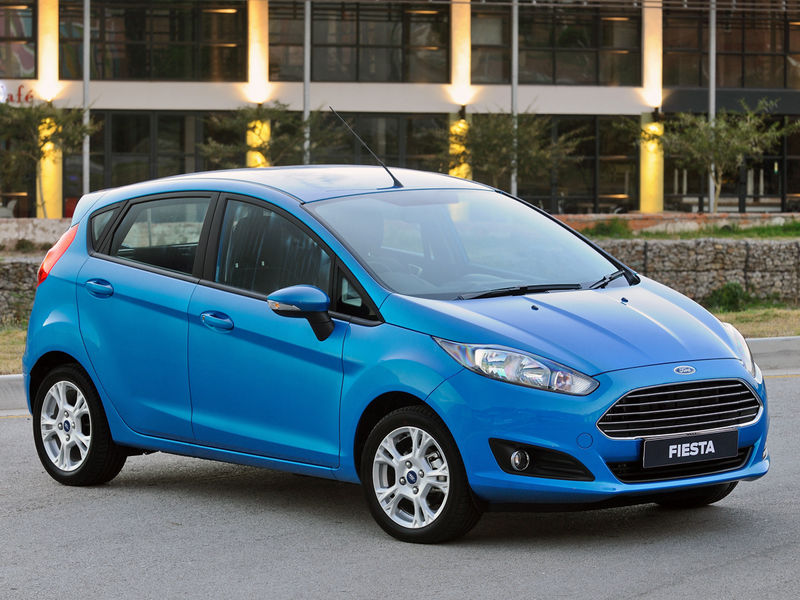
In the opening month of 2013, the facelifted Fiesta hatchback made its local debut. It incorporated fresh exterior styling, a handful of cabin upgrades and the option of the Dearborn-based firm’s turbocharged 1.0-litre, 3-cylinder EcoBoost petrol engine. The latter generated 92 kW/170 Nm and was available in mid-spec Trend and flagship Titanium guises (each with a 5-speed manual gearbox as standard).
The 1.6-litre petrol powerplant fell away at this point, while the 1.6 TDCi’s outputs were now listed as 70 kW and 200 Nm (with its claimed combined fuel consumption improving to a mere 3.6 litres per 100 km). Both the 3-door body style and the sedan were removed from the local range at this mid-cycle update.
However, the 3-door option returned when the Fiesta ST blasted onto the scene in May 2013, powered by a 1.6-litre, 4-cylinder turbopetrol engine that churned out 134 kW and 240 Nm. With drive directed to the front axle through a 6-speed manual gearbox, the Blue Oval’s compact hot hatch was claimed to complete the 0-100 kph sprint in 6.9 seconds before topping out at 220 kph. Highlights included a new torque-vectoring system, 3-mode electronic stability control and Recaro front seats.
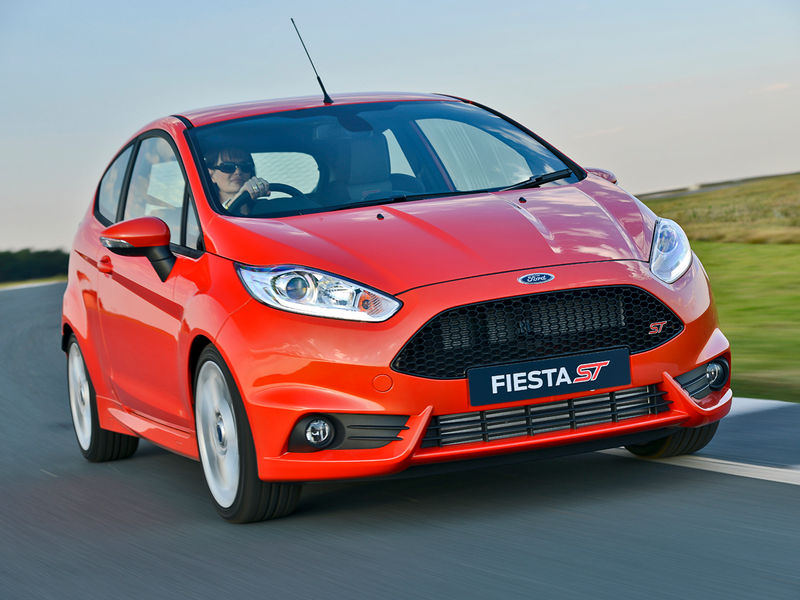
In November of the same year, the 1.0-litre 3-cylinder turbopetrol engine became available in conjunction with Ford’s 6-speed dual-clutch automatic transmission (in Trend trim), though peak power was reduced to 74 kW. By March 2015, the PowerShift cog-swapper had been extended across all 3 equipment grades, before an Ambiente version of the 1.0 EcoBoost (manual, but with the lower-output 74 kW tune) joined the range in December. At this stage, the line-up comprised 11 derivatives, including the ST.
The final significant change to the Mk6 Fiesta range came in mid-2017, when the Fiesta ST200 arrived, armed with improved peak outputs of 149 kW and 290 Nm (with a further 11 kW and 30 Nm briefly available on overboost). Sporting a shorter final-drive ratio, the ST200’s claimed 0-100 kph time fell by 2-tenths of a second compared with the ST, while the suspension and power steering also benefitted from tweaks. Just 160 units were allocated to South Africa, each painted in Ford’s “Storm Grey” hue. Though we didn’t know it at the time, the ST200 would ultimately serve as a local swansong for the ST badge.
What are the advantages of a Ford Fiesta?
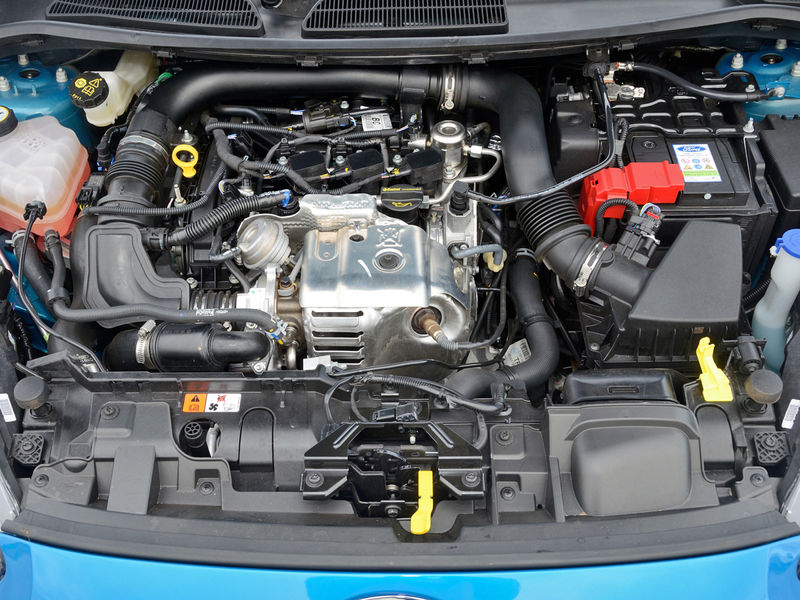
Broad selection of engines: The Mk6 Fiesta range included a variety of engines, allowing this compact hatchback to appeal to all manner of tastes. The refreshingly uncomplicated (and naturally aspirated) 1.4-litre petrol motor was available throughout the decade-long lifecycle, while the likewise atmospheric (but pre-facelift-only) 1.6-litre version was pitched at buyers who sought a smidgen more grunt.
Of course, in pure power terms, the top step was occupied by the forced-induction mill from the ST hot hatch. The 1.6 TDCi, meanwhile, was the economy champion, while the introduction of the turbocharged 1.0-litre, 3-cylinder (with the facelift in 2013) attracted consumers seeking a balance between urge and economy (even if achieving anything near Ford’s claimed figures in the real world proved rather difficult).
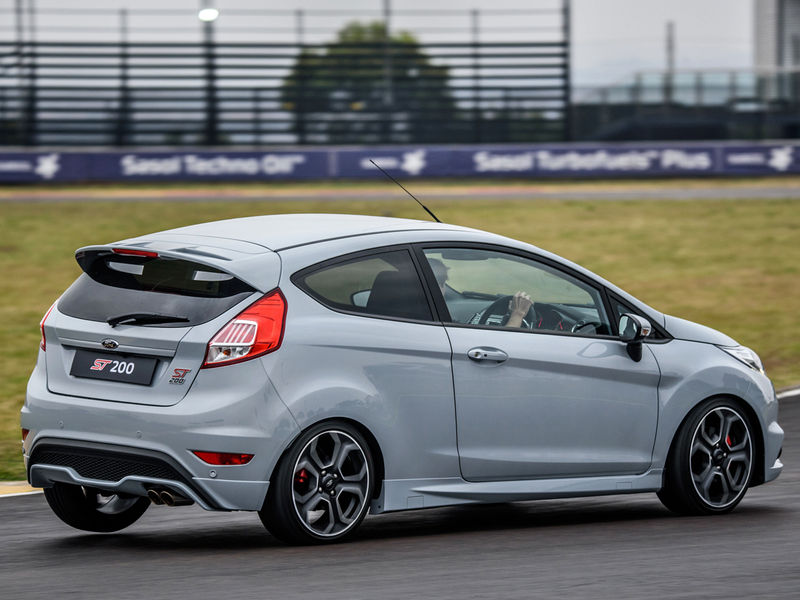
Fantastic fun to drive: In short, there was nothing in this segment that offered a more enjoyable driving experience than the dynamically gifted Mk6 Fiesta. Endowed with quick steering and superb mid-corner poise, the Fiesta was undoubtedly the segment’s “driver’s car”. Though the grin factor increased when more power was added (culminating in the frankly excellent ST200), even the common (or garden variety) derivatives were able to deftly balance impressive agility with the ability to cruise in comfort.
ST the last of a hot-hatch breed: While the Volkswagen Polo GTI and Renault Clio RS of the era each moved to a 5-door body shell and introduced a dual-clutch transmission (and the Opel Corsa OPC and Peugeot 208 GTi exited our market), the Fiesta ST resolutely stuck with 3 doors and a 6-speed manual cog-swapper. In essence, Ford’s baby hot hatch eschewed the “growing up” trend and was all the better for it – soldiering on as one of the last to offer old-school hot-hatch thrills. It’s a shame the ST version of the 7th-gen Fiesta – featuring a 1.5-litre 3-cylinder turbopetrol motor – never made it to South Africa.
What are the disadvantages of a Ford Fiesta?
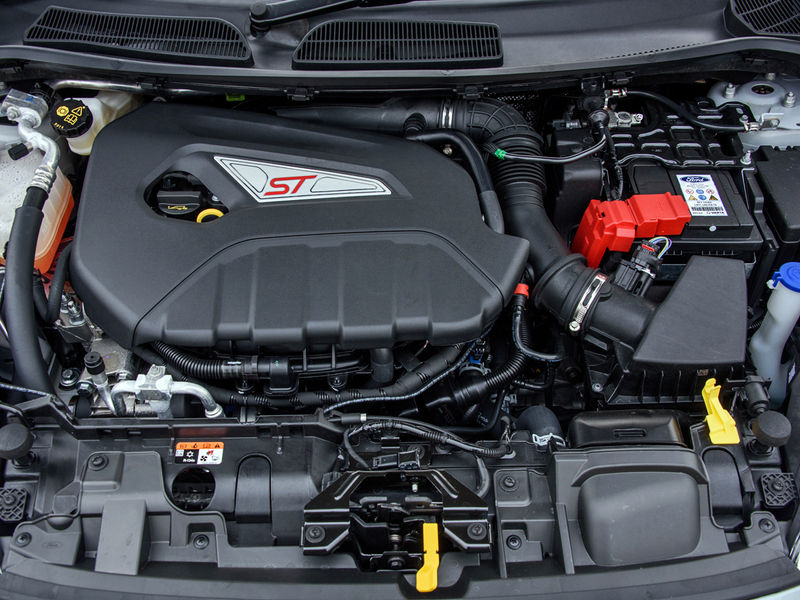
Engine fire risk in Fiesta ST: While you’re probably familiar with the widely reported Kuga fire scandal, you may not be aware that FMCSA’s safety recall campaign (pertaining to its medium SUV) was extended to include the Fiesta ST’s 1.6-litre engine in March 2017. Insufficient coolant circulation could cause the engine to overheat, resulting in a crack in the cylinder head, which could, in turn, lead to a pressurised oil leak. This oil could then come into contact with a hot engine surface, increasing the risk of a fire.
In South Africa, Ford said the safety recall included approximately 1 078 units of the Fiesta ST (those produced between September 2012 and December 2014). So, depending on the model year, check whether the vehicle was taken in for the applicable hardware and software upgrades. In addition, we should point out we’ve heard of a few (local) instances of ring-land failure on this engine as well.
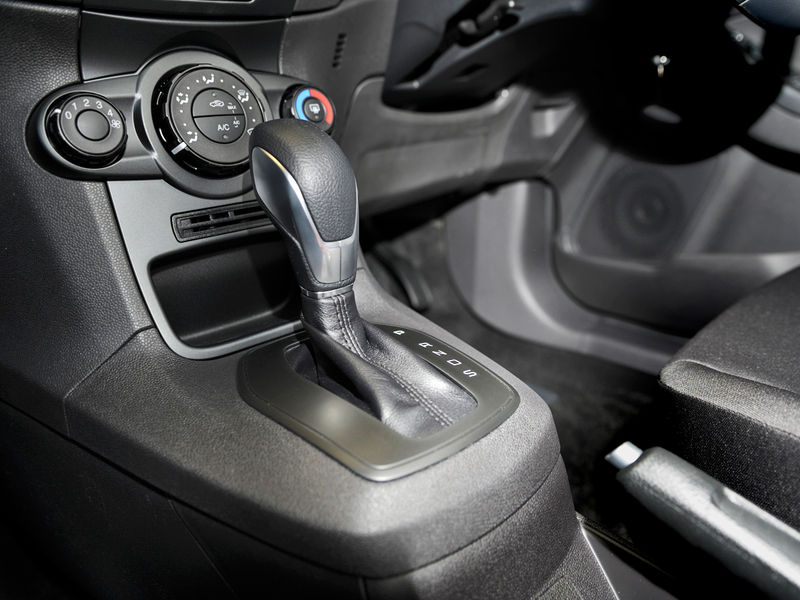
PowerShift transmission woes: As we’ve noted in a couple of other Ford buyer’s guides (such as the EcoSport), the PowerShift-branded 6-speed dual-clutch automatic transmission in the Fiesta Mk6 tended to suffer from leaking seals that quickly led to oil contamination of the dry clutch module. This was a known fault – Ford even faced legal action in many countries and replaced countless clutches under warranty – that presented as excessive juddering, as well as jerking under acceleration.
Security-system shortcomings: In 2019, after facing a raft of complaints on social media, FMCSA said it was “aware” of potential security system problems with “certain older” EcoSport and Fiesta derivatives. The issues related to vulnerabilities around the key-lock barrel, as well as alarm systems that failed to sound when the locks were tampered with. The automaker offered customers various potential remedies at “below cost”, insisting the break-ins were “not related” to design or manufacturing faults on its part.
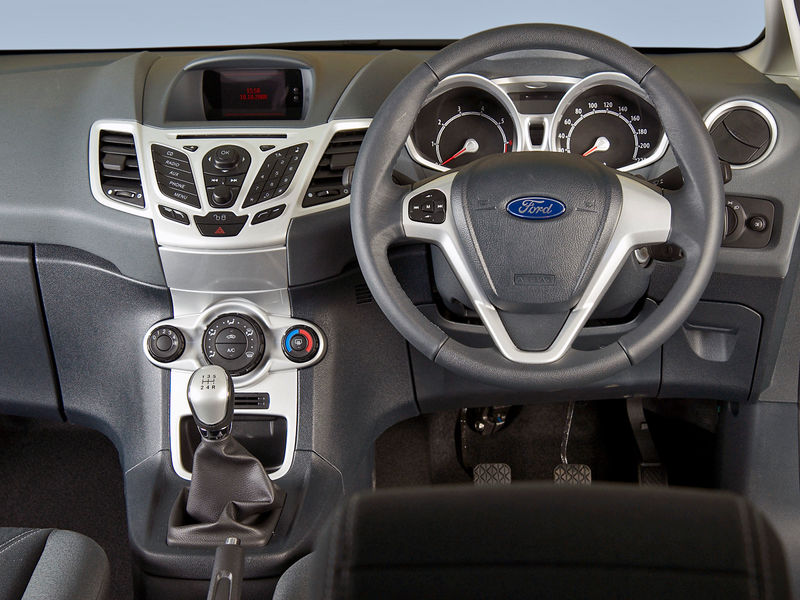
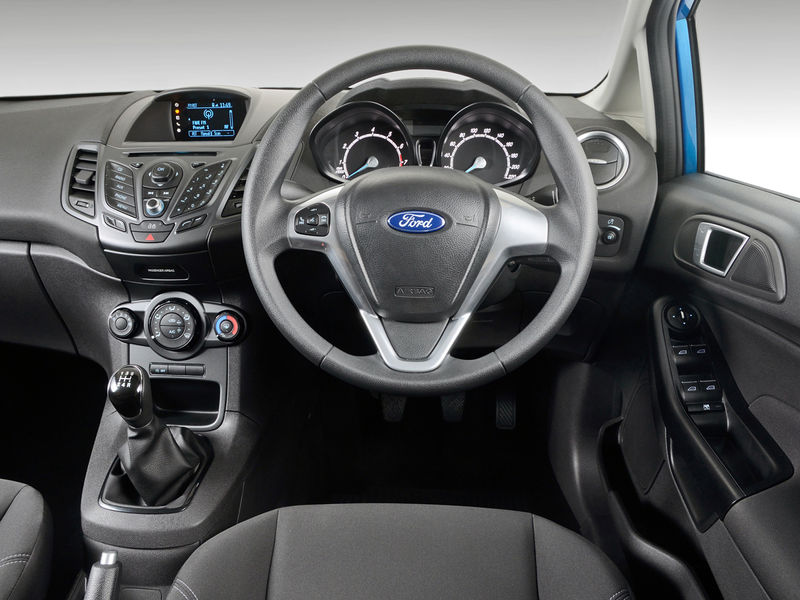
Somewhat outdated cabin: Sure, it’s a minor gripe, but we feel compelled to point out that the 6th-gen Fiesta’s cabin felt a touch outdated, particularly towards the end of its admittedly protracted lifecycle. Compared with more modern rivals, its infotainment screen was tiny and sited above a cluttered, button-festooned centre console that brought to mind the design of certain cellphones from the early 2000s.
How safe is the Mk6 Ford Fiesta hatchback?
The 6th-gen Fiesta (and the facelifted version of the model) scored 5 stars from Euro NCAP. However, it’s worth noting most SA-spec derivatives weren’t quite as well endowed in the safety department as their European counterparts. At launch, for example, all derivatives in the local range made do with dual front airbags and drum brakes at the rear. The Sport version, however, featured 7 airbags, while the PowerShift derivatives added an electronic stability programme, traction control and hill-launch assist.
At the facelift, the latter features (by then standard on the Titanium grade, in conjunction with the 1.0 EcoBoost mill) became available on Trend derivatives as an extra-cost option, while the full complement of airbags was also offered as part of an optional pack. Ford’s MyKey also made its debut at that point; the MyKey function enabled users to configure the Fiesta’s maximum speed and audio-volume limits…
How much is a used Ford Fiesta in South Africa?
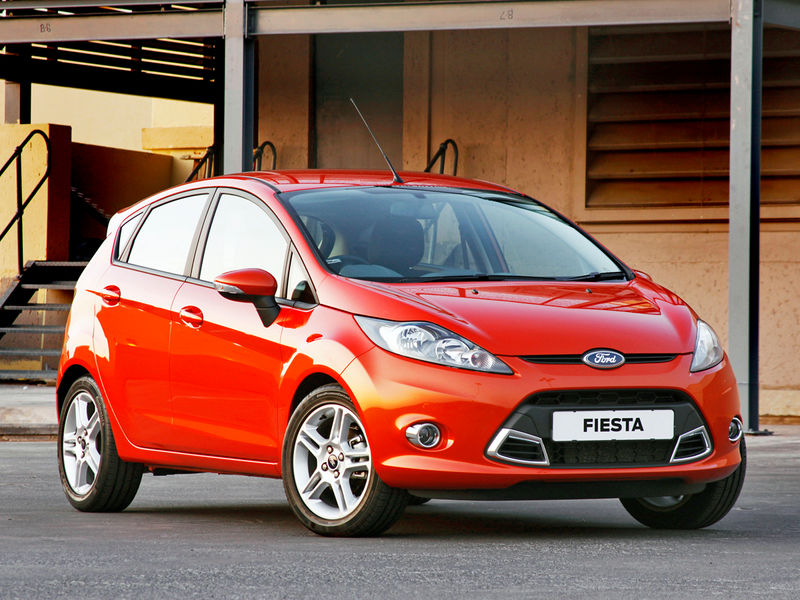
The 6th-gen Fiesta came with a 4-year/120 000 km warranty and 4-year/60 000 km service plan (with intervals of 20 000 km for petrol versions and 15 000 km for turbodiesels). Since there’s no shortage of used Fiestas available, we’d suggest simply walking away from cars that don’t have full service histories.
Of the Ford Fiesta Mk6 examples listed on Cars.co.za at the time of writing, more than 97% featured petrol power; there was only a handful of 1.6 TDCi examples; 13% had the auto transmission and no sedan versions were listed. The base Ambiente trim level was specified on around 50% of the cars.
The 1.0 EcoBoost mill was easily the most popular engine, followed by the naturally aspirated 1.4-litre motor (34%). The 3-door ST, meanwhile, made up an appreciable 13% of listings. Mileage varied from 21 000 km (on a 2009 Fiesta 1.6 Ambiente) to 240 000 km (achieved by a 2016 1.4 Ambiente).
- Below R100 000: Fascinatingly, virtually every model year was represented in the sub-R100 000 space, despite only around 7% of total stock being listed here. Many examples featured aftermarket accessories, such as alloy wheels.
- From R100 000 to R150 000: We found plenty of facelifted Fiestas in this price bracket, including several 1.0 EcoBoost examples and most of the few turbodiesel units that were available. There were even a couple of (unfortunately modified) ST derivatives here.
- From R150 000 to R250 000: At the time of writing, this was the most densely populated pricing bracket, featuring all model years and powertrains. Most buyers would likely be shopping in this space, where we discovered everything from low-mileage, early units to Titanium-spec 2018 models (not to mention a few more STs).
- R250 000 and up: If you’re in the market for a clean ST, you’d likely be searching in this space. The most expensive vehicle we encountered here was a 2017 ST200 listed at R329 900. Note that if you want to spend more than R250 000, you could easily get into the driver’s seat of a 7th-gen Fiesta.
Which Ford Fiesta should I buy?
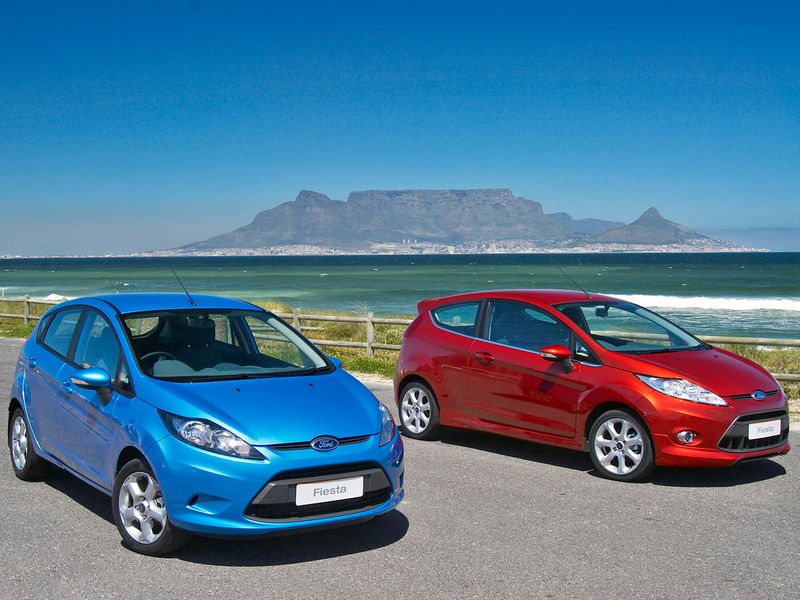
So, which is the best of the bunch? Well, let’s first rule out a few derivatives before settling on a winner. For instance, we’d advise giving PowerShift-equipped automatic variants a particularly wide berth, considering the transmission issues outlined above.
The base Ambiente trim level – as plentiful as it is on the used market – may not meet the needs of many contemporary buyers because it foregoes a number of features. Initially, for example, this grade settled for steel wheels and was missing remote central locking, rear electric windows, an alarm system, a basic driver-information system and Bluetooth. Curiously, the facelifted Ambiente even dropped aircon and an audio system from its list of standard features, with those items offered as options instead…
Though the 1.0 EcoBoost was an impressive motor (and a multiple winner of the International Engine of the Year award), we’d argue the naturally aspirated 1.4-litre motor – in facelifted, mid-spec Trend guise – would likely deliver a better long-term ownership experience, particularly for risk-averse buyers.
Why? Well, the high-compression downsized turbo-triple had to work hard to generate its peak outputs, with some early examples known to suffer from head-gasket issues, coolant leaks and fuel-pressure woes. Though meticulously cared-for examples of the 3-pot would surely still provide plenty of trouble-free miles, the 1.4-litre unit was an inherently less stressed – and indeed less complicated – motor.
As an aside, we’d certainly vouch for the frugality and low-down punch of the 1.6 TDCi powerplant (a turbodiesel engine likewise best experienced in facelifted Trend guise), though bear in mind there are very few available on the used market.
Is the Ford Fiesta a good used buy?
While the Mk6 version of the Fiesta was certainly one of the more popular contenders in the B-segment space, it was comfortably outsold in South Africa by the locally produced 5th-generation Volkswagen Polo hatchback. Other mainstream rivals of the era included a pair of Korean siblings – the PB-generation Hyundai i20 and the UB-generation Kia Rio hatchback – as well as the 3rd-gen Toyota Yaris, Renault Clio IV, Opel Corsa (in both 4th- and 5th-gen guise) and the Mk2 Mazda2.
There was also the K13-series Nissan Micra (which briefly lived on locally as the Micra Active), as well as the 3rd-gen Honda Jazz (the latter being particularly well suited to buyers who prioritised versatility), along with somewhat left-field choices such as the A9-gen Peugeot 208 and the A51-gen Citroen C3.
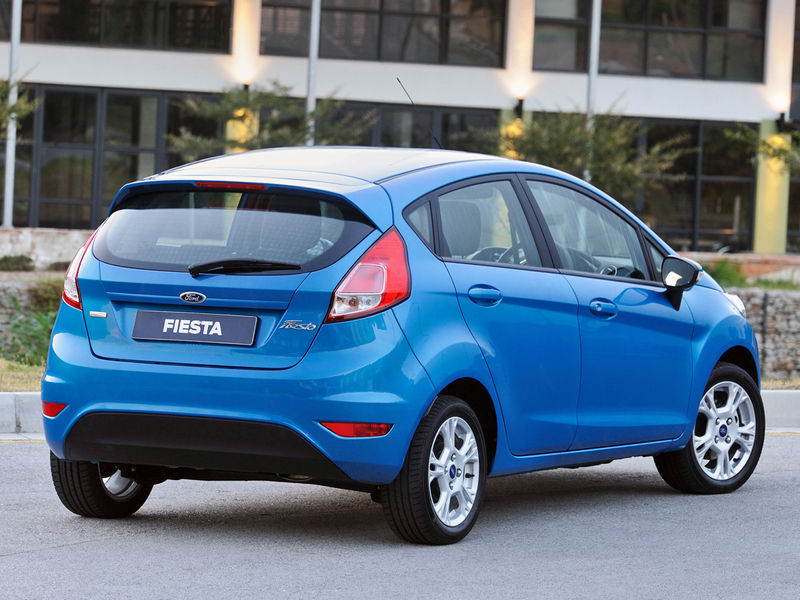
Despite playing in a field crammed with strong competitors, the 6th-gen Fiesta was near the summit of its class. The local line-up was broad enough to meet virtually any compact hatchback requirement, ranging from a diesel-sipper to a scorching hot hatch. In short, the Fiesta was terrific to drive and suitably practical considering its compact dimensions, with most engines pleasingly light on fuel too.
While it’s a great pity Ford opted to unceremoniously axe this storied nameplate from its line-up, the Fiesta’s sustained popularity means there are thankfully still plenty of examples available on the used market today. And from where we’re sitting, the Mk6 was surely one of the best Fiestas that Ford made.
Looking for a used Ford Fiesta to buy?
Or sell your car here, for no charge.