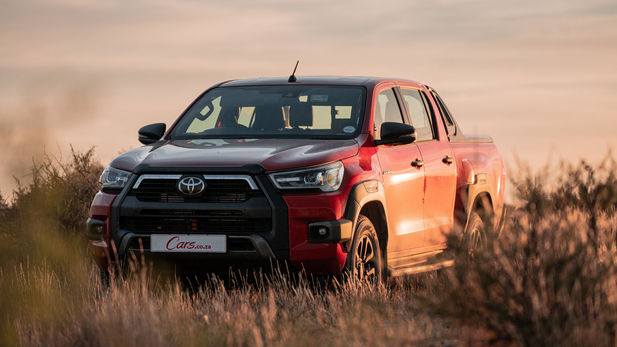
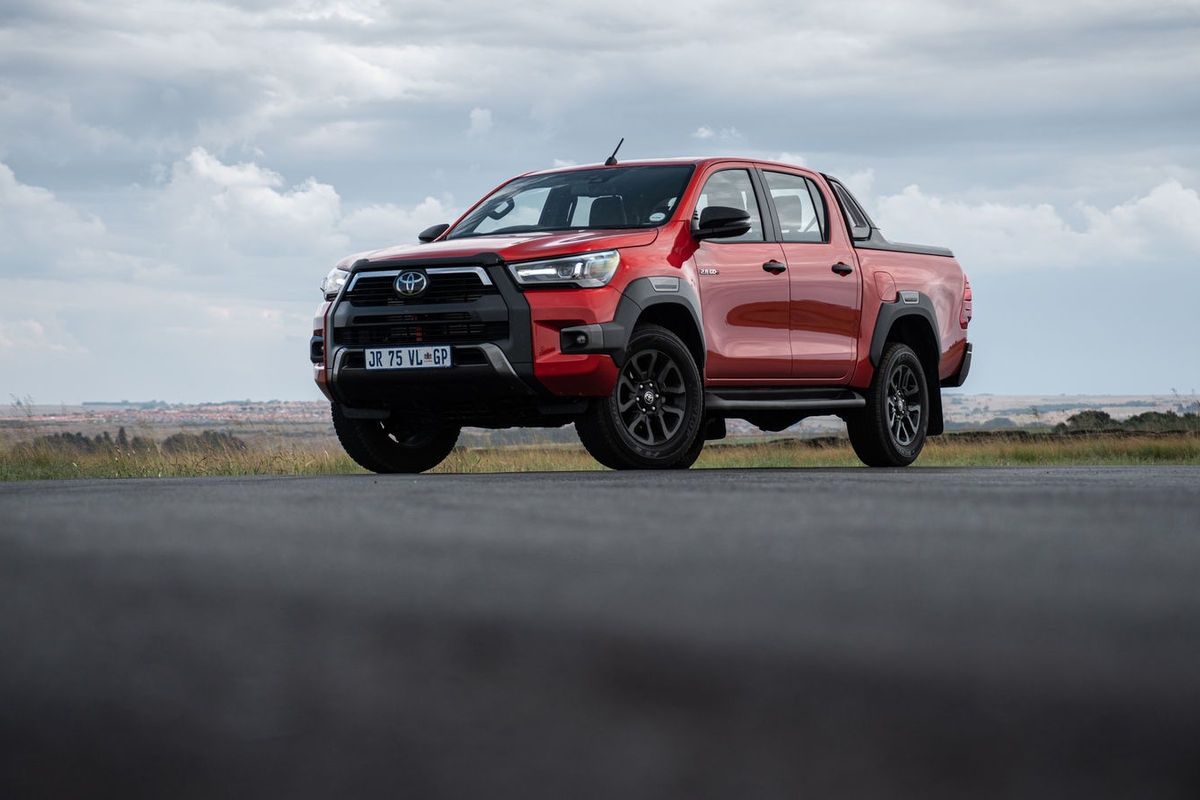
We travelled 4 000 km in 4 days in the new Toyota Hilux Legend RS to see how well it would cope with the challenge. This was not a casual sightseeing cruise, however – our film crew put the bakkie to work as an equipment lorry and tracking vehicle during a recent film shoot in Gauteng. Here’s what we discovered…
Start of the trip
Road trips of epic proportions are common occurrences here at Cars.co.za. When you have heaps of camera gear to haul between South Africa’s cities, travelling by ‘plane is not always an option. These sorts of high mileage-, high-intensity trips can be tiresome, but they provide rich insights into what a car or bakkie is like to drive when utilised as a workhorse rather than a source of family transport.
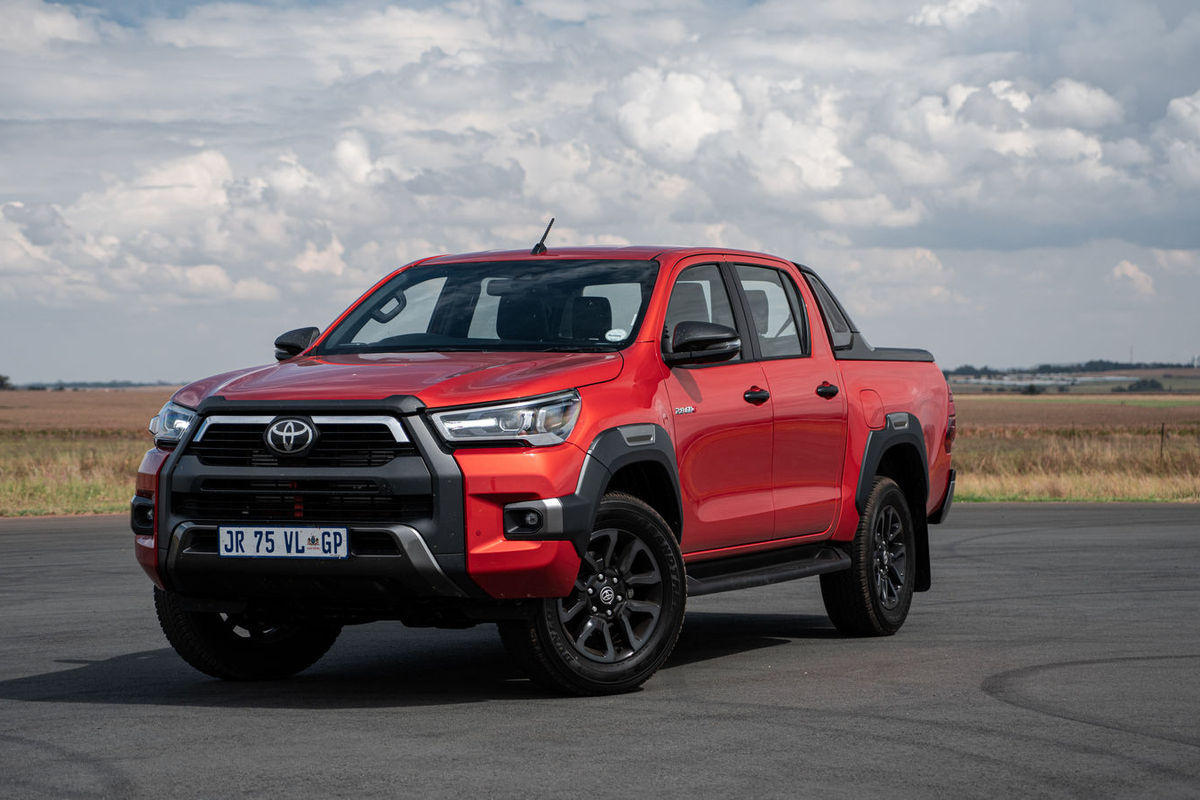
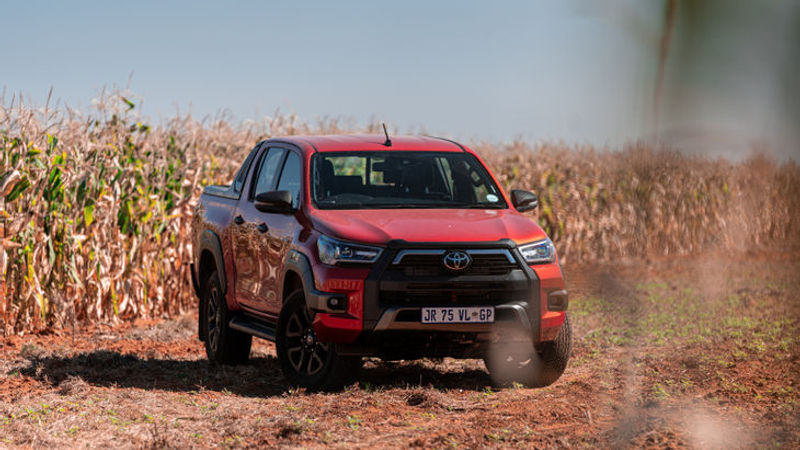
Over the course of 4 days, we travelled from Cape Town to Johannesburg and back in the bakkie, which doubled as our tracking vehicle for the film shoot we concluded at the RedStar Raceway. The exact model that we were availed was a South African Legend – the Toyota Hilux Legend RS, to be precise. The RS is available in an array of colours and our test unit was finished in Inferno Metallic, plus it had a handy roller shutter load-bed cover, which comes standard on this derivative. This road trip was the perfect way to test the Legend RS over a long distance; Hiluxes are often used for extended road trips.
The Long Haul
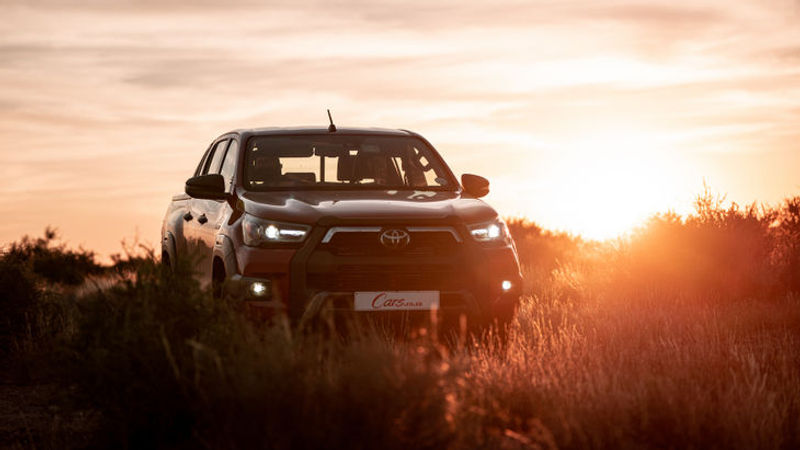
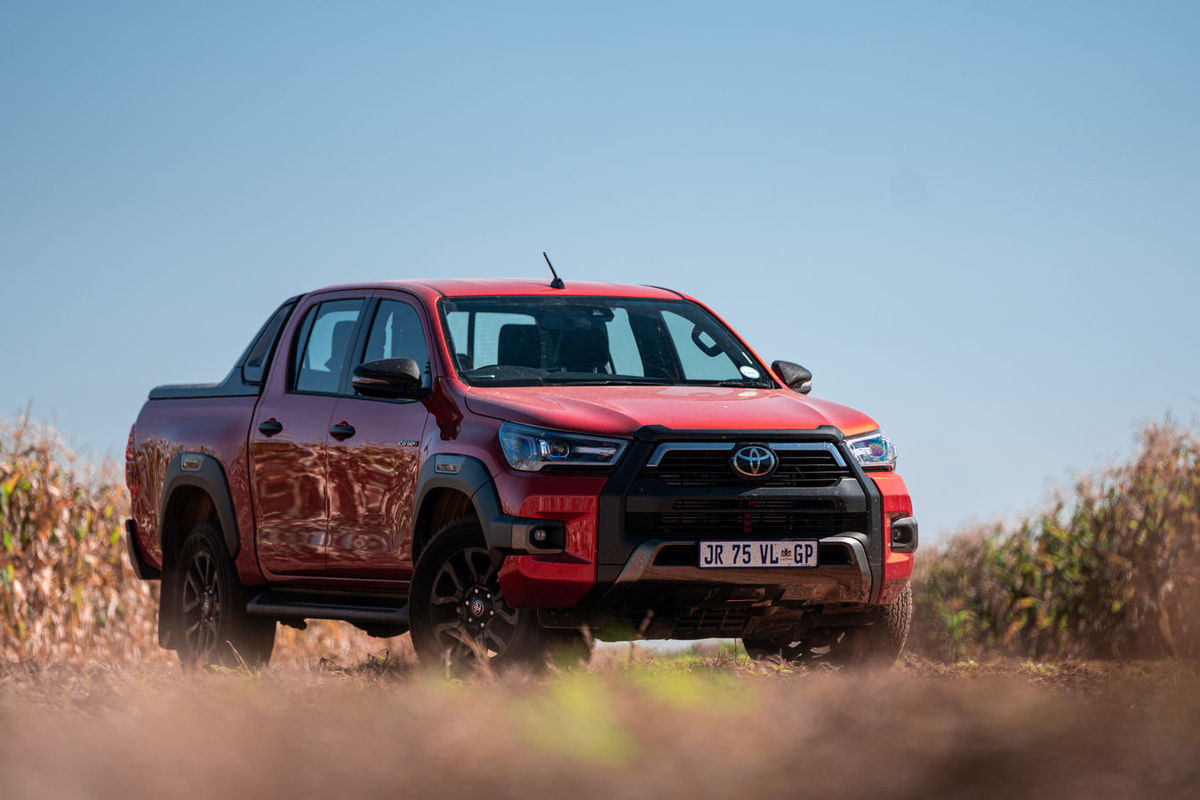
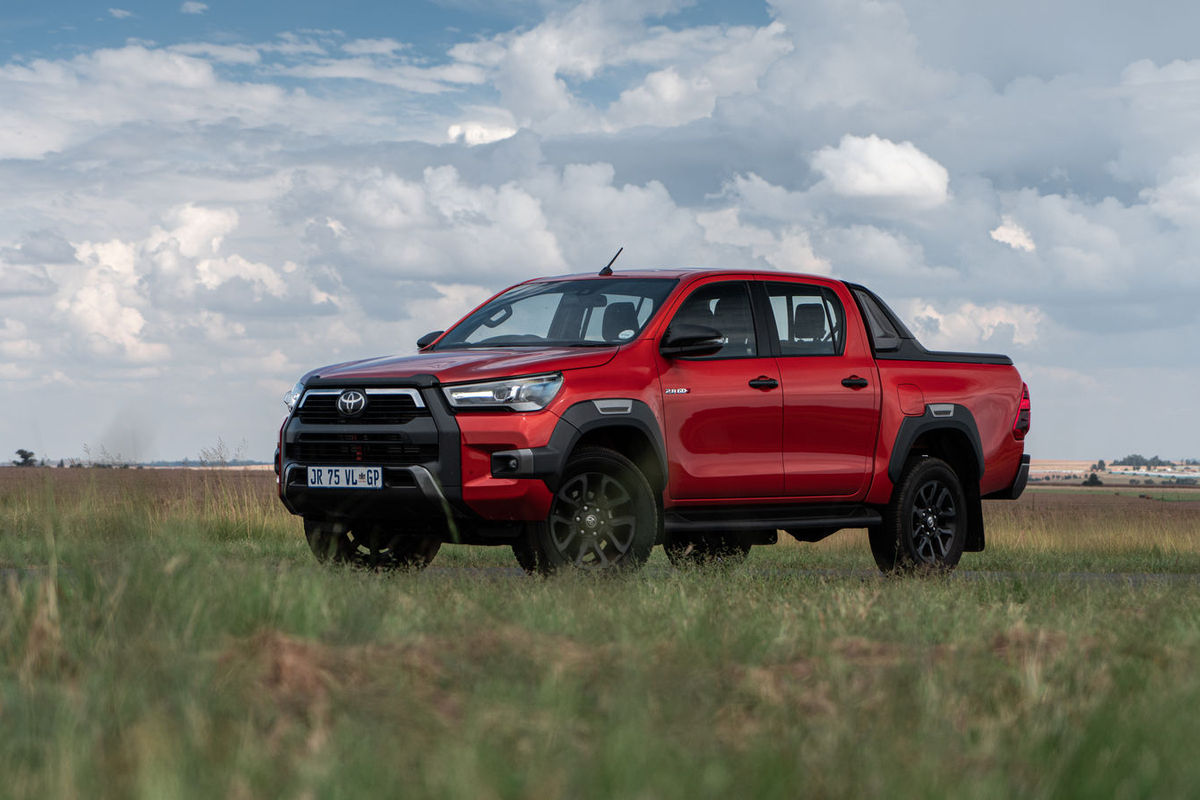
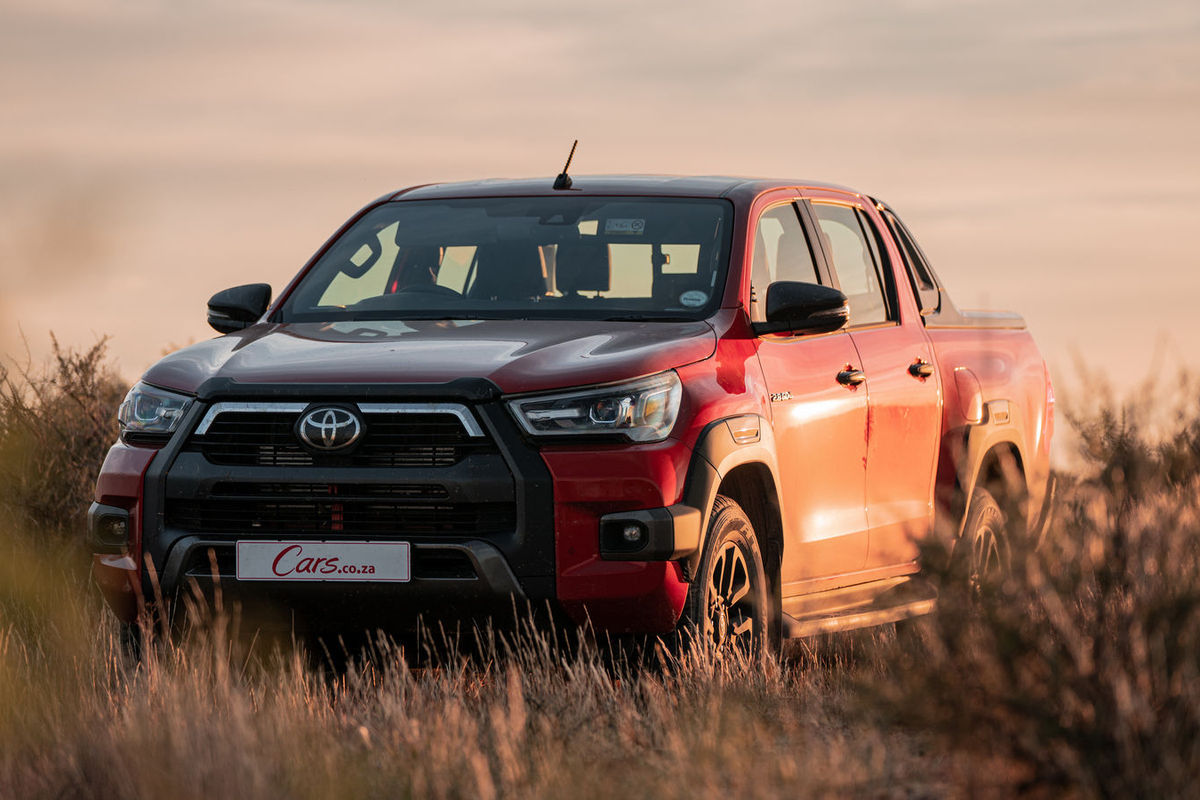
The Hilux in its natural environment. Even with all its new ‘”leisure features” it still works best on the toughest terrain.
To many motorists, long-distance driving is a daunting prospect; to be seated behind the ‘wheel for hundreds of kilometres, for several hours at a time, takes its toll on the body as well as the mind. It’s arguably worse for the passengers, who have to sit bolt upright in one place (for what seems like an eternity) with little in the way of variety to keep them occupied… Even for adults, it’s a schlep.
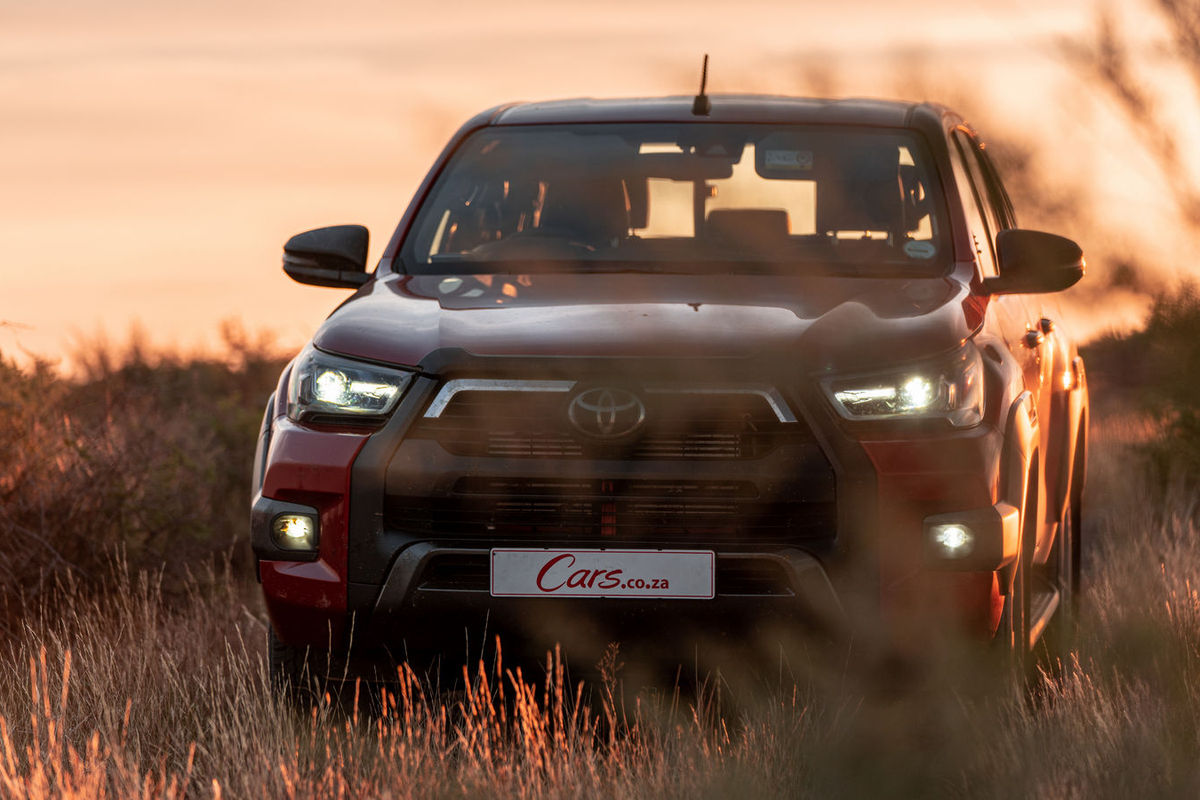
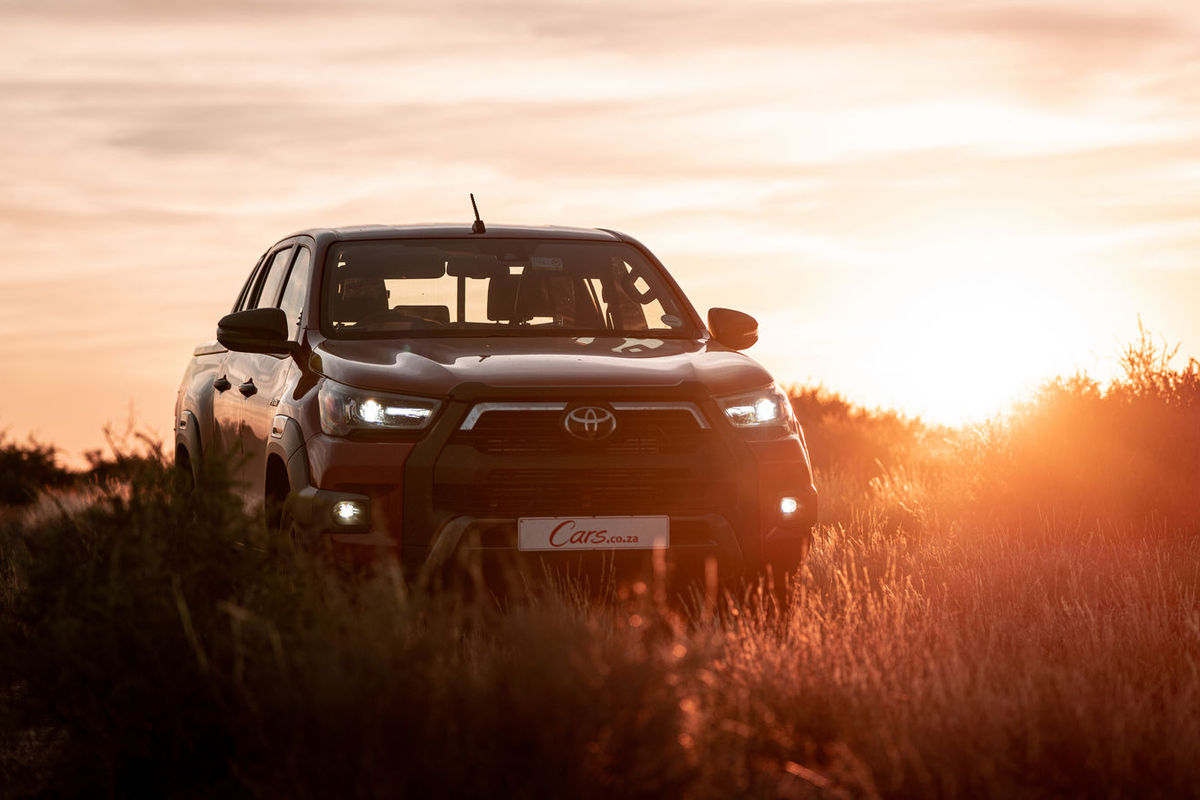
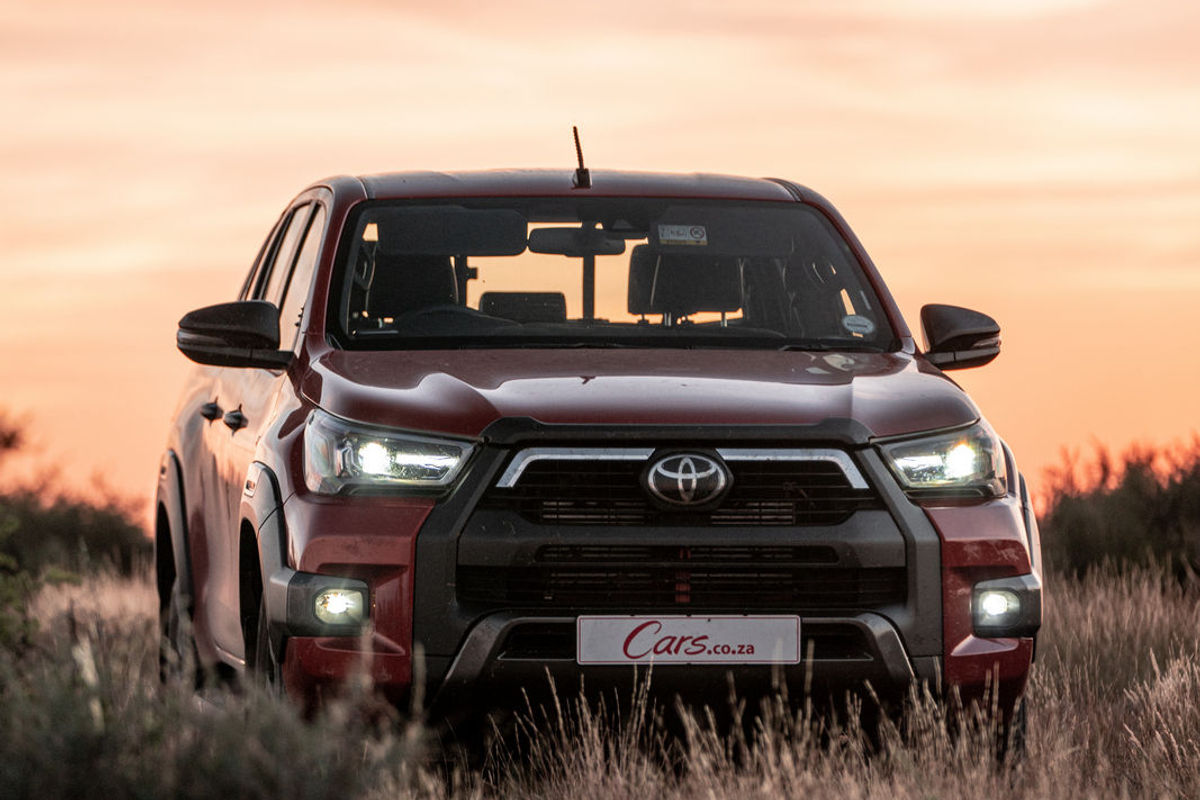
With a 1 000-km journey ahead of us, we got behind the ‘wheel of the Toyota Hilux Legend RS just before dawn and headed off into the sunrise with the bakkie’s lights illuminating the dark Karoo landscape.
A couple of hours in, while the JBL music system was pumping some of our best bassy tunes (probably the latest TikTok tunes – ed), we stumbled upon a swarm of locusts. The Legend RS just thrust through them; the sound of the locusts bouncing off the bodywork sounded like popcorn kernels popping in a microwave. There’s really nothing we could do at that moment, besides not open the windows.
As the day wore on and the inland heated up appreciably, the Hilux’s climate control ensured that its occupants remained sufficiently comfortable in the Karoo heat. Toyota makes excellent aircons, they produce some of the coldest air you will find this side of a Woolies fridge aisle.
As the Toyota Hilux Legend RS travelled through all the small “platteland” towns along the route that we chose, the bakkie turned heads wherever it was seen. The updated exterior execution definitely drew a lot of attention – it makes you feel like a Legend as you ride in style. Driving a brand new Toyota in the brand’s heartland will certainly make you feel that way…
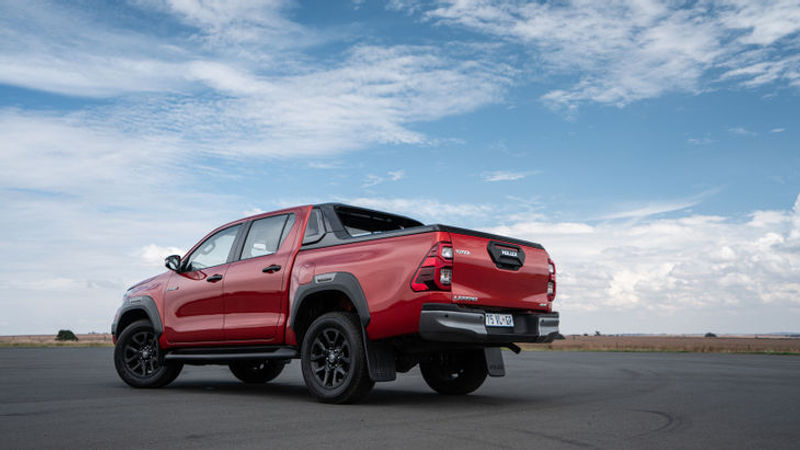
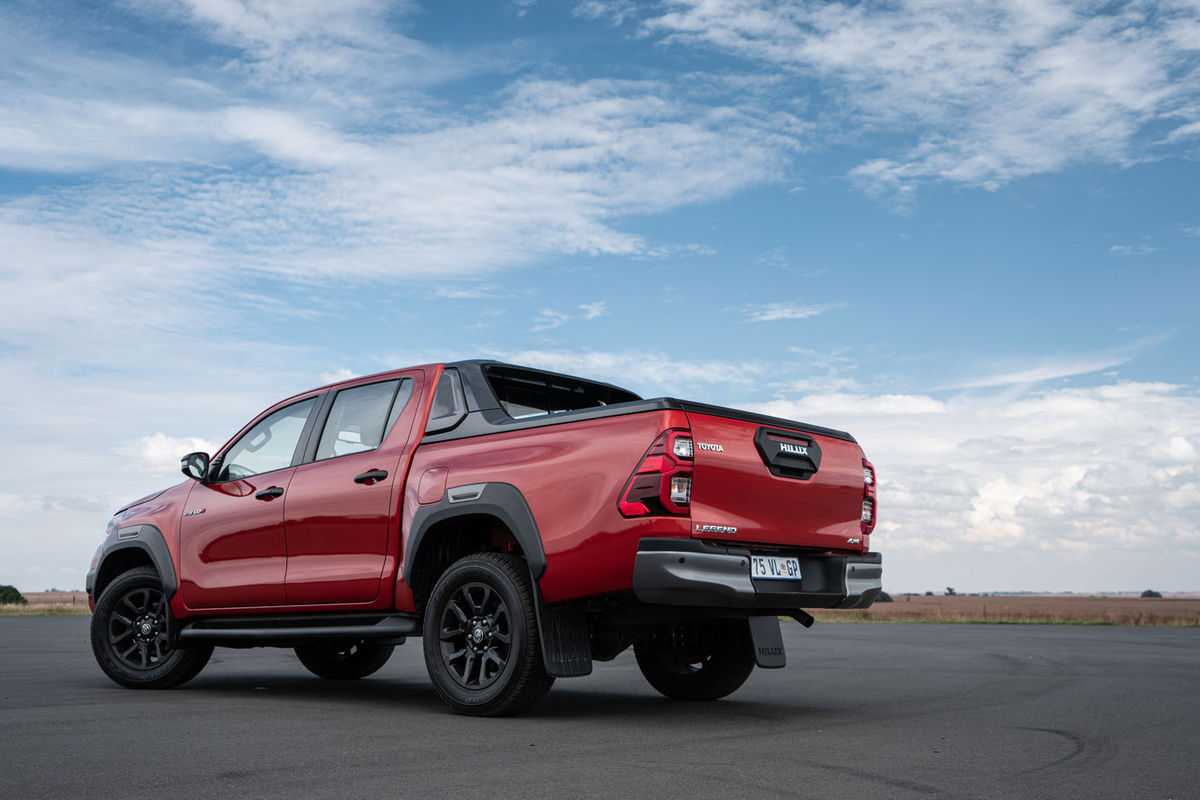
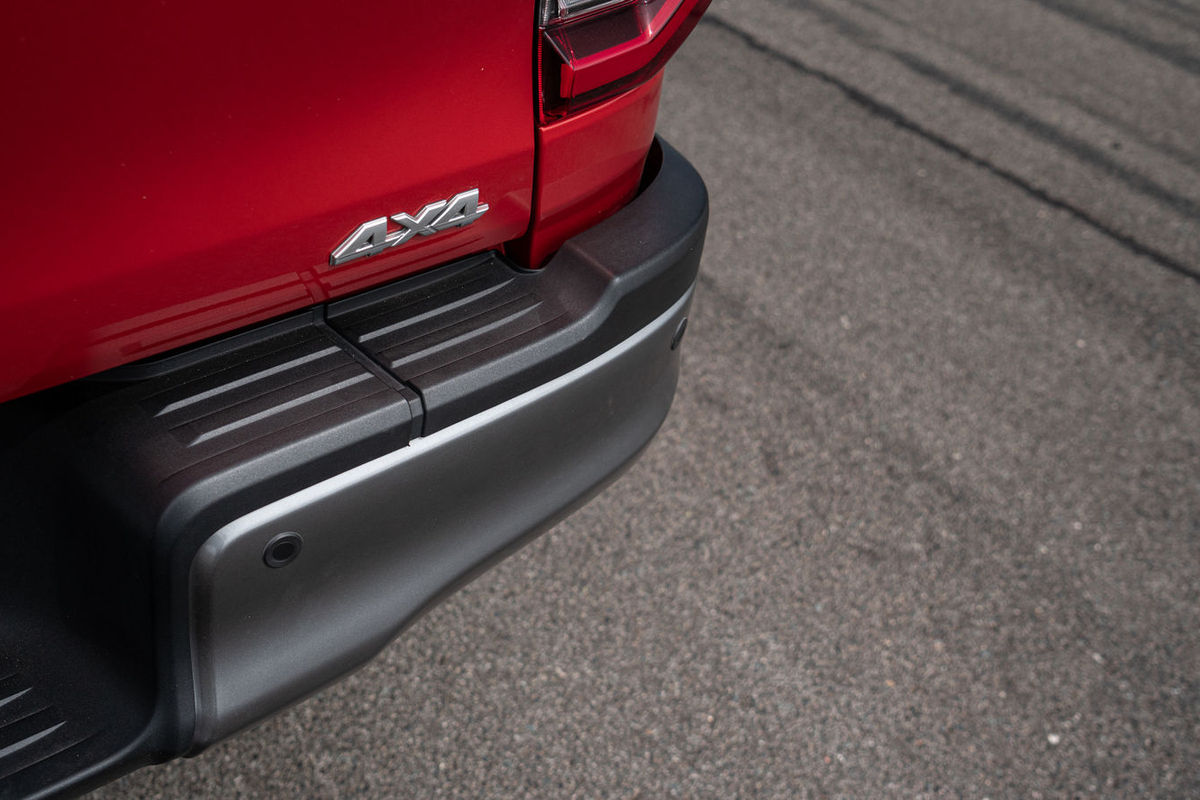
The new RS model comes with an electrically operated roller shutter that covers the load bed.
Although the Toyota Hilux Legend RS is ultimately based on a workhorse “one-tonner” pick-up, this is the flagship derivative, which comes equipped with a number of features that make long-distance trips easier. Radar-guided cruise control and lane-keeping assist are but 2 examples. It felt as if we used the radar-guided cruise control more than we had our feet on the pedals; it made it palpably easy to deal with the average-speed-enforcement zones along our route. The feature is ideal for maintaining speed on highways – and, with the press of a button, you can set the distance that the Hilux keeps from the vehicles in front of it. Admittedly it took a while to trust the vehicle to brake automatically, but not that long! Although the bakkie was covered in dust and bug splatter, the system kept working perfectly.
We did find, however, the radar does not seem to “like corners”. On the Johannesburg highways, it sensed the walls on the side of the roads while it cornered and detected vehicles ahead of it a little later than usual. Also, when we overtook vehicles while the radar-guided cruise control was active, the bakkie accelerated leisurely, so we sometimes sped up the process by stabbing the accelerator pedal.
Apart from the radar-guided cruise control, a lane-departure warning will beep when it senses that the Hilux is about to wander out its lane (it can be turned off, mercifully). Lane-keeping assist, in turn, can read the lines on the road and correct your steering to keep the bakkie in its lane. We found it a trifle too intrusive (it sometimes led the vehicle to ping pong between lanes), so we chose to deactivate it.
On-road Comfort
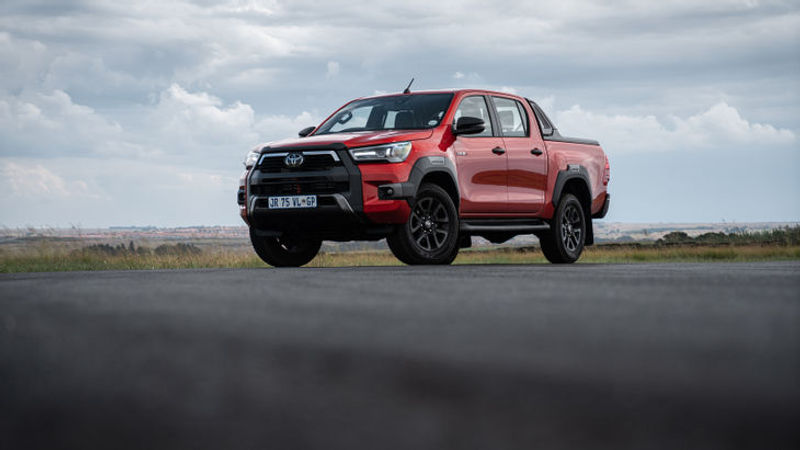
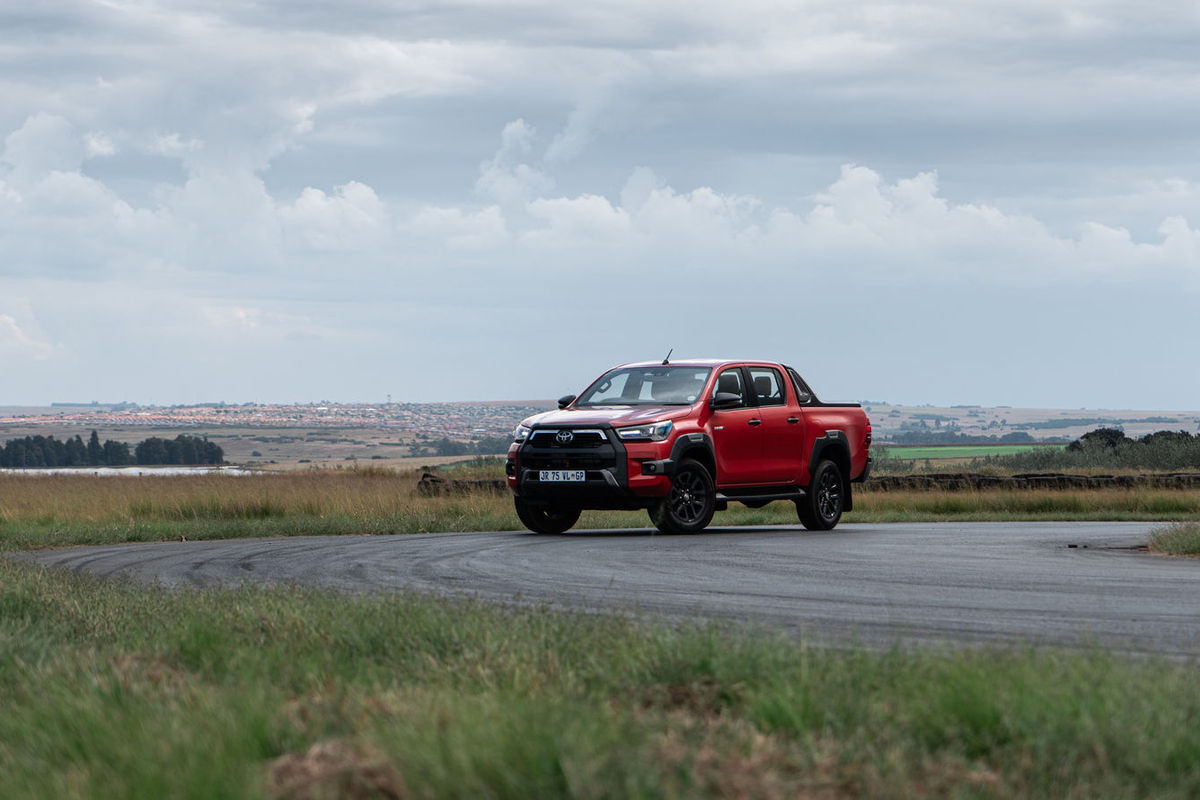
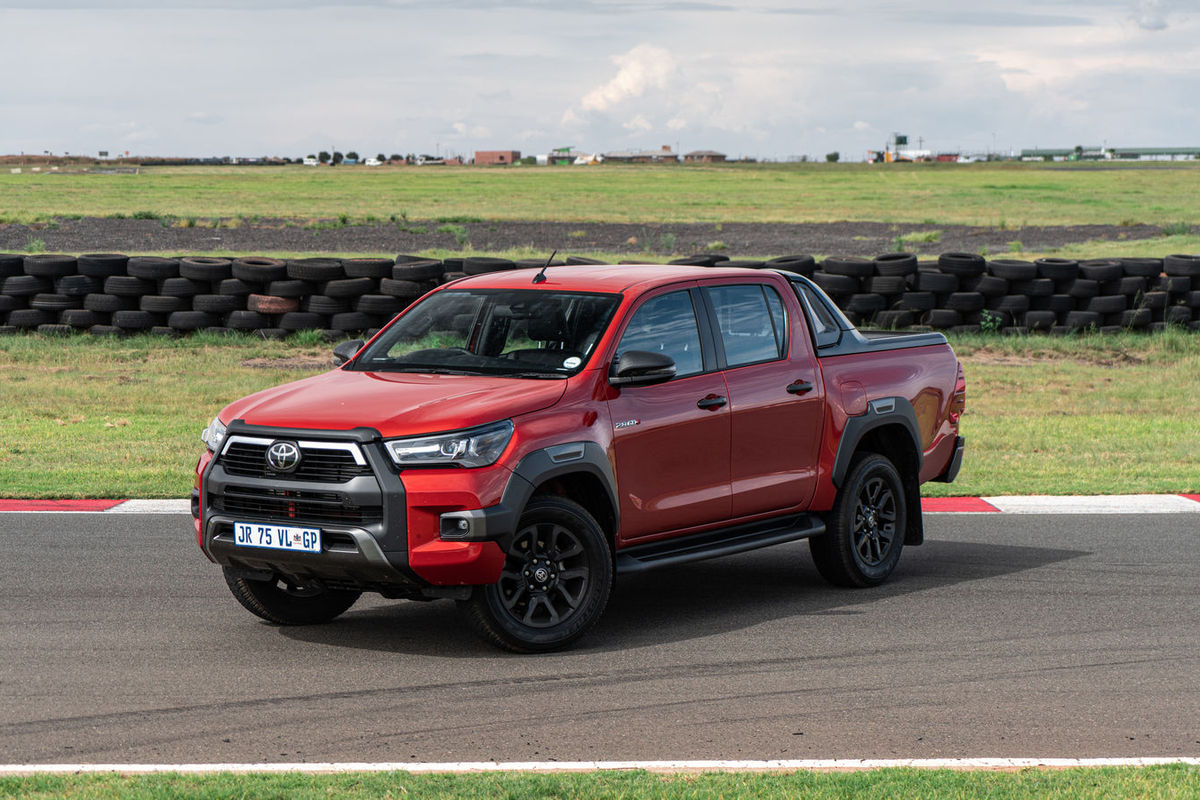
RedStar raceway is not where you’ll spot many Hiluxes, but the Toyota performed well as a tracking vehicle.
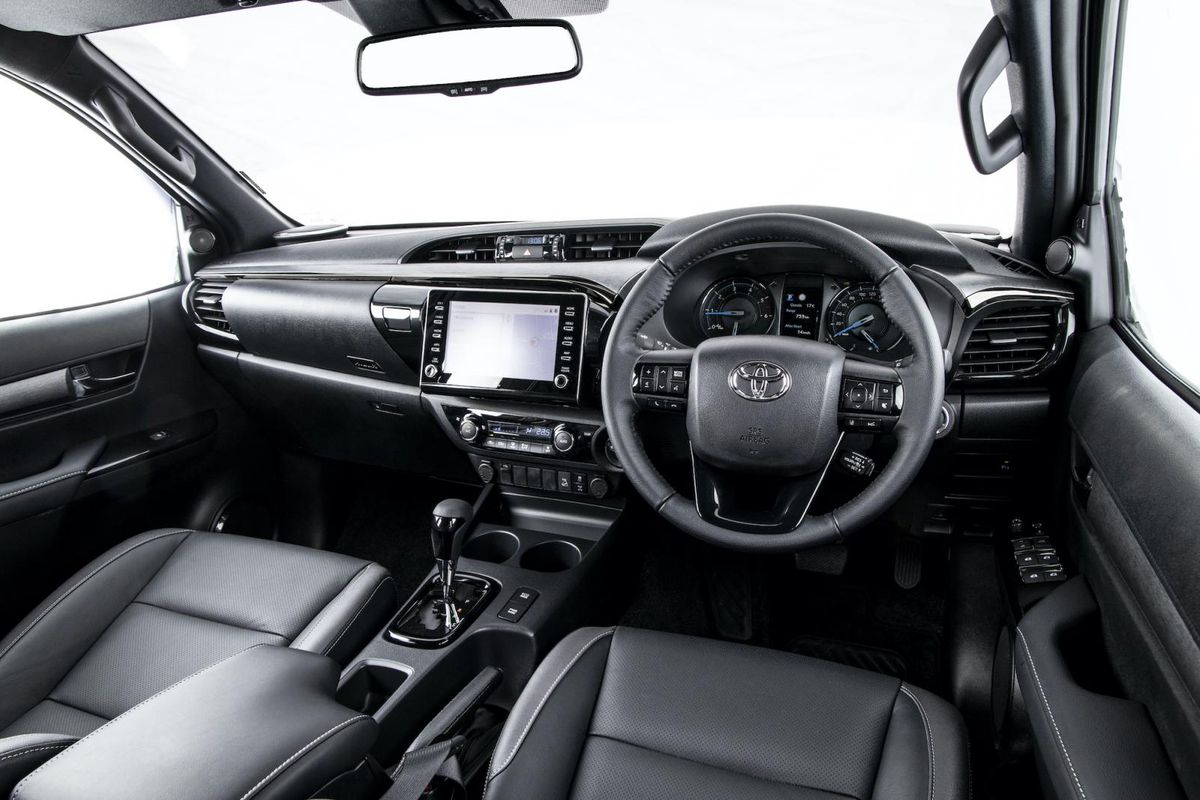
Suffice to say we clocked many hours while seated in the Hilux and we did not find the accommodation uncomfortable in the least. We did, curiously, find that the driver seat somehow felt a little more comfortable than the rest (even the front passenger’s seat), but we can’t exactly say why. There is a good amount of rear legroom and, if the rear bench is not in use, plenty of utility space at the back.
As for road noise, we were impressed by how quiet the Hilux’s cabin was while it cruised at or near the national speed limit. The notion of big off-roaders that generate lots of tyre and wind noise (most of which is then conveyed to the ears of those vehicles’ occupants) seems obsolete. There was so little wind noise that we could comfortably talk to one another when the audio system was off. Speaking of which, the Legend RS’ JBL audio system pumped treffers from our smartphones during most of the trip. The sound output was clear with lots of bass and the Apple CarPlay system worked seamlessly.
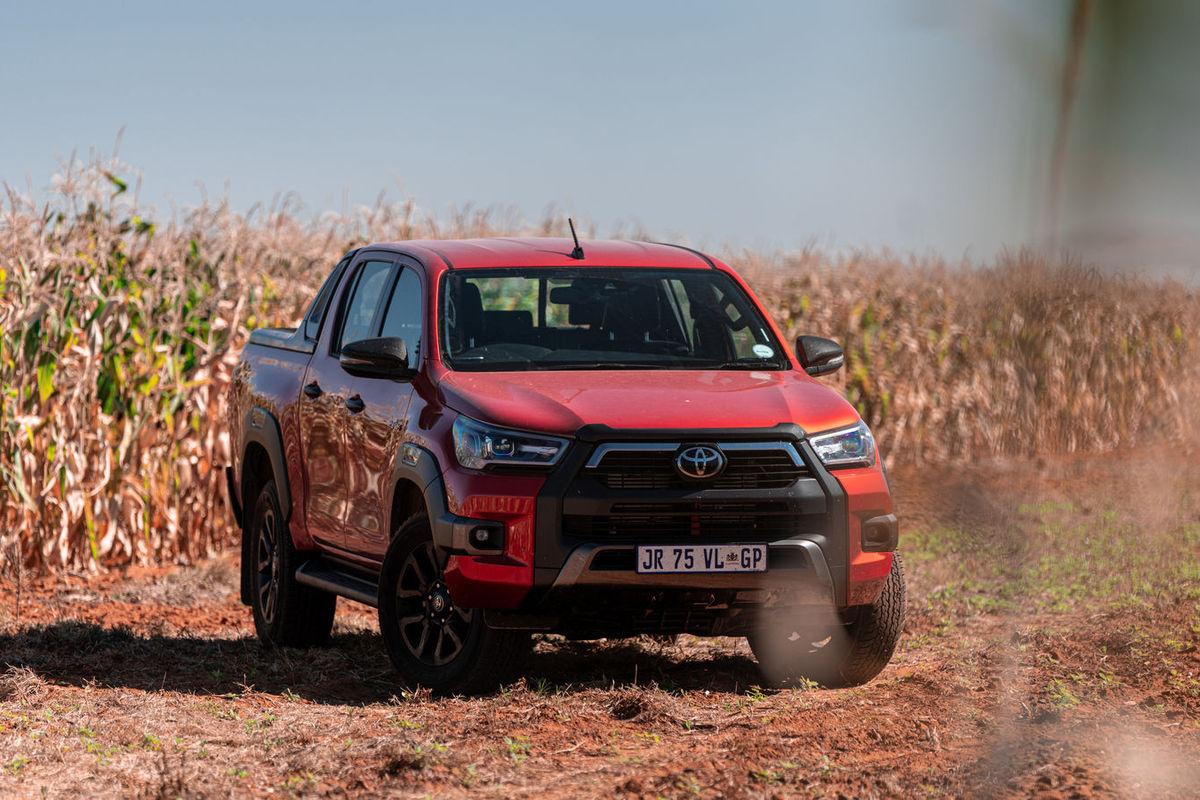
It’s commonly believed that Hiluxes still have harder/less-pliant ride qualities than many other bakkies, although Toyota has made improvements in that regard. Over smooth road surfaces, there were no issues, especially at the front. Over rougher terrain, the suspension was a little stiffer and rear passengers felt the bumps a lot more. On our return trip to Cape Town, we chose a route that included 60 km of dirt roads. Granted, the bakkie’s tyre pressures were a bit high, but even after we deflated them a little, the Hilux felt less-than-planted on the gravel route; it once bounced uncomfortably over a cattle grid.
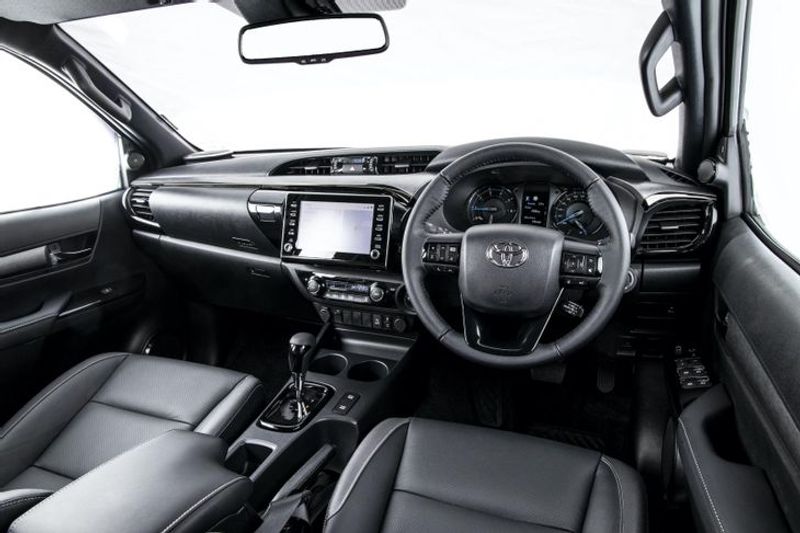
It comes with great modern safety features such as radar-guided cruise control and lane-keeping assist.
When we used the Toyota Hilux Legend RS as a tracking vehicle during the aforementioned film shoot at RedStar Raceway, we mounted a camera to the side of the bakkie and drove in close proximity to the vehicle we were filming – a Lamborghini Miura. The Hilux handled quite well on the track, as a matter of fact… Okay, we did not attempt to break any lap records, but had to drive at quite a canter around the very tight and twisty track… You see, in order to get those great visuals, you need speed and that’s what we were trying to extract from the Hilux. The acceleration was eager, with very little turbo lag.
The flagship Hilux deals with corners with notable poise, although we did anticipate the Toyota would exhibit safety-first understeer if we pushed its limits in the handling department. What’s more, we felt less body roll than we expected and the steering sensitivity was spot-on: neither vague nor overly assisted. We had a similar experience with the 190-kW Volkswagen Amarok 3.0 V6 TDI a while ago and the punchier German bakkie felt more at home on the track than the Hilux. That admittedly wasn’t the ultimate place to compare the bakkies, but it did highlight discernible differences between the two.
Our findings
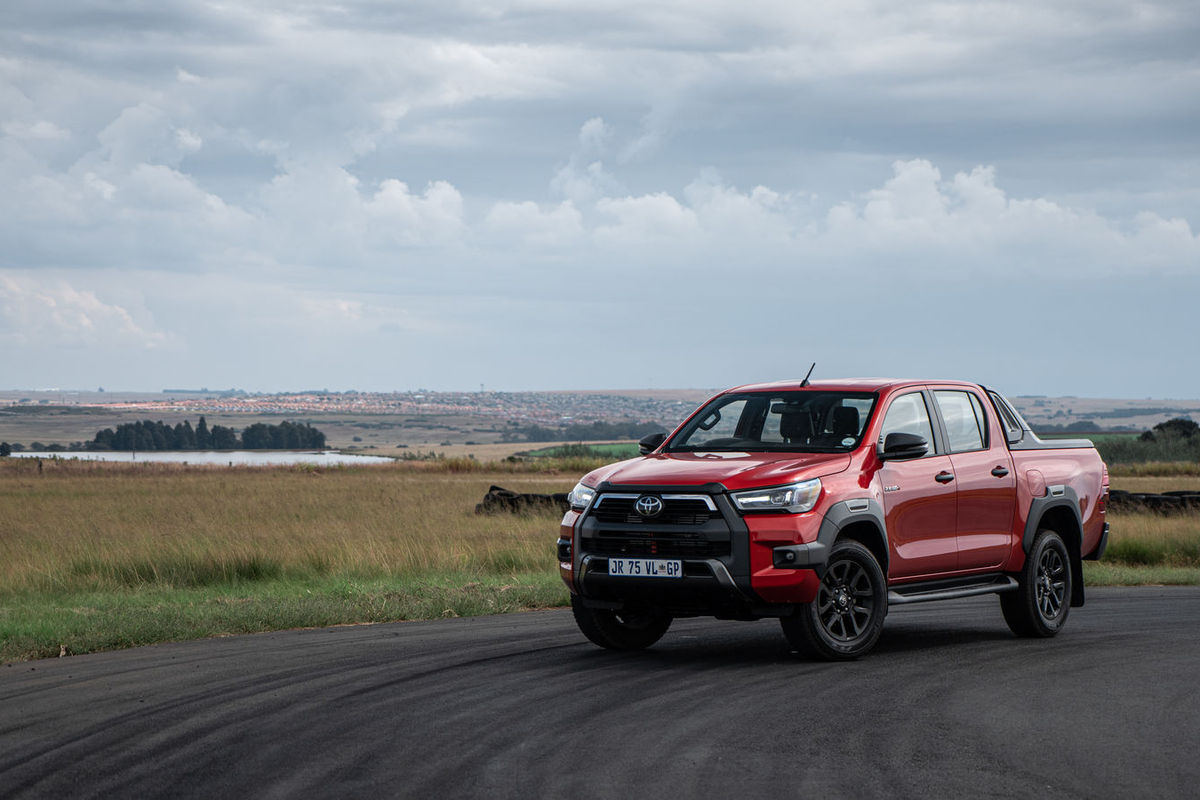
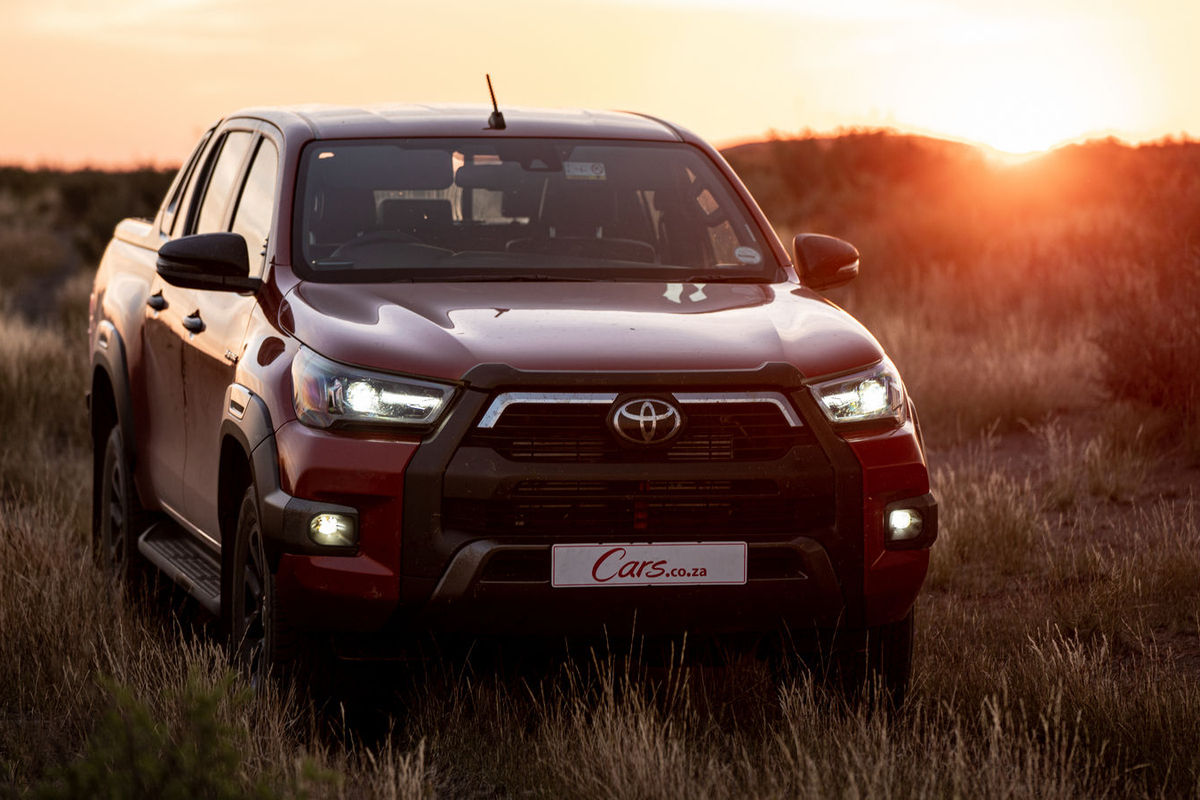
The facelift Hilux has really cemented its position as SA’s favourite vehicle.
The Toyota Hilux Legend RS was the 3rd bakkie, after an Isuzu D-Max and the aforementioned Volkswagen Amarok, that we have used for long-haul travel from Cape Town to Joburg (and back) for shoots.
While the Isuzu seemed evergreen, it felt comparatively sluggish and tended to run out of puff when we needed to pass trucks at highway speeds, the Volkswagen was an accomplished cruiser; it offered plenty of in-gear acceleration, a comfortable high-quality interior, as well as a pliant ride quality. The VW was very thirsty, however (the video crew drives like they don’t pay for their own fuel – ed).
The Toyota Hilux Legend RS, by comparison, felt like a near-perfect all-rounder. Its interior appears a bit low key compared with the VW’s, but it was sufficiently comfortable and equipped with an up-to-date infotainment system and sonorous audio setup. What’s more, the Hilux remains a great long-distance hauler… In addition to its updated 150 kW/500 Nm 2.8-litre turbodiesel and 6-speed automatic powertrain, it benefits from radar-guided (dynamic) cruise control and other driver-assist features and, best of all, we averaged just over 10 L/100 km during the trip, which was an impressive return.
The Hilux definitely made the trip a breeze and it is clear why it is such a highly sought-after vehicle in South Africa. The Toyota Hilux Legend RS is equally adept at being a workhorse and a comfortable family car, which is just what its target market wants. Having the roller shutter, which is very dust- and rainproof, is a big bonus; it makes packing gear a breeze, plus it’s lockable (to keep your cargo safe).
Related content:
Nissan Navara (2021) Prototype Drive