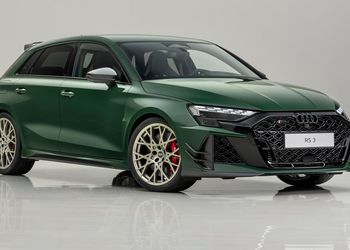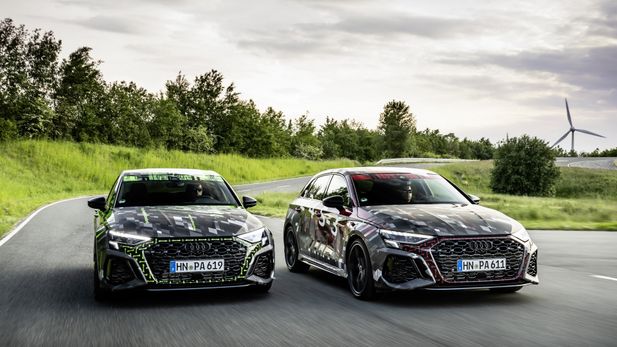
The all-new 2022 Audi RS3 is another step closer to being revealed as the German carmaker announces a few of the car’s talents.
These lightly-disguised Audi RS3 prototypes give us an idea of what’s to come towards the end of July 2021 when the performance duo are fully revealed. We know the same body styles will be available, with a 5-door hatchback and a 4-door sedan being offered.
Audi Sport has released some technical details about the dynamic capabilities of its new product. The best news is the magical 2.5-litre 5-cylinder turbocharged engine has been retained, but straight-line performance is not the priority for the Audi Sport engineers as the new 2022 Audi RS3 will feature some radical technology to enhance its corner-carving ability.
But, if you’re a numbers-based petrolhead, you’ll be delighted to hear that Audi Sport is not content with having the Mercedes-AMG 45 S range stealing all the limelight. While the 2.5-litre 5-cylinder engine still produces 294 kW as before, the torque figure has been ramped up to 500 Nm, which is 20 Nm more than the outgoing model. Audi Sport claims 0-100 kph in 3.8 seconds and has an optional top speed of 290 kph, which should shake the segment up a bit as the goalposts have been moved.
The new handling technology is called the RS Torque Splitter and it’s quite remarkable. Essentially, it’s one electronically-controlled multiple disc clutch each on the respective drive shaft. During dynamic driving, the torque splitter increases the drive torque to the outer rear wheel with the higher wheel load, which significantly reduces the tendency to understeer.
In left-hand curves, it transmits the torque to the right rear wheel, in right-hand curves to the left rear wheel, and when driving straight ahead to both wheels. It gets better, as the RS Torque Splitter can send all engine power to just one wheel, resulting in hilarious sideways smoking action you see here.
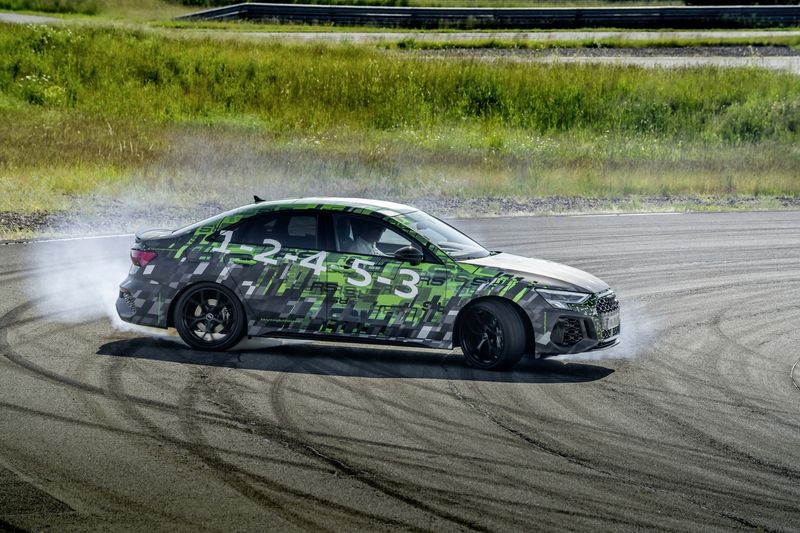
That’s a lot to take in, but what are the benefits? Audi Sport claims the new 2022 Audi RS3 turns into the curve even better and follows the steering angle more precisely. This results in less understeer, earlier and faster acceleration when exiting corners, and particularly precise and agile handling – for added safety in everyday use and faster lap times on the racetrack. The torque splitter also compensates for oversteer by directing the torque to the wheel on the inside of the curve or, if necessary, to both wheels.
While it sounds complicated on paper, we reckon it’ll address the reputation of the previous generations of Audi RS3 as being natural understeering performers. Throw in some trick Pirelli P Zero Trofeo R semi-slick tyres which are being made available as an optional extra and you have the recipe for a very nimble machine.
All-New 2022 Audi RS3 Torque Splitter Video
Further Reading
David Taylor

Having contributed to multiple motoring titles as well helping run the public relations machine of the Johannesburg International Motor Show, Dave has experience in both sides of the motoring industry. He's based in the Western Cape and is responsible for the performance testing, photography & weekly YouTube news for Cars.co.za.