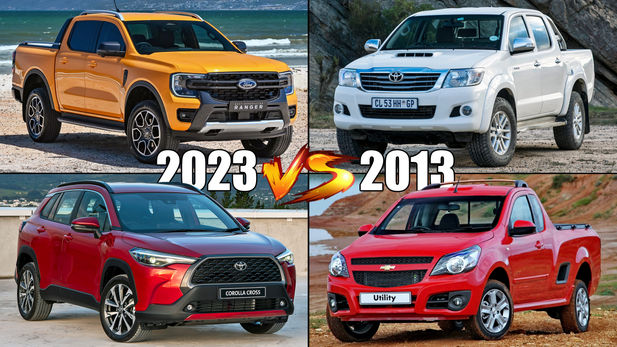
Just how different is South Africa’s automotive market today compared with that of 2013? Here’s some fascinating insight into how local new-vehicle sales have changed over the past 10 years…
Picture it: the calendar reads July 2013 and Toyota is the strongest-selling automotive brand in South Africa. The Hilux is the country’s best-selling bakkie and Volkswagen’s Polo Vivo is the most popular passenger car. Sounds like nothing’s changed over the past 10 years, right?
Well, drill down a little deeper and you’ll find that’s not quite the case. In many ways, the local automotive space is markedly different today (though it’s very much the same in some others). To illustrate, we dug up South Africa’s new-vehicle sales figures for July 2013, dusted them off and set them alongside July 2023’s recently released numbers. A month-long snapshot of each era, if you will.
So, what’s immediately apparent? Well, for starters, the market was clearly more robust a decade ago, with July 2013’s industry tally coming in at a heady 58 140 units (for the record, that’s a considerable 14 751 more than last month’s effort of 43 389 units), according to Naamsa.
The passenger-vehicle market accounted for 40 274 of those registrations, a figure that stood at just 27 839 units in July 2023. The light commercial-vehicle segment, too, was a little stronger 10 years ago, coming in at 15 047 units, compared to 12 666 units last month. However, in July 2023, the export market was streets ahead at 37 064 units, compared with 26 608 units 10 years ago. Right, with that broad overview out of the way, let’s break things down a little further…
The VW Group was challenging Toyota 10 years ago
In July 2013, Toyota (11 935 units) was the top manufacturer by sales, but the Volkswagen Group was right on its tail with 10 613 registrations. In fact, in the preceding month (June 2013), the German automaker even put its nose ahead of the Japanese giant, a feat that seems exceedingly unlikely in today’s market. In July 2023, for instance, the 2nd-placed VW Group (5 797 units) found itself a whopping 5 015 sales adrift of Toyota (10 812 units).
Besides VW falling off the pace, it’s also worth noting Hyundai and Kia didn’t report detailed sales figures back then, while today these Korean firms placed 4th (with 2 878 units) and 11th (with 1 372 units), respectively. Having ranked 3rd in the month in question in 2013, Ford has fallen down the pecking order to 5th a decade later, thanks largely to its shift away from the passenger-vehicle market (and the fact it no longer counts Mazda sales as its own, of course).
| SA’s best-selling brands in July 2013 | SA’s best-selling brands in July 2023 |
| 1. Toyota – 11 935 units | 1. Toyota – 10 812 units |
| 2. VW Group – 10 613 units | 2. VW Group – 5 797 units |
| 3. Ford – 5 738 units | 3. Suzuki – 4 361 units |
| 4. General Motors – 5 487 units | 4. Hyundai – 2 878 units |
| 5. Nissan – 4 662 units | 5. Ford – 2 500 units |
| 6. Mercedes-Benz – 2 748 units | 6. Nissan – 2 308 units |
| 7. BMW Group – 2 412 units | 7. Haval – 2 030 units |
| 8. Honda – 1 014 units | 8. Isuzu – 1 903 units |
| 9. Renault – 1 009 units | 9. Renault – 1 707 units |
| 10. Tata – 847 units | 10. Chery – 1 375 units |
Meanwhile, Suzuki has increased its sales more than tenfold over the past 10 years, seeing it clamber up the charts from a lowly 16th (when it sold a mere 313 units) in July 2013 to an assured 3rd (with 4 361 registrations) in the corresponding month in 2023. India’s Mahindra, too, has grown over the past decade, with July sales of 330 in 2013 (including Ssangyong) and 929 in 2023.
Moreover, Chinese brands Haval (2 030 units) and Chery (1 375 units) are today making their presence felt in the top 10, while General Motors – which accounted for 5 487 units in July 2013 (including Isuzu and Opel) – has long since left the local market, along with the likes of Chrysler and Infiniti (Tata, too, no longer plays in the passenger space). Honda, meanwhile, regularly crossed the 1 000-unit barrier 10 years ago but had to settle for just 327 units in July 2023, while premium automakers BMW and Mercedes-Benz have slipped, too.
No SUVs or crossovers cracked the top 10 in 2013
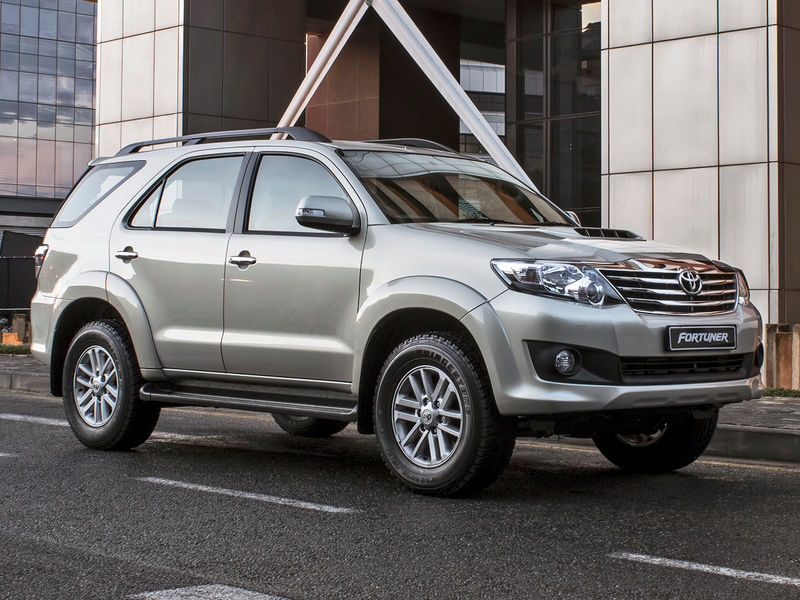
In a stark illustration of the rise of the crossover, we noted not a single such vehicle managed to rank in the top 10 best-selling models for July 2013. In fact, the highest-placed SUV back then was the original Toyota Fortuner (943 units), followed at some distance by a since-discontinued crossover in the form of the Ford Kuga (436 units … yes, before the fire scandal). In comparison, the top 10 a decade later featured the Toyota Corolla Cross (1 801 units) in 5th, with the Haval Jolion (833 units), Nissan Magnite (798 units), Toyota Fortuner (730 units) and Chery Tiggo 4 Pro (693 units) also cracking the top 15.
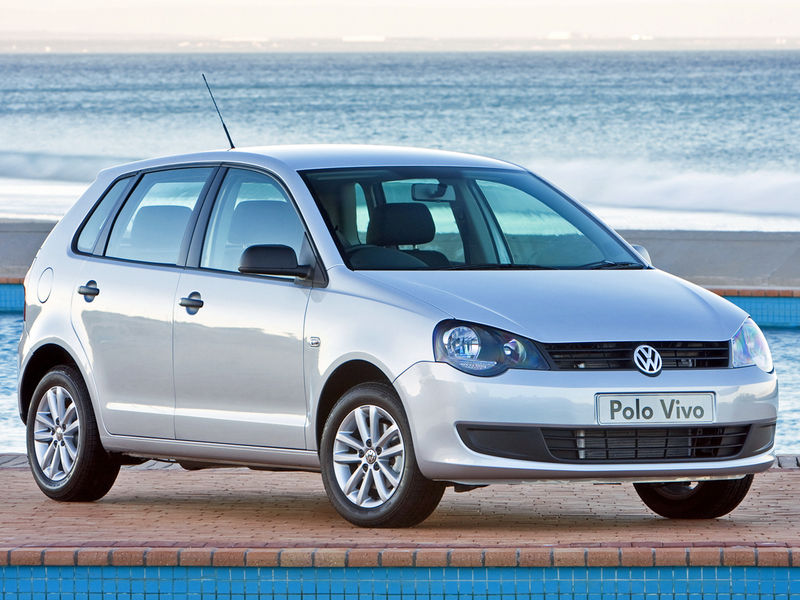
In July 2013, Mzansi’s best-selling vehicle overall was the locally produced Volkswagen Polo Vivo with 3 574 units. A decade on and the current version of the German automaker’s prolonged-lifecycle hatchback ended in 2nd with 2 177 registrations, while the Toyota Hilux – which was runner-up overall in 2013 – sat atop the podium with 2 982 sales (not too far off its 3 159 units a decade ago).
| SA’s best-selling vehicles in July 2013 | SA’s best-selling vehicles in July 2023 |
| 1. Volkswagen Polo Vivo – 3 574 units | 1. Toyota Hilux – 2 982 units |
| 2. Toyota Hilux – 3 159 units | 2. Volkswagen Polo Vivo – 2 177 units |
| 3. Volkswagen Polo (hatch) – 2 618 units | 3. Ford Ranger – 2 089 units |
| 4. Toyota Etios – 2 122 units | 4. Suzuki Swift – 1 809 units |
| 5. Toyota Corolla/Auris – 2 014 units | 5. Toyota Corolla Cross – 1 801 units |
| 6. Ford Ranger – 1 876 units | 6. Isuzu D-Max – 1 542 units |
| 7. Nissan NP200 – 1 663 units | 7. Toyota Hi-Ace – 1 395 units |
| 8. Chevrolet Utility – 1 587 units | 8. Toyota Starlet – 1 187 units |
| 9. Isuzu KB – 1 379 units | 9. Nissan NP200 – 1 041 units |
| 10. Toyota Quantum – 1 351 units | 10. Volkswagen Polo (hatch) – 924 units |
The Volkswagen Polo (2 618 units) completed the top 3 back then but has since tumbled down the table to 10th (924 units), while a couple of top-10 contenders from 10 years ago – the Toyota Etios and Chevrolet Utility half-tonner – are no longer with us. The Ford Figo (1 313 units and 11th place in July 2013) has likewise since departed, as has the Renault Sandero (457 units), though they’ve effectively been replaced by models such as the strong-selling Toyota Starlet (1 187 units) and Suzuki Swift (a mere 121 units in July 2013 and 1 809 sales a decade later).
Furthermore, the Toyota Corolla Sedan and Auris (the latter since supplanted by the Corolla Hatchback) sold a combined 2 014 units in July 2013 to place 5th, while their modern-day equivalents managed just 74 units between them last month. SA-built favourites such as the Ford Ranger, Nissan NP200, Isuzu KB (now named D-Max) and Toyota Quantum (today in the form of the Hi-Ace), though, maintained their top-10 finishes a decade on.
Family hatches and executive sedans have slipped
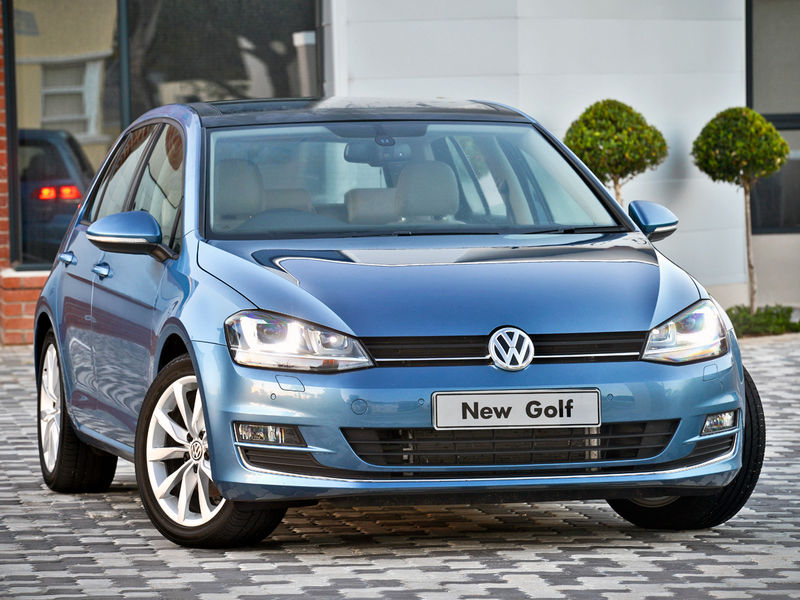
What else stood out? Well, the increase in popularity of the crossover has obviously come at the expense of other body styles. The decline of the C-segment family hatchback is particularly apparent, with models such as the Volkswagen Golf (908 units) and Ford Focus (391 units) having moved reasonable volumes back in 2013. Today, only the GTI- and R-badged versions of the Golf are marketed locally (together hitting 125 units in July 2023), while the Focus has long since exited South Africa.
It’s a similar – though perhaps less obvious – case with the traditional B-segment hatchback. In July 2013, for instance, healthy sellers in this category included the now-defunct Ford Fiesta (885 units), Toyota Yaris (436 units) and Nissan Micra (312 units). While the likes of the Renault Clio and Honda Jazz (since rebadged Fit) remain, their figures aren’t what they once were (184 and 63 units, respectively), while even the Polo has slipped.
Compact executive sedans have likewise taken a sizeable hit. In July 2013, the then-Rosslyn-produced BMW 3 Series (1 137 units) and the Mercedes-Benz C-Class (1 017 units) came mighty close to cracking the top 10, while the Audi A4 managed a credible 653 registrations. Though BMW and Mercedes-Benz unfortunately no longer regularly report detailed sales figures to Naamsa, it’s clear their respective monthly tallies have fallen markedly. The A4, meanwhile, mustered just 75 sales last month. Furthermore, saloons such as the Volkswagen Jetta, Passat and Volvo S60 are simply no more.
In addition, back in July 2013, the top-10 list effectively contained just a single imported model (the Etios; we’ll remove the Auris from the equation since the Prospecton-produced Corolla Sedan did much of the heavy lifting in that partnership). While SA-built vehicles still dominate 10 years later, it’s intriguing to note the top-15 table of best-sellers in July 2023 featured 5 imported models.
So, in certain aspects, South Africa’s new-vehicle market is very much like it was a decade ago; bakkies and budget hatchbacks are still big business, for instance, and Toyota leads the pack. But in others – most notably the decline of family hatchbacks (and executive saloons), Suzuki’s spectacular climb up the ranks, the rise of Chinese brands and indeed a dip in overall market volume – it’s completely different.
Related content
Chery knocks Kia from top 10! SA’s best-sellers in July 2023
10 best-selling bakkies in South Africa: July 2023
5 fascinating facts from SA’s new-car sales figures in H1 2023
Ryan Bubear

Having written about everything from sport and politics to crime, Ryan eventually settled on motoring. For well over 15 years, he's been penning articles – both online and in print – about the broader automotive industry, though he's particularly fascinated by vehicle-sales statistics. A freelance writer and editor, Ryan has owned a 1971 Austin Mini Mk3 for 20-plus years.