In the not too distant past, Honda was considered a mainstream brand in South Africa. The sales figures, however, suggest that’s not been the case for quite some time. Let’s take a look at what’s happened to Honda and what could be in its future…
Back in February 2015, Honda registered a healthy 1 411 vehicles in South Africa, enough to see it rank a solid seventh on the list of best-selling automotive brands in the country for the month. Fast-forward exactly seven years and the Japanese firm finds itself languishing in 17th position, with a mere 350 units sold in February 2022.
Of course, comparing two seemingly random months in isolation seldom paints an entirely accurate picture (factors such as broader market conditions and model lifecycles are often at play, after all), but the difference, in this case, is downright stark and certainly not limited to these two specific reporting periods.
Wind back the clock further still and you’ll get an idea of just how far Honda has fallen. The SC9-generation Ballade, for example, was the country’s third best-selling car in 1987, outranking the likes of the Volkswagen Golf and Ford Escort on the sales charts, and helping Honda – a company that traces its origins all the way back to 1946 – forge close connections with many South African car buyers.
Honda’s popularity on local shores continued through the 1990s, again thanks to strong contributions from the Ballade (in SH4, SR4, EG and finally EK guise), with the firm regularly grabbing a reassuringly chunky slice of the market-share pie. Then, in 2000, the South African division’s local collaboration with Mercedes-Benz ended and it became a wholly-owned subsidiary of the Honda Motor Company.
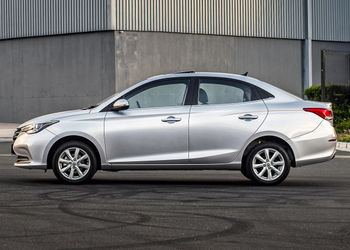
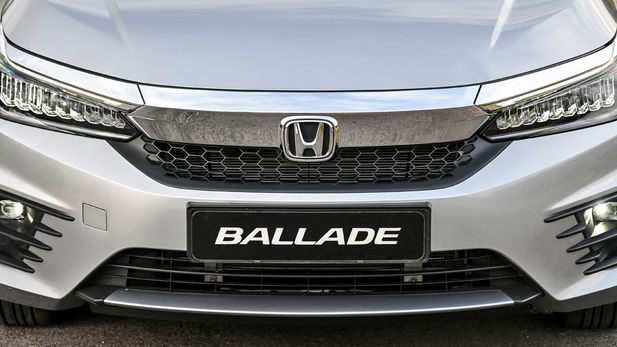
This was incidentally also around the time the Ballade nameplate began its decade-long hiatus from the market (opening the door for the Jazz to effectively become the volume-driving face of the brand), after more than 170 000 examples spanning six generations were sold in South Africa. The Ballade badge returned in 2011 but by then many South Africans had seemingly moved on. A fresh version arrived in 2014, before the current Ballade hit the market in 2020.
A deep dive into Honda’s sales figures
Right, that’s enough Honda history. Let’s take a gander at the figures from our two reporting periods: February 2015 and February 2022. In the second month of 2015, the Ballade contributed 330 units to Honda’s total of 1 411 registrations, with only the Brio (468 units) managing to better its effort. The Jazz, meanwhile, added a useful 328 units, while the CR-V chipped in with 170 units. The Mobilio (75 units), Civic (33 units) and Accord (seven units) made up the numbers.
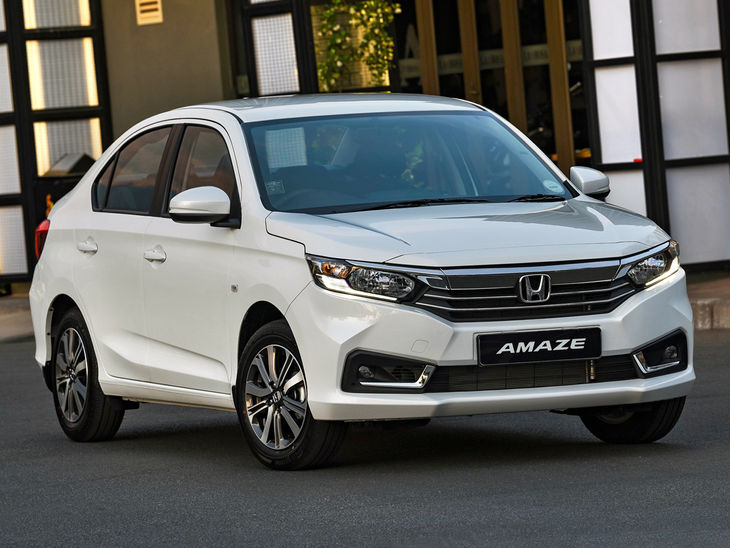
Of course, three vehicles from the class of 2015 have since been axed. Production of the original Brio ceased in India late in 2018 (forcing Honda Motor Southern Africa to rely on the Amaze sedan), while the seven-seater Mobilio’s brief stay ended late in 2016, when it was effectively replaced by the closely related BR-V. The Accord, meanwhile, quietly exited the market the very same year, going the way of so many D-segment sedans before it.
Honda’s total of 350 units in February 2022, meanwhile, saw it slip to an overall market share of just 0.79% (compared to, for example, Suzuki’s 7.33%, Haval’s 4.64% and Mahindra’s 2.44%). Narrow that down to the passenger-vehicle market and the result isn’t all that much better, with the Japanese firm settling for a mere 1.18%. It’s also worth pointing out that 114 of Honda’s 350 registrations in February 2022 represented sales to the government, with a further 50 units coming courtesy of the rental channel.
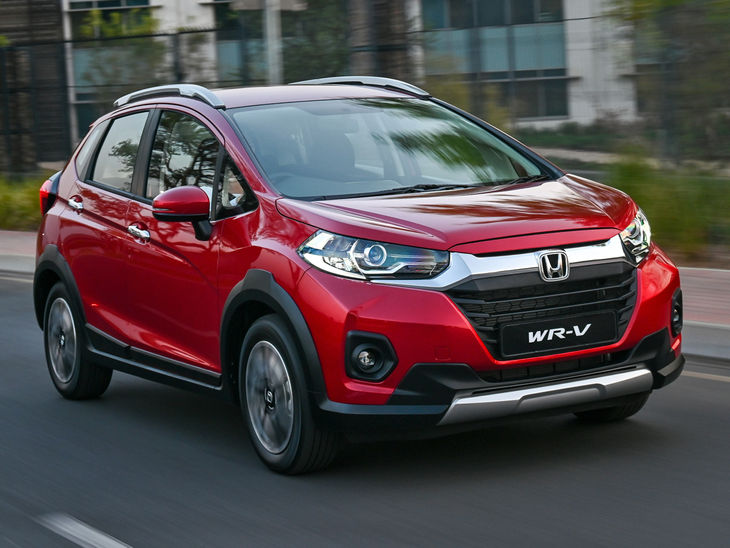
In the second month of 2022, the Amaze (123) was Honda’s strongest seller, just ahead of the Ballade (109), with the former boosted by 50 rental sales and the latter by 99 government sales. With the Jazz nameplate having been given the boot, the new Fit could muster only 34 units, with the Civic and WR-V each managing 23 units. The CR-V (19), HR-V (15) and BR-V (4) completed what was a dire picture.
What’s behind Honda’s steady tumble down the charts?
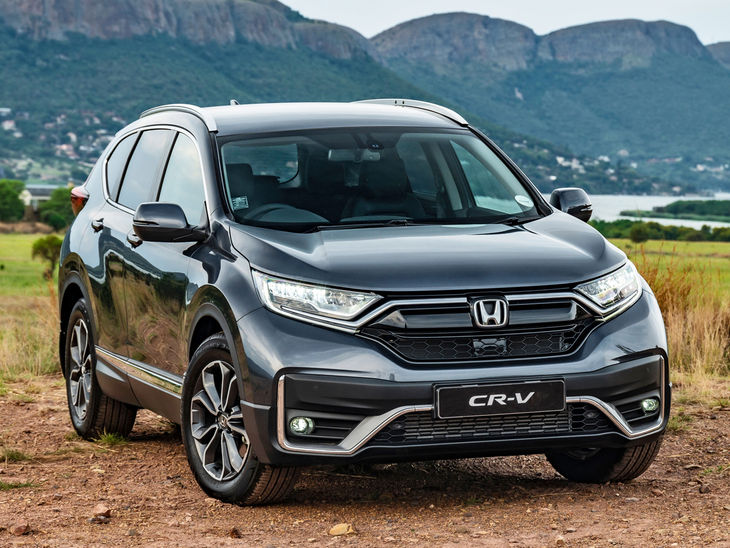
This is a particularly tricky question to answer. You see, the 73-year-old brand is still immensely popular in global terms, with the CR-V finishing 2021 as the world’s third best-selling vehicle and second best-selling SUV behind the Toyota RAV4. The Civic, meanwhile, finished in sixth place overall in the global sales rankings last year.
While the company has fallen off the pace a touch in Europe, it’s still positively massive in North America, where the CR-V was the fifth most popular vehicle in 2021. Furthermore, the Civic (10), Accord (16) and Pilot (25) all managed to crack the top 25 in that market.
So, Honda’s struggles are by no means global and also not specific to right-hand-drive markets. In Australia, for instance, the Japanese automaker has spent around 20 years as a top 10 automaker, with its slip down the charts in 2021 attributed to the introduction of a controversial fixed-price strategy Down Under.
As we posited in an earlier article, Honda Motor Southern Africa’s pricing strategy – in part dictated by its existence as a pure importer – has likely played a significant role in shrinking its market share. The brand’s performance portfolio has been reduced to the Civic Type R, which though a staggering piece of kit now costs an equally staggering R813 100.
The four-strong CR-V range, meanwhile, is priced from R556 100 to R796 300, numbers that seem to be sending potential buyers fleeing in the direction of a Toyota RAV4, Hyundai Tucson, Volkswagen Tiguan or even a more premium alternative.
Where to from here for Honda South Africa?
So, what could Honda do to revive itself in South Africa? Unfortunately, the options seem severely limited. Local production – which would bring with it valuable export credits as well as more attractive retail prices – is simply not on the cards, while the automaker has no global products suited to breaking into the all-important local light-commercial space (no, the unibody Ridgeline isn’t built in right-hand-drive form).
Look to growing and better-established marques for ideas and you’ll notice the biggest drivers of passenger-car volume in recent times are either locally produced vehicles (think stalwarts such as the Volkswagen Polo Vivo and newcomers like the Toyota Corolla Cross) or budget models imported from India (the Toyota Starlet, Suzuki Swift, Renault Kwid and the like).
Of course, Honda already sources half of its range – in the form of the Amaze, Ballade, BR-V and WR-V – from the subcontinent. However, whereas the previous-generation Jazz was also shipped in from India, Honda Motor SA switched to the Japanese-built Fit with the launch of the new generation in mid-2021, a move that certainly had a negative impact on pricing.
In addition, with the production of the Brio having been unceremoniously scrapped in India, Honda’s South African division no longer has a small budget hatchback in its arsenal. A second-generation version of the Brio exists (in right-hand-drive guise, too), though Honda has opted not to import it from Indonesia, the only country where it’s still manufactured.
A glimmer of (crossover-shaped) hope for Honda in SA?
Honda must surely also be downright disheartened by the local sales performance of its crossover range, with these four models managing just 61 registrations between them in February 2022. Tellingly, in the modern market, it’s become highly unusual for a well-known brand’s top two sellers to take the form of sedans.
But there may well be a glimmer of hope on the horizon. You see, rumour has it Honda is gearing up to reveal a new made-for-India SUV towards the end of 2022, likely to be positioned to battle models such as the Hyundai Creta and Kia Seltos in what has become an increasingly active corner of the market (hopefully with more success than the WR-V has seen in the segment below).
Intriguingly, reports suggest the newcomer will be based on the Ballade (or City, as it’s known in India) platform. Should Honda Motor Southern Africa manage to bring this as-yet-unconfirmed product to local shores – likely in 2023 – as a compelling offering that’s priced just right, the Ballade-based SUV might just provide some much-needed impetus for growth and afford the brand the opportunity to start clawing its way back up the charts. Considering the significant role this badge has played for Honda in years past, the Ballade link might just prove to be a good omen. We can only hope.
Ryan Bubear

Having written about everything from sport and politics to crime, Ryan eventually settled on motoring. For well over 15 years, he's been penning articles – both online and in print – about the broader automotive industry, though he's particularly fascinated by vehicle-sales statistics. A freelance writer and editor, Ryan has owned a 1971 Austin Mini Mk3 for 20-plus years.