Maserati's Ghibli S aims to fuse the famous Italian marque's particular brand of sportscar thrills with executive sedan daily usability. In doing so it is also stepping into a decidedly more mainstream segment of the car market where the rivals are exceptionally tough… and German. Here, the evocative Maserati badge alone won't guarantee success. The Ghibli will have to be pretty special in its own right, especially at the price…
We like: Exclusivity, glamorous looks, thrilling drive, exhaust note, boot space
We don’t like: Tight rear space, clunky infotainment system, ride quality
Alternatives:
- For greater exclusivity: A major factor in the Maserati's appeal is the desirability of its badge. Is it possible to find a rival at this price level that could compete on prestige? We don't think so… the Porsche Panamera S comes closest but even that is relatively common by comparison.
- For more thrills: The German super sedans all offer more power for the money, but that doesn't necessarily mean they're more engaging to drive. The BMW M6 Gran Coupe, Audi RS7 Sportback and Mercedes-AMG CLS63 all deliver explosive performance, but for greater finesse, the less powerful Porsche Panamera S can't be beaten.
- For better value: Rand-for-Rand, it is exceptionally difficult to argue against any of the German vehicles listed above, but even the merest thought of buying a Maserati Ghibli is indicative of a purchasing decision that is likely to be made almost entirely by the heart, not the head.
Isn't Maserati supposed to make only exotic sportscars?
The illustrious Maserati trident badge was forged through decades of motorsport victories and by producing beautiful, rare and expensive automobiles that are now considered to be objects of art. But those were the good old days. In more recent years many may have been led to think of Maserati as Ferrari's poorer cousin, but the reality is that this brand is older than Ferrari, and that it has an immensely rich history. Sadly, some very poorly executed product, as well as some unfortunate financial disasters, have done much to hurt the brand's appeal in more recent decades. Now Fiat, the owners, have set ambitious goals to rebuilt Maserati to its former glory, and the Ghibli looks set to play a big role. While Maserati is not abandoning its sportscar portfolio, it will be up to more mainstream products such as this Ghibli, the Quattroporte, and the new Levante SUV, to rake in the cash…
What is a Ghibli then?
Firstly, let's deal with the name. This is the third time that "Ghibli" has been used for a Maserati, and it follows in the brand's tradition to name its cars after a wind. In this instance, Ghibli refers to a Libyan name for a hot and dry wind that starts in the Sahara and then reaches the Mediterranean, often at hurricane speeds. Now you know…
Far more important is the Ghibli's positioning. This is not Maserati's first four-door sedan (there have been several iterations of the larger Quattroporte), but it is the first four-door sedan of this size. It is roughly the same size as a Mercedes-Benz E-Class, BMW 5 Series and Audi A6, but at flagship Ghibli S level is more likely to compete against headlining cars such as the BMW 6 Series Gran Coupe, Mercedes-AMG CLS and Audi RS7 Sportback. Another somewhat exotic rival is the Porsche Panamera.
Various models of the Ghibli are offered, including a diesel derivative (indicative of the brand's attempt to broaden the appeal of this product in particularly Europe), the standard "entry level" Ghibli and the flagship "S" as tested here. So if you're looking for a thrilling sports sedan but find the Germans a trifle dull and common, then Maserati believes the Ghibli S could be just the ticket.
How does it fare in…
Design and packaging
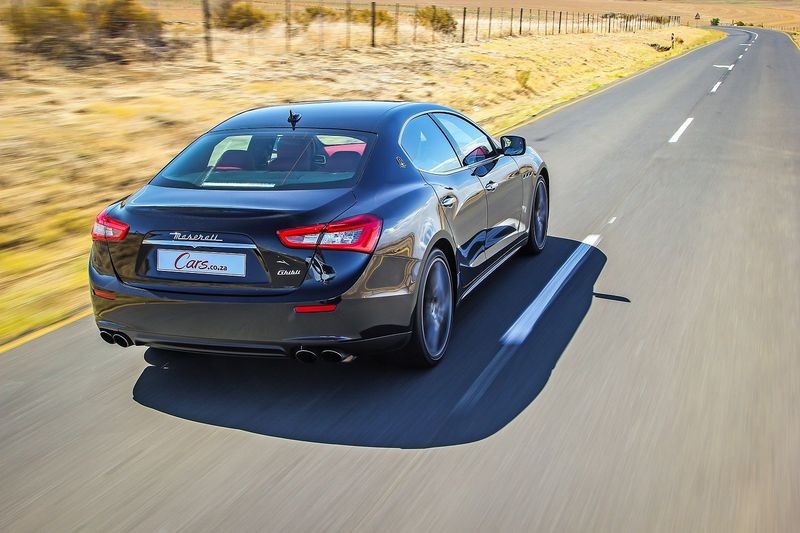
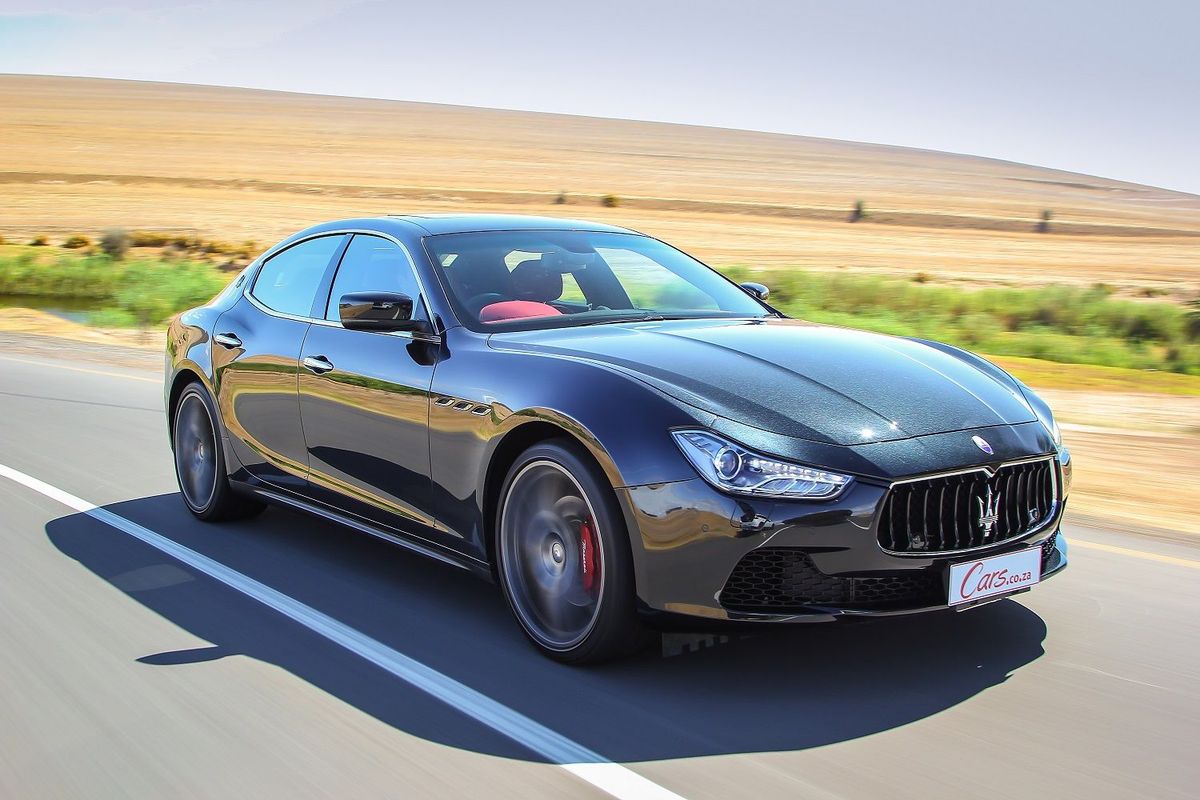
The Ghibli S is a handsome beast, but to make it stand out a couple of option boxes need to be ticked.
We generally refrain from analysing any test vehicle's visual appeal, as design is a very subjective matter, but with the Maserati Ghibli S we are forced to highlight a number of attributes – after all, design will be a major driving force in any potential Maserati buyer's purchasing decision.
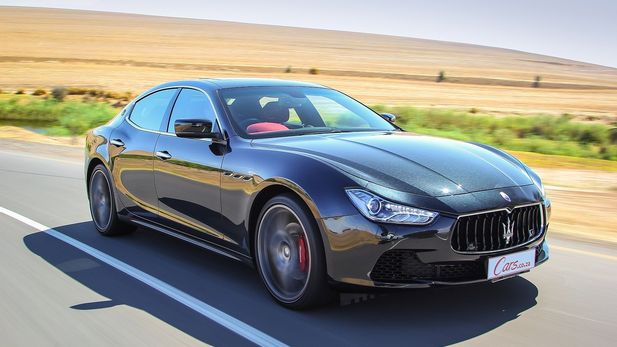
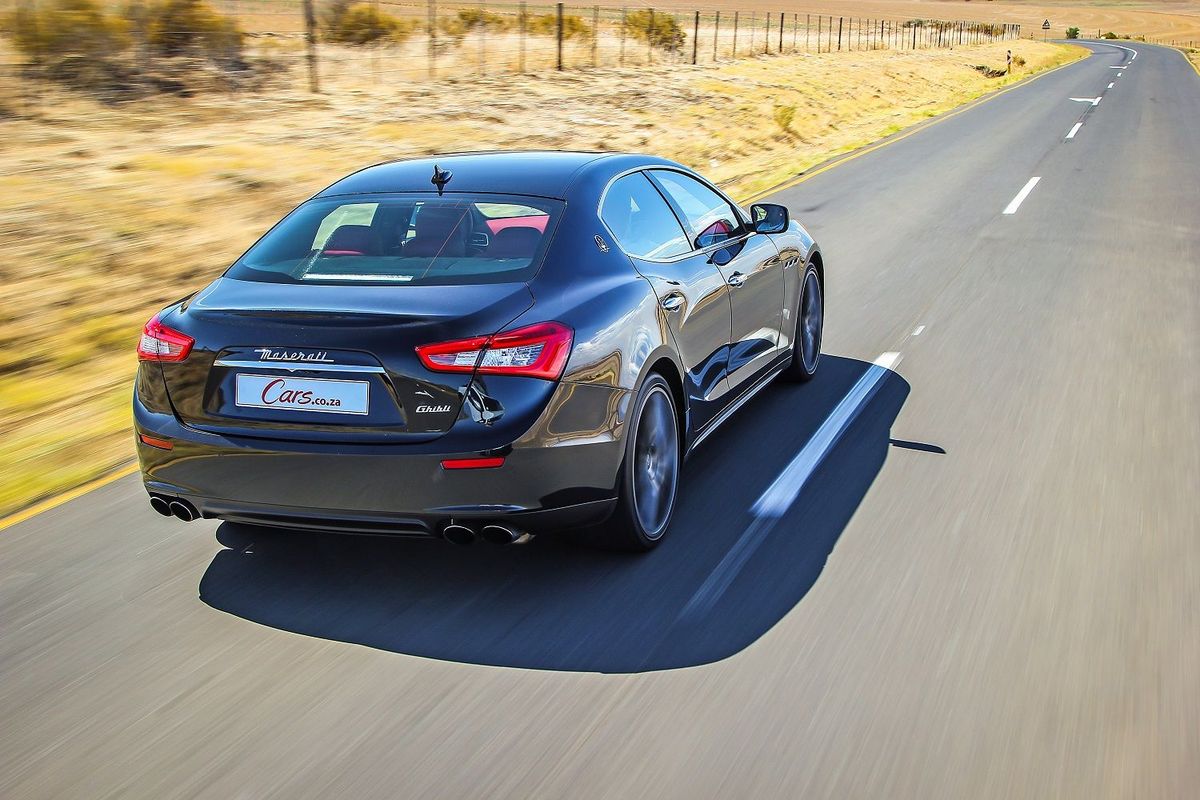
Our test Ghibli S test unit looked particularly dark and sinister with its Nero (black) paintwork, large anthracite coloured alloy wheels and red brake calipers. We highlight these items because without them, the Ghibli S can be regarded quite a cautious design, devoid of overt aggression or quirks. Sure, Maserati anoraks may point to the large concave grille's links to the past (particularly the A6GCS Berlinetta) and the trademark portholes on its flanks behind the front wheelarches, but it is clear that Maserati took purposely restrained route for the Ghibli. This gives potential buyers the option of specifying their Ghibli as required. Want to fly under cover? Then opt for different wheels, more subtle paint jobs etc. On the other hand, if you want to be noticed, then tick a few more boxes… Our test car swivelled many a head!
Performance
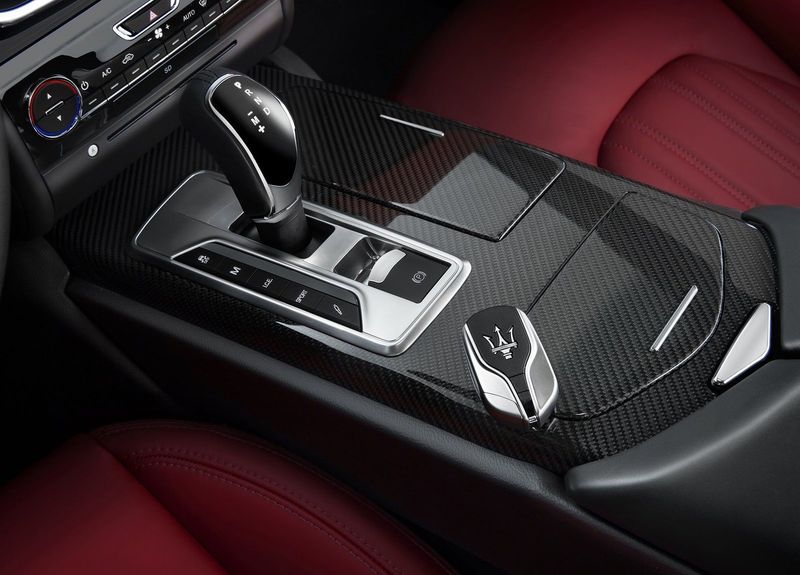
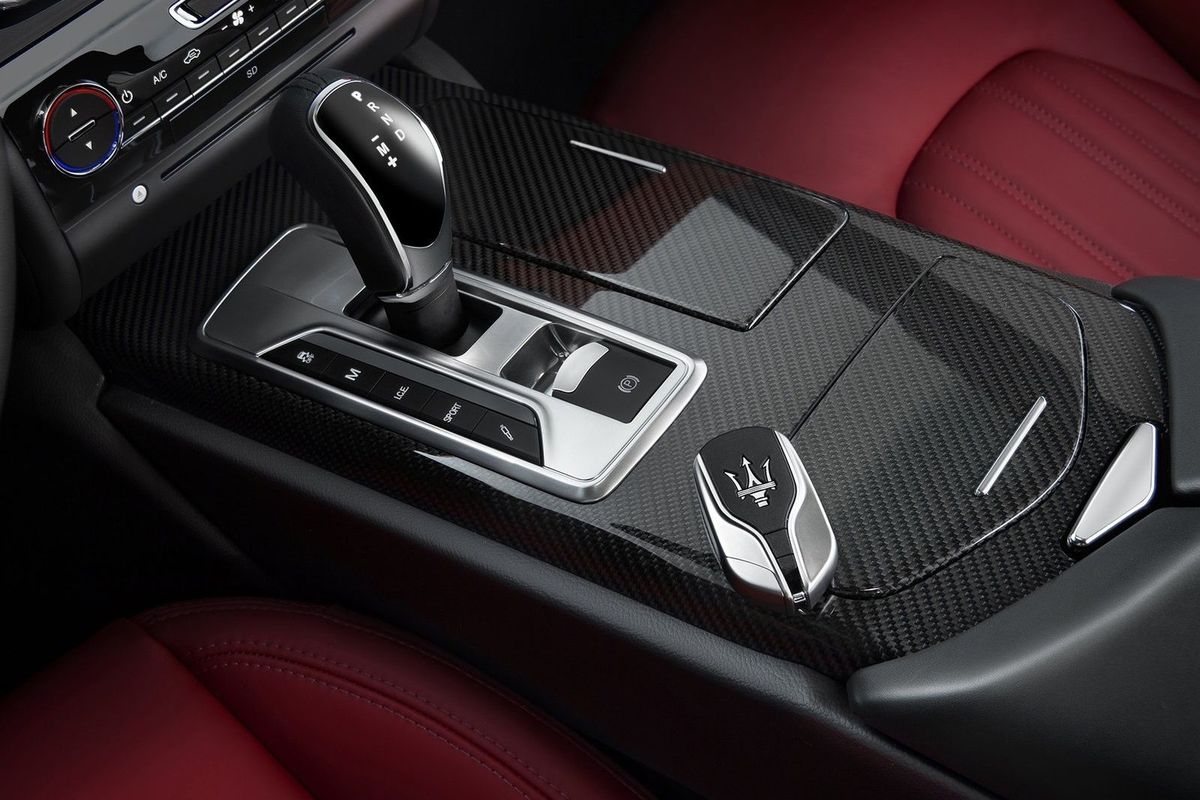
For the most thrills, be sure to select Sport mode. Note the chunky key fob.
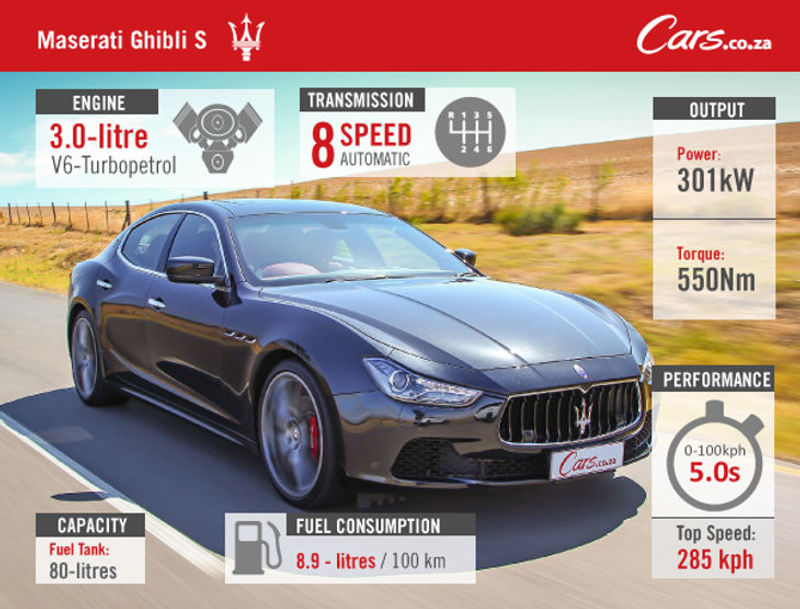
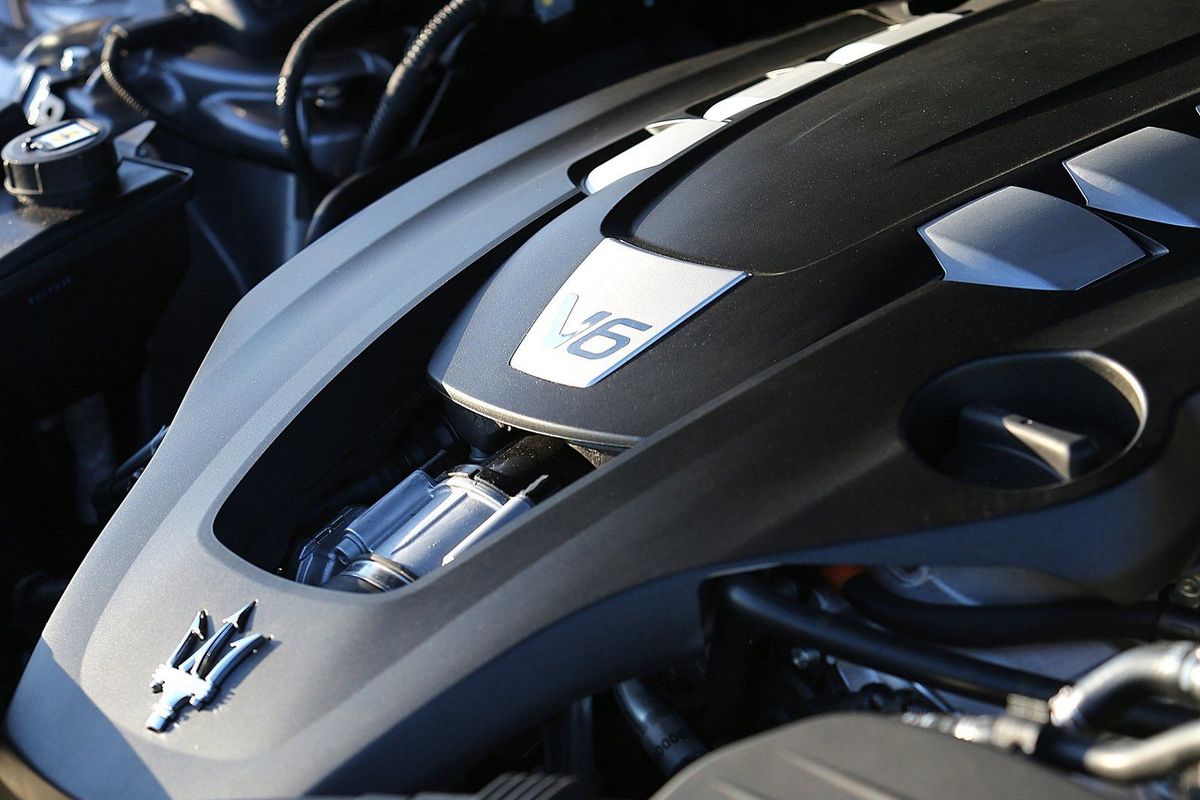
The Ghibli S is powered by a twin-turbocharged 3.0-litre V6 with quite an interesting pedigree. It was designed by Maserati, but is put together by Ferrari, using a block built by Chrysler in America. It delivers 301 kW and 550 Nm of torque, the latter figure being on tap all the way from 1 750 to 5 000 rpm, which promises great in-gear flexibility.
Power goes to the rear wheels via a ZF eight-speed automatic transmission. As is to be expected, manual gearshifts can be executed via paddles positioned behind the steering wheel. The Ghibli is quite a heavy vehicle, which is partly the reason why the 0-100 kph time of 5.0 seconds seems relatively mediocre compared with the vehicles positioned at a similar price level. But seeing as this brand doesn't feel the need to comply with the Germans' "gentlemen's agreement" to restrict top speeds to 250 kph, the Ghibli runs unrestricted all the way to 285 kph.
But claimed figures are only a fraction of the story. Several driving modes are offered, with the oddly named I.C.E. (Increased Control & Efficiency) not being particularly effective in improving the fuel thirst (the claimed fuel consumption figure of 8.9 L/100km is laughable). There is, however, also a Sport mode, and when this is activated the true Italian sportscar soul of the Ghibli ignites. In Sport mode the exhaust valves are permanently open, emitting a beautiful and intoxicating roar, while there also lovely blips when downshifting through the 'box manually. Driven like this, the Ghibli is hugely rewarding and quite different in character to even its more overtly powerful rivals.
Ride and handling
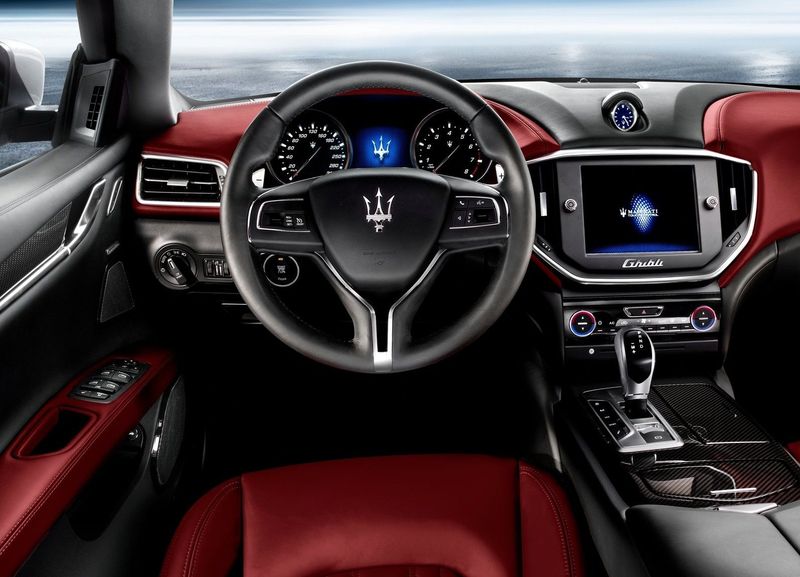
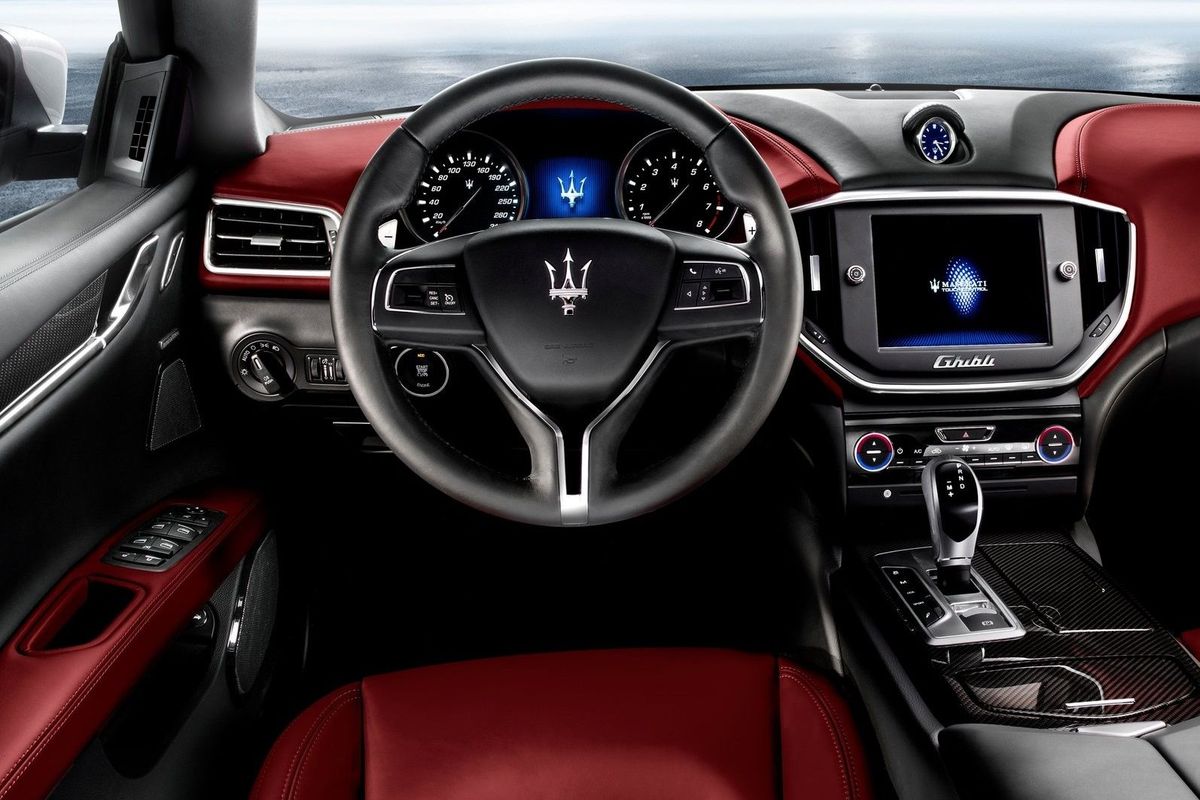
The Ghibli S interior is not egonomically class-leading, but is comprehensively equipped and tastefully executed.
The Ghibli rides on a shortened version of the Quattroporte platform, and sports double wishbone suspension in the front, and a sophisticated multi-link arrangement at the rear. Our test unit also sported some seriously fat rubber. In terms of overall ride and handling, the Ghibli appears to be well equipped, at least in theory.
Head out onto smooth road surfaces and you'll appreciate its surefootedness, cornering grip and the way it deals with the occasional speed hump. The steering, once you're used to the way the assistance varies, can be pleasingly direct and offers good weighting, too, so flinging the hefty Ghibli through a couple of challenging corners can be very gratifying indeed. But it is unfortunately not quite as impressive when the road surface turns nasty, which it increasingly often does in our lovely country. A quick succession of bumps can make it feel skittish and hurt the traction on offer, too. On these kinds of surfaces, the Ghibli struggles to disguise its weight and it can feel a bit cumbersome. And given the vehicle's price and positioning at the pinnacle of this particular segment, road noise should also be better controlled.
Note that our test unit did not feature the optional Skyhook variable damping system, which may very well go a long way to addressing the criticisms above.
Comfort and features
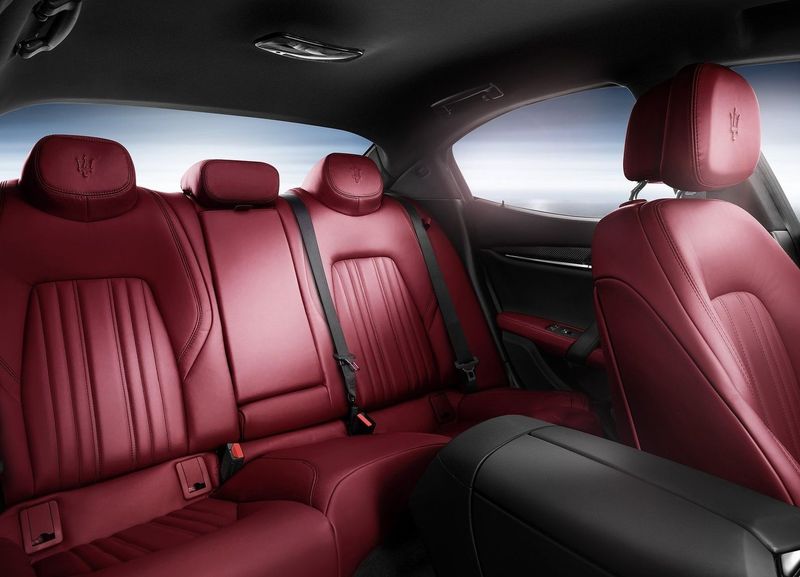
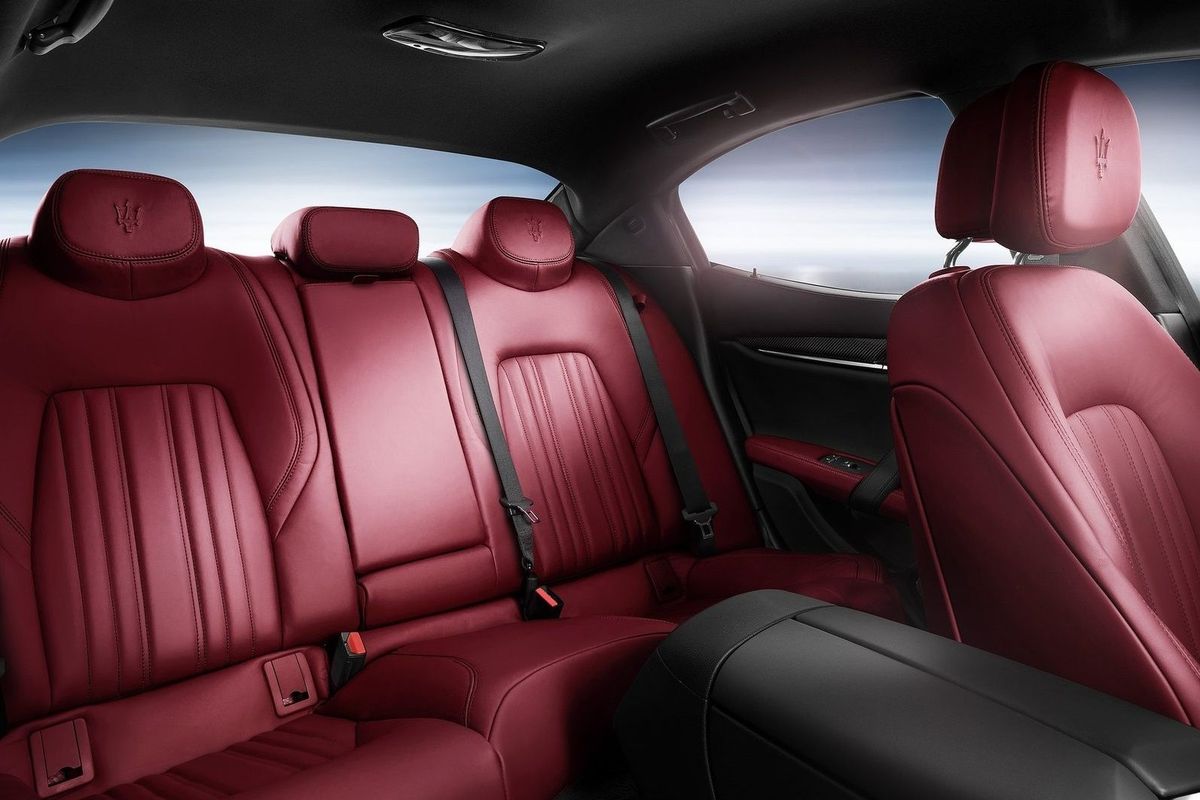
Rear space is quite limited in terms of legroom, but the boot is big.
Open those long doors – notice the windows are frameless in true sportscar style – and you'll probably smell the richness of the leather before you visually spot any highlights. Previous Maseratis have often looked gorgeous outside, but were eclectic mix-matches of various parts-bins inside. The Ghibli facia looks attractive enough where it matters to mask any parts sharing where it doesn't. Our test unit was suitably trimmed in a mix of red and black leather, which did much to heighten the sense of sitting behind the wheel of something special. And… it has to be said, the build quality is arguably the best we've seen from this brand for many decades.
Still, there are some flaws. The driving position could be better (more steering adjustment, please), the ergonomics are poor (particularly the clunky info-tainment system) and it's rather more tricky than it need be to select the correct gear. Oh… and while this Maserati may offer four doors, do not expect it to be particularly useful for transporting adults in the back. The legroom back there is tight. The upshot, however, is a very large boot.
As is the case with the exterior of the vehicle, a number of personalisation options are offered, including the choice of either a Harman Kardon premium sound system or one developed by Bowers & Wilkens. Leather covers the seats as standard, obviously, but you can also ask Maserati to trim parts of the facia and doors at extra expense.
Verdict
To analyse a car such as the Maserati Ghibli in a purely rational way is flawed and would be missing the point almost entirely. As fans of many Italian vehicles will tell you, a great number of the quirks and irritations that are often identified with Italian cars are regarded as "character building". The aim, it is said, is not perfection, but something passionate. In that sense, the Maserati Ghibli delivers giant helpings of what is required. It may not be the fastest, but it sounds the most glorious. It may not handle with the most finesse, but at least it's not a bland experience. And while the hit-and-miss interior would confound those desiring Audi-like common sense and structure, the Ghibli presents a sense of occasion… of theatre, even. So, if you're looking for reasons to buy the Maserati Ghibli S, there are more reasons not to. But if you desire a Maserati Ghibli S… well, that's a whole different story. You'll adore (most of) it.
Pricing
The Maserati Ghibli S costs R1 622 000 without options and a 3-years/unlimited km warranty is standard. The local distributors EAI also add a 3-years/60 000 km service package.
Enjoy our video review!