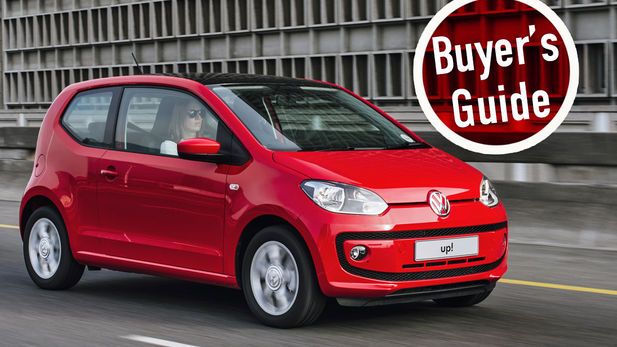
Does the Volkswagen Up represent a compelling used car purchase? Let’s examine this classy little city car’s strengths and weaknesses, and find out what you can expect to pay for a good 2nd-hand example…
Though the Volkswagen Up went into production way back in 2011, the German firm’s diminutive city car touched down in South Africa only in early 2015. What was the reason for the delayed local introduction?
Well, the Wolfsburg-based firm’s division in Mzansi was understandably cautious of treading on the toes of its locally produced Polo Vivo. In fact, when the Volkswagen Up finally did make local landfall, the top-spec version was positioned a mere R3 300 below the base Vivo 5-door hatchback.
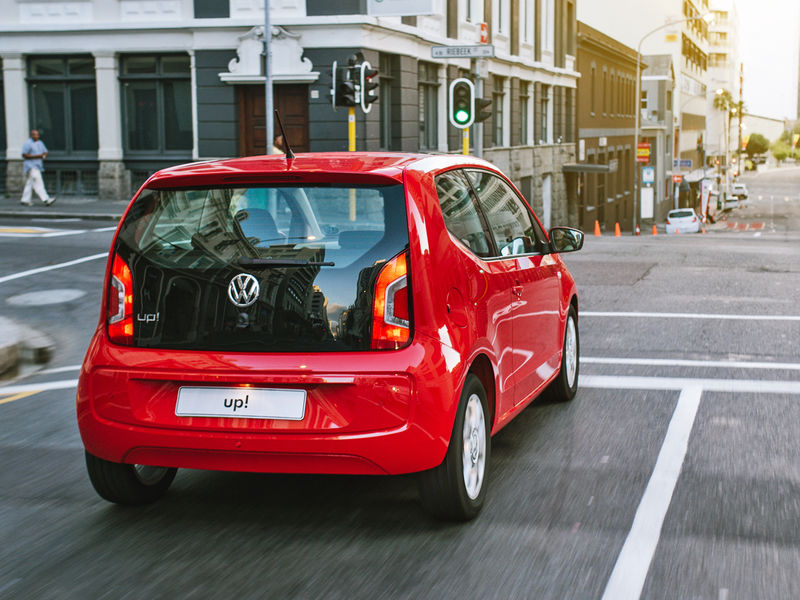
To make matters worse, the Up – which VW stylised as “up!”, dispensing with capitalisation of the initial letter and adding an entirely superfluous exclamation mark – jumped headfirst into what was an ailing A-segment, with many buyers instead turning to (larger but similarly priced) sub-B-segment options such as the Toyota Etios, Ford Figo, Renault Sandero and indeed Volkswagen’s very own Polo Vivo.
During its 5-year lifecycle in South Africa – and its 12-year global production run at the VW Group’s Bratislava factory in Slovakia, ending in 2023 – the boutique city car was available in both 3- and 5-door body styles. Interestingly, the Volkswagen Up won the World Car of the Year title in 2012, beating fellow top-3 finalists the F30-generation BMW 3 Series and the 991-series Porsche 911 to the award.
Volkswagen Up model line-up in South Africa
Previewed by a 2007 concept, the production version of the Volkswagen Up was unveiled in August 2011, just ahead of the Frankfurt Motor Show. It’s thought this lengthy gestation period was thanks to the Wolfsburg-based manufacturer’s decision to switch from the show car’s rear-engine configuration to a conventional (not to mention more economical-to-build) front-engine layout.
After much deliberation from VWSA, seemingly owing to concerns of a potential overlap with the Polo Vivo, the Up officially arrived in Mzansi in February 2015 (though, likely in a bid to minimise any such sales cannibalisation, the city car was initially offered exclusively in 3-door form). At launch, buyers had the choice of 2 trim levels, but just a single engine-and-gearbox combination was available:
- 1.0 MPI Take Up 5MT 3-Door (55 kW/95 Nm)
- 1.0 MPI Move Up 5MT 3-Door (55 kW/95 Nm)
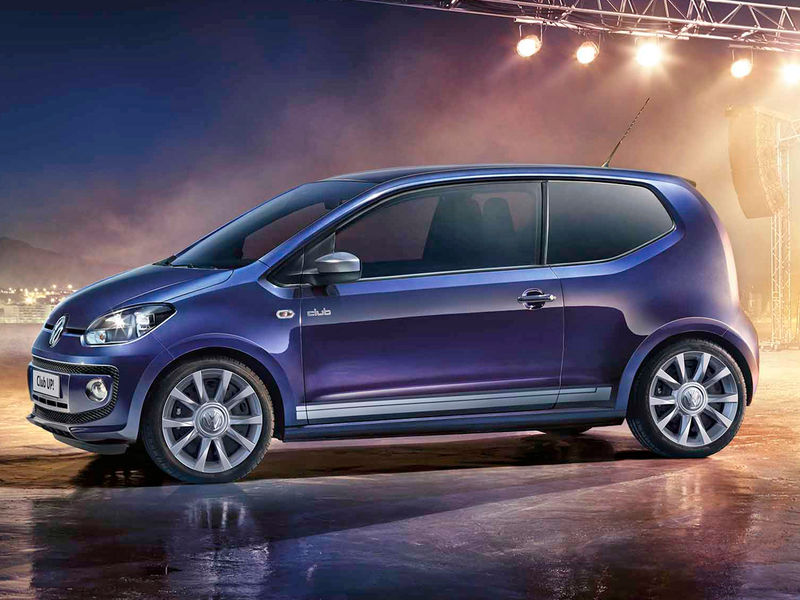
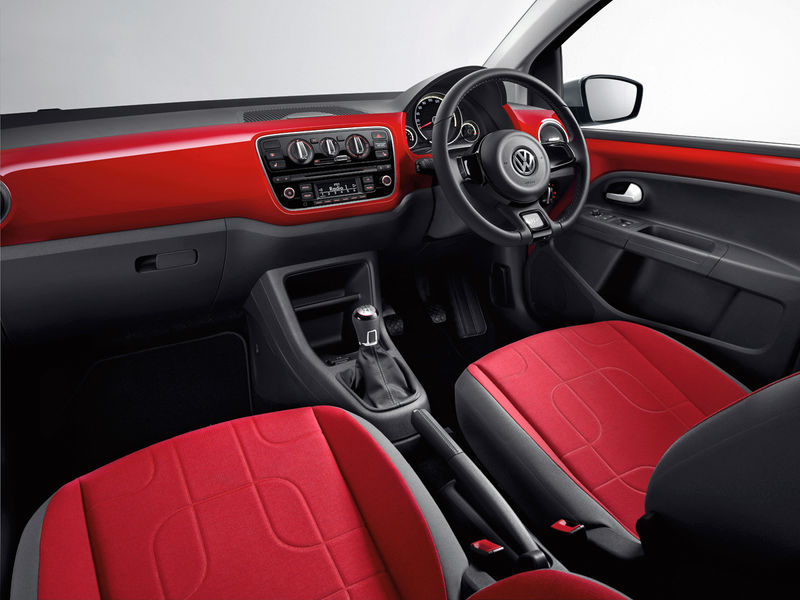
The local line-up gained the option of a special-edition Club package in August 2015. Available for Move derivatives finished in Pure White, Blueberry or Dark Silver exterior paint, the kit added items such as 15-inch “Ravenna” alloy wheels, leather trim for the steering wheel, a painted dashboard panel, silver-hued side-mirror caps, tartan cloth upholstery and plenty of “Club” branding.
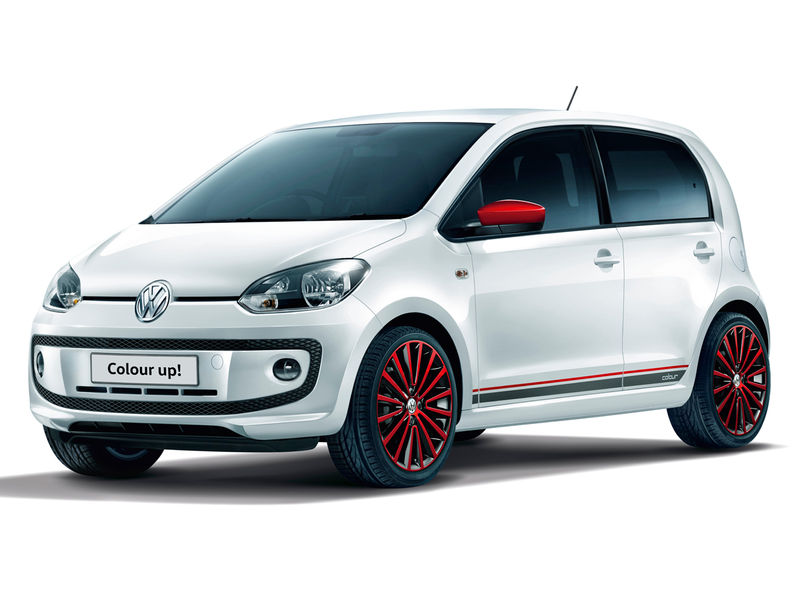
In May 2016, by which time around 3 500 examples of the 3-door variant had been sold in South Africa, VW decided to introduce the 5-door body style. Like its 3-door sibling, the 5-door Up was offered in Take and Move trim levels, though Volkswagen further expanded the range with the addition of Colour and Cross derivatives at this point.
The Colour Up – offered in either Dark Silver or Pure White – was billed as the flagship variant; it rode on 17-inch “Polygon” alloy wheels (finished in either Fortana Red or Sandstorm Yellow) and was fitted with side-mirror caps painted the same hue. The Colour specification further included tinted windows, a stripe down each flank and yet more vibrant tones inside.
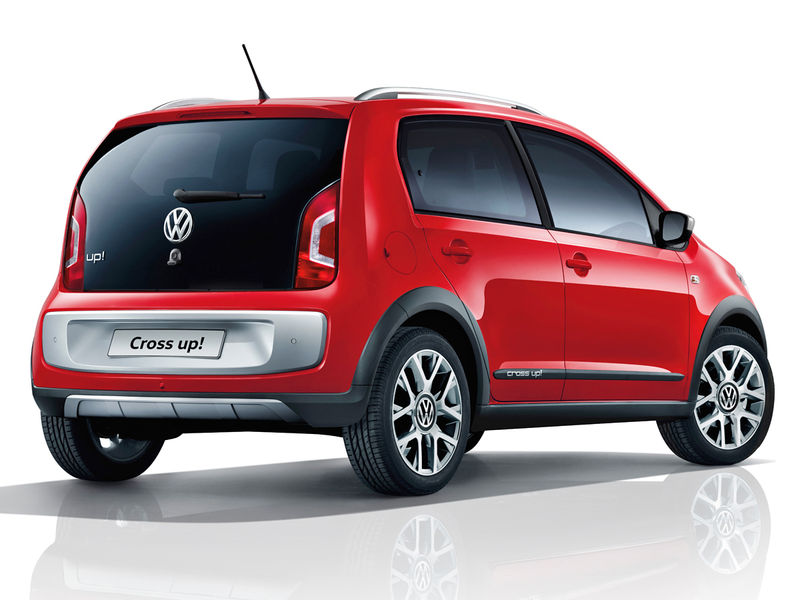
Meanwhile, the Cross Up brought the usual array of SUV-inspired styling cues, including black plastic body cladding, anodised silver roof rails, branded scuff plates and 18 mm of extra ride height (taking ground clearance to 162 mm). In addition, the Cross version’s side-mirror caps were painted silver, while it sported model-specific 16-inch rims and chrome-effect bezels for its front fog lamps. Inside, there was a leather-trimmed tiller, special seat fabric (offered in red or grey) and a dash pad finished in Deep Black Pearl (or, optionally, in Tornado Red).
Then, in November 2016 – by which time about 4 800 units had been registered locally – the facelifted Up was introduced to South Africa. The exterior changes were subtle, led by revised headlamps, updated taillights, redesigned bumpers, as well as new side mirrors and fresh wheel designs. Inside, VW rolled out new materials and lengthened the list of standard features.
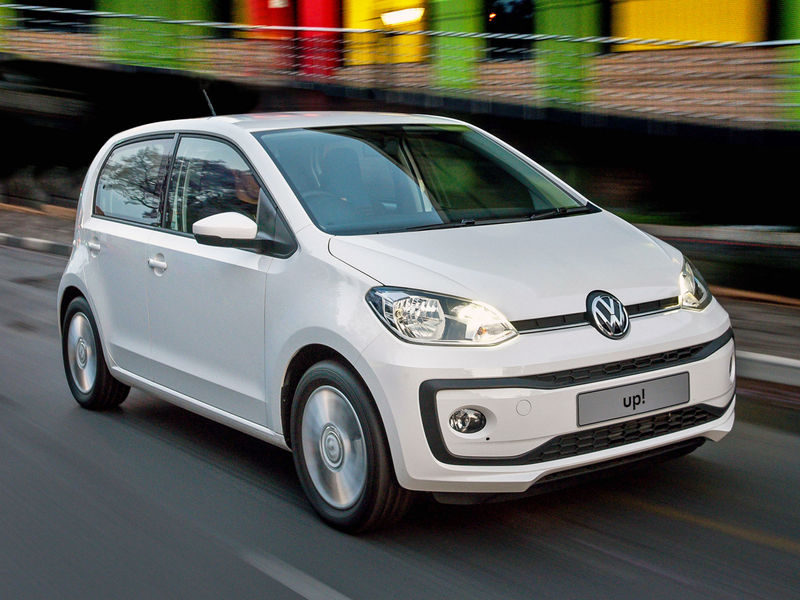
Interestingly, VWSA opted to cull the 3-door body style at this point, instead offering the Take and Move derivatives in 5-door form only. By the opening quarter of 2017, the updated Cross had joined the range, along with the new Beats variant. Though the latter boasted several extra features, it was defined by its uprated 300W sound system, which comprised an 8-channel amplifier, a digital signal processor, a pair of A-pillar tweeters, 2 front-door woofers, a duo of rear-sited broadband speakers and a subwoofer positioned in the spare-wheel well (the full-size spare was thus binned in favour of a mobility kit).
By around August 2020, Volkswagen’s local division had quietly stopped importing the Up, though production for many other markets continued until the final quarter of 2023. According to VWSA, as many as 12 047 units of the Up were sold locally.
What are the advantages of a VW Up?
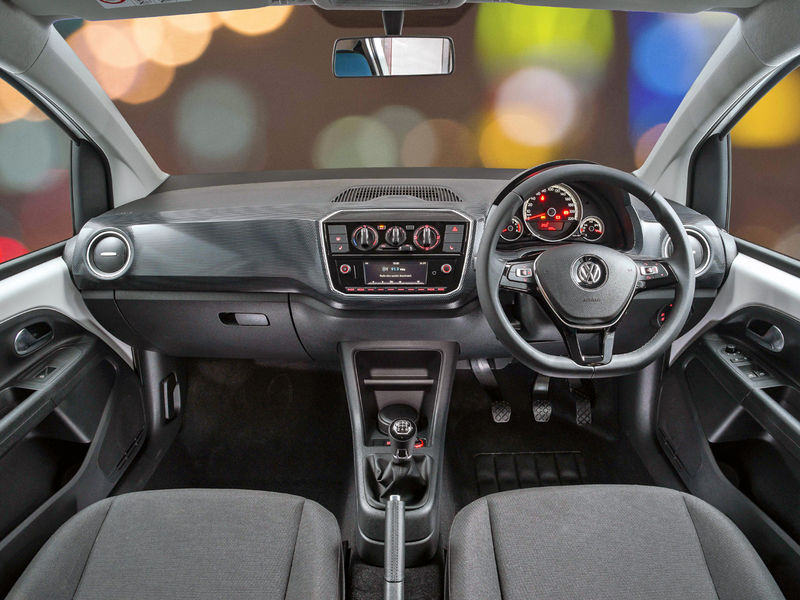
Cabin finishes and packaging: Despite playing in the A-segment, the materials used on frequent touchpoints in the Up’s cabin were anything but “budget” (bar the steering wheel, which was initially polyurethane as standard). In fact, we’d wager the finishes were far closer in quality to “premium”, while also going as far as to say the diminutive Volkswagen was class-leading for fit and finish, besting even the impressive TA-generation Kia Picanto in this department.
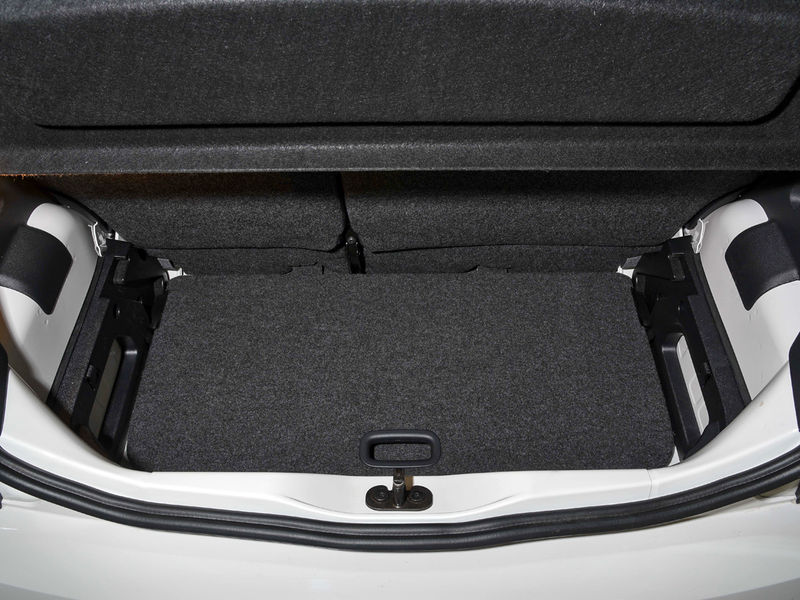
Outward visibility was exceptional, while the 251-litre load bay – expandable to 951 litres in the 3-door variant and 959 litres in the 5-door (though note that Take derivatives were saddled with a single-piece folding rear bench) – was above class average.
Moreover, with a wheel pushed to each corner, the designers managed to squeeze a surprising amount of passenger space into compact exterior dimensions (the 5-door version measured just 3 600 mm long). Ingress and egress were, of course, far simpler in the case of the 5-door.
Featuring integrated headrests, the slim front seats freed up valuable knee room in the rear, while the fascia layout was ergonomically sound (though some taller drivers complained that the steering wheel obstructed their view of part of the speedometer). Note, however, that the Up was technically a 4-seater since the centre of the rear bench did without a headrest or seatbelt.
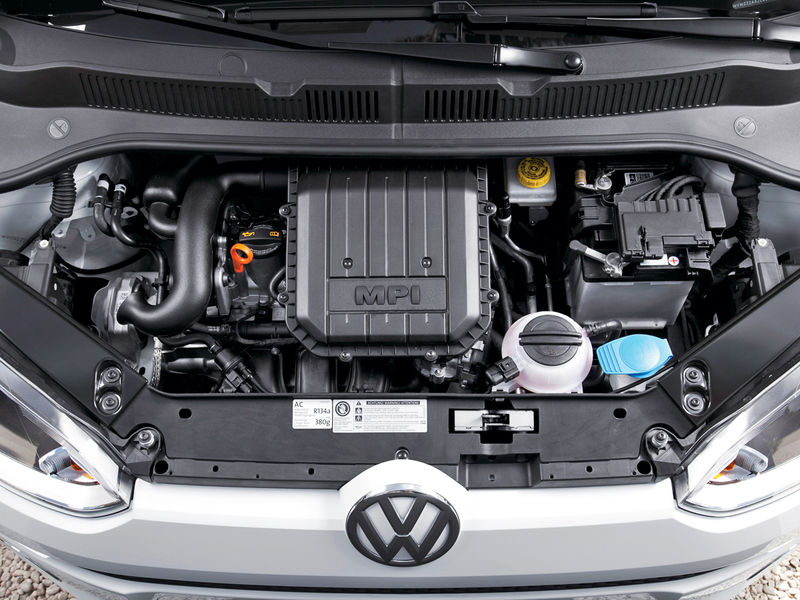
Refined, fuel-efficient engine: Though other motors (including a TSI unit) were offered in certain overseas markets, the Up was available in South Africa with just a single engine option: the atmospheric 1.0-lite 3-pot from the EA211 family. While its peak outputs of 55 kW at 6 200 rpm and 95 Nm from 3 000 rpm might appear meagre on paper, they were more than sufficient in the real world, since all derivatives weighed well under 900 kg.
Perhaps more pertinent is the fact this willing little engine was also pleasingly refined (despite the inherently unbalanced nature of 3-cylinder mills) and capable of returning wallet-friendly fuel economy, with Volkswagen claiming combined figures of 4.6 or 4.7 L/100 km, depending on the derivative.
We should point out the 1.0 MPI engine used a timing belt rather than a chain and the Volkswagen dealer we spoke to recommended that it be changed at either 8 years or 120 000 km (and further suggested the condition of the belt should be “monitored” from 90 000 km).
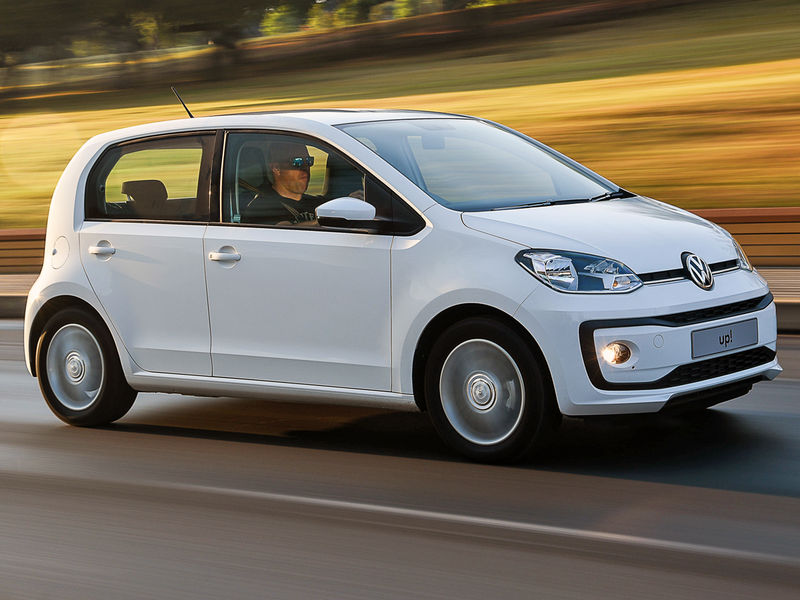
Ride comfort and stability: Despite employing a conventional small-car suspension arrangement comprising MacPherson struts up front and a torsion beam at the rear, the Up was endowed with the on-road stability and ride comfort of a larger, more expensive vehicle.
Most derivatives ran on high-profile tyres (for instance, the steel wheels of the base models were wrapped in particularly chunky 165/70 R14 rubber), which helped soak up road imperfections. For the record, the lowest-profile tyres offered locally were the 195/40 R17 items fitted to the Colour Up.
What are the disadvantages of a VW Up?
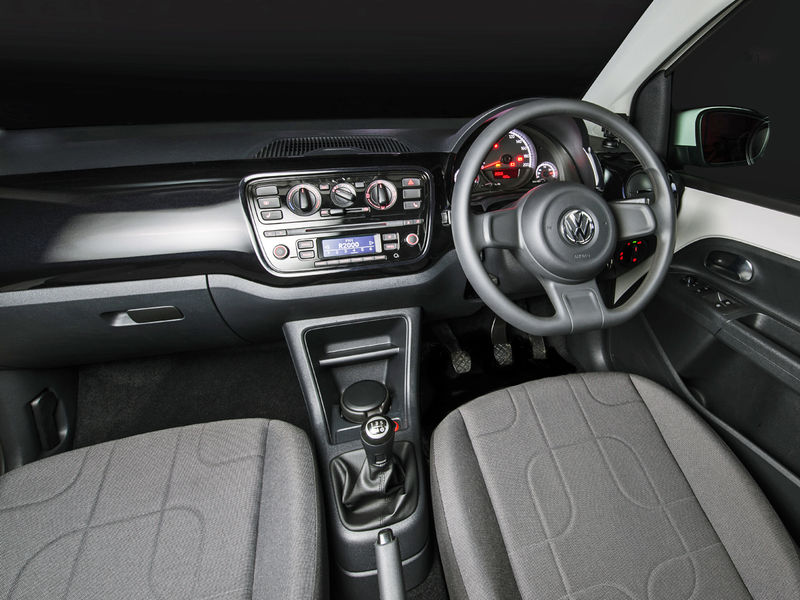
Spec anomalies (mostly pre-facelift): When the Up was launched in South Africa, its list of standard features seemed short of a few items. Both derivatives rode on steel wheels, while the city car initially did without any form of smartphone integration and lacked a USB port (Volkswagen did, however, offer a rudimentary aftermarket Bluetooth system via its dealers). In fact, the entry-level Take grade didn’t even feature a radio at launch, while also settling for manually adjustable side mirrors (with black rather than body-coloured housings) and window winders up front.
The Up’s infotainment shortcomings were partly remedied at the facelift, when the Take derivative gained an audio system run through a 3.1-inch monochrome display (but still sans Bluetooth and USB), with other variants upgrading to a 5-inch colour display. Volkswagen also offered a “Maps + More” dock for more comprehensive smartphone connectivity, though this was optional on all versions bar the Beats.
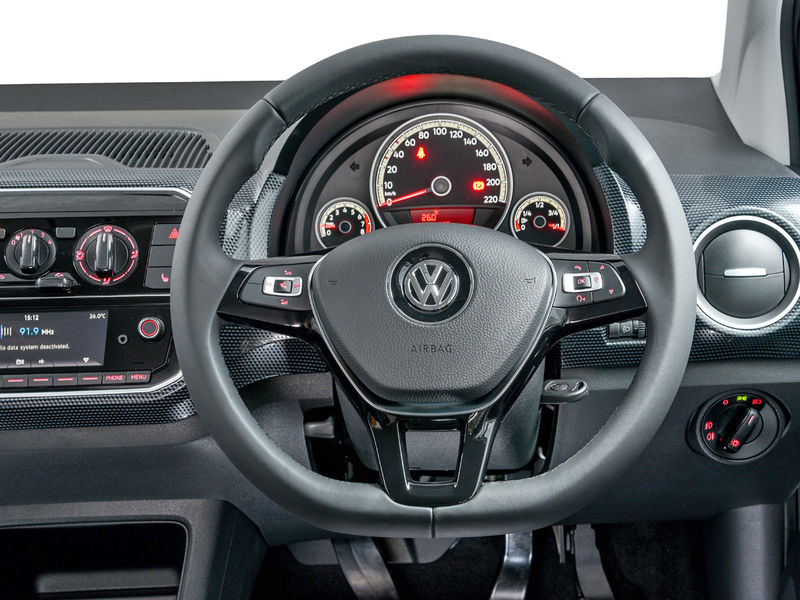
While ABS, 4 airbags, ISOfix child-seat anchors, remote central locking and an electronic immobiliser were standard across the range from launch, the Up made do with drum brakes at the rear and gained electronic stability control only at the facelift (along with an indirect tyre-pressure monitoring system).
Lack of auto gearbox option: In South Africa, the VW Up was available only in 5-speed manual guise, with no option of an automatic transmission. Those who required a 2-pedal vehicle thus had to look elsewhere in the segment. An automated manual gearbox was offered in some other markets, but it was decidedly clunky in operation, by all accounts.
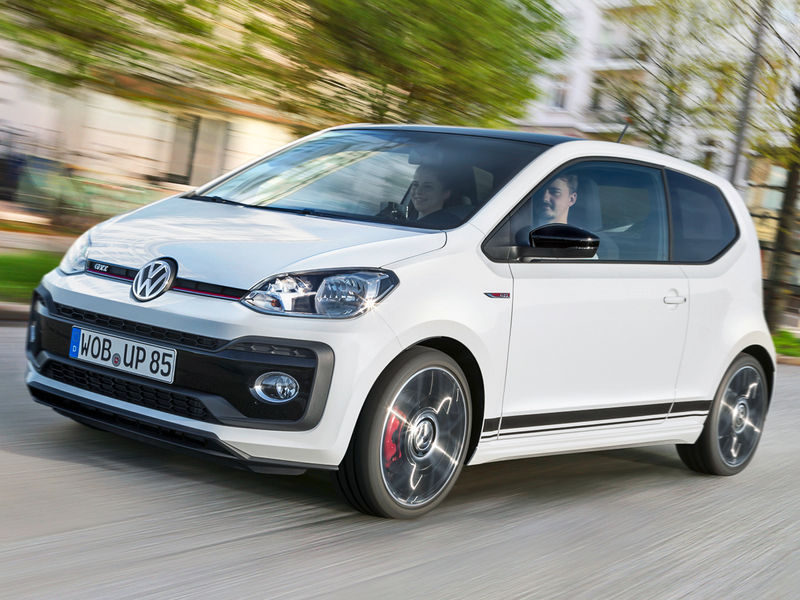
No Up GTI for South Africa: Yes, the Wolfsburg-based brand did develop an Up GTI, but the little warm hatch unfortunately never made it to South Africa. The cheekily styled baby GTI employed a 1.0-litre, 3-cylinder turbopetrol engine sending 85 kW and 200 Nm of torque to the front wheels via a 6-speed manual cog-swapper, resulting in a claimed 8.8-second dash to 100 kph and a top speed of 197 kph.
VWSA blamed the Rand’s poor exchange rate for the Up GTI’s no-show on local shores, suggesting the tiny tyke’s would-be pricing would have seen it competing with far larger models in the range. In addition, the South African market didn’t ever receive the option of an R-Line package for the Up, while the fully electric e-Up likewise failed to materialise in Mzansi.
How much is a used VW Up in South Africa?
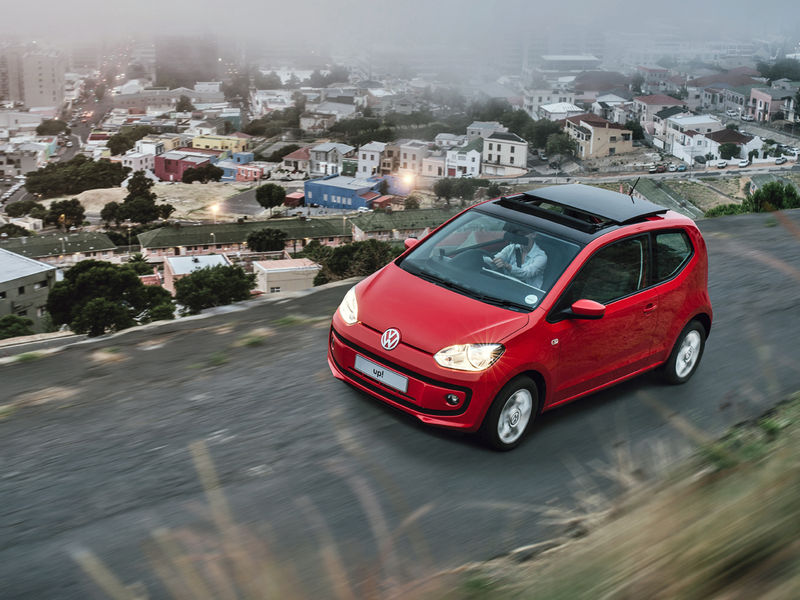
Though the Up was covered by a 3-year/120 000 km warranty, it did without a standard service plan in South Africa. So, when shopping for a used model, make sure there’s evidence that the vehicle has been regularly serviced (VWSA’s recommended intervals were 1 year or every 15 000 km).
Somewhat unusually for an A-segment car, the Up was available with many optional extras, including a panoramic sunroof and various equipment packages. Early versions of the Take grade could be specified with a comfort package (which added front electric windows and a height-adjustable driver seat), while the Move trim level could be bolstered with a driver package (adding cruise control, rear parking sensors and a multi-function display) and a winter package (with heated seats and front fog lamps).
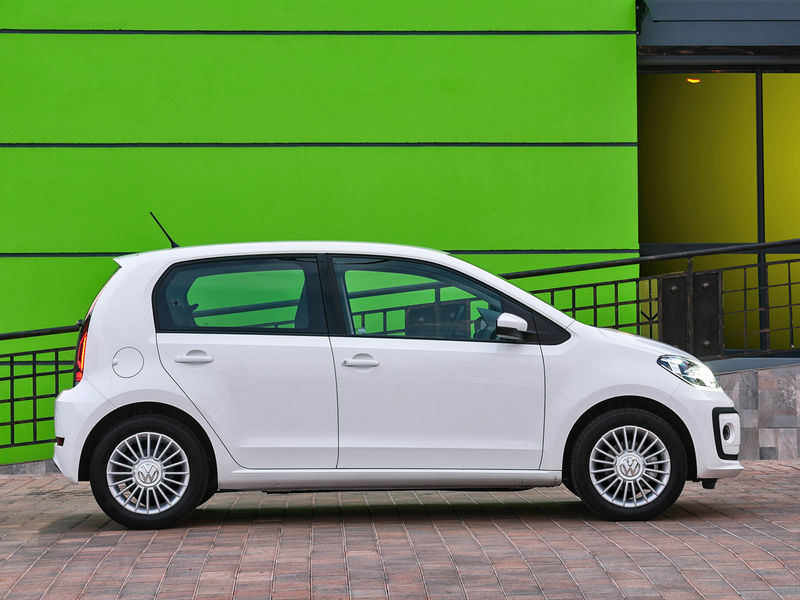
Of the used Volkswagen Up examples listed on Cars.co.za at the time of writing, 69% were 5-door models. The mid-tier Move grade was the most widespread, accounting for 51% of listings, followed by the entry-level Take specification (28%). Cross and Beats derivatives each made up around 10%, with the remaining 1% representing the seldom-seen Colour and Club variants.
The most common model year was 2016, followed by 2018. Mileages varied from just 23 000 km to a lofty (for a city car, anyway) 268 000 km, with the latter achieved by a 2015 3-door in Move trim. White was the most popular colour at 43% of all listed Up models, followed by silver (24%) and red (12%).
- Below R100 000: Units listed for 5 figures were in short supply, but most were predictably early model years with mileages above 150 000 km. We also found a 2019 Beats variant here, though it was heavily modified (featuring components such as large aftermarket alloys and air suspension).
- From R100 000 to R125 000: Pickings are slim below R125 000 as well, with most vehicles listed here being pre-facelift examples in 3-door guise. Interestingly, the Move trim level was still easily the most popular grade between these pricing bookends.
- From R125 000 to R150 000: At the time of writing, this was the most densely populated pricing bracket, with nearly half of all listings positioned here. All model years but the final one were represented, while we found a small number of Cross and Beats examples in this space.
- R150 000 and up: Spending upwards of R150 000 would get you into a facelifted 5-door Up, potentially with well under 100 000 km on the clock. Most of the few Cross and Beats variants on offer were found here, too. The most expensive Up we uncovered was a 2018 Cross with 39 000 km on the odometer (and fitted with a few factory options) for R199 900.
Which Volkswagen Up should I buy?
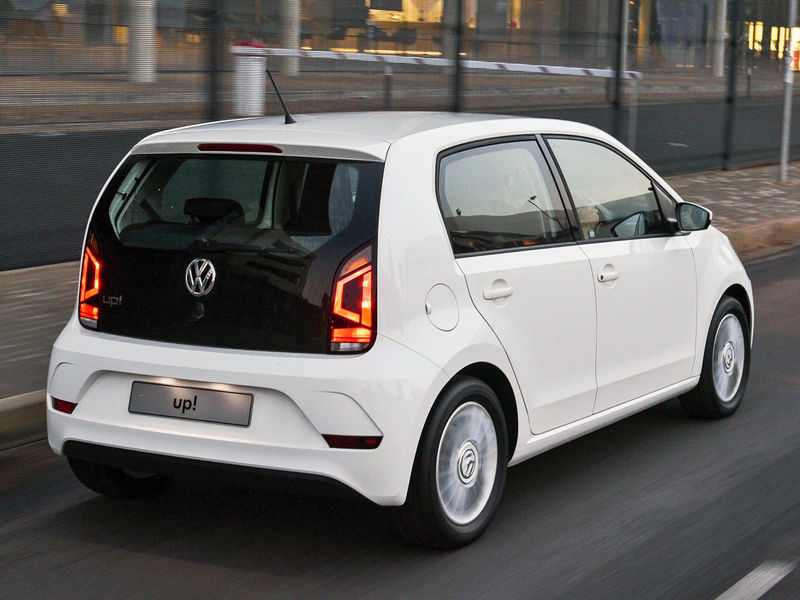
So, which derivatives should be on your radar? Well, unless you have your heart set on the 3-door body style, we’d recommend sticking to examples of the facelifted model, since these gained extra standard equipment, including the much-improved infotainment- and all-important stability control systems.
While the Take grade gained some kit at the mid-cycle update, we’d argue the Move spec still offers slightly better value today (however, we’d suggest trying to find an example fitted with the optional 15-inch alloys). Naturally, the Beats derivative is best suited to audiophiles, while the plucky little Cross will hold broad appeal with buyers keen on the extra ride height and those SUV-inspired looks.
Is the VW Up a smart used purchase?
During its 5-year run on the local market, the Volkswagen Up had to contend with various similarly sized rivals, from the TA-series Kia Picanto and BA-generation Hyundai i10 to a trio of platform siblings in the form of the 2nd-gen Toyota Aygo, AB40-series Citroen C1 and Peugeot 108 (the under-appreciated latter model boasting segment-leading levels of safety kit).
Other traditional – but more “cheap and cheerful” – city-car options included the Honda Brio and the underwhelming A00-series Mitsubishi Mirage, as well as Suzuki’s FE-gen Celerio and the high-roofed (though short-lived locally) Splash. In addition, the VW Up was pitched against a few more upmarket competitors, with the 3-door version fighting the Fiat 500 and Opel Adam, and the 5-door variant taking on the W453-gen Smart ForFour (the latter featuring a rear-engine, rear-wheel-drive configuration).
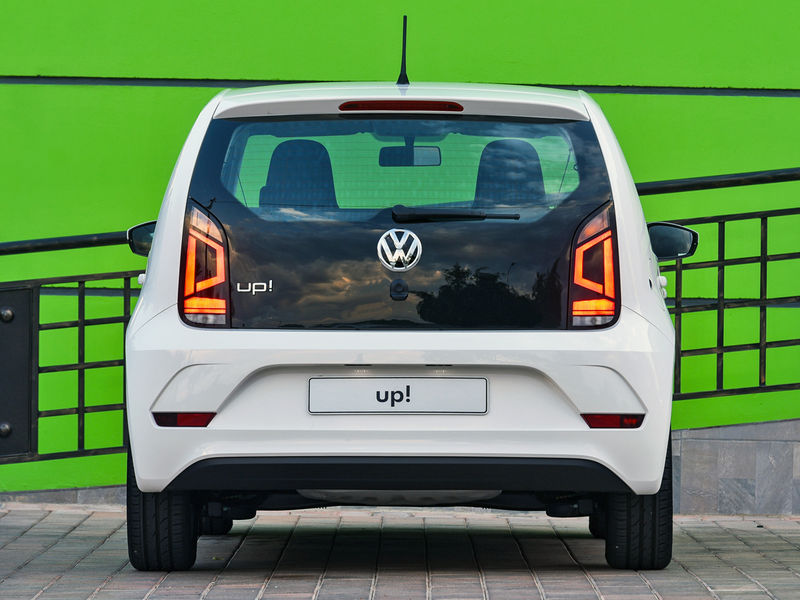
That said, the Volkswagen Up’s eminently solid build quality helped set it apart from its more obviously built-to-a-budget mainstream rivals, endowing it with a sense of sophistication that was out of the ordinary for the segment. In short, it didn’t feel like a small budget car, whether from a driving perspective, or simply in terms of its cabin structure.
So, why didn’t this charming little car sell in greater volumes in South Africa? Well, that was largely down to the tremendous popularity of the Polo Vivo, which was so strong that it almost prevented the Up’s local introduction altogether. And it’s also why the Volkswagen Up remains a somewhat overlooked – yet still entirely compelling – option on the used market today.
Looking for a used Volkswagen Up to buy?
Looking to sell your car? You can sell it to our dealer network here
Ryan Bubear

Having written about everything from sport and politics to crime, Ryan eventually settled on motoring. For well over 15 years, he's been penning articles – both online and in print – about the broader automotive industry, though he's particularly fascinated by vehicle-sales statistics. A freelance writer and editor, Ryan has owned a 1971 Austin Mini Mk3 for 20-plus years.